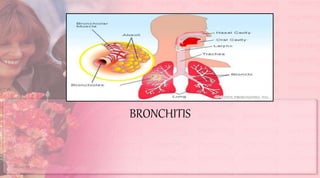
BRONCHITIS
DEFINITON OF DISEASE
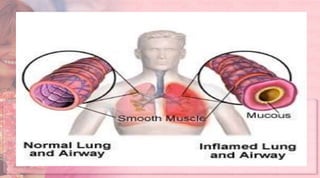
Bronchitis is inflammation
of the mucous membranes of
the bronchi.
TYPES
• ACUTE BRONCHITIS
• CHRONIC BRONCHITIS
Acute bronchitis
• Acute bronchitis is characterized by the development of
a cough, with or without the production of sputum
, mucus that is expectorated (coughed up) from
the respiratory tract.
Con----------
Acute bronchitis often occurs during the course
of an acute viral illness such as the common
cold or influenza.
• Chronic bronchitis, a type of chronic obstructive
pulmonary disease, is characterized by the presence of a
productive cough that lasts for three months or more per
year for at least two years.
Chronic bronchitis
Chronic bronchitis most often develops due to recurrent
injury to the airways caused by inhaled irritants.
Cigarette smoking is the most common cause, followed
by air pollution and occupational exposure to irritants.
Due to etiological factors
entry of microorganisms in to the lungs
Inflammatory changes of the lungs
Constiction of bronchiles
Mucus production in the bronchioles
Symptoms of productive cough
Diagnostic evaluation
• History collection
• Physical examination
• Chest x- rays
• Sputum cultures
• Pulmonary function test
• Bronchoscopy
Pharmacological management
Antibiotics - these are effective for
bacterial infections, but not for viral
infections.
They may also prevent secondary
infections.
Con----------
Bronchodilators - These open the
bronchial tubes and clear out mucus.
Eg.salbutamol,salmeterol
Mucolytics - These thin or loosen mucus
in the airways, making it easier to cough
up sputum.
Eg; Bromhexine, Ambroxol
Theophylline.
Administration of Anti-inflammatory
medicines and glucocorticoid steroids.
Eg.hydrocortisone, prednisolone.
• Pulmonary rehabilitation program - this
includes work with a respiratory therapist to
help breathing.
Nursing diagnosis
• Ineffective breathing pattern related to shortness
breathing mucus or broncho constriction.
• Ineffective airway clearence related to broncho
constriction.
Nursing diagnosis
• Self care deficit related to fatigue secondary to
increased effort for breathing.
• Activity intolerence due to fatigue and inffective
breathing patterns
Nursing management
1. Assess The Condition Of Patient.
2. Assess The Vital Signs
3. Provide Comfortable Position.
4. Change The Position Periodically.
5. Maintain Personal Hygiene.
6. Use pulse oximetry & Suction.
7. Deep Breathing Exercise Learn To Patient.
8. Refer To Physiotherapist(if Need).
Con---------
1. Provide Oxygen According To Physician Order.
2. Provide Psychological Support To Patient.
3. Provide Knowledge About Chronic Bronchitis.
4. administer medication according to physician order.
Bronchodilators,antibiotics,mucolytics.
Bronchitis : Preventions
These measures help prevent bronchitis and protect
your lungs in general:
• Avoid tobacco smoke –
it includes own smoke or
Second hand smoke from others, try
to avoid it.
• Reduce intake of foods such
as sugar, white flour, dairy and
others that may be mucus-
producing.
• Proper hand washing :To reduce
the risk of viral infection,
wash your hands by using
hand sanitizers.
• Use an air humidifier. Warm,
moist air loosens mucus in the
airways and helps to relieve
coughing.
Bronchitis

Bronchitis

  • 1.
  • 2.
    DEFINITON OF DISEASE Bronchitisis inflammation of the mucous membranes of the bronchi.
  • 4.
  • 5.
    Acute bronchitis • Acutebronchitis is characterized by the development of a cough, with or without the production of sputum , mucus that is expectorated (coughed up) from the respiratory tract.
  • 6.
    Con---------- Acute bronchitis oftenoccurs during the course of an acute viral illness such as the common cold or influenza.
  • 7.
    • Chronic bronchitis,a type of chronic obstructive pulmonary disease, is characterized by the presence of a productive cough that lasts for three months or more per year for at least two years. Chronic bronchitis
  • 8.
    Chronic bronchitis mostoften develops due to recurrent injury to the airways caused by inhaled irritants. Cigarette smoking is the most common cause, followed by air pollution and occupational exposure to irritants.
  • 9.
    Due to etiologicalfactors entry of microorganisms in to the lungs Inflammatory changes of the lungs Constiction of bronchiles Mucus production in the bronchioles Symptoms of productive cough
  • 10.
    Diagnostic evaluation • Historycollection • Physical examination • Chest x- rays • Sputum cultures • Pulmonary function test • Bronchoscopy
  • 12.
    Pharmacological management Antibiotics -these are effective for bacterial infections, but not for viral infections. They may also prevent secondary infections.
  • 13.
    Con---------- Bronchodilators - Theseopen the bronchial tubes and clear out mucus. Eg.salbutamol,salmeterol
  • 14.
    Mucolytics - Thesethin or loosen mucus in the airways, making it easier to cough up sputum. Eg; Bromhexine, Ambroxol Theophylline.
  • 15.
    Administration of Anti-inflammatory medicinesand glucocorticoid steroids. Eg.hydrocortisone, prednisolone.
  • 16.
    • Pulmonary rehabilitationprogram - this includes work with a respiratory therapist to help breathing.
  • 17.
    Nursing diagnosis • Ineffectivebreathing pattern related to shortness breathing mucus or broncho constriction. • Ineffective airway clearence related to broncho constriction.
  • 18.
    Nursing diagnosis • Selfcare deficit related to fatigue secondary to increased effort for breathing. • Activity intolerence due to fatigue and inffective breathing patterns
  • 19.
    Nursing management 1. AssessThe Condition Of Patient. 2. Assess The Vital Signs 3. Provide Comfortable Position. 4. Change The Position Periodically. 5. Maintain Personal Hygiene. 6. Use pulse oximetry & Suction. 7. Deep Breathing Exercise Learn To Patient. 8. Refer To Physiotherapist(if Need).
  • 20.
    Con--------- 1. Provide OxygenAccording To Physician Order. 2. Provide Psychological Support To Patient. 3. Provide Knowledge About Chronic Bronchitis. 4. administer medication according to physician order. Bronchodilators,antibiotics,mucolytics.
  • 21.
    Bronchitis : Preventions Thesemeasures help prevent bronchitis and protect your lungs in general: • Avoid tobacco smoke – it includes own smoke or Second hand smoke from others, try to avoid it.
  • 22.
    • Reduce intakeof foods such as sugar, white flour, dairy and others that may be mucus- producing.
  • 23.
    • Proper handwashing :To reduce the risk of viral infection, wash your hands by using hand sanitizers. • Use an air humidifier. Warm, moist air loosens mucus in the airways and helps to relieve coughing.