Dr. K. MALATHI
PG SCHOLAR
Department OF KAYACHIKITSA
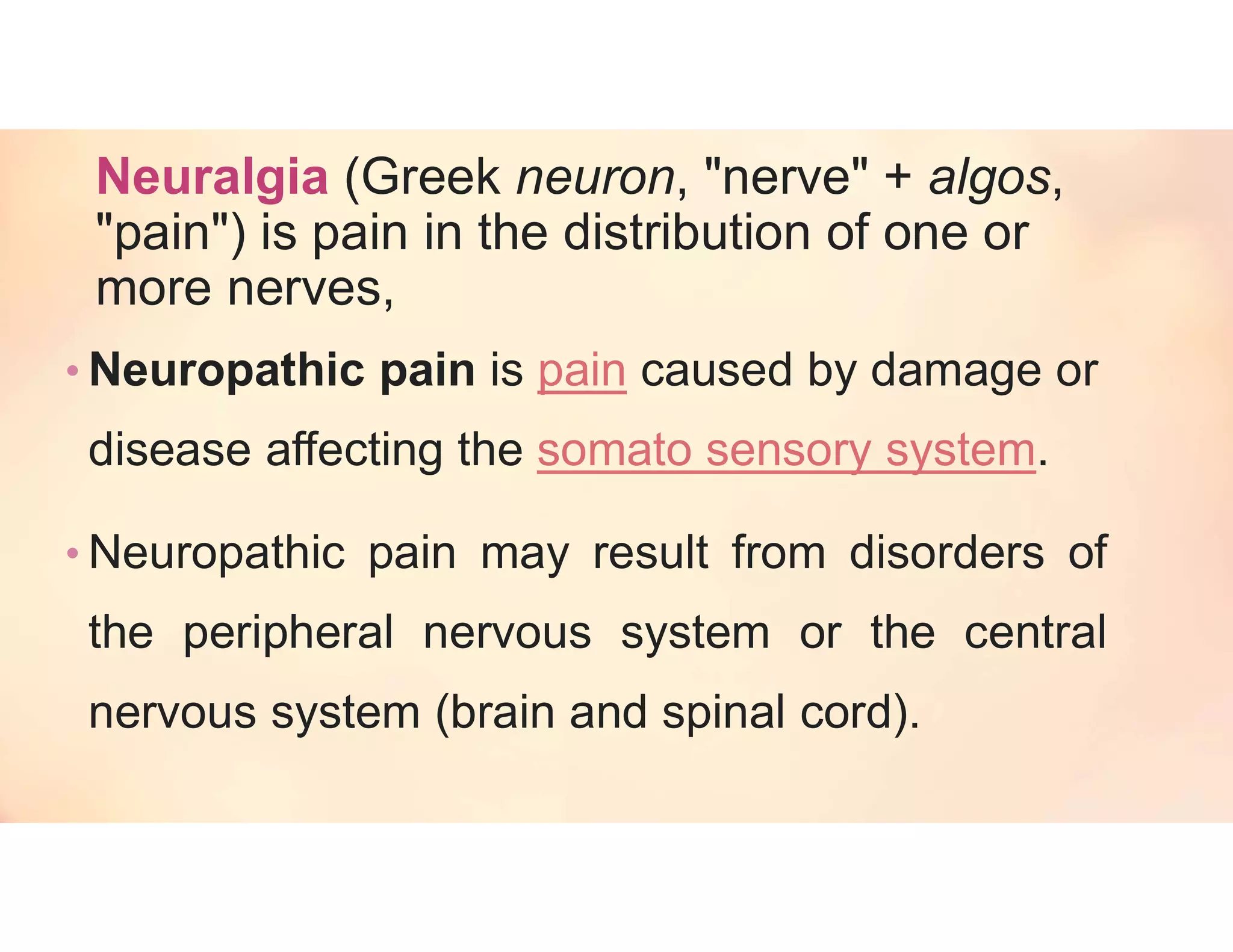
Neuralgia (Greek neuron, "nerve" + algos,
"pain") is pain in the distribution of one or
more nerves,
• Neuropathic pain is pain caused by damage or
disease affecting the somato sensory system.
• Neuropathic pain may result from disorders of
the peripheral nervous system or the central
nervous system (brain and spinal cord).
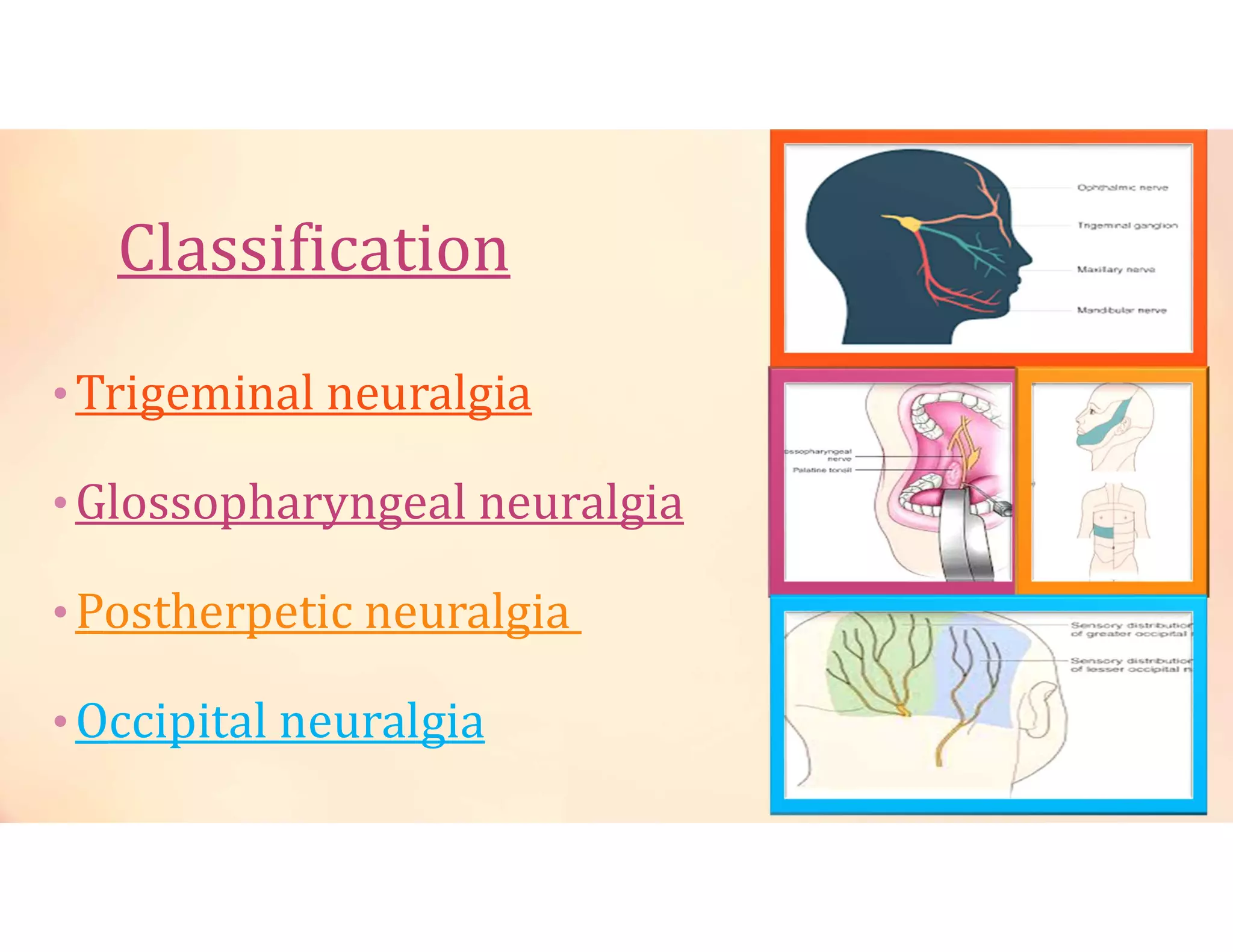
•Trigeminal neuralgia
•Glossopharyngeal neuralgia
•Postherpetic neuralgia
•Occipital neuralgia
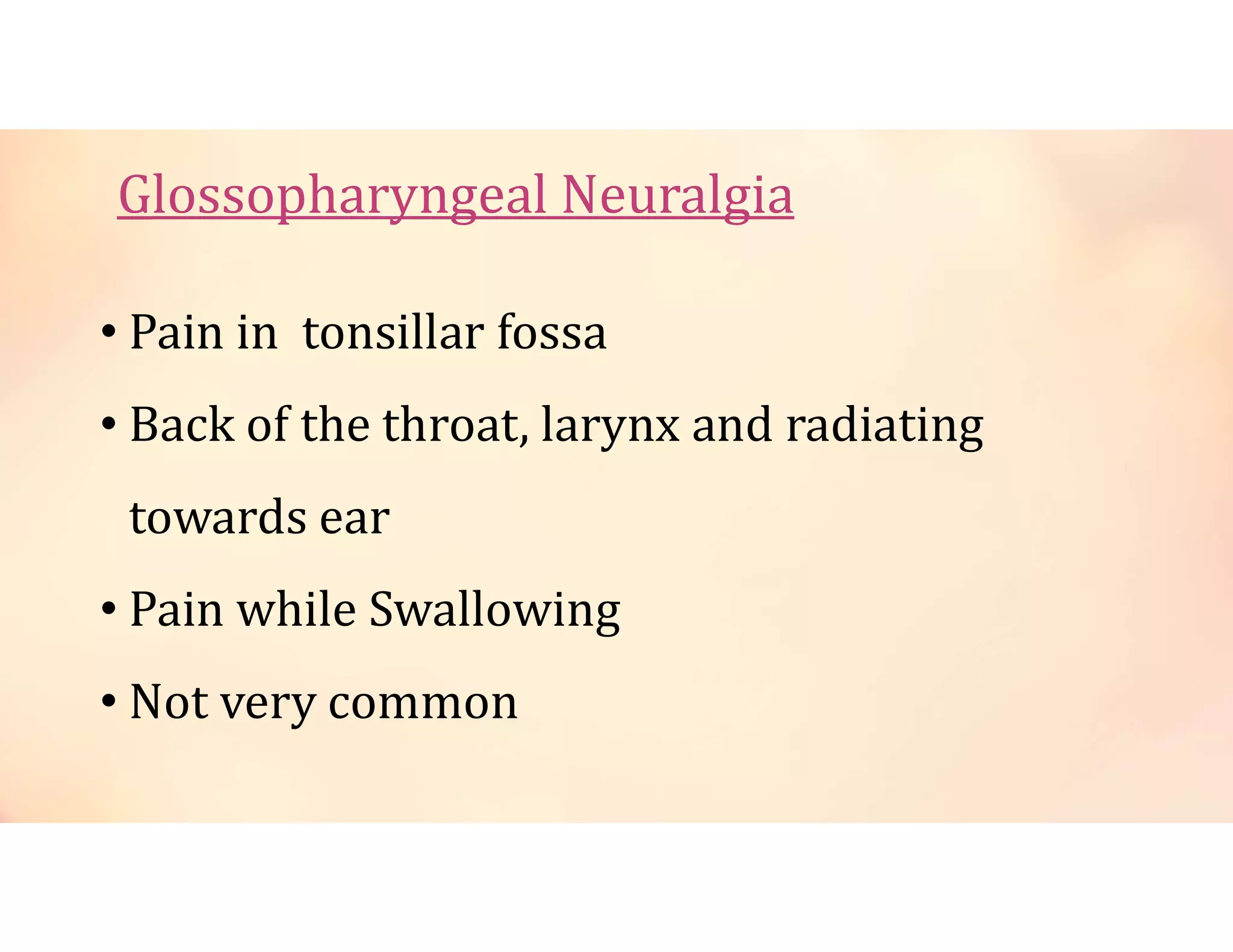
Glossopharyngeal Neuralgia
• Pain in tonsillar fossa
• Back of the throat, larynx and radiating
towards ear
• Pain while Swallowing
• Not very common
Postherpetic neuralgia
• Occurs as a complication of Shingles a viral infection,
characterized by painful rash, blisters
• May be anywhere on the body
• Neuralgia can occur wherever the outbreak of shingles
• Pain can be mild/ persistent/ intermittent
• Some cases pain may occur before the rash
• Occurs along with the path of nerve so its usually isolated to
one side of the body
Occipital Neuralgia
• It is a condition in which the occipital nerves, the nerves
that run through the scalp, are injured or inflamed.
• Headache that feel like severe piercing, throbbing
• shock-like pain in the upper neck, back of the head or
behind the ears.
• generally starts at the base of the head and goes to the
scalp on one or both sides of the head.
Trigeminal neuralgia
• Trigeminal neuralgia (TN or TGN), also called Fothergill
disease, tic douloureux, or trifacial neuralgia is a long-
term pain disorder that affects the trigeminal nerve
• It is a neuropathic pain in the distribution of the one ore
more divisions of the Trigeminal neuron.
• TN Syndrome: Sudden, severe, paroxysmal of neuropathic
pain
• Unknown
• Infections
• Vascular compression on nerve root
• Exposure to cold, blow, chewing, eating, hot and
cold drinks
• Diabetes
• Less common causes - Chemical irritation
Trauma
Chroni kidney disease
Symptoms
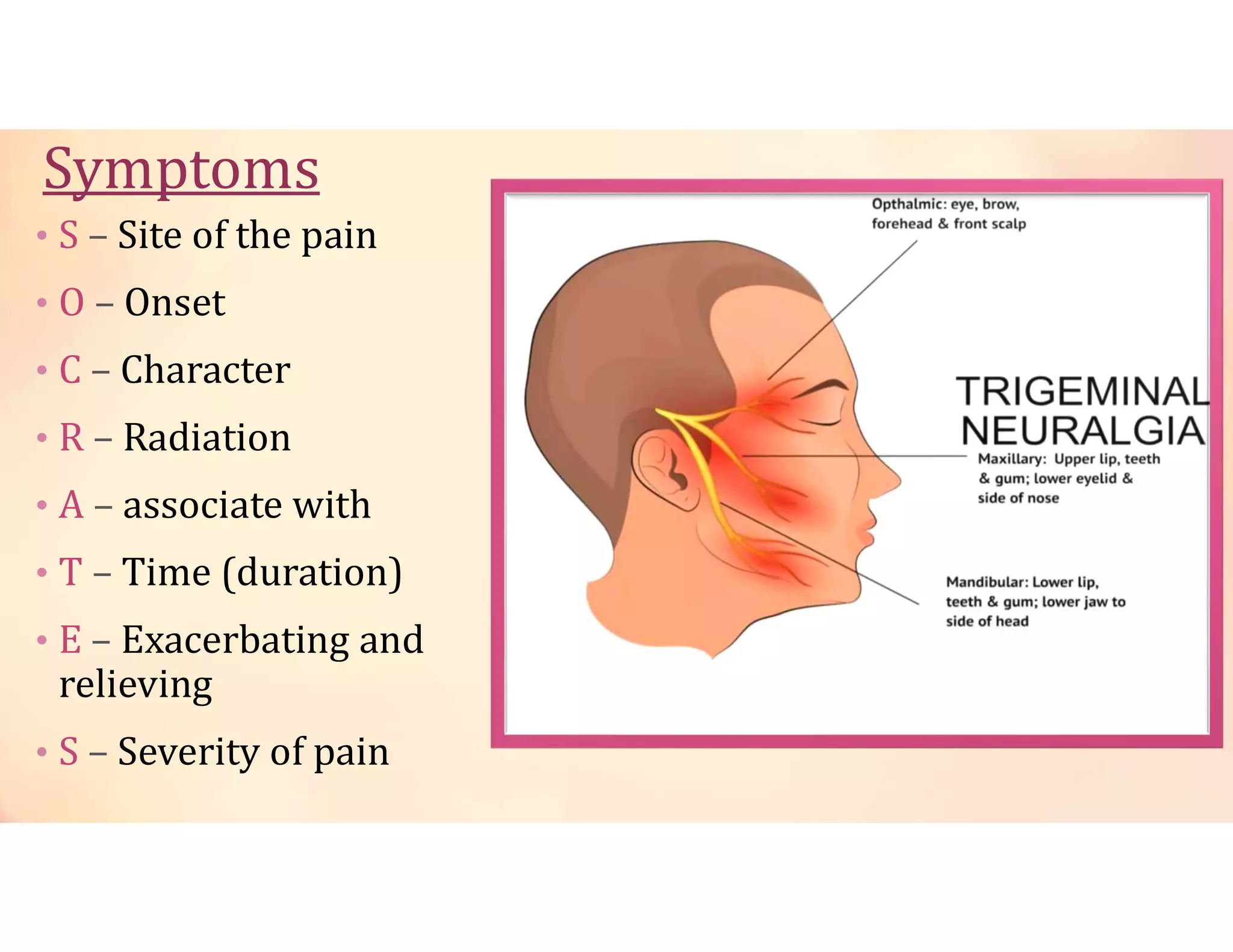
• S – Site of the pain
• O – Onset
• C – Character
• R – Radiation
• A – associate with
• T – Time (duration)
• E – Exacerbating and
relieving
• S – Severity of pain
Socrates….
Sympto
m
Site Onse
t
Radiation
Characte
r
Tim
e Associate
d with
Exacerbate
and
relieving
Seviarit
y
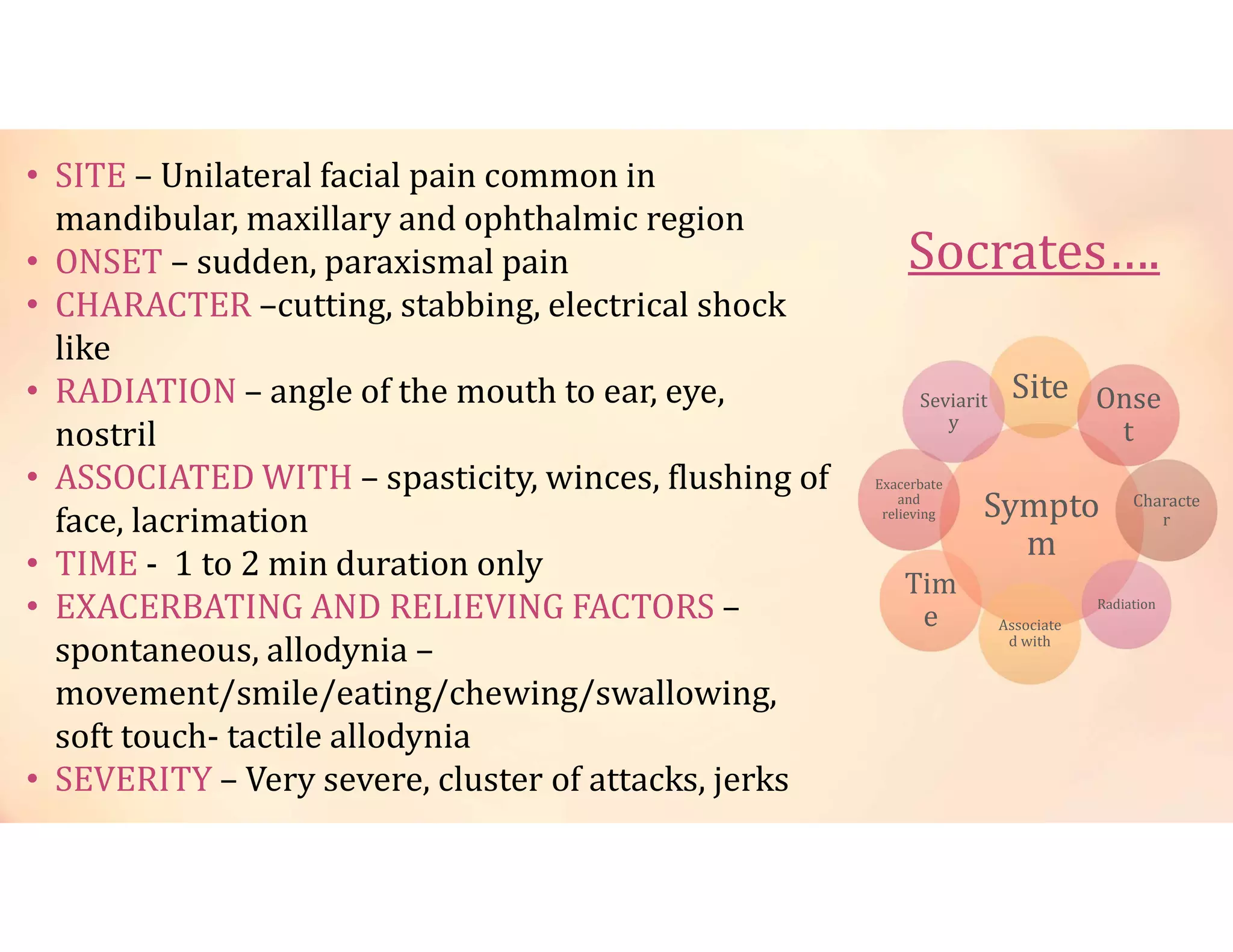
• SITE – Unilateral facial pain common in
mandibular, maxillary and ophthalmic region
• ONSET – sudden, paraxismal pain
• CHARACTER –cutting, stabbing, electrical shock
like
• RADIATION – angle of the mouth to ear, eye,
nostril
• ASSOCIATED WITH – spasticity, winces, flushing of
face, lacrimation
• TIME - 1 to 2 min duration only
• EXACERBATING AND RELIEVING FACTORS –
spontaneous, allodynia –
movement/smile/eating/chewing/swallowing,
soft touch- tactile allodynia
• SEVERITY – Very severe, cluster of attacks, jerks
Aetiology
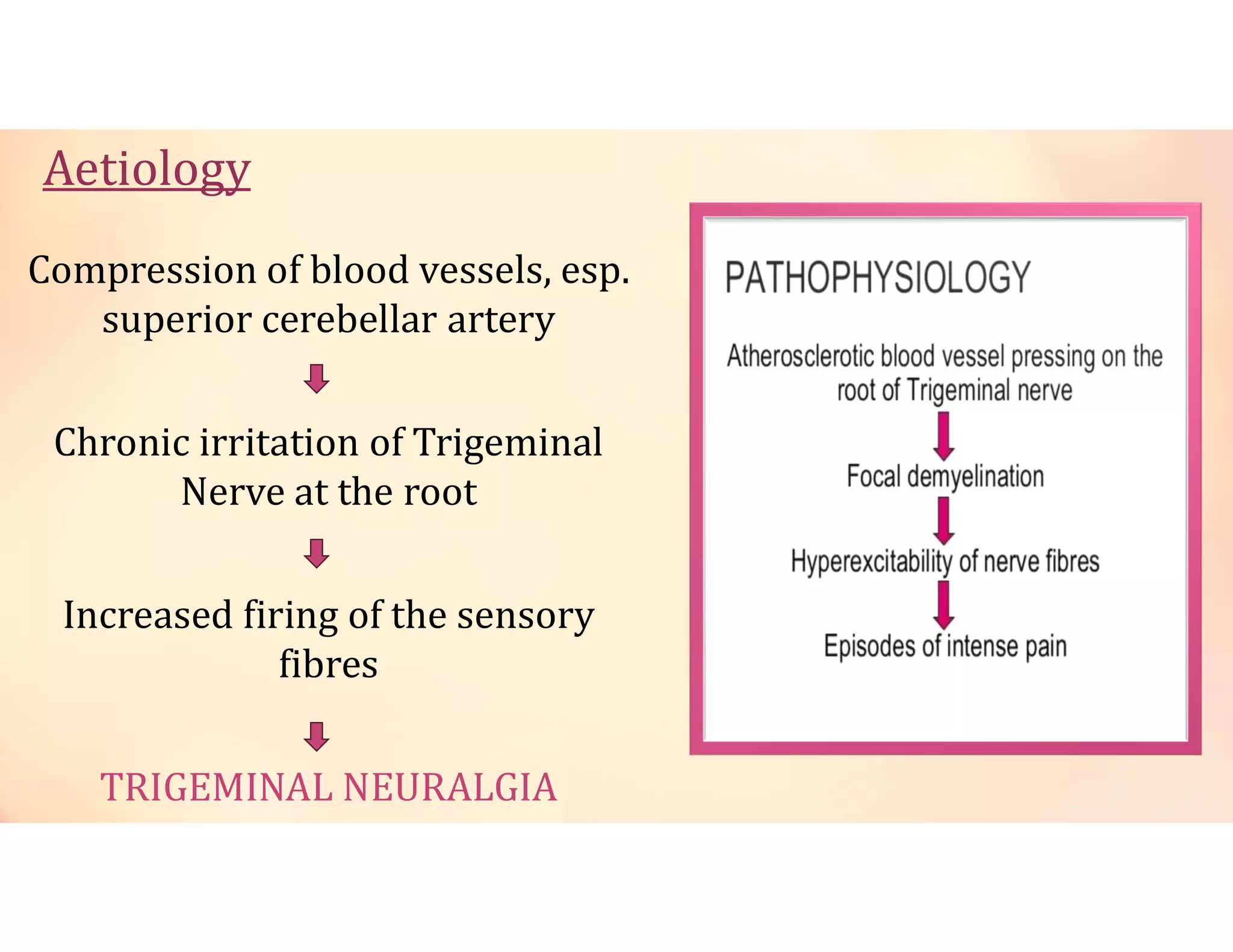
Compression of blood vessels, esp.
superior cerebellar artery
Chronic irritation of Trigeminal
Nerve at the root
Increased firing of the sensory
fibres
TRIGEMINAL NEURALGIA
Types of trigeminal neuralgia
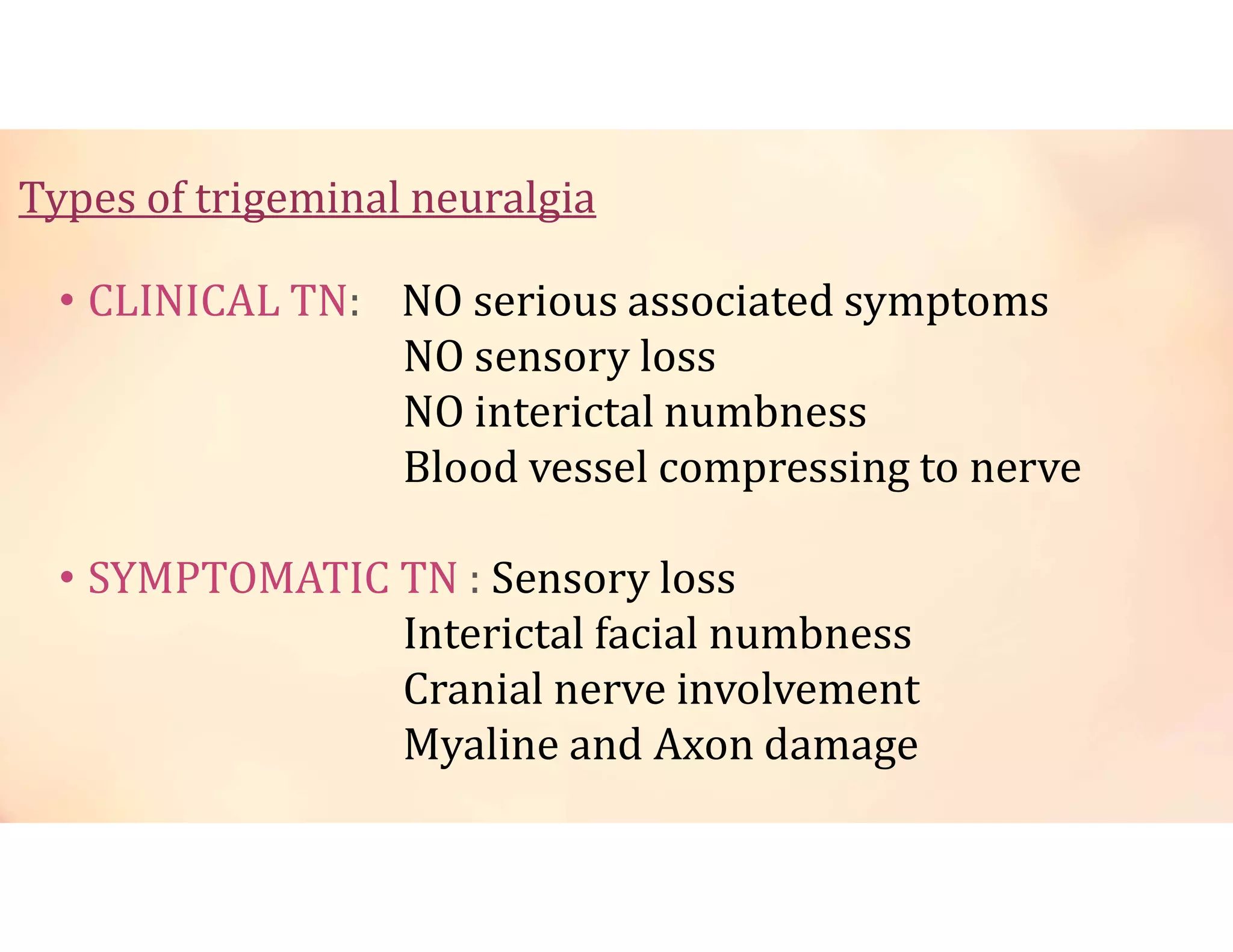
• CLINICAL TN: NO serious associated symptoms
NO sensory loss
NO interictal numbness
Blood vessel compressing to nerve
• SYMPTOMATIC TN : Sensory loss
Interictal facial numbness
Cranial nerve involvement
Myaline and Axon damage
• History
• Trigeminal nerve examionation
• diagnostic nerve blocking
• EEG
• MRI (brain )
Differential Diagnosis
• Multiple Sclerosis
• Vascular pain – migrane, temporal arteritis
• Atypical facial pain- depression, anxiety
• Other neuralgias- Postherpetic neuralgia
Glassopgaryngeal neuralgia
Post traumatic neuralgia
• Sudden unilateral neuralgia type of pain with
conjunctioval involvement SUNCT
MANAGEMENT
1ST line – Carbamezapine
2nd line – Phenytoin
Baclofen
Lamotrigine
3rd line – Clonazepam
Valproic acid
Oxacarbamezapine
Analgesics
Surgery
• Microvascular decompression
• Peripheral neurectomy
• Cryotherapy
• Radiofrequency gangliolysis
• Balloon
Microcompression(MVD)
Dr. K. MALATHI
PG SCHOLAR
DEPT OF KAYACHIKITSA

NEURALGIA PPT .pdf

  • 1.
    Dr. K. MALATHI PGSCHOLAR Department OF KAYACHIKITSA
  • 2.
    Neuralgia (Greek neuron,"nerve" + algos, "pain") is pain in the distribution of one or more nerves, • Neuropathic pain is pain caused by damage or disease affecting the somato sensory system. • Neuropathic pain may result from disorders of the peripheral nervous system or the central nervous system (brain and spinal cord).
  • 3.
  • 4.
    Glossopharyngeal Neuralgia • Painin tonsillar fossa • Back of the throat, larynx and radiating towards ear • Pain while Swallowing • Not very common
  • 5.
    Postherpetic neuralgia • Occursas a complication of Shingles a viral infection, characterized by painful rash, blisters • May be anywhere on the body • Neuralgia can occur wherever the outbreak of shingles • Pain can be mild/ persistent/ intermittent • Some cases pain may occur before the rash • Occurs along with the path of nerve so its usually isolated to one side of the body
  • 6.
    Occipital Neuralgia • Itis a condition in which the occipital nerves, the nerves that run through the scalp, are injured or inflamed. • Headache that feel like severe piercing, throbbing • shock-like pain in the upper neck, back of the head or behind the ears. • generally starts at the base of the head and goes to the scalp on one or both sides of the head.
  • 7.
    Trigeminal neuralgia • Trigeminalneuralgia (TN or TGN), also called Fothergill disease, tic douloureux, or trifacial neuralgia is a long- term pain disorder that affects the trigeminal nerve • It is a neuropathic pain in the distribution of the one ore more divisions of the Trigeminal neuron. • TN Syndrome: Sudden, severe, paroxysmal of neuropathic pain
  • 8.
    • Unknown • Infections •Vascular compression on nerve root • Exposure to cold, blow, chewing, eating, hot and cold drinks • Diabetes • Less common causes - Chemical irritation Trauma Chroni kidney disease
  • 9.
    Symptoms • S –Site of the pain • O – Onset • C – Character • R – Radiation • A – associate with • T – Time (duration) • E – Exacerbating and relieving • S – Severity of pain
  • 10.
    Socrates…. Sympto m Site Onse t Radiation Characte r Tim e Associate dwith Exacerbate and relieving Seviarit y • SITE – Unilateral facial pain common in mandibular, maxillary and ophthalmic region • ONSET – sudden, paraxismal pain • CHARACTER –cutting, stabbing, electrical shock like • RADIATION – angle of the mouth to ear, eye, nostril • ASSOCIATED WITH – spasticity, winces, flushing of face, lacrimation • TIME - 1 to 2 min duration only • EXACERBATING AND RELIEVING FACTORS – spontaneous, allodynia – movement/smile/eating/chewing/swallowing, soft touch- tactile allodynia • SEVERITY – Very severe, cluster of attacks, jerks
  • 11.
    Aetiology Compression of bloodvessels, esp. superior cerebellar artery Chronic irritation of Trigeminal Nerve at the root Increased firing of the sensory fibres TRIGEMINAL NEURALGIA
  • 12.
    Types of trigeminalneuralgia • CLINICAL TN: NO serious associated symptoms NO sensory loss NO interictal numbness Blood vessel compressing to nerve • SYMPTOMATIC TN : Sensory loss Interictal facial numbness Cranial nerve involvement Myaline and Axon damage
  • 13.
    • History • Trigeminalnerve examionation • diagnostic nerve blocking • EEG • MRI (brain )
  • 14.
    Differential Diagnosis • MultipleSclerosis • Vascular pain – migrane, temporal arteritis • Atypical facial pain- depression, anxiety • Other neuralgias- Postherpetic neuralgia Glassopgaryngeal neuralgia Post traumatic neuralgia • Sudden unilateral neuralgia type of pain with conjunctioval involvement SUNCT
  • 15.
    MANAGEMENT 1ST line –Carbamezapine 2nd line – Phenytoin Baclofen Lamotrigine 3rd line – Clonazepam Valproic acid Oxacarbamezapine Analgesics
  • 16.
    Surgery • Microvascular decompression •Peripheral neurectomy • Cryotherapy • Radiofrequency gangliolysis • Balloon Microcompression(MVD)
  • 17.
    Dr. K. MALATHI PGSCHOLAR DEPT OF KAYACHIKITSA