JAIPUR NATION UNIVERSITY
ASTHMA
Submitted To: Submitted By:
Dr. G.N Sharma Manish kumar suman
Associate Professor B.Pharm 4th Sem
School of P’ceutical Science Roll No. - 20
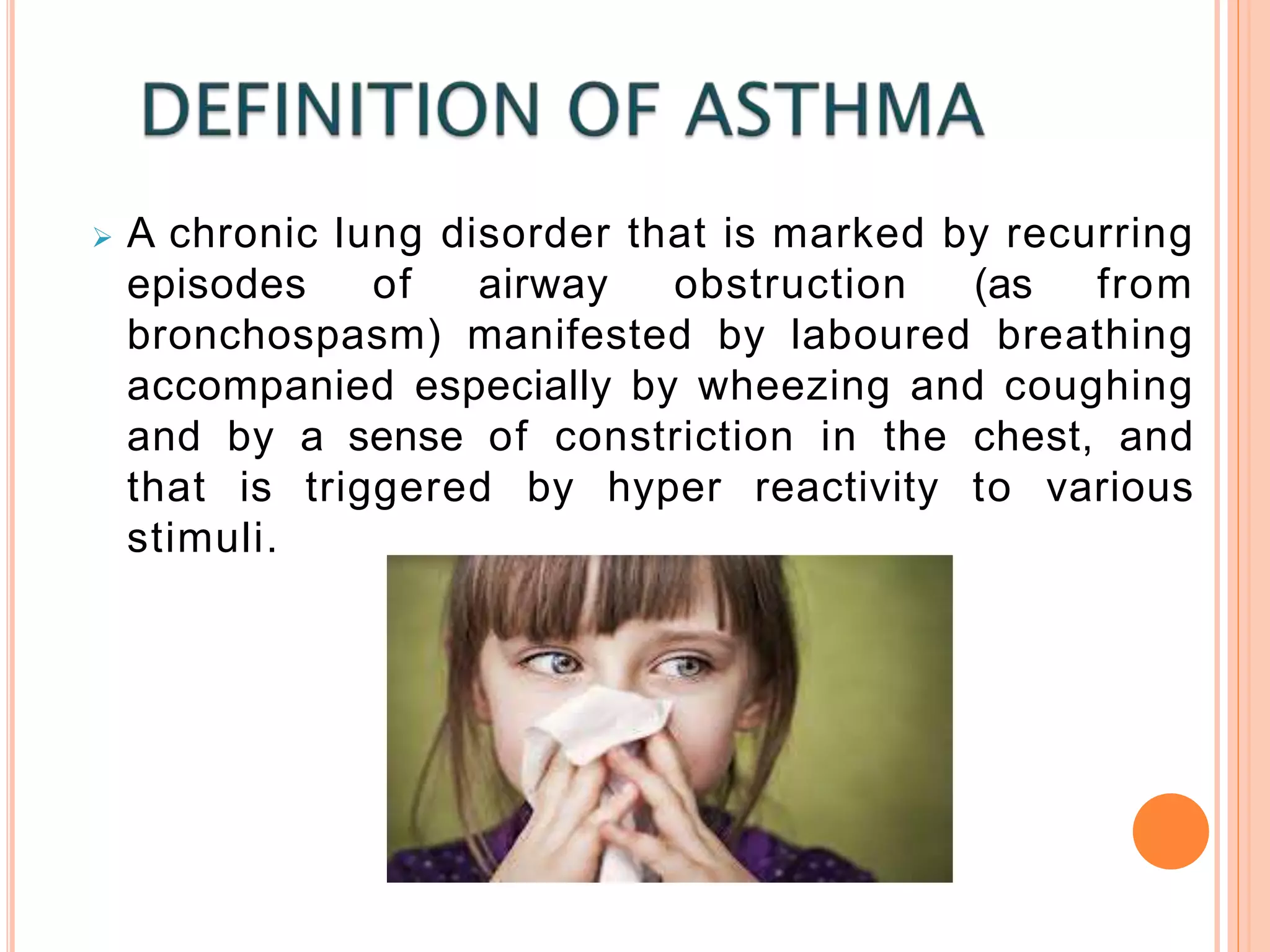
 A chronic lung disorder that is marked by recurring
episodes of airway obstruction (as from
bronchospasm) manifested by laboured breathing
accompanied especially by wheezing and coughing
and by a sense of constriction in the chest, and
that is triggered by hyper reactivity to various
stimuli.
 Asthma attacks all groups but often starts in
childhood.
 Characterized by recurrent attacks s of
breathlessness and wheezing, which has
different severity and frequency in each person.
 Attack from hour to hour and day to day.
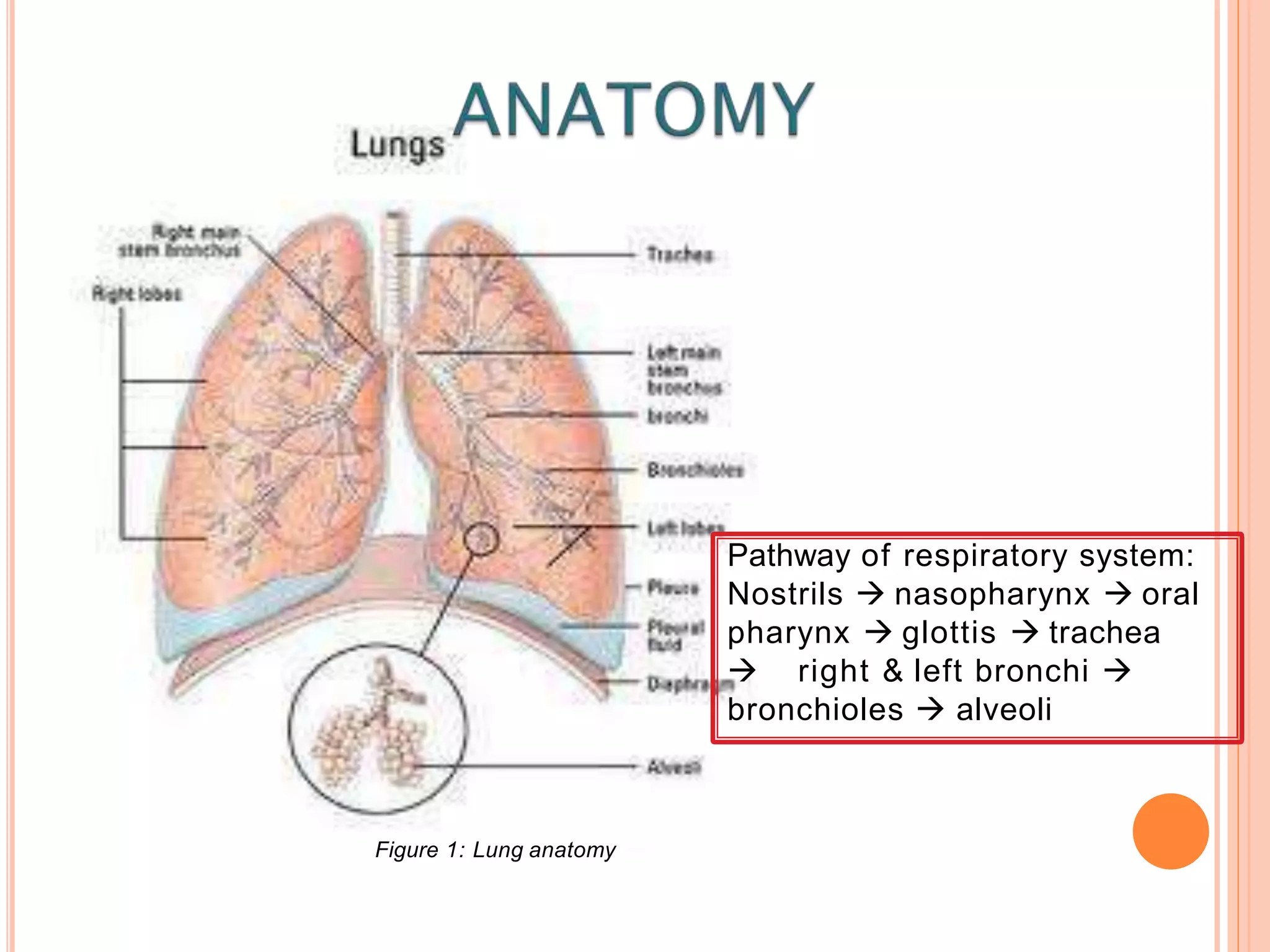
Figure 1: Lung anatomy
Pathway of respiratory system:
Nostrils  nasopharynx  oral
pharynx  glottis  trachea
 right & left bronchi 
bronchioles  alveoli
Figure 2: Differrence between normal airway and airway in person with asthma
Narrowed
bronchioles
(muscles spasms)
Inflammation of
inner lining of
airways
Muscle around
airways tighten
Airways produce
mucus due to
inflammation
(clogged the
shrunken tubes)
 Genetic factors
 Environmental factors
a) House dust mites
b) Exposure to tobacco smoke.
c) Predisposed to animals, pollens moulds and
dust.
 Dietary changes – junk food and fast food
contain MSG
 Lack of exercise - Less stretching of the
airways
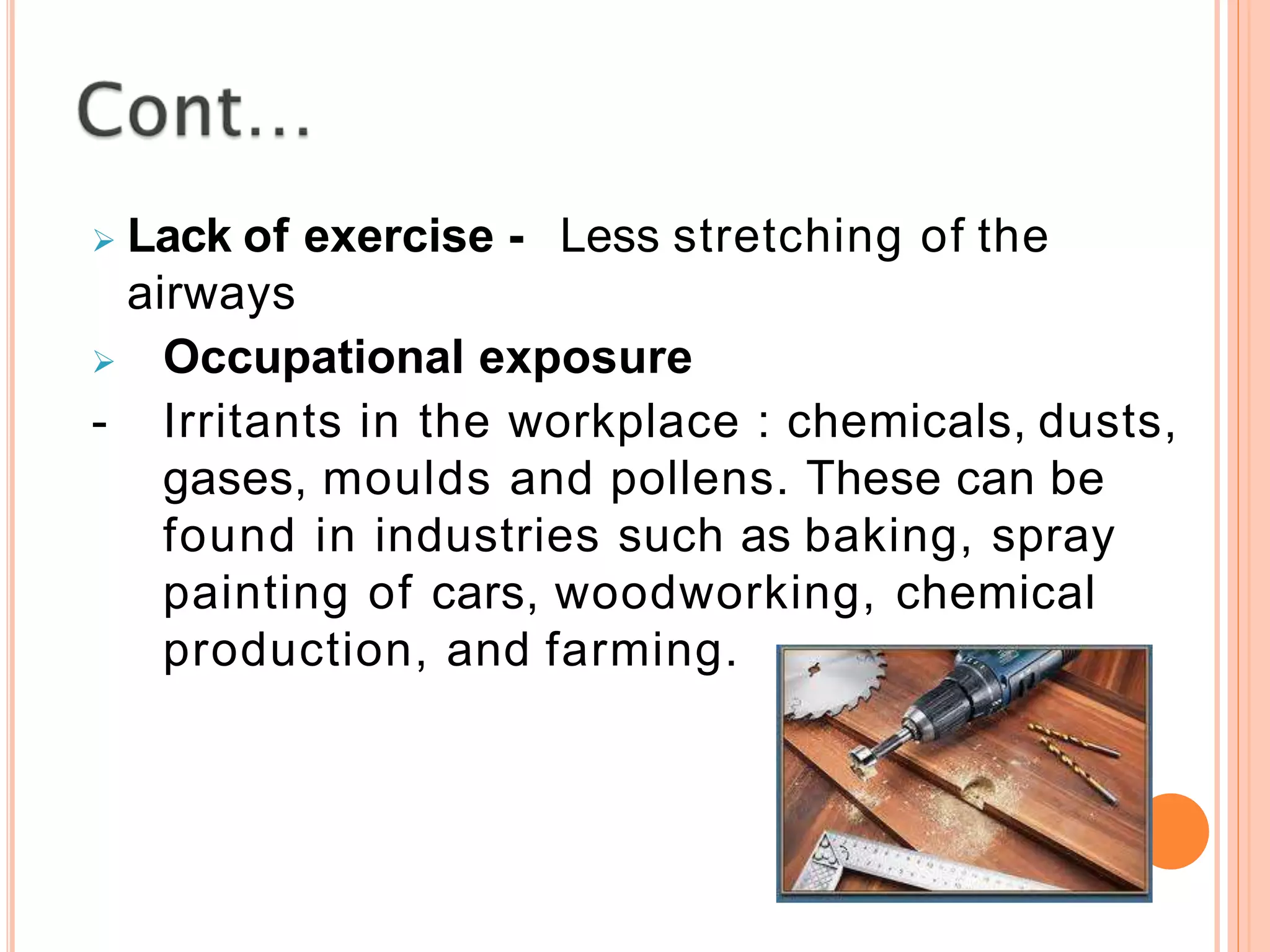
 Occupational exposure
- Irritants in the workplace : chemicals, dusts,
gases, moulds and pollens. These can be
found in industries such as baking, spray
painting of cars, woodworking, chemical
production, and farming.
 Atopic diseases – eczema and allergic rhinitis.
 Maternal status – both physical and mental
conditions like anaemia and depression in the
mother are associated with asthmatic stress
for the child.
 Early antibiotic use – babies who are given
antibiotics may be 50% more likely to develop
asthma by the age of six
Initial exam (conducted by doctor):
 Medical history
 Asthma symptoms, how you feel, known
asthma and allergy triggers, your activity level
and diet, your home and work
environment, and family history.
 Then, some tests will be conducted to
diagnose asthma
Peak Flow Meter
Pefer is used to assess the severity of wheezing in those who have asthma.
Pefermeasures how quickly a person can exhale air from the lungs
Peak expiratory flow rate (PEFR)
 A drop of liquid containing the allergen in placed
on your skin (generally forearms is used).
 A small lance with a pinpoint is poked through
the liquid into the top layer of skin (prick test).
 If you are allergic to the allergen, after about 2
minutes the skin begins to form a reaction
(red, slightly swollen, and itchy: it makes a hive).
 The size of the hive is measured and recorded.
 The larger the hive, the more likely it is that you
are allergic to the allergen tested.
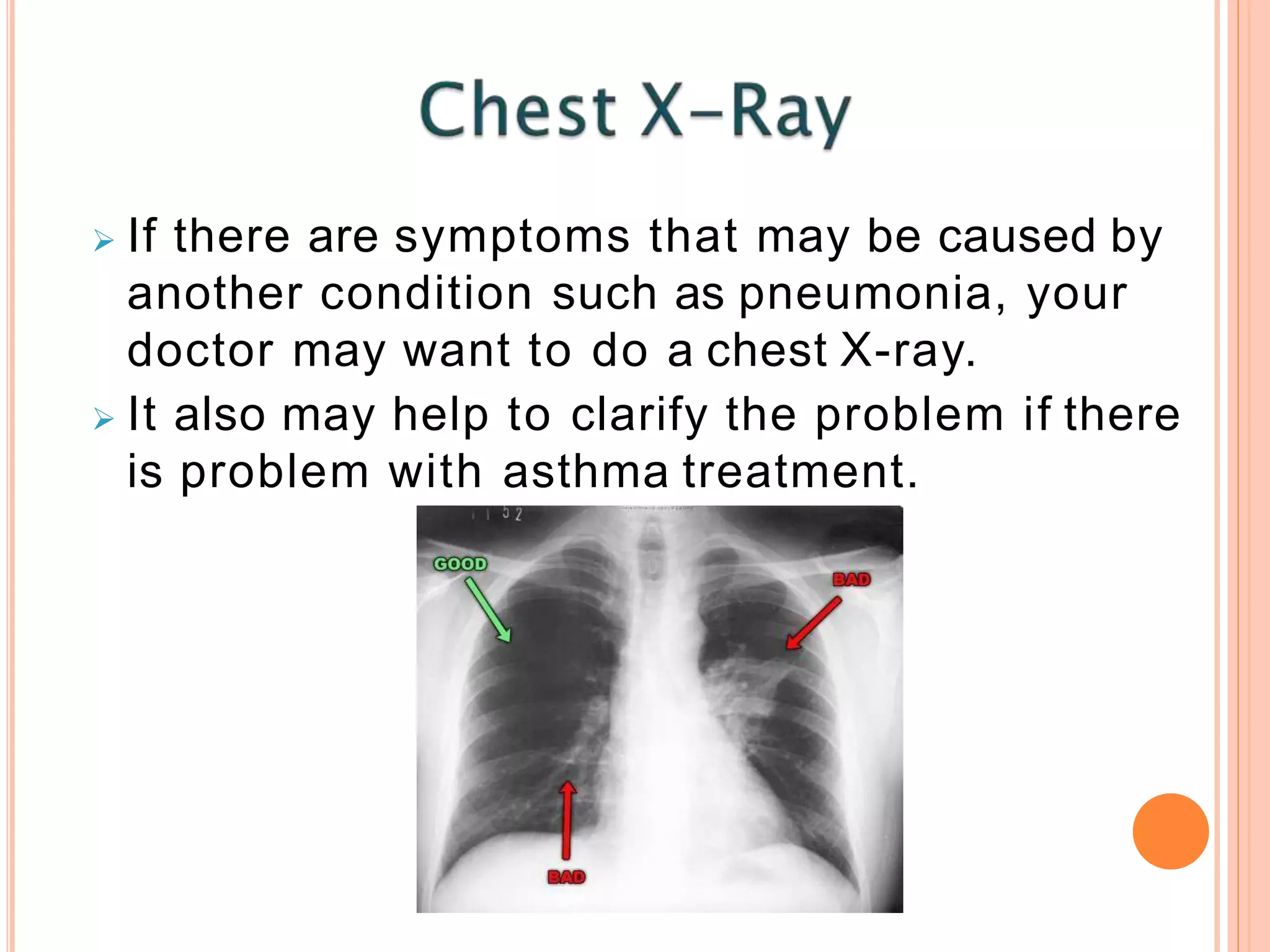
 If there are symptoms that may be caused by
another condition such as pneumonia, your
doctor may want to do a chest X-ray.
 It also may help to clarify the problem if there
is problem with asthma treatment.
Common symptoms of asthma
1. Coughing, especially at night
2. Wheezing
3. Shortness of breath
4. Chest tightness, pain, or pressure
Mild asthma attack
1. Cough
2. Wheezing
3. Mild difficulty breathing during normal
activities
4. Difficulty sleeping
5. Hiccups
6. Peak expiratory flow rate (PEFR)is 70 to 90%
of personal best
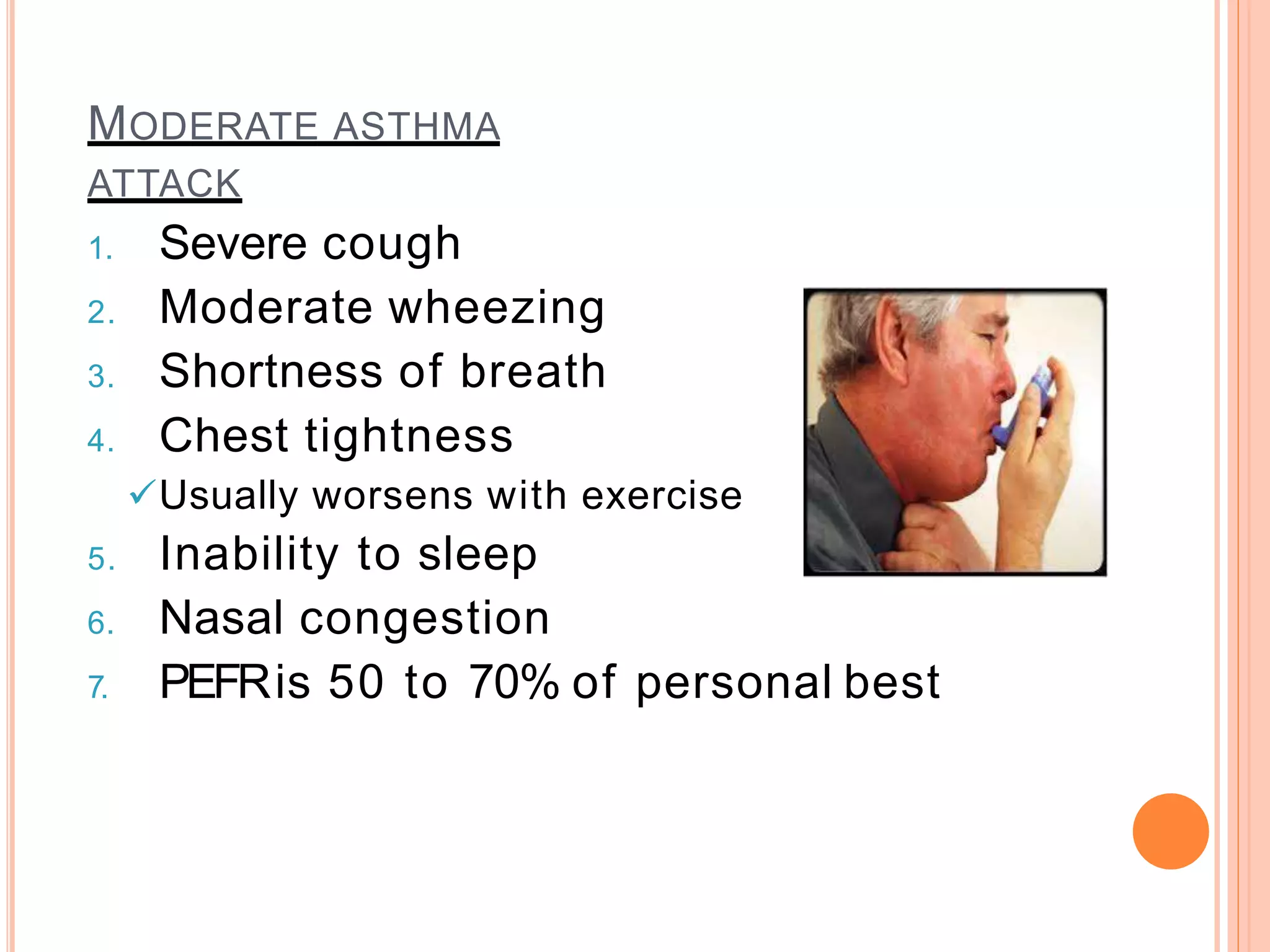
MODERATE ASTHMA
ATTACK
1. Severe cough
2. Moderate wheezing
3. Shortness of breath
4. Chest tightness
Usually worsens with exercise
5. Inability to sleep
6. Nasal congestion
7. PEFRis 50 to 70% of personal best
1. Allergic asthma (extrinsic)
2. Non-allergic asthma (intrinsic)
3. Cough variant asthma
4. Occupational asthma
5. Exercise induced asthma
6. Medication induced asthma
7. Nocturnal asthma
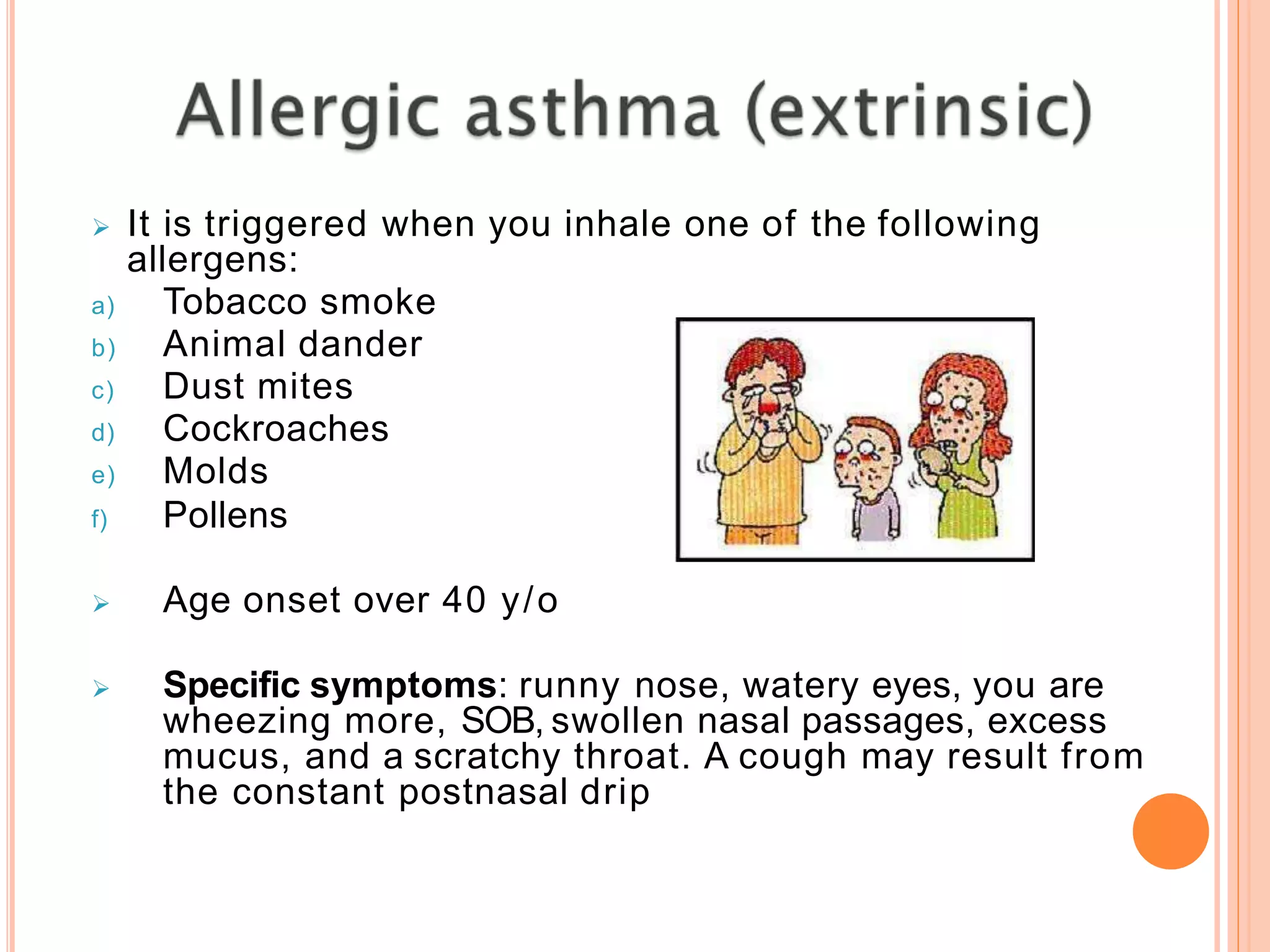
 It is triggered when you inhale one of the following
allergens:
a) Tobacco smoke
b) Animal dander
c) Dust mites
d) Cockroaches
e) Molds
f) Pollens
 Age onset over 40 y/o
 Specific symptoms: runny nose, watery eyes, you are
wheezing more, SOB, swollen nasal passages, excess
mucus, and a scratchy throat. A cough may result from
the constant postnasal drip
 Not triggered by allergens
 Age onset under 40 y/o
 Triggers:
 Irritants- Tobacco smoke, wood smoke, room
deodorizers, fresh paint, household cleaning
products, cooking odours, workplace chemicals,
perfumes, and outdoor air pollution, heartburn,
changes in temperature.
 Specific symptoms: Respiratory infections, such
as the common cold, Influenza or a sinus
infection.
 When cough is the only asthma symptom,
this is known as cough variant asthma (CVA)
 Specific symptoms:
a) Chronic, non- productive cough
b) High sensitive cough reflex
 Specific symptoms:
 Airway irritation, obstruction, and
inflammation.
 Worsening after arriving at work and
improvement on weekends or during
extended periods away from work.
 Treatment :
a) Engineering controls (such as improved
ventilation) to reduce or eliminate the
substance
b) Use respiratory protective equipment
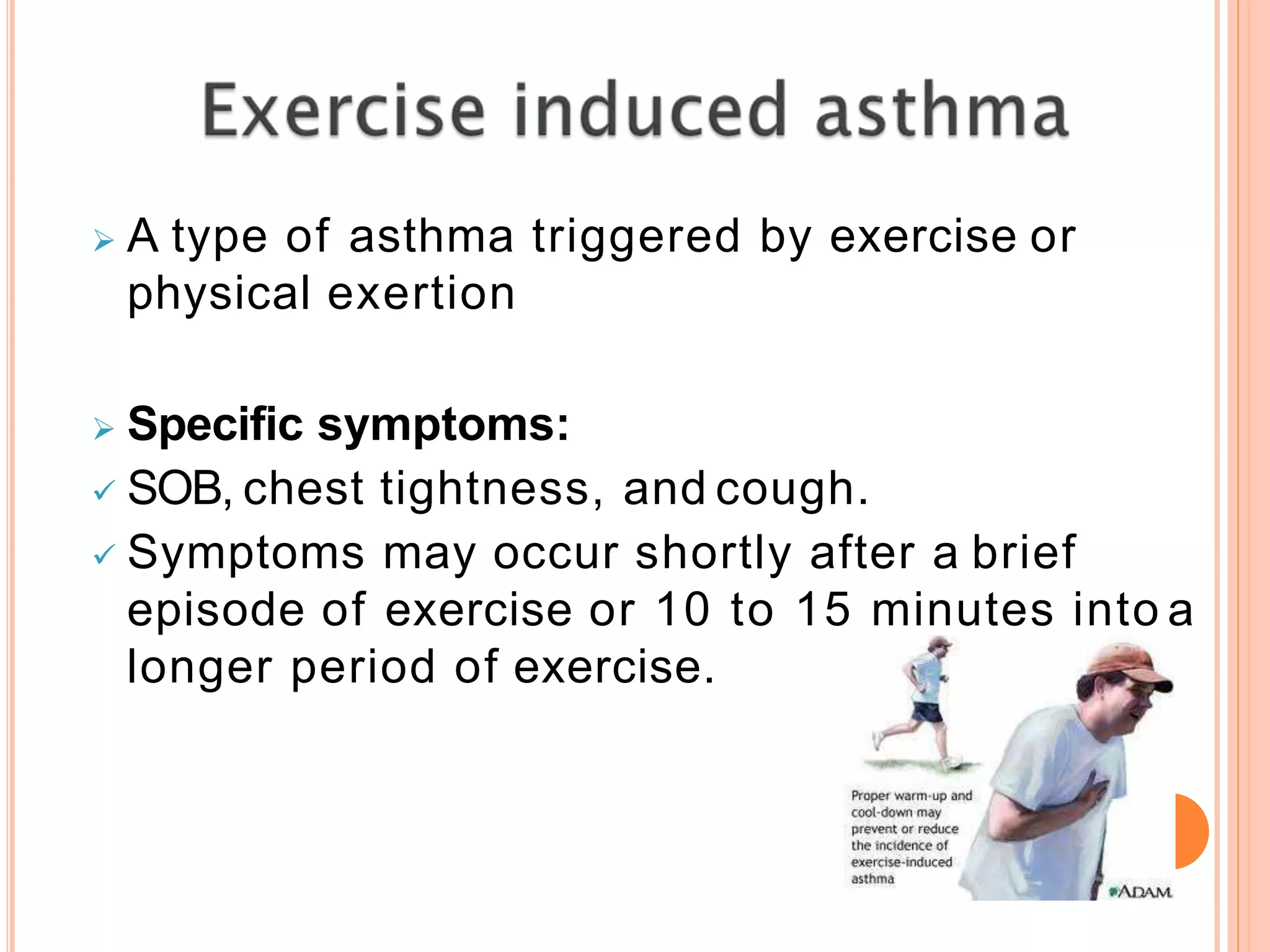
 A type of asthma triggered by exercise or
physical exertion
 Specific symptoms:
 SOB, chest tightness, and cough.
 Symptoms may occur shortly after a brief
episode of exercise or 10 to 15 minutes into a
longer period of exercise.
 The asthma getting worse because of medication
you take for another health condition.
 Causes:
a) Anti- inflammatories for aches and pain:
Motrin, Advil
b) Heart disease drugs :inderal, coreg (beta-
blockers)
c) Glaucoma drugs: beta-blockers eyes drop
d) Hypertension and congestive heart failure
drugs: angotensive converting enzyme
inhibitors (ACE)
Drugs Function Side effects
Inhaled
corticosteroids
(flovent, pulmicort,
aerobid)
Reduce swelling and
mucus production in
airways
Poor growth, decreased bone
density, varicella Infection
(chickenpox that spreads to
organs),cataracts &
glaucoma
Long-acting beta
agonists (LABA) :
serevant,
fulmoterol
Open the airways and
reduce inflammation
(need to be used with
other combination
inhalers)
Increases severity of asthma
exacerbations and risk of fatal
asthma episodes.
Leukotrine
modifiers- oral
medication
(singulair,accolate)
Relieve asthma
symptoms
Psychological reactions -
agitation, aggression,
hallucinations, depression &
suicidal thinking/ headache,
skin rashes
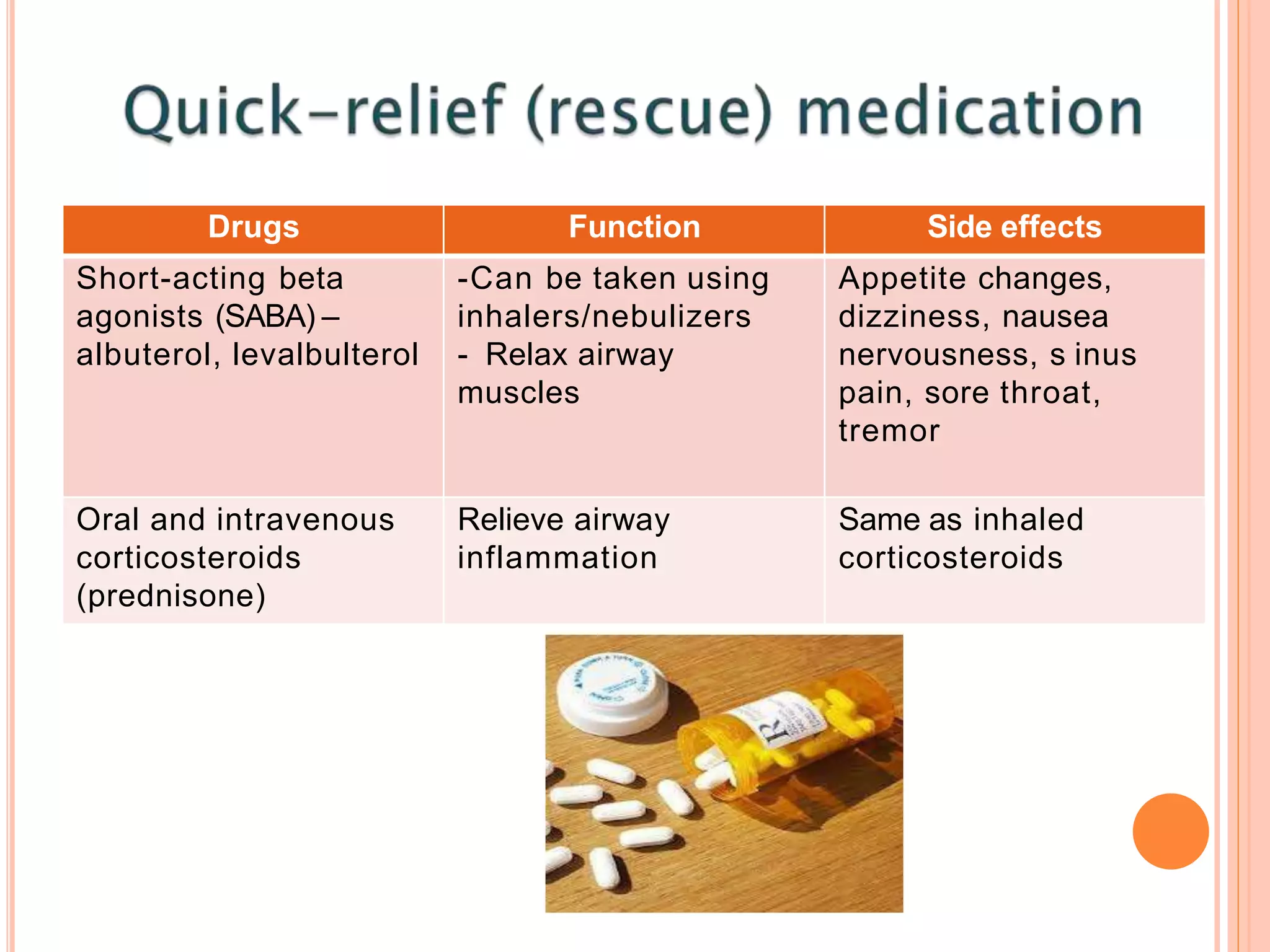
Drugs Function Side effects
Short-acting beta
agonists (SABA) –
albuterol, levalbulterol
-Can be taken using
inhalers/nebulizers
- Relax airway
muscles
Appetite changes,
dizziness, nausea
nervousness, s inus
pain, sore throat,
tremor
Oral and intravenous
corticosteroids
(prednisone)
Relieve airway
inflammation
Same as inhaled
corticosteroids
1. Diet : eat diets higher in vitamins C and E,
magnesium, and omega-3 fatty acids. Avoid
seafood that may become allergens.
2. Exercise: short, intermittent periods of
exertion
3. Stop smoking
ASTHMA

ASTHMA

  • 1.
    JAIPUR NATION UNIVERSITY ASTHMA SubmittedTo: Submitted By: Dr. G.N Sharma Manish kumar suman Associate Professor B.Pharm 4th Sem School of P’ceutical Science Roll No. - 20
  • 2.
     A chroniclung disorder that is marked by recurring episodes of airway obstruction (as from bronchospasm) manifested by laboured breathing accompanied especially by wheezing and coughing and by a sense of constriction in the chest, and that is triggered by hyper reactivity to various stimuli.
  • 3.
     Asthma attacksall groups but often starts in childhood.  Characterized by recurrent attacks s of breathlessness and wheezing, which has different severity and frequency in each person.  Attack from hour to hour and day to day.
  • 5.
    Figure 1: Lunganatomy Pathway of respiratory system: Nostrils  nasopharynx  oral pharynx  glottis  trachea  right & left bronchi  bronchioles  alveoli
  • 6.
    Figure 2: Differrencebetween normal airway and airway in person with asthma Narrowed bronchioles (muscles spasms)
  • 7.
    Inflammation of inner liningof airways Muscle around airways tighten Airways produce mucus due to inflammation (clogged the shrunken tubes)
  • 8.
     Genetic factors Environmental factors a) House dust mites b) Exposure to tobacco smoke. c) Predisposed to animals, pollens moulds and dust.  Dietary changes – junk food and fast food contain MSG
  • 9.
     Lack ofexercise - Less stretching of the airways  Occupational exposure - Irritants in the workplace : chemicals, dusts, gases, moulds and pollens. These can be found in industries such as baking, spray painting of cars, woodworking, chemical production, and farming.
  • 10.
     Atopic diseases– eczema and allergic rhinitis.  Maternal status – both physical and mental conditions like anaemia and depression in the mother are associated with asthmatic stress for the child.  Early antibiotic use – babies who are given antibiotics may be 50% more likely to develop asthma by the age of six
  • 11.
    Initial exam (conductedby doctor):  Medical history  Asthma symptoms, how you feel, known asthma and allergy triggers, your activity level and diet, your home and work environment, and family history.  Then, some tests will be conducted to diagnose asthma
  • 12.
    Peak Flow Meter Peferis used to assess the severity of wheezing in those who have asthma. Pefermeasures how quickly a person can exhale air from the lungs Peak expiratory flow rate (PEFR)
  • 13.
     A dropof liquid containing the allergen in placed on your skin (generally forearms is used).  A small lance with a pinpoint is poked through the liquid into the top layer of skin (prick test).  If you are allergic to the allergen, after about 2 minutes the skin begins to form a reaction (red, slightly swollen, and itchy: it makes a hive).  The size of the hive is measured and recorded.  The larger the hive, the more likely it is that you are allergic to the allergen tested.
  • 14.
     If thereare symptoms that may be caused by another condition such as pneumonia, your doctor may want to do a chest X-ray.  It also may help to clarify the problem if there is problem with asthma treatment.
  • 15.
    Common symptoms ofasthma 1. Coughing, especially at night 2. Wheezing 3. Shortness of breath 4. Chest tightness, pain, or pressure
  • 16.
    Mild asthma attack 1.Cough 2. Wheezing 3. Mild difficulty breathing during normal activities 4. Difficulty sleeping 5. Hiccups 6. Peak expiratory flow rate (PEFR)is 70 to 90% of personal best
  • 17.
    MODERATE ASTHMA ATTACK 1. Severecough 2. Moderate wheezing 3. Shortness of breath 4. Chest tightness Usually worsens with exercise 5. Inability to sleep 6. Nasal congestion 7. PEFRis 50 to 70% of personal best
  • 18.
    1. Allergic asthma(extrinsic) 2. Non-allergic asthma (intrinsic) 3. Cough variant asthma 4. Occupational asthma 5. Exercise induced asthma 6. Medication induced asthma 7. Nocturnal asthma
  • 19.
     It istriggered when you inhale one of the following allergens: a) Tobacco smoke b) Animal dander c) Dust mites d) Cockroaches e) Molds f) Pollens  Age onset over 40 y/o  Specific symptoms: runny nose, watery eyes, you are wheezing more, SOB, swollen nasal passages, excess mucus, and a scratchy throat. A cough may result from the constant postnasal drip
  • 20.
     Not triggeredby allergens  Age onset under 40 y/o  Triggers:  Irritants- Tobacco smoke, wood smoke, room deodorizers, fresh paint, household cleaning products, cooking odours, workplace chemicals, perfumes, and outdoor air pollution, heartburn, changes in temperature.  Specific symptoms: Respiratory infections, such as the common cold, Influenza or a sinus infection.
  • 21.
     When coughis the only asthma symptom, this is known as cough variant asthma (CVA)  Specific symptoms: a) Chronic, non- productive cough b) High sensitive cough reflex
  • 22.
     Specific symptoms: Airway irritation, obstruction, and inflammation.  Worsening after arriving at work and improvement on weekends or during extended periods away from work.  Treatment : a) Engineering controls (such as improved ventilation) to reduce or eliminate the substance b) Use respiratory protective equipment
  • 23.
     A typeof asthma triggered by exercise or physical exertion  Specific symptoms:  SOB, chest tightness, and cough.  Symptoms may occur shortly after a brief episode of exercise or 10 to 15 minutes into a longer period of exercise.
  • 24.
     The asthmagetting worse because of medication you take for another health condition.  Causes: a) Anti- inflammatories for aches and pain: Motrin, Advil b) Heart disease drugs :inderal, coreg (beta- blockers) c) Glaucoma drugs: beta-blockers eyes drop d) Hypertension and congestive heart failure drugs: angotensive converting enzyme inhibitors (ACE)
  • 25.
    Drugs Function Sideeffects Inhaled corticosteroids (flovent, pulmicort, aerobid) Reduce swelling and mucus production in airways Poor growth, decreased bone density, varicella Infection (chickenpox that spreads to organs),cataracts & glaucoma Long-acting beta agonists (LABA) : serevant, fulmoterol Open the airways and reduce inflammation (need to be used with other combination inhalers) Increases severity of asthma exacerbations and risk of fatal asthma episodes. Leukotrine modifiers- oral medication (singulair,accolate) Relieve asthma symptoms Psychological reactions - agitation, aggression, hallucinations, depression & suicidal thinking/ headache, skin rashes
  • 26.
    Drugs Function Sideeffects Short-acting beta agonists (SABA) – albuterol, levalbulterol -Can be taken using inhalers/nebulizers - Relax airway muscles Appetite changes, dizziness, nausea nervousness, s inus pain, sore throat, tremor Oral and intravenous corticosteroids (prednisone) Relieve airway inflammation Same as inhaled corticosteroids
  • 27.
    1. Diet :eat diets higher in vitamins C and E, magnesium, and omega-3 fatty acids. Avoid seafood that may become allergens. 2. Exercise: short, intermittent periods of exertion 3. Stop smoking