
BRONCHIAL ASTHMABRONCHIAL ASTHMA
DefinitionDefinition
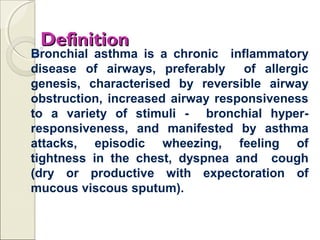
Bronchial asthma is a chronic inflammatory
disease of airways, preferably of allergic
genesis, characterised by reversible airway
obstruction, increased airway responsiveness
to a variety of stimuli - bronchial hyper-
responsiveness, and manifested by asthma
attacks, episodic wheezing, feeling of
tightness in the chest, dyspnea and cough
(dry or productive with expectoration of
mucous viscous sputum).
Epidemiology
Bronchial asthma is a widespread
disease, 5-15% of population suffer
from it all over world.
In the USA about 12 million
persons have BA (5.434 deaths)
Sponsored
Medical Lecture Notes – All Subjects
USMLE Exam (America) – Practice
AETIOLOGYAETIOLOGY
Inflammation of airways in patients
with BA is of immune genesis and
determined genetically
Marker is located at chromosome
11q, which regulates the expression
of IgE-receptors mast cells and
basophiles
Mutation of β2-receptor gene,
weakness of β2-receptor
AETIOLOGY of allergic (atopic,
extrinsic) BA
1. Allergens: home dust which includes components of
Dermafagoides pteronissinus (home dust mite)
2. Epidermal Allergens: cat’s, dog’s fur, horse’s
dandruff
3. Pollen Allergens: grasses, trees, flowers
4. Fungal Allergens
5. Food Allergens: cow milk, eggs, sea food, fruits,
vegetables, berries, honey, chocolate, vine
6. Drug Allergens and irritants: Aspirin, Non-steroid
anti -inflammatory drugs, antibiotics
AETIOLOGY of intrinsic BA
Viral: RSTV, influenza,
parainfluenza, etc
Bacterial
 Disorders of hormonal
metabolism
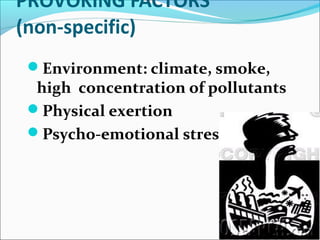
PROVOKING FACTORS
(non-specific)
Environment: climate, smoke,
high concentration of pollutants
Physical exertion
Psycho-emotional stresses
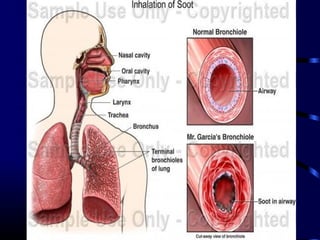
Pathology and pathogenesis
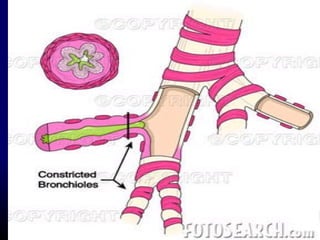
• Airway ( or bronchial) obstruction in
asthma is due to a combination of multiple
factors and complex mechanisms that includes:
• spasm of airway smooth muscle used to be
considered the major contributor to the airway
obstruction (acute bronchial constriction)
• hypertrophy of bronchial smooth muscle
Pathology and pathogenesisPathology and pathogenesis
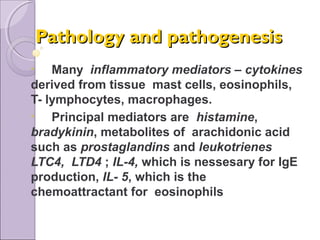
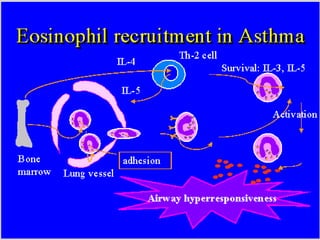
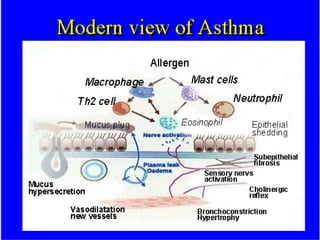
• Many inflammatory mediators – cytokines
derived from tissue mast cells, eosinophils,
T- lymphocytes, macrophages.
• Principal mediators are histamine,
bradykinin, metabolites of arachidonic acid
such as prostaglandins and leukotrienes
LTC4, LTD4 ; IL-4, which is nessesary for IgE
production, IL- 5, which is the
chemoattractant for eosinophils
Pathology and pathogenesisPathology and pathogenesis
· Thickening of epithelial basement
membrane and pneumosclerosis are
typical for chronic bronchial obstruction
• Cholinergic refllex bronchoconstriction
occurs in the acute response to inhalation of
irritant substances.
• Neuropeptides ( substance P, neurokinin
A, calcitonin) released from sensory nerves
cause vascular permearbility, mucus
secretion, bronchoconstriction, and
bronchodilation.
Pathology and pathogenesisPathology and pathogenesis
These changes result in reversible
obstruction of airways of all
calibers.
Inflammatory process leads to
hyperresponsivness
(hyperreactivity ,
hypersensitivity) of bronchi which
manifest as an exaggerated.
Pathology and pathogenesisPathology and pathogenesis
Bronchoconstriction
response to many different
stimuli
(allergens, non-spesific factors)
in patients with atopic
(extrinsic) and intrinsic
asthma.
Exercise-induced asthma occurs in 5-10
minutes after the patient starts exercise and may be
related to heat loss or water loss from bronchial
surface.
Bronchial asthma combined with aspirin sensitivity
and nasal polyposis ( Aspirin asthma) is due to
the effects on arachidonic acid metabolism of aspirin
and other non-steroidal anti- inflammatory agents,
tartrazine dyes.
Symptoms and signsSymptoms and signs
Asthma is characterised by
asthma attacks manifested by
∀•       episodes of wheezing,
∀•       feelings of tightness in the
chest,
∀•       expiratory dyspnea,
∀•       dry cough or productive
one with expectoration of
mucous viscous sputum).
Symptoms and signsSymptoms and signs
Asthma attacks occur
spontaneuosly or result from
various “trigger factors"
including allergens and
nonspecific irritants (dusts,
odours, cold air, sulphur dioxide
fumes), emotional stress, upper
respiratory infections, exertion,
abruption of weather.
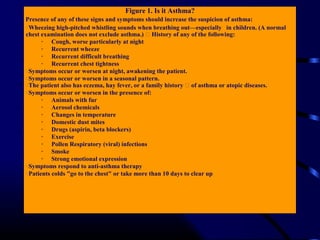
Figure 1. Is it Asthma?
Presence of any of these signs and symptoms should increase the suspicion of asthma:
„Wheezing high-pitched whistling sounds when breathing out—especially in children. (A normal
chest examination does not exclude asthma.) „ History of any of the following:
• Cough, worse particularly at night
• Recurrent wheeze
• Recurrent difficult breathing
• Recurrent chest tightness
„Symptoms occur or worsen at night, awakening the patient.
„Symptoms occur or worsen in a seasonal pattern.
„The patient also has eczema, hay fever, or a family history „ of asthma or atopic diseases.
„Symptoms occur or worsen in the presence of:
• Animals with fur
• Aerosol chemicals
• Changes in temperature
• Domestic dust mites
• Drugs (aspirin, beta blockers)
• Exercise
• Pollen Respiratory (viral) infections
• Smoke
• Strong emotional expression
„Symptoms respond to anti-asthma therapy
„Patients colds "go to the chest" or take more than 10 days to clear up
Physical examinationPhysical examination
Asthma attack is a paroxysm of
expiratory dyspnea.
A mild attack may produce only slight
tachycardya and tachypnea, with
prolonged expiration and mild diffuse
high-pitched wheezing.
The patient prefers to sit upright or even
leans forward, uses accessory respiratory muscles.
Physical examinationPhysical examination
The cough during an acute attack sounds
” tight” and generally does not produce
mucus.
After subsidence of the attack cough
with expectoration of mucoid viscous
( tenacious) sputum appears.
Usually a mild bronchial asthma attack can
be relieved by inhalations of B2- agonists.
Physical examinationPhysical examination
More severe attack are associated with use of accessory
muscles of respiration , distant breath sounds, coarse
rhonchi may accompany loud wheezing, hyperinflation of
the chest due to air trapping, hyperresonance (band-box
sound), and intercostal retraction.
Usually it can be relieved by the higher dose of B2-
agonists, or intravenous injection of Euphyllin, or even
corticosteroids.
Physical examinationPhysical examination
Ominous signs in severe asthma
include fatigue, pulsus paradoxus
(> 20 mm Hg), diaphoresis, inaudible
breath sounds with diminished
wheezing , inability to maintain
recumbency, and cyanosis .
Laboratory findingsLaboratory findings
Blood test (eosinophylia)
Sputum test (eosinophils, Charcot-
Leyden crystals, Curschmann,
s spirals)
ECG
Pulmonary function tests (SPG, FVC or
FEV1
of at least 15% or improvement in
FEF 25-75 of at least 25%)
PFM: measuring the peak expiratory flow
rate (PEF)
Arterial blood gas measurements
 X-ray examinations:
hyperinflation, lung pattern is
increased
 Inhaled functional tests with non-
specific agents (methacholine,
histamine)
 Inhaled functional tests with
specific agents (allergens)
 Allergologic skin prick-tests
 Immunogram (IgE, Th – 2)
 Chronic obstructive pulmonary
disease (COPD)
 Left ventricular failure (Cardiac
asthma)
 Pulmonary embolism
 Bronchiectasis
 Anaphylaxis
 Inhalation lung injury, and partial
airway obstruction due to any cause,
such as lung cancer and foreign body
aspiration
 Stridor in upper airway obstruction or in
vocal cord dysfunction may simulate wheezing.
 Asthma must be distinguished from
functional disorders of the larynx.
 Reversible bronchial obstruction with
eosinophilia occurs in infections with parasitic
infection (particularly Strongyloides),
bronchopulmonary aspergillosis
 Churg-Strauss syndrome
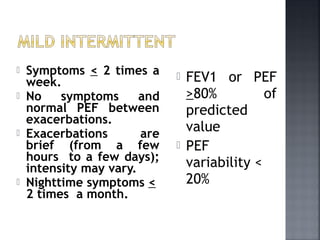
 Symptoms < 2 times a
week.
 No symptoms and
normal PEF between
exacerbations.
 Exacerbations are
brief (from a few
hours to a few days);
intensity may vary.
 Nighttime symptoms <
2 times a month.
 FEV1 or PEF
>80% of
predicted
value
 PEF
variability <
20%
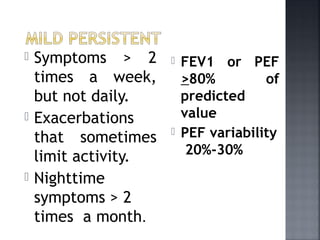
 Symptoms > 2
times a week,
but not daily.
 Exacerbations
that sometimes
limit activity.
 Nighttime
symptoms > 2
times a month.
 FEV1 or PEF
>80% of
predicted
value
 PEF variability
20%-30%
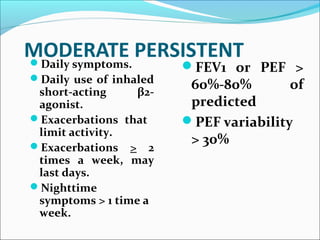
MODERATE PERSISTENTDaily symptoms.
Daily use of inhaled
short-acting β2-
agonist.
Exacerbations that
limit activity.
Exacerbations > 2
times a week, may
last days.
Nighttime
symptoms > 1 time a
week.
FEV1 or PEF >
60%-80% of
predicted
PEF variability
> 30%
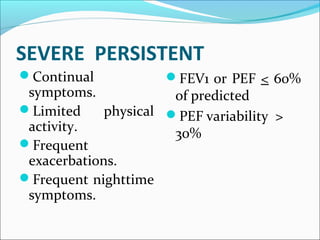
SEVERE PERSISTENT
Continual
symptoms.
Limited physical
activity.
Frequent
exacerbations.
Frequent nighttime
symptoms.
FEV1 or PEF < 60%
of predicted
PEF variability >
30%
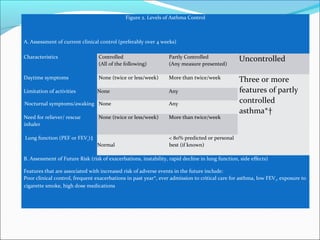
Figure 2. Levels of Asthma Control
A. Assessment of current clinical control (preferably over 4 weeks)
Characteristics Controlled
(All of the following)
Partly Controlled
(Any measure presented)
Uncontrolled
Daytime symptoms None (twice or less/week) More than twice/week Three or more
features of partly
controlled
asthma*†
Limitation of activities None Any
Nocturnal symptoms/awaking None Any
Need for reliever/ rescue
inhaler
None (twice or less/week) More than twice/week
Lung function (PEF or FEV1)‡
Normal
< 80% predicted or personal
best (if known)
B. Assessment of Future Risk (risk of exacerbations, instability, rapid decline in lung function, side effects)
Features that are associated with increased risk of adverse events in the future include:
Poor clinical control, frequent exacerbations in past year*, ever admission to critical care for asthma, low FEV1, exposure to
cigarette smoke, high dose medications
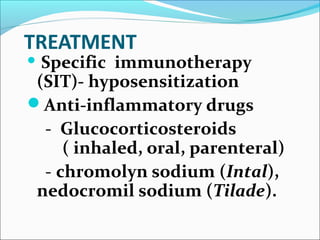
TREATMENT
 Specific immunotherapy
(SIT)- hyposensitization
Anti-inflammatory drugs
- Glucocorticosteroids
( inhaled, oral, parenteral)
- chromolyn sodium (Intal),
nedocromil sodium (Tilade).
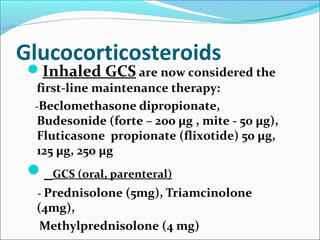
Glucocorticosteroids
Inhaled GCS are now considered the
first-line maintenance therapy:
-Beclomethasone dipropionate,
Budesonide (forte – 200 μg , mite - 50 μg),
Fluticasone propionate (flixotide) 50 μg,
125 μg, 250 μg
 GCS (oral, parenteral)
- Prednisolone (5mg), Triamcinolone
(4mg),
Methylprednisolone (4 mg)
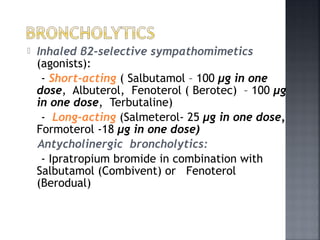
 Inhaled β2-selective sympathomimetics
(agonists):
- Short-acting ( Salbutamol – 100 μg in one
dose, Albuterol, Fenoterol ( Berotec) – 100 μg
in one dose, Terbutaline)
- Long-acting (Salmeterol- 25 μg in one dose,
Formoterol -18 μg in one dose)
Antycholinergic broncholytics:
- Ipratropium bromide in combination with
Salbutamol (Combivent) or Fenoterol
(Berodual)
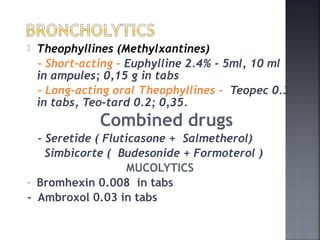
 Theophyllines (Methylxantines)
- Short-acting – Euphylline 2.4% - 5ml, 10 ml
in ampules; 0,15 g in tabs
- Long-acting oral Theophyllines - Teopec 0.3
in tabs, Teo-tard 0.2; 0,35.
Combined drugs
- Seretide ( Fluticasone + Salmetherol)
Simbicorte ( Budesonide + Formoterol )
MUCOLYTICS
- Bromhexin 0.008 in tabs
- Ambroxol 0.03 in tabs
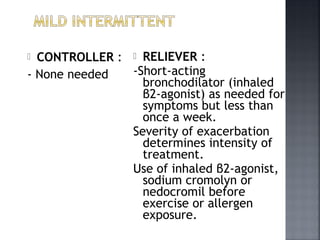
 CONTROLLER :
- None needed
 RELIEVER :
-Short-acting
bronchodilator (inhaled
β2-agonist) as needed for
symptoms but less than
once a week.
Severity of exacerbation
determines intensity of
treatment.
Use of inhaled β2-agonist,
sodium cromolyn or
nedocromil before
exercise or allergen
exposure.
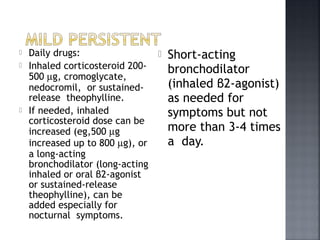
 Daily drugs:
 Inhaled corticosteroid 200-
500 µg, cromoglycate,
nedocromil, or sustained-
release theophylline.
 If needed, inhaled
corticosteroid dose can be
increased (eg,500 µg
increased up to 800 µg), or
a long-acting
bronchodilator (long-acting
inhaled or oral β2-agonist
or sustained-release
theophylline), can be
added especially for
nocturnal symptoms.
 Short-acting
bronchodilator
(inhaled β2-agonist)
as needed for
symptoms but not
more than 3-4 times
a day.
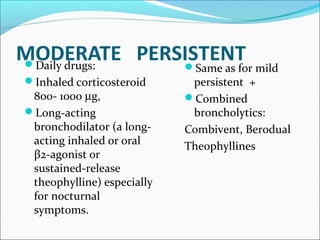
MODERATE PERSISTENTDaily drugs:
Inhaled corticosteroid
800- 1000 µg,
Long-acting
bronchodilator (a long-
acting inhaled or oral
β2-agonist or
sustained-release
theophylline) especially
for nocturnal
symptoms.
Same as for mild
persistent +
Combined
broncholytics:
Combivent, Berodual
Theophyllines
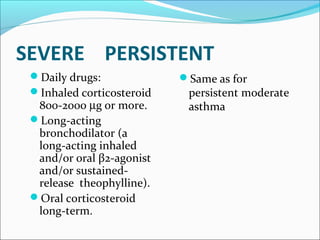
SEVERE PERSISTENT
Daily drugs:
Inhaled corticosteroid
800-2000 µg or more.
Long-acting
bronchodilator (a
long-acting inhaled
and/or oral β2-agonist
and/or sustained-
release theophylline).
Oral corticosteroid
long-term.
Same as for
persistent moderate
asthma
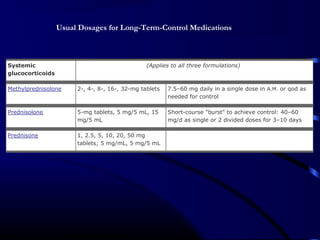
Usual Dosages for Long-Term-Control Medications
Systemic
glucocorticoids
(Applies to all three formulations)
Methylprednisolone 2-, 4-, 8-, 16-, 32-mg tablets 7.5–60 mg daily in a single dose in A.M. or qod as
needed for control
Prednisolone 5-mg tablets, 5 mg/5 mL, 15
mg/5 mL
Short-course "burst" to achieve control: 40–60
mg/d as single or 2 divided doses for 3–10 days
Prednisone 1, 2.5, 5, 10, 20, 50 mg
tablets; 5 mg/mL, 5 mg/5 mL
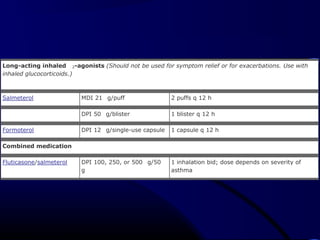
Long-acting inhaled 2-agonists (Should not be used for symptom relief or for exacerbations. Use with
inhaled glucocorticoids.)
Salmeterol MDI 21 g/puff 2 puffs q 12 h
DPI 50 g/blister 1 blister q 12 h
Formoterol DPI 12 g/single-use capsule 1 capsule q 12 h
Combined medication
Fluticasone/salmeterol DPI 100, 250, or 500 g/50
g
1 inhalation bid; dose depends on severity of
asthma
Cromolyn and Nedocromil
Cromolyn MDI 1 mg/puff 2–4 puffs tid-qid
Nebulizer 20 mg/ampule 1 ampule tid-qid
Nedocromil MDI 1.75 mg/puff 2–4 puffs bid-qid
Leukotriene modifiers
Montelukast 4- or 5-mg chewable tablet, 10-mg
tablet
10 mg qhs
Zafirlukast 10- or 20-mg tablet 40 mg daily (20-mg tablet bid)
Zileuton 300- or 600-mg tablet 2400 mg daily (given tablets qid)
Methylxanthines [Serum monitoring is important (serum concentration of 5–15 g/mL at steady state)].
Theophylline Liquids, sustained-release tablets,
and capsules
Starting dose 10 mg/kg per day up to 300 mg max;
usual max, 800 mg/d
MDI, metered-dose inhaler; DPI, daily permissible intake
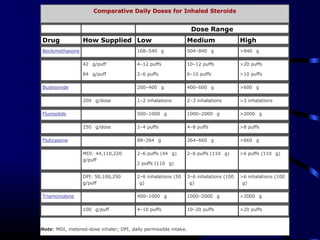
Comparative Daily Doses for Inhaled Steroids
Dose Range
Drug How Supplied Low Medium High
Beclomethasone 168–540 g 504–840 g >840 g
42 g/puff
84 g/puff
4–12 puffs
2–6 puffs
10–12 puffs
6–10 puffs
>20 puffs
>10 puffs
Budesonide 200–400 g 400–600 g >600 g
200 g/dose 1–2 inhalations 2–3 inhalations >3 inhalations
Flunisolide 500–1000 g 1000–2000 g >2000 g
250 g/dose 2–4 puffs 4–8 puffs >8 puffs
Fluticasone 88–264 g 264–660 g >660 g
MDI: 44,110,220
g/puff
2–6 puffs (44 g)
2 puffs (110 g)
2–6 puffs (110 g) >6 puffs (110 g)
DPI: 50,100,250
g/puff
2–6 inhalations (50
g)
3–6 inhalations (100
g)
>6 inhalations (100
g)
Triamcinolone 400–1000 g 1000–2000 g >2000 g
100 g/puff 4–10 puffs 10–20 puffs >20 puffs
Note: MDI, metered-dose inhaler; DPI, daily permissible intake.
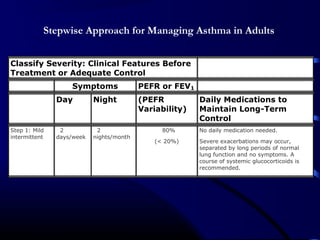
Classify Severity: Clinical Features Before
Treatment or Adequate Control
Symptoms PEFR or FEV1
Day Night (PEFR
Variability)
Daily Medications to
Maintain Long-Term
Control
Step 1: Mild
intermittent
2
days/week
2
nights/month
80%
(< 20%)
No daily medication needed.
Severe exacerbations may occur,
separated by long periods of normal
lung function and no symptoms. A
course of systemic glucocorticoids is
recommended.
Stepwise Approach for Managing Asthma in Adults
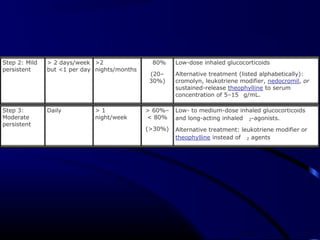
Step 2: Mild
persistent
> 2 days/week
but <1 per day
>2
nights/months
80%
(20–
30%)
Low-dose inhaled glucocorticoids
Alternative treatment (listed alphabetically):
cromolyn, leukotriene modifier, nedocromil, or
sustained-release theophylline to serum
concentration of 5–15 g/mL.
Step 3:
Moderate
persistent
Daily > 1
night/week
> 60%–
< 80%
(>30%)
Low- to medium-dose inhaled glucocorticoids
and long-acting inhaled 2-agonists.
Alternative treatment: leukotriene modifier or
theophylline instead of 2 agents
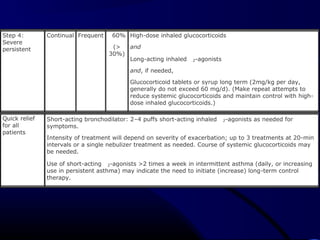
Step 4:
Severe
persistent
Continual Frequent 60%
(>
30%)
High-dose inhaled glucocorticoids
and
Long-acting inhaled 2-agonists
and, if needed,
Glucocorticoid tablets or syrup long term (2mg/kg per day,
generally do not exceed 60 mg/d). (Make repeat attempts to
reduce systemic glucocorticoids and maintain control with high-
dose inhaled glucocorticoids.)
Quick relief
for all
patients
Short-acting bronchodilator: 2–4 puffs short-acting inhaled 2-agonists as needed for
symptoms.
Intensity of treatment will depend on severity of exacerbation; up to 3 treatments at 20-min
intervals or a single nebulizer treatment as needed. Course of systemic glucocorticoids may
be needed.
Use of short-acting 2-agonists >2 times a week in intermittent asthma (daily, or increasing
use in persistent asthma) may indicate the need to initiate (increase) long-term control
therapy.
Establish Individual Medication Plans for
Long-Term Management in Children and
Adults.
Recommended Medications by Level of Severity: Adults and Children Older Than 5
Years of Age
All Levels: In addition to regular daily controller therapy, rapid-acting inhaled 2-agonist1
should be taken as needed to relieve symptoms, but should not be taken more than 3-4
times a day. Patient education is essential at every step.
Level of Severity Daily Controller
Medications
Other Treatment Options
STEP 1
Intermittent
• None necessary.
STEP 2
Mild Persistent
• Low-dose inhaled
glucocorticosteroid
• Sustained-release theophylline or Cromone or
Leukotriene modifier
STEP 3
Moderate
Persistent
Low-to medium-dose
glucocorticosteroid plus
long-acting inhaled 2-
agonist
• Medium-dose inhaled glucocorticosteroid plus
sustainedrelease theophylline, or Medium-dose inhaled
glucocorticosteroid plus long-acting oral β2-agonist, or
High-dose inhaled glucocorticosteroid or Medium-dose
inhaled glucocorticosteroid plus leukotriene modifier
Level of Severity Daily Controller Medications Other Treatment Options
STEP 4
Severe
Persistent
• High-dose inhaled
glucocorticosteroid plus
long-acting inhaled 2-agonist,
plus
one or more of the following if
needed:
• Sustained-release theophylline
• Leukotriene modifier
• Long-acting oral 2-agonist
• Oral glucocorticosteroid
• Anti-IgE
All steps: Once control of asthma is achieved and maintained
for at least 3 months, a gradual reduction of the maintenance
therapy should be tried to identify the minimum therapy
required to maintain control.
Complications
Status Asthmaticus
Respiratory Failure
Pulmonary Emphysema
Chronic Pulmonary heart
Spontaneous Pneumothorax
SEVERE BRONCHIAL ASTHMA
SEVERE BRONCHIAL
ASTHMA
Provoking factors
of Status asthmaticus
• Contact with allergen
• Overdosage of β2-agonists
• Acute viral respiratory infections
• Sudden cancellation of GCS
• Usage of β-blockers, inhibitors ACE
• Psycho-emotional stresses
• Severe infective diseases (pneumonia)
Clinical features
• Acute severe bronchial obstruction
• Decrease of bronchial sensitivity to β2-
agonists
• Acute hyperinflation of lungs (acute
pulmonary emphysema)
• Acute overload of right ventricle (acute
pulmonary heart)
• Hypercapnic and Hypoxic coma
Stages of
STATUS ASTHMATICUS
1. Stage of relative compensation
2. Stage of silent lungs
3. Stage of hypoxic and hypercapnic
asthmatic coma
Stage of relative compensation
• Duration of asthma attack is more than 12h
• Severe expiratory dyspnea
• Non-productive cough
• Forced position, Distant Wheezes ( coarse Rhonchi)
• Tolerance to sympatomymetics
• Tachycardia, Cyanosis, Tachypnoe
• Second sound is accented on pulmonary artery,
arterial BP is increased, Ps paradoxus appears
• A lot of diffuse wheezing rales on auscultation
• Pa O2 – 60-70 mm Hg and Pa CO2 - < 35-45 mm Hg
Stage of silent lungs
• Patient can be agitated or confused
• Increase of cyanosis
• Appearance of silent areas in lungs on auscultation,
decrease of number of wheezing rales
• Heart sounds are weakened on apex, tachycardia
>120 beats/ min
• Ps filiformis
• BP normal or decreased
• Pa O2 - 50-60 mm Hg and Pa CO2 - 50-70 mm Hg
• Respiratory and metabolic acidosis
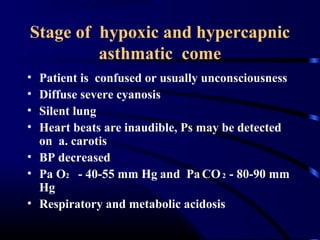
Stage of hypoxic and hypercapnic
asthmatic come
• Patient is confused or usually unconsciousness
• Diffuse severe cyanosis
• Silent lung
• Heart beats are inaudible, Ps may be detected
on a. carotis
• BP decreased
• Pa O2 - 40-55 mm Hg and PaCO2 - 80-90 mm
Hg
• Respiratory and metabolic acidosis
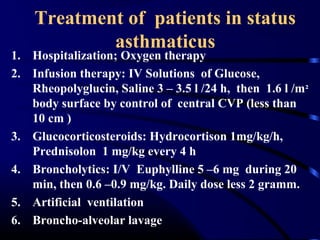
Treatment of patients in status
asthmaticus
1. Hospitalization; Oxygen therapy
2. Infusion therapy: IV Solutions of Glucose,
Rheopolyglucin, Saline 3 – 3.5 l /24 h, then 1.6 l /m²
body surface by control of central CVP (less than
10 cm )
3. Glucocorticosteroids: Hydrocortison 1mg/kg/h,
Prednisolon 1 mg/kg every 4 h
4. Broncholytics: I/V Euphylline 5 –6 mg during 20
min, then 0.6 –0.9 mg/kg. Daily dose less 2 gramm.
5. Artificial ventilation
6. Broncho-alveolar lavage

Bronchial Asthma

  • 1.
  • 2.
    DefinitionDefinition Bronchial asthma isa chronic inflammatory disease of airways, preferably of allergic genesis, characterised by reversible airway obstruction, increased airway responsiveness to a variety of stimuli - bronchial hyper- responsiveness, and manifested by asthma attacks, episodic wheezing, feeling of tightness in the chest, dyspnea and cough (dry or productive with expectoration of mucous viscous sputum).
  • 3.
    Epidemiology Bronchial asthma isa widespread disease, 5-15% of population suffer from it all over world. In the USA about 12 million persons have BA (5.434 deaths)
  • 5.
    Sponsored Medical Lecture Notes– All Subjects USMLE Exam (America) – Practice
  • 6.
    AETIOLOGYAETIOLOGY Inflammation of airwaysin patients with BA is of immune genesis and determined genetically Marker is located at chromosome 11q, which regulates the expression of IgE-receptors mast cells and basophiles Mutation of β2-receptor gene, weakness of β2-receptor
  • 7.
    AETIOLOGY of allergic(atopic, extrinsic) BA 1. Allergens: home dust which includes components of Dermafagoides pteronissinus (home dust mite) 2. Epidermal Allergens: cat’s, dog’s fur, horse’s dandruff 3. Pollen Allergens: grasses, trees, flowers 4. Fungal Allergens 5. Food Allergens: cow milk, eggs, sea food, fruits, vegetables, berries, honey, chocolate, vine 6. Drug Allergens and irritants: Aspirin, Non-steroid anti -inflammatory drugs, antibiotics
  • 8.
    AETIOLOGY of intrinsicBA Viral: RSTV, influenza, parainfluenza, etc Bacterial  Disorders of hormonal metabolism
  • 9.
    PROVOKING FACTORS (non-specific) Environment: climate,smoke, high concentration of pollutants Physical exertion Psycho-emotional stresses
  • 11.
    Pathology and pathogenesis •Airway ( or bronchial) obstruction in asthma is due to a combination of multiple factors and complex mechanisms that includes: • spasm of airway smooth muscle used to be considered the major contributor to the airway obstruction (acute bronchial constriction) • hypertrophy of bronchial smooth muscle
  • 13.
    Pathology and pathogenesisPathologyand pathogenesis • Many inflammatory mediators – cytokines derived from tissue mast cells, eosinophils, T- lymphocytes, macrophages. • Principal mediators are histamine, bradykinin, metabolites of arachidonic acid such as prostaglandins and leukotrienes LTC4, LTD4 ; IL-4, which is nessesary for IgE production, IL- 5, which is the chemoattractant for eosinophils
  • 16.
    Pathology and pathogenesisPathologyand pathogenesis · Thickening of epithelial basement membrane and pneumosclerosis are typical for chronic bronchial obstruction • Cholinergic refllex bronchoconstriction occurs in the acute response to inhalation of irritant substances. • Neuropeptides ( substance P, neurokinin A, calcitonin) released from sensory nerves cause vascular permearbility, mucus secretion, bronchoconstriction, and bronchodilation.
  • 17.
    Pathology and pathogenesisPathologyand pathogenesis These changes result in reversible obstruction of airways of all calibers. Inflammatory process leads to hyperresponsivness (hyperreactivity , hypersensitivity) of bronchi which manifest as an exaggerated.
  • 18.
    Pathology and pathogenesisPathologyand pathogenesis Bronchoconstriction response to many different stimuli (allergens, non-spesific factors) in patients with atopic (extrinsic) and intrinsic asthma.
  • 19.
    Exercise-induced asthma occursin 5-10 minutes after the patient starts exercise and may be related to heat loss or water loss from bronchial surface. Bronchial asthma combined with aspirin sensitivity and nasal polyposis ( Aspirin asthma) is due to the effects on arachidonic acid metabolism of aspirin and other non-steroidal anti- inflammatory agents, tartrazine dyes.
  • 20.
    Symptoms and signsSymptomsand signs Asthma is characterised by asthma attacks manifested by ∀•       episodes of wheezing, ∀•       feelings of tightness in the chest, ∀•       expiratory dyspnea, ∀•       dry cough or productive one with expectoration of mucous viscous sputum).
  • 21.
    Symptoms and signsSymptomsand signs Asthma attacks occur spontaneuosly or result from various “trigger factors" including allergens and nonspecific irritants (dusts, odours, cold air, sulphur dioxide fumes), emotional stress, upper respiratory infections, exertion, abruption of weather.
  • 23.
    Figure 1. Isit Asthma? Presence of any of these signs and symptoms should increase the suspicion of asthma: „Wheezing high-pitched whistling sounds when breathing out—especially in children. (A normal chest examination does not exclude asthma.) „ History of any of the following: • Cough, worse particularly at night • Recurrent wheeze • Recurrent difficult breathing • Recurrent chest tightness „Symptoms occur or worsen at night, awakening the patient. „Symptoms occur or worsen in a seasonal pattern. „The patient also has eczema, hay fever, or a family history „ of asthma or atopic diseases. „Symptoms occur or worsen in the presence of: • Animals with fur • Aerosol chemicals • Changes in temperature • Domestic dust mites • Drugs (aspirin, beta blockers) • Exercise • Pollen Respiratory (viral) infections • Smoke • Strong emotional expression „Symptoms respond to anti-asthma therapy „Patients colds "go to the chest" or take more than 10 days to clear up
  • 24.
    Physical examinationPhysical examination Asthmaattack is a paroxysm of expiratory dyspnea. A mild attack may produce only slight tachycardya and tachypnea, with prolonged expiration and mild diffuse high-pitched wheezing. The patient prefers to sit upright or even leans forward, uses accessory respiratory muscles.
  • 25.
    Physical examinationPhysical examination Thecough during an acute attack sounds ” tight” and generally does not produce mucus. After subsidence of the attack cough with expectoration of mucoid viscous ( tenacious) sputum appears. Usually a mild bronchial asthma attack can be relieved by inhalations of B2- agonists.
  • 26.
    Physical examinationPhysical examination Moresevere attack are associated with use of accessory muscles of respiration , distant breath sounds, coarse rhonchi may accompany loud wheezing, hyperinflation of the chest due to air trapping, hyperresonance (band-box sound), and intercostal retraction. Usually it can be relieved by the higher dose of B2- agonists, or intravenous injection of Euphyllin, or even corticosteroids.
  • 27.
    Physical examinationPhysical examination Ominoussigns in severe asthma include fatigue, pulsus paradoxus (> 20 mm Hg), diaphoresis, inaudible breath sounds with diminished wheezing , inability to maintain recumbency, and cyanosis .
  • 28.
    Laboratory findingsLaboratory findings Bloodtest (eosinophylia) Sputum test (eosinophils, Charcot- Leyden crystals, Curschmann, s spirals) ECG Pulmonary function tests (SPG, FVC or FEV1 of at least 15% or improvement in FEF 25-75 of at least 25%) PFM: measuring the peak expiratory flow rate (PEF) Arterial blood gas measurements
  • 29.
     X-ray examinations: hyperinflation,lung pattern is increased  Inhaled functional tests with non- specific agents (methacholine, histamine)  Inhaled functional tests with specific agents (allergens)  Allergologic skin prick-tests  Immunogram (IgE, Th – 2)
  • 30.
     Chronic obstructivepulmonary disease (COPD)  Left ventricular failure (Cardiac asthma)  Pulmonary embolism  Bronchiectasis  Anaphylaxis  Inhalation lung injury, and partial airway obstruction due to any cause, such as lung cancer and foreign body aspiration
  • 31.
     Stridor inupper airway obstruction or in vocal cord dysfunction may simulate wheezing.  Asthma must be distinguished from functional disorders of the larynx.  Reversible bronchial obstruction with eosinophilia occurs in infections with parasitic infection (particularly Strongyloides), bronchopulmonary aspergillosis  Churg-Strauss syndrome
  • 32.
     Symptoms <2 times a week.  No symptoms and normal PEF between exacerbations.  Exacerbations are brief (from a few hours to a few days); intensity may vary.  Nighttime symptoms < 2 times a month.  FEV1 or PEF >80% of predicted value  PEF variability < 20%
  • 33.
     Symptoms >2 times a week, but not daily.  Exacerbations that sometimes limit activity.  Nighttime symptoms > 2 times a month.  FEV1 or PEF >80% of predicted value  PEF variability 20%-30%
  • 34.
    MODERATE PERSISTENTDaily symptoms. Dailyuse of inhaled short-acting β2- agonist. Exacerbations that limit activity. Exacerbations > 2 times a week, may last days. Nighttime symptoms > 1 time a week. FEV1 or PEF > 60%-80% of predicted PEF variability > 30%
  • 35.
    SEVERE PERSISTENT Continual symptoms. Limited physical activity. Frequent exacerbations. Frequentnighttime symptoms. FEV1 or PEF < 60% of predicted PEF variability > 30%
  • 36.
    Figure 2. Levelsof Asthma Control A. Assessment of current clinical control (preferably over 4 weeks) Characteristics Controlled (All of the following) Partly Controlled (Any measure presented) Uncontrolled Daytime symptoms None (twice or less/week) More than twice/week Three or more features of partly controlled asthma*† Limitation of activities None Any Nocturnal symptoms/awaking None Any Need for reliever/ rescue inhaler None (twice or less/week) More than twice/week Lung function (PEF or FEV1)‡ Normal < 80% predicted or personal best (if known) B. Assessment of Future Risk (risk of exacerbations, instability, rapid decline in lung function, side effects) Features that are associated with increased risk of adverse events in the future include: Poor clinical control, frequent exacerbations in past year*, ever admission to critical care for asthma, low FEV1, exposure to cigarette smoke, high dose medications
  • 37.
    TREATMENT  Specific immunotherapy (SIT)-hyposensitization Anti-inflammatory drugs - Glucocorticosteroids ( inhaled, oral, parenteral) - chromolyn sodium (Intal), nedocromil sodium (Tilade).
  • 38.
    Glucocorticosteroids Inhaled GCS arenow considered the first-line maintenance therapy: -Beclomethasone dipropionate, Budesonide (forte – 200 μg , mite - 50 μg), Fluticasone propionate (flixotide) 50 μg, 125 μg, 250 μg  GCS (oral, parenteral) - Prednisolone (5mg), Triamcinolone (4mg), Methylprednisolone (4 mg)
  • 39.
     Inhaled β2-selectivesympathomimetics (agonists): - Short-acting ( Salbutamol – 100 μg in one dose, Albuterol, Fenoterol ( Berotec) – 100 μg in one dose, Terbutaline) - Long-acting (Salmeterol- 25 μg in one dose, Formoterol -18 μg in one dose) Antycholinergic broncholytics: - Ipratropium bromide in combination with Salbutamol (Combivent) or Fenoterol (Berodual)
  • 40.
     Theophyllines (Methylxantines) -Short-acting – Euphylline 2.4% - 5ml, 10 ml in ampules; 0,15 g in tabs - Long-acting oral Theophyllines - Teopec 0.3 in tabs, Teo-tard 0.2; 0,35. Combined drugs - Seretide ( Fluticasone + Salmetherol) Simbicorte ( Budesonide + Formoterol ) MUCOLYTICS - Bromhexin 0.008 in tabs - Ambroxol 0.03 in tabs
  • 41.
     CONTROLLER : -None needed  RELIEVER : -Short-acting bronchodilator (inhaled β2-agonist) as needed for symptoms but less than once a week. Severity of exacerbation determines intensity of treatment. Use of inhaled β2-agonist, sodium cromolyn or nedocromil before exercise or allergen exposure.
  • 42.
     Daily drugs: Inhaled corticosteroid 200- 500 µg, cromoglycate, nedocromil, or sustained- release theophylline.  If needed, inhaled corticosteroid dose can be increased (eg,500 µg increased up to 800 µg), or a long-acting bronchodilator (long-acting inhaled or oral β2-agonist or sustained-release theophylline), can be added especially for nocturnal symptoms.  Short-acting bronchodilator (inhaled β2-agonist) as needed for symptoms but not more than 3-4 times a day.
  • 43.
    MODERATE PERSISTENTDaily drugs: Inhaledcorticosteroid 800- 1000 µg, Long-acting bronchodilator (a long- acting inhaled or oral β2-agonist or sustained-release theophylline) especially for nocturnal symptoms. Same as for mild persistent + Combined broncholytics: Combivent, Berodual Theophyllines
  • 44.
    SEVERE PERSISTENT Daily drugs: Inhaledcorticosteroid 800-2000 µg or more. Long-acting bronchodilator (a long-acting inhaled and/or oral β2-agonist and/or sustained- release theophylline). Oral corticosteroid long-term. Same as for persistent moderate asthma
  • 45.
    Usual Dosages forLong-Term-Control Medications Systemic glucocorticoids (Applies to all three formulations) Methylprednisolone 2-, 4-, 8-, 16-, 32-mg tablets 7.5–60 mg daily in a single dose in A.M. or qod as needed for control Prednisolone 5-mg tablets, 5 mg/5 mL, 15 mg/5 mL Short-course "burst" to achieve control: 40–60 mg/d as single or 2 divided doses for 3–10 days Prednisone 1, 2.5, 5, 10, 20, 50 mg tablets; 5 mg/mL, 5 mg/5 mL
  • 46.
    Long-acting inhaled 2-agonists(Should not be used for symptom relief or for exacerbations. Use with inhaled glucocorticoids.) Salmeterol MDI 21 g/puff 2 puffs q 12 h DPI 50 g/blister 1 blister q 12 h Formoterol DPI 12 g/single-use capsule 1 capsule q 12 h Combined medication Fluticasone/salmeterol DPI 100, 250, or 500 g/50 g 1 inhalation bid; dose depends on severity of asthma
  • 47.
    Cromolyn and Nedocromil CromolynMDI 1 mg/puff 2–4 puffs tid-qid Nebulizer 20 mg/ampule 1 ampule tid-qid Nedocromil MDI 1.75 mg/puff 2–4 puffs bid-qid Leukotriene modifiers Montelukast 4- or 5-mg chewable tablet, 10-mg tablet 10 mg qhs Zafirlukast 10- or 20-mg tablet 40 mg daily (20-mg tablet bid) Zileuton 300- or 600-mg tablet 2400 mg daily (given tablets qid) Methylxanthines [Serum monitoring is important (serum concentration of 5–15 g/mL at steady state)]. Theophylline Liquids, sustained-release tablets, and capsules Starting dose 10 mg/kg per day up to 300 mg max; usual max, 800 mg/d MDI, metered-dose inhaler; DPI, daily permissible intake
  • 48.
    Comparative Daily Dosesfor Inhaled Steroids Dose Range Drug How Supplied Low Medium High Beclomethasone 168–540 g 504–840 g >840 g 42 g/puff 84 g/puff 4–12 puffs 2–6 puffs 10–12 puffs 6–10 puffs >20 puffs >10 puffs Budesonide 200–400 g 400–600 g >600 g 200 g/dose 1–2 inhalations 2–3 inhalations >3 inhalations Flunisolide 500–1000 g 1000–2000 g >2000 g 250 g/dose 2–4 puffs 4–8 puffs >8 puffs Fluticasone 88–264 g 264–660 g >660 g MDI: 44,110,220 g/puff 2–6 puffs (44 g) 2 puffs (110 g) 2–6 puffs (110 g) >6 puffs (110 g) DPI: 50,100,250 g/puff 2–6 inhalations (50 g) 3–6 inhalations (100 g) >6 inhalations (100 g) Triamcinolone 400–1000 g 1000–2000 g >2000 g 100 g/puff 4–10 puffs 10–20 puffs >20 puffs Note: MDI, metered-dose inhaler; DPI, daily permissible intake.
  • 49.
    Classify Severity: ClinicalFeatures Before Treatment or Adequate Control Symptoms PEFR or FEV1 Day Night (PEFR Variability) Daily Medications to Maintain Long-Term Control Step 1: Mild intermittent 2 days/week 2 nights/month 80% (< 20%) No daily medication needed. Severe exacerbations may occur, separated by long periods of normal lung function and no symptoms. A course of systemic glucocorticoids is recommended. Stepwise Approach for Managing Asthma in Adults
  • 50.
    Step 2: Mild persistent >2 days/week but <1 per day >2 nights/months 80% (20– 30%) Low-dose inhaled glucocorticoids Alternative treatment (listed alphabetically): cromolyn, leukotriene modifier, nedocromil, or sustained-release theophylline to serum concentration of 5–15 g/mL. Step 3: Moderate persistent Daily > 1 night/week > 60%– < 80% (>30%) Low- to medium-dose inhaled glucocorticoids and long-acting inhaled 2-agonists. Alternative treatment: leukotriene modifier or theophylline instead of 2 agents
  • 51.
    Step 4: Severe persistent Continual Frequent60% (> 30%) High-dose inhaled glucocorticoids and Long-acting inhaled 2-agonists and, if needed, Glucocorticoid tablets or syrup long term (2mg/kg per day, generally do not exceed 60 mg/d). (Make repeat attempts to reduce systemic glucocorticoids and maintain control with high- dose inhaled glucocorticoids.) Quick relief for all patients Short-acting bronchodilator: 2–4 puffs short-acting inhaled 2-agonists as needed for symptoms. Intensity of treatment will depend on severity of exacerbation; up to 3 treatments at 20-min intervals or a single nebulizer treatment as needed. Course of systemic glucocorticoids may be needed. Use of short-acting 2-agonists >2 times a week in intermittent asthma (daily, or increasing use in persistent asthma) may indicate the need to initiate (increase) long-term control therapy.
  • 52.
    Establish Individual MedicationPlans for Long-Term Management in Children and Adults.
  • 53.
    Recommended Medications byLevel of Severity: Adults and Children Older Than 5 Years of Age All Levels: In addition to regular daily controller therapy, rapid-acting inhaled 2-agonist1 should be taken as needed to relieve symptoms, but should not be taken more than 3-4 times a day. Patient education is essential at every step. Level of Severity Daily Controller Medications Other Treatment Options STEP 1 Intermittent • None necessary. STEP 2 Mild Persistent • Low-dose inhaled glucocorticosteroid • Sustained-release theophylline or Cromone or Leukotriene modifier STEP 3 Moderate Persistent Low-to medium-dose glucocorticosteroid plus long-acting inhaled 2- agonist • Medium-dose inhaled glucocorticosteroid plus sustainedrelease theophylline, or Medium-dose inhaled glucocorticosteroid plus long-acting oral β2-agonist, or High-dose inhaled glucocorticosteroid or Medium-dose inhaled glucocorticosteroid plus leukotriene modifier
  • 54.
    Level of SeverityDaily Controller Medications Other Treatment Options STEP 4 Severe Persistent • High-dose inhaled glucocorticosteroid plus long-acting inhaled 2-agonist, plus one or more of the following if needed: • Sustained-release theophylline • Leukotriene modifier • Long-acting oral 2-agonist • Oral glucocorticosteroid • Anti-IgE All steps: Once control of asthma is achieved and maintained for at least 3 months, a gradual reduction of the maintenance therapy should be tried to identify the minimum therapy required to maintain control.
  • 55.
    Complications Status Asthmaticus Respiratory Failure PulmonaryEmphysema Chronic Pulmonary heart Spontaneous Pneumothorax
  • 56.
  • 57.
  • 58.
    Provoking factors of Statusasthmaticus • Contact with allergen • Overdosage of β2-agonists • Acute viral respiratory infections • Sudden cancellation of GCS • Usage of β-blockers, inhibitors ACE • Psycho-emotional stresses • Severe infective diseases (pneumonia)
  • 59.
    Clinical features • Acutesevere bronchial obstruction • Decrease of bronchial sensitivity to β2- agonists • Acute hyperinflation of lungs (acute pulmonary emphysema) • Acute overload of right ventricle (acute pulmonary heart) • Hypercapnic and Hypoxic coma
  • 60.
    Stages of STATUS ASTHMATICUS 1.Stage of relative compensation 2. Stage of silent lungs 3. Stage of hypoxic and hypercapnic asthmatic coma
  • 61.
    Stage of relativecompensation • Duration of asthma attack is more than 12h • Severe expiratory dyspnea • Non-productive cough • Forced position, Distant Wheezes ( coarse Rhonchi) • Tolerance to sympatomymetics • Tachycardia, Cyanosis, Tachypnoe • Second sound is accented on pulmonary artery, arterial BP is increased, Ps paradoxus appears • A lot of diffuse wheezing rales on auscultation • Pa O2 – 60-70 mm Hg and Pa CO2 - < 35-45 mm Hg
  • 62.
    Stage of silentlungs • Patient can be agitated or confused • Increase of cyanosis • Appearance of silent areas in lungs on auscultation, decrease of number of wheezing rales • Heart sounds are weakened on apex, tachycardia >120 beats/ min • Ps filiformis • BP normal or decreased • Pa O2 - 50-60 mm Hg and Pa CO2 - 50-70 mm Hg • Respiratory and metabolic acidosis
  • 63.
    Stage of hypoxicand hypercapnic asthmatic come • Patient is confused or usually unconsciousness • Diffuse severe cyanosis • Silent lung • Heart beats are inaudible, Ps may be detected on a. carotis • BP decreased • Pa O2 - 40-55 mm Hg and PaCO2 - 80-90 mm Hg • Respiratory and metabolic acidosis
  • 64.
    Treatment of patientsin status asthmaticus 1. Hospitalization; Oxygen therapy 2. Infusion therapy: IV Solutions of Glucose, Rheopolyglucin, Saline 3 – 3.5 l /24 h, then 1.6 l /m² body surface by control of central CVP (less than 10 cm ) 3. Glucocorticosteroids: Hydrocortison 1mg/kg/h, Prednisolon 1 mg/kg every 4 h 4. Broncholytics: I/V Euphylline 5 –6 mg during 20 min, then 0.6 –0.9 mg/kg. Daily dose less 2 gramm. 5. Artificial ventilation 6. Broncho-alveolar lavage

Editor's Notes