Dr. Vanessa Voge
Wichita Surgical Specialists
 Briefoverview
 Types of breast reconstruction available after
  mastectomy
 Types of “reconstruction” that can be
  combined with lumpectomy
 Each  year more than 250,000 American
  women face breast cancer.
 Undergoing Mastectomy affects one in many
  dimensions--emotionally, physically,
  psychologically, etc…
 In the past, reconstructive options were not
  available or not widely offered.
 New  kinds of treatment as well as improved
  reconstructive surgery mean that women
  who have breast cancer today have better
  choices.
 Breast reconstruction is a type of surgery for
  women who have had a breast removed.
 The goal is to provide a treatment for breast
  cancer and still provide shape and symmetry
  to the breasts.
 Often   patients have many questions
    Forefront is the cancer itself
    What will I look like after mastectomy?
    What are reconstruction options?
    What will my breast(s) look like after
     reconstruction?
    How is reconstruction affected by additional
     cancer treatments such as chemo or radiation?
 Treating the breast cancer first
 Very patient dependent
 Cancer treatment dependent
 Individualize treatment plans
 Reconstruction        or not
    Some patients are not candidates
        Severe obesity, systemic disease,
         psychological/emotional state

    Prosthesis
        Pros- decreased amount of surgery and surgery
         sequela, can vary size, effect of water
        Cons- Can shift, weight, not a part of body
 Timing     of Reconstruction
    Time of Mastectomy-
        “immediate breast reconstruction”

    After one has healed from mastectomy-
        “delayed reconstruction”
 At   the time of mastectomy
    Currently most common way

    Pros: Save skin, better aesthetic result,
     reconstruction started or possibly finished at
     time of mastectomy

    Cons: Post-operative radiation, possible increase
     in skin healing problems
 Types   of reconstruction- patient dependent
    Tissue Expander/Implant based
    Latissimus flap/implant
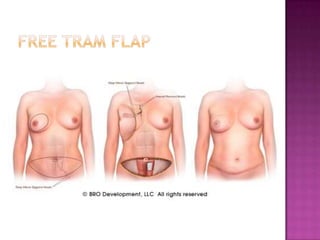
    TRAM flap
    Free Flap- DIEP, free tram, S-GAP, etc…

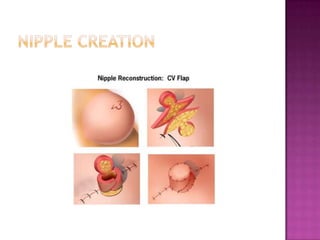
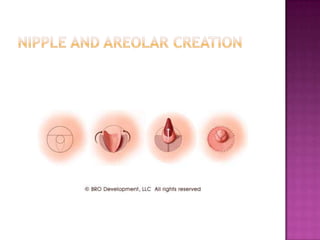
    Nipple and areolar reconstruction
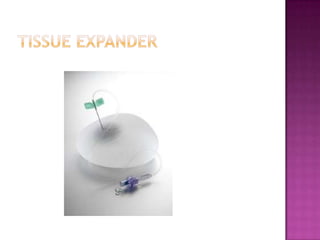
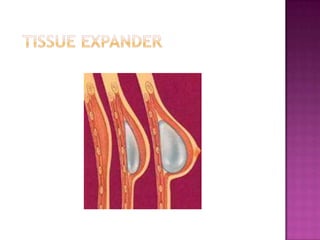
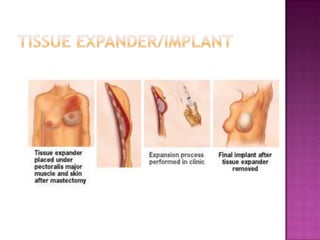
 Tissue   Expander/Implant
    Makes up more than 75% of breast
     reconstructions in the United States
    Requires minimum of two surgeries
    At the time of mastectomy the tissue expander is
     placed--“first stage breast reconstruction”
 Thereis more use of a biological support,
 such as alloderm.
 Second surgery involves the exchange of the
 tissue expander for an implant-
 “second stage breast reconstruction”

    Approximately 4 months from first surgery, but
     varies greatly from patient to patient and
     surgeon to surgeon
 Pros: Shorter surgery time, breasts remain
 same size and overall position, If bilateral
 symmetry possibly improved, less scarring,
 less operative sites, decreased “overall”
 complication rates
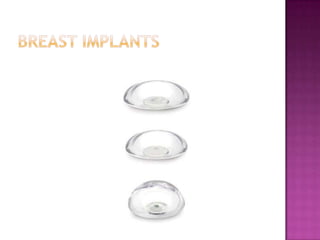
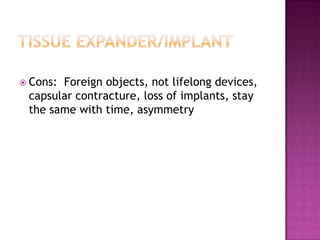
 Cons:Foreign objects, not lifelong devices,
 capsular contracture, loss of implants, stay
 the same with time, asymmetry
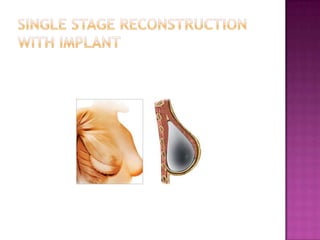
 Placing
        the breast implant at the time of
 mastectomy
    Not as common
    Only in certain patients with ideal anatomy and
     cancers
    Almost always with Alloderm or equivalent
 TRAM-Transverse Rectus Abdominus
 Myocutaneous
    Rectus muscles- Abdominal “six pack”
    Core muscle
 Pros:Own tissue (replacing like with like),
 affected some by gravity, fluctuates with
 weight, possibly no additional surgery except
 nipple/areolar creation, matches other non
 reconstructed breast, remove excess
 abdominal tissue
 Cons: Larger/longer surgery, longer recovery,
 not true abdominoplasty, risk
 hernia/abdominal bulge, bulge upper
 abdomen, weakness to abdomen, Full loss of
 flap, partial loss of flap, fat necrosis,
 specific candidates (previous surgeries,
 weight, smoking, etc…)
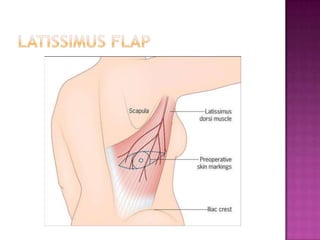
 Latissimus  dorsi muscle is on back
 Activities for “lat pulls”, cross country skiing,
  rock climbing, etc… can be affected.
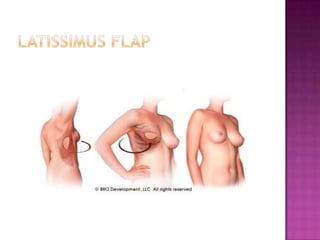
 Pros:Own tissue, non-radiated tissue,
 “covers” implant

 Cons:larger/longer surgery, muscle
 weakness, fluid collection, often needs
 implant or tissue expander/implant
   Disconnecting the blood supply to an area of
    tissue and “reconnecting” the tissue’s blood
    supply at a distant site
   Often under a microscope
   Only at certain medical centers
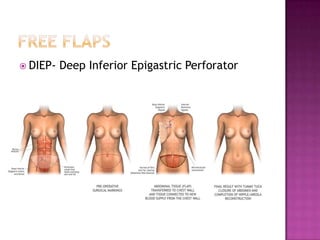
 DIEP-   Deep Inferior Epigastric Perforator
 Benefits     over TRAM flap
    Rectus muscle remains in abdomen
        Debate on functionality of muscle as nerves may be
         injured, different techniques, etc…
    Decreased risk of hernia or abdominal bulge
    Potential decreased recovery time
    Can use is some people who smoke or are obese
    Less chance partial flap loss and fat necrosis
 Downside    to free flaps
    Higher risk complete flap loss
    Only available at certain centers
    Longer Surgery
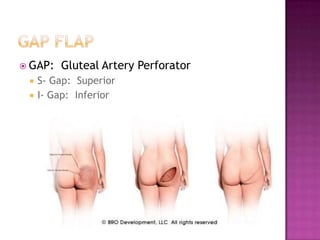
 GAP:   Gluteal Artery Perforator
    S- Gap: Superior
    I- Gap: Inferior
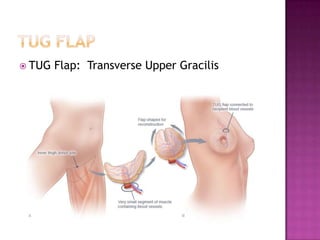
 TUG   Flap: Transverse Upper Gracilis
 Adapt reconstruction plan as needed
 Some reconstruction options not available
 Many different ways to create
 Choice to have performed or not
 Tattoo only
 “Stick-ons”
 Temporary tattoos
 The   non-operated breast may be
    Larger
    Smaller
    Hang lower
 Breast reduction
 Breast augmentation
 Breast lift
 Oh,my friend, it’s not what they take away
 from you that counts- it’s what you do with
 what you have left…..Hubert Humphrey
 Incorporating
              breast tissue movement at the
 time of lumpectomy
    To decrease chance of defect or asymmetry
    Operating on radiated tissue has increased risk of
     complications
 Reduction    at the same time as lumpectomy
    If you ever thought of a breast reduction, ask if
     you are a candidate for a reduction with
     lumpectomy
    Some breasts or cancers not amendable
 Tissue   rearrangement
    To prevent or decrease the chance of a breast
     defect
    Have to have tissue that can be moved into
     potential defect site
 Despite best devised surgical treatments
  breast defects or distortion can occur after
  lumpectomy and radiation
 Reconstruction options available
 Availableoptions to reconstruct a breast
 Oncoplastic options during lumpectomy
 Future
Via Christi Women's Connection: Breast Reconstruction

Via Christi Women's Connection: Breast Reconstruction

  • 1.
    Dr. Vanessa Voge WichitaSurgical Specialists
  • 2.
     Briefoverview  Typesof breast reconstruction available after mastectomy  Types of “reconstruction” that can be combined with lumpectomy
  • 3.
     Each year more than 250,000 American women face breast cancer.  Undergoing Mastectomy affects one in many dimensions--emotionally, physically, psychologically, etc…  In the past, reconstructive options were not available or not widely offered.
  • 4.
     New kinds of treatment as well as improved reconstructive surgery mean that women who have breast cancer today have better choices.  Breast reconstruction is a type of surgery for women who have had a breast removed.  The goal is to provide a treatment for breast cancer and still provide shape and symmetry to the breasts.
  • 5.
     Often patients have many questions  Forefront is the cancer itself  What will I look like after mastectomy?  What are reconstruction options?  What will my breast(s) look like after reconstruction?  How is reconstruction affected by additional cancer treatments such as chemo or radiation?
  • 6.
     Treating thebreast cancer first  Very patient dependent  Cancer treatment dependent  Individualize treatment plans
  • 7.
     Reconstruction or not  Some patients are not candidates  Severe obesity, systemic disease, psychological/emotional state  Prosthesis  Pros- decreased amount of surgery and surgery sequela, can vary size, effect of water  Cons- Can shift, weight, not a part of body
  • 8.
     Timing of Reconstruction  Time of Mastectomy-  “immediate breast reconstruction”  After one has healed from mastectomy-  “delayed reconstruction”
  • 9.
     At the time of mastectomy  Currently most common way  Pros: Save skin, better aesthetic result, reconstruction started or possibly finished at time of mastectomy  Cons: Post-operative radiation, possible increase in skin healing problems
  • 10.
     Types of reconstruction- patient dependent  Tissue Expander/Implant based  Latissimus flap/implant  TRAM flap  Free Flap- DIEP, free tram, S-GAP, etc…  Nipple and areolar reconstruction
  • 11.
     Tissue Expander/Implant  Makes up more than 75% of breast reconstructions in the United States  Requires minimum of two surgeries  At the time of mastectomy the tissue expander is placed--“first stage breast reconstruction”
  • 14.
     Thereis moreuse of a biological support, such as alloderm.
  • 15.
     Second surgeryinvolves the exchange of the tissue expander for an implant- “second stage breast reconstruction”  Approximately 4 months from first surgery, but varies greatly from patient to patient and surgeon to surgeon
  • 18.
     Pros: Shortersurgery time, breasts remain same size and overall position, If bilateral symmetry possibly improved, less scarring, less operative sites, decreased “overall” complication rates
  • 19.
     Cons:Foreign objects,not lifelong devices, capsular contracture, loss of implants, stay the same with time, asymmetry
  • 20.
     Placing the breast implant at the time of mastectomy  Not as common  Only in certain patients with ideal anatomy and cancers  Almost always with Alloderm or equivalent
  • 23.
     TRAM-Transverse RectusAbdominus Myocutaneous  Rectus muscles- Abdominal “six pack”  Core muscle
  • 25.
     Pros:Own tissue(replacing like with like), affected some by gravity, fluctuates with weight, possibly no additional surgery except nipple/areolar creation, matches other non reconstructed breast, remove excess abdominal tissue
  • 26.
     Cons: Larger/longersurgery, longer recovery, not true abdominoplasty, risk hernia/abdominal bulge, bulge upper abdomen, weakness to abdomen, Full loss of flap, partial loss of flap, fat necrosis, specific candidates (previous surgeries, weight, smoking, etc…)
  • 27.
     Latissimus dorsi muscle is on back  Activities for “lat pulls”, cross country skiing, rock climbing, etc… can be affected.
  • 30.
     Pros:Own tissue,non-radiated tissue, “covers” implant  Cons:larger/longer surgery, muscle weakness, fluid collection, often needs implant or tissue expander/implant
  • 31.
    Disconnecting the blood supply to an area of tissue and “reconnecting” the tissue’s blood supply at a distant site  Often under a microscope  Only at certain medical centers
  • 32.
     DIEP- Deep Inferior Epigastric Perforator
  • 34.
     Benefits over TRAM flap  Rectus muscle remains in abdomen  Debate on functionality of muscle as nerves may be injured, different techniques, etc…  Decreased risk of hernia or abdominal bulge  Potential decreased recovery time  Can use is some people who smoke or are obese  Less chance partial flap loss and fat necrosis
  • 35.
     Downside to free flaps  Higher risk complete flap loss  Only available at certain centers  Longer Surgery
  • 36.
     GAP: Gluteal Artery Perforator  S- Gap: Superior  I- Gap: Inferior
  • 37.
     TUG Flap: Transverse Upper Gracilis
  • 38.
     Adapt reconstructionplan as needed  Some reconstruction options not available
  • 39.
     Many differentways to create  Choice to have performed or not
  • 42.
     Tattoo only “Stick-ons”  Temporary tattoos
  • 43.
     The non-operated breast may be  Larger  Smaller  Hang lower
  • 44.
     Breast reduction Breast augmentation  Breast lift
  • 45.
     Oh,my friend,it’s not what they take away from you that counts- it’s what you do with what you have left…..Hubert Humphrey
  • 46.
     Incorporating breast tissue movement at the time of lumpectomy  To decrease chance of defect or asymmetry  Operating on radiated tissue has increased risk of complications
  • 47.
     Reduction at the same time as lumpectomy  If you ever thought of a breast reduction, ask if you are a candidate for a reduction with lumpectomy  Some breasts or cancers not amendable
  • 49.
     Tissue rearrangement  To prevent or decrease the chance of a breast defect  Have to have tissue that can be moved into potential defect site
  • 50.
     Despite bestdevised surgical treatments breast defects or distortion can occur after lumpectomy and radiation  Reconstruction options available
  • 51.
     Availableoptions toreconstruct a breast  Oncoplastic options during lumpectomy  Future