Breast Reconstruction

Supporting People With Breast
Cancer
Jane Rothwell
St. Vincent’s University Hospital
Outline


   The “Big Questions”
   How these decisions are made
   Reconstruction of the “conserved
    breast”
The Big Questions
   Mastectomy v Breast Conservation
   Immediate v Delayed
    Reconstruction
   Type of reconstruction
Mastectomy v Breast Conservation

   Patient factors
   Breast factors
   Tumour factors
Mastectomy v Breast Conservation
             Patient factors

   Patient choice
   General health
   Suitability for radiotherapy
   Dealing with “risk”
   Personal history
   Family history
Mastectomy v Breast Conservation
             Breast factors


   Size
   Shape
   Location of tumour in breast
Mastectomy v Breast Conservation
“Tumour” factors

   Size – actual
   Size – relative to size of breast
   Single or multifocal
   Type of tumour
   Site within breast
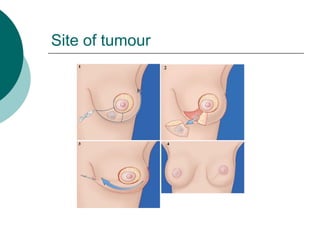
Site of tumour
Immediate v Delayed Reconstruction

   Patient choice
   Radiotherapy
   Other medical conditions
   Smoking
   Extent of disease
Immediate v Delayed Reconstruction -
Radiotherapy

   Tumour size
   Skin involvement
   Nodal disease
   Inflammatory cancer
Immediate v Delayed Reconstruction -
Radiotherapy

   Pseudocapsule formation
   Capsular contracture
   Skin changes
   Infection
   Need for further surgery
Type of Reconstruction
   Patient choice
   Body size and shape
   Patient expectations
   Patient lifestyle
   Breast size and shape
   Potential for multiple procedures
   General condition
Type of Reconstruction

   Own tissue (autologous)
   Own tissue with implant or
    expander
   Implant or expander with “other
    tissue”
   Implant or expander alone
Type of reconstruction - Autologous

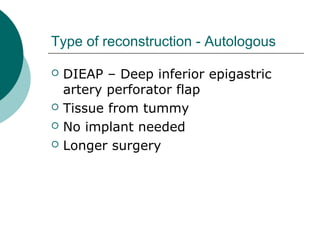
   DIEAP – Deep inferior epigastric
    artery perforator flap
   Tissue from tummy
   No implant needed
   Longer surgery
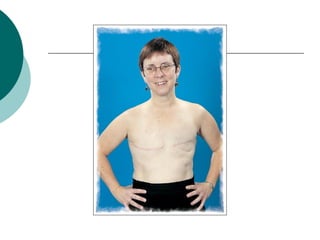
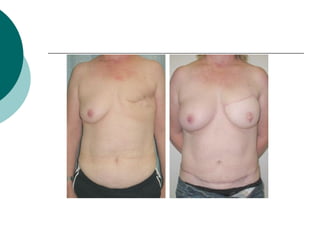
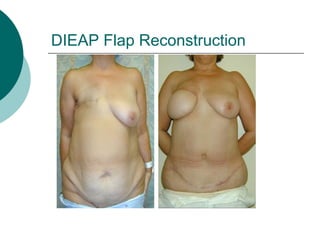
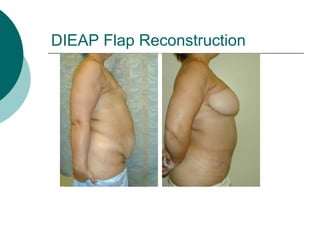
DIEAP Flap Reconstruction
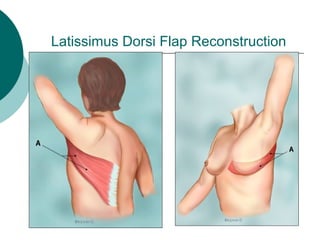
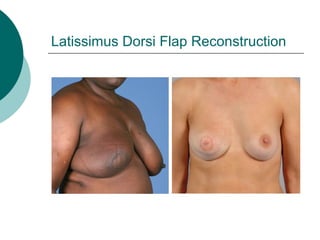
Latissimus Dorsi Flap Reconstruction
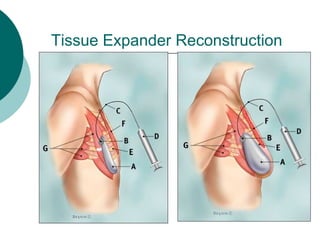
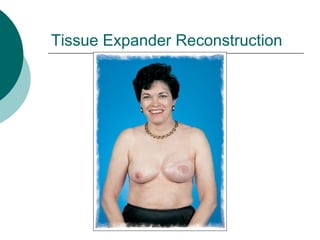
Tissue Expander Reconstruction
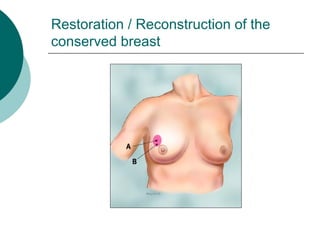
Restoration / Reconstruction of the
conserved breast

   Reasons why “reconstruction”
    required:
     Size

     Shape

     Nipple  problems
     Asymmetry

     Site of scar / defect
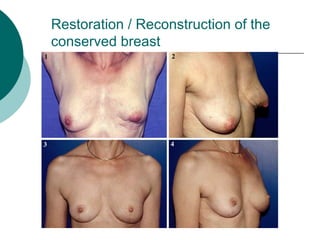
Restoration / Reconstruction of the
conserved breast
Restoration / Reconstruction of the
conserved breast
Restoration / Reconstruction of the
conserved breast - options

   Mastectomy and reconstruction
   Latissimus Dorsi flap
   Symmetry surgery on other breast
   Implant
   Fat injection
Summary
   The big questions:
     Whether  it is best to conserve the
      breast or have mastectomy
     Is immediate or delayed reconstruction
      appropriate
     What type of reconstruction is best for
      you
Conclusion
   Reconstruction is relevant for all
    women who have had surgery, even
    breast conservation
   The decision-making is complex,
    with all patients treated to best
    standard of care for them
Breast Reconstruction - Jane Rothwell

Breast Reconstruction - Jane Rothwell

  • 1.
    Breast Reconstruction Supporting PeopleWith Breast Cancer Jane Rothwell St. Vincent’s University Hospital
  • 4.
    Outline  The “Big Questions”  How these decisions are made  Reconstruction of the “conserved breast”
  • 5.
    The Big Questions  Mastectomy v Breast Conservation  Immediate v Delayed Reconstruction  Type of reconstruction
  • 6.
    Mastectomy v BreastConservation  Patient factors  Breast factors  Tumour factors
  • 7.
    Mastectomy v BreastConservation Patient factors  Patient choice  General health  Suitability for radiotherapy  Dealing with “risk”  Personal history  Family history
  • 8.
    Mastectomy v BreastConservation Breast factors  Size  Shape  Location of tumour in breast
  • 9.
    Mastectomy v BreastConservation “Tumour” factors  Size – actual  Size – relative to size of breast  Single or multifocal  Type of tumour  Site within breast
  • 10.
  • 11.
    Immediate v DelayedReconstruction  Patient choice  Radiotherapy  Other medical conditions  Smoking  Extent of disease
  • 12.
    Immediate v DelayedReconstruction - Radiotherapy  Tumour size  Skin involvement  Nodal disease  Inflammatory cancer
  • 13.
    Immediate v DelayedReconstruction - Radiotherapy  Pseudocapsule formation  Capsular contracture  Skin changes  Infection  Need for further surgery
  • 14.
    Type of Reconstruction  Patient choice  Body size and shape  Patient expectations  Patient lifestyle  Breast size and shape  Potential for multiple procedures  General condition
  • 15.
    Type of Reconstruction  Own tissue (autologous)  Own tissue with implant or expander  Implant or expander with “other tissue”  Implant or expander alone
  • 16.
    Type of reconstruction- Autologous  DIEAP – Deep inferior epigastric artery perforator flap  Tissue from tummy  No implant needed  Longer surgery
  • 17.
  • 18.
  • 19.
    Latissimus Dorsi FlapReconstruction
  • 20.
    Latissimus Dorsi FlapReconstruction
  • 21.
  • 22.
  • 23.
    Restoration / Reconstructionof the conserved breast  Reasons why “reconstruction” required:  Size  Shape  Nipple problems  Asymmetry  Site of scar / defect
  • 24.
    Restoration / Reconstructionof the conserved breast
  • 25.
    Restoration / Reconstructionof the conserved breast
  • 26.
    Restoration / Reconstructionof the conserved breast - options  Mastectomy and reconstruction  Latissimus Dorsi flap  Symmetry surgery on other breast  Implant  Fat injection
  • 27.
    Summary  The big questions:  Whether it is best to conserve the breast or have mastectomy  Is immediate or delayed reconstruction appropriate  What type of reconstruction is best for you
  • 28.
    Conclusion  Reconstruction is relevant for all women who have had surgery, even breast conservation  The decision-making is complex, with all patients treated to best standard of care for them