BRAIN CHIP
Teacher's Name:Afsana Khan
P R E S E N T A T I O N T O P I C
Hello Everyone
TEAM MEMBERS
1.Fairin Rahman 172-15-915
2.Mst. Umme Faria Tamanna 172-15-909
3.Tanjila Jahan Any 172-15-905
4.Arfana Chamok 172-15-911
• THE BRIAN CHIP TECHNOLOGY IS ASSOCIATED WITH A BRAIN COMPUTER
INTERFACE CHIP, COMPUTER AND BRAIN.
• THE BRAIN CHIP IS SO CALLED BECAUSE IT IS IMPLANTABLE COMPUTER
CHIPIN BRAIN.
• BRAIN CHIP CONSISTS OF BOTH BIOLOGICAL AND ELECTRONICS TERMS.
• BRAIN CHIPS CAN ENHANCE MEMORY OF HUMAN BEINGS, HELP
PARALYZED PATIENTS AND ARE INTENDED FOR MILITARY PURPOSES EVEN
PROVIDE FLUENCY IN A NEW LANGUAGE.
Introduction
WHAT IS A BRAIN CHIP ?
A chip in the Braingate system is of
100 hair thin electrodes.
It senses electromagnetic signature of
Neutrons.
The Brain chip provides fast and
reliable connection between the brain
of a severely disabled person and
personal computer
Braingate is a technology that can be implemented in the brain.It is used to
sense, transmit, analyze and apply the language of neurons. The System
consists of a sensor that is implanted on the motor cortex of the brain and a
device that analyzes brain signals. This sensor consists of a tiny Chip with
hundred electrode sensors-each thinner than a hair that detects brain cell
electrical activity.
What is Braingate Technology ?
Hardware
Components
0
1
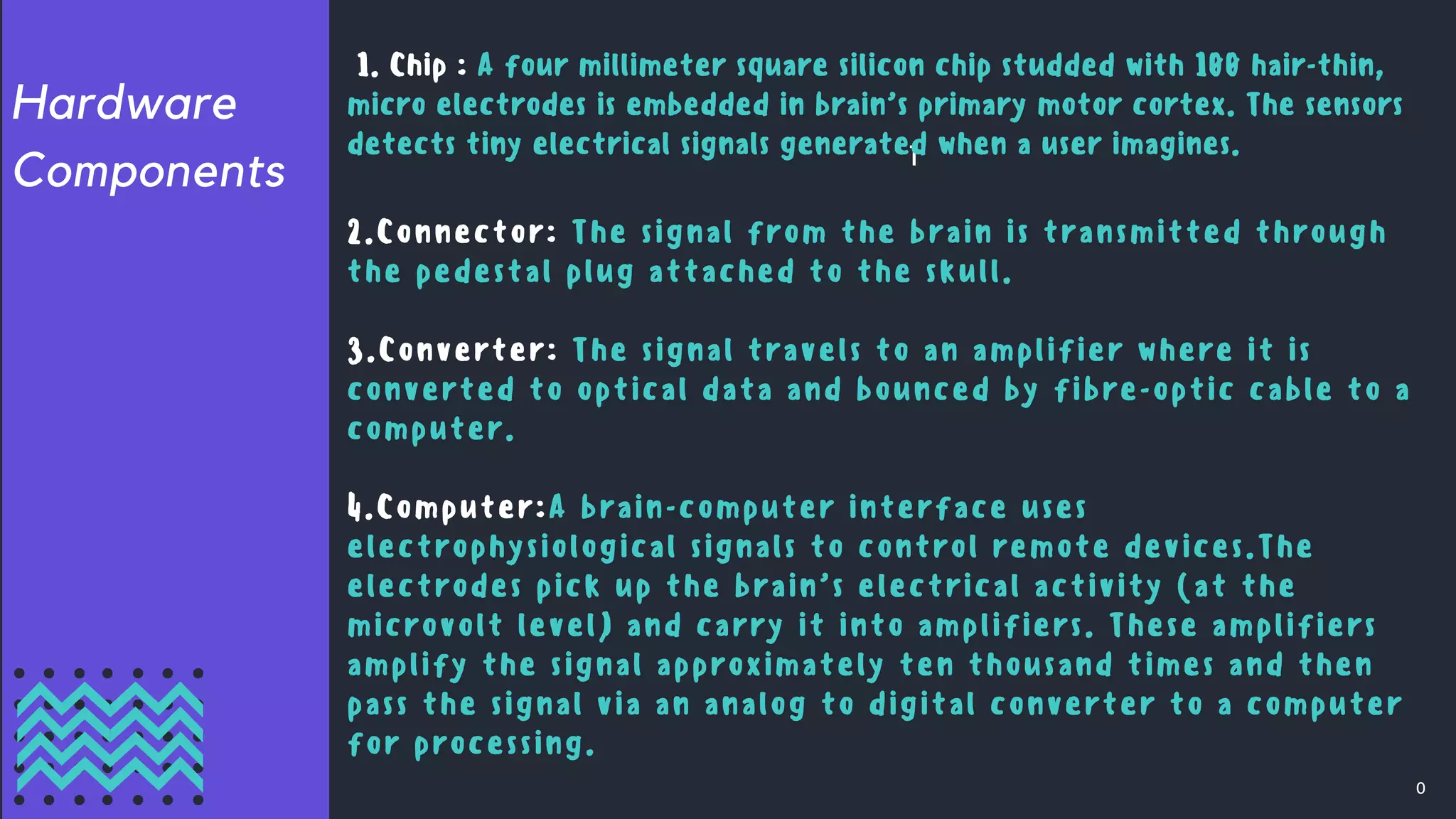
2.Connector: The signal from the brain is transmitted through
the pedestal plug attached to the skull.
3.Converter: The signal travels to an amplifier where it is
converted to optical data and bounced by fibre-optic cable to a
computer.
4.Computer:A brain-computer interface uses
electrophysiological signals to control remote devices.The
electrodes pick up the brain’s electrical activity (at the
microvolt level) and carry it into amplifiers. These amplifiers
amplify the signal approximately ten thousand times and then
pass the signal via an analog to digital converter to a computer
for processing.
1. Chip : A four millimeter square silicon chip studded with 100 hair-thin,
micro electrodes is embedded in brain’s primary motor cortex. The sensors
detects tiny electrical signals generated when a user imagines.
SOFTWARE BEHIND
BRAINGATE
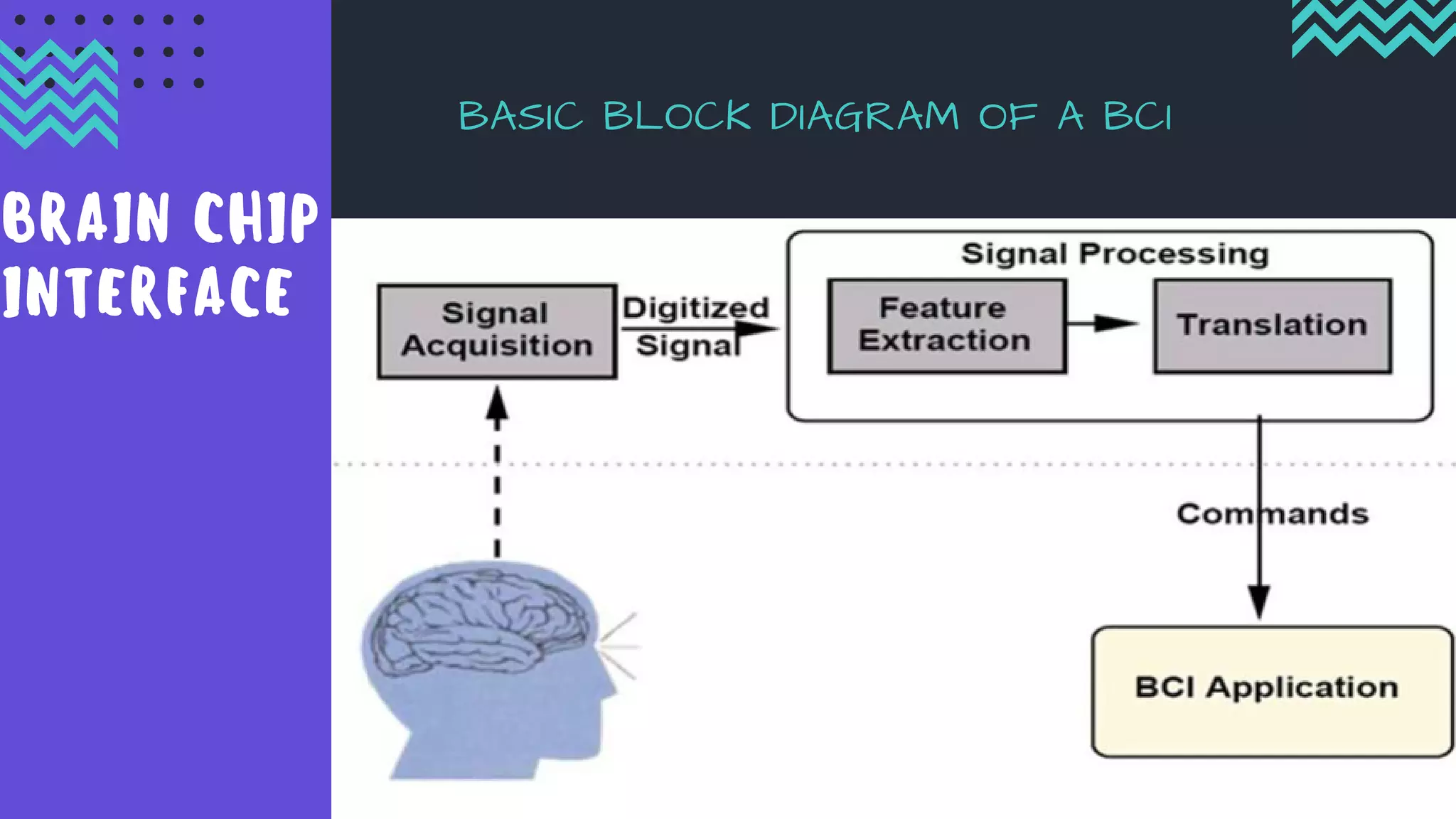
Software behind BrainGate System uses algorithms and
pattern matching techniques to facilitate communication. The
algorithms are written in C, JAVA and MATLAB. Signal
processing software algorithms analyzes the electrical
activity of neurons and translates it into control signals for
use in various computer-based applications
BASIC BLOCK DIAGRAM OF A BCI
BRAIN CHIP
INTERFACE
G I V I N G S T U D E N T F E E D B A C K | 2 0 2 0
.
FIRST EXPERIMENT...
Matthew Nagle (October 16, 1979 – July 24, 2007)
was the first person to use a brain-computer
interface to restore functionality lost due to
paralysis.Nagle is unable to move his arms and legs
after he was stabbed in the neck since 2001.The
device was implanted on June 22, 2004 by
neurosurgeon Gerhard Friehs. A 96-electrode "Utah
Array" was placed on the surface of his brain over
the region of motor cortex that controlled his
dominant left hand and arm. A link connected it to
the outside of his skull, where it could be connected
to a computer. The computer was then trained to
recognize Nagle's thought patterns and associate
them with movements he was trying to achieve.
It will enhance memory.
It might enable “cyberthink”- invisible communication.
Enable consistent and constant access to information
where and when needed.
It will increase the dynamic range of senses, enabling, for
example, seeing IR,UV, and chemical spectra.
Future of brain chips
This technology is well supported by the latest fields of
• Biomedical Instrumentation,
• Micro electronics, signal processing,
• Artificial Neural Networks and Robotics which has
overwhelming developments.
• Hope these systems will be effectively implemented
for many Biomedical applications.
ADVANTAGES:
• It will increase the dynamic ranging of senses.
• It will give light to blind and give paralyzed
patients full mental control of limbs.
• No genetic modifications in the next generation.
• Rescue missions (remote controlled rat).
0
DISADVANTAGES:
• Research is still in the beginning stages.
• The current technology is crude.
• Ethical issues may prevent its development.
• Electrodes outside of the skull can detect very
few electric signals from the
brain.
• Electrodes placed inside the skull create scar
tissue in the brain.
Brain Chip

Brain Chip

  • 1.
    BRAIN CHIP Teacher's Name:AfsanaKhan P R E S E N T A T I O N T O P I C Hello Everyone
  • 2.
    TEAM MEMBERS 1.Fairin Rahman172-15-915 2.Mst. Umme Faria Tamanna 172-15-909 3.Tanjila Jahan Any 172-15-905 4.Arfana Chamok 172-15-911
  • 3.
    • THE BRIANCHIP TECHNOLOGY IS ASSOCIATED WITH A BRAIN COMPUTER INTERFACE CHIP, COMPUTER AND BRAIN. • THE BRAIN CHIP IS SO CALLED BECAUSE IT IS IMPLANTABLE COMPUTER CHIPIN BRAIN. • BRAIN CHIP CONSISTS OF BOTH BIOLOGICAL AND ELECTRONICS TERMS. • BRAIN CHIPS CAN ENHANCE MEMORY OF HUMAN BEINGS, HELP PARALYZED PATIENTS AND ARE INTENDED FOR MILITARY PURPOSES EVEN PROVIDE FLUENCY IN A NEW LANGUAGE. Introduction
  • 4.
    WHAT IS ABRAIN CHIP ? A chip in the Braingate system is of 100 hair thin electrodes. It senses electromagnetic signature of Neutrons. The Brain chip provides fast and reliable connection between the brain of a severely disabled person and personal computer
  • 5.
    Braingate is atechnology that can be implemented in the brain.It is used to sense, transmit, analyze and apply the language of neurons. The System consists of a sensor that is implanted on the motor cortex of the brain and a device that analyzes brain signals. This sensor consists of a tiny Chip with hundred electrode sensors-each thinner than a hair that detects brain cell electrical activity. What is Braingate Technology ?
  • 6.
    Hardware Components 0 1 2.Connector: The signalfrom the brain is transmitted through the pedestal plug attached to the skull. 3.Converter: The signal travels to an amplifier where it is converted to optical data and bounced by fibre-optic cable to a computer. 4.Computer:A brain-computer interface uses electrophysiological signals to control remote devices.The electrodes pick up the brain’s electrical activity (at the microvolt level) and carry it into amplifiers. These amplifiers amplify the signal approximately ten thousand times and then pass the signal via an analog to digital converter to a computer for processing. 1. Chip : A four millimeter square silicon chip studded with 100 hair-thin, micro electrodes is embedded in brain’s primary motor cortex. The sensors detects tiny electrical signals generated when a user imagines.
  • 7.
    SOFTWARE BEHIND BRAINGATE Software behindBrainGate System uses algorithms and pattern matching techniques to facilitate communication. The algorithms are written in C, JAVA and MATLAB. Signal processing software algorithms analyzes the electrical activity of neurons and translates it into control signals for use in various computer-based applications
  • 8.
    BASIC BLOCK DIAGRAMOF A BCI BRAIN CHIP INTERFACE G I V I N G S T U D E N T F E E D B A C K | 2 0 2 0
  • 9.
    . FIRST EXPERIMENT... Matthew Nagle(October 16, 1979 – July 24, 2007) was the first person to use a brain-computer interface to restore functionality lost due to paralysis.Nagle is unable to move his arms and legs after he was stabbed in the neck since 2001.The device was implanted on June 22, 2004 by neurosurgeon Gerhard Friehs. A 96-electrode "Utah Array" was placed on the surface of his brain over the region of motor cortex that controlled his dominant left hand and arm. A link connected it to the outside of his skull, where it could be connected to a computer. The computer was then trained to recognize Nagle's thought patterns and associate them with movements he was trying to achieve.
  • 10.
    It will enhancememory. It might enable “cyberthink”- invisible communication. Enable consistent and constant access to information where and when needed. It will increase the dynamic range of senses, enabling, for example, seeing IR,UV, and chemical spectra. Future of brain chips
  • 11.
    This technology iswell supported by the latest fields of • Biomedical Instrumentation, • Micro electronics, signal processing, • Artificial Neural Networks and Robotics which has overwhelming developments. • Hope these systems will be effectively implemented for many Biomedical applications.
  • 12.
    ADVANTAGES: • It willincrease the dynamic ranging of senses. • It will give light to blind and give paralyzed patients full mental control of limbs. • No genetic modifications in the next generation. • Rescue missions (remote controlled rat).
  • 13.
    0 DISADVANTAGES: • Research isstill in the beginning stages. • The current technology is crude. • Ethical issues may prevent its development. • Electrodes outside of the skull can detect very few electric signals from the brain. • Electrodes placed inside the skull create scar tissue in the brain.