Blue Energy
The Renewable Source
Prepared By
Ruchir Oza(08EE030)
LDRP-ITR
Mayur Parekh(08BEE031)
NIRMA UNIVERSITY
Flow Of The Presentation
 Blue Energy
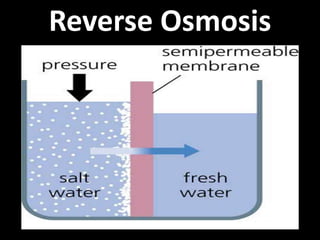
 Reverse Osmosis
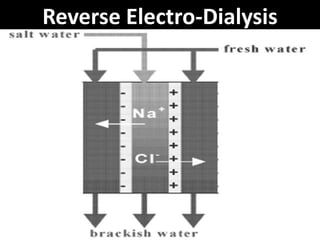
 Reverse Electro-Dialysis
 Advantages And Disadvantages
 Future Prospects
Blue Energy
 Energy available from the difference in
the salt concentration between sea
water and river water.
 It is also known as “Reverse Electro-
Dialysis” (RED).
Reverse Osmosis
Reverse Electro-Dialysis
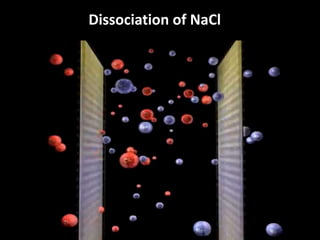
Dissociation of NaCl
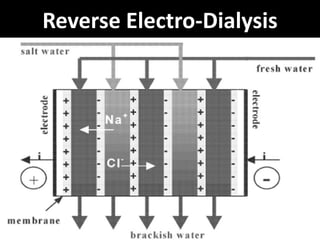
Reverse Electro-Dialysis
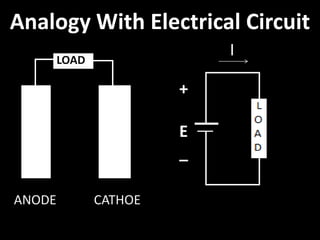
Analogy With Electrical Circuit
LOAD
ANODE CATHOE
+
E
_
I
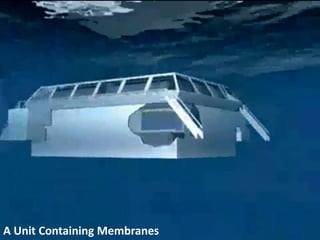
A Unit Containing Membranes
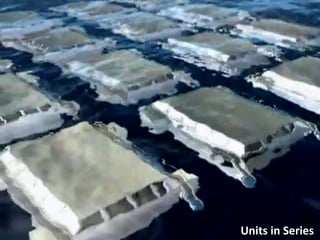
Units in Series
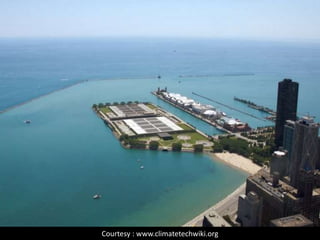
Courtesy : www.climatetechwiki.org
Parameters
 Energy Produced = 250kW
(It can go up to 4.5 GW)
 Size Of The Plant = 90 meter square
 Working Pressure = 11 – 15 bar
 Water quantity required per second on average = 3300
cubic meter
THE DATA IS DERIVED FROM THE RUNNING PLANT IN THE NETHERLANDS
River Delta
 The River Delta is a place where a river and an
ocean or a sea meets.
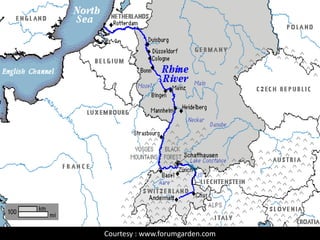
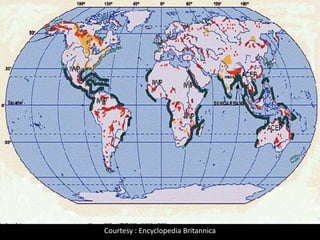
 Example of such ‘River Deltas’ are
(i) Rhine River Delta in the Netherlands
(ii) Sundarban in India
Courtesy : www.forumgarden.com
Courtesy : Encyclopedia Britannica
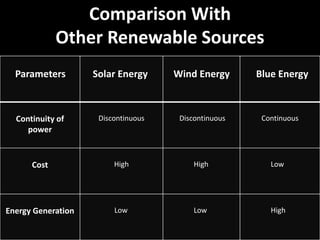
Comparison With
Other Renewable Sources
Parameters Solar Energy Wind Energy Blue Energy
Continuity of
power
Discontinuous Discontinuous Continuous
Cost High High Low
Energy Generation Low Low High
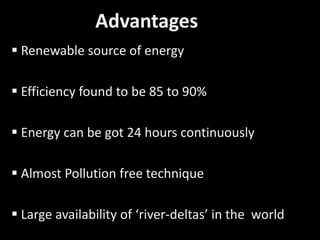
Advantages
 Renewable source of energy
 Efficiency found to be 85 to 90%
 Energy can be got 24 hours continuously
 Almost Pollution free technique
 Large availability of ‘river-deltas’ in the world
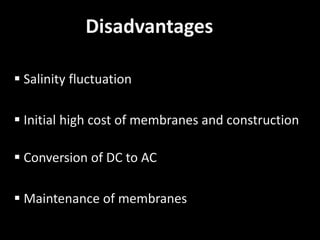
Disadvantages
 Salinity fluctuation
 Initial high cost of membranes and construction
 Conversion of DC to AC
 Maintenance of membranes
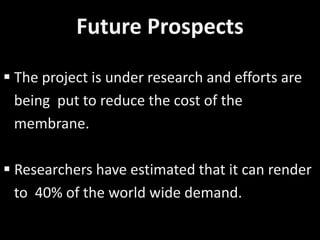
Future Prospects
 The project is under research and efforts are
being put to reduce the cost of the
membrane.
 Researchers have estimated that it can render
to 40% of the world wide demand.
References
 Ross, R., and Krijgsman, J. “New Ionomer Membranes for
Blue Energy”, an IEEE Paper
 http://en.wikipedia.org/wiki/BlueEnergy
 http://en.wikipedia.org/wiki/Reverse_osmosis
 http://powerplants.einnews.com/netherlands/
 Dr. Mark Krinker, and Professor Aron Goykadosh “Renewable
and Sustainable Energy Replacement Sources”
 http://www.odemagazine.com/doc/61/blue-energy/
 http://www.bluenergy.com/Ecological.htm
 http://www.sciencedirect.com/
 http://en.wikipedia.org/wiki/River_delta/
 http://en.wikipedia.org/wiki/BlueEnergy/
 http://www.elsevier.com/
Blue Energy Presentation

Blue Energy Presentation

  • 1.
    Blue Energy The RenewableSource Prepared By Ruchir Oza(08EE030) LDRP-ITR Mayur Parekh(08BEE031) NIRMA UNIVERSITY
  • 2.
    Flow Of ThePresentation  Blue Energy  Reverse Osmosis  Reverse Electro-Dialysis  Advantages And Disadvantages  Future Prospects
  • 3.
    Blue Energy  Energyavailable from the difference in the salt concentration between sea water and river water.  It is also known as “Reverse Electro- Dialysis” (RED).
  • 4.
  • 5.
  • 6.
  • 7.
  • 8.
    Analogy With ElectricalCircuit LOAD ANODE CATHOE + E _ I
  • 9.
  • 10.
  • 11.
  • 12.
    Parameters  Energy Produced= 250kW (It can go up to 4.5 GW)  Size Of The Plant = 90 meter square  Working Pressure = 11 – 15 bar  Water quantity required per second on average = 3300 cubic meter THE DATA IS DERIVED FROM THE RUNNING PLANT IN THE NETHERLANDS
  • 13.
    River Delta  TheRiver Delta is a place where a river and an ocean or a sea meets.  Example of such ‘River Deltas’ are (i) Rhine River Delta in the Netherlands (ii) Sundarban in India
  • 14.
  • 15.
  • 16.
    Comparison With Other RenewableSources Parameters Solar Energy Wind Energy Blue Energy Continuity of power Discontinuous Discontinuous Continuous Cost High High Low Energy Generation Low Low High
  • 17.
    Advantages  Renewable sourceof energy  Efficiency found to be 85 to 90%  Energy can be got 24 hours continuously  Almost Pollution free technique  Large availability of ‘river-deltas’ in the world
  • 18.
    Disadvantages  Salinity fluctuation Initial high cost of membranes and construction  Conversion of DC to AC  Maintenance of membranes
  • 19.
    Future Prospects  Theproject is under research and efforts are being put to reduce the cost of the membrane.  Researchers have estimated that it can render to 40% of the world wide demand.
  • 20.
    References  Ross, R.,and Krijgsman, J. “New Ionomer Membranes for Blue Energy”, an IEEE Paper  http://en.wikipedia.org/wiki/BlueEnergy  http://en.wikipedia.org/wiki/Reverse_osmosis  http://powerplants.einnews.com/netherlands/  Dr. Mark Krinker, and Professor Aron Goykadosh “Renewable and Sustainable Energy Replacement Sources”  http://www.odemagazine.com/doc/61/blue-energy/  http://www.bluenergy.com/Ecological.htm  http://www.sciencedirect.com/  http://en.wikipedia.org/wiki/River_delta/  http://en.wikipedia.org/wiki/BlueEnergy/  http://www.elsevier.com/

Editor's Notes

  • #4 From thermodynamic calculations, it can be derived that each mtr cube of river water can yield 1.4 MJ when mixed with the same amount of sea water.
  • #17 80 lacs approx. for full capacity(4.5 GW) . 20 pounds per mt sq. membrane. For 66 MW, 4.5 rs per Kwh. 0.4 KV to 170KV.