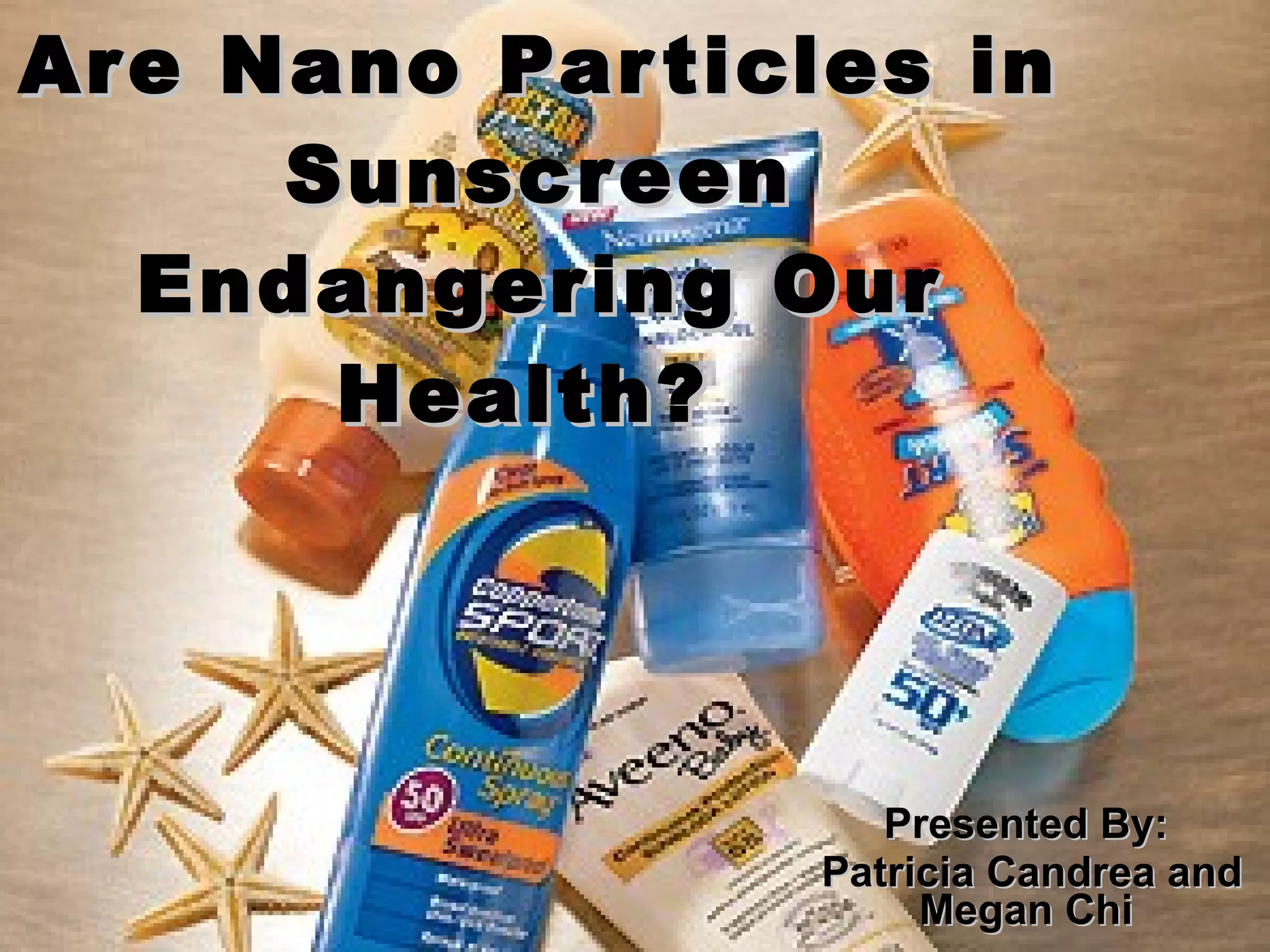
Are Nano Particles in Sunscreen Endangering Our Health?   Presented By:  Patricia Candrea and Megan Chi
What Are Nano Particles?  Named for their small size. Nanometer: billionth of a meter.  Roughly 100,000 times smaller that the width of a human hair. Assembled through rearranging the atoms.  Smaller than anything that is put into commercial products.
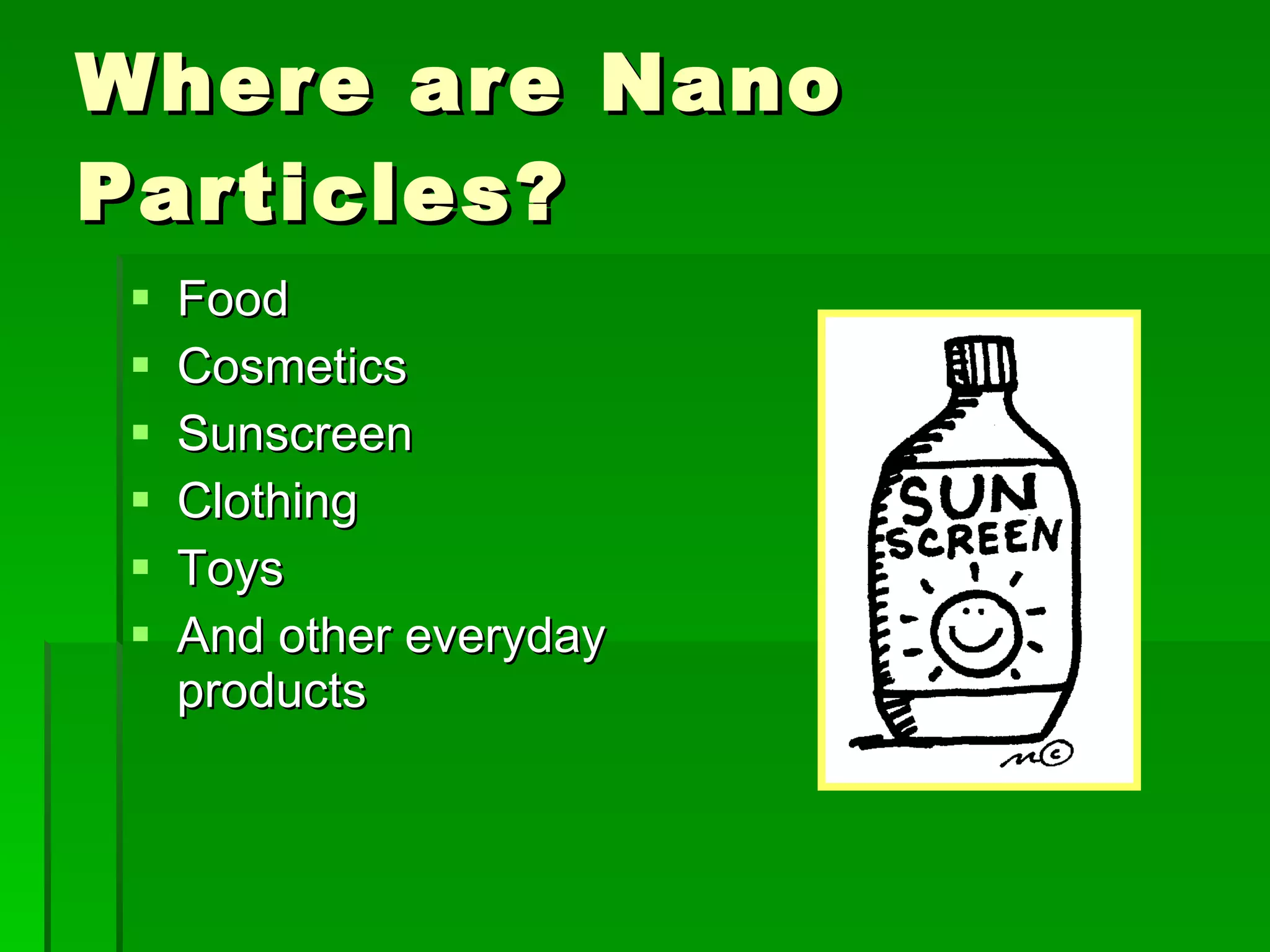
Where are Nano Particles?  Food Cosmetics  Sunscreen Clothing Toys And other everyday products
THE DANGEROUS SIDE
What Makes them Dangerous?   Big Problem:  common substances behave in uncommon ways. No one really knows what they do inside the body or environment. Have an enormous surface to volume ratio making them biologically active.
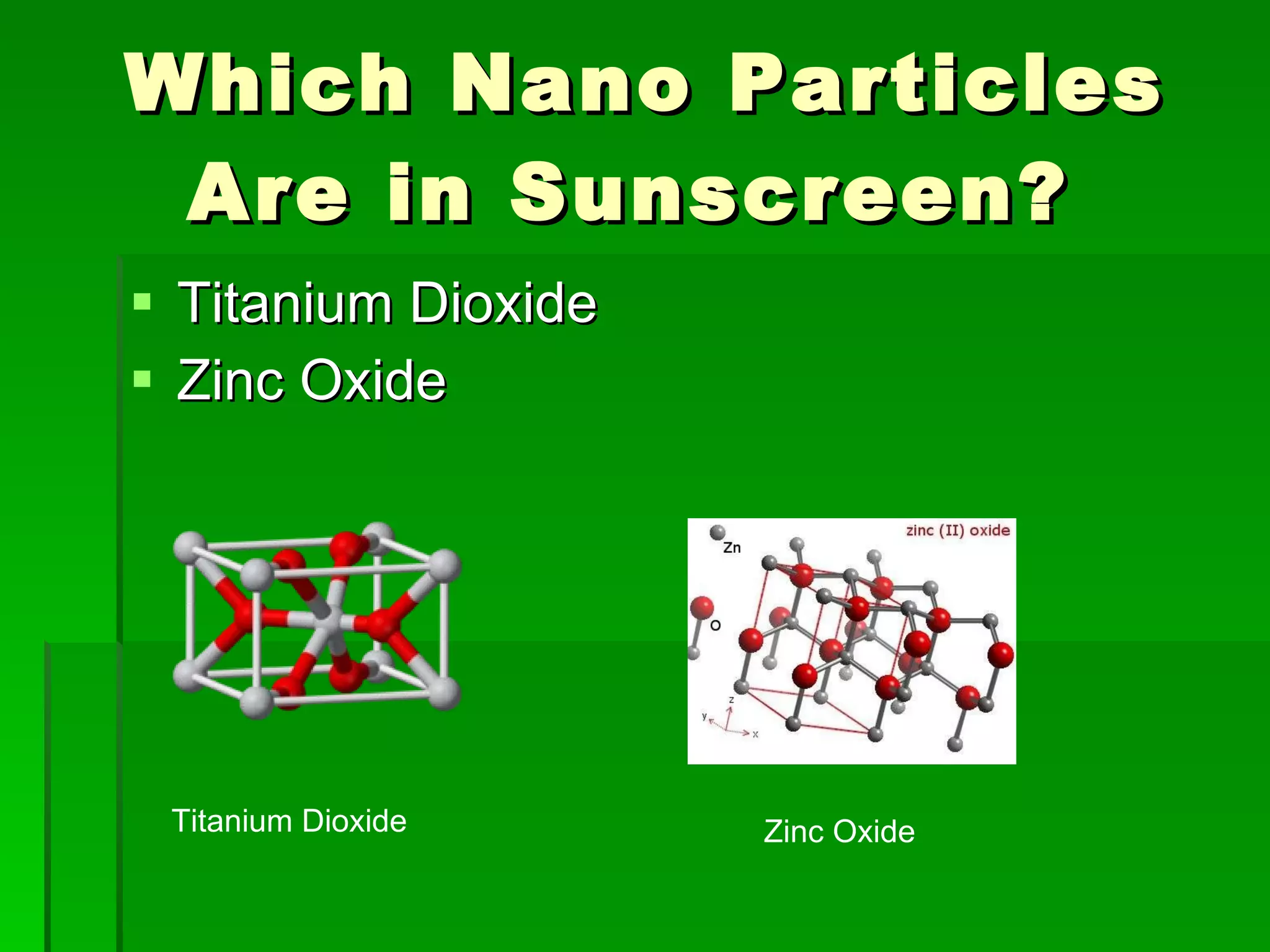
Which Nano Particles Are in Sunscreen?  Titanium Dioxide Zinc Oxide Titanium Dioxide  Zinc Oxide
Why Is Titanium Dioxide Dangerous?  Link to Various Disorders like:  Autistic Disorders Epilepsy Alzheimer’s Disease  When injected into pregnant mice it caused gene changes.
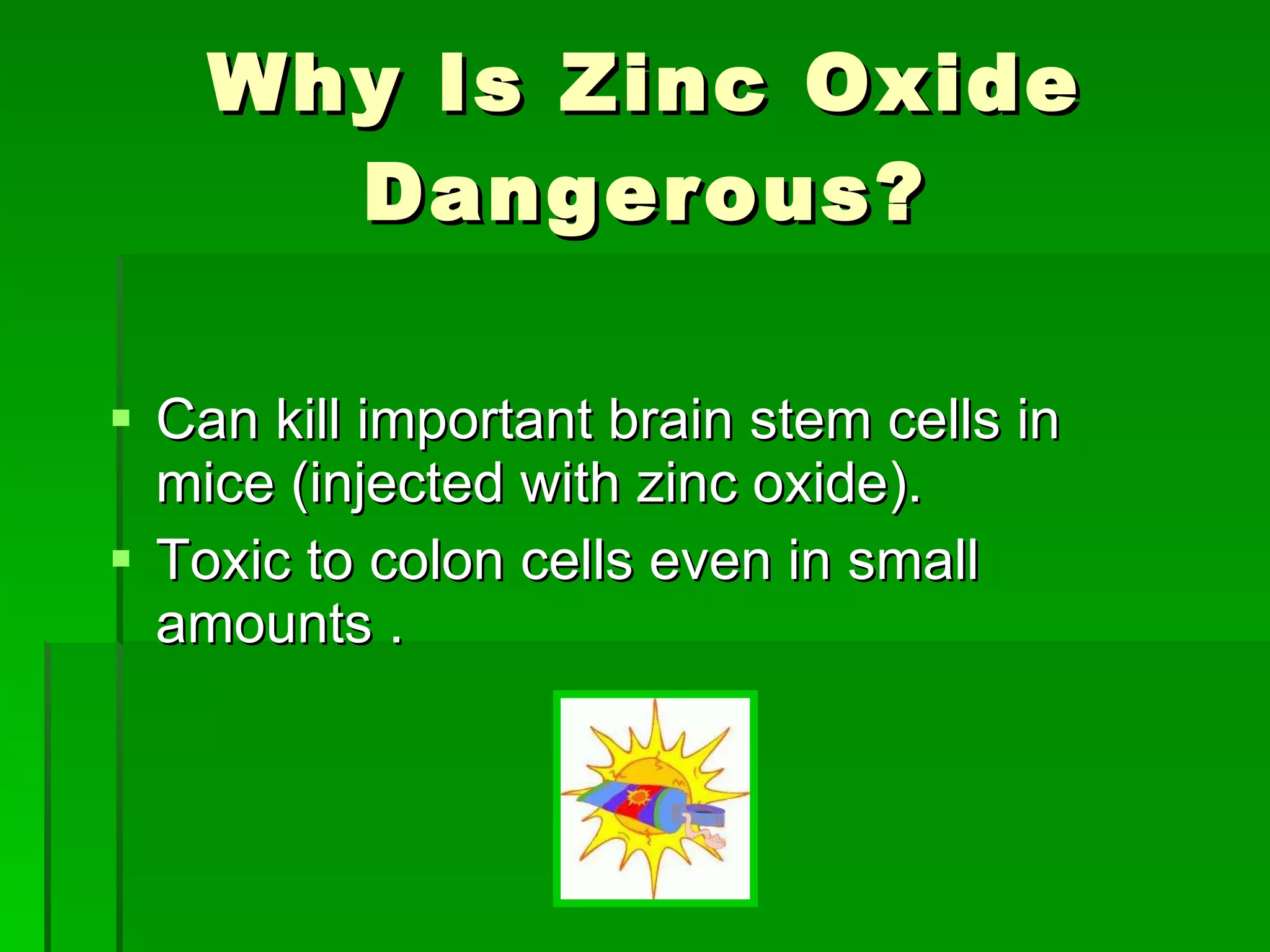
Why Is Zinc Oxide Dangerous? Can kill important brain stem cells in mice (injected with zinc oxide). Toxic to colon cells even in small amounts .
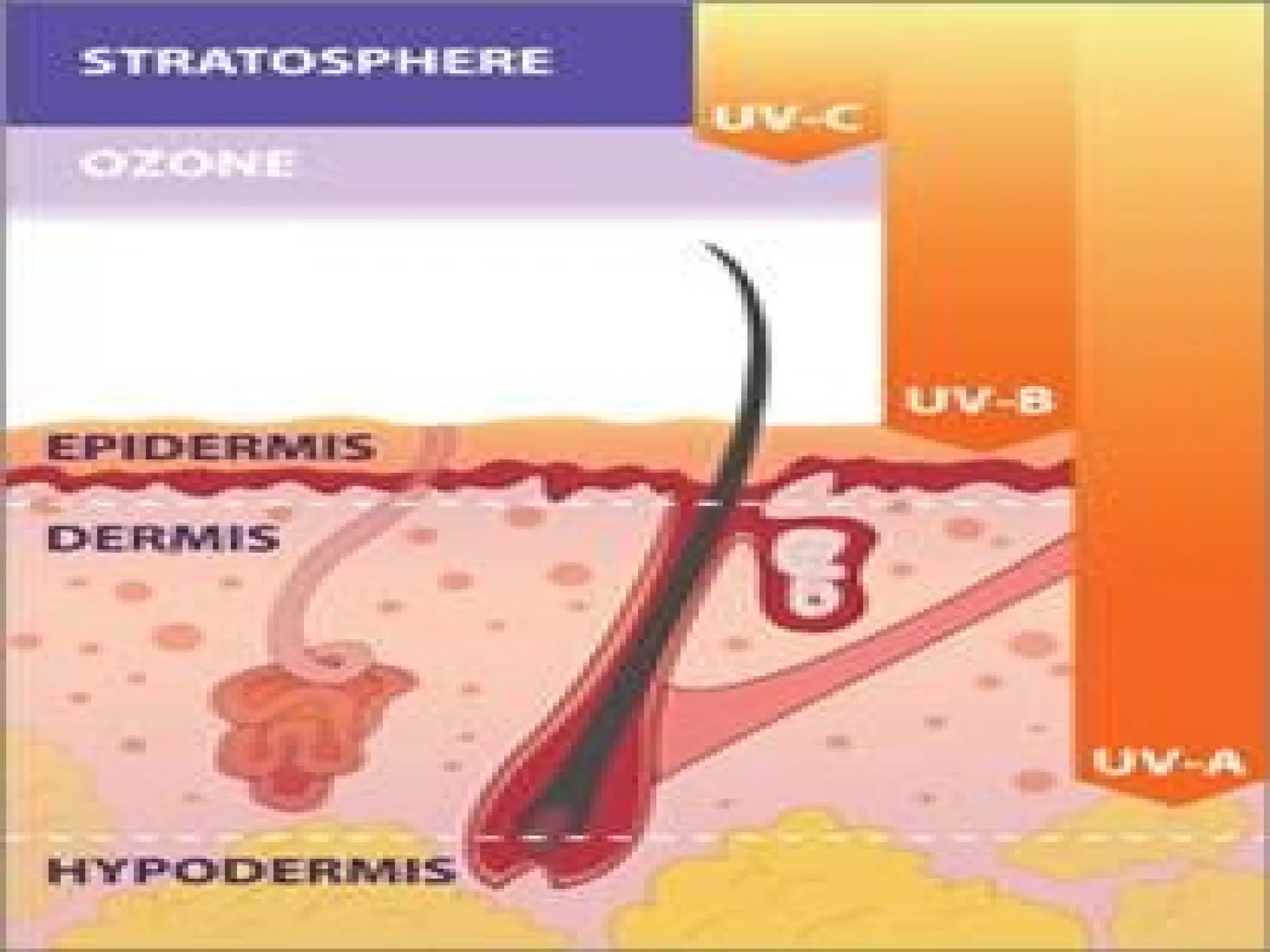
Why Is It Dangerous to Have Nano Particles In Sunscreen? Penetrate the skin leaching into the bloodstream, tissues, cells, and organs.  Photo Active: Produce free radicals causing DNA damage to human skin cells when exposed to UV light.  Can cress into human placentas from mother to unborn fetuses.
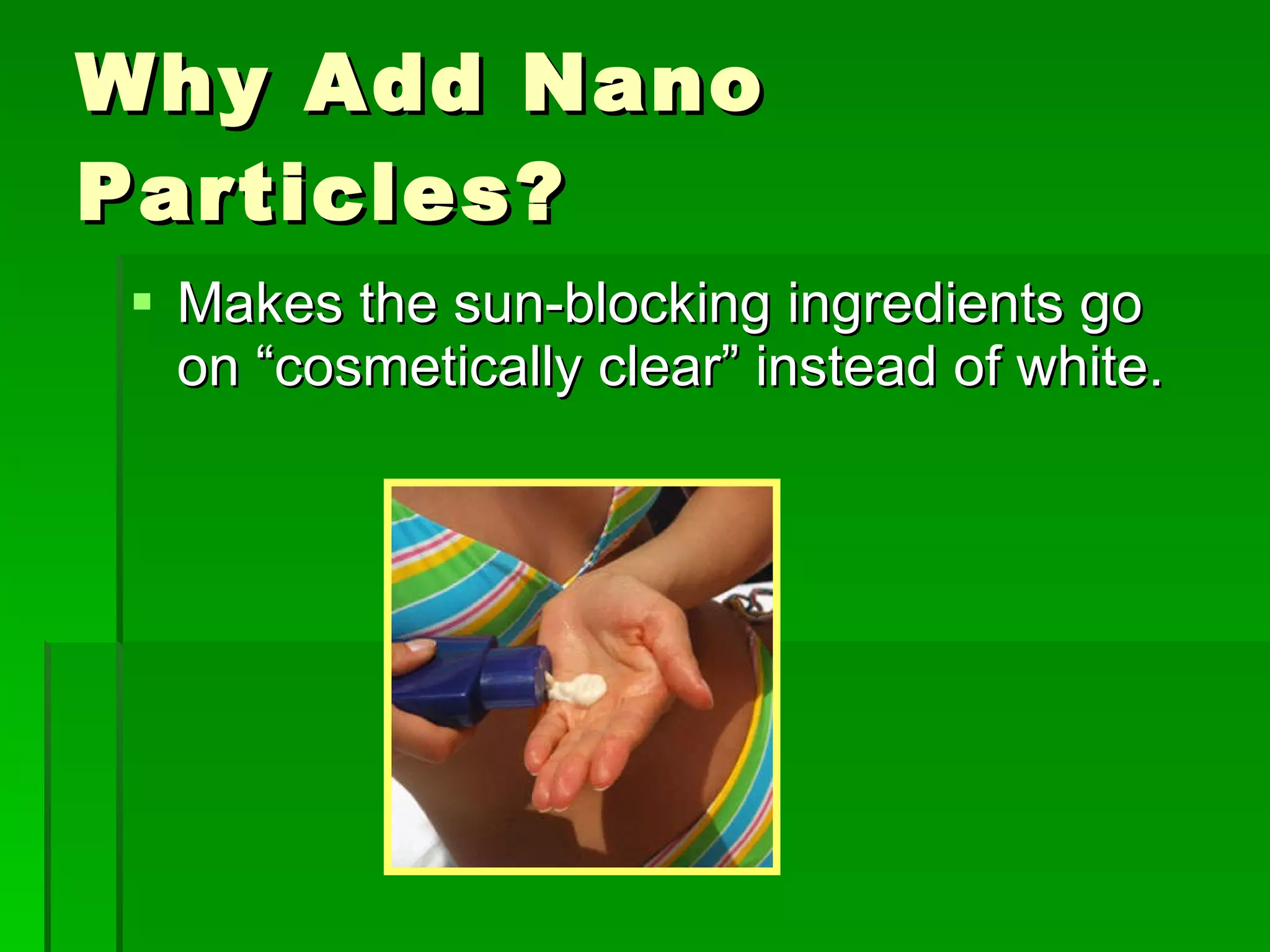
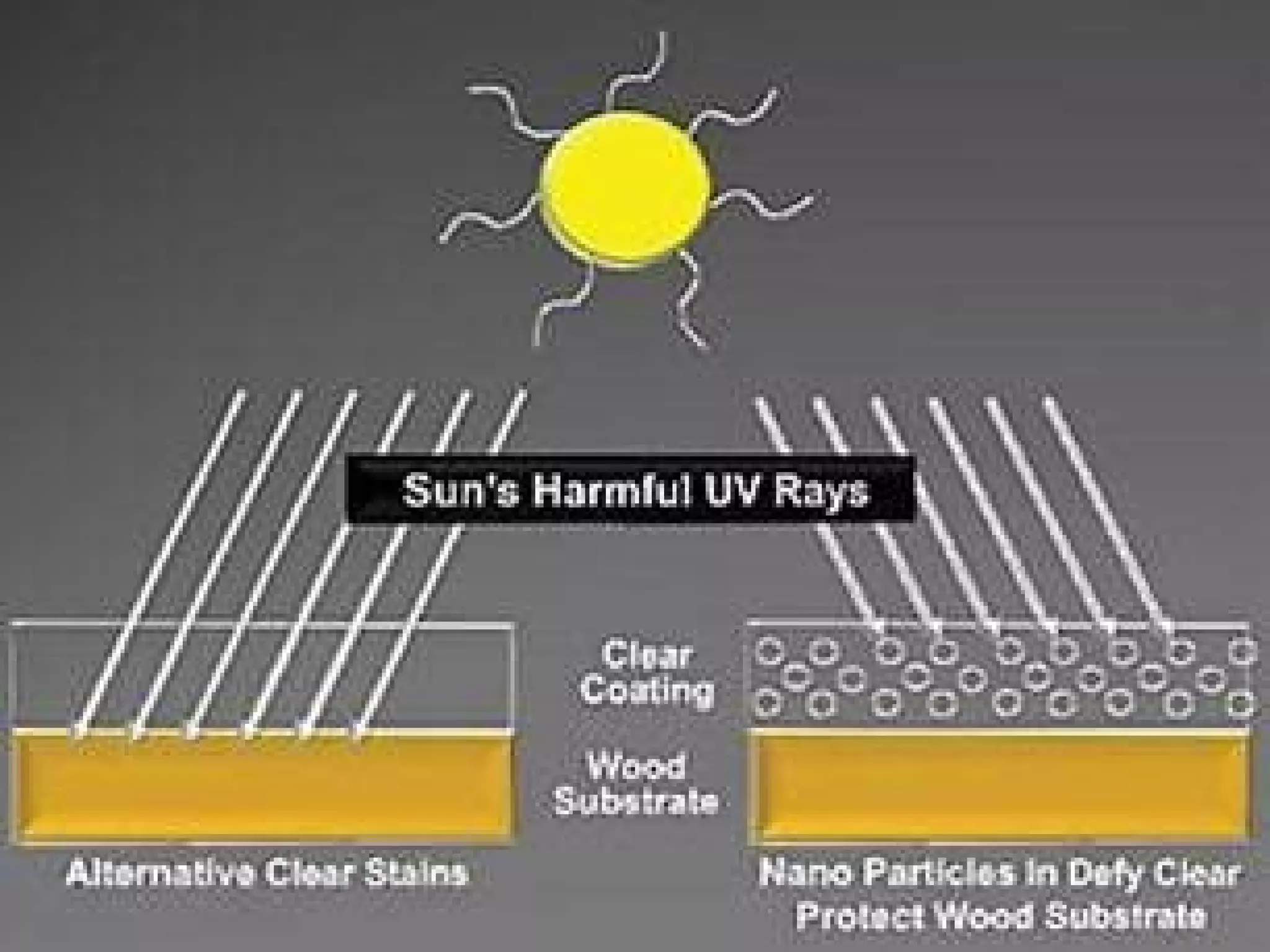
Why Add Nano Particles? Makes the sun-blocking ingredients go on “cosmetically clear” instead of white.
THE SAFE SIDE
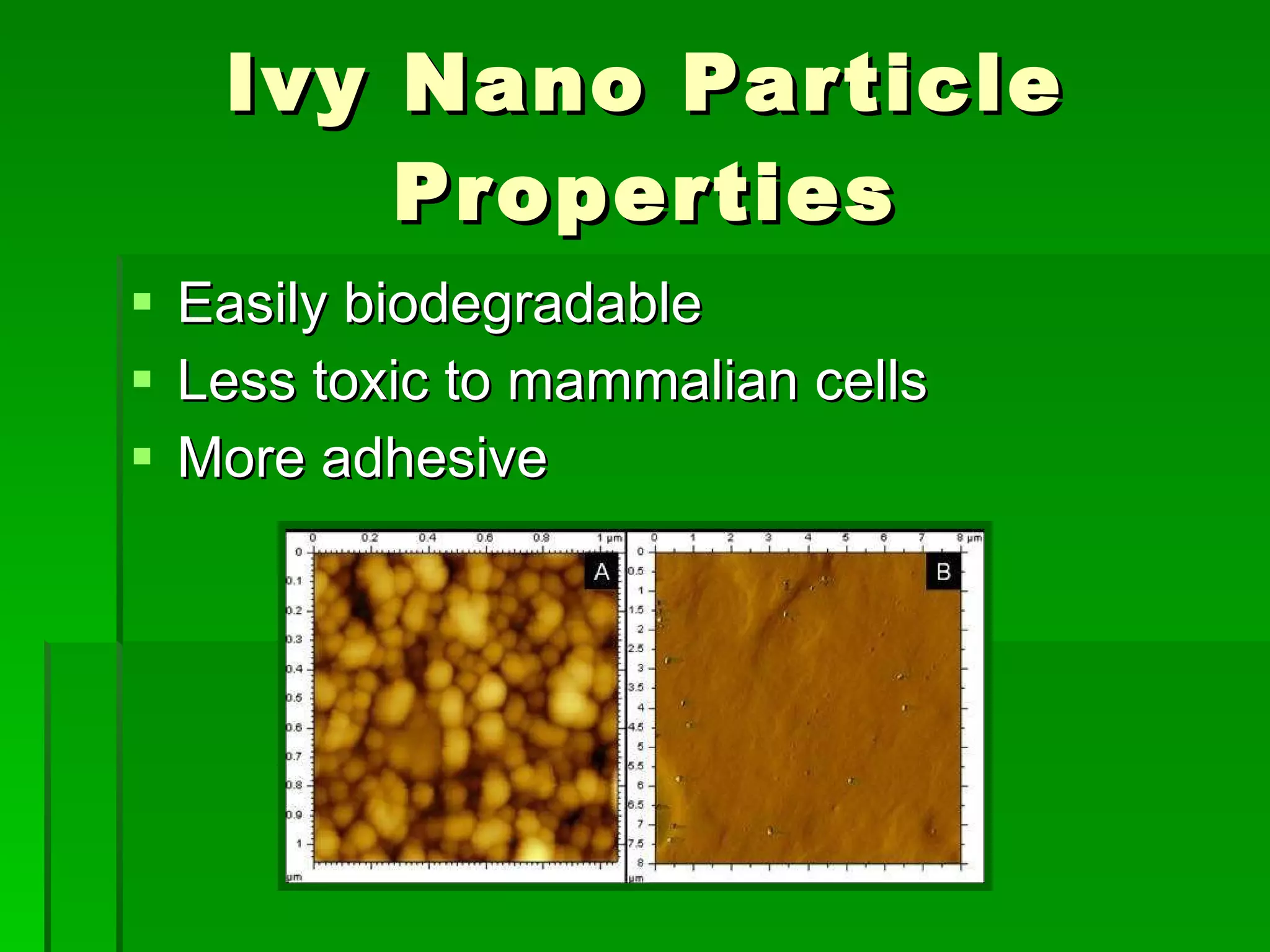
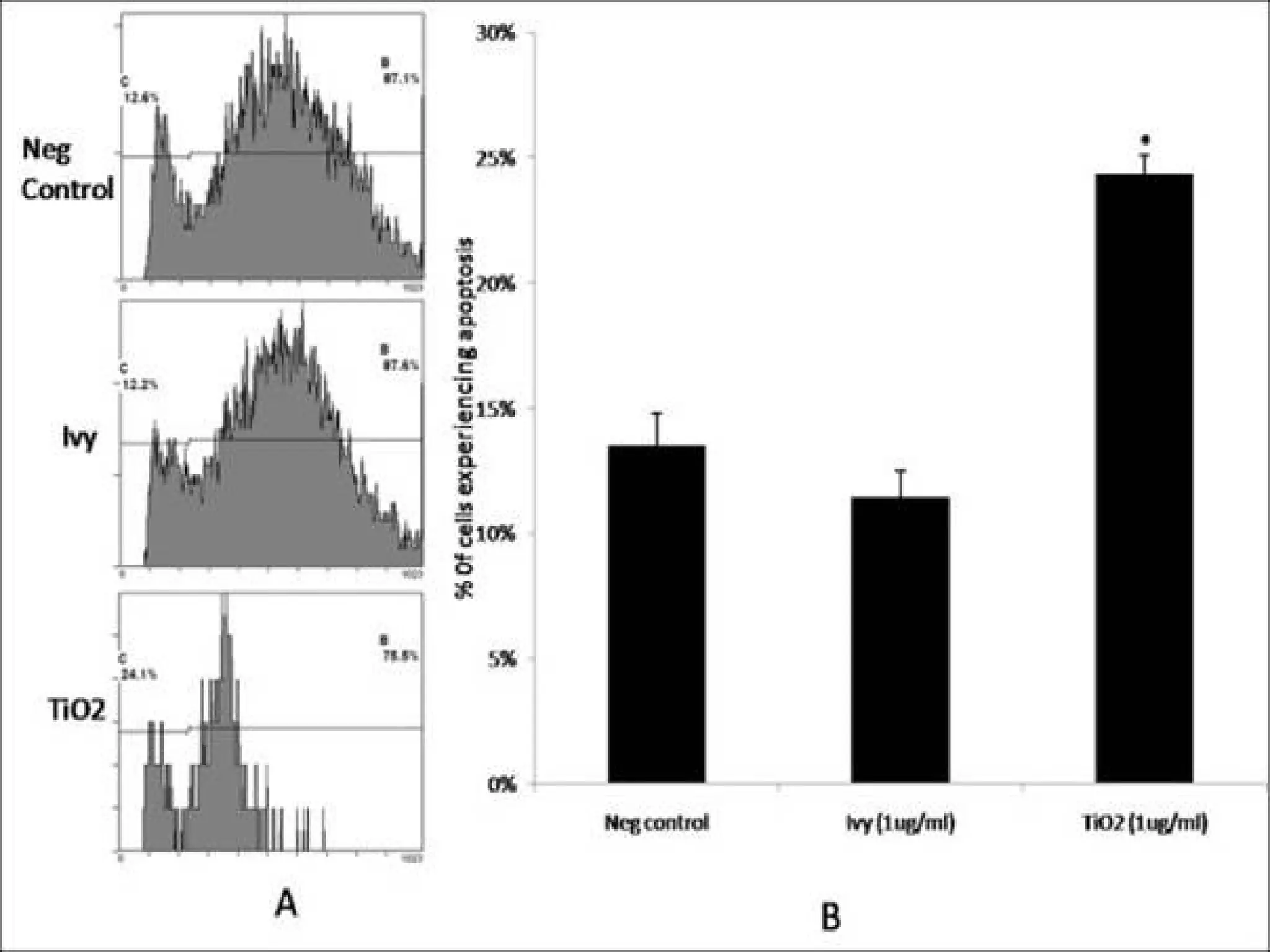
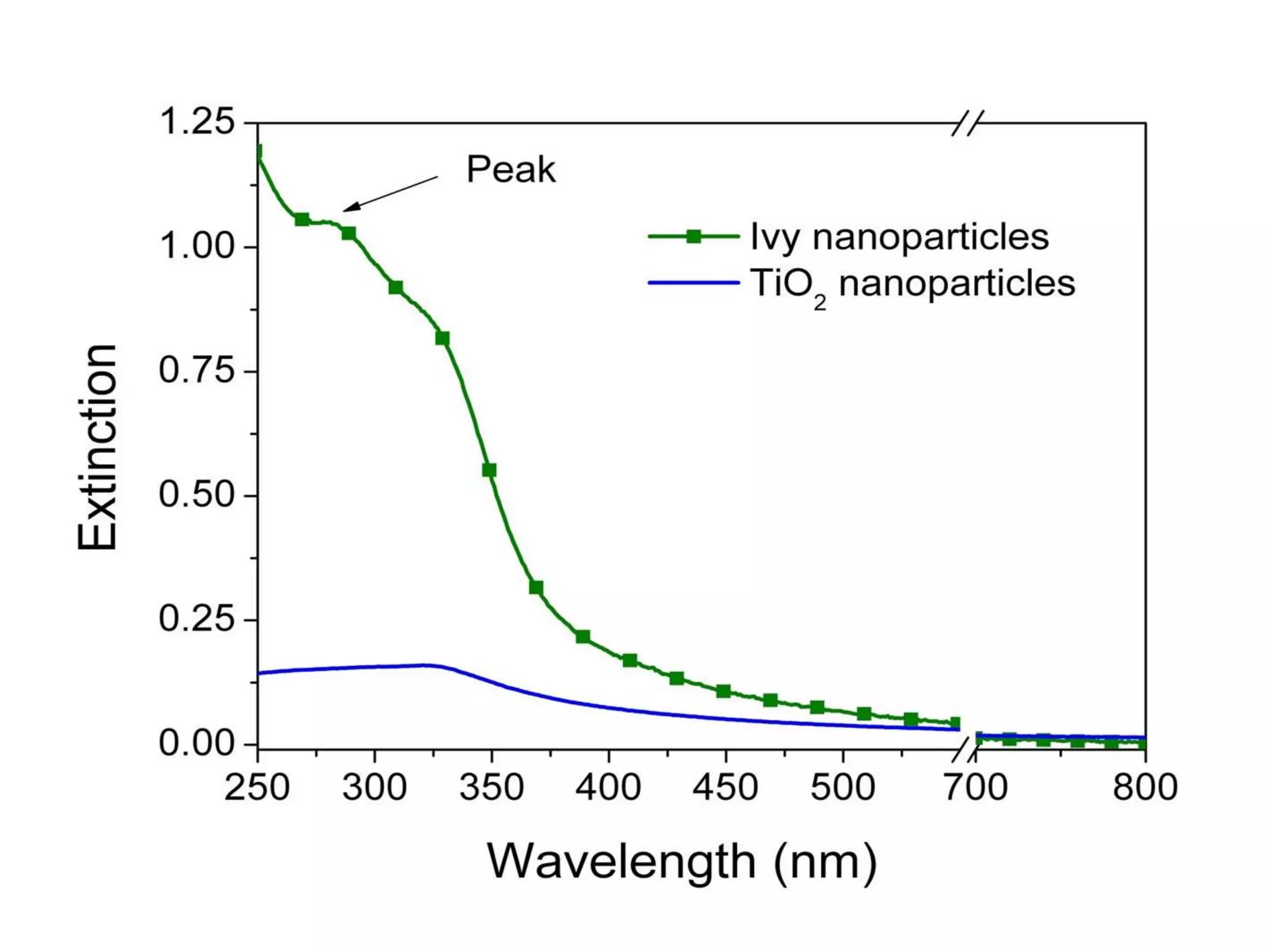
Why Are They Safe? Organic, natural occurring nanoparticles Ivy nanoparticles are more uniform than the metal-based nanoparticles, and have unique material properties, which help enhance the absorption and scattering of light, and serve as a sun-blocker.
Ivy Nano Particle Properties Easily biodegradable  Less toxic to mammalian cells More adhesive
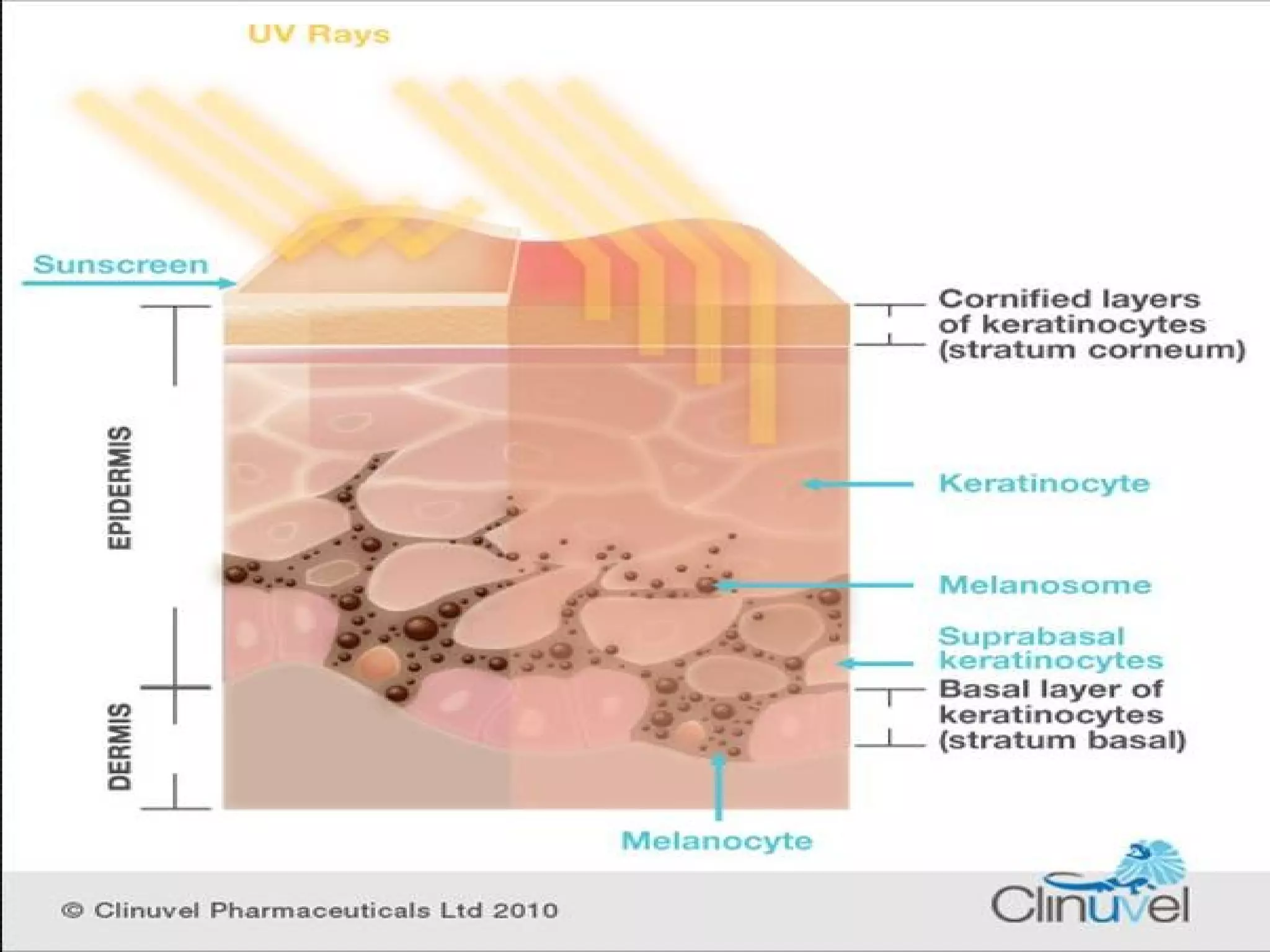
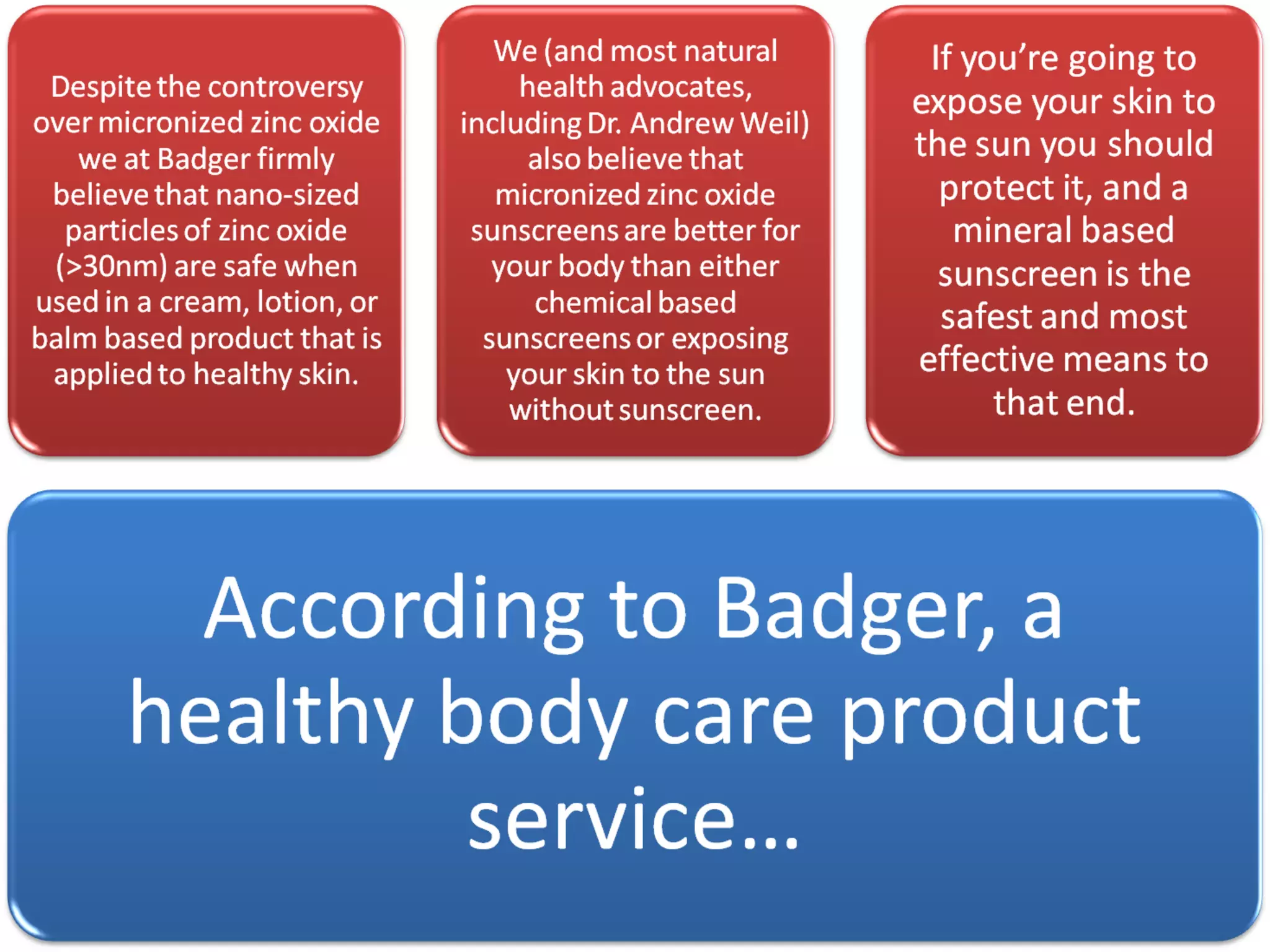
Are They Dangerous? To date, the current weight of evidence suggests that titanium dioxide and zinc oxide nanoparticles do not reach viable skin cells; they remain on the surface of the skin and outer layer of the skin. Nano particles of zinc and titanium do not penetrate the skin enough to pose a potential hazard
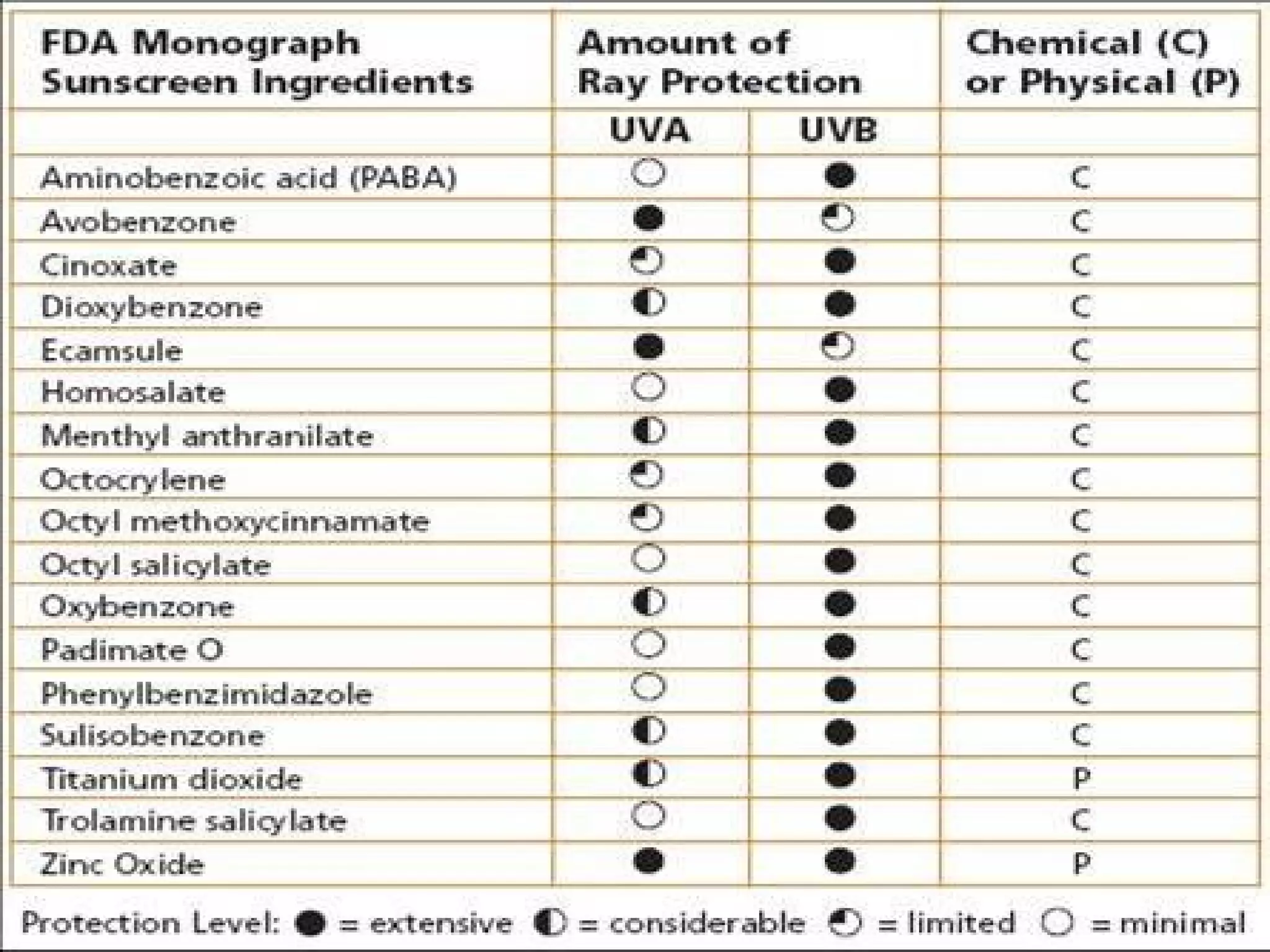
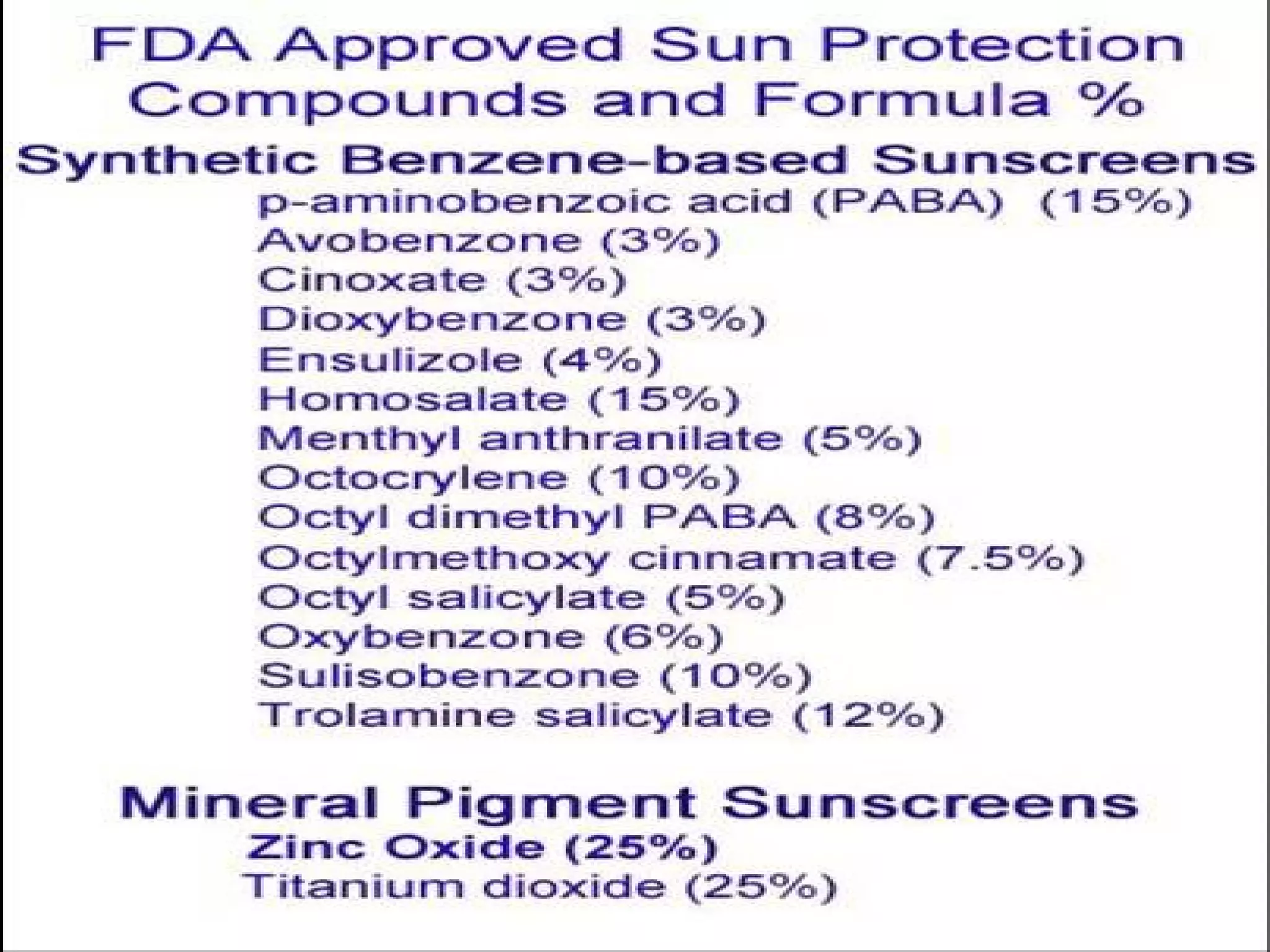
Are the Dangers of Sunscreen Related to Nano Particles? The Biggest sunscreen safety hazards are not related to nanoparticles. They are the chemicals, which are absorbed by the skin and end up the in the blood stream. Stick to the sunscreens that have titanium dioxide and zinc.


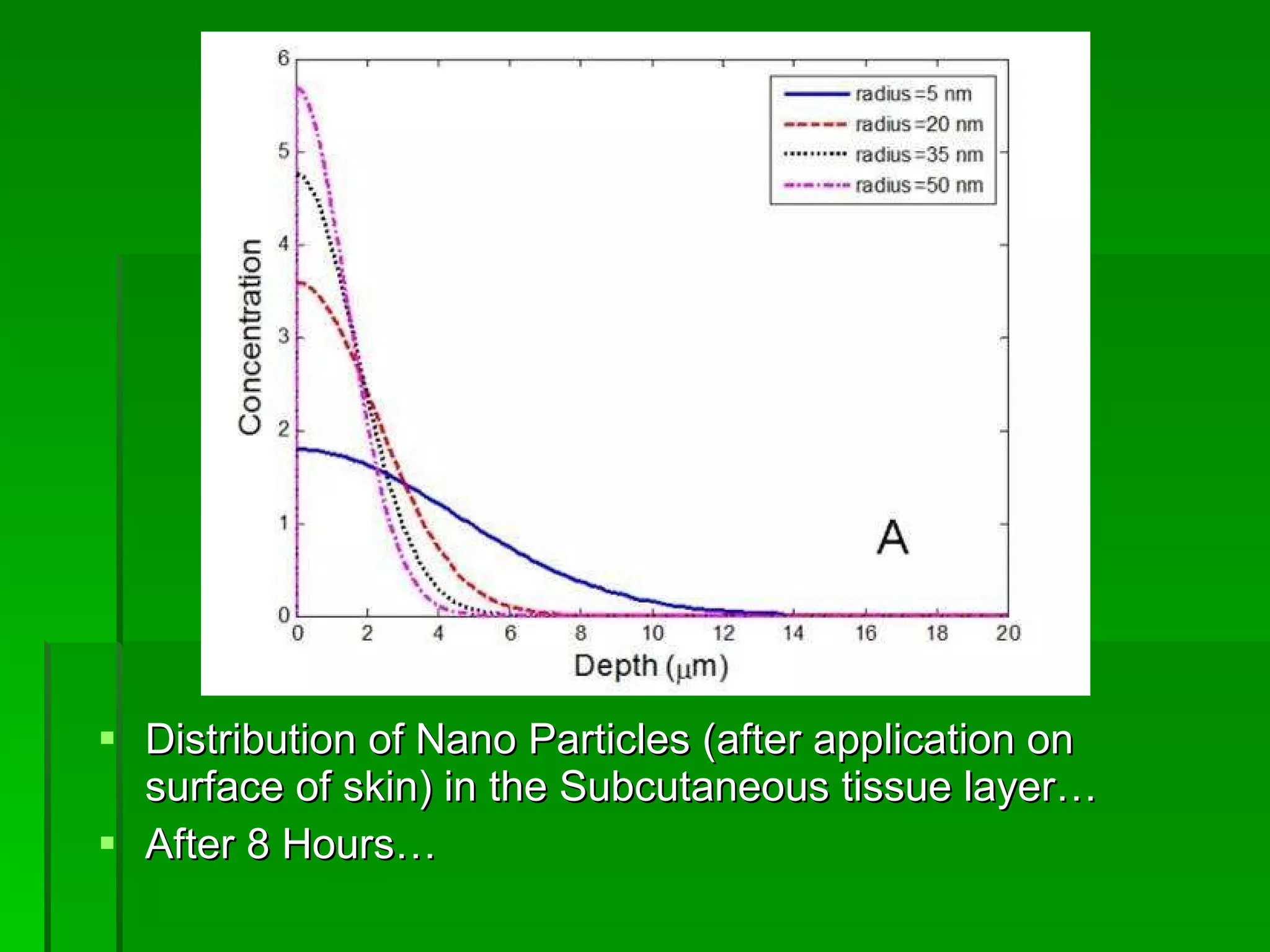
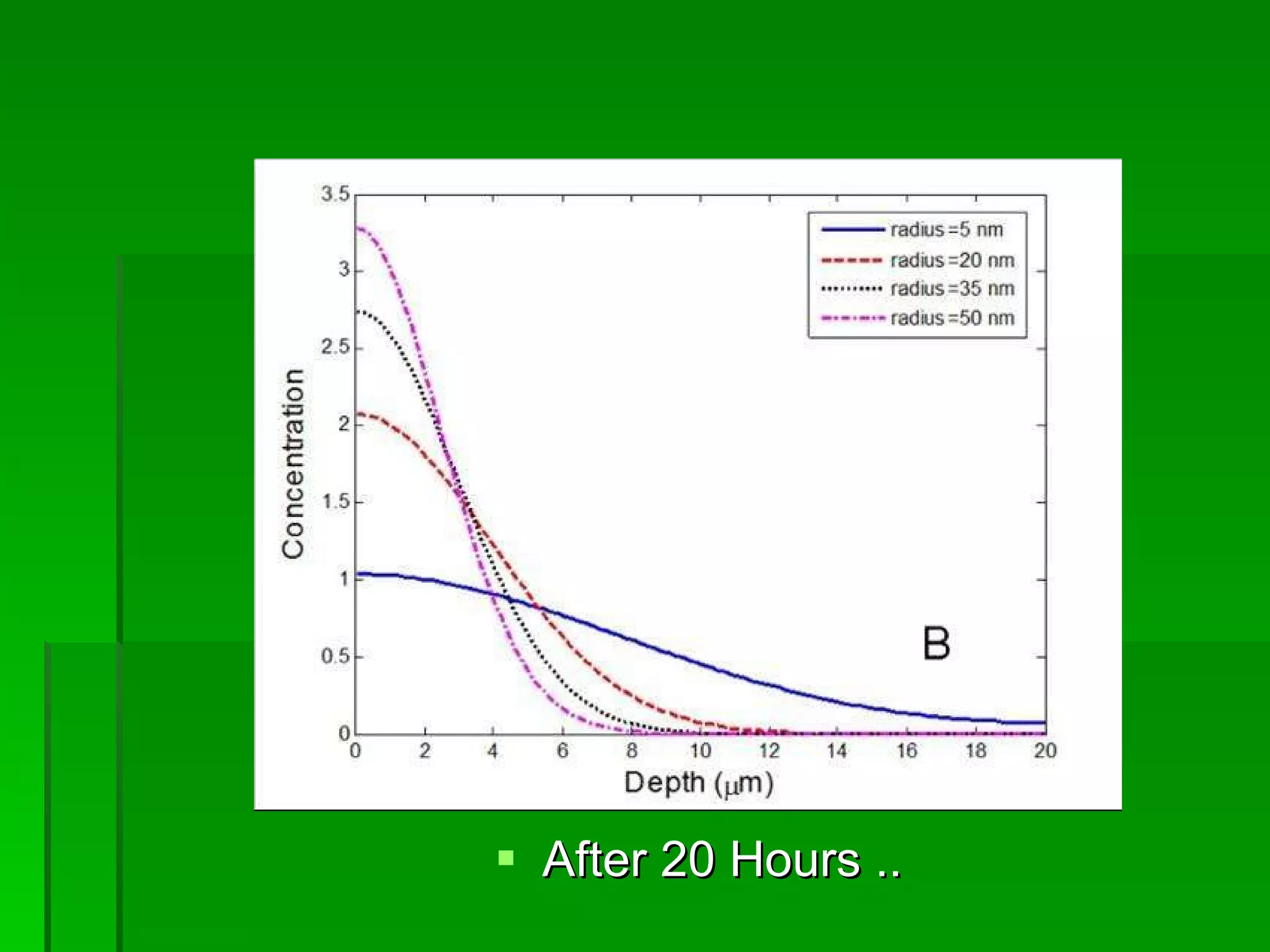
Distribution of Nano Particles (after application on surface of skin) in the Subcutaneous tissue layer… After 8 Hours…
After 20 Hours ..
Interesting Facts  The FDA has known for a decade that almost half the sunscreens used contain substances that accelerate the growth of skin cancer cells. France, Germany, the U.K., and European Parliament have begun to require everything from safety testing and mandatory labeling of the nanoparticles.
Environmental Impacts  In a study bacteria’s cell walls were damage after adding 10 to 100 milligrams per liter of the nanosubstance. According to the study the nanosubstance damaged the bacteria’s functionality. Microbes uses include: removing amonia from waste water treatment plants, cleaning up toxic waste and reduce phosphorus in lakes.
Works Cited  <http://www.aolnews.com/nanotech/article/more-bad-news-about-sunscreens-nanoparticles/19500193>  <http://www.emagazine.com/view/?4723>  <http://www.health101.org/art_nanotech.htm>  http://www.tga.gov.au/npmeds/sunscreen-zotd.htm http://www.redorbit.com/news/health/1893903/english_ivy_could_make_sunscreen_safer_more_effective/index.html http://eco-chick.com/2008/06/1171/nanoparticles-in-sunscreen-what-they-are-how-to-avoid-them/ http://www.tga.gov.au/npmeds/sunscreen-zotd.pdf http://www.momsteam.com/health-safety/consumer-reports-poll-27-parents-kids-under-12-apply-sunscreen-rarely-never http://www.cancer.org.au/cancersmartlifestyle/SunSmart/nanoparticles_sunscreen.htm http://www.ewg.org/2010sunscreen/faqs-2010/#question_30 http://cdn125bohzgj.bluehatnetwork.com/images/stories/extreme-diagram.jpg http://www.cosmeticsdatabase.com/images/skin_uv.jpg http://www.jnanobiotechnology.com/content/8/1/12 https://www.badgerbalm.com/t-SPF_tech.aspx

Nanoparticles powerpoint

  • 1.
    Are Nano Particlesin Sunscreen Endangering Our Health? Presented By: Patricia Candrea and Megan Chi
  • 2.
    What Are NanoParticles? Named for their small size. Nanometer: billionth of a meter. Roughly 100,000 times smaller that the width of a human hair. Assembled through rearranging the atoms. Smaller than anything that is put into commercial products.
  • 3.
    Where are NanoParticles? Food Cosmetics Sunscreen Clothing Toys And other everyday products
  • 4.
  • 5.
    What Makes themDangerous? Big Problem: common substances behave in uncommon ways. No one really knows what they do inside the body or environment. Have an enormous surface to volume ratio making them biologically active.
  • 6.
    Which Nano ParticlesAre in Sunscreen? Titanium Dioxide Zinc Oxide Titanium Dioxide Zinc Oxide
  • 7.
    Why Is TitaniumDioxide Dangerous? Link to Various Disorders like: Autistic Disorders Epilepsy Alzheimer’s Disease When injected into pregnant mice it caused gene changes.
  • 8.
    Why Is ZincOxide Dangerous? Can kill important brain stem cells in mice (injected with zinc oxide). Toxic to colon cells even in small amounts .
  • 9.
    Why Is ItDangerous to Have Nano Particles In Sunscreen? Penetrate the skin leaching into the bloodstream, tissues, cells, and organs. Photo Active: Produce free radicals causing DNA damage to human skin cells when exposed to UV light. Can cress into human placentas from mother to unborn fetuses.
  • 10.
    Why Add NanoParticles? Makes the sun-blocking ingredients go on “cosmetically clear” instead of white.
  • 11.
  • 12.
    Why Are TheySafe? Organic, natural occurring nanoparticles Ivy nanoparticles are more uniform than the metal-based nanoparticles, and have unique material properties, which help enhance the absorption and scattering of light, and serve as a sun-blocker.
  • 13.
    Ivy Nano ParticleProperties Easily biodegradable Less toxic to mammalian cells More adhesive
  • 14.
    Are They Dangerous?To date, the current weight of evidence suggests that titanium dioxide and zinc oxide nanoparticles do not reach viable skin cells; they remain on the surface of the skin and outer layer of the skin. Nano particles of zinc and titanium do not penetrate the skin enough to pose a potential hazard
  • 15.
    Are the Dangersof Sunscreen Related to Nano Particles? The Biggest sunscreen safety hazards are not related to nanoparticles. They are the chemicals, which are absorbed by the skin and end up the in the blood stream. Stick to the sunscreens that have titanium dioxide and zinc.
  • 16.
  • 17.
  • 18.
  • 19.
  • 20.
  • 21.
  • 22.
  • 23.
  • 24.
    Distribution of NanoParticles (after application on surface of skin) in the Subcutaneous tissue layer… After 8 Hours…
  • 25.
  • 26.
    Interesting Facts The FDA has known for a decade that almost half the sunscreens used contain substances that accelerate the growth of skin cancer cells. France, Germany, the U.K., and European Parliament have begun to require everything from safety testing and mandatory labeling of the nanoparticles.
  • 27.
    Environmental Impacts In a study bacteria’s cell walls were damage after adding 10 to 100 milligrams per liter of the nanosubstance. According to the study the nanosubstance damaged the bacteria’s functionality. Microbes uses include: removing amonia from waste water treatment plants, cleaning up toxic waste and reduce phosphorus in lakes.
  • 28.
    Works Cited <http://www.aolnews.com/nanotech/article/more-bad-news-about-sunscreens-nanoparticles/19500193> <http://www.emagazine.com/view/?4723> <http://www.health101.org/art_nanotech.htm> http://www.tga.gov.au/npmeds/sunscreen-zotd.htm http://www.redorbit.com/news/health/1893903/english_ivy_could_make_sunscreen_safer_more_effective/index.html http://eco-chick.com/2008/06/1171/nanoparticles-in-sunscreen-what-they-are-how-to-avoid-them/ http://www.tga.gov.au/npmeds/sunscreen-zotd.pdf http://www.momsteam.com/health-safety/consumer-reports-poll-27-parents-kids-under-12-apply-sunscreen-rarely-never http://www.cancer.org.au/cancersmartlifestyle/SunSmart/nanoparticles_sunscreen.htm http://www.ewg.org/2010sunscreen/faqs-2010/#question_30 http://cdn125bohzgj.bluehatnetwork.com/images/stories/extreme-diagram.jpg http://www.cosmeticsdatabase.com/images/skin_uv.jpg http://www.jnanobiotechnology.com/content/8/1/12 https://www.badgerbalm.com/t-SPF_tech.aspx