INTRODUCTION TO
NANOTECHNOLOGY
2016/2017
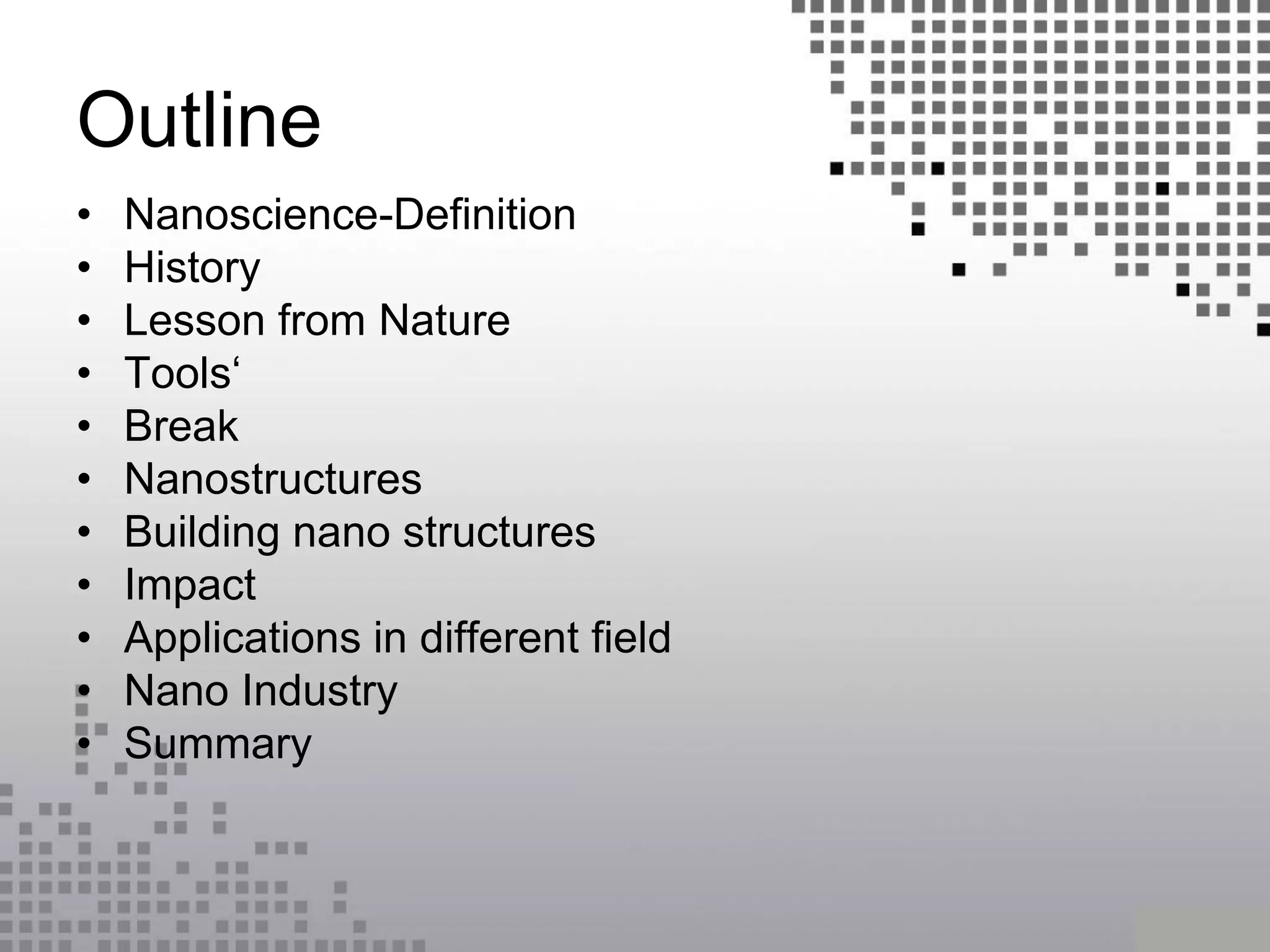
• Nanoscience-Definition
• History
• Lesson from Nature
• Tools‘
• Break
• Nanostructures
• Building nano structures
• Impact
• Applications in different field
• Nano Industry
• Summary
Outline
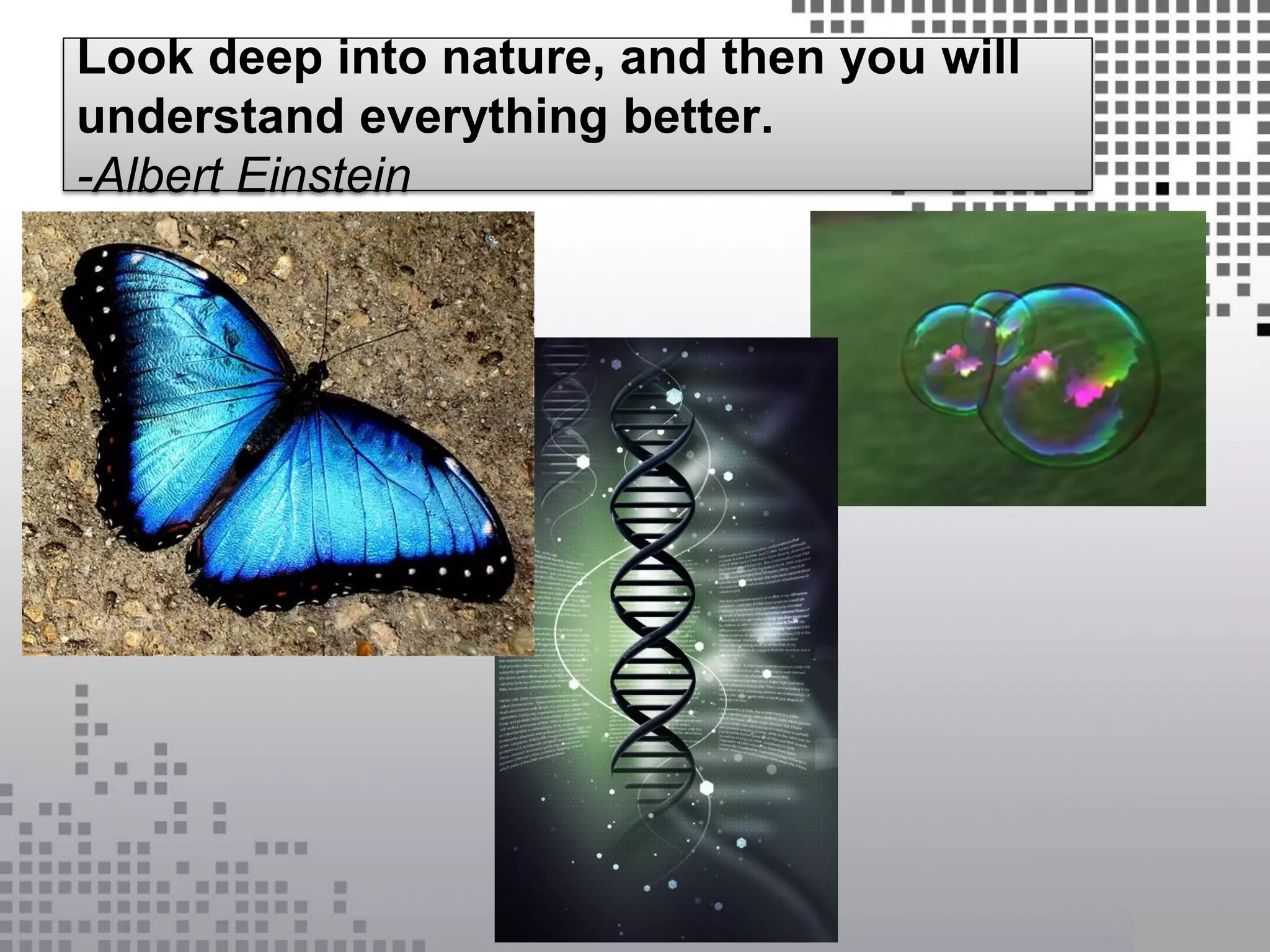
Look deep into nature, and then you will
understand everything better.
-Albert Einstein
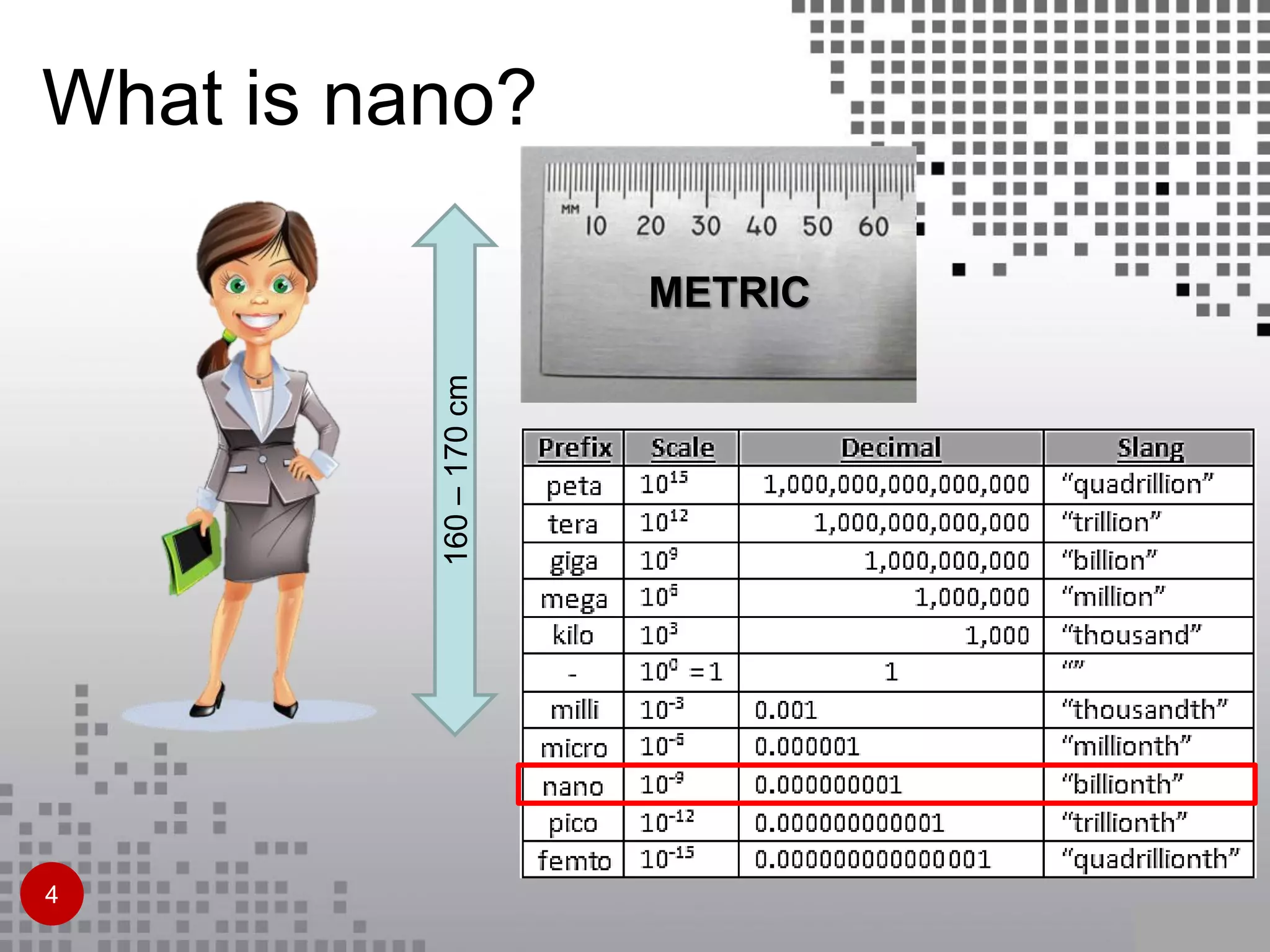
What is nano?
160–170cm
METRIC
4
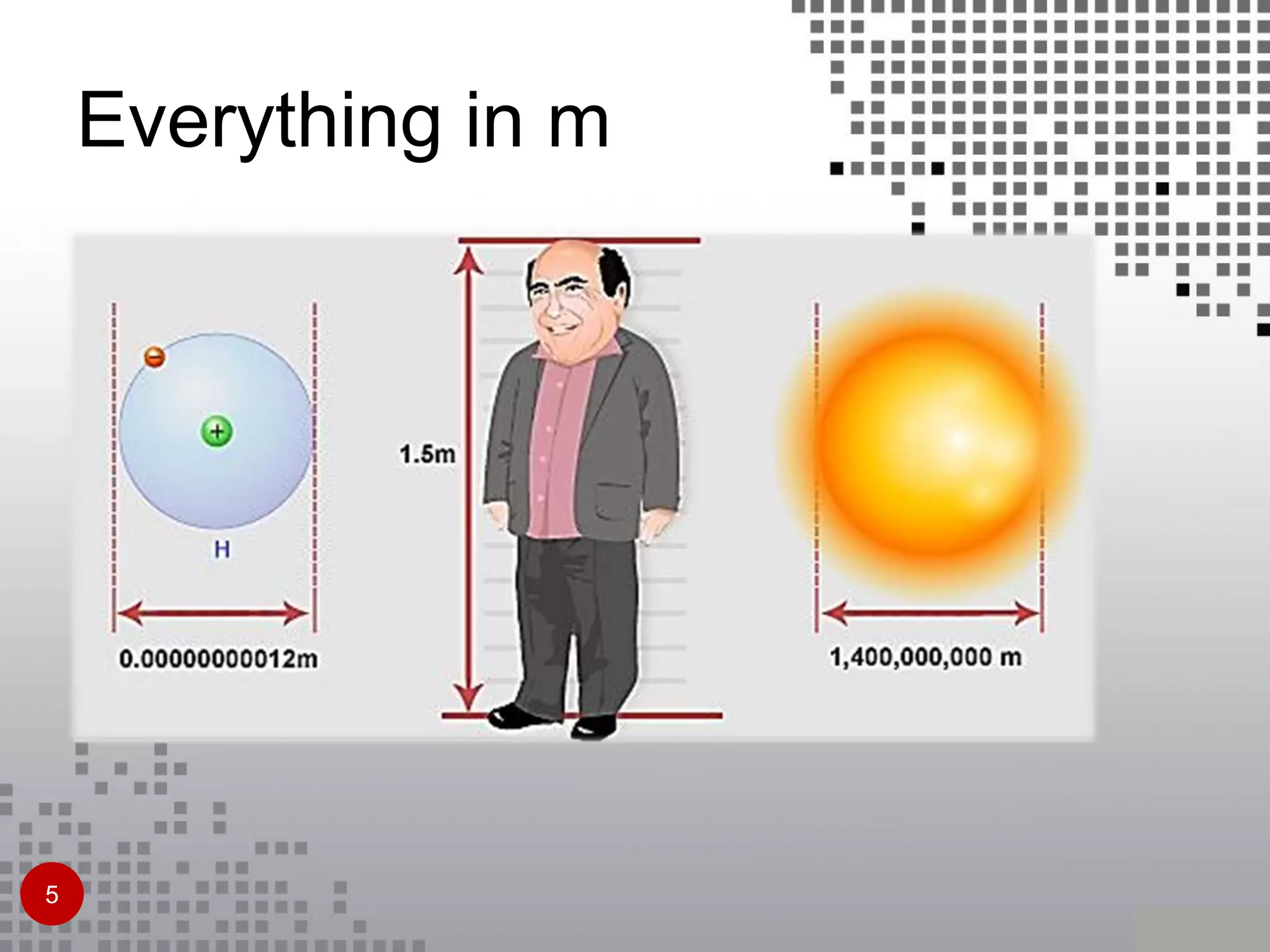
Everything in m
5
What is nano?
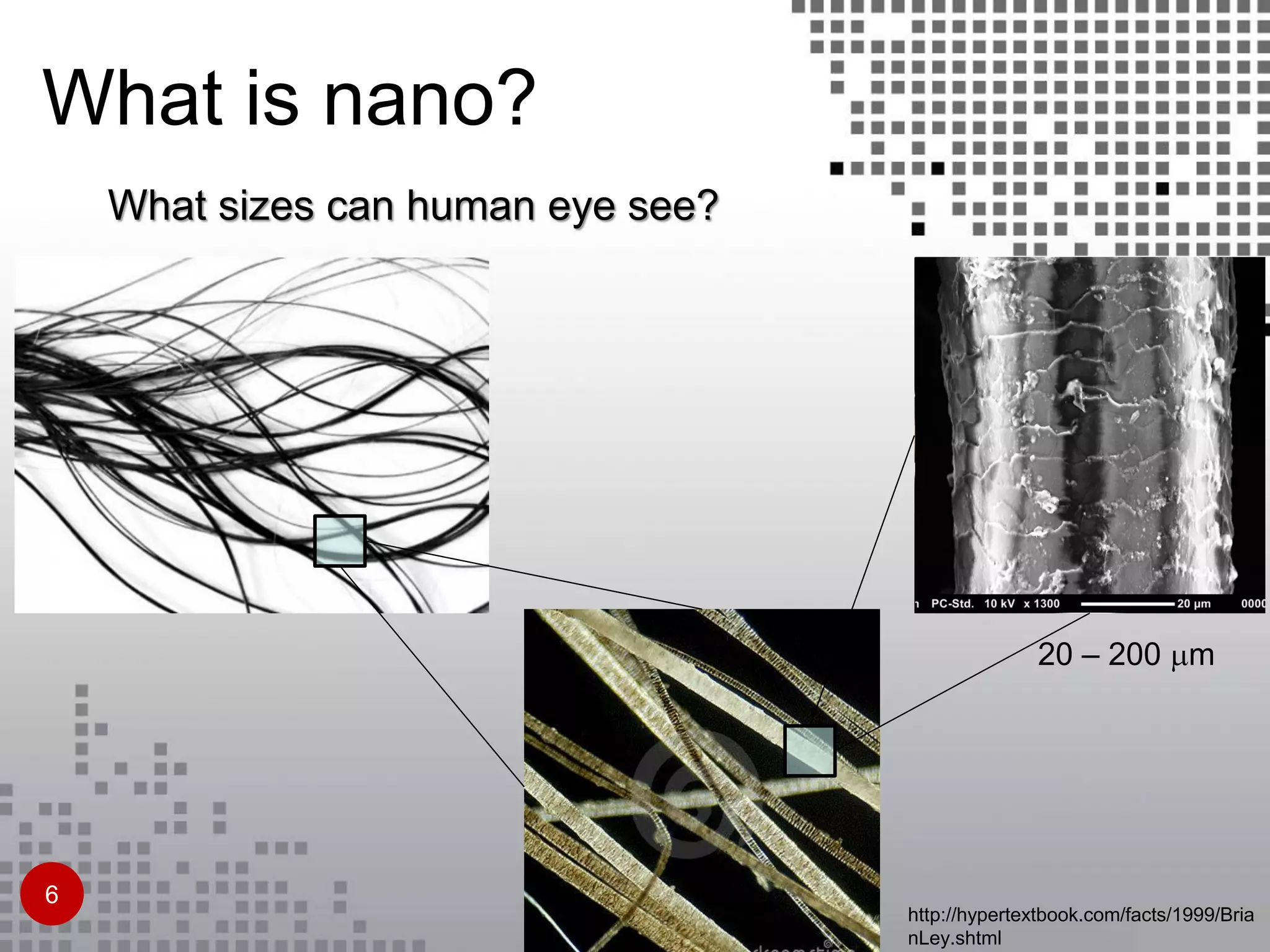
What sizes can human eye see?
20 – 200 m
http://hypertextbook.com/facts/1999/Bria
nLey.shtml
6
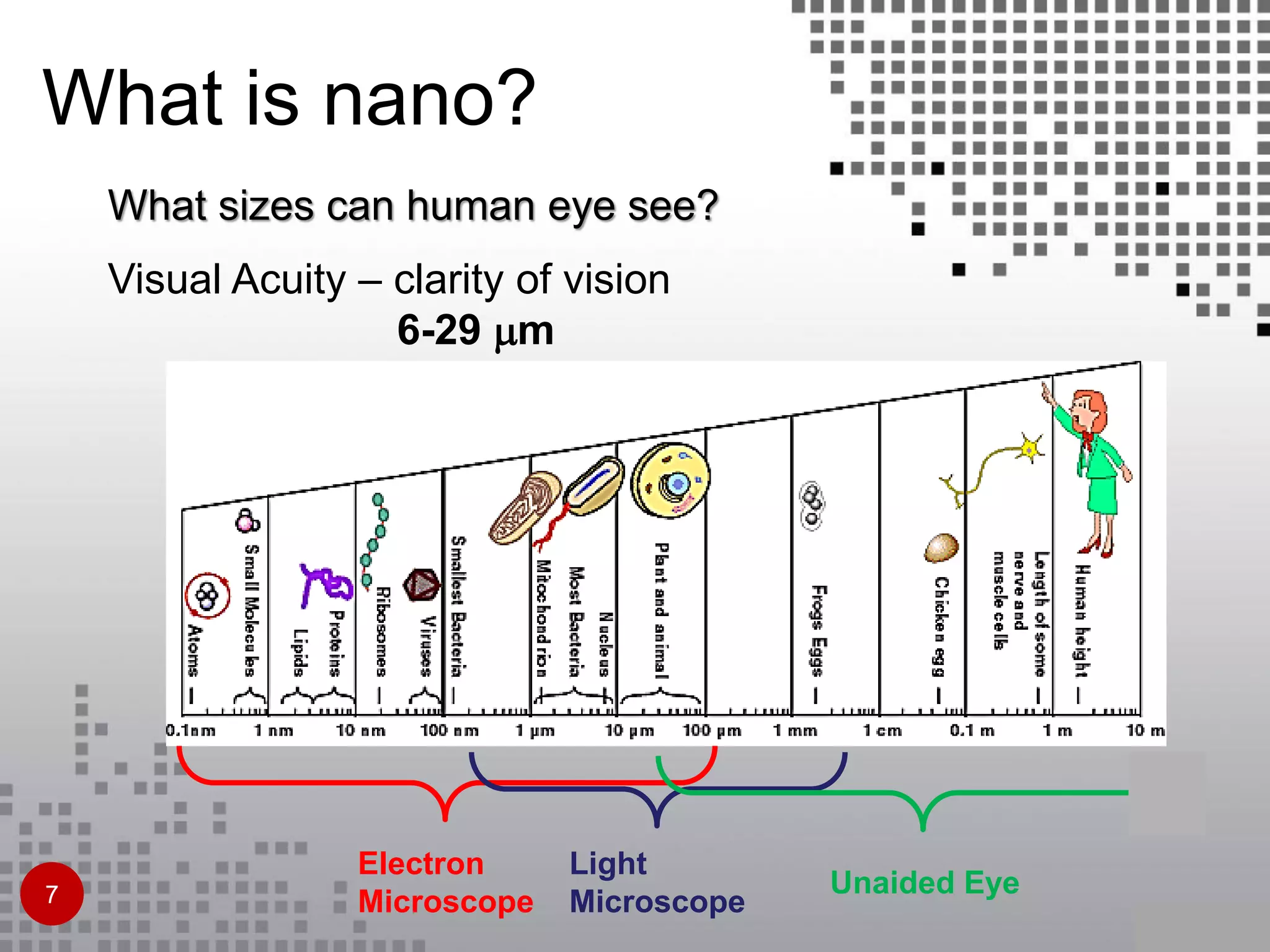
Visual Acuity – clarity of vision
6-29 m
Electron
Microscope
Light
Microscope
Unaided Eye7
What is nano?
What sizes can human eye see?
What is nano?
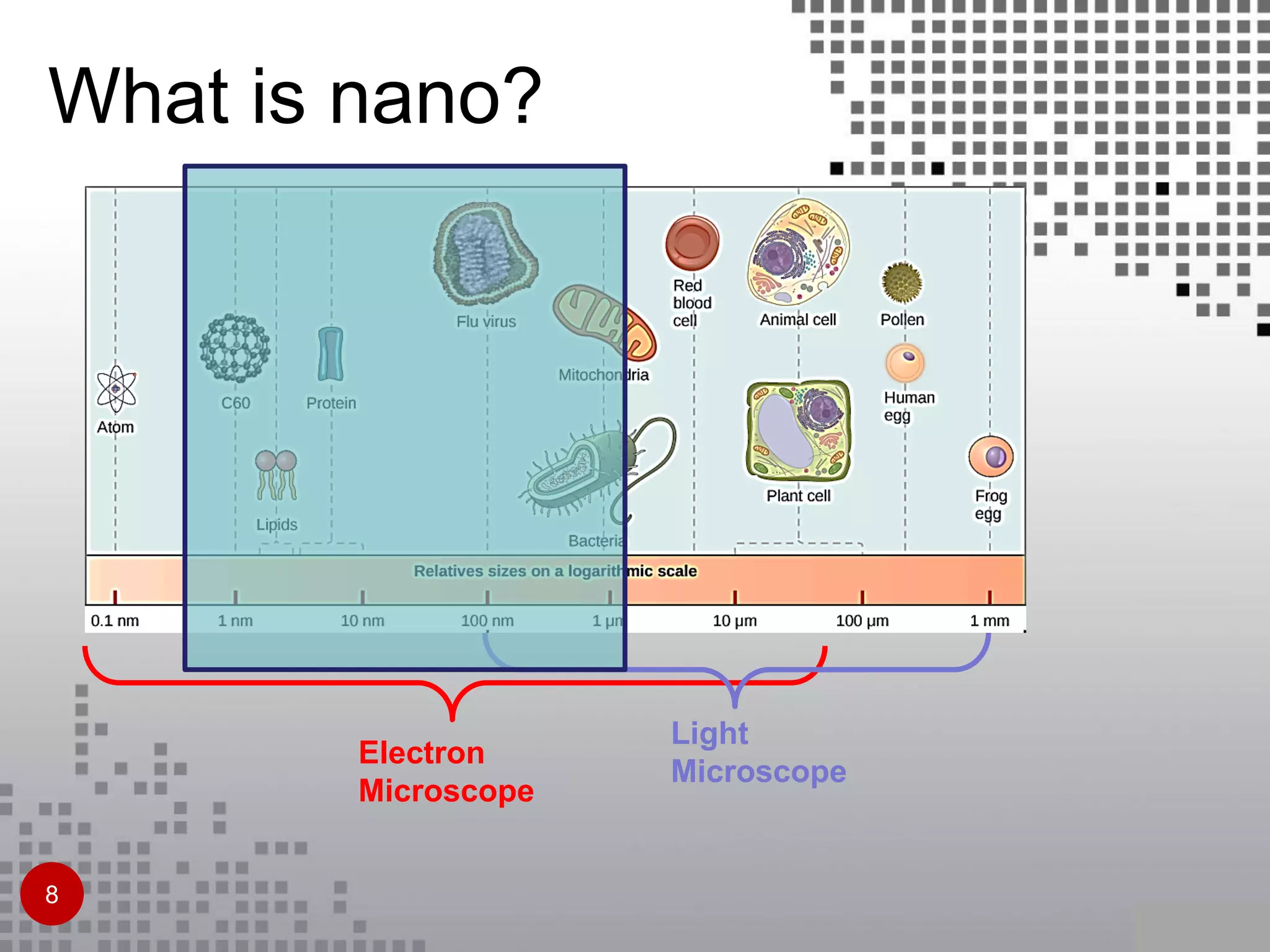
Electron
Microscope
Light
Microscope
8
What is nano?
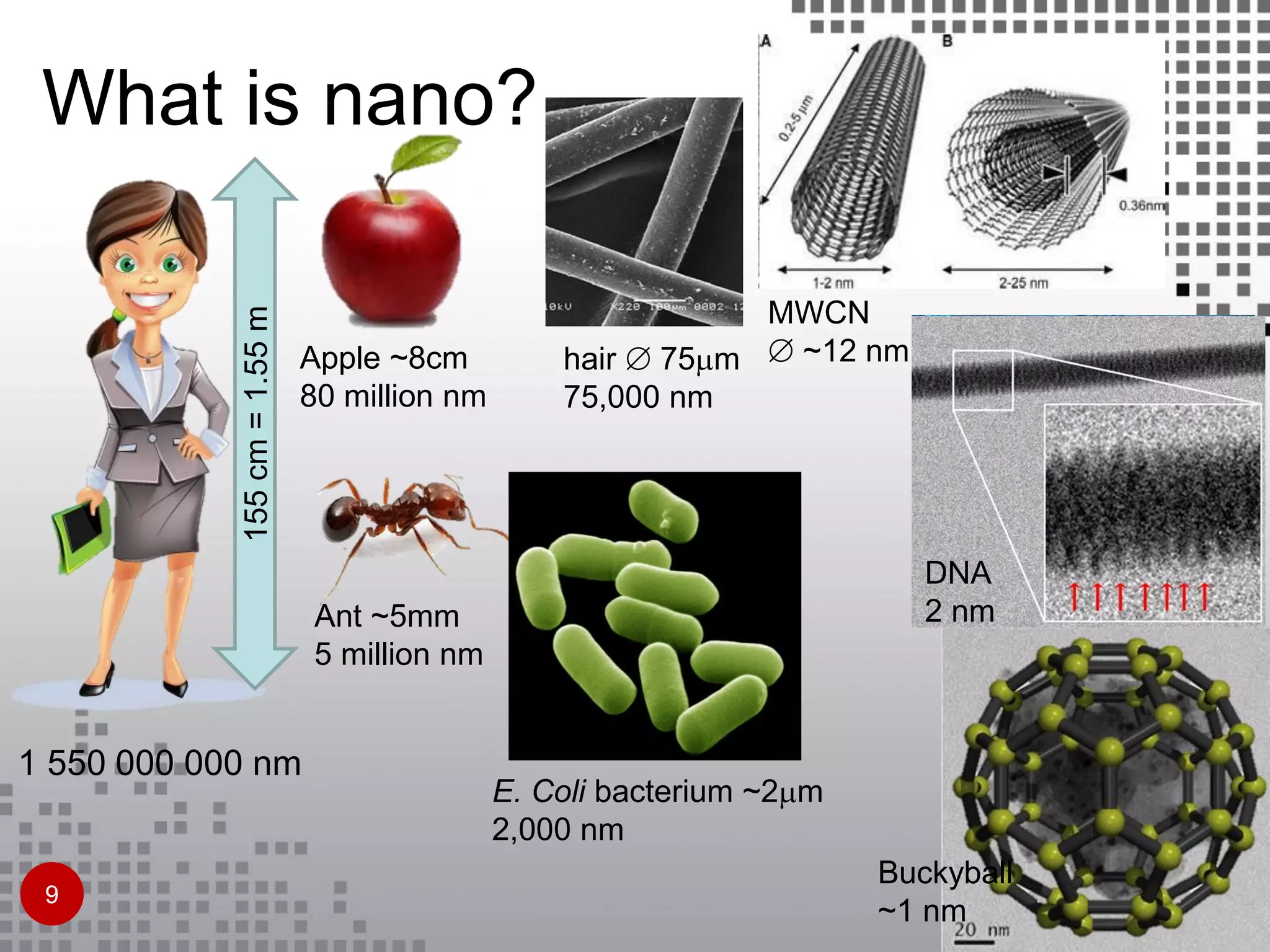
155cm=1.55m
1 550 000 000 nm
Apple ~8cm
80 million nm
Ant ~5mm
5 million nm
hair  75m
75,000 nm
E. Coli bacterium ~2m
2,000 nm
DNA
2 nm
Buckyball
~1 nm
MWCN
 ~12 nm
9
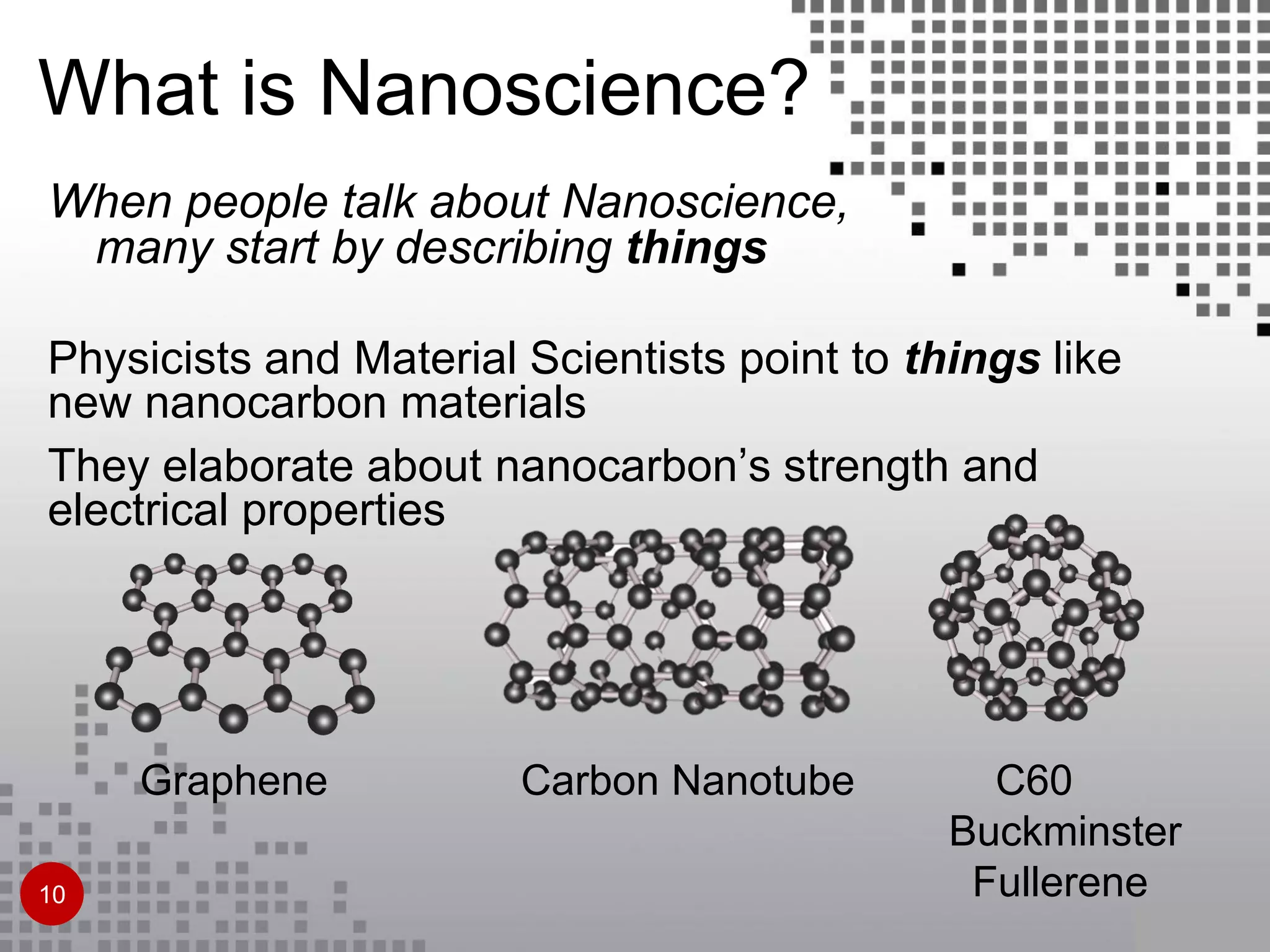
What is Nanoscience?
When people talk about Nanoscience,
many start by describing things
Physicists and Material Scientists point to things like
new nanocarbon materials
They elaborate about nanocarbon’s strength and
electrical properties
Graphene Carbon Nanotube C60
Buckminster
Fullerene10
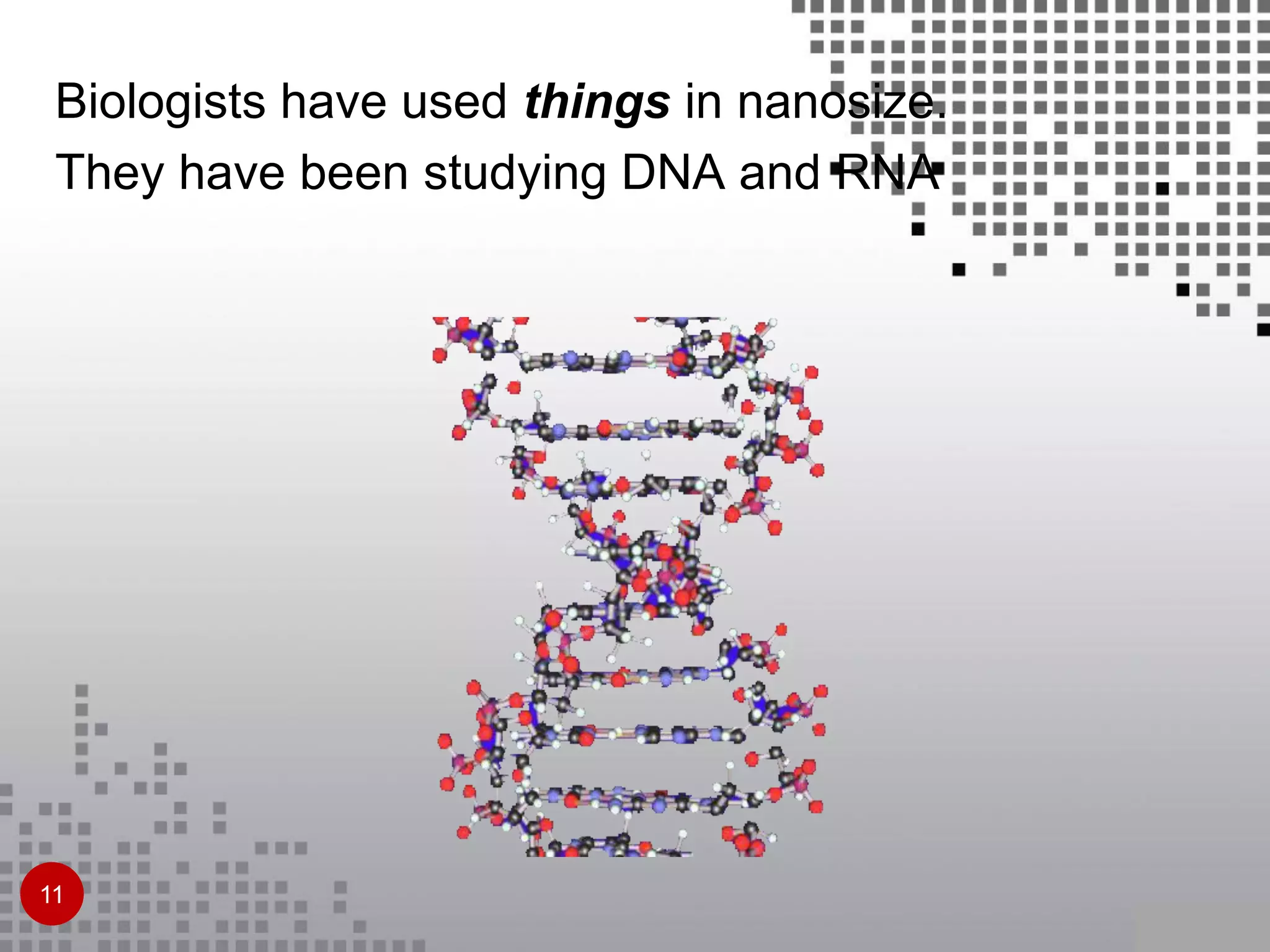
Biologists have used things in nanosize.
They have been studying DNA and RNA
11
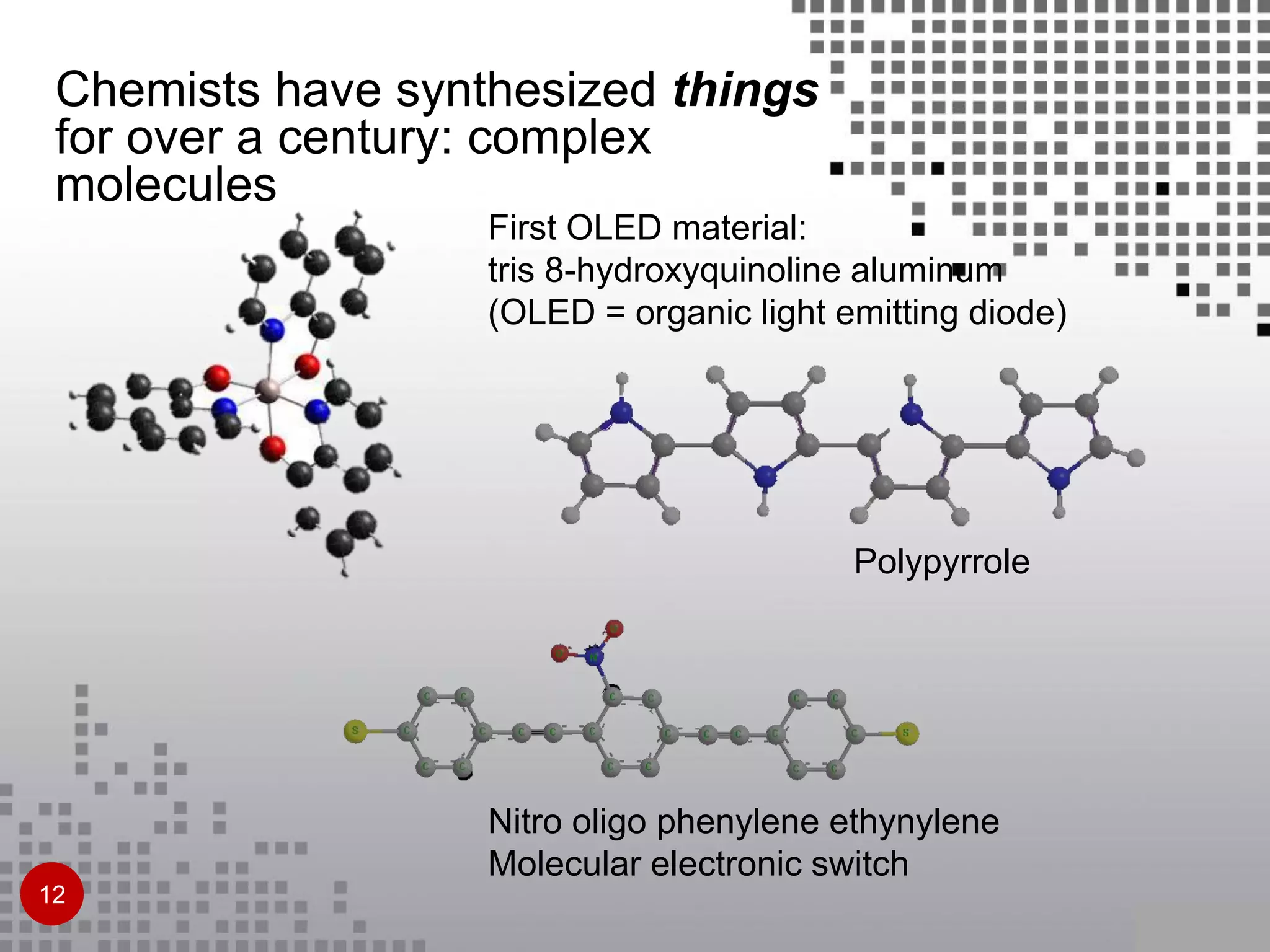
Chemists have synthesized things
for over a century: complex
molecules
First OLED material:
tris 8-hydroxyquinoline aluminum
(OLED = organic light emitting diode)
Polypyrrole
Nitro oligo phenylene ethynylene
Molecular electronic switch
12
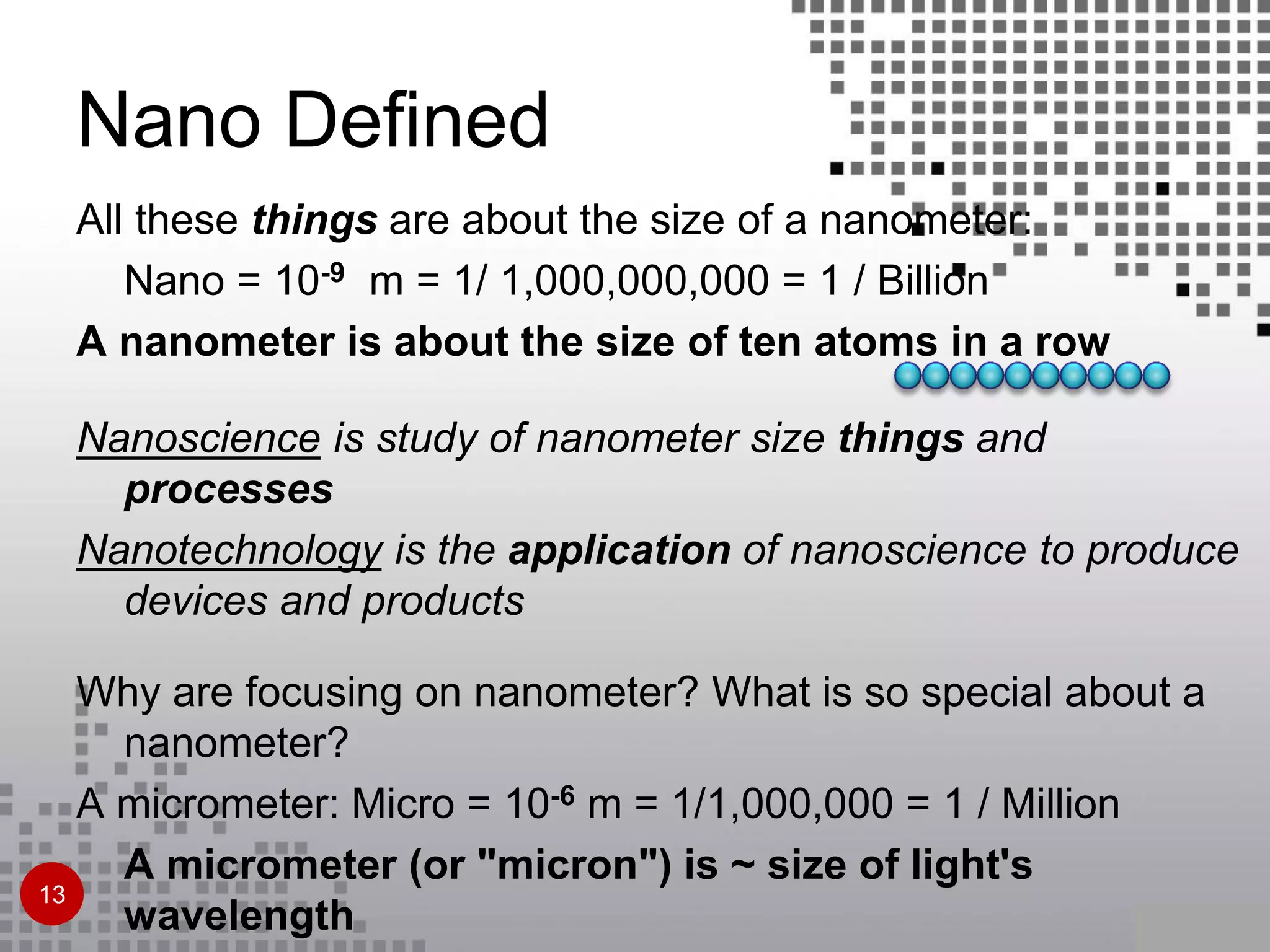
Nano Defined
All these things are about the size of a nanometer:
Nano = 10-9 m = 1/ 1,000,000,000 = 1 / Billion
A nanometer is about the size of ten atoms in a row
Nanoscience is study of nanometer size things and
processes
Nanotechnology is the application of nanoscience to produce
devices and products
Why are focusing on nanometer? What is so special about a
nanometer?
A micrometer: Micro = 10-6 m = 1/1,000,000 = 1 / Million
A micrometer (or "micron") is ~ size of light's
wavelength
13
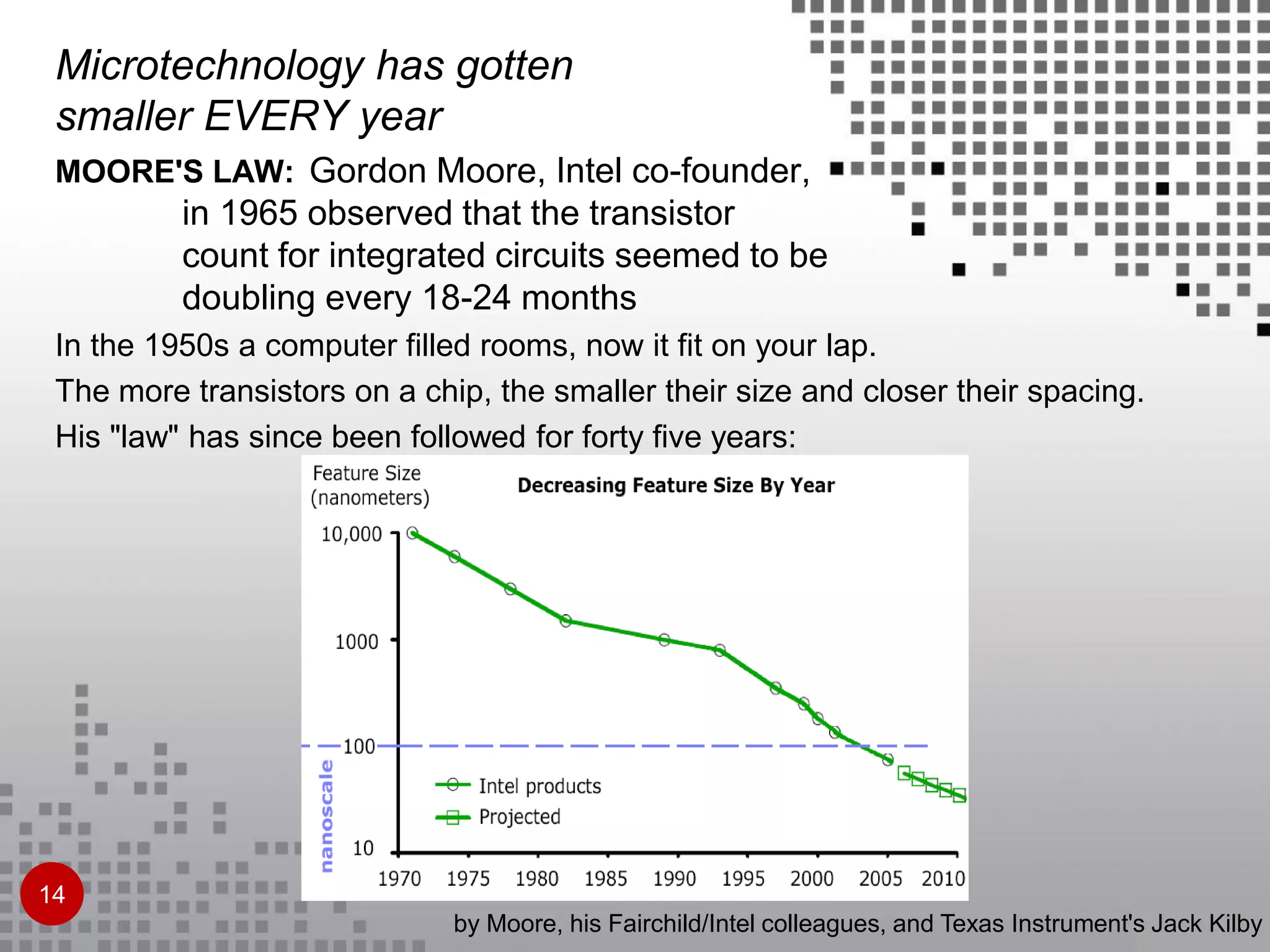
by Moore, his Fairchild/Intel colleagues, and Texas Instrument's Jack Kilby
Microtechnology has gotten
smaller EVERY year
MOORE'S LAW: Gordon Moore, Intel co-founder,
in 1965 observed that the transistor
count for integrated circuits seemed to be
doubling every 18-24 months
In the 1950s a computer filled rooms, now it fit on your lap.
The more transistors on a chip, the smaller their size and closer their spacing.
His "law" has since been followed for forty five years:
(Source: www.intel.com/technology/mooreslaw/index.htm)
14
So is Nanoscience/technology
really new & unique?
• Micro is also VERY small
• Micro has been around for a long time
• Micro has steadily shrunk to the point that it is
now almost NANO anyway!
• Leading to a LOT of confusion about the
distinction between Micro & Nano
• Nanotechnology will be built UPON
Microtechnology
• Microfabrication techniques
• assembled ATOP Microstructures
15
NANO "revolution" ?
Just about making things incrementally smaller?
Just about a simple shift in the most convenient
unit of measure?
There is something very unique about Nano
Nano is about boundaries where
BEHAVIOR radically changes
BEHAVIOR OF THE OBJECTS SUDDENLY
CHANGES
OUR BEHAVIOR MUST CHANGE
to make those things16
Quantum Mechanics
Electron Waves Separate
NanoSCIENCE from MicroSCIENCE
weird,
new,
counter intuitive,
non-Newtonian understanding of electrons:
Electrons => Waves
How do you figure out an electron’s wavelength?
electron = h / p “De Broglie’s Relationship”
( = electron wavelength, h = Planck’s Constant,
p = electron’s momentum)
This relationship was based on series of experiments late
1800’s / early 1900’s
To put the size of an electron’s wavelength in perspective:17
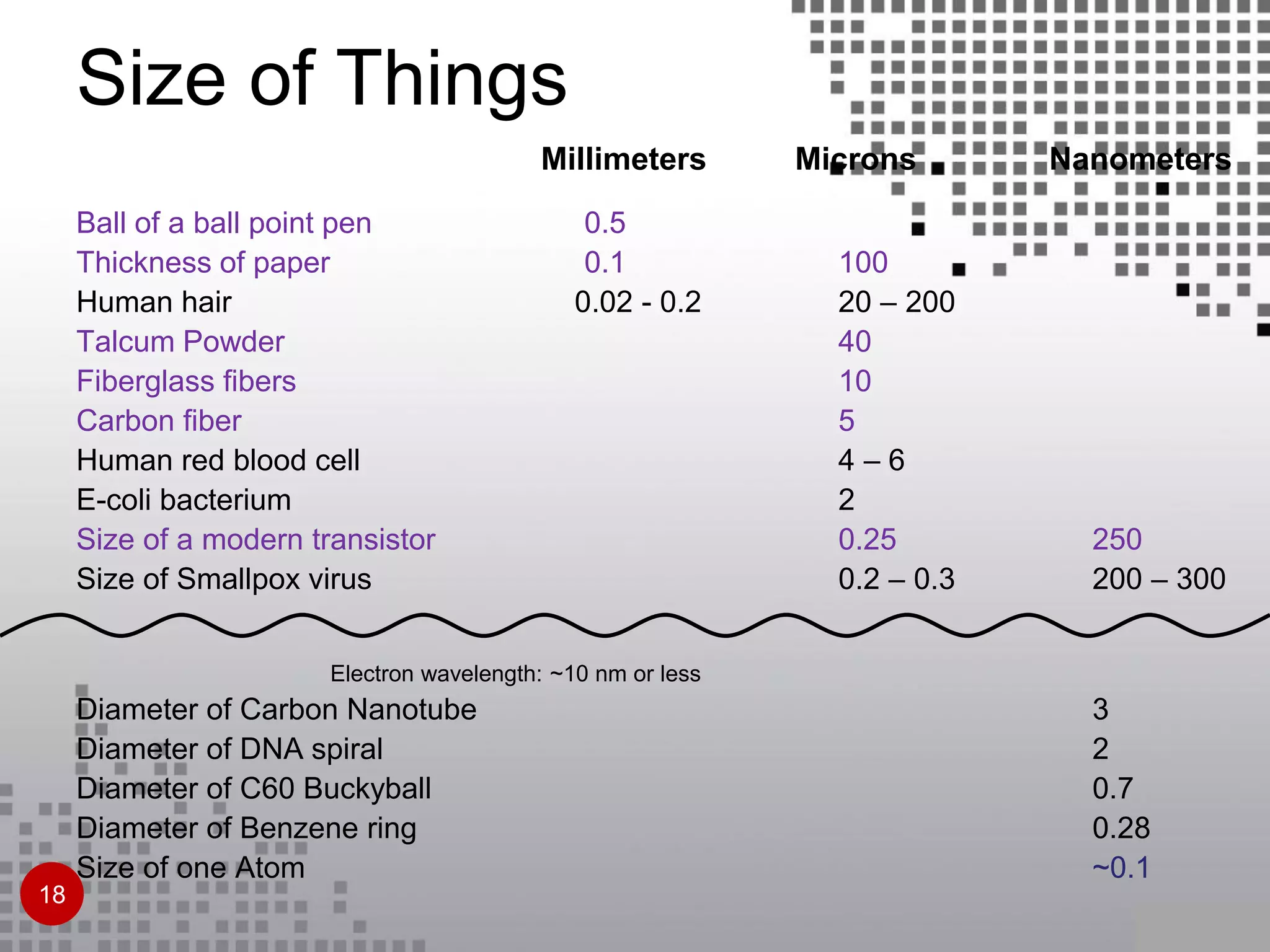
Size of Things
Millimeters Microns Nanometers
Ball of a ball point pen 0.5
Thickness of paper 0.1 100
Human hair 0.02 - 0.2 20 – 200
Talcum Powder 40
Fiberglass fibers 10
Carbon fiber 5
Human red blood cell 4 – 6
E-coli bacterium 2
Size of a modern transistor 0.25 250
Size of Smallpox virus 0.2 – 0.3 200 – 300
Electron wavelength: ~10 nm or less
Diameter of Carbon Nanotube 3
Diameter of DNA spiral 2
Diameter of C60 Buckyball 0.7
Diameter of Benzene ring 0.28
Size of one Atom ~0.1
18
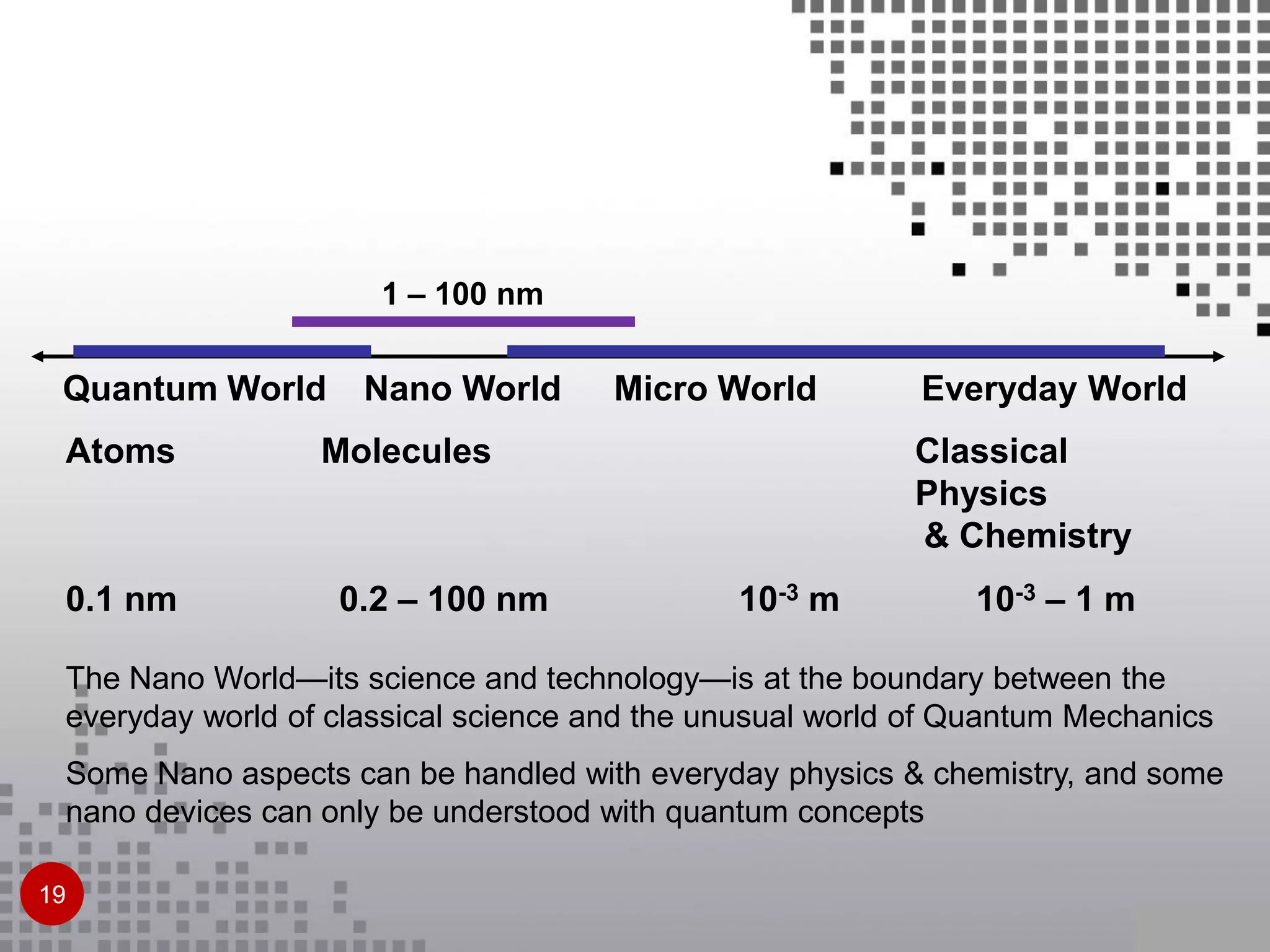
Atoms Molecules Classical
Physics
& Chemistry
0.1 nm 0.2 – 100 nm 10-3 m 10-3 – 1 m
1 – 100 nm
The Nano World—its science and technology—is at the boundary between the
everyday world of classical science and the unusual world of Quantum Mechanics
Some Nano aspects can be handled with everyday physics & chemistry, and some
nano devices can only be understood with quantum concepts
Micro WorldNano WorldQuantum World Everyday World
19
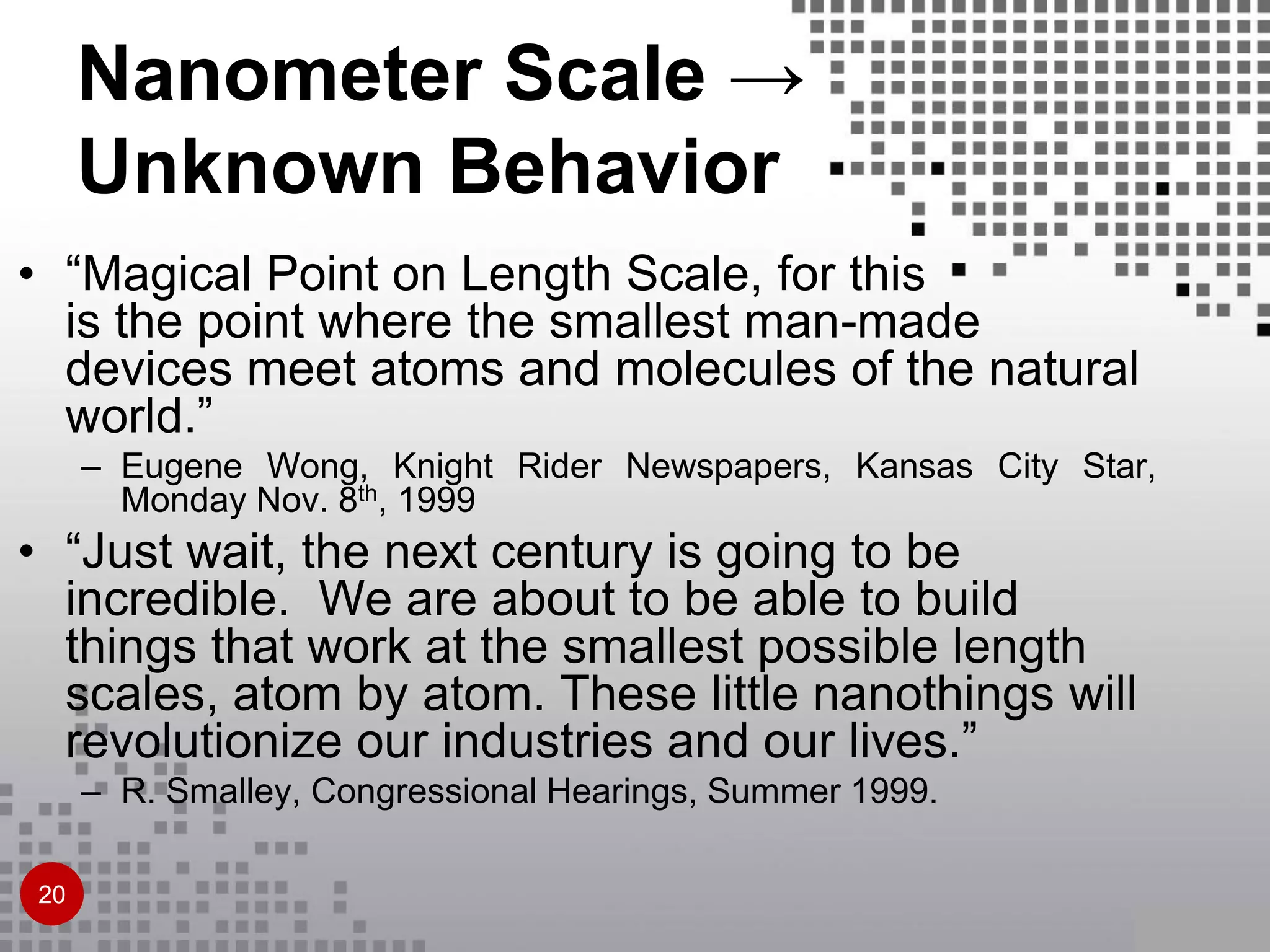
• “Magical Point on Length Scale, for this
is the point where the smallest man-made
devices meet atoms and molecules of the natural
world.”
– Eugene Wong, Knight Rider Newspapers, Kansas City Star,
Monday Nov. 8th, 1999
• “Just wait, the next century is going to be
incredible. We are about to be able to build
things that work at the smallest possible length
scales, atom by atom. These little nanothings will
revolutionize our industries and our lives.”
– R. Smalley, Congressional Hearings, Summer 1999.
Nanometer Scale →
Unknown Behavior
20
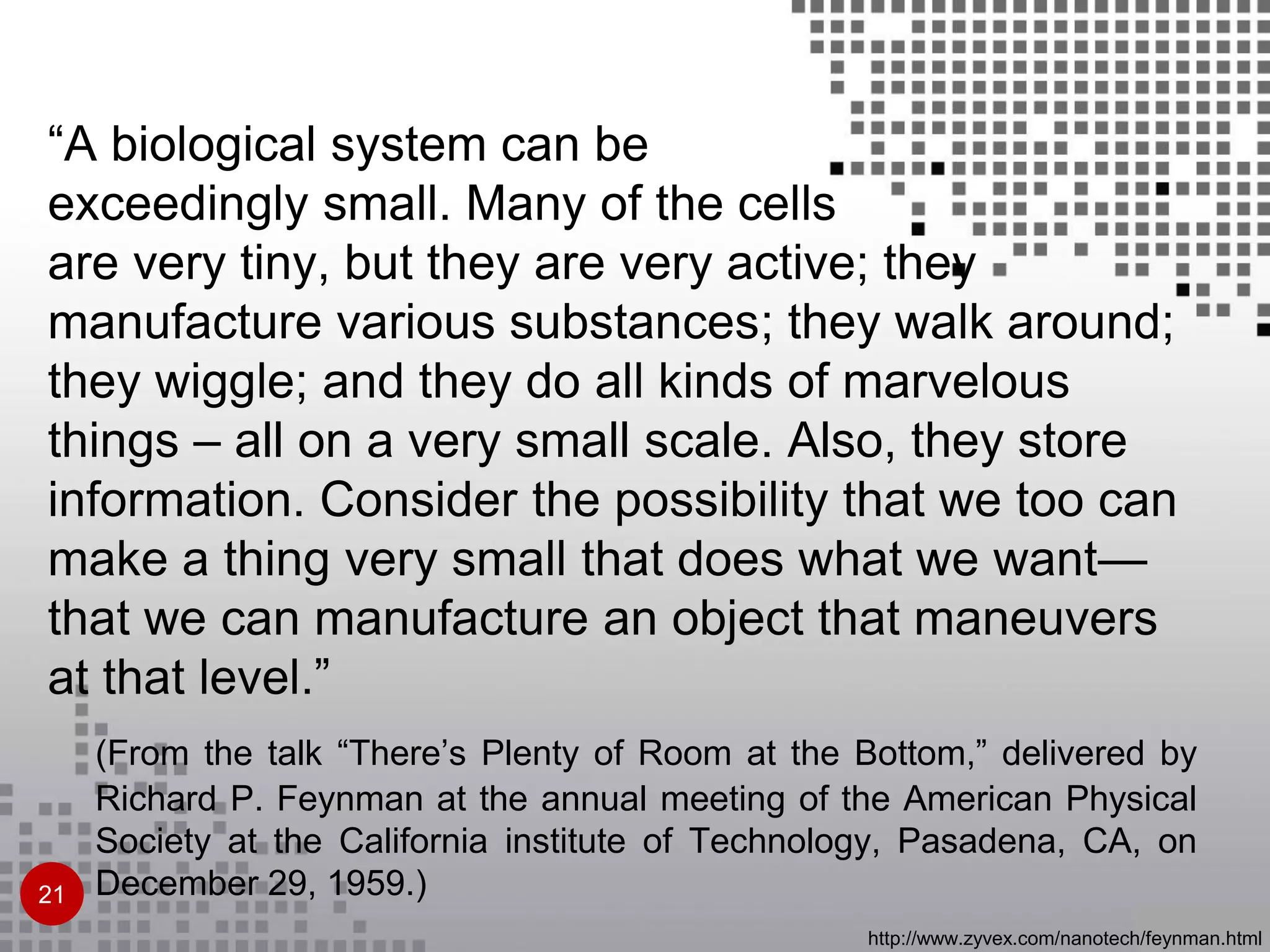
“A biological system can be
exceedingly small. Many of the cells
are very tiny, but they are very active; they
manufacture various substances; they walk around;
they wiggle; and they do all kinds of marvelous
things – all on a very small scale. Also, they store
information. Consider the possibility that we too can
make a thing very small that does what we want—
that we can manufacture an object that maneuvers
at that level.”
(From the talk “There’s Plenty of Room at the Bottom,” delivered by
Richard P. Feynman at the annual meeting of the American Physical
Society at the California institute of Technology, Pasadena, CA, on
December 29, 1959.)
http://www.zyvex.com/nanotech/feynman.html
21
HISTORY OF
NANOTECHNOLOGY
History of Nanomaterials
• 1974 The word Nanotechnology
first used by Nario Taniguchi,
Univ. of Tokyo – production technology to get
ultra fine accuracy and precision ~ 1nm
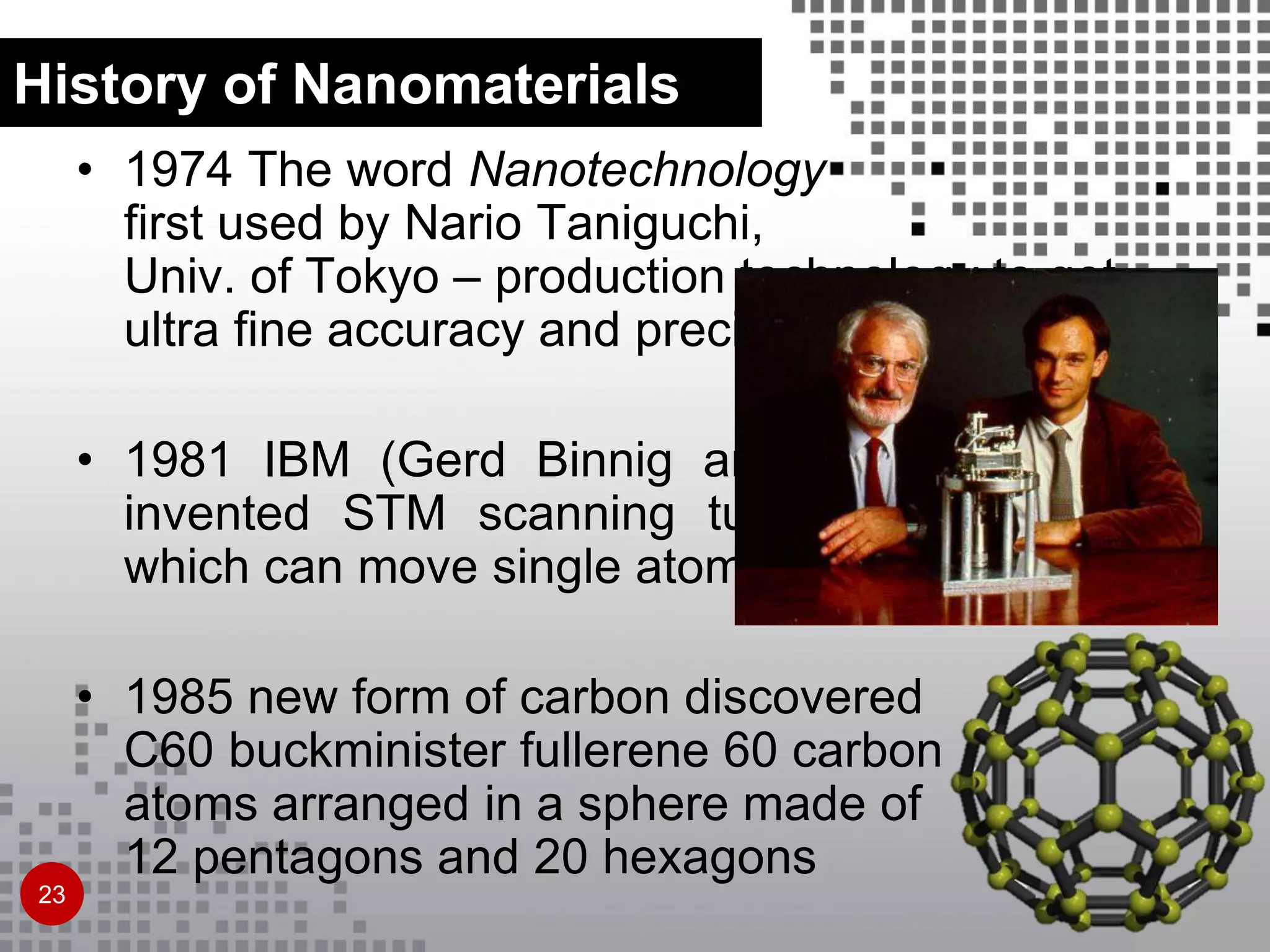
• 1981 IBM (Gerd Binnig and Heinrich Rohrer)
invented STM scanning tunneling microscope
which can move single atoms around
• 1985 new form of carbon discovered
C60 buckminister fullerene 60 carbon
atoms arranged in a sphere made of
12 pentagons and 20 hexagons
23
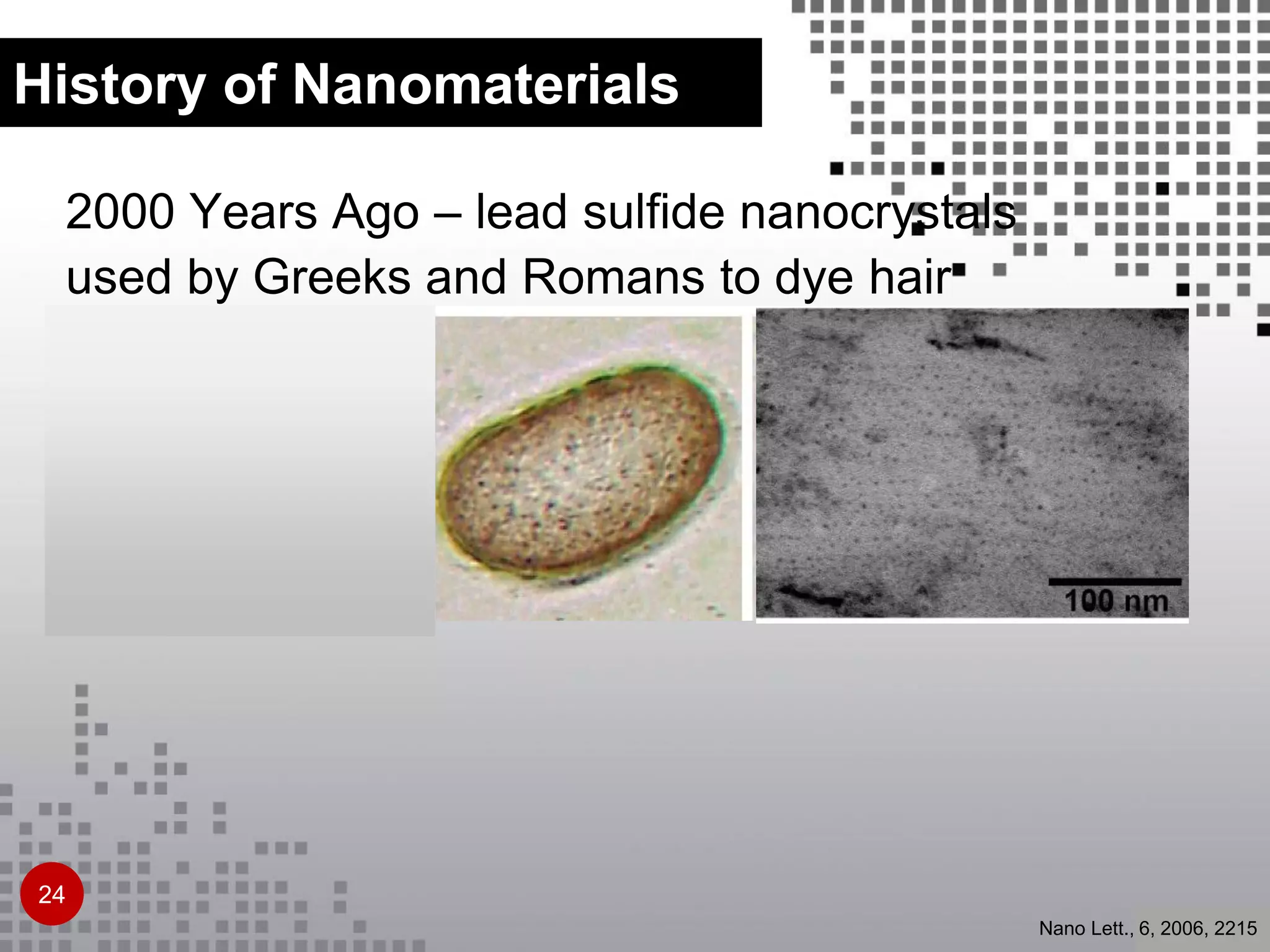
2000 Years Ago – lead sulfide nanocrystals
used by Greeks and Romans to dye hair
History of Nanomaterials
Nano Lett., 6, 2006, 2215
24
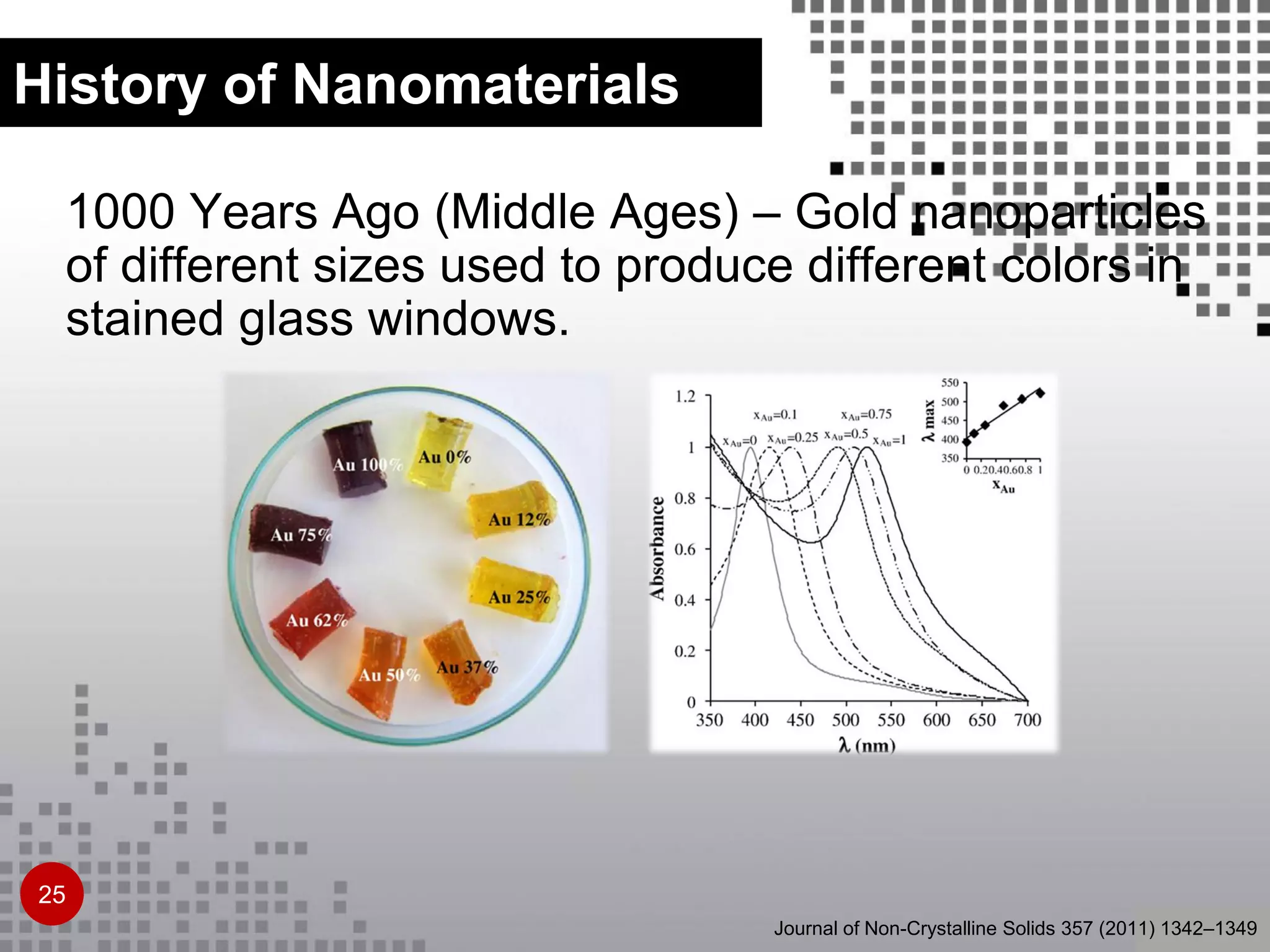
1000 Years Ago (Middle Ages) – Gold nanoparticles
of different sizes used to produce different colors in
stained glass windows.
History of Nanomaterials
Journal of Non-Crystalline Solids 357 (2011) 1342–1349
25
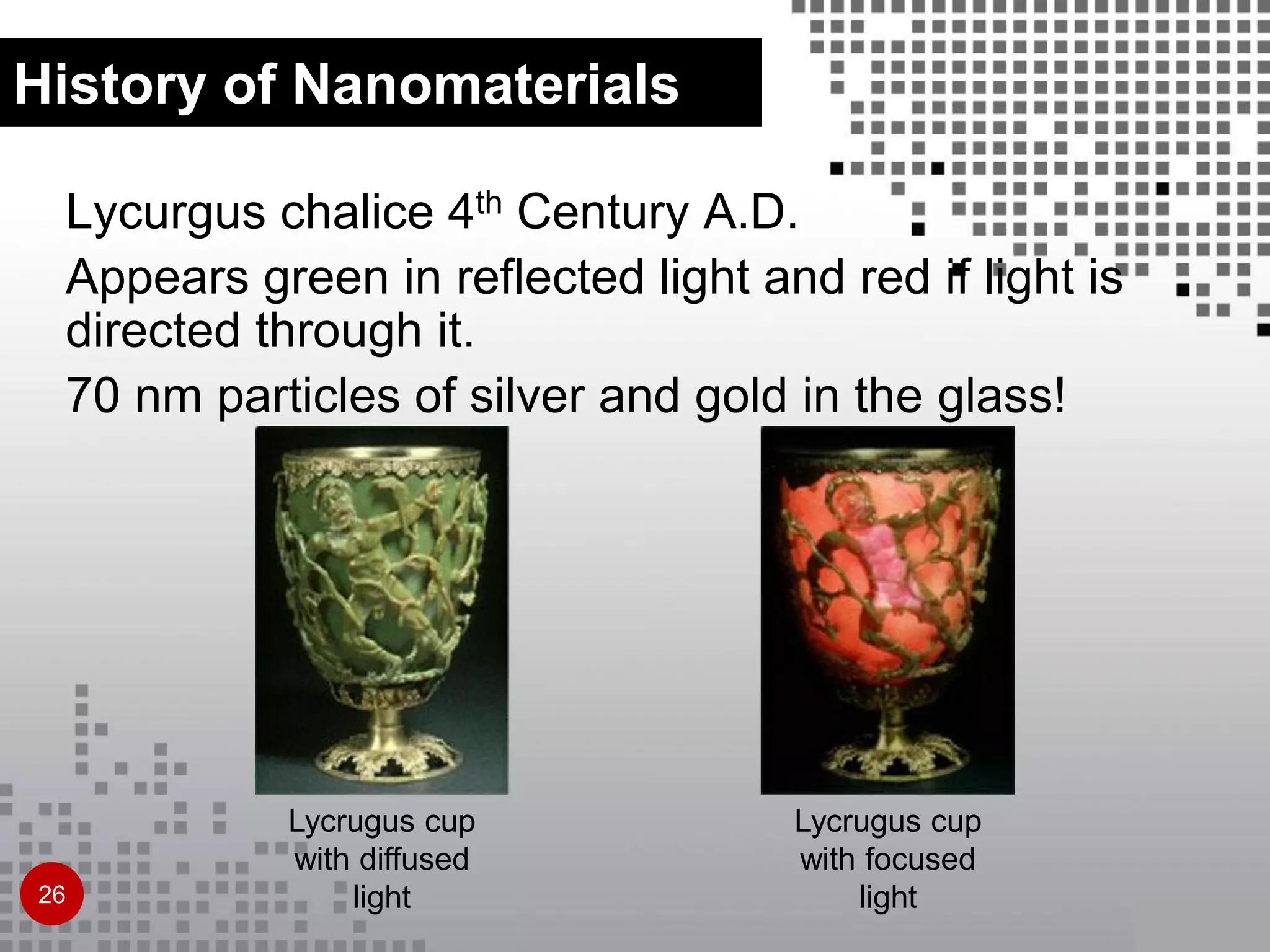
Lycurgus chalice 4th Century A.D.
Appears green in reflected light and red if light is
directed through it.
70 nm particles of silver and gold in the glass!
Lycrugus cup
with diffused
light
Lycrugus cup
with focused
light
History of Nanomaterials
26
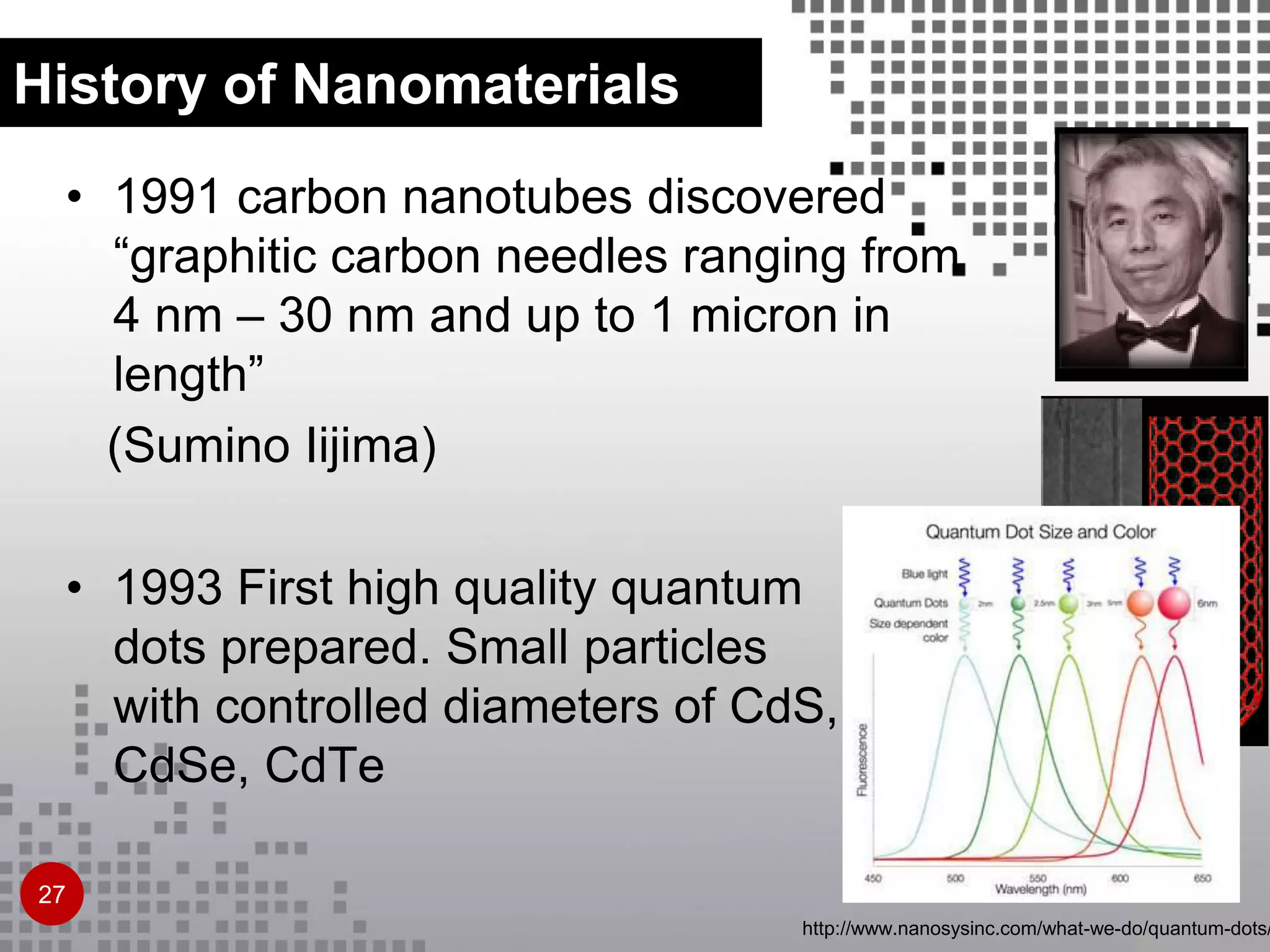
• 1991 carbon nanotubes discovered
“graphitic carbon needles ranging from
4 nm – 30 nm and up to 1 micron in
length”
(Sumino Iijima)
• 1993 First high quality quantum
dots prepared. Small particles
with controlled diameters of CdS,
CdSe, CdTe
History of Nanomaterials
27
http://www.nanosysinc.com/what-we-do/quantum-dots/
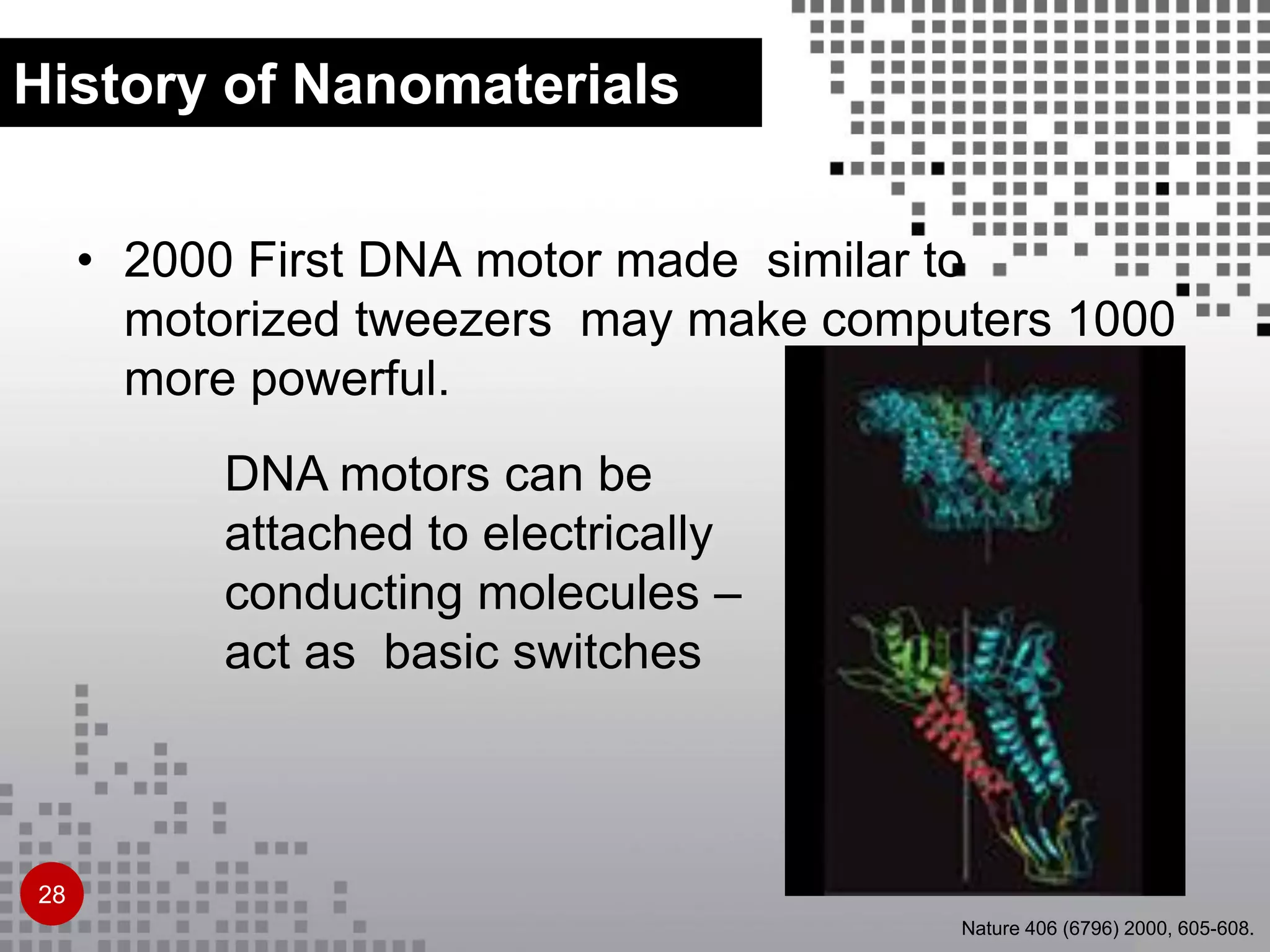
• 2000 First DNA motor made similar to
motorized tweezers may make computers 1000
more powerful.
Nature 406 (6796) 2000, 605-608.
DNA motors can be
attached to electrically
conducting molecules –
act as basic switches
History of Nanomaterials
28
• 2001 prototype fuel cell made with
nanotubes
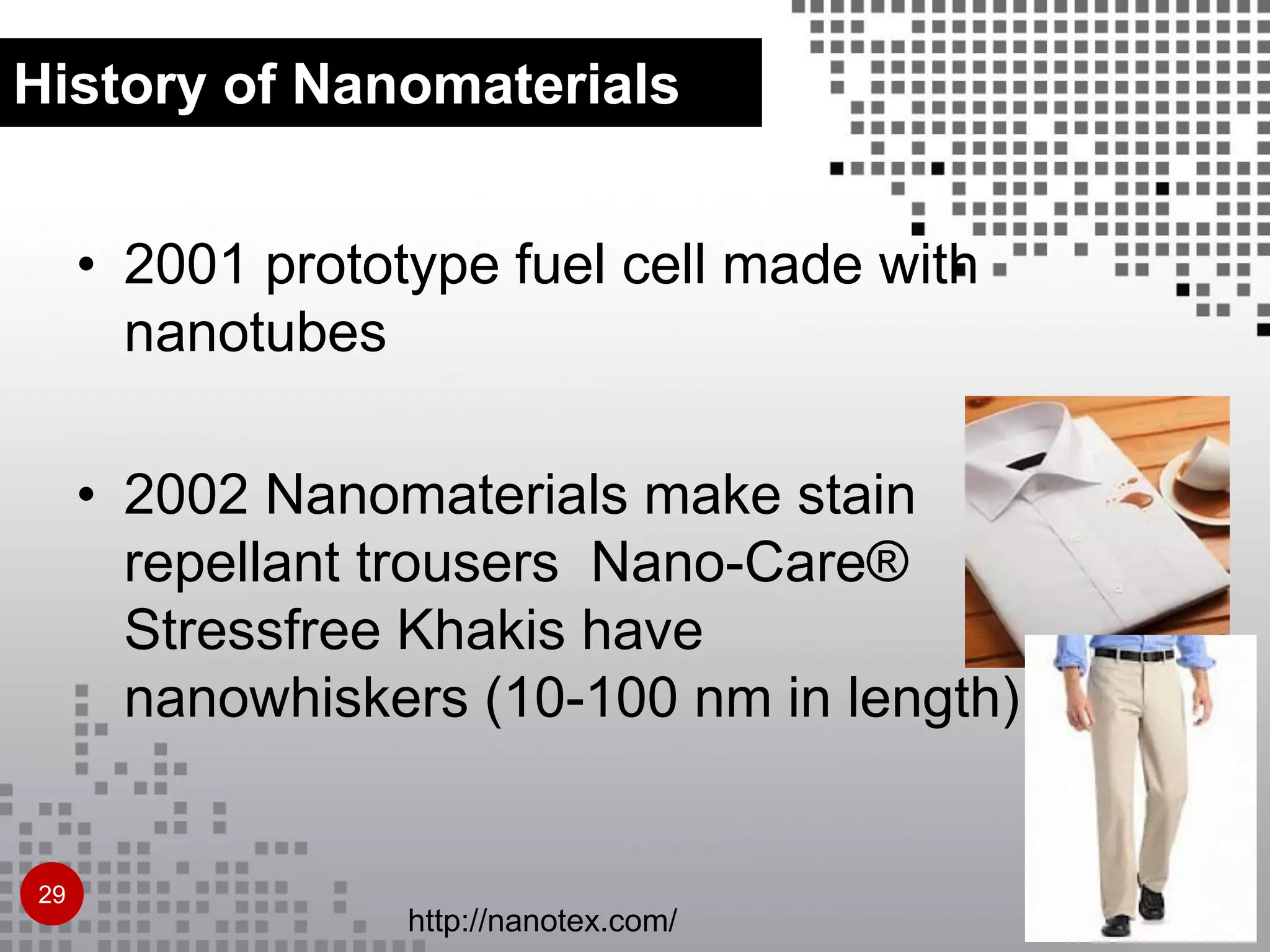
• 2002 Nanomaterials make stain
repellant trousers Nano-Care®
Stressfree Khakis have
nanowhiskers (10-100 nm in length)
History of Nanomaterials
29
http://nanotex.com/
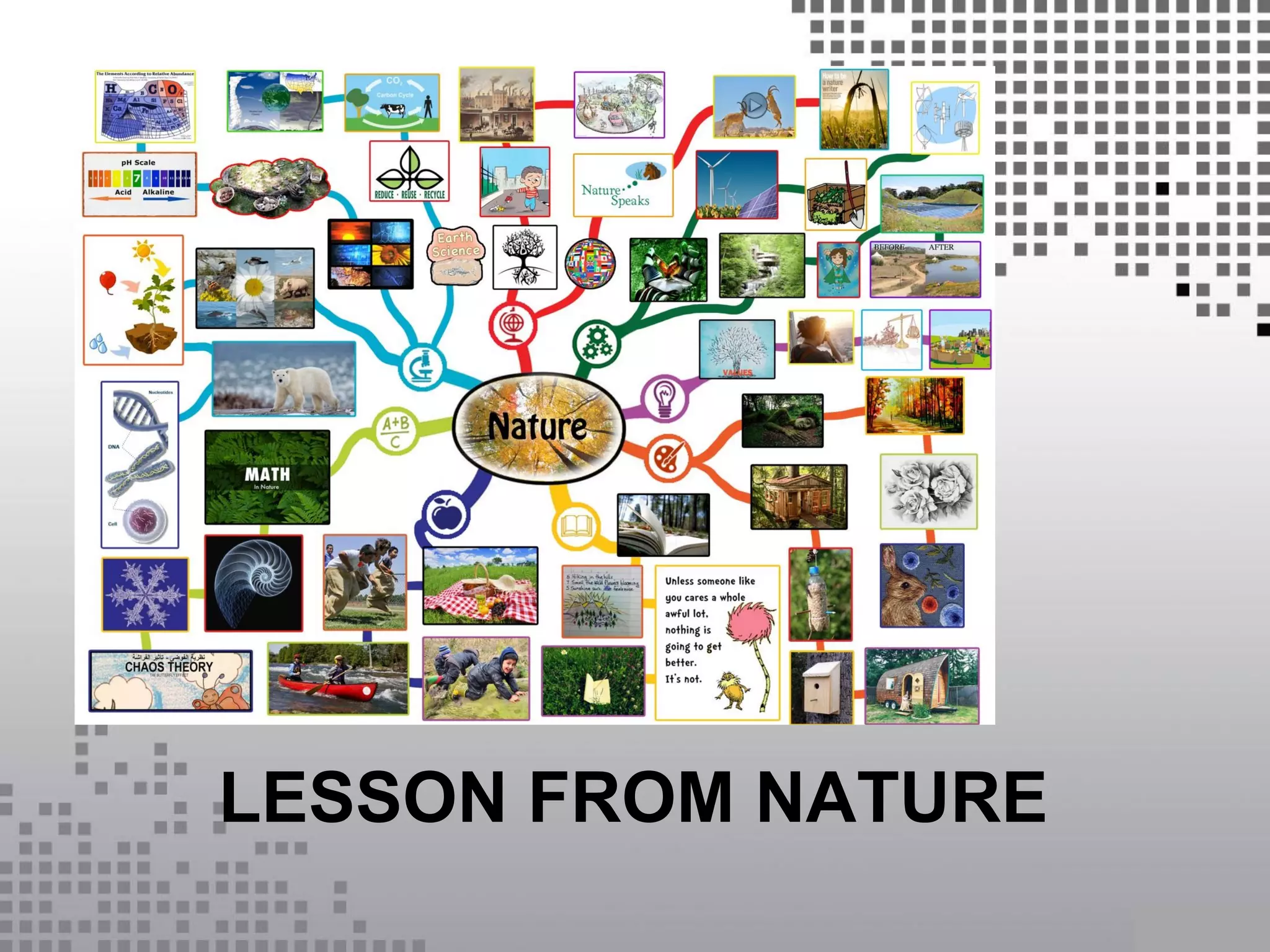
LESSON FROM NATURE
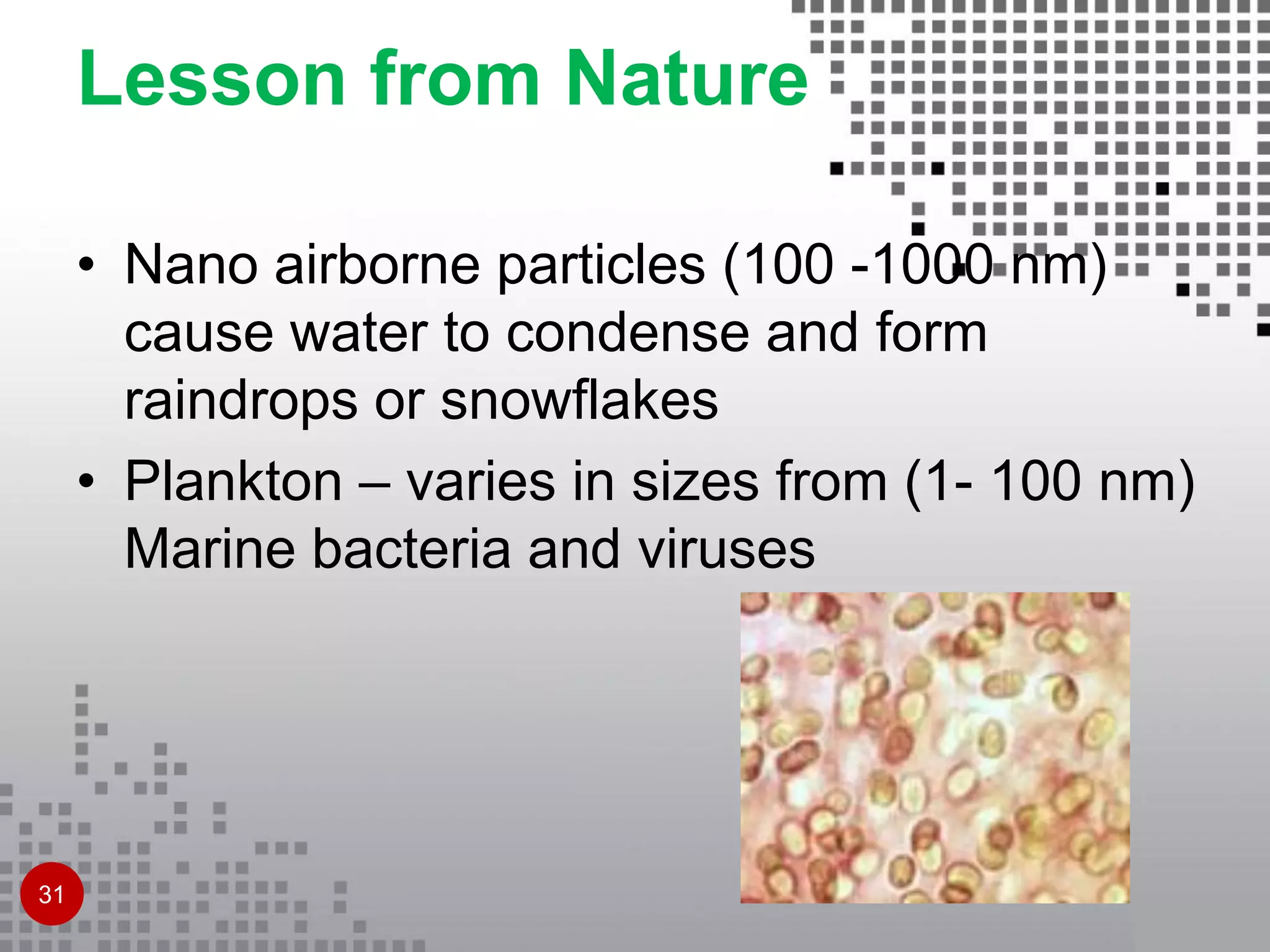
• Nano airborne particles (100 -1000 nm)
cause water to condense and form
raindrops or snowflakes
• Plankton – varies in sizes from (1- 100 nm)
Marine bacteria and viruses
Lesson from Nature
31
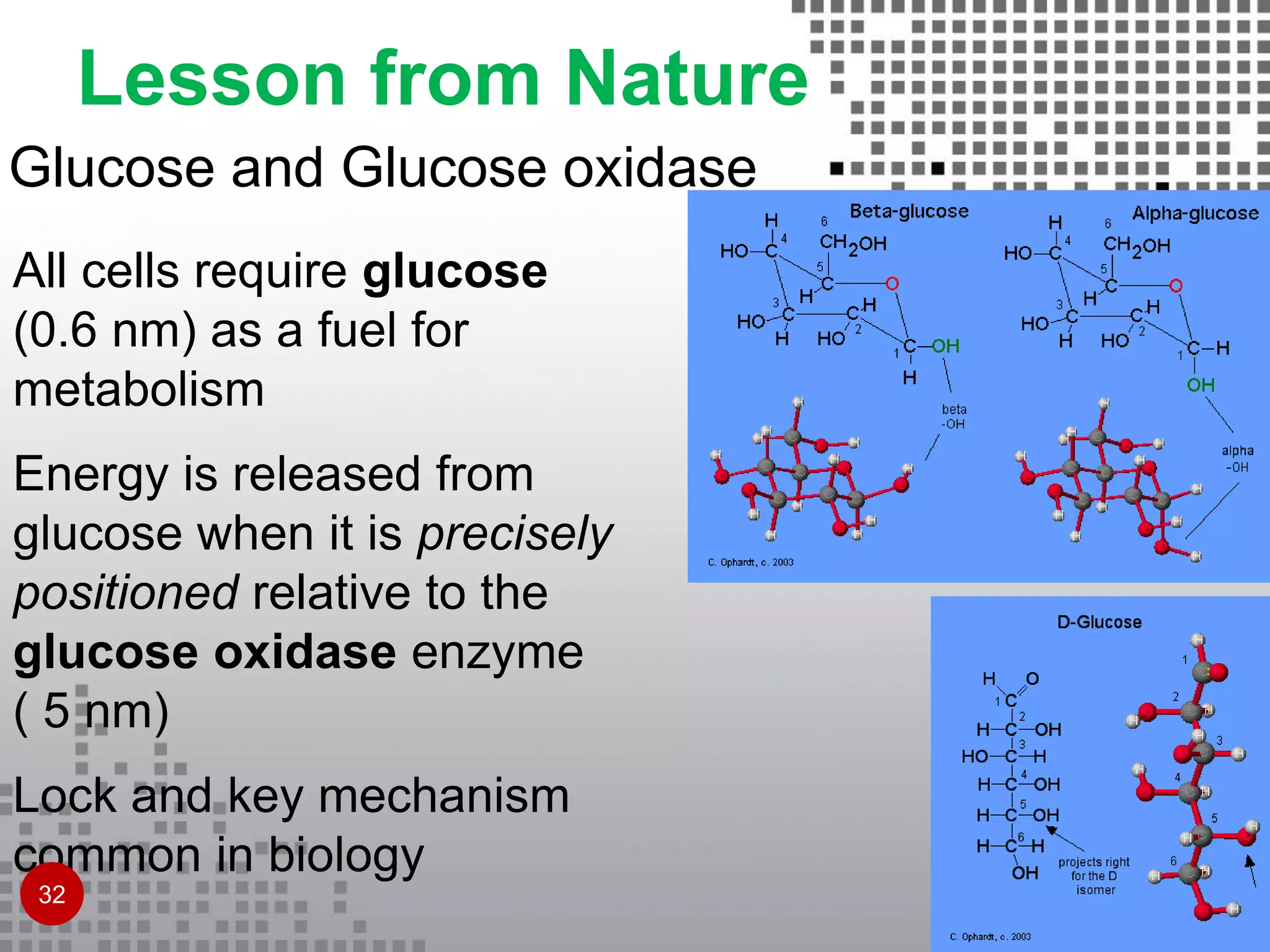
Glucose and Glucose oxidase
All cells require glucose
(0.6 nm) as a fuel for
metabolism
Energy is released from
glucose when it is precisely
positioned relative to the
glucose oxidase enzyme
( 5 nm)
Lock and key mechanism
common in biology
Lesson from Nature
32
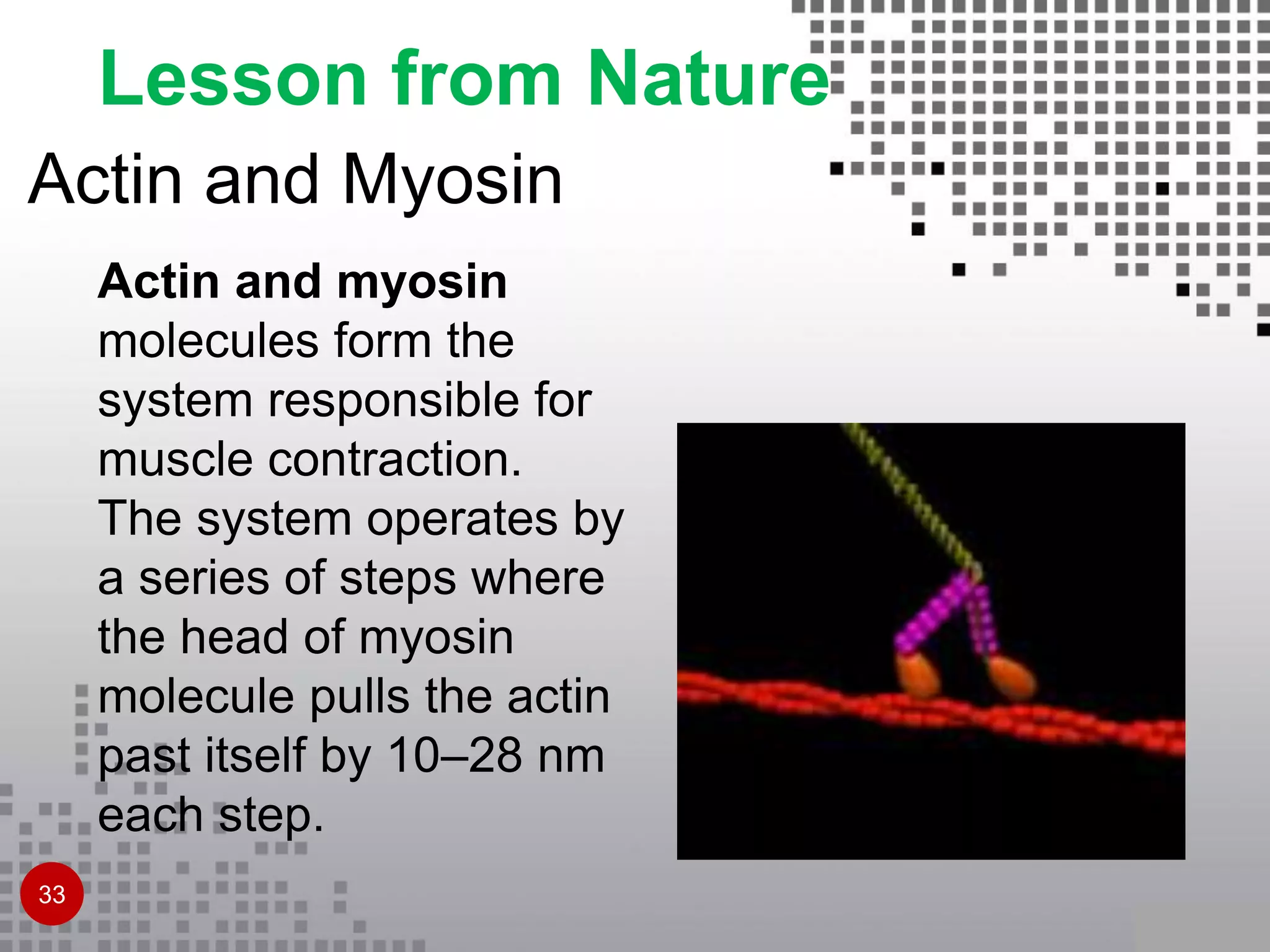
Actin and Myosin
Actin and myosin
molecules form the
system responsible for
muscle contraction.
The system operates by
a series of steps where
the head of myosin
molecule pulls the actin
past itself by 10–28 nm
each step.
Lesson from Nature
33
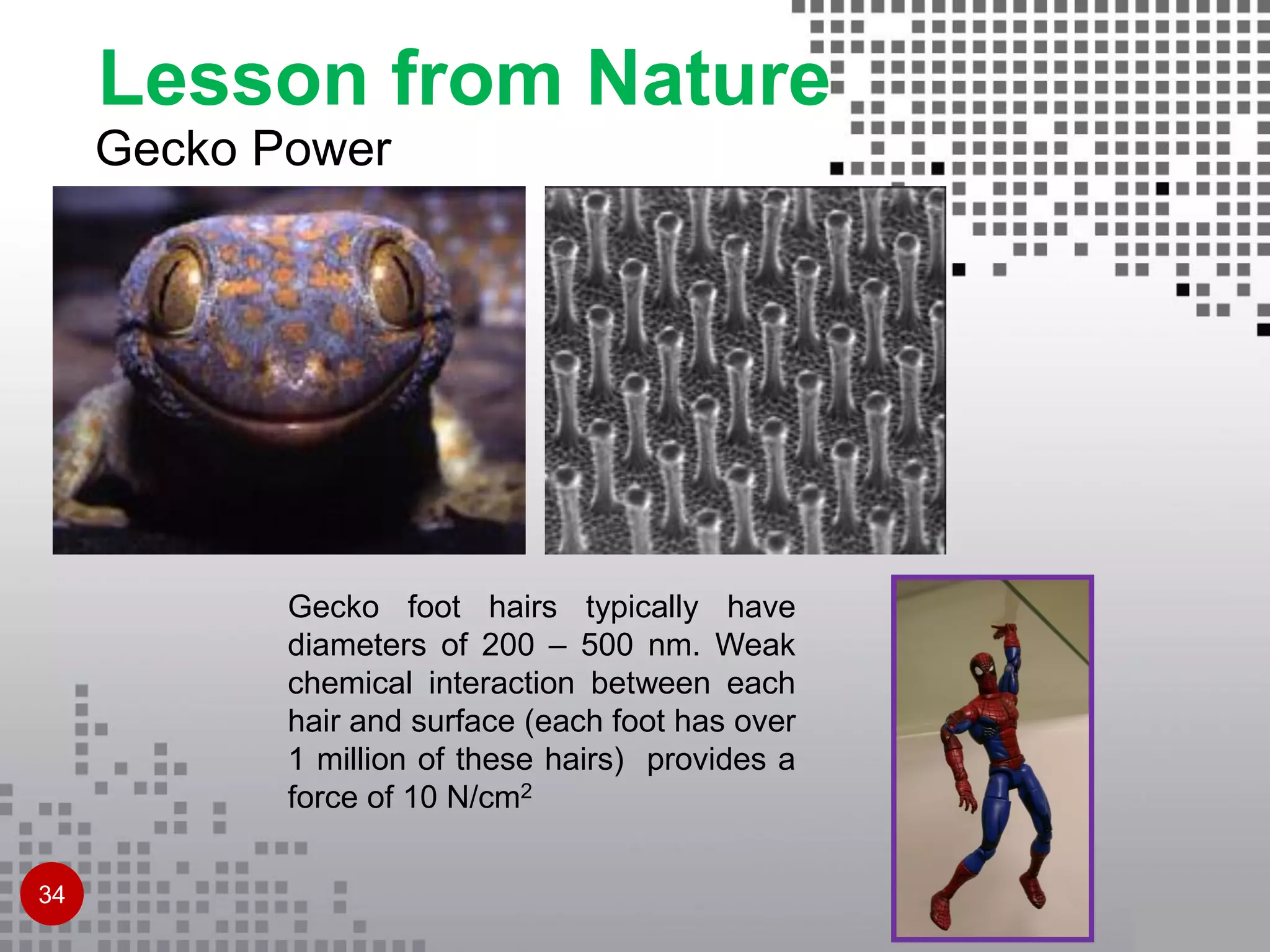
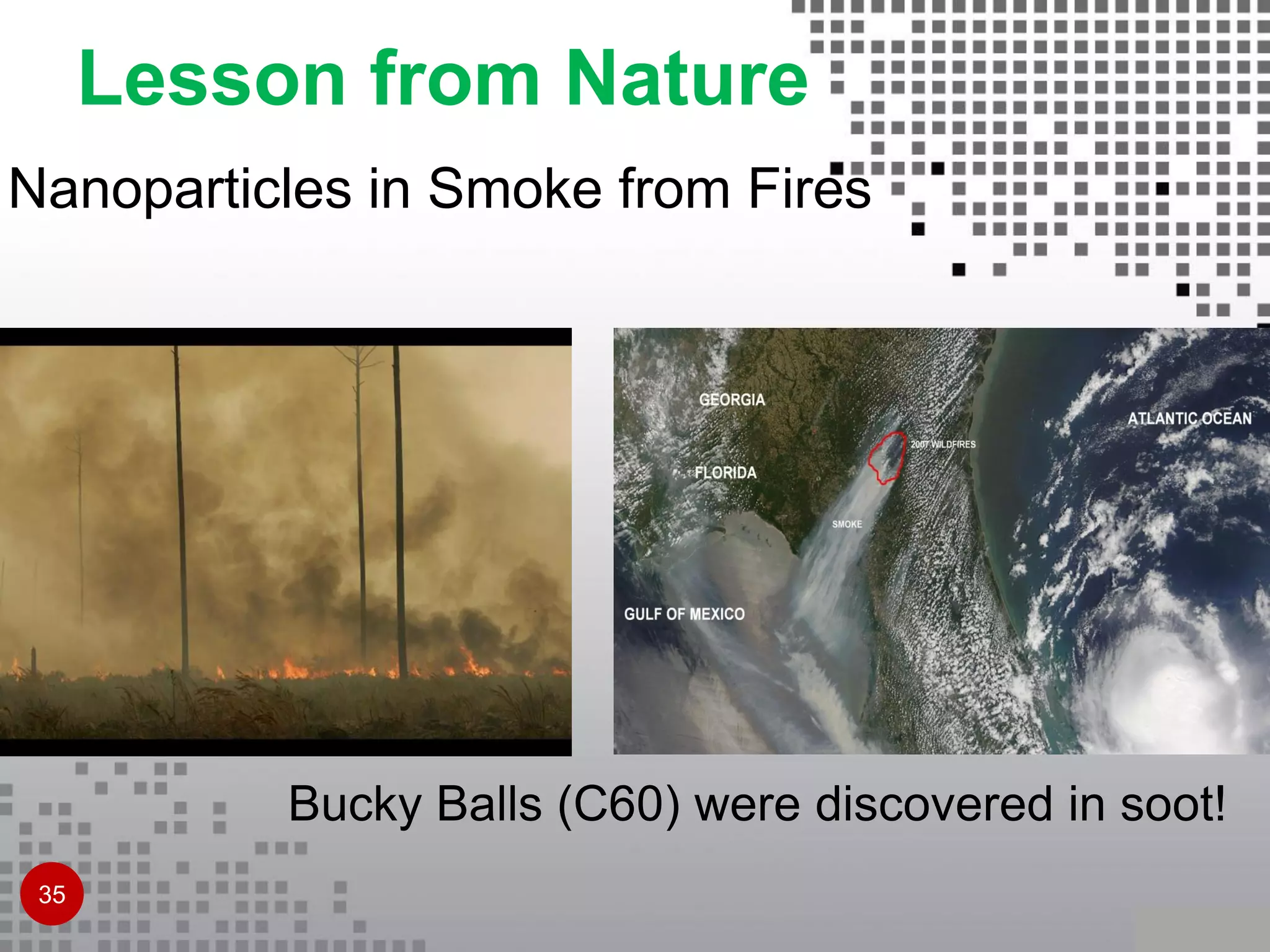
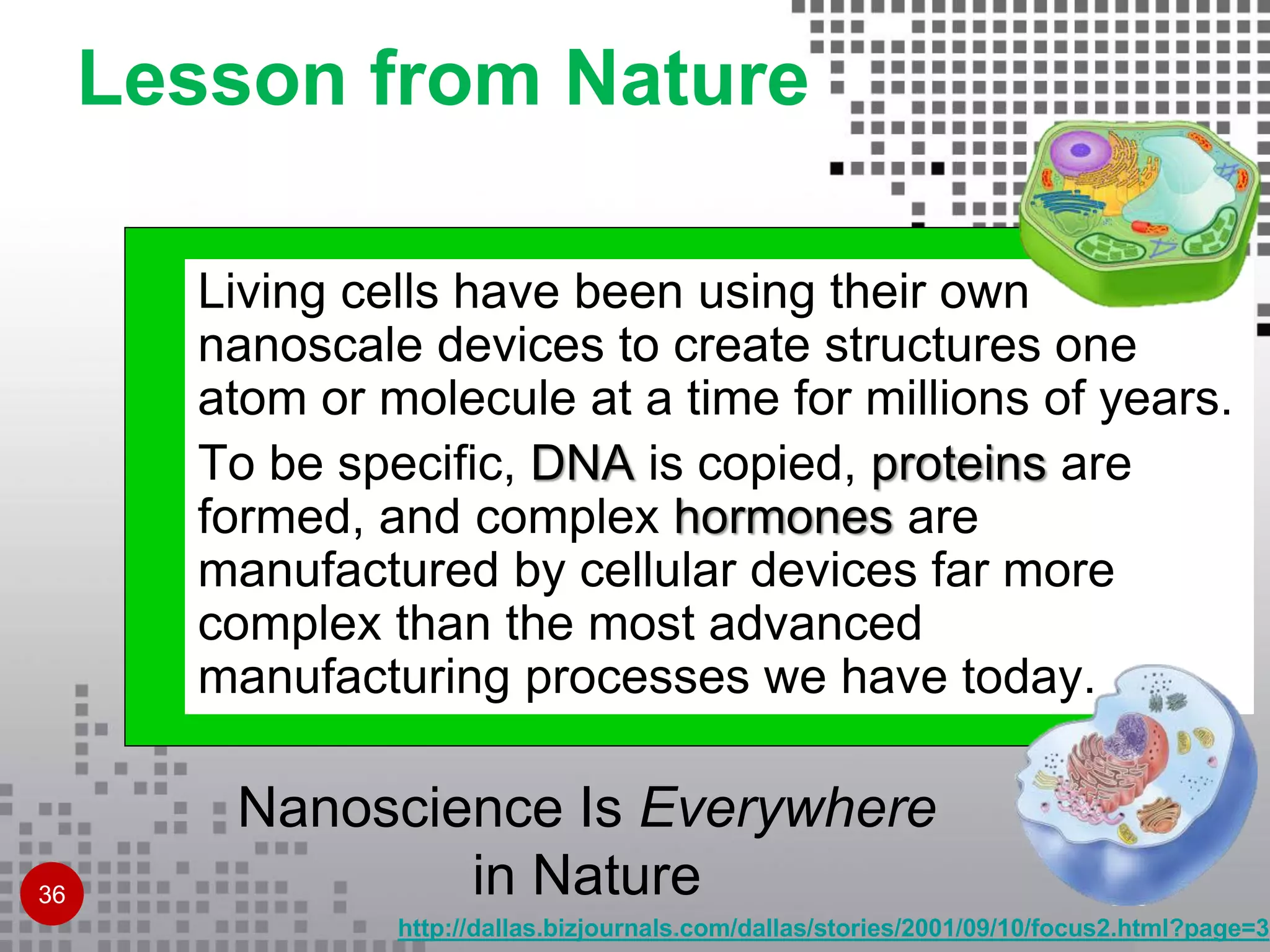
Gecko Power
Gecko foot hairs typically have
diameters of 200 – 500 nm. Weak
chemical interaction between each
hair and surface (each foot has over
1 million of these hairs) provides a
force of 10 N/cm2
Lesson from Nature
34
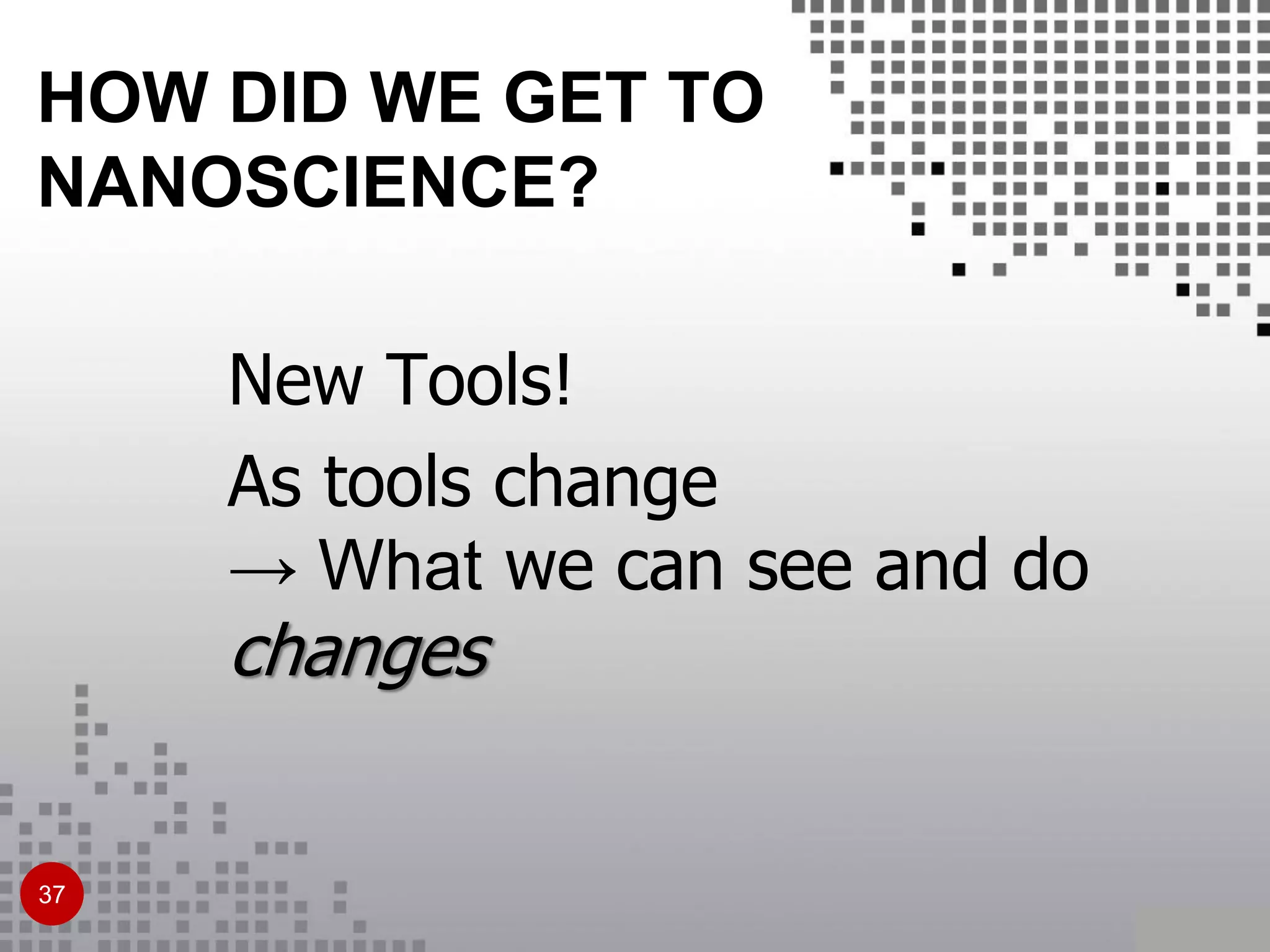
Bucky Balls (C60) were discovered in soot!
Nanoparticles in Smoke from Fires
Lesson from Nature
35
Nanoscience Is Everywhere
in Nature
Living cells have been using their own
nanoscale devices to create structures one
atom or molecule at a time for millions of years.
To be specific, DNA is copied, proteins are
formed, and complex hormones are
manufactured by cellular devices far more
complex than the most advanced
manufacturing processes we have today.
http://dallas.bizjournals.com/dallas/stories/2001/09/10/focus2.html?page=3
Lesson from Nature
36
HOW DID WE GET TO
NANOSCIENCE?
New Tools!
As tools change
→ What we can see and do
changes
37
Sources: http://www.cambridge.edu.au/education/PracticeITBook2/Microscope.jpg
http://biology.touchspin.com/Human_Blood.php
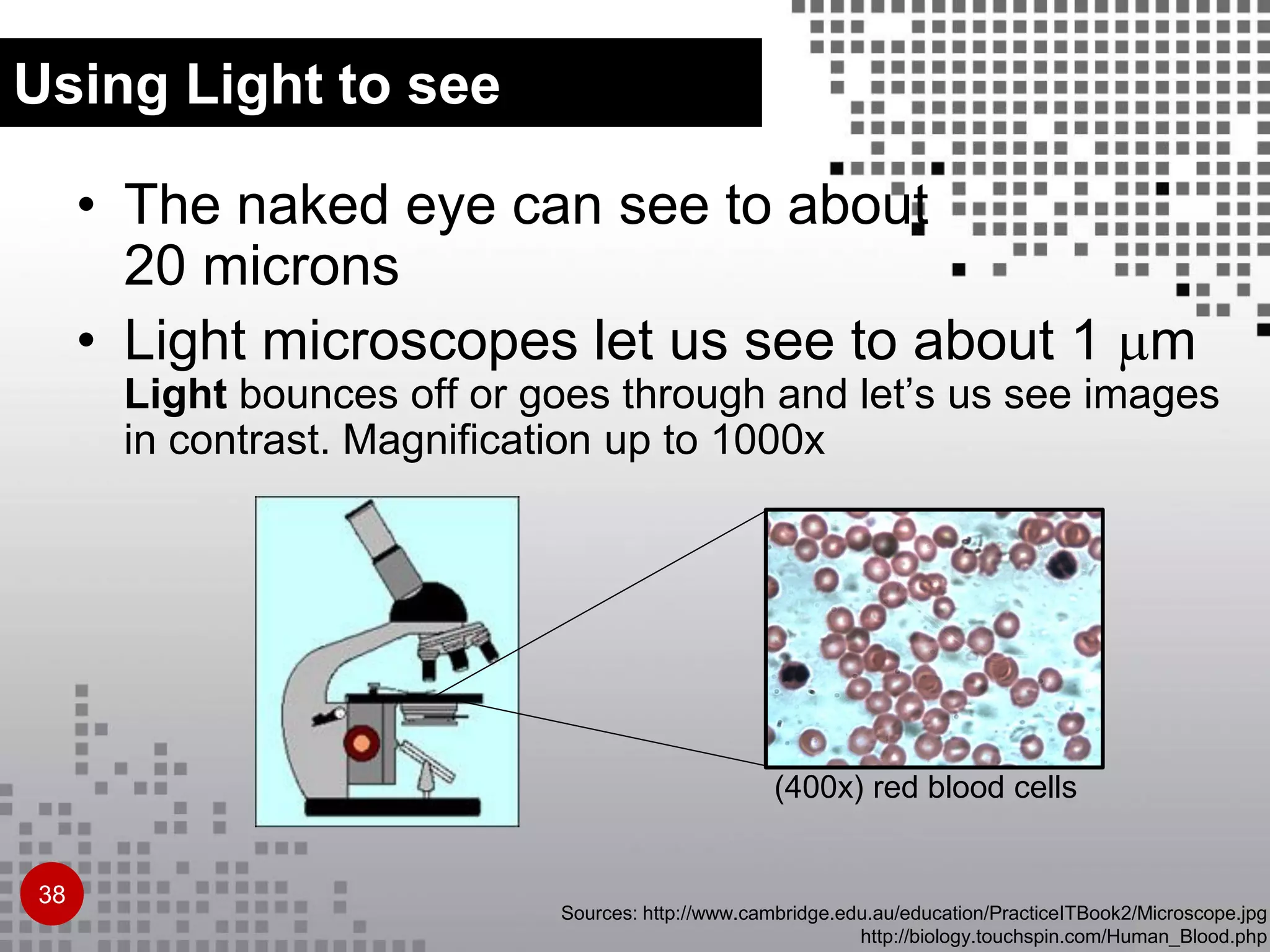
• The naked eye can see to about
20 microns
• Light microscopes let us see to about 1 m
Light bounces off or goes through and let’s us see images
in contrast. Magnification up to 1000x
Using Light to see
38
(400x) red blood cells
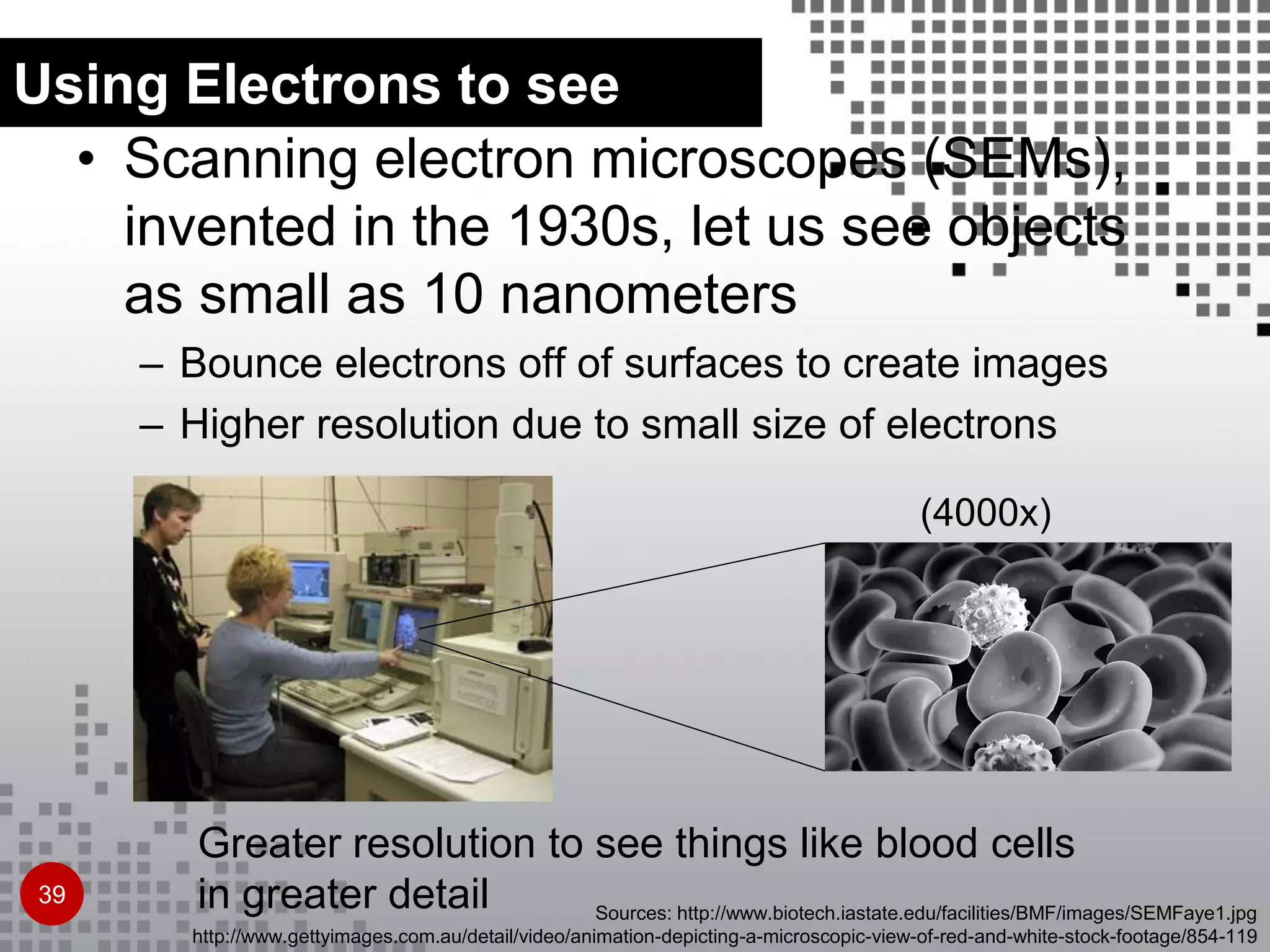
Greater resolution to see things like blood cells
in greater detail
(4000x)
Sources: http://www.biotech.iastate.edu/facilities/BMF/images/SEMFaye1.jpg
http://www.gettyimages.com.au/detail/video/animation-depicting-a-microscopic-view-of-red-and-white-stock-footage/854-119
• Scanning electron microscopes (SEMs),
invented in the 1930s, let us see objects
as small as 10 nanometers
– Bounce electrons off of surfaces to create images
– Higher resolution due to small size of electrons
Using Electrons to see
39
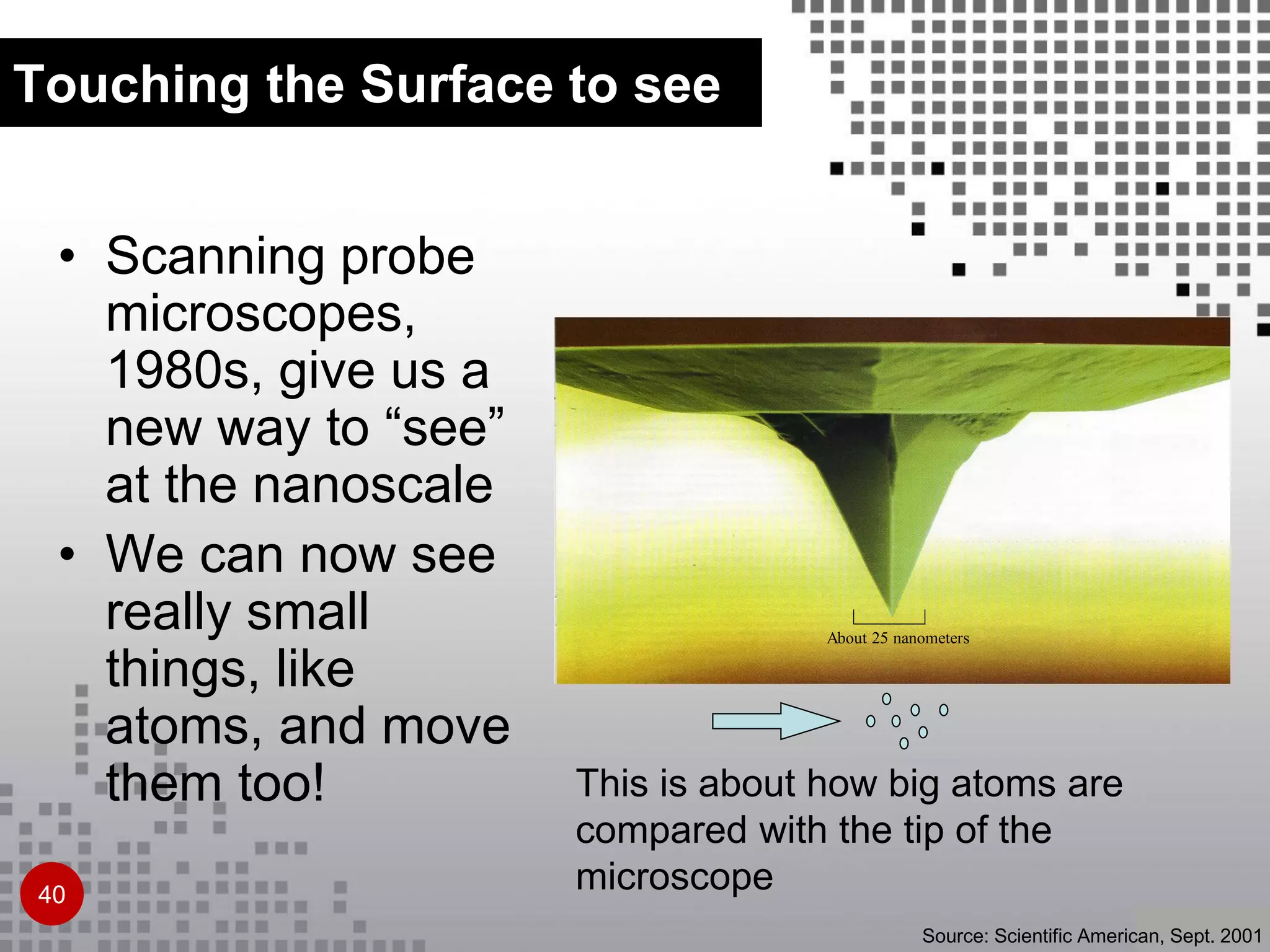
About 25 nanometers
This is about how big atoms are
compared with the tip of the
microscope
Source: Scientific American, Sept. 2001
• Scanning probe
microscopes,
1980s, give us a
new way to “see”
at the nanoscale
• We can now see
really small
things, like
atoms, and move
them too!
Touching the Surface to see
40
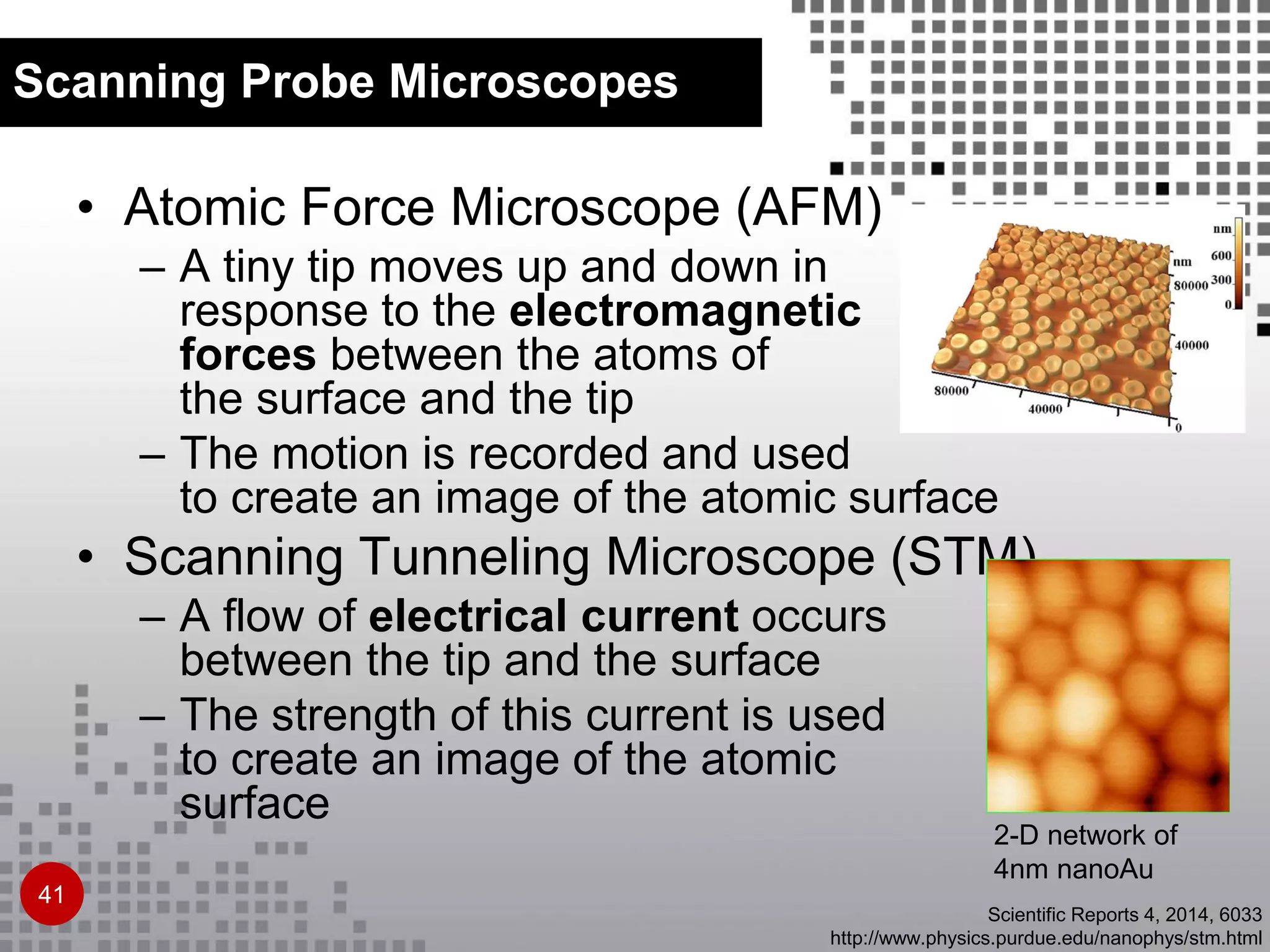
• Atomic Force Microscope (AFM)
– A tiny tip moves up and down in
response to the electromagnetic
forces between the atoms of
the surface and the tip
– The motion is recorded and used
to create an image of the atomic surface
• Scanning Tunneling Microscope (STM)
– A flow of electrical current occurs
between the tip and the surface
– The strength of this current is used
to create an image of the atomic
surface
Scanning Probe Microscopes
41
2-D network of
4nm nanoAu
Scientific Reports 4, 2014, 6033
http://www.physics.purdue.edu/nanophys/stm.html
Source: http://www.uwgb.edu/dutchs/GRAPHIC0/GEOMORPH/SurfaceVol0.gif
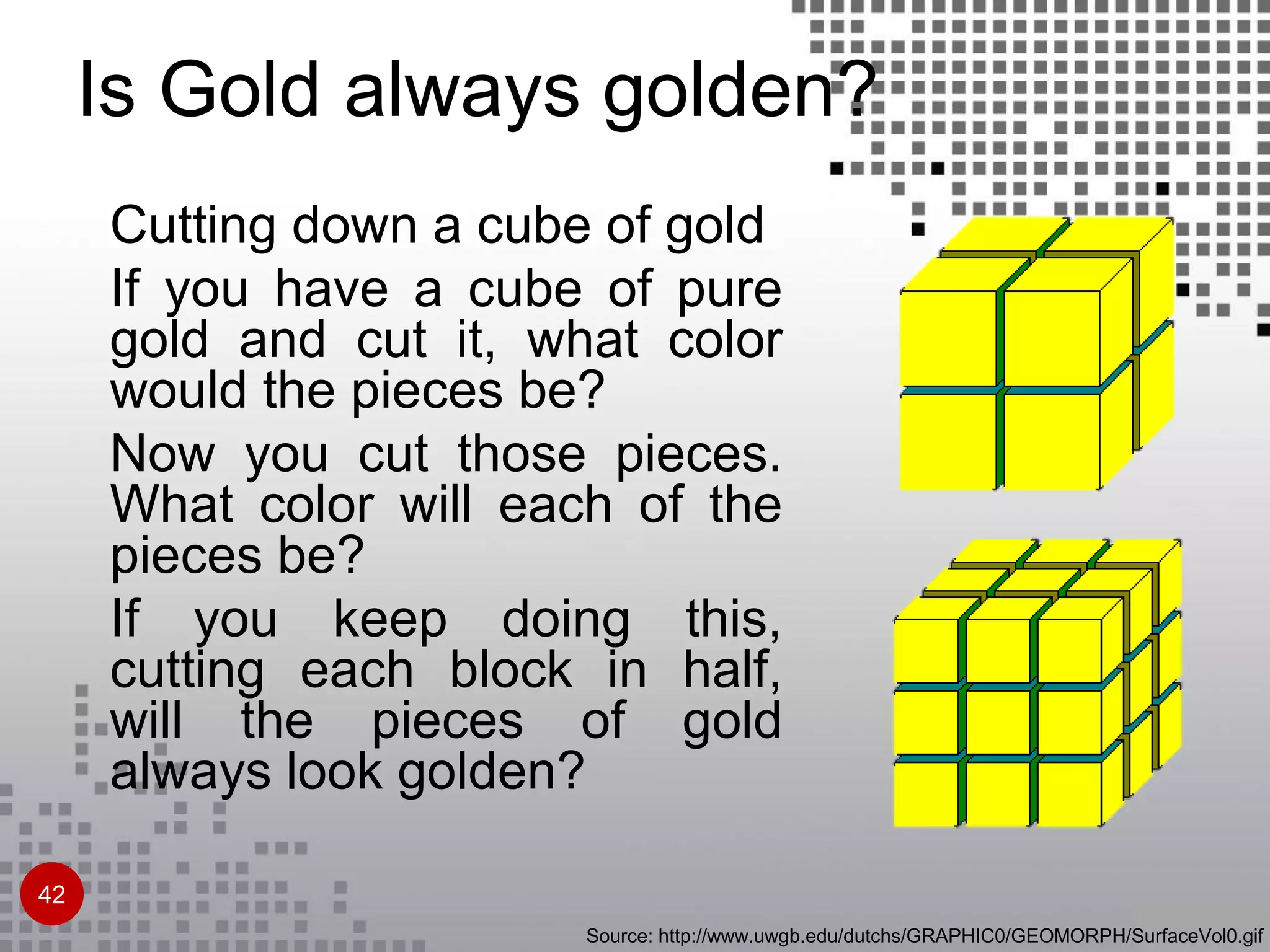
Cutting down a cube of gold
If you have a cube of pure
gold and cut it, what color
would the pieces be?
Now you cut those pieces.
What color will each of the
pieces be?
If you keep doing this,
cutting each block in half,
will the pieces of gold
always look golden?
Is Gold always golden?
42
Source: http://www.nano.uts.edu.au/pics/au_atoms.jpg
Chem. Rev. 2005, 105, 1547-1562
Chem. Commun.,5, 2008, 544-557
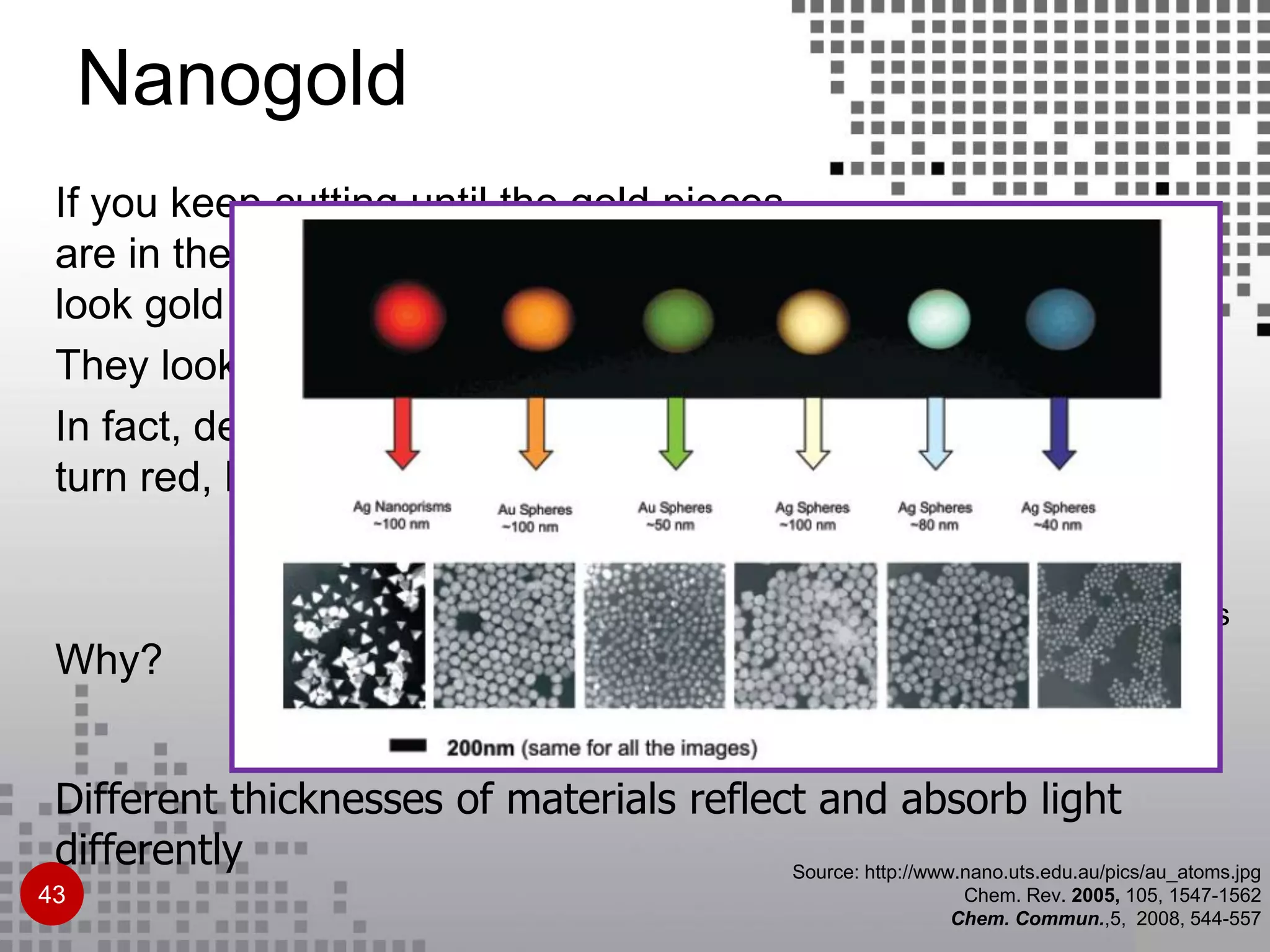
If you keep cutting until the gold pieces
are in the nanoscale range, they don’t
look gold anymore…
They look RED!
In fact, depending on size, they can
turn red, blue, yellow, and other colors
Why?
Different thicknesses of materials reflect and absorb light
differently
12 nm gold particles
Nanogold
43
What kind of nanostructures can
we make?
What kind of nanostructures exist
in nature?
NANOSTRUCTURES
44
Source: http://faculty.abe.ufl.edu/~chyn/age2062/lect/lect_06/lect_06.htm
http://www.zephyr.dti.ne.jp/~john8tam/main/Library/influenza_site/influenza_virus.jpg
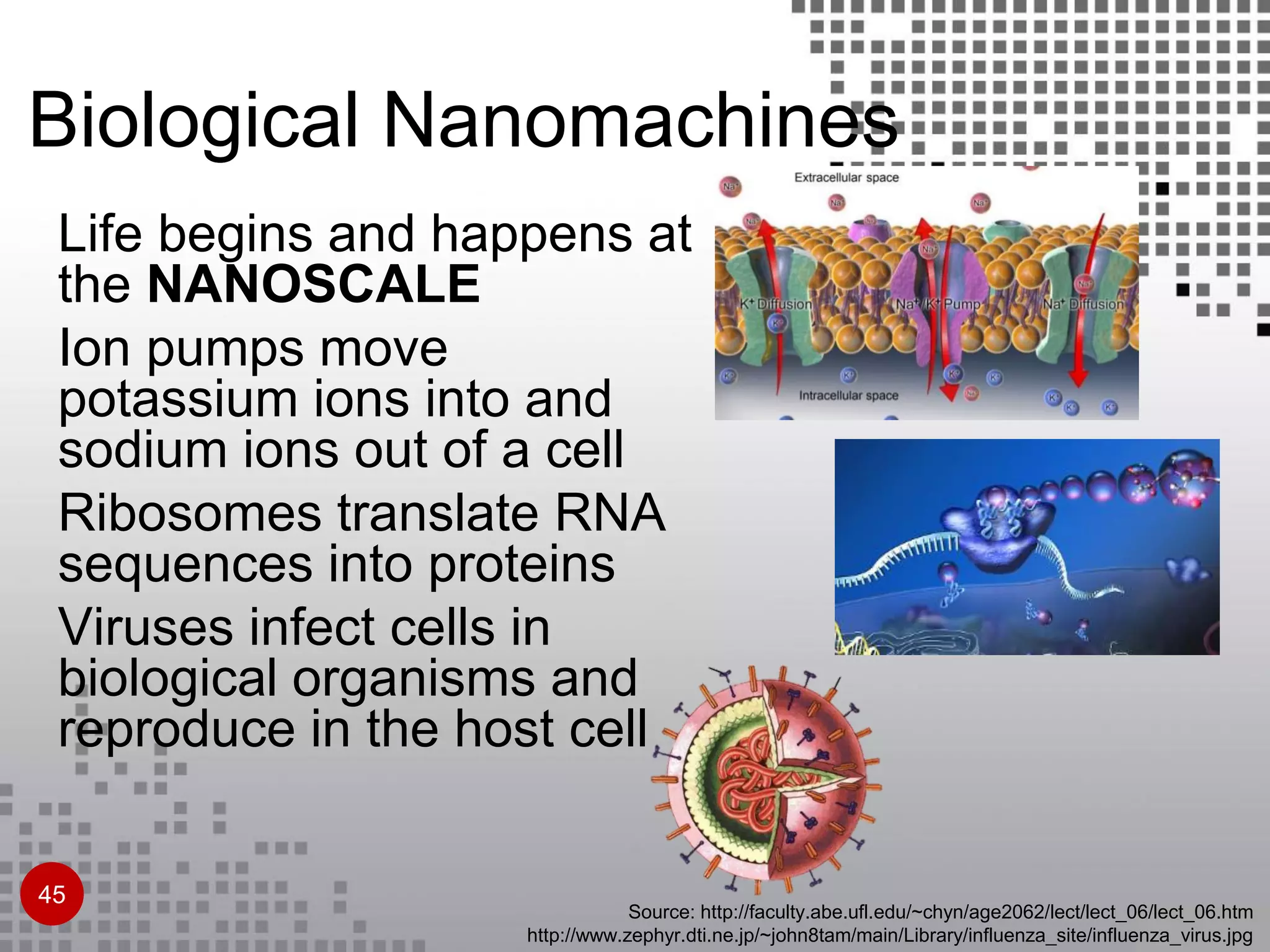
Life begins and happens at
the NANOSCALE
Ion pumps move
potassium ions into and
sodium ions out of a cell
Ribosomes translate RNA
sequences into proteins
Viruses infect cells in
biological organisms and
reproduce in the host cell
Biological Nanomachines
45
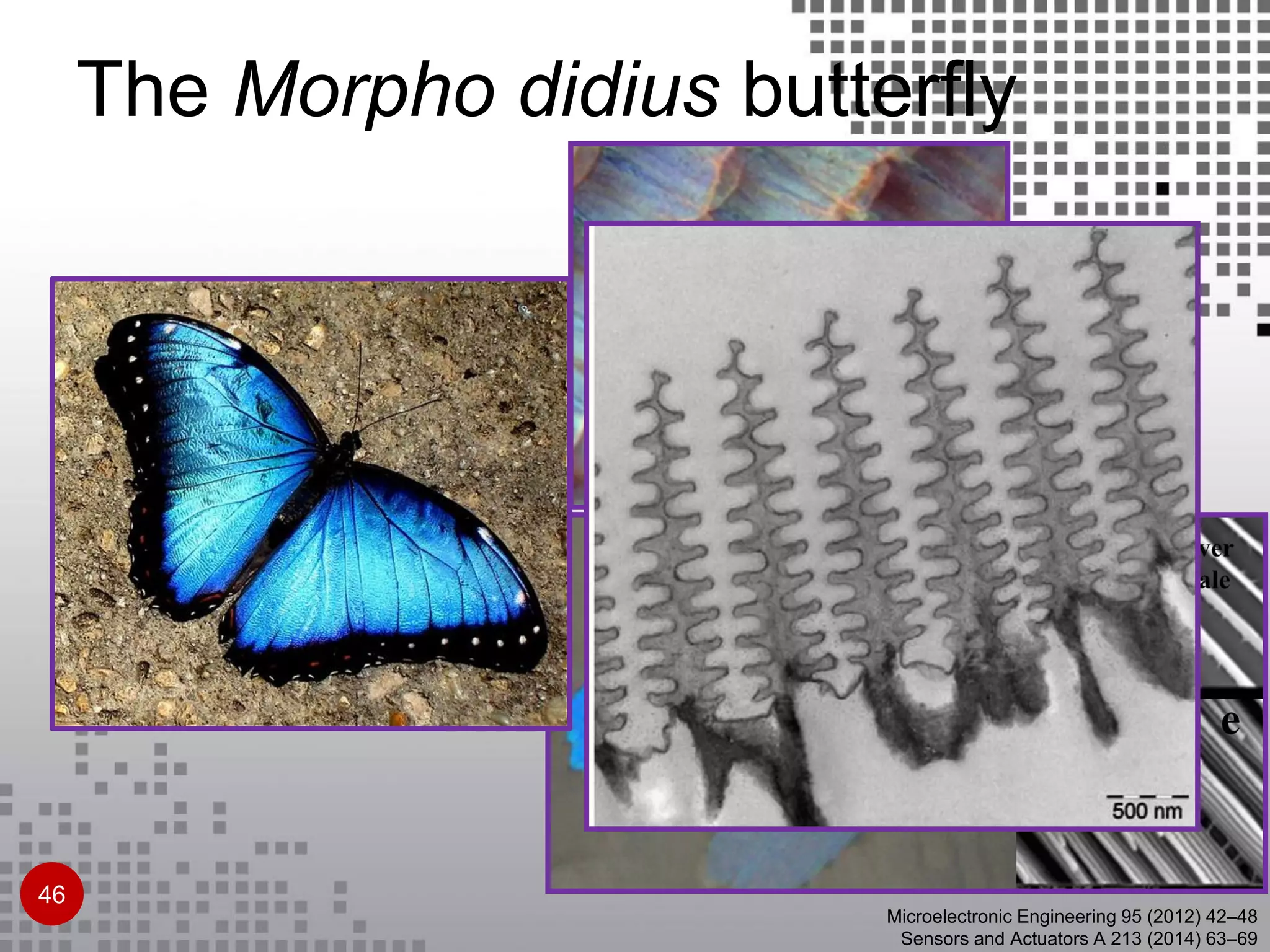
The Morpho didius butterfly
Microelectronic Engineering 95 (2012) 42–48
Sensors and Actuators A 213 (2014) 63–69
46
Source: http://www.library.utoronto.ca/engineering-computer-science/news_bulletin/images/nanotube.jpeg
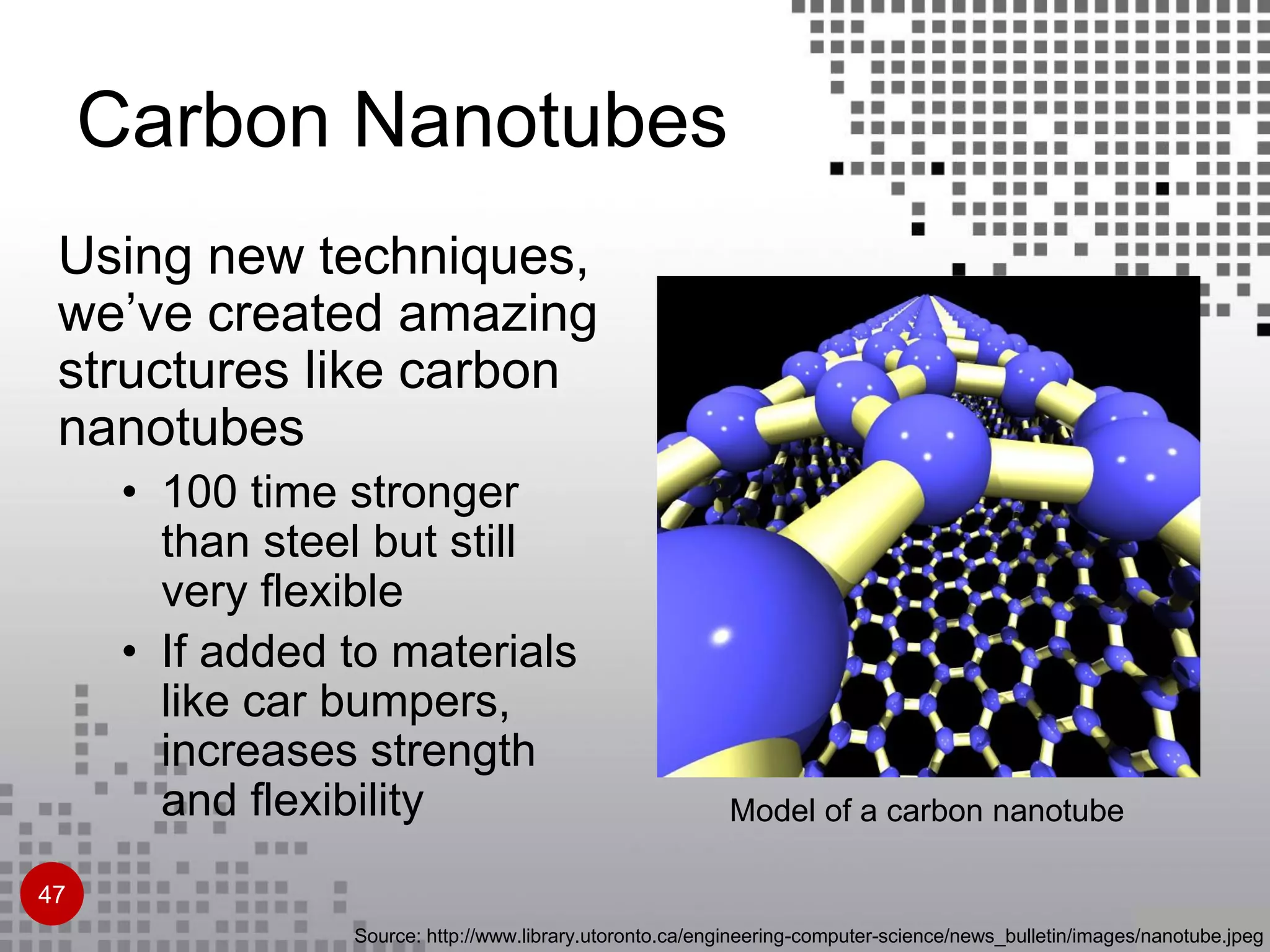
Model of a carbon nanotube
Using new techniques,
we’ve created amazing
structures like carbon
nanotubes
• 100 time stronger
than steel but still
very flexible
• If added to materials
like car bumpers,
increases strength
and flexibility
Carbon Nanotubes
47
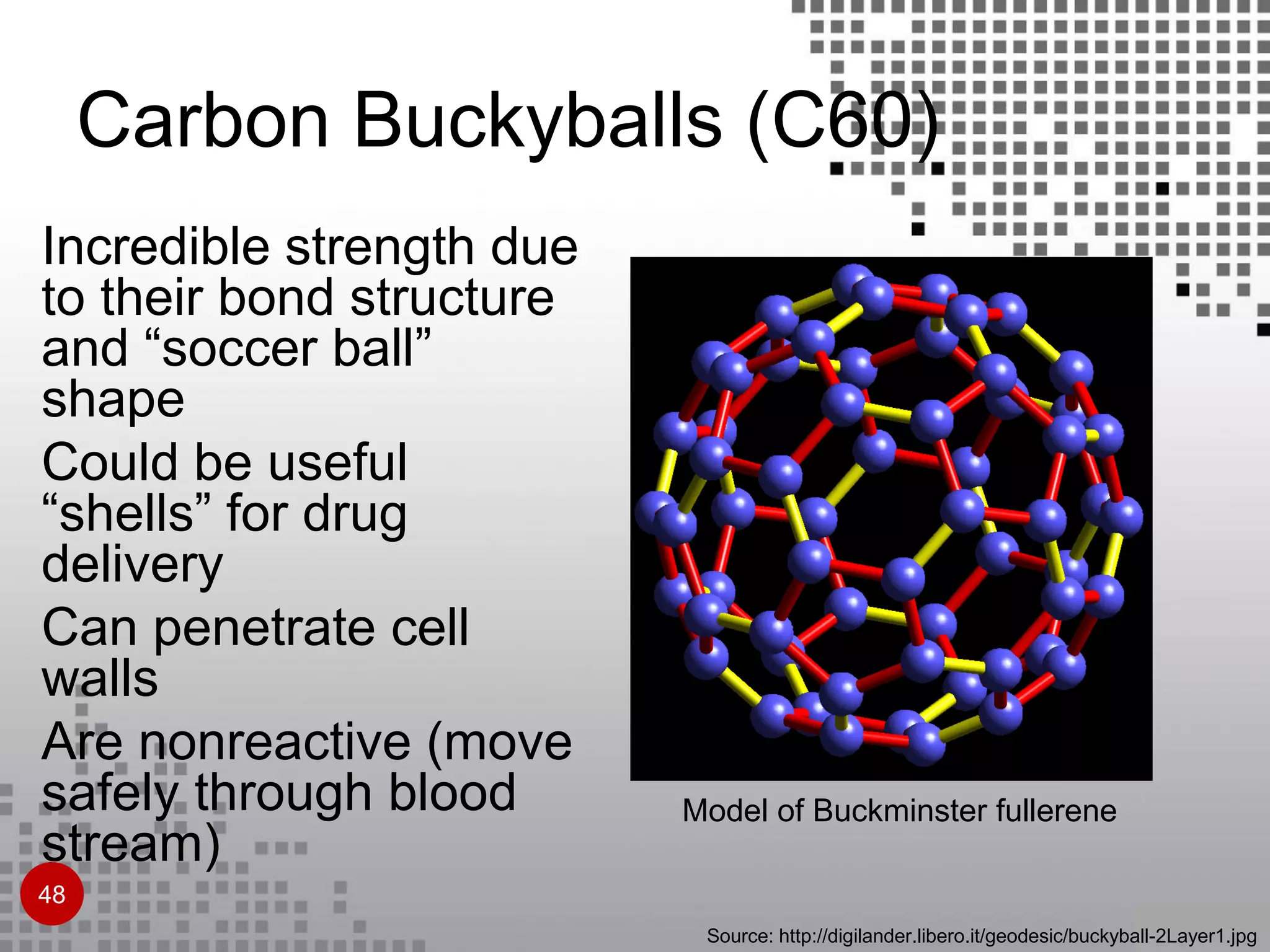
Model of Buckminster fullerene
Source: http://digilander.libero.it/geodesic/buckyball-2Layer1.jpg
Incredible strength due
to their bond structure
and “soccer ball”
shape
Could be useful
“shells” for drug
delivery
Can penetrate cell
walls
Are nonreactive (move
safely through blood
stream)
Carbon Buckyballs (C60)
48
HOW DO YOU BUILD THINGS
THAT ARE SO SMALL?
49
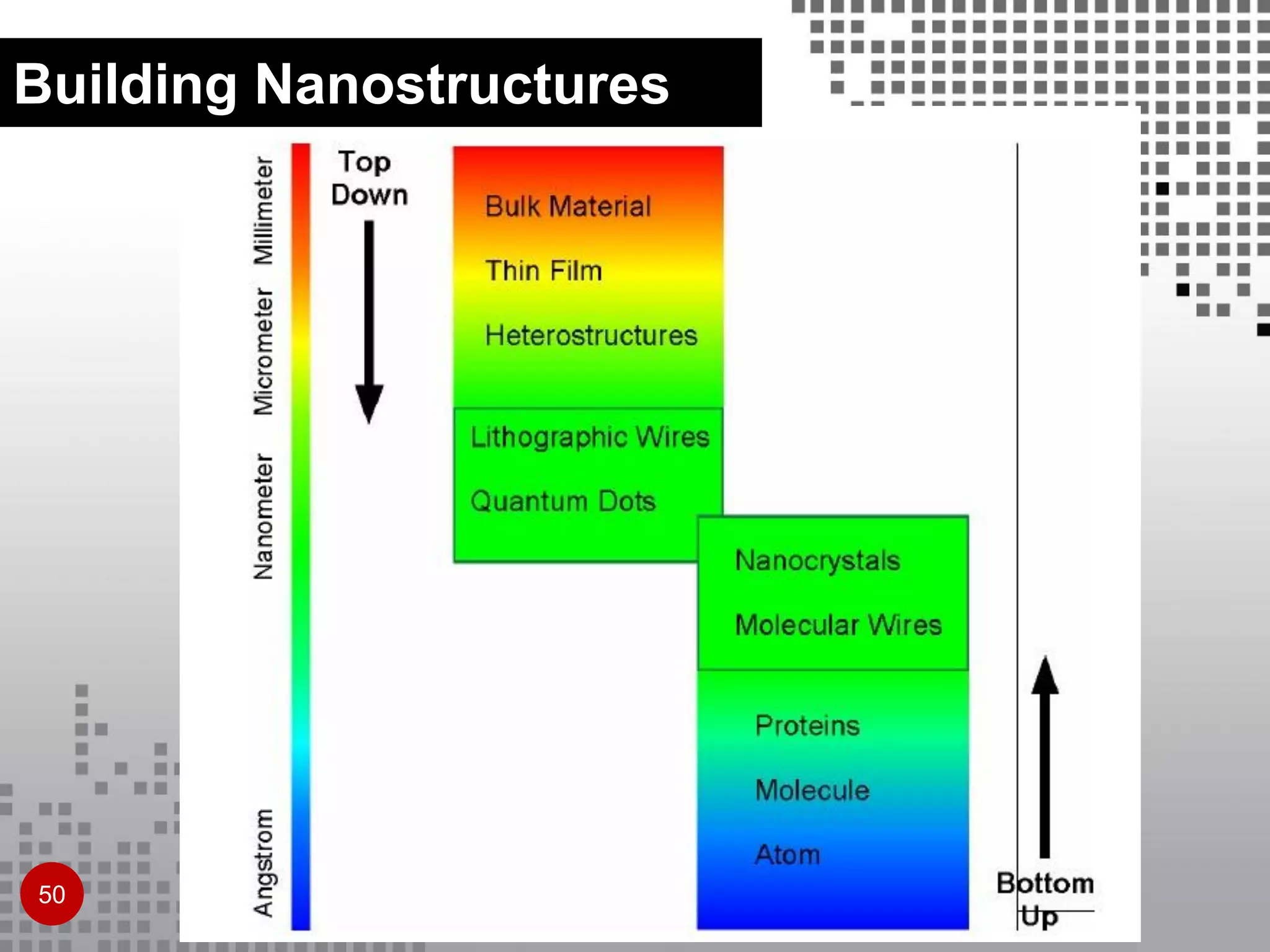
Building Nanostructures
50
Atom-by-atom assembly
Like bricklaying, move atoms into
place one at a time using tools like the
AFM and STM
Notch away atoms
Like a sculptor, chisel out material
from a surface until the desired
structure emerges
Self assembly
Set up an environment so atoms
assemble automatically.
Cell membranes
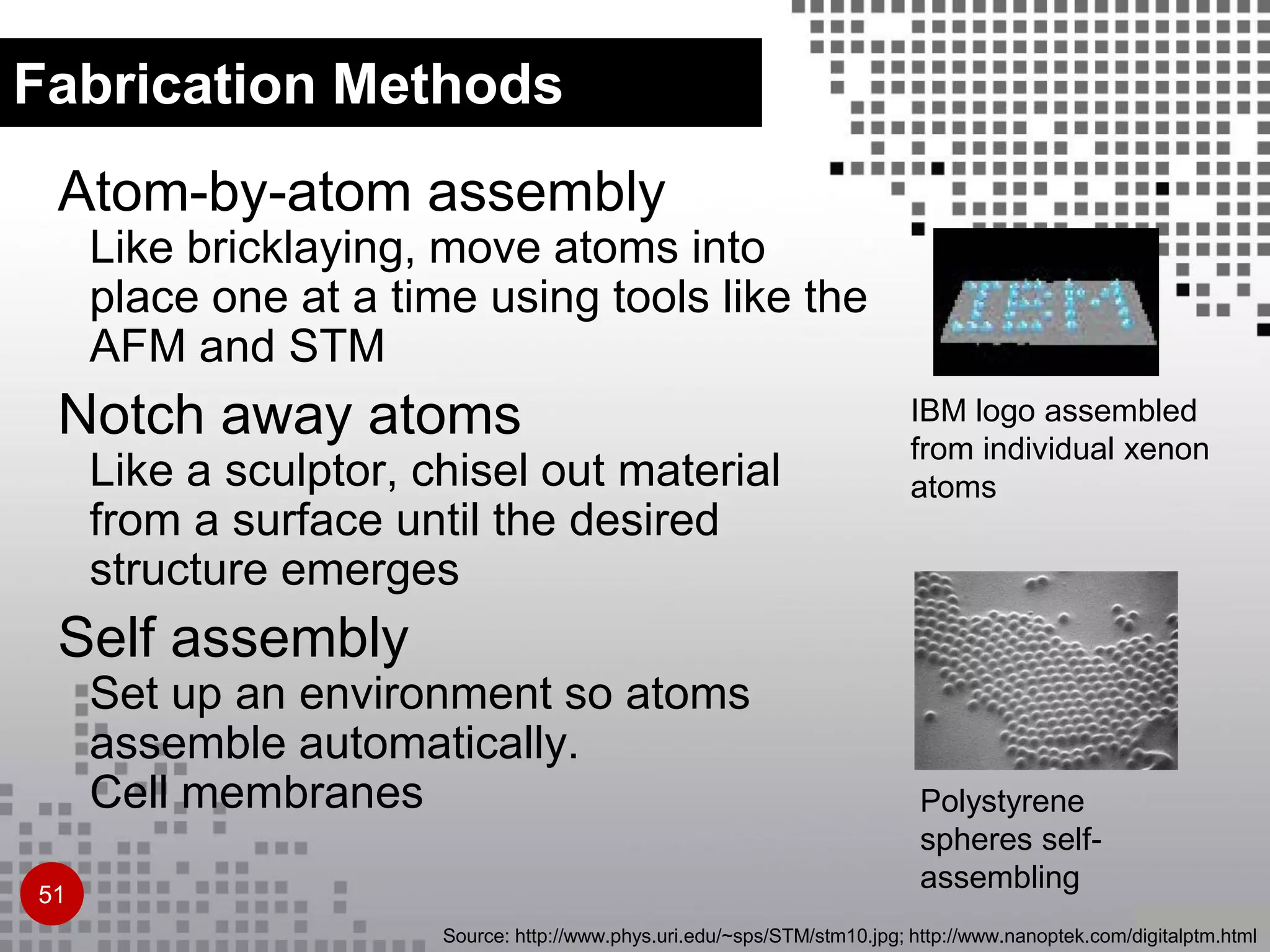
IBM logo assembled
from individual xenon
atoms
Polystyrene
spheres self-
assembling
Source: http://www.phys.uri.edu/~sps/STM/stm10.jpg; http://www.nanoptek.com/digitalptm.html
Fabrication Methods
51
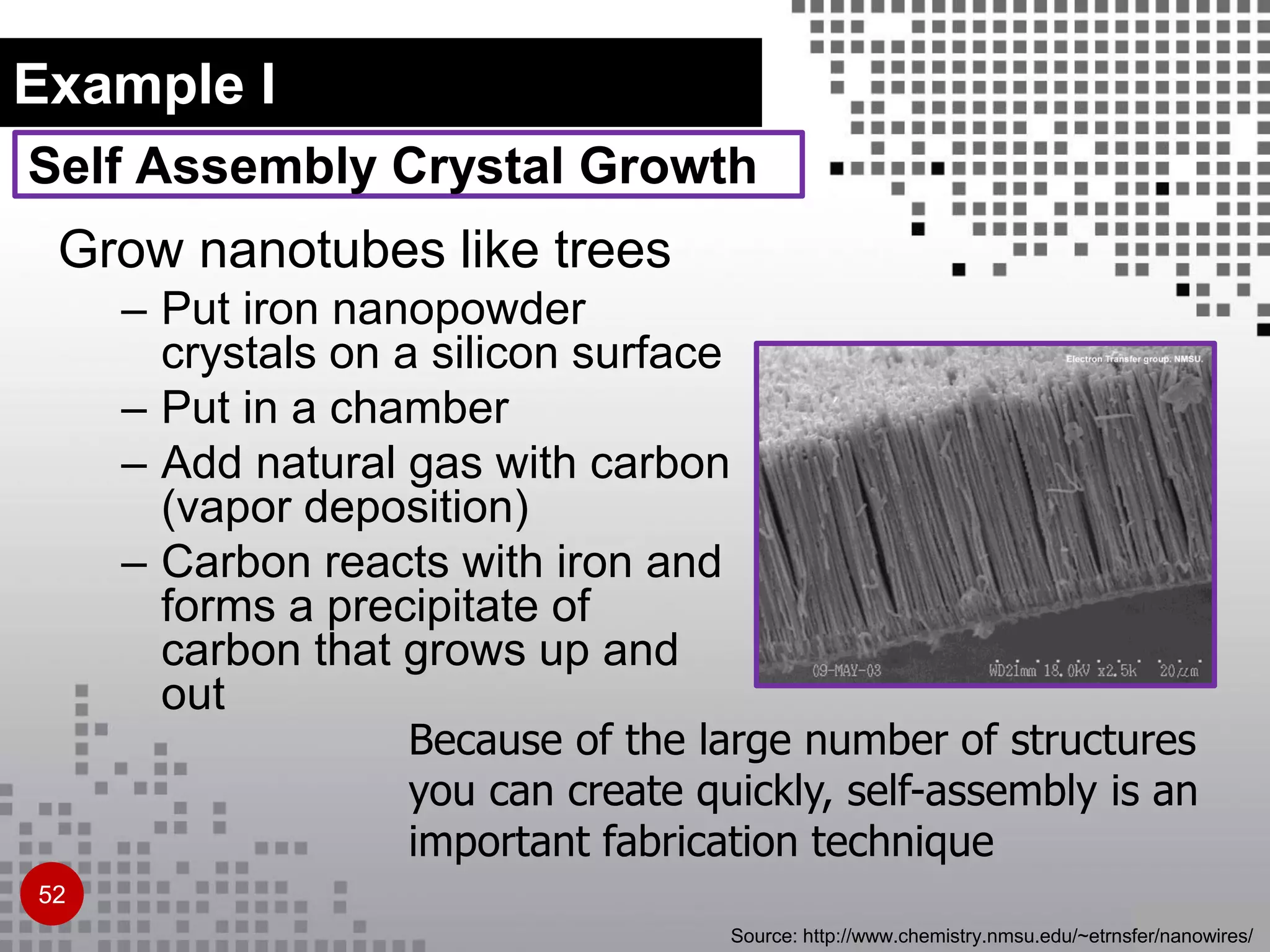
Self Assembly Crystal Growth
Grow nanotubes like trees
– Put iron nanopowder
crystals on a silicon surface
– Put in a chamber
– Add natural gas with carbon
(vapor deposition)
– Carbon reacts with iron and
forms a precipitate of
carbon that grows up and
out
Because of the large number of structures
you can create quickly, self-assembly is an
important fabrication technique
Source: http://www.chemistry.nmsu.edu/~etrnsfer/nanowires/
Example I
52
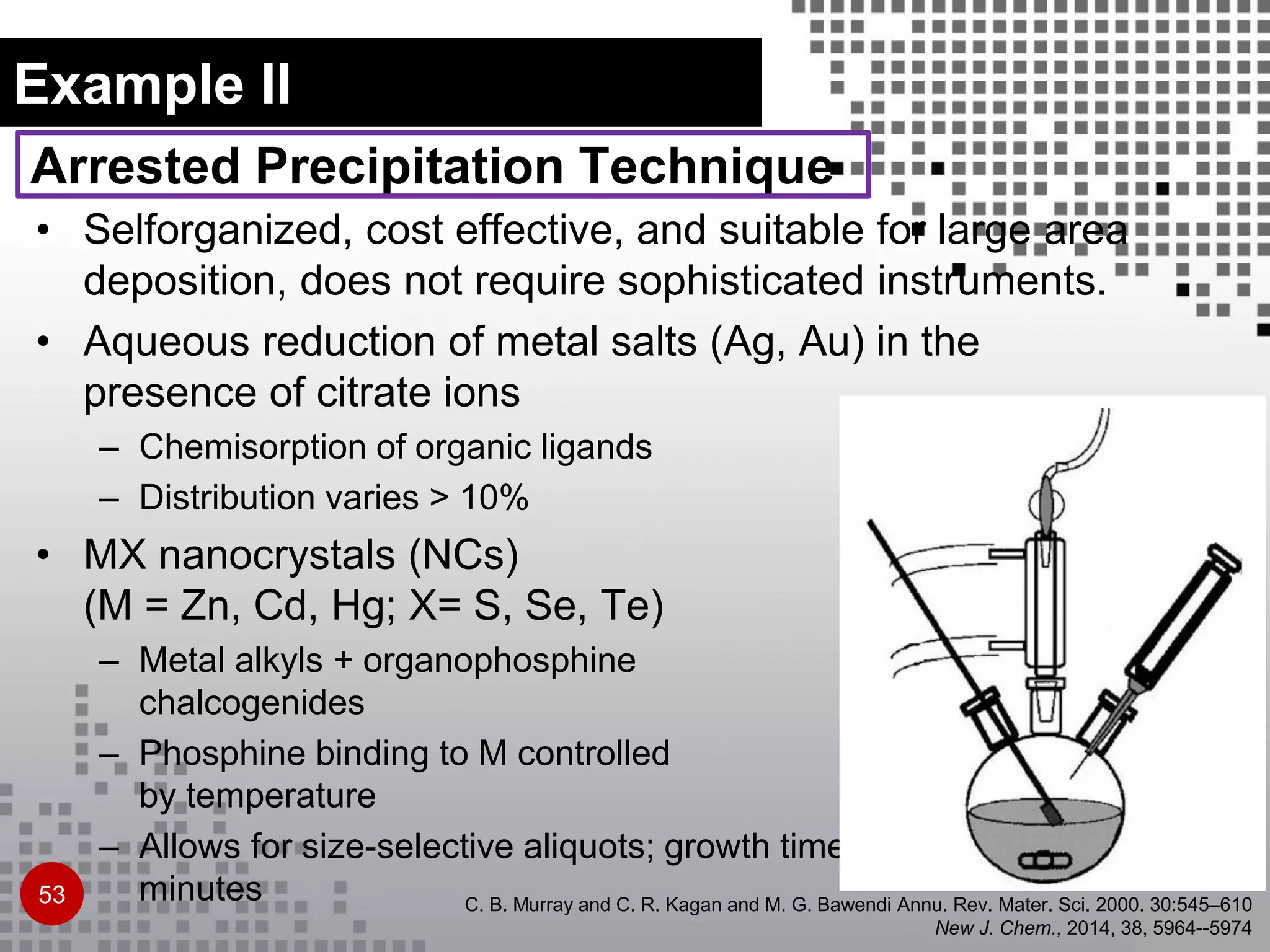
• Selforganized, cost effective, and suitable for large area
deposition, does not require sophisticated instruments.
• Aqueous reduction of metal salts (Ag, Au) in the
presence of citrate ions
– Chemisorption of organic ligands
– Distribution varies > 10%
• MX nanocrystals (NCs)
(M = Zn, Cd, Hg; X= S, Se, Te)
– Metal alkyls + organophosphine
chalcogenides
– Phosphine binding to M controlled
by temperature
– Allows for size-selective aliquots; growth time for 1-2 nm NCs in
minutes53
Arrested Precipitation Technique
Example II
C. B. Murray and C. R. Kagan and M. G. Bawendi Annu. Rev. Mater. Sci. 2000. 30:545–610
New J. Chem., 2014, 38, 5964--5974
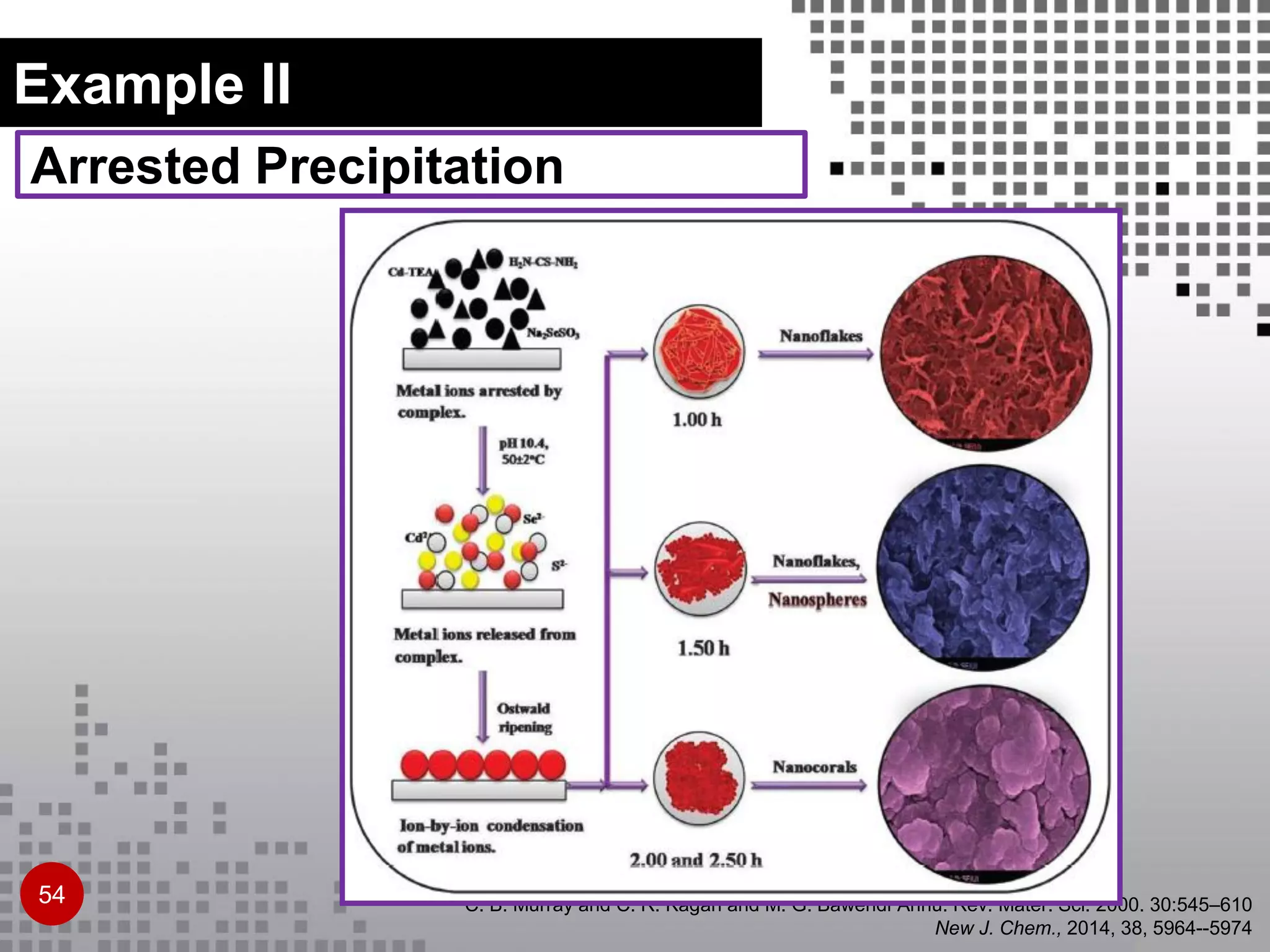
Arrested Precipitation
Example II
54 C. B. Murray and C. R. Kagan and M. G. Bawendi Annu. Rev. Mater. Sci. 2000. 30:545–610
New J. Chem., 2014, 38, 5964--5974
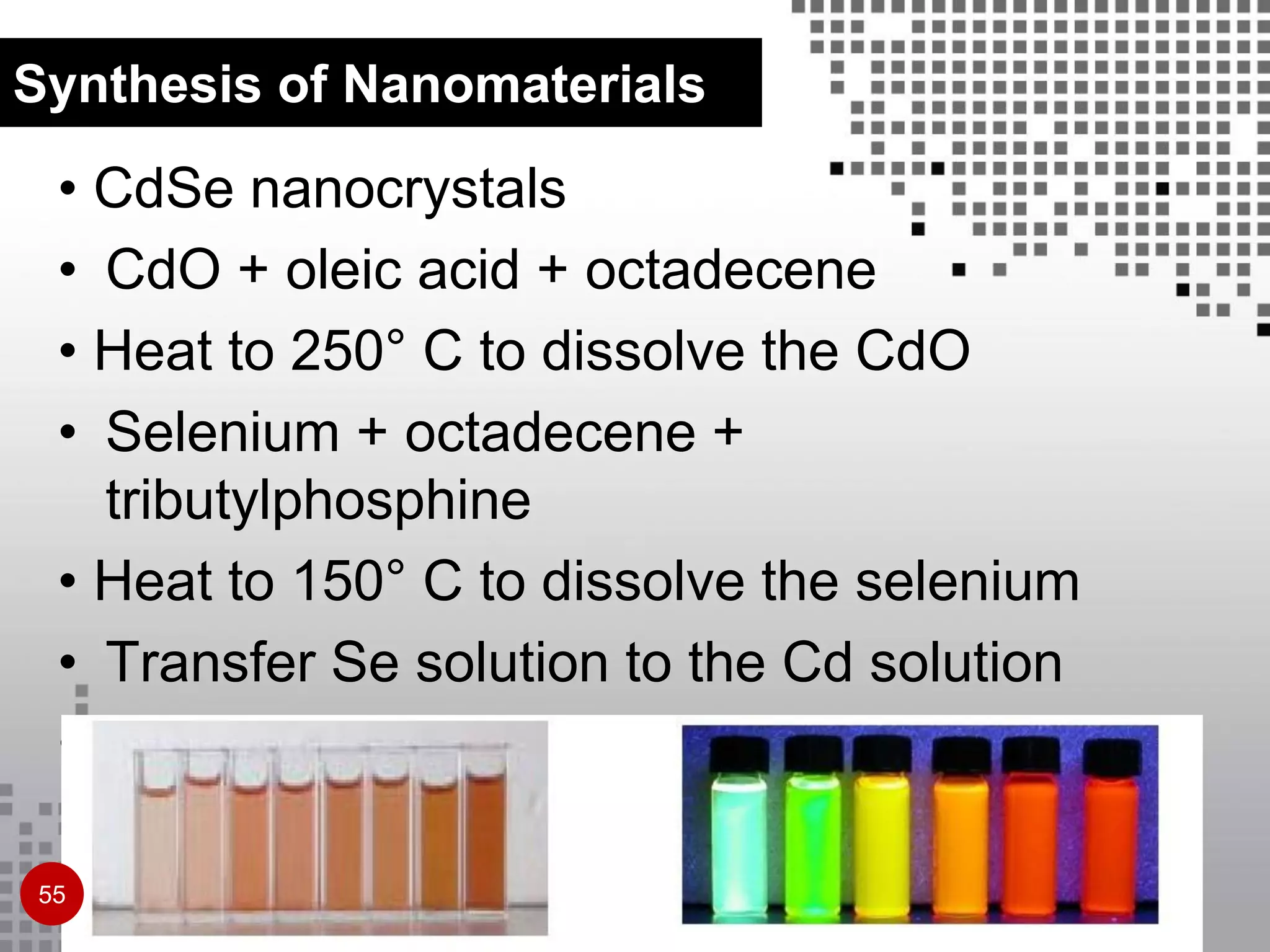
• CdSe nanocrystals
• CdO + oleic acid + octadecene
• Heat to 250° C to dissolve the CdO
• Selenium + octadecene +
tributylphosphine
• Heat to 150° C to dissolve the selenium
• Transfer Se solution to the Cd solution
• Take aliquots
Synthesis of Nanomaterials
55
HOW IMPORTANT IS
NANOTECHNOLOGY?
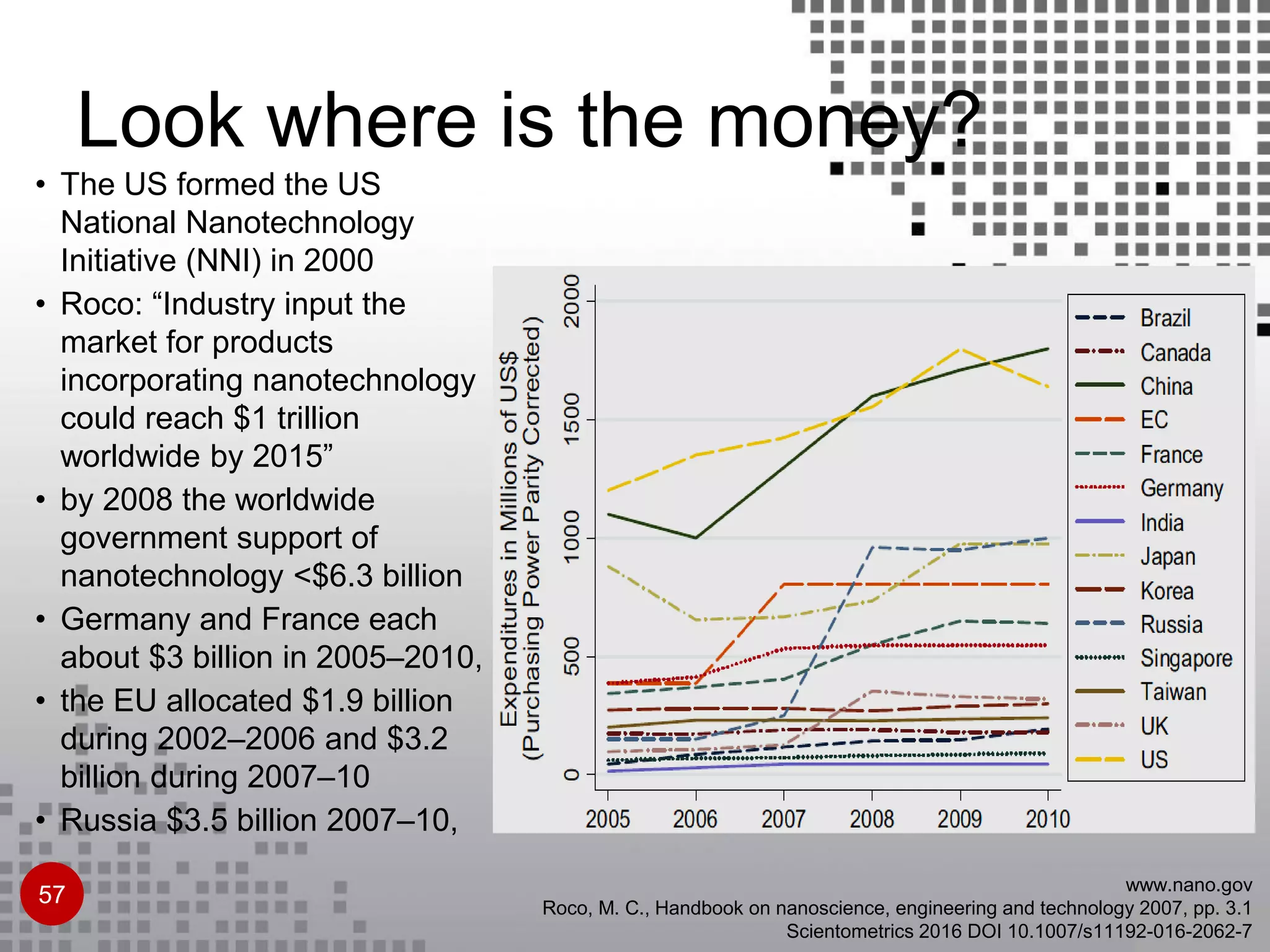
Look where is the money?
• The US formed the US
National Nanotechnology
Initiative (NNI) in 2000
• Roco: “Industry input the
market for products
incorporating nanotechnology
could reach $1 trillion
worldwide by 2015”
• by 2008 the worldwide
government support of
nanotechnology <$6.3 billion
• Germany and France each
about $3 billion in 2005–2010,
• the EU allocated $1.9 billion
during 2002–2006 and $3.2
billion during 2007–10
• Russia $3.5 billion 2007–10,
57 www.nano.gov
Roco, M. C., Handbook on nanoscience, engineering and technology 2007, pp. 3.1
Scientometrics 2016 DOI 10.1007/s11192-016-2062-7
Publications
58
Publications
59
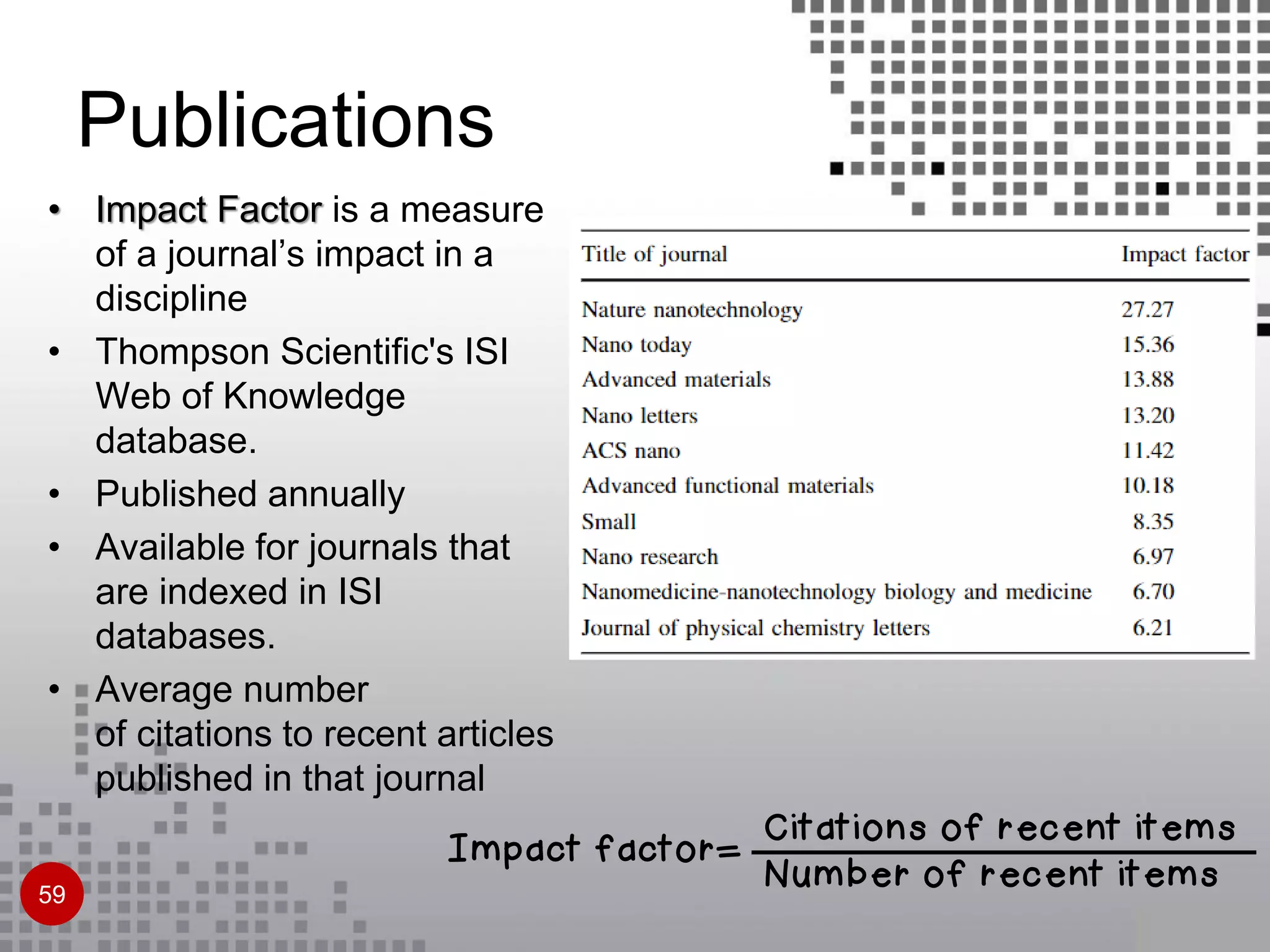
• Impact Factor is a measure
of a journal’s impact in a
discipline
• Thompson Scientific's ISI
Web of Knowledge
database.
• Published annually
• Available for journals that
are indexed in ISI
databases.
• Average number
of citations to recent articles
published in that journal
Citations of recent items
Number of recent items
Impact factor=
60
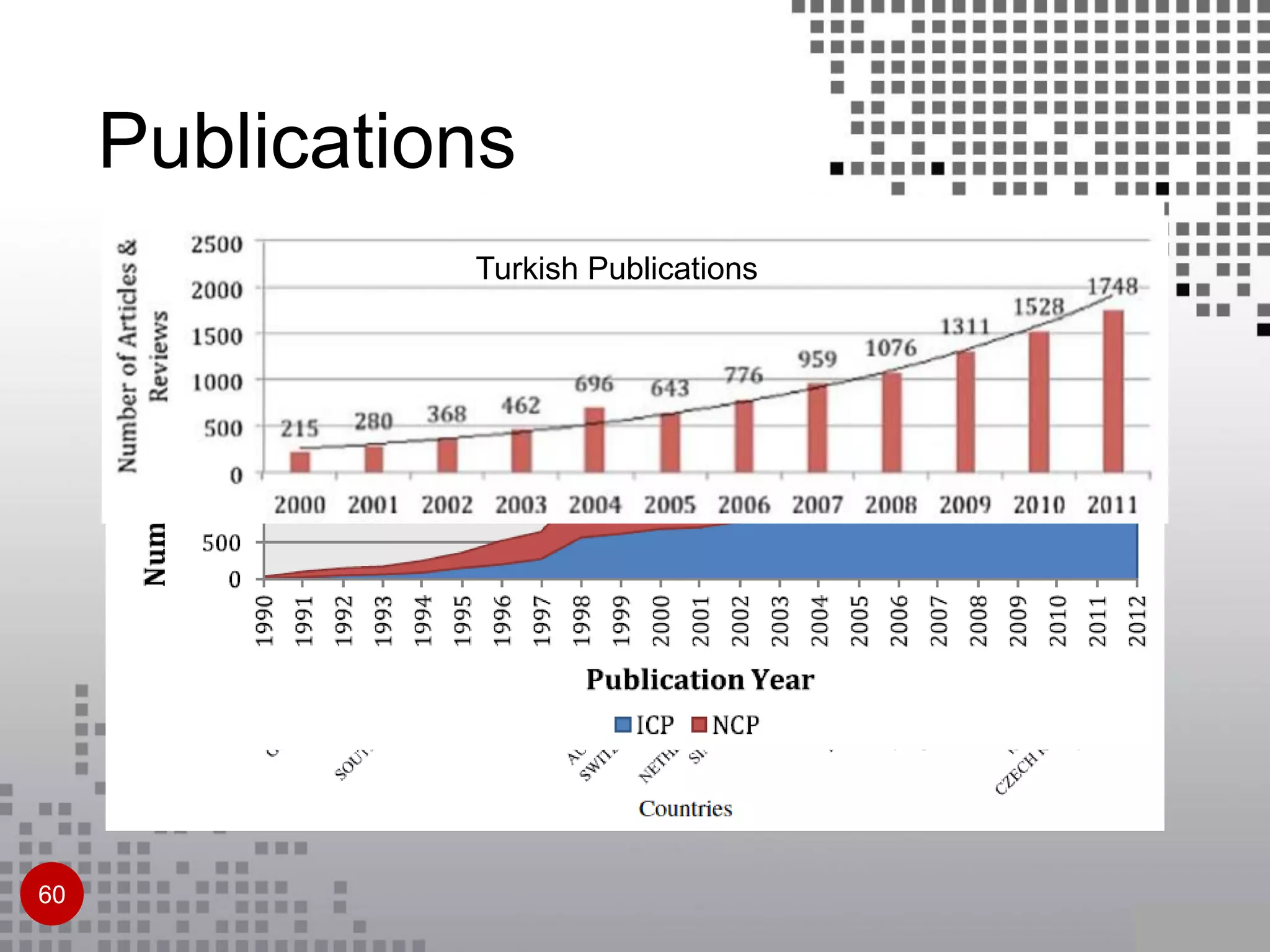
Publications
Russian PublicationsTurkish Publications
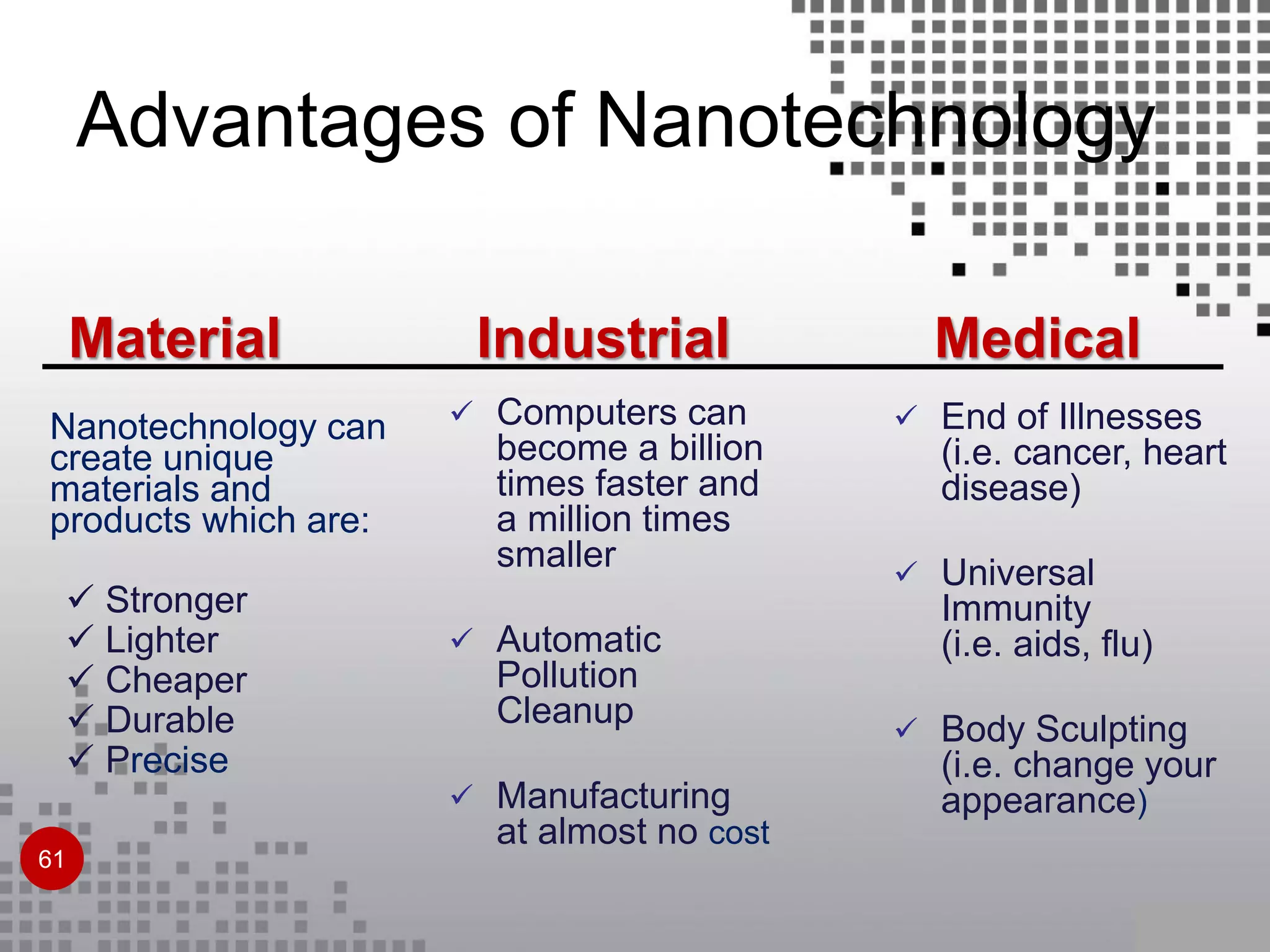
Nanotechnology can
create unique
materials and
products which are:
 Stronger
 Lighter
 Cheaper
 Durable
 Precise
 Computers can
become a billion
times faster and
a million times
smaller
 Automatic
Pollution
Cleanup
 Manufacturing
at almost no cost
 End of Illnesses
(i.e. cancer, heart
disease)
 Universal
Immunity
(i.e. aids, flu)
 Body Sculpting
(i.e. change your
appearance)
Industrial MedicalMaterial
61
Advantages of Nanotechnology
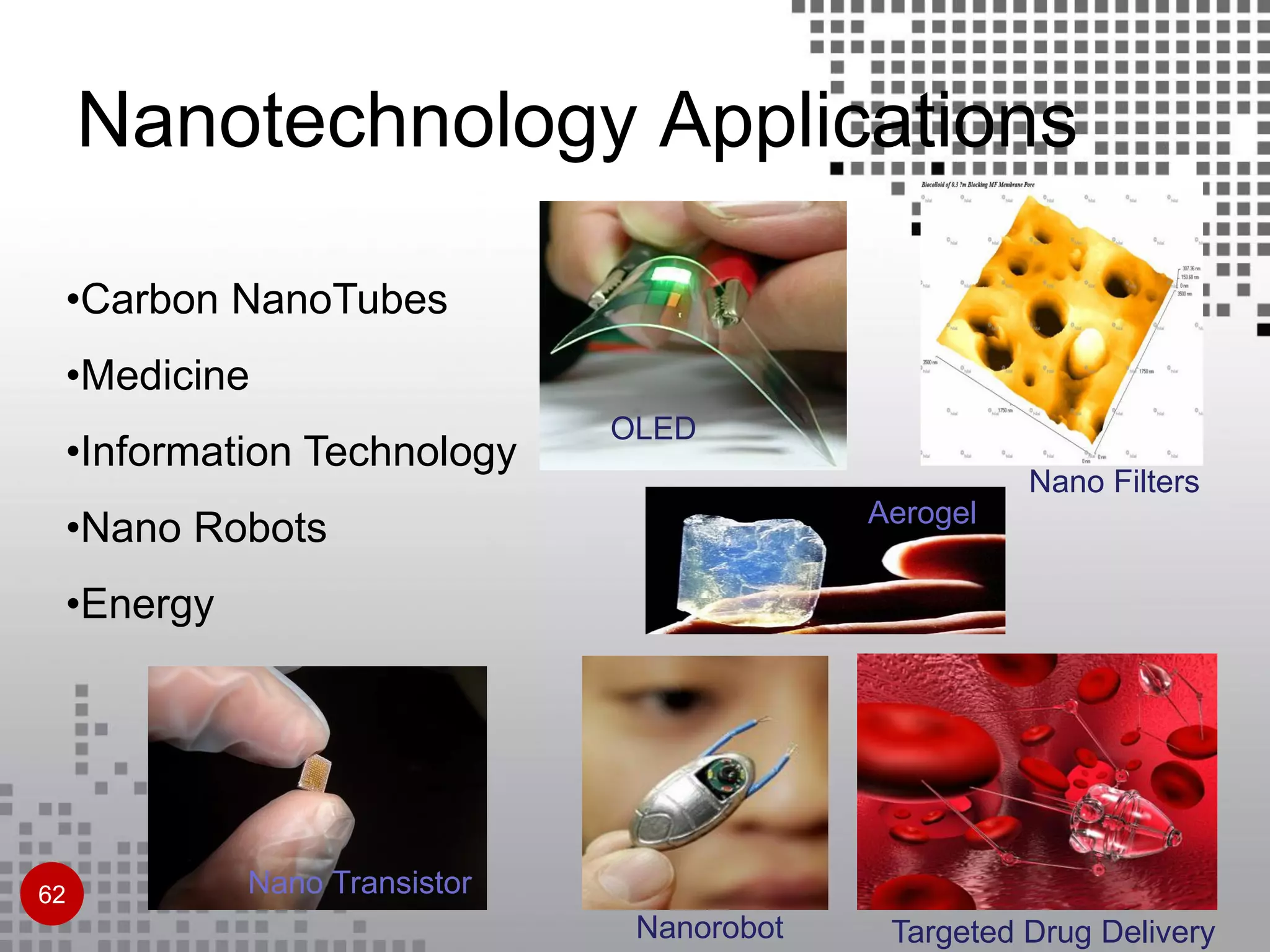
•Carbon NanoTubes
•Medicine
•Information Technology
•Nano Robots
•Energy
Targeted Drug Delivery
Nano Transistor
OLED
Nanorobot
Aerogel
Nano Filters
62
Nanotechnology Applications
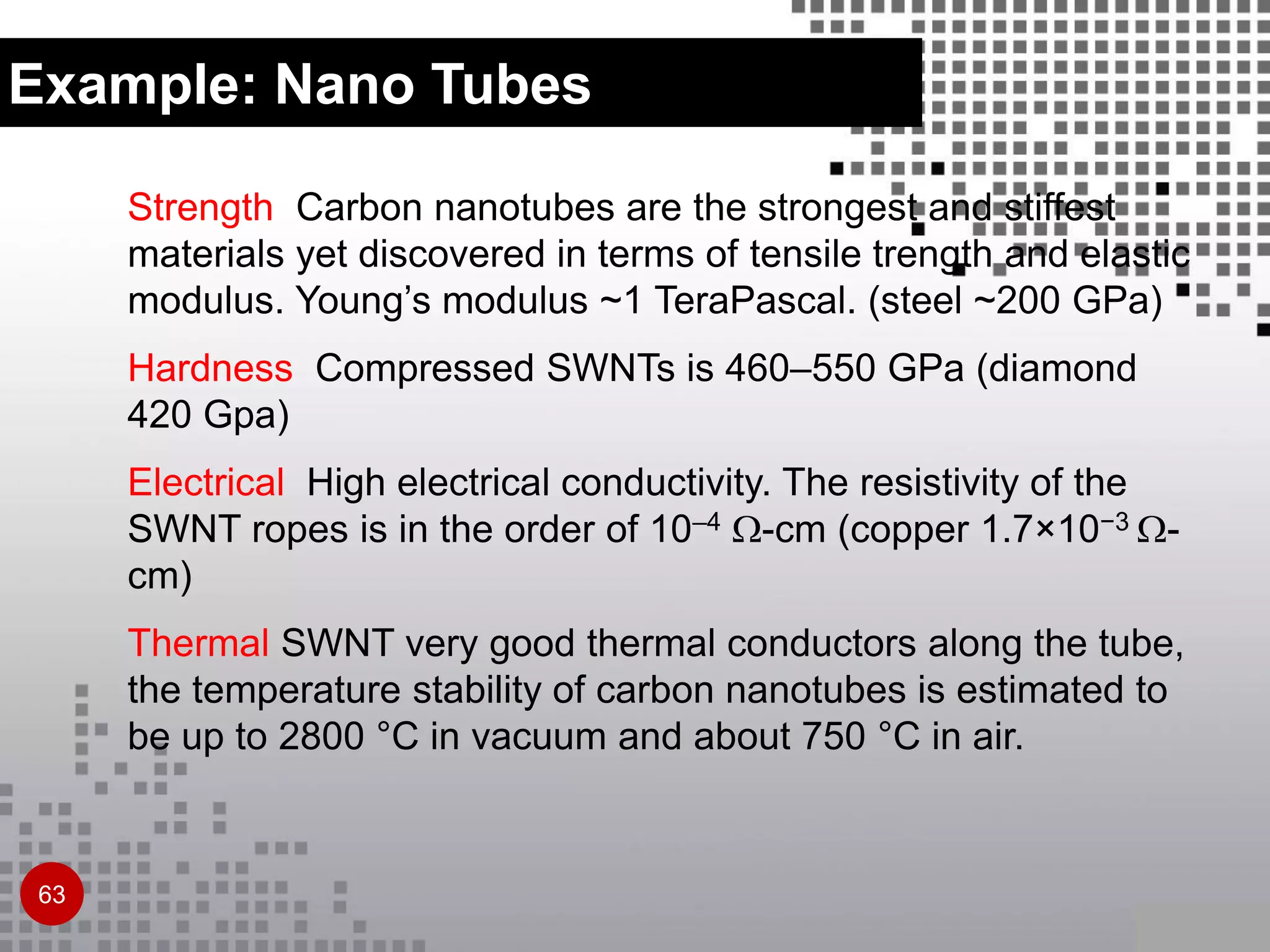
Strength Carbon nanotubes are the strongest and stiffest
materials yet discovered in terms of tensile trength and elastic
modulus. Young’s modulus ~1 TeraPascal. (steel ~200 GPa)
Hardness Compressed SWNTs is 460–550 GPa (diamond
420 Gpa)
Electrical High electrical conductivity. The resistivity of the
SWNT ropes is in the order of 10–4 -cm (copper 1.7×10⁻³ -
cm)
Thermal SWNT very good thermal conductors along the tube,
the temperature stability of carbon nanotubes is estimated to
be up to 2800 °C in vacuum and about 750 °C in air.
63
Example: Nano Tubes
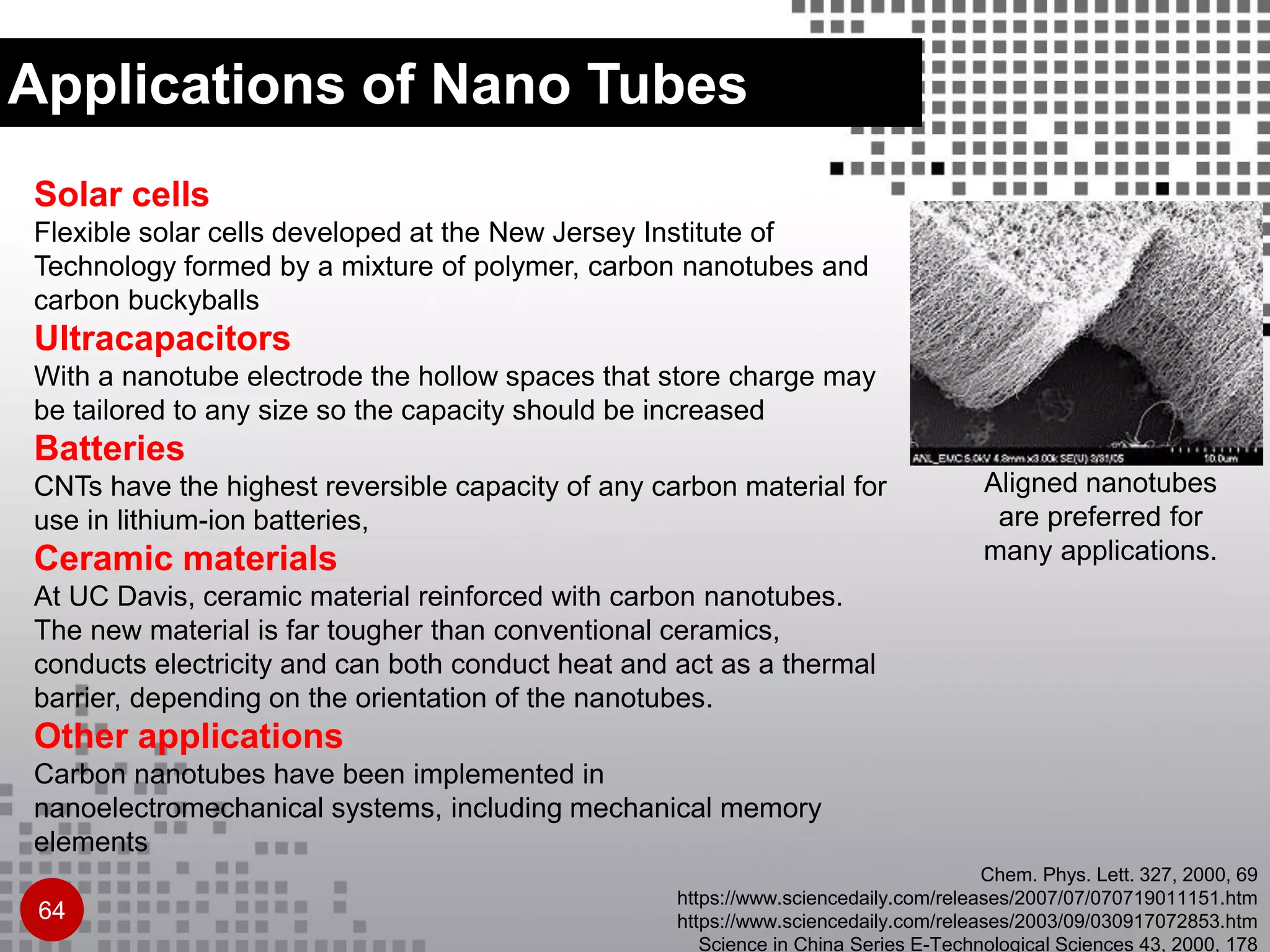
Solar cells
Flexible solar cells developed at the New Jersey Institute of
Technology formed by a mixture of polymer, carbon nanotubes and
carbon buckyballs
Ultracapacitors
With a nanotube electrode the hollow spaces that store charge may
be tailored to any size so the capacity should be increased
Batteries
CNTs have the highest reversible capacity of any carbon material for
use in lithium-ion batteries,
Ceramic materials
At UC Davis, ceramic material reinforced with carbon nanotubes.
The new material is far tougher than conventional ceramics,
conducts electricity and can both conduct heat and act as a thermal
barrier, depending on the orientation of the nanotubes.
Other applications
Carbon nanotubes have been implemented in
nanoelectromechanical systems, including mechanical memory
elements
Aligned nanotubes
are preferred for
many applications.
64
Applications of Nano Tubes
Chem. Phys. Lett. 327, 2000, 69
https://www.sciencedaily.com/releases/2007/07/070719011151.htm
https://www.sciencedaily.com/releases/2003/09/030917072853.htm
Science in China Series E-Technological Sciences 43, 2000, 178
• Materials
– Stain-resistant clothes
• Health Care
– Chemical and
biological sensors,
drugs and delivery
devices
Potential Impacts of Nanotechnology
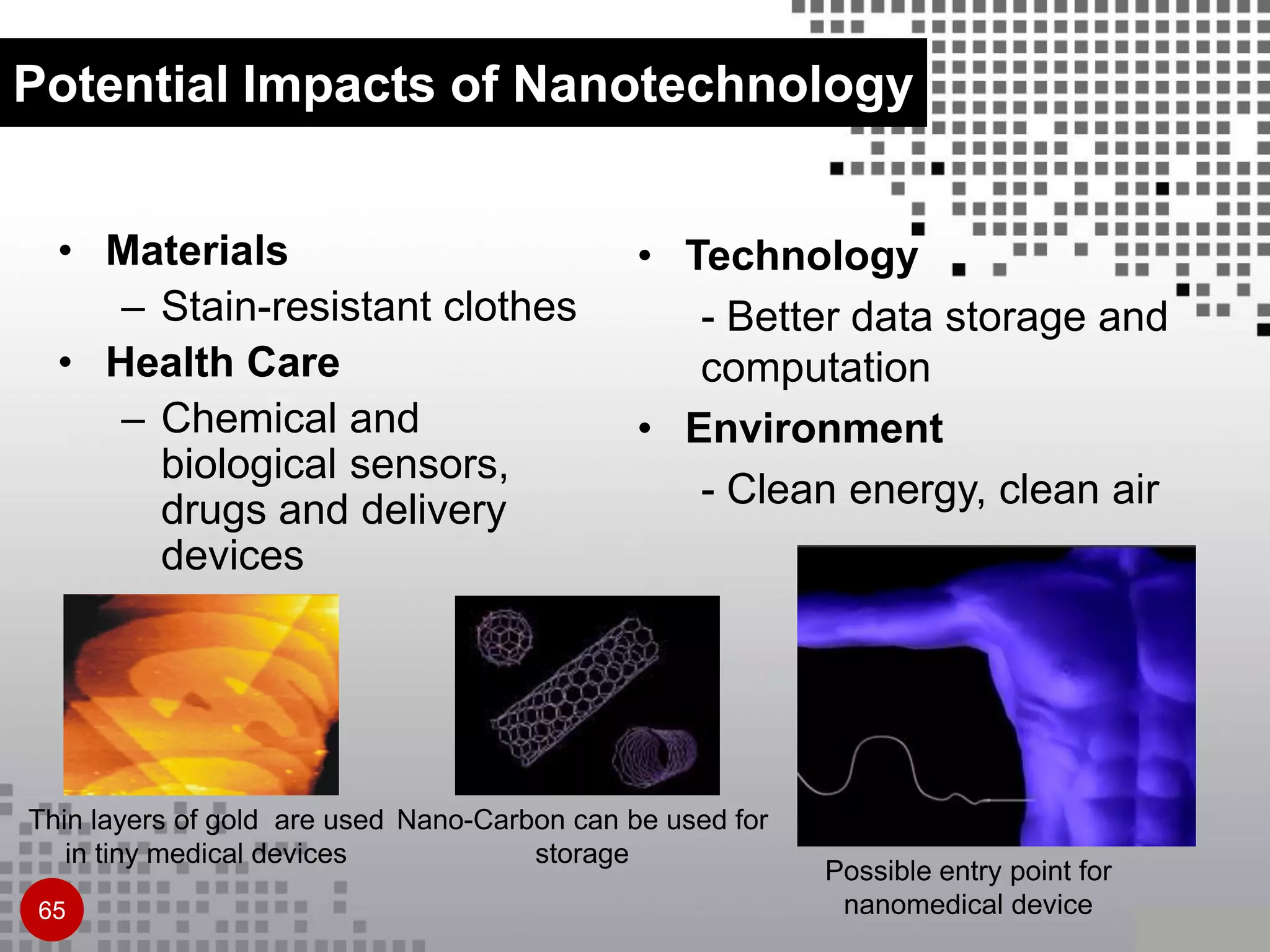
Thin layers of gold are used
in tiny medical devices
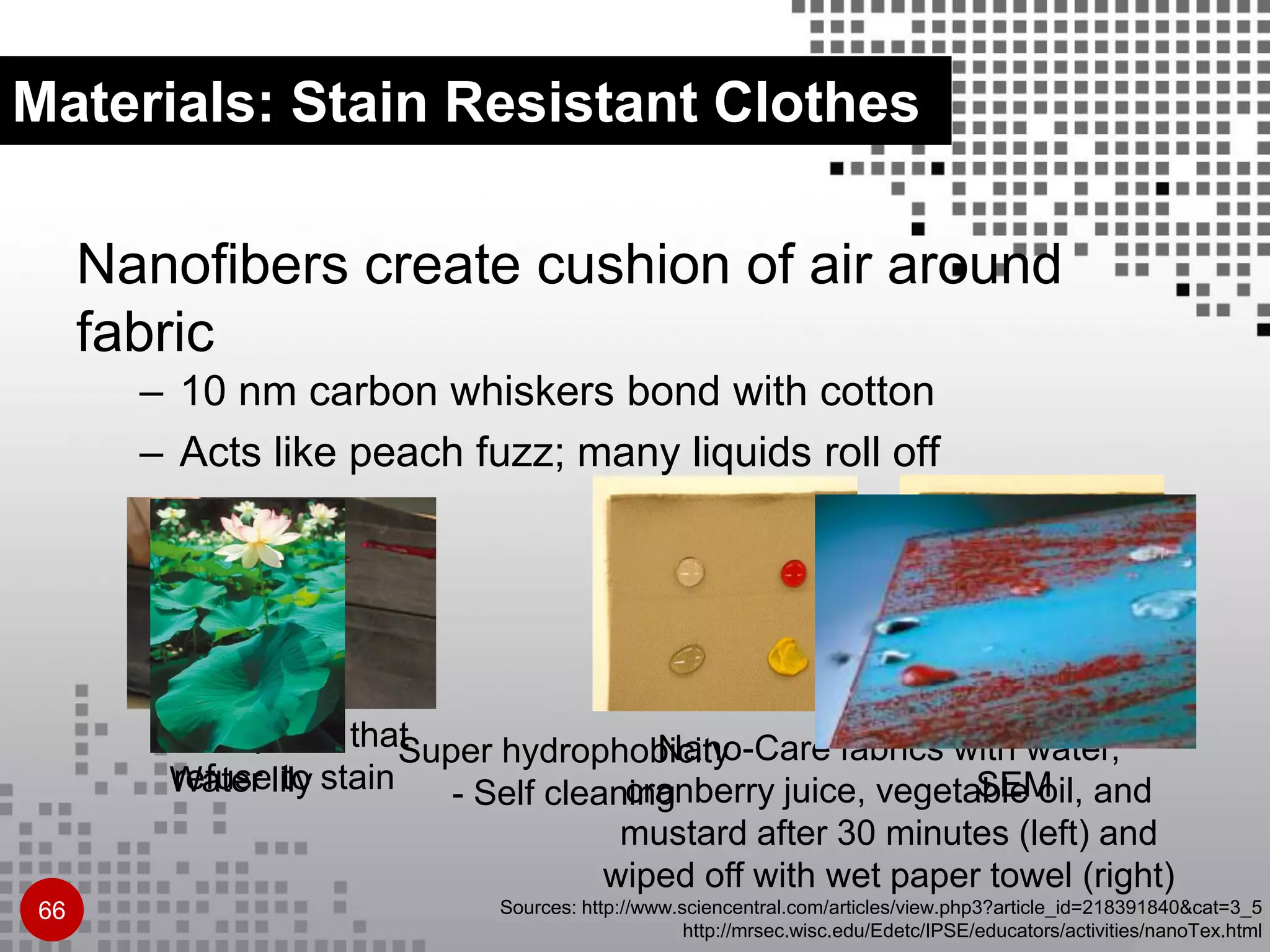
Nano-Carbon can be used for
storage
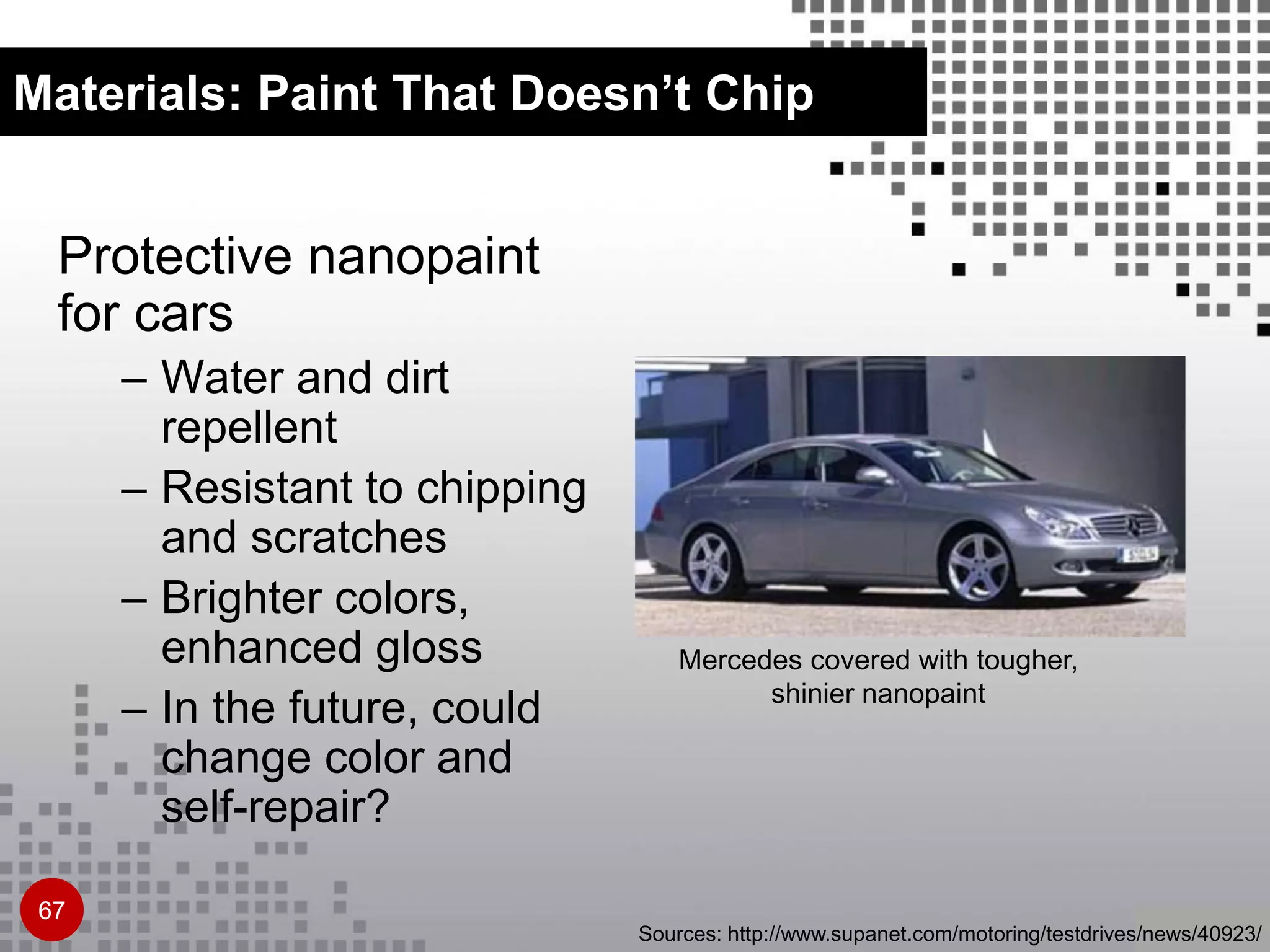
Possible entry point for
nanomedical device
• Technology
- Better data storage and
computation
• Environment
- Clean energy, clean air
65
Materials: Stain Resistant Clothes
Nanofibers create cushion of air around
fabric
– 10 nm carbon whiskers bond with cotton
– Acts like peach fuzz; many liquids roll off
Sources: http://www.sciencentral.com/articles/view.php3?article_id=218391840&cat=3_5
http://mrsec.wisc.edu/Edetc/IPSE/educators/activities/nanoTex.html
Nano pants that
refuse to stain
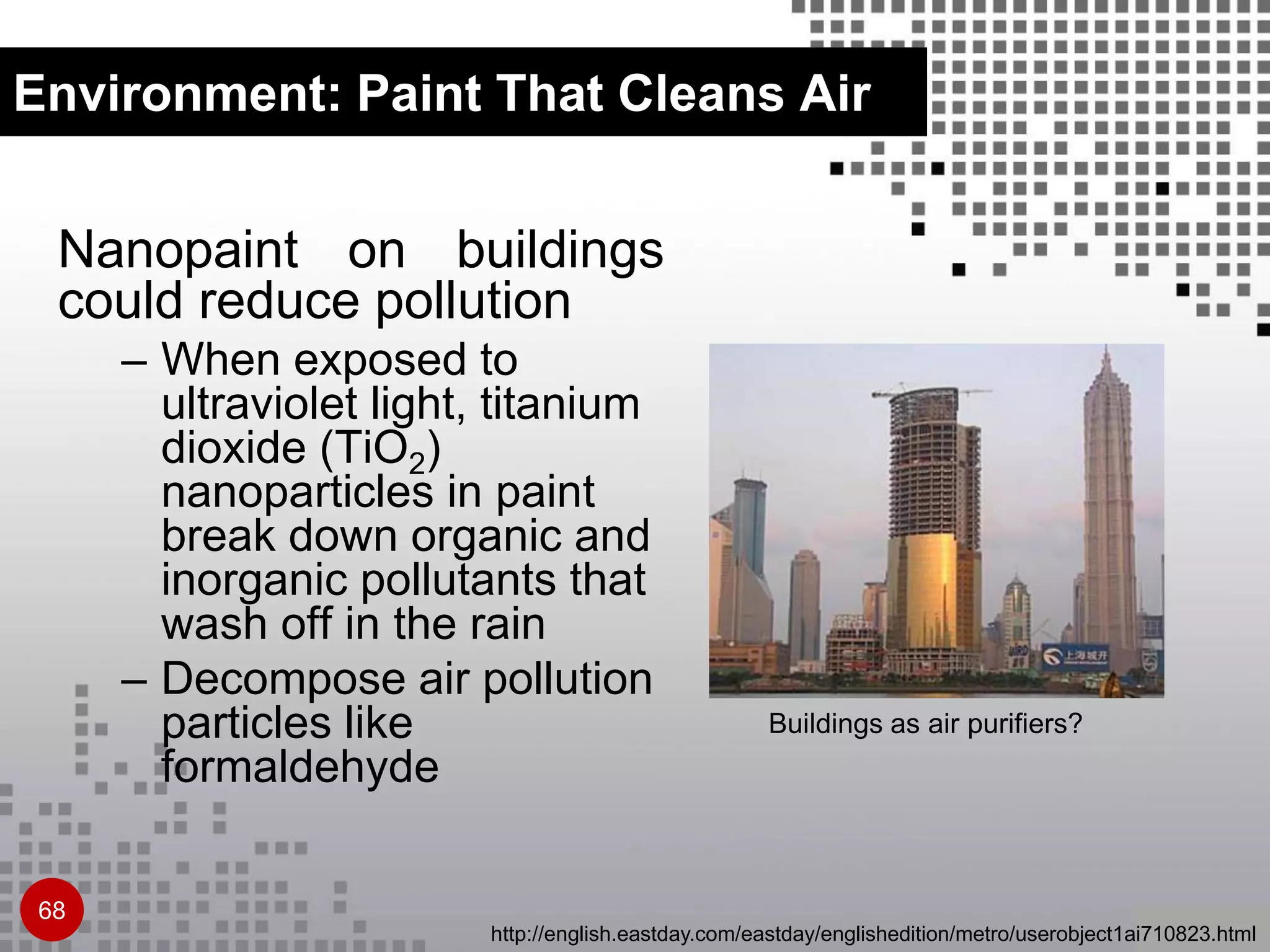
Nano-Care fabrics with water,
cranberry juice, vegetable oil, and
mustard after 30 minutes (left) and
wiped off with wet paper towel (right)
66
Water lily
Super hydrophobicity
- Self cleaning SEM
Materials: Paint That Doesn’t Chip
Protective nanopaint
for cars
– Water and dirt
repellent
– Resistant to chipping
and scratches
– Brighter colors,
enhanced gloss
– In the future, could
change color and
self-repair?
Mercedes covered with tougher,
shinier nanopaint
Sources: http://www.supanet.com/motoring/testdrives/news/40923/
67
Environment: Paint That Cleans Air
Nanopaint on buildings
could reduce pollution
– When exposed to
ultraviolet light, titanium
dioxide (TiO2)
nanoparticles in paint
break down organic and
inorganic pollutants that
wash off in the rain
– Decompose air pollution
particles like
formaldehyde
Buildings as air purifiers?
http://english.eastday.com/eastday/englishedition/metro/userobject1ai710823.html
68
Environment: Nano Solar Cells
Nano solar cells mixed in plastic could be
painted on buses, roofs, clothing
– Solar becomes a cheap energy alternative!
Source: http://www.berkeley.edu/news/media/releases/2002/03/28_solar.html
Nano solar cell: Inorganic nanorods embedded in semiconducting
polymer, sandwiched between two electrodes
] 200 nm
69
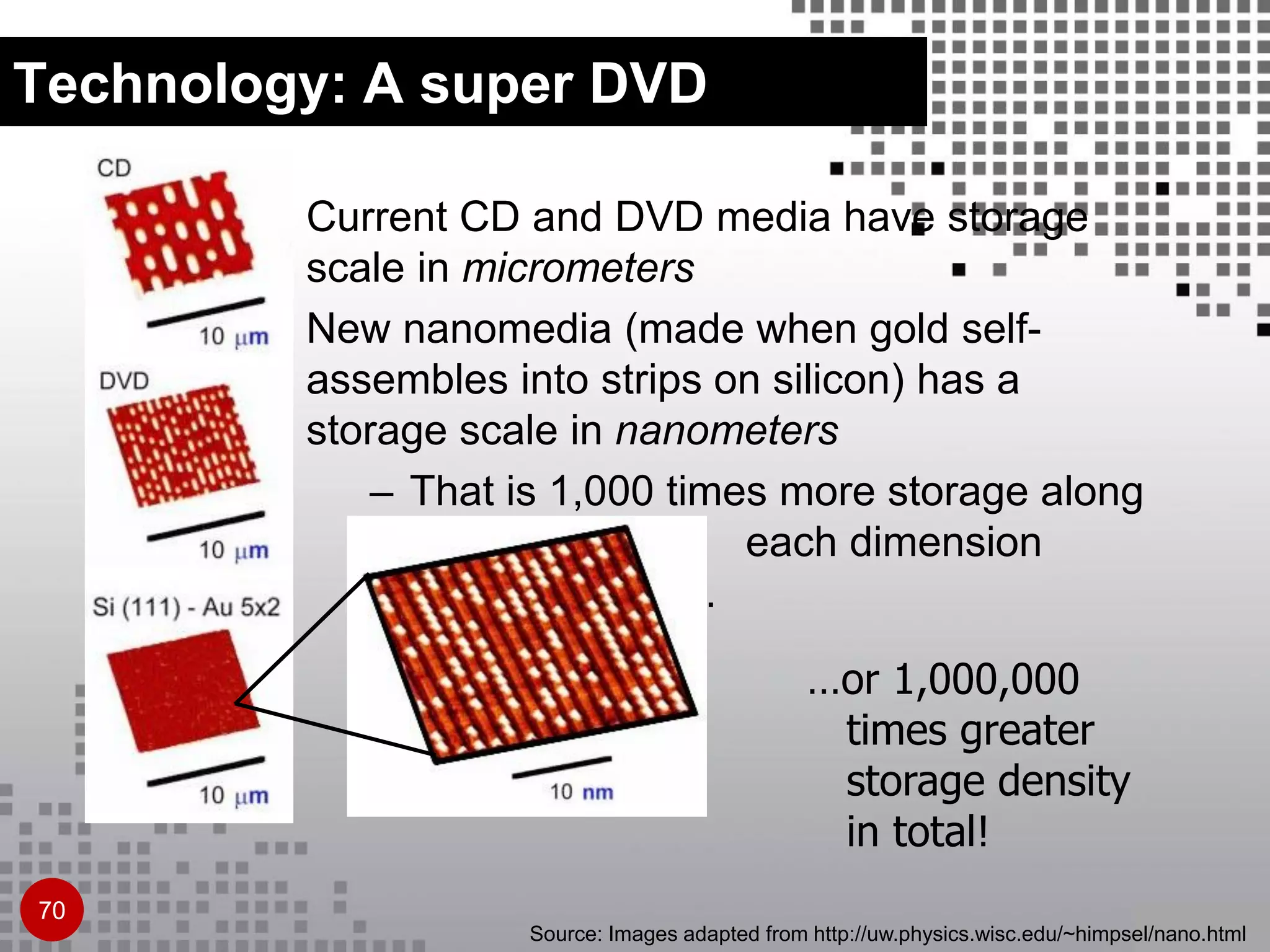
Technology: A super DVD
Current CD and DVD media have storage
scale in micrometers
New nanomedia (made when gold self-
assembles into strips on silicon) has a
storage scale in nanometers
– That is 1,000 times more storage along
each dimension
(length, width)…
Source: Images adapted from http://uw.physics.wisc.edu/~himpsel/nano.html
…or 1,000,000
times greater
storage density
in total!
70
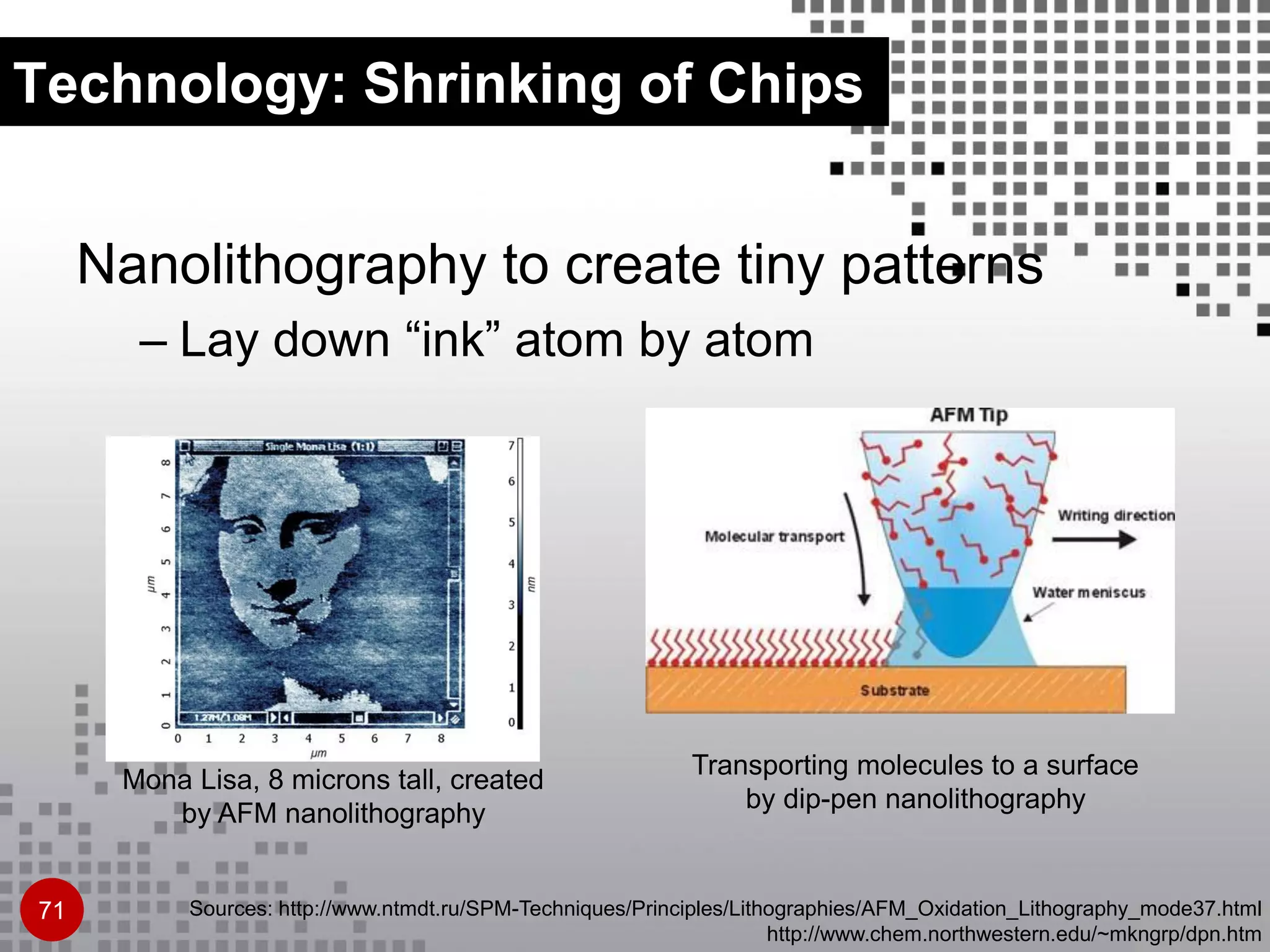
Technology: Shrinking of Chips
Nanolithography to create tiny patterns
– Lay down “ink” atom by atom
Mona Lisa, 8 microns tall, created
by AFM nanolithography
Sources: http://www.ntmdt.ru/SPM-Techniques/Principles/Lithographies/AFM_Oxidation_Lithography_mode37.html
http://www.chem.northwestern.edu/~mkngrp/dpn.htm
Transporting molecules to a surface
by dip-pen nanolithography
71
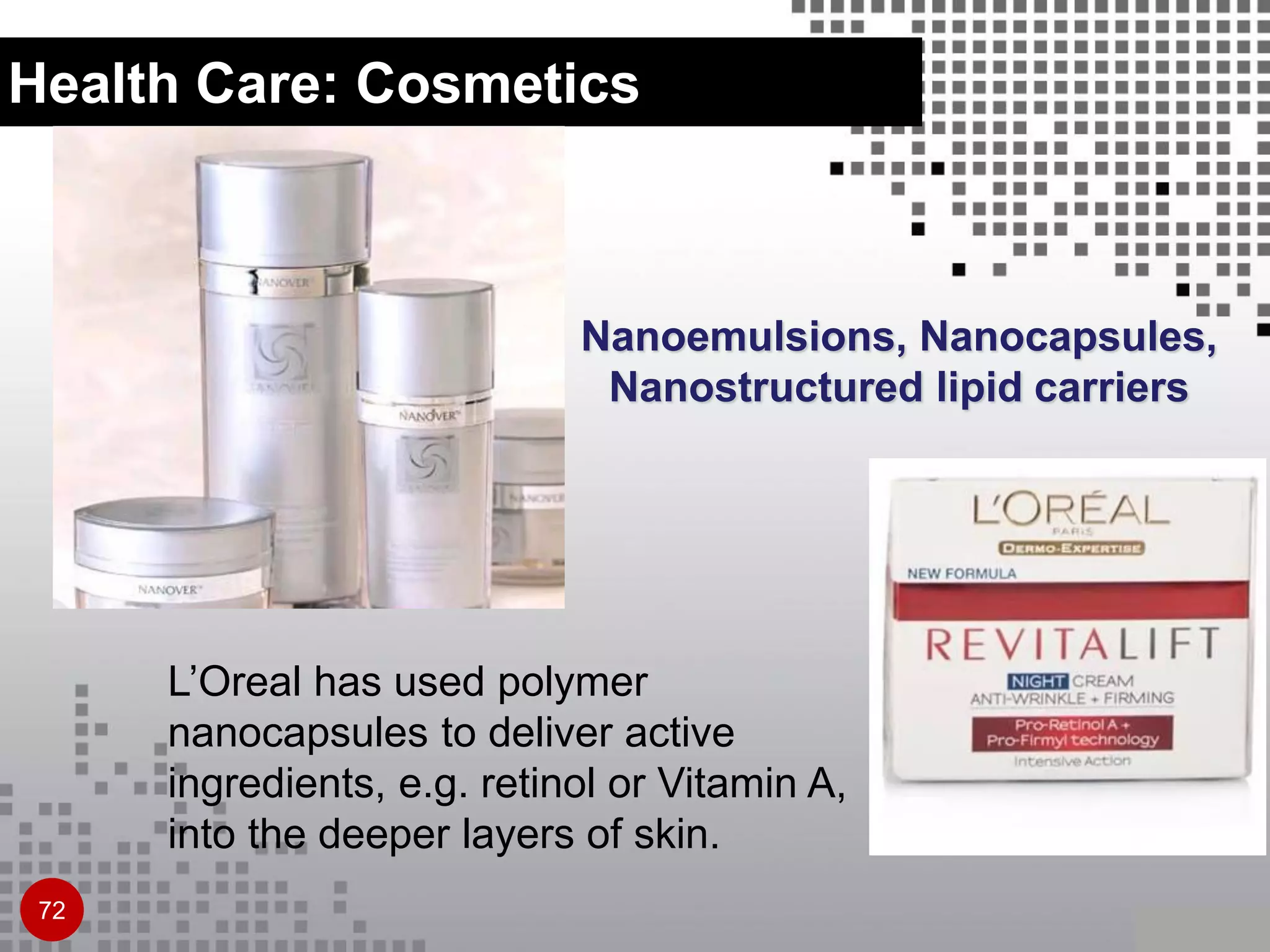
L’Oreal has used polymer
nanocapsules to deliver active
ingredients, e.g. retinol or Vitamin A,
into the deeper layers of skin.
Nanoemulsions, Nanocapsules,
Nanostructured lipid carriers
72
Health Care: Cosmetics
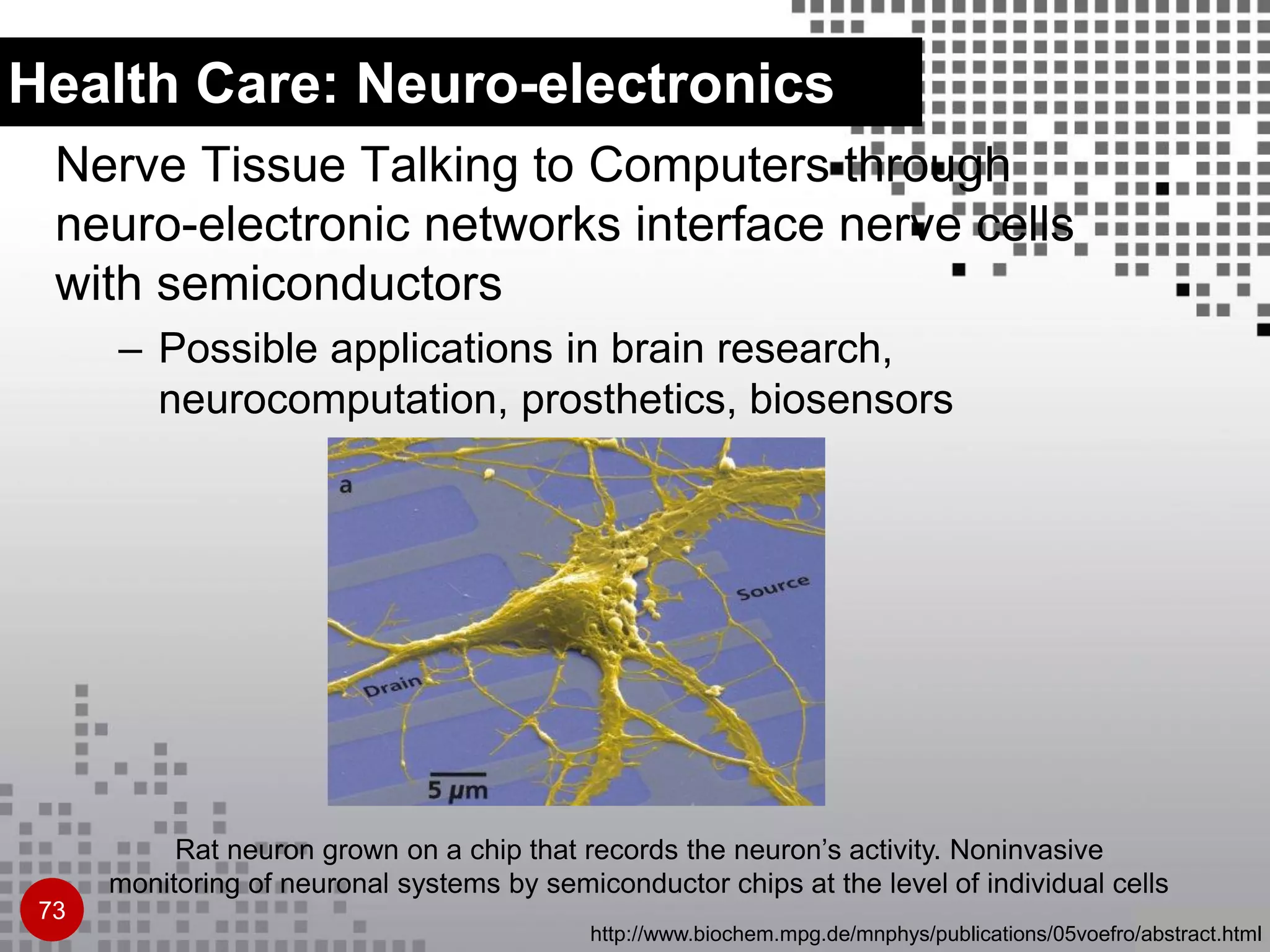
Health Care: Neuro-electronics
Nerve Tissue Talking to Computers through
neuro-electronic networks interface nerve cells
with semiconductors
– Possible applications in brain research,
neurocomputation, prosthetics, biosensors
Rat neuron grown on a chip that records the neuron’s activity. Noninvasive
monitoring of neuronal systems by semiconductor chips at the level of individual cells
http://www.biochem.mpg.de/mnphys/publications/05voefro/abstract.html
73
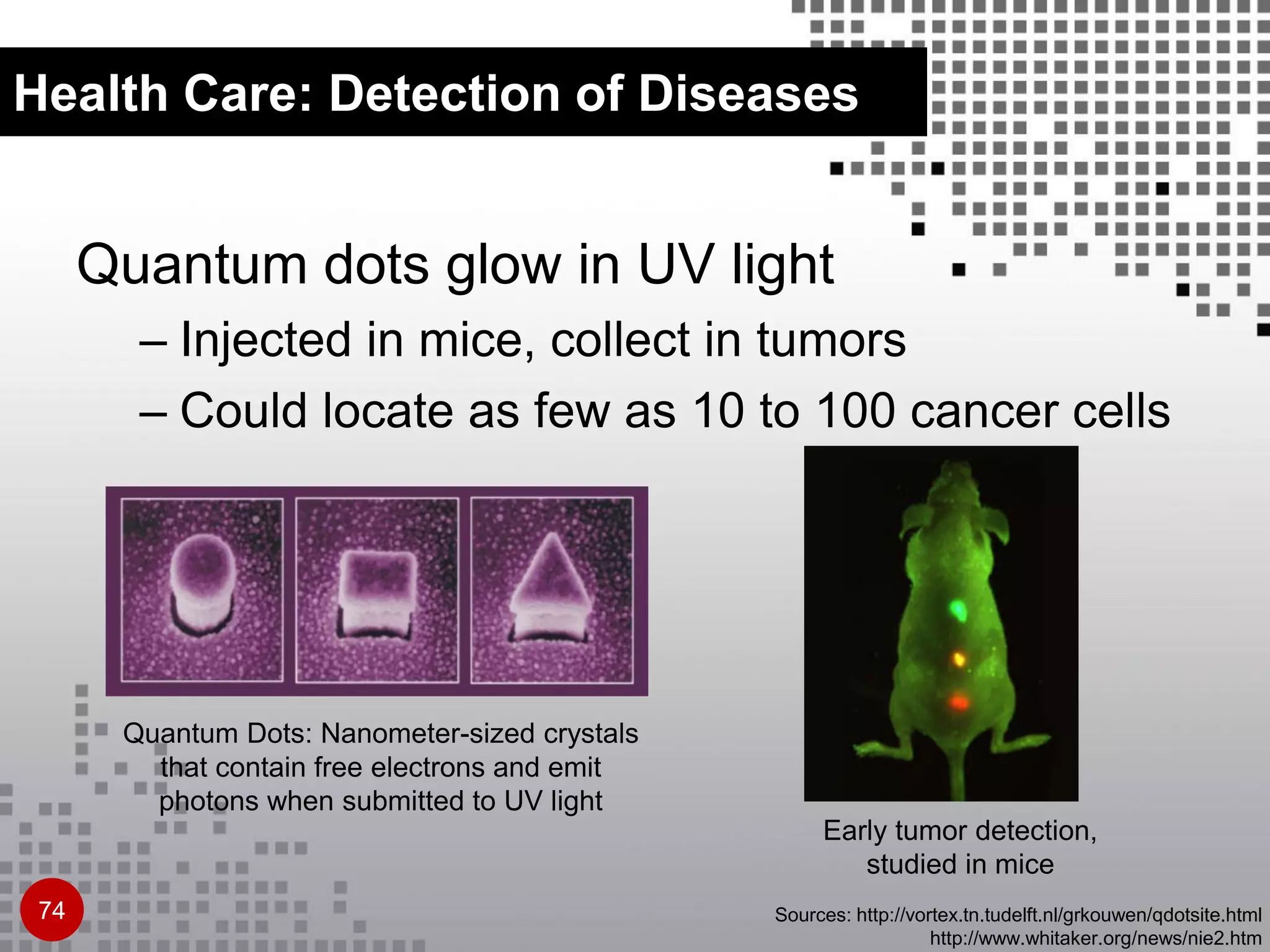
Health Care: Detection of Diseases
Quantum dots glow in UV light
– Injected in mice, collect in tumors
– Could locate as few as 10 to 100 cancer cells
Sources: http://vortex.tn.tudelft.nl/grkouwen/qdotsite.html
http://www.whitaker.org/news/nie2.htm
Early tumor detection,
studied in mice
Quantum Dots: Nanometer-sized crystals
that contain free electrons and emit
photons when submitted to UV light
74
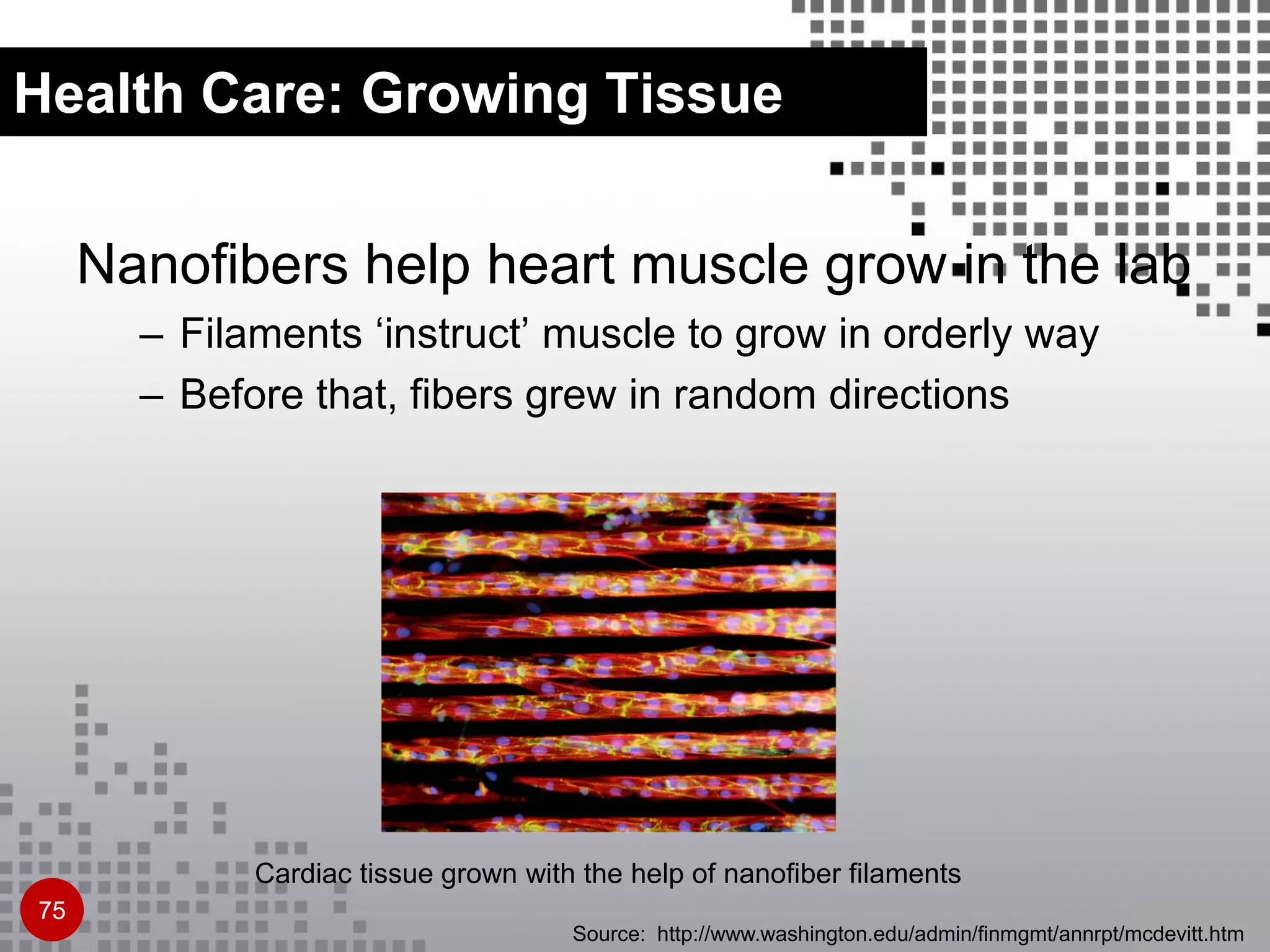
Health Care: Growing Tissue
Nanofibers help heart muscle grow in the lab
– Filaments ‘instruct’ muscle to grow in orderly way
– Before that, fibers grew in random directions
Source: http://www.washington.edu/admin/finmgmt/annrpt/mcdevitt.htm
Cardiac tissue grown with the help of nanofiber filaments
75
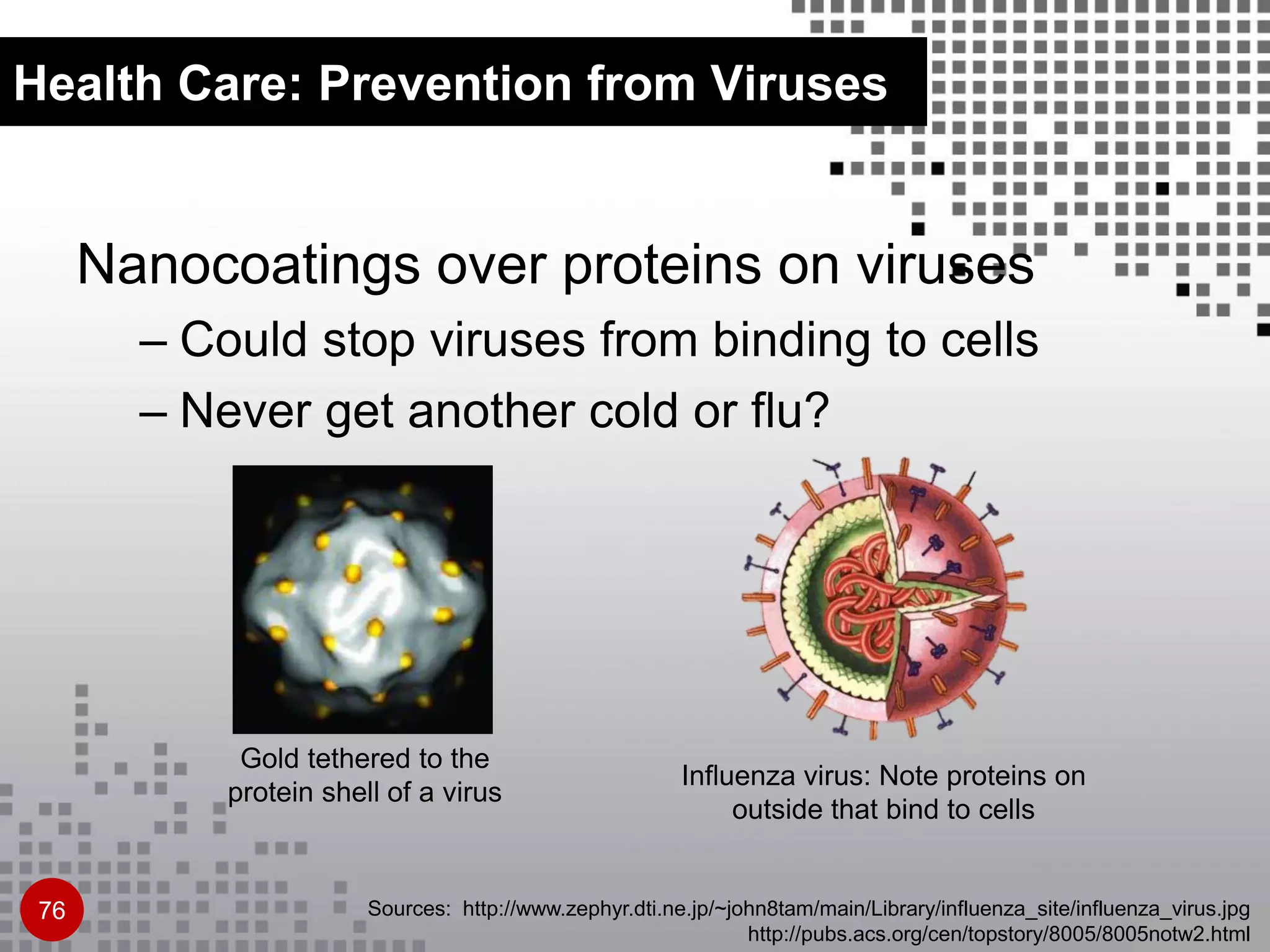
Health Care: Prevention from Viruses
Nanocoatings over proteins on viruses
– Could stop viruses from binding to cells
– Never get another cold or flu?
Sources: http://www.zephyr.dti.ne.jp/~john8tam/main/Library/influenza_site/influenza_virus.jpg
http://pubs.acs.org/cen/topstory/8005/8005notw2.html
Influenza virus: Note proteins on
outside that bind to cells
Gold tethered to the
protein shell of a virus
76
Need for Nanotechnology
• Allows the placement of small structures
with precision, simplicity and low cost
• Leads to economic growth
• Enhances national security
• Improves the quality of life
• Leads to job creation
77
• Health issues
– Nanoparticles could be inhaled, swallowed, absorbed through skin,
or deliberately injected
– Could they trigger inflammation and weaken the immune system?
Could they interfere with regulatory mechanisms of enzymes and
proteins?
– Nanoparticles could cause serious illness or damage human body
– Could be seen as untraceable destructive weapons of mass
destruction
• Environmental issues
– Nanoparticles could accumulate in soil, water, plants; traditional
filters are too big to catch them
• Social and Political issues
– Creates social strife through increasing wealth gap
– New technology creates political dilemma
• New risk assessment methods are needed
– National and international agencies are beginning to study the risk;
results will lead to new regulations78
Potential Risks of Nanotechnology
Summary:
NanoScience
• Nanosicence and nanotechnology
• Nanoscience Is Everywhere in Nature
• An emerging, interdisciplinary science
– Integrates chemistry, physics, biology, materials
engineering, earth science, and computer science
• The power to collect data and manipulate particles at
such a tiny scale will lead to
– New areas of research and technology design
– Better understanding of matter and interactions
– New ways to tackle important problems in healthcare,
energy, the environment, and technology
– A few practical applications now, but most are years
or decades away
79
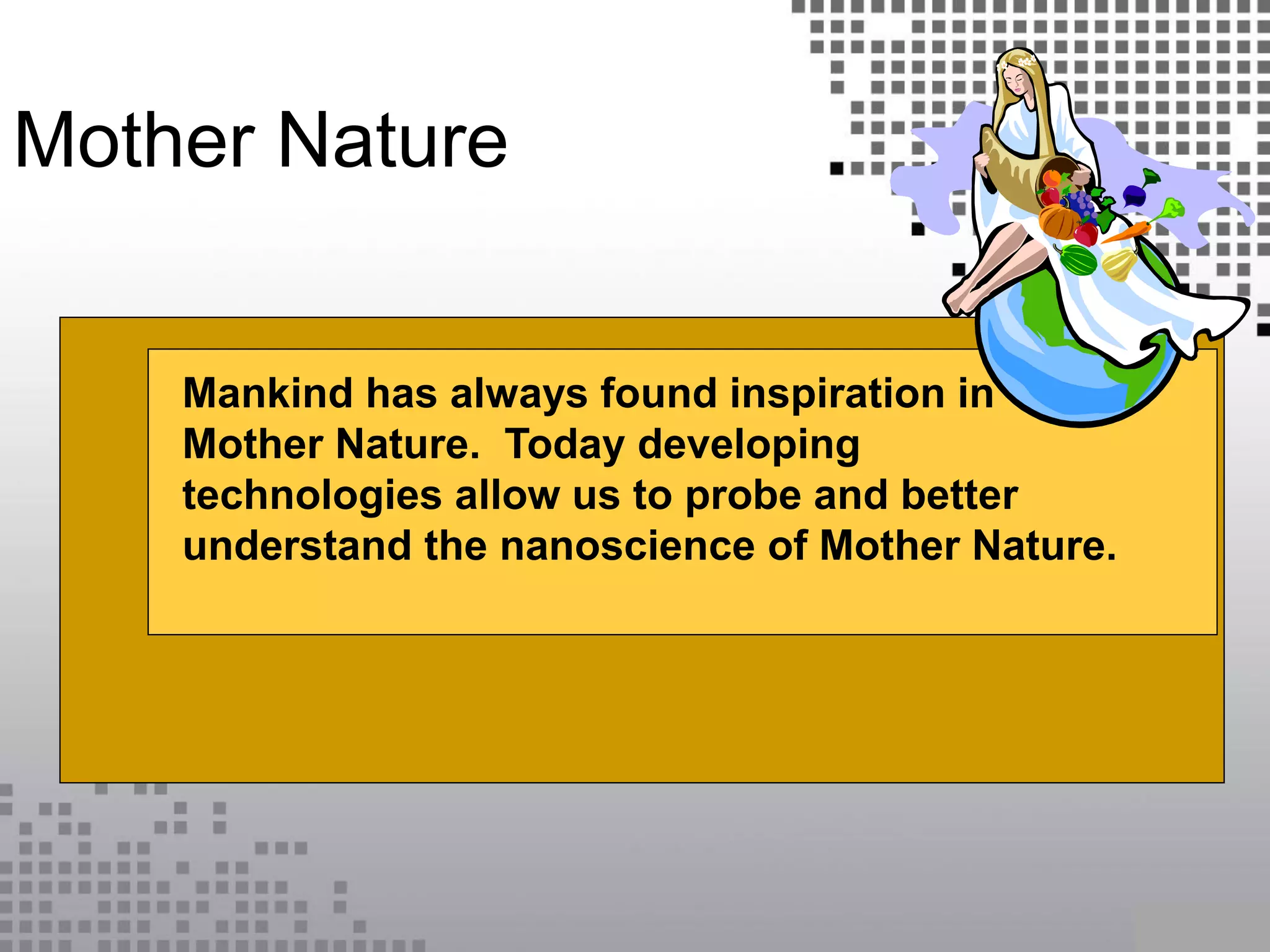
Mother Nature
Mankind has always found inspiration in
Mother Nature. Today developing
technologies allow us to probe and better
understand the nanoscience of Mother Nature.
References
• Some of the slides were adopted from
– A Hands-on Introduction to Nanoscience:
www.virlab.virginia.edu/Nanoscience_class/N
anoscience_class.htm

Nanotechnology introduction

  • 1.
  • 2.
    • Nanoscience-Definition • History •Lesson from Nature • Tools‘ • Break • Nanostructures • Building nano structures • Impact • Applications in different field • Nano Industry • Summary Outline
  • 3.
    Look deep intonature, and then you will understand everything better. -Albert Einstein
  • 4.
  • 5.
  • 6.
    What is nano? Whatsizes can human eye see? 20 – 200 m http://hypertextbook.com/facts/1999/Bria nLey.shtml 6
  • 7.
    Visual Acuity –clarity of vision 6-29 m Electron Microscope Light Microscope Unaided Eye7 What is nano? What sizes can human eye see?
  • 8.
  • 9.
    What is nano? 155cm=1.55m 1550 000 000 nm Apple ~8cm 80 million nm Ant ~5mm 5 million nm hair  75m 75,000 nm E. Coli bacterium ~2m 2,000 nm DNA 2 nm Buckyball ~1 nm MWCN  ~12 nm 9
  • 10.
    What is Nanoscience? Whenpeople talk about Nanoscience, many start by describing things Physicists and Material Scientists point to things like new nanocarbon materials They elaborate about nanocarbon’s strength and electrical properties Graphene Carbon Nanotube C60 Buckminster Fullerene10
  • 11.
    Biologists have usedthings in nanosize. They have been studying DNA and RNA 11
  • 12.
    Chemists have synthesizedthings for over a century: complex molecules First OLED material: tris 8-hydroxyquinoline aluminum (OLED = organic light emitting diode) Polypyrrole Nitro oligo phenylene ethynylene Molecular electronic switch 12
  • 13.
    Nano Defined All thesethings are about the size of a nanometer: Nano = 10-9 m = 1/ 1,000,000,000 = 1 / Billion A nanometer is about the size of ten atoms in a row Nanoscience is study of nanometer size things and processes Nanotechnology is the application of nanoscience to produce devices and products Why are focusing on nanometer? What is so special about a nanometer? A micrometer: Micro = 10-6 m = 1/1,000,000 = 1 / Million A micrometer (or "micron") is ~ size of light's wavelength 13
  • 14.
    by Moore, hisFairchild/Intel colleagues, and Texas Instrument's Jack Kilby Microtechnology has gotten smaller EVERY year MOORE'S LAW: Gordon Moore, Intel co-founder, in 1965 observed that the transistor count for integrated circuits seemed to be doubling every 18-24 months In the 1950s a computer filled rooms, now it fit on your lap. The more transistors on a chip, the smaller their size and closer their spacing. His "law" has since been followed for forty five years: (Source: www.intel.com/technology/mooreslaw/index.htm) 14
  • 15.
    So is Nanoscience/technology reallynew & unique? • Micro is also VERY small • Micro has been around for a long time • Micro has steadily shrunk to the point that it is now almost NANO anyway! • Leading to a LOT of confusion about the distinction between Micro & Nano • Nanotechnology will be built UPON Microtechnology • Microfabrication techniques • assembled ATOP Microstructures 15
  • 16.
    NANO "revolution" ? Justabout making things incrementally smaller? Just about a simple shift in the most convenient unit of measure? There is something very unique about Nano Nano is about boundaries where BEHAVIOR radically changes BEHAVIOR OF THE OBJECTS SUDDENLY CHANGES OUR BEHAVIOR MUST CHANGE to make those things16
  • 17.
    Quantum Mechanics Electron WavesSeparate NanoSCIENCE from MicroSCIENCE weird, new, counter intuitive, non-Newtonian understanding of electrons: Electrons => Waves How do you figure out an electron’s wavelength? electron = h / p “De Broglie’s Relationship” ( = electron wavelength, h = Planck’s Constant, p = electron’s momentum) This relationship was based on series of experiments late 1800’s / early 1900’s To put the size of an electron’s wavelength in perspective:17
  • 18.
    Size of Things MillimetersMicrons Nanometers Ball of a ball point pen 0.5 Thickness of paper 0.1 100 Human hair 0.02 - 0.2 20 – 200 Talcum Powder 40 Fiberglass fibers 10 Carbon fiber 5 Human red blood cell 4 – 6 E-coli bacterium 2 Size of a modern transistor 0.25 250 Size of Smallpox virus 0.2 – 0.3 200 – 300 Electron wavelength: ~10 nm or less Diameter of Carbon Nanotube 3 Diameter of DNA spiral 2 Diameter of C60 Buckyball 0.7 Diameter of Benzene ring 0.28 Size of one Atom ~0.1 18
  • 19.
    Atoms Molecules Classical Physics &Chemistry 0.1 nm 0.2 – 100 nm 10-3 m 10-3 – 1 m 1 – 100 nm The Nano World—its science and technology—is at the boundary between the everyday world of classical science and the unusual world of Quantum Mechanics Some Nano aspects can be handled with everyday physics & chemistry, and some nano devices can only be understood with quantum concepts Micro WorldNano WorldQuantum World Everyday World 19
  • 20.
    • “Magical Pointon Length Scale, for this is the point where the smallest man-made devices meet atoms and molecules of the natural world.” – Eugene Wong, Knight Rider Newspapers, Kansas City Star, Monday Nov. 8th, 1999 • “Just wait, the next century is going to be incredible. We are about to be able to build things that work at the smallest possible length scales, atom by atom. These little nanothings will revolutionize our industries and our lives.” – R. Smalley, Congressional Hearings, Summer 1999. Nanometer Scale → Unknown Behavior 20
  • 21.
    “A biological systemcan be exceedingly small. Many of the cells are very tiny, but they are very active; they manufacture various substances; they walk around; they wiggle; and they do all kinds of marvelous things – all on a very small scale. Also, they store information. Consider the possibility that we too can make a thing very small that does what we want— that we can manufacture an object that maneuvers at that level.” (From the talk “There’s Plenty of Room at the Bottom,” delivered by Richard P. Feynman at the annual meeting of the American Physical Society at the California institute of Technology, Pasadena, CA, on December 29, 1959.) http://www.zyvex.com/nanotech/feynman.html 21
  • 22.
  • 23.
    History of Nanomaterials •1974 The word Nanotechnology first used by Nario Taniguchi, Univ. of Tokyo – production technology to get ultra fine accuracy and precision ~ 1nm • 1981 IBM (Gerd Binnig and Heinrich Rohrer) invented STM scanning tunneling microscope which can move single atoms around • 1985 new form of carbon discovered C60 buckminister fullerene 60 carbon atoms arranged in a sphere made of 12 pentagons and 20 hexagons 23
  • 24.
    2000 Years Ago– lead sulfide nanocrystals used by Greeks and Romans to dye hair History of Nanomaterials Nano Lett., 6, 2006, 2215 24
  • 25.
    1000 Years Ago(Middle Ages) – Gold nanoparticles of different sizes used to produce different colors in stained glass windows. History of Nanomaterials Journal of Non-Crystalline Solids 357 (2011) 1342–1349 25
  • 26.
    Lycurgus chalice 4thCentury A.D. Appears green in reflected light and red if light is directed through it. 70 nm particles of silver and gold in the glass! Lycrugus cup with diffused light Lycrugus cup with focused light History of Nanomaterials 26
  • 27.
    • 1991 carbonnanotubes discovered “graphitic carbon needles ranging from 4 nm – 30 nm and up to 1 micron in length” (Sumino Iijima) • 1993 First high quality quantum dots prepared. Small particles with controlled diameters of CdS, CdSe, CdTe History of Nanomaterials 27 http://www.nanosysinc.com/what-we-do/quantum-dots/
  • 28.
    • 2000 FirstDNA motor made similar to motorized tweezers may make computers 1000 more powerful. Nature 406 (6796) 2000, 605-608. DNA motors can be attached to electrically conducting molecules – act as basic switches History of Nanomaterials 28
  • 29.
    • 2001 prototypefuel cell made with nanotubes • 2002 Nanomaterials make stain repellant trousers Nano-Care® Stressfree Khakis have nanowhiskers (10-100 nm in length) History of Nanomaterials 29 http://nanotex.com/
  • 30.
  • 31.
    • Nano airborneparticles (100 -1000 nm) cause water to condense and form raindrops or snowflakes • Plankton – varies in sizes from (1- 100 nm) Marine bacteria and viruses Lesson from Nature 31
  • 32.
    Glucose and Glucoseoxidase All cells require glucose (0.6 nm) as a fuel for metabolism Energy is released from glucose when it is precisely positioned relative to the glucose oxidase enzyme ( 5 nm) Lock and key mechanism common in biology Lesson from Nature 32
  • 33.
    Actin and Myosin Actinand myosin molecules form the system responsible for muscle contraction. The system operates by a series of steps where the head of myosin molecule pulls the actin past itself by 10–28 nm each step. Lesson from Nature 33
  • 34.
    Gecko Power Gecko foothairs typically have diameters of 200 – 500 nm. Weak chemical interaction between each hair and surface (each foot has over 1 million of these hairs) provides a force of 10 N/cm2 Lesson from Nature 34
  • 35.
    Bucky Balls (C60)were discovered in soot! Nanoparticles in Smoke from Fires Lesson from Nature 35
  • 36.
    Nanoscience Is Everywhere inNature Living cells have been using their own nanoscale devices to create structures one atom or molecule at a time for millions of years. To be specific, DNA is copied, proteins are formed, and complex hormones are manufactured by cellular devices far more complex than the most advanced manufacturing processes we have today. http://dallas.bizjournals.com/dallas/stories/2001/09/10/focus2.html?page=3 Lesson from Nature 36
  • 37.
    HOW DID WEGET TO NANOSCIENCE? New Tools! As tools change → What we can see and do changes 37
  • 38.
    Sources: http://www.cambridge.edu.au/education/PracticeITBook2/Microscope.jpg http://biology.touchspin.com/Human_Blood.php • Thenaked eye can see to about 20 microns • Light microscopes let us see to about 1 m Light bounces off or goes through and let’s us see images in contrast. Magnification up to 1000x Using Light to see 38 (400x) red blood cells
  • 39.
    Greater resolution tosee things like blood cells in greater detail (4000x) Sources: http://www.biotech.iastate.edu/facilities/BMF/images/SEMFaye1.jpg http://www.gettyimages.com.au/detail/video/animation-depicting-a-microscopic-view-of-red-and-white-stock-footage/854-119 • Scanning electron microscopes (SEMs), invented in the 1930s, let us see objects as small as 10 nanometers – Bounce electrons off of surfaces to create images – Higher resolution due to small size of electrons Using Electrons to see 39
  • 40.
    About 25 nanometers Thisis about how big atoms are compared with the tip of the microscope Source: Scientific American, Sept. 2001 • Scanning probe microscopes, 1980s, give us a new way to “see” at the nanoscale • We can now see really small things, like atoms, and move them too! Touching the Surface to see 40
  • 41.
    • Atomic ForceMicroscope (AFM) – A tiny tip moves up and down in response to the electromagnetic forces between the atoms of the surface and the tip – The motion is recorded and used to create an image of the atomic surface • Scanning Tunneling Microscope (STM) – A flow of electrical current occurs between the tip and the surface – The strength of this current is used to create an image of the atomic surface Scanning Probe Microscopes 41 2-D network of 4nm nanoAu Scientific Reports 4, 2014, 6033 http://www.physics.purdue.edu/nanophys/stm.html
  • 42.
    Source: http://www.uwgb.edu/dutchs/GRAPHIC0/GEOMORPH/SurfaceVol0.gif Cutting downa cube of gold If you have a cube of pure gold and cut it, what color would the pieces be? Now you cut those pieces. What color will each of the pieces be? If you keep doing this, cutting each block in half, will the pieces of gold always look golden? Is Gold always golden? 42
  • 43.
    Source: http://www.nano.uts.edu.au/pics/au_atoms.jpg Chem. Rev.2005, 105, 1547-1562 Chem. Commun.,5, 2008, 544-557 If you keep cutting until the gold pieces are in the nanoscale range, they don’t look gold anymore… They look RED! In fact, depending on size, they can turn red, blue, yellow, and other colors Why? Different thicknesses of materials reflect and absorb light differently 12 nm gold particles Nanogold 43
  • 44.
    What kind ofnanostructures can we make? What kind of nanostructures exist in nature? NANOSTRUCTURES 44
  • 45.
    Source: http://faculty.abe.ufl.edu/~chyn/age2062/lect/lect_06/lect_06.htm http://www.zephyr.dti.ne.jp/~john8tam/main/Library/influenza_site/influenza_virus.jpg Life beginsand happens at the NANOSCALE Ion pumps move potassium ions into and sodium ions out of a cell Ribosomes translate RNA sequences into proteins Viruses infect cells in biological organisms and reproduce in the host cell Biological Nanomachines 45
  • 46.
    The Morpho didiusbutterfly Microelectronic Engineering 95 (2012) 42–48 Sensors and Actuators A 213 (2014) 63–69 46
  • 47.
    Source: http://www.library.utoronto.ca/engineering-computer-science/news_bulletin/images/nanotube.jpeg Model ofa carbon nanotube Using new techniques, we’ve created amazing structures like carbon nanotubes • 100 time stronger than steel but still very flexible • If added to materials like car bumpers, increases strength and flexibility Carbon Nanotubes 47
  • 48.
    Model of Buckminsterfullerene Source: http://digilander.libero.it/geodesic/buckyball-2Layer1.jpg Incredible strength due to their bond structure and “soccer ball” shape Could be useful “shells” for drug delivery Can penetrate cell walls Are nonreactive (move safely through blood stream) Carbon Buckyballs (C60) 48
  • 49.
    HOW DO YOUBUILD THINGS THAT ARE SO SMALL? 49
  • 50.
  • 51.
    Atom-by-atom assembly Like bricklaying,move atoms into place one at a time using tools like the AFM and STM Notch away atoms Like a sculptor, chisel out material from a surface until the desired structure emerges Self assembly Set up an environment so atoms assemble automatically. Cell membranes IBM logo assembled from individual xenon atoms Polystyrene spheres self- assembling Source: http://www.phys.uri.edu/~sps/STM/stm10.jpg; http://www.nanoptek.com/digitalptm.html Fabrication Methods 51
  • 52.
    Self Assembly CrystalGrowth Grow nanotubes like trees – Put iron nanopowder crystals on a silicon surface – Put in a chamber – Add natural gas with carbon (vapor deposition) – Carbon reacts with iron and forms a precipitate of carbon that grows up and out Because of the large number of structures you can create quickly, self-assembly is an important fabrication technique Source: http://www.chemistry.nmsu.edu/~etrnsfer/nanowires/ Example I 52
  • 53.
    • Selforganized, costeffective, and suitable for large area deposition, does not require sophisticated instruments. • Aqueous reduction of metal salts (Ag, Au) in the presence of citrate ions – Chemisorption of organic ligands – Distribution varies > 10% • MX nanocrystals (NCs) (M = Zn, Cd, Hg; X= S, Se, Te) – Metal alkyls + organophosphine chalcogenides – Phosphine binding to M controlled by temperature – Allows for size-selective aliquots; growth time for 1-2 nm NCs in minutes53 Arrested Precipitation Technique Example II C. B. Murray and C. R. Kagan and M. G. Bawendi Annu. Rev. Mater. Sci. 2000. 30:545–610 New J. Chem., 2014, 38, 5964--5974
  • 54.
    Arrested Precipitation Example II 54C. B. Murray and C. R. Kagan and M. G. Bawendi Annu. Rev. Mater. Sci. 2000. 30:545–610 New J. Chem., 2014, 38, 5964--5974
  • 55.
    • CdSe nanocrystals •CdO + oleic acid + octadecene • Heat to 250° C to dissolve the CdO • Selenium + octadecene + tributylphosphine • Heat to 150° C to dissolve the selenium • Transfer Se solution to the Cd solution • Take aliquots Synthesis of Nanomaterials 55
  • 56.
  • 57.
    Look where isthe money? • The US formed the US National Nanotechnology Initiative (NNI) in 2000 • Roco: “Industry input the market for products incorporating nanotechnology could reach $1 trillion worldwide by 2015” • by 2008 the worldwide government support of nanotechnology <$6.3 billion • Germany and France each about $3 billion in 2005–2010, • the EU allocated $1.9 billion during 2002–2006 and $3.2 billion during 2007–10 • Russia $3.5 billion 2007–10, 57 www.nano.gov Roco, M. C., Handbook on nanoscience, engineering and technology 2007, pp. 3.1 Scientometrics 2016 DOI 10.1007/s11192-016-2062-7
  • 58.
  • 59.
    Publications 59 • Impact Factoris a measure of a journal’s impact in a discipline • Thompson Scientific's ISI Web of Knowledge database. • Published annually • Available for journals that are indexed in ISI databases. • Average number of citations to recent articles published in that journal Citations of recent items Number of recent items Impact factor=
  • 60.
  • 61.
    Nanotechnology can create unique materialsand products which are:  Stronger  Lighter  Cheaper  Durable  Precise  Computers can become a billion times faster and a million times smaller  Automatic Pollution Cleanup  Manufacturing at almost no cost  End of Illnesses (i.e. cancer, heart disease)  Universal Immunity (i.e. aids, flu)  Body Sculpting (i.e. change your appearance) Industrial MedicalMaterial 61 Advantages of Nanotechnology
  • 62.
    •Carbon NanoTubes •Medicine •Information Technology •NanoRobots •Energy Targeted Drug Delivery Nano Transistor OLED Nanorobot Aerogel Nano Filters 62 Nanotechnology Applications
  • 63.
    Strength Carbon nanotubesare the strongest and stiffest materials yet discovered in terms of tensile trength and elastic modulus. Young’s modulus ~1 TeraPascal. (steel ~200 GPa) Hardness Compressed SWNTs is 460–550 GPa (diamond 420 Gpa) Electrical High electrical conductivity. The resistivity of the SWNT ropes is in the order of 10–4 -cm (copper 1.7×10⁻³ - cm) Thermal SWNT very good thermal conductors along the tube, the temperature stability of carbon nanotubes is estimated to be up to 2800 °C in vacuum and about 750 °C in air. 63 Example: Nano Tubes
  • 64.
    Solar cells Flexible solarcells developed at the New Jersey Institute of Technology formed by a mixture of polymer, carbon nanotubes and carbon buckyballs Ultracapacitors With a nanotube electrode the hollow spaces that store charge may be tailored to any size so the capacity should be increased Batteries CNTs have the highest reversible capacity of any carbon material for use in lithium-ion batteries, Ceramic materials At UC Davis, ceramic material reinforced with carbon nanotubes. The new material is far tougher than conventional ceramics, conducts electricity and can both conduct heat and act as a thermal barrier, depending on the orientation of the nanotubes. Other applications Carbon nanotubes have been implemented in nanoelectromechanical systems, including mechanical memory elements Aligned nanotubes are preferred for many applications. 64 Applications of Nano Tubes Chem. Phys. Lett. 327, 2000, 69 https://www.sciencedaily.com/releases/2007/07/070719011151.htm https://www.sciencedaily.com/releases/2003/09/030917072853.htm Science in China Series E-Technological Sciences 43, 2000, 178
  • 65.
    • Materials – Stain-resistantclothes • Health Care – Chemical and biological sensors, drugs and delivery devices Potential Impacts of Nanotechnology Thin layers of gold are used in tiny medical devices Nano-Carbon can be used for storage Possible entry point for nanomedical device • Technology - Better data storage and computation • Environment - Clean energy, clean air 65
  • 66.
    Materials: Stain ResistantClothes Nanofibers create cushion of air around fabric – 10 nm carbon whiskers bond with cotton – Acts like peach fuzz; many liquids roll off Sources: http://www.sciencentral.com/articles/view.php3?article_id=218391840&cat=3_5 http://mrsec.wisc.edu/Edetc/IPSE/educators/activities/nanoTex.html Nano pants that refuse to stain Nano-Care fabrics with water, cranberry juice, vegetable oil, and mustard after 30 minutes (left) and wiped off with wet paper towel (right) 66 Water lily Super hydrophobicity - Self cleaning SEM
  • 67.
    Materials: Paint ThatDoesn’t Chip Protective nanopaint for cars – Water and dirt repellent – Resistant to chipping and scratches – Brighter colors, enhanced gloss – In the future, could change color and self-repair? Mercedes covered with tougher, shinier nanopaint Sources: http://www.supanet.com/motoring/testdrives/news/40923/ 67
  • 68.
    Environment: Paint ThatCleans Air Nanopaint on buildings could reduce pollution – When exposed to ultraviolet light, titanium dioxide (TiO2) nanoparticles in paint break down organic and inorganic pollutants that wash off in the rain – Decompose air pollution particles like formaldehyde Buildings as air purifiers? http://english.eastday.com/eastday/englishedition/metro/userobject1ai710823.html 68
  • 69.
    Environment: Nano SolarCells Nano solar cells mixed in plastic could be painted on buses, roofs, clothing – Solar becomes a cheap energy alternative! Source: http://www.berkeley.edu/news/media/releases/2002/03/28_solar.html Nano solar cell: Inorganic nanorods embedded in semiconducting polymer, sandwiched between two electrodes ] 200 nm 69
  • 70.
    Technology: A superDVD Current CD and DVD media have storage scale in micrometers New nanomedia (made when gold self- assembles into strips on silicon) has a storage scale in nanometers – That is 1,000 times more storage along each dimension (length, width)… Source: Images adapted from http://uw.physics.wisc.edu/~himpsel/nano.html …or 1,000,000 times greater storage density in total! 70
  • 71.
    Technology: Shrinking ofChips Nanolithography to create tiny patterns – Lay down “ink” atom by atom Mona Lisa, 8 microns tall, created by AFM nanolithography Sources: http://www.ntmdt.ru/SPM-Techniques/Principles/Lithographies/AFM_Oxidation_Lithography_mode37.html http://www.chem.northwestern.edu/~mkngrp/dpn.htm Transporting molecules to a surface by dip-pen nanolithography 71
  • 72.
    L’Oreal has usedpolymer nanocapsules to deliver active ingredients, e.g. retinol or Vitamin A, into the deeper layers of skin. Nanoemulsions, Nanocapsules, Nanostructured lipid carriers 72 Health Care: Cosmetics
  • 73.
    Health Care: Neuro-electronics NerveTissue Talking to Computers through neuro-electronic networks interface nerve cells with semiconductors – Possible applications in brain research, neurocomputation, prosthetics, biosensors Rat neuron grown on a chip that records the neuron’s activity. Noninvasive monitoring of neuronal systems by semiconductor chips at the level of individual cells http://www.biochem.mpg.de/mnphys/publications/05voefro/abstract.html 73
  • 74.
    Health Care: Detectionof Diseases Quantum dots glow in UV light – Injected in mice, collect in tumors – Could locate as few as 10 to 100 cancer cells Sources: http://vortex.tn.tudelft.nl/grkouwen/qdotsite.html http://www.whitaker.org/news/nie2.htm Early tumor detection, studied in mice Quantum Dots: Nanometer-sized crystals that contain free electrons and emit photons when submitted to UV light 74
  • 75.
    Health Care: GrowingTissue Nanofibers help heart muscle grow in the lab – Filaments ‘instruct’ muscle to grow in orderly way – Before that, fibers grew in random directions Source: http://www.washington.edu/admin/finmgmt/annrpt/mcdevitt.htm Cardiac tissue grown with the help of nanofiber filaments 75
  • 76.
    Health Care: Preventionfrom Viruses Nanocoatings over proteins on viruses – Could stop viruses from binding to cells – Never get another cold or flu? Sources: http://www.zephyr.dti.ne.jp/~john8tam/main/Library/influenza_site/influenza_virus.jpg http://pubs.acs.org/cen/topstory/8005/8005notw2.html Influenza virus: Note proteins on outside that bind to cells Gold tethered to the protein shell of a virus 76
  • 77.
    Need for Nanotechnology •Allows the placement of small structures with precision, simplicity and low cost • Leads to economic growth • Enhances national security • Improves the quality of life • Leads to job creation 77
  • 78.
    • Health issues –Nanoparticles could be inhaled, swallowed, absorbed through skin, or deliberately injected – Could they trigger inflammation and weaken the immune system? Could they interfere with regulatory mechanisms of enzymes and proteins? – Nanoparticles could cause serious illness or damage human body – Could be seen as untraceable destructive weapons of mass destruction • Environmental issues – Nanoparticles could accumulate in soil, water, plants; traditional filters are too big to catch them • Social and Political issues – Creates social strife through increasing wealth gap – New technology creates political dilemma • New risk assessment methods are needed – National and international agencies are beginning to study the risk; results will lead to new regulations78 Potential Risks of Nanotechnology
  • 79.
    Summary: NanoScience • Nanosicence andnanotechnology • Nanoscience Is Everywhere in Nature • An emerging, interdisciplinary science – Integrates chemistry, physics, biology, materials engineering, earth science, and computer science • The power to collect data and manipulate particles at such a tiny scale will lead to – New areas of research and technology design – Better understanding of matter and interactions – New ways to tackle important problems in healthcare, energy, the environment, and technology – A few practical applications now, but most are years or decades away 79
  • 80.
    Mother Nature Mankind hasalways found inspiration in Mother Nature. Today developing technologies allow us to probe and better understand the nanoscience of Mother Nature.
  • 81.
    References • Some ofthe slides were adopted from – A Hands-on Introduction to Nanoscience: www.virlab.virginia.edu/Nanoscience_class/N anoscience_class.htm