Kashyap karthikeyan
M.B.B.S -1 st year
SRMMCH & RC
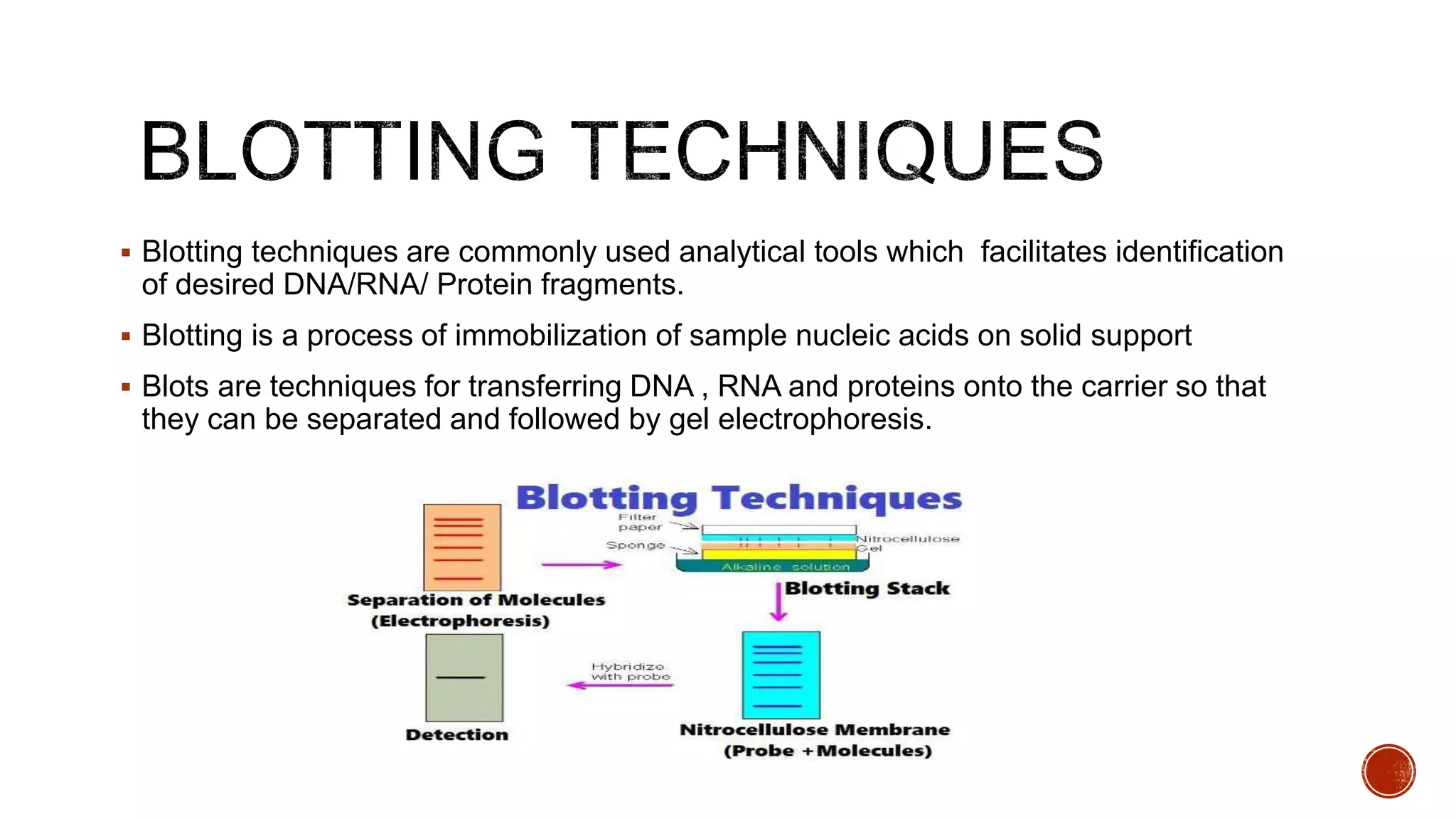
 Blotting techniques are commonly used analytical tools which facilitates identification
of desired DNA/RNA/ Protein fragments.
 Blotting is a process of immobilization of sample nucleic acids on solid support
 Blots are techniques for transferring DNA , RNA and proteins onto the carrier so that
they can be separated and followed by gel electrophoresis.
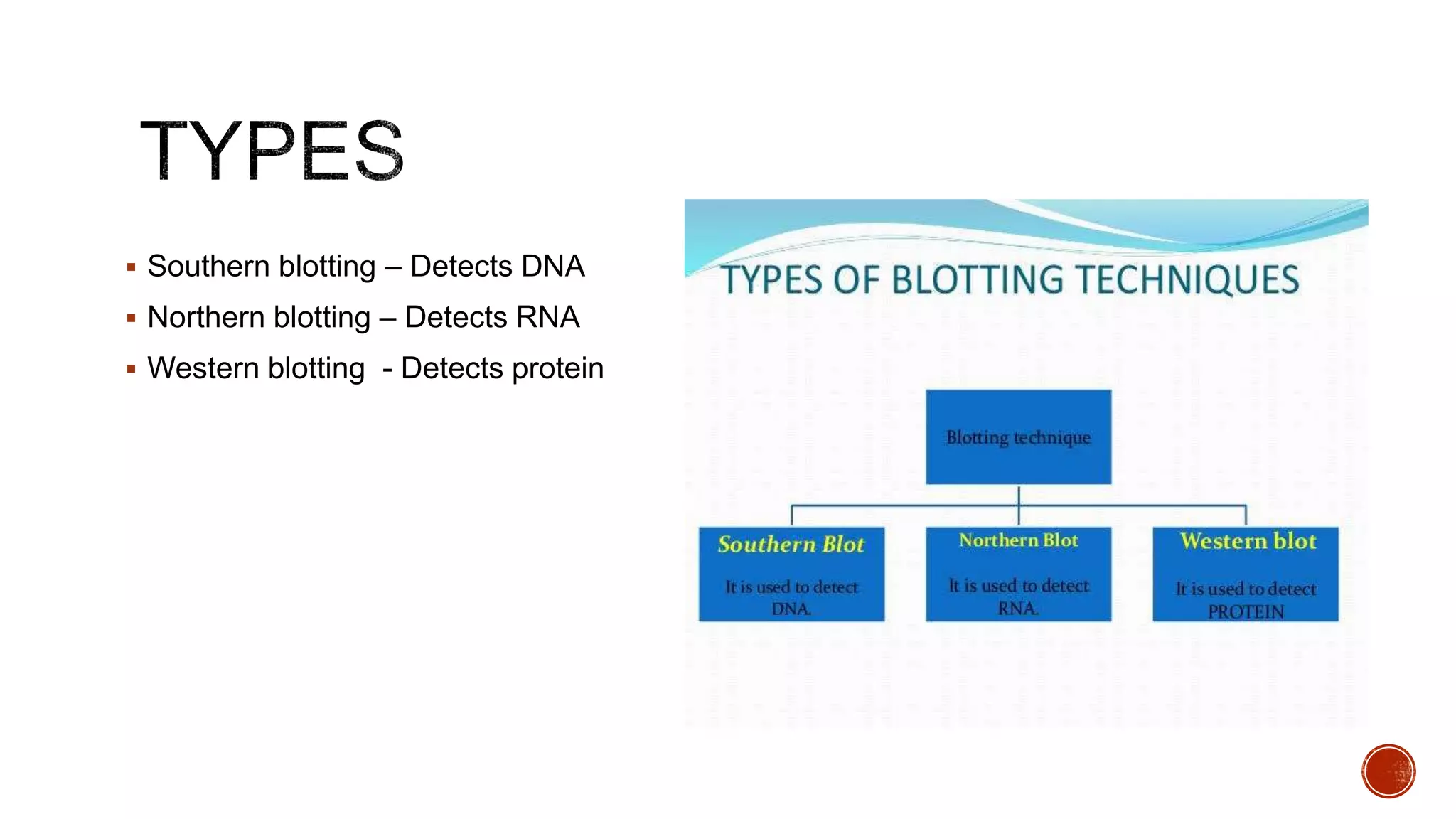
 Southern blotting – Detects DNA
 Northern blotting – Detects RNA
 Western blotting - Detects protein
 Eastern blotting – Detects proteins of post translational modification
 Reverse northern blotting- Gene expressions studied by comparing the isolated RNA with
cDNA library
 Far eastern blotting- Detects glycolipids
 Far western blotting – Detects protein – protein interaction
 Dot blotting- Detects proteins
 Prof .Sir. Edwin southern developed this technique of finding specific DNA sequences
at Edinburgh University.
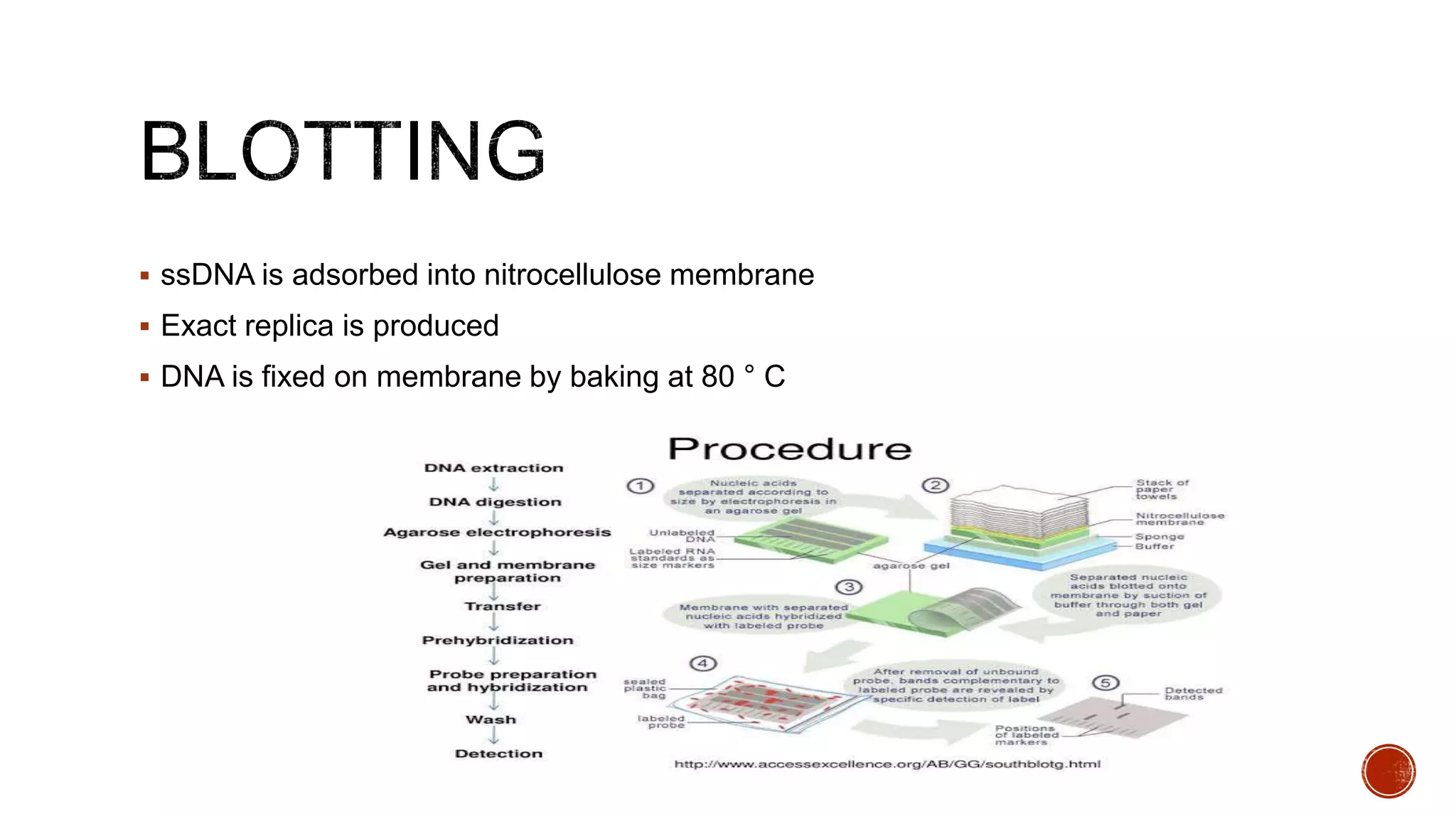
 This method involves 3 stages –Separation, Transfer and hybridization
1). Separation of DNA fragments by agarose gel electrophoresis
2). DNA fragments are blotted on to nylon or nitrocellulose membrane.
3). Identification by hybridization with labelled probe
This method transfers DNA from agarose gel to nitrocellulose filter on which DNA is
detected by suitable probe.
 DNA sample is digested by restriction endonuclease producing small fragments – for
analysis
 Fragments are separated by agarose gel electrophoresis / polyacrylamide gel
electrophoresis ( Analysis of RNA samples)
 Mobility of nucleic acids in agarose gels is greatly influenced by agarose
concentration, molecular size and conformation of nucleic acids
 Then it is treated with NaOH to denature the DNA to ss DNA
 Question: 1). Why should DNA be denatured ?
2). Why should NaOH be used for the denaturation of DNA ??
 1). Single stranded DNA can get transferred to nitrocellulose membrane and a small
DNA probe can bind to the target
 2). Reason why NaOH is used to denature the DNA is that is increase in pH. At
alkaline pH OH groups are predominant . They remove H- bonds contributing protons
from guanine and thymine this breaks the H bonds between 2 oligo nucleotides.
 ssDNA is adsorbed into nitrocellulose membrane
 Exact replica is produced
 DNA is fixed on membrane by baking at 80 ° C
 Binding of 2 complementary strands of nucleic acids .
 Binding of ssDNA (labelled probe) to complementary nucleotide sequences on target
DNA
 Hybridization assays – Based on the ability to form double stranded hybrids
 Detection of hybridization depends on method of probe labelling ( radioactive or non
radioactive)
 Radioactive – Ex: P32
 Non radioactive : Biotin –Avidin systems ??
 Biotin – Avidin systems key benefit ??
 Amplifies original protein signal to improve detection of proteins at low levels
 Enriches conjugated reporter ( fluorophore ) for greater signal detection
Excess or unbound probes are washed away and bounded probes are detected by
autoradiography– Analyzing length and no of DNA fragments
Krypton-85 is the most frequently used substance in autoradiography
 1). Extract and purify DNA from cells
 2).DNA is restricted with enzymes
 3).Separated by electrophoresis
 4).Denaturation of DNA
 5). Transfer to nitrocellulose paper
 6). Labelled probe for hybridization
 7).Wash off unbound probe
 8). Autoradiography
 Why Nitrocellulose paper is preferred??
 Reasons:
 1). High Protein binding affinity
 2). Ability to immobilize proteins, glycolipids and nucleic acids
 3). Compatible with detection methods
 Applications: 1). Gene discovery ,mapping , evolution and forensics
2).Deletions , insertions and point mutations
3).Determination of molecular weight of restriction enzymes
4).Presence of DNA in samples.
 Disadvantages : 1).More expensive and labour intensive
2). Time consuming and requires large amount of targeted DNA
 Mutant genes such as Hbs, Cystic fibrosis, Duchenne muscular dystrophy
,phenylketonuria, Presence of viral DNA can be identified by this method.
 Detect minute quantities of DNA for forensic purposes
 Used for determination of Restriction fragment length polymorphism (RFLP)
associated with pathological condition.
 Used for the confirmation of DNA cloning experiments.
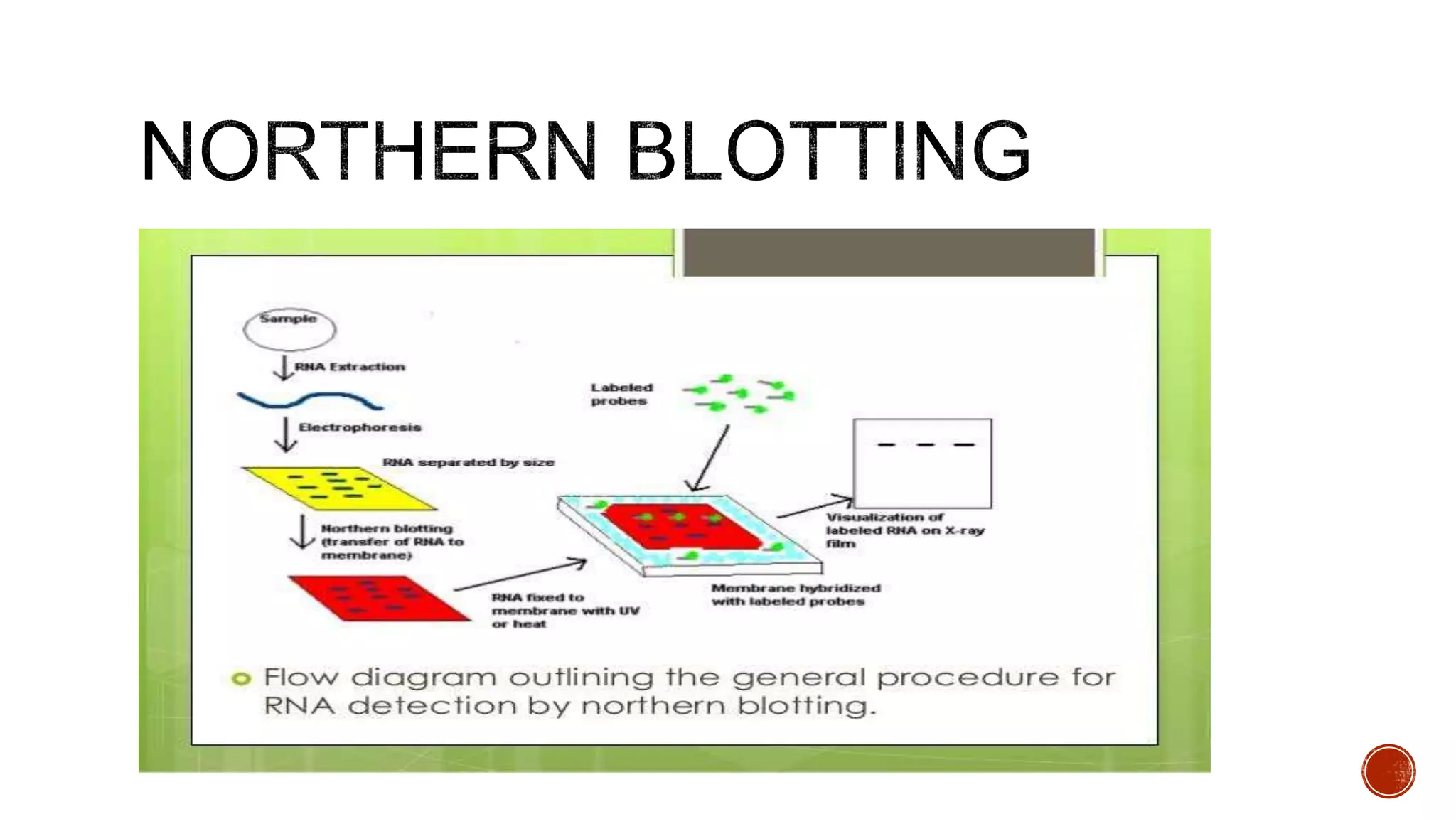
 Technique for detection of specific RNA sequences
 Developed by James Alwine and George stark at Stanford University in 1979
 RNA molecules need not be cleaved before electrophoresis ?? Why ??
 RNA molecules have desired length and shorter than genomic DNA it is not necessary
to cleave RNA before electrophoresis
 RNA is more susceptible to degradation than DNA
 RNA sample is separated based on size by gel electrophoresis
 RNA is blotted on to nylon positive charged membrane – why ?? Because it has high
affinity for nuclei acid and suitable for detecting low mol wt proteins
 Membrane is placed in hybridization buffer with labelled probe (DNA)
 Hybridization buffer – facililtates spreading of probes and reduces drying of DNA
during hybridization
ex: Formamide ,Sodium dodecyl sulphate , Nacl and sodium citrate
 Finally autoradiography is employed
Applications : 1). Detection of mRNA transcript size
2). Study of RNA splicing and half life
3). Study of gene expression at the level of mRNA
4).Checks transgenic or knockout mice
Disadvantages
1). Detection with multiple probes is a problem
2). Time consuming and samples can be degraded by RNases.
3). Relatively less sensitive than RT- PCR ( reverse transcription pcr )
and nuclear protection assays . RT – PCR – Detection of corona virus or COVID-19
 Immunoblotting technique that relies on specificity of binding between the molecule of
interest and probe to allow detection of molecule of interest in a mixture of molecules
of similar interest.
 Molecule of interest- Protein
 Probe- Antibody against protein
 SDS-PAGE ( Sodium dodecyl sulphate PAGE) – isolates proteins based on
polypeptide length
 Protein sample is subjected to electrophoresis on SDS – PAGE
 Electroblotting will transfer separated proteins from gel to surface of nitrocellulose
membrane
 Blot is incubated with generic protein ( milk protein or skimmed milk) – acts as
blocking buffer which binds to any remaining sticky places on nitrocellulose
 Antibody is then added to the solution which is able to bind to specific protein
 Antibody has the enzyme –Alkaline phosphatase or Horseradish peroxidase
Can u employ SDS-PAGE Technique to nucleic acid????
Answer: Yes SDS-PAGE can be employed to nucleic acids also provided mol wt is less
than 500 kDa and gel percent is 6 to 8% ,
 1).Confirmatory HIV test employs western blot test to detect anti HIV Antibody
 2).Protein from known HIV infected cells are separated and blotted on membrane and
then serum to be tested
 3).Definitive test for crutzefelt Jacob disease and bovine spongiform encephalopathy (
Madcow disease)
 Diagnostic test also in Lyme disease .
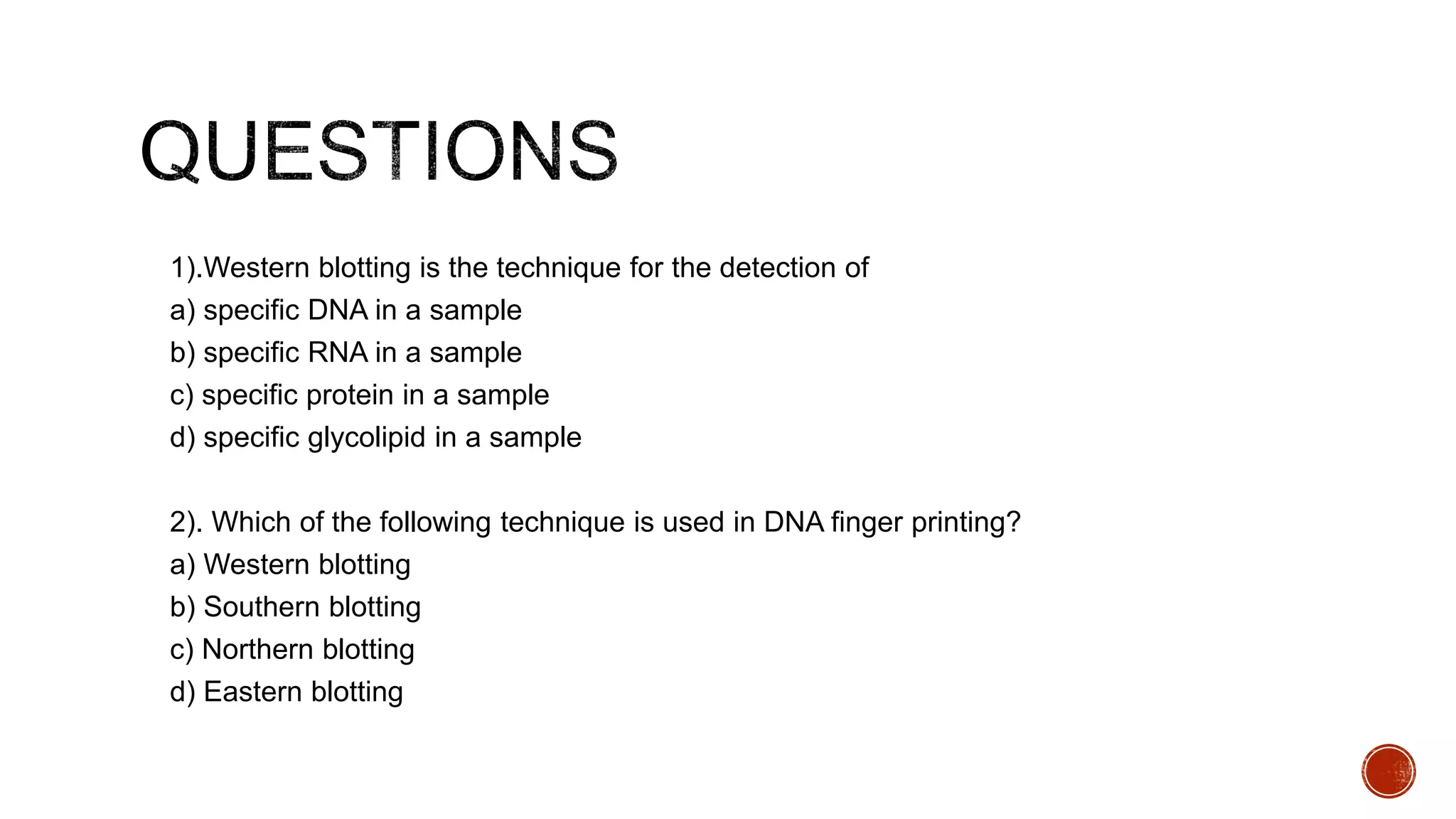
1).Western blotting is the technique for the detection of
a) specific DNA in a sample
b) specific RNA in a sample
c) specific protein in a sample
d) specific glycolipid in a sample
2). Which of the following technique is used in DNA finger printing?
a) Western blotting
b) Southern blotting
c) Northern blotting
d) Eastern blotting
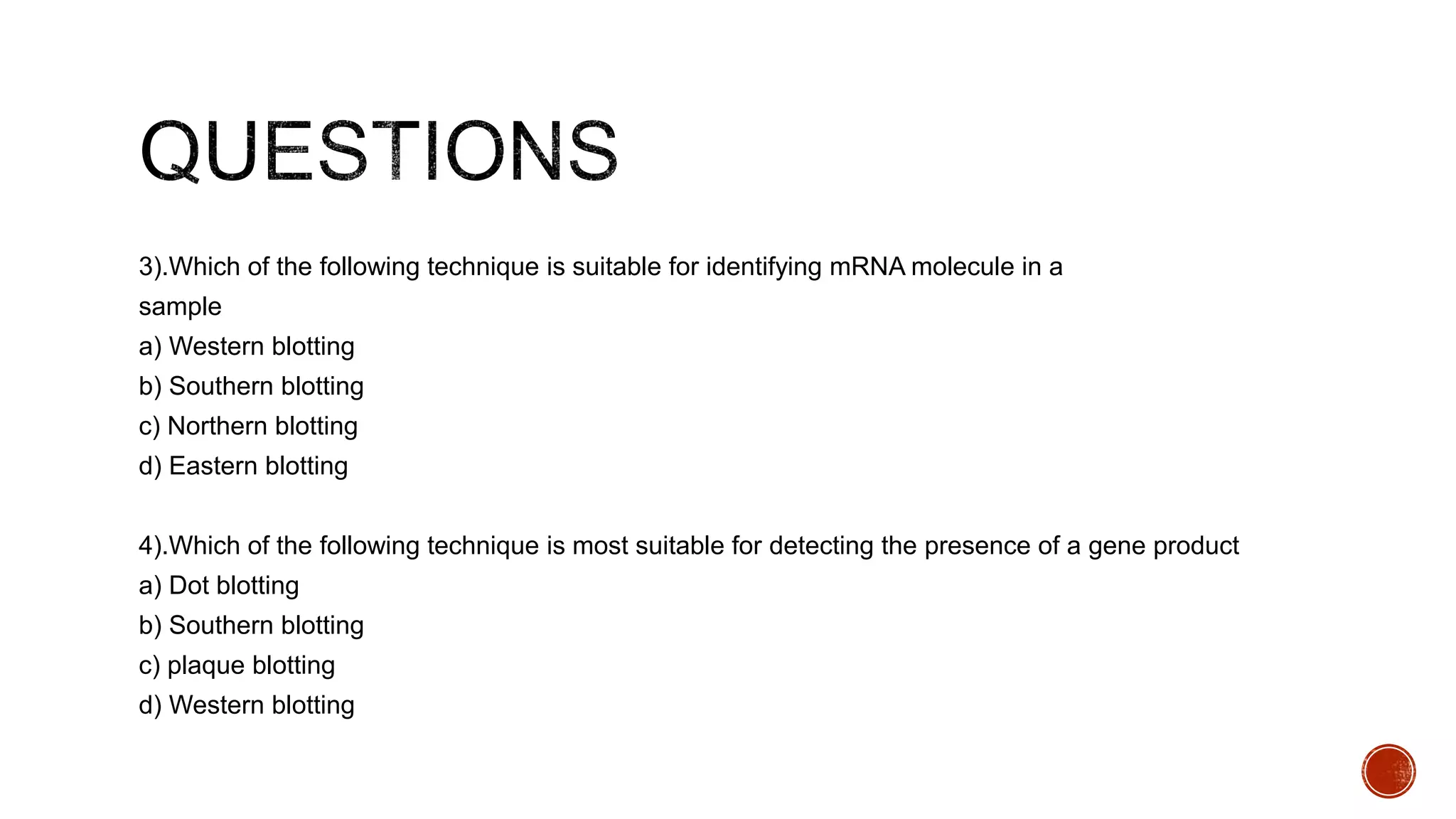
3).Which of the following technique is suitable for identifying mRNA molecule in a
sample
a) Western blotting
b) Southern blotting
c) Northern blotting
d) Eastern blotting
4).Which of the following technique is most suitable for detecting the presence of a gene product
a) Dot blotting
b) Southern blotting
c) plaque blotting
d) Western blotting
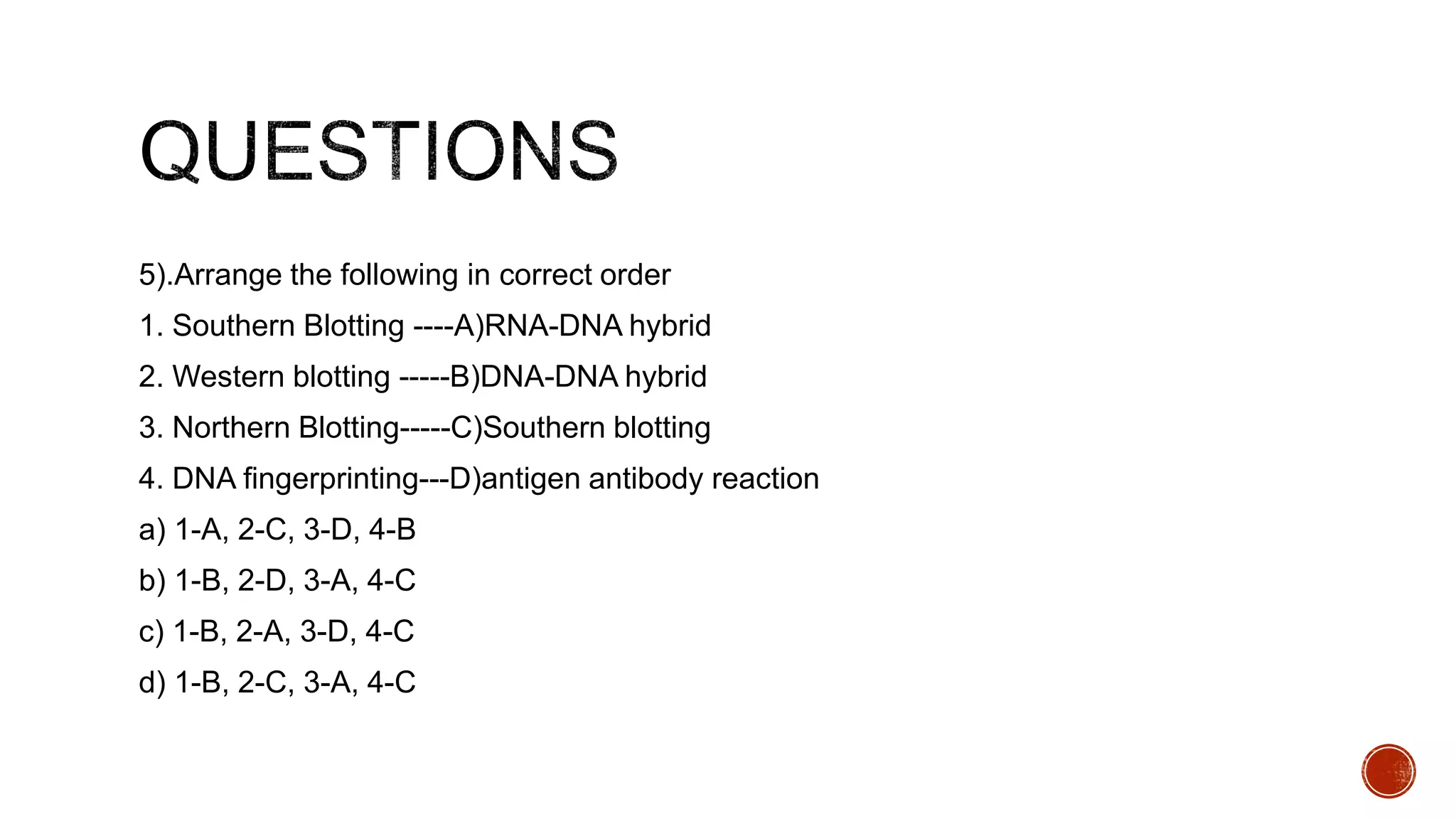
5).Arrange the following in correct order
1. Southern Blotting ----A)RNA-DNA hybrid
2. Western blotting -----B)DNA-DNA hybrid
3. Northern Blotting-----C)Southern blotting
4. DNA fingerprinting---D)antigen antibody reaction
a) 1-A, 2-C, 3-D, 4-B
b) 1-B, 2-D, 3-A, 4-C
c) 1-B, 2-A, 3-D, 4-C
d) 1-B, 2-C, 3-A, 4-C
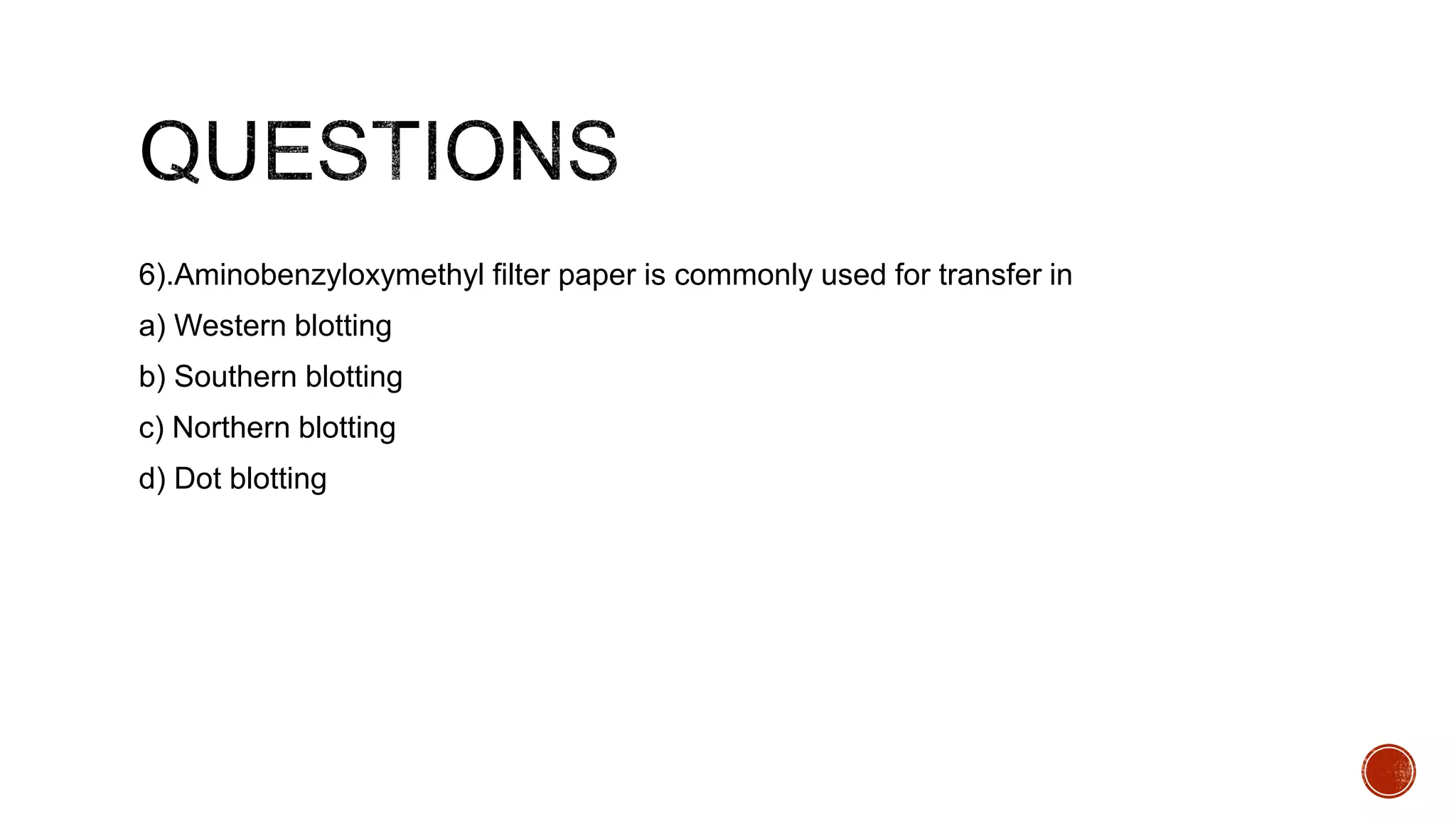
6).Aminobenzyloxymethyl filter paper is commonly used for transfer in
a) Western blotting
b) Southern blotting
c) Northern blotting
d) Dot blotting
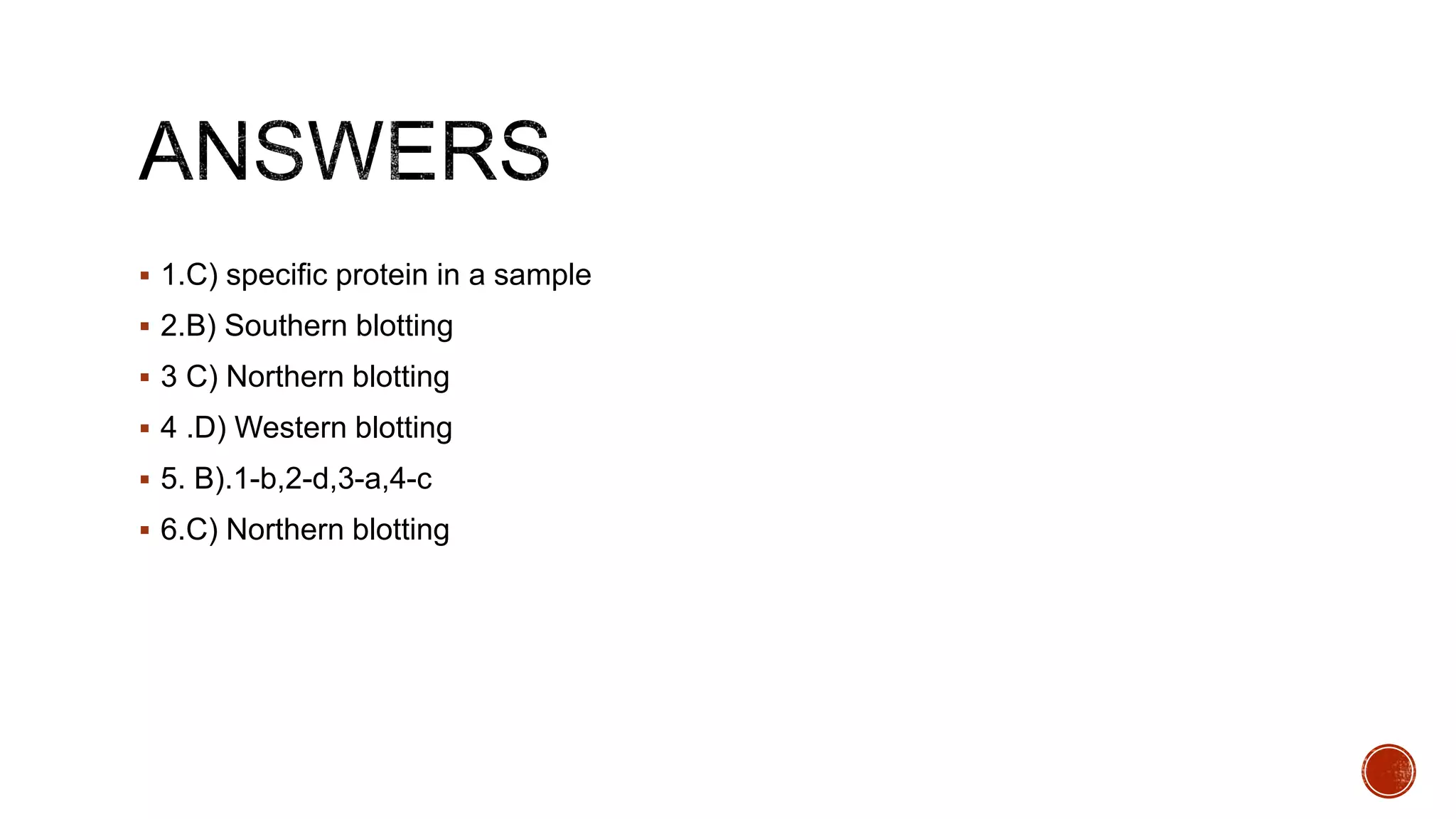
 1.C) specific protein in a sample
 2.B) Southern blotting
 3 C) Northern blotting
 4 .D) Western blotting
 5. B).1-b,2-d,3-a,4-c
 6.C) Northern blotting
Blotting techniques ppt

Blotting techniques ppt

  • 1.
    Kashyap karthikeyan M.B.B.S -1st year SRMMCH & RC
  • 2.
     Blotting techniquesare commonly used analytical tools which facilitates identification of desired DNA/RNA/ Protein fragments.  Blotting is a process of immobilization of sample nucleic acids on solid support  Blots are techniques for transferring DNA , RNA and proteins onto the carrier so that they can be separated and followed by gel electrophoresis.
  • 3.
     Southern blotting– Detects DNA  Northern blotting – Detects RNA  Western blotting - Detects protein
  • 4.
     Eastern blotting– Detects proteins of post translational modification  Reverse northern blotting- Gene expressions studied by comparing the isolated RNA with cDNA library  Far eastern blotting- Detects glycolipids  Far western blotting – Detects protein – protein interaction  Dot blotting- Detects proteins
  • 5.
     Prof .Sir.Edwin southern developed this technique of finding specific DNA sequences at Edinburgh University.  This method involves 3 stages –Separation, Transfer and hybridization 1). Separation of DNA fragments by agarose gel electrophoresis 2). DNA fragments are blotted on to nylon or nitrocellulose membrane. 3). Identification by hybridization with labelled probe This method transfers DNA from agarose gel to nitrocellulose filter on which DNA is detected by suitable probe.
  • 6.
     DNA sampleis digested by restriction endonuclease producing small fragments – for analysis  Fragments are separated by agarose gel electrophoresis / polyacrylamide gel electrophoresis ( Analysis of RNA samples)  Mobility of nucleic acids in agarose gels is greatly influenced by agarose concentration, molecular size and conformation of nucleic acids  Then it is treated with NaOH to denature the DNA to ss DNA  Question: 1). Why should DNA be denatured ? 2). Why should NaOH be used for the denaturation of DNA ??
  • 7.
     1). Singlestranded DNA can get transferred to nitrocellulose membrane and a small DNA probe can bind to the target  2). Reason why NaOH is used to denature the DNA is that is increase in pH. At alkaline pH OH groups are predominant . They remove H- bonds contributing protons from guanine and thymine this breaks the H bonds between 2 oligo nucleotides.
  • 8.
     ssDNA isadsorbed into nitrocellulose membrane  Exact replica is produced  DNA is fixed on membrane by baking at 80 ° C
  • 9.
     Binding of2 complementary strands of nucleic acids .  Binding of ssDNA (labelled probe) to complementary nucleotide sequences on target DNA  Hybridization assays – Based on the ability to form double stranded hybrids  Detection of hybridization depends on method of probe labelling ( radioactive or non radioactive)  Radioactive – Ex: P32  Non radioactive : Biotin –Avidin systems ??  Biotin – Avidin systems key benefit ??
  • 10.
     Amplifies originalprotein signal to improve detection of proteins at low levels  Enriches conjugated reporter ( fluorophore ) for greater signal detection Excess or unbound probes are washed away and bounded probes are detected by autoradiography– Analyzing length and no of DNA fragments Krypton-85 is the most frequently used substance in autoradiography
  • 11.
     1). Extractand purify DNA from cells  2).DNA is restricted with enzymes  3).Separated by electrophoresis  4).Denaturation of DNA  5). Transfer to nitrocellulose paper  6). Labelled probe for hybridization  7).Wash off unbound probe  8). Autoradiography
  • 12.
     Why Nitrocellulosepaper is preferred??  Reasons:  1). High Protein binding affinity  2). Ability to immobilize proteins, glycolipids and nucleic acids  3). Compatible with detection methods
  • 13.
     Applications: 1).Gene discovery ,mapping , evolution and forensics 2).Deletions , insertions and point mutations 3).Determination of molecular weight of restriction enzymes 4).Presence of DNA in samples.  Disadvantages : 1).More expensive and labour intensive 2). Time consuming and requires large amount of targeted DNA
  • 14.
     Mutant genessuch as Hbs, Cystic fibrosis, Duchenne muscular dystrophy ,phenylketonuria, Presence of viral DNA can be identified by this method.  Detect minute quantities of DNA for forensic purposes  Used for determination of Restriction fragment length polymorphism (RFLP) associated with pathological condition.  Used for the confirmation of DNA cloning experiments.
  • 15.
     Technique fordetection of specific RNA sequences  Developed by James Alwine and George stark at Stanford University in 1979  RNA molecules need not be cleaved before electrophoresis ?? Why ??  RNA molecules have desired length and shorter than genomic DNA it is not necessary to cleave RNA before electrophoresis  RNA is more susceptible to degradation than DNA  RNA sample is separated based on size by gel electrophoresis  RNA is blotted on to nylon positive charged membrane – why ?? Because it has high affinity for nuclei acid and suitable for detecting low mol wt proteins
  • 16.
     Membrane isplaced in hybridization buffer with labelled probe (DNA)  Hybridization buffer – facililtates spreading of probes and reduces drying of DNA during hybridization ex: Formamide ,Sodium dodecyl sulphate , Nacl and sodium citrate  Finally autoradiography is employed
  • 18.
    Applications : 1).Detection of mRNA transcript size 2). Study of RNA splicing and half life 3). Study of gene expression at the level of mRNA 4).Checks transgenic or knockout mice Disadvantages 1). Detection with multiple probes is a problem 2). Time consuming and samples can be degraded by RNases. 3). Relatively less sensitive than RT- PCR ( reverse transcription pcr ) and nuclear protection assays . RT – PCR – Detection of corona virus or COVID-19
  • 19.
     Immunoblotting techniquethat relies on specificity of binding between the molecule of interest and probe to allow detection of molecule of interest in a mixture of molecules of similar interest.  Molecule of interest- Protein  Probe- Antibody against protein  SDS-PAGE ( Sodium dodecyl sulphate PAGE) – isolates proteins based on polypeptide length  Protein sample is subjected to electrophoresis on SDS – PAGE  Electroblotting will transfer separated proteins from gel to surface of nitrocellulose membrane
  • 20.
     Blot isincubated with generic protein ( milk protein or skimmed milk) – acts as blocking buffer which binds to any remaining sticky places on nitrocellulose  Antibody is then added to the solution which is able to bind to specific protein  Antibody has the enzyme –Alkaline phosphatase or Horseradish peroxidase Can u employ SDS-PAGE Technique to nucleic acid???? Answer: Yes SDS-PAGE can be employed to nucleic acids also provided mol wt is less than 500 kDa and gel percent is 6 to 8% ,
  • 21.
     1).Confirmatory HIVtest employs western blot test to detect anti HIV Antibody  2).Protein from known HIV infected cells are separated and blotted on membrane and then serum to be tested  3).Definitive test for crutzefelt Jacob disease and bovine spongiform encephalopathy ( Madcow disease)  Diagnostic test also in Lyme disease .
  • 22.
    1).Western blotting isthe technique for the detection of a) specific DNA in a sample b) specific RNA in a sample c) specific protein in a sample d) specific glycolipid in a sample 2). Which of the following technique is used in DNA finger printing? a) Western blotting b) Southern blotting c) Northern blotting d) Eastern blotting
  • 23.
    3).Which of thefollowing technique is suitable for identifying mRNA molecule in a sample a) Western blotting b) Southern blotting c) Northern blotting d) Eastern blotting 4).Which of the following technique is most suitable for detecting the presence of a gene product a) Dot blotting b) Southern blotting c) plaque blotting d) Western blotting
  • 24.
    5).Arrange the followingin correct order 1. Southern Blotting ----A)RNA-DNA hybrid 2. Western blotting -----B)DNA-DNA hybrid 3. Northern Blotting-----C)Southern blotting 4. DNA fingerprinting---D)antigen antibody reaction a) 1-A, 2-C, 3-D, 4-B b) 1-B, 2-D, 3-A, 4-C c) 1-B, 2-A, 3-D, 4-C d) 1-B, 2-C, 3-A, 4-C
  • 25.
    6).Aminobenzyloxymethyl filter paperis commonly used for transfer in a) Western blotting b) Southern blotting c) Northern blotting d) Dot blotting
  • 26.
     1.C) specificprotein in a sample  2.B) Southern blotting  3 C) Northern blotting  4 .D) Western blotting  5. B).1-b,2-d,3-a,4-c  6.C) Northern blotting