BLOOD COAGULATION
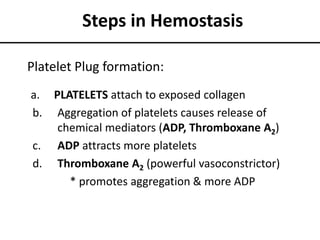
Steps in Hemostasis
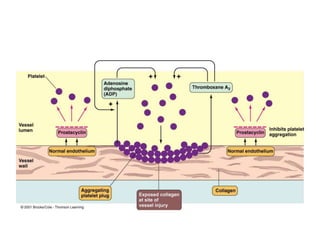
a. PLATELETS attach to exposed collagen
b. Aggregation of platelets causes release of
chemical mediators (ADP, Thromboxane A2)
c. ADP attracts more platelets
d. Thromboxane A2 (powerful vasoconstrictor)
* promotes aggregation & more ADP
Platelet Plug formation:
Stages of Coagulation
• Prothrombinase formation
• Thrombin formation
• Fibrin formation
Clotting Cascade
• Participation of 12 different clotting factors
(plasma glycoproteins)
• Factors are designated by a roman numeral
• Cascade of proteolytic reactions
• Common Pathway leading to the formation
of a fibrin clot
Hemostasis - Coagulation
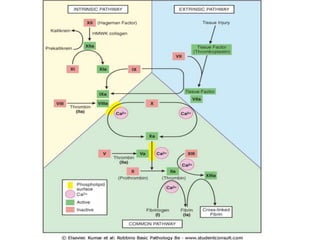
 Stage 1: Prothrombinase
formation
– Prothrombinase catalyzes
Prothrombin conversion to
Thrombin
– Stage 1 has 2 parts
• Part 1: Extrinsic Pathway
– Rapid (seconds)
– Tissue factor (TF) enters
blood from tissue
– Ultimately activates
prothrombinase
– Part 2: Intrinsic Pathway
• Slower (minutes)
• Activators in blood – from
damaged red blood or
endothelial cells activate
clotting
• Extrinsic pathway also
activates Intrinsic pathway
• Ultimately activates
prothrombinase
– Ca2+ is required for activation
of both pathways!
Stage 2 and 3 – Common Pathway
–Thrombin Formation
• requires enzyme Prothrombinase & Ca++ ions
• catalyzes prothrombin  thrombin
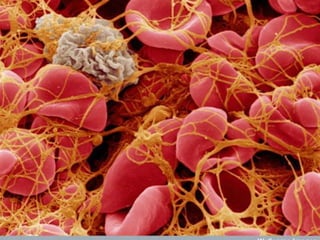
–Fibrin formation
• activated enzyme thrombin with Ca++ ions
catalyzes fibrinogen  fibrin
–fibrinogen (soluble)
–fibrin (insoluble)
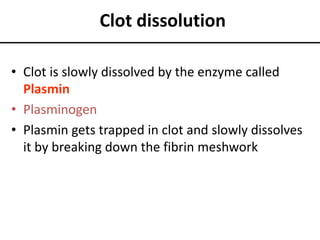
Clot dissolution
• Clot is slowly dissolved by the enzyme called
Plasmin
• Plasminogen
• Plasmin gets trapped in clot and slowly dissolves
it by breaking down the fibrin meshwork
Fibrinolysis
– plasminogen trapped in clot
– many factors convert plasminogen into plasmin
(fibrinolysin)
• thrombin
• activated factor XII
• tissue plasminogen activator (t-PA)
Anticoagulant factors
• Antithrombin III
• C – protein
• Alpha – macroglobulin
• C1 – inactivator
• Heparin

Blood coagulation

  • 1.
  • 2.
    Steps in Hemostasis a.PLATELETS attach to exposed collagen b. Aggregation of platelets causes release of chemical mediators (ADP, Thromboxane A2) c. ADP attracts more platelets d. Thromboxane A2 (powerful vasoconstrictor) * promotes aggregation & more ADP Platelet Plug formation:
  • 4.
    Stages of Coagulation •Prothrombinase formation • Thrombin formation • Fibrin formation
  • 5.
    Clotting Cascade • Participationof 12 different clotting factors (plasma glycoproteins) • Factors are designated by a roman numeral • Cascade of proteolytic reactions • Common Pathway leading to the formation of a fibrin clot
  • 6.
    Hemostasis - Coagulation Stage 1: Prothrombinase formation – Prothrombinase catalyzes Prothrombin conversion to Thrombin – Stage 1 has 2 parts • Part 1: Extrinsic Pathway – Rapid (seconds) – Tissue factor (TF) enters blood from tissue – Ultimately activates prothrombinase – Part 2: Intrinsic Pathway • Slower (minutes) • Activators in blood – from damaged red blood or endothelial cells activate clotting • Extrinsic pathway also activates Intrinsic pathway • Ultimately activates prothrombinase – Ca2+ is required for activation of both pathways!
  • 7.
    Stage 2 and3 – Common Pathway –Thrombin Formation • requires enzyme Prothrombinase & Ca++ ions • catalyzes prothrombin  thrombin –Fibrin formation • activated enzyme thrombin with Ca++ ions catalyzes fibrinogen  fibrin –fibrinogen (soluble) –fibrin (insoluble)
  • 10.
    Clot dissolution • Clotis slowly dissolved by the enzyme called Plasmin • Plasminogen • Plasmin gets trapped in clot and slowly dissolves it by breaking down the fibrin meshwork
  • 11.
    Fibrinolysis – plasminogen trappedin clot – many factors convert plasminogen into plasmin (fibrinolysin) • thrombin • activated factor XII • tissue plasminogen activator (t-PA)
  • 12.
    Anticoagulant factors • AntithrombinIII • C – protein • Alpha – macroglobulin • C1 – inactivator • Heparin