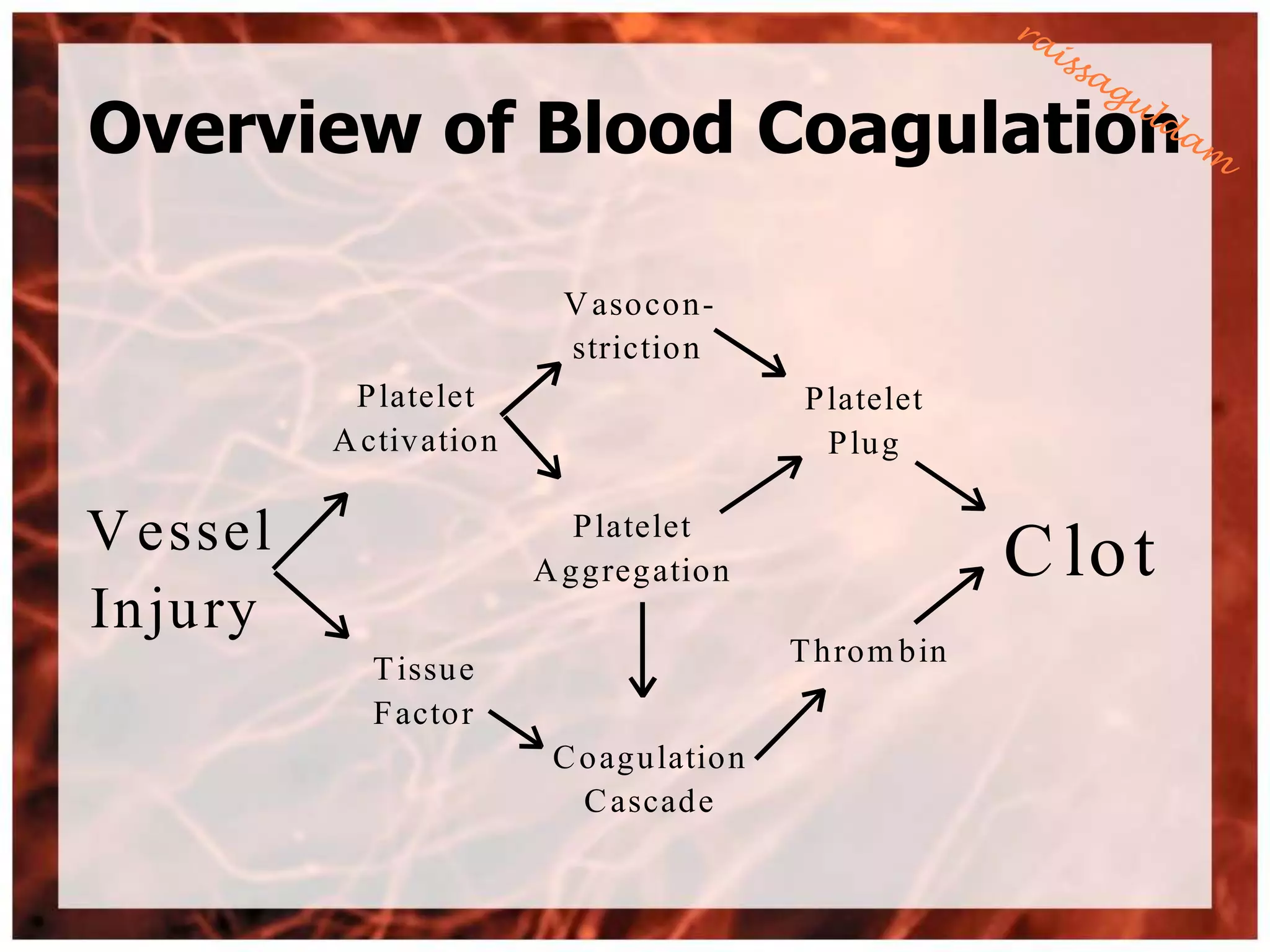
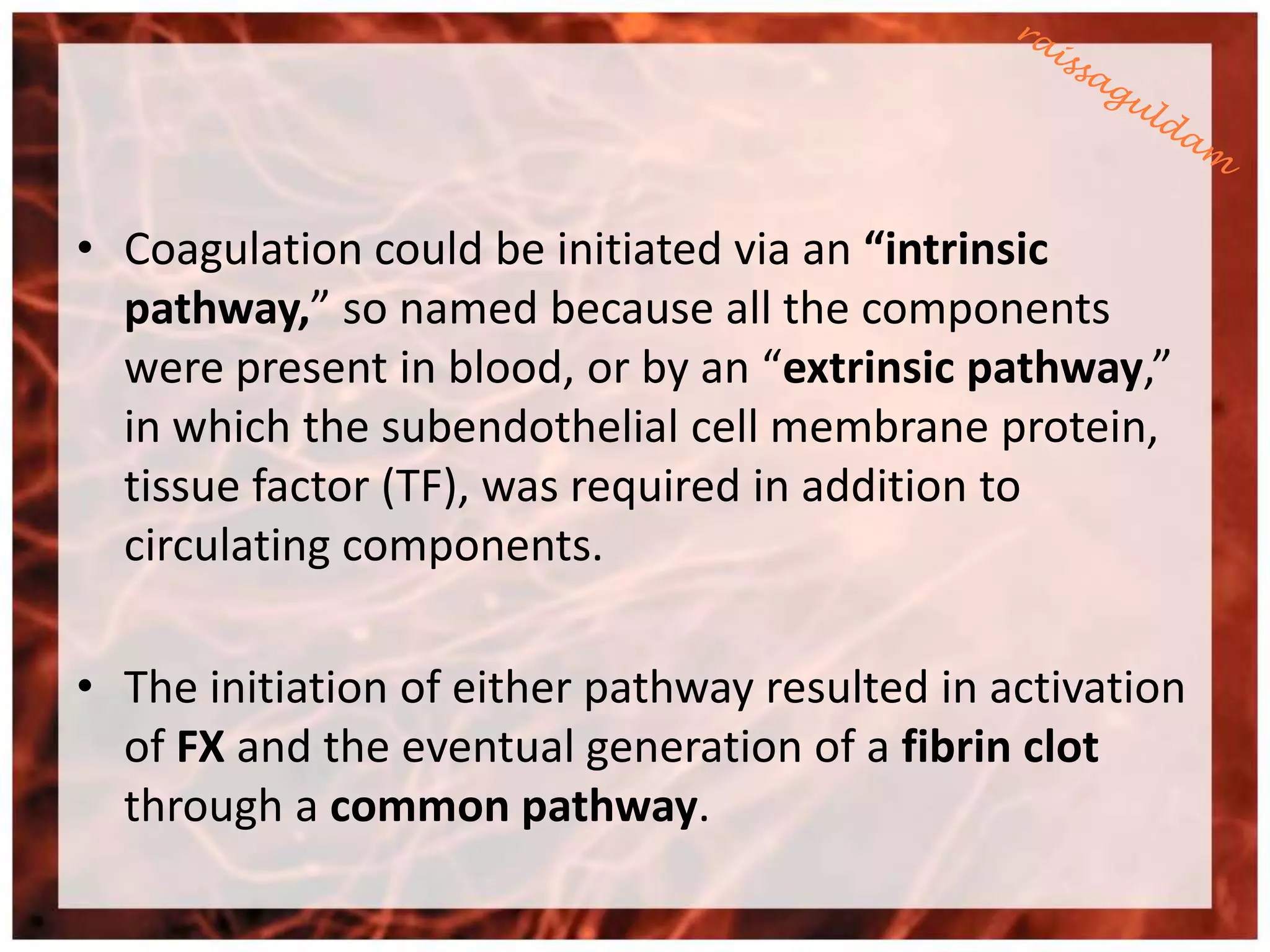
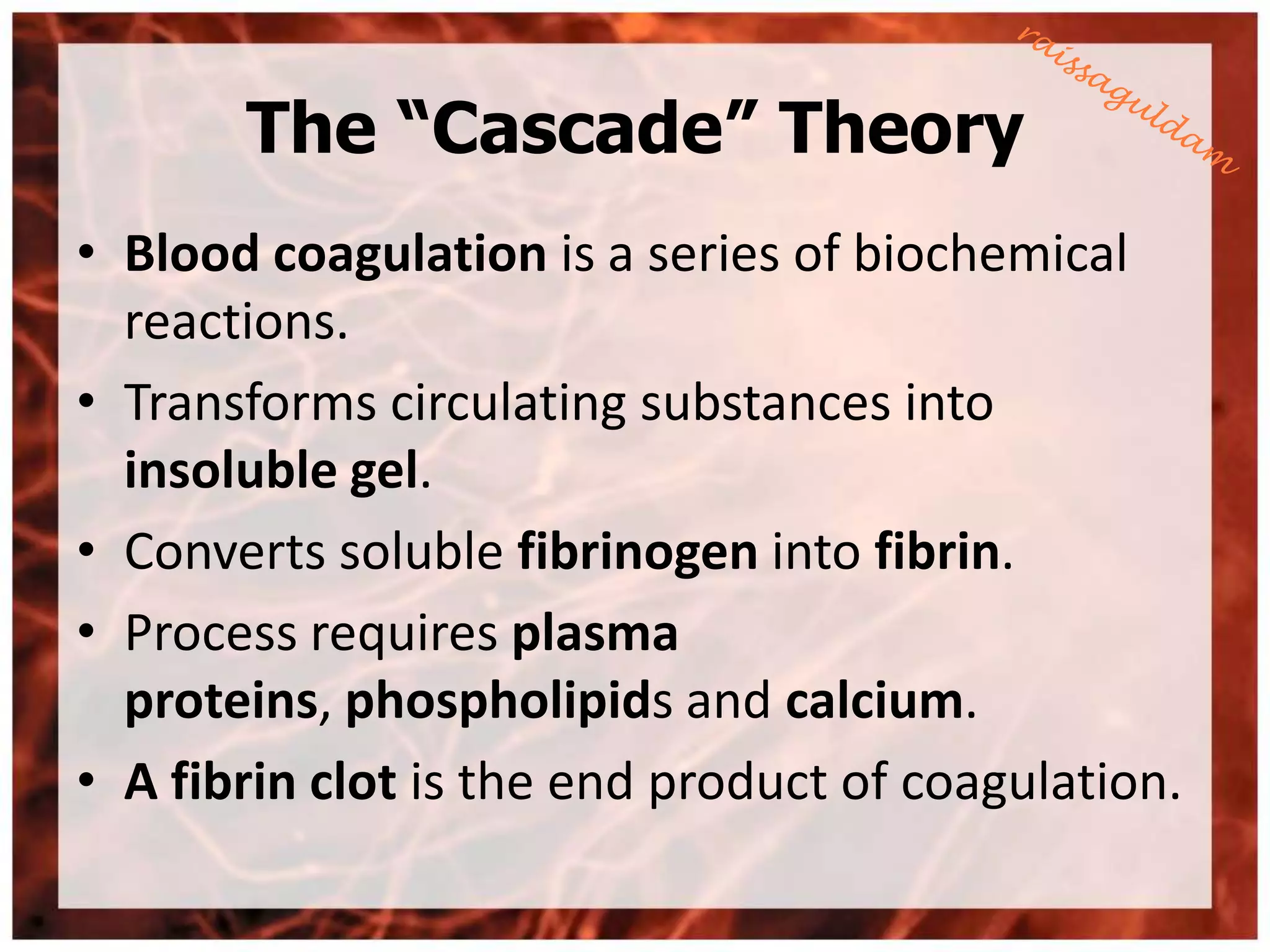
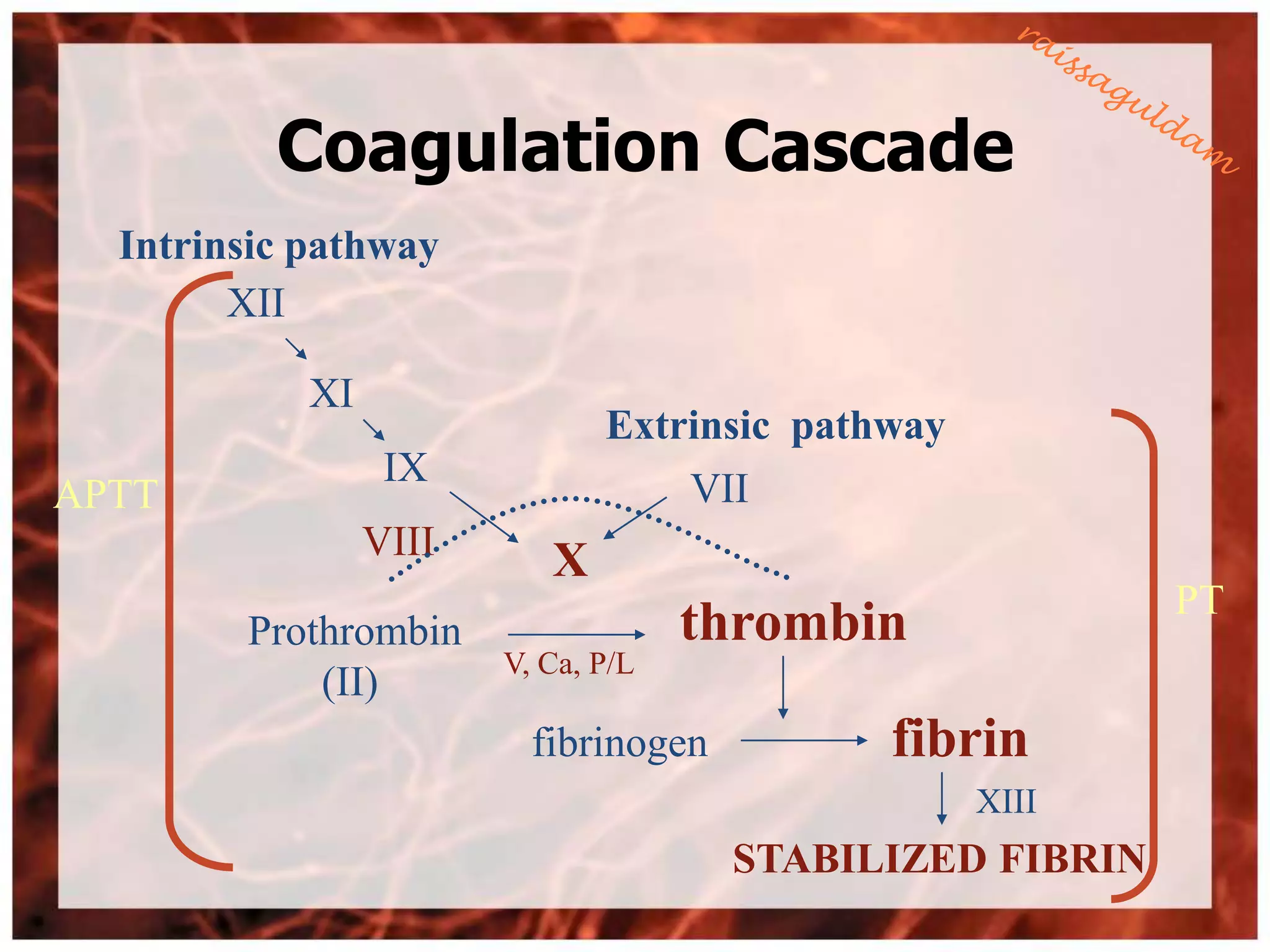
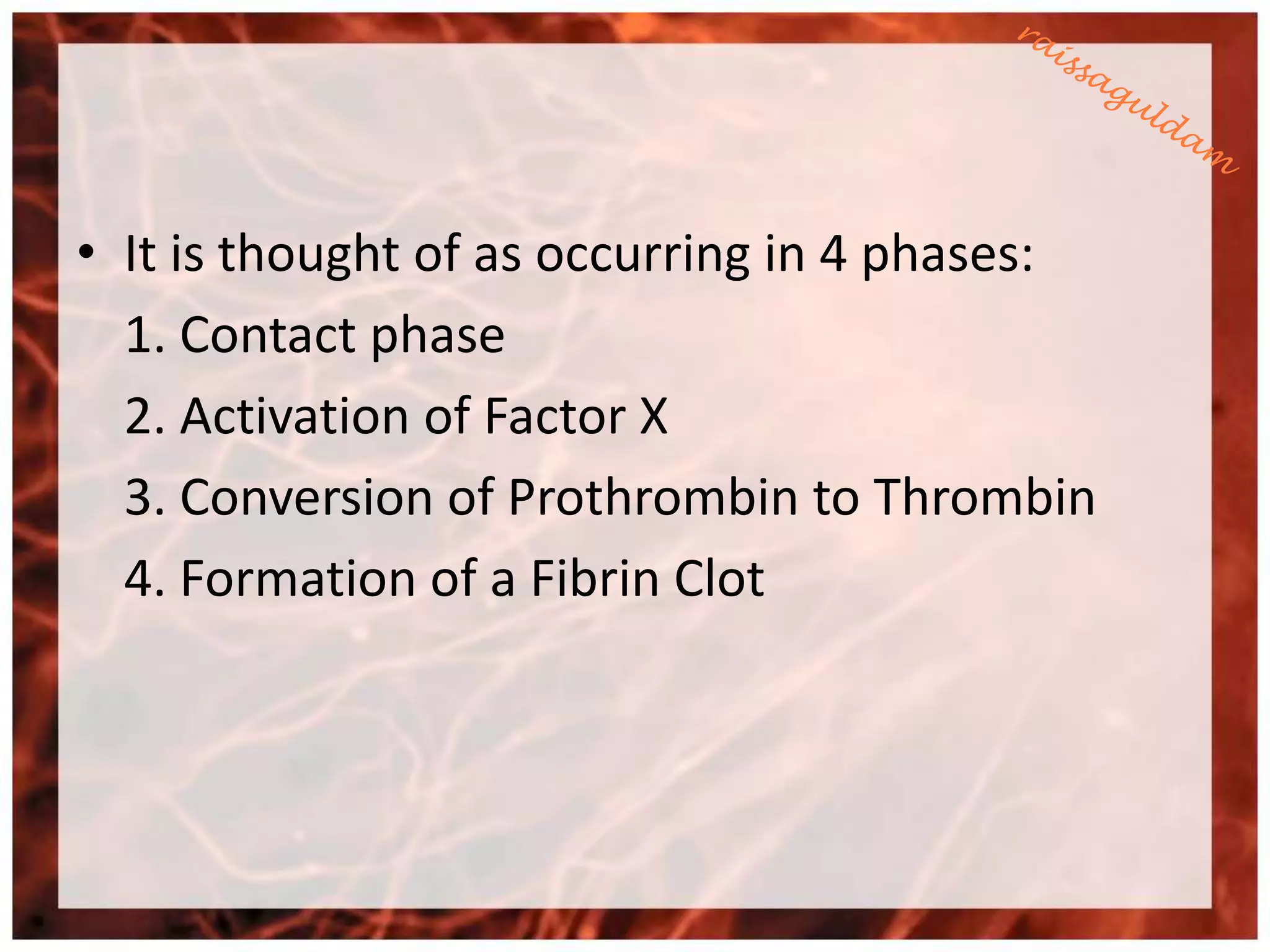
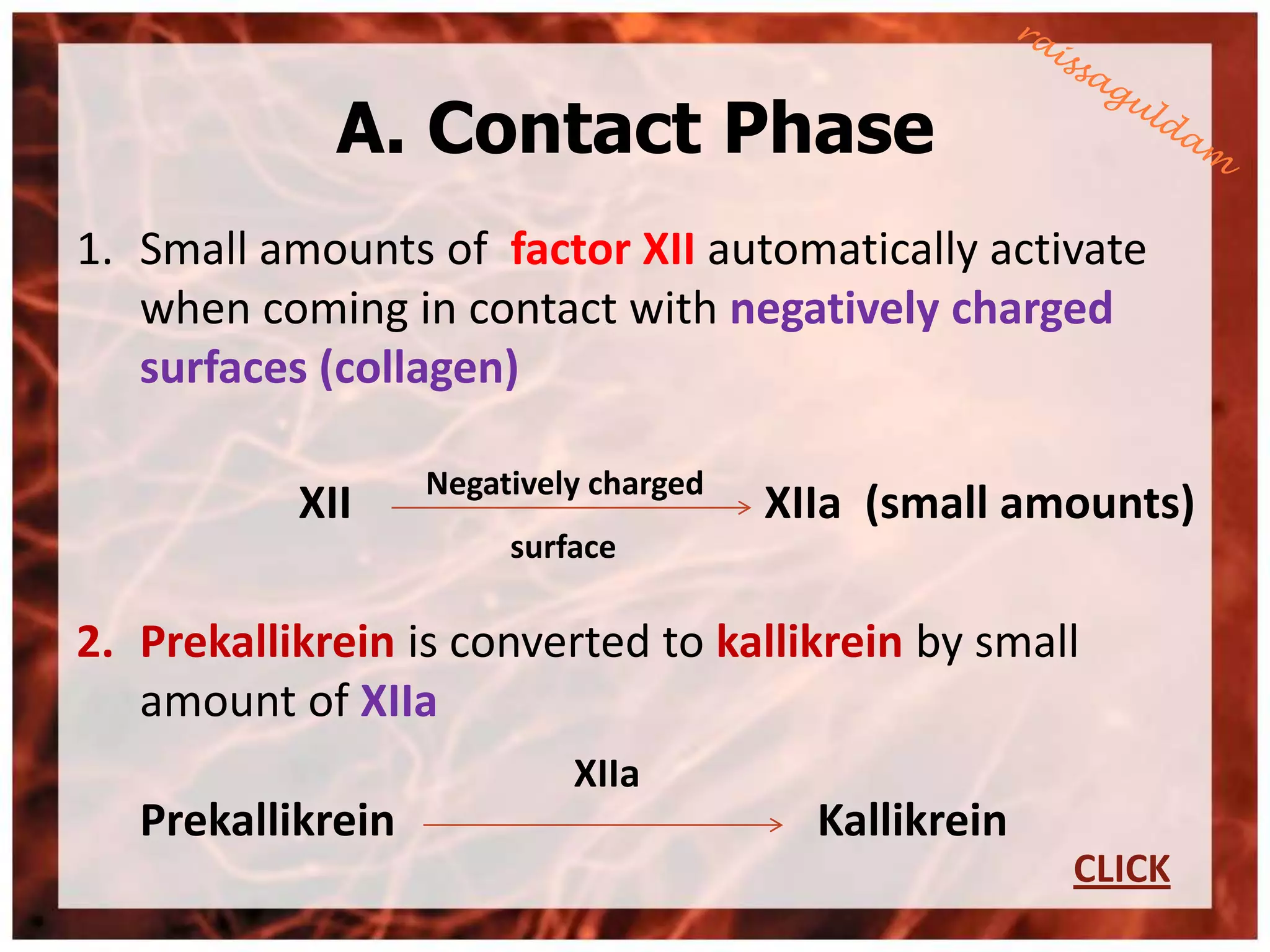
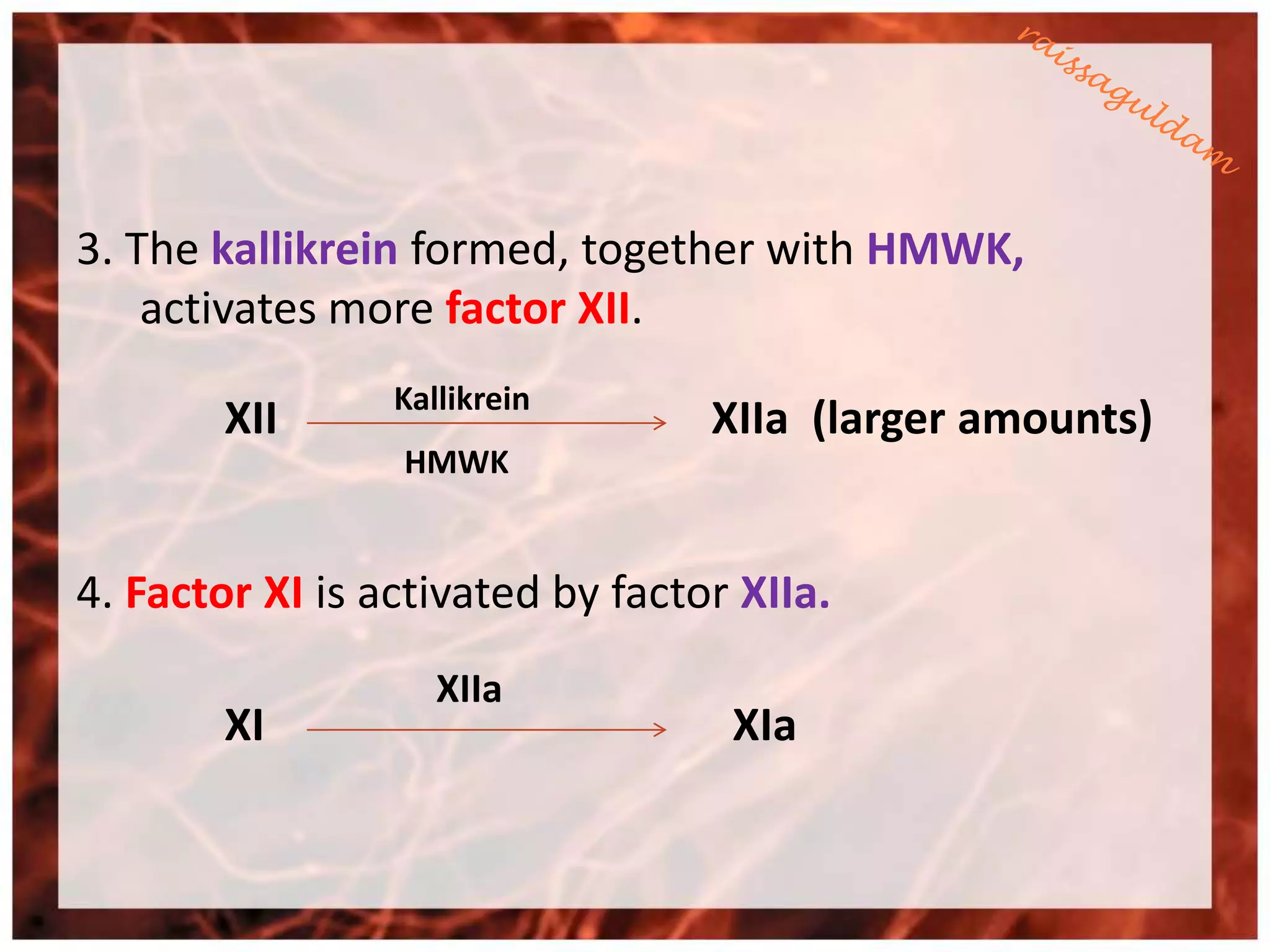
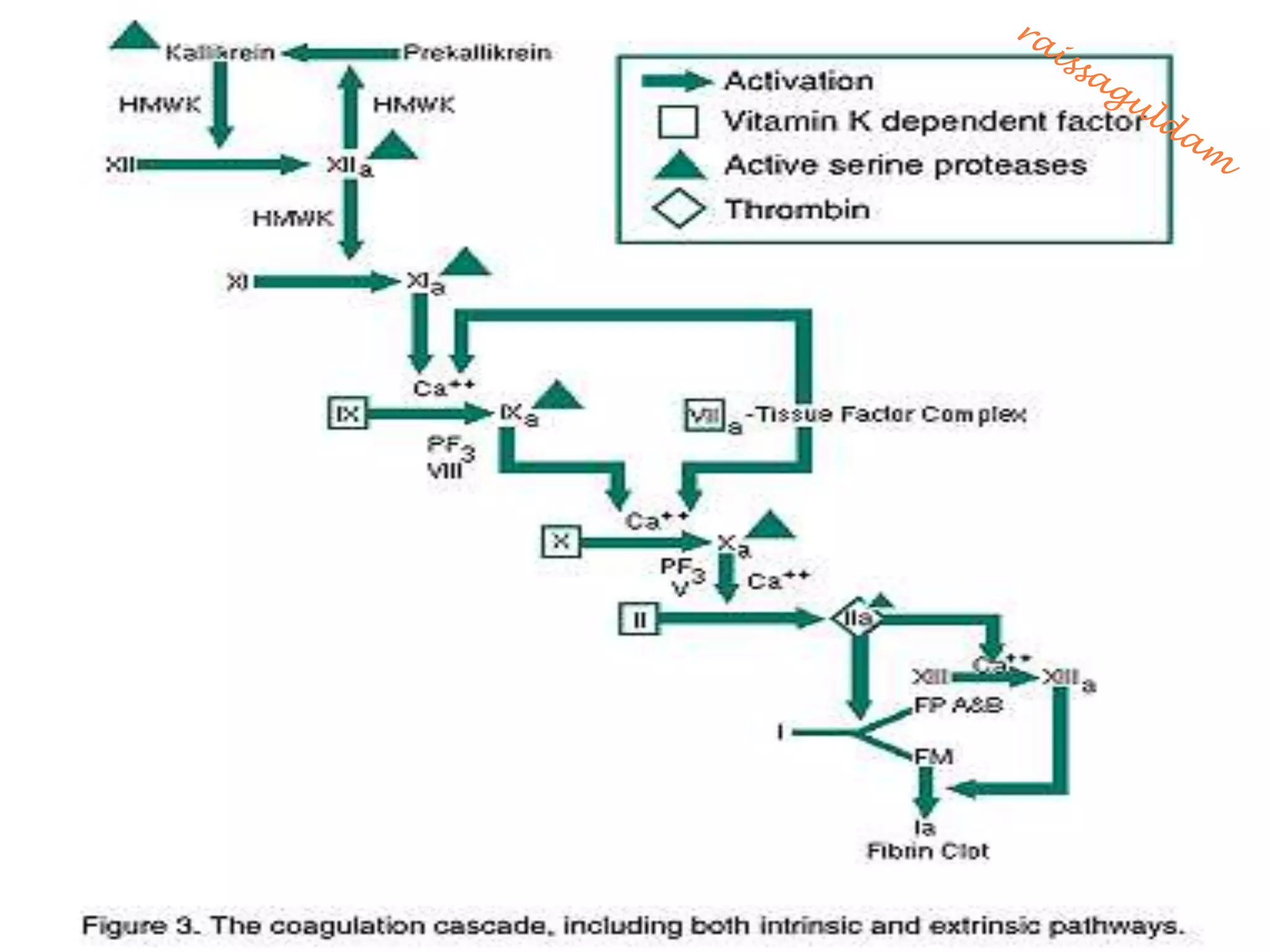
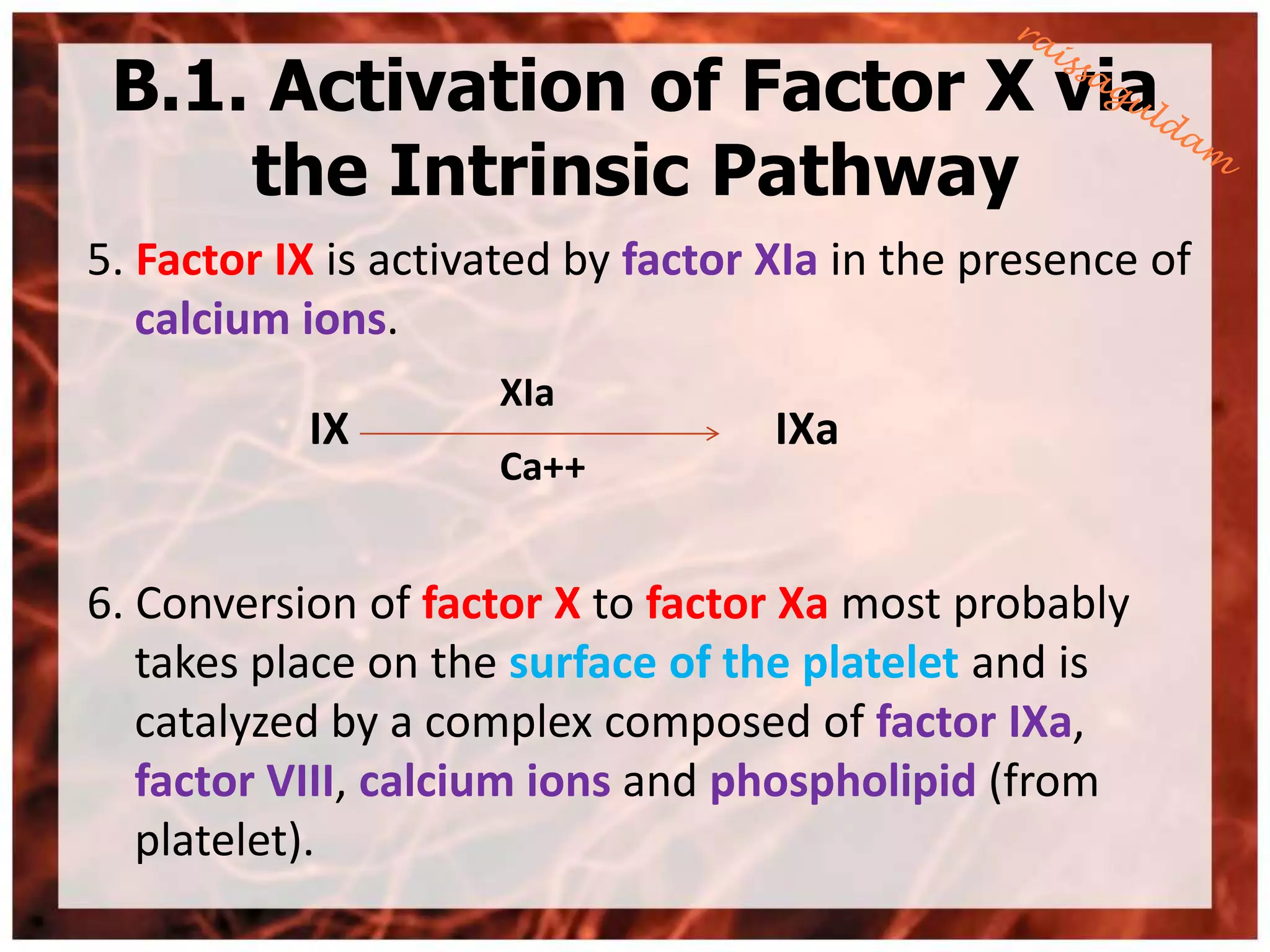
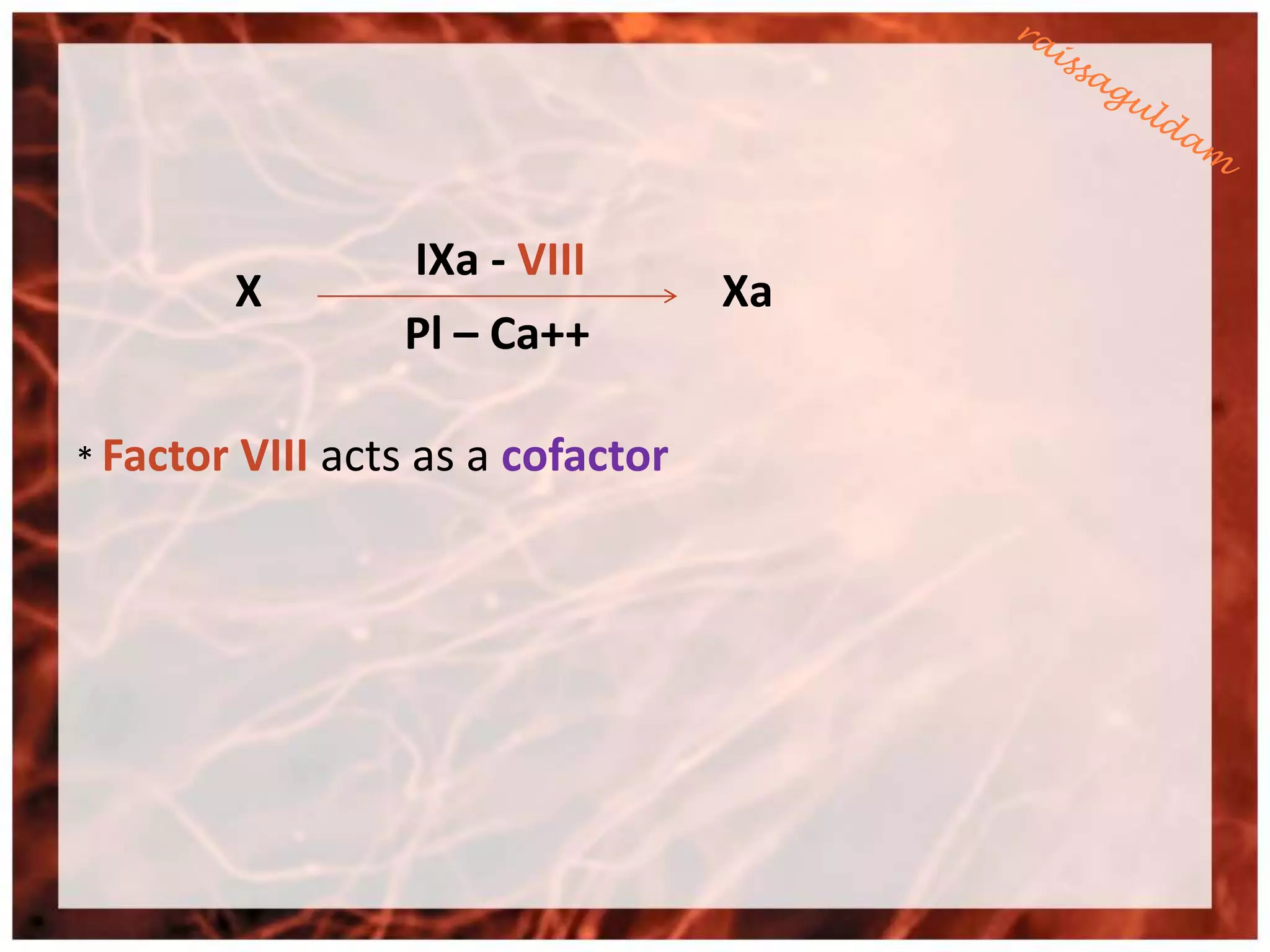
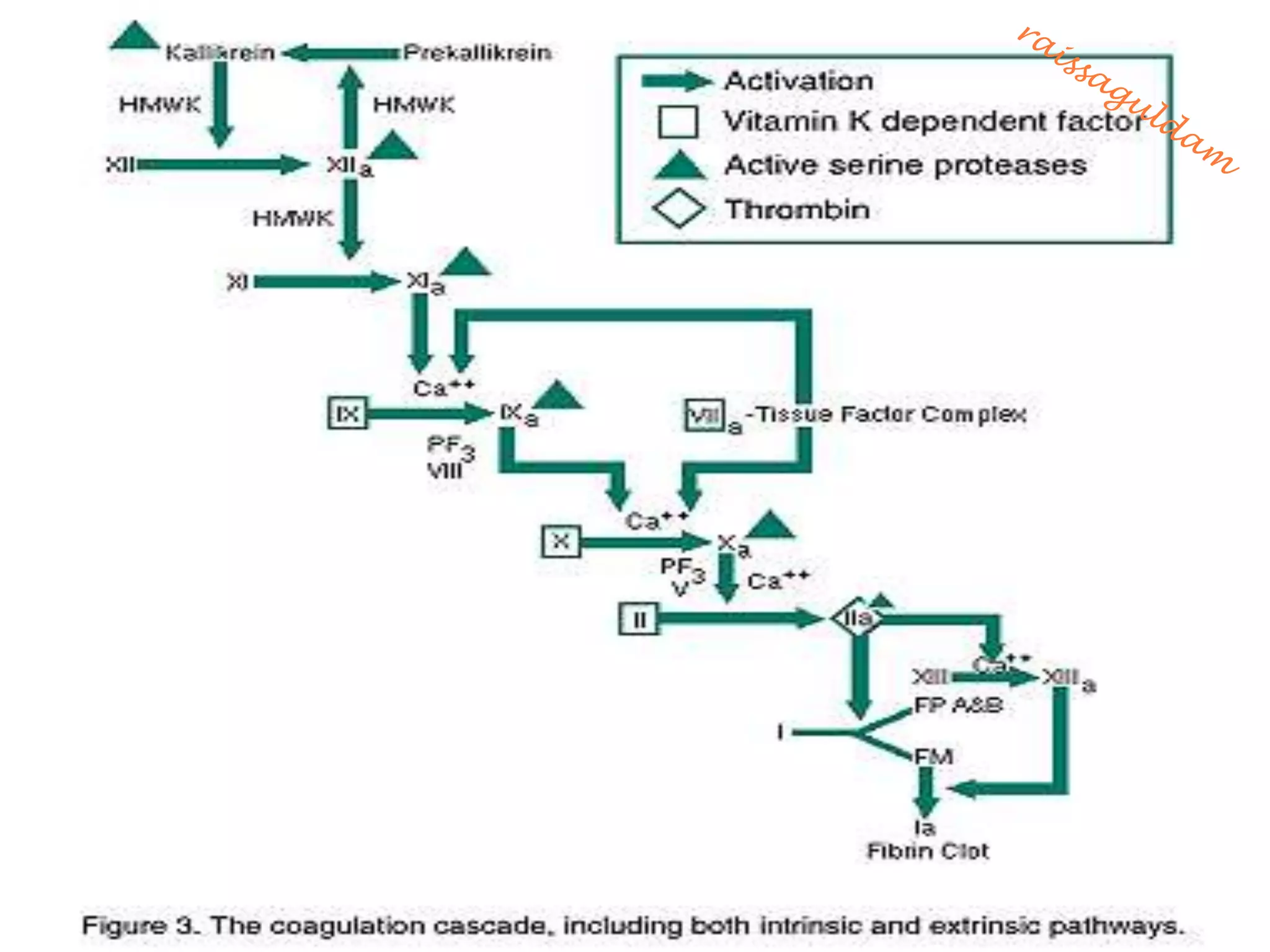
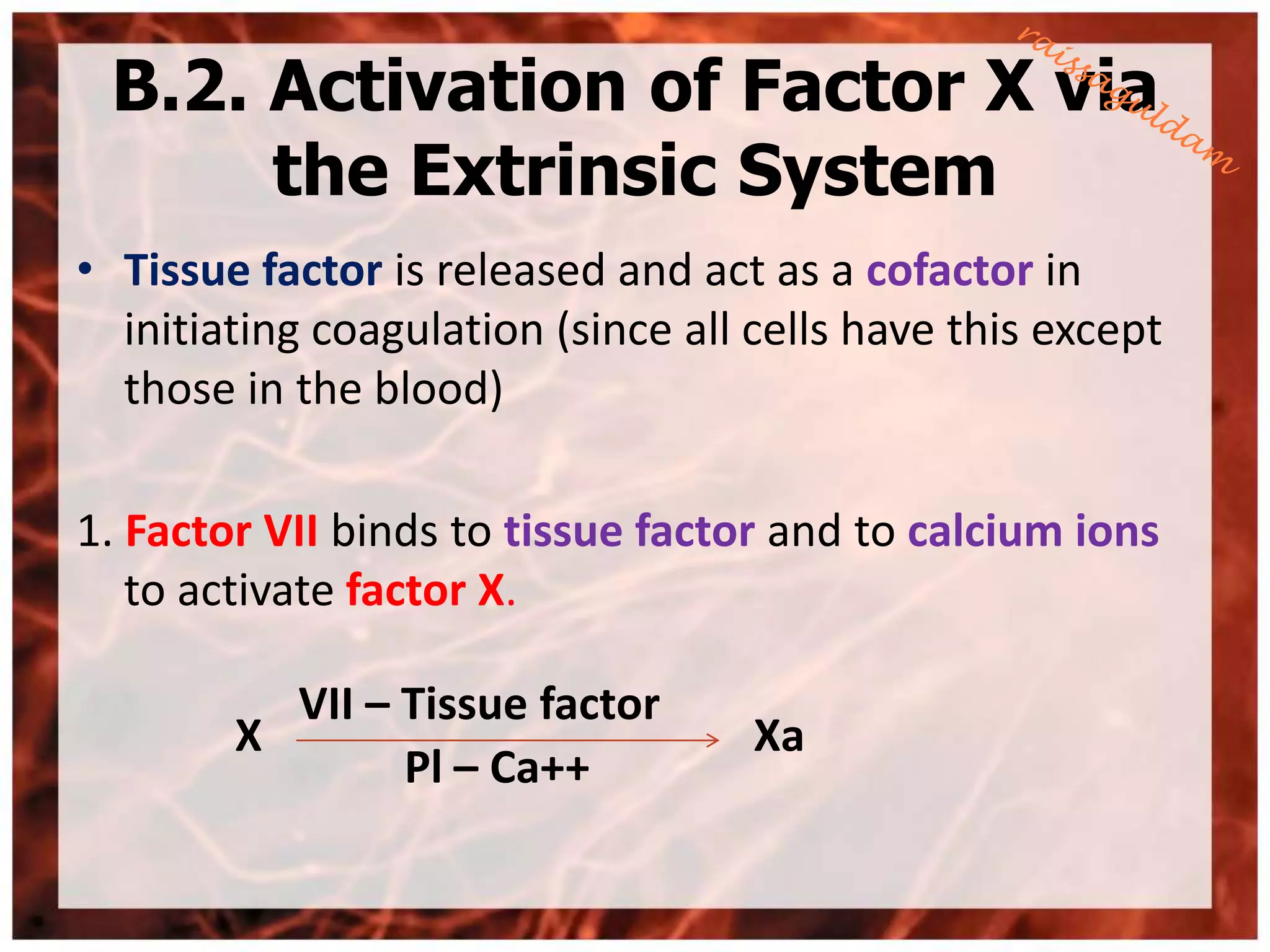
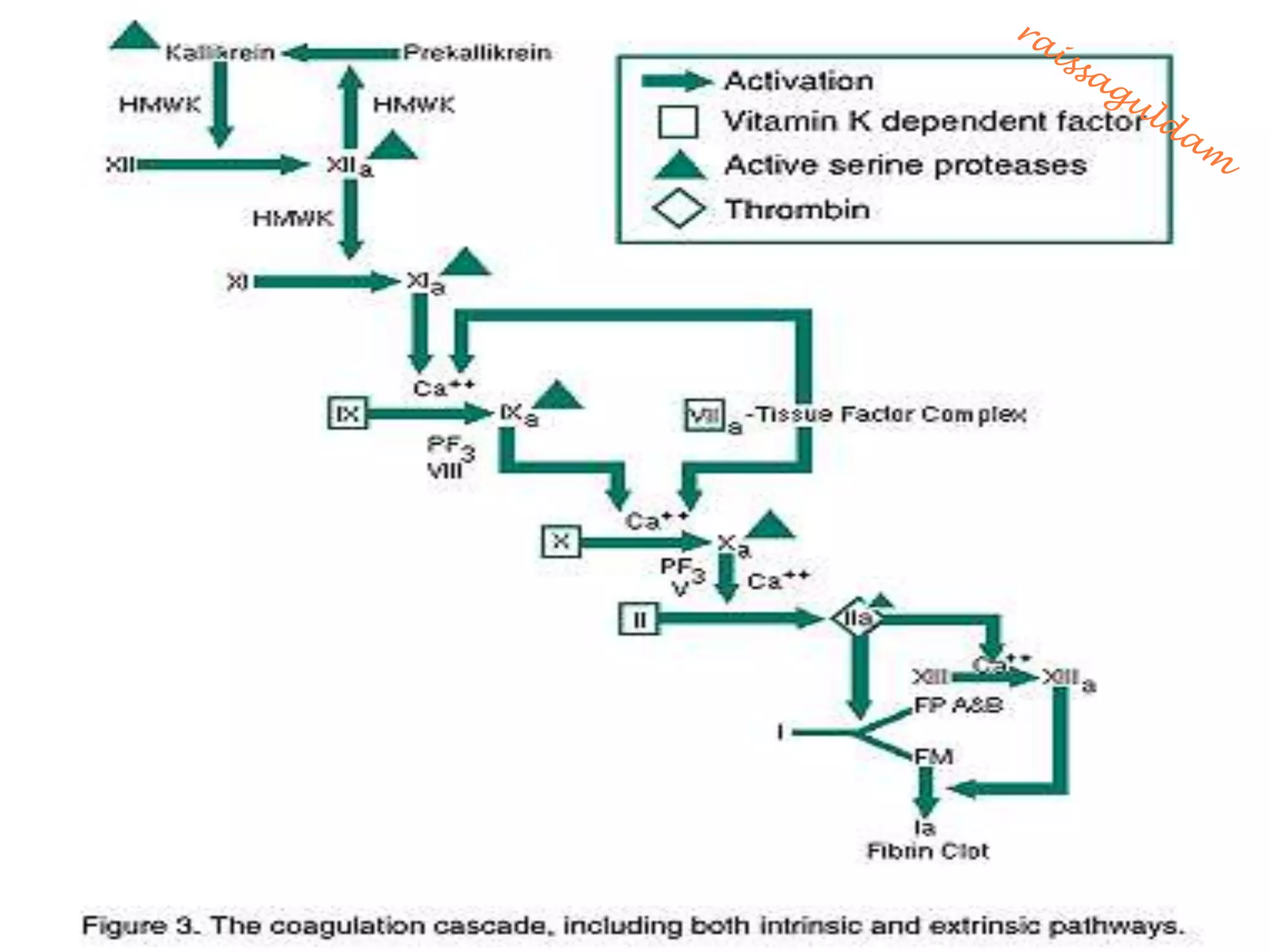
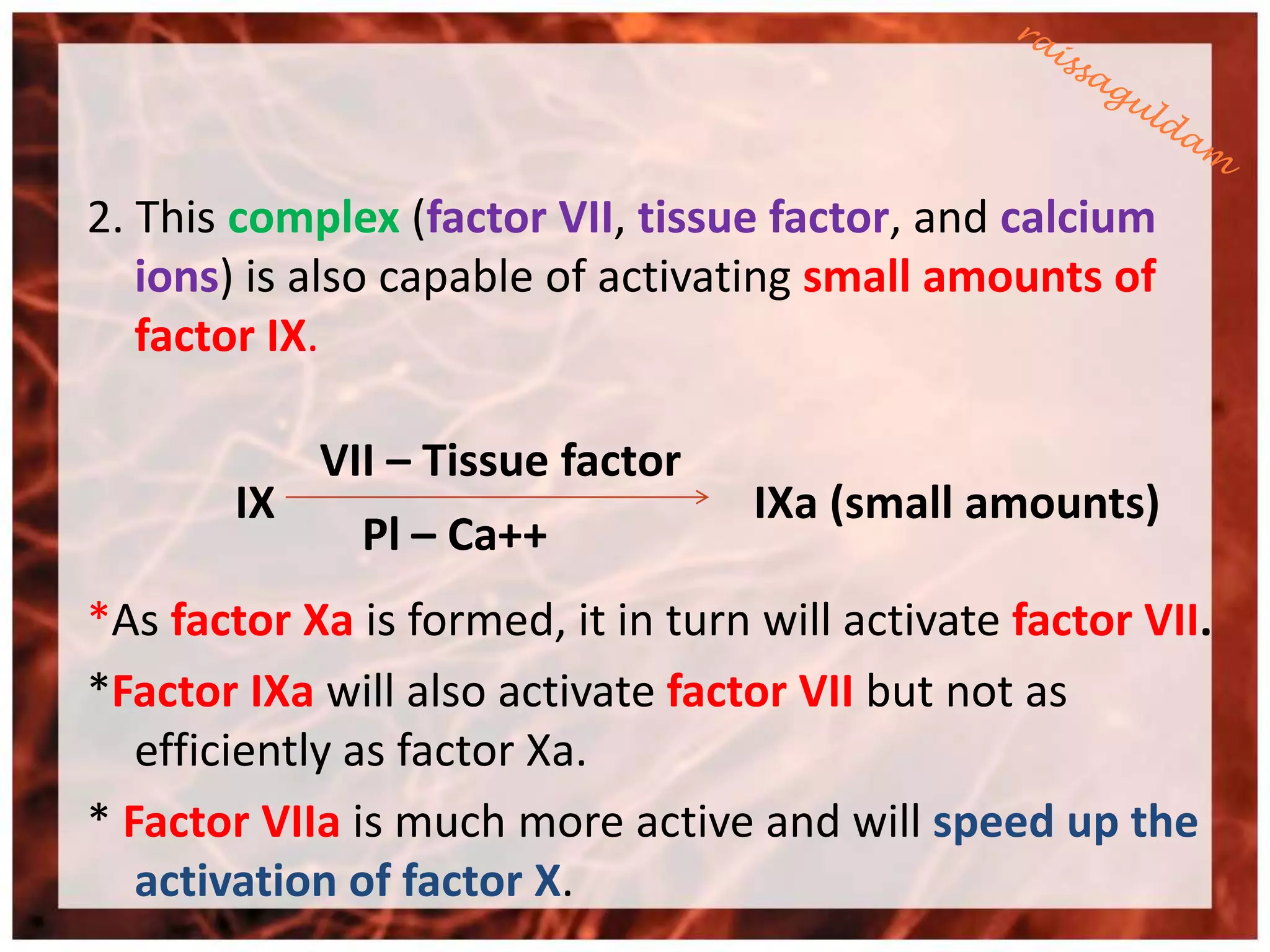
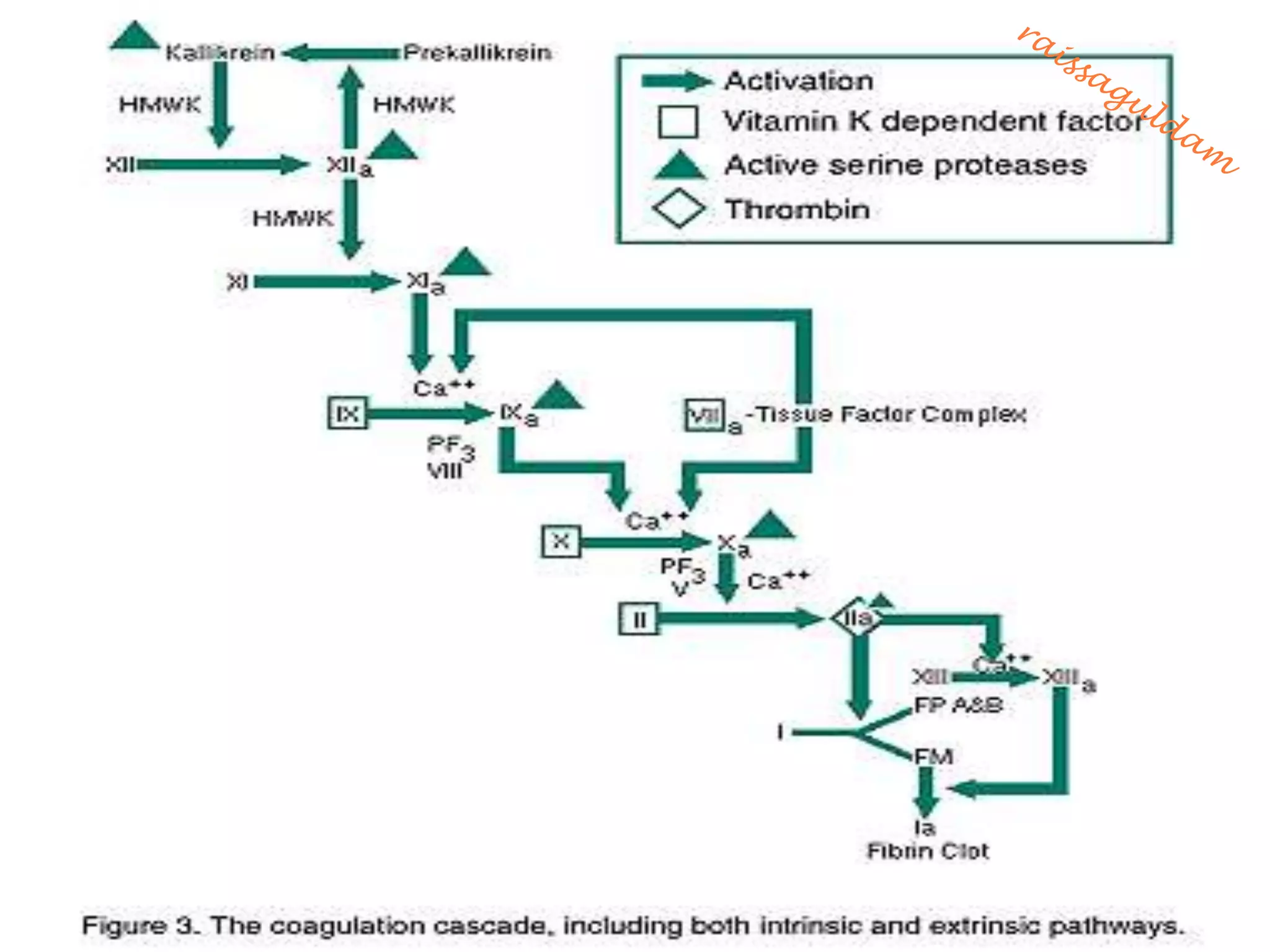
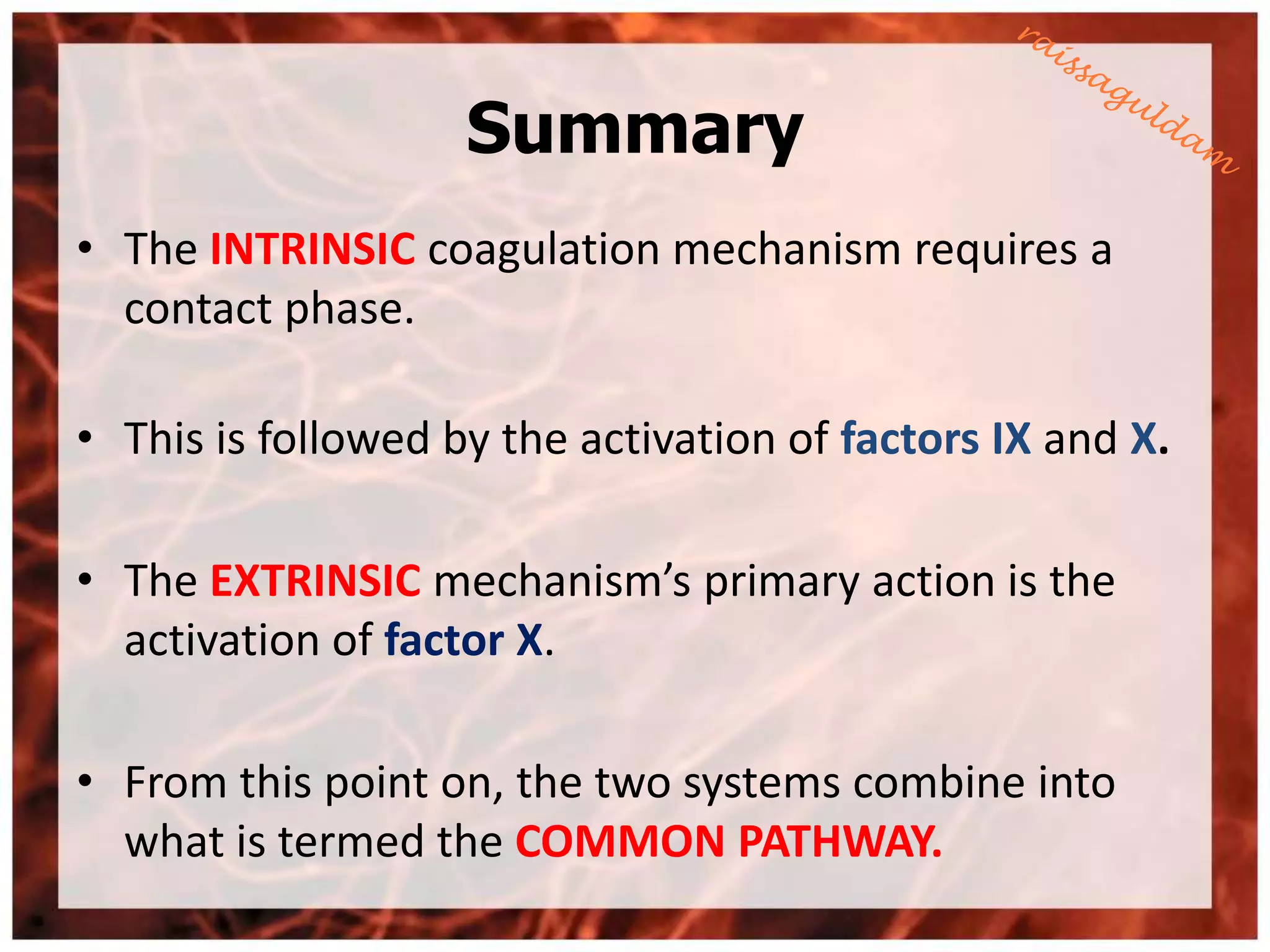
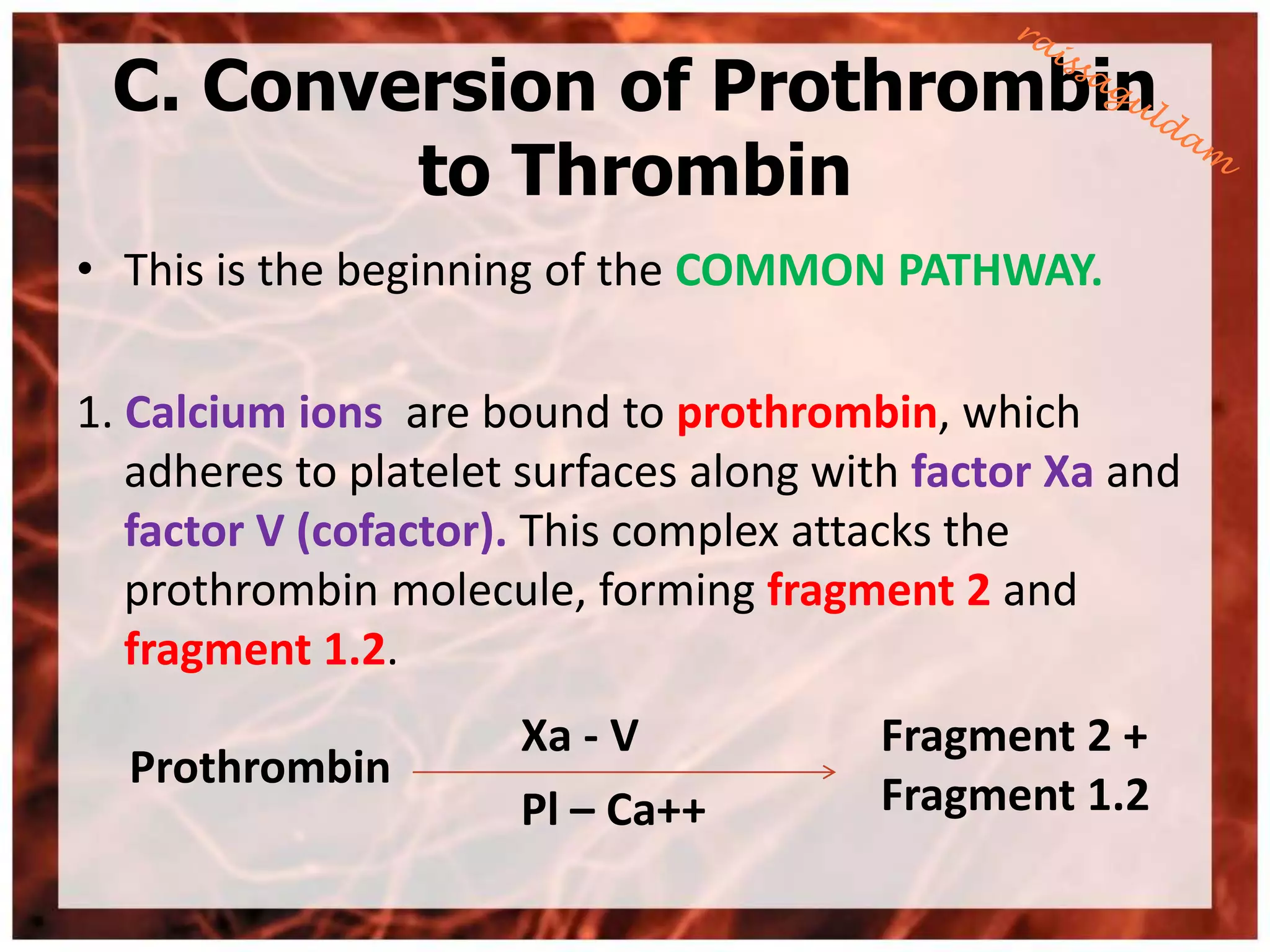
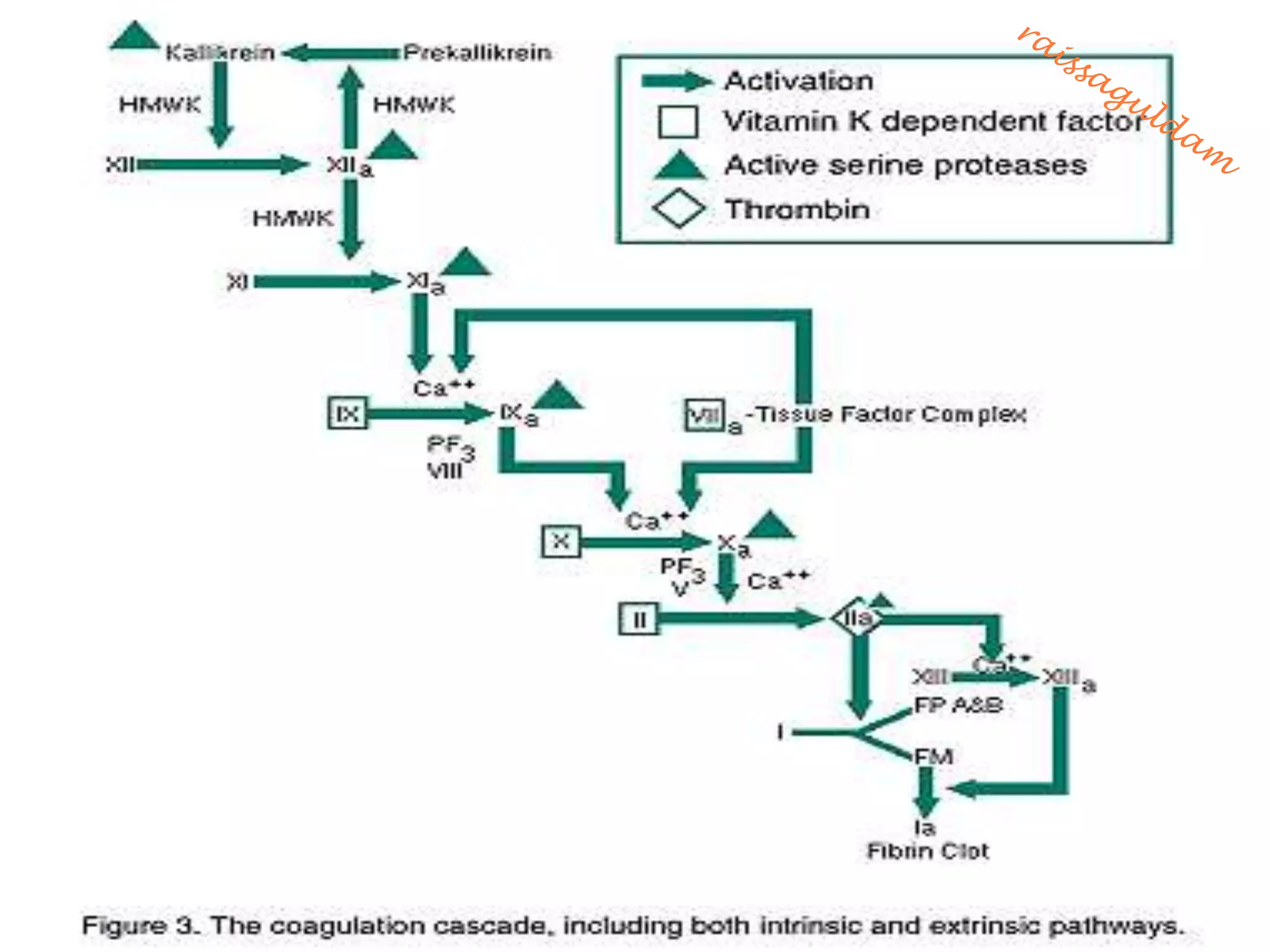
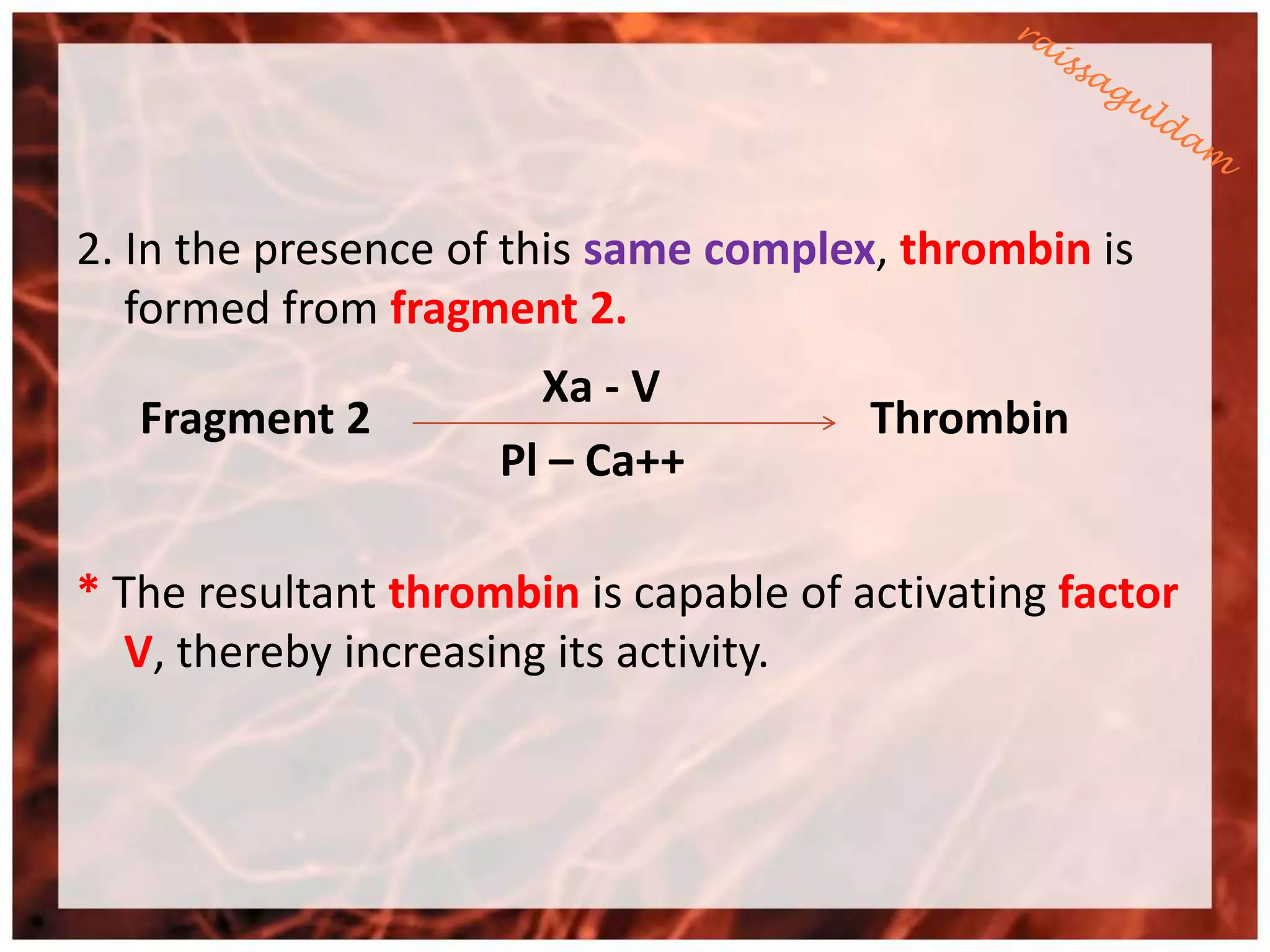
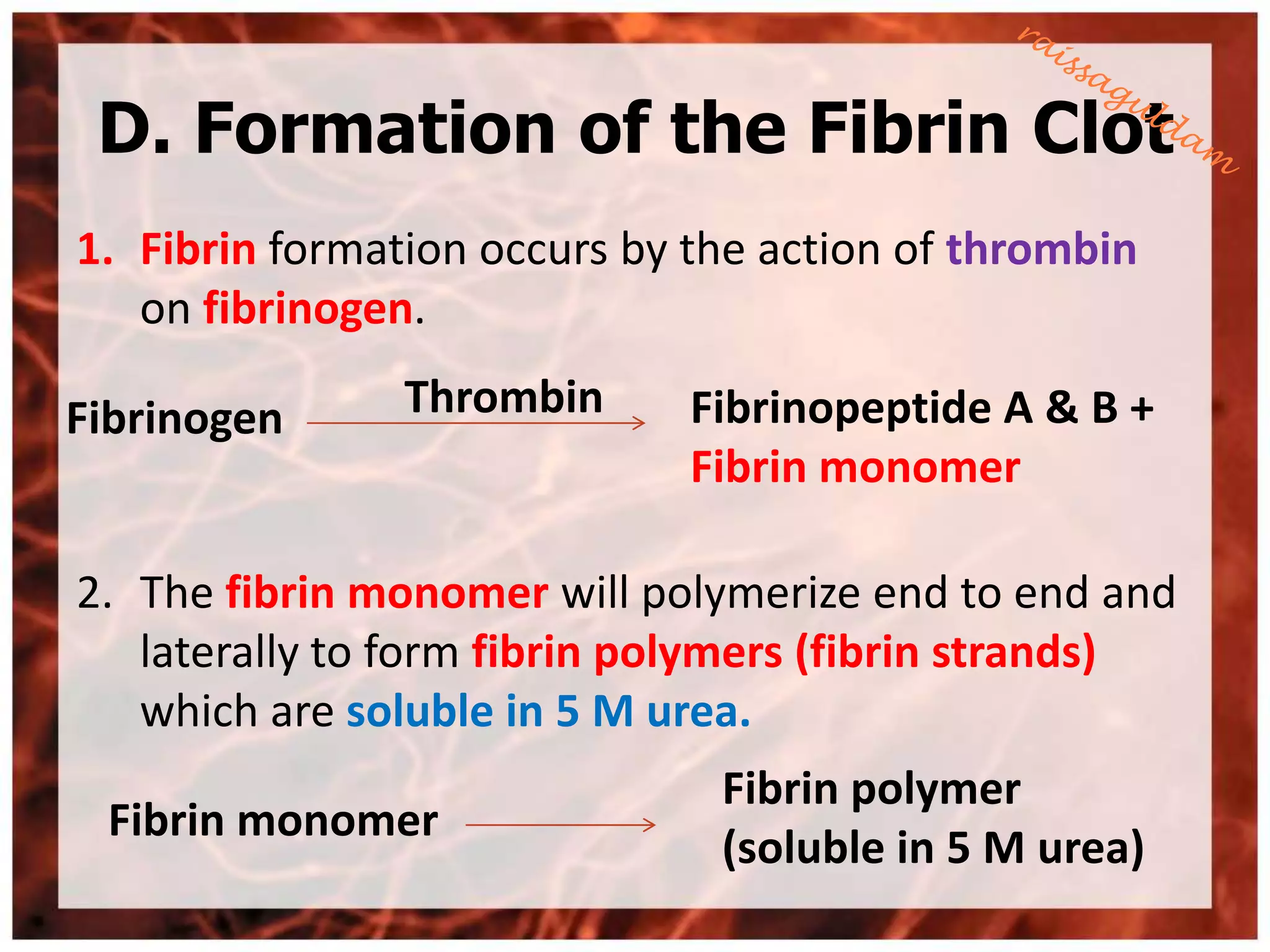
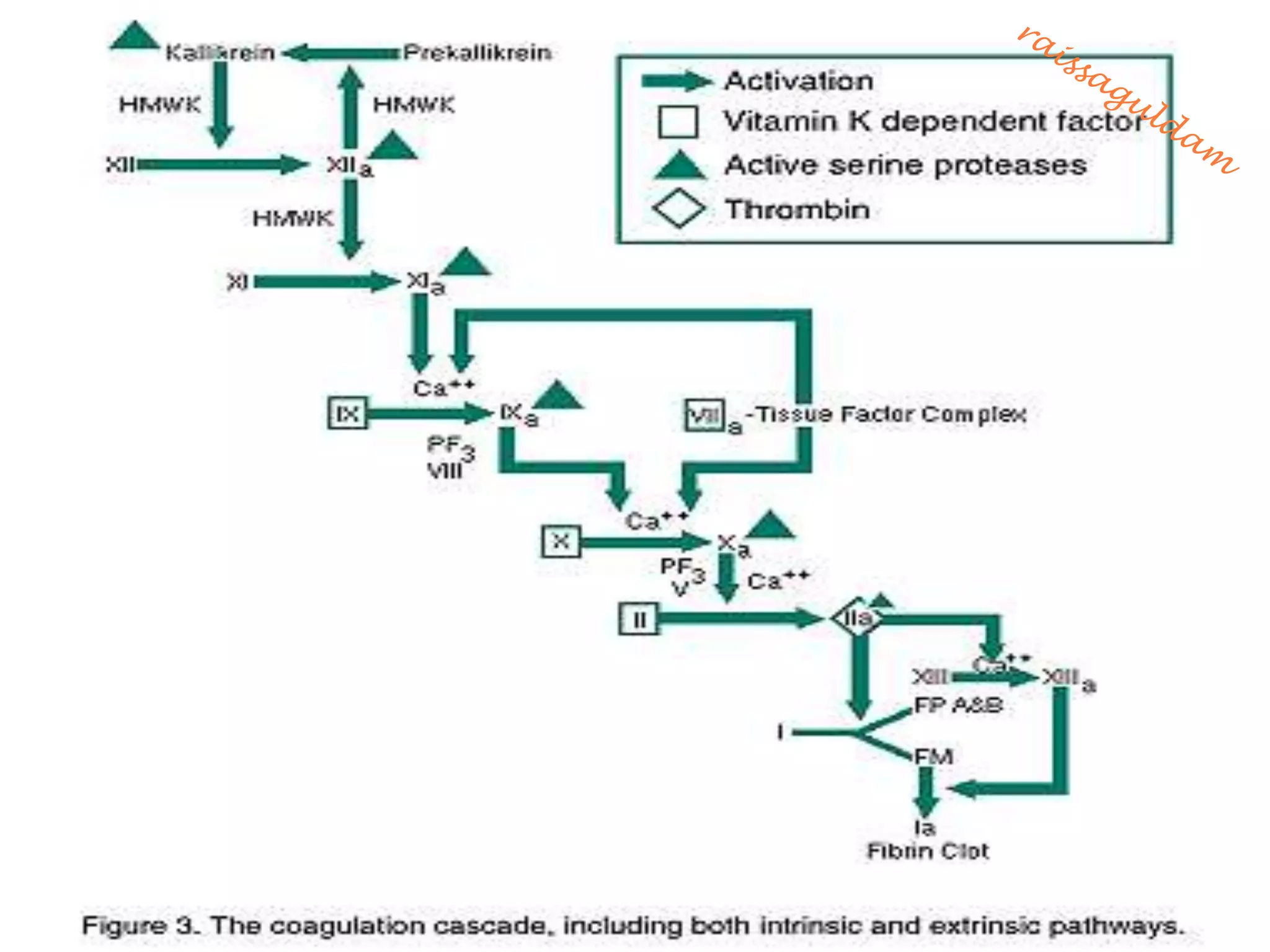
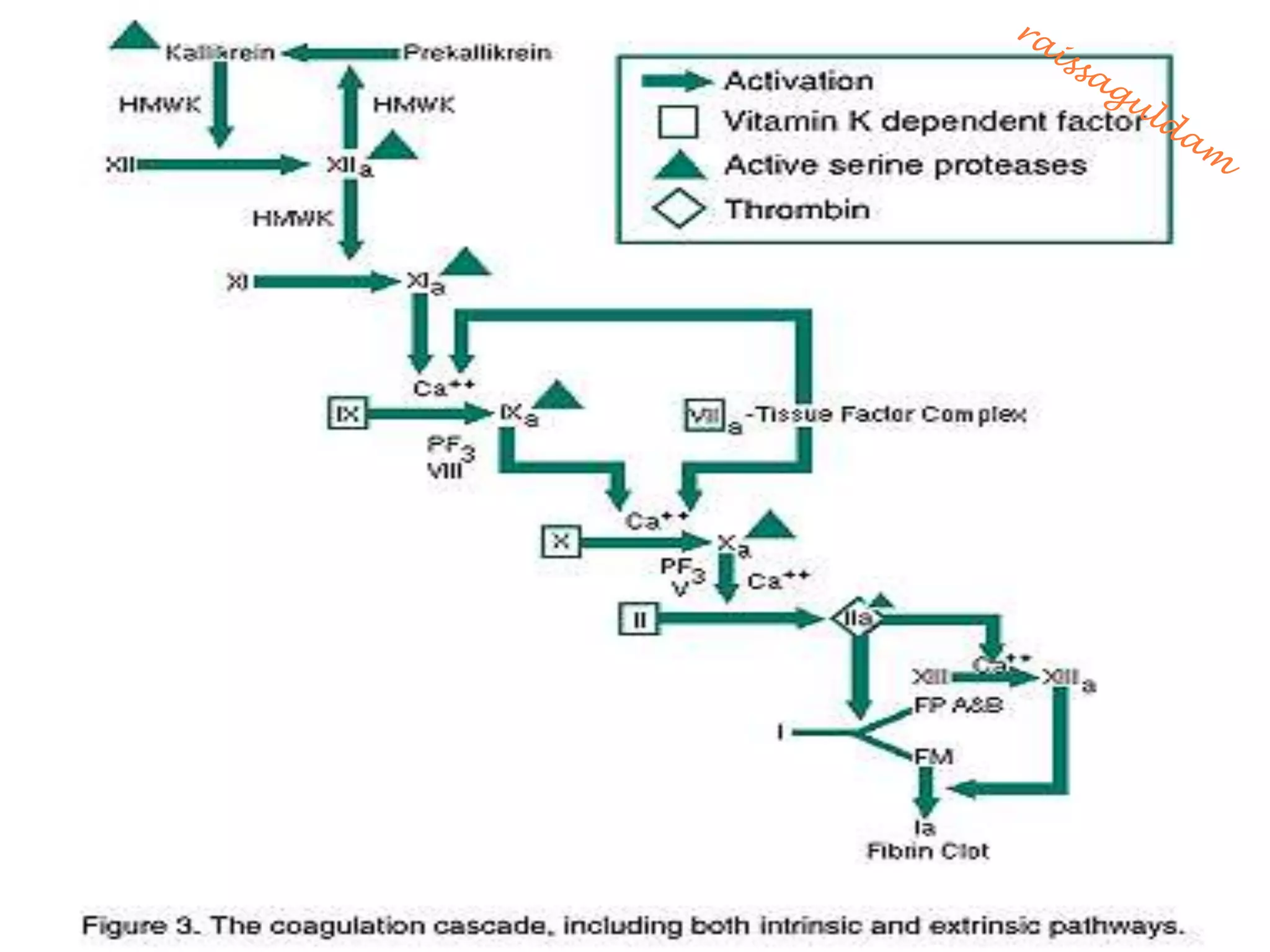
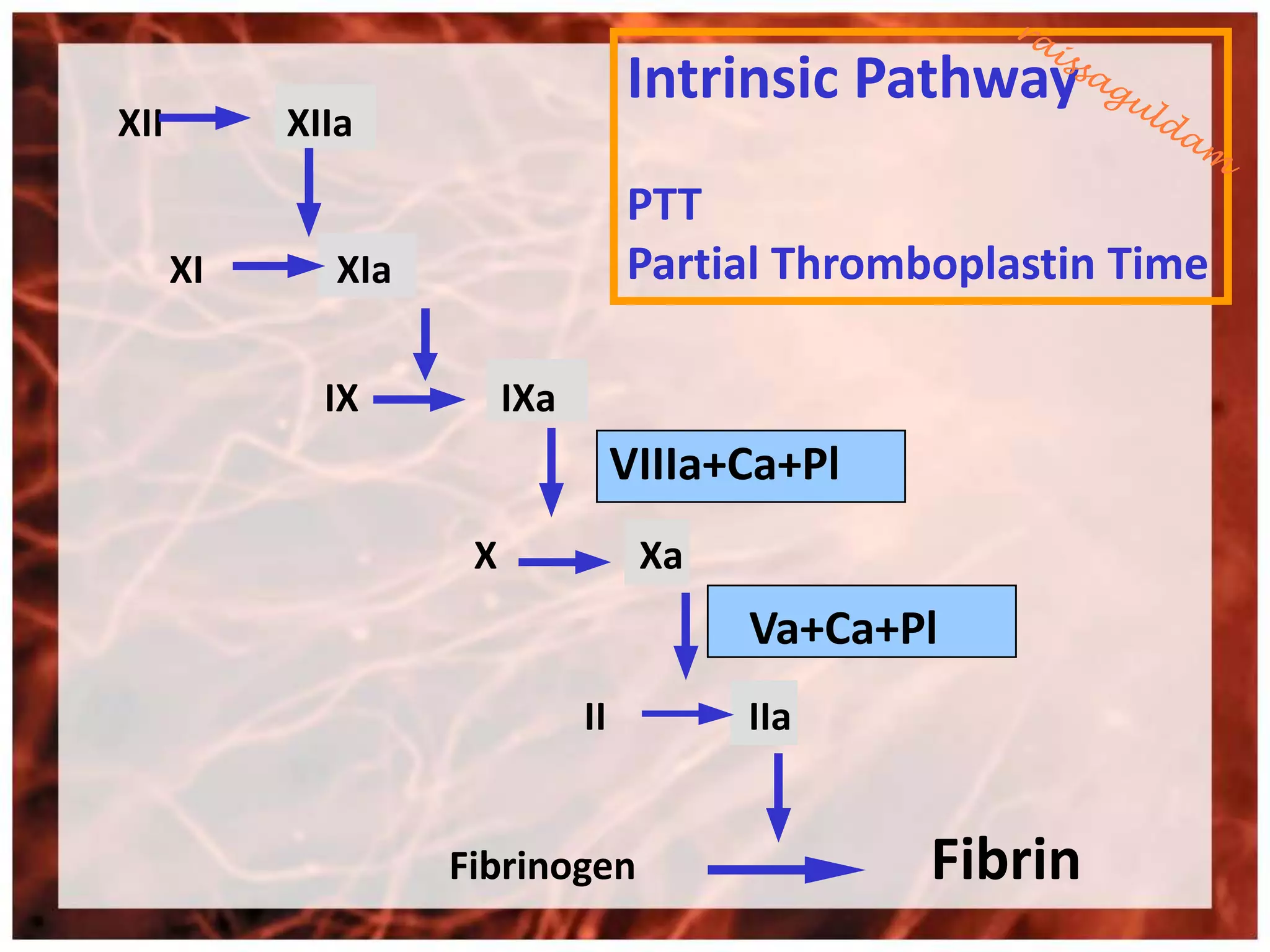
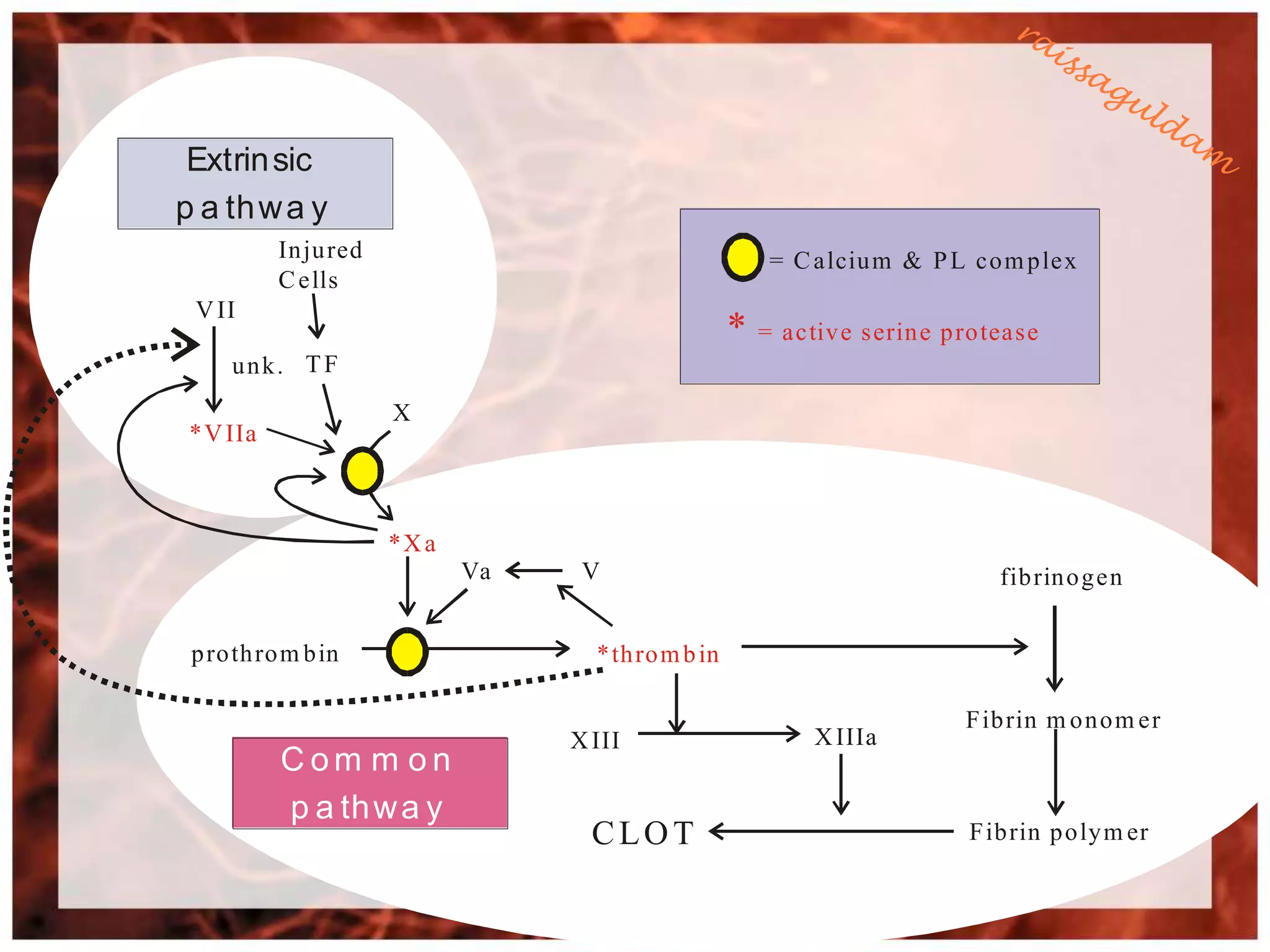
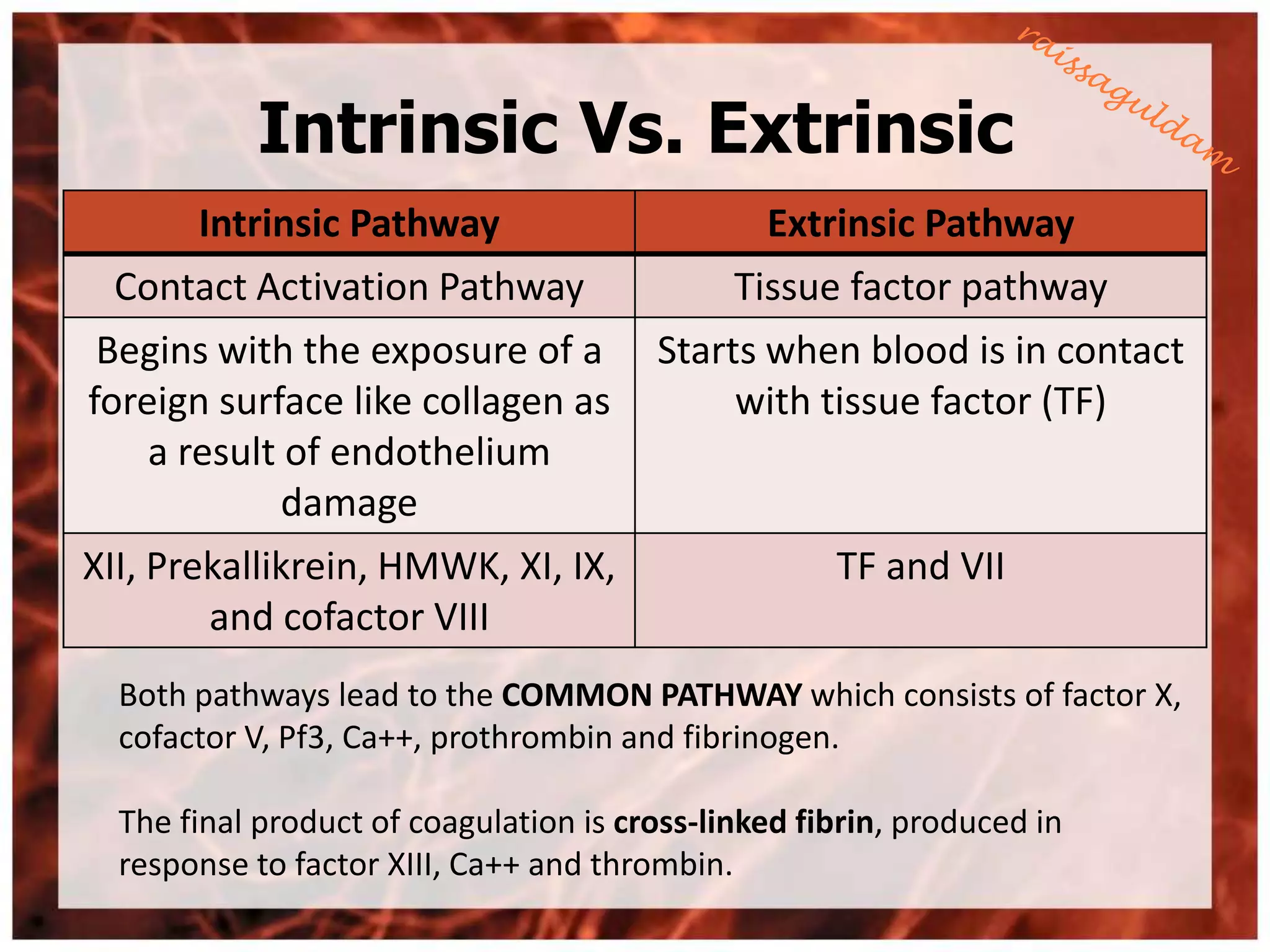
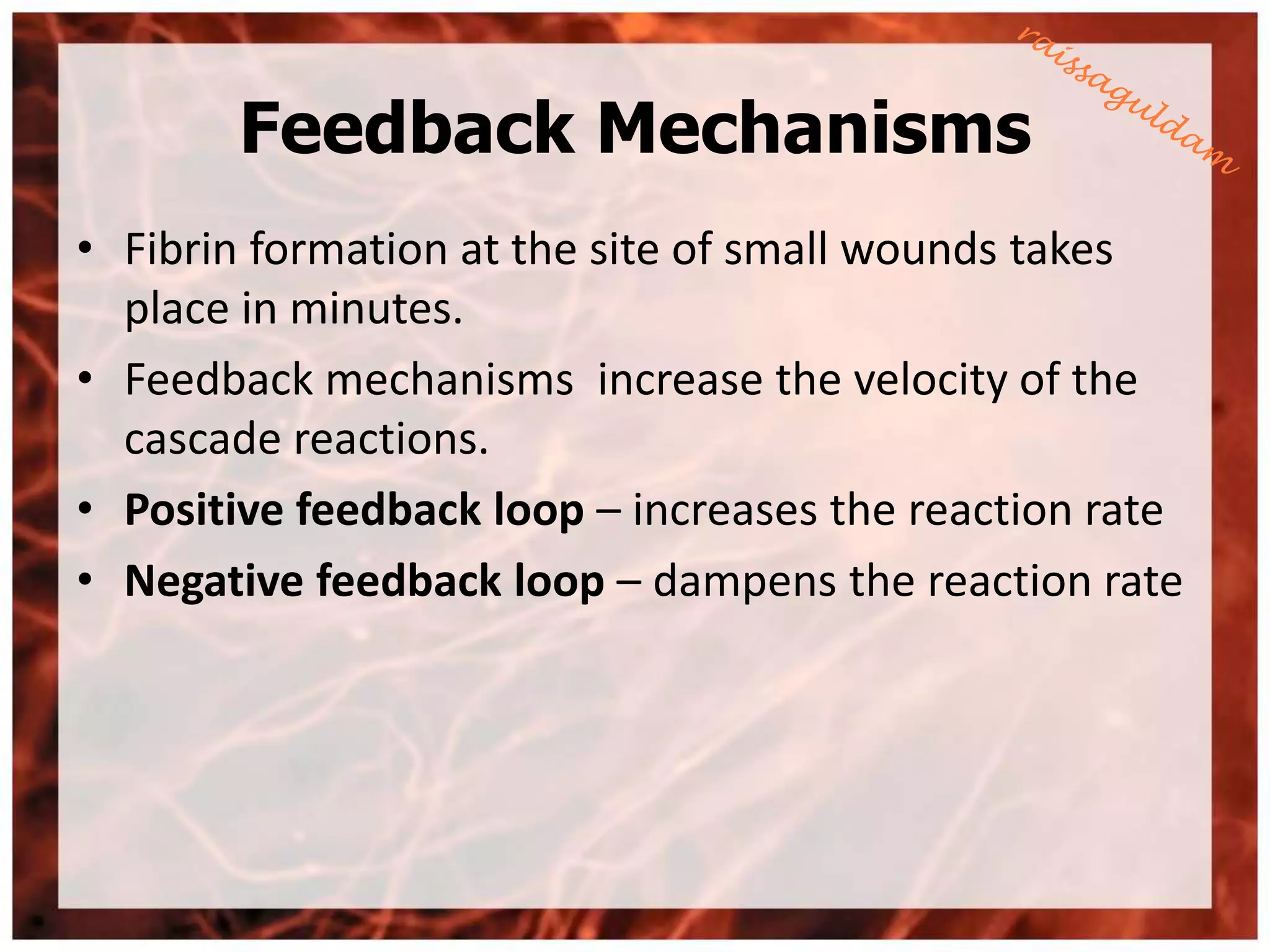

The cascade theory describes blood coagulation as a series of biochemical reactions that converts soluble fibrinogen into insoluble fibrin clot. It involves the intrinsic and extrinsic pathways that activate coagulation factors in a cascade-like manner, culminating in a common pathway where thrombin converts fibrinogen to fibrin. Feedback mechanisms tightly regulate clot formation to prevent excessive coagulation.


