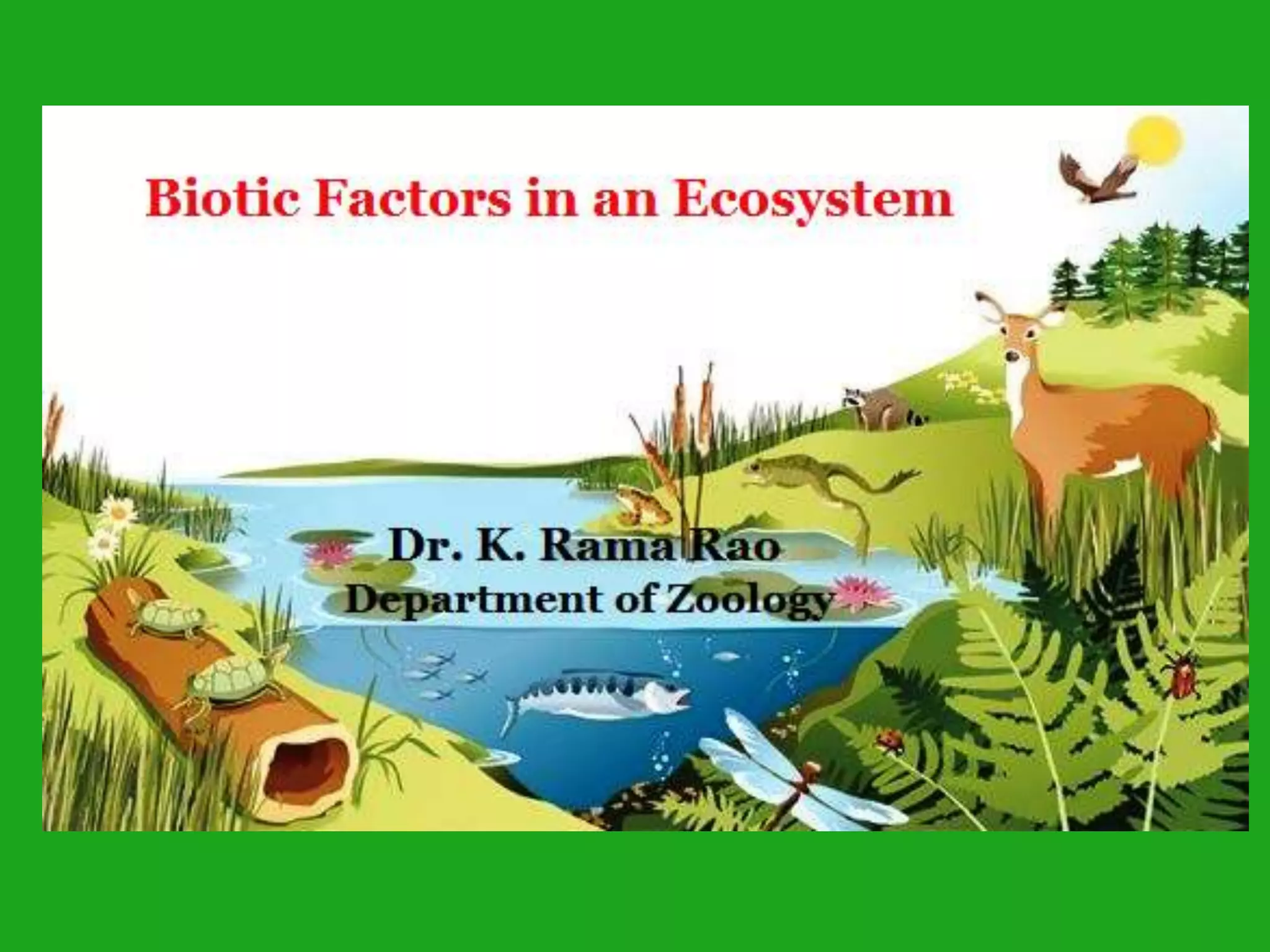
Biotic factors are the living
components of an ecosystem. They
are sorted into three groups’ i. e.,
1. Producers or autotrophs,
2. Consumers or heterotrophs,
and
3. Decomposers or detritivores.
1. Producers
Producers – also known as
autotrophs, from the Greek
words “auto” for “self” and
“troph” for “food” – are
organisms that make their own
food using inorganic materials
and energy sources.
A. Photoautotrophs: These are the
most common type of
producers on Earth today.
These producers harness energy
from sunlight to power their life
functions.
Green plants, green algae, and
some bacteria are
photoautotrophs.
Most photoautotrophs use a
pigment, such as chlorophyll, to
catch photons from the Sun and
harvest their energy.
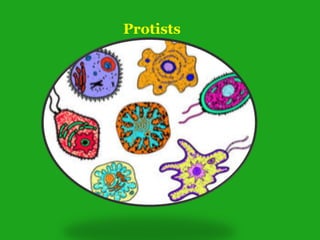
Protists: Protists generally are
one-celled microscopic organisms
in the ecosystem. Plant-like
protists use photosynthesis, so
they are producers.
Protists
Animals such as paramecia and
amoebas eat bacteria and smaller
protists, so they form part of the
food chain.
Chemoautotrophs are fairly rare in
most ecosystems.
They obtain energy from chemicals
such as hydrogen, iron, and sulfur,
which are not common in most
environments.
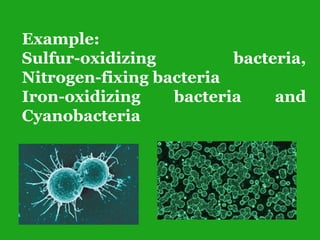
Example:
Sulfur-oxidizing bacteria,
Nitrogen-fixing bacteria
Iron-oxidizing bacteria and
Cyanobacteria
B. Plants:
Most ecosystems depend on plants
to perform photosynthesis,
making food from water and
carbon dioxide in the ecosystem.
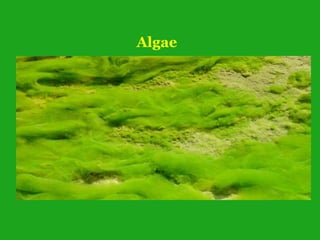
In ponds, lakes and the ocean,
many of the plants are grasses,
algae or tiny phytoplankton
floating on or near the surface.
Algae
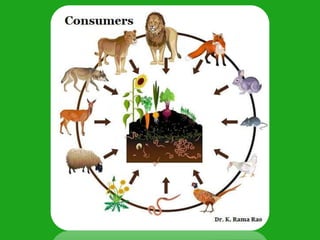
2. Consumers
Consumers, also called
“heterotrophs,” are organisms that
eat other living organisms in order
to obtain energy.
Herbivores who eat plants,
carnivores who eat animals, and
omnivores who eat both plants and
animals, are all heterotrophs.
Animals: First-order consumers like
mice, rabbits and seed-eating birds as
well as zooplankton, snails, mussels, sea
urchins, ducks and black sharks eat the
plants and algae.
Predators like Bobcats, bears, Killer
whales and Tiger sharks eat first-order
consumers. Omnivores like bears and
rotifers (nearly microscopic aquatic
animals) eat both plants and animals.
3. Decomposers
Decomposers or detritovores are
organisms that use organic
compounds from producers and
consumers as their source of
energy.
They are important to ecosystems
because they break down materials
from other living things into simpler
forms, which can then be used again
by other organisms.
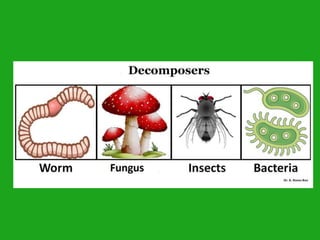
Decomposers include soil bacteria,
fungi, worms, flies, and other
organisms that break down dead
materials or waste products from
other life forms.
They are distinct from consumers,
because consumers usually
consume other organisms while
they are still alive.
Fungi:
Fungi like mushrooms and slime
molds feed off the bodies of living
hosts or break down the remains of
once-living organisms. Fungi serve
an important role in the ecosystem
as decomposers.
Bacteria:
In deep-sea vents, chemosynthetic
bacteria fill the role of producers
in the food chain.
Bacteria act as decomposers,
breaking down dead organisms to
release nutrients. Bacteria also
serve as food for other organisms.
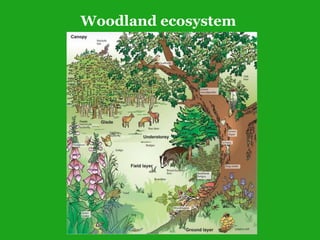
A healthy woodland ecosystem
contains producers like grasses
and trees, as well as consumers
ranging from mice and rabbits to
hawks and bears.
The biotic components of an
ecosystem also encompass
decomposers like fungus and
bacteria.
Woodland ecosystem
A healthy aquatic ecosystem
includes producers like algae and
phytoplankton, consumers like
zooplankton and fish, and
decomposers like bacteria.
Aquatic ecosystem

Biotic Factors in an Ecosystem

  • 2.
    Biotic factors arethe living components of an ecosystem. They are sorted into three groups’ i. e., 1. Producers or autotrophs, 2. Consumers or heterotrophs, and 3. Decomposers or detritivores.
  • 3.
    1. Producers Producers –also known as autotrophs, from the Greek words “auto” for “self” and “troph” for “food” – are organisms that make their own food using inorganic materials and energy sources.
  • 4.
    A. Photoautotrophs: Theseare the most common type of producers on Earth today. These producers harness energy from sunlight to power their life functions. Green plants, green algae, and some bacteria are photoautotrophs.
  • 5.
    Most photoautotrophs usea pigment, such as chlorophyll, to catch photons from the Sun and harvest their energy. Protists: Protists generally are one-celled microscopic organisms in the ecosystem. Plant-like protists use photosynthesis, so they are producers.
  • 6.
  • 7.
    Animals such asparamecia and amoebas eat bacteria and smaller protists, so they form part of the food chain. Chemoautotrophs are fairly rare in most ecosystems. They obtain energy from chemicals such as hydrogen, iron, and sulfur, which are not common in most environments.
  • 8.
  • 9.
    B. Plants: Most ecosystemsdepend on plants to perform photosynthesis, making food from water and carbon dioxide in the ecosystem. In ponds, lakes and the ocean, many of the plants are grasses, algae or tiny phytoplankton floating on or near the surface.
  • 10.
  • 11.
    2. Consumers Consumers, alsocalled “heterotrophs,” are organisms that eat other living organisms in order to obtain energy. Herbivores who eat plants, carnivores who eat animals, and omnivores who eat both plants and animals, are all heterotrophs.
  • 12.
    Animals: First-order consumerslike mice, rabbits and seed-eating birds as well as zooplankton, snails, mussels, sea urchins, ducks and black sharks eat the plants and algae. Predators like Bobcats, bears, Killer whales and Tiger sharks eat first-order consumers. Omnivores like bears and rotifers (nearly microscopic aquatic animals) eat both plants and animals.
  • 14.
    3. Decomposers Decomposers ordetritovores are organisms that use organic compounds from producers and consumers as their source of energy. They are important to ecosystems because they break down materials from other living things into simpler forms, which can then be used again by other organisms.
  • 15.
    Decomposers include soilbacteria, fungi, worms, flies, and other organisms that break down dead materials or waste products from other life forms. They are distinct from consumers, because consumers usually consume other organisms while they are still alive.
  • 17.
    Fungi: Fungi like mushroomsand slime molds feed off the bodies of living hosts or break down the remains of once-living organisms. Fungi serve an important role in the ecosystem as decomposers.
  • 18.
    Bacteria: In deep-sea vents,chemosynthetic bacteria fill the role of producers in the food chain. Bacteria act as decomposers, breaking down dead organisms to release nutrients. Bacteria also serve as food for other organisms.
  • 19.
    A healthy woodlandecosystem contains producers like grasses and trees, as well as consumers ranging from mice and rabbits to hawks and bears. The biotic components of an ecosystem also encompass decomposers like fungus and bacteria.
  • 20.
  • 21.
    A healthy aquaticecosystem includes producers like algae and phytoplankton, consumers like zooplankton and fish, and decomposers like bacteria.
  • 22.