BETA BLOCKERS - PHARMACOLOGY
Dr. S P SRINIVAS NAYAK
Assistant Professor, SUCP
Dept. of Pharmacy Practice.
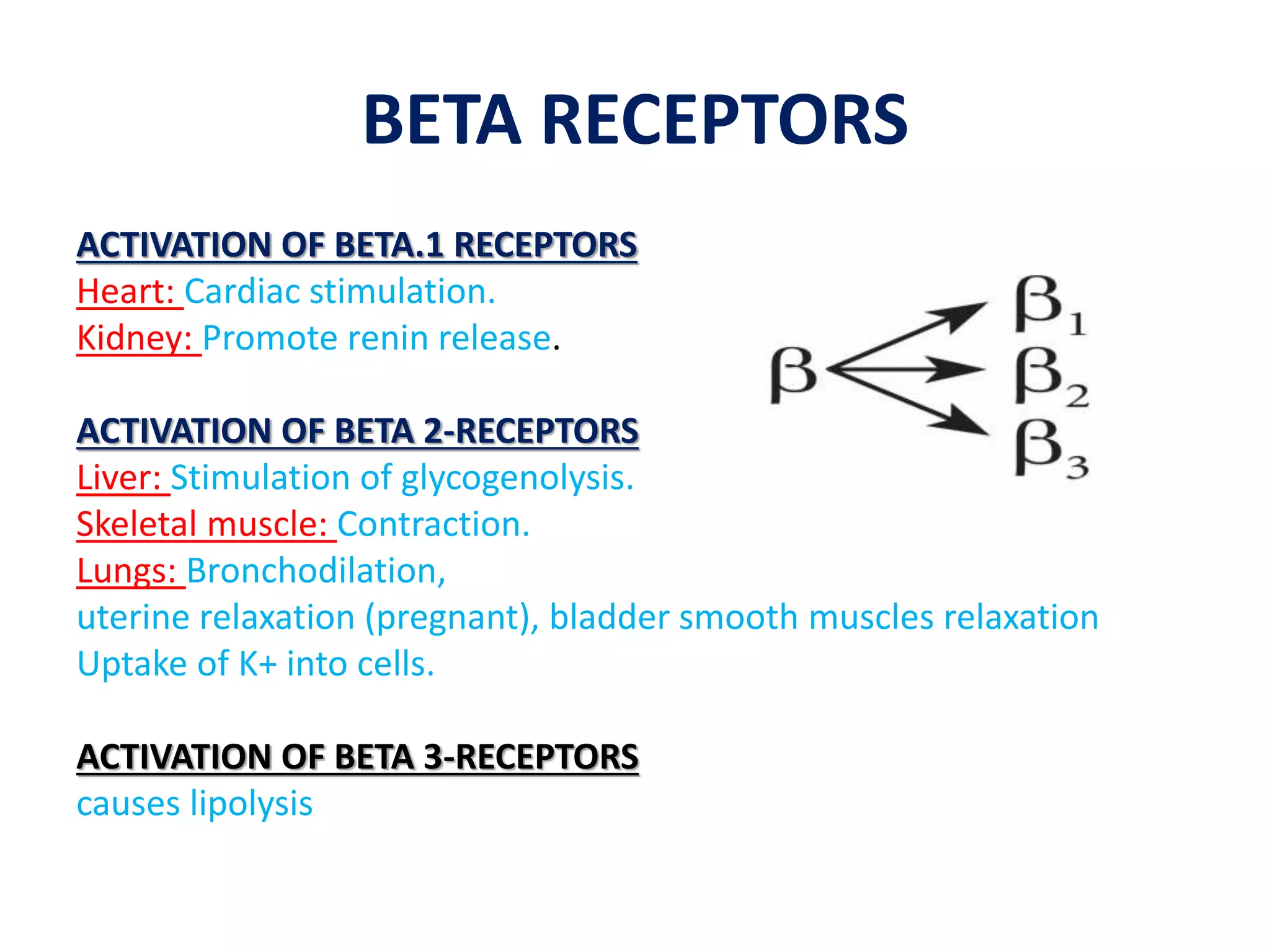
BETA RECEPTORS
ACTIVATION OF BETA.1 RECEPTORS
Heart: Cardiac stimulation.
Kidney: Promote renin release.
ACTIVATION OF BETA 2-RECEPTORS
Liver: Stimulation of glycogenolysis.
Skeletal muscle: Contraction.
Lungs: Bronchodilation,
uterine relaxation (pregnant), bladder smooth muscles relaxation
Uptake of K+ into cells.
ACTIVATION OF BETA 3-RECEPTORS
causes lipolysis
Beta blockers
beta-Blockers competitively block the beta-
mediated actions of catecholamines and other
adrenergic agonists.
Also called
Beta adrenergic antagonists
Beta blockers
Beta receptor blockers
Sympatholytic agents
pharmacological actions
CARDIOVASCULAR SYSTEM:
a. Heart:
b-Blockers depress all the cardiac properties
i. Decrease heart rate (negative chronotropic effect).
ii. Decrease the force of myocardial contractility (negative inotropic
effect).
iii. Decrease cardiac output.
B. Blood vessels:
Blockade of beta 2-receptors of the blood vessels initially may cause
rise in peripheral vascular resistance due to the unopposed alpha 1-
action. But continued will reduce peripheral resistance, AND REDUCE
BP
C. Kidneys :
blocks renin release and decreases HTN
Respiratory system:
• Blockade of B 2-receptors in bronchial smooth
muscle can produce severe bronchospasm in
patients with COPD and asthma.
• Therefore, B2-blockers should be avoided in
patients with asthma and COPD.
SKELETAL MUSCLE:
On chronic use, B-blockers may cause skeletal
muscle weakness and tiredness due to blockade
of B 2-receptors of the skeletal muscle and
blood vessels supplying it.
They also reduce stress-induced tremors.
DOC in hyperthyroidism
Metabolic effects:
• b-Blockers inhibit glycogenolysis and delay
recovery from hypoglycaemia.
• They also mask the warning signs and symptoms
of hypoglycaemia. Therefore, b-blockers should
be used cautiously in diabetics on hypoglycaemic
agents.
• Chronic use of nonselective b-blockers decreases
high-density lipoprotein (HDL) cholesterol and
low-density lipoprotein (LDL) cholesterol ratio,
which may increase the risk of coronary artery
disease
Pharmacokinetics
• Propranolol(all other b-blockers) is highly lipid
soluble and is well absorbed from GI tract.
However, the bioavailability of propranolol is
low because of its extensive first-pass
metabolism.
• It is highly bound to plasma proteins; has large
volume of distribution; freely crosses BBB, and
metabolites are excreted in urine.
ADRs
• CVS: Bradycardia, heart block and may precipitate
congestive heart failure in patients with low cardiac
reserve.
• RESPIRATORY SYSTEM: Blockade of b2-receptors in the
bronchial smooth muscle can cause severe bronchospasm
in patients with asthma and COPD.
• CNS: Sleep disturbances, hallucinations, fatigue and mental
depression
• Hypoglycaemia is common with non selective agents
• Withdrawal symptoms: Abrupt withdrawal of b-blockers
after chronic use is dangerous because they can precipitate
angina or frank myocardial infarction and even sudden
death
• Muscle weakness tiredness
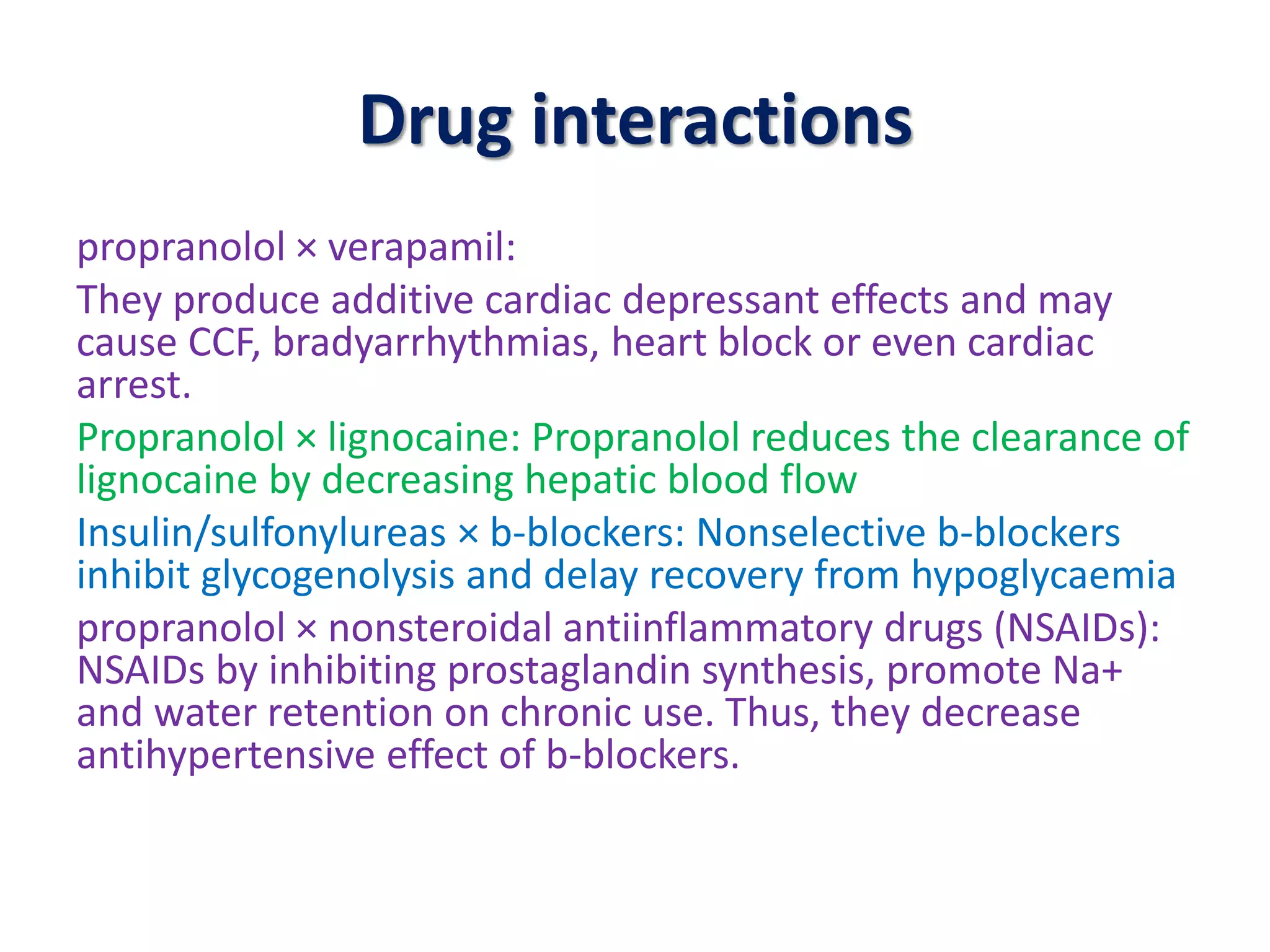
Drug interactions
propranolol × verapamil:
They produce additive cardiac depressant effects and may
cause CCF, bradyarrhythmias, heart block or even cardiac
arrest.
Propranolol × lignocaine: Propranolol reduces the clearance of
lignocaine by decreasing hepatic blood flow
Insulin/sulfonylureas × b-blockers: Nonselective b-blockers
inhibit glycogenolysis and delay recovery from hypoglycaemia
propranolol × nonsteroidal antiinflammatory drugs (NSAIDs):
NSAIDs by inhibiting prostaglandin synthesis, promote Na+
and water retention on chronic use. Thus, they decrease
antihypertensive effect of b-blockers.
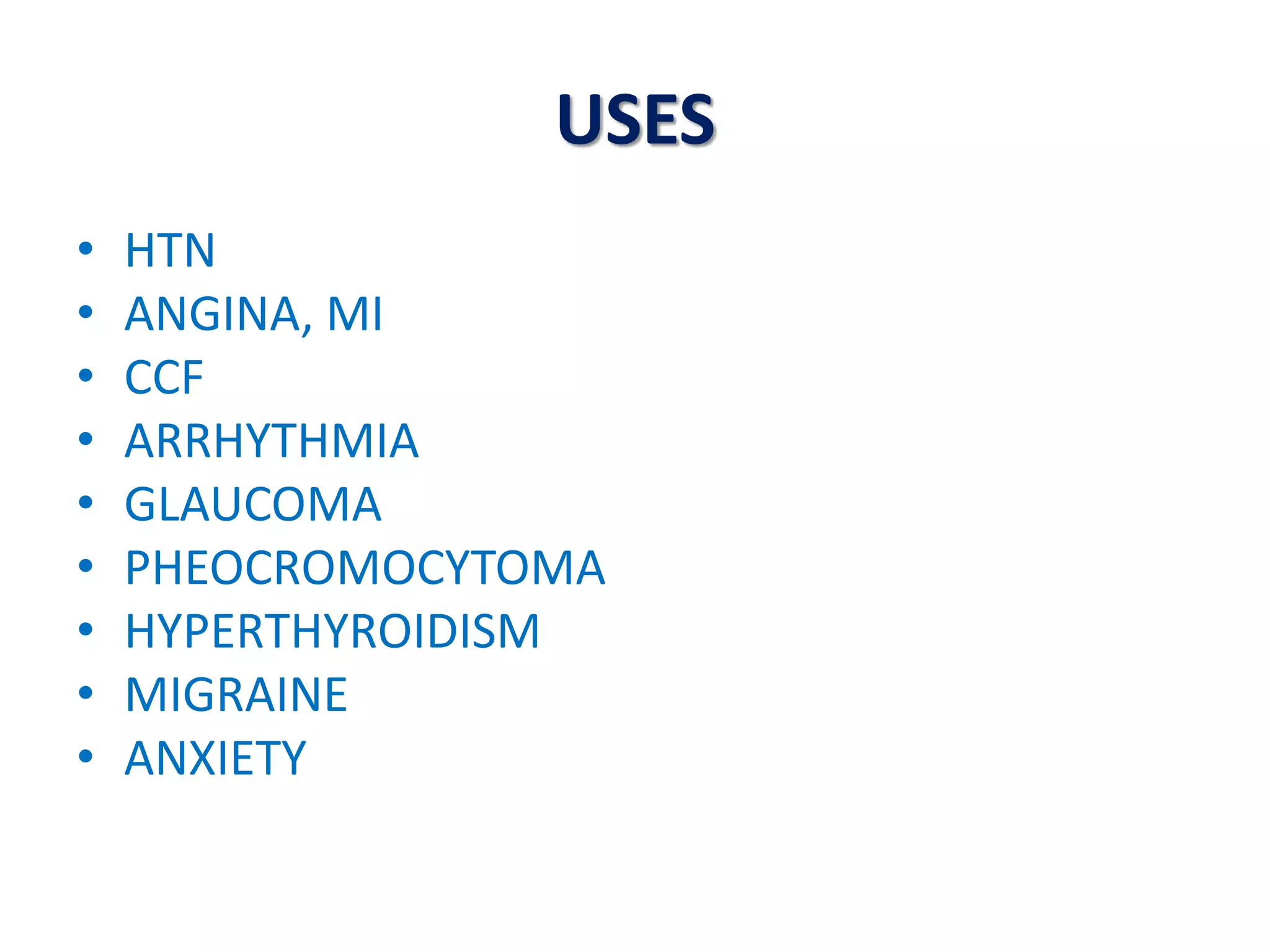
USES
• HTN
• ANGINA, MI
• CCF
• ARRHYTHMIA
• GLAUCOMA
• PHEOCROMOCYTOMA
• HYPERTHYROIDISM
• MIGRAINE
• ANXIETY

Beta blockers - pharmacology

  • 1.
    BETA BLOCKERS -PHARMACOLOGY Dr. S P SRINIVAS NAYAK Assistant Professor, SUCP Dept. of Pharmacy Practice.
  • 2.
    BETA RECEPTORS ACTIVATION OFBETA.1 RECEPTORS Heart: Cardiac stimulation. Kidney: Promote renin release. ACTIVATION OF BETA 2-RECEPTORS Liver: Stimulation of glycogenolysis. Skeletal muscle: Contraction. Lungs: Bronchodilation, uterine relaxation (pregnant), bladder smooth muscles relaxation Uptake of K+ into cells. ACTIVATION OF BETA 3-RECEPTORS causes lipolysis
  • 3.
    Beta blockers beta-Blockers competitivelyblock the beta- mediated actions of catecholamines and other adrenergic agonists. Also called Beta adrenergic antagonists Beta blockers Beta receptor blockers Sympatholytic agents
  • 5.
    pharmacological actions CARDIOVASCULAR SYSTEM: a.Heart: b-Blockers depress all the cardiac properties i. Decrease heart rate (negative chronotropic effect). ii. Decrease the force of myocardial contractility (negative inotropic effect). iii. Decrease cardiac output. B. Blood vessels: Blockade of beta 2-receptors of the blood vessels initially may cause rise in peripheral vascular resistance due to the unopposed alpha 1- action. But continued will reduce peripheral resistance, AND REDUCE BP C. Kidneys : blocks renin release and decreases HTN
  • 6.
    Respiratory system: • Blockadeof B 2-receptors in bronchial smooth muscle can produce severe bronchospasm in patients with COPD and asthma. • Therefore, B2-blockers should be avoided in patients with asthma and COPD.
  • 7.
    SKELETAL MUSCLE: On chronicuse, B-blockers may cause skeletal muscle weakness and tiredness due to blockade of B 2-receptors of the skeletal muscle and blood vessels supplying it. They also reduce stress-induced tremors. DOC in hyperthyroidism
  • 8.
    Metabolic effects: • b-Blockersinhibit glycogenolysis and delay recovery from hypoglycaemia. • They also mask the warning signs and symptoms of hypoglycaemia. Therefore, b-blockers should be used cautiously in diabetics on hypoglycaemic agents. • Chronic use of nonselective b-blockers decreases high-density lipoprotein (HDL) cholesterol and low-density lipoprotein (LDL) cholesterol ratio, which may increase the risk of coronary artery disease
  • 9.
    Pharmacokinetics • Propranolol(all otherb-blockers) is highly lipid soluble and is well absorbed from GI tract. However, the bioavailability of propranolol is low because of its extensive first-pass metabolism. • It is highly bound to plasma proteins; has large volume of distribution; freely crosses BBB, and metabolites are excreted in urine.
  • 10.
    ADRs • CVS: Bradycardia,heart block and may precipitate congestive heart failure in patients with low cardiac reserve. • RESPIRATORY SYSTEM: Blockade of b2-receptors in the bronchial smooth muscle can cause severe bronchospasm in patients with asthma and COPD. • CNS: Sleep disturbances, hallucinations, fatigue and mental depression • Hypoglycaemia is common with non selective agents • Withdrawal symptoms: Abrupt withdrawal of b-blockers after chronic use is dangerous because they can precipitate angina or frank myocardial infarction and even sudden death • Muscle weakness tiredness
  • 11.
    Drug interactions propranolol ×verapamil: They produce additive cardiac depressant effects and may cause CCF, bradyarrhythmias, heart block or even cardiac arrest. Propranolol × lignocaine: Propranolol reduces the clearance of lignocaine by decreasing hepatic blood flow Insulin/sulfonylureas × b-blockers: Nonselective b-blockers inhibit glycogenolysis and delay recovery from hypoglycaemia propranolol × nonsteroidal antiinflammatory drugs (NSAIDs): NSAIDs by inhibiting prostaglandin synthesis, promote Na+ and water retention on chronic use. Thus, they decrease antihypertensive effect of b-blockers.
  • 12.
    USES • HTN • ANGINA,MI • CCF • ARRHYTHMIA • GLAUCOMA • PHEOCROMOCYTOMA • HYPERTHYROIDISM • MIGRAINE • ANXIETY