Dr. K. R. Prabhakar,
Resident.
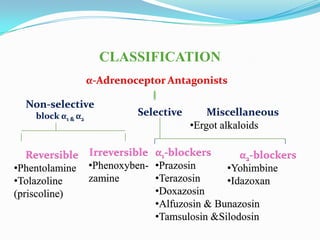
CLASSIFICATION
α-Adrenoceptor Antagonists
Non-selective
block α1 & α2

Selective

Miscellaneous
•Ergot alkaloids

Reversible Irreversible α1-blockers
α2-blockers
•Phentolamine •Phenoxyben- •Prazosin
•Yohimbine
zamine
•Terazosin
•Tolazoline
•Idazoxan
•Doxazosin
(priscoline)
•Alfuzosin & Bunazosin
•Tamsulosin &Silodosin
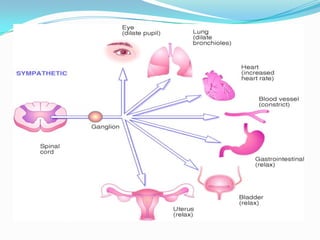
General effects of α blockers
Blood vessels
 α1-blockade→reduces peripheral resistance
Fall in BP
Postural hypotension
 α2-blockade in brain ↑se vasomotor tone.
 Block pressor action of adrenaline, fall in BP due toβ2.
action- “vasomotor reversal of Dale”
 Actions of selective α-agonists supressed.
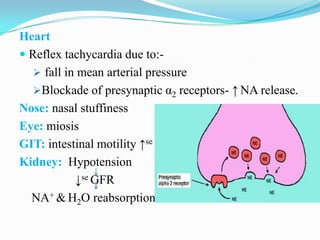
Heart
 Reflex tachycardia due to: fall in mean arterial pressure
Blockade of presynaptic α2 receptors- ↑ NA release.
Nose: nasal stuffiness
Eye: miosis
GIT: intestinal motility ↑se
Kidney: Hypotension
↓se GFR
NA+ & H2O reabsorption
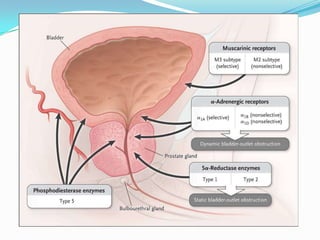
Urinary bladder
 α1A blockade- ↓se tone of smooth muscle in
trigone, sphincter & prostrate.
 Improved urine flow, used in BPH.

Reproductive system
 Contraction of vas deferens result in ejaculation
through α receptors.
 Blockade results in impotence.
Irreversible non-selective α- blockers
Phenoxybenzamine
 Cyclizes spontaneously to highly reactive ethyleniminium
intermediate.
 Binds covalently to α-receptors- irreversible or nonequilibrium competitive block.
 Blockade is slow onset & longer duration (3-4 days).
 Also inhibits reuptake of NE.
 Shifts blood from pulmonary to systemic circuit.
 Shift fluid from extravascular to vascular compartmentrelaxation of postcapillary vessels.
PK
 Preferred ROA- i.v.
 Lipid soluble penetrates brain.
 Mainly excreted through urine in 24 hrs.
 Accumulates in adipose tissue on ch. Administration.

Dose
20-60 mg/d oral
1mg/kg/1hr slow i.v infusion.
Uses
Pheochromocytoma, occasionally 2oshock, PVD.
Reversible non-selective α-blockers
Tolazoline
 Block is modest & short lasting.
 Direct vasodilator & stimulates the heart.
 Also blocks 5-HT receptors, histamine like gastric
secretagouge & Ach like motor action on intestine.
SE
 N, V, cramps, diarrhoea, nervousness, chills
 Tachycardia, Exacerbation of MI, peptic ulcer.
Use
 PVD
 Pulmonary HT of newborn.
Phentolamine
 More potent α-blocker than tolazoline.
 Other actions are less marked.
 Duration of action is shorter (min).
 Equally blocks α1 & α2 receptors- NA release ↑sed.

Uses
 ∆sis & intraop.management of pheochromocytoma.
5mg i.v- B.P falls by 25(D)or35(S)mmHg.
 HTN due to clonidine withdrawl, cheese reaction.
 Dermal necrosis due to extravasated i.v NA/DA.
Given S.C as local infiltration.
Reversible, selective α1- blockers
Prazosin
 Highly selective α1-blocker , α1: α2 selectivity 1000:1
 Fall in BP with only mild tachycardia.
 Dilates arterioles more than veins
 Postural hypotension occurs as 1st dose effect, minimized
by starting with low doses at bed time.
 Also inhibits PDE- ↑se cAMP in smooth muscle.
PK
 Effective orally, BA- 60%.
 Highly bound to plasma proteins (α1 acid glycoprotein).
 Metabolized in liver, 1o excreted in bile.
 t1/2 – 2-3hrs, effect lasts for 6-8hrs.

Uses
 Primarily as antihypertensive.
 LVF not controlled by diuretics & digitalis.
 Raynaud’s disease
 BPH
 Scorpion sting
Terazosin &Doxazosin
 Long acting( t1/212 & 18hr) congener of prazosin.
 Used in HTN & BPH as single daily dose.
Tamsulosin & Silodosin
 Uroselective α1A blocker
 α1A –bladder base, prostrate. α1B- blood vessels.
 Don't cause significant changes in BP & HR.
 t1/2- 6-9hr, MR cap(0.2-0.4 mg) can be taken OD.
 Efficacious in Rx of BPH.
 SE: retrograde ejaculation, dizziness,, floppy iris syd.
 Silodosin weaker(4-8mg/d) but longer acting.
Bunazosin & Alfuzosin
 Orally effective α1 blockers similar to prazosin.
 Alfuzosin t1/2 4hrs (2.5mgTDS or 10mg SR OD).
 CI in hepatic impairment, metabolized in liver.
 Bunazosin slightly longer t1/2.
 Primarily used in BPH.
α2-receptor blockers
Yohimbine
 Natural alkaloid from Pausinystalia yohimbe.
 No established clinical role.
Idazoxan
 Has membrane stabilizing action.
Ergot alkaloids
 Ergotamine & Dihydroergotamine
 Competitive α-receptor blockers.
 Principal use is migraine.
Uses of α-Blockers
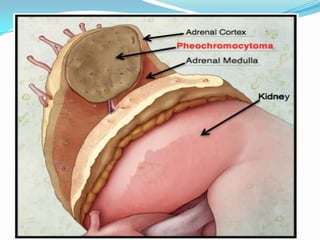
Pheochromocytoma
 Tumor of adrenal medullary cells-excess Cas.
 Cause intermittent or persistent hypertension.
 Diagnosed by- ↑se urinary VMA, normetanephrine.
 phentolamine test can also be performed.
Rx
Phenoxybenzamine
 Definitive therapy for inoperable or malig.tumors.
 Preoperative- orally x 2wks, i.v during surgery as-
1. Normalizes blood volume & body H2O distribution.
2. During surgery excess release of CAs in to blood.
Phentolamine drip can also be used.

Hypertension
 Selective α1 blocker prazosin is preferred.
2o shock
 Fluid loss leads to vasoconstriction.
 Should not be given without fluid replacement.
Peripheral vascular disease
 Little benefit in Buerger’s disease & int.claudication.
 More useful in Reynaud's disease & acrocyanosis
where vasoconstriction is prominent.
 Prazosin or phenoxybenzamine are useful.

CHF
 Short term benefit, leads to Na+ & H2O retension.
Migraine
 Ergotamine more effective
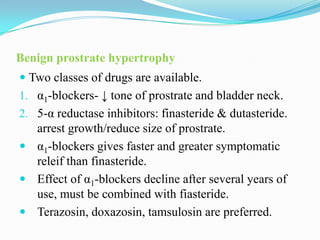
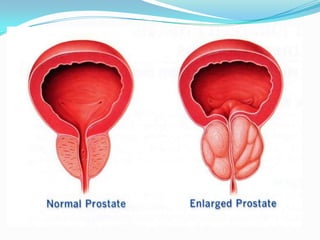
Benign prostrate hypertrophy
 Two classes of drugs are available.
1. α1-blockers- ↓ tone of prostrate and bladder neck.
2. 5-α reductase inhibitors: finasteride & dutasteride.
arrest growth/reduce size of prostrate.
 α1-blockers gives faster and greater symptomatic
releif than finasteride.
 Effect of α1-blockers decline after several years of

use, must be combined with fiasteride.
 Terazosin, doxazosin, tamsulosin are preferred.
Side effects of α-blockers
 Palpitation
 Postural hypotension
 Nasal blockade
 Diarrhea
 Fluid retention
 Inhibition of ejaculation & impotence.
Thank you

Alpha adrenergic blockers

  • 1.
    Dr. K. R.Prabhakar, Resident.
  • 2.
    CLASSIFICATION α-Adrenoceptor Antagonists Non-selective block α1& α2 Selective Miscellaneous •Ergot alkaloids Reversible Irreversible α1-blockers α2-blockers •Phentolamine •Phenoxyben- •Prazosin •Yohimbine zamine •Terazosin •Tolazoline •Idazoxan •Doxazosin (priscoline) •Alfuzosin & Bunazosin •Tamsulosin &Silodosin
  • 4.
    General effects ofα blockers Blood vessels  α1-blockade→reduces peripheral resistance Fall in BP Postural hypotension  α2-blockade in brain ↑se vasomotor tone.  Block pressor action of adrenaline, fall in BP due toβ2. action- “vasomotor reversal of Dale”  Actions of selective α-agonists supressed.
  • 5.
    Heart  Reflex tachycardiadue to: fall in mean arterial pressure Blockade of presynaptic α2 receptors- ↑ NA release. Nose: nasal stuffiness Eye: miosis GIT: intestinal motility ↑se Kidney: Hypotension ↓se GFR NA+ & H2O reabsorption
  • 6.
    Urinary bladder  α1Ablockade- ↓se tone of smooth muscle in trigone, sphincter & prostrate.  Improved urine flow, used in BPH. Reproductive system  Contraction of vas deferens result in ejaculation through α receptors.  Blockade results in impotence.
  • 7.
    Irreversible non-selective α-blockers Phenoxybenzamine  Cyclizes spontaneously to highly reactive ethyleniminium intermediate.  Binds covalently to α-receptors- irreversible or nonequilibrium competitive block.  Blockade is slow onset & longer duration (3-4 days).  Also inhibits reuptake of NE.  Shifts blood from pulmonary to systemic circuit.  Shift fluid from extravascular to vascular compartmentrelaxation of postcapillary vessels.
  • 8.
    PK  Preferred ROA-i.v.  Lipid soluble penetrates brain.  Mainly excreted through urine in 24 hrs.  Accumulates in adipose tissue on ch. Administration. Dose 20-60 mg/d oral 1mg/kg/1hr slow i.v infusion. Uses Pheochromocytoma, occasionally 2oshock, PVD.
  • 9.
    Reversible non-selective α-blockers Tolazoline Block is modest & short lasting.  Direct vasodilator & stimulates the heart.  Also blocks 5-HT receptors, histamine like gastric secretagouge & Ach like motor action on intestine. SE  N, V, cramps, diarrhoea, nervousness, chills  Tachycardia, Exacerbation of MI, peptic ulcer. Use  PVD  Pulmonary HT of newborn.
  • 10.
    Phentolamine  More potentα-blocker than tolazoline.  Other actions are less marked.  Duration of action is shorter (min).  Equally blocks α1 & α2 receptors- NA release ↑sed. Uses  ∆sis & intraop.management of pheochromocytoma. 5mg i.v- B.P falls by 25(D)or35(S)mmHg.  HTN due to clonidine withdrawl, cheese reaction.  Dermal necrosis due to extravasated i.v NA/DA. Given S.C as local infiltration.
  • 11.
    Reversible, selective α1-blockers Prazosin  Highly selective α1-blocker , α1: α2 selectivity 1000:1  Fall in BP with only mild tachycardia.  Dilates arterioles more than veins  Postural hypotension occurs as 1st dose effect, minimized by starting with low doses at bed time.  Also inhibits PDE- ↑se cAMP in smooth muscle. PK  Effective orally, BA- 60%.  Highly bound to plasma proteins (α1 acid glycoprotein).
  • 12.
     Metabolized inliver, 1o excreted in bile.  t1/2 – 2-3hrs, effect lasts for 6-8hrs. Uses  Primarily as antihypertensive.  LVF not controlled by diuretics & digitalis.  Raynaud’s disease  BPH  Scorpion sting
  • 13.
    Terazosin &Doxazosin  Longacting( t1/212 & 18hr) congener of prazosin.  Used in HTN & BPH as single daily dose. Tamsulosin & Silodosin  Uroselective α1A blocker  α1A –bladder base, prostrate. α1B- blood vessels.  Don't cause significant changes in BP & HR.  t1/2- 6-9hr, MR cap(0.2-0.4 mg) can be taken OD.  Efficacious in Rx of BPH.  SE: retrograde ejaculation, dizziness,, floppy iris syd.  Silodosin weaker(4-8mg/d) but longer acting.
  • 14.
    Bunazosin & Alfuzosin Orally effective α1 blockers similar to prazosin.  Alfuzosin t1/2 4hrs (2.5mgTDS or 10mg SR OD).  CI in hepatic impairment, metabolized in liver.  Bunazosin slightly longer t1/2.  Primarily used in BPH.
  • 15.
    α2-receptor blockers Yohimbine  Naturalalkaloid from Pausinystalia yohimbe.  No established clinical role. Idazoxan  Has membrane stabilizing action. Ergot alkaloids  Ergotamine & Dihydroergotamine  Competitive α-receptor blockers.  Principal use is migraine.
  • 16.
    Uses of α-Blockers Pheochromocytoma Tumor of adrenal medullary cells-excess Cas.  Cause intermittent or persistent hypertension.  Diagnosed by- ↑se urinary VMA, normetanephrine.  phentolamine test can also be performed. Rx Phenoxybenzamine  Definitive therapy for inoperable or malig.tumors.  Preoperative- orally x 2wks, i.v during surgery as-
  • 18.
    1. Normalizes bloodvolume & body H2O distribution. 2. During surgery excess release of CAs in to blood. Phentolamine drip can also be used. Hypertension  Selective α1 blocker prazosin is preferred. 2o shock  Fluid loss leads to vasoconstriction.  Should not be given without fluid replacement.
  • 19.
    Peripheral vascular disease Little benefit in Buerger’s disease & int.claudication.  More useful in Reynaud's disease & acrocyanosis where vasoconstriction is prominent.  Prazosin or phenoxybenzamine are useful. CHF  Short term benefit, leads to Na+ & H2O retension. Migraine  Ergotamine more effective
  • 20.
    Benign prostrate hypertrophy Two classes of drugs are available. 1. α1-blockers- ↓ tone of prostrate and bladder neck. 2. 5-α reductase inhibitors: finasteride & dutasteride. arrest growth/reduce size of prostrate.  α1-blockers gives faster and greater symptomatic releif than finasteride.  Effect of α1-blockers decline after several years of use, must be combined with fiasteride.  Terazosin, doxazosin, tamsulosin are preferred.
  • 23.
    Side effects ofα-blockers  Palpitation  Postural hypotension  Nasal blockade  Diarrhea  Fluid retention  Inhibition of ejaculation & impotence.
  • 24.