Behaviourist Learning Theory
(Habits and Errors)
Presented by
Iffat Jahan Suchona
Fariha Tajnoor Aurnee
Course- EL 503
M.A (E.L.T)
Department of English
INTRODUCTION

It is important to understand the main
tenets of behaviourist learning theory to
comprehend the early importance attached
to the role of the first language in second
language acquisition.
 Views of language learning were derived
from a theory of learning in general (up to
the end of 1960s)
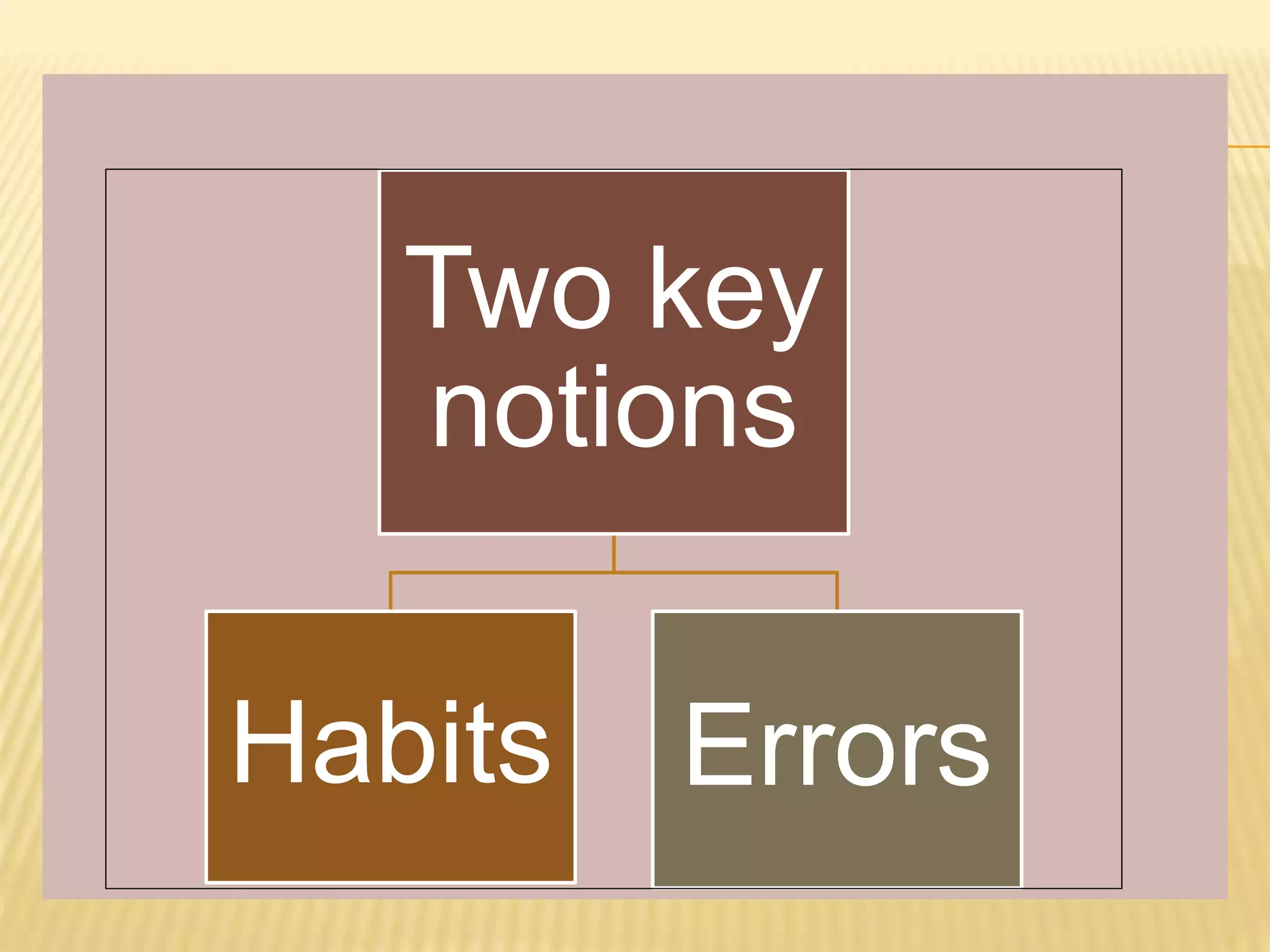
Two key
notions
Habits Errors
HABITS
 Language learning is a habit formation and
habits are strengthened by reinforcement.
 Responses take place when particular stimuli
are present .
 A particular response along with a particular
stimulus constitute a habit.
 Watson(1924) and Skinner(1957) wanted to
know how habits were established.
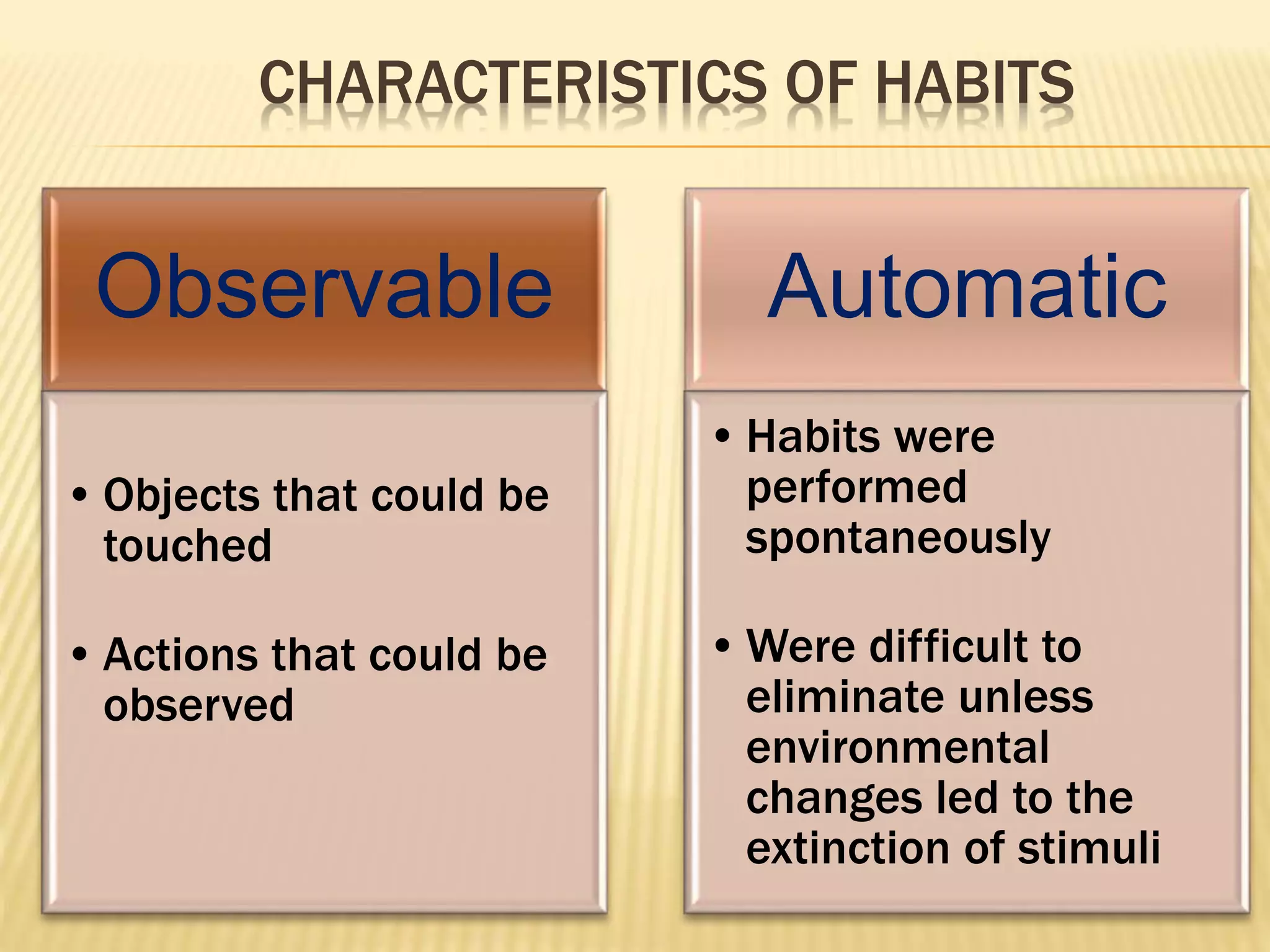
CHARACTERISTICS OF HABITS
Observable
•Objects that could be
touched
•Actions that could be
observed
Automatic
•Habits were
performed
spontaneously
•Were difficult to
eliminate unless
environmental
changes led to the
extinction of stimuli
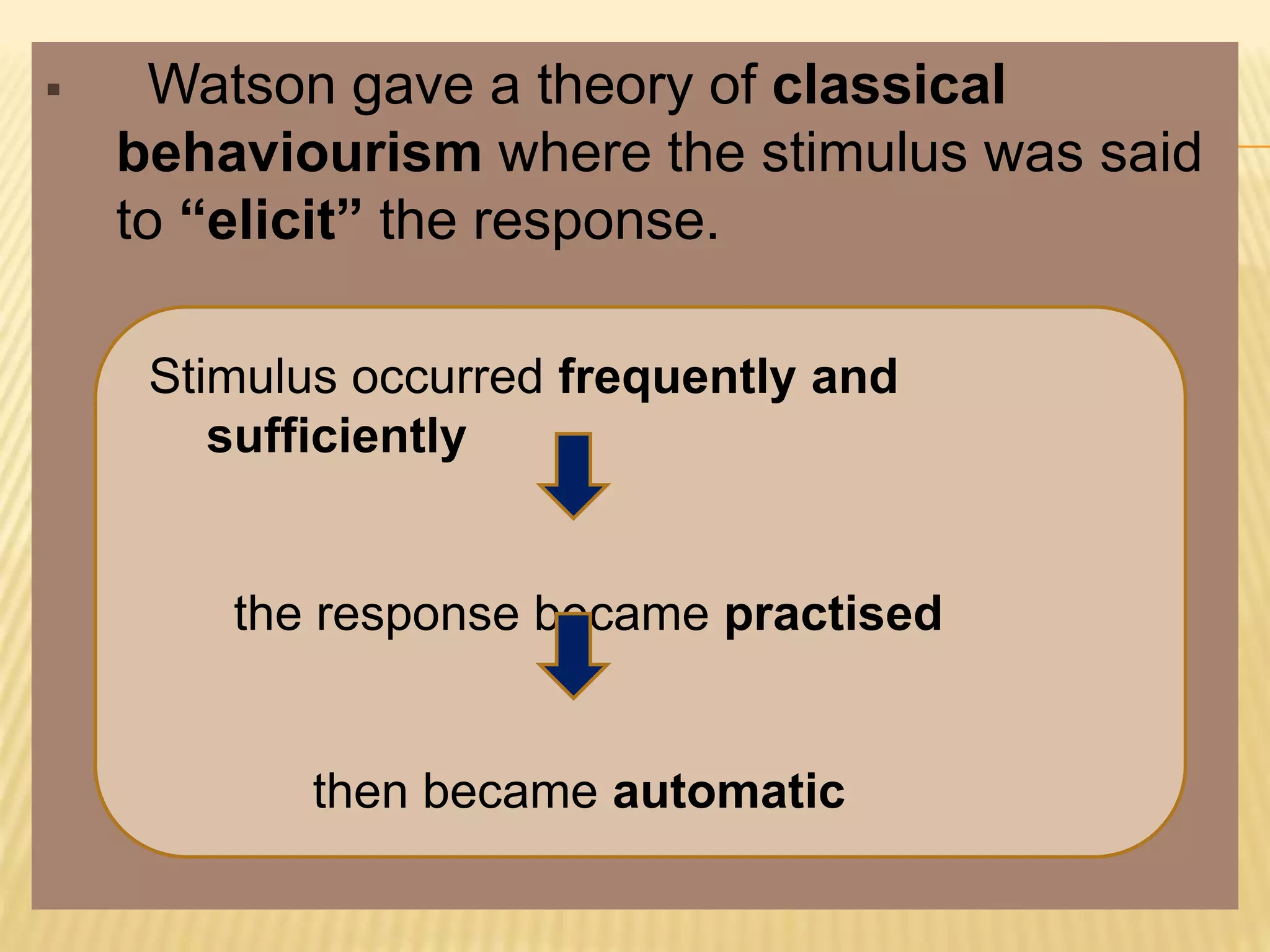
 Watson gave a theory of classical
behaviourism where the stimulus was said
to “elicit” the response.
Stimulus occurred frequently and
sufficiently
the response became practised
then became automatic
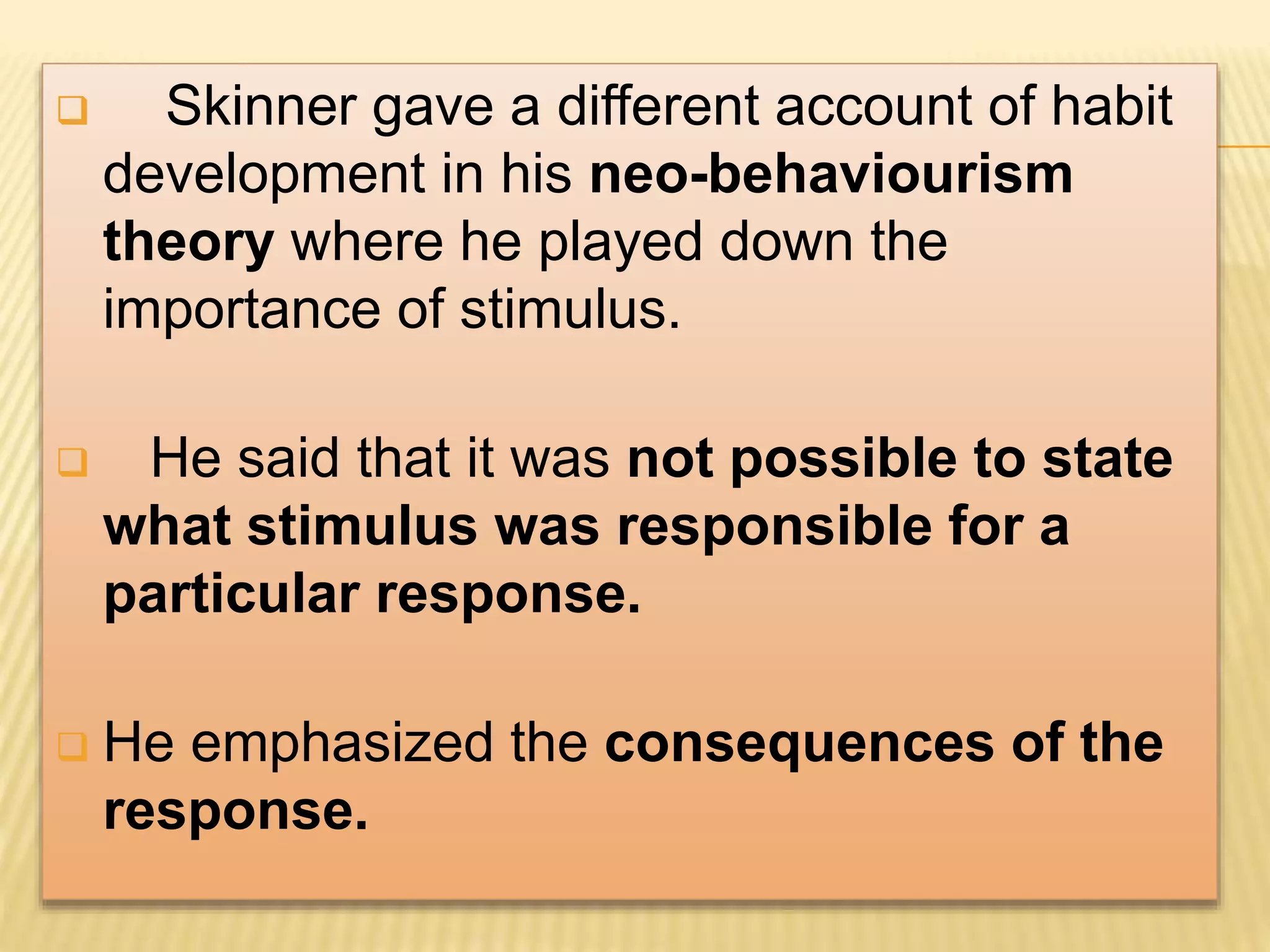
 Skinner gave a different account of habit
development in his neo-behaviourism
theory where he played down the
importance of stimulus.
 He said that it was not possible to state
what stimulus was responsible for a
particular response.
 He emphasized the consequences of the
response.
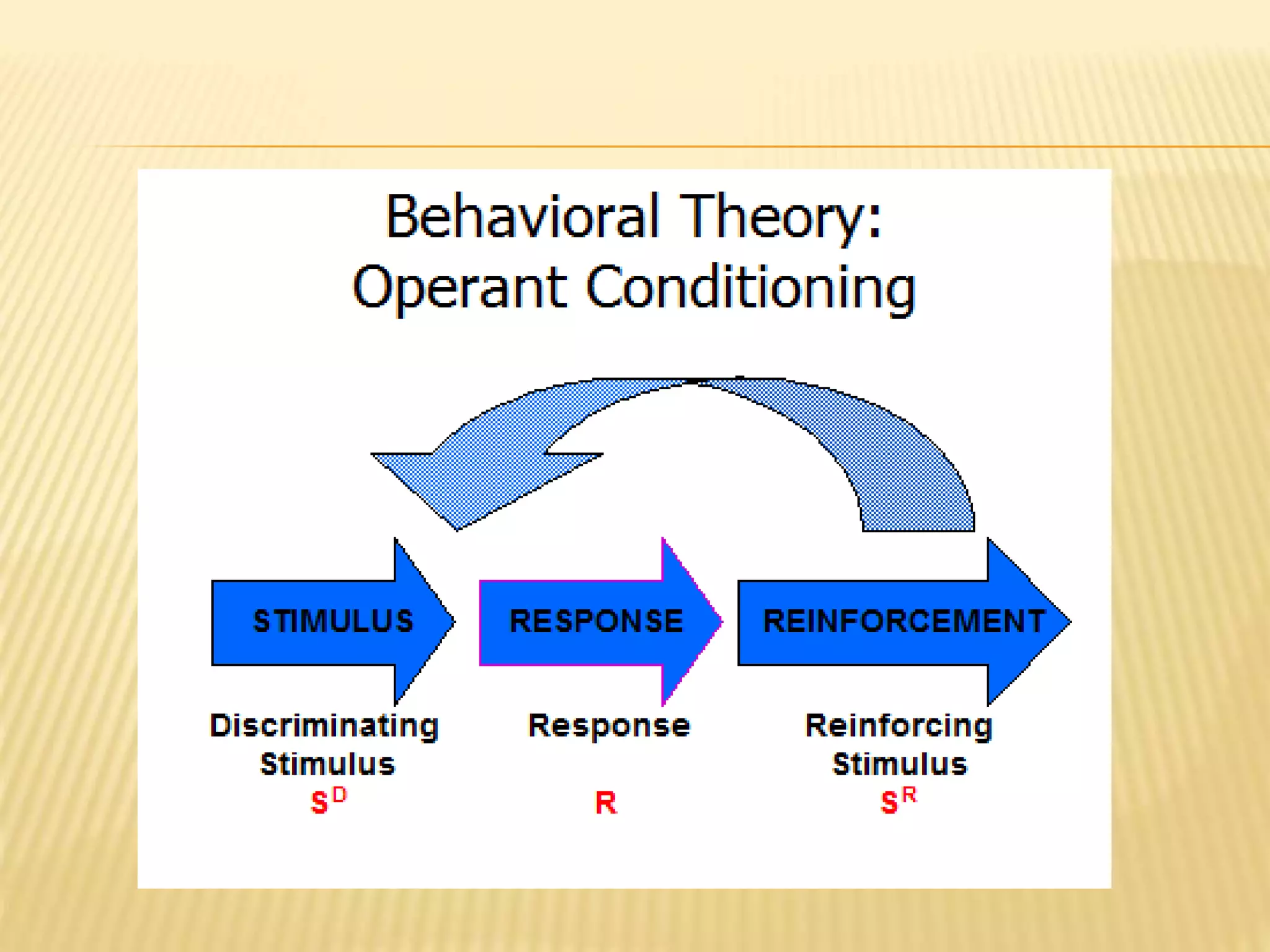
 According to Skinner, the learning of a habit
occurred through imitation or
reinforcement.
 It means the learner is able to make a
connection with consequences associated
with his/her behaviour through positive
(rewarding) and negative (punishment)
reinforcement.
 Theories of Habit Formation could be and
were applied to language learning.
 In L1 acquisition, children were said to
master their mother tongue by imitating
utterances produced by adults .
Their efforts at using language were either
rewarded or corrected.

It was also believed that SLA could proceed
in a similar way.
 Learners could identify the stimulus-
response associations that constituted the
habits of L2 by the means of imitation and
reinforcement.
 Language learning (first and second) was
most successful when the task was broken
down into a number of stimulus-response
links.
 Thus it could be systematically practised and
mastered one at a time.
Habit formation theory provided a
theoretical account of how the
learner’s L1 intruded into the
process of SLA.
It also explained why the L2 learners
made errors.
ERRORS
WHY DO ERRORS OCCUR
IN SLA?
• According to behaviourist learning theory,
old habits get in the way of learning new
habits.
• According to Bright and McGregor,
'the grammatical apparatus programmed into
the mind as the first language interferes with
the smooth acquisition of the second.'
THE ROLE OF INTERFERENCE
 Interference has a central place in
behaviourist accounts of SLA.
 Interference is the result of what is
called "proactive inhibition ".
 Here, the previous learning prevents the
learning of new habits.
 An error is likely to arise in L2 where first and
second language share a meaning but
expresses it different way.
PATTERNS AND HABITS
 Sometimes the patterns or habits of
the L1 are as same as L2.
 It is quit possible that the means of
expressing a shared meaning are the
same in the first and second language.
TRANSFER
PROCESS
 Transfer will take place from the first to
second language.
 Differences between the first and second
language create learning difficulty which
results in errors while the similarities
between the first and second language
facilitate rapid and easy learning.
In behaviourist accounts of SLA, errors were
considered undesirable.
There was a danger of errors becoming in
their own right if they were tolerated.
Brooks(1960), for instance wrote, “ Like sin,
error is to be avoided and its influence
overcome…”
 Errors , according to behaviourist theory, were
the result of non-learning, rather than
wrong learning.
 There was almost total agreement that errors
should be avoided.
 Attempts were made to predict when they
would occur.
Behaviourist learning theory (in SLA)

Behaviourist learning theory (in SLA)

  • 1.
  • 2.
    Presented by Iffat JahanSuchona Fariha Tajnoor Aurnee Course- EL 503 M.A (E.L.T) Department of English
  • 3.
  • 4.
     It is importantto understand the main tenets of behaviourist learning theory to comprehend the early importance attached to the role of the first language in second language acquisition.  Views of language learning were derived from a theory of learning in general (up to the end of 1960s)
  • 5.
  • 6.
  • 7.
     Language learningis a habit formation and habits are strengthened by reinforcement.  Responses take place when particular stimuli are present .  A particular response along with a particular stimulus constitute a habit.  Watson(1924) and Skinner(1957) wanted to know how habits were established.
  • 8.
    CHARACTERISTICS OF HABITS Observable •Objectsthat could be touched •Actions that could be observed Automatic •Habits were performed spontaneously •Were difficult to eliminate unless environmental changes led to the extinction of stimuli
  • 9.
     Watson gavea theory of classical behaviourism where the stimulus was said to “elicit” the response. Stimulus occurred frequently and sufficiently the response became practised then became automatic
  • 10.
     Skinner gavea different account of habit development in his neo-behaviourism theory where he played down the importance of stimulus.  He said that it was not possible to state what stimulus was responsible for a particular response.  He emphasized the consequences of the response.
  • 11.
     According toSkinner, the learning of a habit occurred through imitation or reinforcement.  It means the learner is able to make a connection with consequences associated with his/her behaviour through positive (rewarding) and negative (punishment) reinforcement.
  • 12.
     Theories ofHabit Formation could be and were applied to language learning.  In L1 acquisition, children were said to master their mother tongue by imitating utterances produced by adults . Their efforts at using language were either rewarded or corrected.  It was also believed that SLA could proceed in a similar way.
  • 14.
     Learners couldidentify the stimulus- response associations that constituted the habits of L2 by the means of imitation and reinforcement.  Language learning (first and second) was most successful when the task was broken down into a number of stimulus-response links.  Thus it could be systematically practised and mastered one at a time.
  • 15.
    Habit formation theoryprovided a theoretical account of how the learner’s L1 intruded into the process of SLA. It also explained why the L2 learners made errors.
  • 16.
  • 17.
    WHY DO ERRORSOCCUR IN SLA?
  • 18.
    • According tobehaviourist learning theory, old habits get in the way of learning new habits. • According to Bright and McGregor, 'the grammatical apparatus programmed into the mind as the first language interferes with the smooth acquisition of the second.'
  • 19.
    THE ROLE OFINTERFERENCE
  • 20.
     Interference hasa central place in behaviourist accounts of SLA.  Interference is the result of what is called "proactive inhibition ".
  • 21.
     Here, theprevious learning prevents the learning of new habits.  An error is likely to arise in L2 where first and second language share a meaning but expresses it different way.
  • 22.
    PATTERNS AND HABITS Sometimes the patterns or habits of the L1 are as same as L2.  It is quit possible that the means of expressing a shared meaning are the same in the first and second language.
  • 23.
  • 24.
     Transfer willtake place from the first to second language.  Differences between the first and second language create learning difficulty which results in errors while the similarities between the first and second language facilitate rapid and easy learning.
  • 25.
    In behaviourist accountsof SLA, errors were considered undesirable. There was a danger of errors becoming in their own right if they were tolerated. Brooks(1960), for instance wrote, “ Like sin, error is to be avoided and its influence overcome…”
  • 26.
     Errors ,according to behaviourist theory, were the result of non-learning, rather than wrong learning.  There was almost total agreement that errors should be avoided.  Attempts were made to predict when they would occur.