Downloaded 294 times





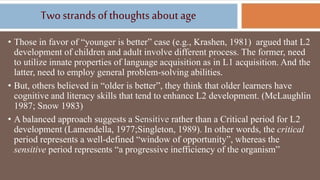


















1) Several factors affect second language acquisition including internal factors like age and external factors like social context. 2) Age is an important factor as younger learners may acquire language more easily due to a critical period of language development ending at puberty. However, older learners have cognitive advantages that can also help acquisition. 3) Affective factors like anxiety, self-esteem, inhibition, and willingness to communicate also influence second language acquisition by impacting learners' emotional states and willingness to take risks when using the new language.


