THE BREAK WITH
THE METHOD
CONCEPT
A GENERAL OVERVIEW
CHANGE IN APPROACH
•The break with single method concept
•Overcoming problems
•Use of comprehensive framework
•The contribution of empirical
approaches
TEACHERS' GUIDES
• Contents indicate the conceptualization
• Methods appeared in widercontext
• Offers historical orientation various language
teaching factors
• Defines teaching aimand objectives
TEACHERS' GUIDES (CONT.)
• Promotes psycholinguistic features of language
learning
• Main concern was pedagogical treatment
• Contains discussion of techniques of instructions
TEACHERS’ GUIDE (CONT.)
• Reflects the writers’ experience as teachers
• Eclectic approach
• Most appropriate use
• Keeps up with the intuitions of language teachers
TEACHERS’ GUIDE (CONT.)
• Link between theoretical and practical level
• Fails to make distinction between knowledge and
opinion
• Treats as the personal language teaching theories
METHO D ANALYSIS
AND METHO DICS
‘There is some good in all of them’ and have adopted a
point of view of eclecticism which recently gained support
in the second edition of Rivers’ guide(1981).
Attempts have been made to develop a broad
conceptual framework.
Most influential of these evolved from studies by Mackey
and other linguists
MACKEY’S METHOD
Language teaching demands a matching of materials,
teacherand learner.
• Principal focus was the analysis of textual teaching
materials, ‘method analysis’ in a specific and technical
sense.
• Basic concepts are selection, gradation, presentation,
and repetition.
SELECTION AND LIMITATION
• Describe the important task of linguistic choices to be
made by the curriculum developer.
• Analyze what kinds of choices are needed, and what
criteria to use in making these choices.
• Emphasizes that frequency of linguistic items is not the
only criterion to apply
• Range, availability, coverage and learnability should also
be considered.
GRADATION
 a linguistic or psycholinguistic ordering of the
language items.
Mackey distinguishes grouping and sequence.
Grouping: the fitting together of items that go
together.
Sequence: the order in which items follow each
other
PRESENTATION
Mackey distinguishes between the presentation in
the textual materials (method analysis) from the
presentation by the teacher (teaching analysis).
“The kernel of the teaching process, the
confrontation of the pupil with the items being
taught” (Halliday, McIntosh, and Strevens 1964:
213)
PRESENTATION
• Includes classroom teaching, instruction by television or
in language laboratories, and audiovisual courses.
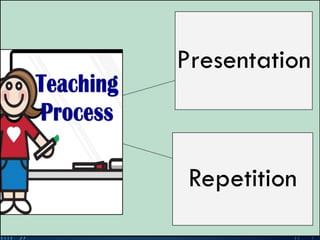
• Mackey distinguishes repetition from presentation.
• It is through repetition that correct language habits are
established.
• But neither scheme takes sides on the method
issue.
• Mackey distinguishes a number of procedures for
presenting meaning –
Differential procedures (derived from Grammar-
Translation)
Ostensive, pictorial and contextual procedures
(derived from Direct Method or Audiolingual
Method)
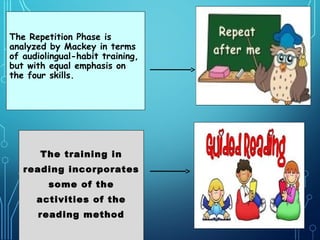
The Repetition Phase is
analyzed by Mackey in terms
of audiolingual-habit training,
but with equal emphasis on
the four skills.
The training in
reading incorporates
some of the
activities of the
reading method
THE FINAL PHASE IS
Te sting
‘(the teacher) must… know how farhis
teaching is effective; that is to say ,
to what extent learning is taking
place among his pupils.’
(1964:214)
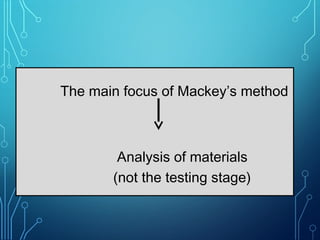
The main focus of Mackey’s method
Analysis of materials
(not the testing stage)
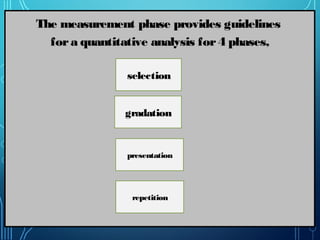
The measurement phase provides guidelines
fora quantitative analysis for4 phases,
selection
gradation
repetition
presentation
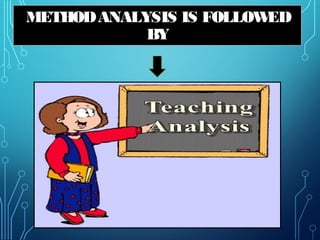
METHODANALYSIS IS FOLLOWED
BY
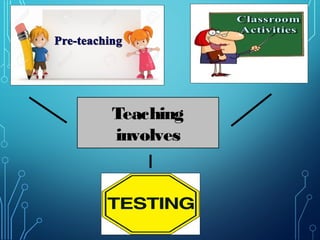
Teaching
involves
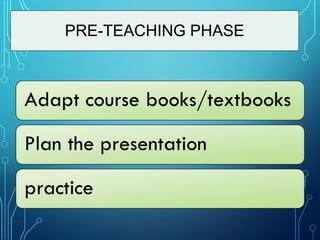
PRE-TEACHING PHASE
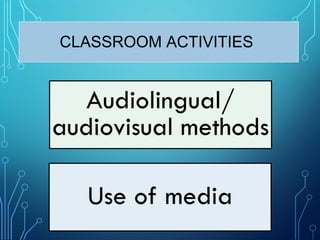
CLASSROOM ACTIVITIES
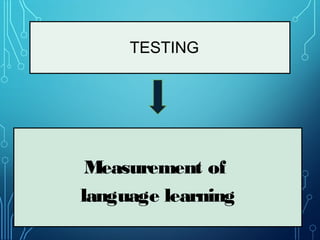
TESTING
Measurement of
language learning
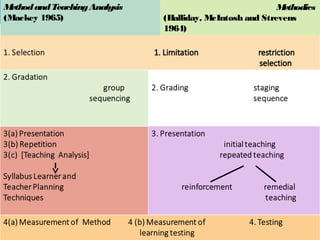
FIGURE: A COMPARISON OF
METHOD ANALYSIS AND
METHODICS
MethodandTeachingAnalysis
(Mackey 1965)
Methodics
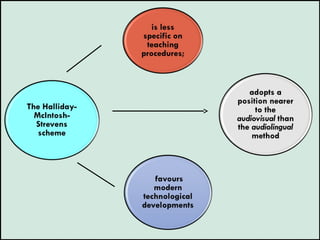
(Halliday, McIntosh and Strevens
1964)
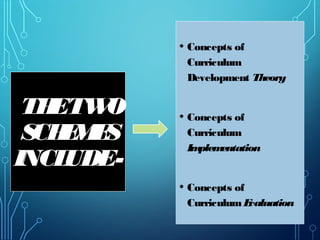
THETWO
SCHEMES
INCLUDE-
• Concepts of
Curriculum
Development Theory
• Concepts of
Curriculum
Implementation
• Concepts of
Curriculum Evaluation
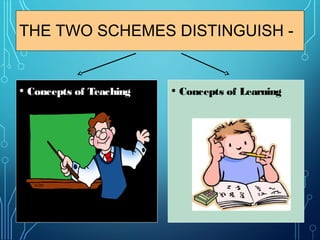
THE TWO SCHEMES DISTINGUISH -
• Concepts of Teaching • Concepts of Learning
CONCEPTUAL ANALYSES OF
METHODS
1.Eight psychological features
2.Three linguistics features
3.Existence of these eleven features in
the existing methods
(CONT.)
4. Methods ( GTM, DM, ALM) failed
to build the language into a unified
structure.
5. Features were overlapping.
ANALYSIS OF
TEACHING METHODS
------- KRASHEN ANDSELIGER
+Discretepoint:
 treatment of the grammarrules and
lexical items
 Isolated orglobal?
+Deductive:
 the presentation of rules before
practice versus the influence of rules
frompractice
• +Explicit:
While a deductive approach is necessarily
explicit, the inductive approach may end up
with an explicit formulation or it may be
designed as inductive.
• Se q ue nce :
the arrangement of language content
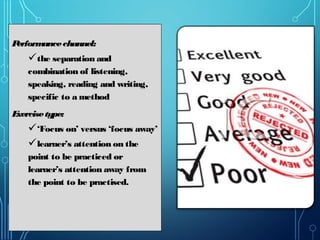
Performancechannel:
the separation and
combination of listening,
speaking, reading and writing,
specific to a method
Exercisetype:
‘Focus on’ versus ‘focus away’
learner’s attention on the
point to be practiced or
learner’s attention away from
the point to be practised.
• Extent of control:
the degree to which the programme is designed to avoid
the possibility of learnererrors
• Feedback:
the degree to which the teachercorrects the errors of
the students
‘errors corrected versus errors ignored’
EMPIRICAL
APPROACHES TO THE
STUDY OF TEACHING
 Different types of experimental studies.
 The drawbacks and weaknesses of the studies and
investigations.
 The contribution of empirical approaches to the
study of teaching.
CONCLUSION
The Break with the method concept

The Break with the method concept

  • 1.
    THE BREAK WITH THEMETHOD CONCEPT A GENERAL OVERVIEW
  • 2.
    CHANGE IN APPROACH •Thebreak with single method concept •Overcoming problems •Use of comprehensive framework •The contribution of empirical approaches
  • 3.
    TEACHERS' GUIDES • Contentsindicate the conceptualization • Methods appeared in widercontext • Offers historical orientation various language teaching factors • Defines teaching aimand objectives
  • 4.
    TEACHERS' GUIDES (CONT.) •Promotes psycholinguistic features of language learning • Main concern was pedagogical treatment • Contains discussion of techniques of instructions
  • 5.
    TEACHERS’ GUIDE (CONT.) •Reflects the writers’ experience as teachers • Eclectic approach • Most appropriate use • Keeps up with the intuitions of language teachers
  • 6.
    TEACHERS’ GUIDE (CONT.) •Link between theoretical and practical level • Fails to make distinction between knowledge and opinion • Treats as the personal language teaching theories
  • 7.
  • 8.
    ‘There is somegood in all of them’ and have adopted a point of view of eclecticism which recently gained support in the second edition of Rivers’ guide(1981). Attempts have been made to develop a broad conceptual framework. Most influential of these evolved from studies by Mackey and other linguists
  • 9.
    MACKEY’S METHOD Language teachingdemands a matching of materials, teacherand learner. • Principal focus was the analysis of textual teaching materials, ‘method analysis’ in a specific and technical sense. • Basic concepts are selection, gradation, presentation, and repetition.
  • 10.
    SELECTION AND LIMITATION •Describe the important task of linguistic choices to be made by the curriculum developer. • Analyze what kinds of choices are needed, and what criteria to use in making these choices. • Emphasizes that frequency of linguistic items is not the only criterion to apply • Range, availability, coverage and learnability should also be considered.
  • 11.
    GRADATION  a linguisticor psycholinguistic ordering of the language items. Mackey distinguishes grouping and sequence. Grouping: the fitting together of items that go together. Sequence: the order in which items follow each other
  • 12.
    PRESENTATION Mackey distinguishes betweenthe presentation in the textual materials (method analysis) from the presentation by the teacher (teaching analysis). “The kernel of the teaching process, the confrontation of the pupil with the items being taught” (Halliday, McIntosh, and Strevens 1964: 213)
  • 13.
    PRESENTATION • Includes classroomteaching, instruction by television or in language laboratories, and audiovisual courses. • Mackey distinguishes repetition from presentation. • It is through repetition that correct language habits are established.
  • 15.
    • But neitherscheme takes sides on the method issue. • Mackey distinguishes a number of procedures for presenting meaning – Differential procedures (derived from Grammar- Translation) Ostensive, pictorial and contextual procedures (derived from Direct Method or Audiolingual Method)
  • 16.
    The Repetition Phaseis analyzed by Mackey in terms of audiolingual-habit training, but with equal emphasis on the four skills. The training in reading incorporates some of the activities of the reading method
  • 18.
    THE FINAL PHASEIS Te sting
  • 19.
    ‘(the teacher) must…know how farhis teaching is effective; that is to say , to what extent learning is taking place among his pupils.’ (1964:214)
  • 20.
    The main focusof Mackey’s method Analysis of materials (not the testing stage)
  • 21.
    The measurement phaseprovides guidelines fora quantitative analysis for4 phases, selection gradation repetition presentation
  • 22.
  • 23.
  • 24.
  • 25.
  • 26.
  • 27.
    FIGURE: A COMPARISONOF METHOD ANALYSIS AND METHODICS
  • 28.
  • 29.
    THETWO SCHEMES INCLUDE- • Concepts of Curriculum DevelopmentTheory • Concepts of Curriculum Implementation • Concepts of Curriculum Evaluation
  • 30.
    THE TWO SCHEMESDISTINGUISH - • Concepts of Teaching • Concepts of Learning
  • 31.
    CONCEPTUAL ANALYSES OF METHODS 1.Eightpsychological features 2.Three linguistics features 3.Existence of these eleven features in the existing methods
  • 32.
    (CONT.) 4. Methods (GTM, DM, ALM) failed to build the language into a unified structure. 5. Features were overlapping.
  • 33.
  • 34.
    +Discretepoint:  treatment ofthe grammarrules and lexical items  Isolated orglobal? +Deductive:  the presentation of rules before practice versus the influence of rules frompractice
  • 35.
    • +Explicit: While adeductive approach is necessarily explicit, the inductive approach may end up with an explicit formulation or it may be designed as inductive. • Se q ue nce : the arrangement of language content
  • 36.
    Performancechannel: the separation and combinationof listening, speaking, reading and writing, specific to a method Exercisetype: ‘Focus on’ versus ‘focus away’ learner’s attention on the point to be practiced or learner’s attention away from the point to be practised.
  • 37.
    • Extent ofcontrol: the degree to which the programme is designed to avoid the possibility of learnererrors • Feedback: the degree to which the teachercorrects the errors of the students ‘errors corrected versus errors ignored’
  • 38.
  • 39.
     Different typesof experimental studies.  The drawbacks and weaknesses of the studies and investigations.  The contribution of empirical approaches to the study of teaching.
  • 40.