By:
Mobin Bozorgi
mobinbozorgi@yahoo.com
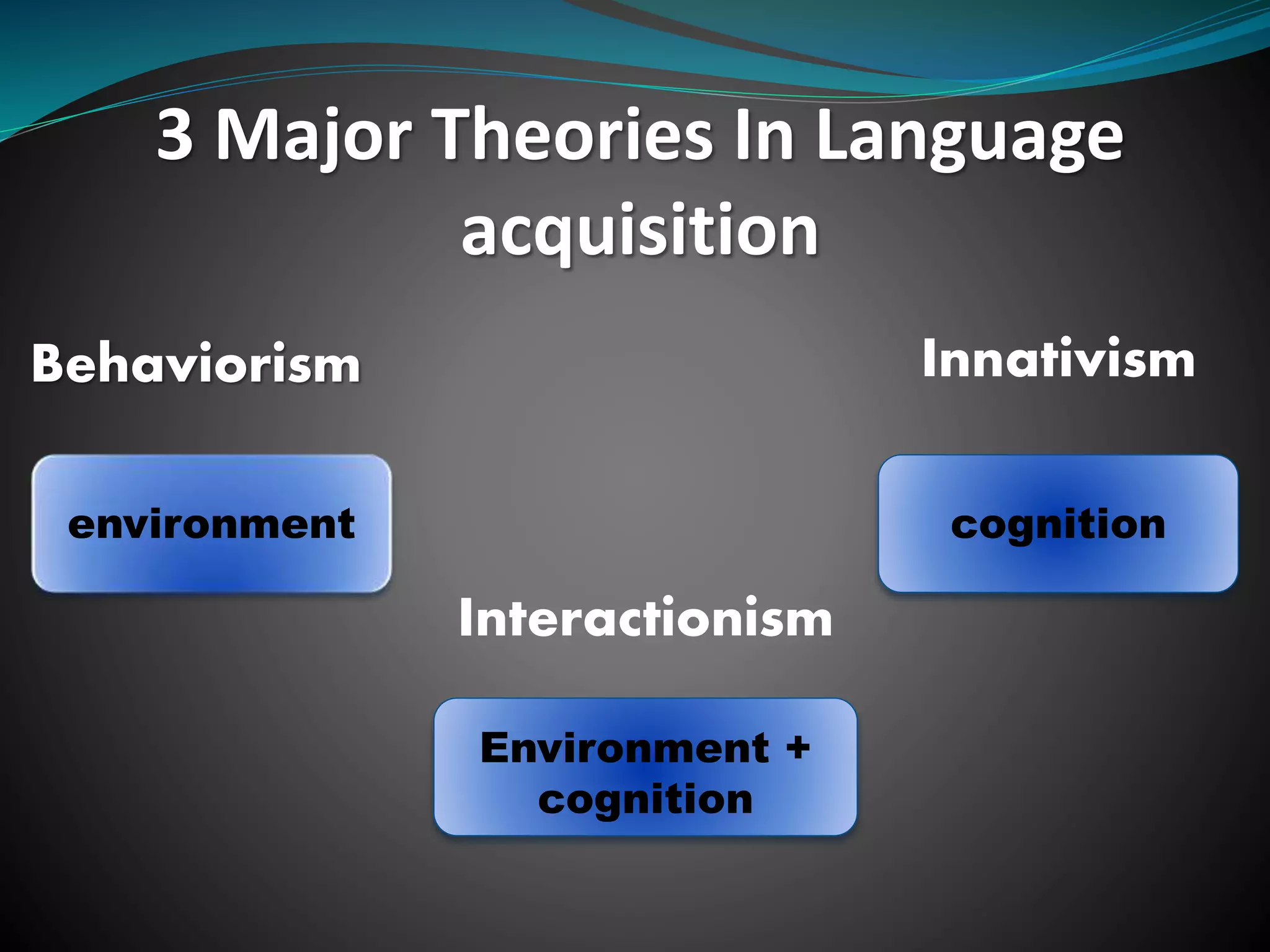
3 Major Theories In Language
acquisition
Behaviorism Innativism
Interactionism
environment cognition
Environment +
cognition
Vygotsky laid the foundation for interactionist
,Other interactionist theorists apply Vygotsky’s
socio-cultural theory and hypothesize that,They
think second language learners gain proficiency
when they interact with more advanced speakers
of the language e.g teachers, proficient students
etc.
Long's interaction hypothesis proposes that
language acquisition is strongly facilitated by
the use of the target language in interaction.
Based on this approach, learners should be
exposed to comprehensible, negotiated, or
modified input in their attempts to
acquire a language.
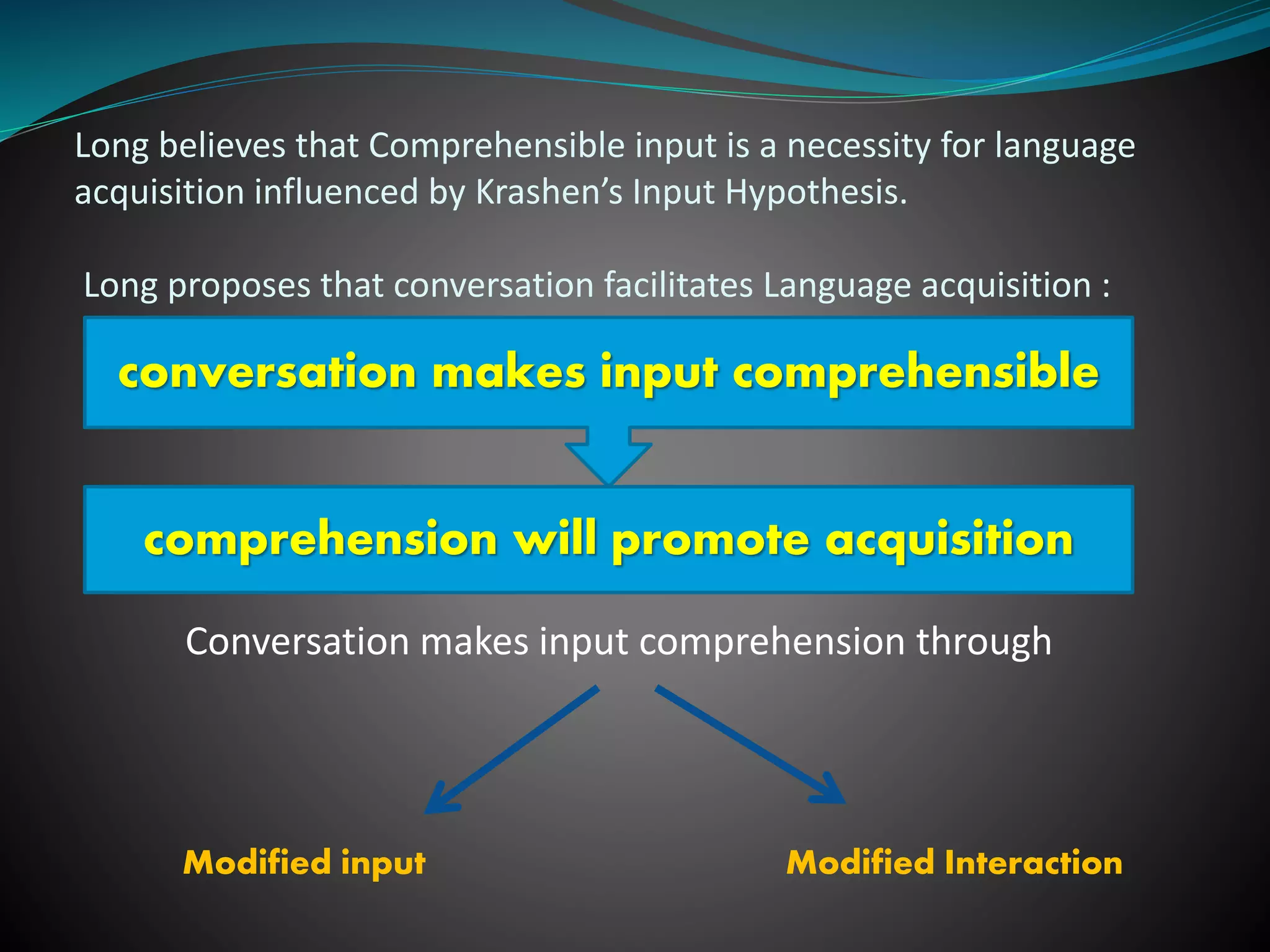
Long believes that Comprehensible input is a necessity for language
acquisition influenced by Krashen’s Input Hypothesis.
Long proposes that conversation facilitates Language acquisition :
conversation makes input comprehensible
comprehension will promote acquisition
Conversation makes input comprehension through
Modified input Modified Interaction
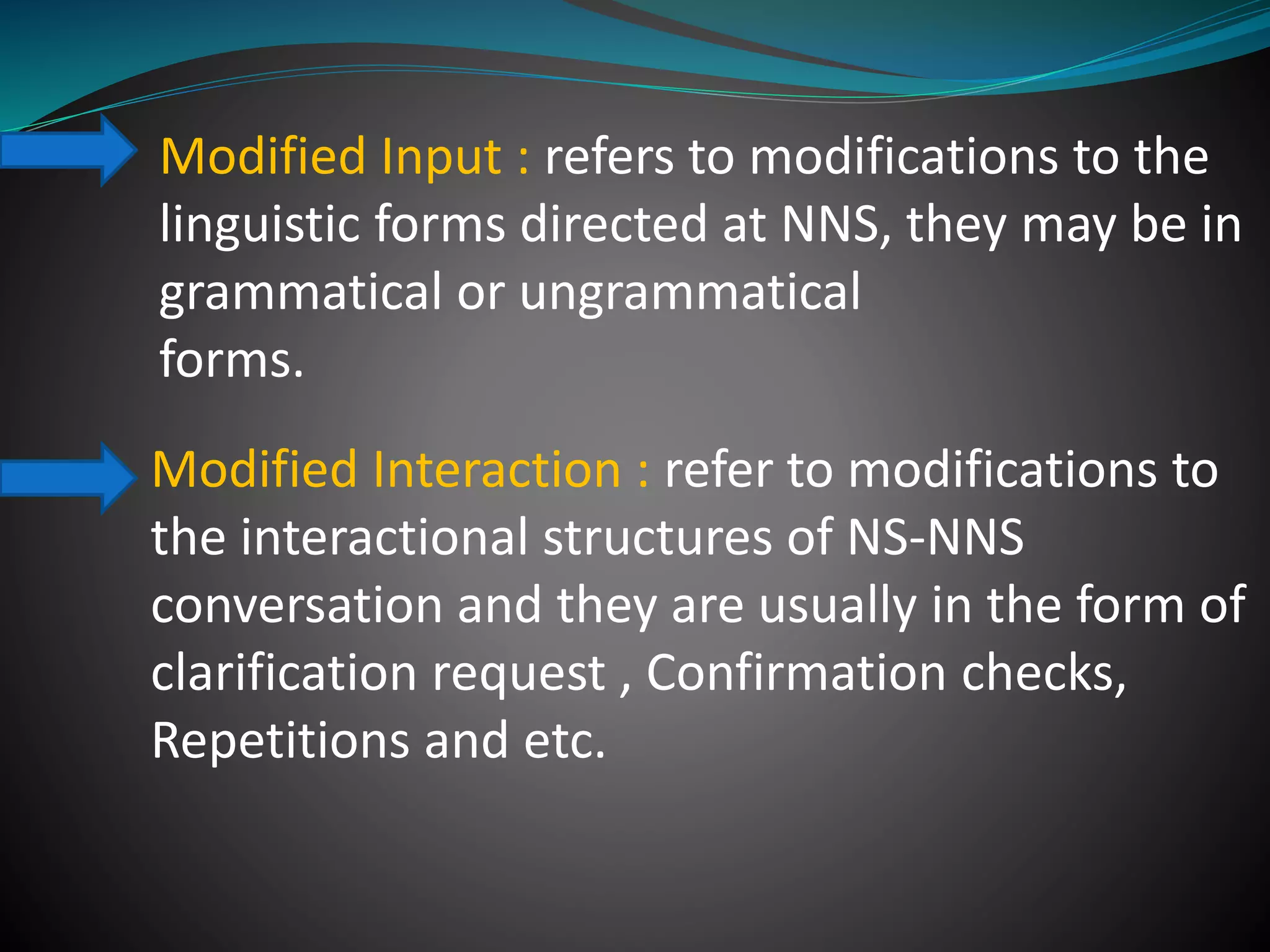
Modified Input : refers to modifications to the
linguistic forms directed at NNS, they may be in
grammatical or ungrammatical
forms.
Modified Interaction : refer to modifications to
the interactional structures of NS-NNS
conversation and they are usually in the form of
clarification request , Confirmation checks,
Repetitions and etc.
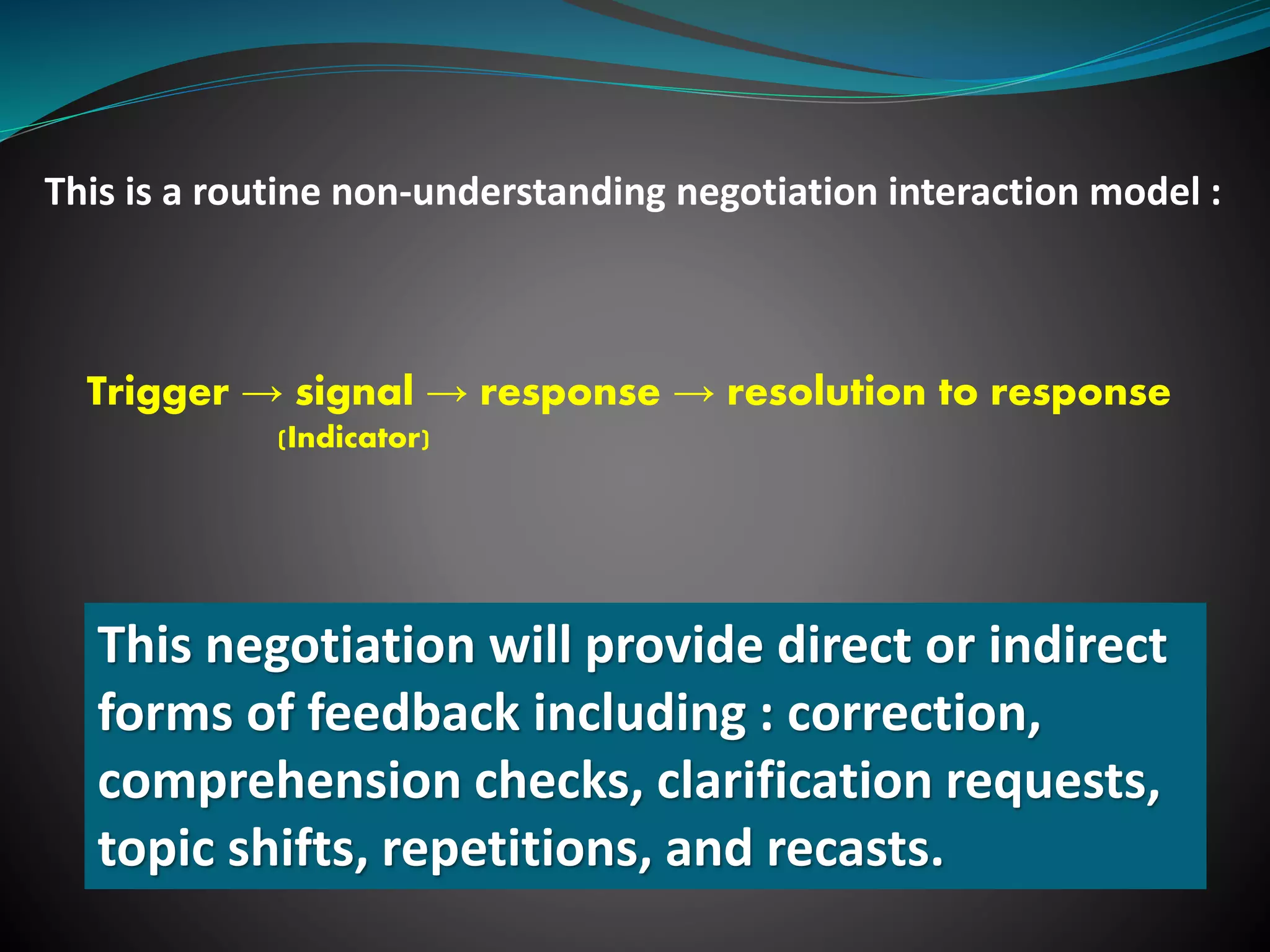
response
Trigger → signal → response → resolution to response
(Indicator)
This negotiation will provide direct or indirect
forms of feedback including : correction,
comprehension checks, clarification requests,
topic shifts, repetitions, and recasts.
This is a routine non-understanding negotiation interaction model :
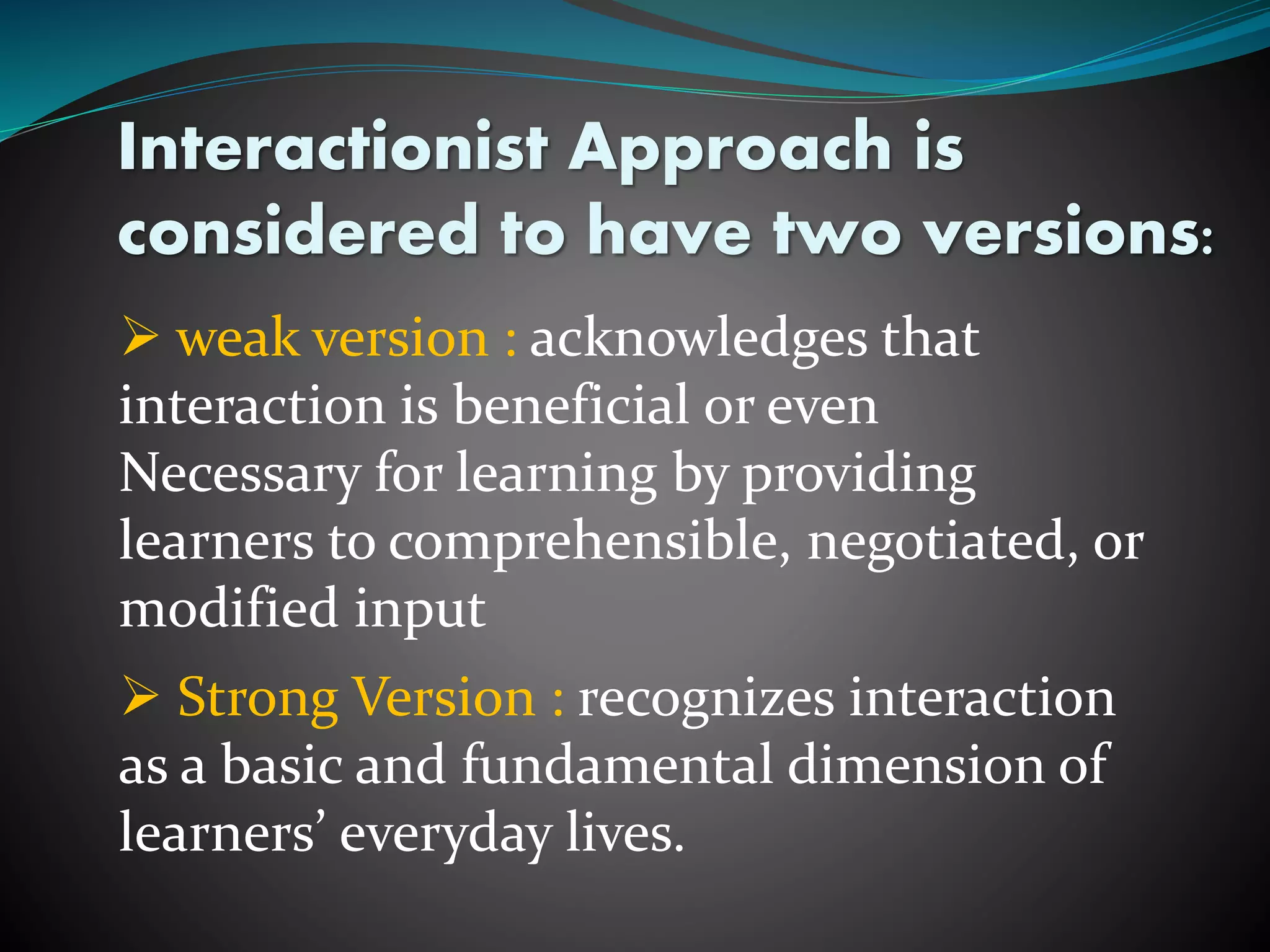
Interactionist Approach is
considered to have two versions:
 weak version : acknowledges that
interaction is beneficial or even
Necessary for learning by providing
learners to comprehensible, negotiated, or
modified input
 Strong Version : recognizes interaction
as a basic and fundamental dimension of
learners’ everyday lives.
To summarize the above discussion, Interactionist Approach is said
to have the following effects on second language acquisition:
* It helps to promote communication.
* It facilitates learning as it helps noticing a ‘gap’ between received
input and the learner’s output.
* It enables learners to receive feedback through direct and
indirect evidence .
* It helps acquisition at least where vocabulary is concerned.
* Clarification requests facilitate learners to produce output
modifications.
Keep Calm
It’s Over !
Thanks For Your
attention

Interactionist approach (mobin bozorgi)

  • 1.
  • 2.
    3 Major TheoriesIn Language acquisition Behaviorism Innativism Interactionism environment cognition Environment + cognition
  • 3.
    Vygotsky laid thefoundation for interactionist ,Other interactionist theorists apply Vygotsky’s socio-cultural theory and hypothesize that,They think second language learners gain proficiency when they interact with more advanced speakers of the language e.g teachers, proficient students etc.
  • 4.
    Long's interaction hypothesisproposes that language acquisition is strongly facilitated by the use of the target language in interaction. Based on this approach, learners should be exposed to comprehensible, negotiated, or modified input in their attempts to acquire a language.
  • 5.
    Long believes thatComprehensible input is a necessity for language acquisition influenced by Krashen’s Input Hypothesis. Long proposes that conversation facilitates Language acquisition : conversation makes input comprehensible comprehension will promote acquisition Conversation makes input comprehension through Modified input Modified Interaction
  • 6.
    Modified Input :refers to modifications to the linguistic forms directed at NNS, they may be in grammatical or ungrammatical forms. Modified Interaction : refer to modifications to the interactional structures of NS-NNS conversation and they are usually in the form of clarification request , Confirmation checks, Repetitions and etc.
  • 7.
    response Trigger → signal→ response → resolution to response (Indicator) This negotiation will provide direct or indirect forms of feedback including : correction, comprehension checks, clarification requests, topic shifts, repetitions, and recasts. This is a routine non-understanding negotiation interaction model :
  • 8.
    Interactionist Approach is consideredto have two versions:  weak version : acknowledges that interaction is beneficial or even Necessary for learning by providing learners to comprehensible, negotiated, or modified input  Strong Version : recognizes interaction as a basic and fundamental dimension of learners’ everyday lives.
  • 9.
    To summarize theabove discussion, Interactionist Approach is said to have the following effects on second language acquisition: * It helps to promote communication. * It facilitates learning as it helps noticing a ‘gap’ between received input and the learner’s output. * It enables learners to receive feedback through direct and indirect evidence . * It helps acquisition at least where vocabulary is concerned. * Clarification requests facilitate learners to produce output modifications.
  • 10.
    Keep Calm It’s Over! Thanks For Your attention