Downloaded 143 times

![• Literal language is when you say
exactly what you mean. Here
you do not make any
comparison and you do not
exaggerate or understate any
situation!
• Example: Grass looks green
• Figurative language [figures of
speech] means you do not say
exactly what you mean. You do
compare, exaggerate, and
understate the situation.
• Example: The grass looks like
spiky green hair!](https://image.slidesharecdn.com/figurative-190527163415/75/Figurative-Languages-or-Figures-of-Speech-3-2048.jpg)
![Seven Types of Figurative Language
[But of course there are MORE!]
• Simile
• Hyperbole
• Alliteration
• Metaphor
• Personification
• Onomatopoeia
• Oxymoron](https://image.slidesharecdn.com/figurative-190527163415/75/Figurative-Languages-or-Figures-of-Speech-4-2048.jpg)


![Simile is a directly stated
comparison between two
unlike subjects.
The tenor [primary
subject] and vehicle
[secondary subject] are
connected by “like” or
“as”
•My love is like a red, red
rose.
..here love is the tenor and red
rose is the vehicle](https://image.slidesharecdn.com/figurative-190527163415/75/Figurative-Languages-or-Figures-of-Speech-7-2048.jpg)


![Alliteration
• the repetition of the same letter or sound,
especially consonant sounds….[including tongue
twisters.]
Miss Warren was worried
when Wendy was waiting.
She sells seashells by the
seashore](https://image.slidesharecdn.com/figurative-190527163415/75/Figurative-Languages-or-Figures-of-Speech-12-2048.jpg)
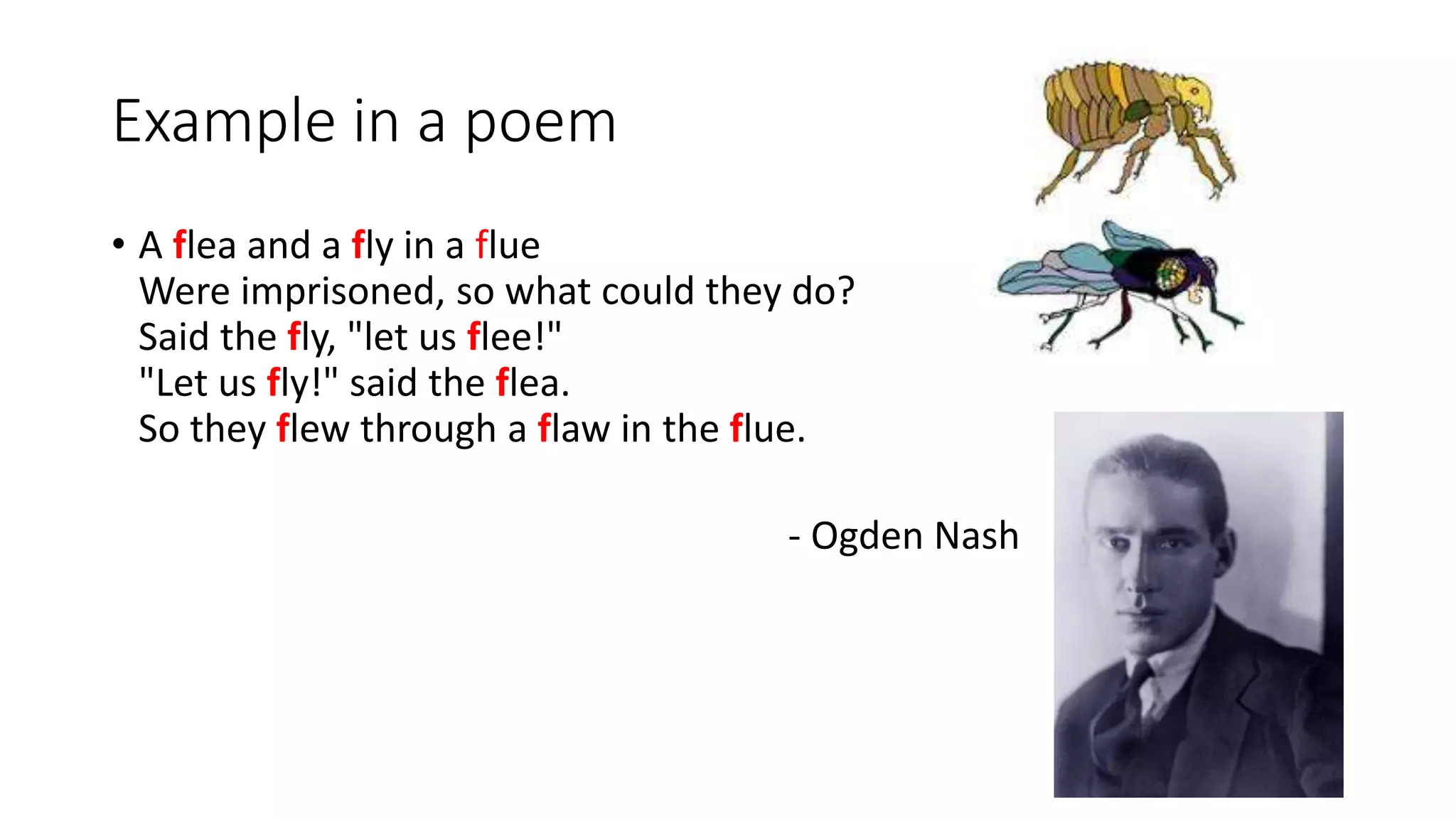
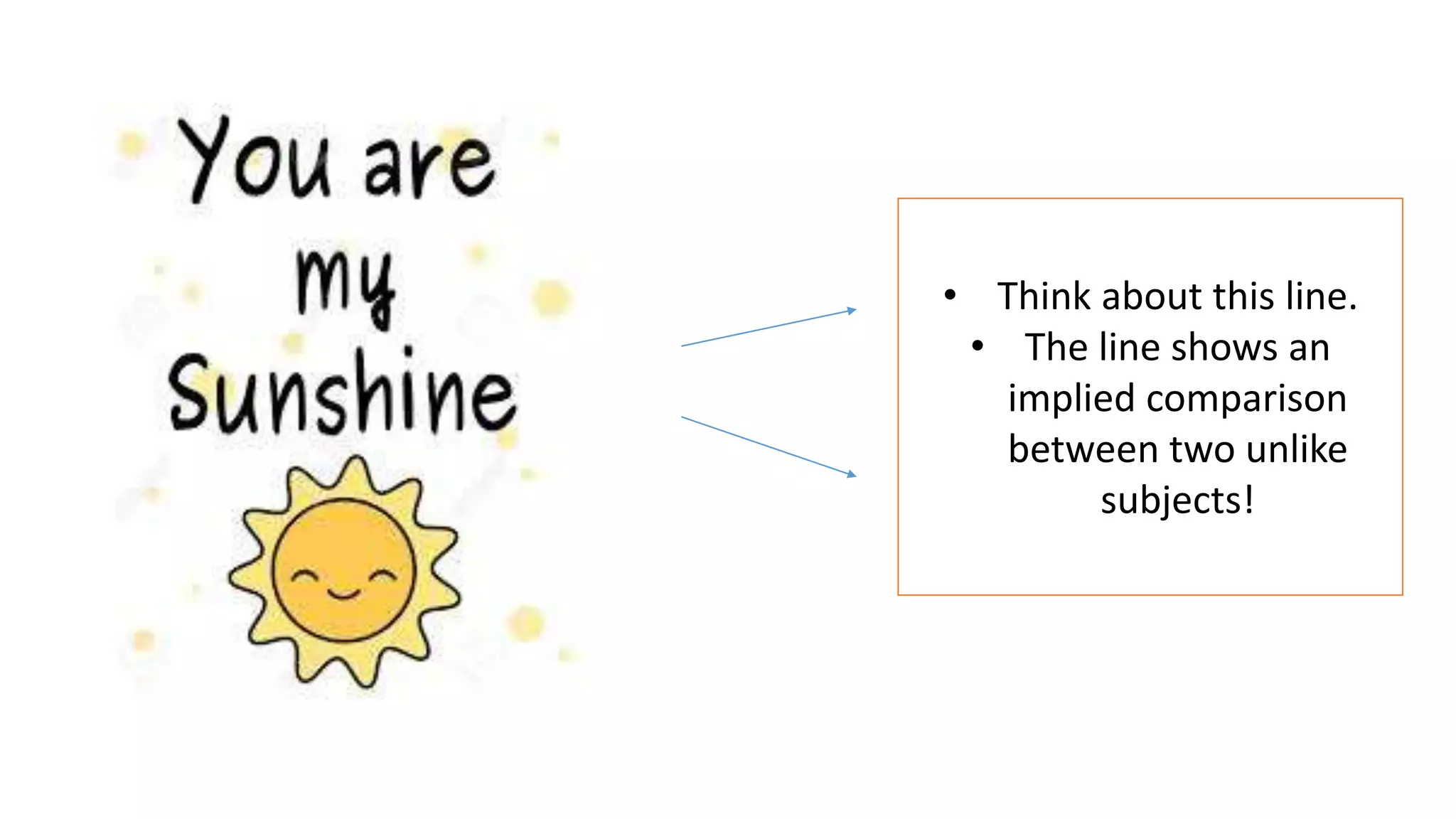

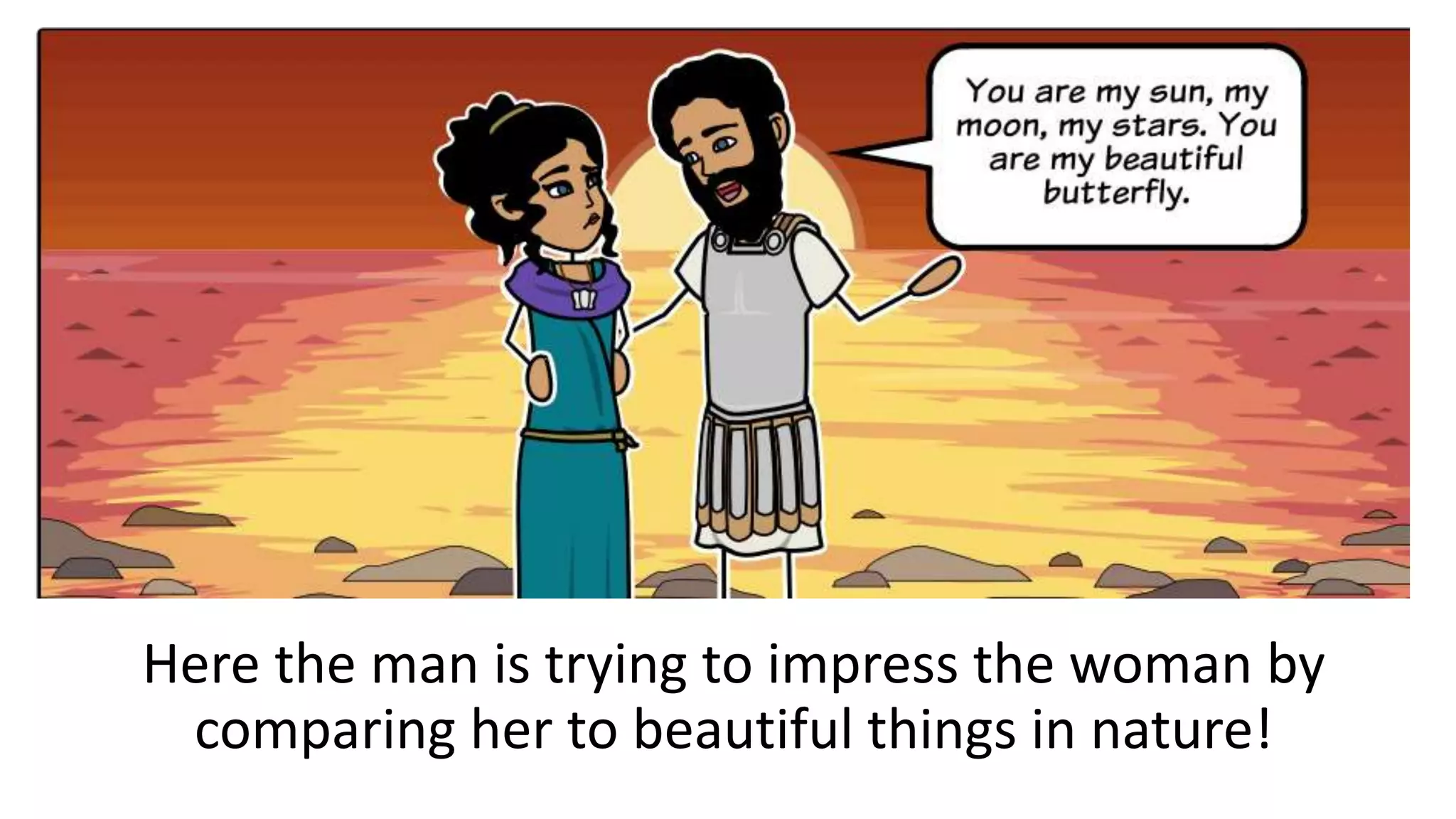
![All those lines are examples of Metaphors!
• Therefore, it is a comparison in which
one thing/person is said to be another.
[There is no use of
“like” or “as” in this kind of comparison]
Origin of metaphor
French métaphore from Classical Latin metaphora from Classical
Greek from metapherein, to carry over from meta, over (see meta-)
+ pherein, to bear](https://image.slidesharecdn.com/figurative-190527163415/75/Figurative-Languages-or-Figures-of-Speech-16-2048.jpg)



![Consider this line below
The murmurous haunt of flies on summer eves.
Imagine hearing the sound of the
flies [buzzing and oozing sound]](https://image.slidesharecdn.com/figurative-190527163415/75/Figurative-Languages-or-Figures-of-Speech-23-2048.jpg)
![Oxymoron
words or phrases in which contradictory or
opposite terms are used together [however they make sense]
act naturally
adult child
climb down](https://image.slidesharecdn.com/figurative-190527163415/75/Figurative-Languages-or-Figures-of-Speech-24-2048.jpg)


The document explains various forms of figurative language, contrasting them with literal language, and explores seven key types including simile, hyperbole, alliteration, metaphor, personification, onomatopoeia, and oxymoron. Each type is defined with examples and emphasizes the importance of these figures of speech in enhancing literary expression and emotional depth. The document highlights how figurative language can evoke imagery and strong feelings in writing.
Introduces literal and figurative language, with examples highlighting the importance of expressions.
Introduces literal and figurative language, with examples highlighting the importance of expressions.
Lists seven types of figurative language such as simile, hyperbole, alliteration, metaphor, personification, onomatopoeia, and oxymoron.
Describes similes as comparisons using 'like' or 'as', enhancing creativity and vividness in writing.
Describes similes as comparisons using 'like' or 'as', enhancing creativity and vividness in writing.
Defines hyperbole as exaggeration for emphasis, often used in poetry to evoke strong feelings.
Explains alliteration as the repetition of sounds, enhancing musicality in language, with examples.
Discusses metaphors as implied comparisons without 'like' or 'as', helping convey complex emotions and ideas.
Discusses metaphors as implied comparisons without 'like' or 'as', helping convey complex emotions and ideas.
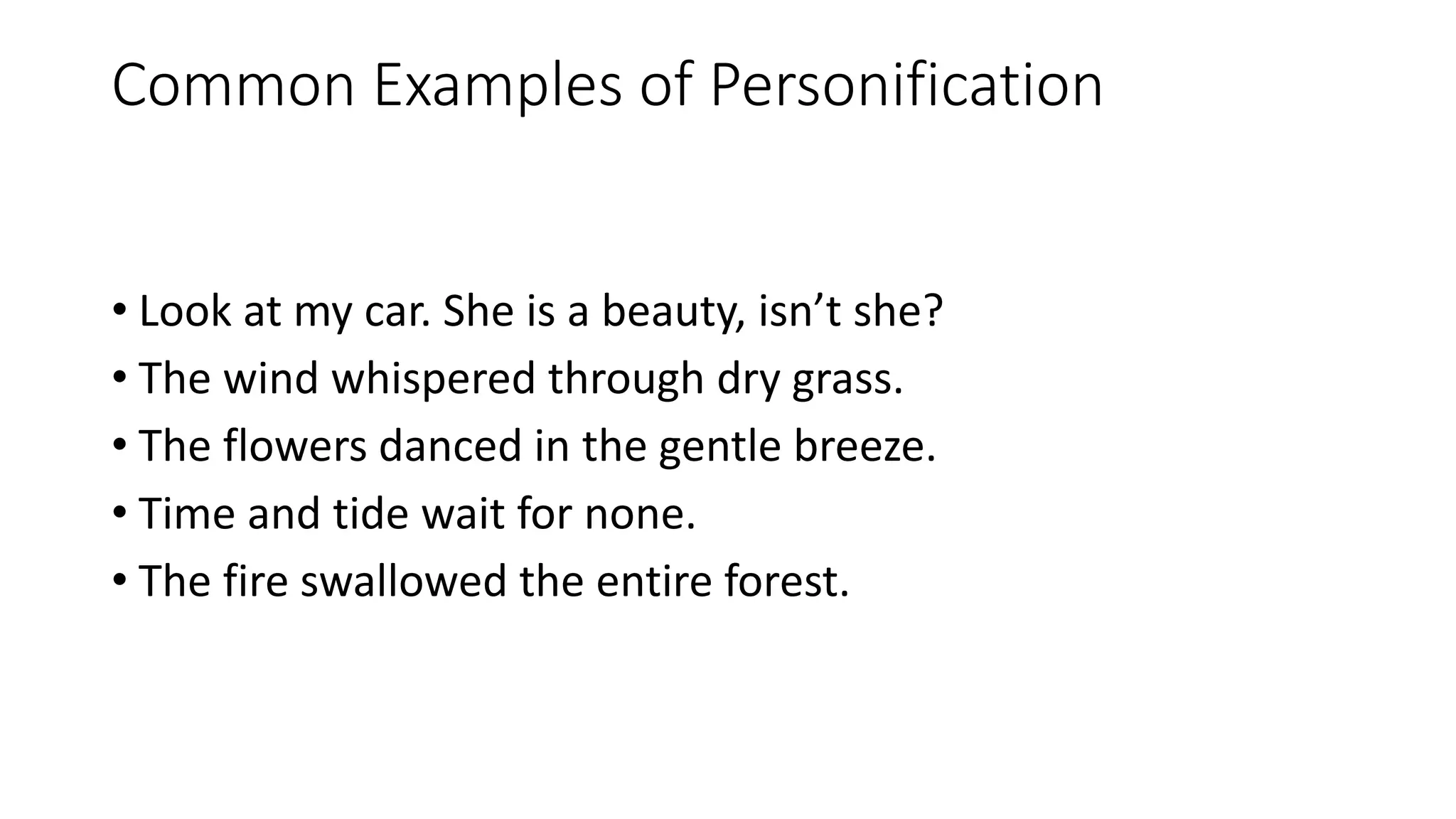
Describes personification, giving human traits to non-human elements, illustrated with common examples.
Explains onomatopoeia as words that mimic sounds, enhancing descriptive language.
Defines oxymorons as combinations of contradictory terms that still hold meaning, reinforcing diverse language use.


![Arnold and his criticism [The Study of Poetry]](https://cdn.slidesharecdn.com/ss_thumbnails/arnoldandhiscriticismbyijs-191220072019-thumbnail.jpg?width=640&height=640&fit=bounds)


