Downloaded 334 times
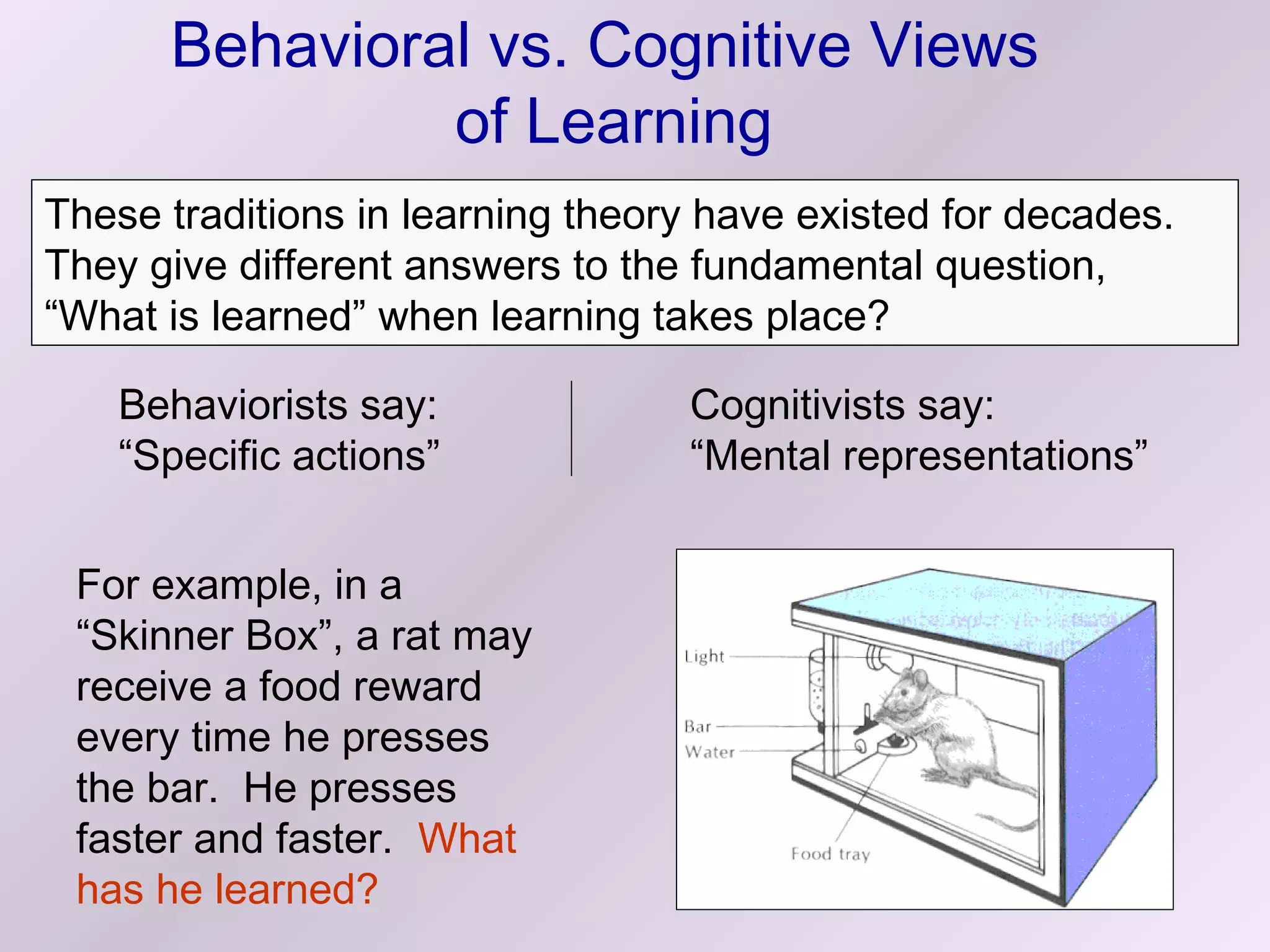
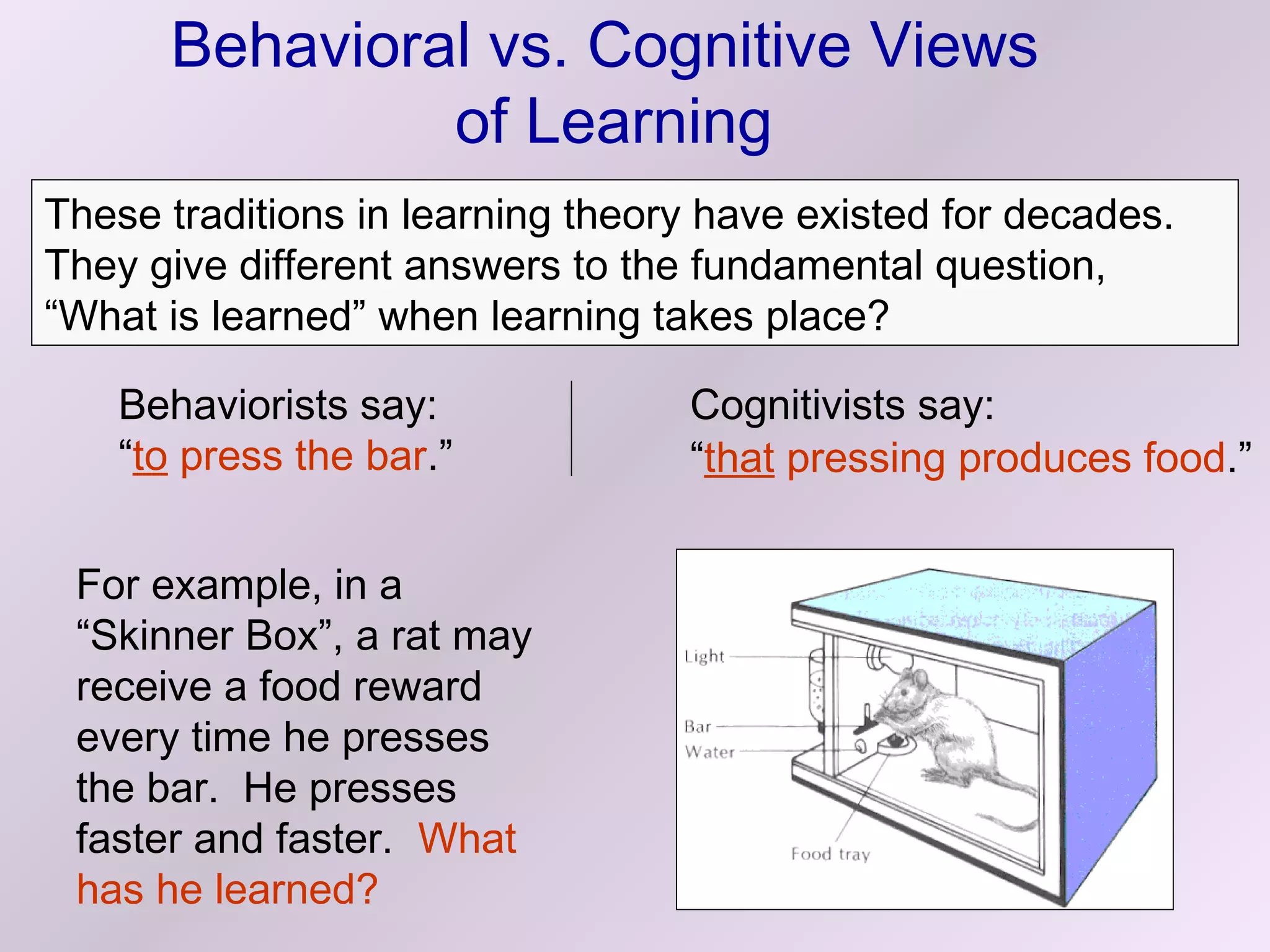
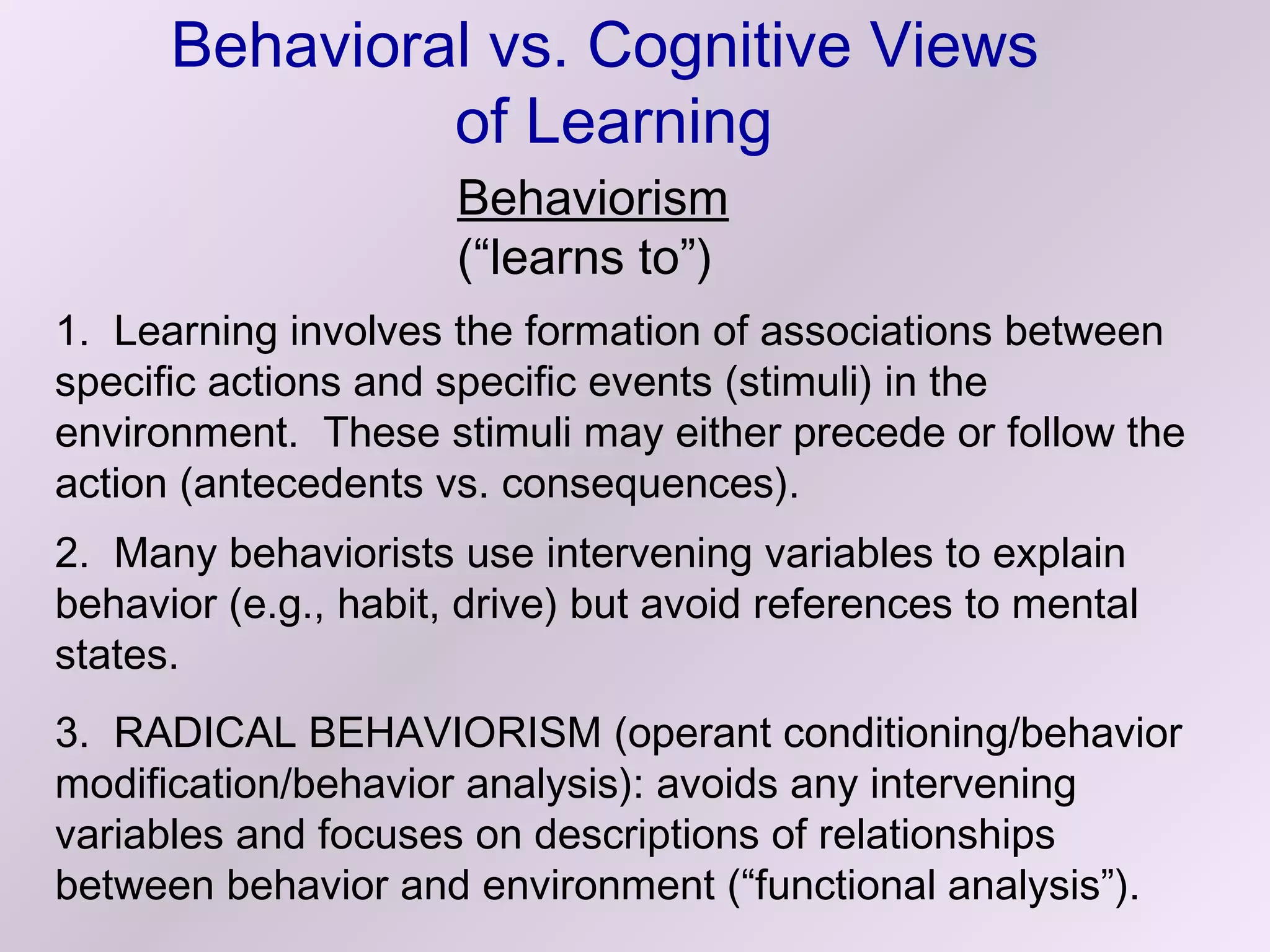
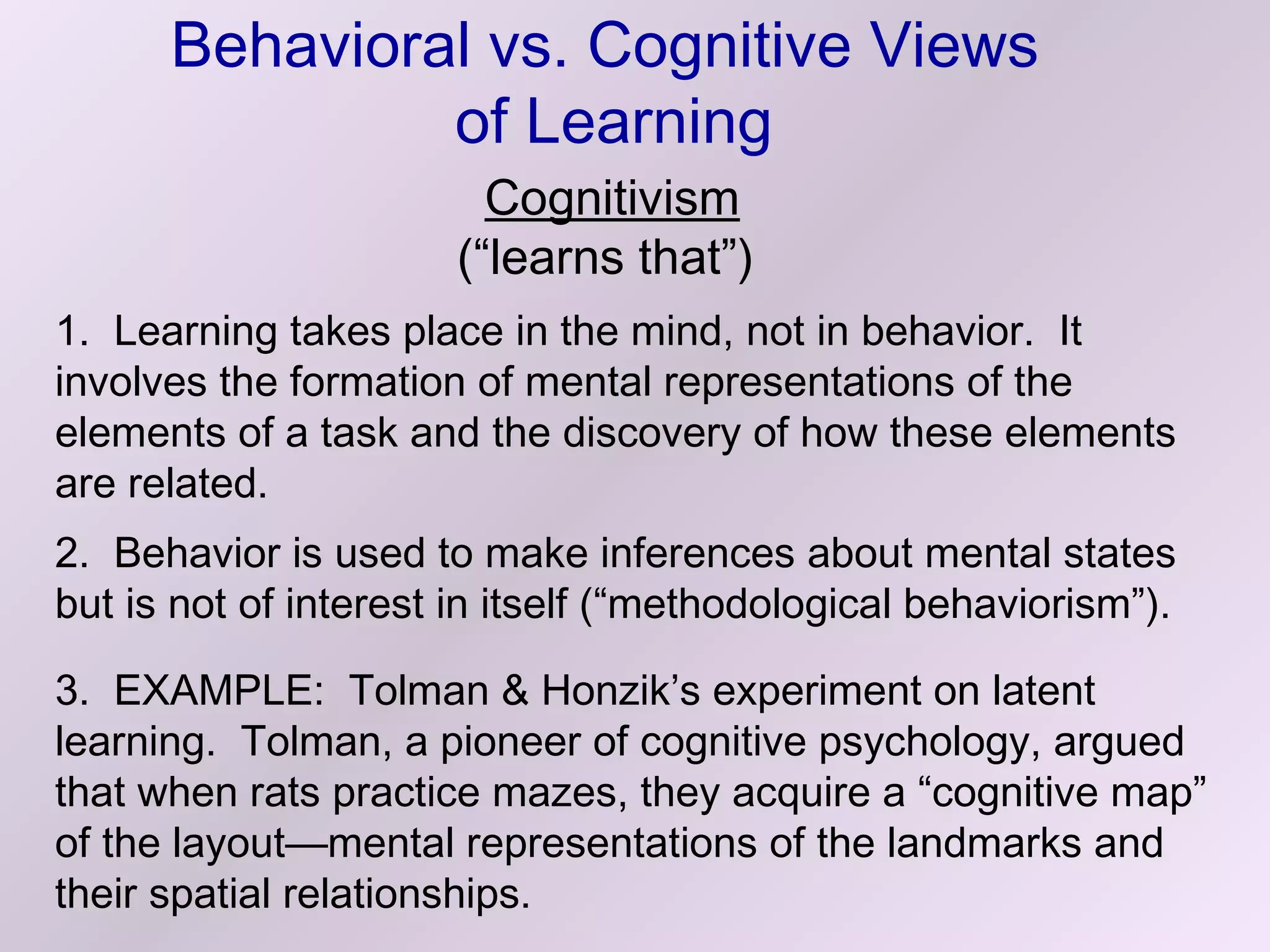

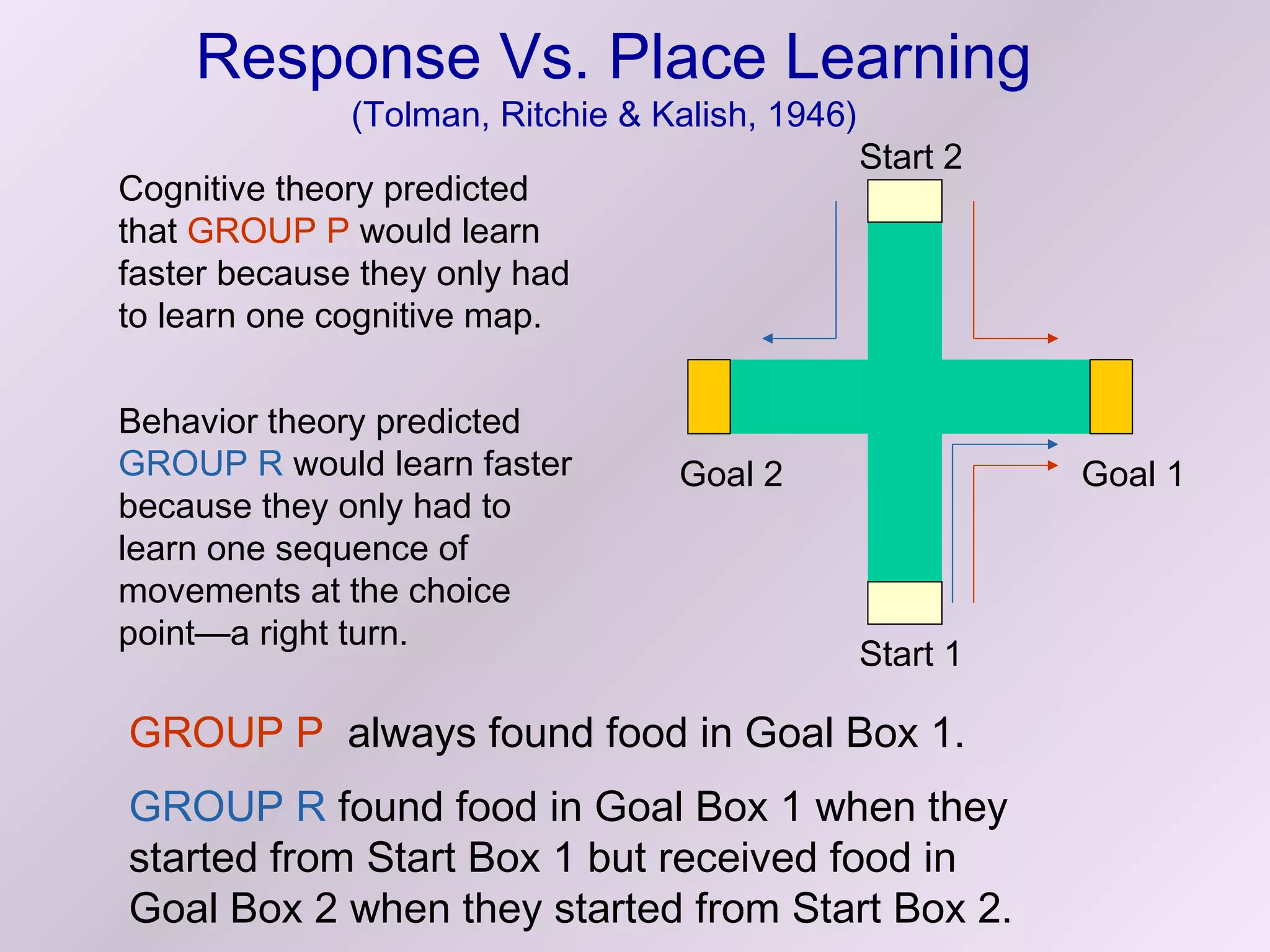
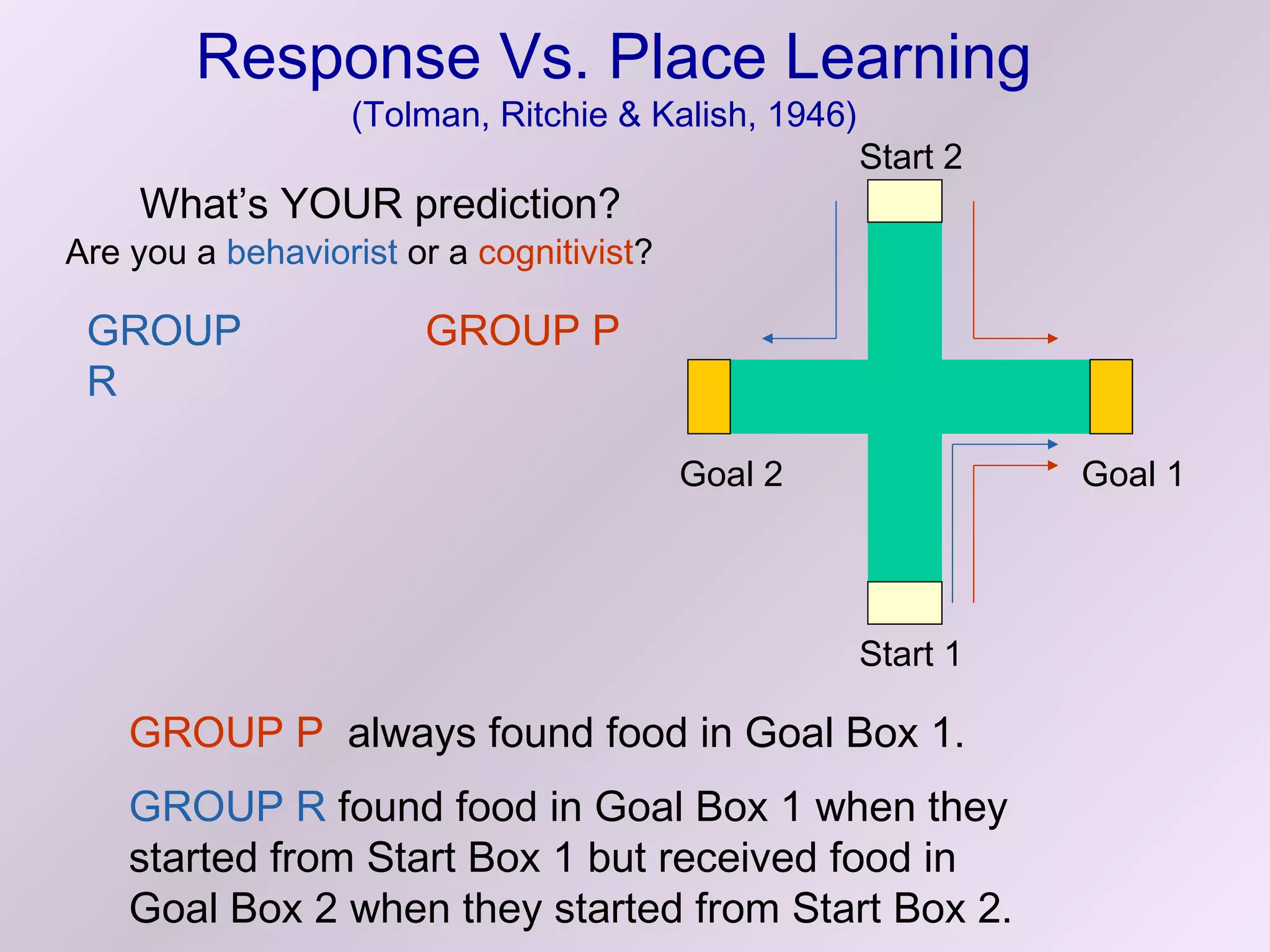
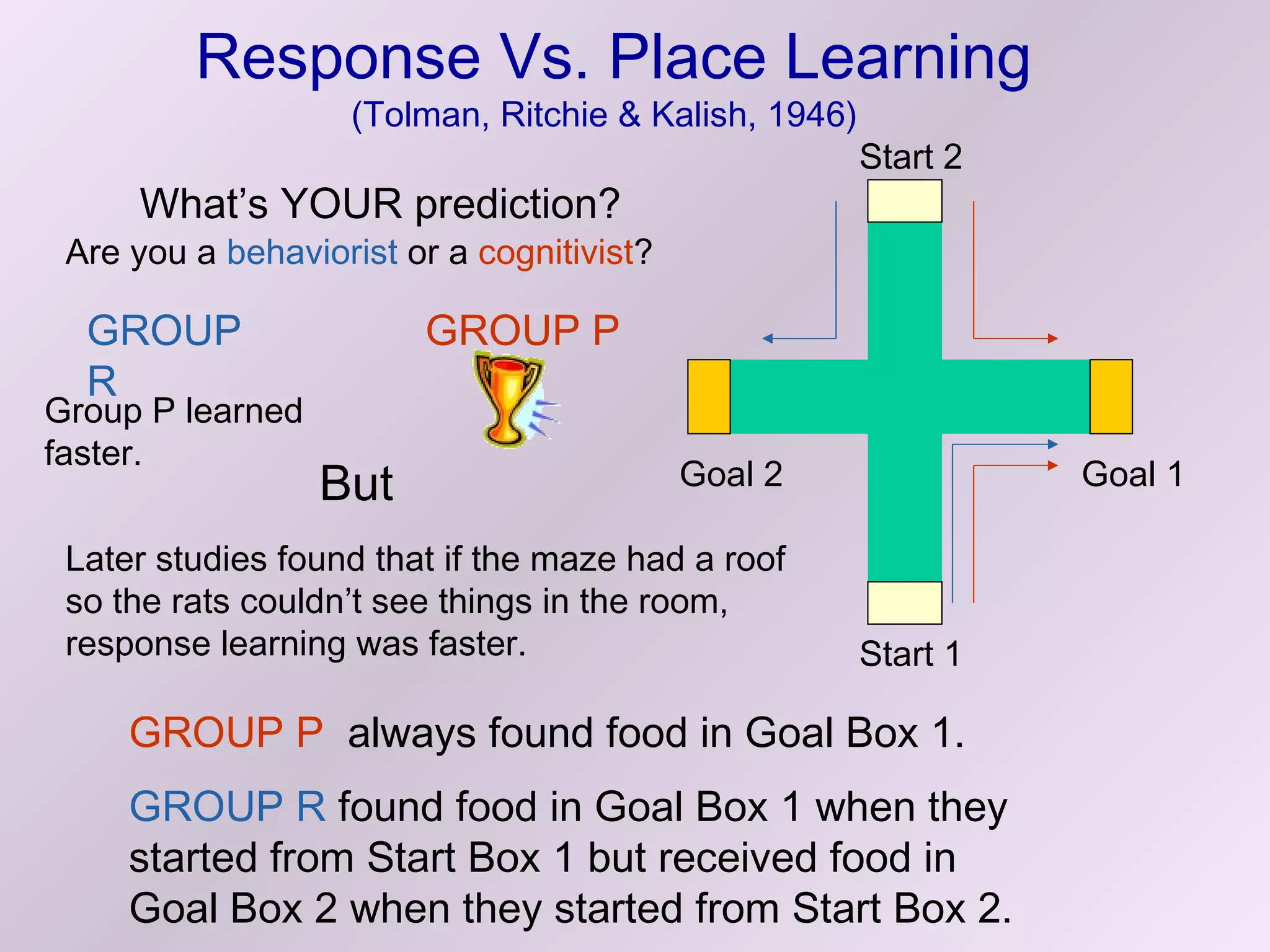
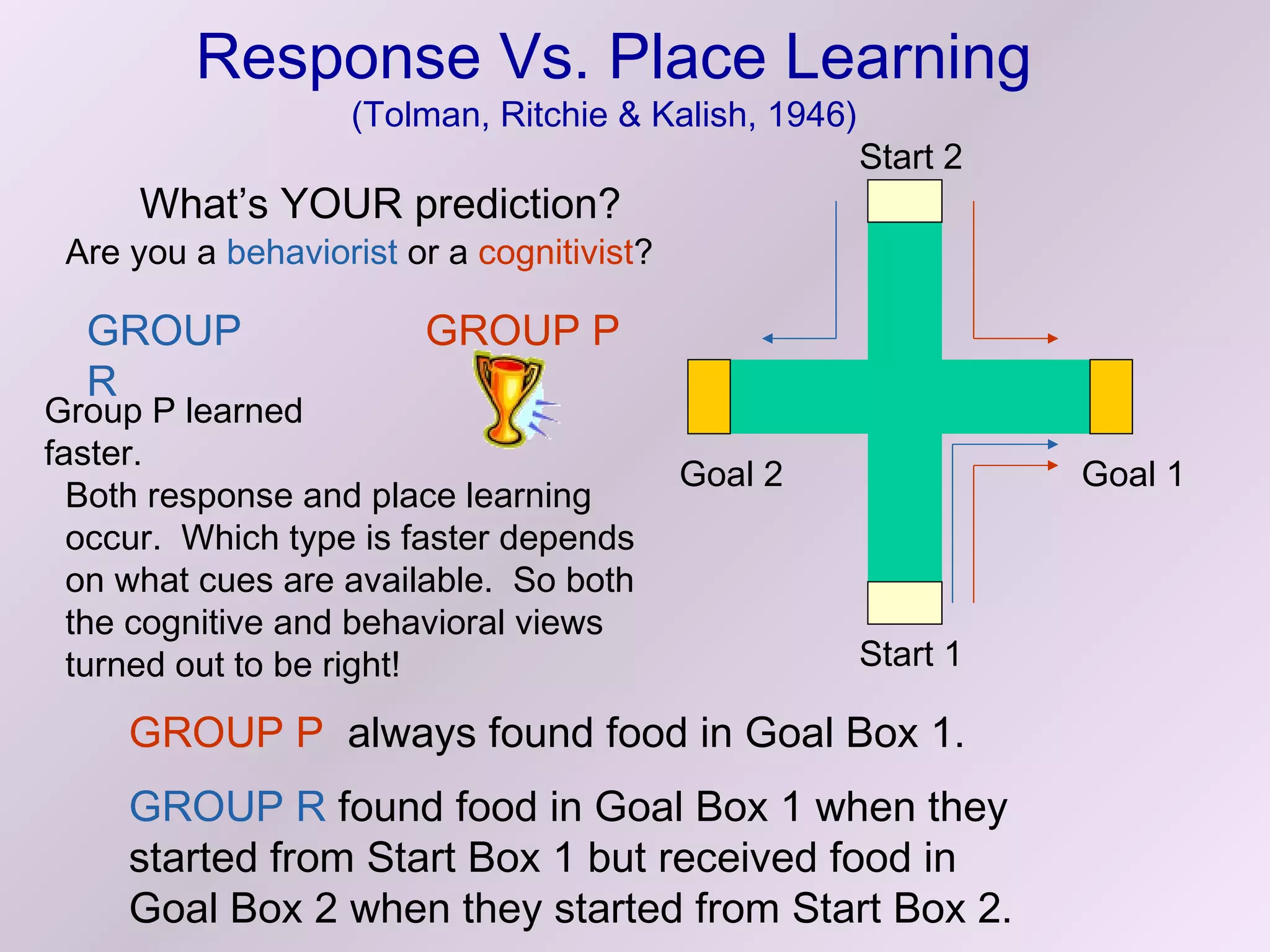

Behavioral and cognitive views of learning have existed for decades. Behaviorists say that learning involves forming associations between actions and stimuli, while cognitivists say learning involves forming mental representations of task elements and their relationships. An experiment on rats in mazes found that when landmarks were visible, rats learning to navigate to a single place learned faster, supporting cognitive views, but when landmarks were hidden, rats learning a response pattern learned faster, supporting behavioral views.


![Learning [Nature & Theory]-Thorndike & Skinner.pptx](https://cdn.slidesharecdn.com/ss_thumbnails/learningnaturetheory-thorndikeskinner-250831011946-ebdd90e3-thumbnail.jpg?width=640&height=640&fit=bounds)


