Workshop on BBS
BEHAVIOUR BASED SAFETY
- a new dimension


DATE            : 28.08.11
TIME            : 11:00HRS UNTILL 11:45HRS
VENUE           : YARD MEETING ROOM, DWD


                                                       G. Uma Mahesh – HSE Manager
                          International Ship Repairs (FZE), P.O.Box 1334 – Fujairah UAE
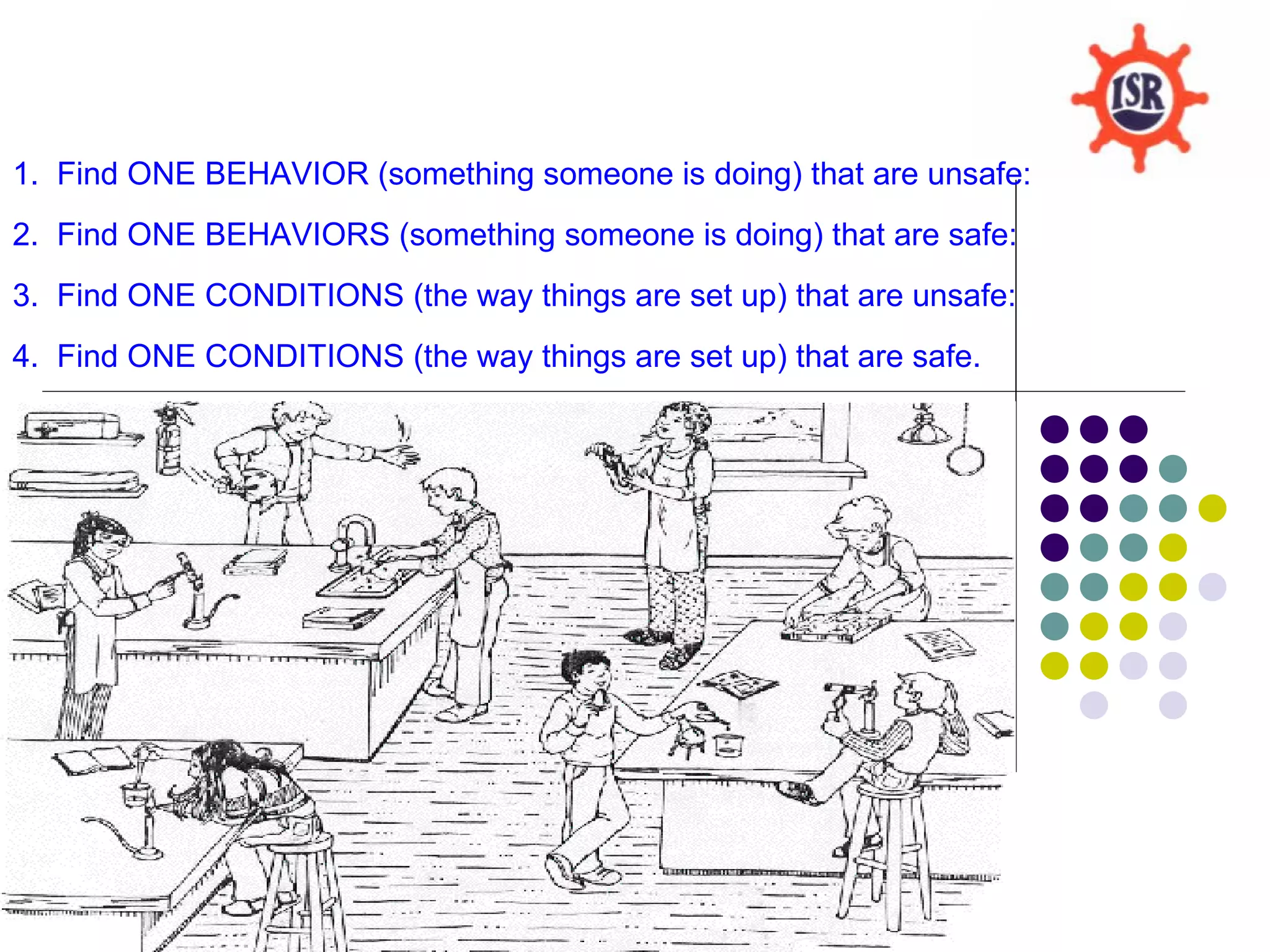
1. Find ONE BEHAVIOR (something someone is doing) that are unsafe:
2. Find ONE BEHAVIORS (something someone is doing) that are safe:
3. Find ONE CONDITIONS (the way things are set up) that are unsafe:
4. Find ONE CONDITIONS (the way things are set up) that are safe.
Examples of UNSAFE Behaviour


 PPEs’ worn but not regularly inspected.
 No designated place for various items
 Haphazard way of maintaining workplace.
 Not following the instructions (both written and verbal).
 Over-confidence.
 Delayed Response.
 Undermining a new employee
 Outsider’s/Auditor’s instruction.
 Not prioritizing Unsafe Act & Conditions
Be-hav-i-our
WHAT IS BEHAVIOUR ALL ABOUT? Its “The way we act”
The approach we have towards personal & workplace safety

Tendency to forget things,                 Reckless endangerment
Not valuing,                                       underestimating
Seems to be high pride,                               over-confident
Work stress,                    objection on Management decisions
Not participative,                               Lack of team spirit
Never talk,                               Jealous at other’s success
Affected by emotional commitments,               Lack of knowledge
Loosing interest,                                             Enmity
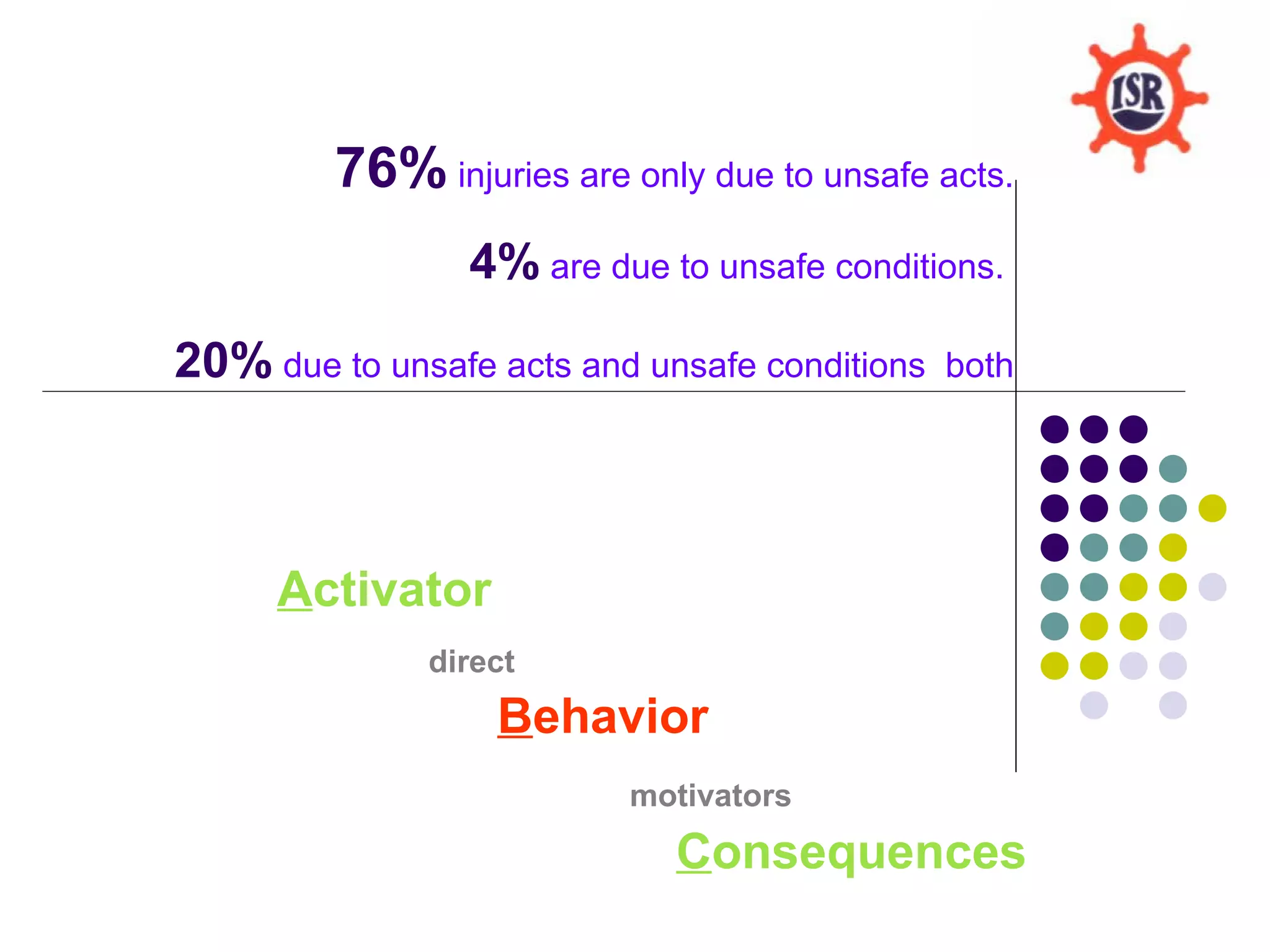
76% injuries are only due to unsafe acts.
                 4% are due to unsafe conditions.

20% due to unsafe acts and unsafe conditions   both


      Activator
              direct
                  Behavior
                          motivators
                             Consequences
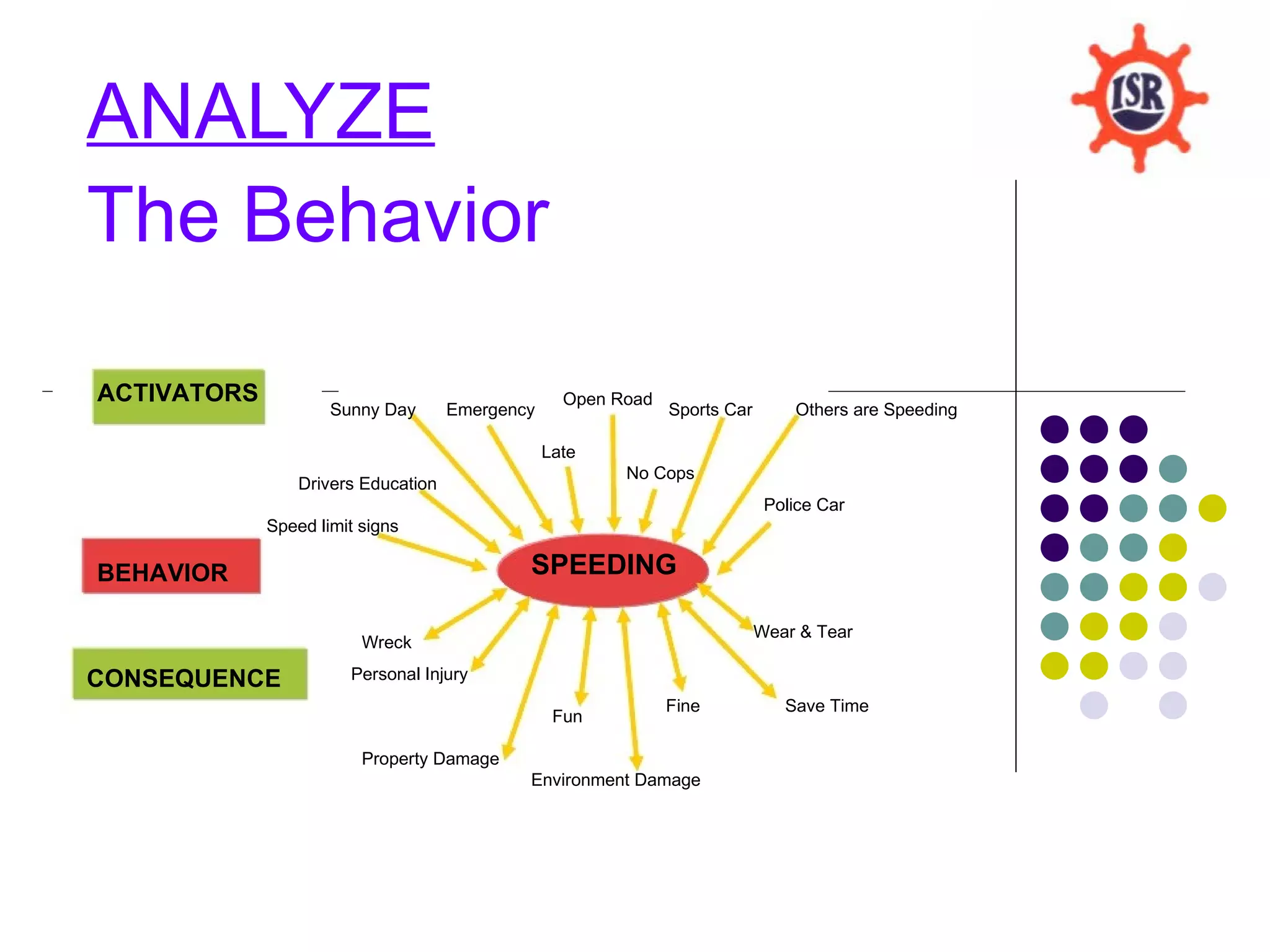
ANALYZE
The Behavior

ACTIVATORS                                         Open Road
                     Sunny Day       Emergency                 Sports Car       Others are Speeding

                                                 Late
                                                         No Cops
                 Drivers Education
                                                                             Police Car
             Speed limit signs

BEHAVIOR                                     SPEEDING

                                                                            Wear & Tear
                         Wreck

CONSEQUENCE            Personal Injury
                                                               Fine            Save Time
                                                  Fun

                         Property Damage
                                             Environment Damage
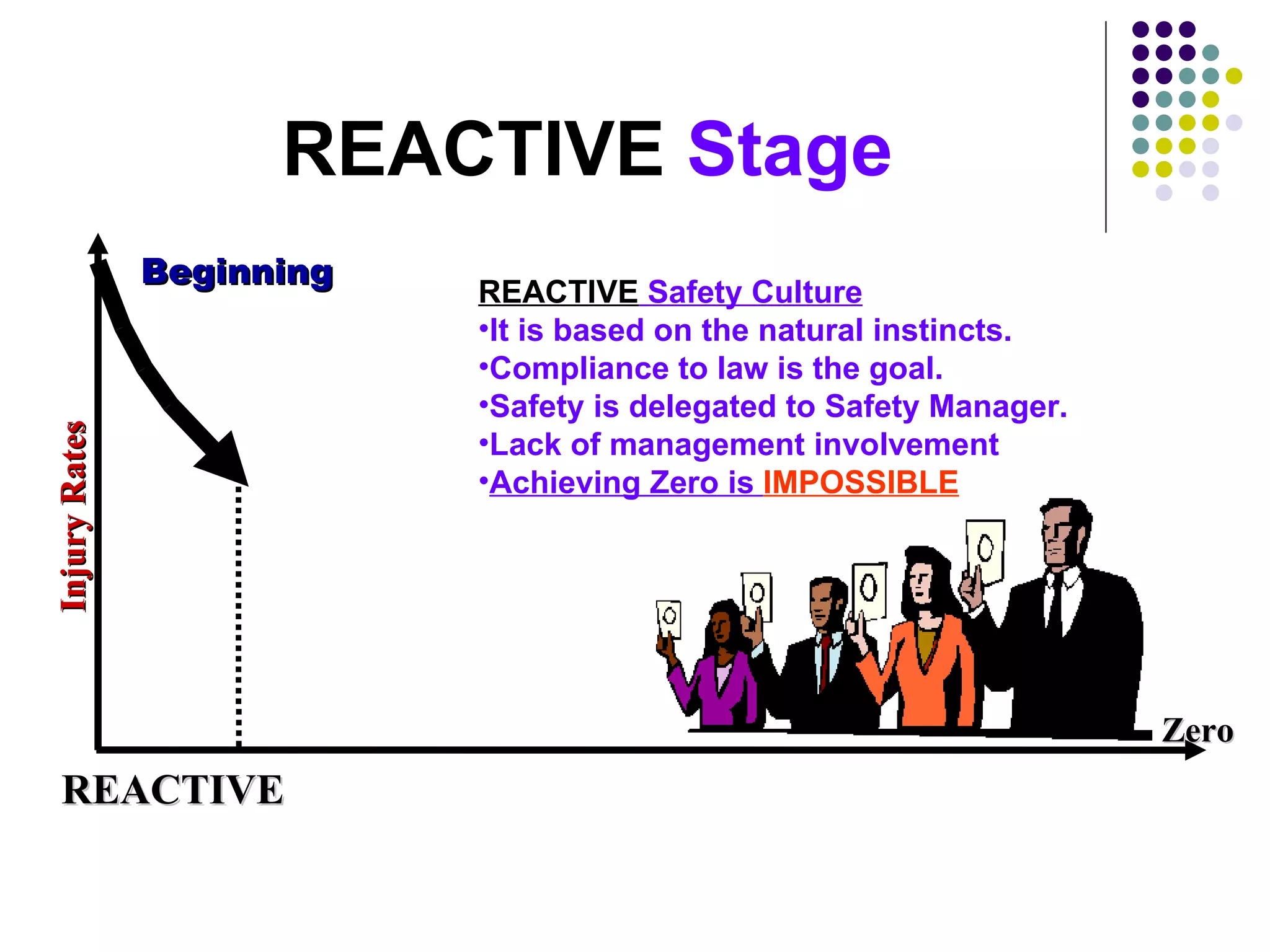
REACTIVE Stage
               Beginning
                           REACTIVE Safety Culture
                           •It is based on the natural instincts.
                           •Compliance to law is the goal.
                           •Safety is delegated to Safety Manager.
Injury Rates


                           •Lack of management involvement
                           •Achieving Zero is IMPOSSIBLE


                                                                     Zero
  REACTIVE
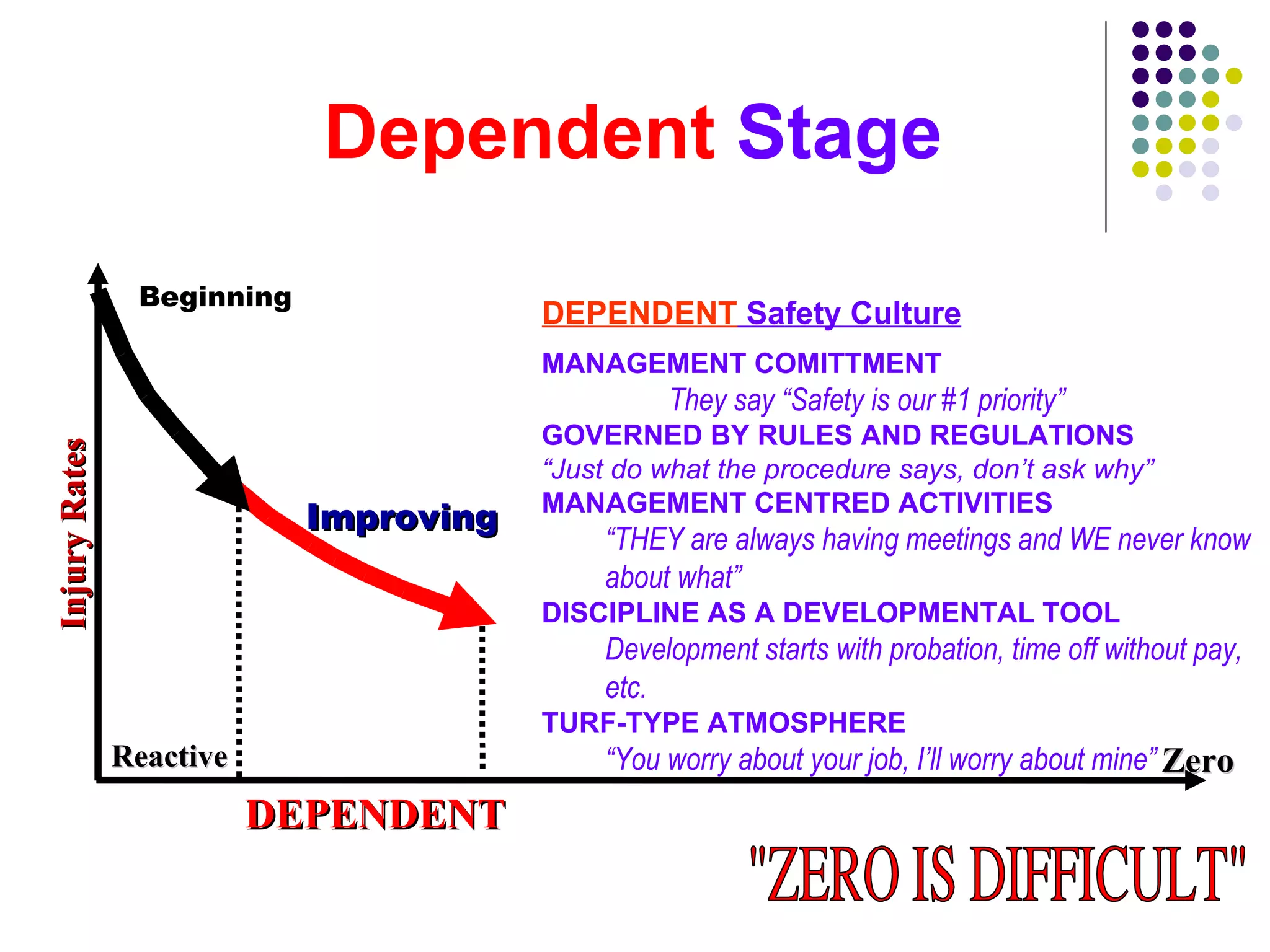
Dependent Stage
                Beginning
                                        DEPENDENT Safety Culture
                                        MANAGEMENT COMITTMENT
                                                 They say “Safety is our #1 priority”
                                        GOVERNED BY RULES AND REGULATIONS
Injury Rates


                                        “Just do what the procedure says, don’t ask why”
                                        MANAGEMENT CENTRED ACTIVITIES
                            Improving
                                            “THEY are always having meetings and WE never know
                                            about what”
                                        DISCIPLINE AS A DEVELOPMENTAL TOOL
                                            Development starts with probation, time off without pay,
                                            etc.
                                        TURF-TYPE ATMOSPHERE
               Reactive                     “You worry about your job, I’ll worry about mine” Zero
                          DEPENDENT
Dependant Behaviour
Example: Using a ladder

The person using a ladder would pick up the ladder, check the
inspection sticker ONLY IF supervision was around.

The dependent behavior in this case is that the individual is not
only dependent on external motivation to follow procedure the
individual is DEPENDENT on the correctness of the inspection
sticker.
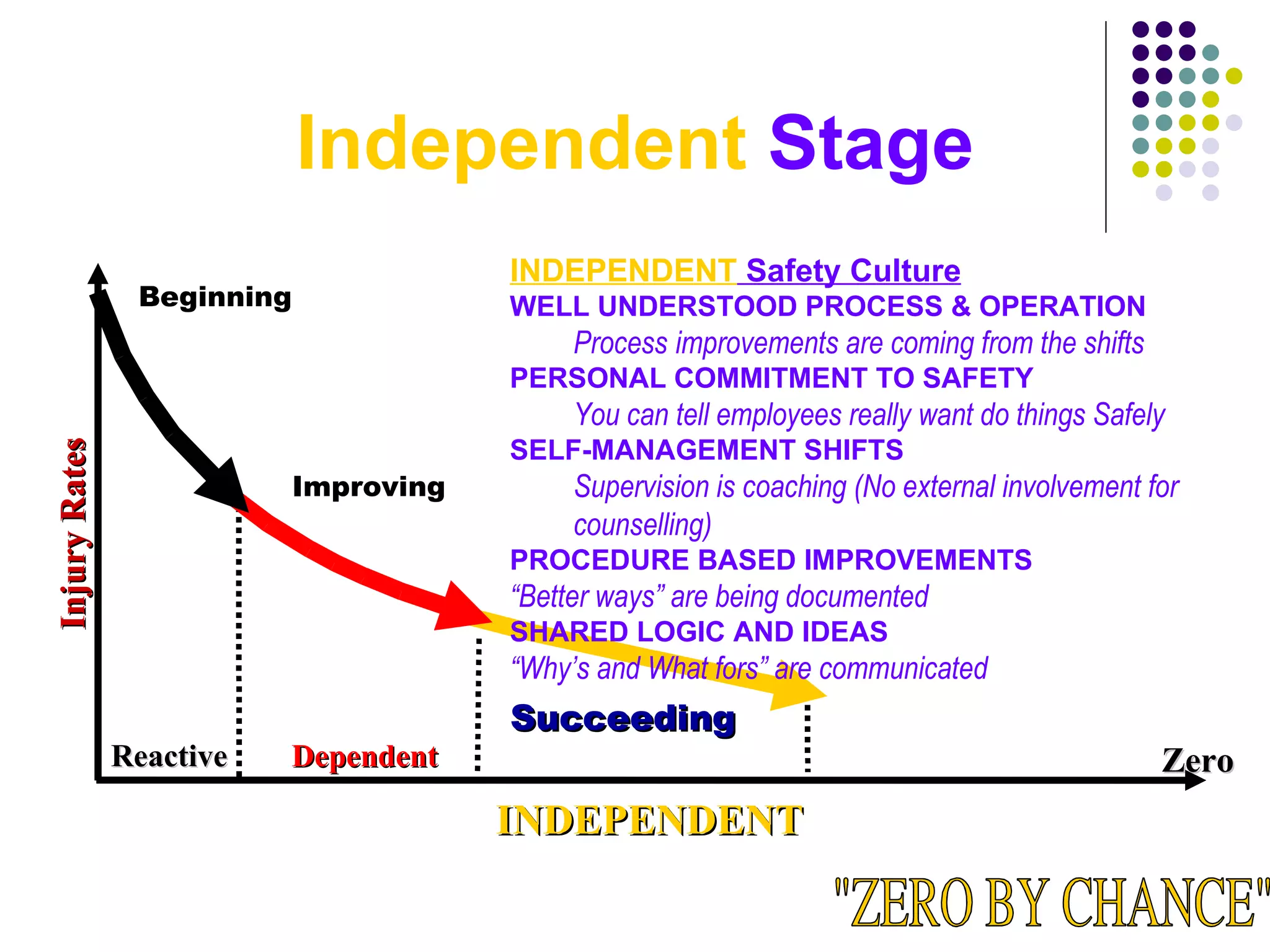
Independent Stage
                                        INDEPENDENT Safety Culture
                Beginning               WELL UNDERSTOOD PROCESS & OPERATION
                                             Process improvements are coming from the shifts
                                        PERSONAL COMMITMENT TO SAFETY
                                             You can tell employees really want do things Safely
                                        SELF-MANAGEMENT SHIFTS
Injury Rates


                            Improving        Supervision is coaching (No external involvement for
                                             counselling)
                                        PROCEDURE BASED IMPROVEMENTS
                                        “Better ways” are being documented
                                        SHARED LOGIC AND IDEAS
                                        “Why’s and What fors” are communicated
                                        Succeeding
               Reactive   Dependent                                                            Zero
                                        INDEPENDENT
Independent Behaviour
Example: Using a ladder


The individual checks the inspection sticker and the ladder for
defects prior to use. If a defect is discovered the individual takes
the ladder out of use and then proceeds to get another ladder.

The independent behaviour in this case is the individual has
knowledge of the inspection system and what constitutes a safe
ladder and has the skill to use the ladder in an appropriate way.
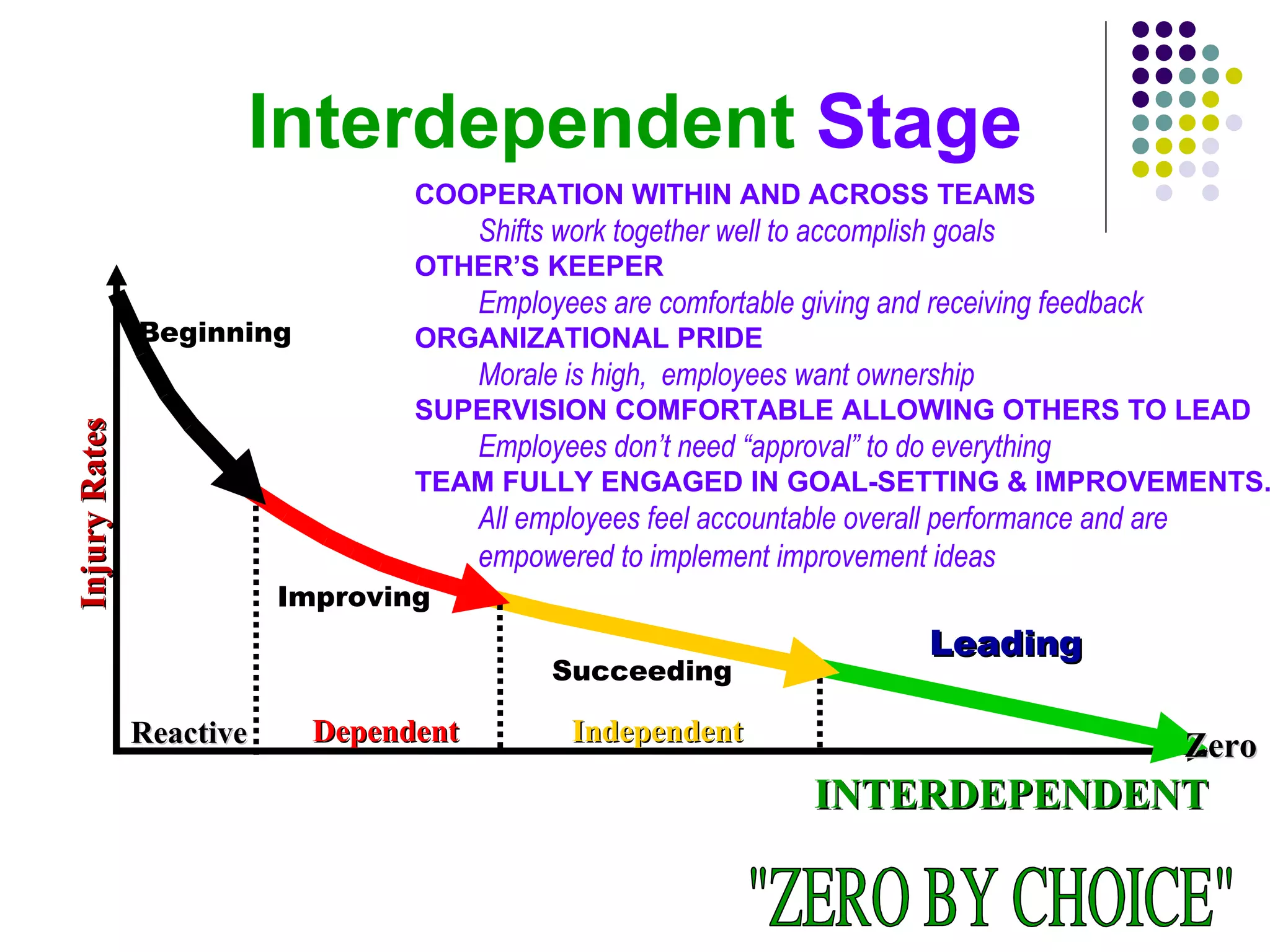
Interdependent Stage
                                  COOPERATION WITHIN AND ACROSS TEAMS
                                        Shifts work together well to accomplish goals
                                  OTHER’S KEEPER
                                        Employees are comfortable giving and receiving feedback
               Beginning          ORGANIZATIONAL PRIDE
                                        Morale is high, employees want ownership
                                  SUPERVISION COMFORTABLE ALLOWING OTHERS TO LEAD
Injury Rates


                                        Employees don’t need “approval” to do everything
                                  TEAM FULLY ENGAGED IN GOAL-SETTING & IMPROVEMENTS.
                                        All employees feel accountable overall performance and are
                                        empowered to implement improvement ideas
                          Improving
                                                                               Leading
                                              Succeeding

               Reactive     Dependent           Independent                                          Zero
                                                                     INTERDEPENDENT
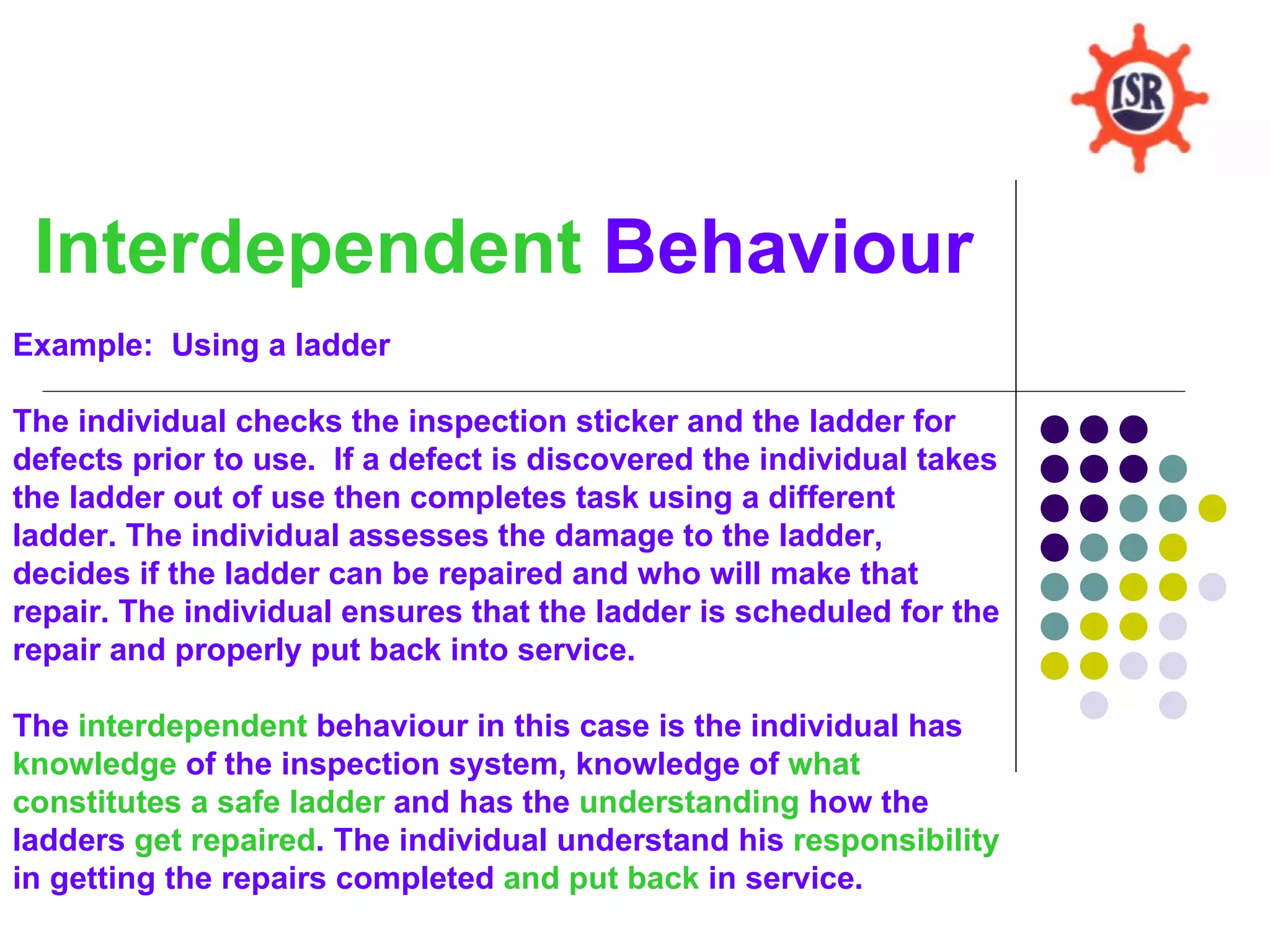
Interdependent Behaviour
Example: Using a ladder

The individual checks the inspection sticker and the ladder for
defects prior to use. If a defect is discovered the individual takes
the ladder out of use then completes task using a different
ladder. The individual assesses the damage to the ladder,
decides if the ladder can be repaired and who will make that
repair. The individual ensures that the ladder is scheduled for the
repair and properly put back into service.

The interdependent behaviour in this case is the individual has
knowledge of the inspection system, knowledge of what
constitutes a safe ladder and has the understanding how the
ladders get repaired. The individual understand his responsibility
in getting the repairs completed and put back in service.
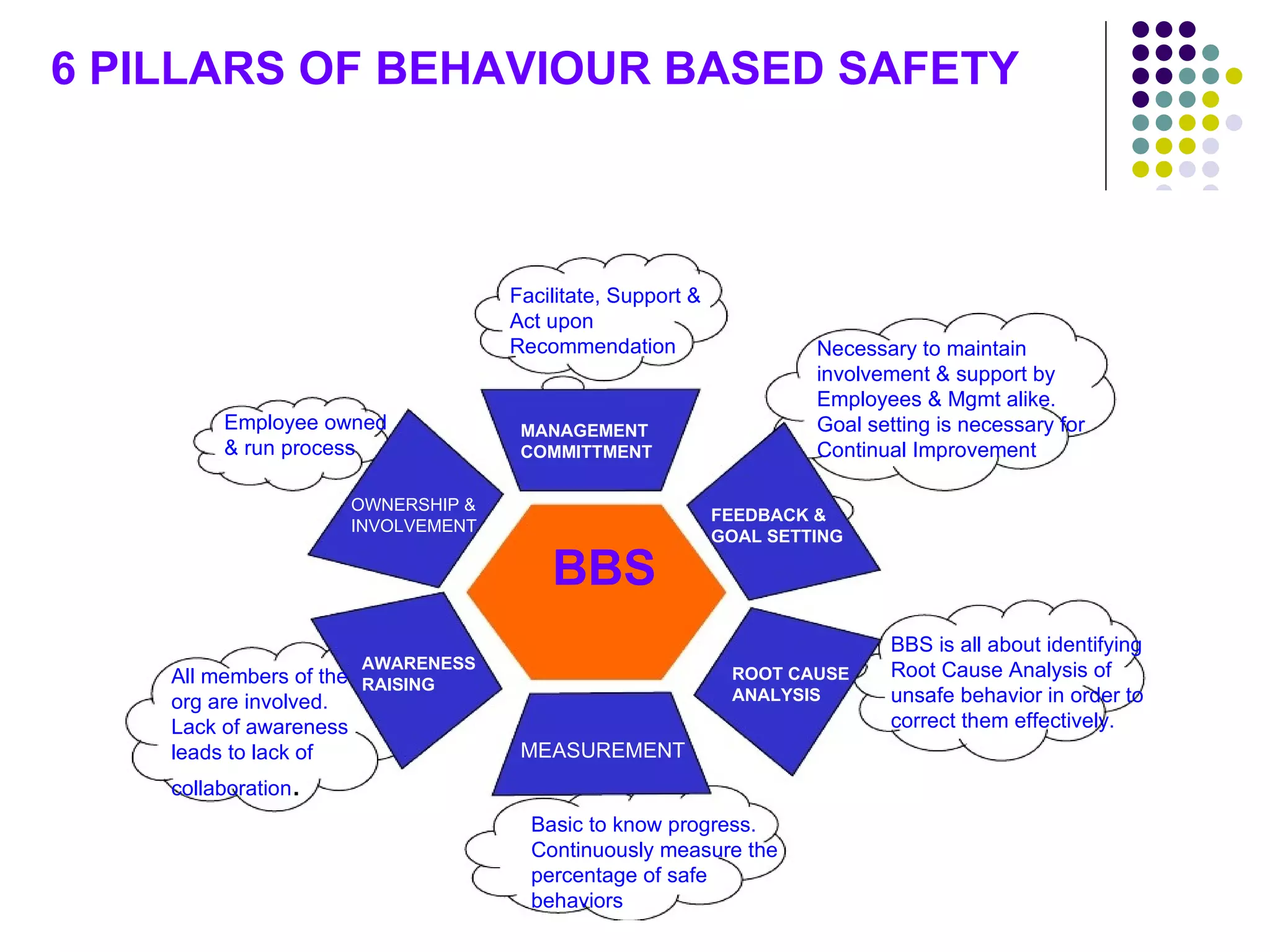
6 PILLARS OF BEHAVIOUR BASED SAFETY


                                      Facilitate, Support &
                                      Act upon
                                      Recommendation                   Necessary to maintain
                                                                       involvement & support by
                                                                       Employees & Mgmt alike.
         Employee owned                MANAGEMENT                      Goal setting is necessary for
         & run process                 COMMITTMENT                     Continual Improvement

                        OWNERSHIP &
                                                              FEEDBACK &
                        INVOLVEMENT
                                                              GOAL SETTING

                                          BBS
                                                                              BBS is all about identifying
                       AWARENESS                                              Root Cause Analysis of
    All members of the RAISING                                 ROOT CAUSE
    org are involved.                                          ANALYSIS       unsafe behavior in order to
    Lack of awareness                                                         correct them effectively.
    leads to lack of                   MEASUREMENT
    collaboration.
                                        Basic to know progress.
                                        Continuously measure the
                                        percentage of safe
                                        behaviors
Its time for your feedback !!
THANK YOU
FOR YOUR TIME &
ACTIVE PARTICIPATION

There is a RISK involved in RISK ASSESSMENT even,
Always Be Cautious…
                                                    G. Uma Mahesh – HSE Manager
                      International Ship Repairs (FZE), P.O.Box 1334 – Fujairah UAE

BBS Presentation by Uma Mahesh

  • 1.
    Workshop on BBS BEHAVIOURBASED SAFETY - a new dimension DATE : 28.08.11 TIME : 11:00HRS UNTILL 11:45HRS VENUE : YARD MEETING ROOM, DWD G. Uma Mahesh – HSE Manager International Ship Repairs (FZE), P.O.Box 1334 – Fujairah UAE
  • 2.
    1. Find ONEBEHAVIOR (something someone is doing) that are unsafe: 2. Find ONE BEHAVIORS (something someone is doing) that are safe: 3. Find ONE CONDITIONS (the way things are set up) that are unsafe: 4. Find ONE CONDITIONS (the way things are set up) that are safe.
  • 3.
    Examples of UNSAFEBehaviour PPEs’ worn but not regularly inspected. No designated place for various items Haphazard way of maintaining workplace. Not following the instructions (both written and verbal). Over-confidence. Delayed Response. Undermining a new employee Outsider’s/Auditor’s instruction. Not prioritizing Unsafe Act & Conditions
  • 4.
    Be-hav-i-our WHAT IS BEHAVIOURALL ABOUT? Its “The way we act” The approach we have towards personal & workplace safety Tendency to forget things, Reckless endangerment Not valuing, underestimating Seems to be high pride, over-confident Work stress, objection on Management decisions Not participative, Lack of team spirit Never talk, Jealous at other’s success Affected by emotional commitments, Lack of knowledge Loosing interest, Enmity
  • 5.
    76% injuries areonly due to unsafe acts. 4% are due to unsafe conditions. 20% due to unsafe acts and unsafe conditions both Activator direct Behavior motivators Consequences
  • 6.
    ANALYZE The Behavior ACTIVATORS Open Road Sunny Day Emergency Sports Car Others are Speeding Late No Cops Drivers Education Police Car Speed limit signs BEHAVIOR SPEEDING Wear & Tear Wreck CONSEQUENCE Personal Injury Fine Save Time Fun Property Damage Environment Damage
  • 7.
    REACTIVE Stage Beginning REACTIVE Safety Culture •It is based on the natural instincts. •Compliance to law is the goal. •Safety is delegated to Safety Manager. Injury Rates •Lack of management involvement •Achieving Zero is IMPOSSIBLE Zero REACTIVE
  • 8.
    Dependent Stage Beginning DEPENDENT Safety Culture MANAGEMENT COMITTMENT They say “Safety is our #1 priority” GOVERNED BY RULES AND REGULATIONS Injury Rates “Just do what the procedure says, don’t ask why” MANAGEMENT CENTRED ACTIVITIES Improving “THEY are always having meetings and WE never know about what” DISCIPLINE AS A DEVELOPMENTAL TOOL Development starts with probation, time off without pay, etc. TURF-TYPE ATMOSPHERE Reactive “You worry about your job, I’ll worry about mine” Zero DEPENDENT
  • 9.
    Dependant Behaviour Example: Usinga ladder The person using a ladder would pick up the ladder, check the inspection sticker ONLY IF supervision was around. The dependent behavior in this case is that the individual is not only dependent on external motivation to follow procedure the individual is DEPENDENT on the correctness of the inspection sticker.
  • 10.
    Independent Stage INDEPENDENT Safety Culture Beginning WELL UNDERSTOOD PROCESS & OPERATION Process improvements are coming from the shifts PERSONAL COMMITMENT TO SAFETY You can tell employees really want do things Safely SELF-MANAGEMENT SHIFTS Injury Rates Improving Supervision is coaching (No external involvement for counselling) PROCEDURE BASED IMPROVEMENTS “Better ways” are being documented SHARED LOGIC AND IDEAS “Why’s and What fors” are communicated Succeeding Reactive Dependent Zero INDEPENDENT
  • 11.
    Independent Behaviour Example: Usinga ladder The individual checks the inspection sticker and the ladder for defects prior to use. If a defect is discovered the individual takes the ladder out of use and then proceeds to get another ladder. The independent behaviour in this case is the individual has knowledge of the inspection system and what constitutes a safe ladder and has the skill to use the ladder in an appropriate way.
  • 12.
    Interdependent Stage COOPERATION WITHIN AND ACROSS TEAMS Shifts work together well to accomplish goals OTHER’S KEEPER Employees are comfortable giving and receiving feedback Beginning ORGANIZATIONAL PRIDE Morale is high, employees want ownership SUPERVISION COMFORTABLE ALLOWING OTHERS TO LEAD Injury Rates Employees don’t need “approval” to do everything TEAM FULLY ENGAGED IN GOAL-SETTING & IMPROVEMENTS. All employees feel accountable overall performance and are empowered to implement improvement ideas Improving Leading Succeeding Reactive Dependent Independent Zero INTERDEPENDENT
  • 13.
    Interdependent Behaviour Example: Usinga ladder The individual checks the inspection sticker and the ladder for defects prior to use. If a defect is discovered the individual takes the ladder out of use then completes task using a different ladder. The individual assesses the damage to the ladder, decides if the ladder can be repaired and who will make that repair. The individual ensures that the ladder is scheduled for the repair and properly put back into service. The interdependent behaviour in this case is the individual has knowledge of the inspection system, knowledge of what constitutes a safe ladder and has the understanding how the ladders get repaired. The individual understand his responsibility in getting the repairs completed and put back in service.
  • 14.
    6 PILLARS OFBEHAVIOUR BASED SAFETY Facilitate, Support & Act upon Recommendation Necessary to maintain involvement & support by Employees & Mgmt alike. Employee owned MANAGEMENT Goal setting is necessary for & run process COMMITTMENT Continual Improvement OWNERSHIP & FEEDBACK & INVOLVEMENT GOAL SETTING BBS BBS is all about identifying AWARENESS Root Cause Analysis of All members of the RAISING ROOT CAUSE org are involved. ANALYSIS unsafe behavior in order to Lack of awareness correct them effectively. leads to lack of MEASUREMENT collaboration. Basic to know progress. Continuously measure the percentage of safe behaviors
  • 15.
    Its time foryour feedback !!
  • 16.
    THANK YOU FOR YOURTIME & ACTIVE PARTICIPATION There is a RISK involved in RISK ASSESSMENT even, Always Be Cautious… G. Uma Mahesh – HSE Manager International Ship Repairs (FZE), P.O.Box 1334 – Fujairah UAE