
1 
How to Build 
Safety DNA 
in a Corporation? 
Presenter: Rein Weng
2 
Outline 
Traditional Safety Management Model 
How to Reform Safety Management Model 
My Philosophy of EHS management 
 5 yrs EHS Roadmap
3 
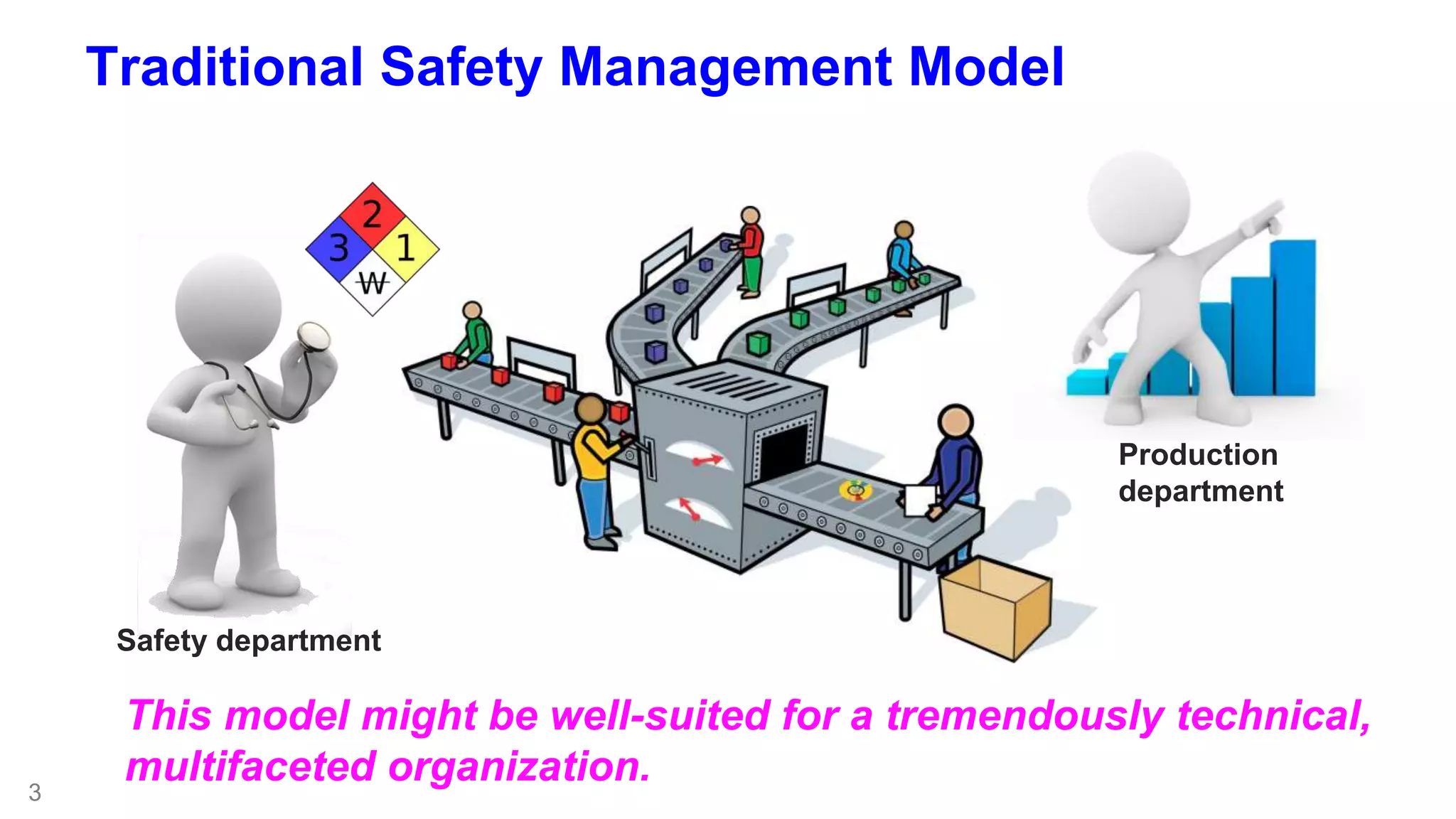
Traditional Safety Management Model 
Production 
department 
Safety department 
This model might be well-suited for a tremendously technical, 
multifaceted organization.
4 
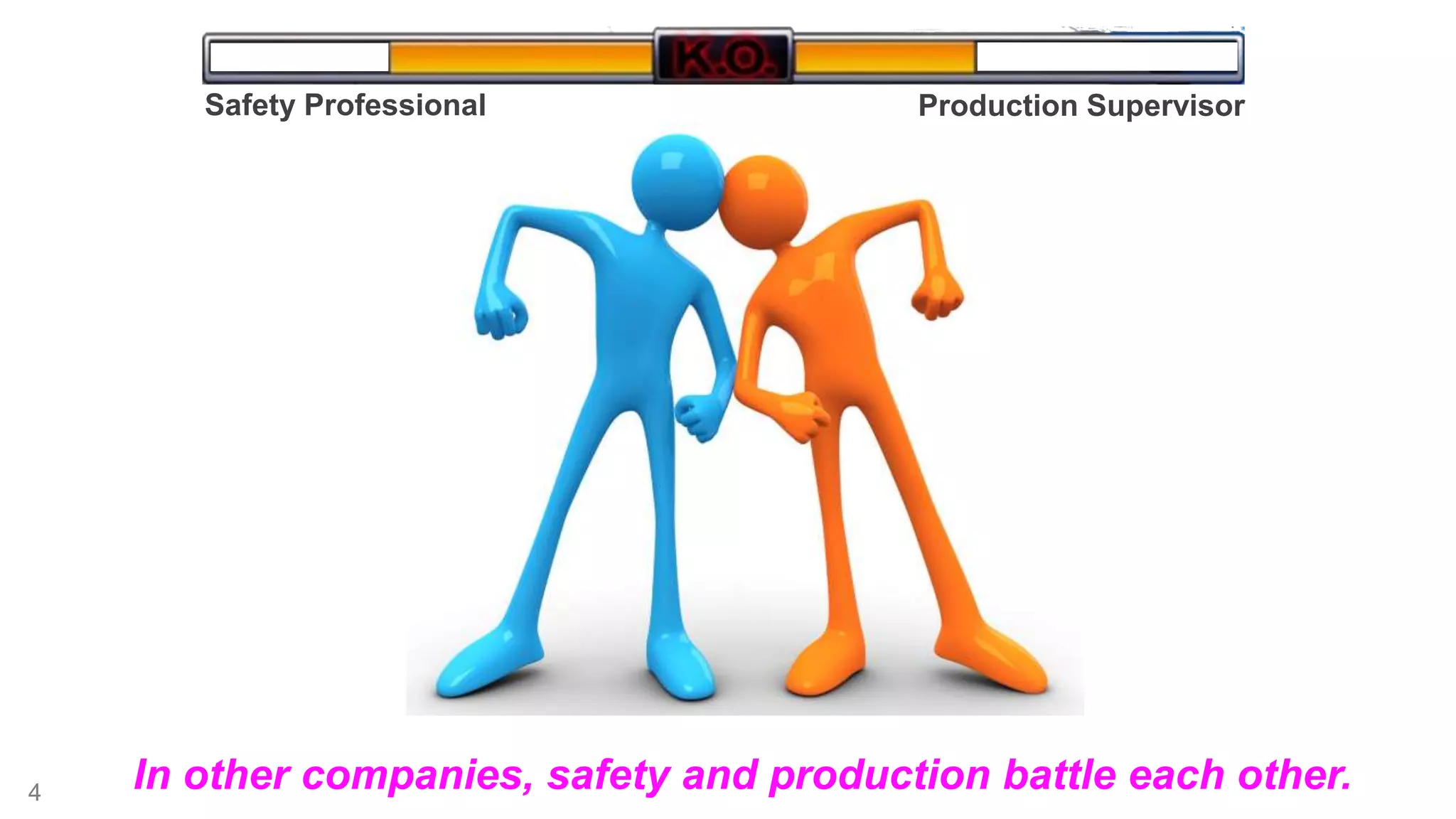
Safety Professional Production Supervisor 
In other companies, safety and production battle each other.
5 
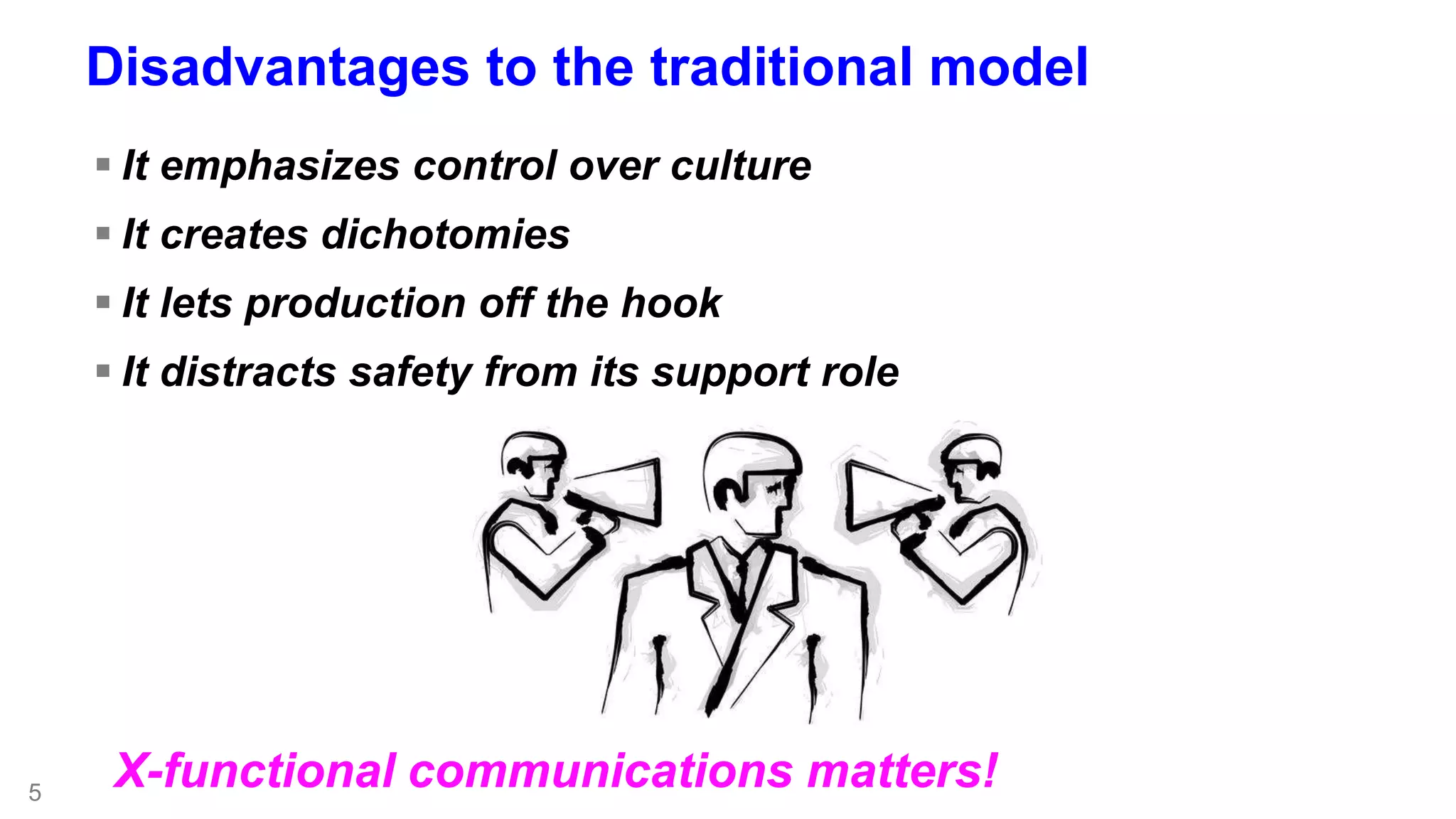
Disadvantages to the traditional model 
 It emphasizes control over culture 
 It creates dichotomies 
 It lets production off the hook 
 It distracts safety from its support role 
X-functional communications matters!
6 
What should 
we do?
7
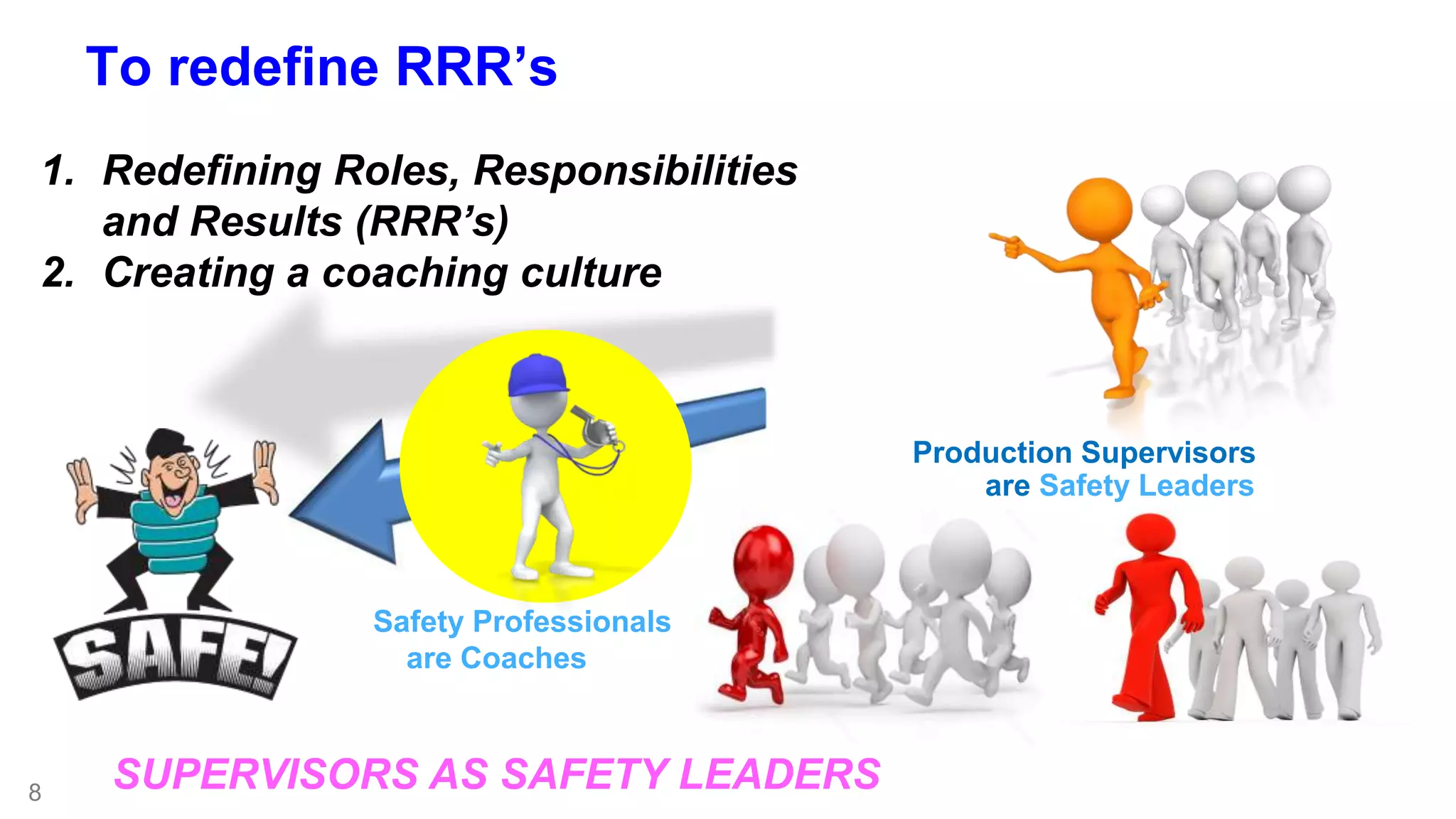
1. Redefining Roles, Responsibilities 
2. Creating a coaching culture 
8 
To redefine RRR’s 
and Results (RRR’s) 
Safety Professionals 
are Coaches 
SUPERVISORS AS SAFETY LEADERS 
Production Supervisors 
are Safety Leaders
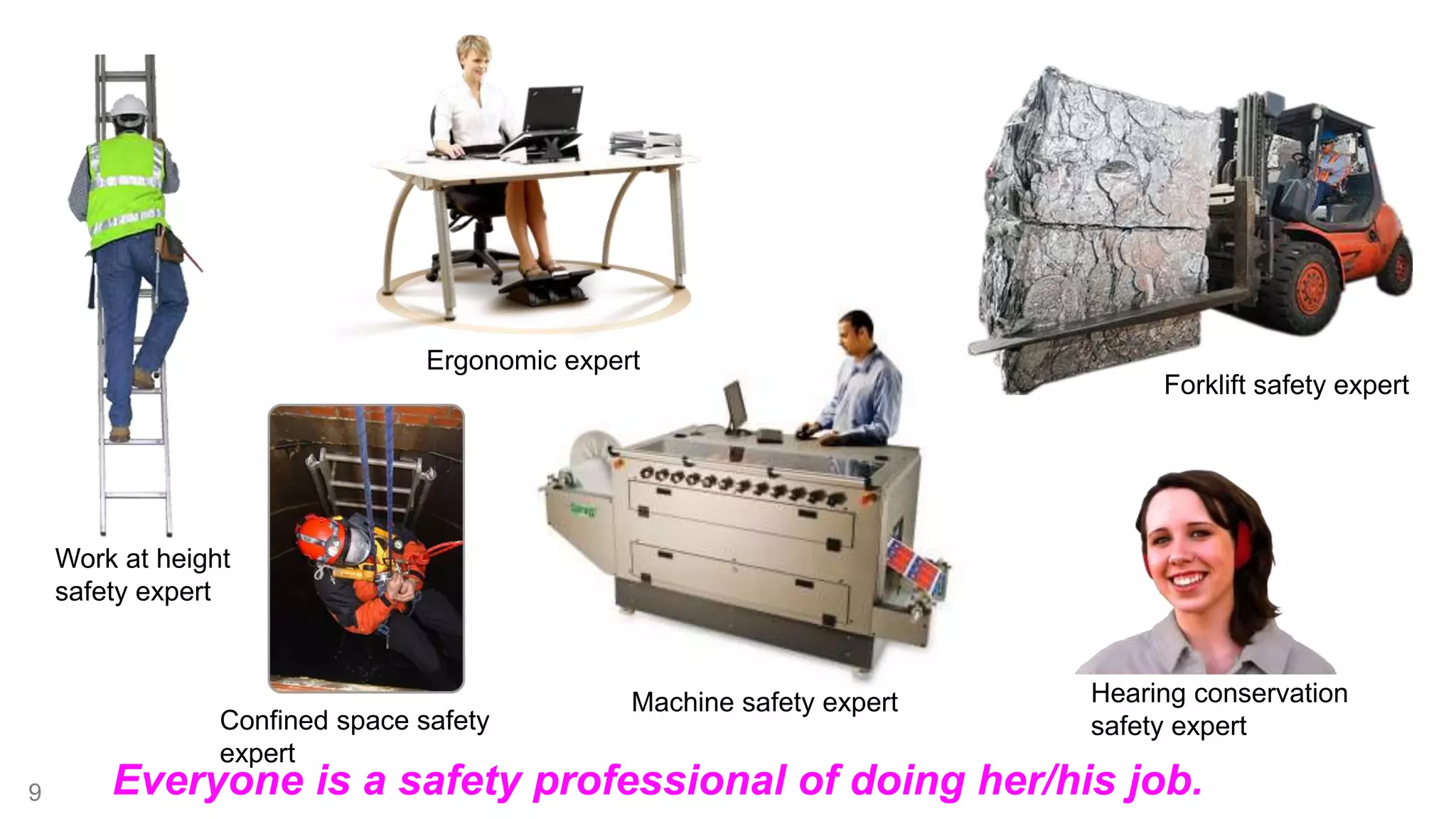
Work at height 
safety expert 
Ergonomic expert 
Forklift safety expert 
Confined space safety 
expert 
Machine safety expert Hearing conservation 
safety expert 
9 Everyone is a safety professional of doing her/his job.
10 
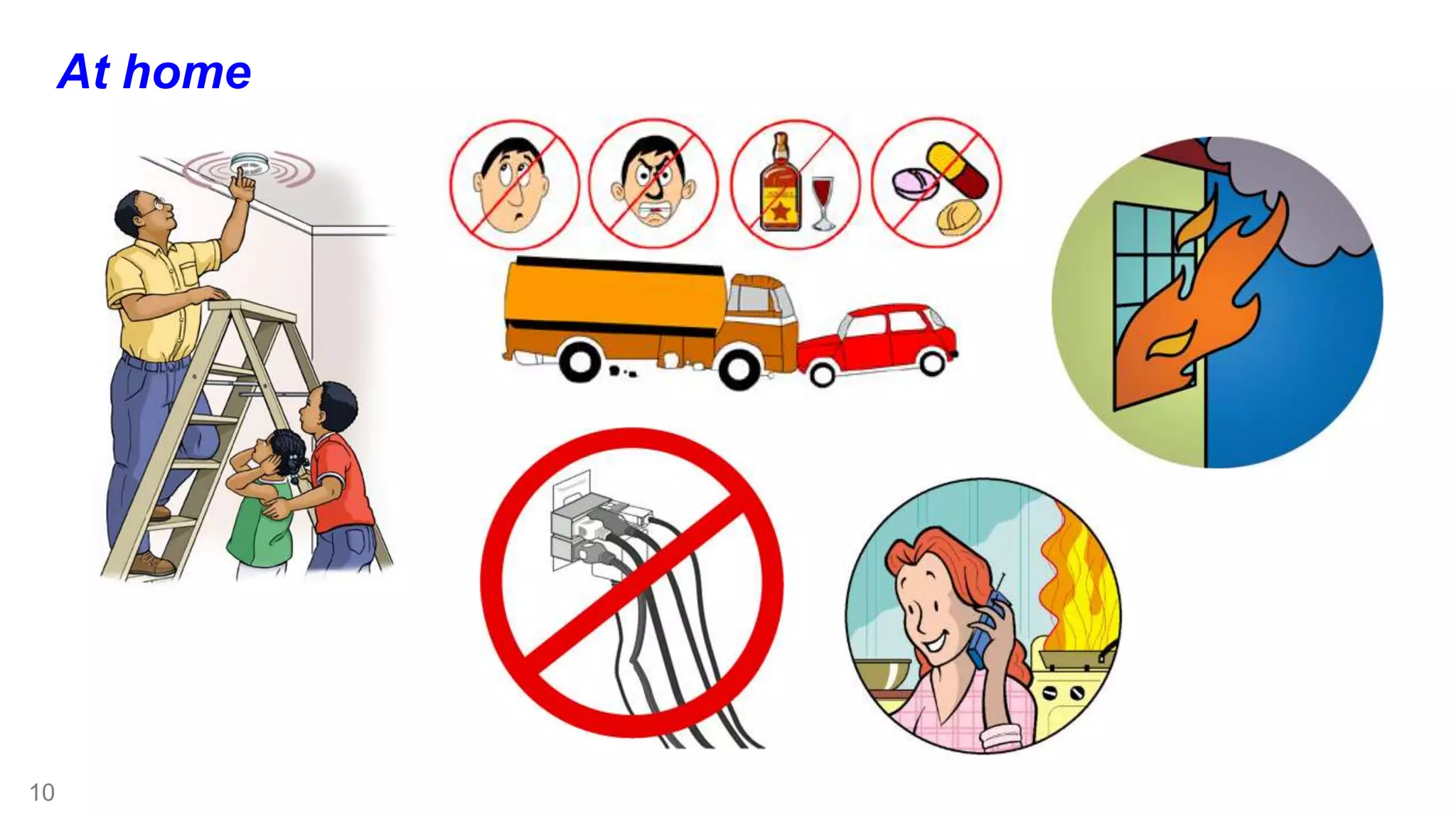
At home
11 
24 hrs safety, 
bring safety to family.
12 
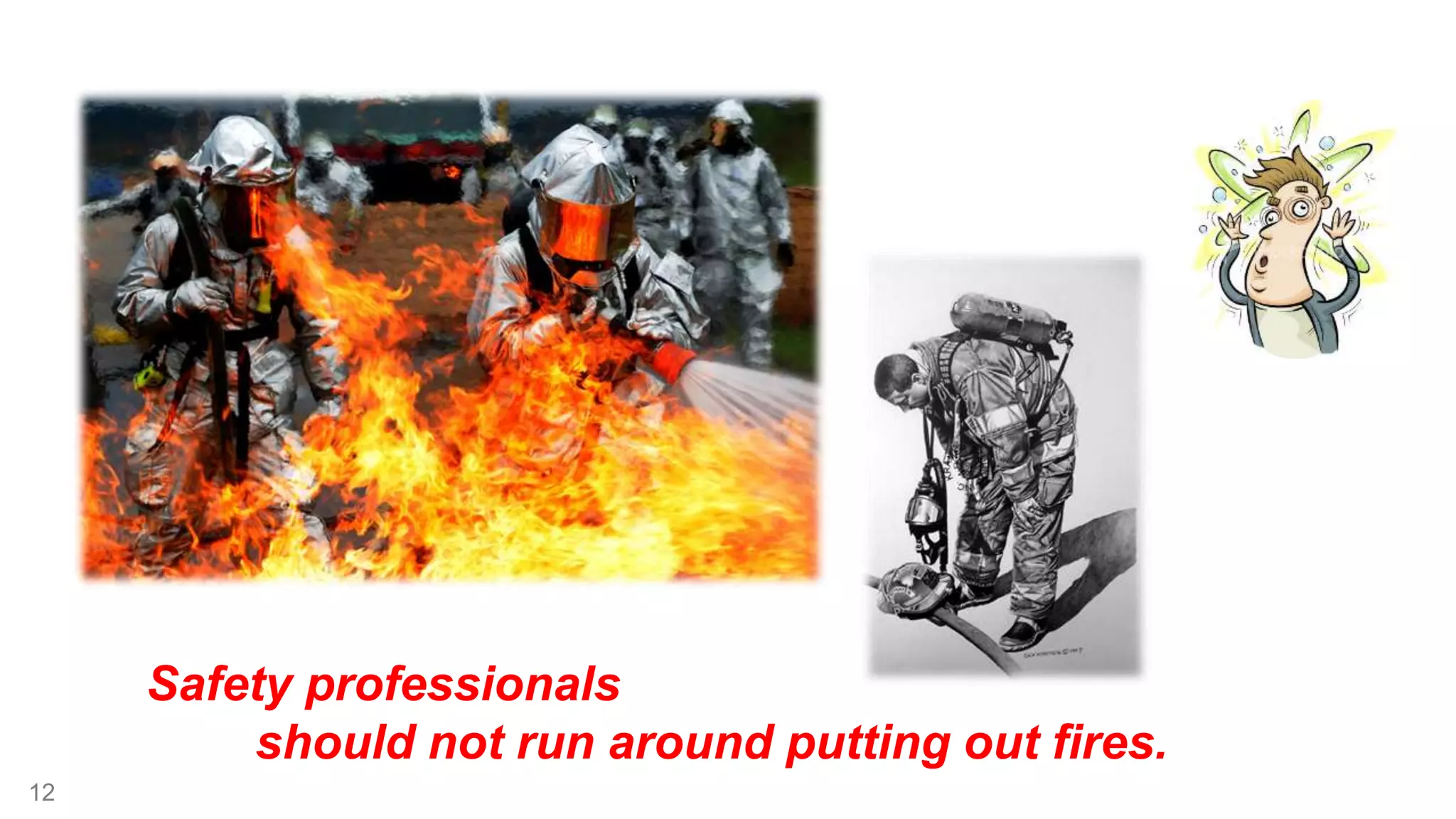
Safety professionals 
should not run around putting out fires.
13 
Safety professionals strategically plan how we’re 
going to get better in safety.
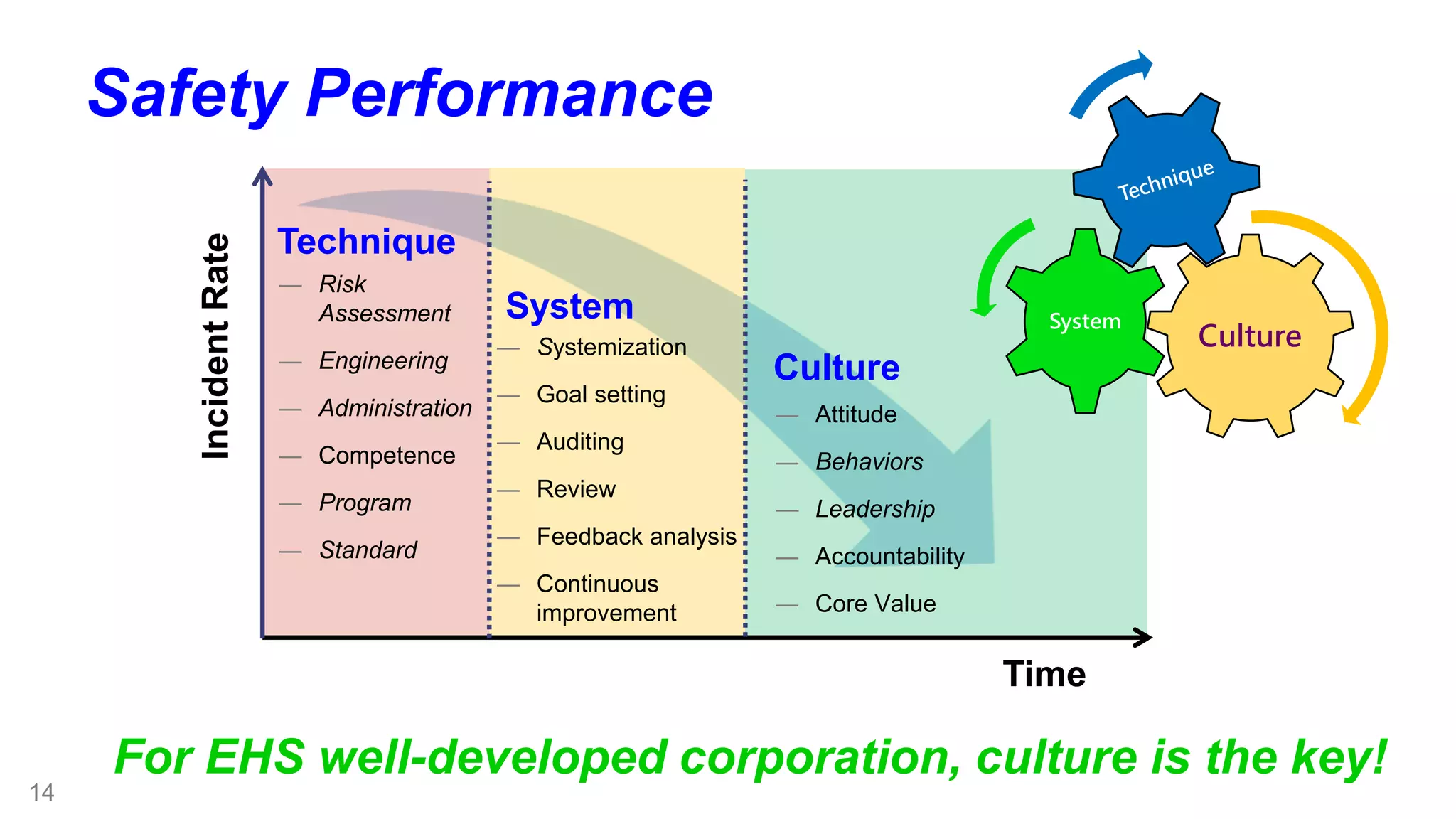
14 
Culture System 
Time 
Incident Rate 
Technique 
System 
Culture 
― Risk 
Assessment 
― Engineering 
― Administration 
― Competence 
― Program 
― Standard 
― Systemization 
― Goal setting 
― Auditing 
― Review 
― Feedback analysis 
― Continuous 
improvement 
― Attitude 
― Behaviors 
― Leadership 
― Accountability 
― Core Value 
Safety Performance 
For EHS well-developed corporation, culture is the key!
15 
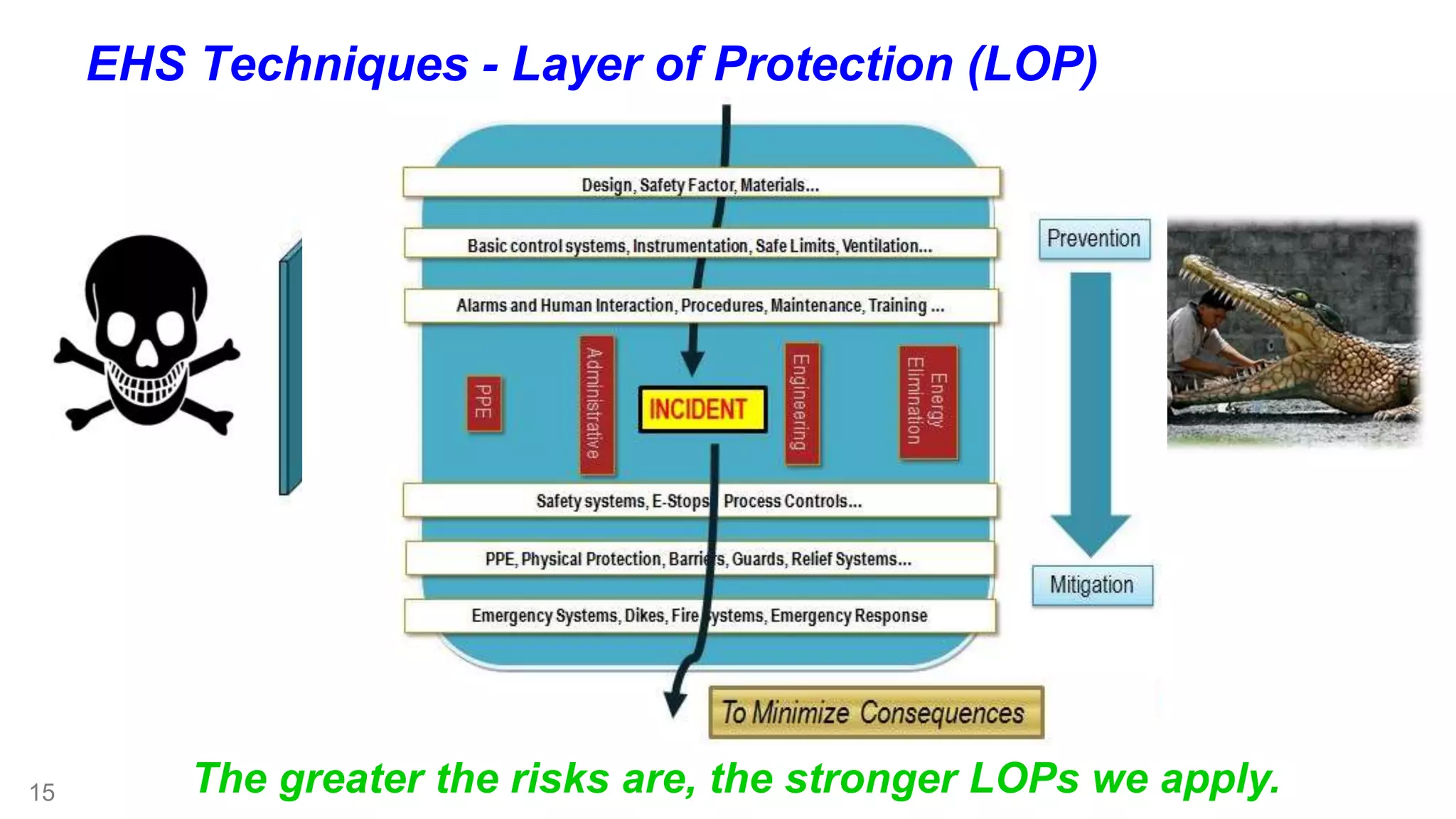
EHS Techniques - Layer of Protection (LOP) 
Serious Injury / 
Death 
High Hazard 
Activity or 
Situation 
Associated With 
High Energy 
Stronger  Layers of Protection (LOP)  Weaker 
The greater the risks are, the stronger LOPs we apply.
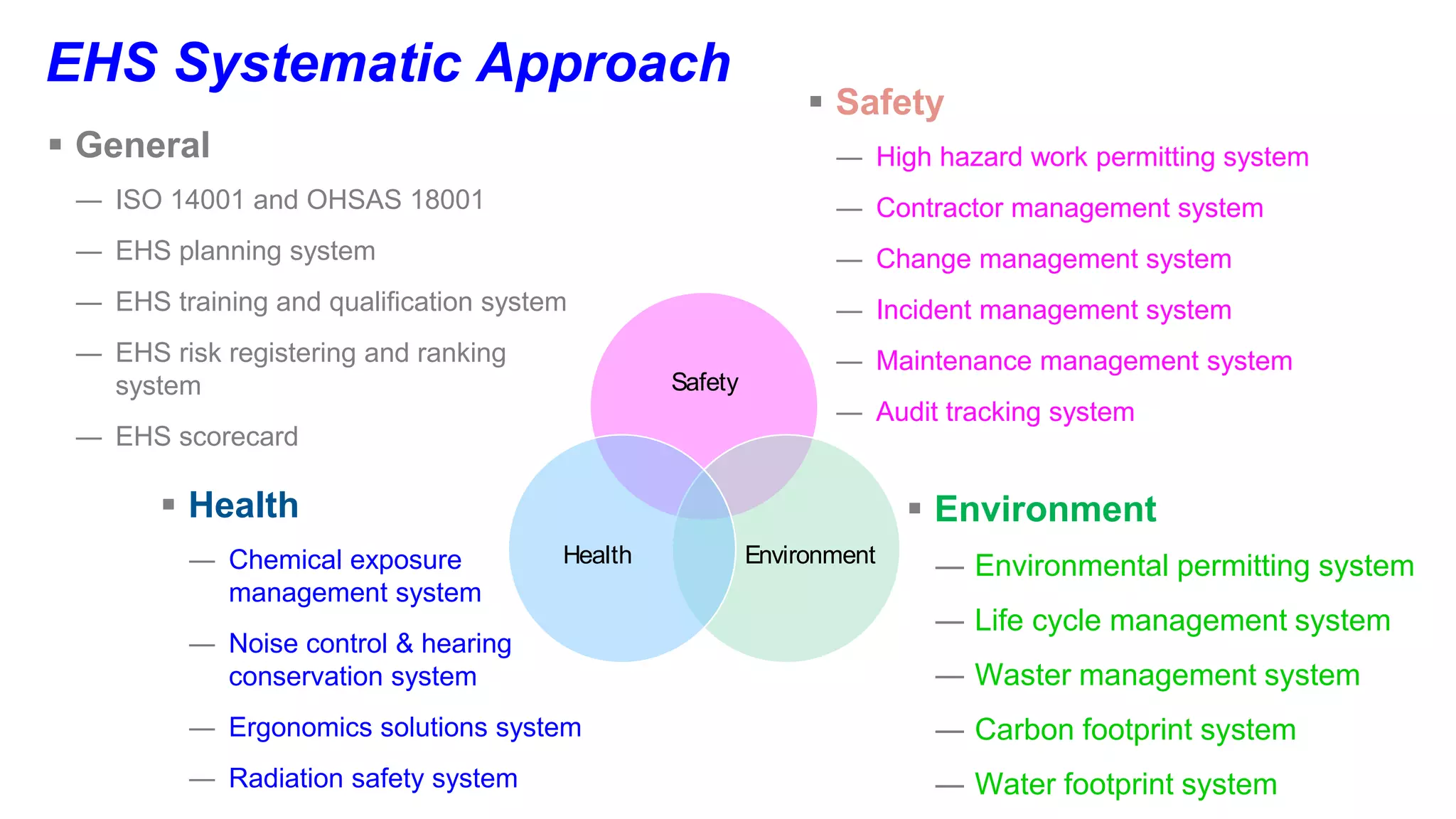
EHS Systematic Approach 
 General 
16 
― ISO 14001 and OHSAS 18001 
― EHS planning system 
― EHS training and qualification system 
― EHS risk registering and ranking 
system 
― EHS scorecard 
 Environment 
― Environmental permitting system 
― Life cycle management system 
― Waster management system 
― Carbon footprint system 
― Water footprint system 
Safety 
Health Environment 
 Health 
― Chemical exposure 
management system 
― Noise control & hearing 
conservation system 
― Ergonomics solutions system 
― Radiation safety system 
 Safety 
― High hazard work permitting system 
― Contractor management system 
― Change management system 
― Incident management system 
― Maintenance management system 
― Audit tracking system
EHS Management Flowchart 
17 
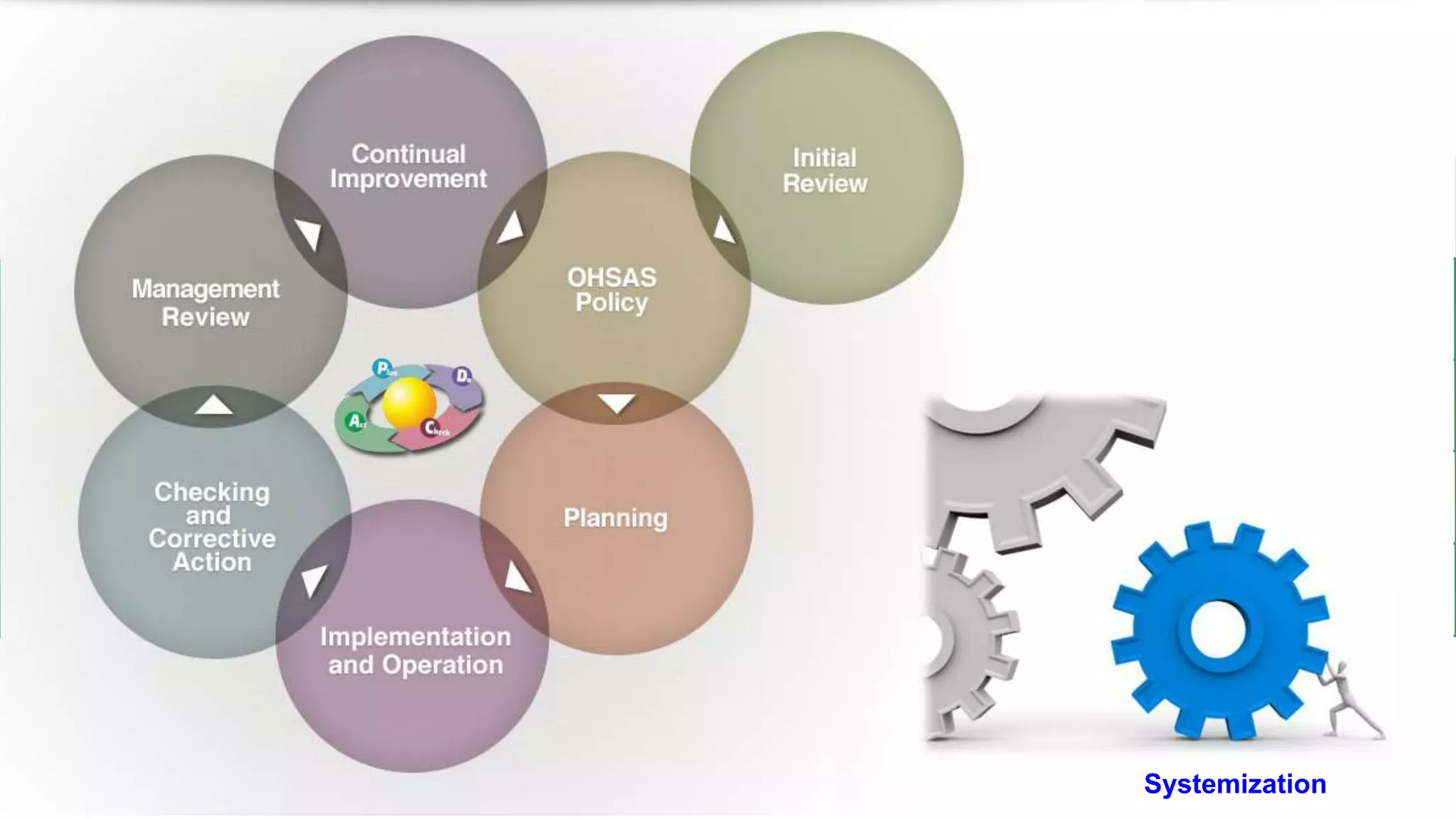
Get the ball rolling, it’s cross-functional work! Systemization
18 
• Management Commitment 
• Comply regulations 
• Rules/Procedures 
• Internalization 
• Personal Value 
• Care for self 
• Networking Contributor 
• Care for Others 
• Organizational Pride 
Reactive Dependent Independent 
• Safety by Natural Instinct 
• Lack of Management 
Involvement 
Interdependent 
EHS Culture Progression 
Where are we now?
5 yrs Roadmap for EHS well-developed 
Corporations 
19 
2014 
2015 
 Objective: 
2016 
 Objective: 
2017 
2018 
 Objective: 
1. Safety Platform formation 
2. Safety self-management 
 Objective: 
 Objective: 
1. Safety Starts with Me (SSWM) 
2. Believe in Zero program 
3. Proactive approaches / 
Accountability 
1. Rest of HH element (done g2G) 
2. Comprehensive, integrated, and 
1. High Hazard Activities Program 
2. ISO Management System Integration 
1. Risk Management Program 
2. Compliance with amended EHS regulation 
systematized approach
20 
From good to Great, 
we moving on to building Safety DNA 
into every individual and organization.
21 
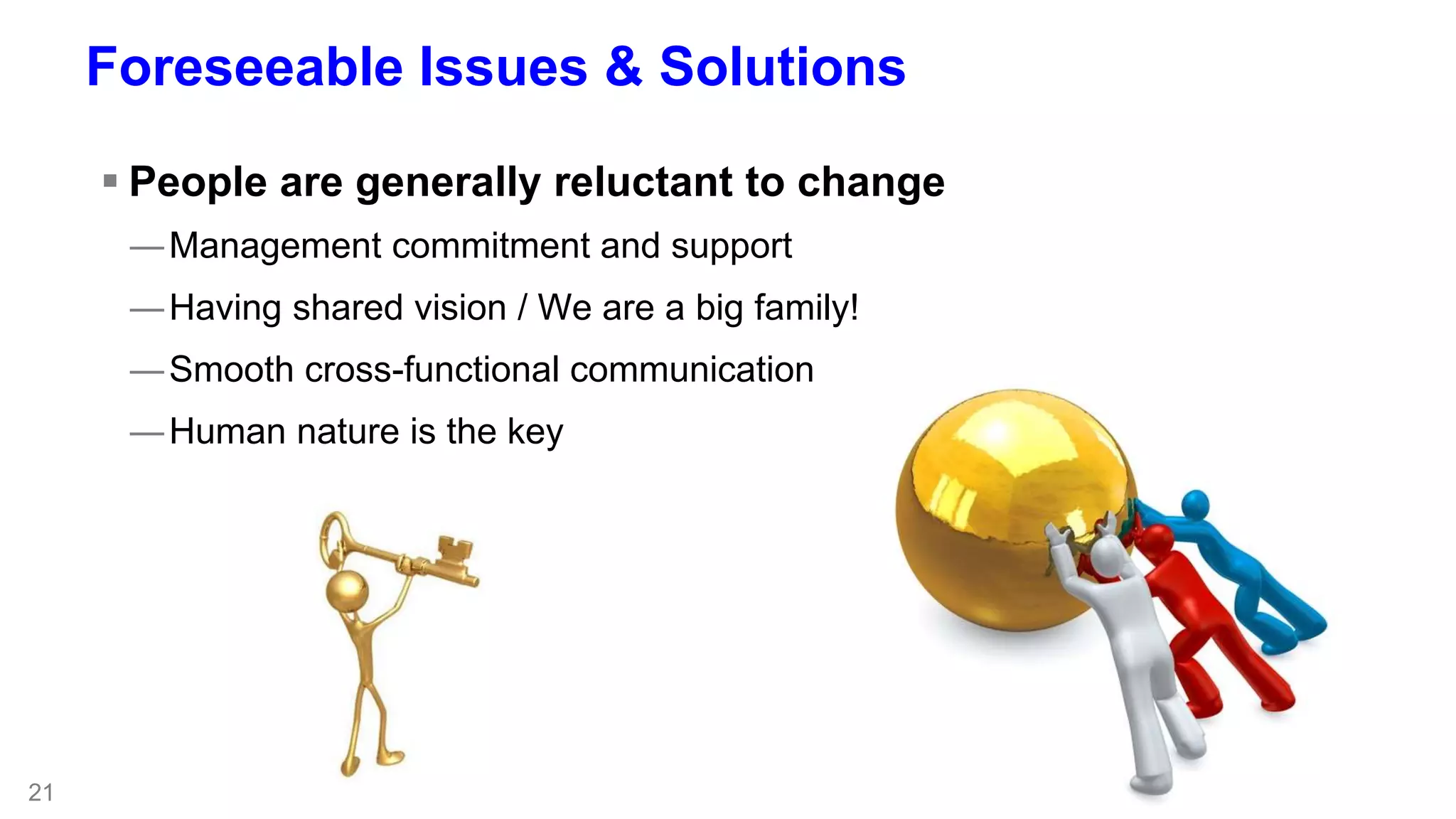
Foreseeable Issues & Solutions 
 People are generally reluctant to change 
―Management commitment and support 
―Having shared vision / We are a big family! 
―Smooth cross-functional communication 
―Human nature is the key
22 
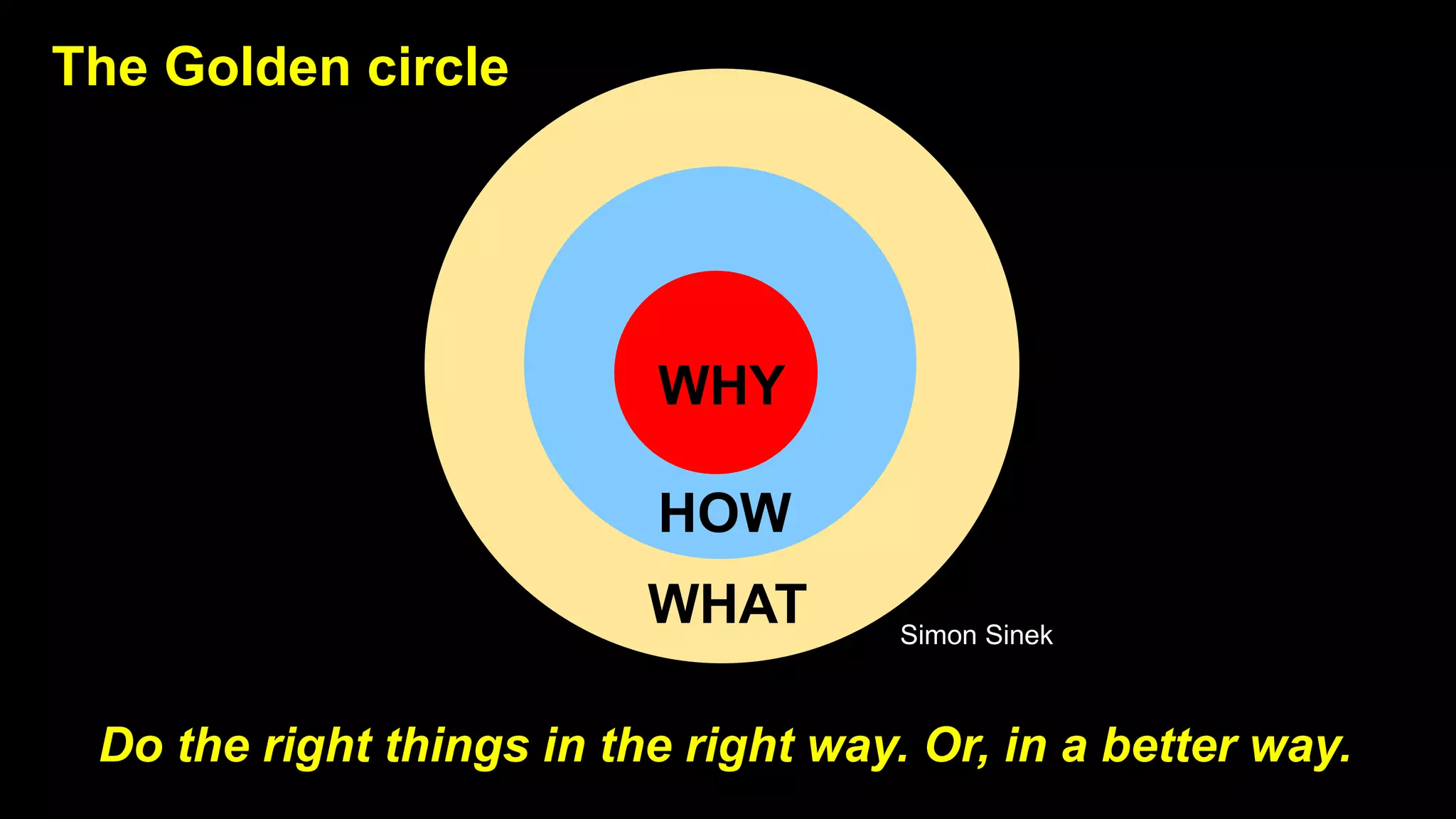
WHY 
HOW 
WHAT 
The Golden circle 
Simon Sinek 
Do the right things in the right way. Or, in a better way.
23 
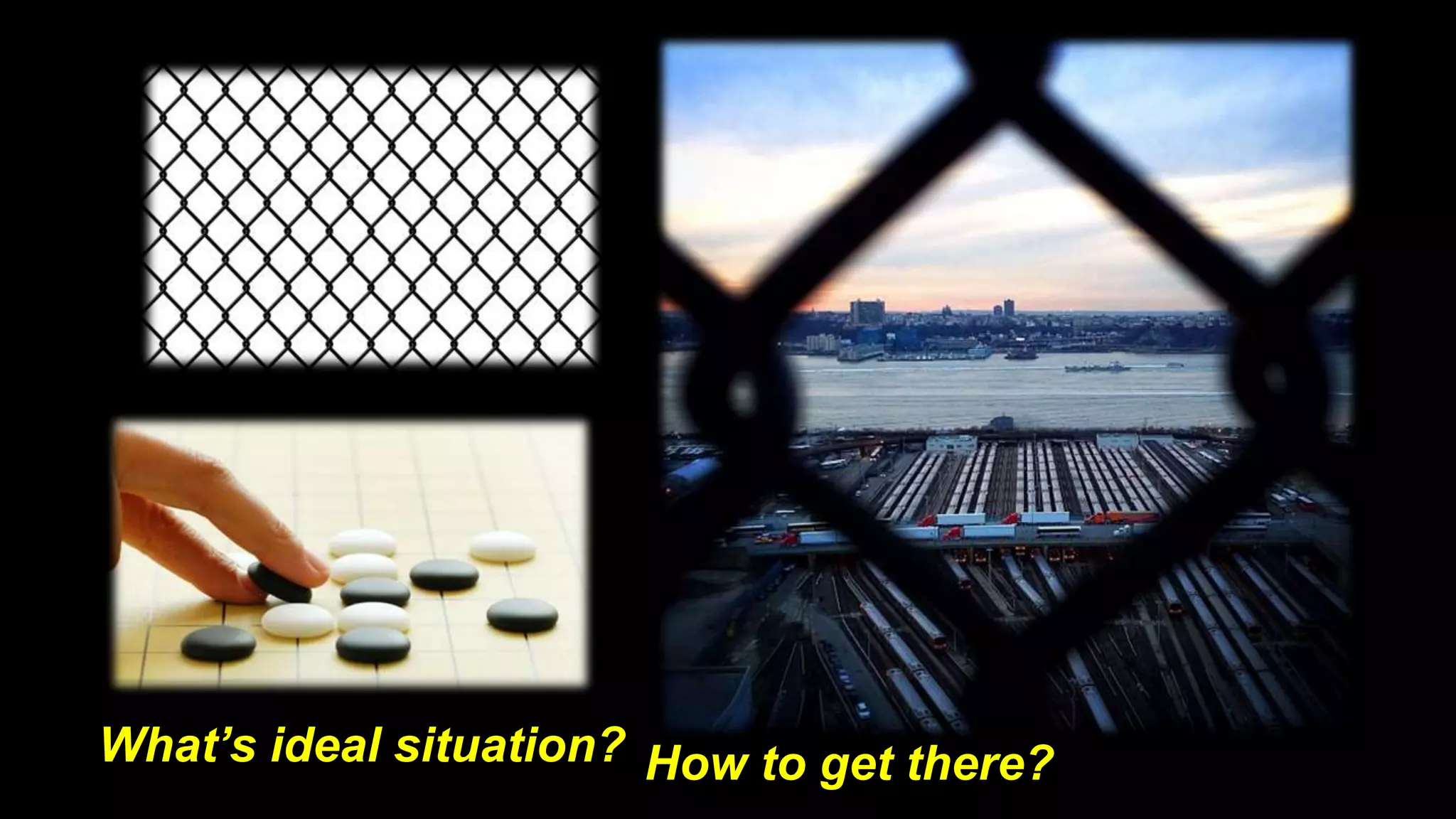
What’s ideal situation? How to get there?
24 
High-level strategy deployment
25 
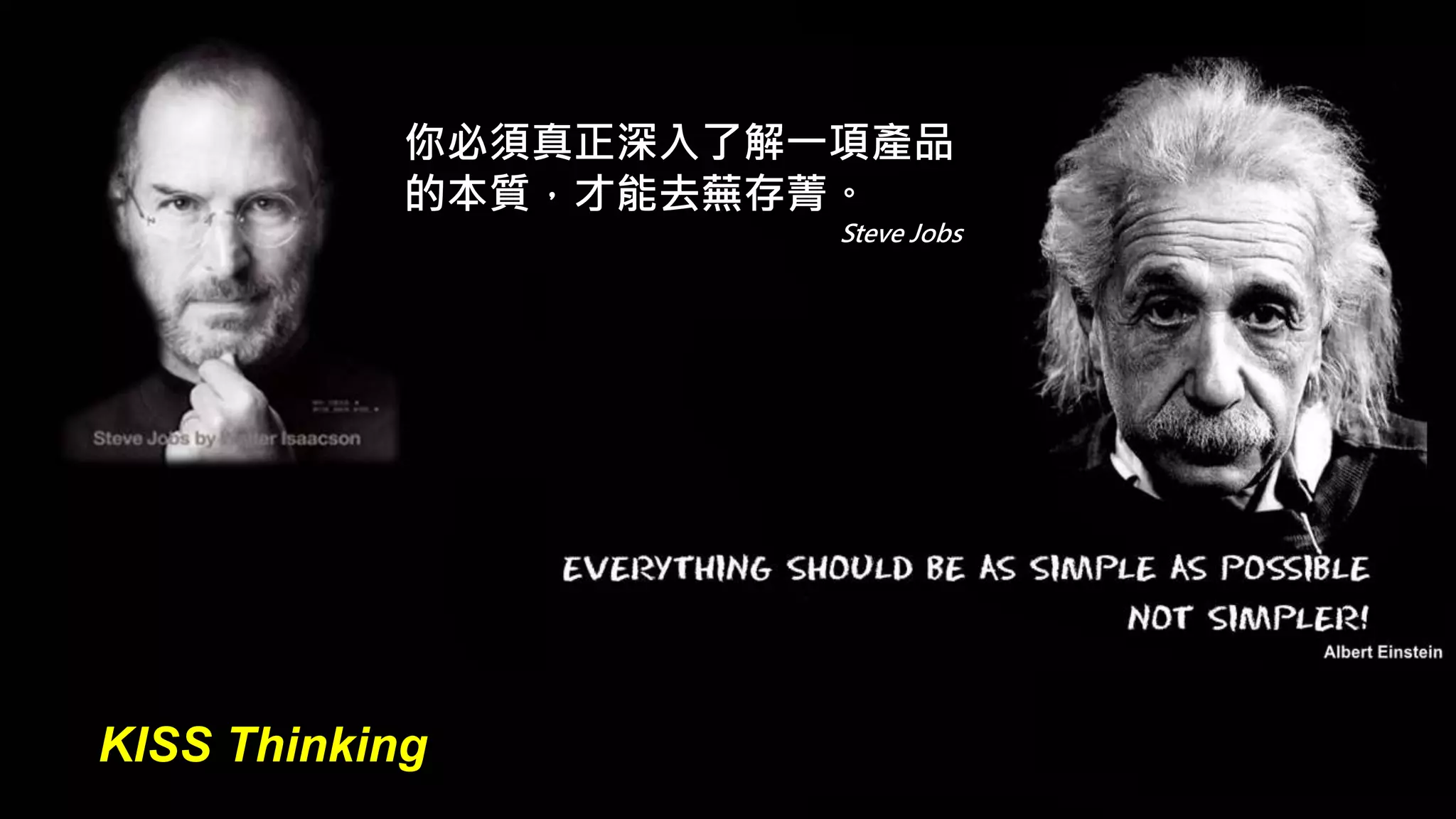
你必須真正深入了解一項產品 
的本質,才能去蕪存菁。 
Steve Jobs 
KISS Thinking
26 
What we talked about? 
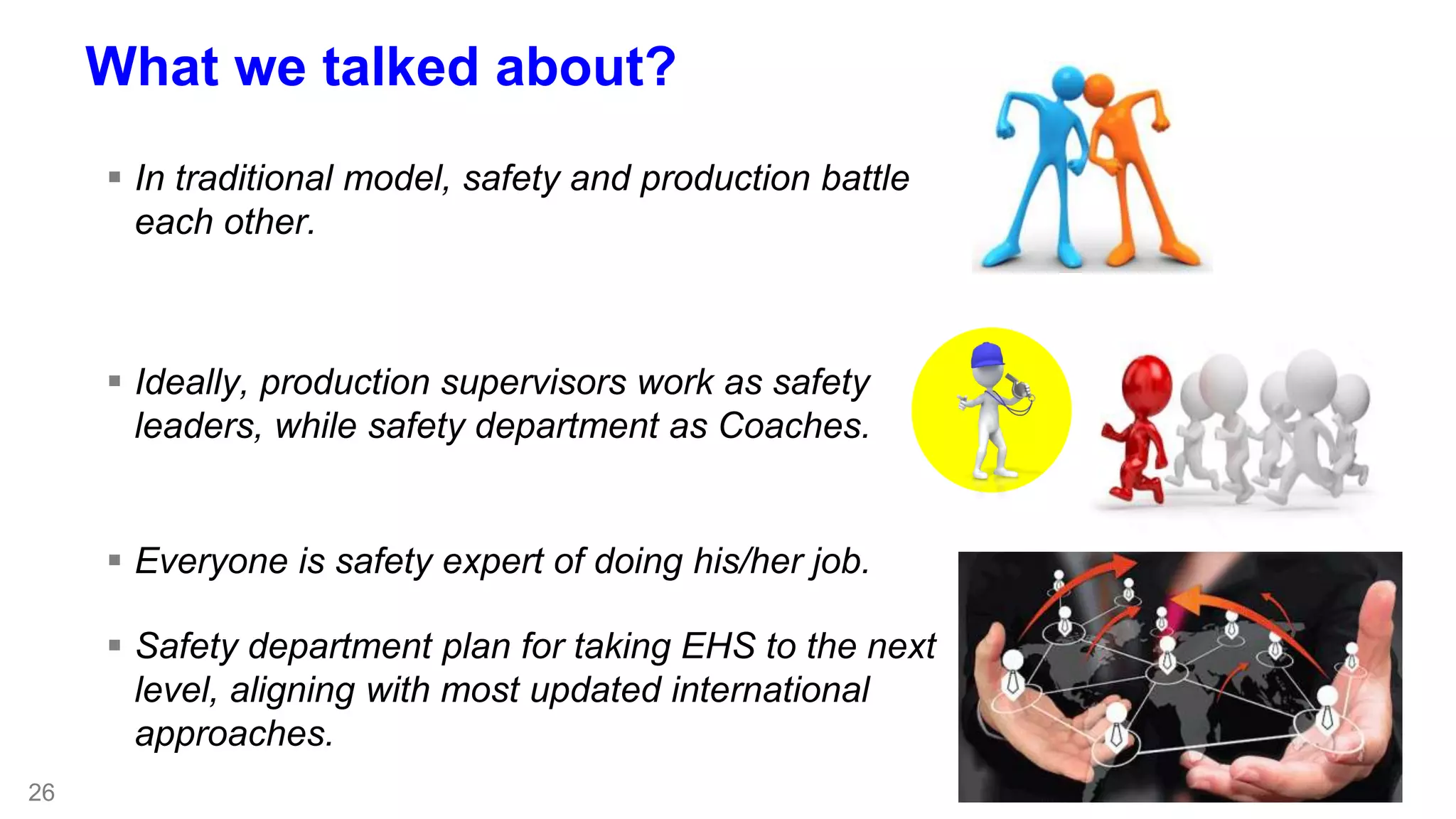
 In traditional model, safety and production battle 
each other. 
 Ideally, production supervisors work as safety 
leaders, while safety department as Coaches. 
 Everyone is safety expert of doing his/her job. 
 Safety department plan for taking EHS to the next 
level, aligning with most updated international 
approaches.
27 
What we talked about? 
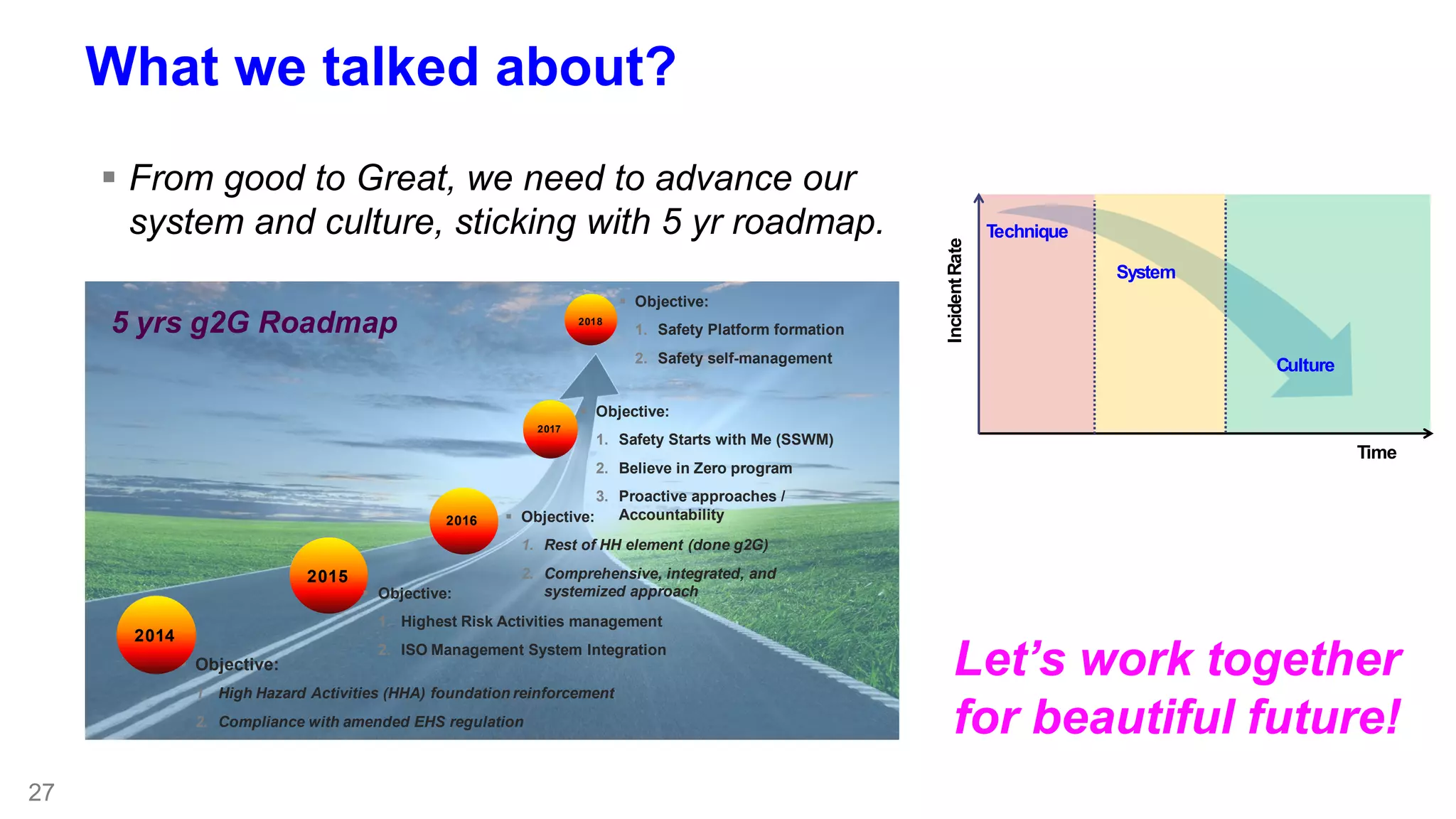
 From good to Great, we need to advance our 
system and culture, sticking with 5 yr roadmap. 
Time 
Technique 
System 
Culture 
Incident Rate 
Let’s work together 
for beautiful future! 
5 yrs g2G Roadmap 2014 
2015 
 Objective: 
2016 
 Objective: 
2017 
2018 
 Objective: 
1. Safety Platform formation 
2. Safety self-management 
 Objective: 
 Objective: 
1. Safety Starts with Me (SSWM) 
2. Believe in Zero program 
3. Proactive approaches / 
1. Rest of HH element (done g2G) 
2. Comprehensive, integrated, and 
systemized approach 
1. Highest Risk Activities management 
2. ISO Management System Integration 
1. High Hazard Activities (HHA) foundation reinforcement 
2. Compliance with amended EHS regulation 
Accountability
Thanks! 
28 
I’m ready for your questions!

How to Build Safety DNA in a Corporation?

  • 1.
    1 How toBuild Safety DNA in a Corporation? Presenter: Rein Weng
  • 2.
    2 Outline TraditionalSafety Management Model How to Reform Safety Management Model My Philosophy of EHS management  5 yrs EHS Roadmap
  • 3.
    3 Traditional SafetyManagement Model Production department Safety department This model might be well-suited for a tremendously technical, multifaceted organization.
  • 4.
    4 Safety ProfessionalProduction Supervisor In other companies, safety and production battle each other.
  • 5.
    5 Disadvantages tothe traditional model  It emphasizes control over culture  It creates dichotomies  It lets production off the hook  It distracts safety from its support role X-functional communications matters!
  • 6.
  • 7.
  • 8.
    1. Redefining Roles,Responsibilities 2. Creating a coaching culture 8 To redefine RRR’s and Results (RRR’s) Safety Professionals are Coaches SUPERVISORS AS SAFETY LEADERS Production Supervisors are Safety Leaders
  • 9.
    Work at height safety expert Ergonomic expert Forklift safety expert Confined space safety expert Machine safety expert Hearing conservation safety expert 9 Everyone is a safety professional of doing her/his job.
  • 10.
  • 11.
    11 24 hrssafety, bring safety to family.
  • 12.
    12 Safety professionals should not run around putting out fires.
  • 13.
    13 Safety professionalsstrategically plan how we’re going to get better in safety.
  • 14.
    14 Culture System Time Incident Rate Technique System Culture ― Risk Assessment ― Engineering ― Administration ― Competence ― Program ― Standard ― Systemization ― Goal setting ― Auditing ― Review ― Feedback analysis ― Continuous improvement ― Attitude ― Behaviors ― Leadership ― Accountability ― Core Value Safety Performance For EHS well-developed corporation, culture is the key!
  • 15.
    15 EHS Techniques- Layer of Protection (LOP) Serious Injury / Death High Hazard Activity or Situation Associated With High Energy Stronger  Layers of Protection (LOP)  Weaker The greater the risks are, the stronger LOPs we apply.
  • 16.
    EHS Systematic Approach  General 16 ― ISO 14001 and OHSAS 18001 ― EHS planning system ― EHS training and qualification system ― EHS risk registering and ranking system ― EHS scorecard  Environment ― Environmental permitting system ― Life cycle management system ― Waster management system ― Carbon footprint system ― Water footprint system Safety Health Environment  Health ― Chemical exposure management system ― Noise control & hearing conservation system ― Ergonomics solutions system ― Radiation safety system  Safety ― High hazard work permitting system ― Contractor management system ― Change management system ― Incident management system ― Maintenance management system ― Audit tracking system
  • 17.
    EHS Management Flowchart 17 Get the ball rolling, it’s cross-functional work! Systemization
  • 18.
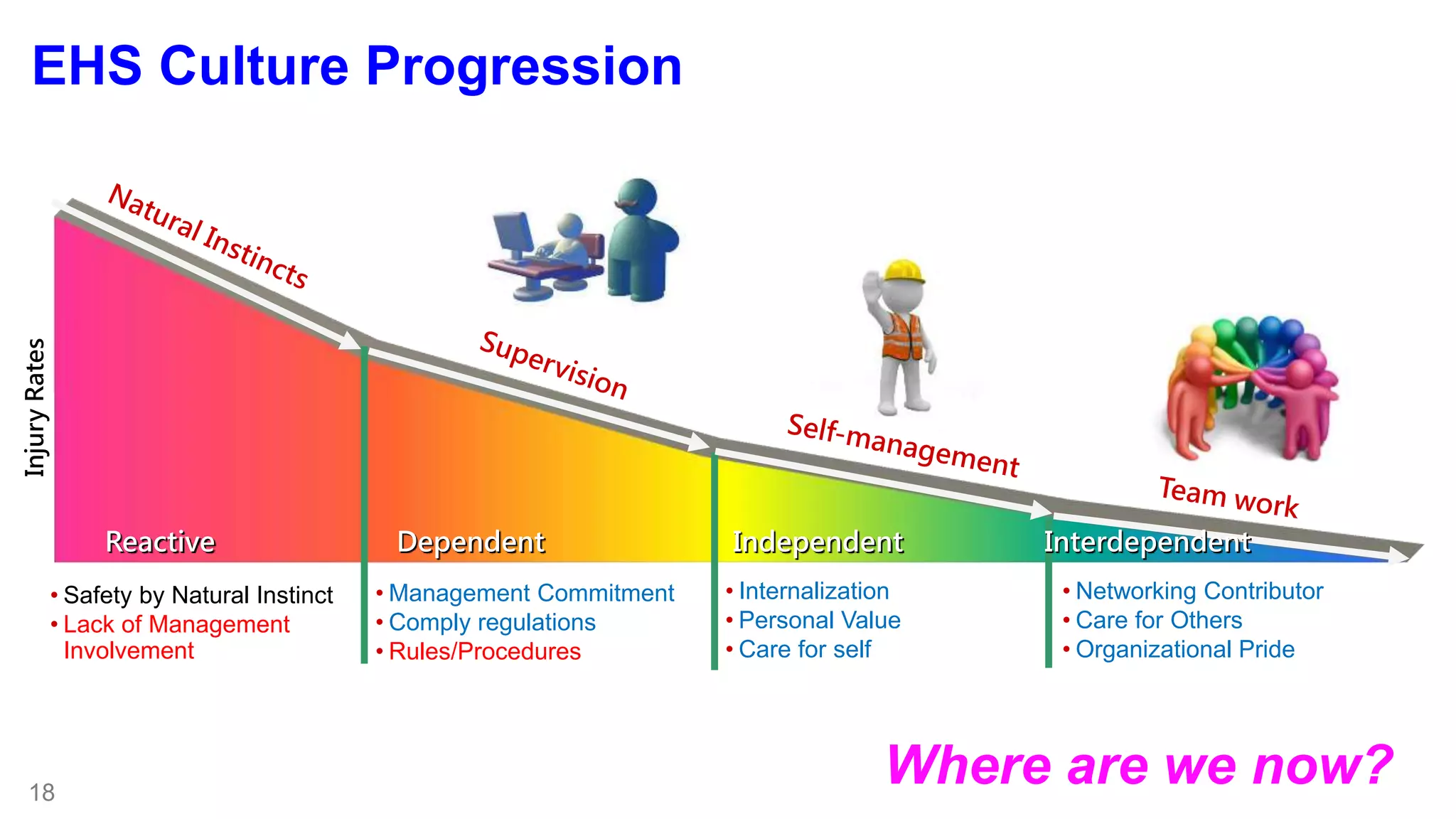
    18 • ManagementCommitment • Comply regulations • Rules/Procedures • Internalization • Personal Value • Care for self • Networking Contributor • Care for Others • Organizational Pride Reactive Dependent Independent • Safety by Natural Instinct • Lack of Management Involvement Interdependent EHS Culture Progression Where are we now?
  • 19.
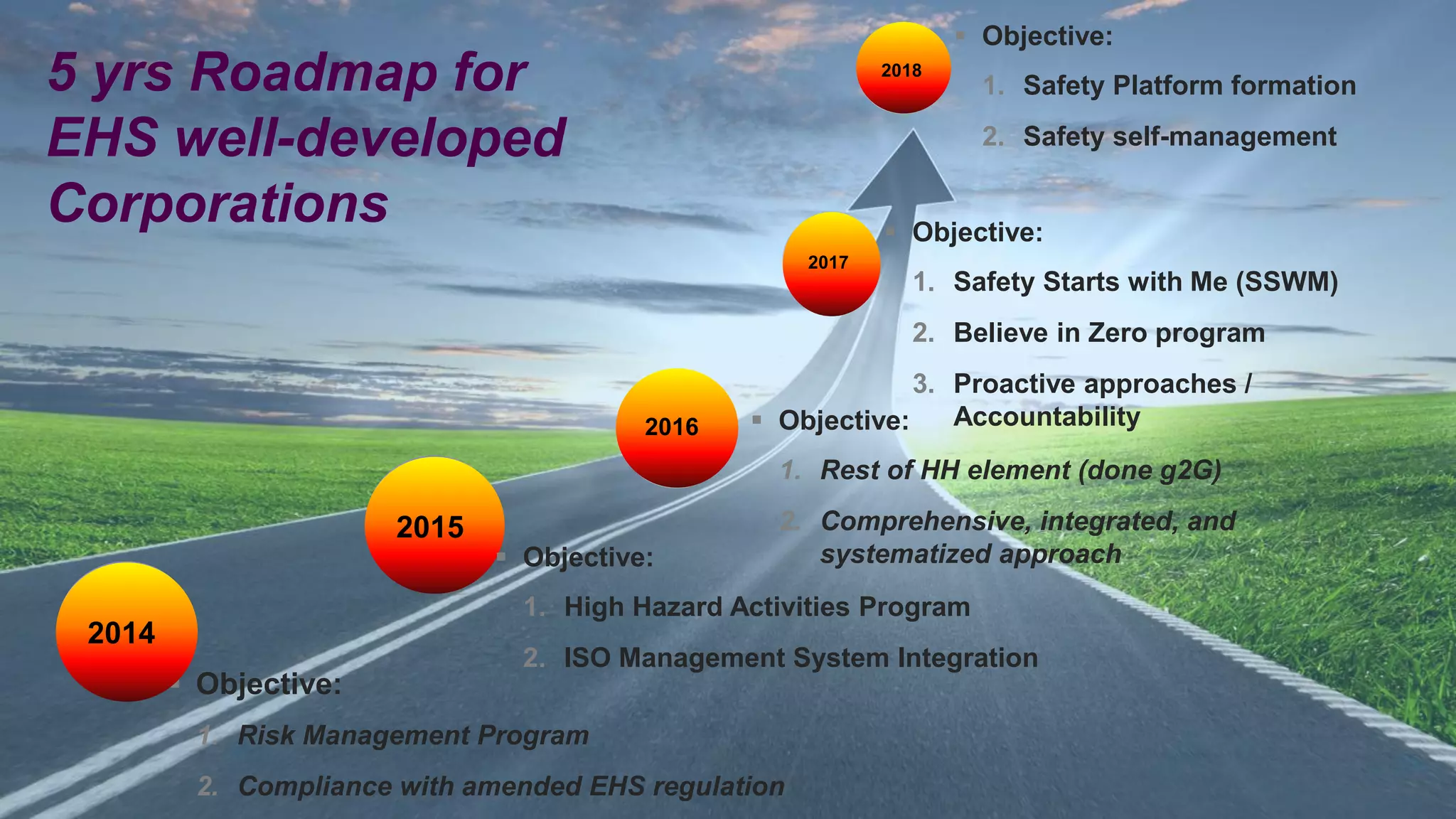
    5 yrs Roadmapfor EHS well-developed Corporations 19 2014 2015  Objective: 2016  Objective: 2017 2018  Objective: 1. Safety Platform formation 2. Safety self-management  Objective:  Objective: 1. Safety Starts with Me (SSWM) 2. Believe in Zero program 3. Proactive approaches / Accountability 1. Rest of HH element (done g2G) 2. Comprehensive, integrated, and 1. High Hazard Activities Program 2. ISO Management System Integration 1. Risk Management Program 2. Compliance with amended EHS regulation systematized approach
  • 20.
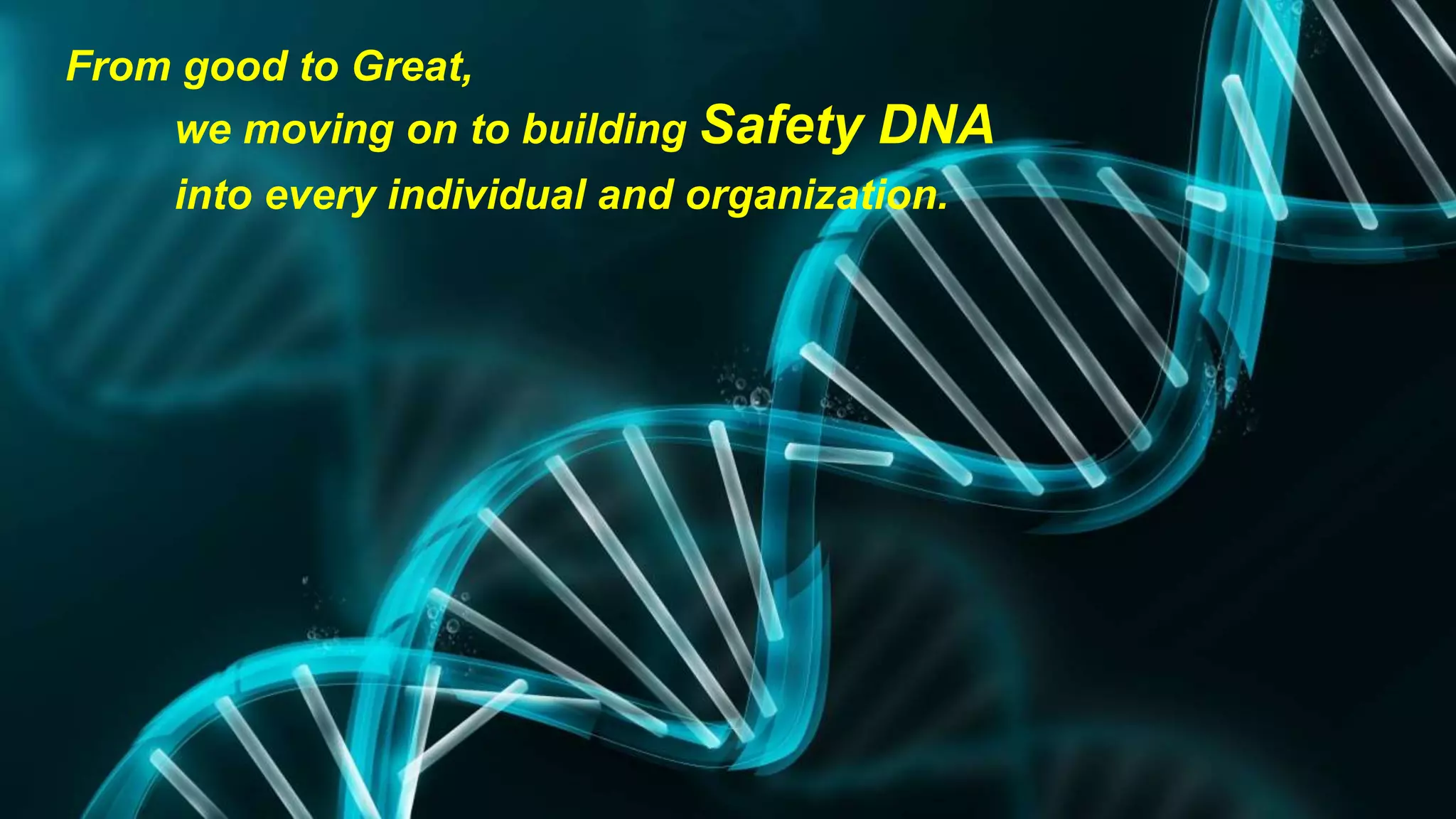
    20 From goodto Great, we moving on to building Safety DNA into every individual and organization.
  • 21.
    21 Foreseeable Issues& Solutions  People are generally reluctant to change ―Management commitment and support ―Having shared vision / We are a big family! ―Smooth cross-functional communication ―Human nature is the key
  • 22.
    22 WHY HOW WHAT The Golden circle Simon Sinek Do the right things in the right way. Or, in a better way.
  • 23.
    23 What’s idealsituation? How to get there?
  • 24.
  • 25.
  • 26.
    26 What wetalked about?  In traditional model, safety and production battle each other.  Ideally, production supervisors work as safety leaders, while safety department as Coaches.  Everyone is safety expert of doing his/her job.  Safety department plan for taking EHS to the next level, aligning with most updated international approaches.
  • 27.
    27 What wetalked about?  From good to Great, we need to advance our system and culture, sticking with 5 yr roadmap. Time Technique System Culture Incident Rate Let’s work together for beautiful future! 5 yrs g2G Roadmap 2014 2015  Objective: 2016  Objective: 2017 2018  Objective: 1. Safety Platform formation 2. Safety self-management  Objective:  Objective: 1. Safety Starts with Me (SSWM) 2. Believe in Zero program 3. Proactive approaches / 1. Rest of HH element (done g2G) 2. Comprehensive, integrated, and systemized approach 1. Highest Risk Activities management 2. ISO Management System Integration 1. High Hazard Activities (HHA) foundation reinforcement 2. Compliance with amended EHS regulation Accountability
  • 28.
    Thanks! 28 I’mready for your questions!