KODANDA PANI VUDUGUNDLA
BE,PGDTPPE,MBA(HR),MIE,MBA(Fin),BOE, C.Eng(I)
Dy.EE/AP Genco /RTPP
1
Behavior Based Safety (BBS)
and
Accidents Prevention in industries
PRESENTED BY
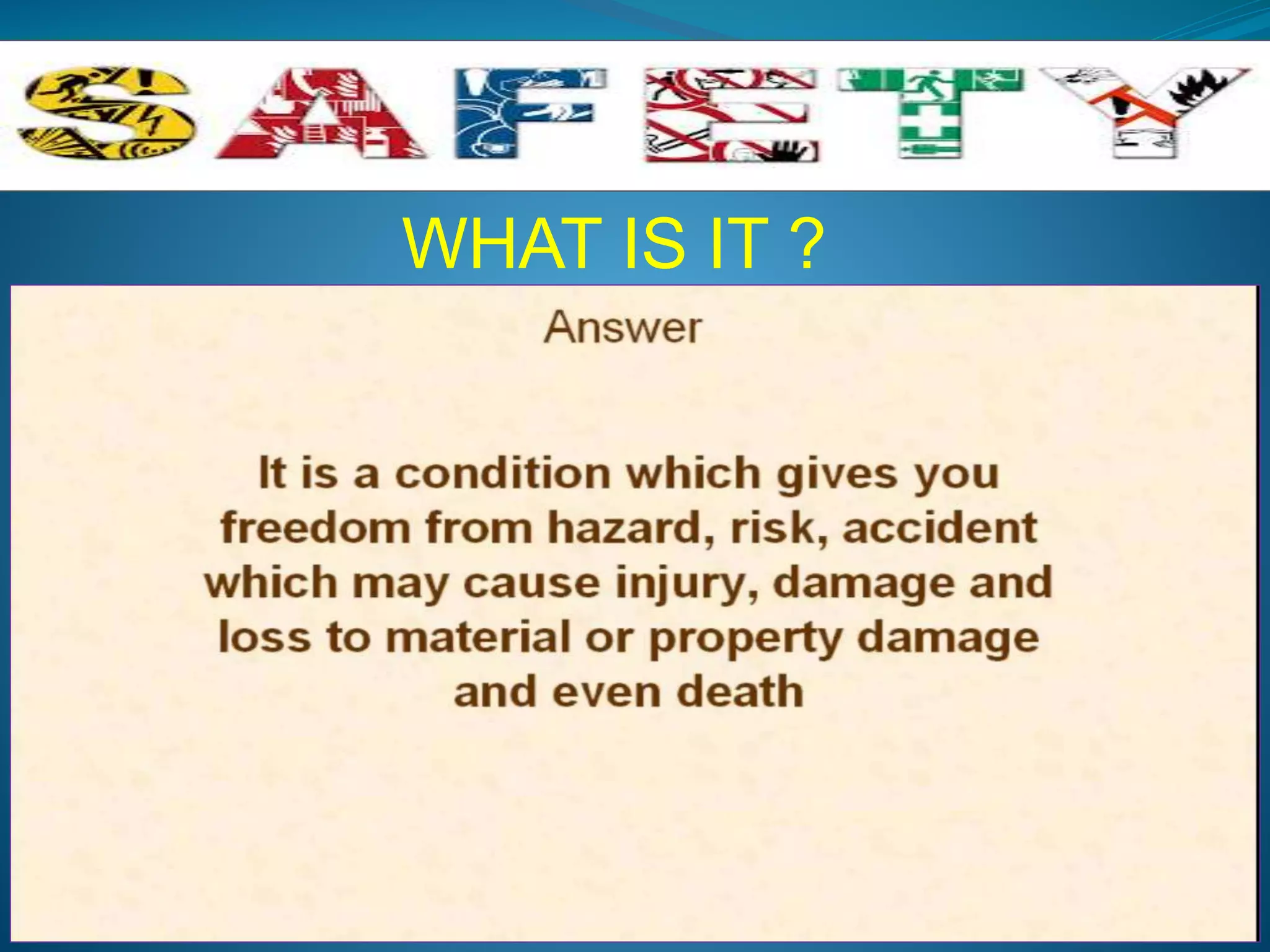
WHAT IS IT ?
SAFETY
WHY ?
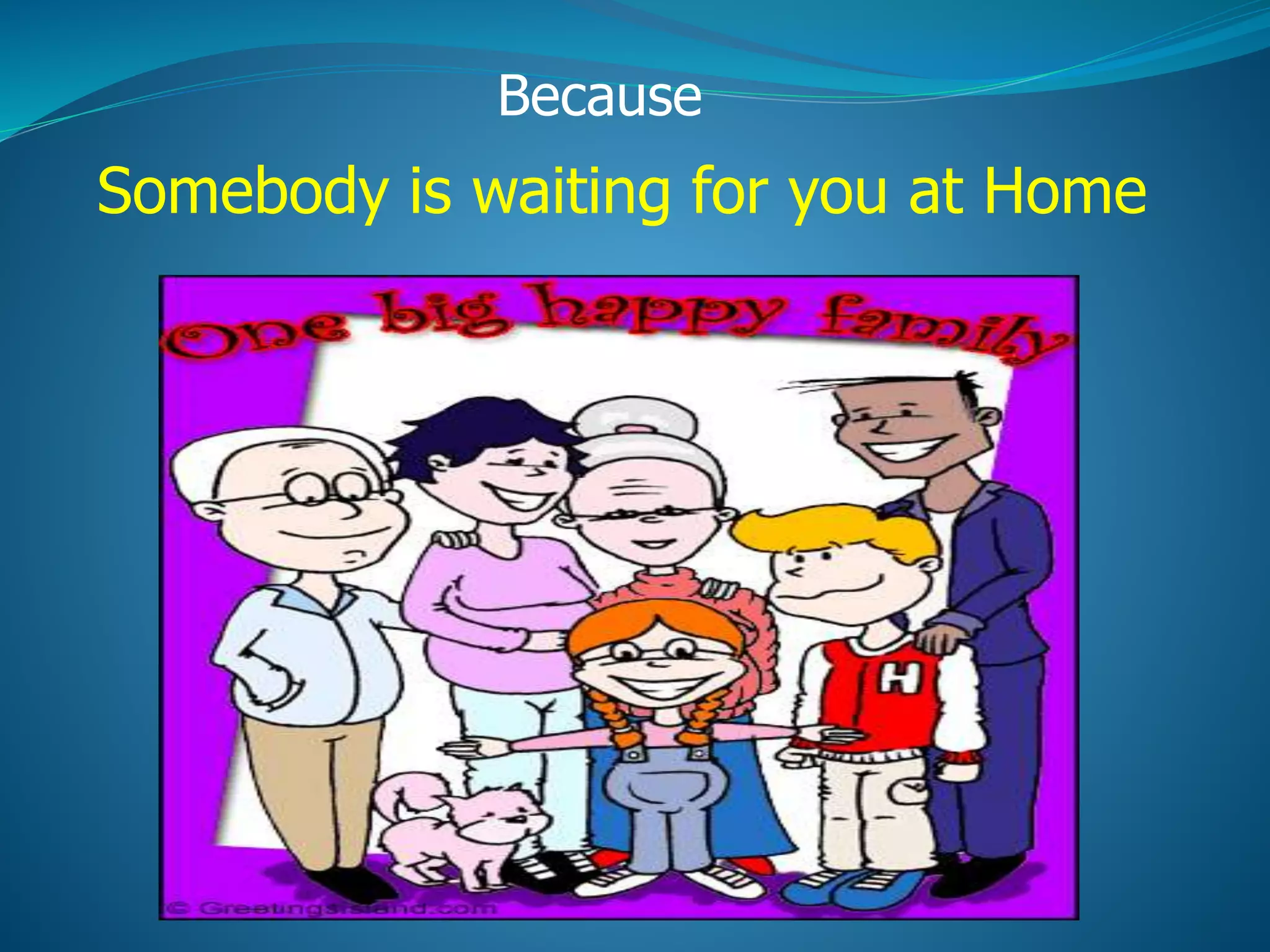
Because
Somebody is waiting for you at Home
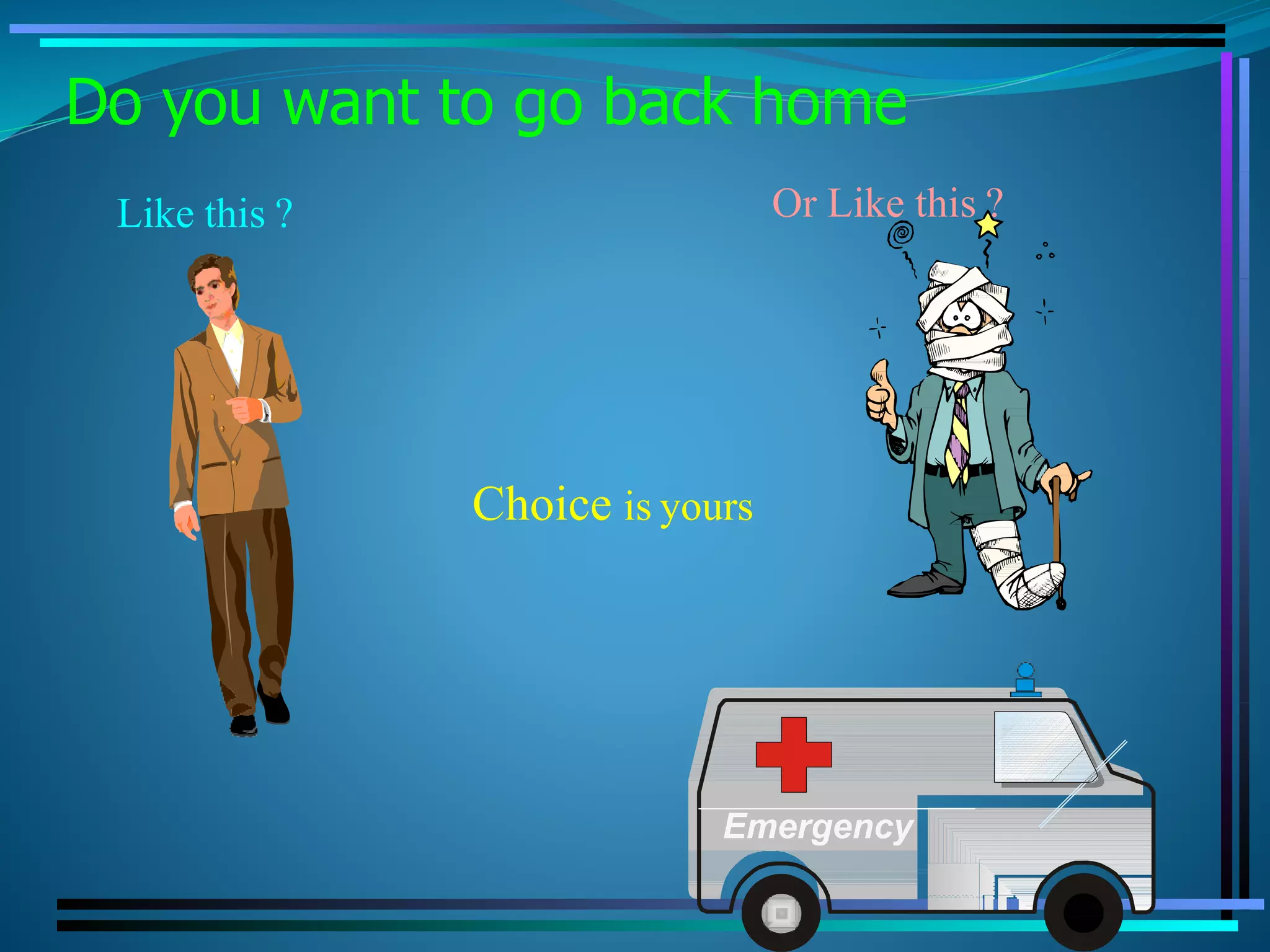
Do you want to go back home
Like this ? Or Like this ?
Choice is yours
Emergency
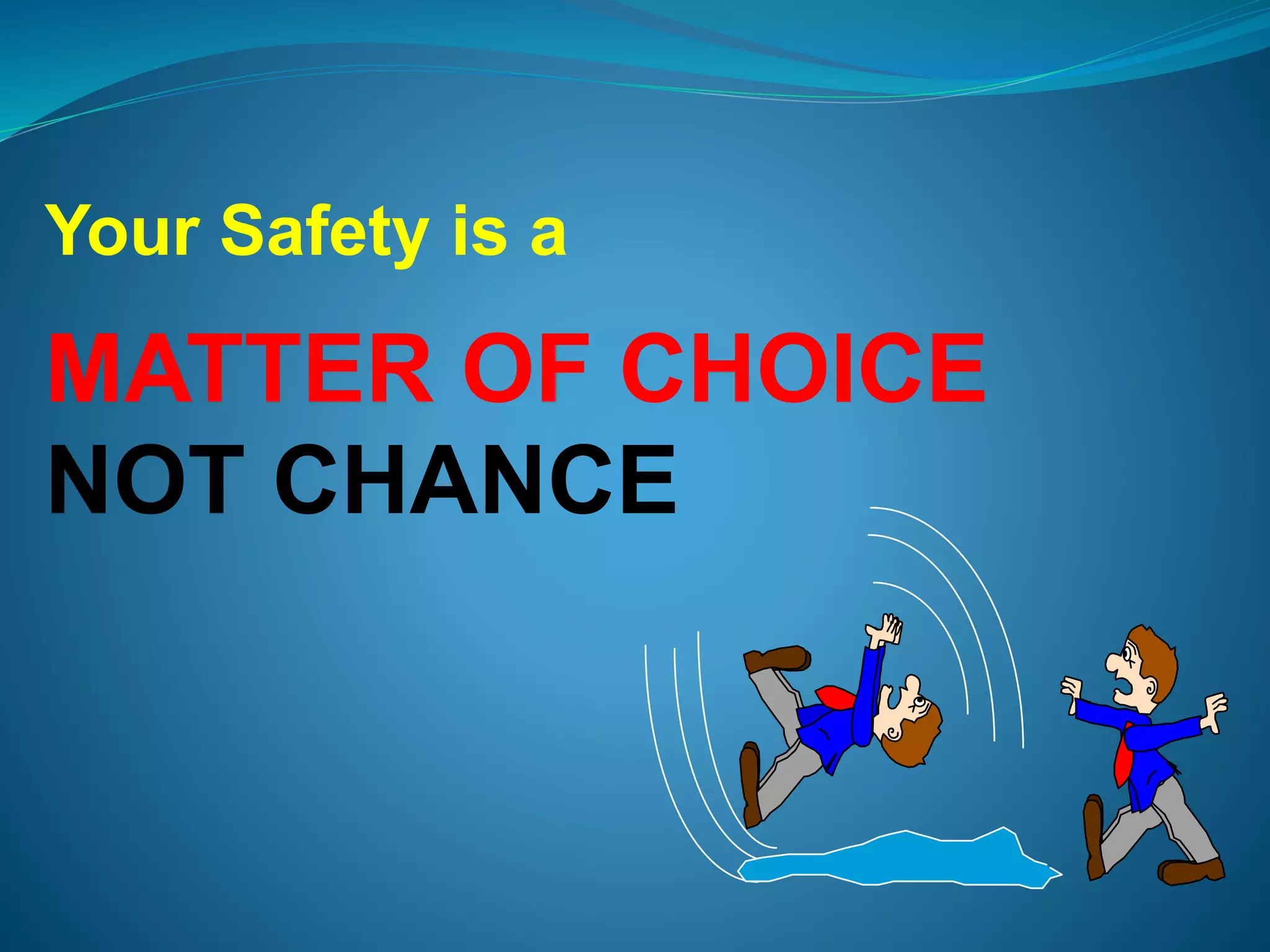
Your Safety is a
MATTER OF CHOICE
NOT CHANCE
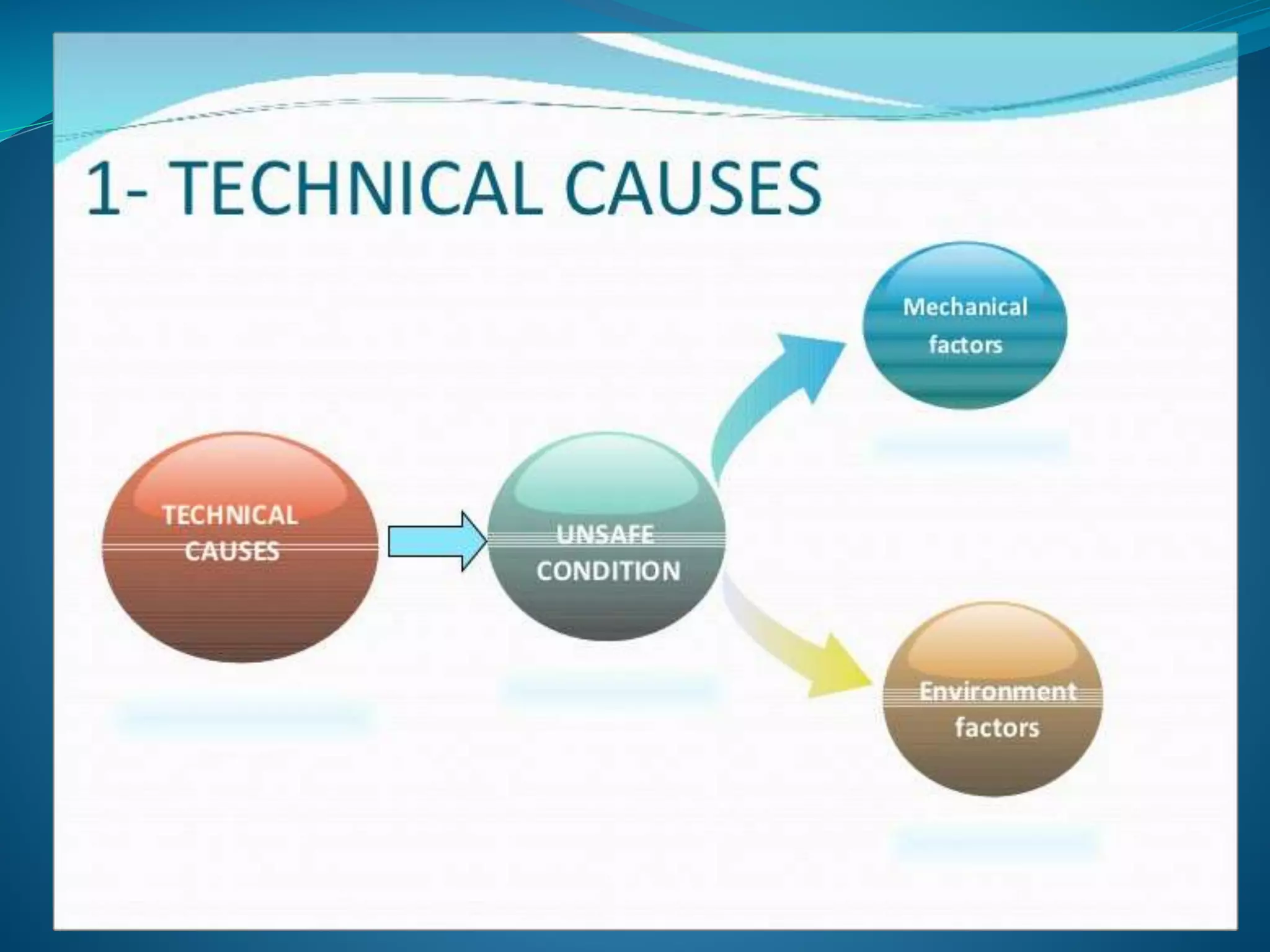
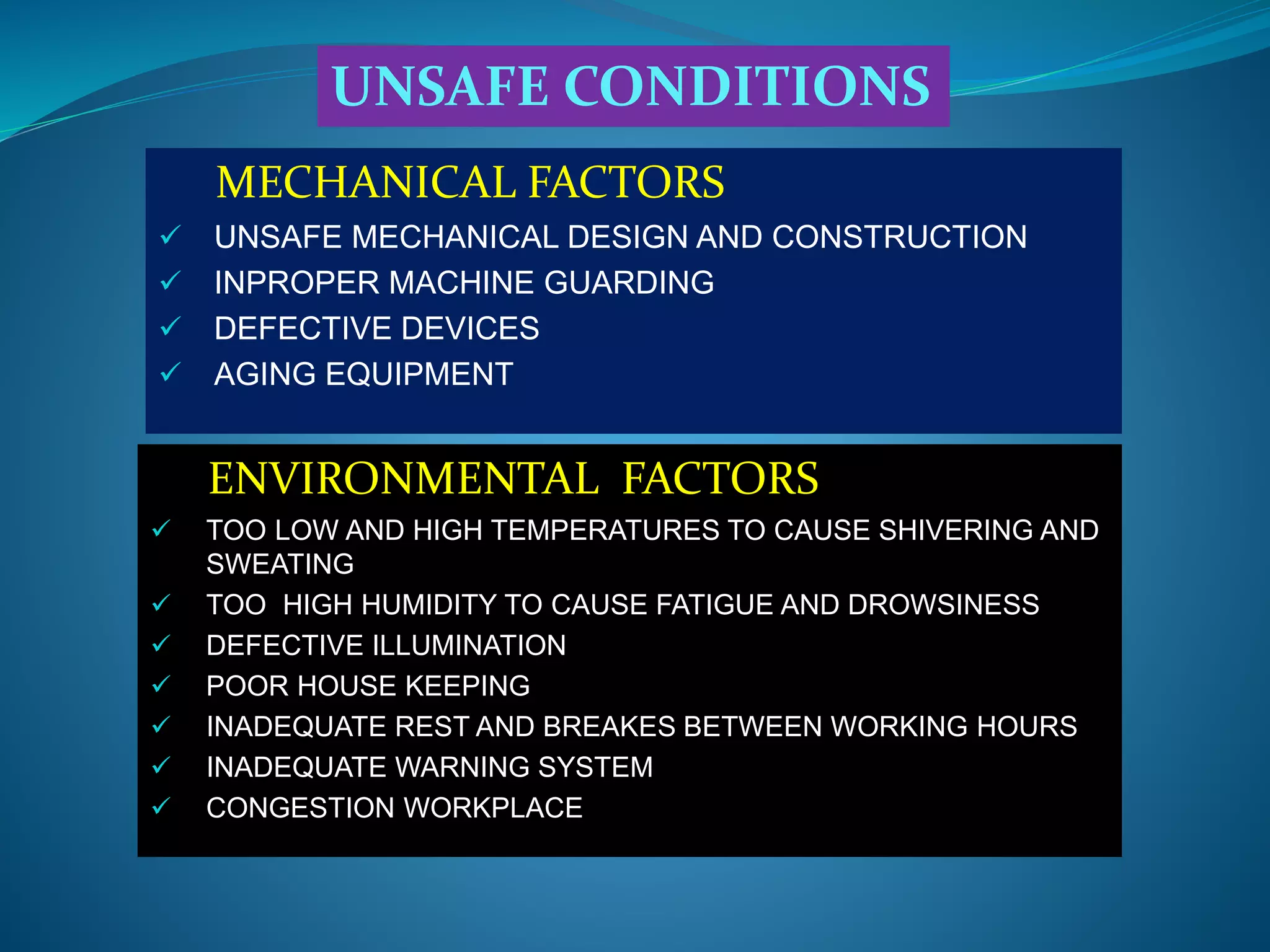
MECHANICAL FACTORS
 UNSAFE MECHANICAL DESIGN AND CONSTRUCTION
 INPROPER MACHINE GUARDING
 DEFECTIVE DEVICES
 AGING EQUIPMENT
ENVIRONMENTAL FACTORS
 TOO LOW AND HIGH TEMPERATURES TO CAUSE SHIVERING AND
SWEATING
 TOO HIGH HUMIDITY TO CAUSE FATIGUE AND DROWSINESS
 DEFECTIVE ILLUMINATION
 POOR HOUSE KEEPING
 INADEQUATE REST AND BREAKES BETWEEN WORKING HOURS
 INADEQUATE WARNING SYSTEM
 CONGESTION WORKPLACE
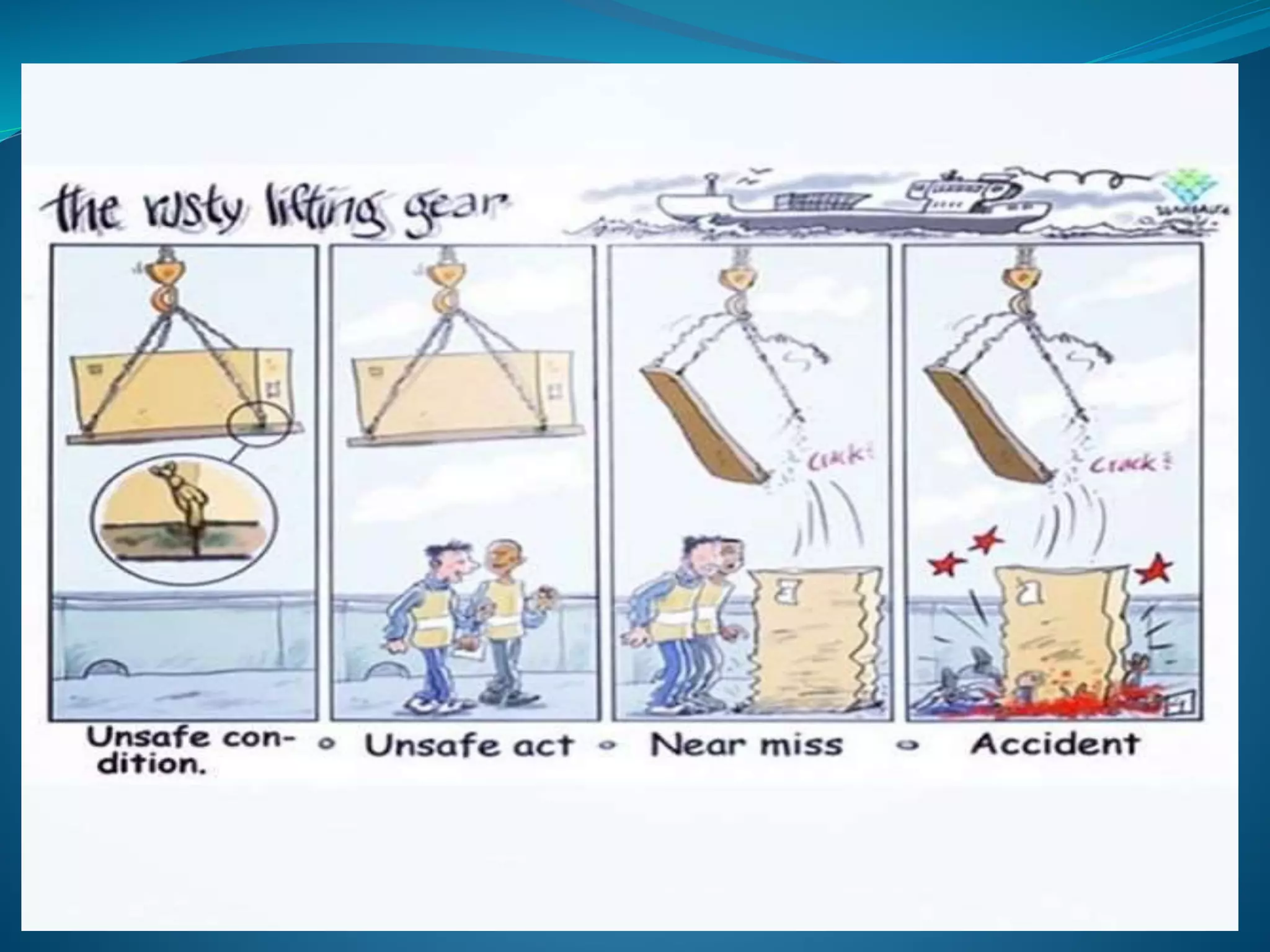
UNSAFE CONDITIONS
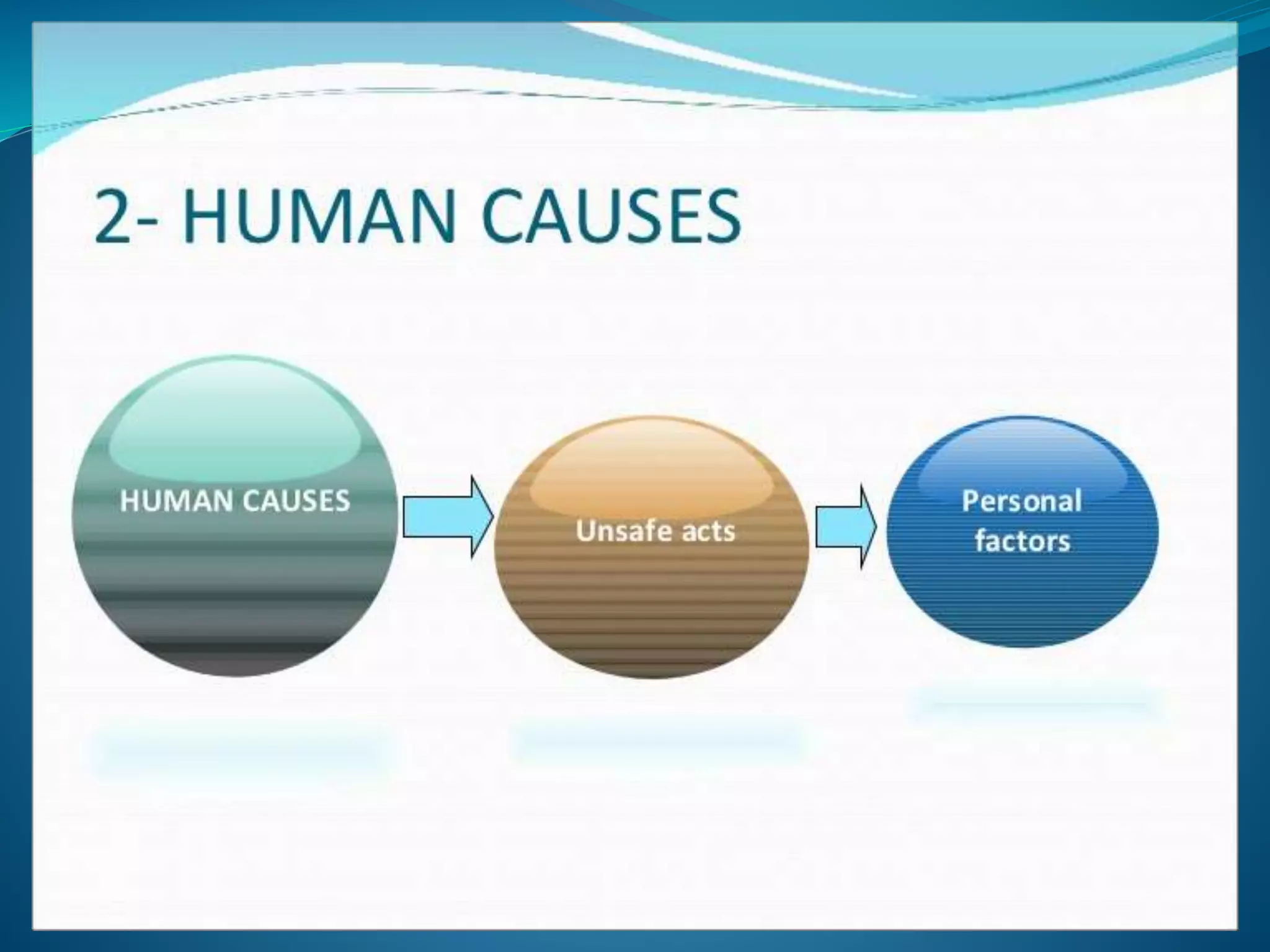
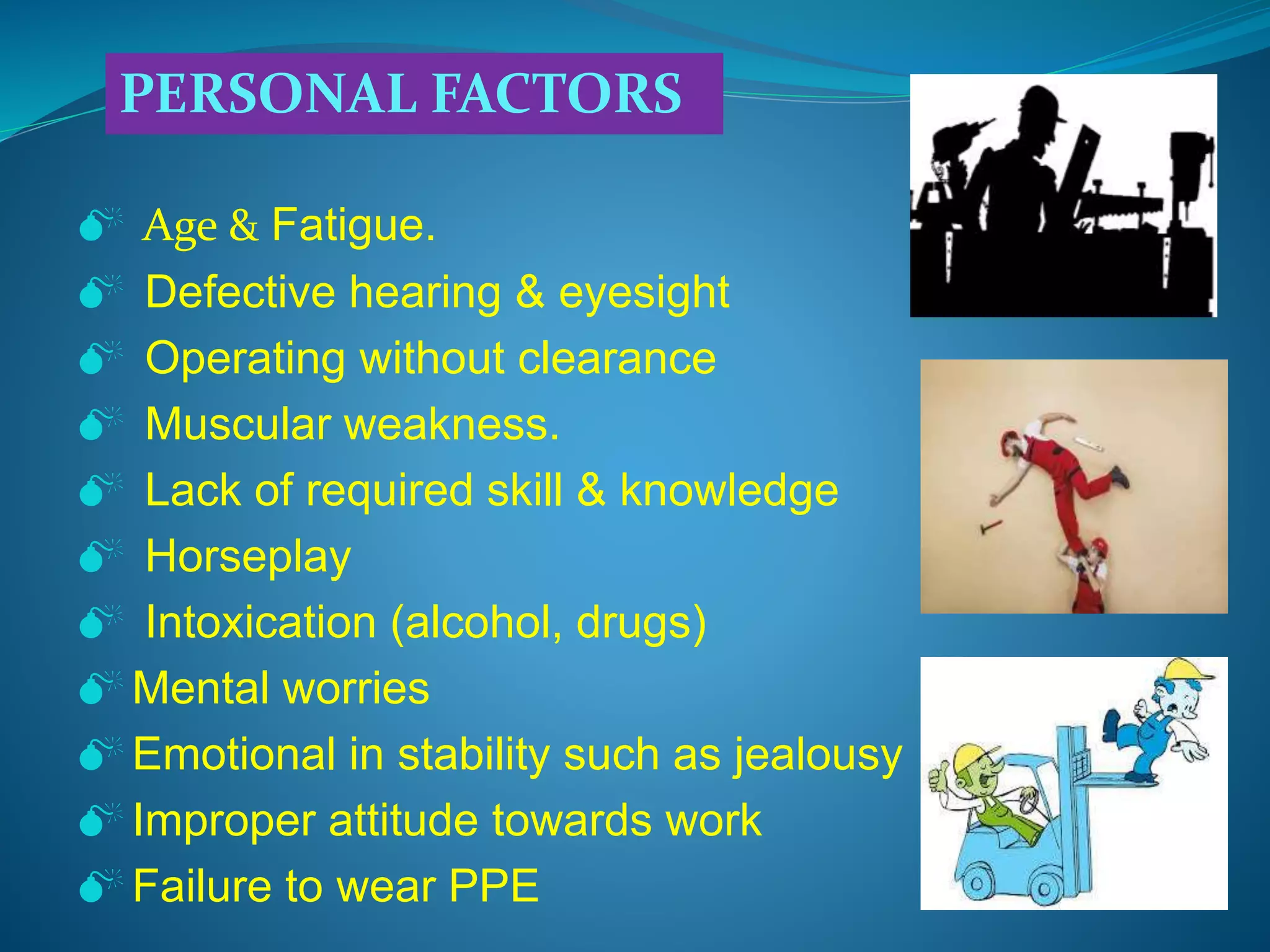
 Age & Fatigue.
 Defective hearing & eyesight
 Operating without clearance
 Muscular weakness.
 Lack of required skill & knowledge
 Horseplay
 Intoxication (alcohol, drugs)
 Mental worries
 Emotional in stability such as jealousy
 Improper attitude towards work
 Failure to wear PPE
PERSONAL FACTORS
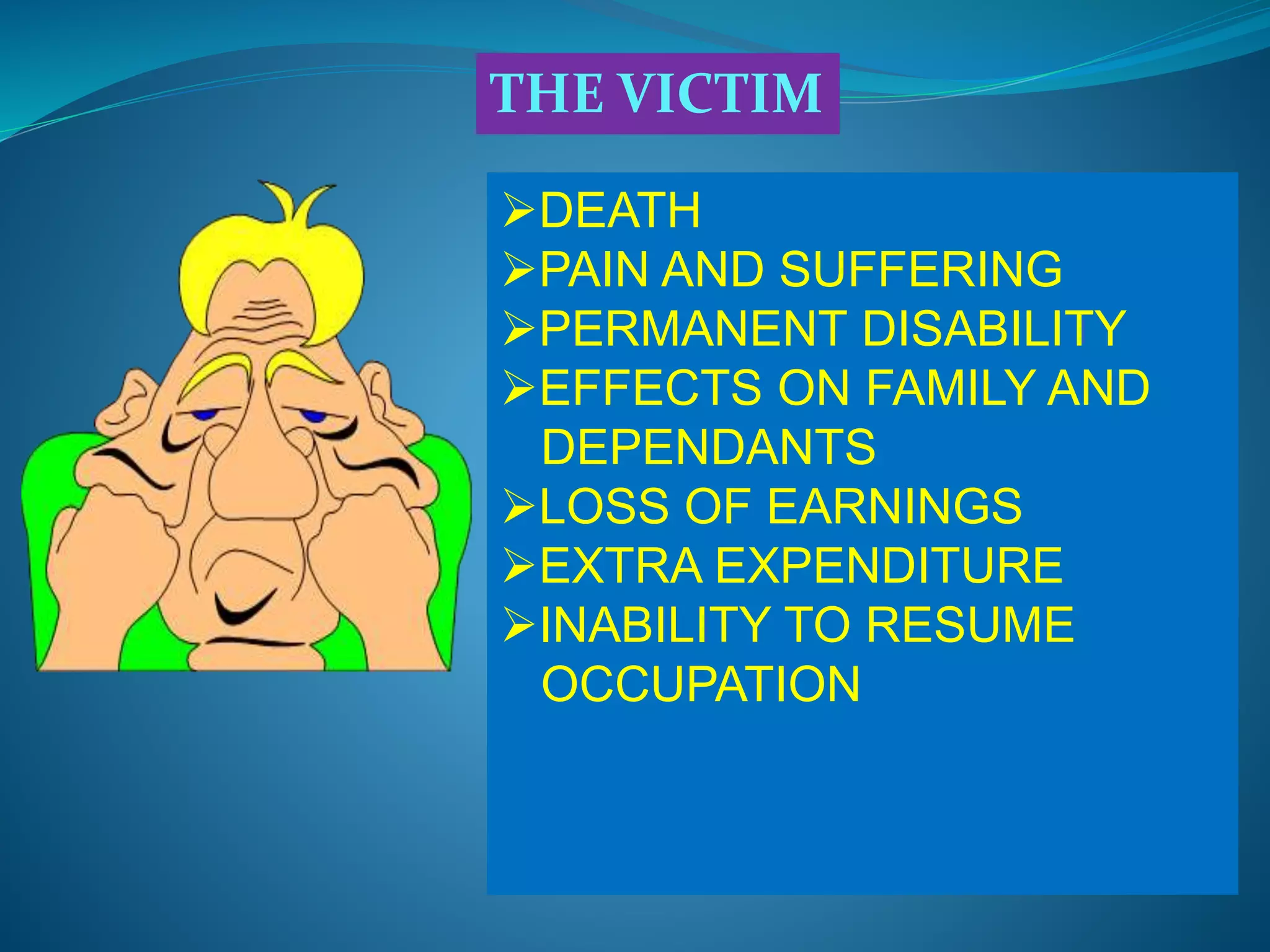
THE VICTIM
DEATH
PAIN AND SUFFERING
PERMANENT DISABILITY
EFFECTS ON FAMILY AND
DEPENDANTS
LOSS OF EARNINGS
EXTRA EXPENDITURE
INABILITY TO RESUME
OCCUPATION
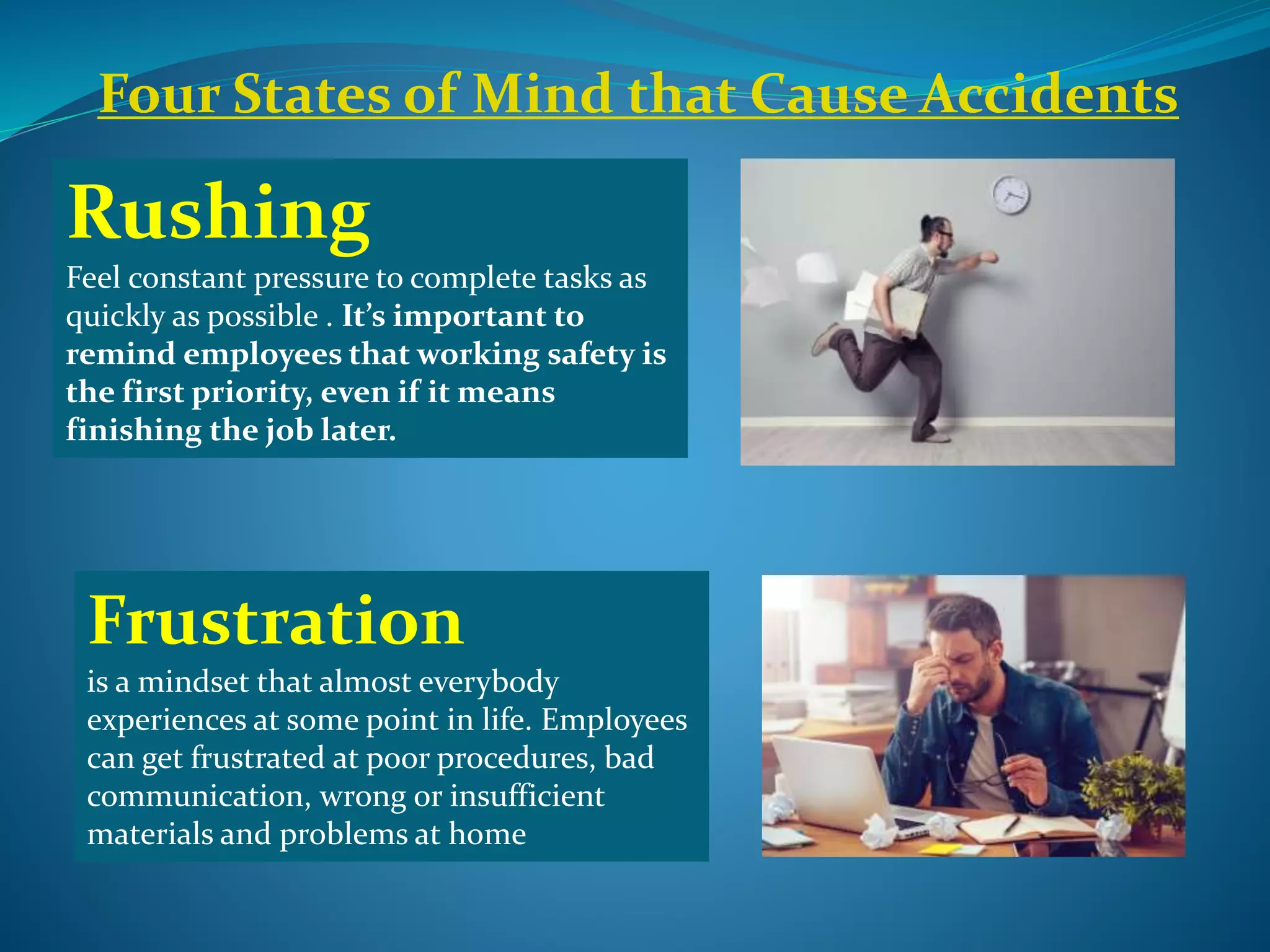
Rushing
Feel constant pressure to complete tasks as
quickly as possible . It’s important to
remind employees that working safety is
the first priority, even if it means
finishing the job later.
Four States of Mind that Cause Accidents
Frustration
is a mindset that almost everybody
experiences at some point in life. Employees
can get frustrated at poor procedures, bad
communication, wrong or insufficient
materials and problems at home
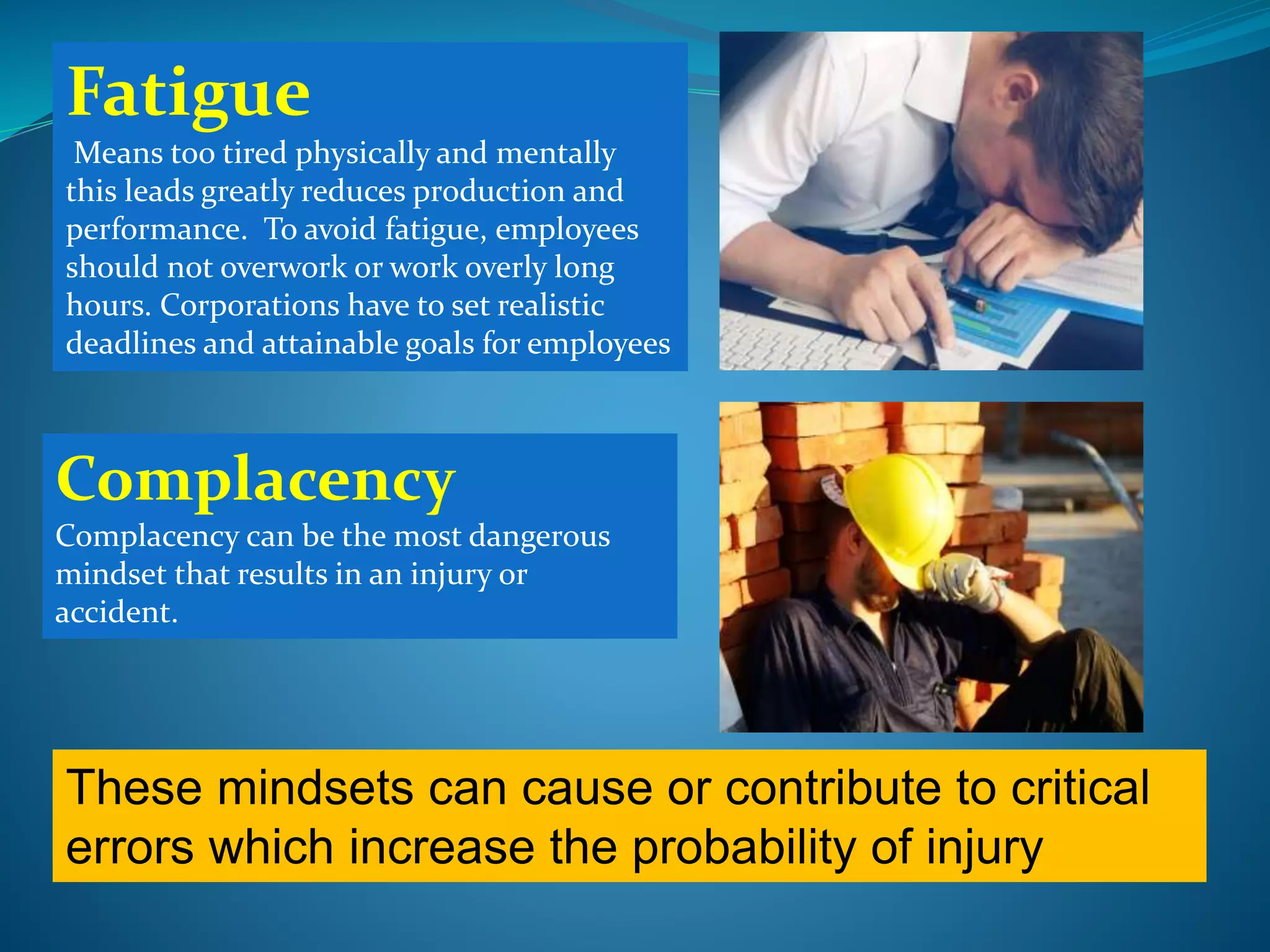
Fatigue
Means too tired physically and mentally
this leads greatly reduces production and
performance. To avoid fatigue, employees
should not overwork or work overly long
hours. Corporations have to set realistic
deadlines and attainable goals for employees
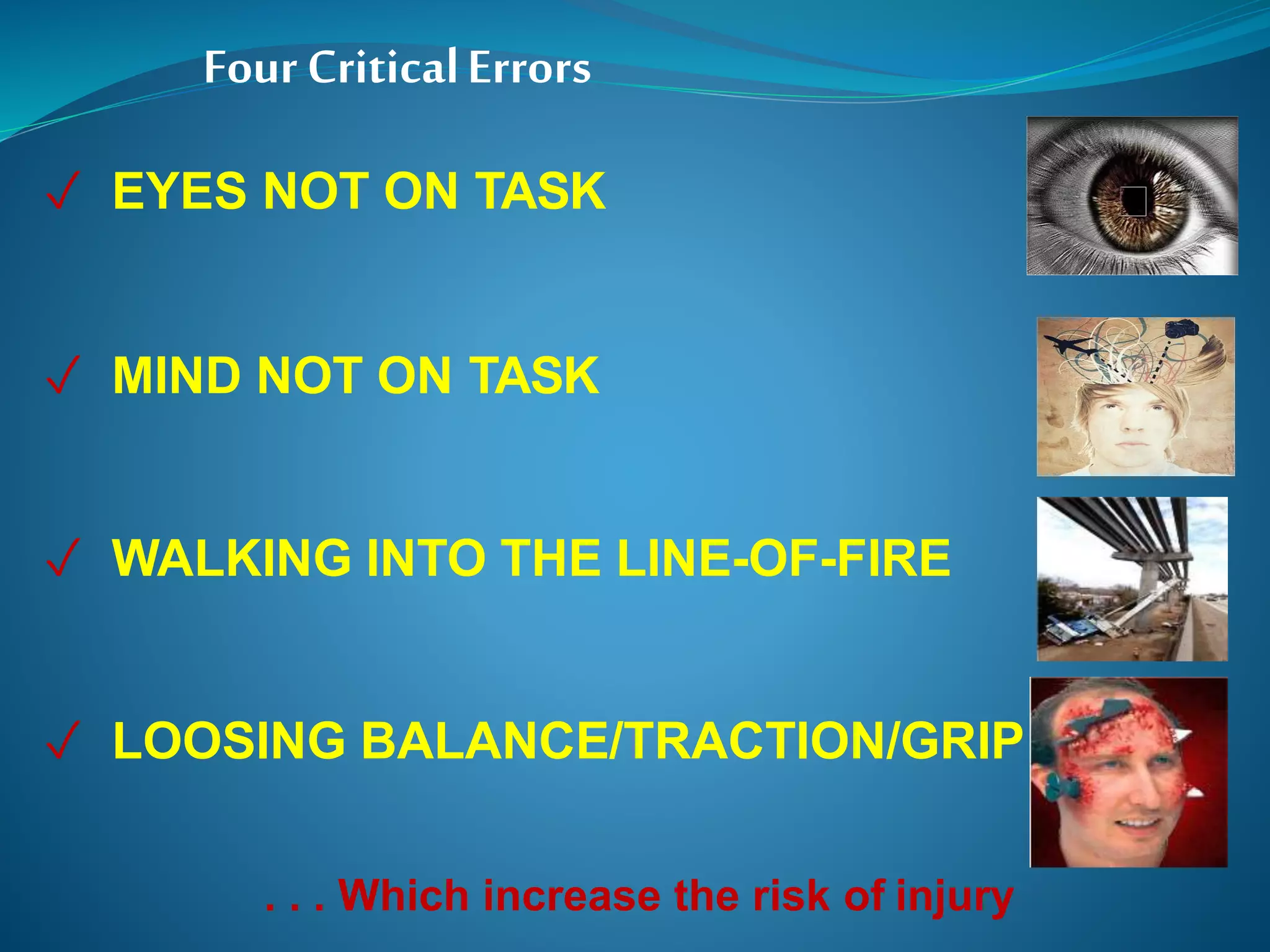
Complacency
Complacency can be the most dangerous
mindset that results in an injury or
accident.
These mindsets can cause or contribute to critical
errors which increase the probability of injury
✓ EYES NOT ON TASK
✓ MIND NOT ON TASK
✓ WALKING INTO THE LINE-OF-FIRE
✓ LOOSING BALANCE/TRACTION/GRIP
. . . Which increase the risk of injury
FourCriticalErrors
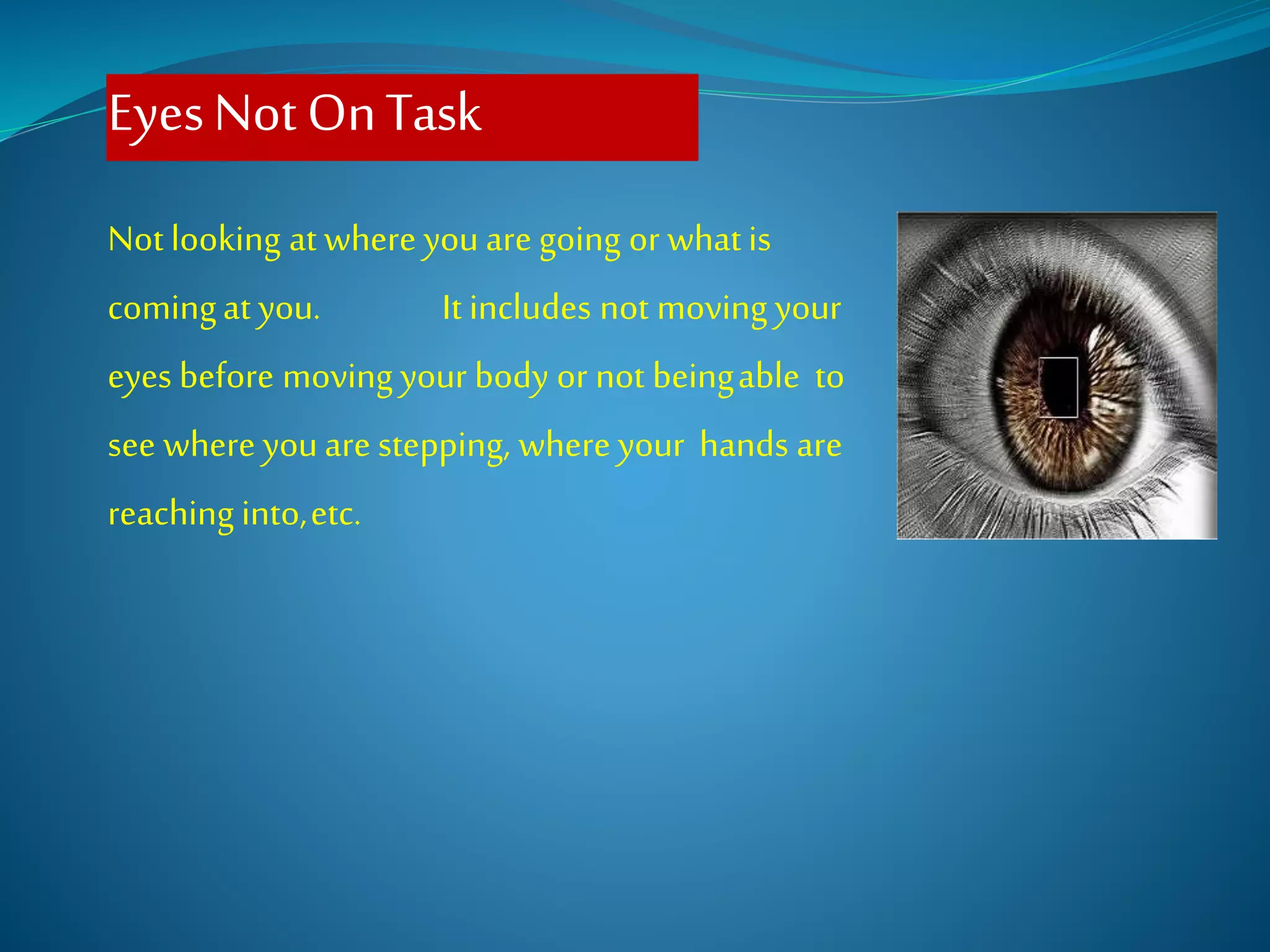
EyesNotOnTask
Not looking at where youare going or whatis
comingat you. It includes not moving your
eyes before moving your body or not beingable to
see where youare stepping, where your hands are
reaching into,etc.
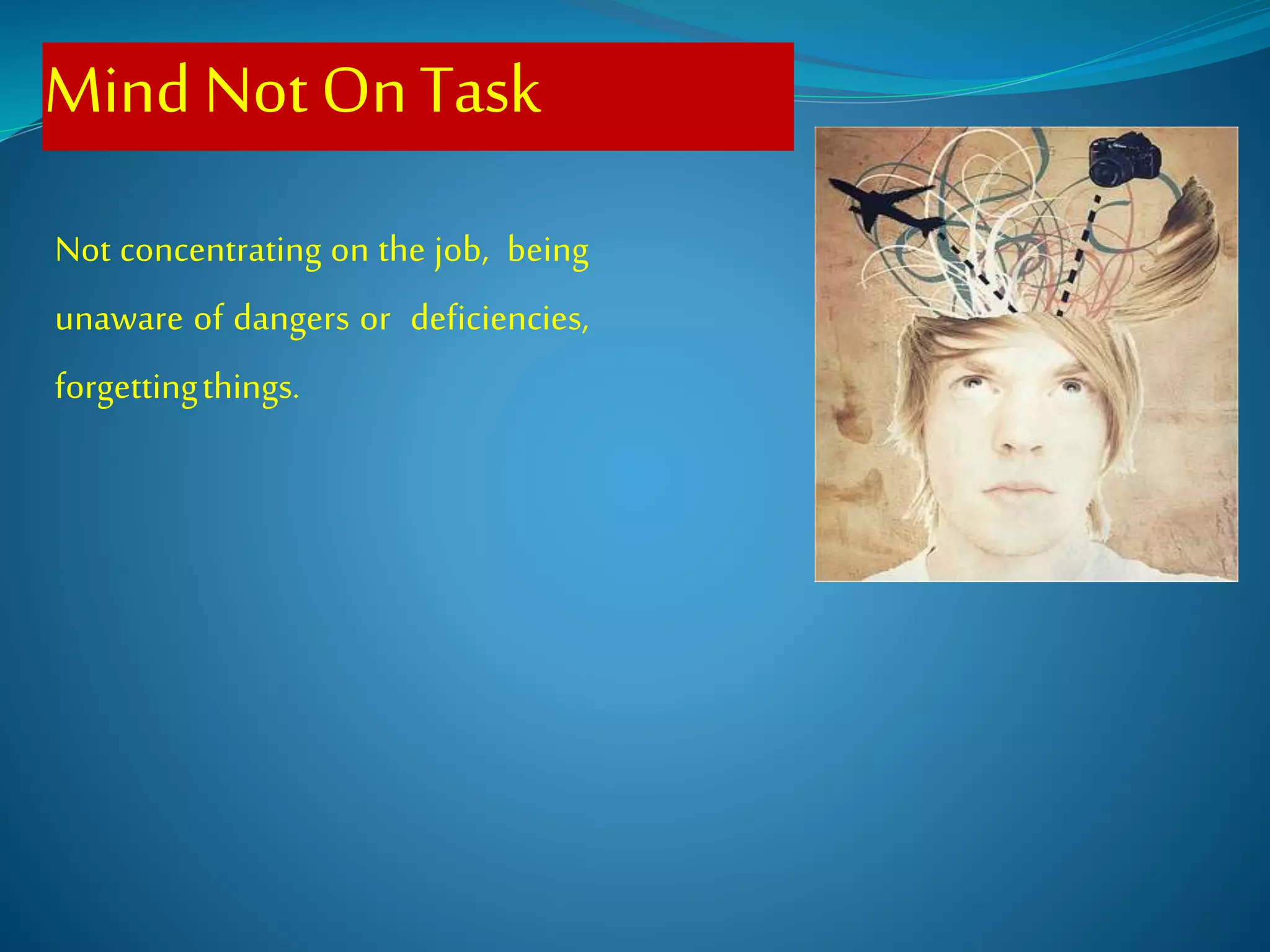
MindNotOnTask
Not concentrating on the job, being
unaware of dangers or deficiencies,
forgettingthings.
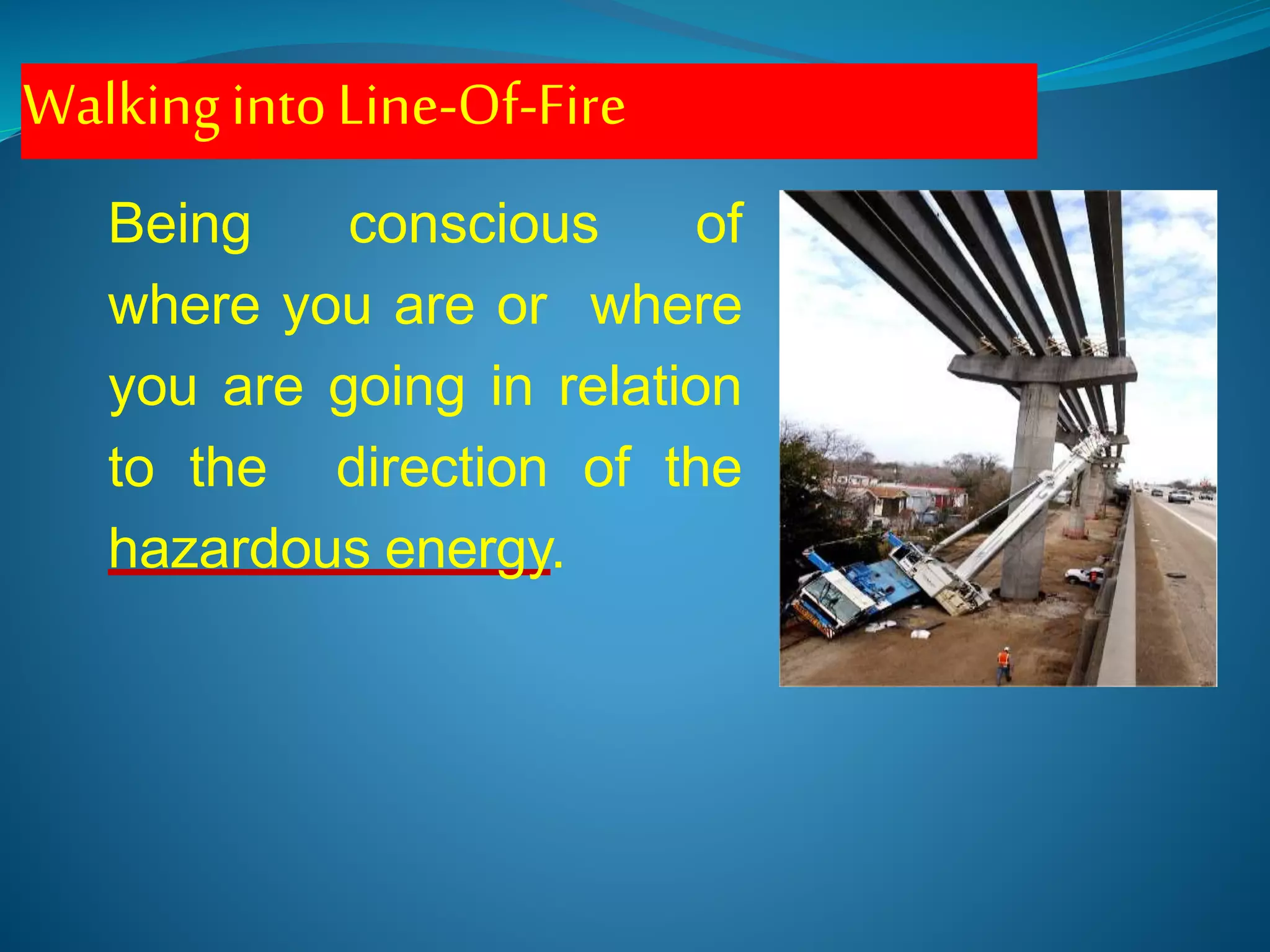
WalkingintoLine-Of-Fire
Being conscious of
where you are or where
you are going in relation
to the direction of the
hazardous energy.
Balance/Traction/Grip
Doing something that
could cause you to lose
your balance, traction or
grip.
It could include not
wearing good
footwear/gloves,not seeing
or thinking about the
hazard.
23
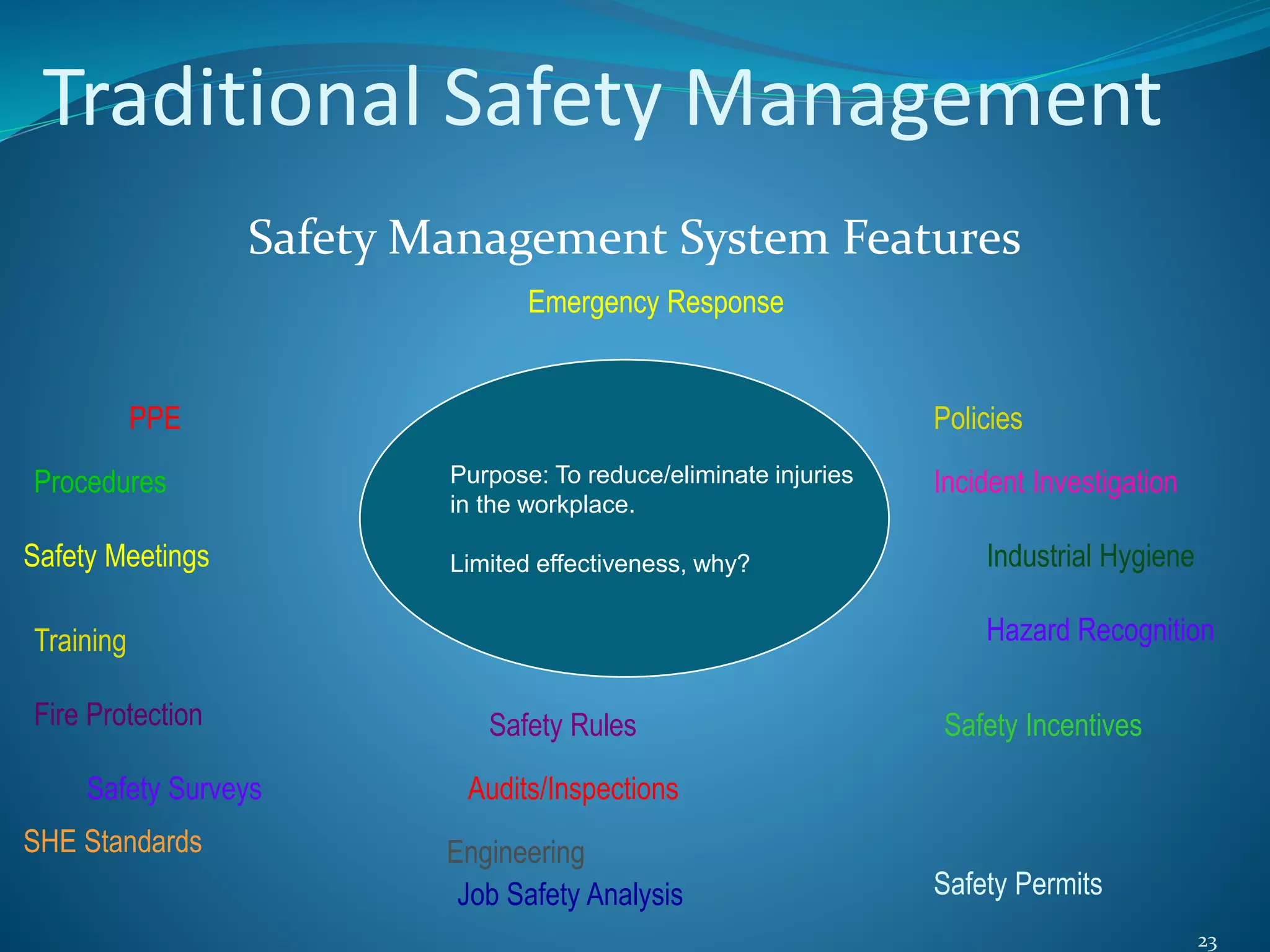
Traditional Safety Management
Safety Management System Features
PPE
Emergency Response
Policies
Procedures
Safety Rules
Incident Investigation
Safety Meetings
Audits/Inspections
Industrial Hygiene
Training
Safety Permits
Hazard Recognition
Fire Protection
Engineering
Safety Incentives
SHE Standards
Safety Surveys
Job Safety Analysis
Purpose: To reduce/eliminate injuries
in the workplace.
Limited effectiveness, why?
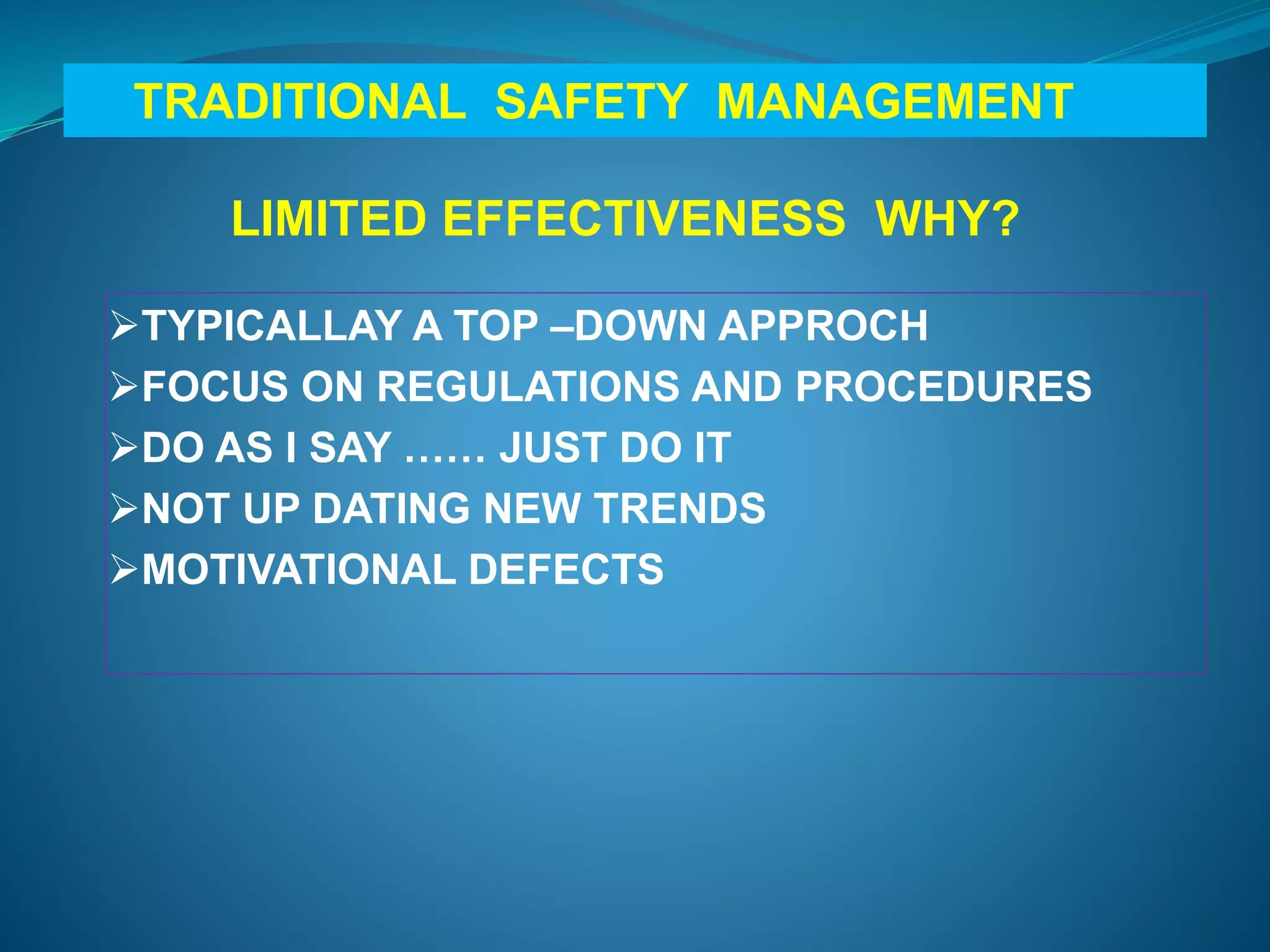
TRADITIONAL SAFETY MANAGEMENT
LIMITED EFFECTIVENESS WHY?
TYPICALLAY A TOP –DOWN APPROCH
FOCUS ON REGULATIONS AND PROCEDURES
DO AS I SAY …… JUST DO IT
NOT UP DATING NEW TRENDS
MOTIVATIONAL DEFECTS
25
Please think . . .
How many of the above elements can be
directly traced to injury elimination just at
the moment the injury is about to occur ?
Question: Are injuries totally eliminated?
26
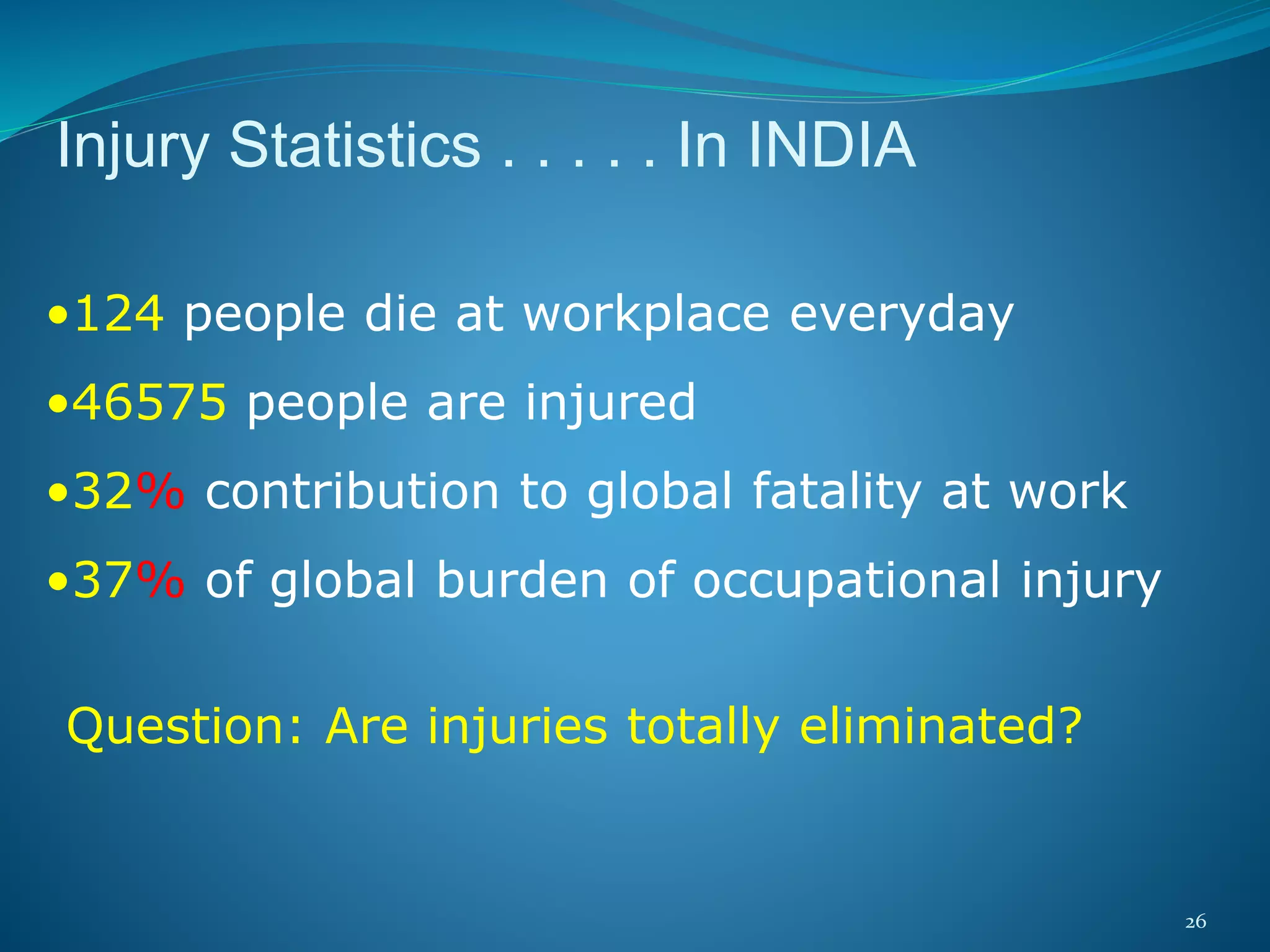
Injury Statistics . . . . . In INDIA
•124 people die at workplace everyday
•46575 people are injured
•32% contribution to global fatality at work
•37% of global burden of occupational injury
Question: Are injuries totally eliminated?
27
To Conclude . . .
•Good Safety Management systems exist
•Still workplace is injury prone & not safe
•Injury although declined, still persists
WHAT IS MISSING?
Why Safety Programs Do Not Work:
• Safety is enforced & its not a habit or
value!
• Safety is not managed in the same manner
as production, quality, and cost issues!
• Safety is not driven through continuous
improvement!
• Lack of top management commitment!
29
Scientifically proven that . . .
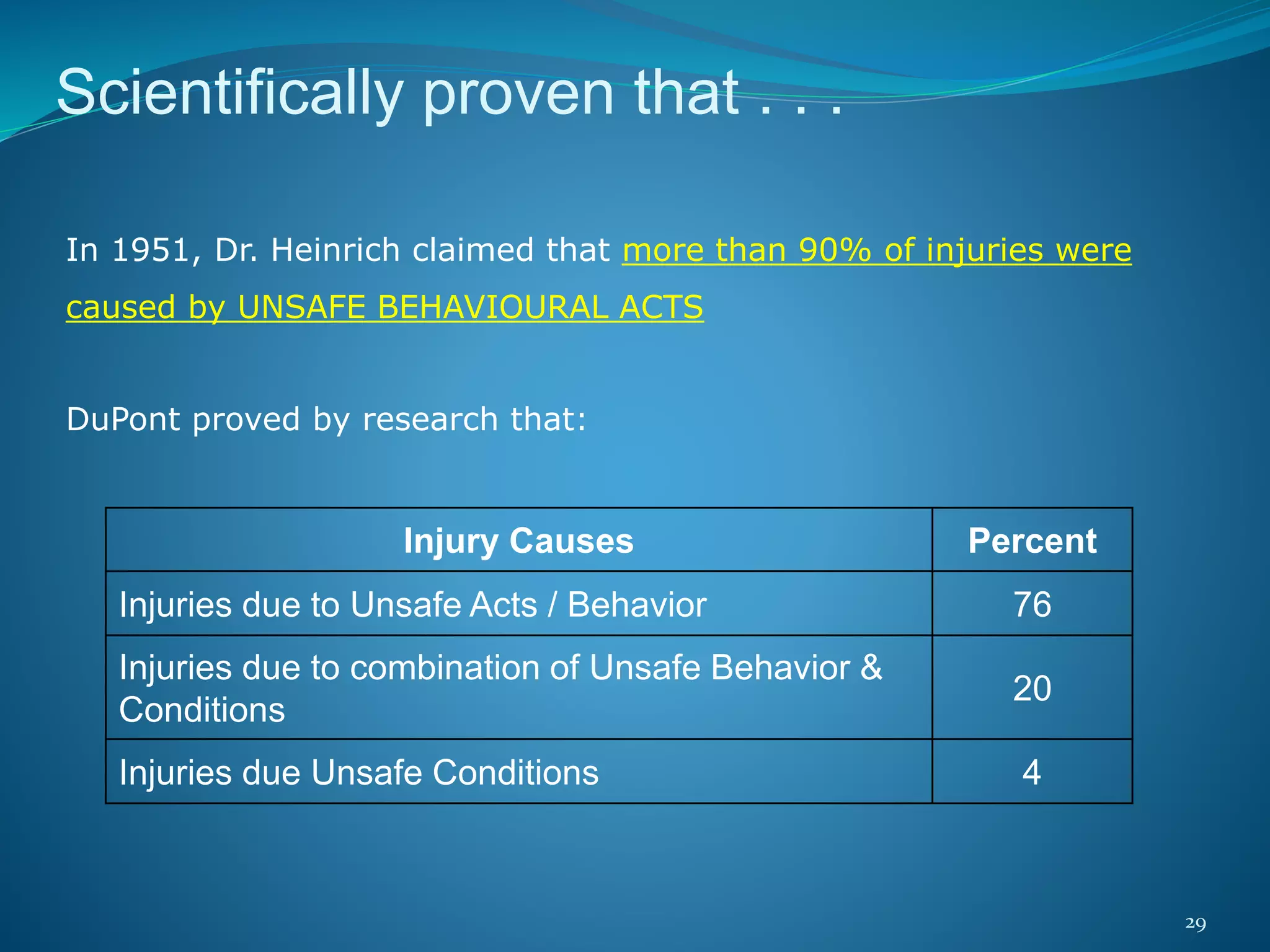
In 1951, Dr. Heinrich claimed that more than 90% of injuries were
caused by UNSAFE BEHAVIOURAL ACTS
DuPont proved by research that:
Injury Causes Percent
Injuries due to Unsafe Acts / Behavior 76
Injuries due to combination of Unsafe Behavior &
Conditions
20
Injuries due Unsafe Conditions 4
30
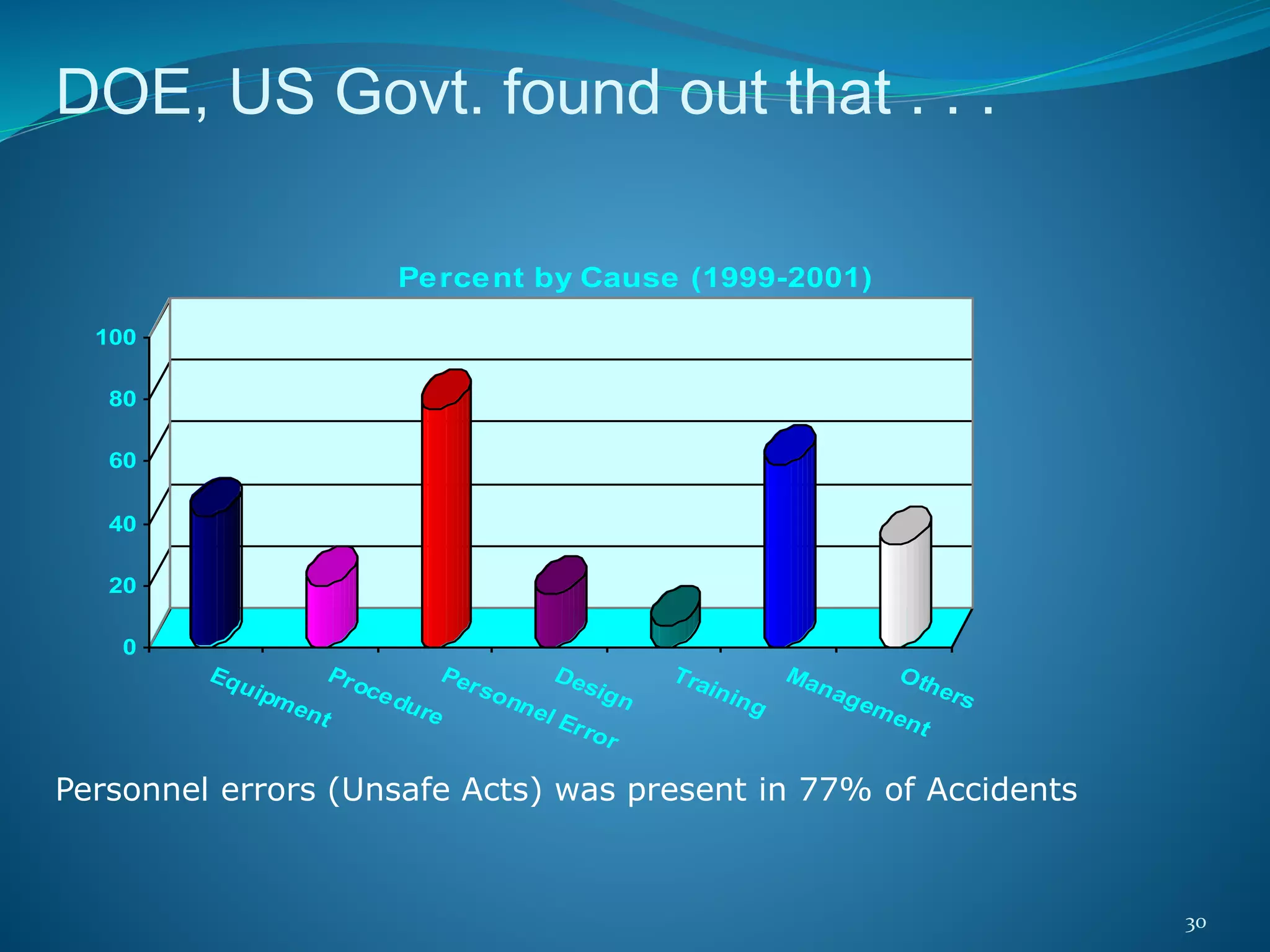
DOE, US Govt. found out that . . .
Personnel errors (Unsafe Acts) was present in 77% of Accidents
0
20
40
60
80
100
Equipment
Procedure
Personnel Error
Design
Training
Management
Others
Percent by Cause (1999-2001)
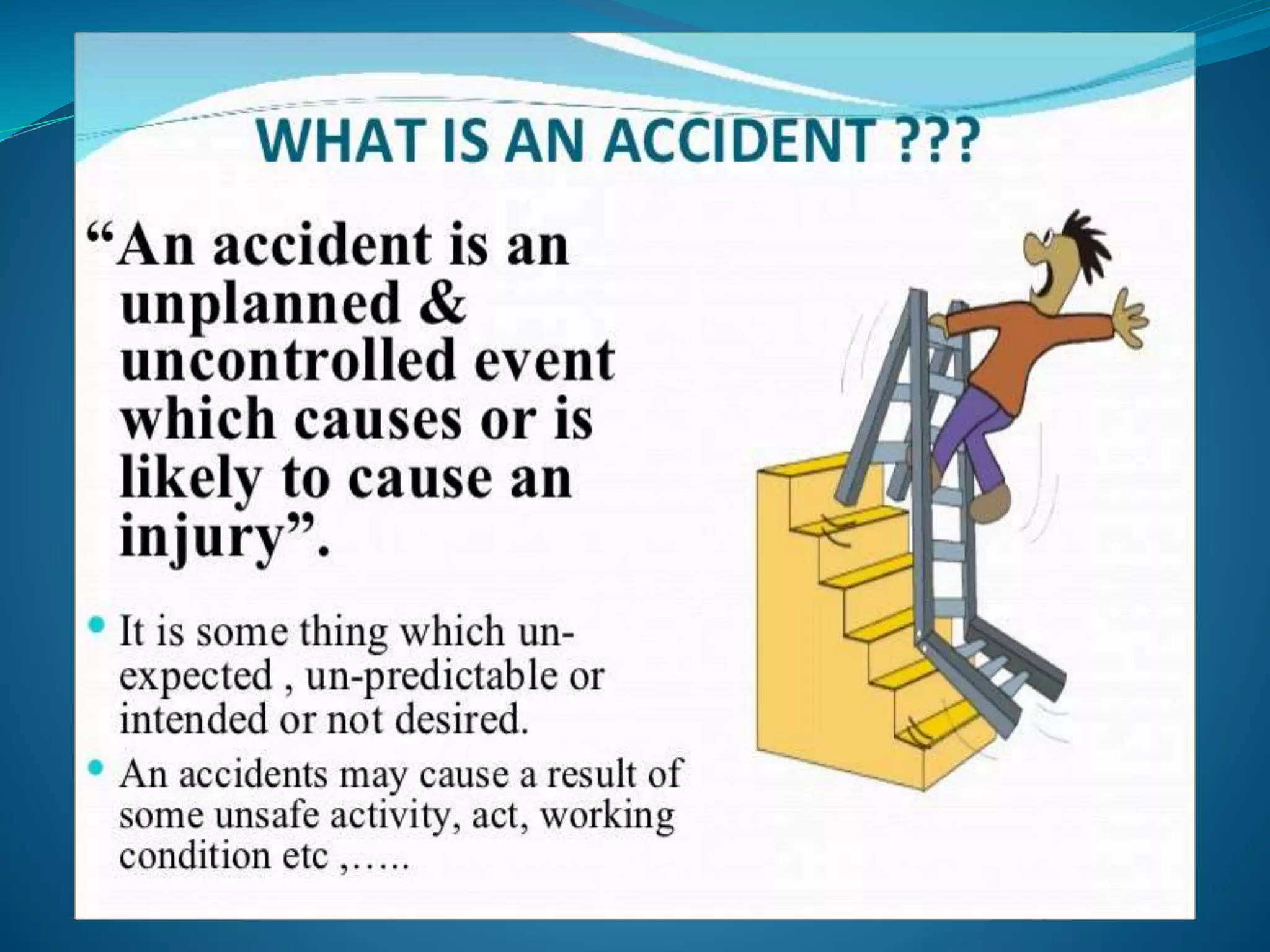
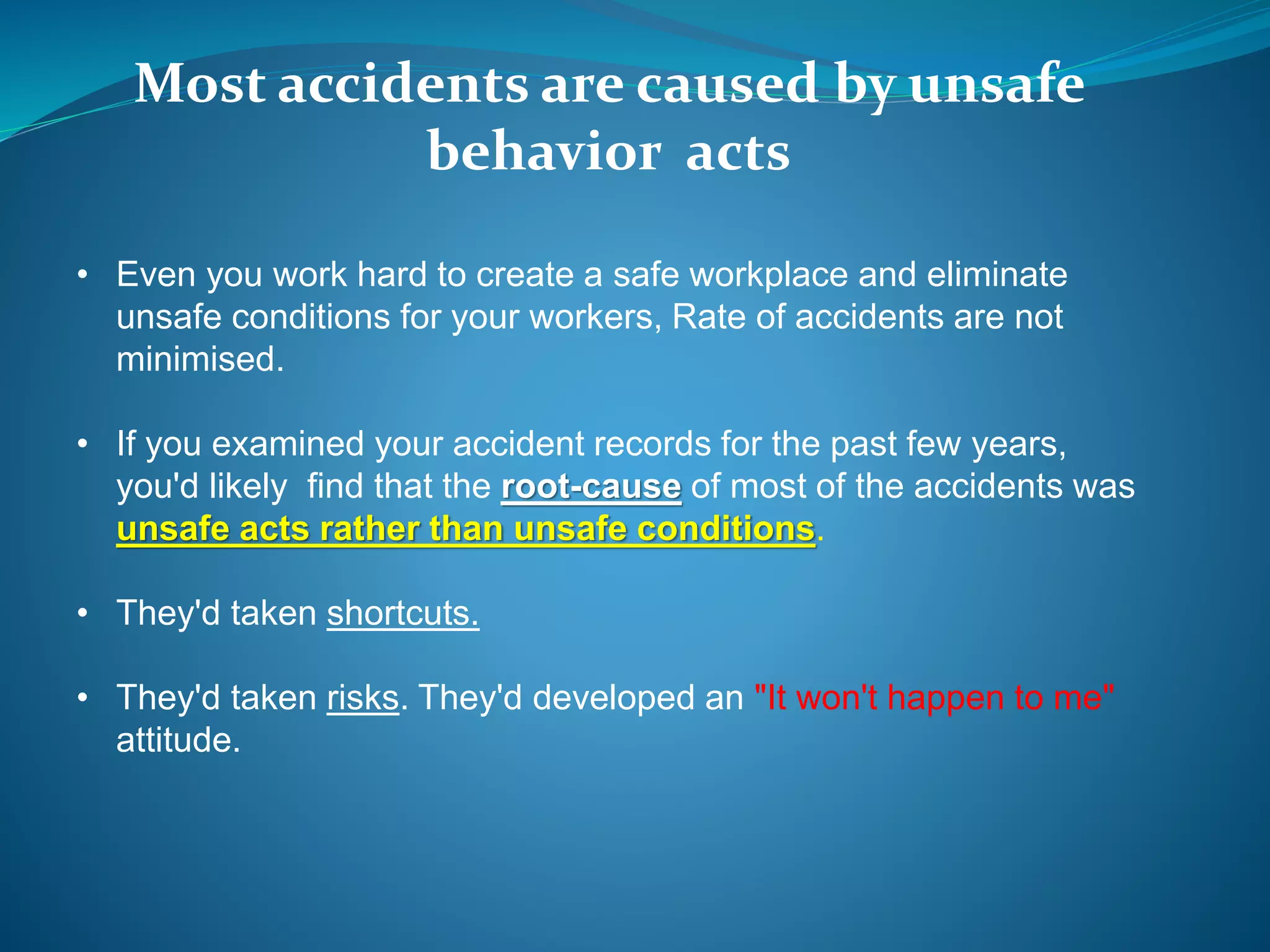
Most accidents are caused by unsafe
behavior acts
• Even you work hard to create a safe workplace and eliminate
unsafe conditions for your workers, Rate of accidents are not
minimised.
• If you examined your accident records for the past few years,
you'd likely find that the root-cause of most of the accidents was
unsafe acts rather than unsafe conditions.
• They'd taken shortcuts.
• They'd taken risks. They'd developed an "It won't happen to me"
attitude.
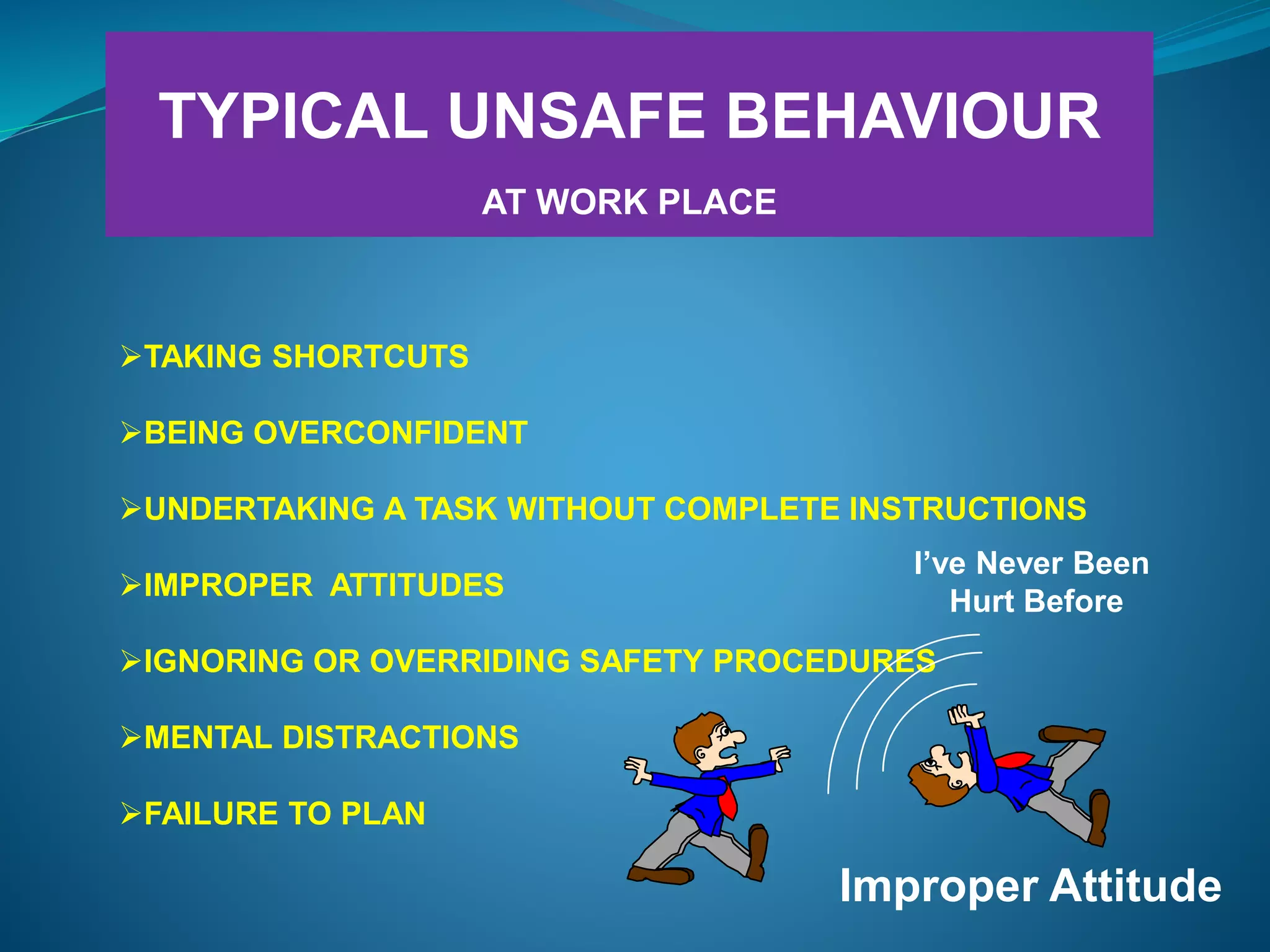
TYPICAL UNSAFE BEHAVIOUR
AT WORK PLACE
TAKING SHORTCUTS
BEING OVERCONFIDENT
UNDERTAKING A TASK WITHOUT COMPLETE INSTRUCTIONS
IMPROPER ATTITUDES
IGNORING OR OVERRIDING SAFETY PROCEDURES
MENTAL DISTRACTIONS
FAILURE TO PLAN
Improper Attitude
I’ve Never Been
Hurt Before
WHY
UNSAFE BEHAVIOUR
COMFORT
JOB DIS SATISFACTION
SAVING TIME
CONVINIENCE
RECOGNITION
CELEBRATING PRODUCTION OVER SAFETY
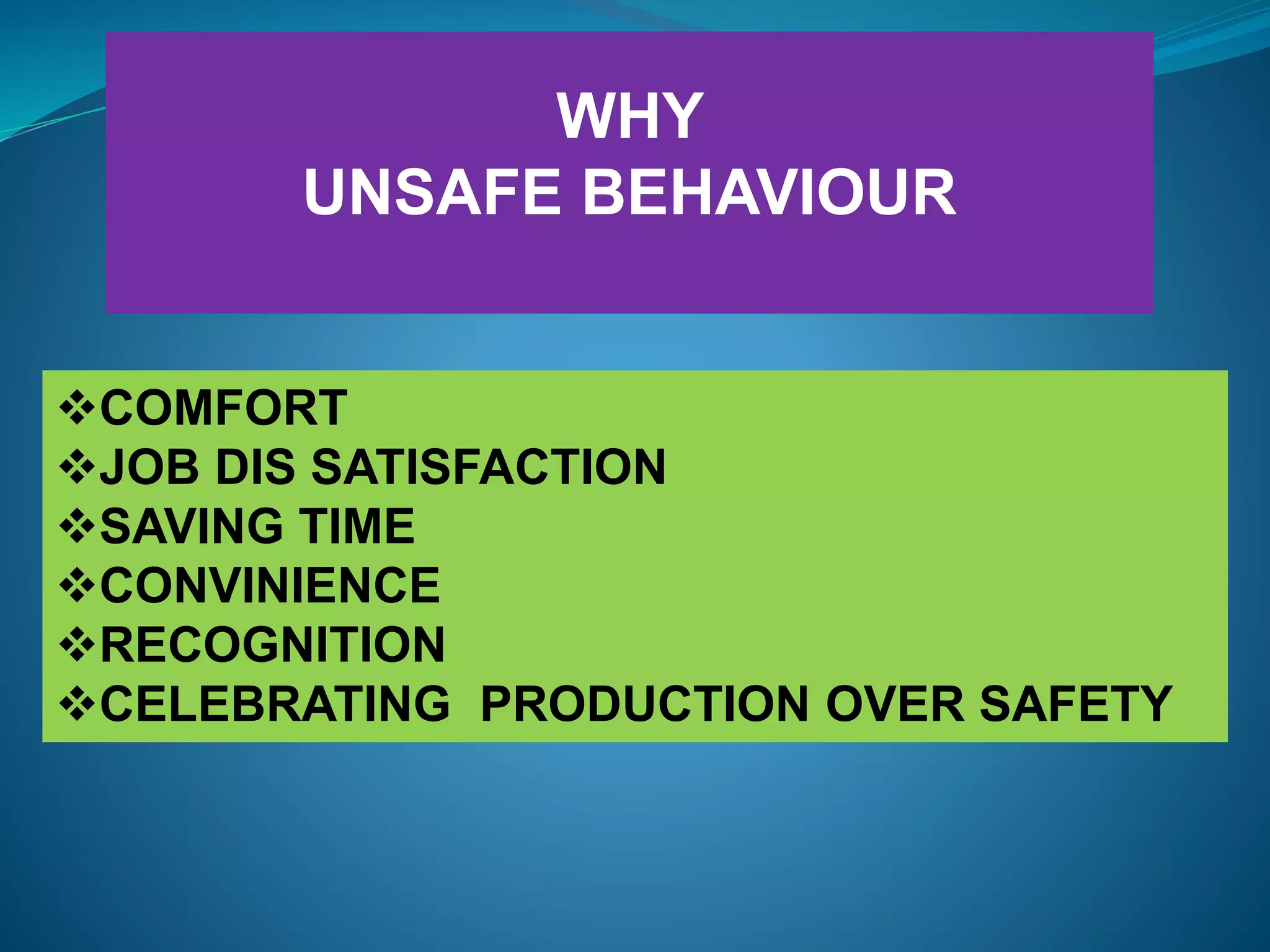
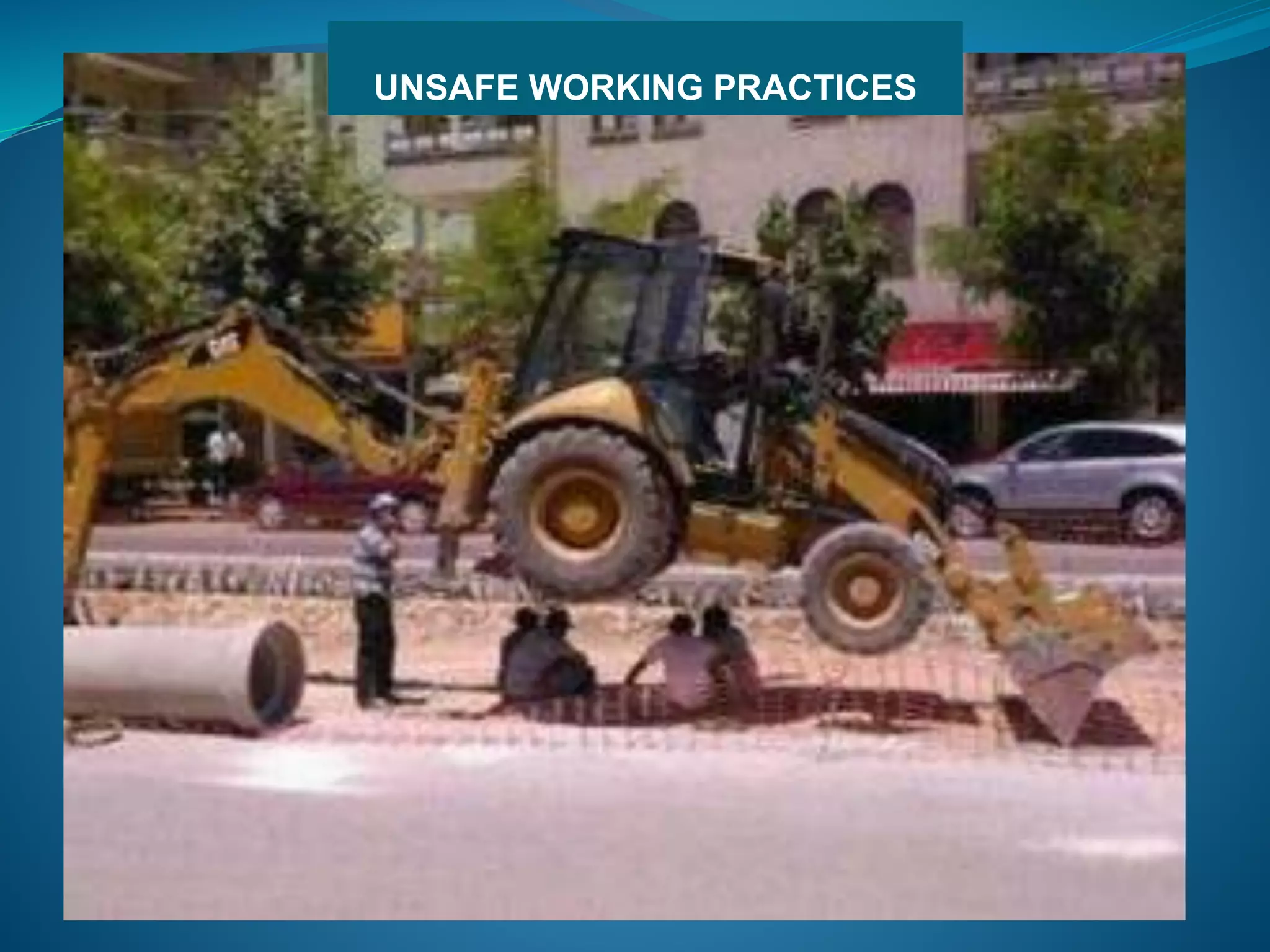
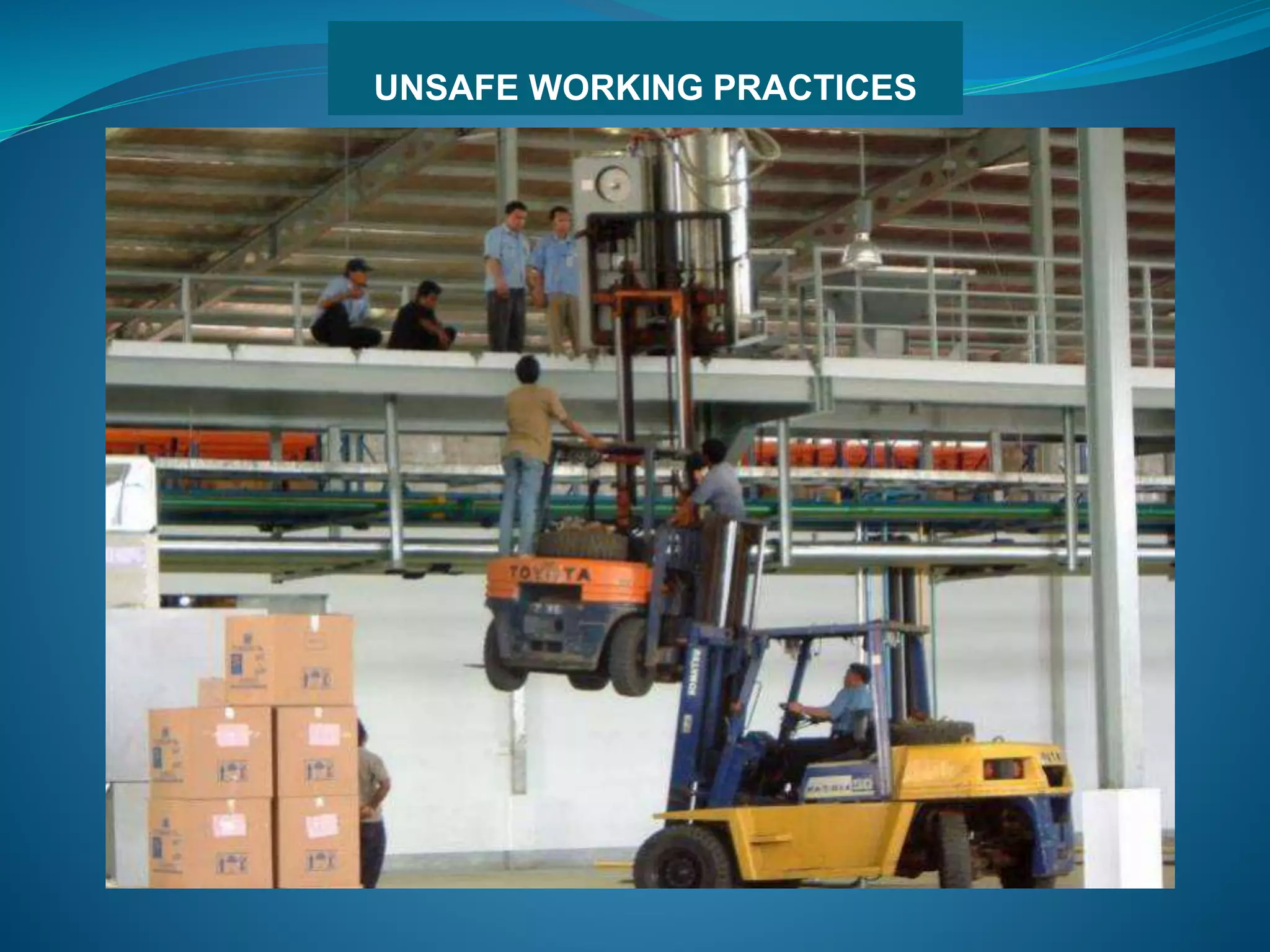
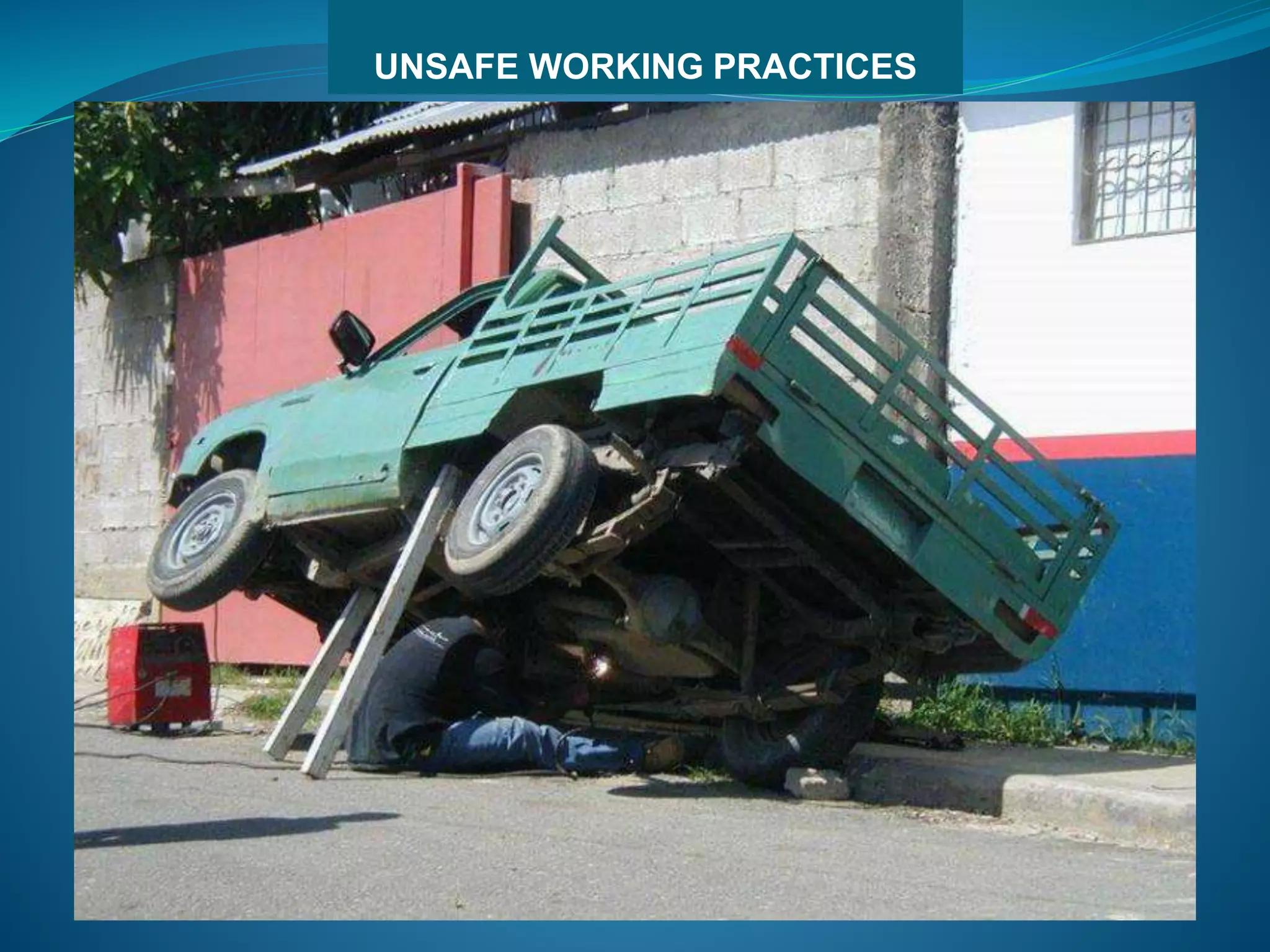
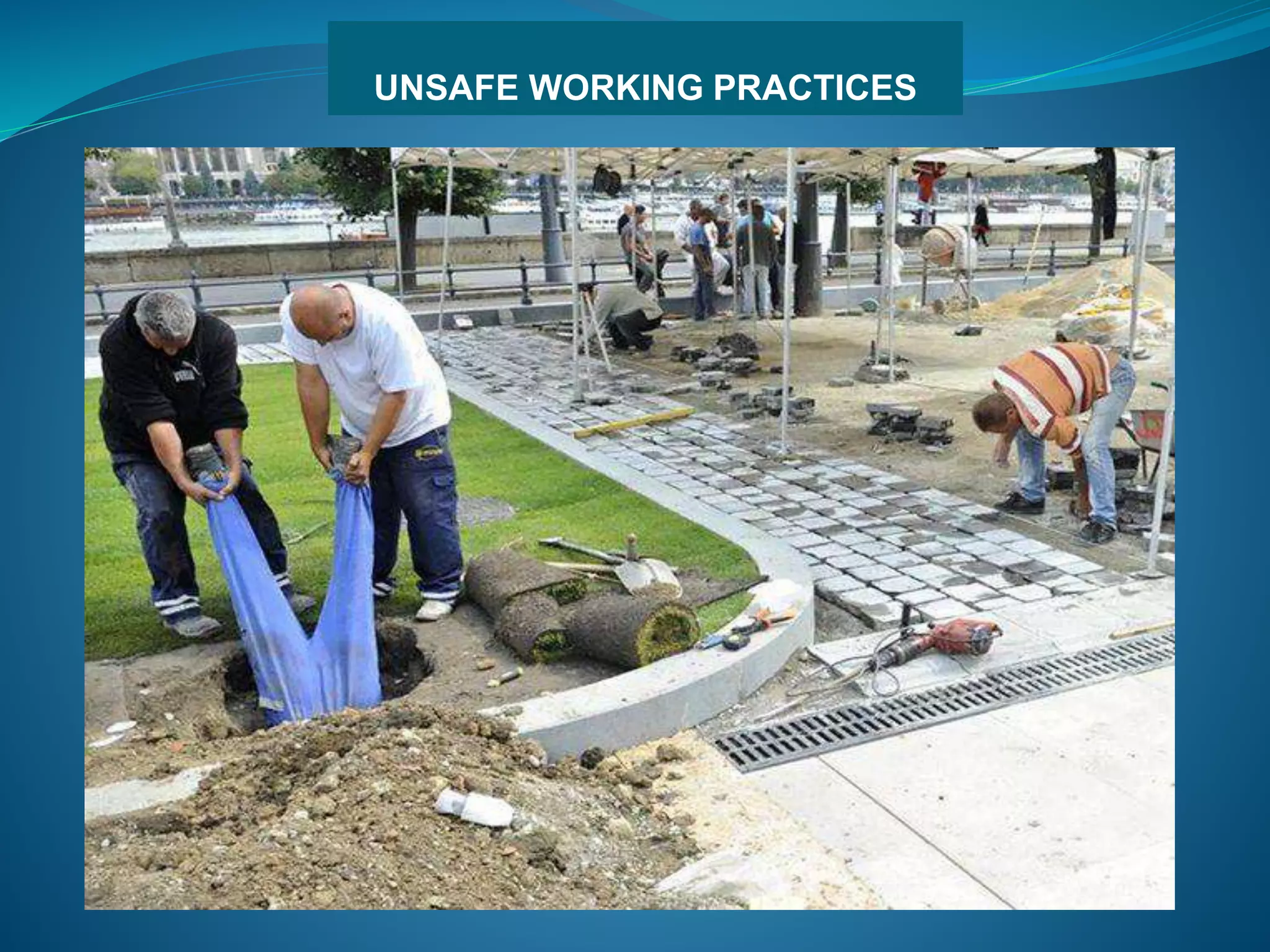
UNSAFE WORKING PRACTICES
39
How to change unsafe behavior to
safe behavior
By adding
BEHAVOIUR based SAFETY SYSTEM TO THE TRDITIONAL SAFETY MODEL
40
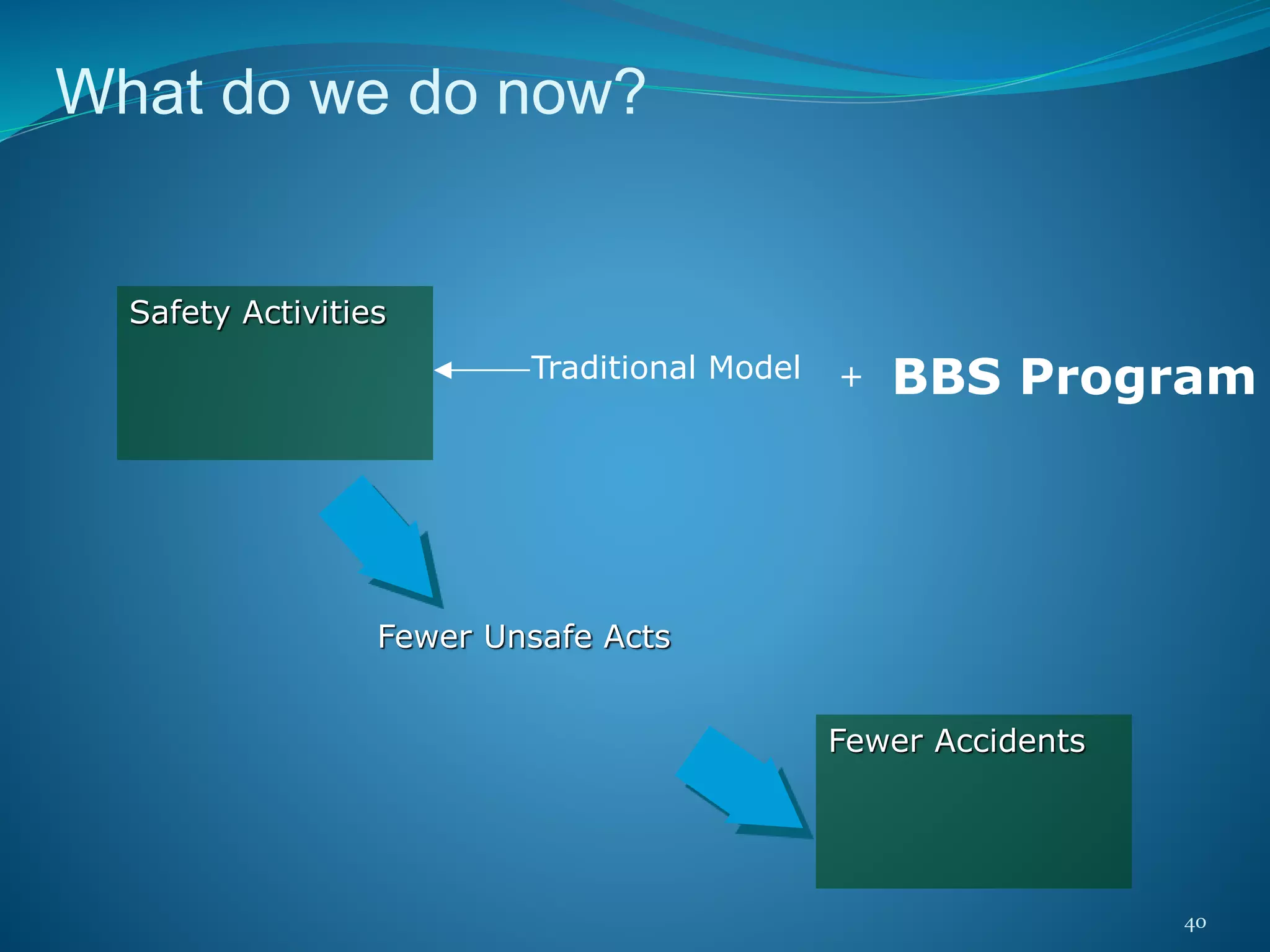
What do we do now?
Safety Activities
Fewer Unsafe Acts
Fewer Accidents
Traditional Model BBS Program+
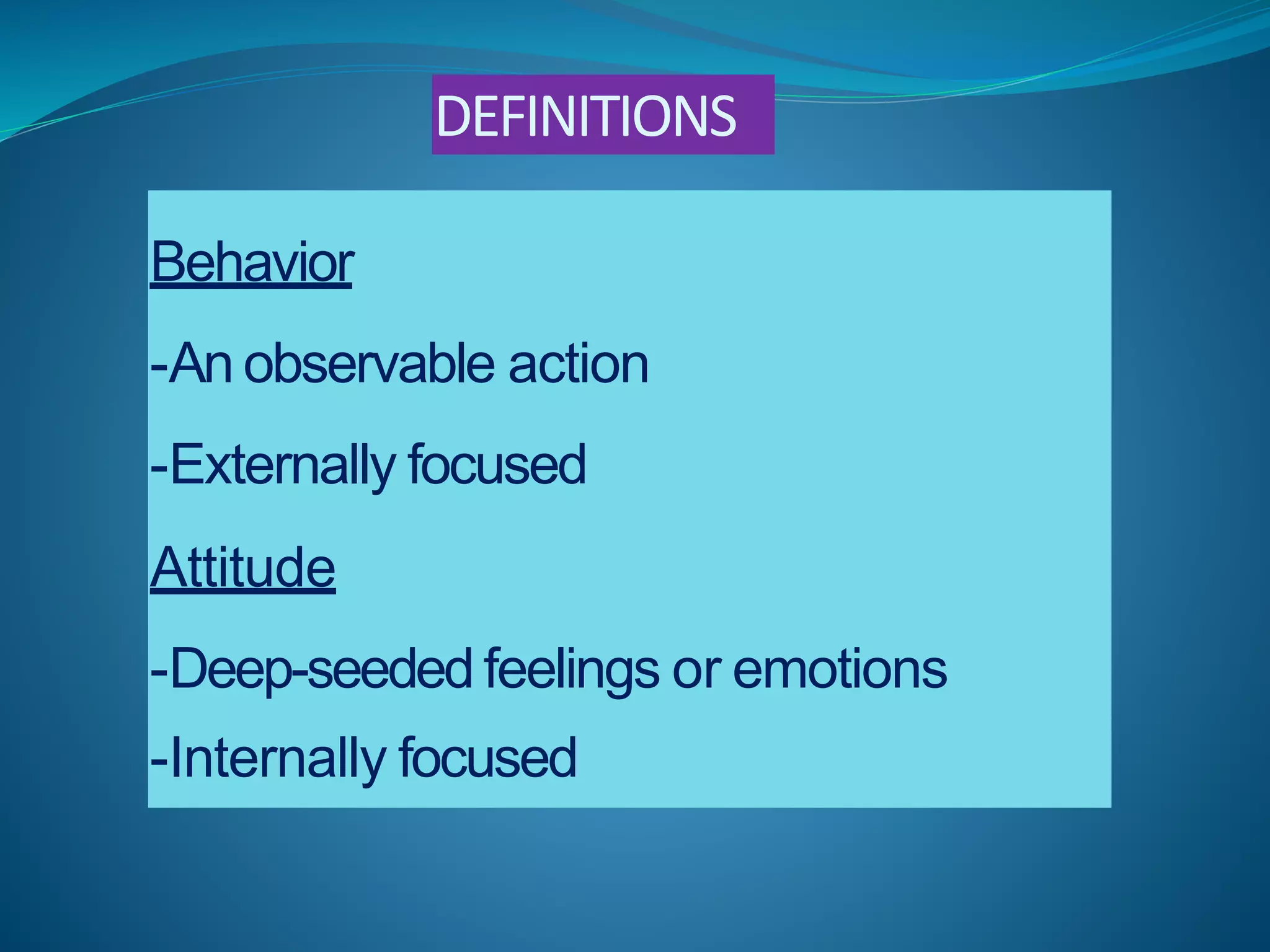
Behavior
-An observable action
-Externally focused
Attitude
-Deep-seeded feelings or emotions
-Internally focused
DEFINITIONS
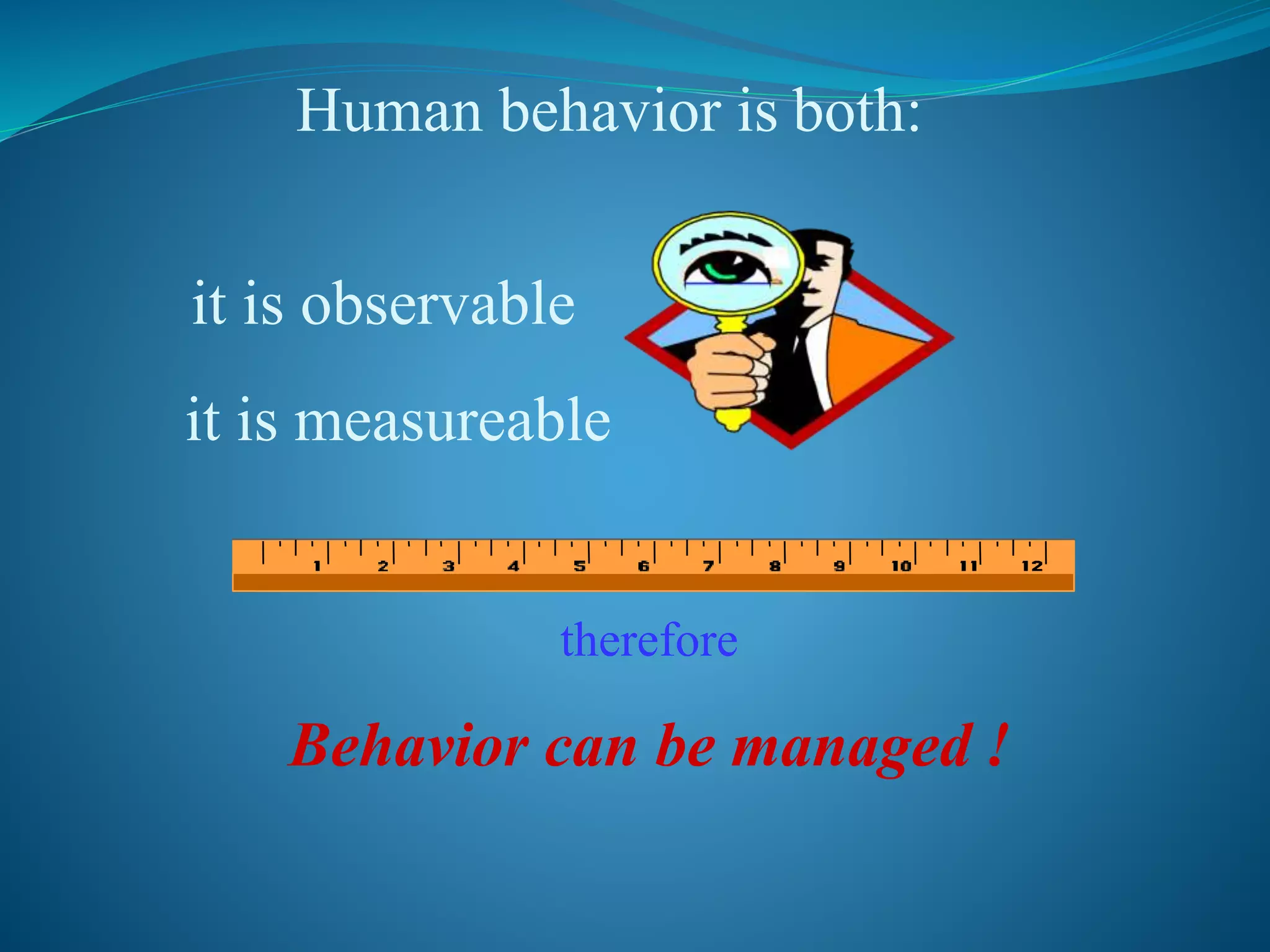
Human behavior is both:
therefore
Behavior can be managed !
it is observable
it is measureable
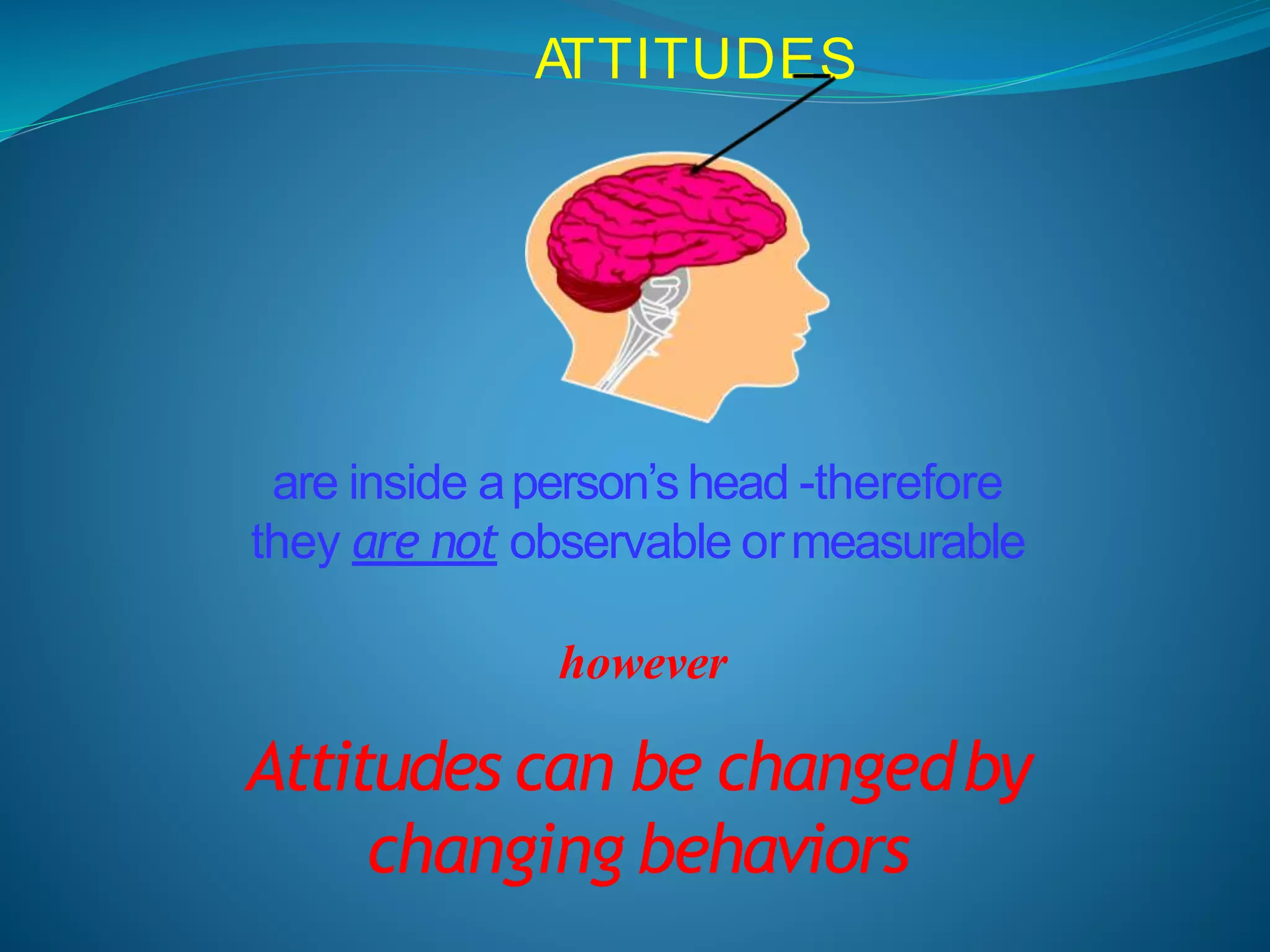
ATTITUDES
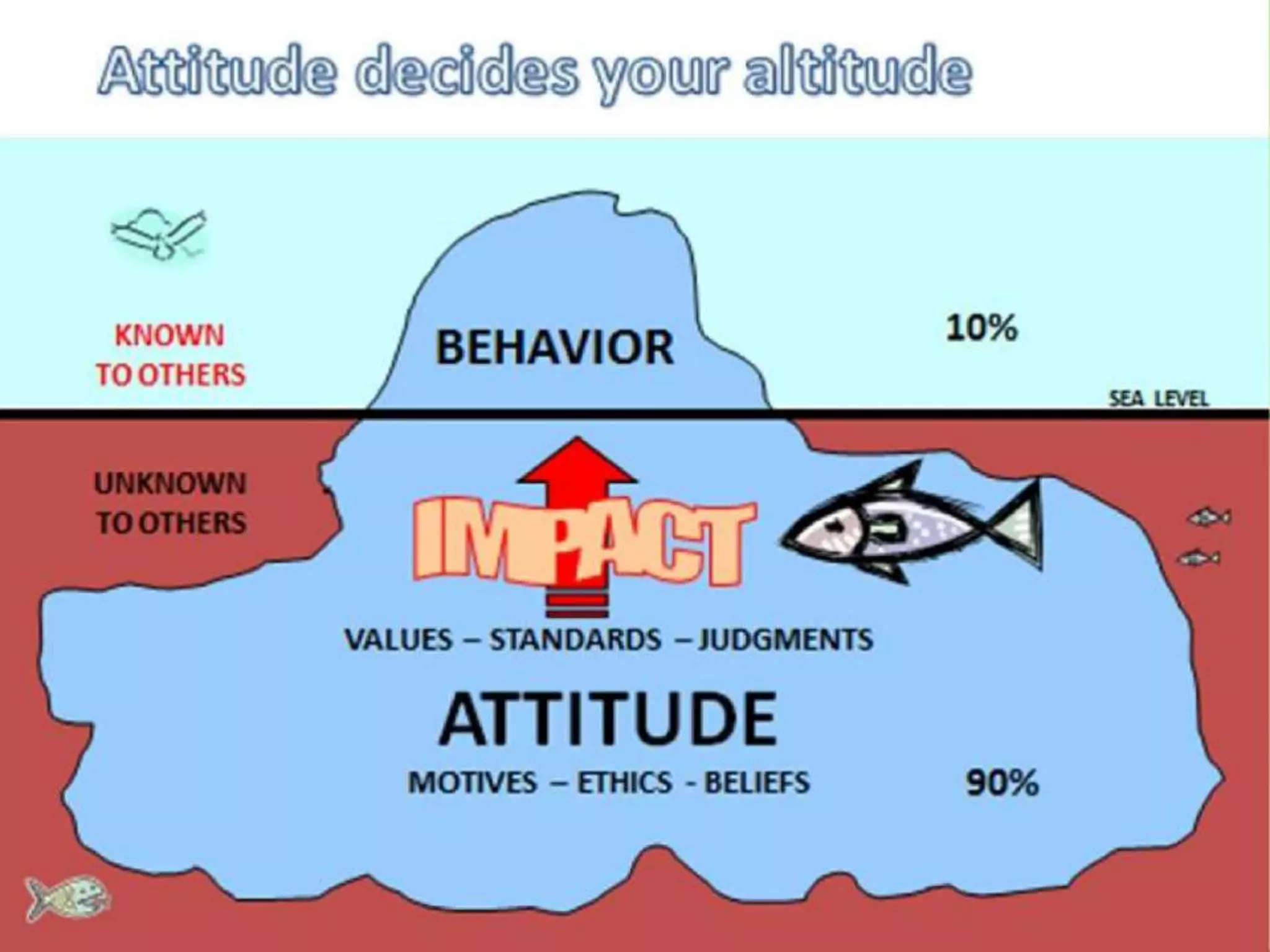
are inside aperson’s head -therefore
they are not observable ormeasurable
however
Attitudes can be changedby
changing behaviors
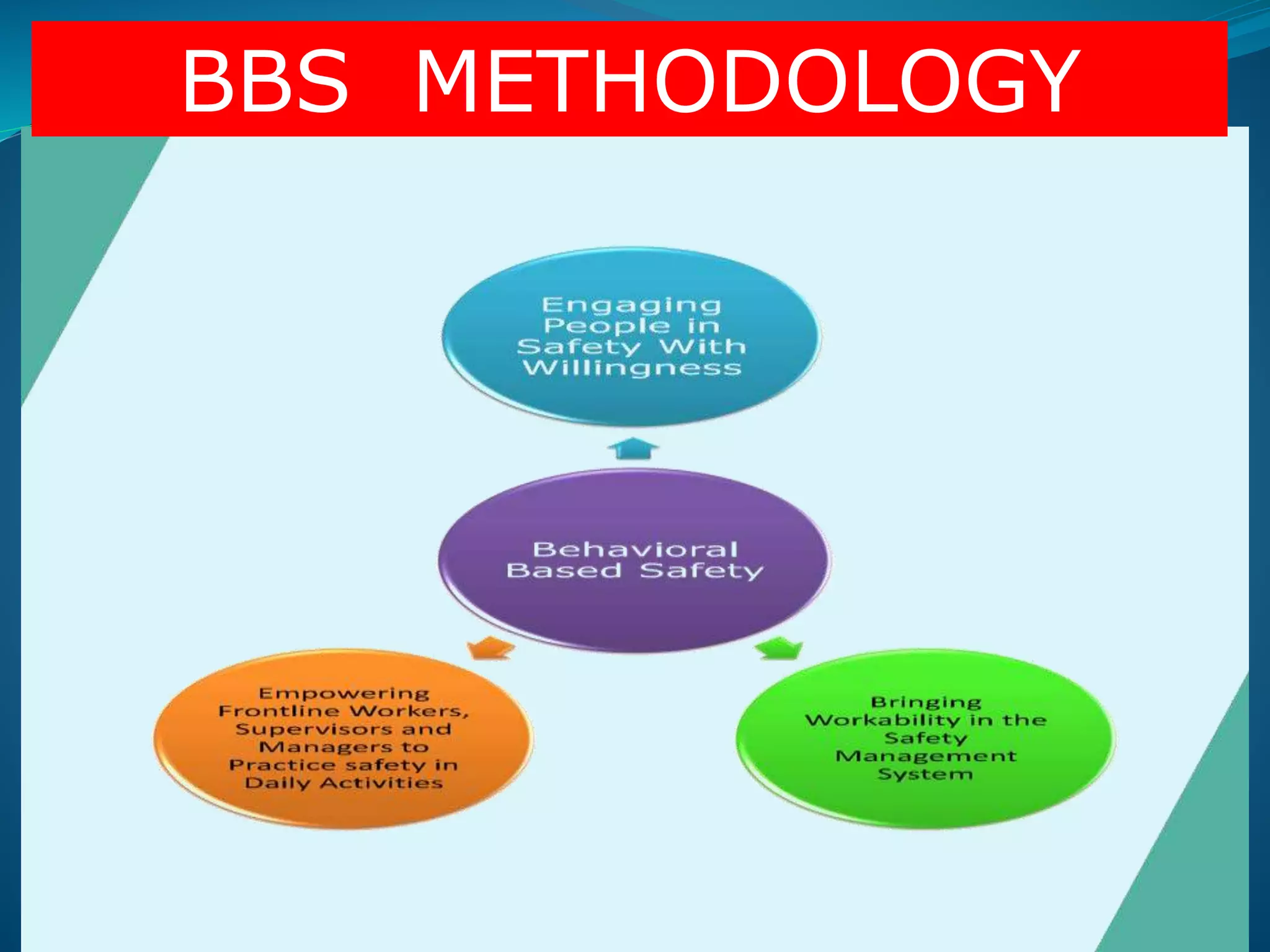
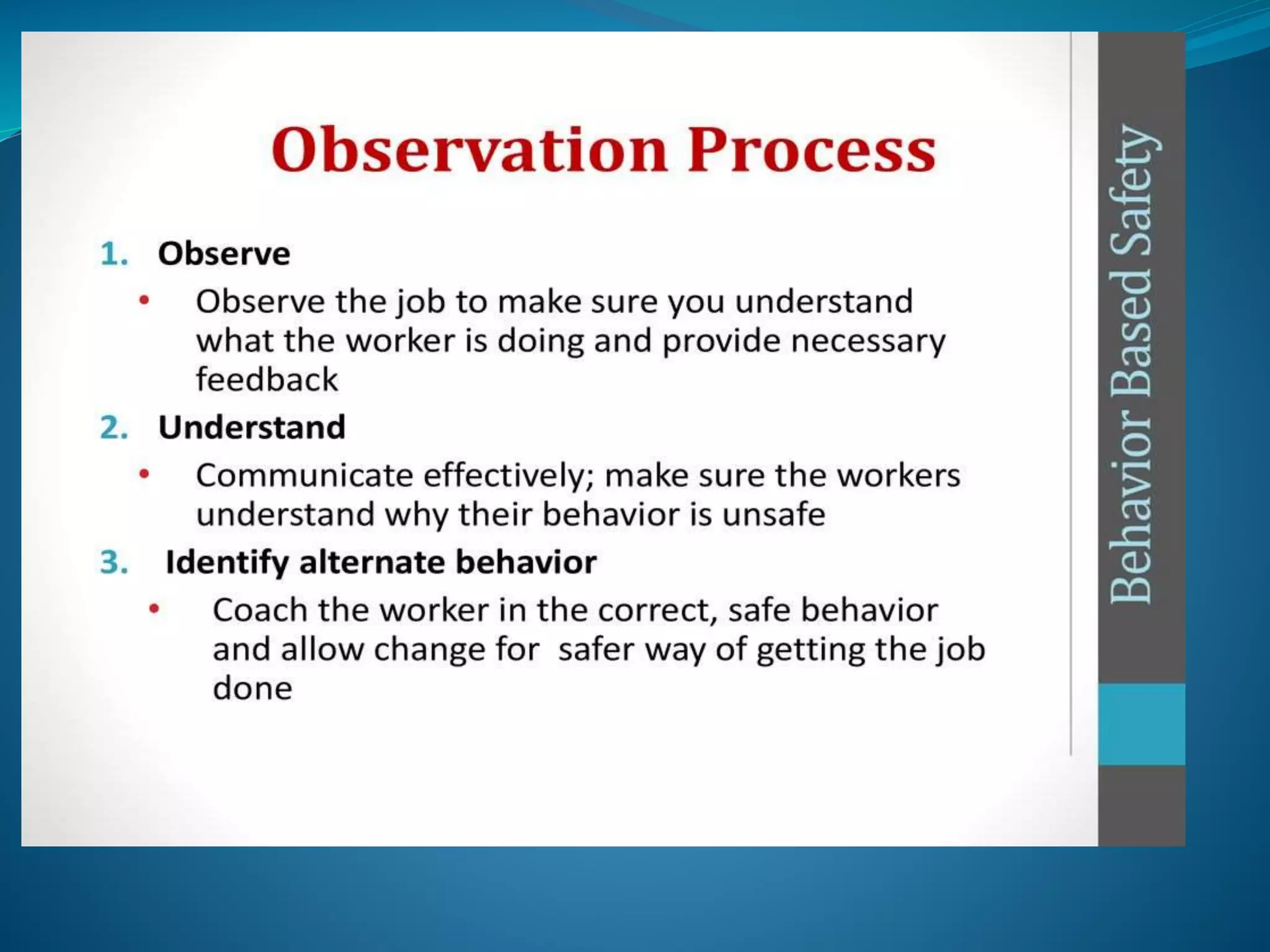
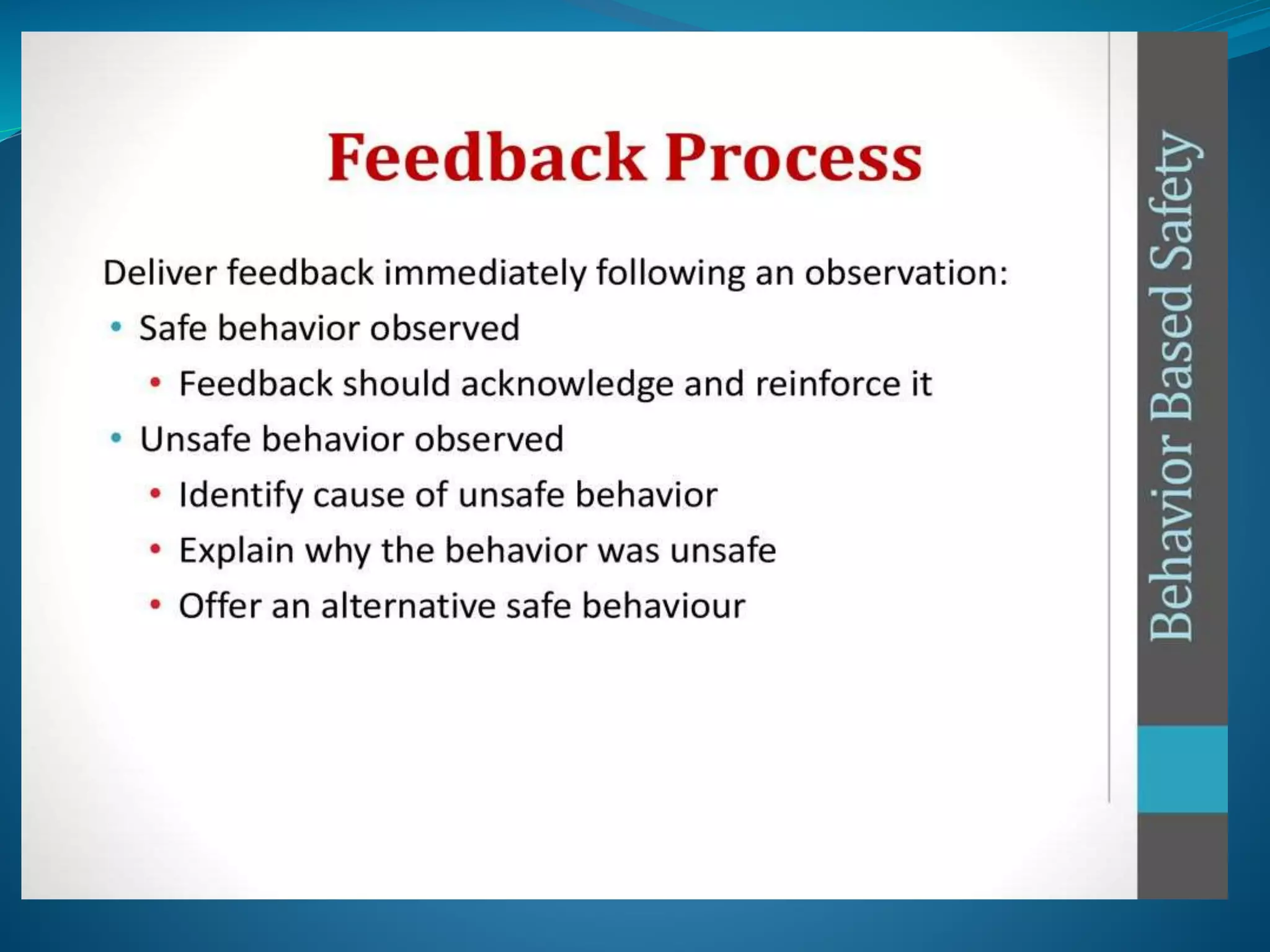
is a process that helps
employees identify and choose a
safe behaviour over an unsafe
one
WHAT EXACTLY IS BEHAVIOR-BASED SAFETY (BBS)?
BEHAVIOR-BASED SAFETY (BBS)
47
BBS vs. Zero Injury
Zero Injury is the GOAL
BBS is the path to reach the GOAL
49
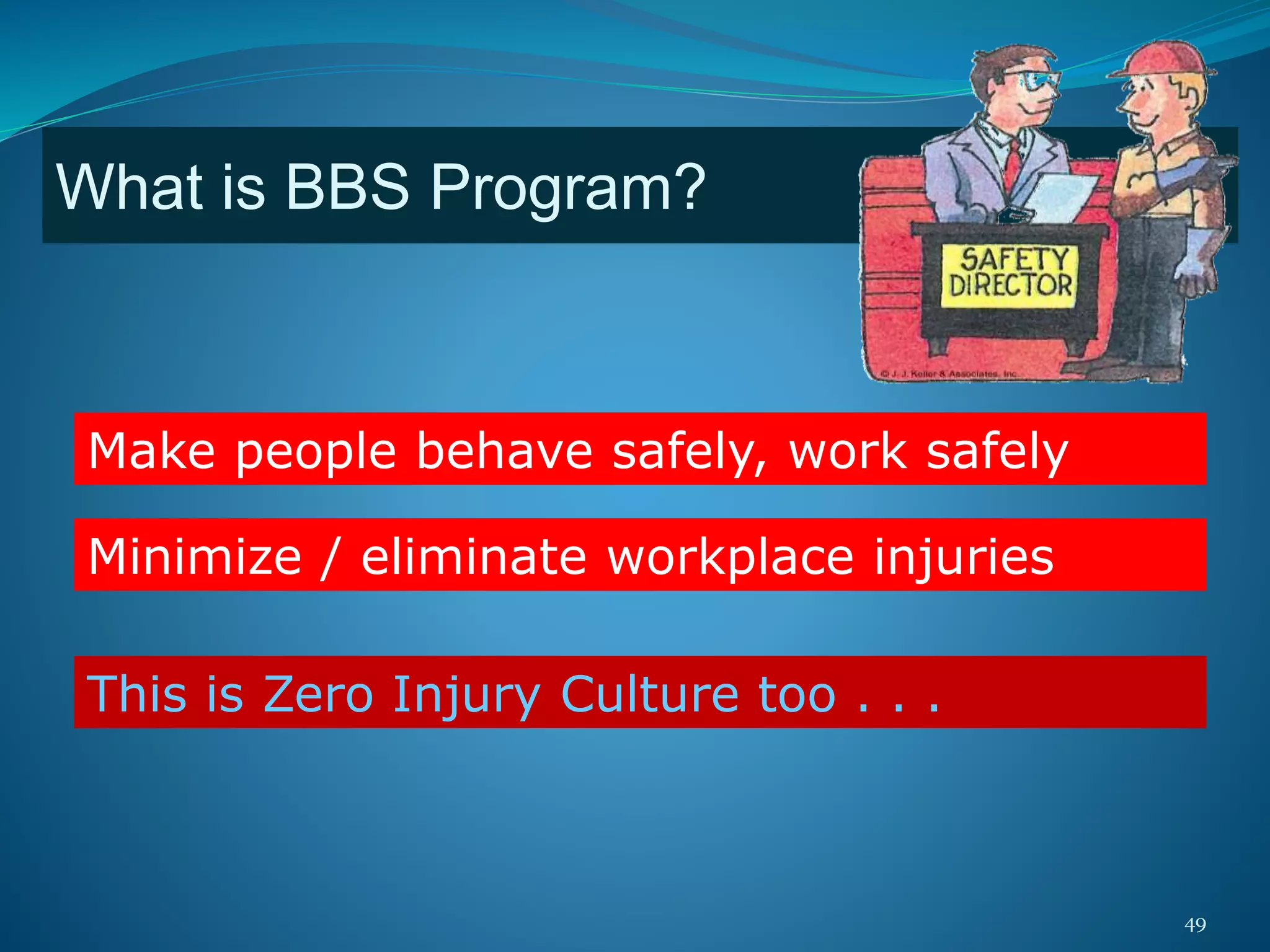
What is BBS Program?
Minimize / eliminate workplace injuries
Make people behave safely, work safely
This is Zero Injury Culture too . . .
Why Behavioral-Based Safety
Management isRight
• Behaviors canbe measured and therefore
managed
• Changing behavior leads to changingattitudes
• Avoids personality conflicts
• Embracesemployee involvement
• Provides valuable feedback
Repeated behaviour
correction
s
attempted
personalized,with
caring approach will
lead eventually to
permanent behaviour
change as well as to
attitude change.
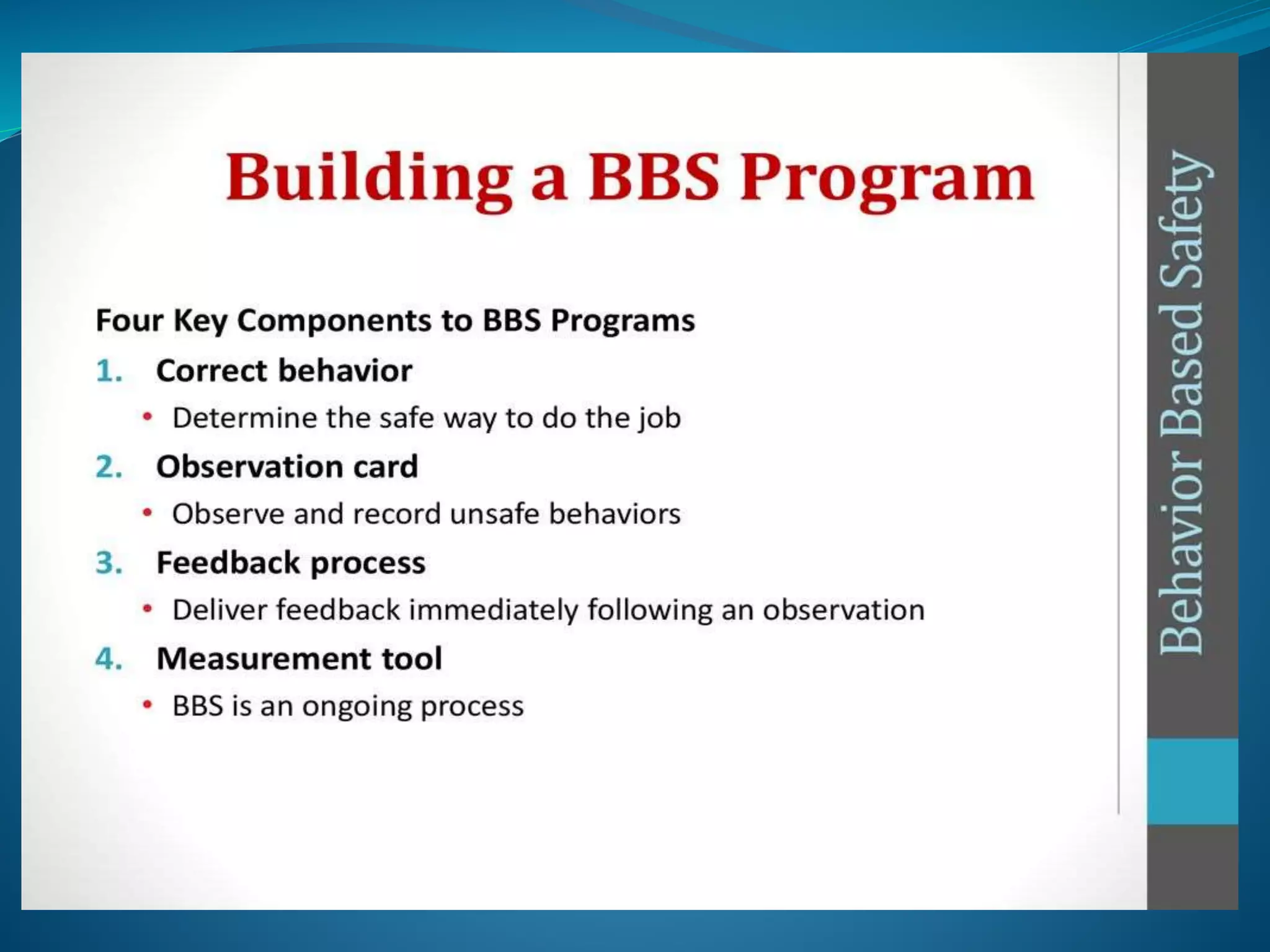
BBS METHODOLOGY
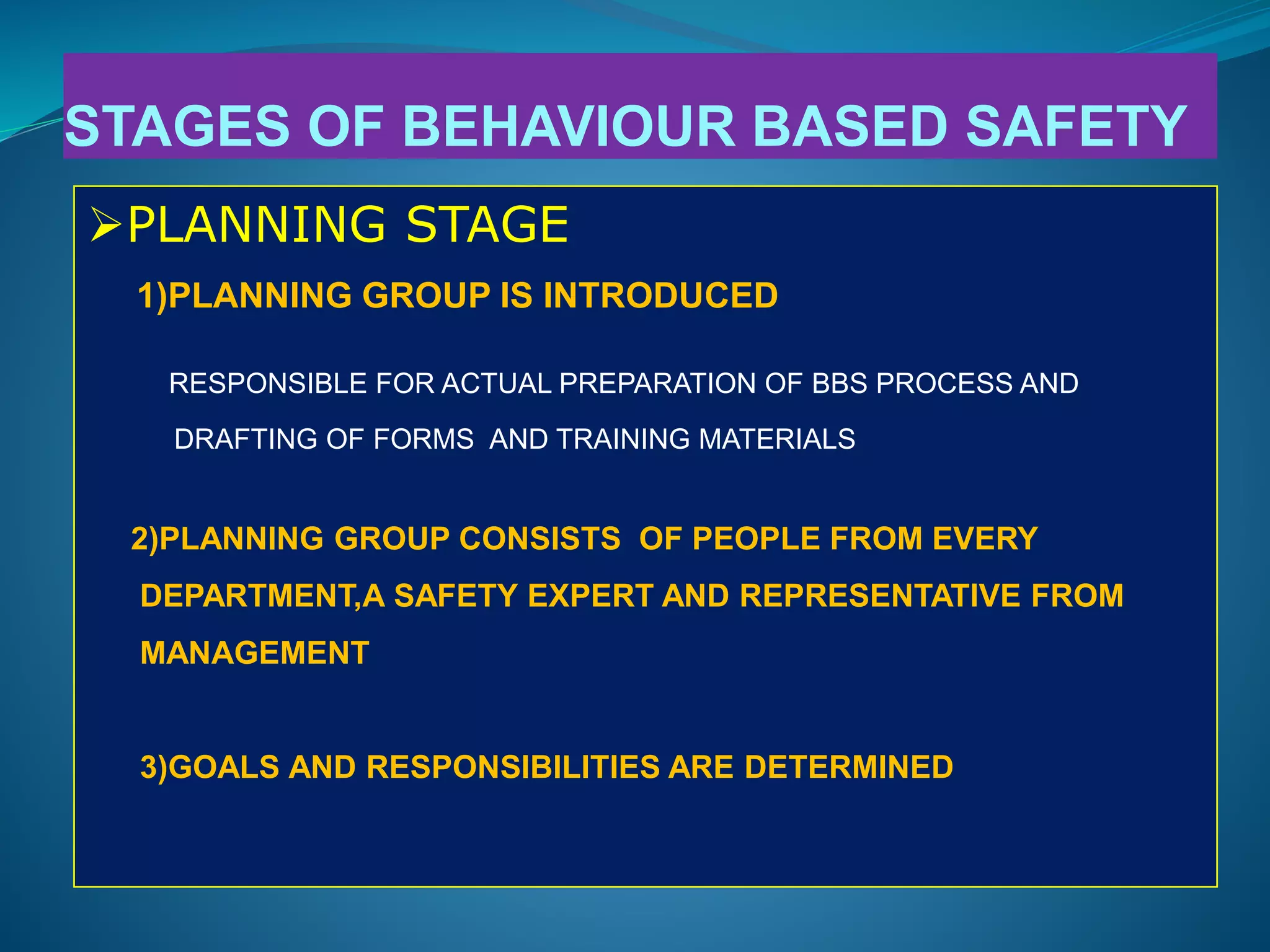
STAGES OF BEHAVIOUR BASED SAFETY
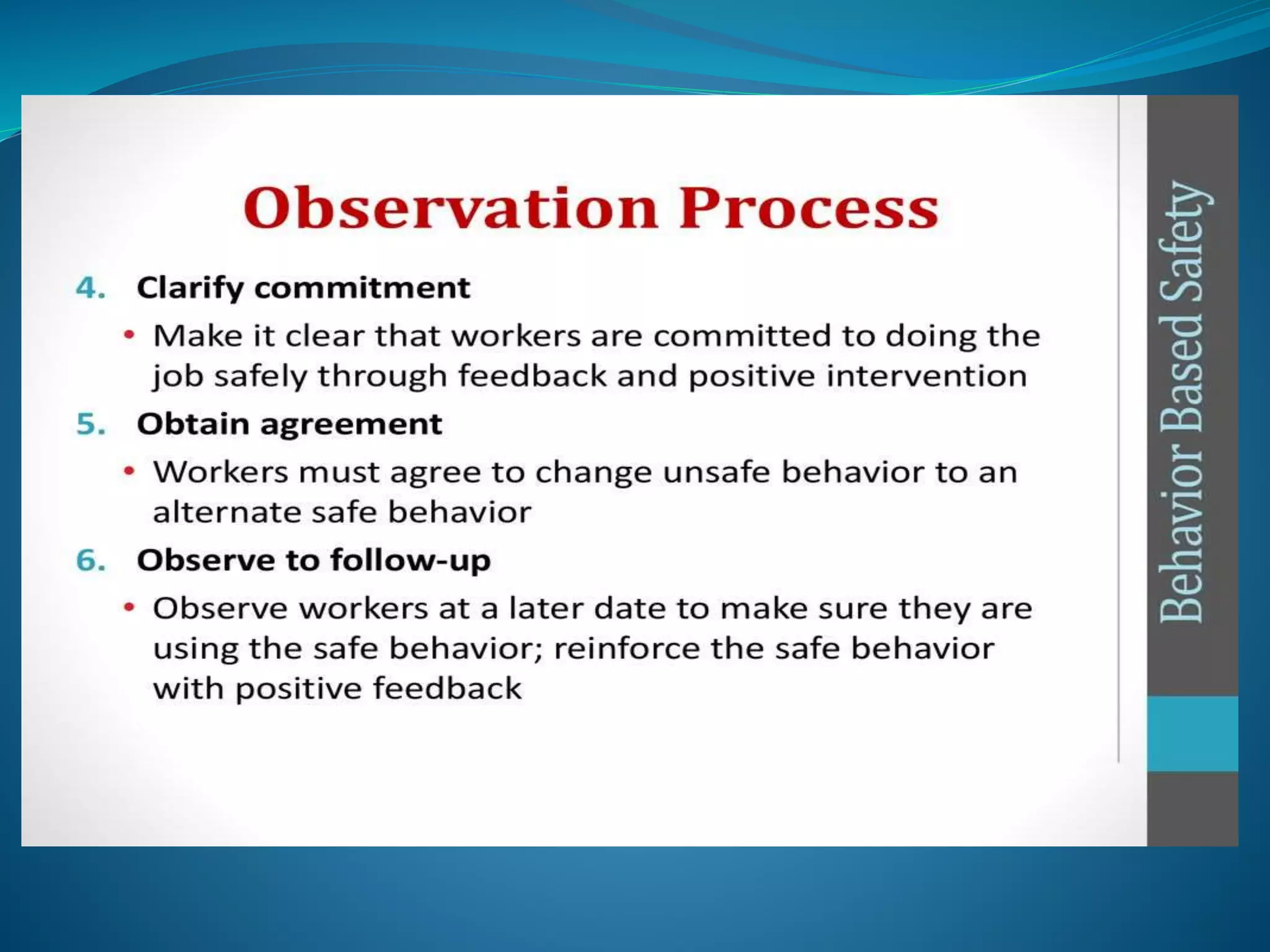
PLANNING STAGE
1)PLANNING GROUP IS INTRODUCED
RESPONSIBLE FOR ACTUAL PREPARATION OF BBS PROCESS AND
DRAFTING OF FORMS AND TRAINING MATERIALS
2)PLANNING GROUP CONSISTS OF PEOPLE FROM EVERY
DEPARTMENT,A SAFETY EXPERT AND REPRESENTATIVE FROM
MANAGEMENT
3)GOALS AND RESPONSIBILITIES ARE DETERMINED
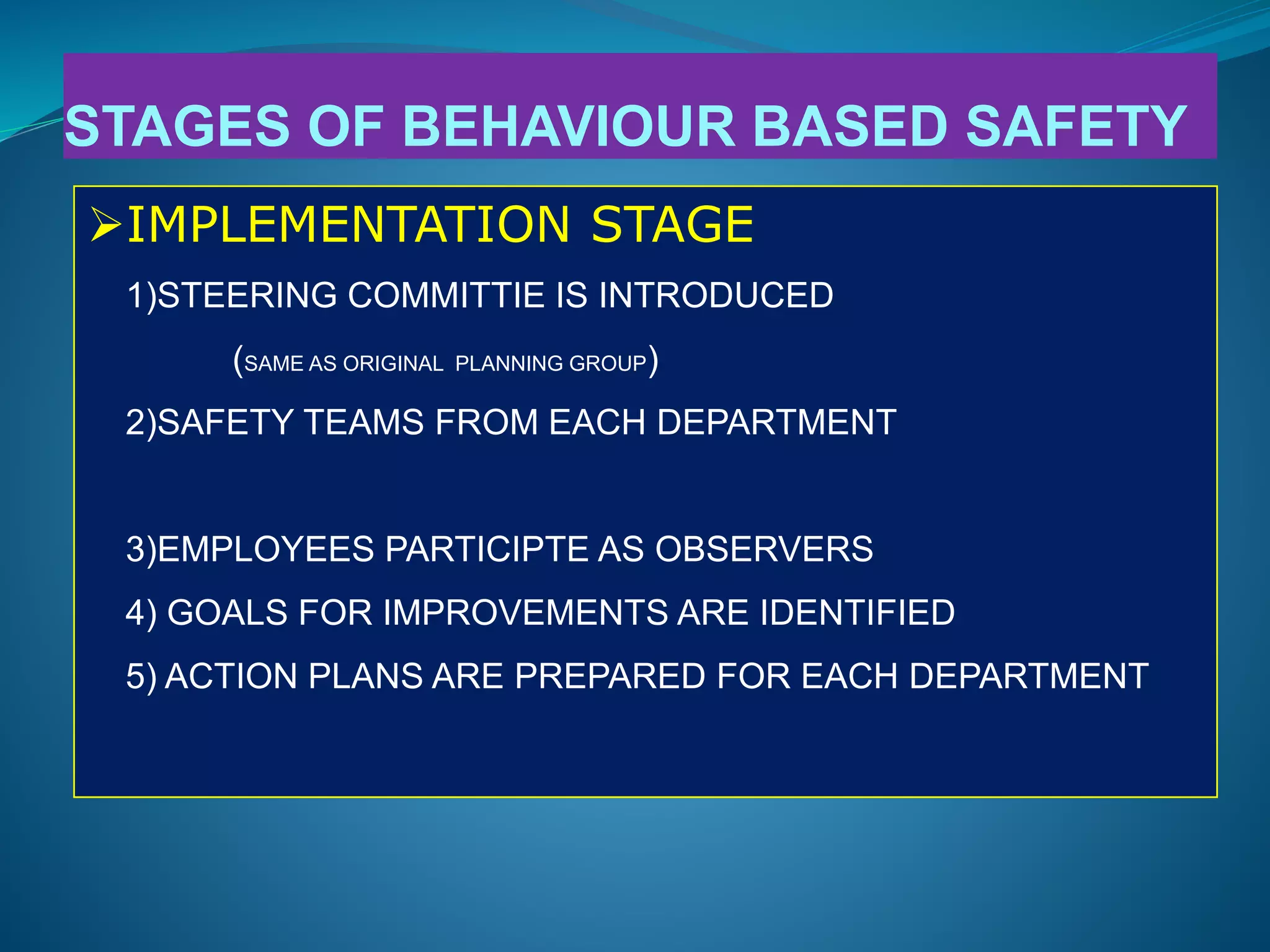
STAGES OF BEHAVIOUR BASED SAFETY
IMPLEMENTATION STAGE
1)STEERING COMMITTIE IS INTRODUCED
(SAME AS ORIGINAL PLANNING GROUP)
2)SAFETY TEAMS FROM EACH DEPARTMENT
3)EMPLOYEES PARTICIPTE AS OBSERVERS
4) GOALS FOR IMPROVEMENTS ARE IDENTIFIED
5) ACTION PLANS ARE PREPARED FOR EACH DEPARTMENT
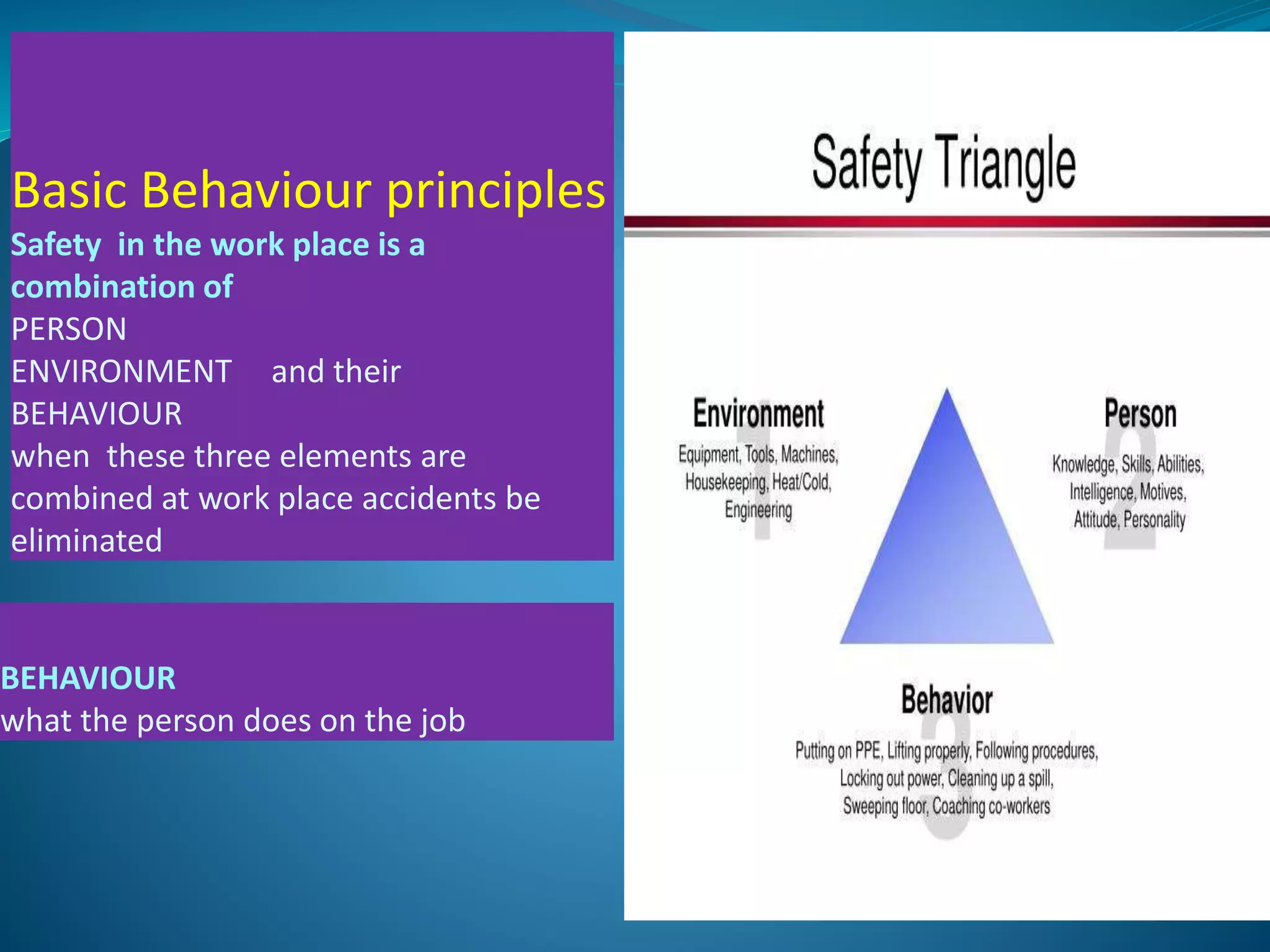
Basic Behaviour principles
Safety in the work place is a
combination of
PERSON
ENVIRONMENT and their
BEHAVIOUR
when these three elements are
combined at work place accidents be
eliminated
BEHAVIOUR
what the person does on the job
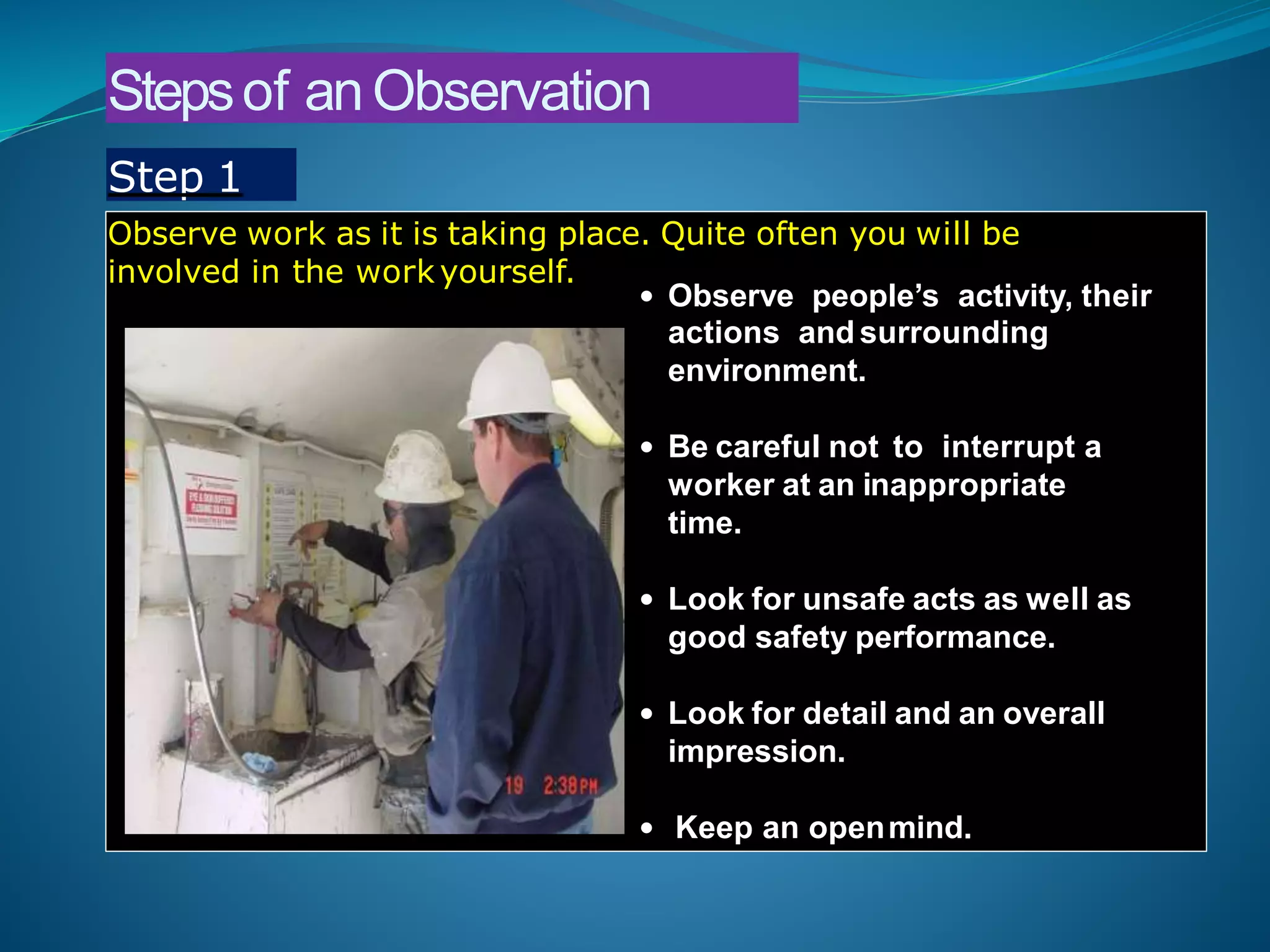
Stepsof anObservation
Observe work as it is taking place. Quite often you will be
involved in the work yourself.
• Observe people’s activity, their
actions and surrounding
environment.
• Be careful not to interrupt a
worker at an inappropriate
time.
• Look for unsafe acts as well as
good safety performance.
• Look for detail and an overall
impression.
• Keep an openmind.
Step 1
Stepsof anObservation
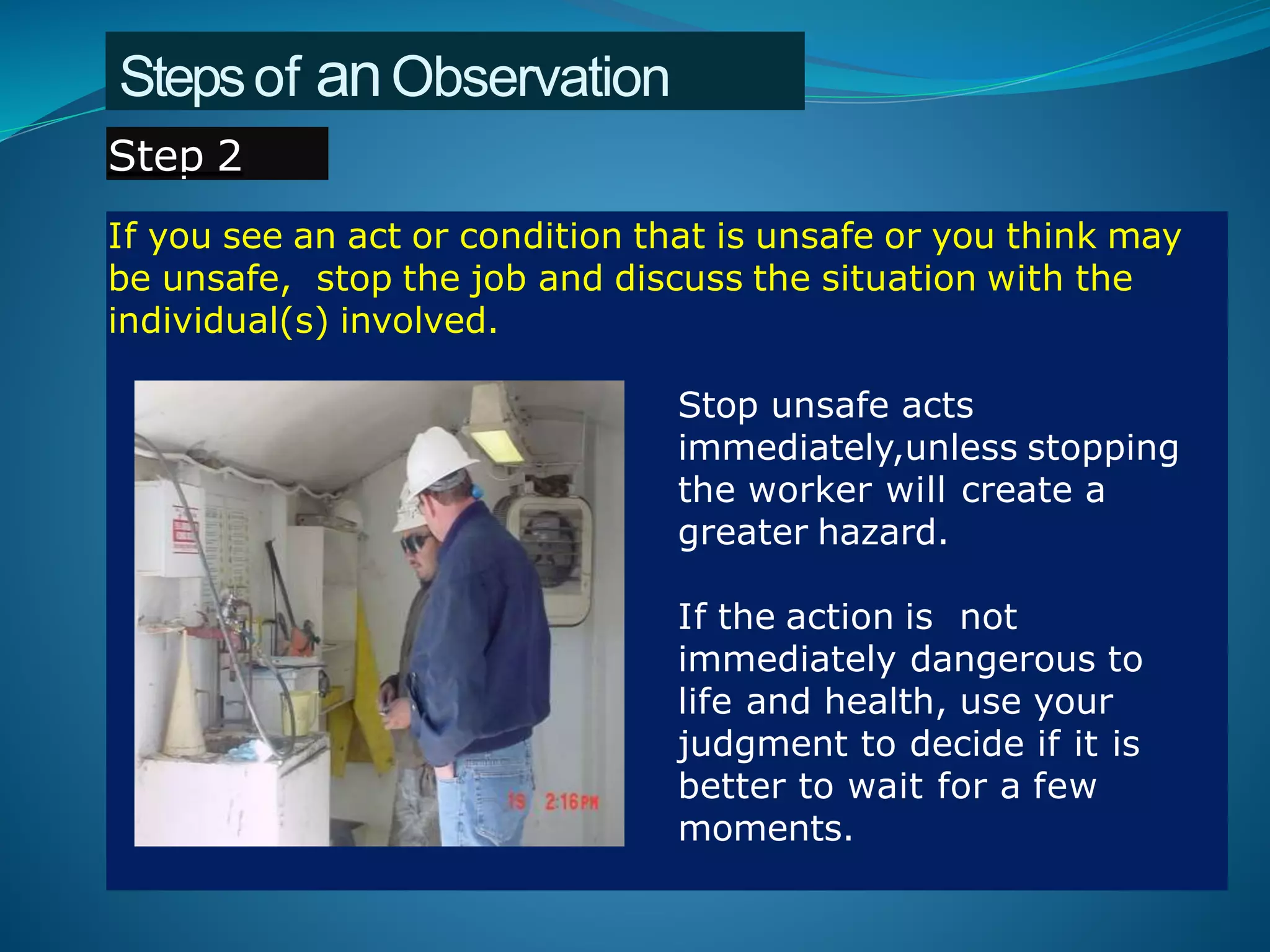
If you see an act or condition that is unsafe or you think may
be unsafe, stop the job and discuss the situation with the
individual(s) involved.
Stop unsafe acts
immediately,unless stopping
the worker will create a
greater hazard.
If the action is not
immediately dangerous to
life and health, use your
judgment to decide if it is
better to wait for a few
moments.
Step 2
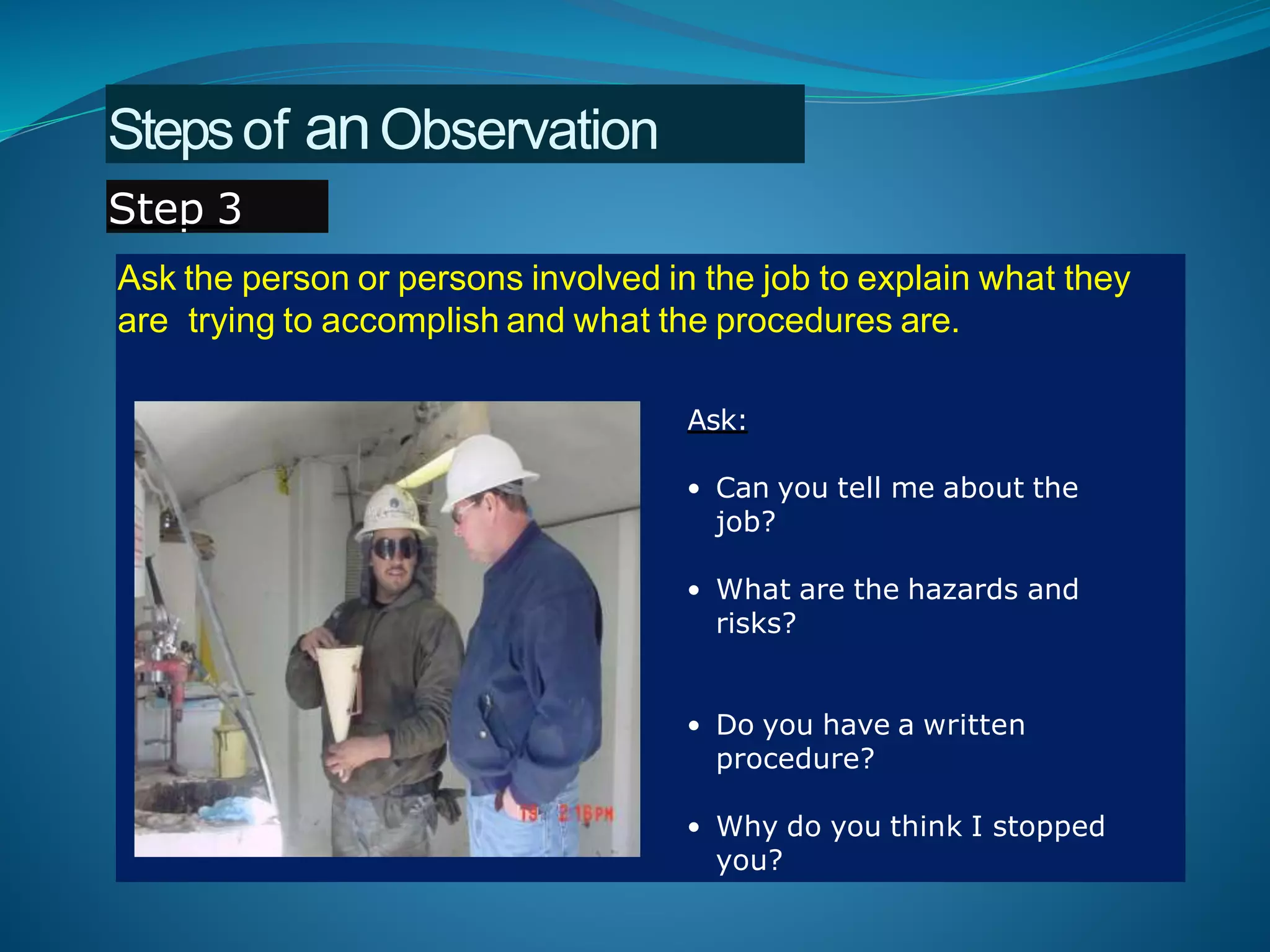
Ask the person or persons involved in the job to explain what they
are trying to accomplish and what the procedures are.
Ask:
• Can you tell me about the
job?
• What are the hazards and
risks?
• Do you have a written
procedure?
• Why do you think I stopped
you?
Stepsof anObservation
Step 3
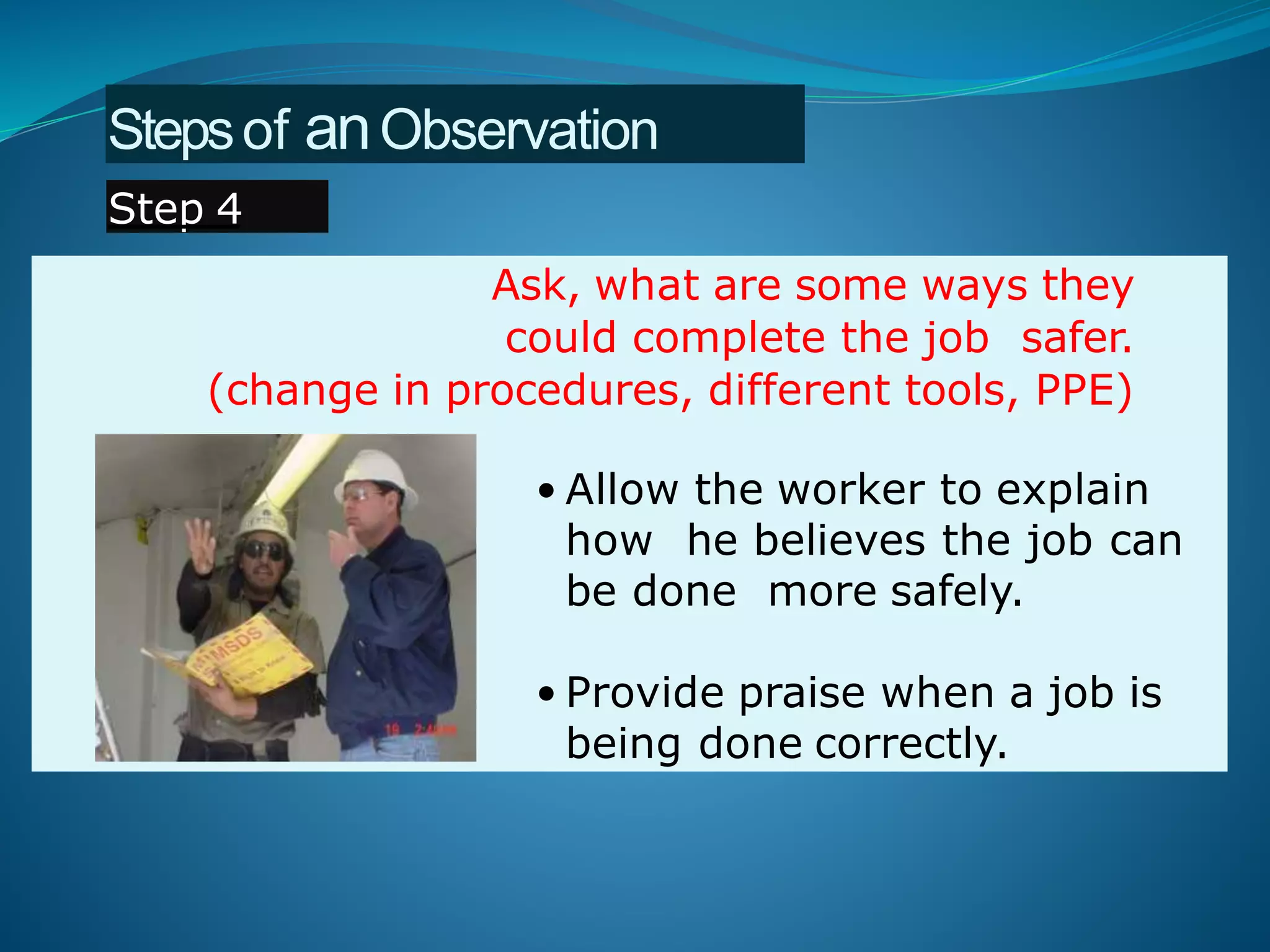
Ask, what are some ways they
could complete the job safer.
(change in procedures, different tools, PPE)
• Allow the worker to explain
how he believes the job can
be done more safely.
• Provide praise when a job is
being done correctly.
Stepsof anObservation
Step 4
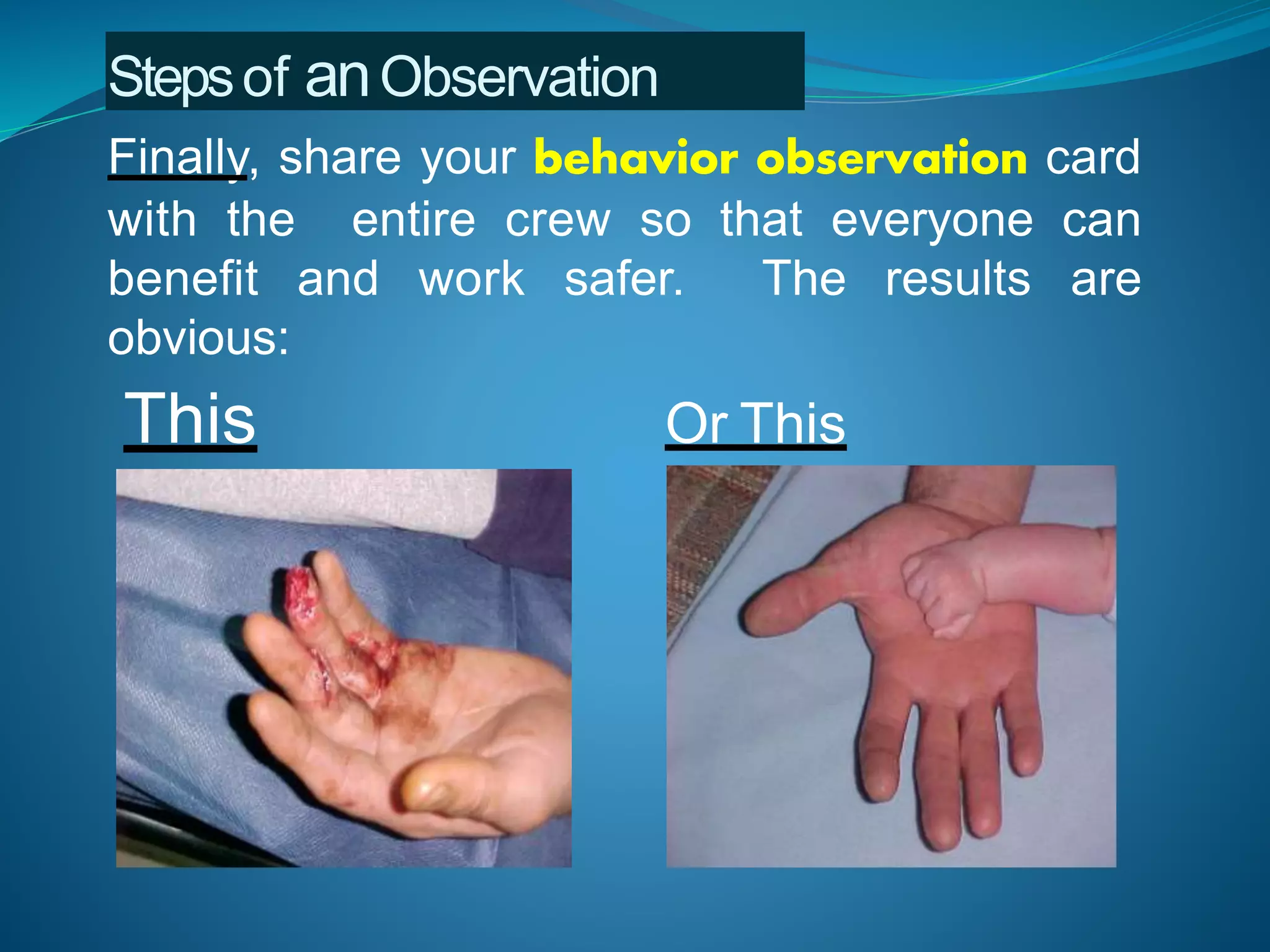
Finally, share your behavior observation card
with the entire crew so that everyone can
benefit and work safer. The results are
obvious:
This Or This
Stepsof anObservation
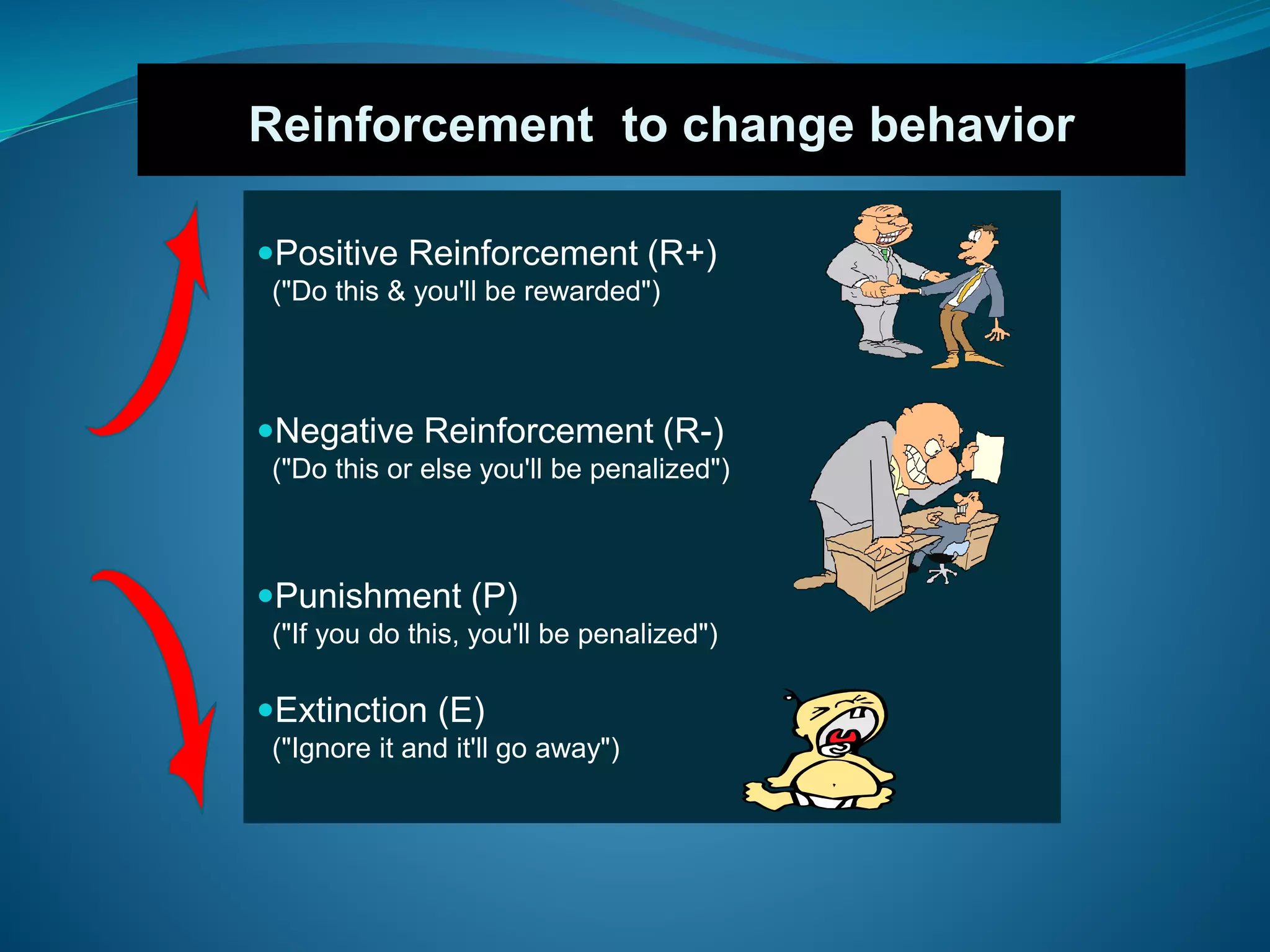
Positive Reinforcement (R+)
("Do this & you'll be rewarded")
Negative Reinforcement (R-)
("Do this or else you'll be penalized")
Punishment (P)
("If you do this, you'll be penalized")
Extinction (E)
("Ignore it and it'll go away")
Reinforcement to change behavior
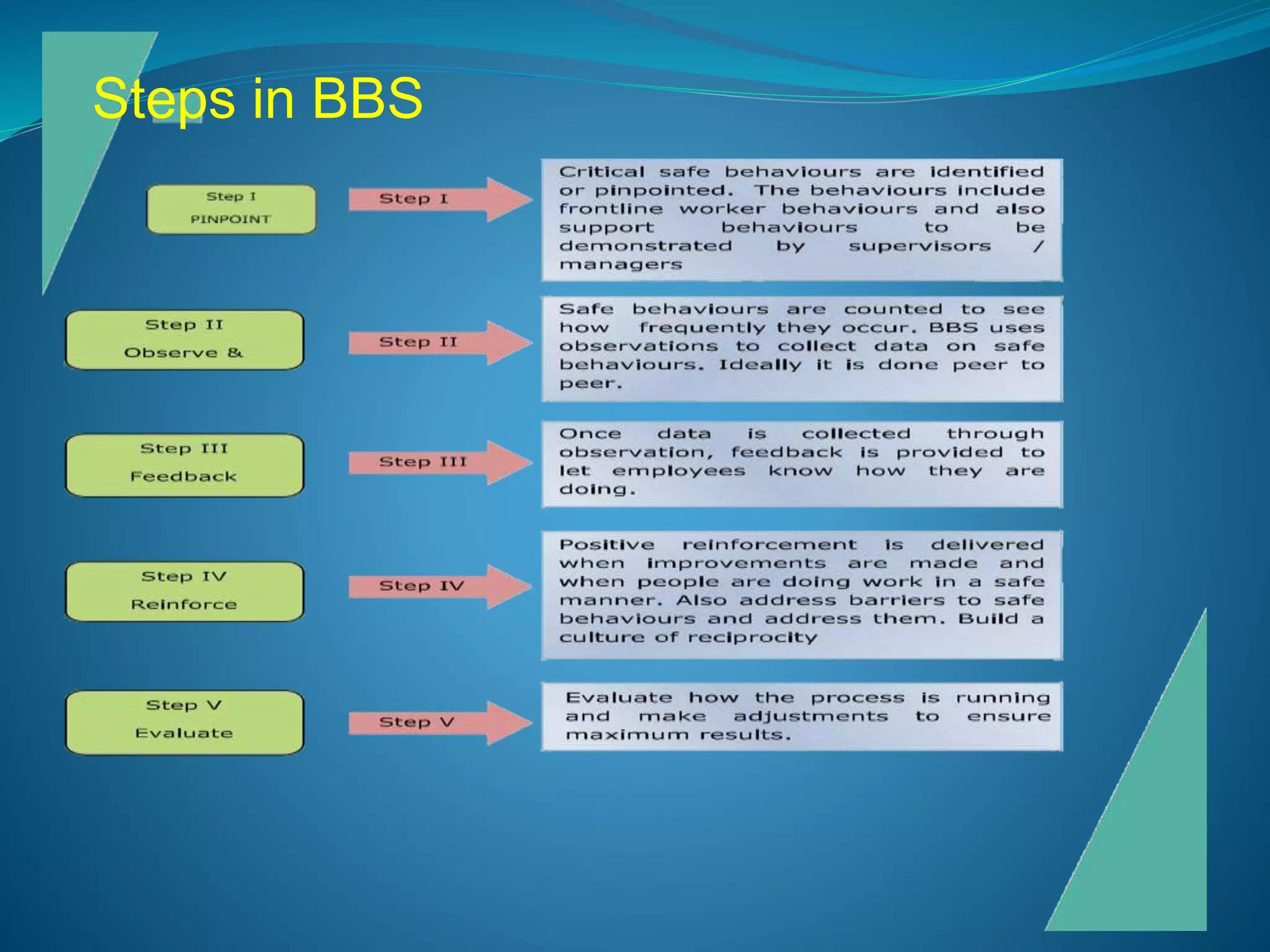
Steps in BBS
 Reduction in workplace injuries
Reduction in medical related costs, including
rehabilitative costs
Fewer work related injuries
Fewer company and governmental accident
investigations
Increased productivity due to reduced injury
related to absenteeism and illness
BENEFITSOF BEHAVIORBASED SAFETY
FINALLY
BBS is not a quick fix.
It is a commitment.
Empower the employee to ensure accidents don’t happen
A good BBS should allow the employees to coach each other
regardless of position in the company.
Effective only good support from management and employee
cooperation
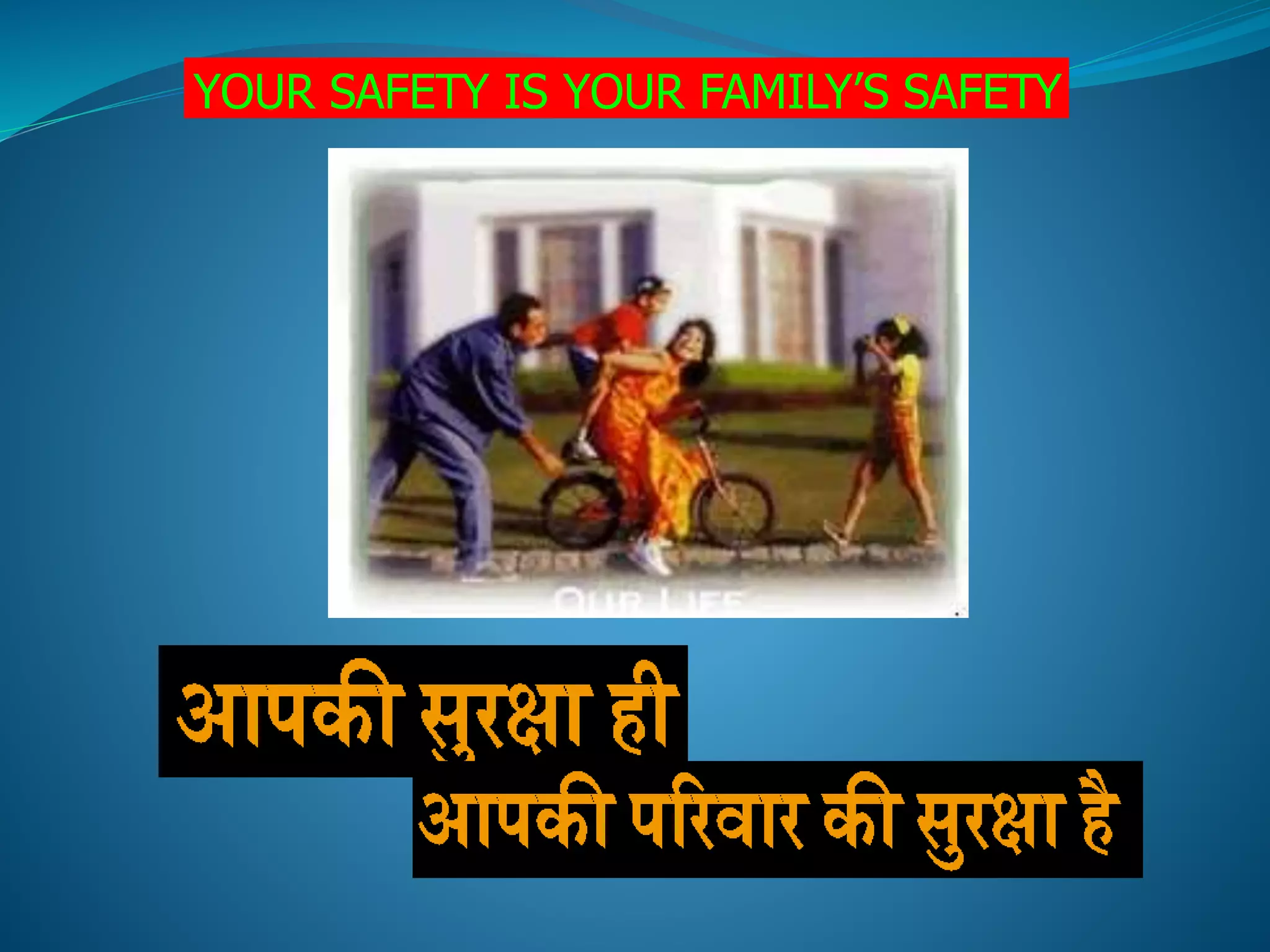
YOUR SAFETY IS YOUR FAMILY’S SAFETY
Safety is really about our
ATTITUDE!
Make 100% Safe Behavior your
choice, both on and off the job
every day!
Thank You
……..

Behaviour based safety and prevention of accidents in industries

  • 1.
    KODANDA PANI VUDUGUNDLA BE,PGDTPPE,MBA(HR),MIE,MBA(Fin),BOE,C.Eng(I) Dy.EE/AP Genco /RTPP 1 Behavior Based Safety (BBS) and Accidents Prevention in industries PRESENTED BY
  • 2.
  • 4.
  • 5.
  • 6.
    Do you wantto go back home Like this ? Or Like this ? Choice is yours Emergency
  • 7.
    Your Safety isa MATTER OF CHOICE NOT CHANCE
  • 11.
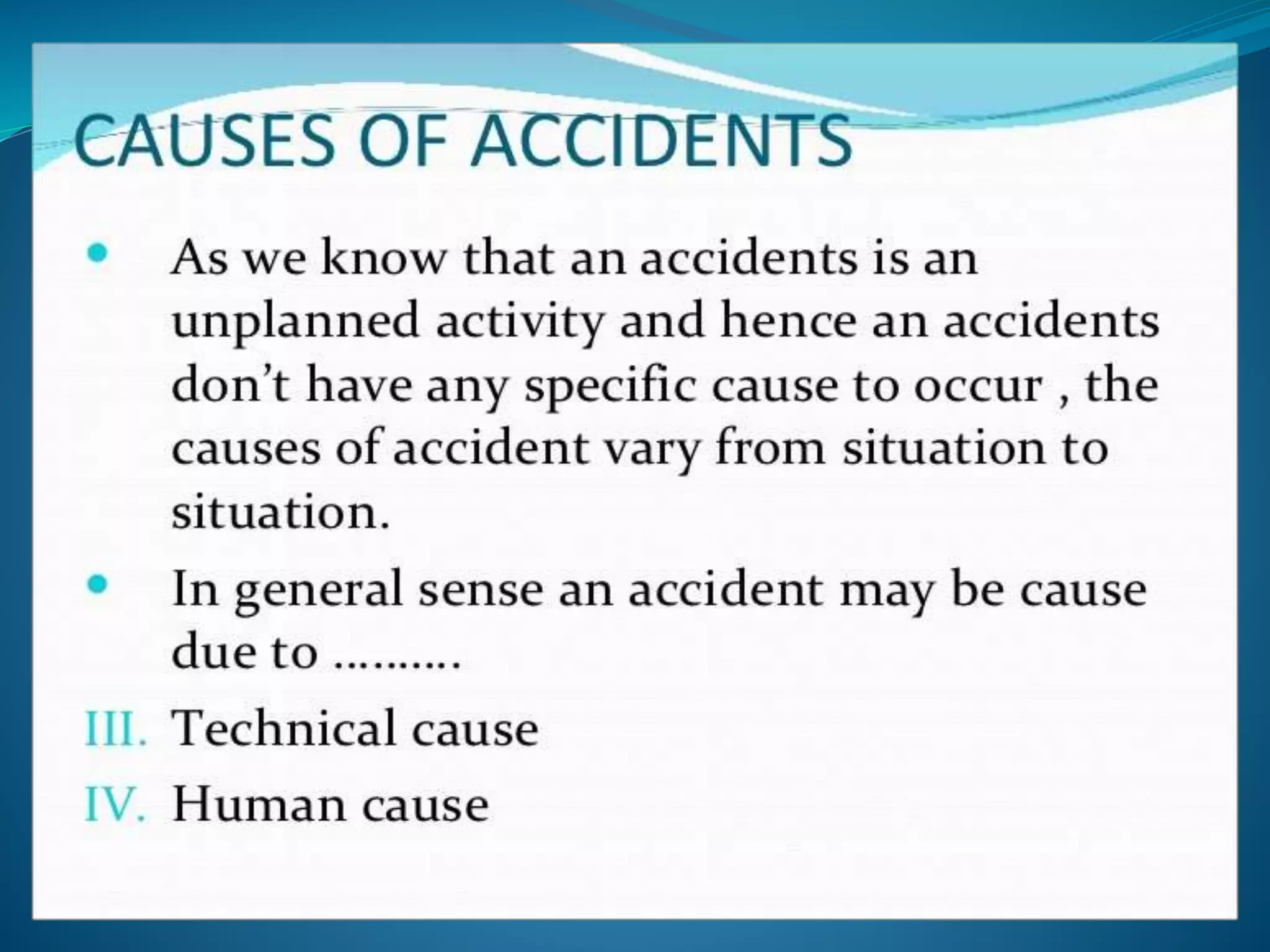
    MECHANICAL FACTORS  UNSAFEMECHANICAL DESIGN AND CONSTRUCTION  INPROPER MACHINE GUARDING  DEFECTIVE DEVICES  AGING EQUIPMENT ENVIRONMENTAL FACTORS  TOO LOW AND HIGH TEMPERATURES TO CAUSE SHIVERING AND SWEATING  TOO HIGH HUMIDITY TO CAUSE FATIGUE AND DROWSINESS  DEFECTIVE ILLUMINATION  POOR HOUSE KEEPING  INADEQUATE REST AND BREAKES BETWEEN WORKING HOURS  INADEQUATE WARNING SYSTEM  CONGESTION WORKPLACE UNSAFE CONDITIONS
  • 13.
     Age &Fatigue.  Defective hearing & eyesight  Operating without clearance  Muscular weakness.  Lack of required skill & knowledge  Horseplay  Intoxication (alcohol, drugs)  Mental worries  Emotional in stability such as jealousy  Improper attitude towards work  Failure to wear PPE PERSONAL FACTORS
  • 15.
    THE VICTIM DEATH PAIN ANDSUFFERING PERMANENT DISABILITY EFFECTS ON FAMILY AND DEPENDANTS LOSS OF EARNINGS EXTRA EXPENDITURE INABILITY TO RESUME OCCUPATION
  • 16.
    Rushing Feel constant pressureto complete tasks as quickly as possible . It’s important to remind employees that working safety is the first priority, even if it means finishing the job later. Four States of Mind that Cause Accidents Frustration is a mindset that almost everybody experiences at some point in life. Employees can get frustrated at poor procedures, bad communication, wrong or insufficient materials and problems at home
  • 17.
    Fatigue Means too tiredphysically and mentally this leads greatly reduces production and performance. To avoid fatigue, employees should not overwork or work overly long hours. Corporations have to set realistic deadlines and attainable goals for employees Complacency Complacency can be the most dangerous mindset that results in an injury or accident. These mindsets can cause or contribute to critical errors which increase the probability of injury
  • 18.
    ✓ EYES NOTON TASK ✓ MIND NOT ON TASK ✓ WALKING INTO THE LINE-OF-FIRE ✓ LOOSING BALANCE/TRACTION/GRIP . . . Which increase the risk of injury FourCriticalErrors
  • 19.
    EyesNotOnTask Not looking atwhere youare going or whatis comingat you. It includes not moving your eyes before moving your body or not beingable to see where youare stepping, where your hands are reaching into,etc.
  • 20.
    MindNotOnTask Not concentrating onthe job, being unaware of dangers or deficiencies, forgettingthings.
  • 21.
    WalkingintoLine-Of-Fire Being conscious of whereyou are or where you are going in relation to the direction of the hazardous energy.
  • 22.
    Balance/Traction/Grip Doing something that couldcause you to lose your balance, traction or grip. It could include not wearing good footwear/gloves,not seeing or thinking about the hazard.
  • 23.
    23 Traditional Safety Management SafetyManagement System Features PPE Emergency Response Policies Procedures Safety Rules Incident Investigation Safety Meetings Audits/Inspections Industrial Hygiene Training Safety Permits Hazard Recognition Fire Protection Engineering Safety Incentives SHE Standards Safety Surveys Job Safety Analysis Purpose: To reduce/eliminate injuries in the workplace. Limited effectiveness, why?
  • 24.
    TRADITIONAL SAFETY MANAGEMENT LIMITEDEFFECTIVENESS WHY? TYPICALLAY A TOP –DOWN APPROCH FOCUS ON REGULATIONS AND PROCEDURES DO AS I SAY …… JUST DO IT NOT UP DATING NEW TRENDS MOTIVATIONAL DEFECTS
  • 25.
    25 Please think .. . How many of the above elements can be directly traced to injury elimination just at the moment the injury is about to occur ? Question: Are injuries totally eliminated?
  • 26.
    26 Injury Statistics .. . . . In INDIA •124 people die at workplace everyday •46575 people are injured •32% contribution to global fatality at work •37% of global burden of occupational injury Question: Are injuries totally eliminated?
  • 27.
    27 To Conclude .. . •Good Safety Management systems exist •Still workplace is injury prone & not safe •Injury although declined, still persists WHAT IS MISSING?
  • 28.
    Why Safety ProgramsDo Not Work: • Safety is enforced & its not a habit or value! • Safety is not managed in the same manner as production, quality, and cost issues! • Safety is not driven through continuous improvement! • Lack of top management commitment!
  • 29.
    29 Scientifically proven that. . . In 1951, Dr. Heinrich claimed that more than 90% of injuries were caused by UNSAFE BEHAVIOURAL ACTS DuPont proved by research that: Injury Causes Percent Injuries due to Unsafe Acts / Behavior 76 Injuries due to combination of Unsafe Behavior & Conditions 20 Injuries due Unsafe Conditions 4
  • 30.
    30 DOE, US Govt.found out that . . . Personnel errors (Unsafe Acts) was present in 77% of Accidents 0 20 40 60 80 100 Equipment Procedure Personnel Error Design Training Management Others Percent by Cause (1999-2001)
  • 31.
    Most accidents arecaused by unsafe behavior acts • Even you work hard to create a safe workplace and eliminate unsafe conditions for your workers, Rate of accidents are not minimised. • If you examined your accident records for the past few years, you'd likely find that the root-cause of most of the accidents was unsafe acts rather than unsafe conditions. • They'd taken shortcuts. • They'd taken risks. They'd developed an "It won't happen to me" attitude.
  • 32.
    TYPICAL UNSAFE BEHAVIOUR ATWORK PLACE TAKING SHORTCUTS BEING OVERCONFIDENT UNDERTAKING A TASK WITHOUT COMPLETE INSTRUCTIONS IMPROPER ATTITUDES IGNORING OR OVERRIDING SAFETY PROCEDURES MENTAL DISTRACTIONS FAILURE TO PLAN Improper Attitude I’ve Never Been Hurt Before
  • 33.
    WHY UNSAFE BEHAVIOUR COMFORT JOB DISSATISFACTION SAVING TIME CONVINIENCE RECOGNITION CELEBRATING PRODUCTION OVER SAFETY
  • 34.
  • 35.
  • 36.
  • 37.
  • 38.
  • 39.
    39 How to changeunsafe behavior to safe behavior By adding BEHAVOIUR based SAFETY SYSTEM TO THE TRDITIONAL SAFETY MODEL
  • 40.
    40 What do wedo now? Safety Activities Fewer Unsafe Acts Fewer Accidents Traditional Model BBS Program+
  • 42.
    Behavior -An observable action -Externallyfocused Attitude -Deep-seeded feelings or emotions -Internally focused DEFINITIONS
  • 44.
    Human behavior isboth: therefore Behavior can be managed ! it is observable it is measureable
  • 45.
    ATTITUDES are inside aperson’shead -therefore they are not observable ormeasurable however Attitudes can be changedby changing behaviors
  • 46.
    is a processthat helps employees identify and choose a safe behaviour over an unsafe one WHAT EXACTLY IS BEHAVIOR-BASED SAFETY (BBS)? BEHAVIOR-BASED SAFETY (BBS)
  • 47.
    47 BBS vs. ZeroInjury Zero Injury is the GOAL BBS is the path to reach the GOAL
  • 49.
    49 What is BBSProgram? Minimize / eliminate workplace injuries Make people behave safely, work safely This is Zero Injury Culture too . . .
  • 50.
    Why Behavioral-Based Safety ManagementisRight • Behaviors canbe measured and therefore managed • Changing behavior leads to changingattitudes • Avoids personality conflicts • Embracesemployee involvement • Provides valuable feedback
  • 51.
    Repeated behaviour correction s attempted personalized,with caring approachwill lead eventually to permanent behaviour change as well as to attitude change.
  • 52.
  • 53.
    STAGES OF BEHAVIOURBASED SAFETY PLANNING STAGE 1)PLANNING GROUP IS INTRODUCED RESPONSIBLE FOR ACTUAL PREPARATION OF BBS PROCESS AND DRAFTING OF FORMS AND TRAINING MATERIALS 2)PLANNING GROUP CONSISTS OF PEOPLE FROM EVERY DEPARTMENT,A SAFETY EXPERT AND REPRESENTATIVE FROM MANAGEMENT 3)GOALS AND RESPONSIBILITIES ARE DETERMINED
  • 54.
    STAGES OF BEHAVIOURBASED SAFETY IMPLEMENTATION STAGE 1)STEERING COMMITTIE IS INTRODUCED (SAME AS ORIGINAL PLANNING GROUP) 2)SAFETY TEAMS FROM EACH DEPARTMENT 3)EMPLOYEES PARTICIPTE AS OBSERVERS 4) GOALS FOR IMPROVEMENTS ARE IDENTIFIED 5) ACTION PLANS ARE PREPARED FOR EACH DEPARTMENT
  • 55.
    Basic Behaviour principles Safetyin the work place is a combination of PERSON ENVIRONMENT and their BEHAVIOUR when these three elements are combined at work place accidents be eliminated BEHAVIOUR what the person does on the job
  • 59.
    Stepsof anObservation Observe workas it is taking place. Quite often you will be involved in the work yourself. • Observe people’s activity, their actions and surrounding environment. • Be careful not to interrupt a worker at an inappropriate time. • Look for unsafe acts as well as good safety performance. • Look for detail and an overall impression. • Keep an openmind. Step 1
  • 60.
    Stepsof anObservation If yousee an act or condition that is unsafe or you think may be unsafe, stop the job and discuss the situation with the individual(s) involved. Stop unsafe acts immediately,unless stopping the worker will create a greater hazard. If the action is not immediately dangerous to life and health, use your judgment to decide if it is better to wait for a few moments. Step 2
  • 61.
    Ask the personor persons involved in the job to explain what they are trying to accomplish and what the procedures are. Ask: • Can you tell me about the job? • What are the hazards and risks? • Do you have a written procedure? • Why do you think I stopped you? Stepsof anObservation Step 3
  • 62.
    Ask, what aresome ways they could complete the job safer. (change in procedures, different tools, PPE) • Allow the worker to explain how he believes the job can be done more safely. • Provide praise when a job is being done correctly. Stepsof anObservation Step 4
  • 63.
    Finally, share yourbehavior observation card with the entire crew so that everyone can benefit and work safer. The results are obvious: This Or This Stepsof anObservation
  • 65.
    Positive Reinforcement (R+) ("Dothis & you'll be rewarded") Negative Reinforcement (R-) ("Do this or else you'll be penalized") Punishment (P) ("If you do this, you'll be penalized") Extinction (E) ("Ignore it and it'll go away") Reinforcement to change behavior
  • 67.
  • 68.
     Reduction inworkplace injuries Reduction in medical related costs, including rehabilitative costs Fewer work related injuries Fewer company and governmental accident investigations Increased productivity due to reduced injury related to absenteeism and illness BENEFITSOF BEHAVIORBASED SAFETY
  • 69.
    FINALLY BBS is nota quick fix. It is a commitment. Empower the employee to ensure accidents don’t happen A good BBS should allow the employees to coach each other regardless of position in the company. Effective only good support from management and employee cooperation
  • 70.
    YOUR SAFETY ISYOUR FAMILY’S SAFETY
  • 71.
    Safety is reallyabout our ATTITUDE! Make 100% Safe Behavior your choice, both on and off the job every day!
  • 72.

Editor's Notes