Downloaded 133 times








This document discusses the basics of tool steels, including their types and applications. It outlines the four key factors for successful tool steel application: tool design, fabrication accuracy, steel selection, and heat treatment. It then describes various types of tool steel grouped by their intended application, such as high speed steels, hot work steels, cold work steels, shock resisting steels, and mold steels. For each group, it provides details on composition, hardness, uses, and heat treatment considerations.
Overview of tool steels, their types and applications.
Essential factors: Tool design, fabrication accuracy, steel selection, and heat treatment.
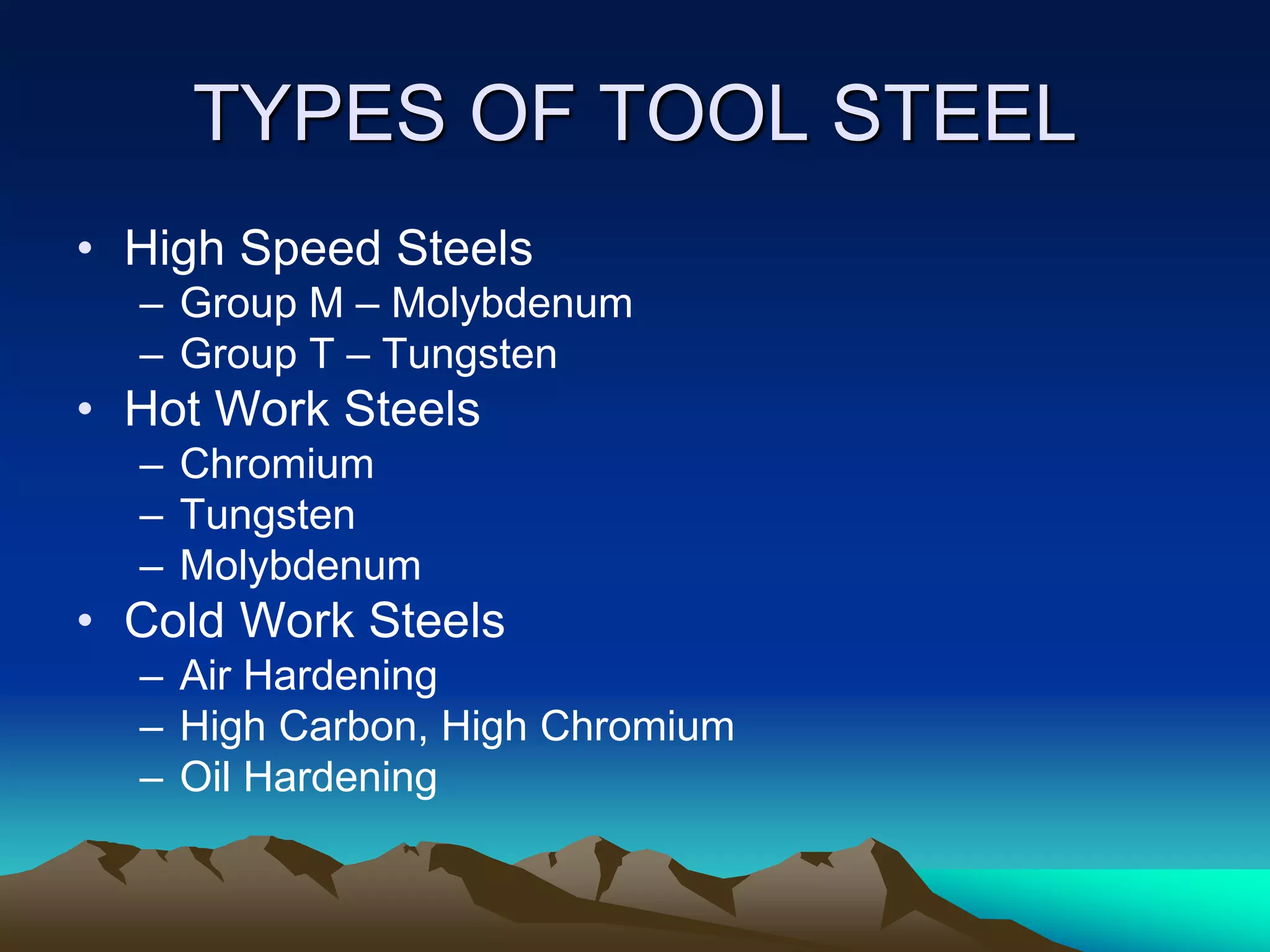
Various tool steels include high speed, hot work, cold work, shock resisting, low alloy, mold, and water hardening steels.
High Speed Steel Group M: Used widely, superior toughness, and specific hardness range.
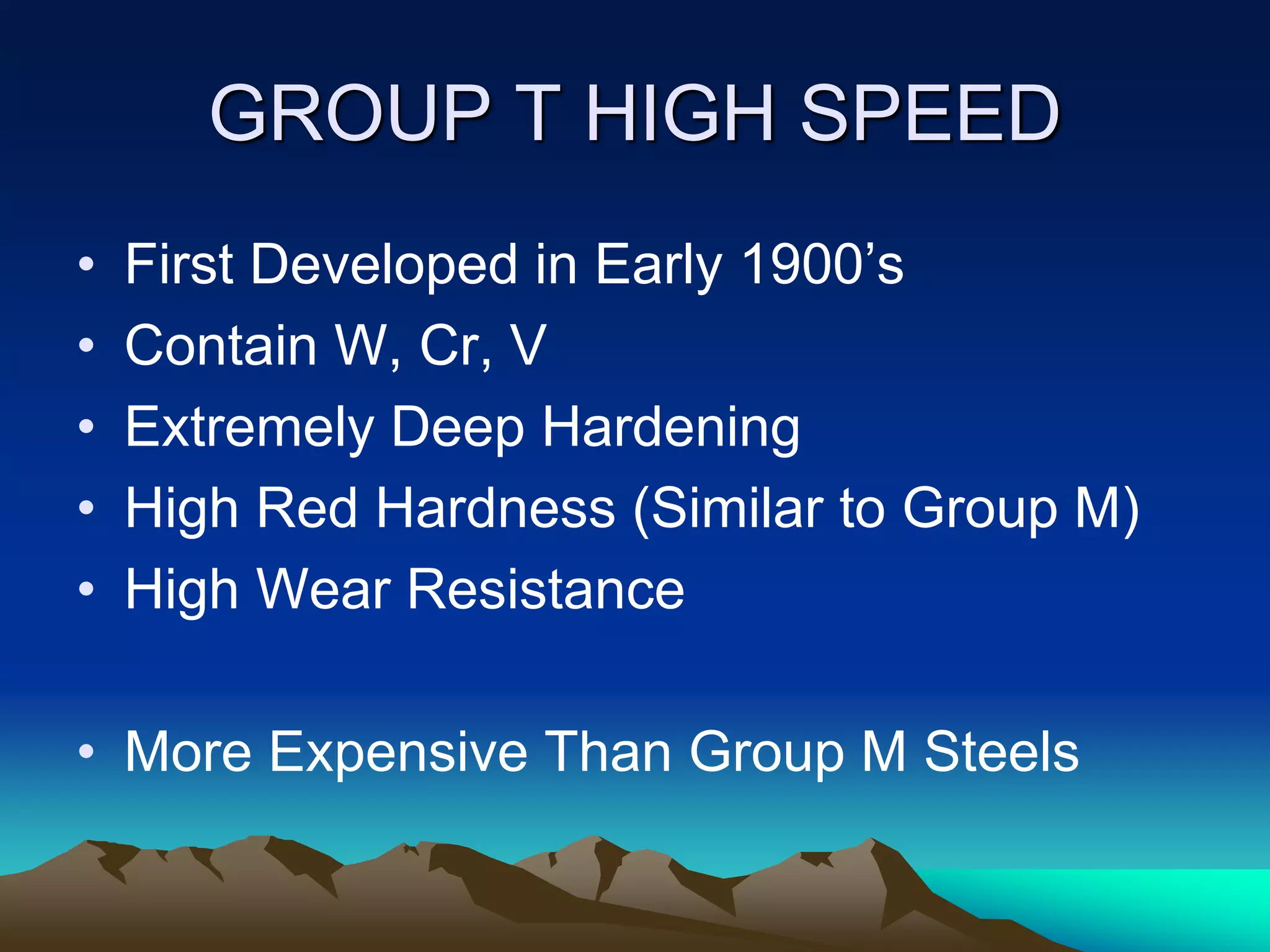
High Speed Steel Group T: Early 1900s origin, notable for deep hardening and wear resistance.
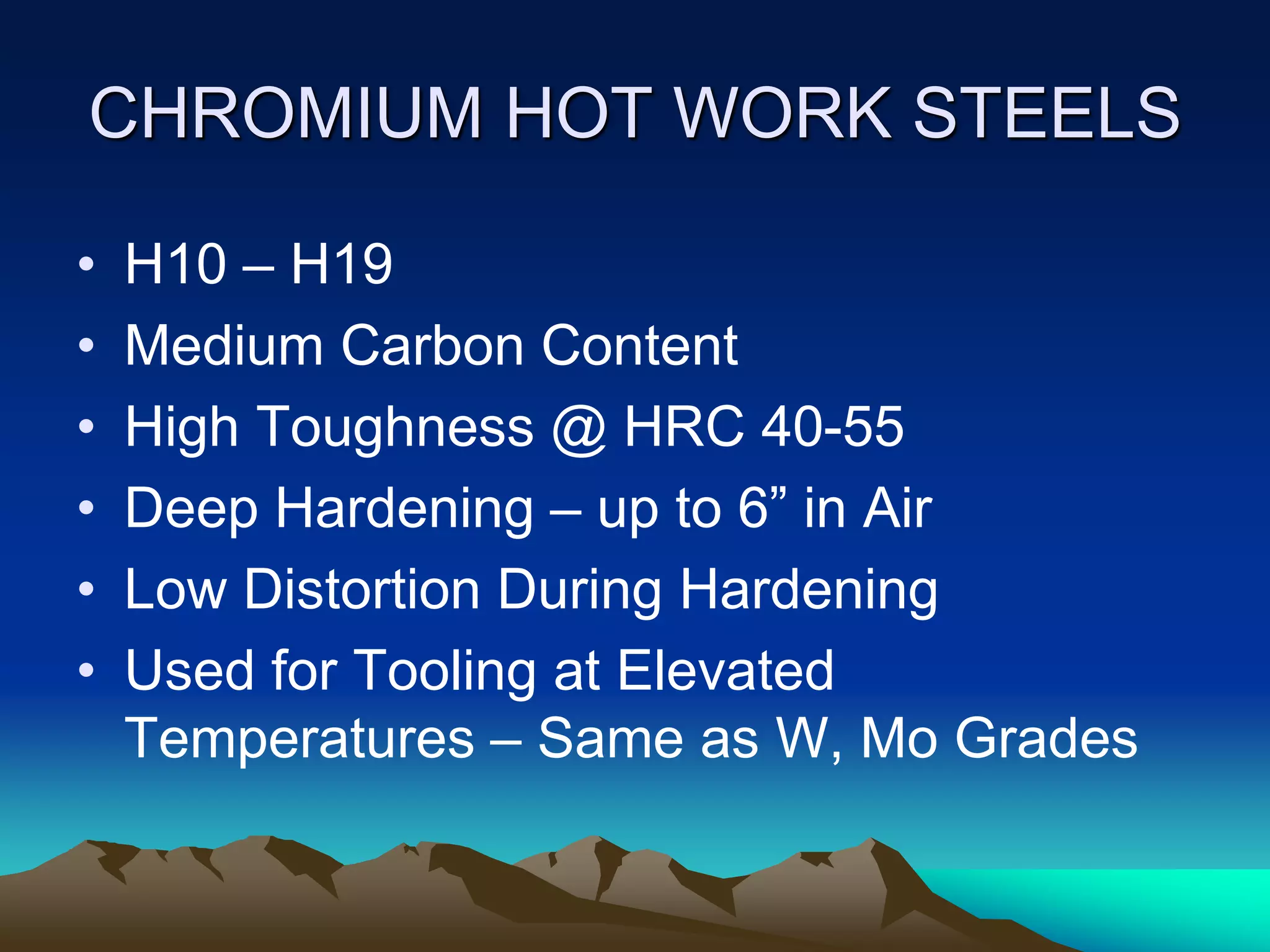
Characteristics of chromium hot work steels, suitable for tooling at high temperatures.
Properties of tungsten hot work steels, prone to brittleness but resistant to softening.
Molybdenum hot work steel (H42): Low carbon, greater toughness, cost-effective.
Air hardening properties: minimal distortion and use in shear knives and dies.
Group D cold work steels: high wear resistance, used for long-run dies.
Group O cold work steels: high carbon, high wear resistance, used for dies.
Group S steels: medium carbon, high toughness, used for chisels and structural applications.
Group L steels: oil quenched, with specific hardness, used for machine parts.
Group P mold steels: low carbon, used for die casting and plastic molds.
Group W water hardening steels: used in various applications like cold heading.
Heat treatment for tool steels: effects of heating rates and quench media.
References for further reading on tool steels and heat treatment.


