Aluminium Alloys – Overview
Naveed Akhtar
Contents
1. Introduction
2. Chemistry
3. Classification
4. Applications
5. Manufacturing
6. Heat treatment
7. Common Defects
8. Conclusions
2
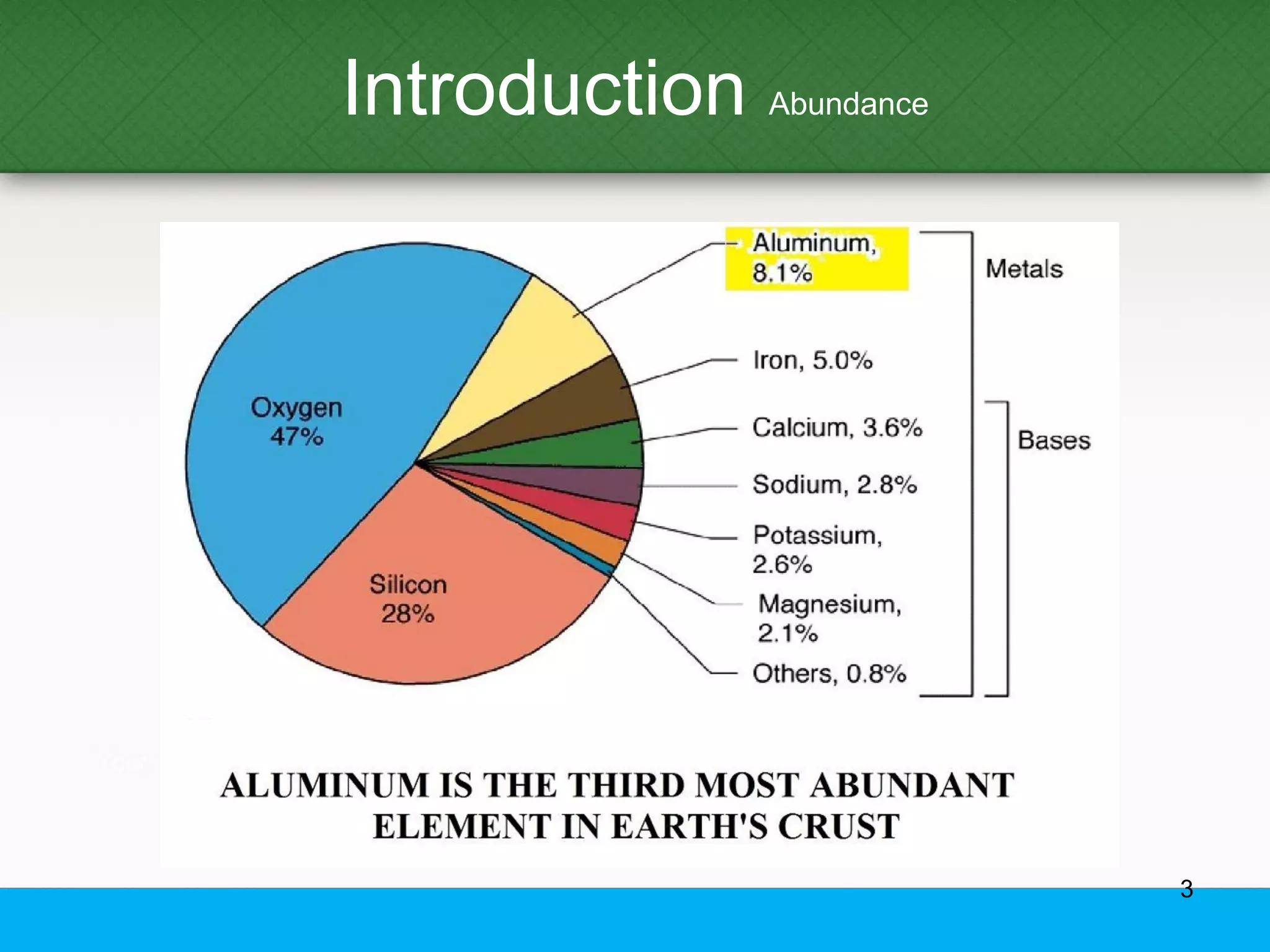
Introduction Abundance
Oxygen
Aluminum Oxide / Bauxite
Silicon
Iron
All Others
3
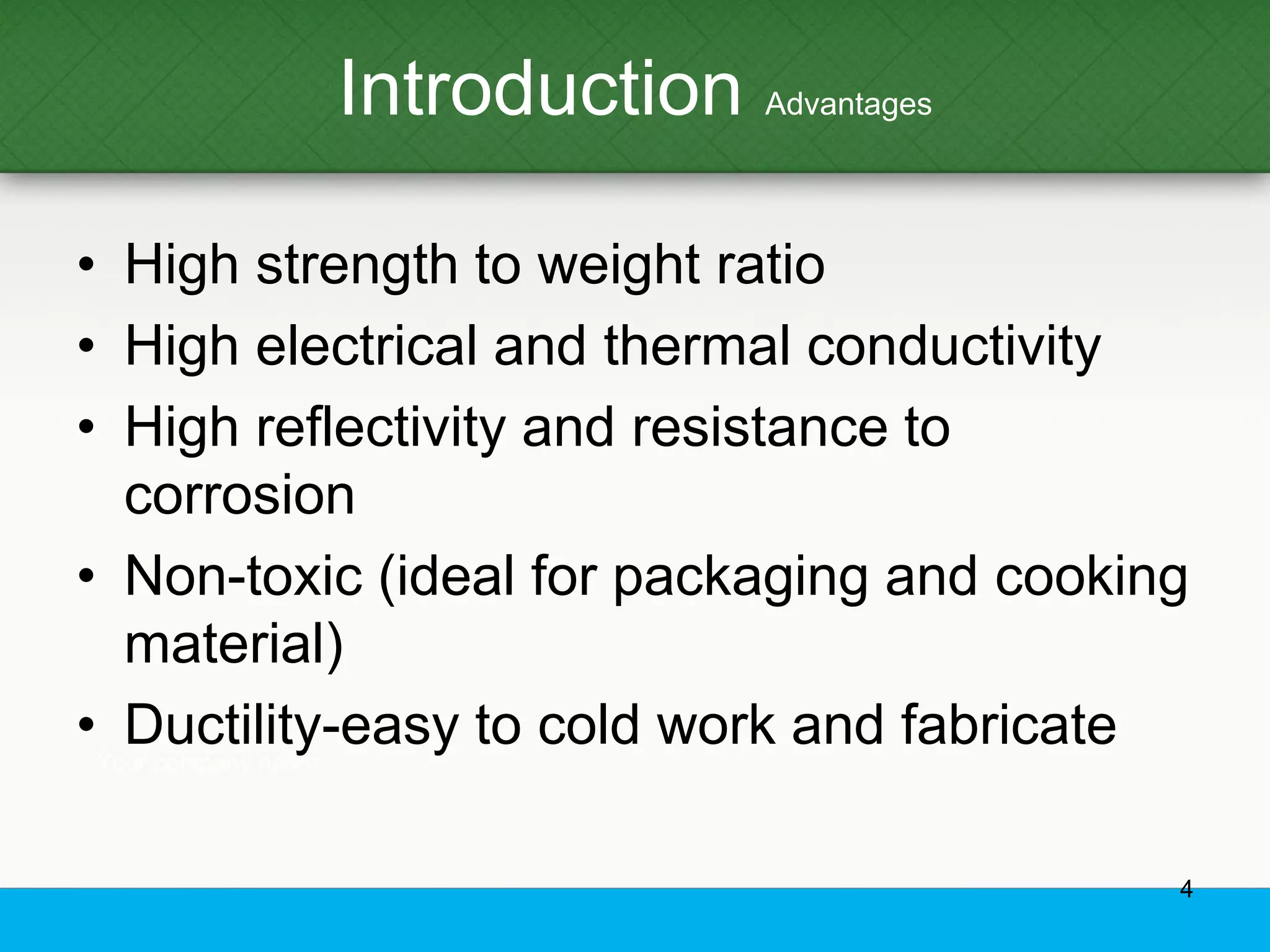
Introduction Advantages
• High strength to weight ratio
• High electrical and thermal conductivity
• High reflectivity and resistance to
corrosion
• Non-toxic (ideal for packaging and cooking
material)
• Ductility-easy to cold work and fabricate
4
History Aluminum Production
• The first commercial batch of Aluminum
was produced in 1888
• Production Capabilities Lower the Price
– Between 1888 and 1893 Aluminum dropped
from $4.86/lb to $.78/lb
5
• Early uses for Aluminum
– Cooking utensils
– Electrical wire and cable
– Foil
– Auto bodies
– Engine parts used by the Wright Brothers’
History Use
6
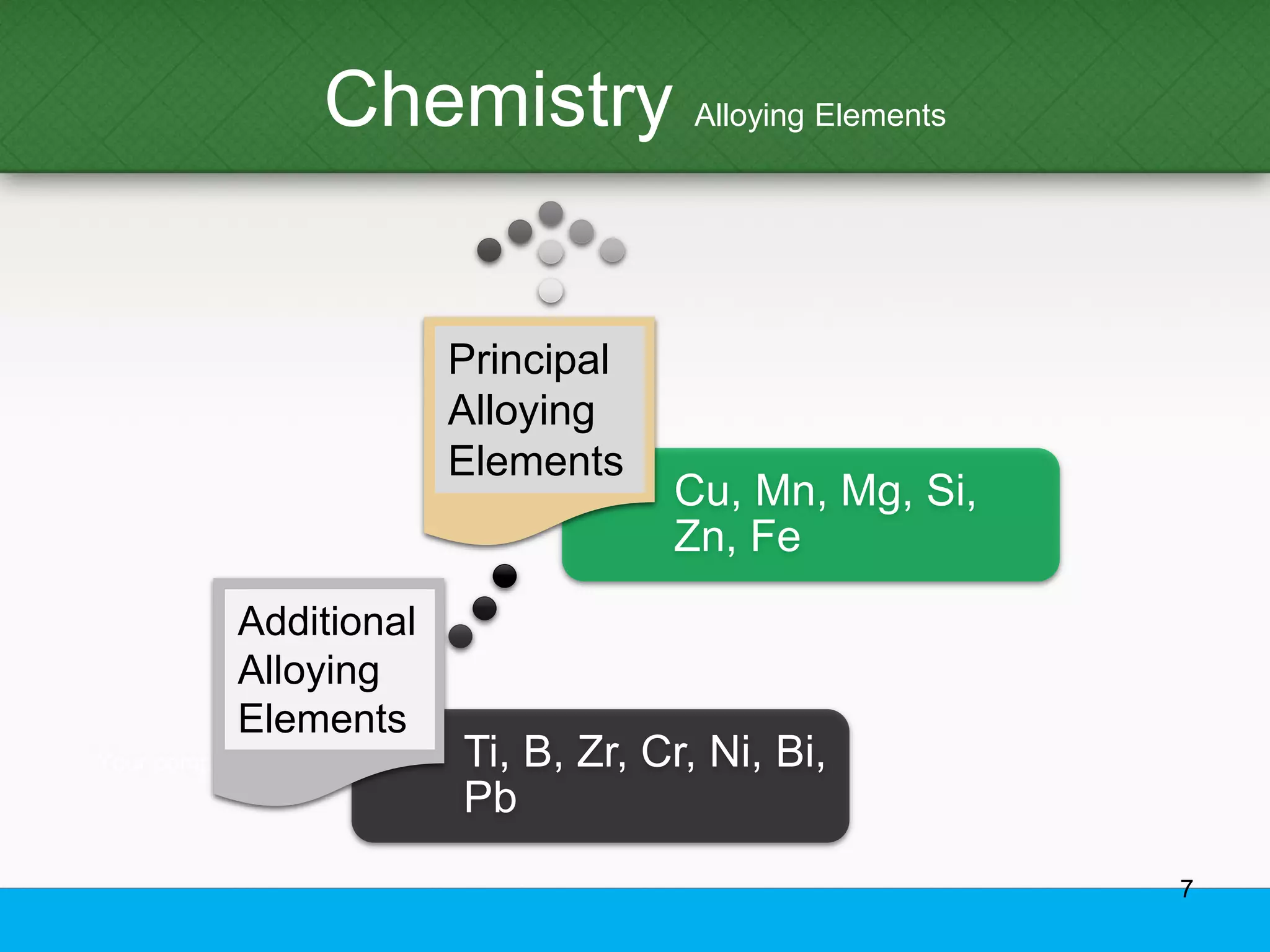
Chemistry Alloying Elements
Ti, B, Zr, Cr, Ni, Bi,
Pb
Cu, Mn, Mg, Si,
Zn, Fe
Principal
Alloying
Elements
Additional
Alloying
Elements
7
Role of Alloying Elements
Al
Cu
1. Increases strength
and hardness
2. If >12% makes the
alloy brittle
3. Hot cracking tendency
4. Decreases corrosion
resistance
8
Role of Alloying Elements
Al
Mn
1. Increases yield and
tensile strength
2. Improves ductility
3. Good resistance to
corrosion
4. Decrease resistivity
9
Role of Alloying Elements
Al
Si
1. Increases tensile
strength and hardness
uptil 13% wt.
2. Decrease the hot
cracking
3. Good resistance to
corrosion
10
Role of Alloying Elements
Al
Mg
1. Increases strength
and hardness
2. Good resistance to
corrosion
3. Increase weldability
and machinability
11
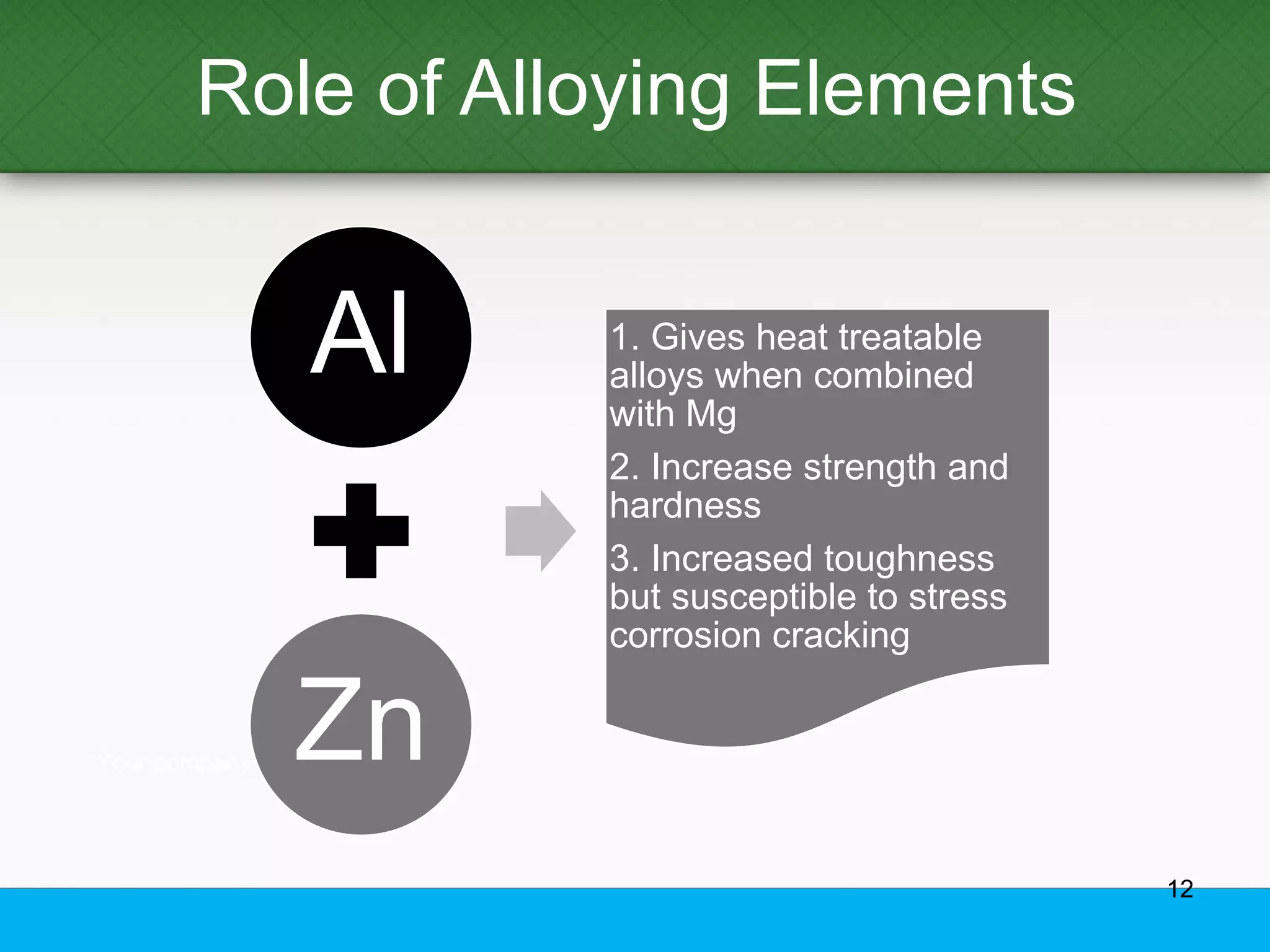
Role of Alloying Elements
Al
Zn
1. Gives heat treatable
alloys when combined
with Mg
2. Increase strength and
hardness
3. Increased toughness
but susceptible to stress
corrosion cracking
12
ClassificationAlloy Designation System
Al
13
Applications 1XXX
14
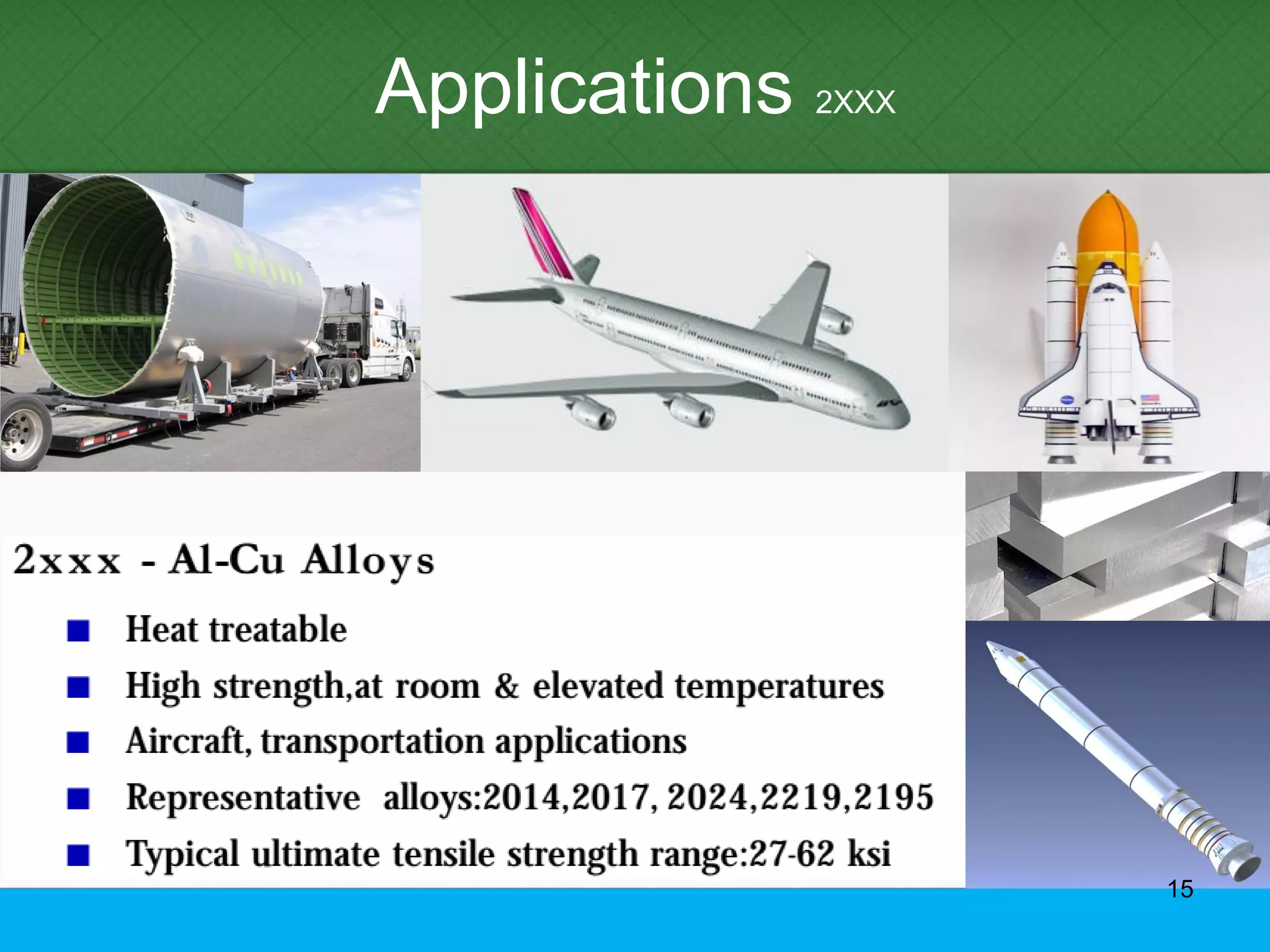
Applications 2XXX
15
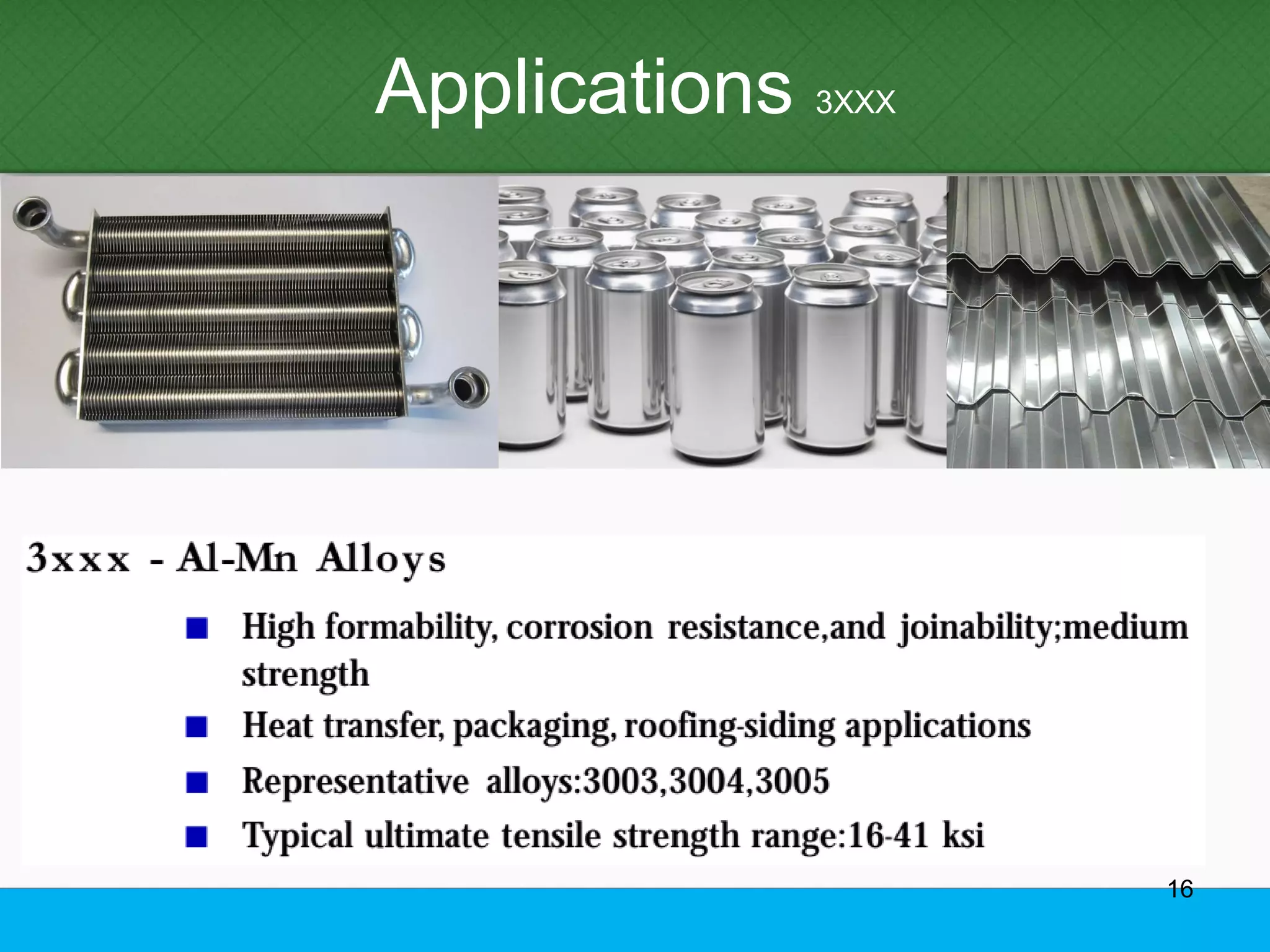
Applications 3XXX
16
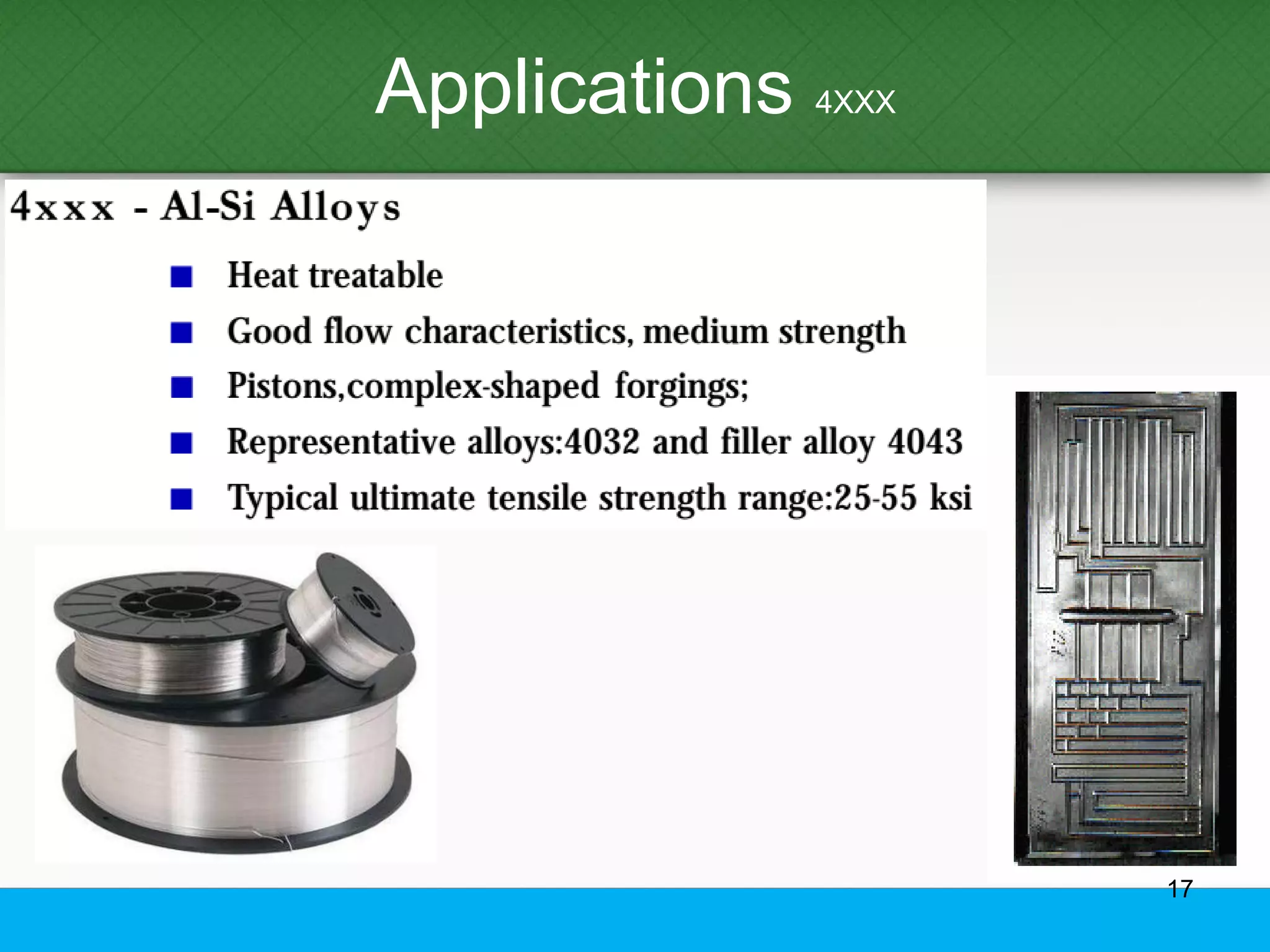
Applications 4XXX
17
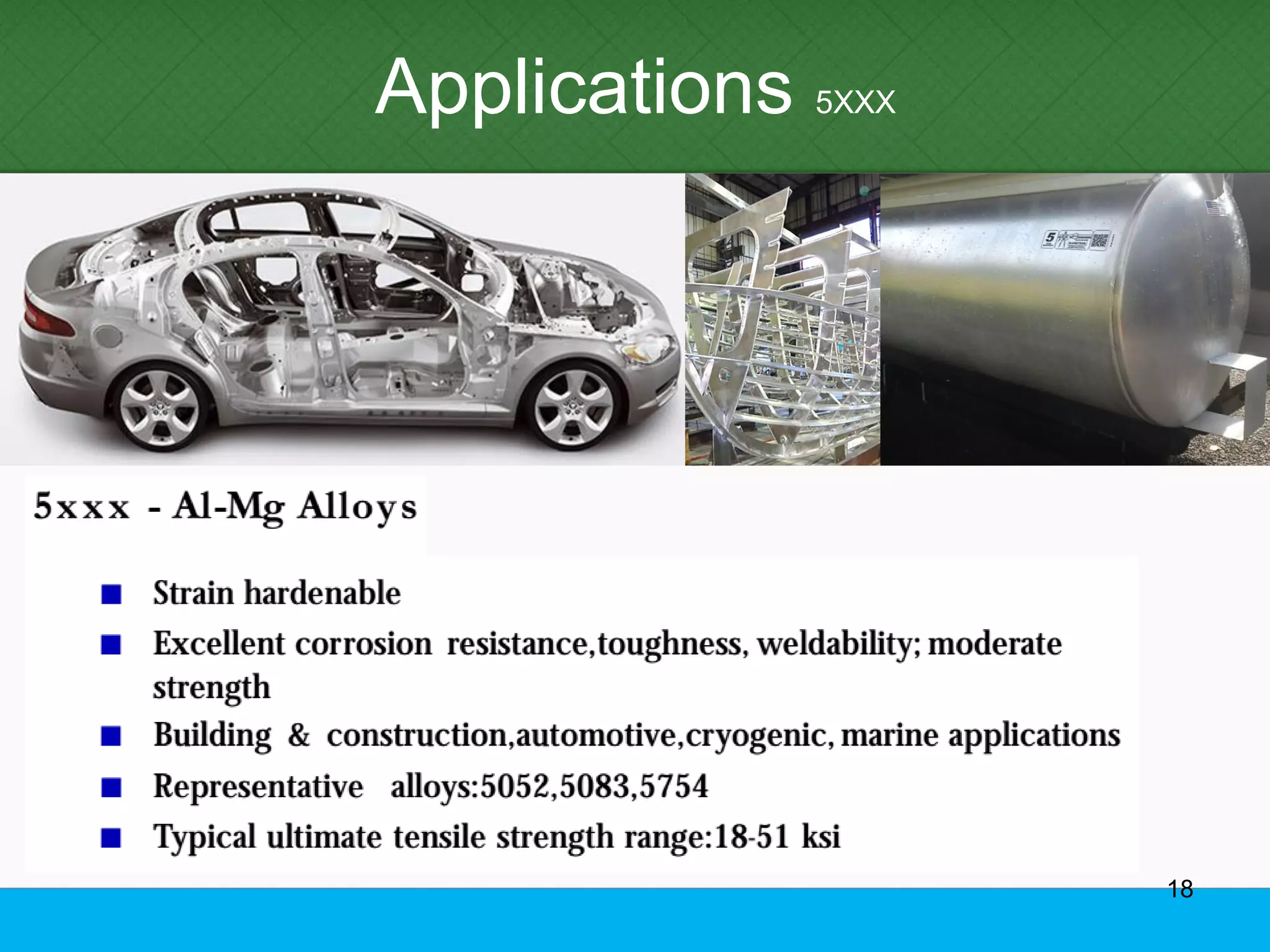
Applications 5XXX
18
Applications 6XXX
19
Applications 7XXX
20
Production Wrought Al Alloys
21
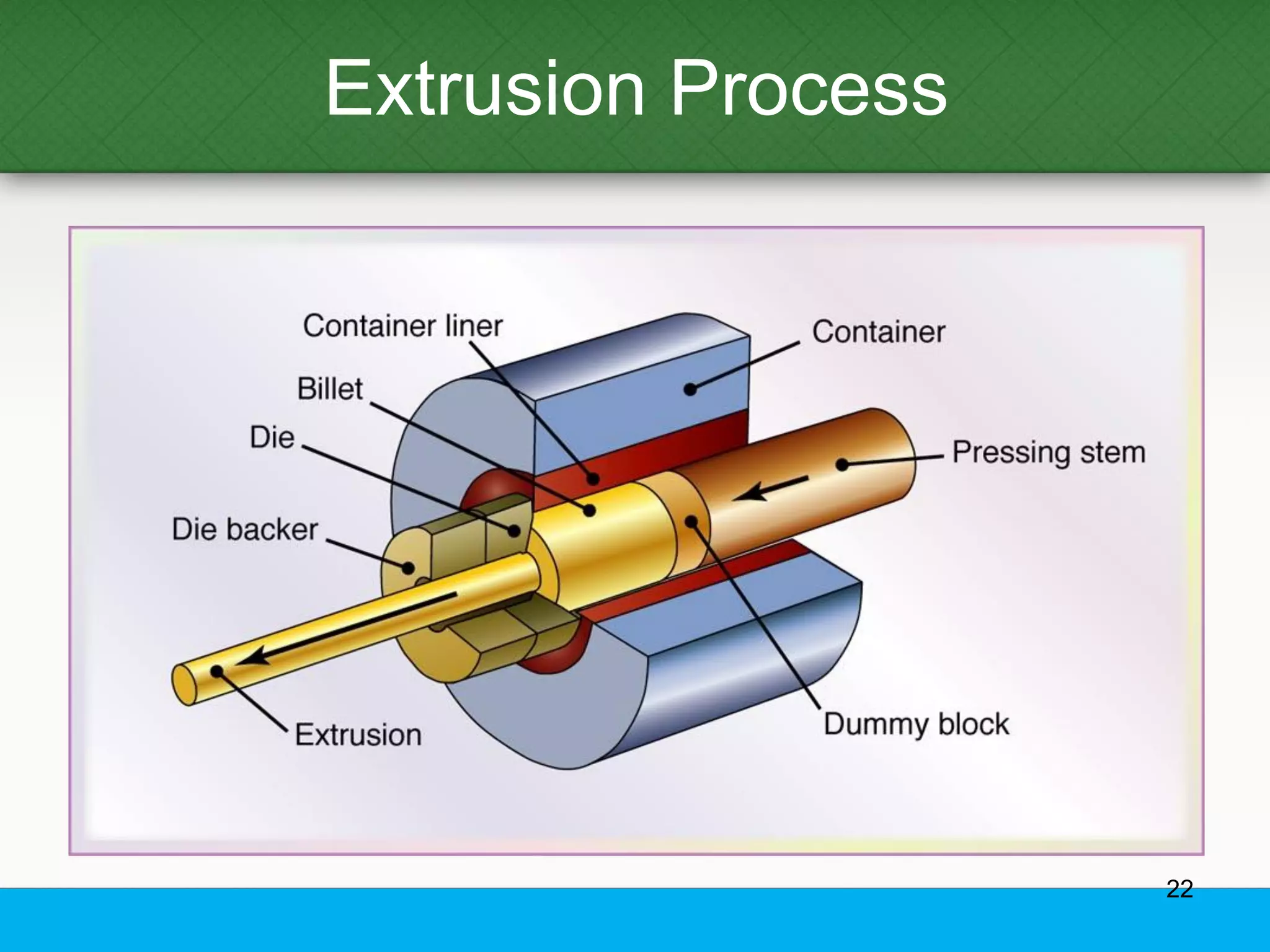
Extrusion Process
22
Heat Treatment Al Alloys
 Annealing Treatment
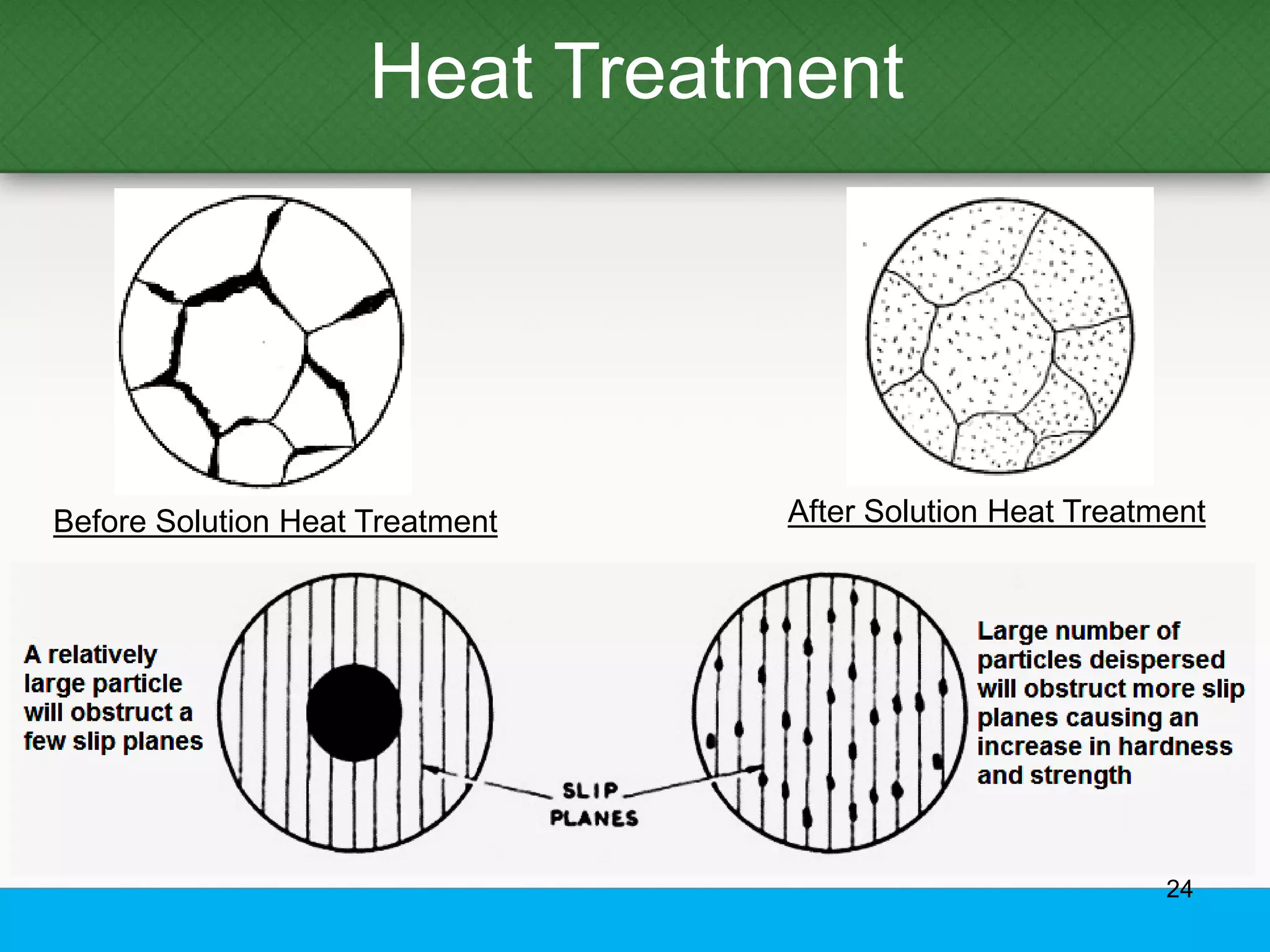
 Solution heat treatment
 Precipitation (Hardening) treatment
23
Before Solution Heat Treatment After Solution Heat Treatment
Heat Treatment
24
Heat Treatment
Al-Cu phase diagram showing three steps in precipitation hardening
25
Common Defects
Defect
Casting
Defects
Extrusion
Defects
Forging
Defects
Heat
Treatment
Defects
26
Casting Defects
Cracks Porosity
Inclusions Segregation
27
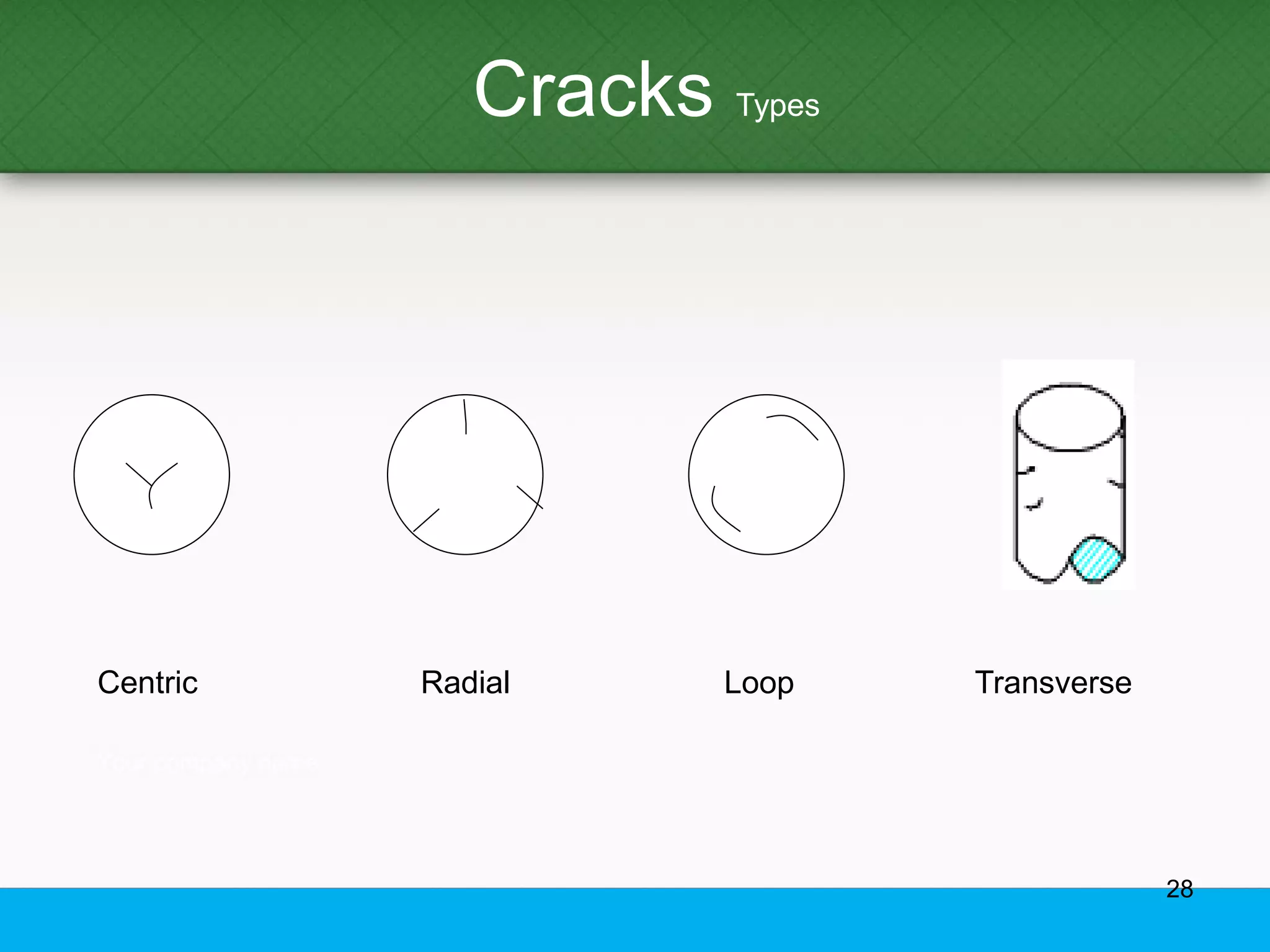
Cracks Types
Radial Loop TransverseCentric
28
Cracks 7075
29
Cracks 2024
30
Inclusions Optical Images
31
Inclusions SEM Images
32
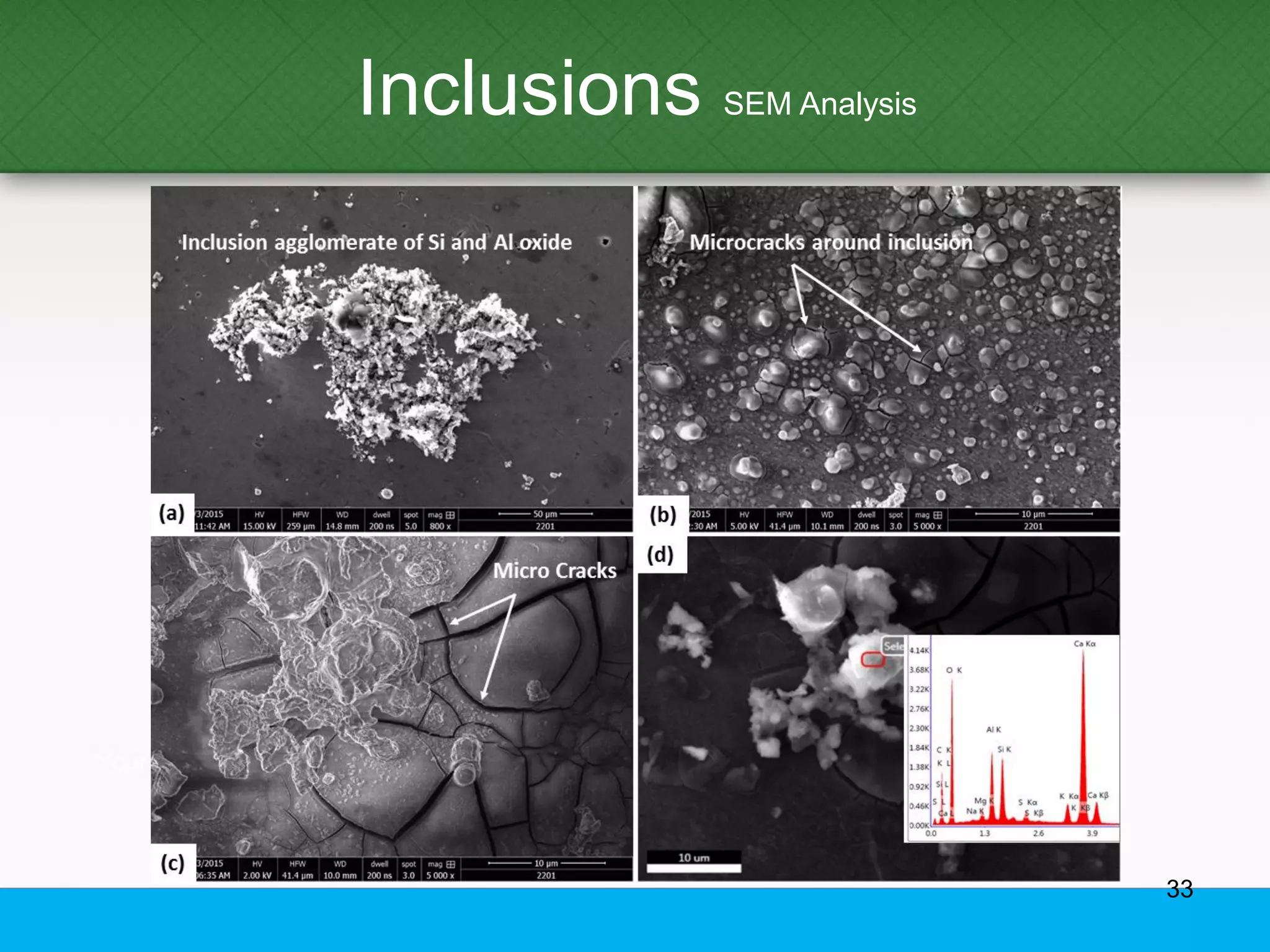
Inclusions SEM Analysis
33
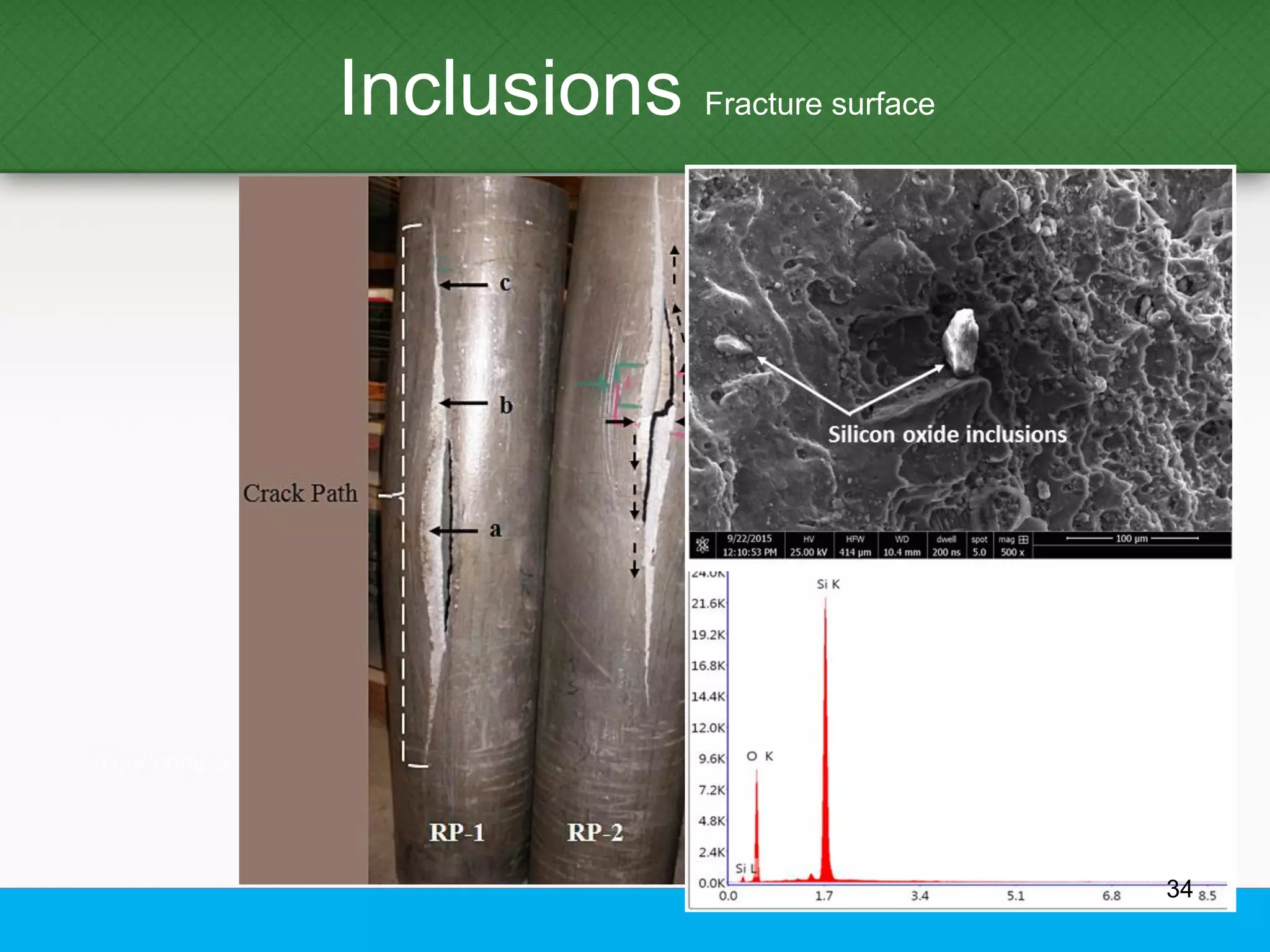
Inclusions Fracture surface
34
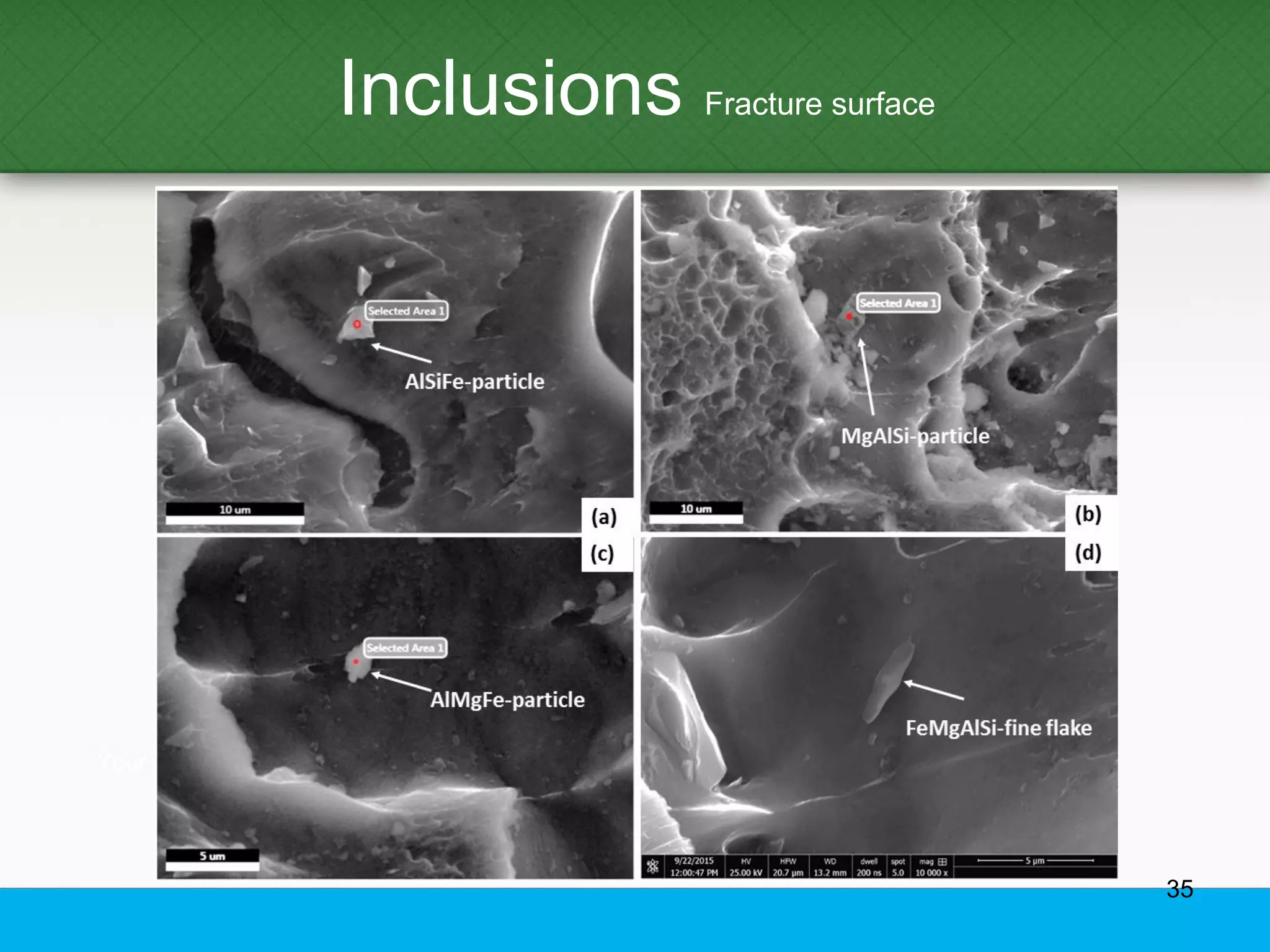
Inclusions Fracture surface
35
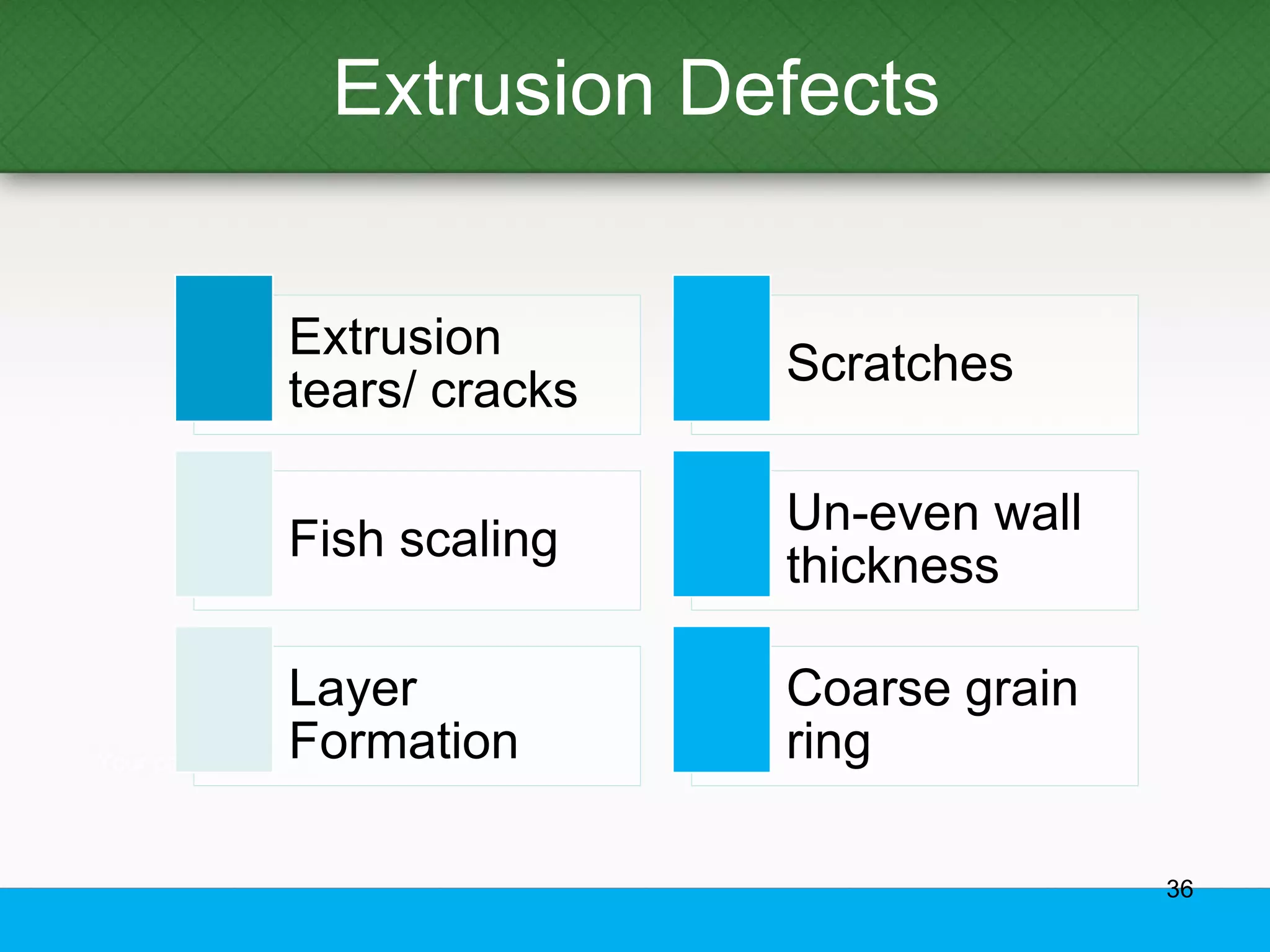
Extrusion Defects
Extrusion
tears/ cracks
Scratches
Fish scaling
Un-even wall
thickness
Layer
Formation
Coarse grain
ring
36
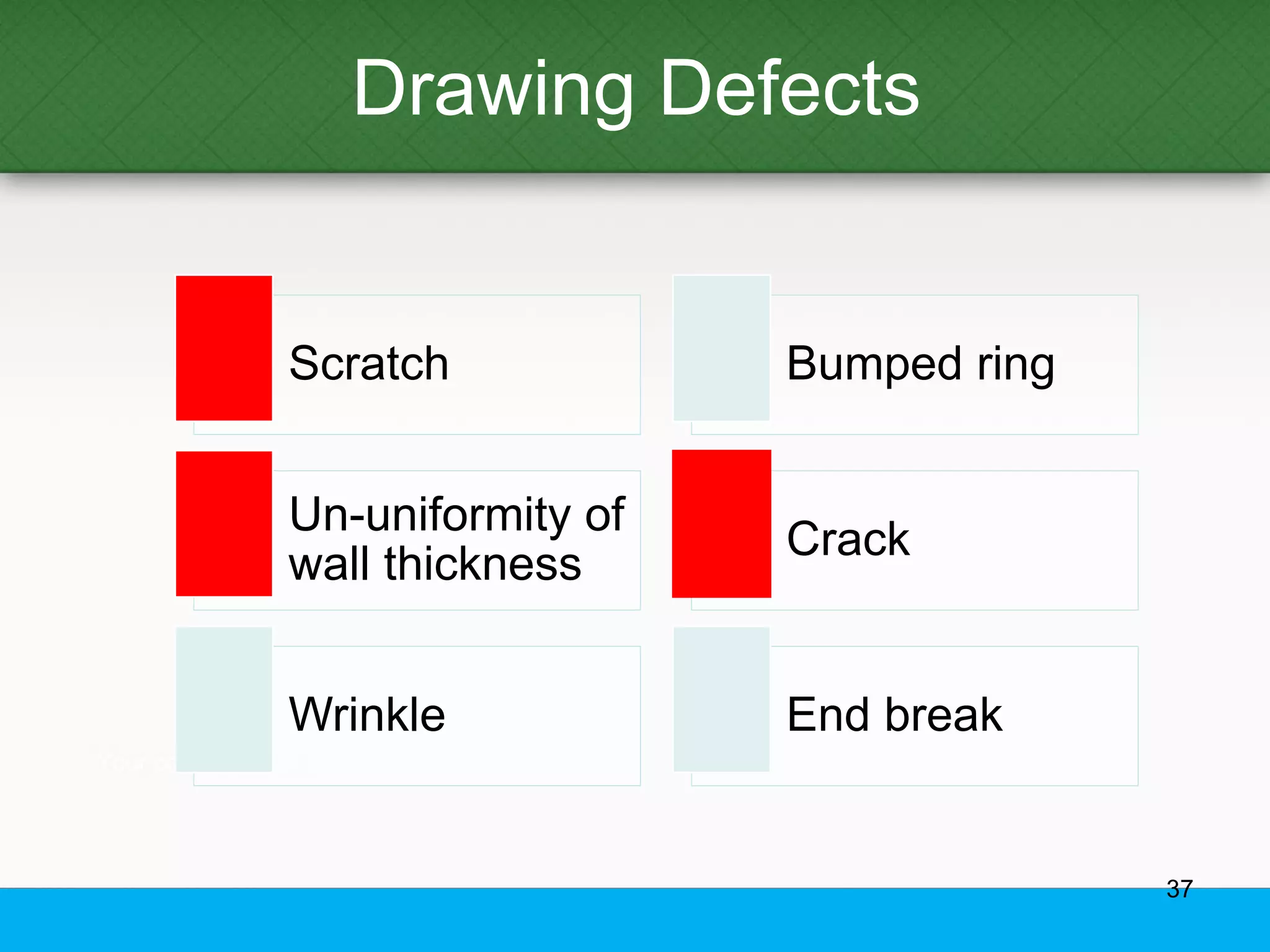
Drawing Defects
Scratch Bumped ring
Un-uniformity of
wall thickness
Crack
Wrinkle End break
37
Cracks in Extrusion Unetched form
38
Cracks in Extrusion T6 etched form
39
Heat treatment Defects
Unqualified
mechanical
properties
Over firing
Coarse grain Quenching cracks
40
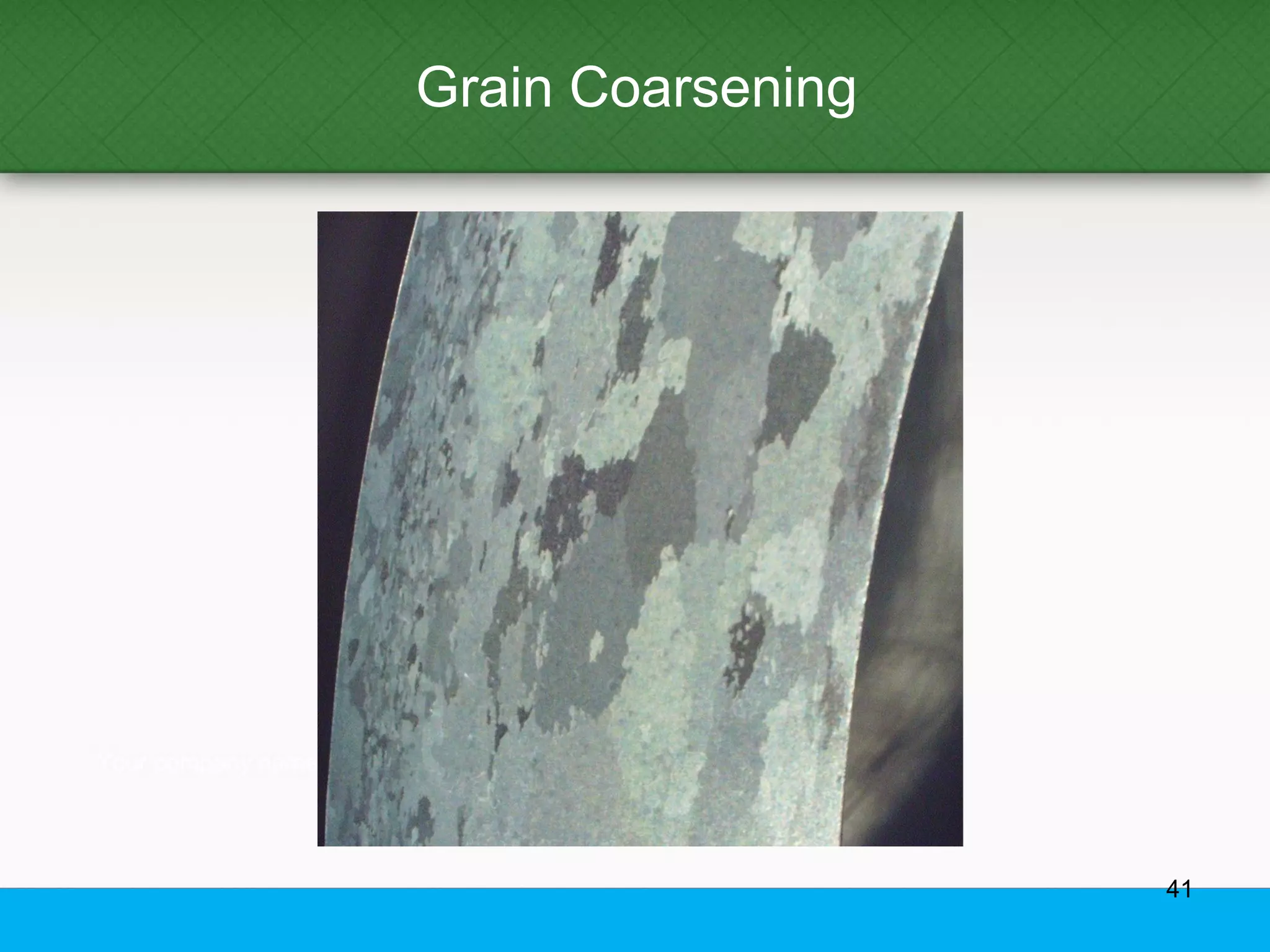
Grain Coarsening
41
Control of Grain Coarsening
42
43

Aluminium Alloys