Reinforcement Steel
Or Rebar
Definition: A rebar , also known as reinforcing steel or reinforcement
steel is a common steel bar, and is commonly used as a tensioning device
in reinforced concrete and reinforced masonry structures holding the
concrete in compression. It is usually formed from carbon steel, and is
given ridges for better mechanical anchoring into the concrete.
Composition Of A Typical Rebar
 Common rebar is made of unfinished tempered steel, making it
susceptible to rusting.
 It is not resistant to rusting or corrosion since the concrete itself
has a pH of 12 and is able to protect the reinforcement.
 The red hot tmt bar is quenched suddenly by a spray of water.
However, the core of the tmt bar is still hot. This helps in
tempering the tmt bar.
 This results in a structure with tempered martensite on the
periphery and fine grained ferrite pearlite at the centre.
 Special TMT-CRS bars (containing Cu,P,Fe) is available in the
market. They have 3 grades namely the Fe 415, Fe 500 &Fe 550.
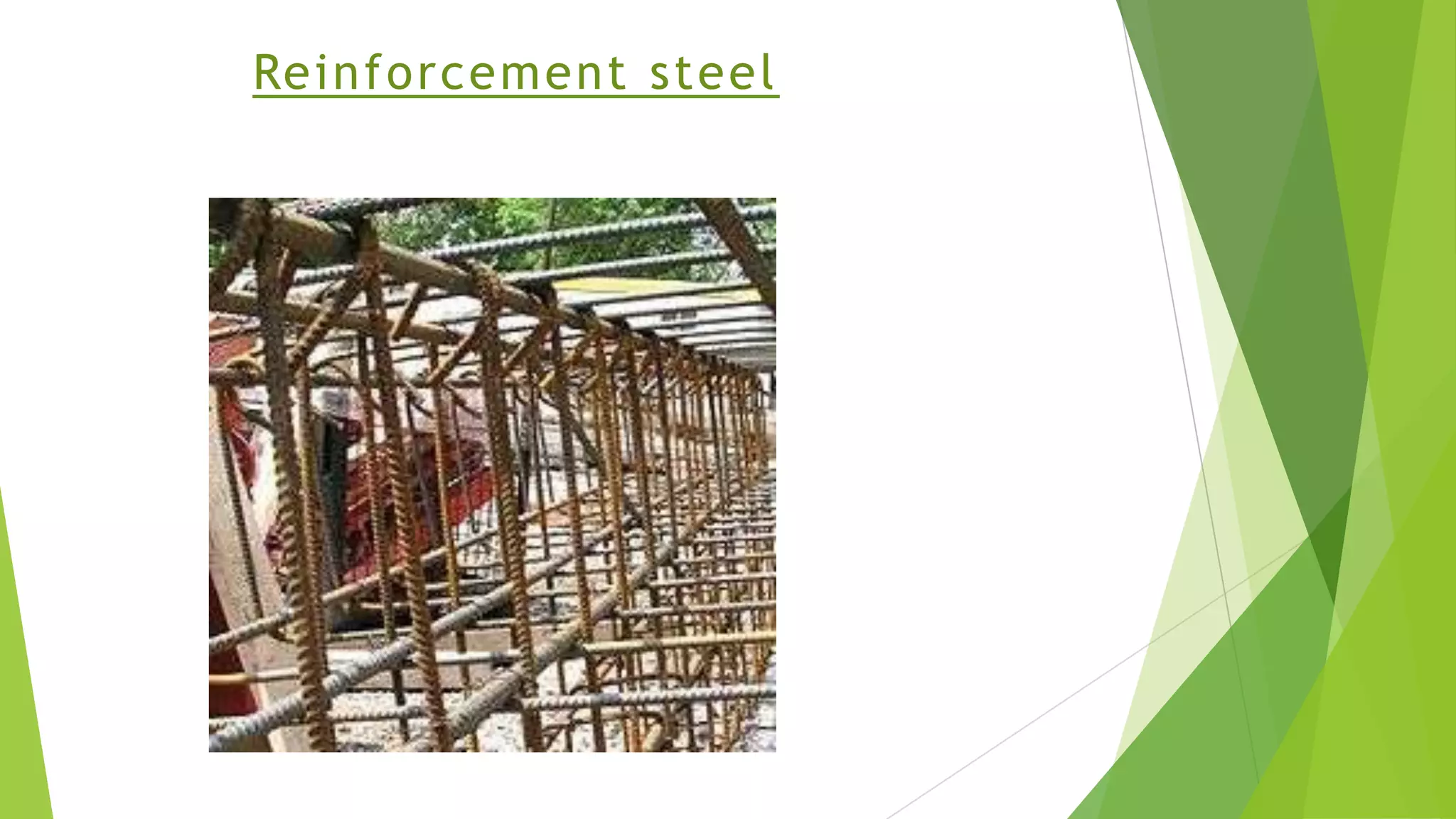
Reinforcement steel
Structural Steel
Definition:
Structural
steel is steel construction material, a profile, formed with
a specific shape or cross section and certain standards
of chemical composition and mechanical properties.
Structural steel
shape, size, composition, strength, storage, etc., is
regulated in most industrialized countries.
Typical Structural Steel Structure
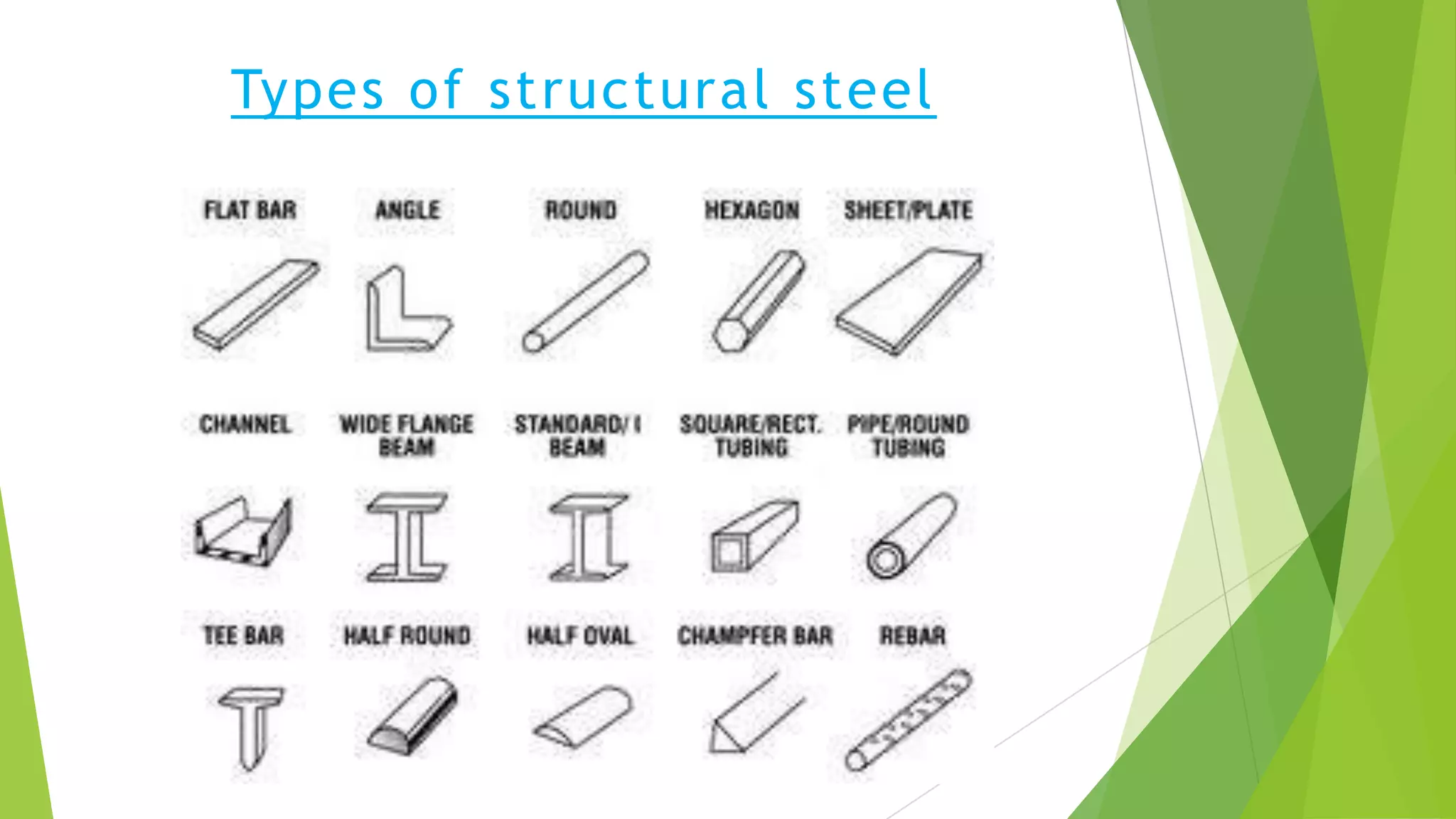
Types of structural steel
Different Types Of Structural Steel
Available In The Market
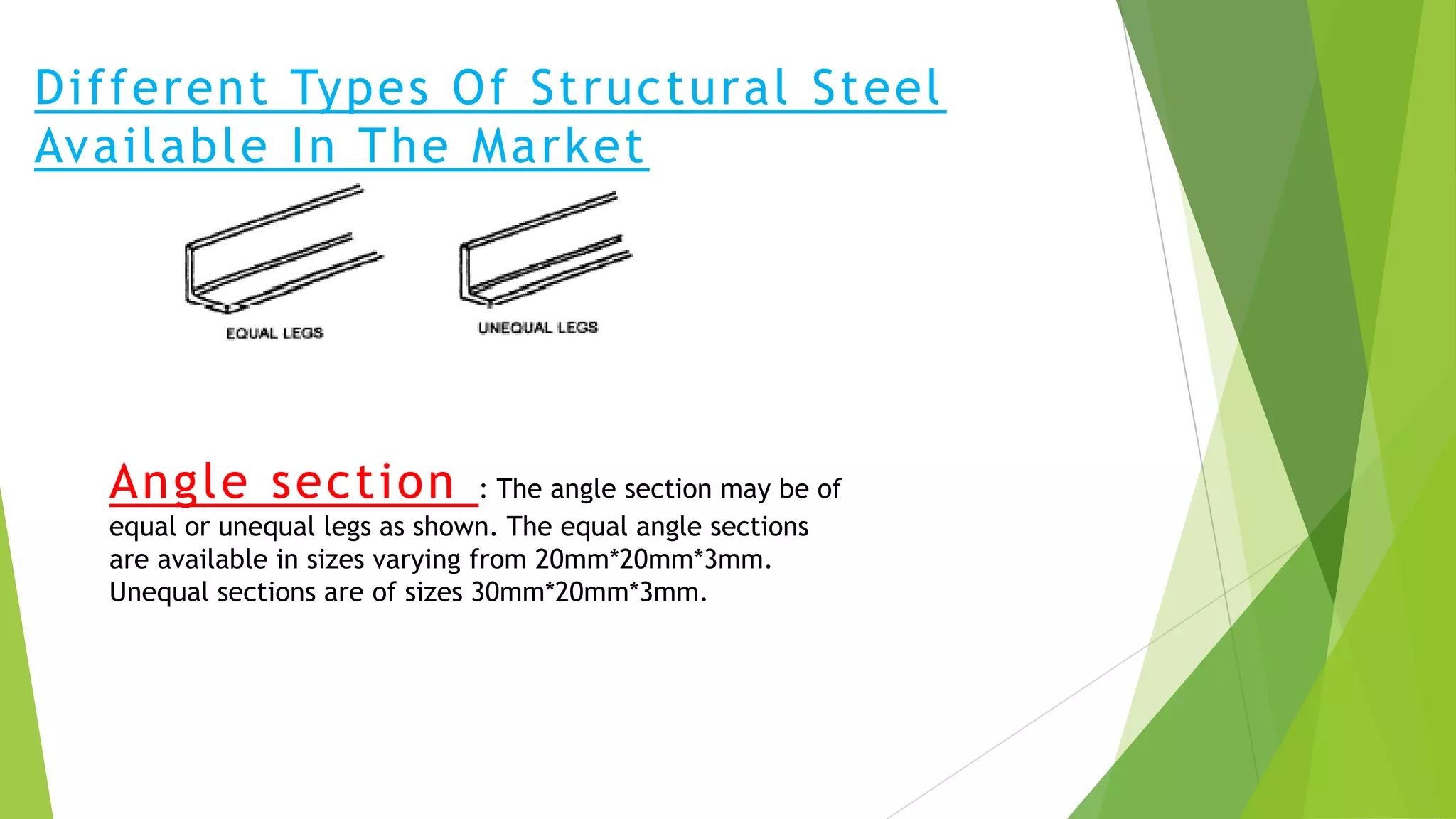
Angle section : The angle section may be of
equal or unequal legs as shown. The equal angle sections
are available in sizes varying from 20mm*20mm*3mm.
Unequal sections are of sizes 30mm*20mm*3mm.
Channel section: Channel consists of a web with two
flanges as shown in fig. . A channel section is designated by the
height web and width of flange. These sections are available in sizes
varying from 100mm*45mm to 400mm*100mm.
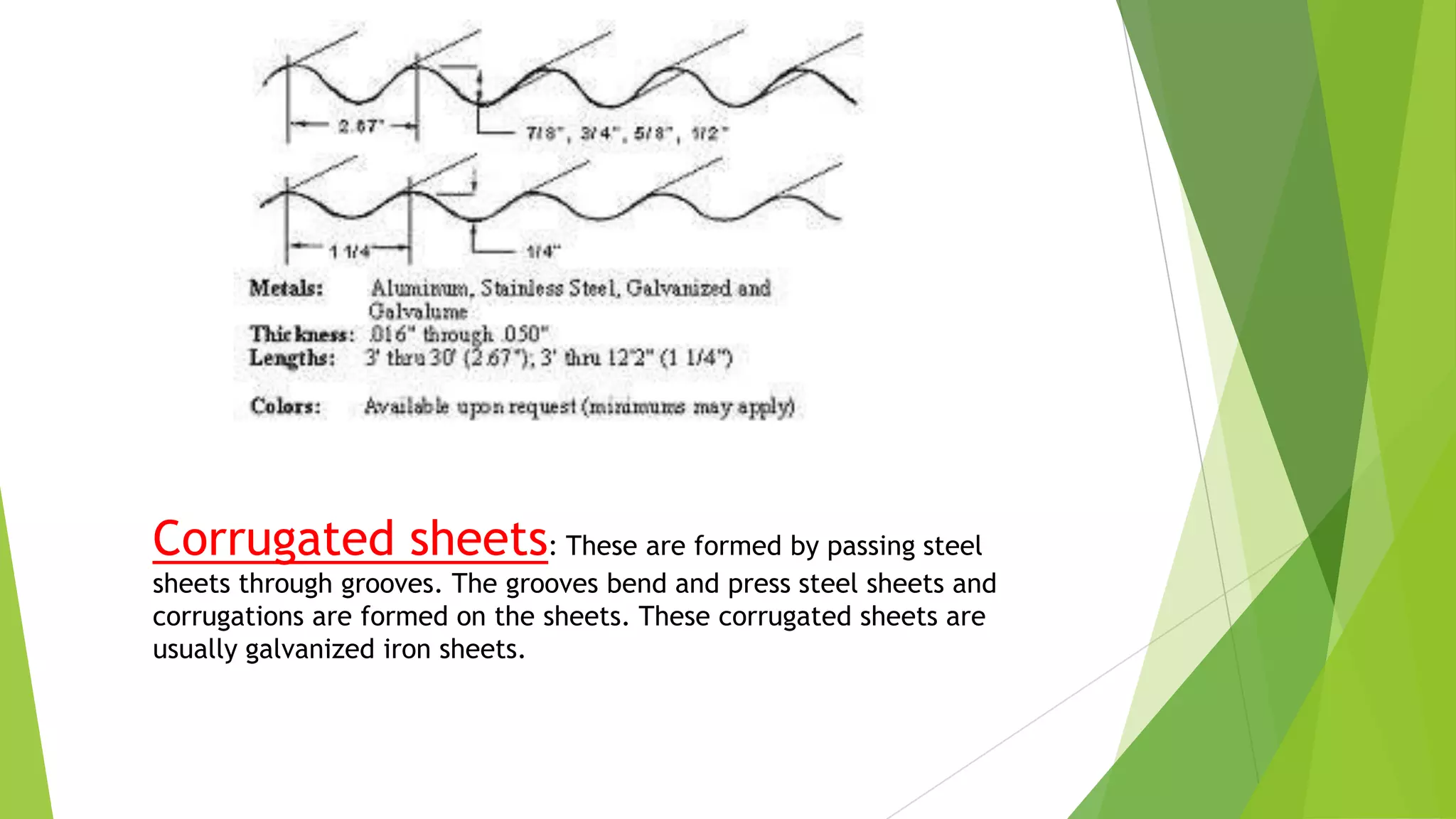
Corrugated sheets: These are formed by passing steel
sheets through grooves. The grooves bend and press steel sheets and
corrugations are formed on the sheets. These corrugated sheets are
usually galvanized iron sheets.
Expanded metal: This form of steel is available in
different shapes and sizes. Illustration shows an expanded metal
sheet. A diamond mesh appearance is thus formed throughout the
whole area of the sheet.
T- Section: The shape of this section consists of
flange and web as shown. These sections are available
in sizes varying from 100mm*100mm*10mm and weight
per meter run 150N.
I Sections: These are popularly known as the rolled
steel joists or beams. It consists of two flanges connected by
a web. They are available in various sizes from 75mm*50mm
@ 61N to 600mm*210mm @ 995N.

Reinforcement steel

  • 1.
    Reinforcement Steel Or Rebar Definition:A rebar , also known as reinforcing steel or reinforcement steel is a common steel bar, and is commonly used as a tensioning device in reinforced concrete and reinforced masonry structures holding the concrete in compression. It is usually formed from carbon steel, and is given ridges for better mechanical anchoring into the concrete.
  • 2.
    Composition Of ATypical Rebar  Common rebar is made of unfinished tempered steel, making it susceptible to rusting.  It is not resistant to rusting or corrosion since the concrete itself has a pH of 12 and is able to protect the reinforcement.  The red hot tmt bar is quenched suddenly by a spray of water. However, the core of the tmt bar is still hot. This helps in tempering the tmt bar.  This results in a structure with tempered martensite on the periphery and fine grained ferrite pearlite at the centre.  Special TMT-CRS bars (containing Cu,P,Fe) is available in the market. They have 3 grades namely the Fe 415, Fe 500 &Fe 550.
  • 3.
  • 4.
    Structural Steel Definition: Structural steel issteel construction material, a profile, formed with a specific shape or cross section and certain standards of chemical composition and mechanical properties. Structural steel shape, size, composition, strength, storage, etc., is regulated in most industrialized countries.
  • 5.
  • 6.
  • 7.
    Different Types OfStructural Steel Available In The Market Angle section : The angle section may be of equal or unequal legs as shown. The equal angle sections are available in sizes varying from 20mm*20mm*3mm. Unequal sections are of sizes 30mm*20mm*3mm.
  • 8.
    Channel section: Channelconsists of a web with two flanges as shown in fig. . A channel section is designated by the height web and width of flange. These sections are available in sizes varying from 100mm*45mm to 400mm*100mm.
  • 9.
    Corrugated sheets: Theseare formed by passing steel sheets through grooves. The grooves bend and press steel sheets and corrugations are formed on the sheets. These corrugated sheets are usually galvanized iron sheets.
  • 10.
    Expanded metal: Thisform of steel is available in different shapes and sizes. Illustration shows an expanded metal sheet. A diamond mesh appearance is thus formed throughout the whole area of the sheet.
  • 11.
    T- Section: Theshape of this section consists of flange and web as shown. These sections are available in sizes varying from 100mm*100mm*10mm and weight per meter run 150N.
  • 12.
    I Sections: Theseare popularly known as the rolled steel joists or beams. It consists of two flanges connected by a web. They are available in various sizes from 75mm*50mm @ 61N to 600mm*210mm @ 995N.