SEMICONDUCTORS
• SEMICONDUCTORS HAVE RESISTIVITY
BETWEEN GOOD CONDUCTORS AND
INSULATORS.
• THE RESISTIVITY OF SEMICONDUCTOR LIES
APPROXIMATELY IN BETWEEN 10 -2 OHM M AND
10 4 OHM M AT ROOM TEMPERATURE.
3
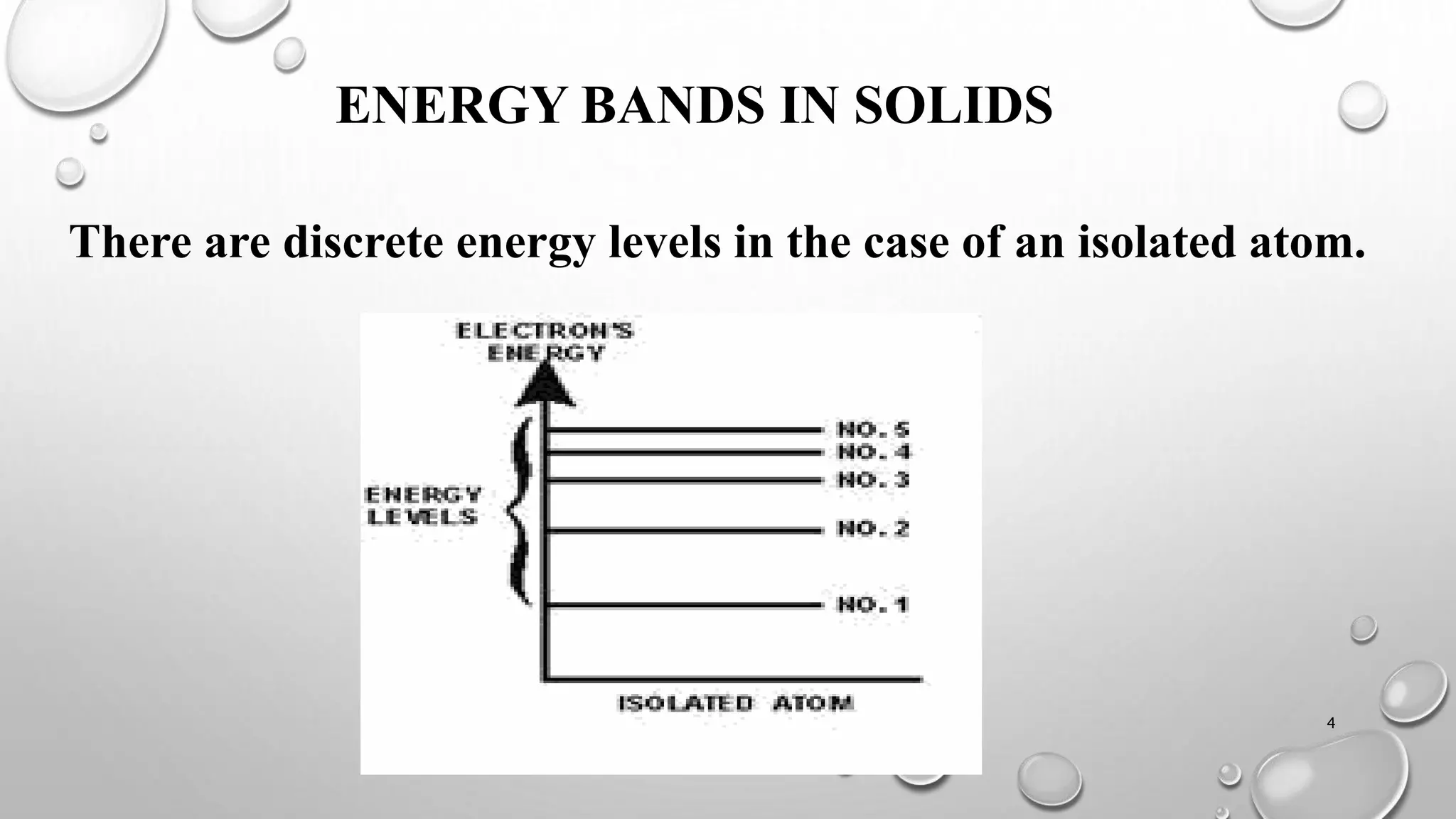
ENERGY BANDS IN SOLIDS
There are discrete energy levels in the case of an isolated atom.
4
ARRANGEMENT OF ELECTRONS IN AN
ISOLATED SILICON
5
IN SOLIDS , THE ATOMS ARE ARRANGED IN A
SYSTEMATIC SPACE LATTICE AND EACH ATOM IS
INFLUENCED BY NEIGHBOURING ATOMS.
THE CLOSENESS OF ATOMS RESULTS IN THE
INTERMIXING OF ELECTRONS OF NEIGHBOURRING
ATOMS.
6
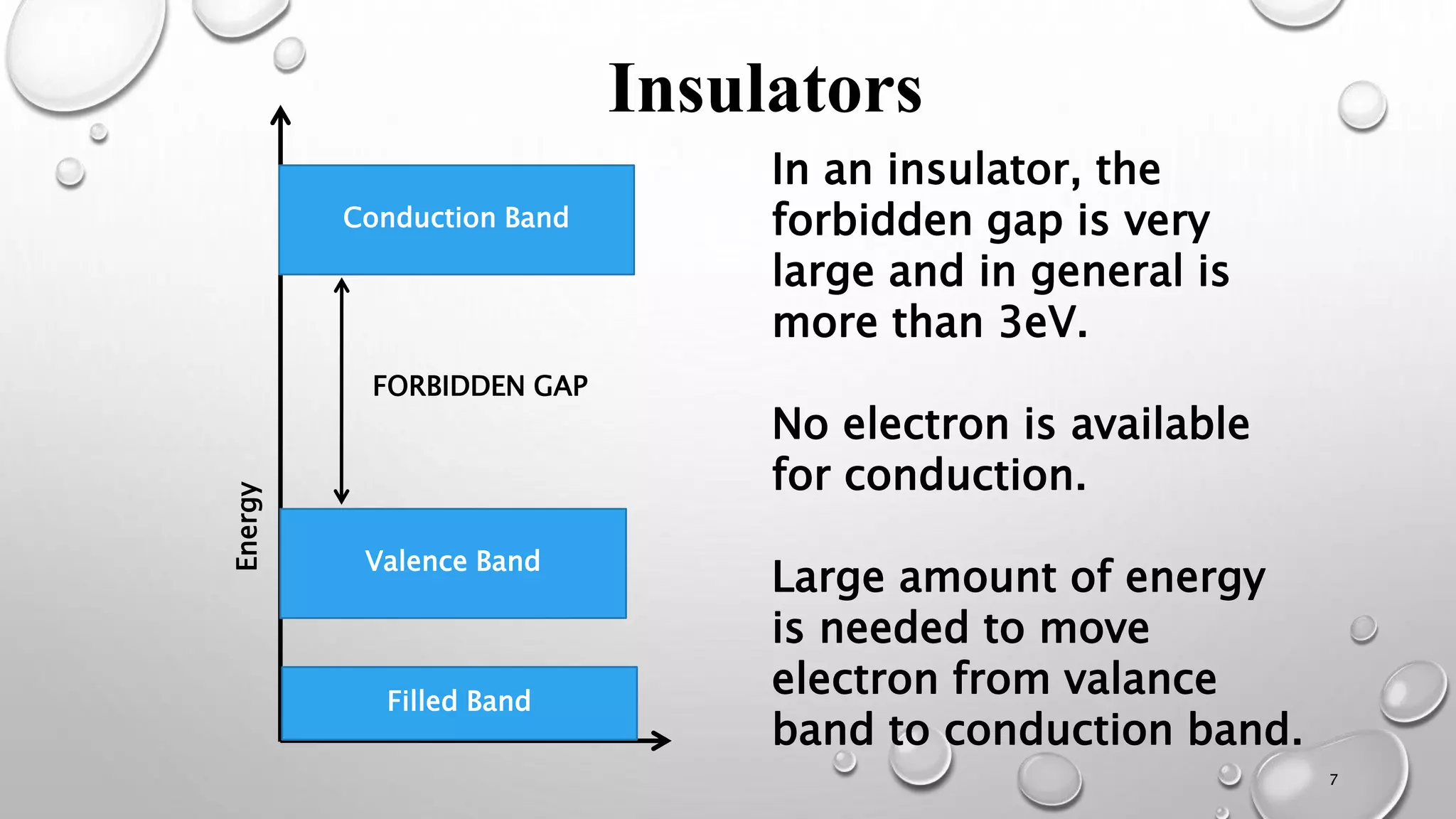
Insulators
7
Valence Band
Conduction Band
FORBIDDEN GAP
Energy
In an insulator, the
forbidden gap is very
large and in general is
more than 3eV.
No electron is available
for conduction.
Large amount of energy
is needed to move
electron from valance
band to conduction band.
Filled Band
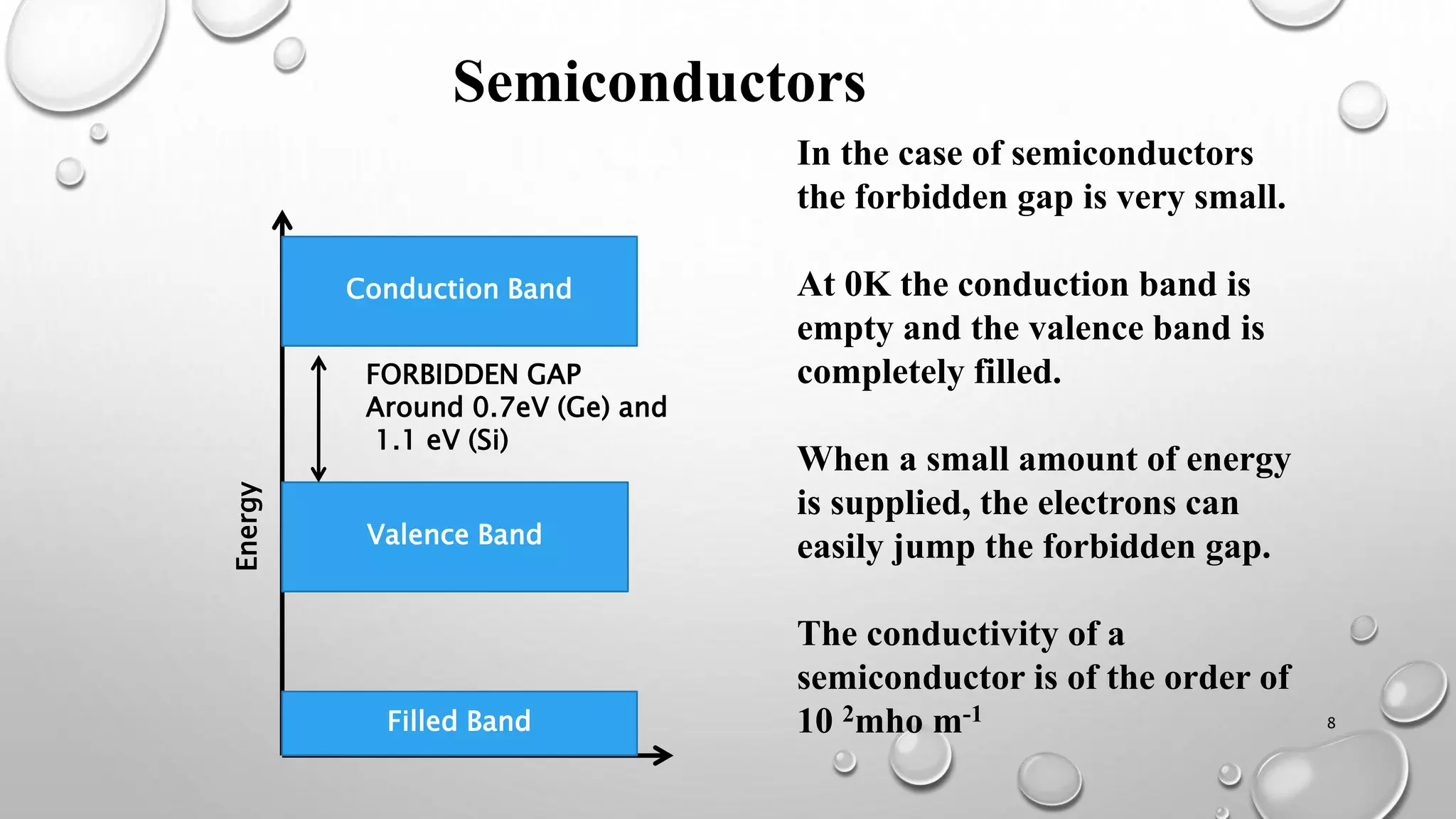
Semiconductors
8
Valence Band
Conduction Band
FORBIDDEN GAP
Around 0.7eV (Ge) and
1.1 eV (Si)
Energy
In the case of semiconductors
the forbidden gap is very small.
At 0K the conduction band is
empty and the valence band is
completely filled.
When a small amount of energy
is supplied, the electrons can
easily jump the forbidden gap.
The conductivity of a
semiconductor is of the order of
10 2mho m-1Filled Band
Conductors
9
Valence Band
Conduction Band
Energy
In conductors there is no
forbidden gap.
The valence band and the
conduction band overlap.
The electrons from valence band
freely enter into the conduction
band due to overlapping of bands.
Therefore very low potential
difference can cause continuous
flow of current.
No forbidden gap
10
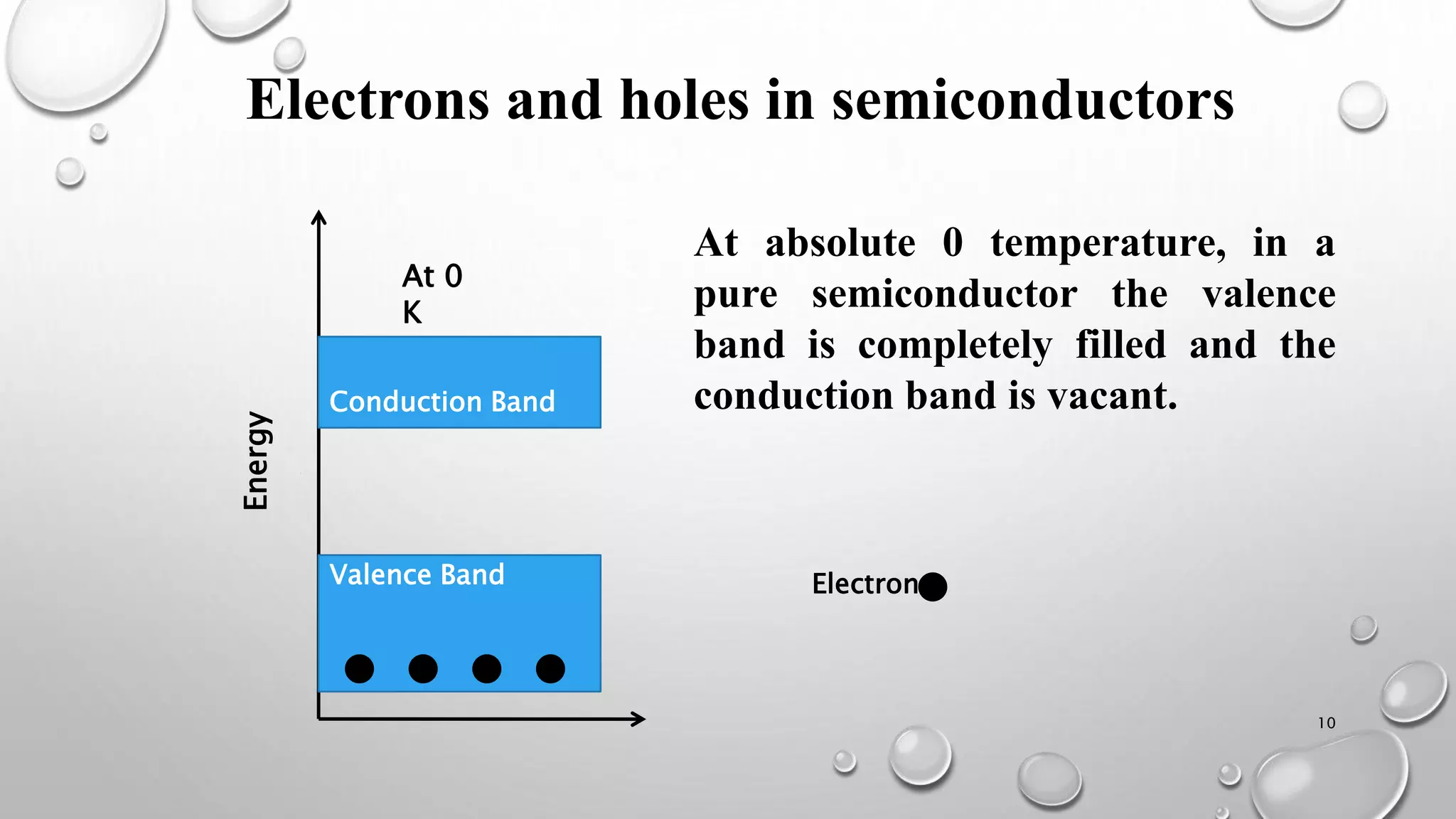
Electrons and holes in semiconductors
At absolute 0 temperature, in a
pure semiconductor the valence
band is completely filled and the
conduction band is vacant.
At 0
K
Conduction Band
Valence Band Electron
Energy
11
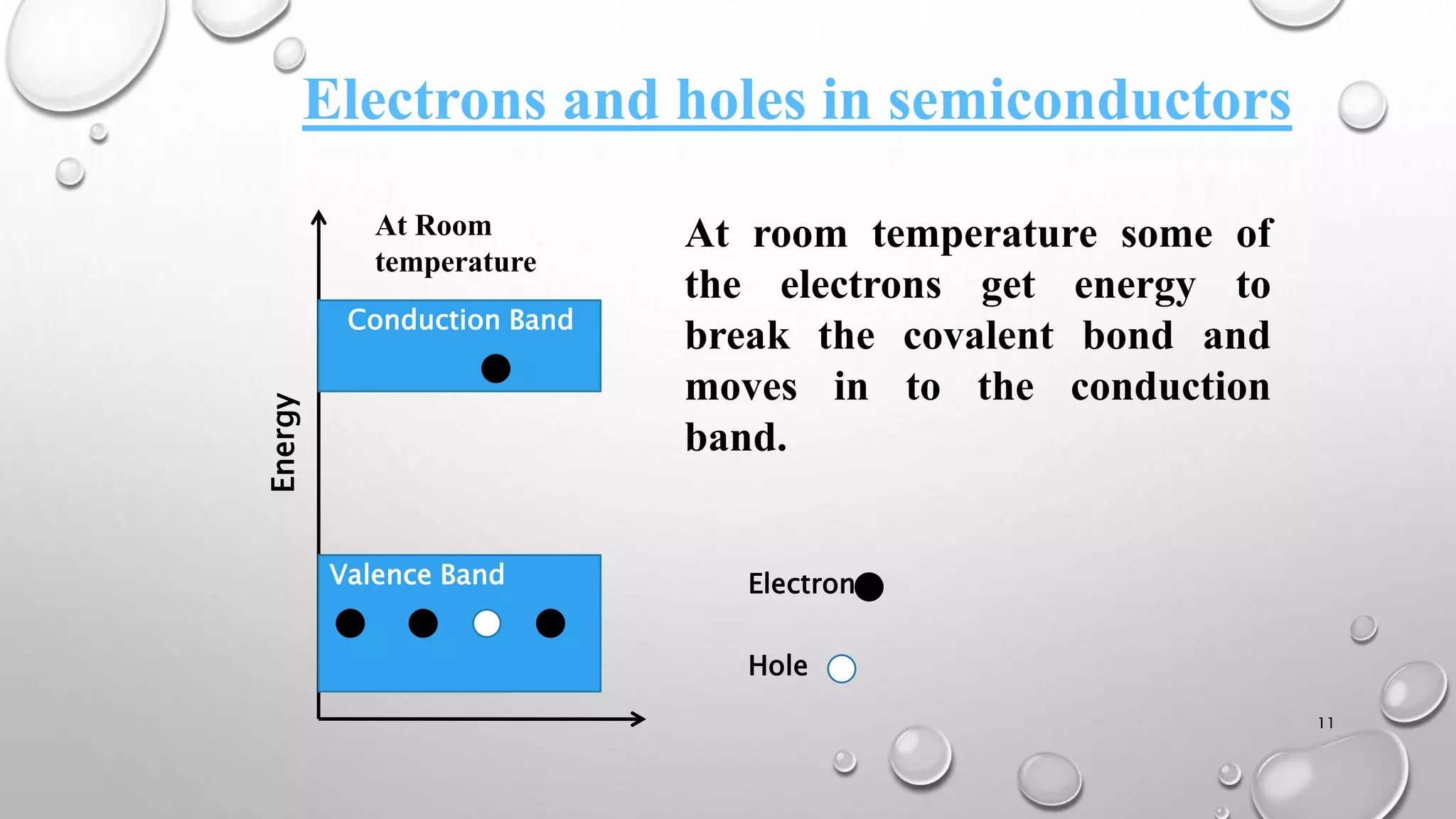
Electrons and holes in semiconductors
At room temperature some of
the electrons get energy to
break the covalent bond and
moves in to the conduction
band.
At Room
temperature
Conduction Band
Valence Band
Hole
Electron
Energy
FORMATION OF N - TYPE MATERIAL
12
Group 3 atoms have one less electron than
silicon so when they are introduced into the
crystal, there is a ‘hole' where one extra electron
should be.
Electrons from neighbouring atoms can move
into this hole, leaving a hole where they used to
be which is in turn filled by another
neighbouring electron.
13
FORMATION OF P - TYPE MATERIAL
14
Band theory of semiconductor

Band theory of semiconductor

  • 3.
    SEMICONDUCTORS • SEMICONDUCTORS HAVERESISTIVITY BETWEEN GOOD CONDUCTORS AND INSULATORS. • THE RESISTIVITY OF SEMICONDUCTOR LIES APPROXIMATELY IN BETWEEN 10 -2 OHM M AND 10 4 OHM M AT ROOM TEMPERATURE. 3
  • 4.
    ENERGY BANDS INSOLIDS There are discrete energy levels in the case of an isolated atom. 4
  • 5.
    ARRANGEMENT OF ELECTRONSIN AN ISOLATED SILICON 5
  • 6.
    IN SOLIDS ,THE ATOMS ARE ARRANGED IN A SYSTEMATIC SPACE LATTICE AND EACH ATOM IS INFLUENCED BY NEIGHBOURING ATOMS. THE CLOSENESS OF ATOMS RESULTS IN THE INTERMIXING OF ELECTRONS OF NEIGHBOURRING ATOMS. 6
  • 7.
    Insulators 7 Valence Band Conduction Band FORBIDDENGAP Energy In an insulator, the forbidden gap is very large and in general is more than 3eV. No electron is available for conduction. Large amount of energy is needed to move electron from valance band to conduction band. Filled Band
  • 8.
    Semiconductors 8 Valence Band Conduction Band FORBIDDENGAP Around 0.7eV (Ge) and 1.1 eV (Si) Energy In the case of semiconductors the forbidden gap is very small. At 0K the conduction band is empty and the valence band is completely filled. When a small amount of energy is supplied, the electrons can easily jump the forbidden gap. The conductivity of a semiconductor is of the order of 10 2mho m-1Filled Band
  • 9.
    Conductors 9 Valence Band Conduction Band Energy Inconductors there is no forbidden gap. The valence band and the conduction band overlap. The electrons from valence band freely enter into the conduction band due to overlapping of bands. Therefore very low potential difference can cause continuous flow of current. No forbidden gap
  • 10.
    10 Electrons and holesin semiconductors At absolute 0 temperature, in a pure semiconductor the valence band is completely filled and the conduction band is vacant. At 0 K Conduction Band Valence Band Electron Energy
  • 11.
    11 Electrons and holesin semiconductors At room temperature some of the electrons get energy to break the covalent bond and moves in to the conduction band. At Room temperature Conduction Band Valence Band Hole Electron Energy
  • 12.
    FORMATION OF N- TYPE MATERIAL 12
  • 13.
    Group 3 atomshave one less electron than silicon so when they are introduced into the crystal, there is a ‘hole' where one extra electron should be. Electrons from neighbouring atoms can move into this hole, leaving a hole where they used to be which is in turn filled by another neighbouring electron. 13
  • 14.
    FORMATION OF P- TYPE MATERIAL 14