GHODIWALA TOSSIF
ML610
MOSCOW 2013
Clonorchis Sinensis
Taxonomy
Kingdom : Animalia
Phylum : Platyhelminthes
Class : Trematoda
Order : Opisthorchiida
Family : Opisthorchiidae
Genus : Clonorchis
Species : C. sinensis
*A quick note – Clonorchis sinensis was given its own genus by Looss
because of the parasites branched testes as apposed to the
Opisthorchis lobed testes
Brief Introduction to C. sinensis
“Oriental Liver Fluke”
Food born parasite
601 million people are currently at risk, 570 million of
which live in China and Taiwan.
An estimated 30 million people are infected with C.
sinensis.
The parasite may live up to 45 years in in humans.
Etiology
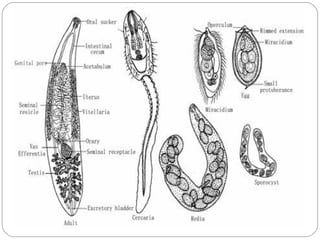
Morphology
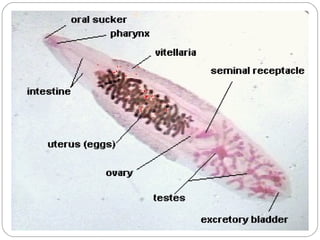
Adult worm
Flat, elongated worm, with the size 10-15×3-5 mm
They are monocious, with two suckers
The most characteristic feature is branched testis in the posterior third
of the body, and relative small ovary before them
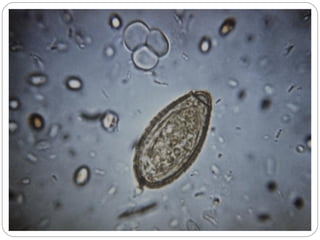
Morphology (eggs)
Small, 26-30 x 15-17 um
Ovoid, yellowish color
Operculated at one end, small knob at opposite end
Metacercariae of Clonorchis sinensis collected from digested fish. The cyst
wall is elliptical 0.16-0.20 mm long. Dark granules are in the bladder.
Epidemiology
Geography:
Asia only
Mainland China, highly endemic in southeastern China
Taiwan, Korea, Vietnam and eastern part of Russia
Reports outside of Asia are important (imported cases)
Clonorchiasis is endemic where there is poor sanitation, and
The right snail host, and
The right fish (cyprinoid fish) as the second intermediate
host, and
A population who eats raw, poorly pickled, smoked, dried
or salted freshwater fish
Geographic Distribution
Japan
Korea
China
Taiwan
Vietnam
Definitive Hosts
Any fish eating mammals
Humans
Humans are an incidental host, the natural definitive hosts are
those that fallow in this list
Pigs
Dogs
Cats
Rats
Camels
Intermediate Hosts
Snails
Fish
First intermediate host must always be a snail, mainly
Parafossarulus manchouricus
Second intermediate host is usually a fish
12 species of fish are mainly responsible for passing the
infection to humans
Source of infection: patients, infected reservior hosts:cats,
dogs, mice, pigs
Route of transmission: the infection is acquired by eating raw
or inadequately cooked freshwater fish or shrimp, which are
previously infected
Susceptibility: human is generally susceptive, related with
the dietary habits
Life Cycle
Life Cycle
 Adults in biliary ducts, embryonated eggs pass to intestine and out with the
feces
 Eggs reach water, ingested by suitable snail (P. manchouricus)
 In the snail (first intermediate host, eggs release miracidium and goes through
several stages in host (sporocyst>rediae>cercariae)
 Cercariae released from snail, free-swimming in water, penetrates under scales
of an appropriate freshwater fish (second intermediate host)
 Metacercariae encyst in the fish muscle
 Humans infected by eating raw, partially cooked, smoked or pickled fish
 Metacercariae excysts in the duodenum
 Ascends up through intestine to bile ducts
 Matures to adult in 30 days
 Worms may live 30-40 years in final host
 Carnivorous animals can serve as reservoir hosts
Critical Thinking
The asexual reproduction of C. sinensis enables an exponential
multiplication of cercaria individuals from one miracidium.
How can this aid C. sinensis?
- This aids the Clonorchis in reproduction, because it enables
the miracidium to captilatize on one chance occasion of
passively being eaten by a snail before the egg dies.
Question
Why would the cercariae want to encyst themselves in the
flesh/skin of the second intermediate host?
- The metacercarial cysts are acid-resistant, thus ensuring that
they are protected from the acidic environment of the
stomach after ingestion
Pathogenesis
Worms mechanical stimulation proliferate inflammatory
reaction in the biliary epithelium
The wall of the bile ducts thickened ,fibrous tissue around
the bile duct, and worm obstruction cause cholestasis
When bacteria infection occur, cause cholecystitis,
cholangeitis, sometimes cholelithiasis happens
Pathology
Intrahepatic bile ducts expansion, hepatomegaly, necrosis of
liver tissue
Continuous severe infection may cause liver cirrhosis
Persistent Cholestasis cause biliary liver cirrhosis
 Associate with cholangiocarcinoma and hepatic carcinoma
Clinical Manifestation
Incubation period: 1-2 months
Most person with mild
clonorchis sinensis infections are
asymptomatic, only eggs can be
found in the feces
Clinical Manifestation
Acute symptoms appear when the primary infection is
heavy: sudden onset, chill, high fever, slight jaundice,
hepatomegaly, eosinophilia, a few patients have
splenomegaly, and weeks later, enter chronic stage
Continuous reinfection: cirrhosis and portal
hypertension. In children may cause malnutrition
growth development disturbance, even dwarf
Complications
Acute or chronic cholecystitis, cholangeitis and cholelithiasis
are the most common complications
Portal liver cirrhosis: portal hepertension result in upper
gastrointestinal bleeding
Cholestatic cirrhosis
Pancreatitis
Primary carcinoma of the liver and cholangiocarcinoma
Diagnosis
Epidemiologic date:
living in or come from the endemic area
The history of eating raw or inadequately cooked freshwater fish and
shrimp
Clinical date:
gastrointestinal symptoms, hepatomegaly, neurasthenia,
cholangoitis, cholecystitis, etc.
Laboratory findings:
Discovery of characteristic eggs in feces or by duodenal aspiration
come to accurate diagnosis
Eosinophilia and positive immunologic test support the diagnosis
Laboratory Findings
Blood routine test: eosinophilia, anemia in severe infection
Eggs examination:
simple smear feces to find eggs
Stool concentration technique may increase the positive rate
Duodenal aspiration: raise the chance of finding eggs
Laboratory Findings
Immunological Test
Skin test: positive rate 97.9%, 99.5% coincide with the
result of the feces
PHA: positive rate 53.7%, 80% coincide with the result of
the feces
ELISA: positive rate 98.3%, 93.5% coincide with the result
of the feces
Differential Diagnosis
Viral hepatitis
Liver cirrhosis of other origins
Primary carcinoma of the liver
Fasciolopsiasis
Other specie of flukes infection
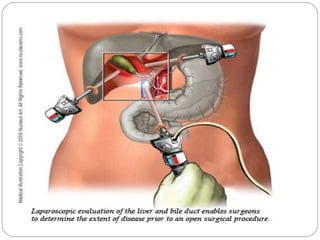
Treatment
Drugs:
Praziquantel (most effective)
Albendazole
Pathogenic Treatment
Praziquantel is the best choice of drug for the therapy
Dose: 15-25mg/kg, three times a day, for 2 days, the total dose
is 90-150mg/kg
Another choice of drug is Albendazole
Heteropathy Treatment
Prognosis
Good of the mild infection
Co-infection with viral hepatitis may make the disease severe
Prevention
Control of the source of infection:
Treat the patients and domestic animal(cats and dogs, etc.)
at the same time.
Cut off the route of transmission:
Avoid of eating inadequately cooked freshwater fish and
shrimp
Sanitary disposal of the excreta
Avoid of drinking raw water
Beware!!!
Metacercariae can remain viable even after the fish has been
pickled, salted, dried, or smoked
reference:
http://www.phac-aspc.gc.ca/msds-ftss/msds34e.html
http://animaldiversity.ummz.umich.edu/site/accounts
/information/Clonorchis_sinensis.html
http://www.k-
state.edu/parasitology/625tutorials/Clonor02.html
http://www.k-
state.edu/parasitology/625tutorials/Trematodes08.htm
l
http://en.wikipedia.org/wiki/Clonorchis_sinensis
Clonorchiasis sinensis

Clonorchiasis sinensis

  • 1.
  • 3.
    Taxonomy Kingdom : Animalia Phylum: Platyhelminthes Class : Trematoda Order : Opisthorchiida Family : Opisthorchiidae Genus : Clonorchis Species : C. sinensis *A quick note – Clonorchis sinensis was given its own genus by Looss because of the parasites branched testes as apposed to the Opisthorchis lobed testes
  • 4.
    Brief Introduction toC. sinensis “Oriental Liver Fluke” Food born parasite 601 million people are currently at risk, 570 million of which live in China and Taiwan. An estimated 30 million people are infected with C. sinensis. The parasite may live up to 45 years in in humans.
  • 6.
    Etiology Morphology Adult worm Flat, elongatedworm, with the size 10-15×3-5 mm They are monocious, with two suckers The most characteristic feature is branched testis in the posterior third of the body, and relative small ovary before them
  • 8.
    Morphology (eggs) Small, 26-30x 15-17 um Ovoid, yellowish color Operculated at one end, small knob at opposite end
  • 10.
    Metacercariae of Clonorchissinensis collected from digested fish. The cyst wall is elliptical 0.16-0.20 mm long. Dark granules are in the bladder.
  • 11.
    Epidemiology Geography: Asia only Mainland China,highly endemic in southeastern China Taiwan, Korea, Vietnam and eastern part of Russia Reports outside of Asia are important (imported cases)
  • 12.
    Clonorchiasis is endemicwhere there is poor sanitation, and The right snail host, and The right fish (cyprinoid fish) as the second intermediate host, and A population who eats raw, poorly pickled, smoked, dried or salted freshwater fish
  • 14.
  • 15.
    Definitive Hosts Any fisheating mammals Humans Humans are an incidental host, the natural definitive hosts are those that fallow in this list Pigs Dogs Cats Rats Camels
  • 16.
    Intermediate Hosts Snails Fish First intermediatehost must always be a snail, mainly Parafossarulus manchouricus Second intermediate host is usually a fish 12 species of fish are mainly responsible for passing the infection to humans
  • 17.
    Source of infection:patients, infected reservior hosts:cats, dogs, mice, pigs Route of transmission: the infection is acquired by eating raw or inadequately cooked freshwater fish or shrimp, which are previously infected Susceptibility: human is generally susceptive, related with the dietary habits
  • 18.
  • 20.
    Life Cycle  Adultsin biliary ducts, embryonated eggs pass to intestine and out with the feces  Eggs reach water, ingested by suitable snail (P. manchouricus)  In the snail (first intermediate host, eggs release miracidium and goes through several stages in host (sporocyst>rediae>cercariae)  Cercariae released from snail, free-swimming in water, penetrates under scales of an appropriate freshwater fish (second intermediate host)  Metacercariae encyst in the fish muscle  Humans infected by eating raw, partially cooked, smoked or pickled fish  Metacercariae excysts in the duodenum  Ascends up through intestine to bile ducts  Matures to adult in 30 days  Worms may live 30-40 years in final host  Carnivorous animals can serve as reservoir hosts
  • 21.
    Critical Thinking The asexualreproduction of C. sinensis enables an exponential multiplication of cercaria individuals from one miracidium. How can this aid C. sinensis? - This aids the Clonorchis in reproduction, because it enables the miracidium to captilatize on one chance occasion of passively being eaten by a snail before the egg dies.
  • 22.
    Question Why would thecercariae want to encyst themselves in the flesh/skin of the second intermediate host? - The metacercarial cysts are acid-resistant, thus ensuring that they are protected from the acidic environment of the stomach after ingestion
  • 23.
    Pathogenesis Worms mechanical stimulationproliferate inflammatory reaction in the biliary epithelium The wall of the bile ducts thickened ,fibrous tissue around the bile duct, and worm obstruction cause cholestasis When bacteria infection occur, cause cholecystitis, cholangeitis, sometimes cholelithiasis happens
  • 24.
    Pathology Intrahepatic bile ductsexpansion, hepatomegaly, necrosis of liver tissue Continuous severe infection may cause liver cirrhosis Persistent Cholestasis cause biliary liver cirrhosis  Associate with cholangiocarcinoma and hepatic carcinoma
  • 26.
    Clinical Manifestation Incubation period:1-2 months Most person with mild clonorchis sinensis infections are asymptomatic, only eggs can be found in the feces
  • 27.
    Clinical Manifestation Acute symptomsappear when the primary infection is heavy: sudden onset, chill, high fever, slight jaundice, hepatomegaly, eosinophilia, a few patients have splenomegaly, and weeks later, enter chronic stage Continuous reinfection: cirrhosis and portal hypertension. In children may cause malnutrition growth development disturbance, even dwarf
  • 29.
    Complications Acute or chroniccholecystitis, cholangeitis and cholelithiasis are the most common complications Portal liver cirrhosis: portal hepertension result in upper gastrointestinal bleeding Cholestatic cirrhosis Pancreatitis Primary carcinoma of the liver and cholangiocarcinoma
  • 33.
    Diagnosis Epidemiologic date: living inor come from the endemic area The history of eating raw or inadequately cooked freshwater fish and shrimp Clinical date: gastrointestinal symptoms, hepatomegaly, neurasthenia, cholangoitis, cholecystitis, etc. Laboratory findings: Discovery of characteristic eggs in feces or by duodenal aspiration come to accurate diagnosis Eosinophilia and positive immunologic test support the diagnosis
  • 34.
    Laboratory Findings Blood routinetest: eosinophilia, anemia in severe infection Eggs examination: simple smear feces to find eggs Stool concentration technique may increase the positive rate Duodenal aspiration: raise the chance of finding eggs
  • 35.
    Laboratory Findings Immunological Test Skintest: positive rate 97.9%, 99.5% coincide with the result of the feces PHA: positive rate 53.7%, 80% coincide with the result of the feces ELISA: positive rate 98.3%, 93.5% coincide with the result of the feces
  • 36.
    Differential Diagnosis Viral hepatitis Livercirrhosis of other origins Primary carcinoma of the liver Fasciolopsiasis Other specie of flukes infection
  • 37.
  • 38.
    Pathogenic Treatment Praziquantel isthe best choice of drug for the therapy Dose: 15-25mg/kg, three times a day, for 2 days, the total dose is 90-150mg/kg Another choice of drug is Albendazole Heteropathy Treatment
  • 40.
    Prognosis Good of themild infection Co-infection with viral hepatitis may make the disease severe
  • 41.
    Prevention Control of thesource of infection: Treat the patients and domestic animal(cats and dogs, etc.) at the same time. Cut off the route of transmission: Avoid of eating inadequately cooked freshwater fish and shrimp Sanitary disposal of the excreta Avoid of drinking raw water
  • 42.
    Beware!!! Metacercariae can remainviable even after the fish has been pickled, salted, dried, or smoked
  • 43.