
BABBULA- Acacia Arebica
BABBULA- Acacia Arebica 
Babbula a moderate sized, spiny, evergreen 
tree found throughout India.not mentained in 
classics [ samhitas ] but in 
Sodala nigantu its gum is noted as Gundra 
Raja nigantu is noted as Barbari
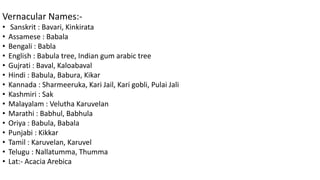
Vernacular Names:- 
• Sanskrit : Bavari, Kinkirata 
• Assamese : Babala 
• Bengali : Babla 
• English : Babula tree, Indian gum arabic tree 
• Gujrati : Baval, Kaloabaval 
• Hindi : Babula, Babura, Kikar 
• Kannada : Sharmeeruka, Kari Jail, Kari gobli, Pulai Jali 
• Kashmiri : Sak 
• Malayalam : Velutha Karuvelan 
• Marathi : Babhul, Babhula 
• Oriya : Babula, Babala 
• Punjabi : Kikkar 
• Tamil : Karuvelan, Karuvel 
• Telugu : Nallatumma, Thumma 
• Lat:- Acacia Arebica
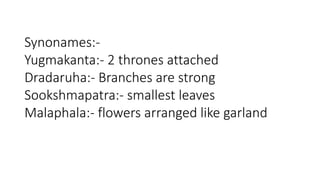
Synonames:- 
Yugmakanta:- 2 thrones attached 
Dradaruha:- Branches are strong 
Sookshmapatra:- smallest leaves 
Malaphala:- flowers arranged like garland
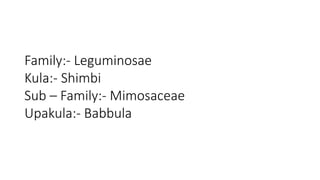
Family:- Leguminosae 
Kula:- Shimbi 
Sub – Family:- Mimosaceae 
Upakula:- Babbula
Habitate:- 
Most of the parts of India mostly in dry areas
• Three Varieties Of Acacia Arabica In Ayurveda Texts: 
• 'Telia' or Oily Babul: The plant of this variety is of medium size. 
• 'Kaudia' Babul: The plant of this variety is small and its bark is rough 
and in layers with scraped looks. It was found in 'Vidarbha' and 
'Khanadesa'. This is also known as Variety Vediana Cooke. 
• 'Ramkanta' Babul: The branches of this variety is upward, giving this 
tree the appearance of a broom. It is commonly found in Punjab, 
Rajasthan and Southern states of India. This is also known as Variety 
Cupressiformis Stewart.
Morphology:- 
The Plant: 
This evergreen tree is of medium height around 25 to 30 feet. It looks like a bush. 
The Stem & Branches: 
The bark is dark either brownish or greyish. The branches are simple, spiked. Spikes are white, 
sharp and 0.5 to 2 inch long. There are two spikes below the petiole of the leaf. 
The Leaves: 
There are 10 to 12 pair of leaflets of 1/8 to 1/4 inch long. The uppermost and lowermost leaflets 
have small glands at the roots. 
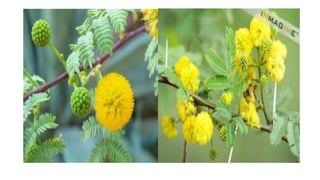
The Flowers: 
Yellow flowers of 1/2 inch diameter are sweet and fragrant. Flowering occurs in August to 
September. 
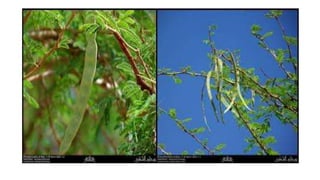
The Legume: 
It is 3 to 6 inch long, 1/2 inch wide. There are 8 to 12 seeds in the flat legume. The legume is 
constricted in between seeds. Fruition period is from January to April.
Chemical Composition:- 
Fruits:- 12-19 % Tenin 
Stem:- Gum Arebica [ Galactoaraban ] 
Ash of gum consists 
Arebic acid 
Calcium- 52% 
Megnisium – 20% 
catechin
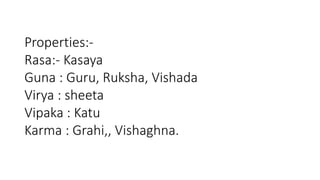
Properties:- 
Rasa:- Kasaya 
Guna : Guru, Ruksha, Vishada 
Virya : sheeta 
Vipaka : Katu 
Karma : Grahi,, Vishaghna.
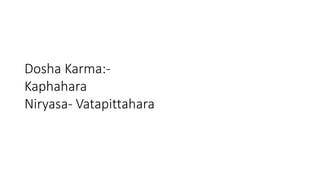
Dosha Karma:- 
Kaphahara 
Niryasa- Vatapittahara
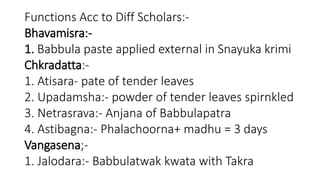
Functions Acc to Diff Scholars:- 
Bhavamisra:- 
1. Babbula paste applied external in Snayuka krimi 
Chkradatta:- 
1. Atisara- pate of tender leaves 
2. Upadamsha:- powder of tender leaves spirnkled 
3. Netrasrava:- Anjana of Babbulapatra 
4. Astibagna:- Phalachoorna+ madhu = 3 days 
Vangasena;- 
1. Jalodara:- Babbulatwak kwata with Takra
Useful Part:-Twak, Phala, Niryasa
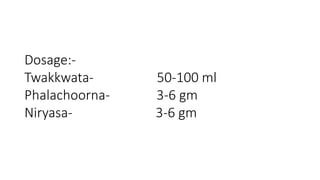
Dosage:- 
Twakkwata- 50-100 ml 
Phalachoorna- 3-6 gm 
Niryasa- 3-6 gm
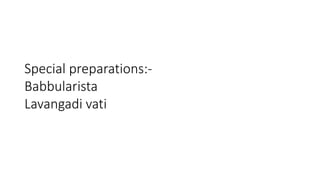
Special preparations:- 
Babbularista 
Lavangadi vati
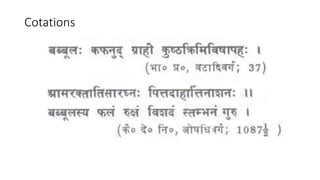
Cotations

Babbula

  • 1.
  • 2.
    BABBULA- Acacia Arebica Babbula a moderate sized, spiny, evergreen tree found throughout India.not mentained in classics [ samhitas ] but in Sodala nigantu its gum is noted as Gundra Raja nigantu is noted as Barbari
  • 3.
    Vernacular Names:- •Sanskrit : Bavari, Kinkirata • Assamese : Babala • Bengali : Babla • English : Babula tree, Indian gum arabic tree • Gujrati : Baval, Kaloabaval • Hindi : Babula, Babura, Kikar • Kannada : Sharmeeruka, Kari Jail, Kari gobli, Pulai Jali • Kashmiri : Sak • Malayalam : Velutha Karuvelan • Marathi : Babhul, Babhula • Oriya : Babula, Babala • Punjabi : Kikkar • Tamil : Karuvelan, Karuvel • Telugu : Nallatumma, Thumma • Lat:- Acacia Arebica
  • 4.
    Synonames:- Yugmakanta:- 2thrones attached Dradaruha:- Branches are strong Sookshmapatra:- smallest leaves Malaphala:- flowers arranged like garland
  • 5.
    Family:- Leguminosae Kula:-Shimbi Sub – Family:- Mimosaceae Upakula:- Babbula
  • 6.
    Habitate:- Most ofthe parts of India mostly in dry areas
  • 7.
    • Three VarietiesOf Acacia Arabica In Ayurveda Texts: • 'Telia' or Oily Babul: The plant of this variety is of medium size. • 'Kaudia' Babul: The plant of this variety is small and its bark is rough and in layers with scraped looks. It was found in 'Vidarbha' and 'Khanadesa'. This is also known as Variety Vediana Cooke. • 'Ramkanta' Babul: The branches of this variety is upward, giving this tree the appearance of a broom. It is commonly found in Punjab, Rajasthan and Southern states of India. This is also known as Variety Cupressiformis Stewart.
  • 8.
    Morphology:- The Plant: This evergreen tree is of medium height around 25 to 30 feet. It looks like a bush. The Stem & Branches: The bark is dark either brownish or greyish. The branches are simple, spiked. Spikes are white, sharp and 0.5 to 2 inch long. There are two spikes below the petiole of the leaf. The Leaves: There are 10 to 12 pair of leaflets of 1/8 to 1/4 inch long. The uppermost and lowermost leaflets have small glands at the roots. The Flowers: Yellow flowers of 1/2 inch diameter are sweet and fragrant. Flowering occurs in August to September. The Legume: It is 3 to 6 inch long, 1/2 inch wide. There are 8 to 12 seeds in the flat legume. The legume is constricted in between seeds. Fruition period is from January to April.
  • 11.
    Chemical Composition:- Fruits:-12-19 % Tenin Stem:- Gum Arebica [ Galactoaraban ] Ash of gum consists Arebic acid Calcium- 52% Megnisium – 20% catechin
  • 12.
    Properties:- Rasa:- Kasaya Guna : Guru, Ruksha, Vishada Virya : sheeta Vipaka : Katu Karma : Grahi,, Vishaghna.
  • 13.
    Dosha Karma:- Kaphahara Niryasa- Vatapittahara
  • 14.
    Functions Acc toDiff Scholars:- Bhavamisra:- 1. Babbula paste applied external in Snayuka krimi Chkradatta:- 1. Atisara- pate of tender leaves 2. Upadamsha:- powder of tender leaves spirnkled 3. Netrasrava:- Anjana of Babbulapatra 4. Astibagna:- Phalachoorna+ madhu = 3 days Vangasena;- 1. Jalodara:- Babbulatwak kwata with Takra
  • 15.
  • 16.
    Dosage:- Twakkwata- 50-100ml Phalachoorna- 3-6 gm Niryasa- 3-6 gm
  • 17.
  • 18.