




Introduction:- 
Vachellia farnesiana, also known as Acacia farnesiana, and previously 
Mimosa farnesiana, commonly known as Needle Bush, is so named 
because of the numerous thorns distributed along its branches. The 
native range of V. farnesiana is uncertain. While the point of origin is 
Mexico and Central America It is deciduous over part of its range, 
but evergreen in most locales. The species grows to a height of up to 
8 metres (26 ft) and has a life span of about 25–50 years.
Vernacular Names 
• San- Arimeda, Irimeda, Vitkhadira 
• Hin- Safed Babbula, Irimeda 
• Guj- Gandilo khair, Harmo Babal 
•Mar- Pandari Babul 
• Lat- Acacia farnesiana 
• Kan- Peek jali, Sime gonde, Kaggobbali mara 
• Kon- Kusrijhad 
• Tul- Kirijali
Synonyms:- 
Arimeda:- Arihi Dusaho Medasravoasya ithi 
Arimeda { Gum resin is irritative like enemies 
because of its foul odour } 
Vitkhadira:- Vista vat Durganditwat Vitkhadira { 
odour is similar like stool }
Family:- Mimosaceae 
Kula:- Babbula
•Gana:- 
Charaka- Udarda-Prasamana 
Sanjna-stapana 
Vagbata- used synonym ‘ Ahimaraka ‘ 
Dalhana- Arimajja , Ramaka
Habitat:-In dry lands, in most of the 
forests,the plant has been recently spread to 
many new locations as a result of human 
activity and it is considered a serious weed in 
Fiji, It is also a serious pest plant in parts of 
Australia, including north-west New South 
Wales..
Morphology :- 
Woody shrub up to 7 m high, but usually 1-3 m, very branched with an intricate 
habit, very spiny. 
Bark grey-brown smooth or scaly, 
Leaves alternate, shortly petiolated, bipinnate with 2-4 pairs of pinnulae having 
8-10 (20) pairs of leaflets each leaflets obtuse of a green-bluish colour, 3-6 x 1-2 
mm. 
Stipulate axillary pairs of Thorns 0.2-3 cm long, 
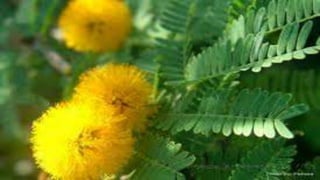
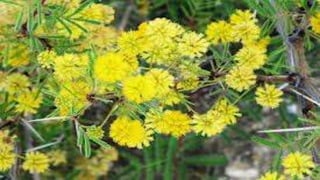
Flowers of an orange colour, very fragrant with a smell of violet, grouped in 50 
or more 1.5-2.0 cm in diameter, grouped by 2-3, or isolated on an 8-35 mm long 
slender, hairy-downy peduncle. 
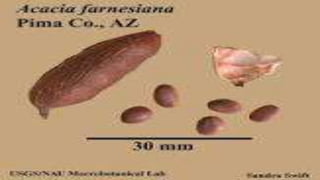
The fruit is a green pod, turning black or dark brown at maturity, thick, 
indehiscent, cylindrical, 4-8 cm long and 0.8-1.5 cm in diameter,. 
Seeds -12 to 14 seeds transversally set in the pods, ovoid, compressed, 6-7 x 4-5 
mm, with a life span 10-50 years.
Images
Chemical Composition:- 
Aromadendrin 
Naringenin 
Galloylglucose 
Ethyl gallate
Properties:- 
Guna- Laghu, Ruksa 
Rasa- Tikta, Kasaya 
Veerya- Usna 
Vipaka- Katu
Dosha Karma:- 
Kapha-vatahara
Bark 
The bark is used for its tannin content. Highly tannic barks are common in general to 
acacias, extracts of many being are used in medicine for this reason. (See cutch). 
Food 
The leaves are used as a tamarind flavoring for chutneys and the pods are roasted to 
be used in sweet and sour dishes. 
Flowers 
The flowers are processed through distillation to produce a perfume called Cassie. It 
is widely used in the perfume industry in Europe. Flowers of the plant provide the 
perfume essence from which the biologically important sesquiterpenoid farnesol is 
named. 
Scented ointments from Cassie are made in India. 
Vachellia farnesiana (L.) Willd. - sweet acacia seeds 
Foliage 
The foliage is a significant source of forage in much of its range, with a protein 
content of around 18%.
• Seed pods 
The concentration of tannin in the seed pods is about 23%. 
Seeds 
The seeds of V. farnesiana are non-toxic to humans and are a valuable food 
source for people throughout the plant's range. The ripe seeds are put through a 
press to make oil for cooking. Nonetheless an anecdotal report has been made 
that in Brazil some people use the seeds of V. farnesiana to eliminate rabid dogs. 
This is attributed to an unnamed toxic alkaloid. 
Forage 
The tree makes good forage for bees. 
Dyes and Inks 
A black pigment is extracted from the bark and fruit. 
Perfume 
Acacia farnesiana flowers are distilled in the south of France to make an essential 
oil called Cassie which is used as a basis for aromatherapy and perfume.
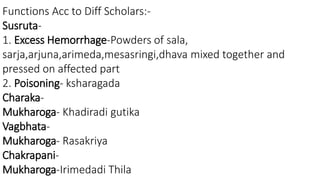
Functions Acc to Diff Scholars:- 
Susruta- 
1. Excess Hemorrhage-Powders of sala, 
sarja,arjuna,arimeda,mesasringi,dhava mixed together and 
pressed on affected part 
2. Poisoning- ksharagada 
Charaka- 
Mukharoga- Khadiradi gutika 
Vagbhata- 
Mukharoga- Rasakriya 
Chakrapani- 
Mukharoga-Irimedadi Thila
Useful Part:- Heart- wood
Dosage:- Decoction- 50-100 ml
Special preparations:- 
Arimedadi Thila 
Ksharagada 
Khadiradi Gutika
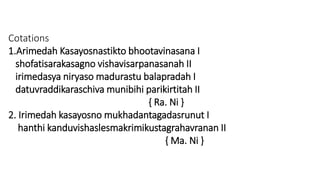
Cotations 
1.Arimedah Kasayosnastikto bhootavinasana I 
shofatisarakasagno vishavisarpanasanah II 
irimedasya niryaso madurastu balapradah I 
datuvraddikaraschiva munibihi parikirtitah II 
{ Ra. Ni } 
2. Irimedah kasayosno mukhadantagadasrunut I 
hanthi kanduvishaslesmakrimikustagrahavranan II 
{ Ma. Ni }

Irimeda

  • 1.
    Introduction:- Vachellia farnesiana,also known as Acacia farnesiana, and previously Mimosa farnesiana, commonly known as Needle Bush, is so named because of the numerous thorns distributed along its branches. The native range of V. farnesiana is uncertain. While the point of origin is Mexico and Central America It is deciduous over part of its range, but evergreen in most locales. The species grows to a height of up to 8 metres (26 ft) and has a life span of about 25–50 years.
  • 2.
    Vernacular Names •San- Arimeda, Irimeda, Vitkhadira • Hin- Safed Babbula, Irimeda • Guj- Gandilo khair, Harmo Babal •Mar- Pandari Babul • Lat- Acacia farnesiana • Kan- Peek jali, Sime gonde, Kaggobbali mara • Kon- Kusrijhad • Tul- Kirijali
  • 3.
    Synonyms:- Arimeda:- ArihiDusaho Medasravoasya ithi Arimeda { Gum resin is irritative like enemies because of its foul odour } Vitkhadira:- Vista vat Durganditwat Vitkhadira { odour is similar like stool }
  • 4.
  • 5.
    •Gana:- Charaka- Udarda-Prasamana Sanjna-stapana Vagbata- used synonym ‘ Ahimaraka ‘ Dalhana- Arimajja , Ramaka
  • 6.
    Habitat:-In dry lands,in most of the forests,the plant has been recently spread to many new locations as a result of human activity and it is considered a serious weed in Fiji, It is also a serious pest plant in parts of Australia, including north-west New South Wales..
  • 7.
    Morphology :- Woodyshrub up to 7 m high, but usually 1-3 m, very branched with an intricate habit, very spiny. Bark grey-brown smooth or scaly, Leaves alternate, shortly petiolated, bipinnate with 2-4 pairs of pinnulae having 8-10 (20) pairs of leaflets each leaflets obtuse of a green-bluish colour, 3-6 x 1-2 mm. Stipulate axillary pairs of Thorns 0.2-3 cm long, Flowers of an orange colour, very fragrant with a smell of violet, grouped in 50 or more 1.5-2.0 cm in diameter, grouped by 2-3, or isolated on an 8-35 mm long slender, hairy-downy peduncle. The fruit is a green pod, turning black or dark brown at maturity, thick, indehiscent, cylindrical, 4-8 cm long and 0.8-1.5 cm in diameter,. Seeds -12 to 14 seeds transversally set in the pods, ovoid, compressed, 6-7 x 4-5 mm, with a life span 10-50 years.
  • 8.
  • 11.
    Chemical Composition:- Aromadendrin Naringenin Galloylglucose Ethyl gallate
  • 12.
    Properties:- Guna- Laghu,Ruksa Rasa- Tikta, Kasaya Veerya- Usna Vipaka- Katu
  • 13.
  • 14.
    Bark The barkis used for its tannin content. Highly tannic barks are common in general to acacias, extracts of many being are used in medicine for this reason. (See cutch). Food The leaves are used as a tamarind flavoring for chutneys and the pods are roasted to be used in sweet and sour dishes. Flowers The flowers are processed through distillation to produce a perfume called Cassie. It is widely used in the perfume industry in Europe. Flowers of the plant provide the perfume essence from which the biologically important sesquiterpenoid farnesol is named. Scented ointments from Cassie are made in India. Vachellia farnesiana (L.) Willd. - sweet acacia seeds Foliage The foliage is a significant source of forage in much of its range, with a protein content of around 18%.
  • 15.
    • Seed pods The concentration of tannin in the seed pods is about 23%. Seeds The seeds of V. farnesiana are non-toxic to humans and are a valuable food source for people throughout the plant's range. The ripe seeds are put through a press to make oil for cooking. Nonetheless an anecdotal report has been made that in Brazil some people use the seeds of V. farnesiana to eliminate rabid dogs. This is attributed to an unnamed toxic alkaloid. Forage The tree makes good forage for bees. Dyes and Inks A black pigment is extracted from the bark and fruit. Perfume Acacia farnesiana flowers are distilled in the south of France to make an essential oil called Cassie which is used as a basis for aromatherapy and perfume.
  • 16.
    Functions Acc toDiff Scholars:- Susruta- 1. Excess Hemorrhage-Powders of sala, sarja,arjuna,arimeda,mesasringi,dhava mixed together and pressed on affected part 2. Poisoning- ksharagada Charaka- Mukharoga- Khadiradi gutika Vagbhata- Mukharoga- Rasakriya Chakrapani- Mukharoga-Irimedadi Thila
  • 17.
  • 18.
  • 19.
    Special preparations:- ArimedadiThila Ksharagada Khadiradi Gutika
  • 20.
    Cotations 1.Arimedah Kasayosnastiktobhootavinasana I shofatisarakasagno vishavisarpanasanah II irimedasya niryaso madurastu balapradah I datuvraddikaraschiva munibihi parikirtitah II { Ra. Ni } 2. Irimedah kasayosno mukhadantagadasrunut I hanthi kanduvishaslesmakrimikustagrahavranan II { Ma. Ni }