AVB 3: Aircraft ControlInstructed by CCPL G.Fleming
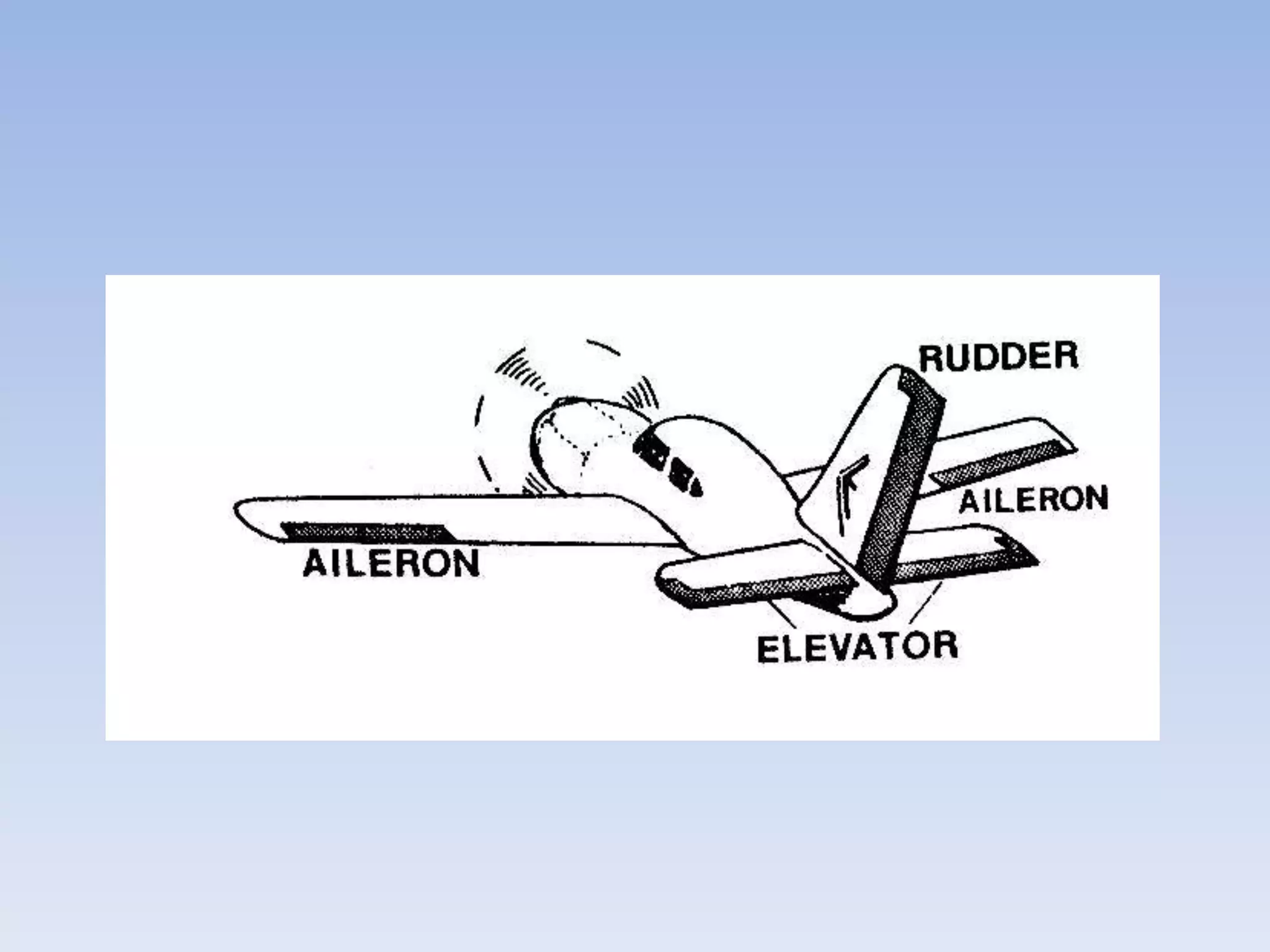
ObjectivesIdentify the following control surfaces:(1). Aileron;(2). Rudder;(3). Elevator;(4). Trim tab.b. List the primary effects of the elevator, rudder and aileron flight controls on aircraft movement in flight about the longitudinal, lateral and normal (vertical) axes.
AileronsThey control the lateral (ROLL) movement of the aircraft. To bank an aeroplanethe control column is moved to the left or right.This moves the ailerons, which are situated at the trailing edge of the wings normally at the outer edge near the wing tips.
To bank to the left, the left aileron goes up causing a decrease in lift on the left wing, at the same time the right side aileron goes down causing an increase in lift and the aeroplane will bank to the left.This is the primary effect; the secondary effect is to cause YAW, as during a bank the nose will have a tendency to slip sideways.
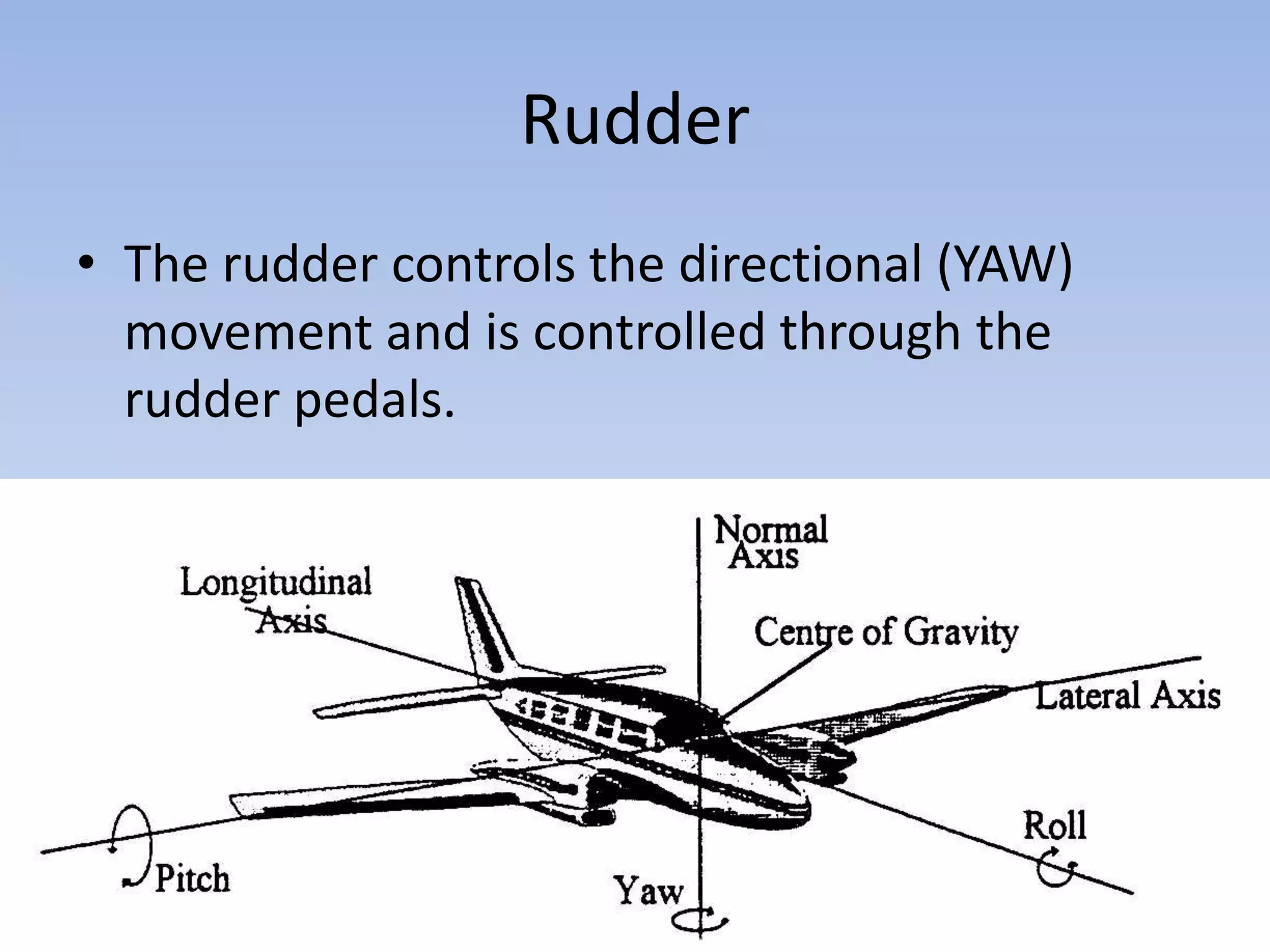
RudderThe rudder controls the directional (YAW) movement and is controlled through the rudder pedals.
This is the primary effect of rudder movement.The secondary effect is to produce a roll as yawing of the nose to one side will cause the outer wing to speed up, increased lift is the result and a consequent slight rolling.
ElevatorThe elevators control the lateral (PITCH) of the aircraft.The up and down movement of the nose is known as PITCH and can be controlled by the movement of the control column fore and aft.
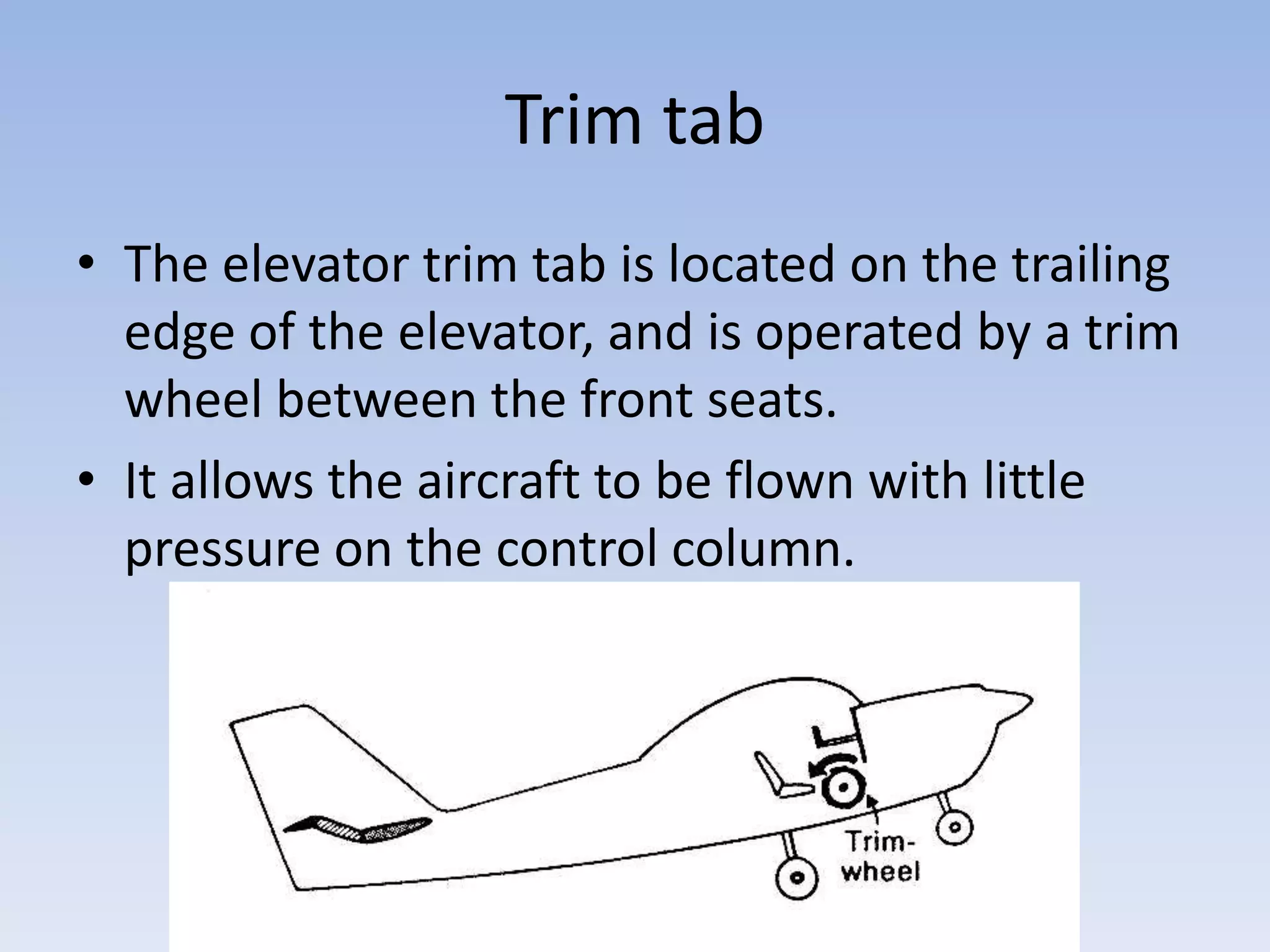
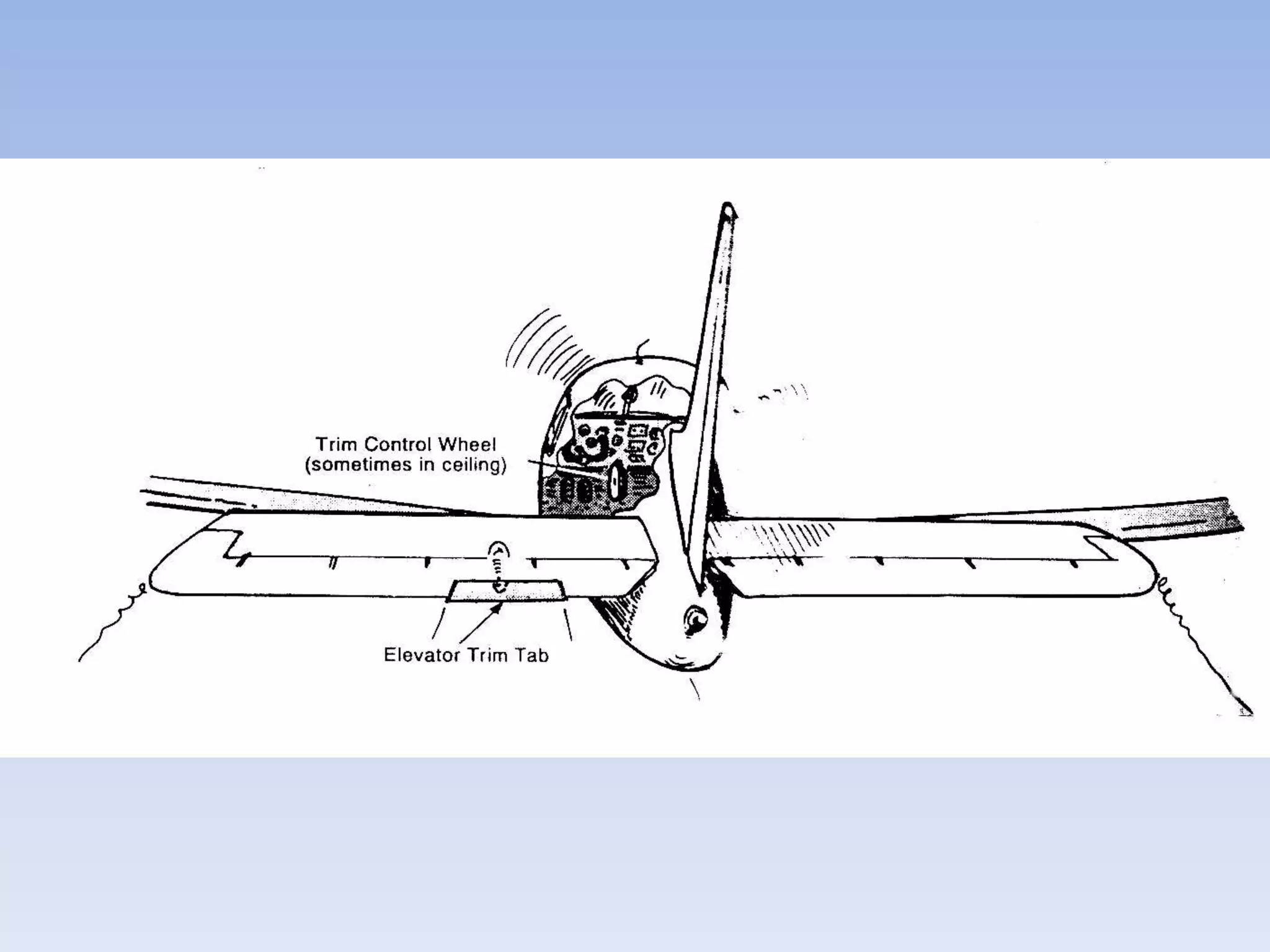
Trim tabThe elevator trim tab is located on the trailing edge of the elevator, and is operated by a trim wheel between the front seats. It allows the aircraft to be flown with little pressure on the control column.
QUESTIONS???
QUIZWhat is the primary controls of the ailerons?What is the secondary controls of the rudder?Where can I find the elevators?Where can I find the trim tab?

Avb 3: Aircraft Control Instructed By CCPL G. Fleming

  • 1.
    AVB 3: AircraftControlInstructed by CCPL G.Fleming
  • 2.
    ObjectivesIdentify the followingcontrol surfaces:(1). Aileron;(2). Rudder;(3). Elevator;(4). Trim tab.b. List the primary effects of the elevator, rudder and aileron flight controls on aircraft movement in flight about the longitudinal, lateral and normal (vertical) axes.
  • 4.
    AileronsThey control thelateral (ROLL) movement of the aircraft. To bank an aeroplanethe control column is moved to the left or right.This moves the ailerons, which are situated at the trailing edge of the wings normally at the outer edge near the wing tips.
  • 5.
    To bank tothe left, the left aileron goes up causing a decrease in lift on the left wing, at the same time the right side aileron goes down causing an increase in lift and the aeroplane will bank to the left.This is the primary effect; the secondary effect is to cause YAW, as during a bank the nose will have a tendency to slip sideways.
  • 6.
    RudderThe rudder controlsthe directional (YAW) movement and is controlled through the rudder pedals.
  • 7.
    This is theprimary effect of rudder movement.The secondary effect is to produce a roll as yawing of the nose to one side will cause the outer wing to speed up, increased lift is the result and a consequent slight rolling.
  • 8.
    ElevatorThe elevators controlthe lateral (PITCH) of the aircraft.The up and down movement of the nose is known as PITCH and can be controlled by the movement of the control column fore and aft.
  • 9.
    Trim tabThe elevatortrim tab is located on the trailing edge of the elevator, and is operated by a trim wheel between the front seats. It allows the aircraft to be flown with little pressure on the control column.
  • 11.
  • 12.
    QUIZWhat is theprimary controls of the ailerons?What is the secondary controls of the rudder?Where can I find the elevators?Where can I find the trim tab?