


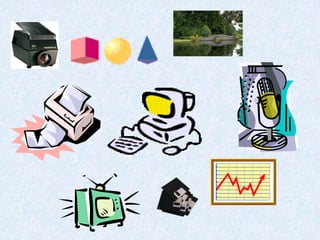

EDUCATIONAL MEDIA
Presented by
Mrs. Suja Santosh
Professor,
RVS College of Nursing, Sulur, Coimbatore
Outline of Educational Media
• Definition
• Purpose
• Principles
• Sources
• Types
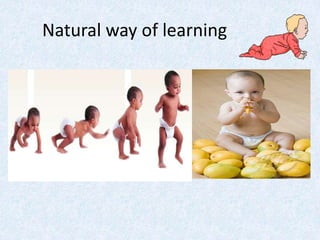
Child identifies the smell & warmth of
the mother
Natural way of learning
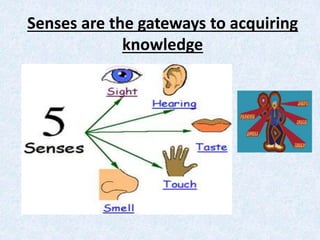
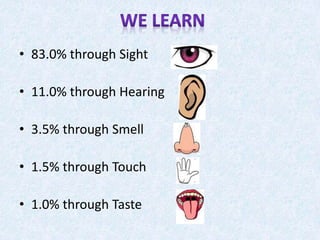
Senses are the gateways to acquiring
knowledge
• 83.0% through Sight
• 11.0% through Hearing
• 3.5% through Smell
• 1.5% through Touch
• 1.0% through Taste
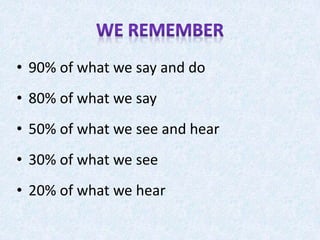
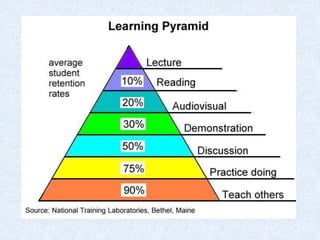
• 90% of what we say and do
• 80% of what we say
• 50% of what we see and hear
• 30% of what we see
• 20% of what we hear
Sensory experiences are mixed
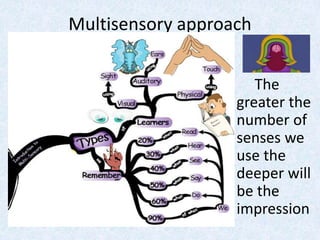
Multisensory approach
The
greater the
number of
senses we
use the
deeper will
be the
impression
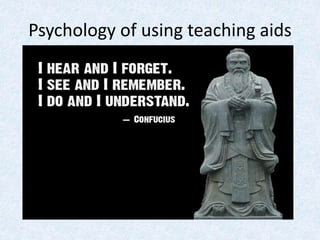
Psychology of using teaching aids
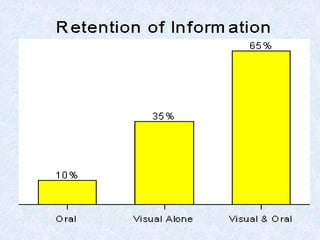
I SEE I REMEMBER
One
picture
worth ten
thousand
words-
chinese
proverb
I DO I UNDERSTAND
An ounce of experience is better than
a tonne of theory
(1 tonne = 35273.9619 ounces )
• The task force appointed by the department of
Audi-visual institution of National Education
Association of U.S.A defined the Educational
media “as those things which are manipulated ,
seen, heard or talked about , plus the materials
which facilitates such activity”
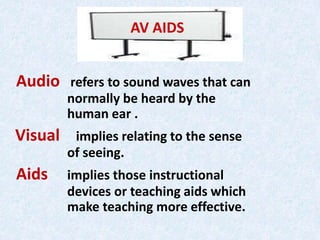
Audio refers to sound waves that can
normally be heard by the
human ear .
Visual implies relating to the sense
of seeing.
Aids implies those instructional
devices or teaching aids which
make teaching more effective.
AV AIDS
Audio Visual Aids
are those instructional devices that
may be used by a teacher or a
communicator in order to facilitate
better understanding on the part of
learners by involving their many
senses, particularly those relating to
seeing and hearing
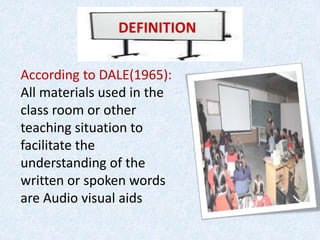
DEFINITION
According to DALE(1965):
All materials used in the
class room or other
teaching situation to
facilitate the
understanding of the
written or spoken words
are Audio visual aids
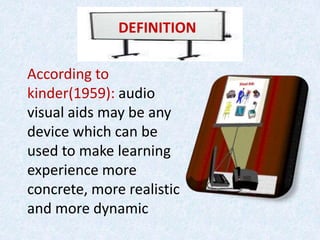
DEFINITION
According to
kinder(1959): audio
visual aids may be any
device which can be
used to make learning
experience more
concrete, more realistic
and more dynamic
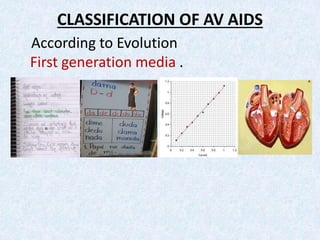
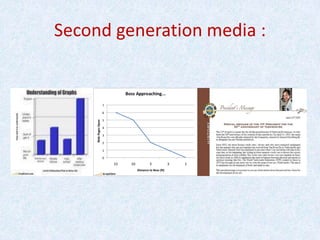
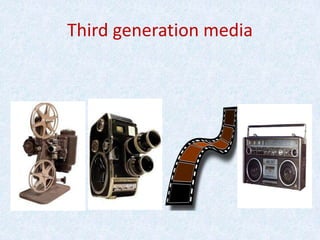
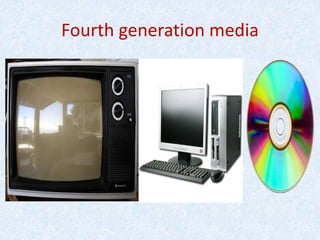
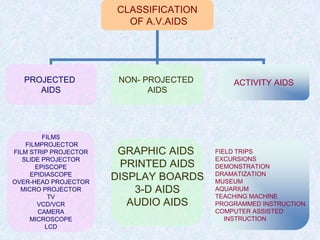
CLASSIFICATION OF AV AIDS
According to Evolution
First generation media .
Second generation media :
Third generation media
Fourth generation media
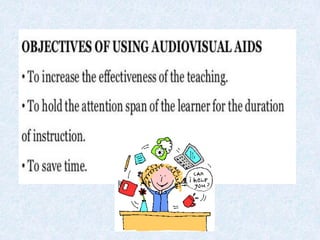
PURPOSE OF AUDIO- VISUAL AIDS
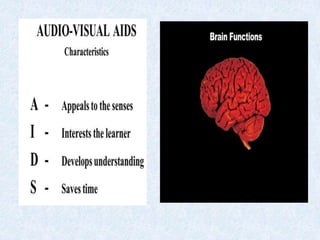
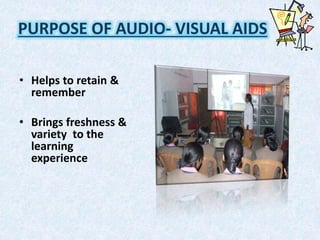
• Helps to retain &
remember
• Brings freshness &
variety to the
learning
experience
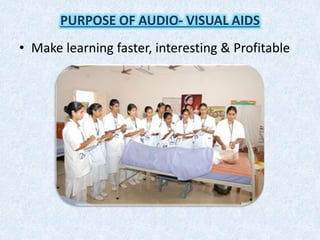
• Make learning faster, interesting & Profitable
PURPOSE OF AUDIO- VISUAL AIDS
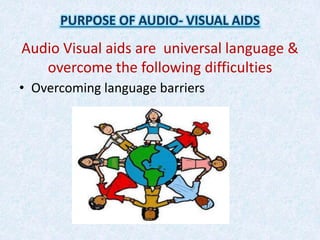
Audio Visual aids are universal language &
overcome the following difficulties
• Overcoming language barriers
PURPOSE OF AUDIO- VISUAL AIDS
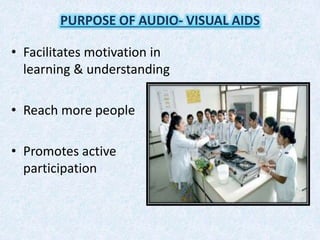
• Facilitates motivation in
learning & understanding
• Reach more people
• Promotes active
participation
PURPOSE OF AUDIO- VISUAL AIDS
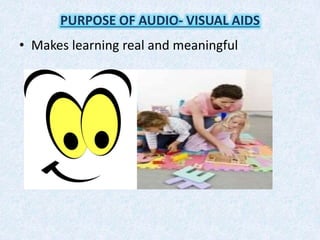
• Makes learning real and meaningful
PURPOSE OF AUDIO- VISUAL AIDS
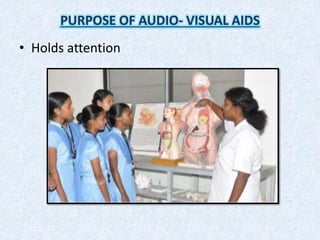
• Holds attention
PURPOSE OF AUDIO- VISUAL AIDS
• Government & Non-Govt Organizations
• Educational Organizations
Central health education Dept. located at New Delhi
State Dept. of education
• Professional organizations
• National & International Voluntary
Organizations
• Public libraries & museums
• Journals concern with educational media
• Commercial markets
SOURCES OF A.V.AIDS
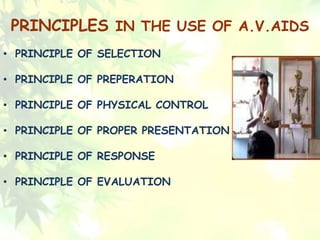
PRINCIPLES IN THE USE OF A.V.AIDS
• PRINCIPLE OF SELECTION
• PRINCIPLE OF PREPERATION
• PRINCIPLE OF PHYSICAL CONTROL
• PRINCIPLE OF PROPER PRESENTATION
• PRINCIPLE OF RESPONSE
• PRINCIPLE OF EVALUATION
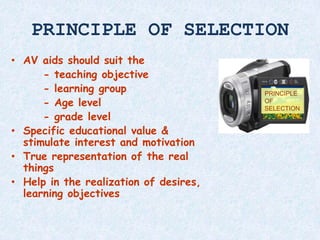
PRINCIPLE OF SELECTION
• AV aids should suit the
- teaching objective
- learning group
- Age level
- grade level
• Specific educational value &
stimulate interest and motivation
• True representation of the real
things
• Help in the realization of desires,
learning objectives
PRINCIPLE
OF
SELECTION
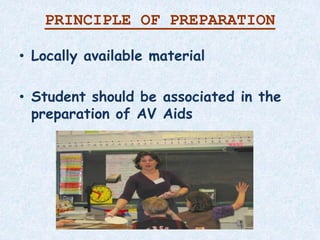
PRINCIPLE OF PREPARATION
• Locally available material
• Student should be associated in the
preparation of AV Aids
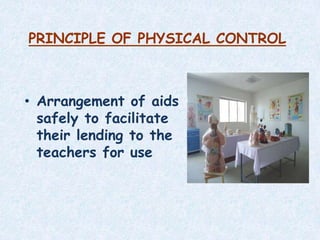
PRINCIPLE OF PHYSICAL CONTROL
• Arrangement of aids
safely to facilitate
their lending to the
teachers for use
PRINCIPLE OF PROPER PRESENTATION
• Careful visualize the teaching
aids before actual presentation
• fully acquaint themselves with use and manipulation of
the aids to be shown in the class
• Adequate handling of aid to prevent damage
• Display properly so that all the students are able to
see it to derive maximum benefit out of it
• Avoid distraction of all kinds
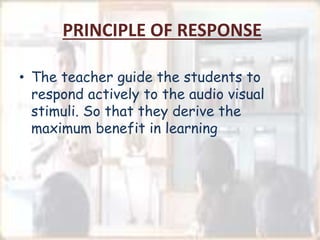
PRINCIPLE OF RESPONSE
• The teacher guide the students to
respond actively to the audio visual
stimuli. So that they derive the
maximum benefit in learning
PRINCIPLE OF EVALUATION
• Continuous evaluation is necessary
CRITERIA FOR SELECTION OF
AV AIDS
• Materials give a true picture of idea
they present
• Contribute meaningful content
• Appropriate material
• Satisfied physical condition
• Critical mind
• Improve human relation
• Material worth with time and effort
GUIDES FOR SELECTING AND
MAKING AV AIDS
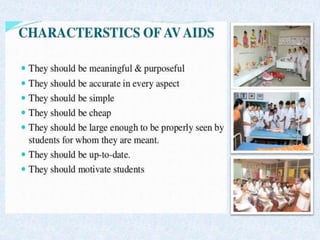
• Easy to see and understand
• Simple and direct
• Easy to handle and transport
• Emphasize the key point
• Good working condition
• Time and place
• Please the senses
• Accurate upto date ideas
• Encourage the views to eye your ideas
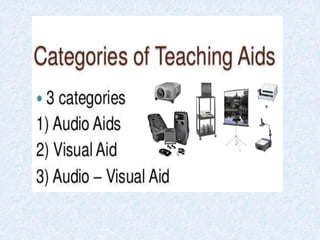
CLASSIFICATION
OF A.V.AIDS
PROJECTED
AIDS
NON- PROJECTED
AIDS
ACTIVITY AIDS
FILMS
FILMPROJECTOR
FILM STRIP PROJECTOR
SLIDE PROJECTOR
EPISCOPE
EPIDIASCOPE
OVER-HEAD PROJECTOR
MICRO PROJECTOR
TV
VCD/VCR
CAMERA
MICROSCOPE
LCD
FIELD TRIPS
EXCURSIONS
DEMONSTRATION
DRAMATIZATION
MUSEUM
AQUARIUM
TEACHING MACHINE
PROGRAMMED INSTRUCTION
COMPUTER ASSISTED
INSTRUCTION
GRAPHIC AIDS
PRINTED AIDS
DISPLAY BOARDS
3-D AIDS
AUDIO AIDS
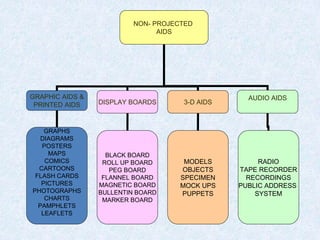
NON- PROJECTED
AIDS
GRAPHIC AIDS &
PRINTED AIDS DISPLAY BOARDS 3-D AIDS
AUDIO AIDS
GRAPHS
DIAGRAMS
POSTERS
MAPS
COMICS
CARTOONS
FLASH CARDS
PICTURES
PHOTOGRAPHS
CHARTS
PAMPHLETS
LEAFLETS
BLACK BOARD
ROLL UP BOARD
PEG BOARD
FLANNEL BOARD
MAGNETIC BOARD
BULLENTIN BOARD
MARKER BOARD
MODELS
OBJECTS
SPECIMEN
MOCK UPS
PUPPETS
RADIO
TAPE RECORDER
RECORDINGS
PUBLIC ADDRESS
SYSTEM
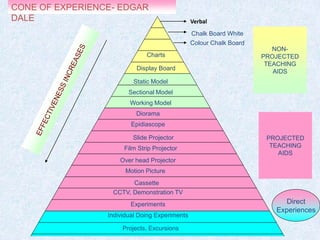
NON-
PROJECTED
TEACHING
AIDS
Verbal
Chalk Board White
Colour Chalk Board
Charts
Display Board
Static Model
Sectional Model
Working Model
Diorama
Epidiascope
Slide Projector
Film Strip Projector
Over head Projector
Motion Picture
Cassette
Experiments
Individual Doing Experiments
Projects, Excursions
CCTV, Demonstration TV
PROJECTED
TEACHING
AIDS
Direct
Experiences
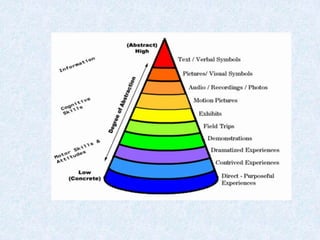
CONE OF EXPERIENCE- EDGAR
DALE
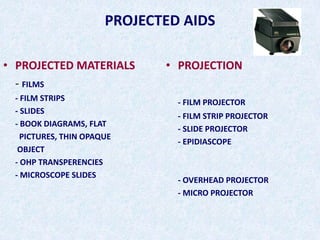
PROJECTED AIDS
• PROJECTED MATERIALS
- FILMS
- FILM STRIPS
- SLIDES
- BOOK DIAGRAMS, FLAT
PICTURES, THIN OPAQUE
OBJECT
- OHP TRANSPERENCIES
- MICROSCOPE SLIDES
• PROJECTION
- FILM PROJECTOR
- FILM STRIP PROJECTOR
- SLIDE PROJECTOR
- EPIDIASCOPE
- OVERHEAD PROJECTOR
- MICRO PROJECTOR
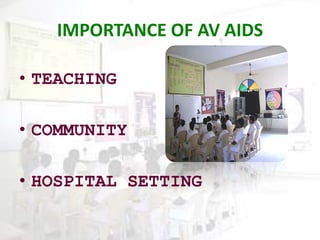
IMPORTANCE OF AV AIDS
• TEACHING
• COMMUNITY
• HOSPITAL SETTING
AV Aids -Introduction

AV Aids -Introduction

  • 1.
    EDUCATIONAL MEDIA Presented by Mrs.Suja Santosh Professor, RVS College of Nursing, Sulur, Coimbatore
  • 2.
    Outline of EducationalMedia • Definition • Purpose • Principles • Sources • Types
  • 3.
    Child identifies thesmell & warmth of the mother
  • 4.
  • 5.
    Senses are thegateways to acquiring knowledge
  • 6.
    • 83.0% throughSight • 11.0% through Hearing • 3.5% through Smell • 1.5% through Touch • 1.0% through Taste
  • 7.
    • 90% ofwhat we say and do • 80% of what we say • 50% of what we see and hear • 30% of what we see • 20% of what we hear
  • 8.
  • 9.
    Multisensory approach The greater the numberof senses we use the deeper will be the impression
  • 10.
    Psychology of usingteaching aids
  • 11.
    I SEE IREMEMBER One picture worth ten thousand words- chinese proverb
  • 12.
    I DO IUNDERSTAND An ounce of experience is better than a tonne of theory (1 tonne = 35273.9619 ounces )
  • 14.
    • The taskforce appointed by the department of Audi-visual institution of National Education Association of U.S.A defined the Educational media “as those things which are manipulated , seen, heard or talked about , plus the materials which facilitates such activity”
  • 16.
    Audio refers tosound waves that can normally be heard by the human ear . Visual implies relating to the sense of seeing. Aids implies those instructional devices or teaching aids which make teaching more effective. AV AIDS
  • 19.
    Audio Visual Aids arethose instructional devices that may be used by a teacher or a communicator in order to facilitate better understanding on the part of learners by involving their many senses, particularly those relating to seeing and hearing
  • 20.
    DEFINITION According to DALE(1965): Allmaterials used in the class room or other teaching situation to facilitate the understanding of the written or spoken words are Audio visual aids
  • 21.
    DEFINITION According to kinder(1959): audio visualaids may be any device which can be used to make learning experience more concrete, more realistic and more dynamic
  • 24.
    CLASSIFICATION OF AVAIDS According to Evolution First generation media .
  • 25.
  • 26.
  • 27.
  • 28.
    PURPOSE OF AUDIO-VISUAL AIDS • Helps to retain & remember • Brings freshness & variety to the learning experience
  • 29.
    • Make learningfaster, interesting & Profitable PURPOSE OF AUDIO- VISUAL AIDS
  • 30.
    Audio Visual aidsare universal language & overcome the following difficulties • Overcoming language barriers PURPOSE OF AUDIO- VISUAL AIDS
  • 31.
    • Facilitates motivationin learning & understanding • Reach more people • Promotes active participation PURPOSE OF AUDIO- VISUAL AIDS
  • 32.
    • Makes learningreal and meaningful PURPOSE OF AUDIO- VISUAL AIDS
  • 33.
    • Holds attention PURPOSEOF AUDIO- VISUAL AIDS
  • 34.
    • Government &Non-Govt Organizations • Educational Organizations Central health education Dept. located at New Delhi State Dept. of education • Professional organizations • National & International Voluntary Organizations • Public libraries & museums • Journals concern with educational media • Commercial markets SOURCES OF A.V.AIDS
  • 35.
    PRINCIPLES IN THEUSE OF A.V.AIDS • PRINCIPLE OF SELECTION • PRINCIPLE OF PREPERATION • PRINCIPLE OF PHYSICAL CONTROL • PRINCIPLE OF PROPER PRESENTATION • PRINCIPLE OF RESPONSE • PRINCIPLE OF EVALUATION
  • 36.
    PRINCIPLE OF SELECTION •AV aids should suit the - teaching objective - learning group - Age level - grade level • Specific educational value & stimulate interest and motivation • True representation of the real things • Help in the realization of desires, learning objectives PRINCIPLE OF SELECTION
  • 37.
    PRINCIPLE OF PREPARATION •Locally available material • Student should be associated in the preparation of AV Aids
  • 38.
    PRINCIPLE OF PHYSICALCONTROL • Arrangement of aids safely to facilitate their lending to the teachers for use
  • 39.
    PRINCIPLE OF PROPERPRESENTATION • Careful visualize the teaching aids before actual presentation • fully acquaint themselves with use and manipulation of the aids to be shown in the class • Adequate handling of aid to prevent damage • Display properly so that all the students are able to see it to derive maximum benefit out of it • Avoid distraction of all kinds
  • 40.
    PRINCIPLE OF RESPONSE •The teacher guide the students to respond actively to the audio visual stimuli. So that they derive the maximum benefit in learning
  • 41.
    PRINCIPLE OF EVALUATION •Continuous evaluation is necessary
  • 42.
    CRITERIA FOR SELECTIONOF AV AIDS • Materials give a true picture of idea they present • Contribute meaningful content • Appropriate material • Satisfied physical condition • Critical mind • Improve human relation • Material worth with time and effort
  • 43.
    GUIDES FOR SELECTINGAND MAKING AV AIDS • Easy to see and understand • Simple and direct • Easy to handle and transport • Emphasize the key point • Good working condition • Time and place • Please the senses • Accurate upto date ideas • Encourage the views to eye your ideas
  • 44.
    CLASSIFICATION OF A.V.AIDS PROJECTED AIDS NON- PROJECTED AIDS ACTIVITYAIDS FILMS FILMPROJECTOR FILM STRIP PROJECTOR SLIDE PROJECTOR EPISCOPE EPIDIASCOPE OVER-HEAD PROJECTOR MICRO PROJECTOR TV VCD/VCR CAMERA MICROSCOPE LCD FIELD TRIPS EXCURSIONS DEMONSTRATION DRAMATIZATION MUSEUM AQUARIUM TEACHING MACHINE PROGRAMMED INSTRUCTION COMPUTER ASSISTED INSTRUCTION GRAPHIC AIDS PRINTED AIDS DISPLAY BOARDS 3-D AIDS AUDIO AIDS
  • 45.
    NON- PROJECTED AIDS GRAPHIC AIDS& PRINTED AIDS DISPLAY BOARDS 3-D AIDS AUDIO AIDS GRAPHS DIAGRAMS POSTERS MAPS COMICS CARTOONS FLASH CARDS PICTURES PHOTOGRAPHS CHARTS PAMPHLETS LEAFLETS BLACK BOARD ROLL UP BOARD PEG BOARD FLANNEL BOARD MAGNETIC BOARD BULLENTIN BOARD MARKER BOARD MODELS OBJECTS SPECIMEN MOCK UPS PUPPETS RADIO TAPE RECORDER RECORDINGS PUBLIC ADDRESS SYSTEM
  • 46.
    NON- PROJECTED TEACHING AIDS Verbal Chalk Board White ColourChalk Board Charts Display Board Static Model Sectional Model Working Model Diorama Epidiascope Slide Projector Film Strip Projector Over head Projector Motion Picture Cassette Experiments Individual Doing Experiments Projects, Excursions CCTV, Demonstration TV PROJECTED TEACHING AIDS Direct Experiences CONE OF EXPERIENCE- EDGAR DALE
  • 47.
    PROJECTED AIDS • PROJECTEDMATERIALS - FILMS - FILM STRIPS - SLIDES - BOOK DIAGRAMS, FLAT PICTURES, THIN OPAQUE OBJECT - OHP TRANSPERENCIES - MICROSCOPE SLIDES • PROJECTION - FILM PROJECTOR - FILM STRIP PROJECTOR - SLIDE PROJECTOR - EPIDIASCOPE - OVERHEAD PROJECTOR - MICRO PROJECTOR
  • 49.
    IMPORTANCE OF AVAIDS • TEACHING • COMMUNITY • HOSPITAL SETTING