Downloaded 468 times
























![CHEMICAL EXAMINATION
Fecal Osmotic Gap
• Fecal osmotic gap is calculated from concentration of
electrolytes in stool water by the formula 290-2([Na+] + [K+]).
(290 is the assumed plasma osmolality).
• In osmotic diarrhea, osmotic gap >150 mOsm/kg.
• In secretory diarrhea, osmotic gap < 50 mOsm/kg.
Fecal pH
• Stool pH below 5.6 is characteristic of carbohydrate
malabsorption.](https://image.slidesharecdn.com/stoolexamination-200503125125/75/Stool-Examination-103-2048.jpg)


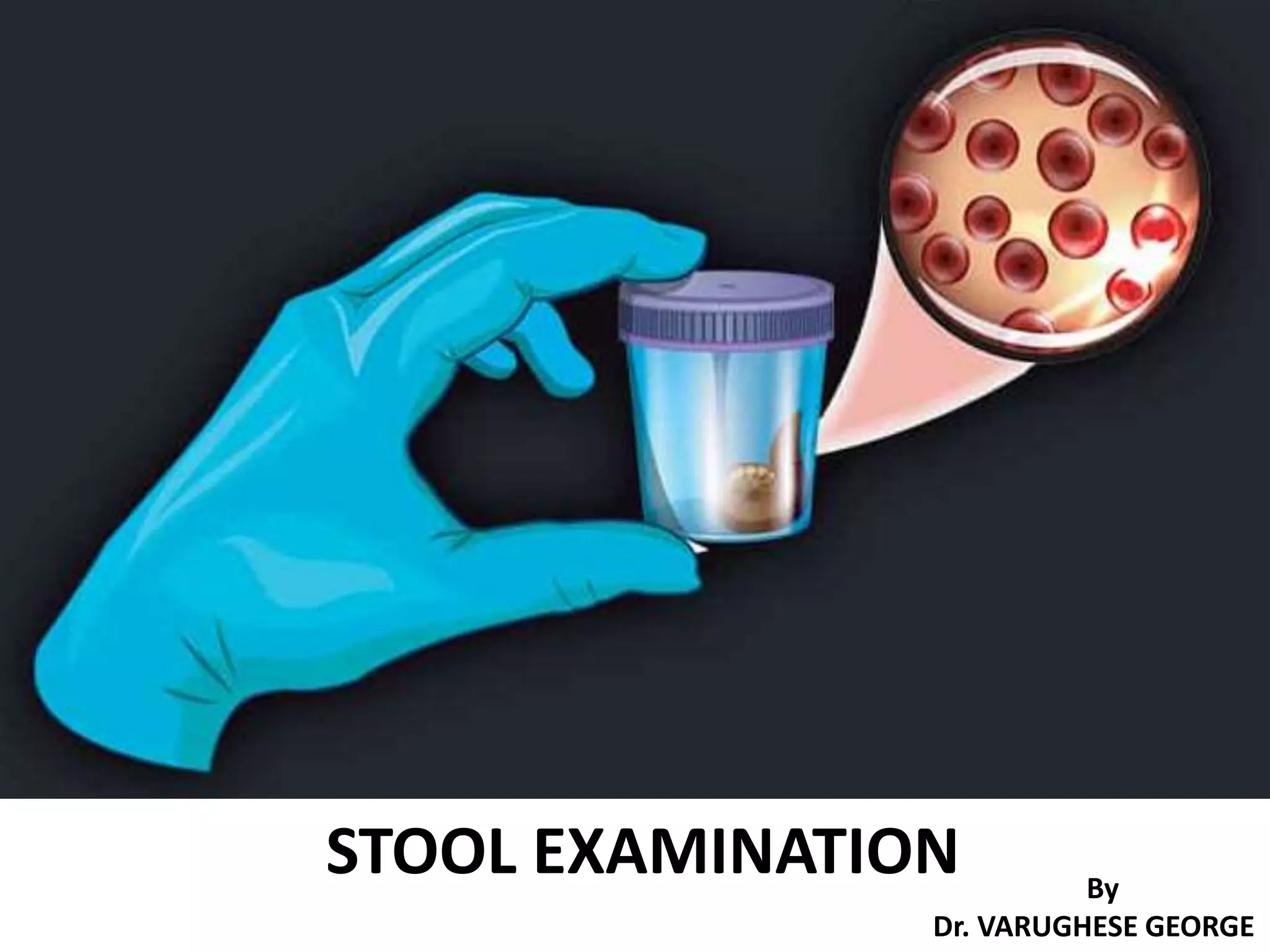
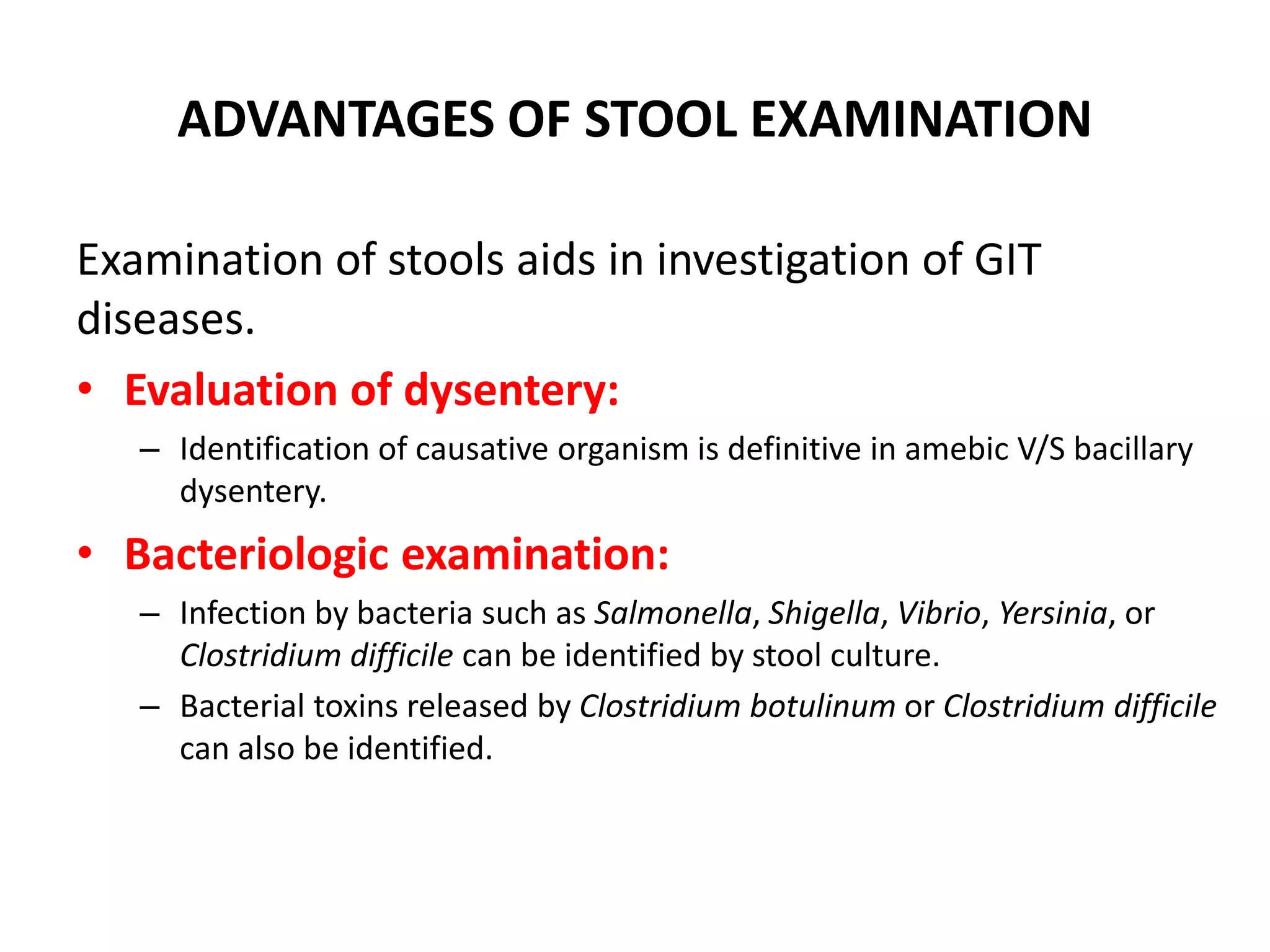
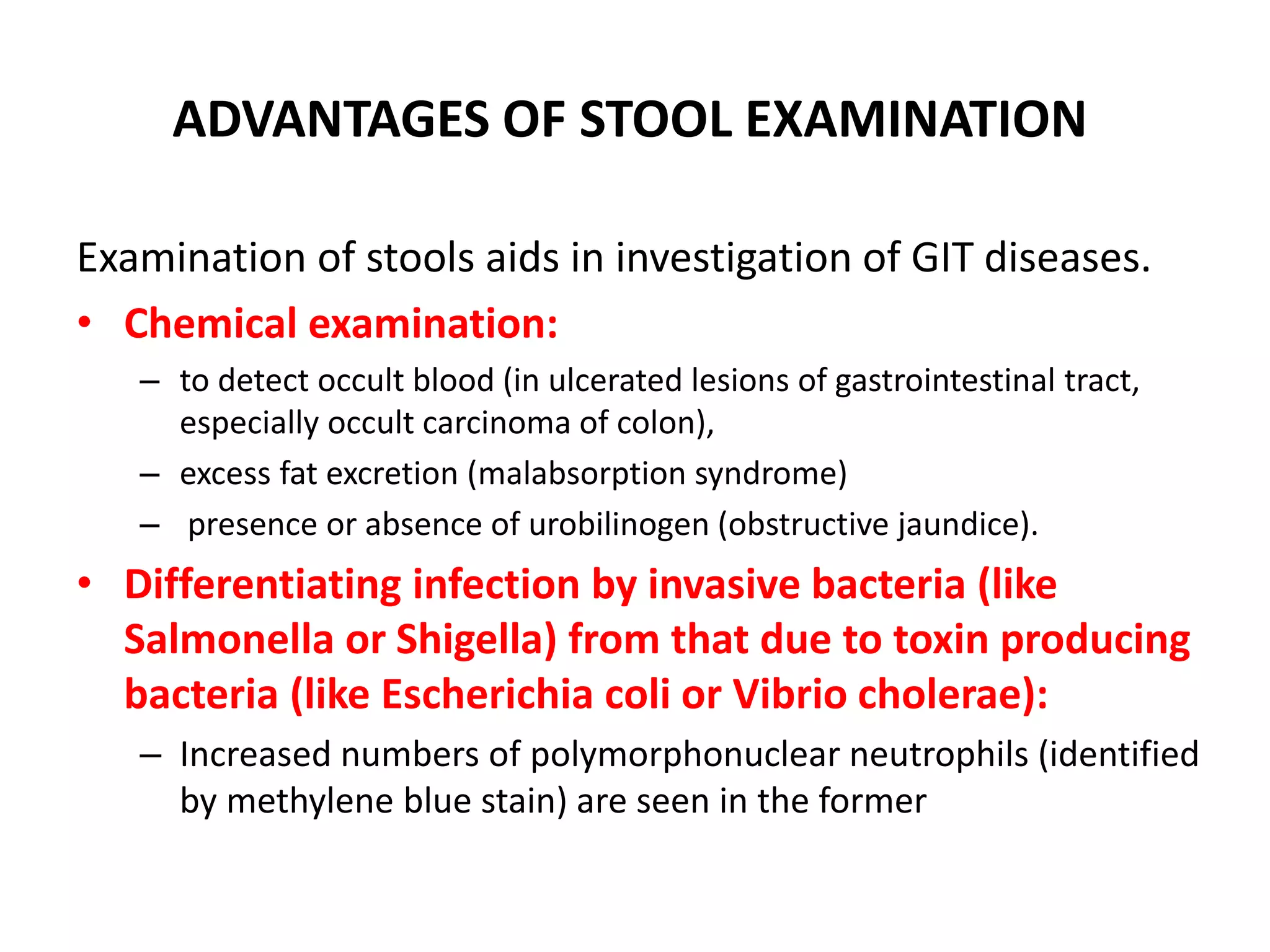
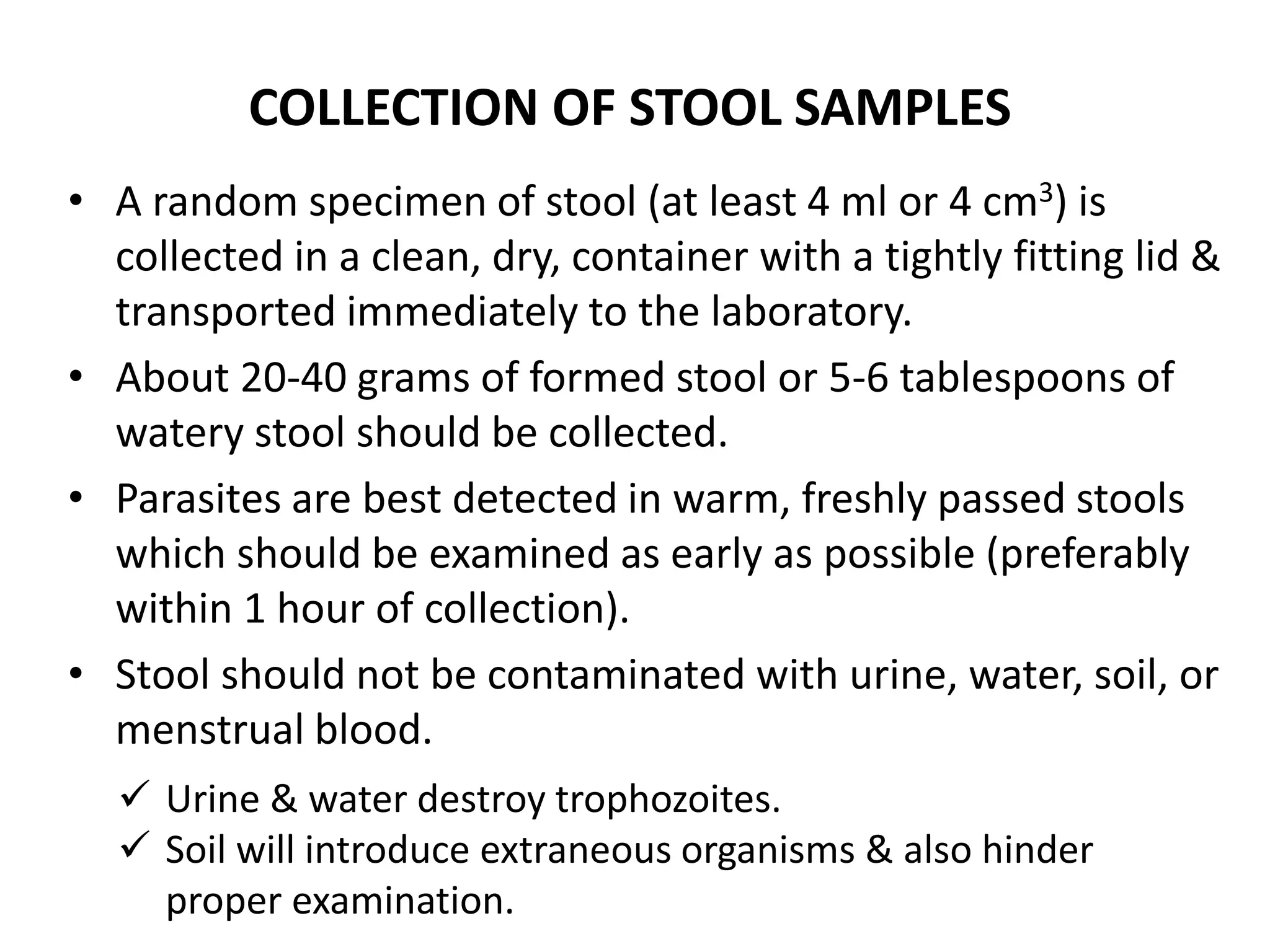
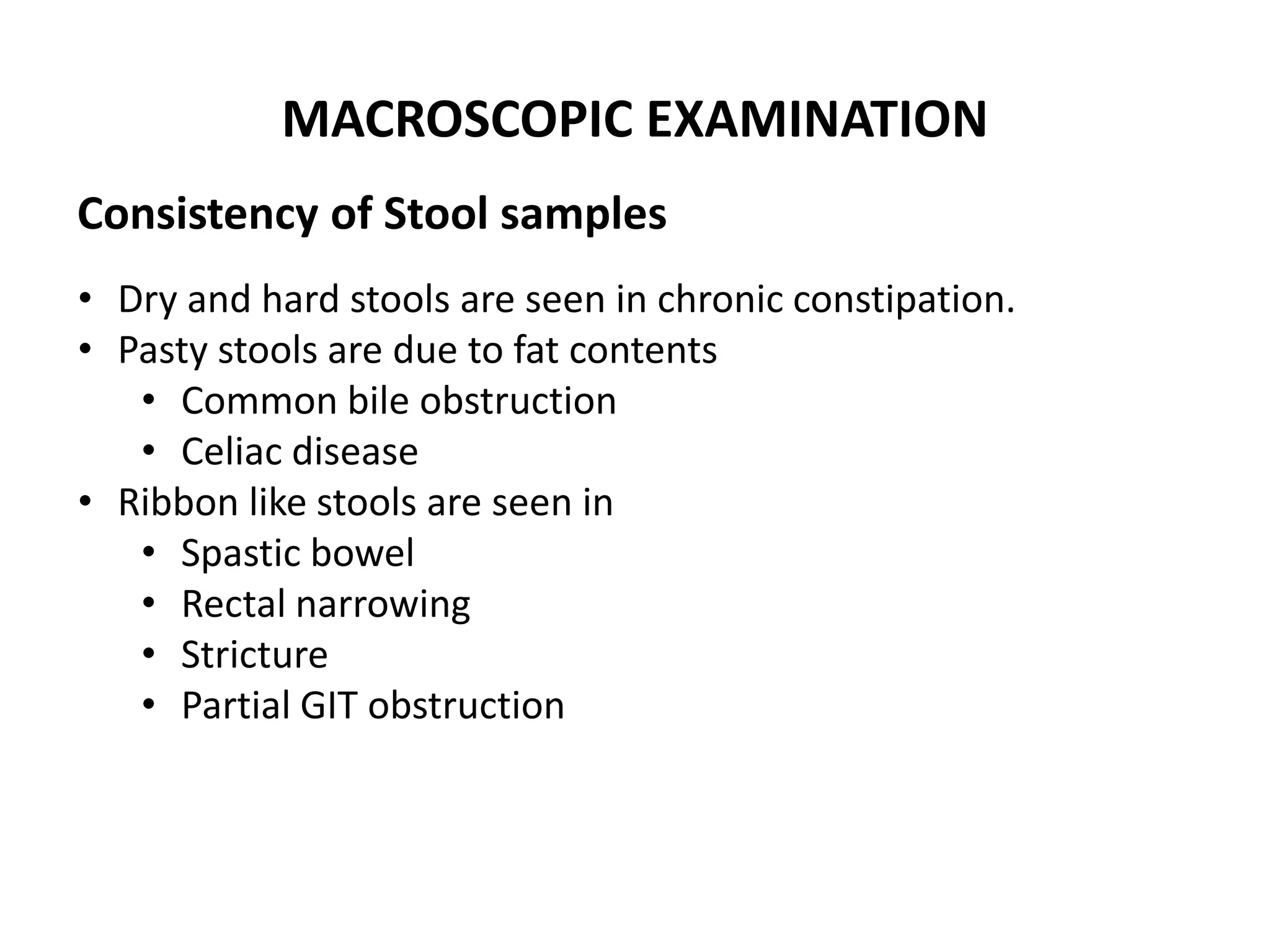
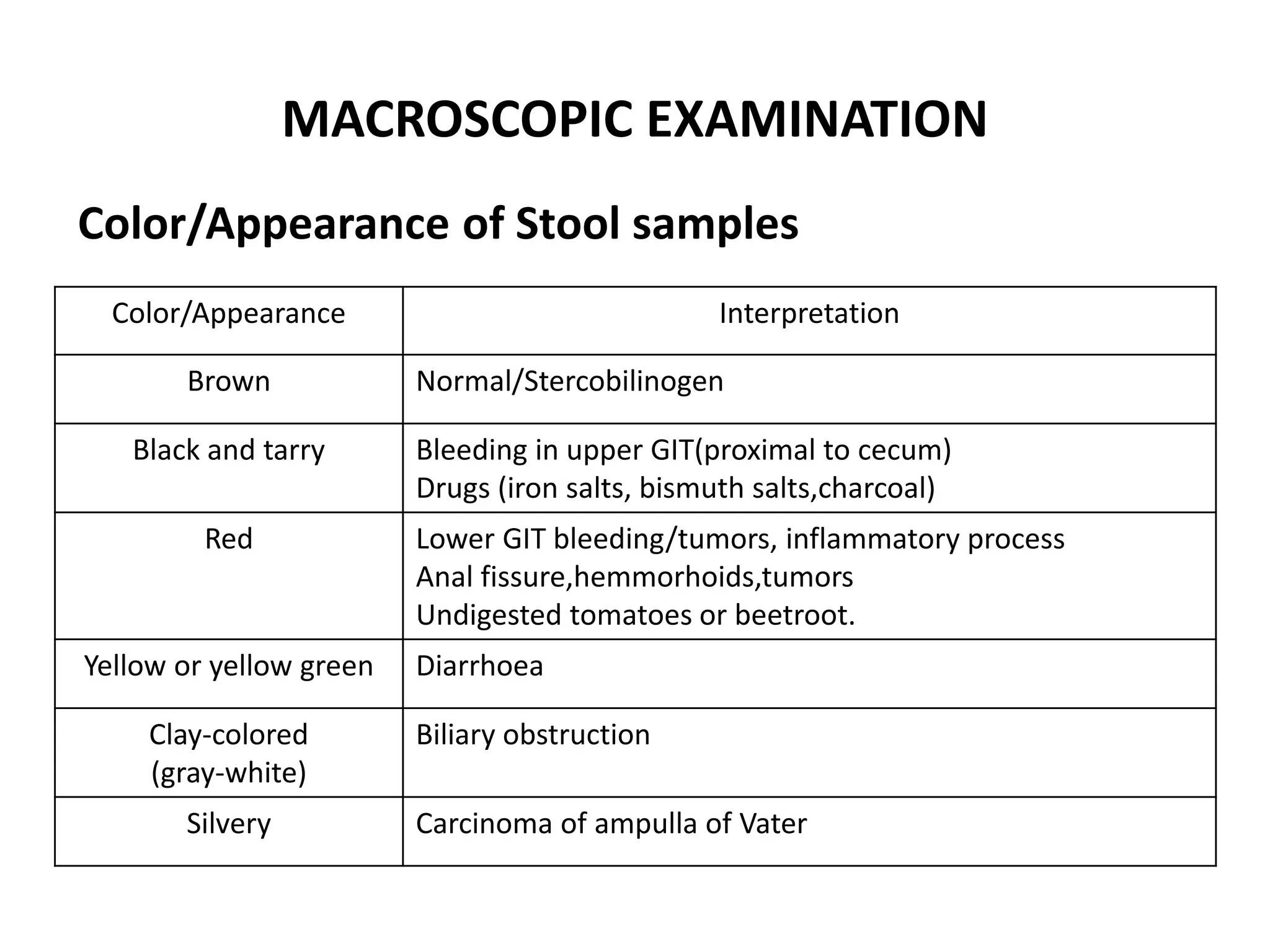
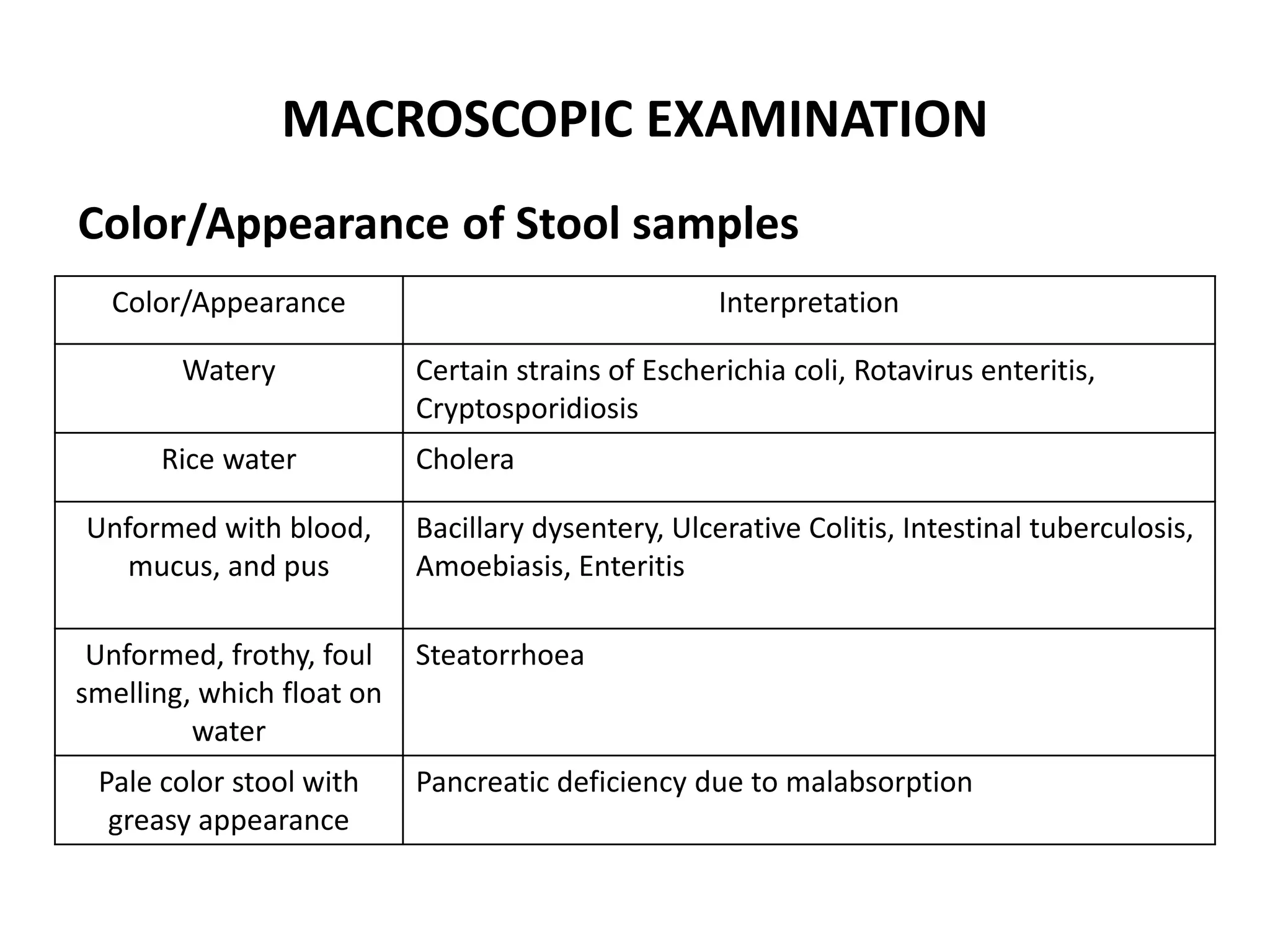
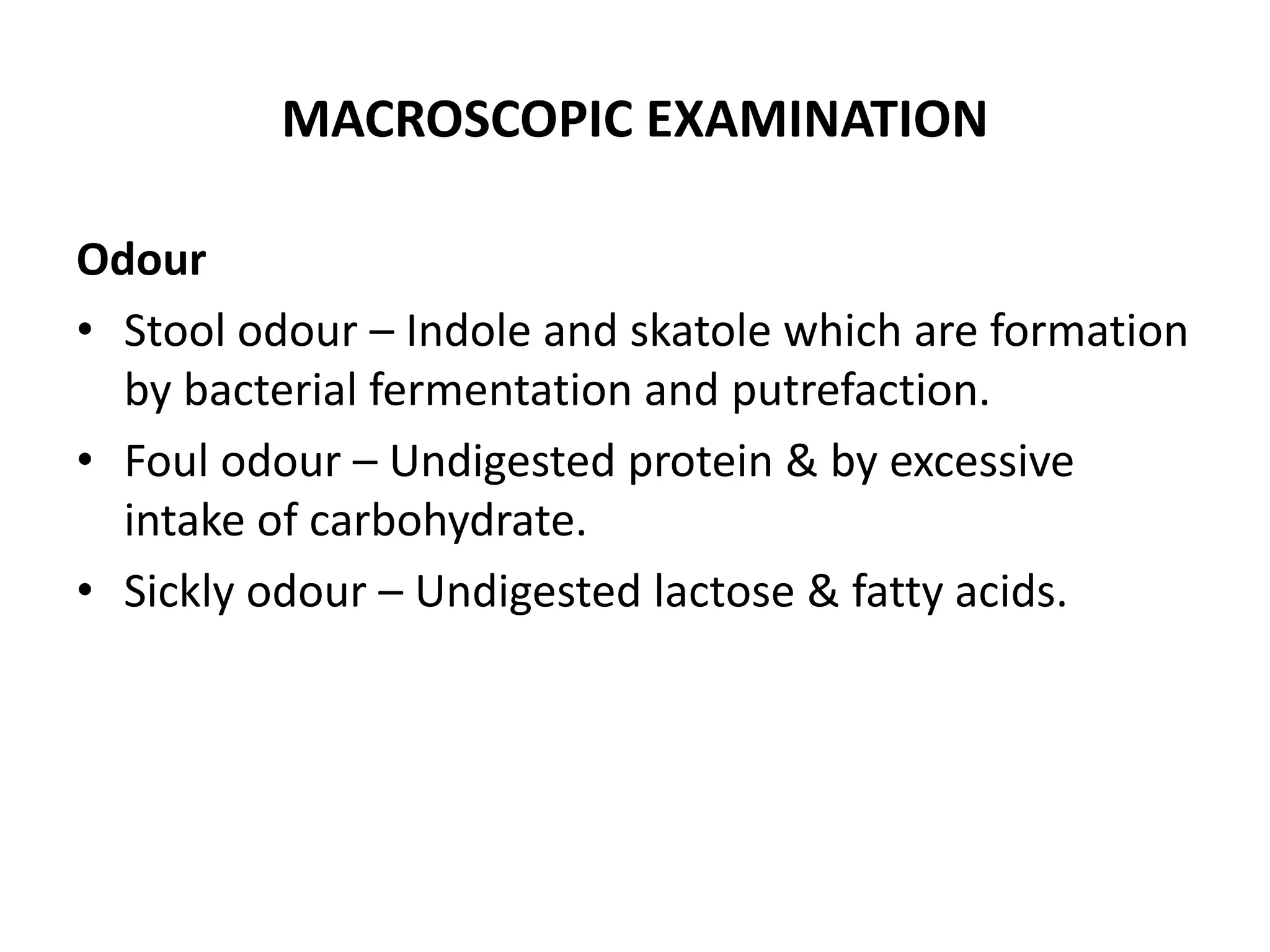
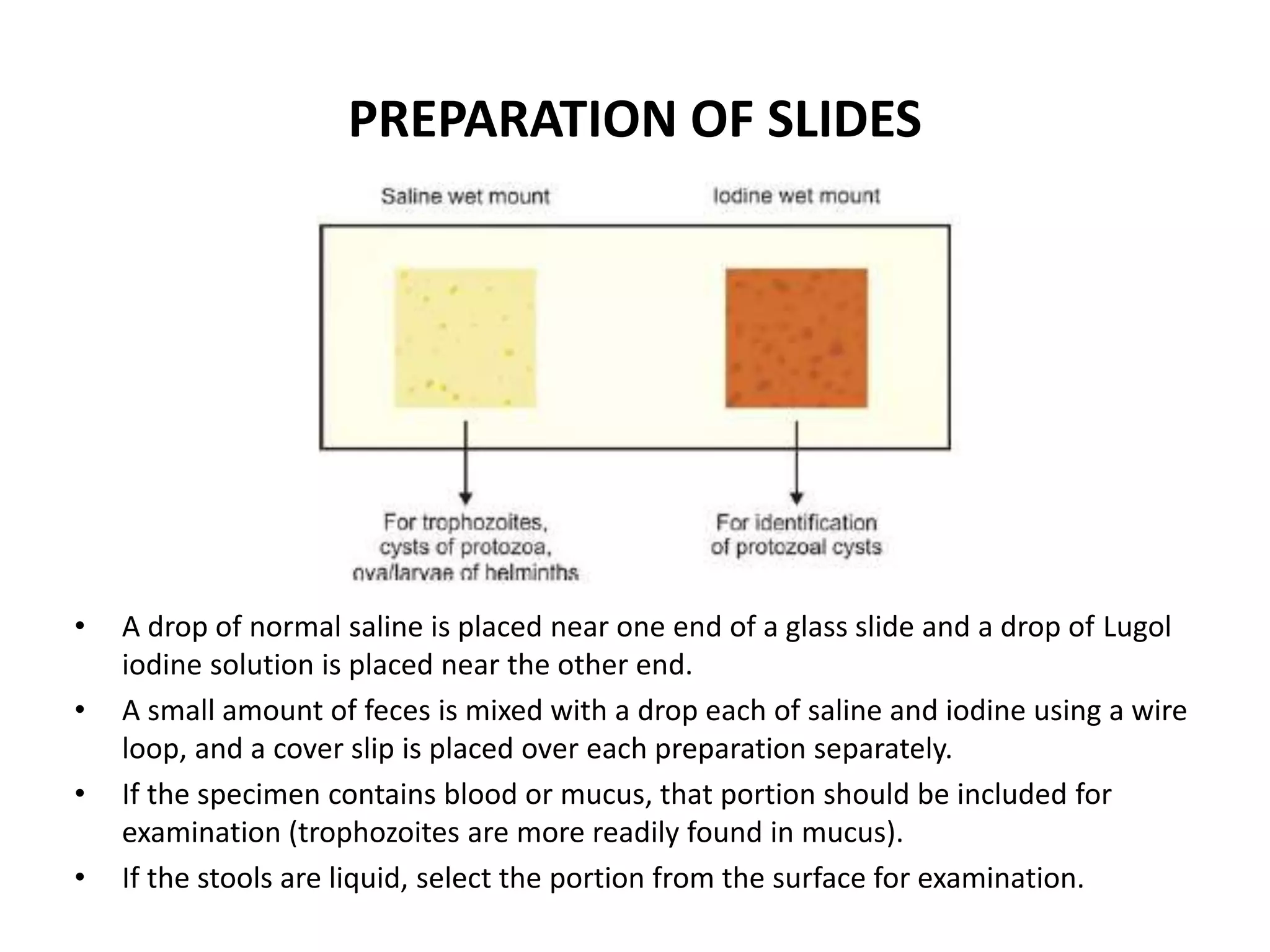
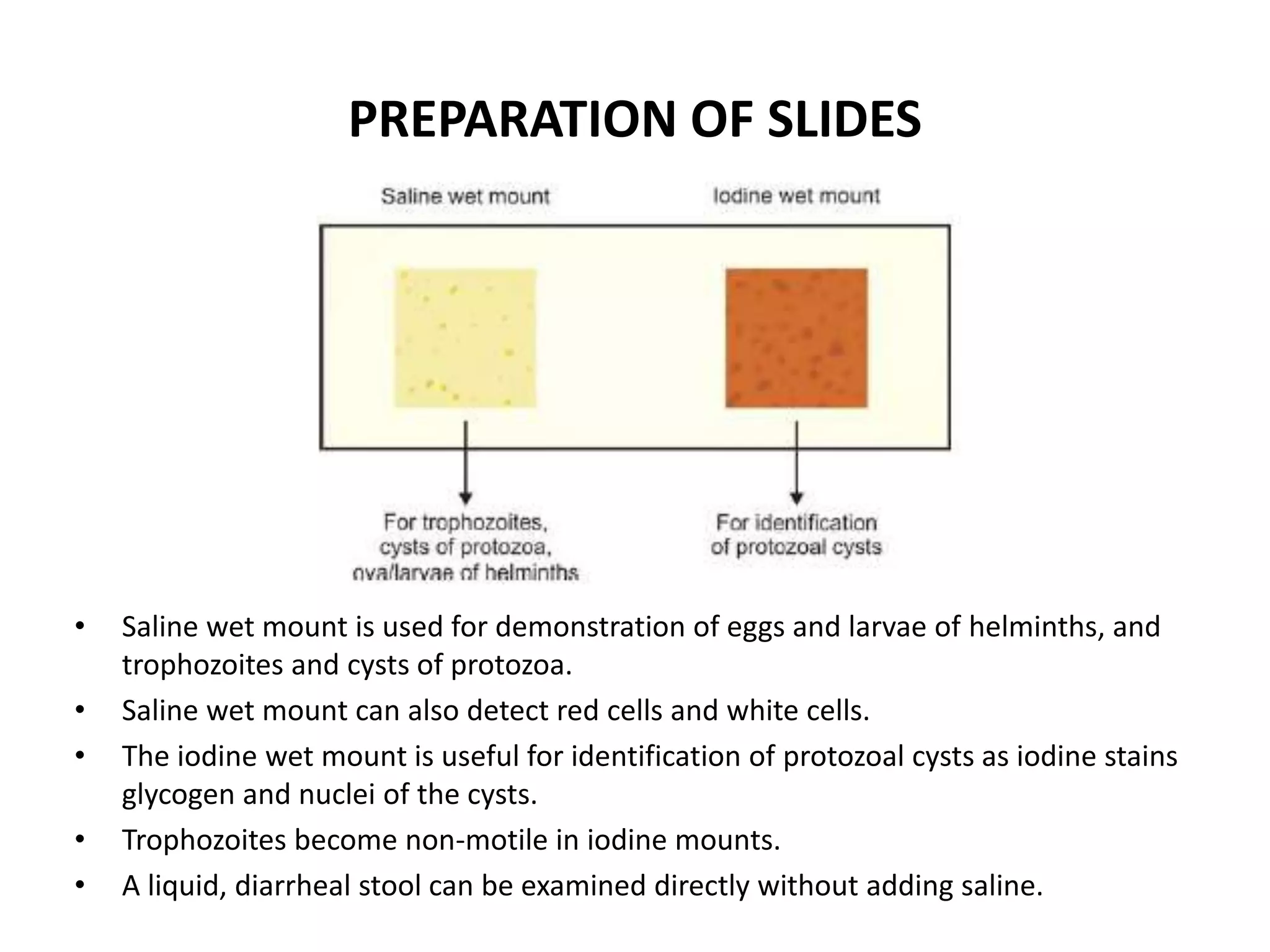
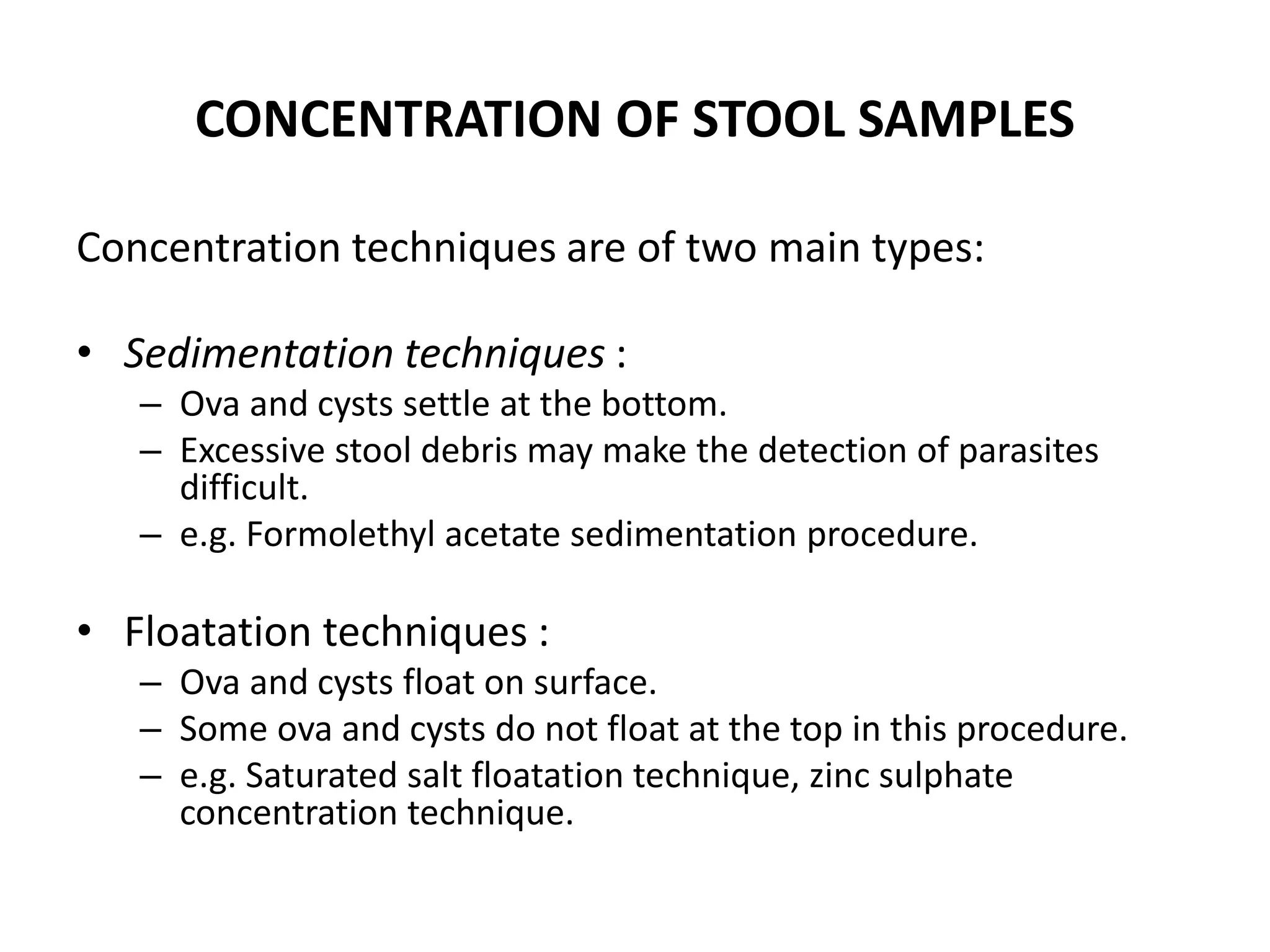
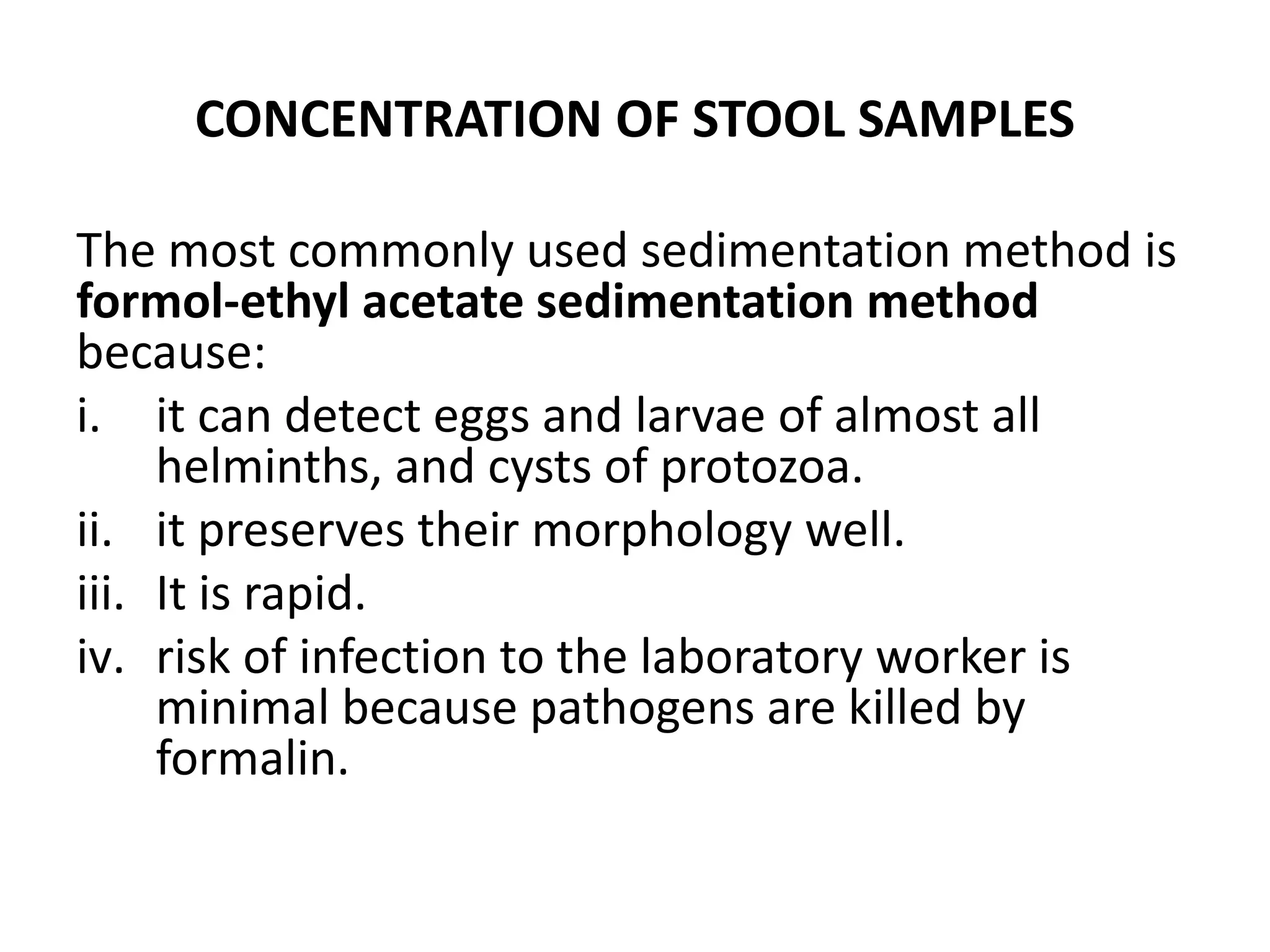
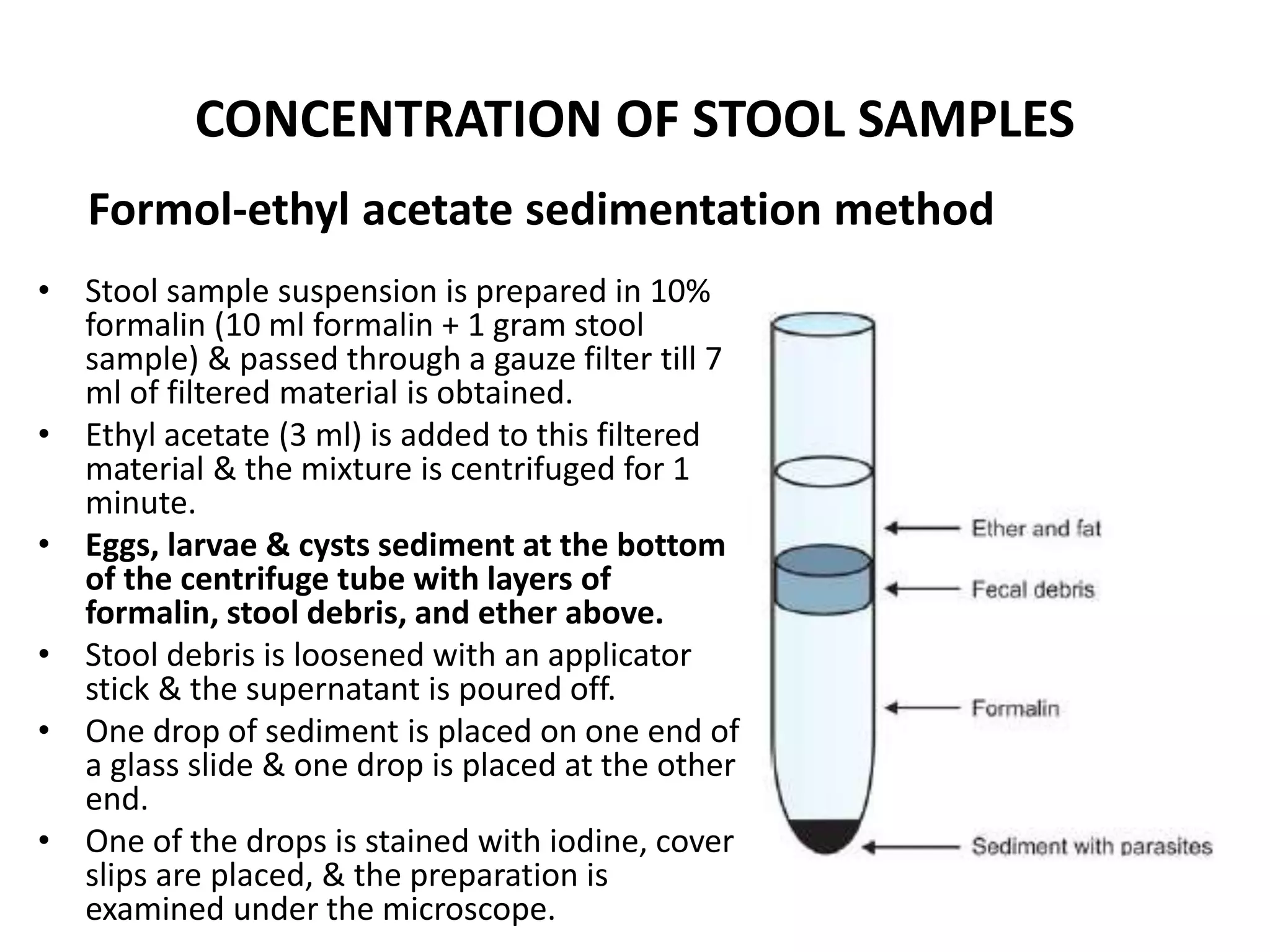
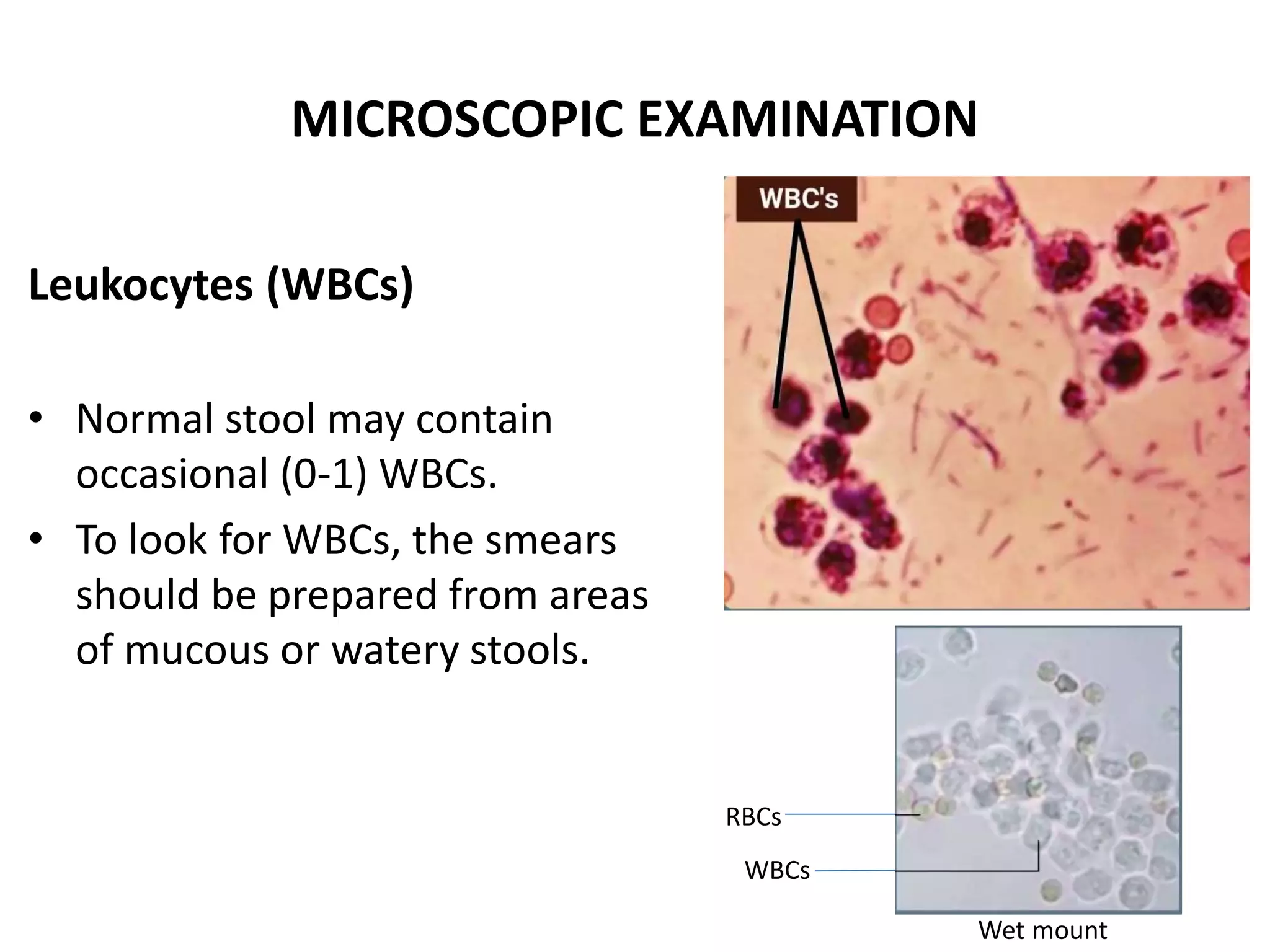
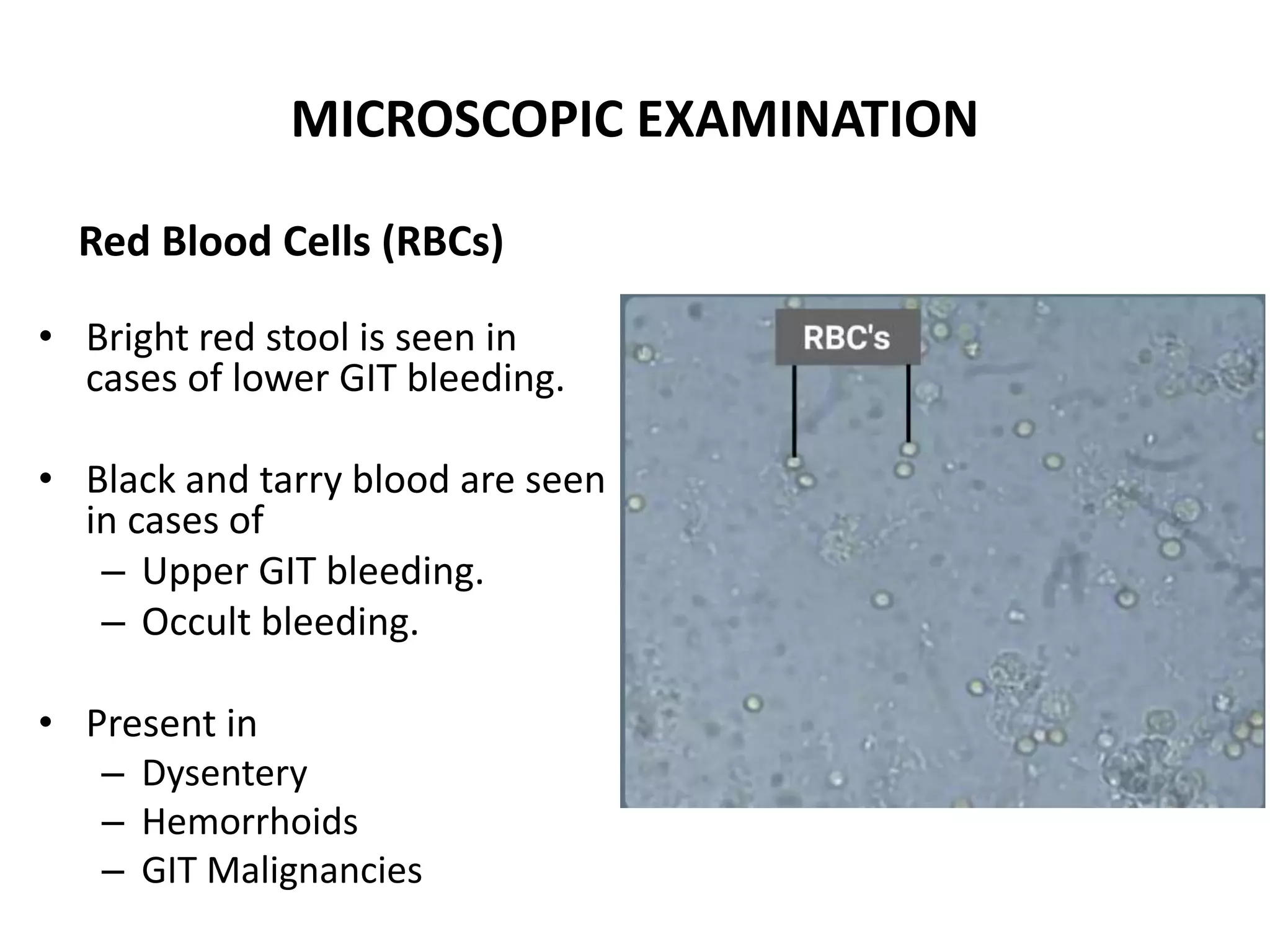
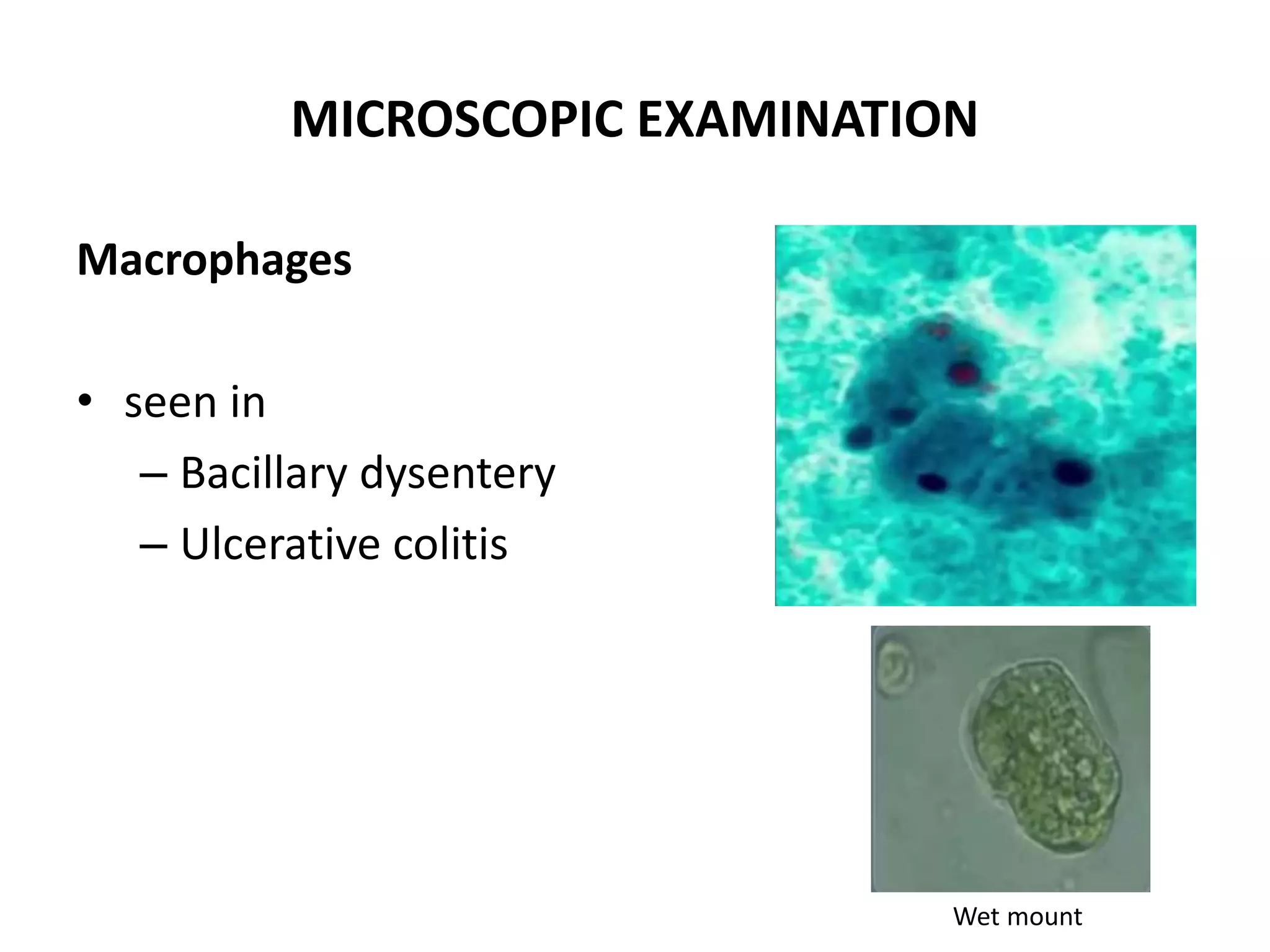
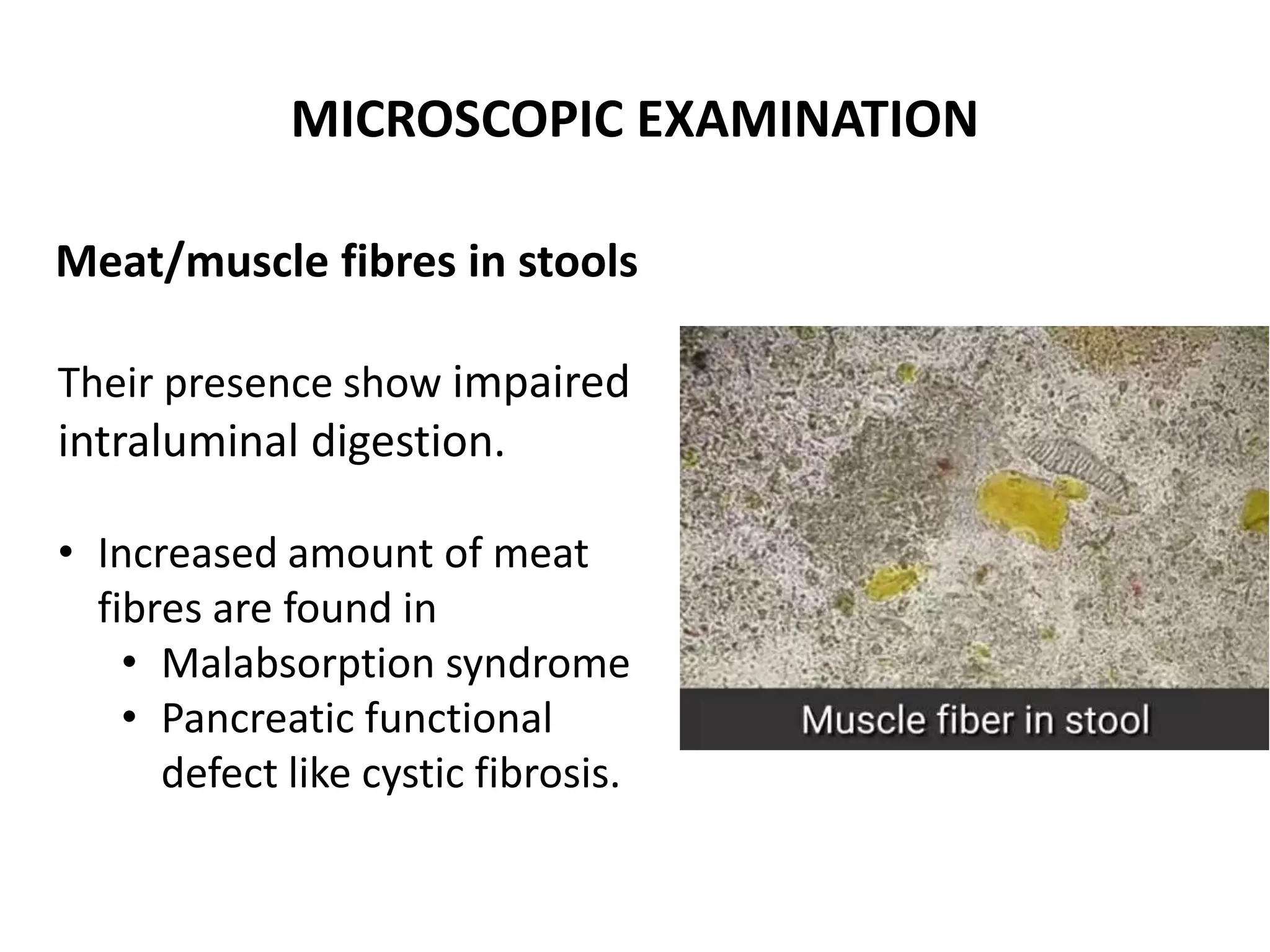
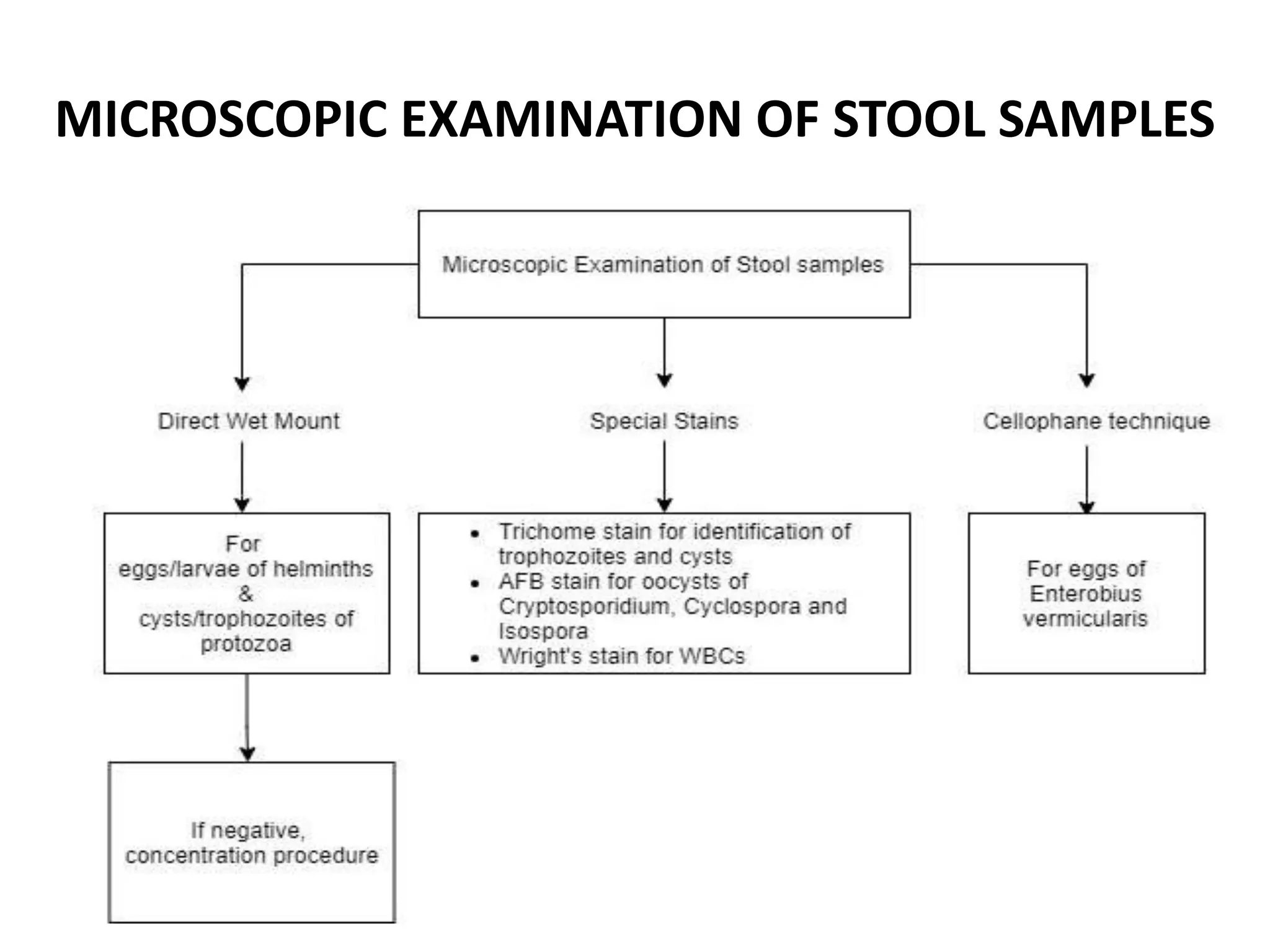
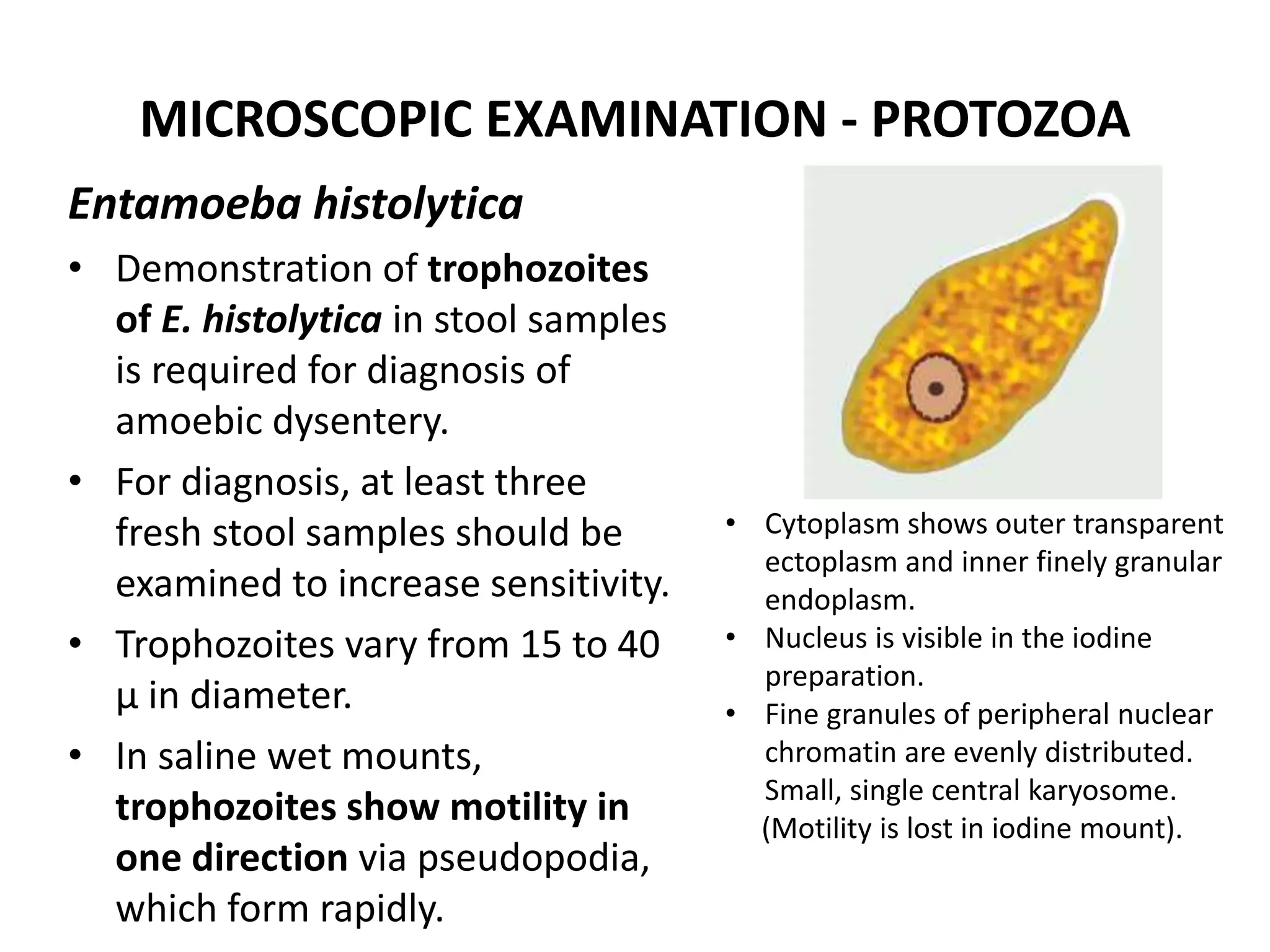
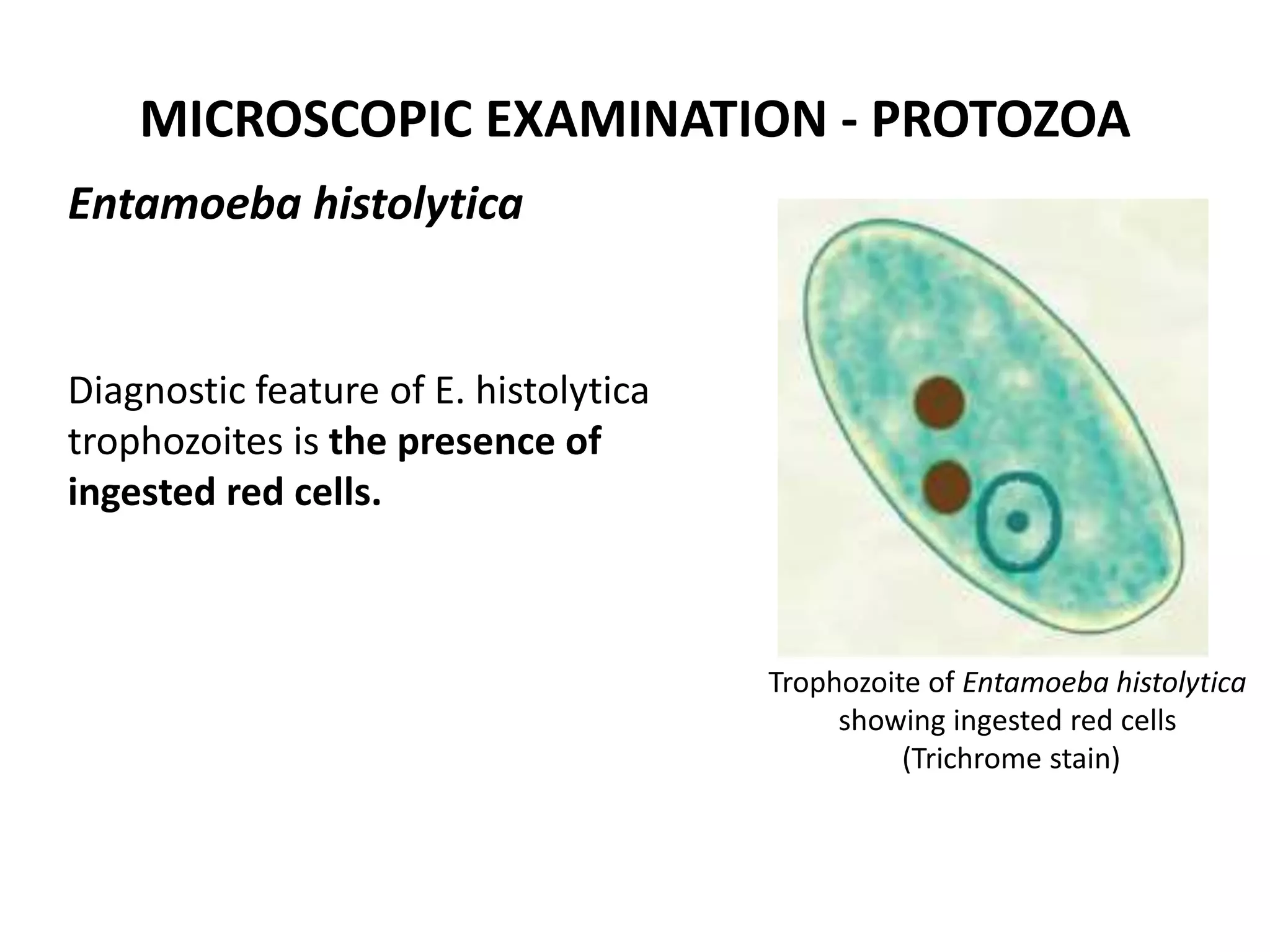
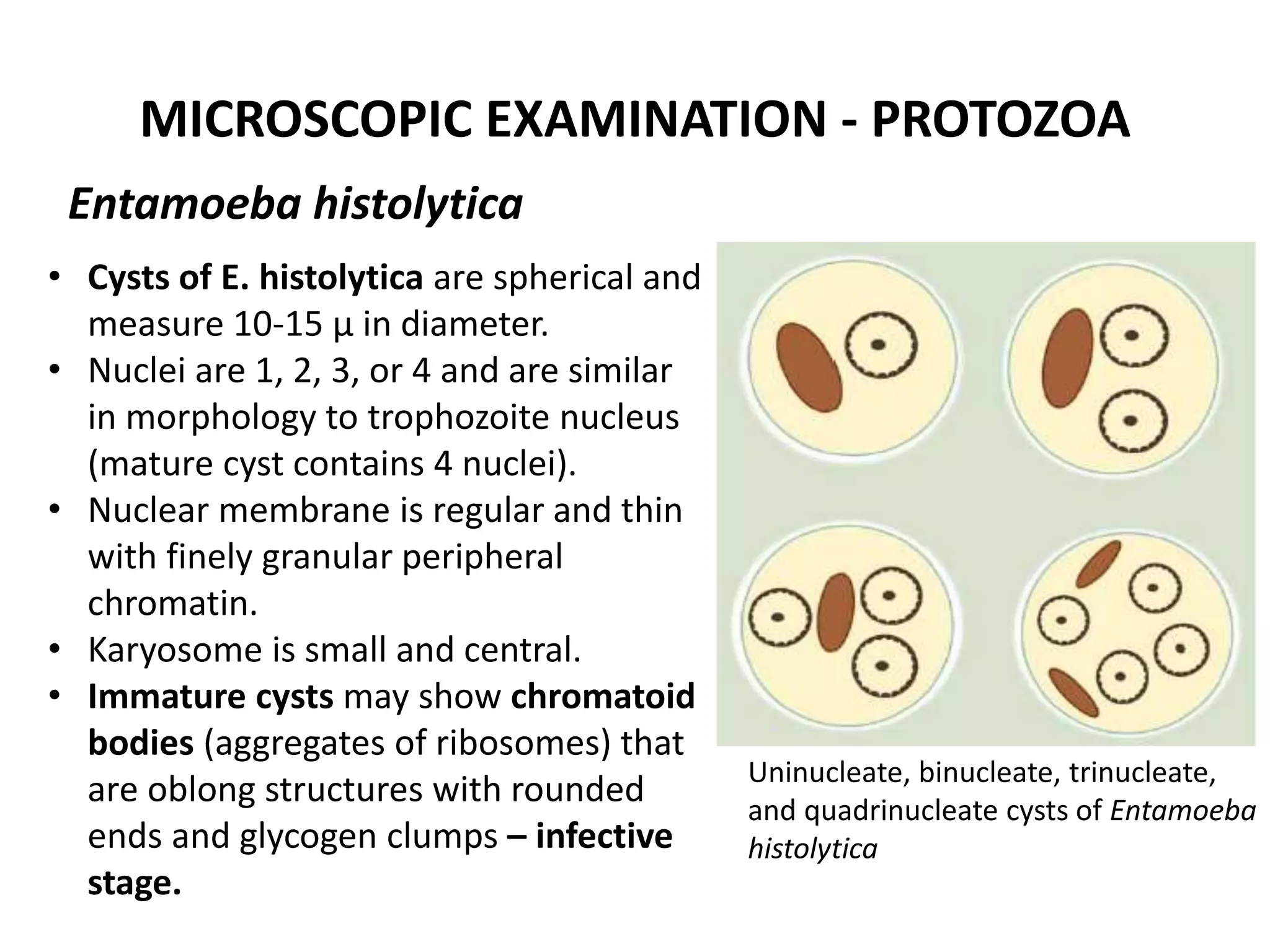
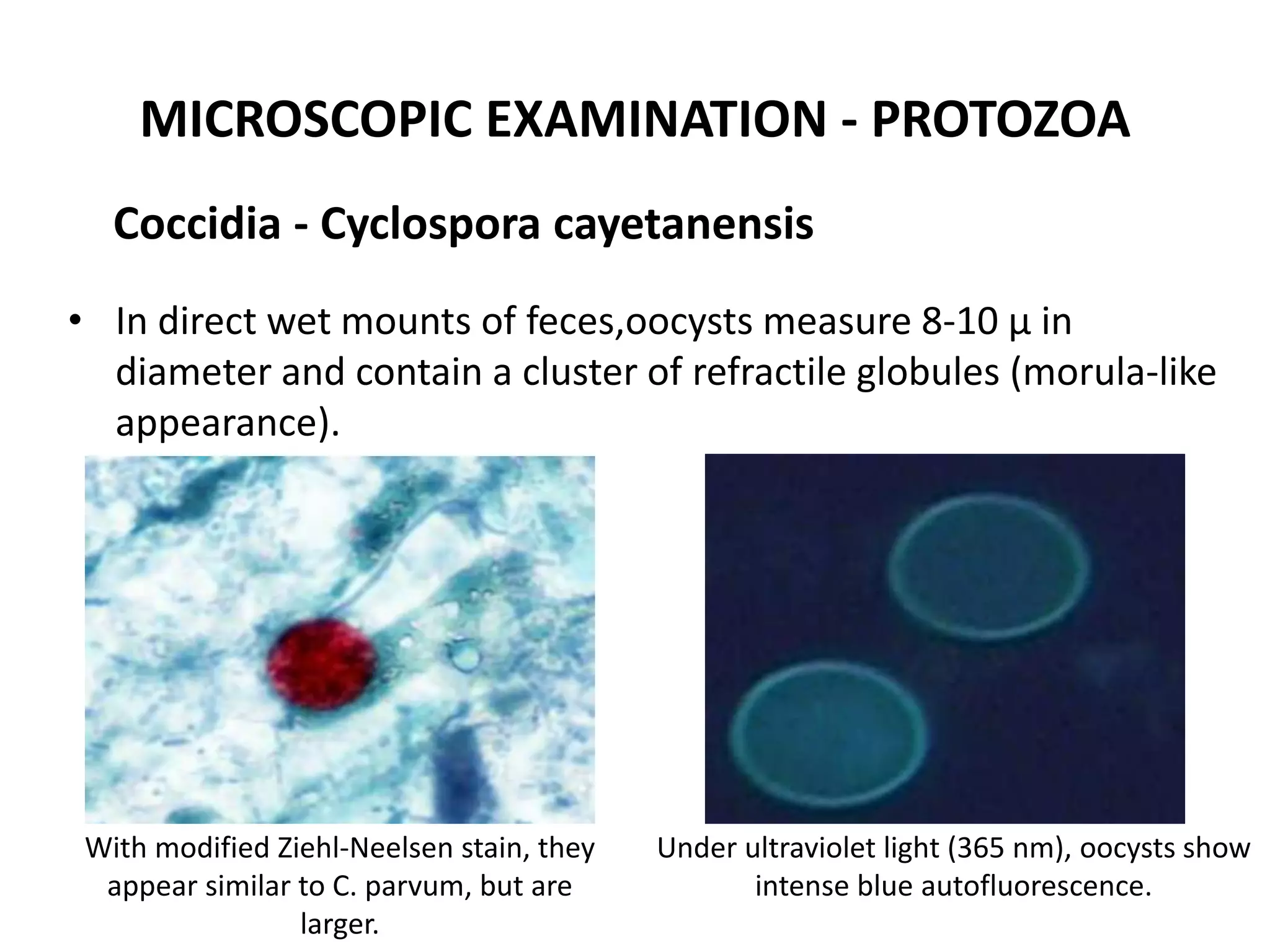
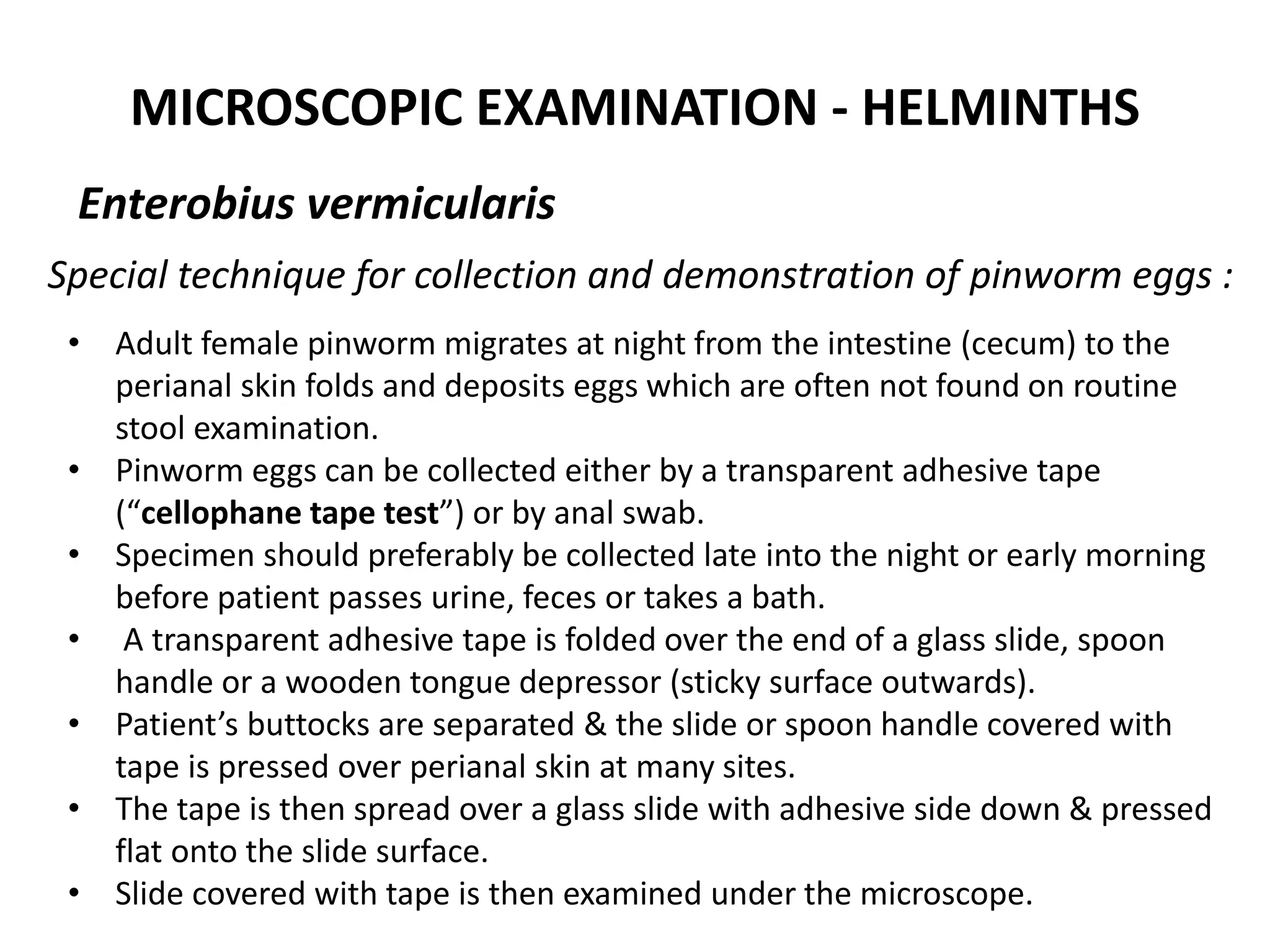
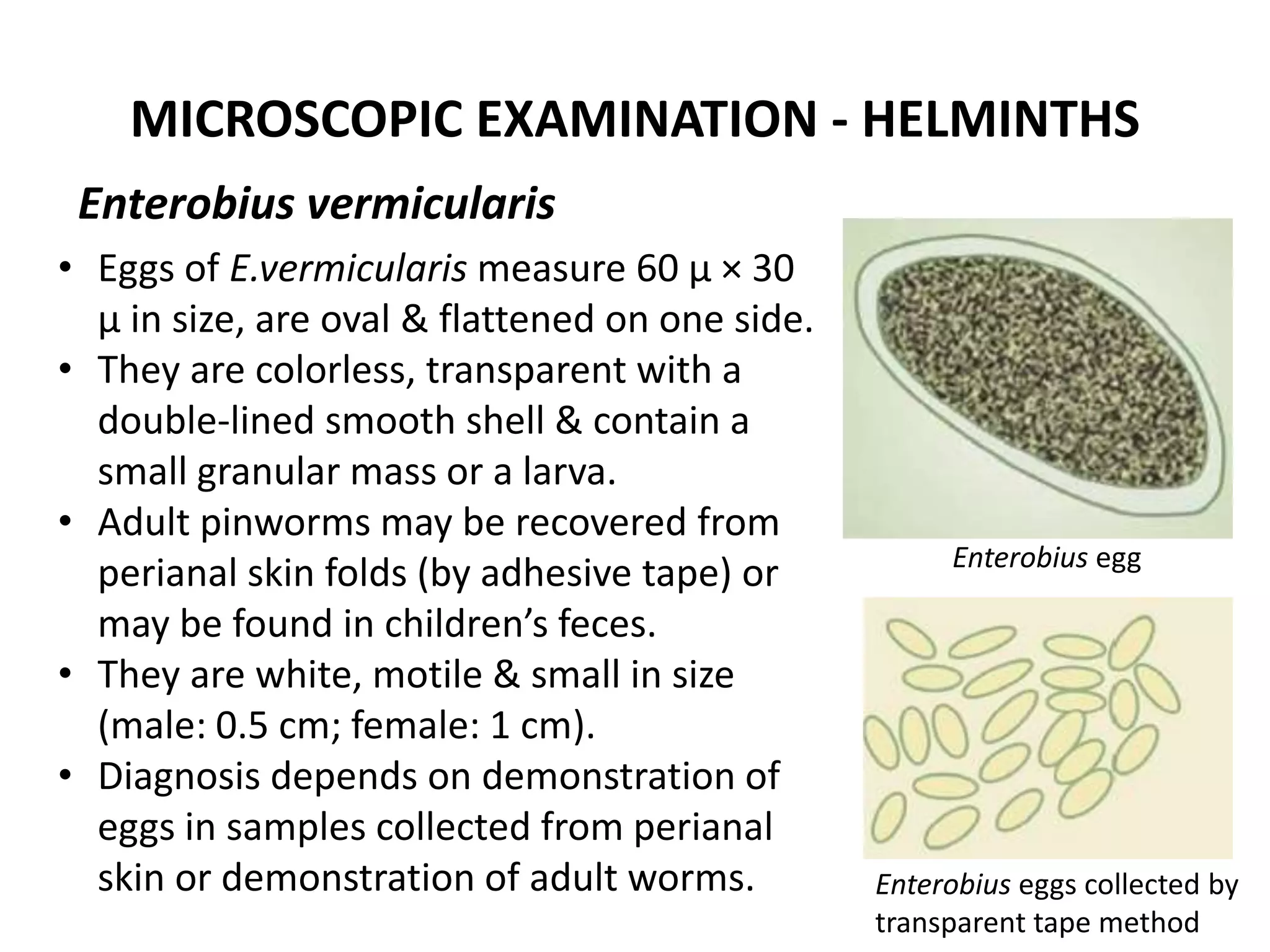
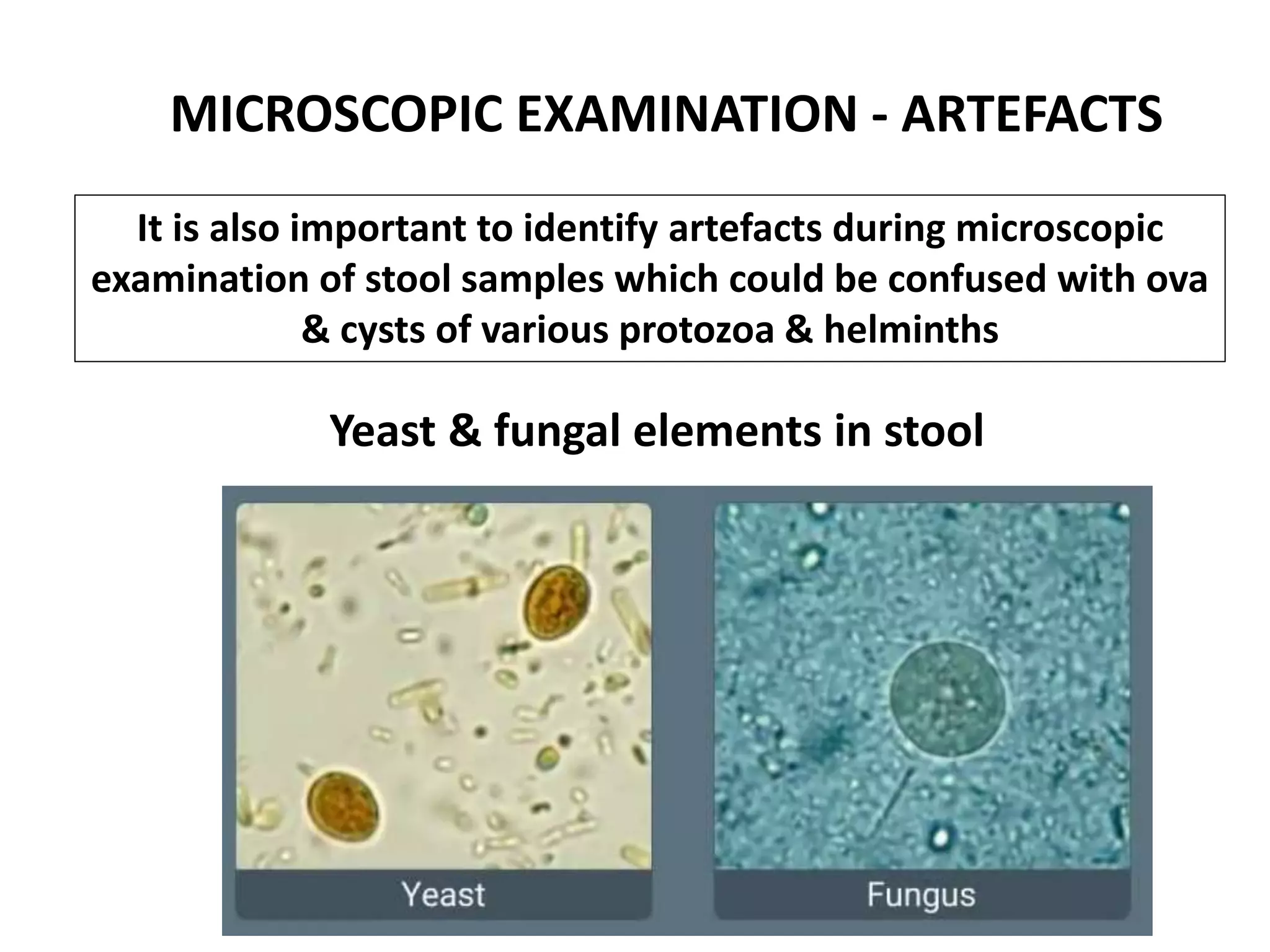
The document provides details about stool examination. It discusses the advantages of stool examination in investigating GIT diseases such as detection of parasites, evaluation of diarrhea, dysentery, and identification of causative bacteria. It describes the collection and macroscopic examination of stool samples and preparation of slides. The concentration techniques help detect small numbers of parasites. Microscopic examination identifies features like leukocytes, red blood cells, parasites, and indicates conditions like malabsorption. Overall, stool examination is a useful diagnostic tool for gastrointestinal diseases.


