Stool Analysis
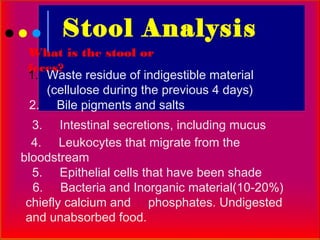
 What is the stool or
 feces?
 1. Waste residue of indigestible material
    (cellulose during the previous 4 days)
 2. Bile pigments and salts
  3. Intestinal secretions, including mucus
  4. Leukocytes that migrate from the
bloodstream
  5. Epithelial cells that have been shade
  6. Bacteria and Inorganic material(10-20%)
 chiefly calcium and phosphates. Undigested
 and unabsorbed food.
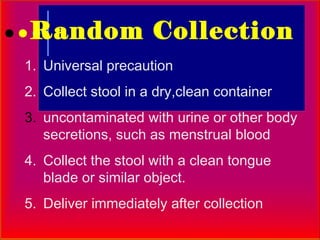
Random Collection
1. Universal precaution
2. Collect stool in a dry,clean container
3. uncontaminated with urine or other body
   secretions, such as menstrual blood
4. Collect the stool with a clean tongue
   blade or similar object.
5. Deliver immediately after collection
Ova and parasites
         collection
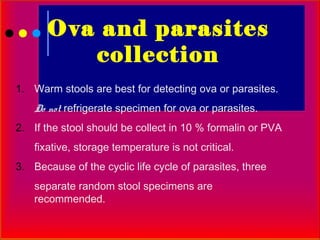
1. Warm stools are best for detecting ova or parasites.
    Do not refrigerate specimen for ova or parasites.
2. If the stool should be collect in 10 % formalin or PVA
    fixative, storage temperature is not critical.
3. Because of the cyclic life cycle of parasites, three
    separate random stool specimens are
    recommended.
Enteric pathogen collection
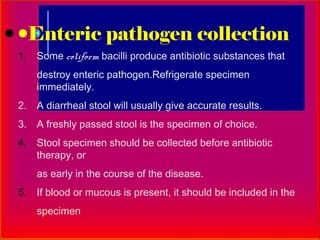
1. Some coliform bacilli produce antibiotic substances that
    destroy enteric pathogen.Refrigerate specimen
    immediately.
2. A diarrheal stool will usually give accurate results.
3. A freshly passed stool is the specimen of choice.
4. Stool specimen should be collected before antibiotic
   therapy, or
    as early in the course of the disease.
5. If blood or mucous is present, it should be included in the
    specimen
Interfering factors
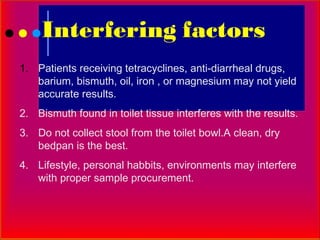
1. Patients receiving tetracyclines, anti-diarrheal drugs,
   barium, bismuth, oil, iron , or magnesium may not yield
   accurate results.
2. Bismuth found in toilet tissue interferes with the results.
3. Do not collect stool from the toilet bowl.A clean, dry
   bedpan is the best.
4. Lifestyle, personal habbits, environments may interfere
   with proper sample procurement.
Normal values in stool Analysis

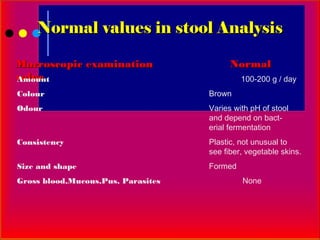
Macroscopic examination                   Normal
value
Amount                                       100-200 g / day
Colour                              Brown
Odour                               Varies with pH of stool
                                    and depend on bact-
                                    erial fermentation
Consistency                         Plastic, not unusual to
                                    see fiber, vegetable skins.
Size and shape                      Formed
Gross blood,Mucous,Pus, Parasites            None
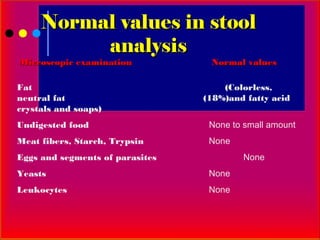
Normal values in stool
          analysis
Microscopic examination           Normal values

Fat                                  (Colorless,
neutral fat                      (18%)and fatty acid
crystals and soaps)
Undigested food                   None to small amount
Meat fibers, Starch, Trypsin      None
Eggs and segments of parasites           None
Yeasts                            None
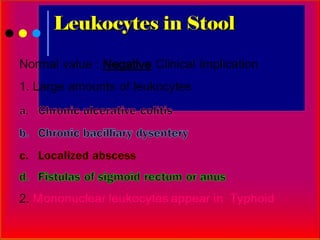
Leukocytes                        None
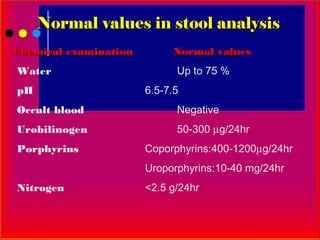
Normal values in stool analysis
Chemical examination        Normal values
Water                        Up to 75 %
pH                     6.5-7.5
Occult blood                 Negative
Urobilinogen                 50-300 µg/24hr
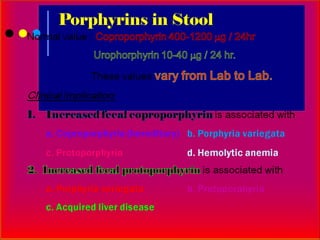
Porphyrins             Coporphyrins:400-1200µg/24hr
                       Uroporphyrins:10-40 mg/24hr
Nitrogen               <2.5 g/24hr
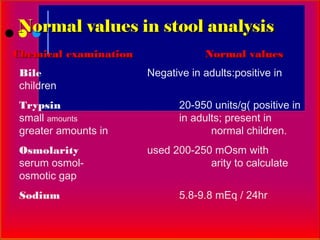
Normal values in stool analysis
Chemical examination               Normal values
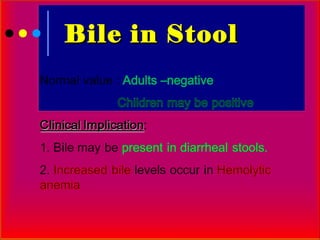
Bile                   Negative in adults:positive in
children
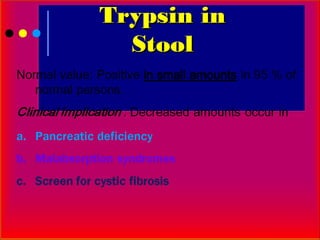
Trypsin                       20-950 units/g( positive in
small amounts                 in adults; present in
greater amounts in                   normal children.
Osmolarity             used 200-250 mOsm with
serum osmol-                       arity to calculate
osmotic gap
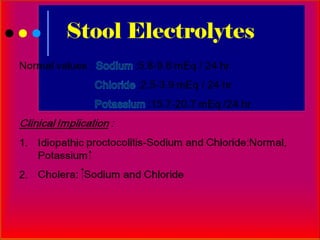
Sodium                        5.8-9.8 mEq / 24hr
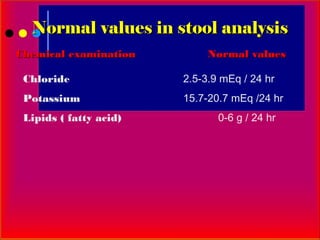
Normal values in stool analysis
Chemical examination         Normal values

 Chloride               2.5-3.9 mEq / 24 hr
 Potassium              15.7-20.7 mEq /24 hr
 Lipids ( fatty acid)          0-6 g / 24 hr
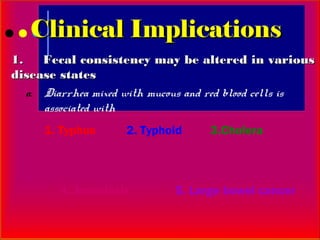
Clinical Implications
1.    Fecal consistency may be altered in various
disease states
   a. Diarrhea mixed with mucous and red blood cells is
      associated with
     1. Typhus      2. Typhoid      3.Cholera


        4. Amebiasis         5. Large bowel cancer
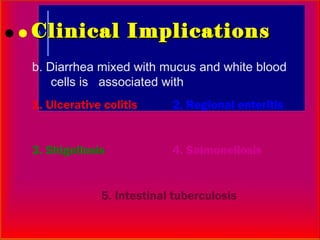
Clinical Implications
b. Diarrhea mixed with mucus and white blood
    cells is associated with
1. Ulcerative colitis     2. Regional enteritis


3. Shigellosis            4. Salmonellosis


             5. Intestinal tuberculosis
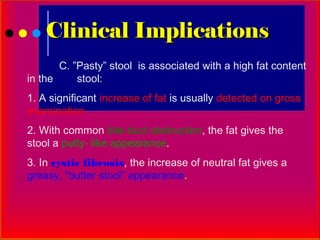
Clinical Implications
       C. ”Pasty” stool is associated with a high fat content
in the     stool:
1. A significant increase of fat is usually detected on gross
examination
2. With common bile duct obstruction, the fat gives the
stool a putty- like appearance.
3. In cystic fibrosis, the increase of neutral fat gives a
greasy, “butter stool” appearance.
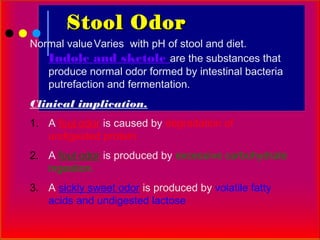
Stool Odor
Normal value Varies with pH of stool and diet.
   Indole and sketole are the substances that
   produce normal odor formed by intestinal bacteria
   putrefaction and fermentation.
Clinical implication.
1. A foul odor is caused by degradation of
   undigested protein.
2. A foul odor is produced by excessive carbohydrate
   ingestion.
3. A sickly sweet odor is produced by volatile fatty
   acids and undigested lactose
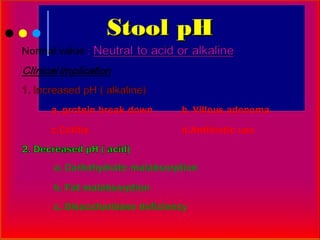
Stool pH
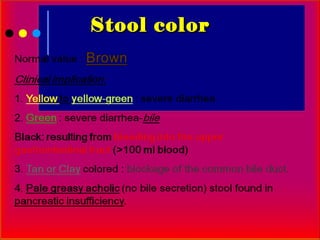
Stool color
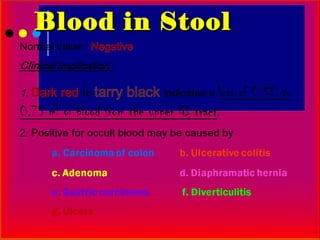
Blood in Stool
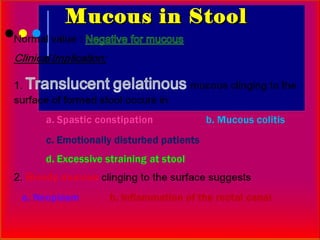
Mucous in Stool
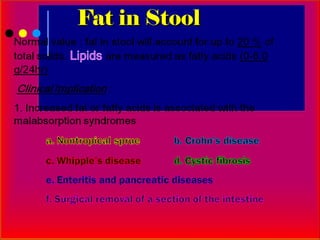
Fat in Stool
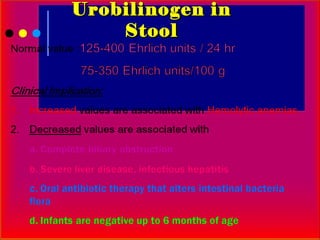
Urobilinogen in
    Stool
Bile in Stool
Trypsin in
  Stool
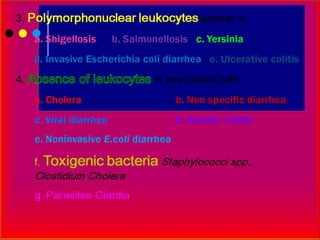
Leukocytes in Stool
Porphyrins in Stool
Stool Electrolytes

Fecalysis

  • 2.
    Stool Analysis Whatis the stool or feces? 1. Waste residue of indigestible material (cellulose during the previous 4 days) 2. Bile pigments and salts 3. Intestinal secretions, including mucus 4. Leukocytes that migrate from the bloodstream 5. Epithelial cells that have been shade 6. Bacteria and Inorganic material(10-20%) chiefly calcium and phosphates. Undigested and unabsorbed food.
  • 3.
    Random Collection 1. Universalprecaution 2. Collect stool in a dry,clean container 3. uncontaminated with urine or other body secretions, such as menstrual blood 4. Collect the stool with a clean tongue blade or similar object. 5. Deliver immediately after collection
  • 4.
    Ova and parasites collection 1. Warm stools are best for detecting ova or parasites. Do not refrigerate specimen for ova or parasites. 2. If the stool should be collect in 10 % formalin or PVA fixative, storage temperature is not critical. 3. Because of the cyclic life cycle of parasites, three separate random stool specimens are recommended.
  • 5.
    Enteric pathogen collection 1.Some coliform bacilli produce antibiotic substances that destroy enteric pathogen.Refrigerate specimen immediately. 2. A diarrheal stool will usually give accurate results. 3. A freshly passed stool is the specimen of choice. 4. Stool specimen should be collected before antibiotic therapy, or as early in the course of the disease. 5. If blood or mucous is present, it should be included in the specimen
  • 6.
    Interfering factors 1. Patientsreceiving tetracyclines, anti-diarrheal drugs, barium, bismuth, oil, iron , or magnesium may not yield accurate results. 2. Bismuth found in toilet tissue interferes with the results. 3. Do not collect stool from the toilet bowl.A clean, dry bedpan is the best. 4. Lifestyle, personal habbits, environments may interfere with proper sample procurement.
  • 7.
    Normal values instool Analysis Macroscopic examination Normal value Amount 100-200 g / day Colour Brown Odour Varies with pH of stool and depend on bact- erial fermentation Consistency Plastic, not unusual to see fiber, vegetable skins. Size and shape Formed Gross blood,Mucous,Pus, Parasites None
  • 8.
    Normal values instool analysis Microscopic examination Normal values Fat (Colorless, neutral fat (18%)and fatty acid crystals and soaps) Undigested food None to small amount Meat fibers, Starch, Trypsin None Eggs and segments of parasites None Yeasts None Leukocytes None
  • 9.
    Normal values instool analysis Chemical examination Normal values Water Up to 75 % pH 6.5-7.5 Occult blood Negative Urobilinogen 50-300 µg/24hr Porphyrins Coporphyrins:400-1200µg/24hr Uroporphyrins:10-40 mg/24hr Nitrogen <2.5 g/24hr
  • 10.
    Normal values instool analysis Chemical examination Normal values Bile Negative in adults:positive in children Trypsin 20-950 units/g( positive in small amounts in adults; present in greater amounts in normal children. Osmolarity used 200-250 mOsm with serum osmol- arity to calculate osmotic gap Sodium 5.8-9.8 mEq / 24hr
  • 11.
    Normal values instool analysis Chemical examination Normal values Chloride 2.5-3.9 mEq / 24 hr Potassium 15.7-20.7 mEq /24 hr Lipids ( fatty acid) 0-6 g / 24 hr
  • 12.
    Clinical Implications 1. Fecal consistency may be altered in various disease states a. Diarrhea mixed with mucous and red blood cells is associated with 1. Typhus 2. Typhoid 3.Cholera 4. Amebiasis 5. Large bowel cancer
  • 13.
    Clinical Implications b. Diarrheamixed with mucus and white blood cells is associated with 1. Ulcerative colitis 2. Regional enteritis 3. Shigellosis 4. Salmonellosis 5. Intestinal tuberculosis
  • 14.
    Clinical Implications C. ”Pasty” stool is associated with a high fat content in the stool: 1. A significant increase of fat is usually detected on gross examination 2. With common bile duct obstruction, the fat gives the stool a putty- like appearance. 3. In cystic fibrosis, the increase of neutral fat gives a greasy, “butter stool” appearance.
  • 15.
    Stool Odor Normal valueVaries with pH of stool and diet. Indole and sketole are the substances that produce normal odor formed by intestinal bacteria putrefaction and fermentation. Clinical implication. 1. A foul odor is caused by degradation of undigested protein. 2. A foul odor is produced by excessive carbohydrate ingestion. 3. A sickly sweet odor is produced by volatile fatty acids and undigested lactose
  • 16.
  • 17.
  • 19.
  • 20.
  • 22.
  • 23.
  • 24.
  • 25.
  • 26.
  • 28.
  • 29.