INTRODUCTION
• An autoimmune disease is a condition in which your immune system mistakenly
attacks your body.
• The immune system normally guards against germs like bacteria and viruses.When
it senses these foreign invaders, it sends out an army of fighter cells to attack
them.
• Normally, the immune system can tell the difference between foreign cells and
your own cells.
• In an autoimmune disease, the immune system mistakes part of your body like
your joints or skin as foreign. It releases proteins called autoantibodies that attack
healthy cells.
ADDISON’S DISEASE
• Addison's disease, also known as primary adrenal insufficiency and
hypocortisolism, is a long-term endocrine disorder in which the adrenal
glands do not produce enough steroid hormones.
• Autoimmune adrenalitis is the most common cause ofAddison's disease.
Autoimmune destruction of the adrenal cortex(Zona glomerulosa) is caused
by an immune reaction against the enzyme 21-hydroxylase.
GRAVE’S DISEASE
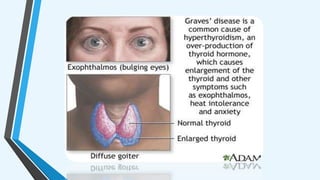
• Graves' disease, also known as toxic diffuse goitre, is an autoimmune disease that
affects the thyroid. It frequently results in and is the most common cause of
hyperthyroidism. It also often results in an enlarged thyroid.
• Graves' disease is an autoimmune disorder, in which the body produces antibodies to
the receptor for thyroid-stimulating hormone. (Antibodies to thyroglobulin and to the
thyroid hormonesT3 andT4 may also be produced.)
• These antibodies cause hyperthyroidism because they bind to theTSHr and
chronically stimulate it.TheTSHr is expressed on the follicular cells of the thyroid
gland (the cells that produce thyroid hormone), and the result of chronic stimulation is
an abnormally high production ofT3 andT4.
HASHIMOTO’S DISEASE
• Hashimoto's thyroiditis, also known as chronic lymphocytic thyroiditis and
Hashimoto's disease, is an autoimmune disease in which the thyroid gland is
gradually destroyed.
• Various autoantibodies may be present against, thyroglobulin andTSH
receptors.
• There are many symptoms that are attributed to Hashimoto's thyroiditis or
Hashimoto's disease.The most common symptoms include the following:
fatigue, weight gain, pale or puffy face, feeling cold, joint and muscle pain.
MYSTHENIA GRAVIS
• Myasthenia gravis (MG) is a long-term neuromuscular disease that leads to
varying degrees of skeletal muscle weakness.The most commonly affected
muscles are those of the eyes, face, and swallowing.
• Myasthenia gravis is an autoimmune disease which results from antibodies that
block or destroy acetylcholine receptors at the junction between the nerve and
muscle.This prevents nerve impulses from triggering muscle contractions.
MULTIPLE SCLEROSIS
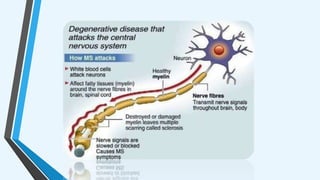
• Multiple sclerosis (MS) is a demyelinating disease in which the insulating
covers of nerve cells in the brain and spinal cord are damaged.
• This damage disrupts the ability of parts of the nervous system to
communicate, resulting in a range of signs and symptoms, including
physical, mental, and sometimes psychiatric problems. Specific symptoms
can include double vision, blindness in one eye
PERNICIOUS ANAEMIA
• Vitamin B12 deficiency anaemia, of which pernicious anaemia is a type, is a
disease in which not enough red blood cells are produced due to a deficiency of
vitamin B12.
• Other symptoms may include shortness of breath, pale skin, chest pain, numbness
in the hands and feet, poor balance, a smooth red tongue, poor reflexes.
• This disease characterised by stomach atrophy and the presence of antibodies to
parietal cells and intrinsic factor.
RHEUMATOID ARTHRITIS
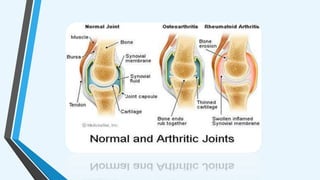
• Rheumatoid arthritis is a long-term autoimmune disorder that primarily affects
joints.
• The disease may also affect other parts of the body.This may result in a low red
blood cell count, inflammation around the lungs, and inflammation around the
heart.
• it is believed to involve a combination of genetic and environmental factors.The
underlying mechanism involves the body's immune system(IgM) attacking the
joints.This results in inflammation and thickening of the joint capsule.
SYSTEMIC LUPOS ERYTHEMATOSUS
• Systemic lupus erythematosus (SLE), also known simply as lupus, is an
autoimmune disease in which the body's immune system mistakenly attacks
healthy tissue in many parts of the body.
• Common symptoms include painful and swollen joints, fever, chest pain, hair
loss, mouth ulcers, swollen lymph nodes, feeling tired, and a red rash which is
most commonly on the face.
• The mechanism involves an immune response by autoantibodies against a
person's own tissues.These are most commonly anti-nuclear antibodies and they
result in inflammation.
THANKYOU

Autoimmune disease

  • 2.
    INTRODUCTION • An autoimmunedisease is a condition in which your immune system mistakenly attacks your body. • The immune system normally guards against germs like bacteria and viruses.When it senses these foreign invaders, it sends out an army of fighter cells to attack them. • Normally, the immune system can tell the difference between foreign cells and your own cells. • In an autoimmune disease, the immune system mistakes part of your body like your joints or skin as foreign. It releases proteins called autoantibodies that attack healthy cells.
  • 4.
    ADDISON’S DISEASE • Addison'sdisease, also known as primary adrenal insufficiency and hypocortisolism, is a long-term endocrine disorder in which the adrenal glands do not produce enough steroid hormones. • Autoimmune adrenalitis is the most common cause ofAddison's disease. Autoimmune destruction of the adrenal cortex(Zona glomerulosa) is caused by an immune reaction against the enzyme 21-hydroxylase.
  • 5.
    GRAVE’S DISEASE • Graves'disease, also known as toxic diffuse goitre, is an autoimmune disease that affects the thyroid. It frequently results in and is the most common cause of hyperthyroidism. It also often results in an enlarged thyroid. • Graves' disease is an autoimmune disorder, in which the body produces antibodies to the receptor for thyroid-stimulating hormone. (Antibodies to thyroglobulin and to the thyroid hormonesT3 andT4 may also be produced.) • These antibodies cause hyperthyroidism because they bind to theTSHr and chronically stimulate it.TheTSHr is expressed on the follicular cells of the thyroid gland (the cells that produce thyroid hormone), and the result of chronic stimulation is an abnormally high production ofT3 andT4.
  • 7.
    HASHIMOTO’S DISEASE • Hashimoto'sthyroiditis, also known as chronic lymphocytic thyroiditis and Hashimoto's disease, is an autoimmune disease in which the thyroid gland is gradually destroyed. • Various autoantibodies may be present against, thyroglobulin andTSH receptors. • There are many symptoms that are attributed to Hashimoto's thyroiditis or Hashimoto's disease.The most common symptoms include the following: fatigue, weight gain, pale or puffy face, feeling cold, joint and muscle pain.
  • 8.
    MYSTHENIA GRAVIS • Myastheniagravis (MG) is a long-term neuromuscular disease that leads to varying degrees of skeletal muscle weakness.The most commonly affected muscles are those of the eyes, face, and swallowing. • Myasthenia gravis is an autoimmune disease which results from antibodies that block or destroy acetylcholine receptors at the junction between the nerve and muscle.This prevents nerve impulses from triggering muscle contractions.
  • 9.
    MULTIPLE SCLEROSIS • Multiplesclerosis (MS) is a demyelinating disease in which the insulating covers of nerve cells in the brain and spinal cord are damaged. • This damage disrupts the ability of parts of the nervous system to communicate, resulting in a range of signs and symptoms, including physical, mental, and sometimes psychiatric problems. Specific symptoms can include double vision, blindness in one eye
  • 11.
    PERNICIOUS ANAEMIA • VitaminB12 deficiency anaemia, of which pernicious anaemia is a type, is a disease in which not enough red blood cells are produced due to a deficiency of vitamin B12. • Other symptoms may include shortness of breath, pale skin, chest pain, numbness in the hands and feet, poor balance, a smooth red tongue, poor reflexes. • This disease characterised by stomach atrophy and the presence of antibodies to parietal cells and intrinsic factor.
  • 12.
    RHEUMATOID ARTHRITIS • Rheumatoidarthritis is a long-term autoimmune disorder that primarily affects joints. • The disease may also affect other parts of the body.This may result in a low red blood cell count, inflammation around the lungs, and inflammation around the heart. • it is believed to involve a combination of genetic and environmental factors.The underlying mechanism involves the body's immune system(IgM) attacking the joints.This results in inflammation and thickening of the joint capsule.
  • 14.
    SYSTEMIC LUPOS ERYTHEMATOSUS •Systemic lupus erythematosus (SLE), also known simply as lupus, is an autoimmune disease in which the body's immune system mistakenly attacks healthy tissue in many parts of the body. • Common symptoms include painful and swollen joints, fever, chest pain, hair loss, mouth ulcers, swollen lymph nodes, feeling tired, and a red rash which is most commonly on the face. • The mechanism involves an immune response by autoantibodies against a person's own tissues.These are most commonly anti-nuclear antibodies and they result in inflammation.
  • 16.