Autoimmunity
Outline
 History
 Definition
 Disease states
 Causes
 Immunopathology
 Diagnosis
 Treatment
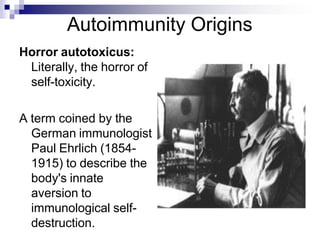
Autoimmunity Origins
Horror autotoxicus:
Literally, the horror of
self-toxicity.
A term coined by the
German immunologist
Paul Ehrlich (1854-
1915) to describe the
body's innate
aversion to
immunological self-
destruction.
History Continued
This concept of autoimmunity as the cause
of human illness is relatively new, and it
was not accepted into the mainstream of
medical thinking until the 1950s and
1960s.
Autoimmunity
 Basically means immunity to self
 A condition that occurs when the
immune system mistakenly attacks and
destroys healthy body tissue.
The “Immunology Definition”
Failure of immune
tolerance
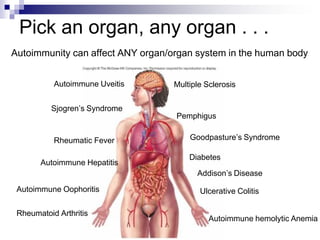
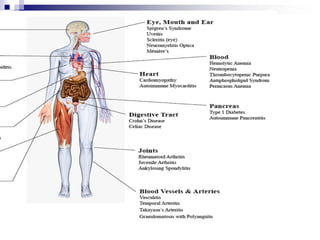
Pick an organ, any organ . . .
Autoimmunity can affect ANY organ/organ system in the human body
Pemphigus
Multiple Sclerosis
Sjogren’s Syndrome
Rheumatic Fever
Autoimmune Hepatitis
Ulcerative Colitis
Goodpasture’s Syndrome
Autoimmune Uveitis
Autoimmune hemolytic Anemia
Diabetes
Addison’s Disease
Rheumatoid Arthritis
Autoimmune Oophoritis
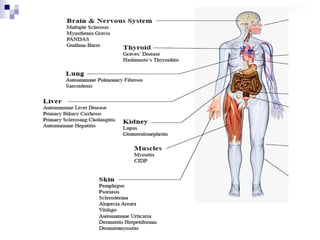
Types of autoimmune diseases
There are more than 100 different autoimmune
diseases. They can affect almost any tissue or
organ in your body, depending on where your
immune system malfunctions, including your:
•Joints.
•Muscles.
•Skin.
•Blood vessels.
•Digestive system.
•Endocrine system.
•Nervous system.
Joints and muscles
•Rheumatoid arthritis (RA).
•Lupus.
•Myositis.
Skin and blood vessels
•Sjögren’s syndrome.
•Psoriasis.
•Psoriatic arthritis.
•Dermatomyositis.
•Scleroderma.
•Vasculitis.
•Rheumatoid vasculitis.
•Urticarial vasculitis.
•Vitiligo.
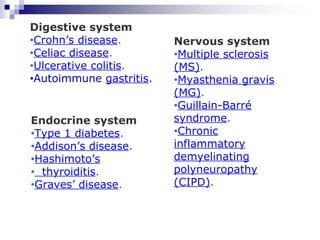
Nervous system
•Multiple sclerosis
(MS).
•Myasthenia gravis
(MG).
•Guillain-Barré
syndrome.
•Chronic
inflammatory
demyelinating
polyneuropathy
(CIPD).
Digestive system
•Crohn’s disease.
•Celiac disease.
•Ulcerative colitis.
•Autoimmune gastritis.
Endocrine system
•Type 1 diabetes.
•Addison’s disease.
•Hashimoto’s
• thyroiditis.
•Graves’ disease.
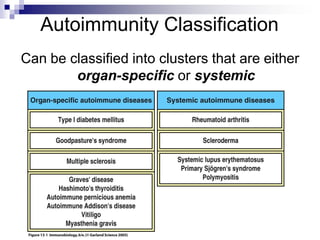
Autoimmunity Classification
Can be classified into clusters that are either
organ-specific or systemic
Hemolytic Auto immune disease
Organ specific Autoimmune disease
Systemic Autoimmune disease
Classification of Autoimmune diseases
Hemolytic Auto immune disease
Auto immune Haemolytic Anaemia
Autoimmune Thrombocytopenia
Auto immune Leucopenia
Classification of Autoimmune diseases
Classification of Auto immunity
Organ specific Autoimmune disease
Thyroid- Hashimoto’s disease,(goitre)
Thyotoxicosis( Graves’ Disease)
Adrenal gland- Addisons disease
Testes- Autoimmune Orchitis
Muscles- Myasthenia gravis
Eye- Phacoanaphylaxis,
Symphatetic Ophthalmia
GI Tract- Pernicious anaemia
Nervous system- Idiopathic polyneuritis
( Guillian barre Syndrome)
Skin- Bullous pemphigous,
Pemphigus vulgaris,
Dermatitis herpetiformis
Classification of Autoimmune diseases
Systemic Autoimmune disease
Systemic lupus erythematosus
Rheumatoid arthritis
Polyarteritis nodosa
Sjogrens syndrome
Classification of Autoimmune diseases
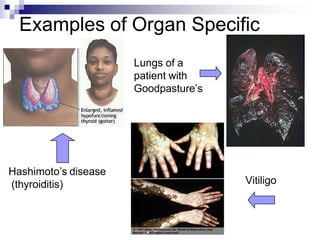
Examples of Organ Specific
Lungs of a
patient with
Goodpasture’s
Vitiligo
Hashimoto’s disease
(thyroiditis)
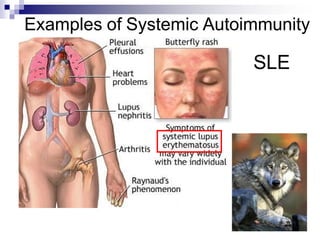
Examples of Systemic Autoimmunity
SLE
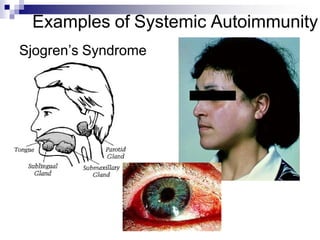
Examples of Systemic Autoimmunity
Sjogren’s Syndrome
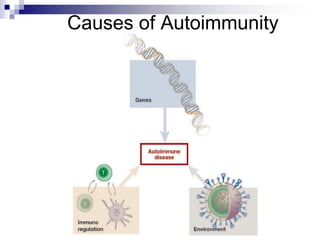
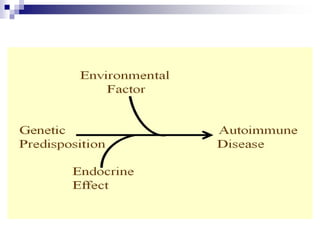
Causes of Autoimmunity
Infections- COVID-19 and EBV, S. pyogenes
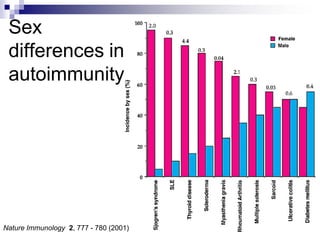
•Your sex. Women are more likely to have
autoimmune conditions.
•.genetic conditions and pass through generations of
a biological family.
•environmental factors- Exposure to chemicals,
certain kinds of pollution or other might trigger
autoimmune diseases.
•Drug induced anaemia, leucopenia and
thrombocytopenia
•Smoking and using other types of tobacco can
cause many health issues, including potentially
triggering autoimmune diseases.
Causes of auto immunity
Infectious basis
COVID-19 individuals who contract COVID-19
may have a higher likelihood of developing
conditions like vasculitis, alopecia, vitiligo, Crohn's
disease, ulcerative colitis, and rheumatoid
arthritis. and
Epstein-Barr virus.( infectious mononucleosis)
The Epstein-Barr virus (EBV), a common
herpesvirus, is implicated in the development and
progression of various autoimmune diseases,
including systemic lupus erythematosus (SLE),
rheumatoid arthritis (RA), and multiple sclerosis
(MS).
Infectious basis
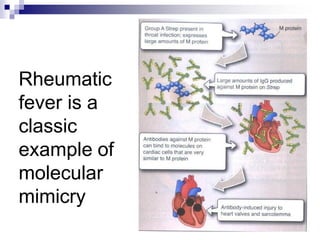
Streptococcus pyogenes
Post streptococcal sequelae-
M protein and Heart muscle
Nephritogenic strain and Renal glomeruli
Molecular mimicry
Homologous sequences
Shigella flexneri & HLA B 27
Mycobacterium tuberculosis and Joint membrane
Coxsackie B and myocardium
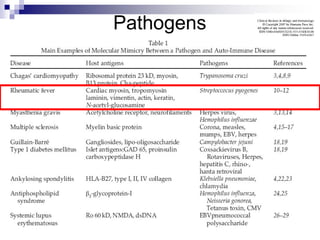
Pathogens
Rheumatic
fever is a
classic
example of
molecular
mimicry
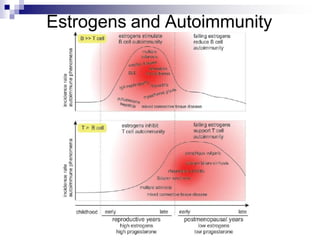
Hormones
 Females are much more likely to develop
autoimmune illness
 Rise in hormones associated with pregnancy
may even cause abortion of the fetus (RSA)
 Endometriosis and preeclampsia are both
thought to be autoimmune in nature
Hypothesis: estrogen response
elements (EREs) in several genes
Estrogens and Autoimmunity
Nature Immunology 2, 777 - 780 (2001)
Sex
differences in
autoimmunity
Genes and Autoimmunity
 The concept that a single gene mutation
leads to a single autoimmune disease is
the EXCEPTION not the rule.
 Because of this autoimmune diseases are
generally classified as complex diseases
as there is not a single “pinpoint-able”
gene
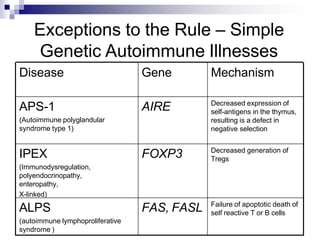
Exceptions to the Rule – Simple
Genetic Autoimmune Illnesses
Disease Gene Mechanism
APS-1
(Autoimmune polyglandular
syndrome type 1)
AIRE Decreased expression of
self-antigens in the thymus,
resulting is a defect in
negative selection
IPEX
(Immunodysregulation,
polyendocrinopathy,
enteropathy,
X-linked)
FOXP3 Decreased generation of
Tregs
ALPS
(autoimmune lymphoproliferative
syndrome )
FAS, FASL Failure of apoptotic death of
self reactive T or B cells
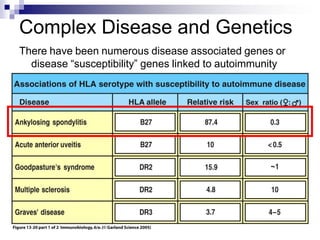
Complex Disease and Genetics
There have been numerous disease associated genes or
disease “susceptibility” genes linked to autoimmunity
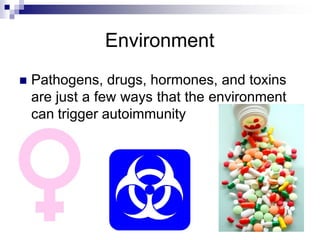
Environment
 Pathogens, drugs, hormones, and toxins
are just a few ways that the environment
can trigger autoimmunity
 Drugs
Procainamide (Pronestyl- Drug induced lupus
 Chemicals- 2 mercapto ethanol
 Bacterial products- PPD, LPS
 Enzymes- Trypsin
 Antibiotics- nystatin
 Mycoplasma pneumonia- anti human
erythrocyte cold antibody
 Infectious mononucleosis- anti sheep
erythrocyte anti bodies
Polyclonal B cell activation- IgM antibodies
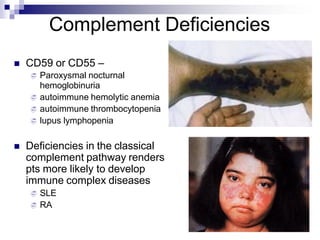
Complement Deficiencies
 CD59 or CD55 –
 Paroxysmal nocturnal
hemoglobinuria
 autoimmune hemolytic anemia
 autoimmune thrombocytopenia
 lupus lymphopenia
 Deficiencies in the classical
complement pathway renders
pts more likely to develop
immune complex diseases
 SLE
 RA
The Complement See-Saw
 The complement system is a mediator in both the
pathogenesis and prevention of immune complex
diseases
 It has a protective effect when functioning in
moderation against pathogens; at the same time,
the inflammation promoted by complement
activation can result in cellular damage when not
kept in check.
B or T? That is the question?
Autoimmunity is hard to classify as strictly a
B cell or T cell mediated disease as
multiple arms of the immune system are
involved
Classification of Auto immunity
Hemolytic Auto immune disease
Auto immune Haemolytic Anaemia
- Cold( IgM) & warm (IgG) abs
-Direct Coombs test
Autoimmune Thrombocytopenia
AB mediated Hypersensitivity- drug
Auto immune Leucopenia
SLE and RA
Classification of Auto immunity
Organ specific Autoimmune disease
Thyroid- Hashimoto’s disease,(goitre)
Thyotoxicosis( Graves’ Disease)
Adrenal gland- Addisons disease
Testes- Autoimmune Orchitis
Muscles- Myasthenia gravis
Eye- Phacoanaphylaxis,
Symphatetic Ophthalmia
GI Tract- Pernicious anaemia
Nervous system- Idiopathic polyneuritis
( Guillian barre Syndrome)
Multiple sclerosis
Skin- Bullous pemphigous,
Pemphigus vulgaris,
Dermatitis herpetiformis
Classification of Autoimmune diseases
Thyroid-
Hashimoto’s disease,(goitre)
Anti Throglobulin antibody
Enlargement of thyroid gland- Hypothroidism-
Symptoms
Fatigue, weight gain, intolerance to cold,
constipation, dry skin, hair loss, and difficulty
concentrating.
Thyotoxicosis( Graves’ Disease)
IgG ab to Thyroid membrane antigen
Hyper thyroidism
Symptoms
Rapid heartbeat, weight loss despite increased
appetite, anxiety, nervousness, heat intolerance,
insomnia, and sometimes an enlarged thyroid gland
GI tract
Crohn’s disease
Celiac disease is an illness caused by an immune
reaction to eating gluten. Gluten is a protein found
in foods containing wheat, barley or rye.
Inflammation stomach and Large intestine
Symptoms
•Diarrhea.
•Fatigue.
•Weight loss.
•Bloating and gas.
•Abdominal pain.
•Nausea and vomiting.
•Constipation.
GI tract
Celiac disease
Infklammation stomach and Large intestine
Symptoms
•Abdominal pain and cramping.
•Diarrhea.
•Fever.
•Fatigue.
•Weight loss.
•Loss of appetite.
•Rectal bleeding.
•Other potential complications include intestinal
obstruction, fistulas, abscesses, and malnutrition.
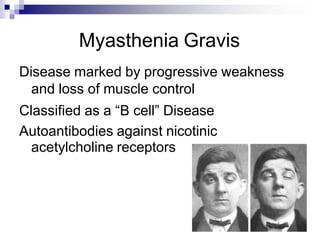
Myasthenia Gravis
Disease marked by progressive weakness
and loss of muscle control
Classified as a “B cell” Disease
Autoantibodies against nicotinic
acetylcholine receptors
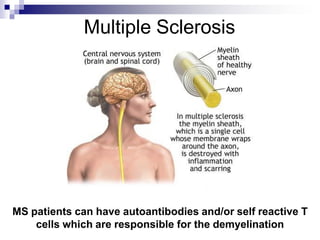
Multiple Sclerosis
MS patients can have autoantibodies and/or self reactive T
cells which are responsible for the demyelination
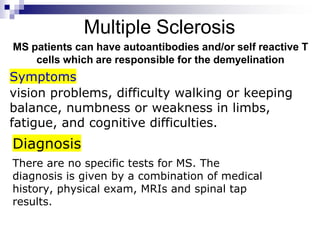
Multiple Sclerosis
MS patients can have autoantibodies and/or self reactive T
cells which are responsible for the demyelination
vision problems, difficulty walking or keeping
balance, numbness or weakness in limbs,
fatigue, and cognitive difficulties.
Symptoms
There are no specific tests for MS. The
diagnosis is given by a combination of medical
history, physical exam, MRIs and spinal tap
results.
Diagnosis
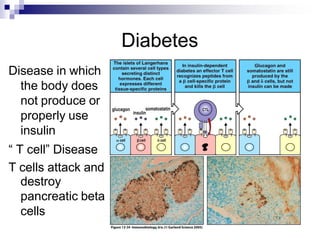
Diabetes
Disease in which
the body does
not produce or
properly use
insulin
“ T cell” Disease
T cells attack and
destroy
pancreatic beta
cells
Systemic Autoimmune disease
Systemic lupus erythematosus
Rheumatoid arthritis
Polyarteritis nodosa
Sjogrens syndrome
Classification of Autoimmune diseases
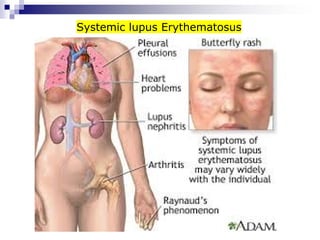
Systemic lupus Erythematosus
Symptoms
joint pain and swelling, fatigue, skin rashes (like the
butterfly rash), fever, and hair loss.
Systemic lupus Erythematosus
Common Symptoms:
Joint Pain and Swelling: SLE can cause inflammation in the joints,
leading to pain, stiffness, and swelling. Joint involvement is often
symmetrical and can affect multiple joints.
Skin Rashes: A characteristic butterfly rash across the cheeks and nose is
common, but rashes can appear elsewhere on the body.
Fatigue:, Fever:, Hair Loss:
Mouth Sores: Ulcers in the mouth or nose can be present.
Sensitivity to Sunlight: Skin lesions can worsen with sun exposure.
Raynaud's Phenomenon: Fingers and toes may turn white or blue when
exposed to cold.
Swollen Lymph Nodes: Enlarged lymph nodes are common, especially in
children and young adults.
Other Symptoms:
Weight loss, chest pain when breathing deeply,
swollen legs or around the eyes, and headaches
can also occur.
The Brain and Nervous System: Headaches, cognitive
impairment, personality changes, seizures, or stroke can
occur.
The Kidneys: Lupus nephritis (kidney damage) is a serious
complication.
The Blood: Low blood cell counts can occur.
The Heart: Inflammation of the heart muscle or sac around
the heart (pericarditis) can cause chest pain.
The Lungs: Pain when breathing deeply can occur.
The Digestive Tract: Abdominal pain, nausea, and vomiting
may occur.
Systemic lupus Erythematosus
Diagnosing Systemic Lupus Erythematosus
(SLE) or lupus, involves a
combination of clinical assessment,
medical history, and
laboratory tests.
There's no single test that definitively
diagnoses lupus, and it can be challenging to
diagnose due to its variable symptoms and
ability to mimic other conditions.
Systemic lupus Erythematosus
Laboratory Tests:
Antinuclear Antibody (ANA) Test:
This is a common screening test for lupus, as almost all people with lupus have positive ANA. However, ANA can also be
positive in other conditions, so it's not a definitive diagnosis for lupus alone.
Other Autoantibody Tests:
If ANA is positive, further tests may be ordered to identify specific autoantibodies, such as anti-dsDNA, anti-Sm, and anti-
phospholipid antibodies.
Complete Blood Count (CBC):
This test can reveal low platelet, red blood cell, or white blood cell counts, which may be seen in lupus.
Complement Protein Levels:
Low complement protein levels can indicate lupus activity and help guide treatment decisions.
Other Tests:
Depending on the individual's symptoms, other tests like urinalysis, chest X-ray, and blood tests to assess kidney function may
be performed.
Systemic lupus Erythematosus
Rheumatoid arthritis (RA) is a chronic, autoimmune disease
that primarily affects the joints, causing pain, swelling, and
stiffness.
It's characterized by inflammation in the lining of the joints,
which can damage the tissue covering the bones.
Rheumatoid arthritis (RA
Symptoms of RA:
Pain, swelling, and stiffness in more than one joint.
Stiffness, especially in the morning or after periods of inactivity.
Fatigue, weakness, and sometimes fever.
Pain and stiffness in the same joints on both sides of the body.
Possible extra-articular symptoms like eye, skin, or lung
problems.
Blood Tests:
Erythrocyte Sedimentation Rate (ESR) and
C-reactive Protein (CRP):
Rheumatoid Factor (RF) Antibodies: These
antibodies are present in most people with
rheumatoid arthritis.
Anti-cyclic Citrullinated Peptide (Anti-CCP)
Antibodies: These antibodies are highly specific
for rheumatoid arthritis, and their presence is a
strong indicator of the disease.
Diagnosis
Magnetic resonance imaging (MRI) and ultrasound
Rheumatoid arthritis (RA)
Symptoms
 Initial diagnosis may be missed in patients
as diseases present with general
symptoms
Fever, muscle ache, fatigue, joint pain
 Disease specific manifests
SLE – rash
Sjogren’s – dry mouth, dry eyes
Diagnosis
 General tests
 C Reactive Protein
 Autoantibody titers (anti DNA, anti phospholipids, etc)
 Presence of Rheumatoid Factor
 Disease specific tests
 Neurological exam – MS
 Fasting glucose - Diabetes
Treatment
The key to treating
autoimmunity is
immunomodulation
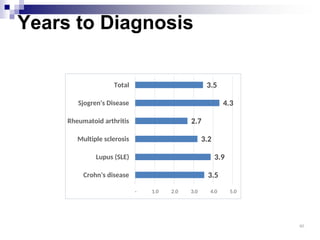
Years to Diagnosis
3.5
3.9
3.2
2.7
4.3
3.5
Crohn's disease
Lupus (SLE)
Multiple sclerosis
Rheumatoid arthritis
Sjogren's Disease
Total
- 1.0 2.0 3.0 4.0 5.0
60
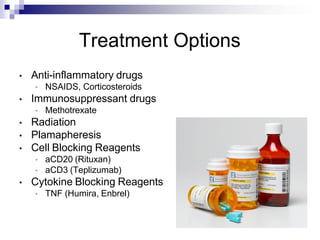
Treatment Options
• Anti-inflammatory drugs
• NSAIDS, Corticosteroids
• Immunosuppressant drugs
• Methotrexate
• Radiation
• Plamapheresis
• Cell Blocking Reagents
• aCD20 (Rituxan)
• aCD3 (Teplizumab)
• Cytokine Blocking Reagents
• TNF (Humira, Enbrel)
***********Remember***********
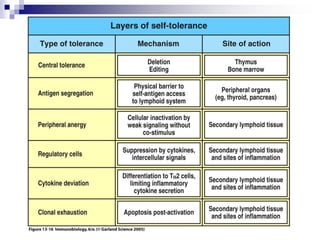
Autoimmunity is a failure of tolerance!
Knowing the tolerance mechanisms the
immune system uses, will help you better
understand autoimmune diseases!

Autoimmunity- its Types and diagnosis.pdf

  • 1.
  • 2.
    Outline  History  Definition Disease states  Causes  Immunopathology  Diagnosis  Treatment
  • 3.
    Autoimmunity Origins Horror autotoxicus: Literally,the horror of self-toxicity. A term coined by the German immunologist Paul Ehrlich (1854- 1915) to describe the body's innate aversion to immunological self- destruction.
  • 4.
    History Continued This conceptof autoimmunity as the cause of human illness is relatively new, and it was not accepted into the mainstream of medical thinking until the 1950s and 1960s.
  • 5.
    Autoimmunity  Basically meansimmunity to self  A condition that occurs when the immune system mistakenly attacks and destroys healthy body tissue.
  • 6.
  • 8.
    Pick an organ,any organ . . . Autoimmunity can affect ANY organ/organ system in the human body Pemphigus Multiple Sclerosis Sjogren’s Syndrome Rheumatic Fever Autoimmune Hepatitis Ulcerative Colitis Goodpasture’s Syndrome Autoimmune Uveitis Autoimmune hemolytic Anemia Diabetes Addison’s Disease Rheumatoid Arthritis Autoimmune Oophoritis
  • 11.
    Types of autoimmunediseases There are more than 100 different autoimmune diseases. They can affect almost any tissue or organ in your body, depending on where your immune system malfunctions, including your: •Joints. •Muscles. •Skin. •Blood vessels. •Digestive system. •Endocrine system. •Nervous system.
  • 12.
    Joints and muscles •Rheumatoidarthritis (RA). •Lupus. •Myositis. Skin and blood vessels •Sjögren’s syndrome. •Psoriasis. •Psoriatic arthritis. •Dermatomyositis. •Scleroderma. •Vasculitis. •Rheumatoid vasculitis. •Urticarial vasculitis. •Vitiligo.
  • 13.
    Nervous system •Multiple sclerosis (MS). •Myastheniagravis (MG). •Guillain-Barré syndrome. •Chronic inflammatory demyelinating polyneuropathy (CIPD). Digestive system •Crohn’s disease. •Celiac disease. •Ulcerative colitis. •Autoimmune gastritis. Endocrine system •Type 1 diabetes. •Addison’s disease. •Hashimoto’s • thyroiditis. •Graves’ disease.
  • 14.
    Autoimmunity Classification Can beclassified into clusters that are either organ-specific or systemic
  • 15.
    Hemolytic Auto immunedisease Organ specific Autoimmune disease Systemic Autoimmune disease Classification of Autoimmune diseases
  • 16.
    Hemolytic Auto immunedisease Auto immune Haemolytic Anaemia Autoimmune Thrombocytopenia Auto immune Leucopenia Classification of Autoimmune diseases
  • 17.
    Classification of Autoimmunity Organ specific Autoimmune disease Thyroid- Hashimoto’s disease,(goitre) Thyotoxicosis( Graves’ Disease) Adrenal gland- Addisons disease Testes- Autoimmune Orchitis Muscles- Myasthenia gravis Eye- Phacoanaphylaxis, Symphatetic Ophthalmia GI Tract- Pernicious anaemia Nervous system- Idiopathic polyneuritis ( Guillian barre Syndrome) Skin- Bullous pemphigous, Pemphigus vulgaris, Dermatitis herpetiformis Classification of Autoimmune diseases
  • 18.
    Systemic Autoimmune disease Systemiclupus erythematosus Rheumatoid arthritis Polyarteritis nodosa Sjogrens syndrome Classification of Autoimmune diseases
  • 19.
    Examples of OrganSpecific Lungs of a patient with Goodpasture’s Vitiligo Hashimoto’s disease (thyroiditis)
  • 20.
    Examples of SystemicAutoimmunity SLE
  • 21.
    Examples of SystemicAutoimmunity Sjogren’s Syndrome
  • 22.
  • 24.
    Infections- COVID-19 andEBV, S. pyogenes •Your sex. Women are more likely to have autoimmune conditions. •.genetic conditions and pass through generations of a biological family. •environmental factors- Exposure to chemicals, certain kinds of pollution or other might trigger autoimmune diseases. •Drug induced anaemia, leucopenia and thrombocytopenia •Smoking and using other types of tobacco can cause many health issues, including potentially triggering autoimmune diseases. Causes of auto immunity
  • 25.
    Infectious basis COVID-19 individualswho contract COVID-19 may have a higher likelihood of developing conditions like vasculitis, alopecia, vitiligo, Crohn's disease, ulcerative colitis, and rheumatoid arthritis. and Epstein-Barr virus.( infectious mononucleosis) The Epstein-Barr virus (EBV), a common herpesvirus, is implicated in the development and progression of various autoimmune diseases, including systemic lupus erythematosus (SLE), rheumatoid arthritis (RA), and multiple sclerosis (MS).
  • 26.
    Infectious basis Streptococcus pyogenes Poststreptococcal sequelae- M protein and Heart muscle Nephritogenic strain and Renal glomeruli Molecular mimicry Homologous sequences Shigella flexneri & HLA B 27 Mycobacterium tuberculosis and Joint membrane Coxsackie B and myocardium
  • 27.
  • 28.
  • 29.
    Hormones  Females aremuch more likely to develop autoimmune illness  Rise in hormones associated with pregnancy may even cause abortion of the fetus (RSA)  Endometriosis and preeclampsia are both thought to be autoimmune in nature Hypothesis: estrogen response elements (EREs) in several genes
  • 30.
  • 31.
    Nature Immunology 2,777 - 780 (2001) Sex differences in autoimmunity
  • 32.
    Genes and Autoimmunity The concept that a single gene mutation leads to a single autoimmune disease is the EXCEPTION not the rule.  Because of this autoimmune diseases are generally classified as complex diseases as there is not a single “pinpoint-able” gene
  • 33.
    Exceptions to theRule – Simple Genetic Autoimmune Illnesses Disease Gene Mechanism APS-1 (Autoimmune polyglandular syndrome type 1) AIRE Decreased expression of self-antigens in the thymus, resulting is a defect in negative selection IPEX (Immunodysregulation, polyendocrinopathy, enteropathy, X-linked) FOXP3 Decreased generation of Tregs ALPS (autoimmune lymphoproliferative syndrome ) FAS, FASL Failure of apoptotic death of self reactive T or B cells
  • 34.
    Complex Disease andGenetics There have been numerous disease associated genes or disease “susceptibility” genes linked to autoimmunity
  • 35.
    Environment  Pathogens, drugs,hormones, and toxins are just a few ways that the environment can trigger autoimmunity
  • 36.
     Drugs Procainamide (Pronestyl-Drug induced lupus  Chemicals- 2 mercapto ethanol  Bacterial products- PPD, LPS  Enzymes- Trypsin  Antibiotics- nystatin  Mycoplasma pneumonia- anti human erythrocyte cold antibody  Infectious mononucleosis- anti sheep erythrocyte anti bodies Polyclonal B cell activation- IgM antibodies
  • 37.
    Complement Deficiencies  CD59or CD55 –  Paroxysmal nocturnal hemoglobinuria  autoimmune hemolytic anemia  autoimmune thrombocytopenia  lupus lymphopenia  Deficiencies in the classical complement pathway renders pts more likely to develop immune complex diseases  SLE  RA
  • 38.
    The Complement See-Saw The complement system is a mediator in both the pathogenesis and prevention of immune complex diseases  It has a protective effect when functioning in moderation against pathogens; at the same time, the inflammation promoted by complement activation can result in cellular damage when not kept in check.
  • 39.
    B or T?That is the question? Autoimmunity is hard to classify as strictly a B cell or T cell mediated disease as multiple arms of the immune system are involved Classification of Auto immunity
  • 40.
    Hemolytic Auto immunedisease Auto immune Haemolytic Anaemia - Cold( IgM) & warm (IgG) abs -Direct Coombs test Autoimmune Thrombocytopenia AB mediated Hypersensitivity- drug Auto immune Leucopenia SLE and RA
  • 41.
    Classification of Autoimmunity Organ specific Autoimmune disease Thyroid- Hashimoto’s disease,(goitre) Thyotoxicosis( Graves’ Disease) Adrenal gland- Addisons disease Testes- Autoimmune Orchitis Muscles- Myasthenia gravis Eye- Phacoanaphylaxis, Symphatetic Ophthalmia GI Tract- Pernicious anaemia Nervous system- Idiopathic polyneuritis ( Guillian barre Syndrome) Multiple sclerosis Skin- Bullous pemphigous, Pemphigus vulgaris, Dermatitis herpetiformis Classification of Autoimmune diseases
  • 42.
    Thyroid- Hashimoto’s disease,(goitre) Anti Throglobulinantibody Enlargement of thyroid gland- Hypothroidism- Symptoms Fatigue, weight gain, intolerance to cold, constipation, dry skin, hair loss, and difficulty concentrating. Thyotoxicosis( Graves’ Disease) IgG ab to Thyroid membrane antigen Hyper thyroidism Symptoms Rapid heartbeat, weight loss despite increased appetite, anxiety, nervousness, heat intolerance, insomnia, and sometimes an enlarged thyroid gland
  • 43.
    GI tract Crohn’s disease Celiacdisease is an illness caused by an immune reaction to eating gluten. Gluten is a protein found in foods containing wheat, barley or rye. Inflammation stomach and Large intestine Symptoms •Diarrhea. •Fatigue. •Weight loss. •Bloating and gas. •Abdominal pain. •Nausea and vomiting. •Constipation.
  • 44.
    GI tract Celiac disease Infklammationstomach and Large intestine Symptoms •Abdominal pain and cramping. •Diarrhea. •Fever. •Fatigue. •Weight loss. •Loss of appetite. •Rectal bleeding. •Other potential complications include intestinal obstruction, fistulas, abscesses, and malnutrition.
  • 45.
    Myasthenia Gravis Disease markedby progressive weakness and loss of muscle control Classified as a “B cell” Disease Autoantibodies against nicotinic acetylcholine receptors
  • 46.
    Multiple Sclerosis MS patientscan have autoantibodies and/or self reactive T cells which are responsible for the demyelination
  • 47.
    Multiple Sclerosis MS patientscan have autoantibodies and/or self reactive T cells which are responsible for the demyelination vision problems, difficulty walking or keeping balance, numbness or weakness in limbs, fatigue, and cognitive difficulties. Symptoms There are no specific tests for MS. The diagnosis is given by a combination of medical history, physical exam, MRIs and spinal tap results. Diagnosis
  • 48.
    Diabetes Disease in which thebody does not produce or properly use insulin “ T cell” Disease T cells attack and destroy pancreatic beta cells
  • 49.
    Systemic Autoimmune disease Systemiclupus erythematosus Rheumatoid arthritis Polyarteritis nodosa Sjogrens syndrome Classification of Autoimmune diseases
  • 50.
  • 51.
    Symptoms joint pain andswelling, fatigue, skin rashes (like the butterfly rash), fever, and hair loss. Systemic lupus Erythematosus Common Symptoms: Joint Pain and Swelling: SLE can cause inflammation in the joints, leading to pain, stiffness, and swelling. Joint involvement is often symmetrical and can affect multiple joints. Skin Rashes: A characteristic butterfly rash across the cheeks and nose is common, but rashes can appear elsewhere on the body. Fatigue:, Fever:, Hair Loss: Mouth Sores: Ulcers in the mouth or nose can be present. Sensitivity to Sunlight: Skin lesions can worsen with sun exposure. Raynaud's Phenomenon: Fingers and toes may turn white or blue when exposed to cold. Swollen Lymph Nodes: Enlarged lymph nodes are common, especially in children and young adults.
  • 52.
    Other Symptoms: Weight loss,chest pain when breathing deeply, swollen legs or around the eyes, and headaches can also occur. The Brain and Nervous System: Headaches, cognitive impairment, personality changes, seizures, or stroke can occur. The Kidneys: Lupus nephritis (kidney damage) is a serious complication. The Blood: Low blood cell counts can occur. The Heart: Inflammation of the heart muscle or sac around the heart (pericarditis) can cause chest pain. The Lungs: Pain when breathing deeply can occur. The Digestive Tract: Abdominal pain, nausea, and vomiting may occur. Systemic lupus Erythematosus
  • 53.
    Diagnosing Systemic LupusErythematosus (SLE) or lupus, involves a combination of clinical assessment, medical history, and laboratory tests. There's no single test that definitively diagnoses lupus, and it can be challenging to diagnose due to its variable symptoms and ability to mimic other conditions. Systemic lupus Erythematosus
  • 54.
    Laboratory Tests: Antinuclear Antibody(ANA) Test: This is a common screening test for lupus, as almost all people with lupus have positive ANA. However, ANA can also be positive in other conditions, so it's not a definitive diagnosis for lupus alone. Other Autoantibody Tests: If ANA is positive, further tests may be ordered to identify specific autoantibodies, such as anti-dsDNA, anti-Sm, and anti- phospholipid antibodies. Complete Blood Count (CBC): This test can reveal low platelet, red blood cell, or white blood cell counts, which may be seen in lupus. Complement Protein Levels: Low complement protein levels can indicate lupus activity and help guide treatment decisions. Other Tests: Depending on the individual's symptoms, other tests like urinalysis, chest X-ray, and blood tests to assess kidney function may be performed. Systemic lupus Erythematosus
  • 55.
    Rheumatoid arthritis (RA)is a chronic, autoimmune disease that primarily affects the joints, causing pain, swelling, and stiffness. It's characterized by inflammation in the lining of the joints, which can damage the tissue covering the bones. Rheumatoid arthritis (RA Symptoms of RA: Pain, swelling, and stiffness in more than one joint. Stiffness, especially in the morning or after periods of inactivity. Fatigue, weakness, and sometimes fever. Pain and stiffness in the same joints on both sides of the body. Possible extra-articular symptoms like eye, skin, or lung problems.
  • 56.
    Blood Tests: Erythrocyte SedimentationRate (ESR) and C-reactive Protein (CRP): Rheumatoid Factor (RF) Antibodies: These antibodies are present in most people with rheumatoid arthritis. Anti-cyclic Citrullinated Peptide (Anti-CCP) Antibodies: These antibodies are highly specific for rheumatoid arthritis, and their presence is a strong indicator of the disease. Diagnosis Magnetic resonance imaging (MRI) and ultrasound Rheumatoid arthritis (RA)
  • 57.
    Symptoms  Initial diagnosismay be missed in patients as diseases present with general symptoms Fever, muscle ache, fatigue, joint pain  Disease specific manifests SLE – rash Sjogren’s – dry mouth, dry eyes
  • 58.
    Diagnosis  General tests C Reactive Protein  Autoantibody titers (anti DNA, anti phospholipids, etc)  Presence of Rheumatoid Factor  Disease specific tests  Neurological exam – MS  Fasting glucose - Diabetes
  • 59.
    Treatment The key totreating autoimmunity is immunomodulation
  • 60.
    Years to Diagnosis 3.5 3.9 3.2 2.7 4.3 3.5 Crohn'sdisease Lupus (SLE) Multiple sclerosis Rheumatoid arthritis Sjogren's Disease Total - 1.0 2.0 3.0 4.0 5.0 60
  • 61.
    Treatment Options • Anti-inflammatorydrugs • NSAIDS, Corticosteroids • Immunosuppressant drugs • Methotrexate • Radiation • Plamapheresis • Cell Blocking Reagents • aCD20 (Rituxan) • aCD3 (Teplizumab) • Cytokine Blocking Reagents • TNF (Humira, Enbrel)
  • 62.
    ***********Remember*********** Autoimmunity is afailure of tolerance! Knowing the tolerance mechanisms the immune system uses, will help you better understand autoimmune diseases!