CENTRE FOR APPLIED GENETICS
Jnanabharathi, Bangalore University, Bangalore-560056
SEMINAR
PRESENTED BY:
SOUGATA GANGULY
M.Sc. APPLIED GENETICS,
ONCOGENES
INDEX
Introduction
Protooncogenes
Mechanism of activation
Mechanism of action of oncogenes
Summary
References
CANCER
• The term cancer applies to a group of diseases in which cells grow
abnormally & form malignant tumor.
• Malignant cells can invade nearby tissues and metastasize.
• This aberrant growth pattern results from mutations in genes that
regulate proliferation, differentiation, and survival of cells in a
multicellular organism.
• Because of these genetic changes, cancer cells no longer respond to
the signals that govern growth of normal cells.
• Activation of oncogenes or absence /inactivation of tumor suppressor
genes can lead to cancer.
NORMAL CELLS Vs. CANCER
CELLS
Cancer cells-
• Lose control over growth and
multiplication.
• Do not self destruct when they
become worn out or damaged.
• Crowd out healthy cells
GENES RELATED TO CANCER
 Oncogenes- The genes involved in the development of cancer.
Normal cells do contain DNA sequence similar to viral oncognenes.
To distinguish these two genes: V-src (viral gene) and C-src (cellular
gene).
 Protooncogenes- Normal constituents of cells whose function is to
promote proliferation or cell survival. These genes can code for
growth factors, growth factor receptors, signal transduction proteins,
intracellular kinases and transcription factors.
 Tumor suppressor genes(normal growth suppressor genes)- Encode
proteins that encode proliferation, promote cell death or repair DNA.
PROTOONCOGENES
 Protooncogenes are regulatory genes.
 Products of many protooncogenes are polypeptide growth factors.
e.g.- sis gene produce PDGF- normal wound healing.
 Product act as receptor for growth factor.
e.g.- erb-B produces receptor for EGF.
 Protooncogenes are under the control of regulatory genes and
expressed only when required.
 When virus enters, an extra oncogene is inserted so as to produce
continuous expression of gene leading to uncontrolled cellular activity
& malignant transformation.
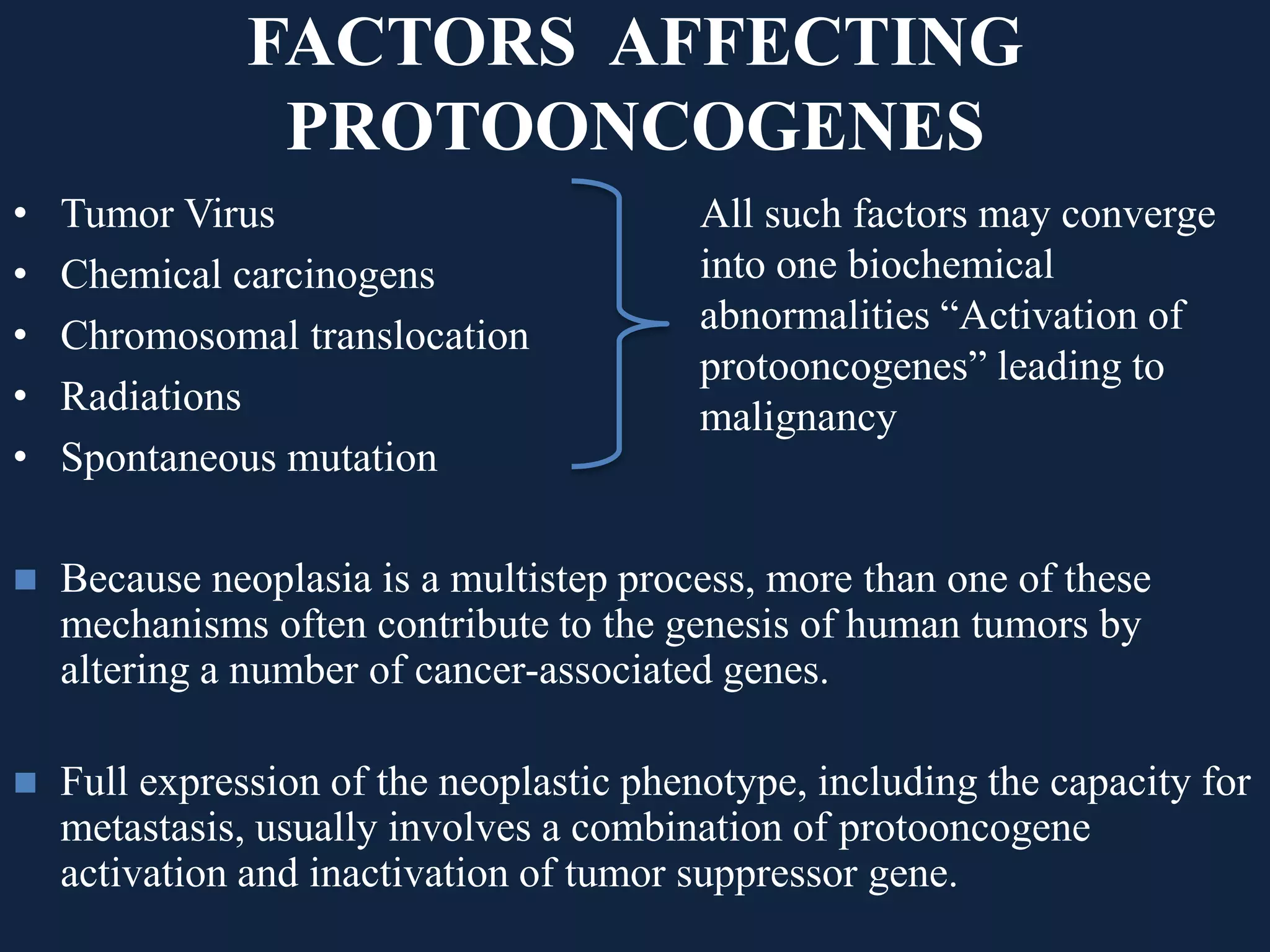
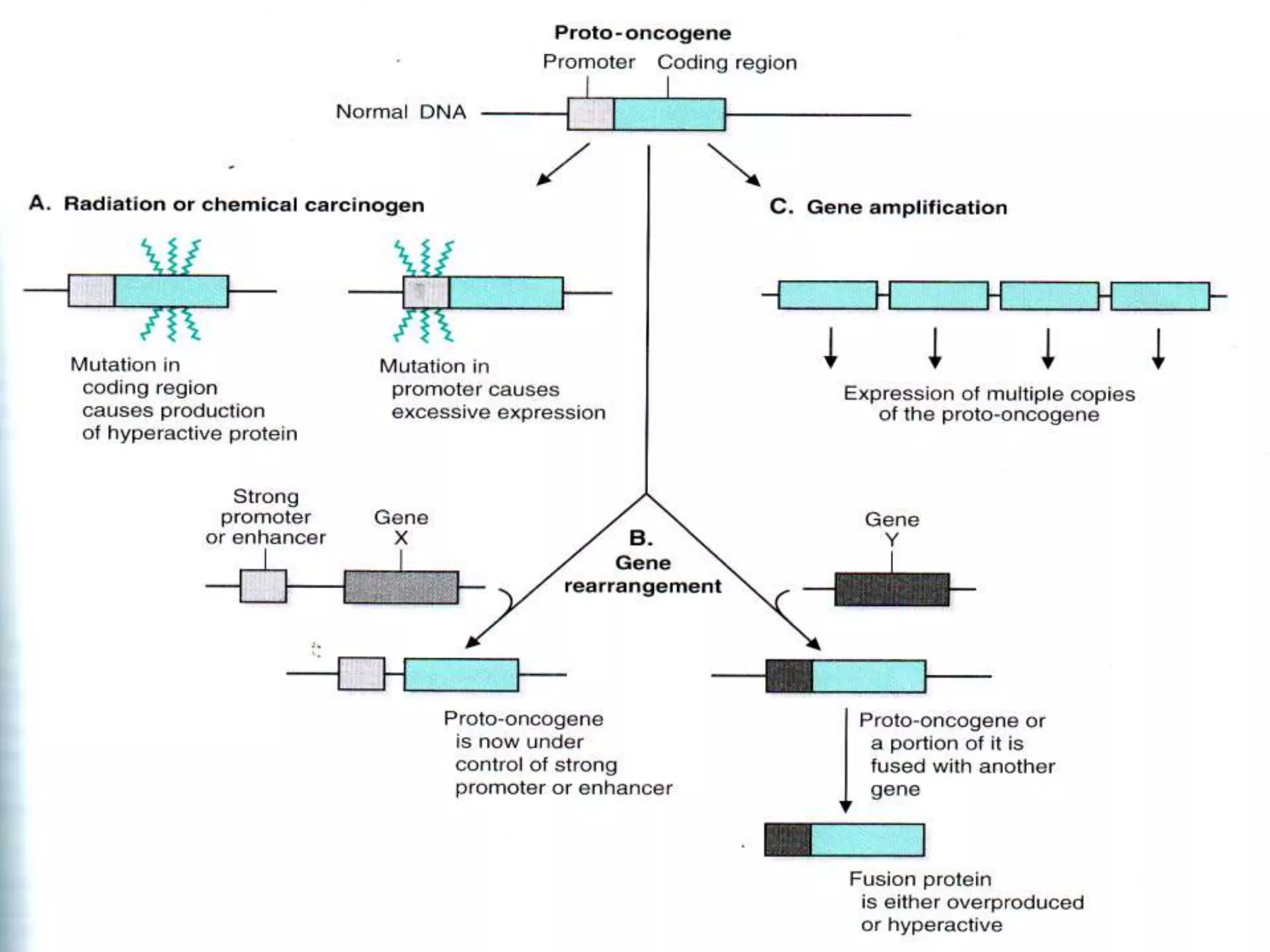
FACTORS AFFECTING
PROTOONCOGENES
• Tumor Virus
• Chemical carcinogens
• Chromosomal translocation
• Radiations
• Spontaneous mutation
All such factors may converge
into one biochemical
abnormalities “Activation of
protooncogenes” leading to
malignancy
 Because neoplasia is a multistep process, more than one of these
mechanisms often contribute to the genesis of human tumors by
altering a number of cancer-associated genes.
 Full expression of the neoplastic phenotype, including the capacity for
metastasis, usually involves a combination of protooncogene
activation and inactivation of tumor suppressor gene.
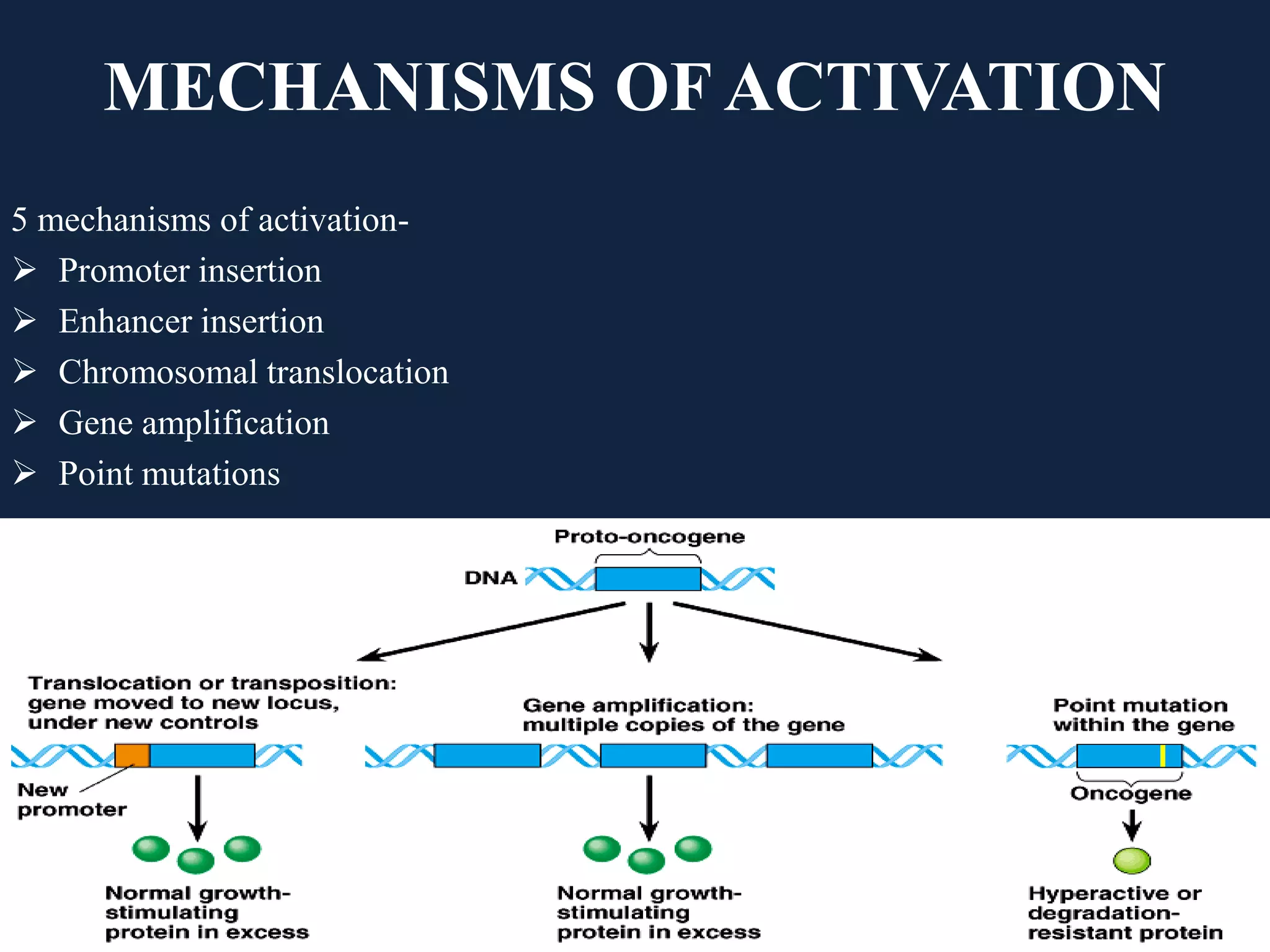
MECHANISMS OF ACTIVATION
5 mechanisms of activation-
 Promoter insertion
 Enhancer insertion
 Chromosomal translocation
 Gene amplification
 Point mutations
0
Promoter Insertion
• Certain retroviruses lack oncogenes(e.g.- avian leukemia viruses)but
may cause cancer over a long period of time.
• In retrovirus, cDNA is made from their RNA by reverse transcriptase.
• cDNA gets inserted into host genome.
• Integrated dscDNA provirus
• This proviral DNA takes control over the transcription of cellular
chromosomal DNA & transforms the cell.
e.g.- Avian Leukemia
Enhancer Insertion
Fig :- Mechanism of Enhancer Insertion
Chromosomal Translocation
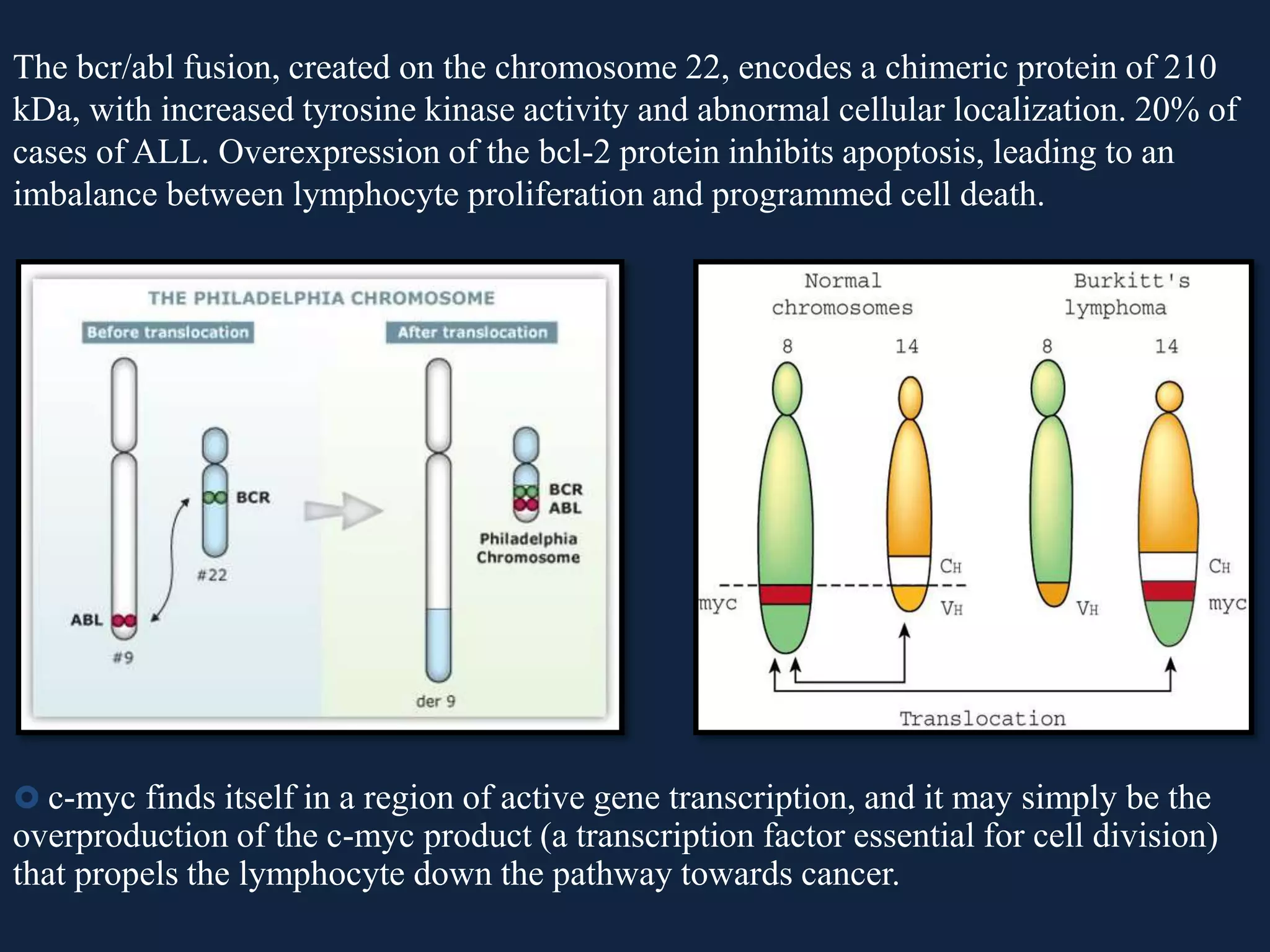
• Rearrangement of genetic material by splitting off a
small fragment of chromosome which is joined to
another chromosome.
• Over expression of proto oncogenes
eg: Burkitts lymphoma
Chronic myeloid leukemia
The bcr/abl fusion, created on the chromosome 22, encodes a chimeric protein of 210
kDa, with increased tyrosine kinase activity and abnormal cellular localization. 20% of
cases of ALL. Overexpression of the bcl-2 protein inhibits apoptosis, leading to an
imbalance between lymphocyte proliferation and programmed cell death.
 c-myc finds itself in a region of active gene transcription, and it may simply be the
overproduction of the c-myc product (a transcription factor essential for cell division)
that propels the lymphocyte down the pathway towards cancer.
Gene Amplification
• Certain DNA sequence is amplified several fold in some cancers.
• Gene amplification was first discovered as a mechanism by which
some tumor cell lines can acquire resistance to growth-inhibiting
drugs.
• Studies then demonstrated that three protooncogene families-myc, erb
B, and ras-are amplified in a significant number of human tumors.
• About 20% to 30% of breast and ovarian cancers and some types of
SCC show c-myc amplification. Amplification of N-myc correlates
strongly with advanced tumor stage in neuroblastoma.
Mutations
• Mutations activate protooncogenes through structural alterations.
These alterations, which usually involve critical protein regulatory
regions, often lead to the uncontrolled, continuous activity of the
mutated protein.
• Various types of mutations, such as base substitutions, deletions, and
insertions, are capable of activating protooncogenes.
• In human tumors the most characterized oncogene mutations are base
substitutions (point mutations) that change a single amino acid within
the protein.
• Mutations in DNA that give rise to cancer may be inherited or caused
by chemical carcinogens, radiation, viruses, and by replication errors
that are not repaired.
Point Mutations
• Point mutations are frequently detected in the ras family of
protooncogenes (K-ras, H-ras, and N-ras).
• Single most dominant cause of many human tumor.
• Inactive ras is in bound state with GDP.
• When cells are stimulated by GF, ras P21 get activated by exchanging
GDP for GTP.
• In normal cells, the activity of ras P21 is short lived because of
GTPase activity.
• Point mutation cause altered ras P21 lacking GTPase activity
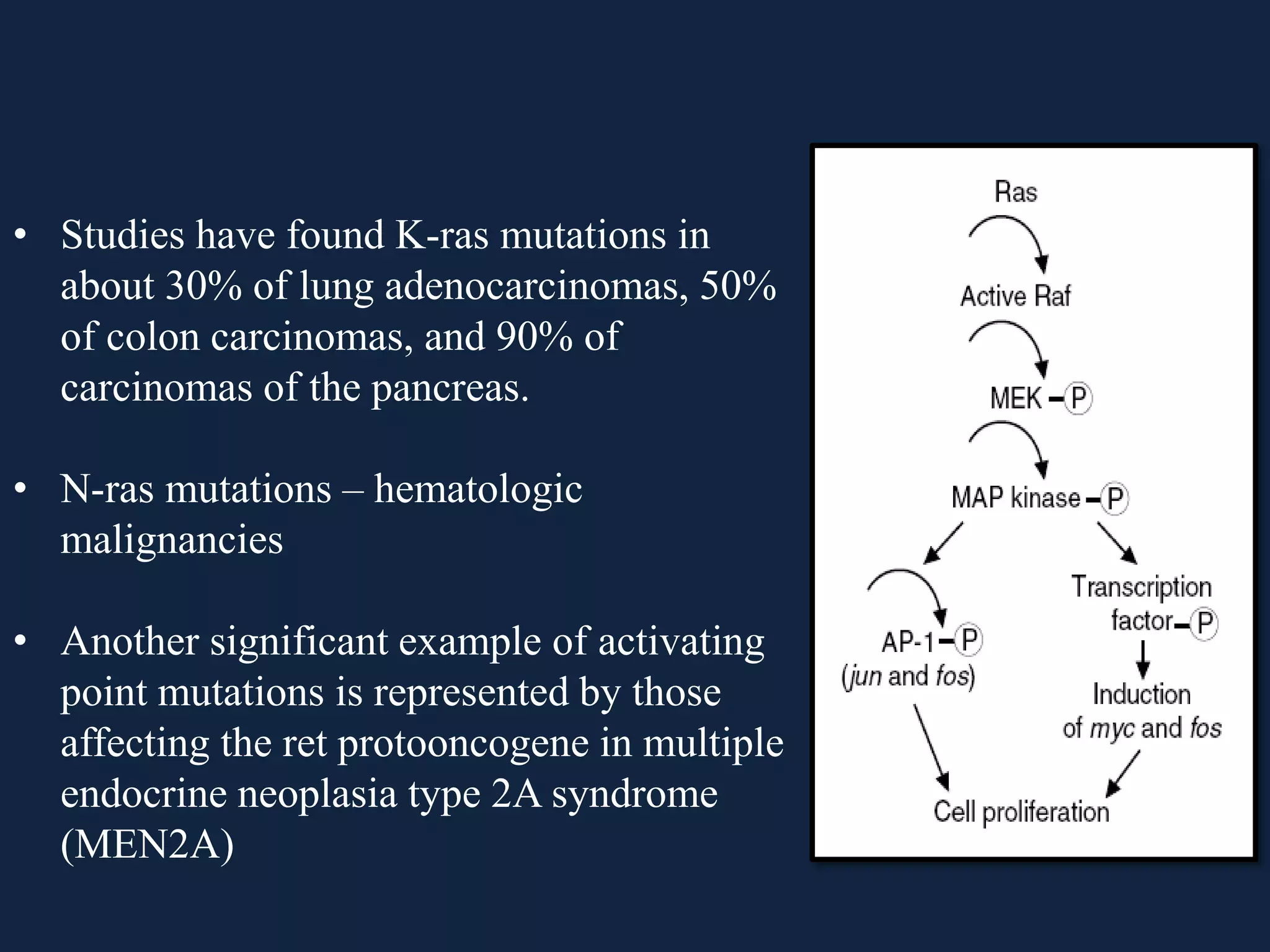
• Studies have found K-ras mutations in
about 30% of lung adenocarcinomas, 50%
of colon carcinomas, and 90% of
carcinomas of the pancreas.
• N-ras mutations – hematologic
malignancies
• Another significant example of activating
point mutations is represented by those
affecting the ret protooncogene in multiple
endocrine neoplasia type 2A syndrome
(MEN2A)
GROWTH FACTORS
 The genes for both growth factors and growth factor receptors are
oncogenes. Growth factors generally regulate growth by serving as
ligands that bind to cellular receptors located on the plasma
membrane (cell-surface receptors).
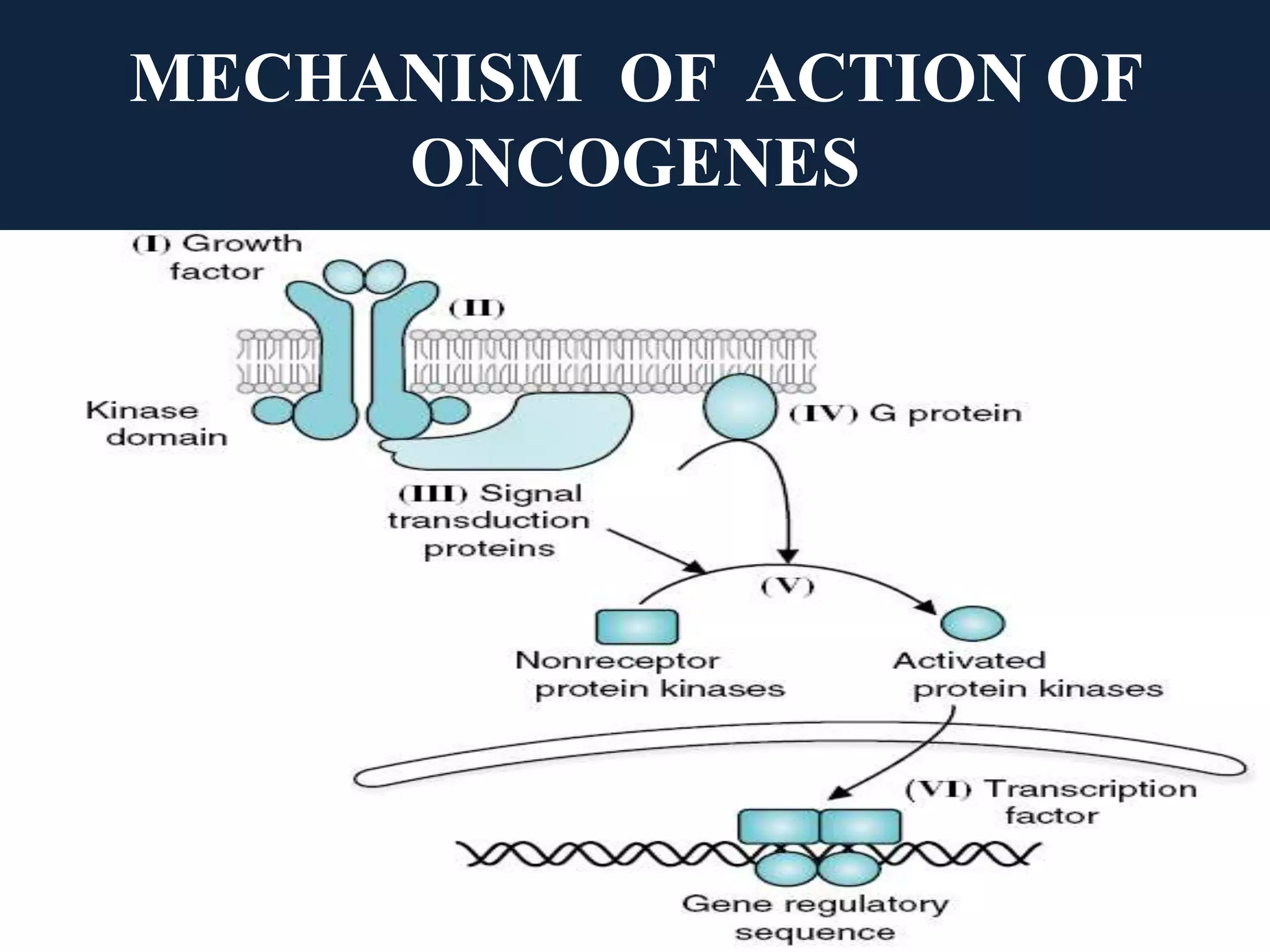
 Binding of ligands to these receptors stimulates a signal transduction
pathway in the cell activating the transcription of certain genes.
 If too much of a growth factor or a growth factor receptor is
produced, the target cells may respond by proliferating
inappropriately.
 Growth factors receptors may also become oncogenic through
translocation or point mutations.
MECHANISM OF ACTION OF
ONCOGENES
ONCOGENES & THE CELL CYCLE
Because the cell is committed to DNA
replication and division once it enters the S
phase, multiple regulatory proteins are
involved in determining whether the cell is
ready to pass this checkpoint.
These regulatory proteins include:
 cdk4 and cdk6 -which are constitutively
produced throughout the cell cycle
cyclin D - whose synthesis is only induced
after growth factor stimulation of a quiescent
cell
 the retinoblastoma gene product (Rb)
Cell Cycle Check Points
 Important check occur in 3 stages:
G1 – S transition
during S phase
G2 – M boundary
 G1-S phase is more complex is under strict control.
Cell cycle controlled by :
 4 type of cyclins A, B, D, E
 5 different cyclin dependent kinases ( CDK 1,2, 4, 5,6)
Failure of check point in cell cycle result in cancer :
• Intrinsic error rate
• After a period of arrest even though damage remains
unpaired, the cell may resume the cycle.
• Check point may be mutated leading to unchecked
growth cancer
ONCOGENE ADDICTION
HYPOTHESIS
• Cells become addicted to persistent oncogene
activity for proliferation
–Become unresponsive to any other mitogenic
(growth) stimuli
• Turn off MYC and cells can respond to other stimuli
–Tumor cells begin to become more normal
MYC Oncogene Addiction in
Hepatocellular Carcinoma
SUMMARY
 A hallmark of the malignant cell is the dysregulation of growth and
signal transduction pathways.
 Development of molecular techniques, such as identification &
manipulation tools greatly advanced identification of specific genes &
understanding of genetic pathways responsible for tumor proliferation.
 There is a number of approaches to gene therapy; the winning
approach will be a synergistic combination of several treatment
modilities.
 Alterations in three groups of genes are responsible for the
deregulated control mechanisms that are the hallmarks of cancer cells:
proto-oncogenes, tumor-supressor genes, and DNA stability genes.
REFERENCES
• Baron, J. A., M. Beach, et al. (1999). “Calcium supplements for the
prevention of colorectal adenomas.” N Engl J Med 340: 101–7
• Giovannucci, E., E. B. Rimm, et al. (1994). “Intake of fat, meat, and
fiber in relation to risk of colon cancer in men.” Cancer Res 54(9):
2390–7.
• Baron, J. A., B. F. Cole, et al. (2003). “A randomized trial of aspirin to
prevent colorectal adenomas.” N Engl J Med 348(10): 891–9.
• Arber, N., I. Racz, et al. (2006). Chemoprevention of colorectal
adenomas with celecoxib in an international randomized, placebo-
controlled, double-blind trial. 97th Annual Meeting of the American
Association for Cancer Research, Washington, DC.
• Chia, V., P. Newcomb, et al. (2006). “Risk of MSI colorectal cancer is
associated jointly with smoking and NSAID use.” Cancer Res 66:
6877–83.
THANK YOU

Cancer and Oncogenesis

  • 1.
    CENTRE FOR APPLIEDGENETICS Jnanabharathi, Bangalore University, Bangalore-560056 SEMINAR PRESENTED BY: SOUGATA GANGULY M.Sc. APPLIED GENETICS,
  • 2.
  • 3.
  • 4.
    CANCER • The termcancer applies to a group of diseases in which cells grow abnormally & form malignant tumor. • Malignant cells can invade nearby tissues and metastasize. • This aberrant growth pattern results from mutations in genes that regulate proliferation, differentiation, and survival of cells in a multicellular organism. • Because of these genetic changes, cancer cells no longer respond to the signals that govern growth of normal cells. • Activation of oncogenes or absence /inactivation of tumor suppressor genes can lead to cancer.
  • 5.
    NORMAL CELLS Vs.CANCER CELLS Cancer cells- • Lose control over growth and multiplication. • Do not self destruct when they become worn out or damaged. • Crowd out healthy cells
  • 6.
    GENES RELATED TOCANCER  Oncogenes- The genes involved in the development of cancer. Normal cells do contain DNA sequence similar to viral oncognenes. To distinguish these two genes: V-src (viral gene) and C-src (cellular gene).  Protooncogenes- Normal constituents of cells whose function is to promote proliferation or cell survival. These genes can code for growth factors, growth factor receptors, signal transduction proteins, intracellular kinases and transcription factors.  Tumor suppressor genes(normal growth suppressor genes)- Encode proteins that encode proliferation, promote cell death or repair DNA.
  • 7.
    PROTOONCOGENES  Protooncogenes areregulatory genes.  Products of many protooncogenes are polypeptide growth factors. e.g.- sis gene produce PDGF- normal wound healing.  Product act as receptor for growth factor. e.g.- erb-B produces receptor for EGF.  Protooncogenes are under the control of regulatory genes and expressed only when required.  When virus enters, an extra oncogene is inserted so as to produce continuous expression of gene leading to uncontrolled cellular activity & malignant transformation.
  • 9.
    FACTORS AFFECTING PROTOONCOGENES • TumorVirus • Chemical carcinogens • Chromosomal translocation • Radiations • Spontaneous mutation All such factors may converge into one biochemical abnormalities “Activation of protooncogenes” leading to malignancy  Because neoplasia is a multistep process, more than one of these mechanisms often contribute to the genesis of human tumors by altering a number of cancer-associated genes.  Full expression of the neoplastic phenotype, including the capacity for metastasis, usually involves a combination of protooncogene activation and inactivation of tumor suppressor gene.
  • 10.
    MECHANISMS OF ACTIVATION 5mechanisms of activation-  Promoter insertion  Enhancer insertion  Chromosomal translocation  Gene amplification  Point mutations
  • 11.
  • 12.
    Promoter Insertion • Certainretroviruses lack oncogenes(e.g.- avian leukemia viruses)but may cause cancer over a long period of time. • In retrovirus, cDNA is made from their RNA by reverse transcriptase. • cDNA gets inserted into host genome. • Integrated dscDNA provirus • This proviral DNA takes control over the transcription of cellular chromosomal DNA & transforms the cell. e.g.- Avian Leukemia
  • 13.
    Enhancer Insertion Fig :-Mechanism of Enhancer Insertion
  • 14.
    Chromosomal Translocation • Rearrangementof genetic material by splitting off a small fragment of chromosome which is joined to another chromosome. • Over expression of proto oncogenes eg: Burkitts lymphoma Chronic myeloid leukemia
  • 15.
    The bcr/abl fusion,created on the chromosome 22, encodes a chimeric protein of 210 kDa, with increased tyrosine kinase activity and abnormal cellular localization. 20% of cases of ALL. Overexpression of the bcl-2 protein inhibits apoptosis, leading to an imbalance between lymphocyte proliferation and programmed cell death.  c-myc finds itself in a region of active gene transcription, and it may simply be the overproduction of the c-myc product (a transcription factor essential for cell division) that propels the lymphocyte down the pathway towards cancer.
  • 16.
    Gene Amplification • CertainDNA sequence is amplified several fold in some cancers. • Gene amplification was first discovered as a mechanism by which some tumor cell lines can acquire resistance to growth-inhibiting drugs. • Studies then demonstrated that three protooncogene families-myc, erb B, and ras-are amplified in a significant number of human tumors. • About 20% to 30% of breast and ovarian cancers and some types of SCC show c-myc amplification. Amplification of N-myc correlates strongly with advanced tumor stage in neuroblastoma.
  • 17.
    Mutations • Mutations activateprotooncogenes through structural alterations. These alterations, which usually involve critical protein regulatory regions, often lead to the uncontrolled, continuous activity of the mutated protein. • Various types of mutations, such as base substitutions, deletions, and insertions, are capable of activating protooncogenes. • In human tumors the most characterized oncogene mutations are base substitutions (point mutations) that change a single amino acid within the protein. • Mutations in DNA that give rise to cancer may be inherited or caused by chemical carcinogens, radiation, viruses, and by replication errors that are not repaired.
  • 18.
    Point Mutations • Pointmutations are frequently detected in the ras family of protooncogenes (K-ras, H-ras, and N-ras). • Single most dominant cause of many human tumor. • Inactive ras is in bound state with GDP. • When cells are stimulated by GF, ras P21 get activated by exchanging GDP for GTP. • In normal cells, the activity of ras P21 is short lived because of GTPase activity. • Point mutation cause altered ras P21 lacking GTPase activity
  • 20.
    • Studies havefound K-ras mutations in about 30% of lung adenocarcinomas, 50% of colon carcinomas, and 90% of carcinomas of the pancreas. • N-ras mutations – hematologic malignancies • Another significant example of activating point mutations is represented by those affecting the ret protooncogene in multiple endocrine neoplasia type 2A syndrome (MEN2A)
  • 22.
    GROWTH FACTORS  Thegenes for both growth factors and growth factor receptors are oncogenes. Growth factors generally regulate growth by serving as ligands that bind to cellular receptors located on the plasma membrane (cell-surface receptors).  Binding of ligands to these receptors stimulates a signal transduction pathway in the cell activating the transcription of certain genes.  If too much of a growth factor or a growth factor receptor is produced, the target cells may respond by proliferating inappropriately.  Growth factors receptors may also become oncogenic through translocation or point mutations.
  • 23.
    MECHANISM OF ACTIONOF ONCOGENES
  • 24.
    ONCOGENES & THECELL CYCLE Because the cell is committed to DNA replication and division once it enters the S phase, multiple regulatory proteins are involved in determining whether the cell is ready to pass this checkpoint. These regulatory proteins include:  cdk4 and cdk6 -which are constitutively produced throughout the cell cycle cyclin D - whose synthesis is only induced after growth factor stimulation of a quiescent cell  the retinoblastoma gene product (Rb)
  • 25.
    Cell Cycle CheckPoints  Important check occur in 3 stages: G1 – S transition during S phase G2 – M boundary  G1-S phase is more complex is under strict control. Cell cycle controlled by :  4 type of cyclins A, B, D, E  5 different cyclin dependent kinases ( CDK 1,2, 4, 5,6)
  • 26.
    Failure of checkpoint in cell cycle result in cancer : • Intrinsic error rate • After a period of arrest even though damage remains unpaired, the cell may resume the cycle. • Check point may be mutated leading to unchecked growth cancer
  • 27.
    ONCOGENE ADDICTION HYPOTHESIS • Cellsbecome addicted to persistent oncogene activity for proliferation –Become unresponsive to any other mitogenic (growth) stimuli • Turn off MYC and cells can respond to other stimuli –Tumor cells begin to become more normal
  • 28.
    MYC Oncogene Addictionin Hepatocellular Carcinoma
  • 29.
    SUMMARY  A hallmarkof the malignant cell is the dysregulation of growth and signal transduction pathways.  Development of molecular techniques, such as identification & manipulation tools greatly advanced identification of specific genes & understanding of genetic pathways responsible for tumor proliferation.  There is a number of approaches to gene therapy; the winning approach will be a synergistic combination of several treatment modilities.  Alterations in three groups of genes are responsible for the deregulated control mechanisms that are the hallmarks of cancer cells: proto-oncogenes, tumor-supressor genes, and DNA stability genes.
  • 30.
    REFERENCES • Baron, J.A., M. Beach, et al. (1999). “Calcium supplements for the prevention of colorectal adenomas.” N Engl J Med 340: 101–7 • Giovannucci, E., E. B. Rimm, et al. (1994). “Intake of fat, meat, and fiber in relation to risk of colon cancer in men.” Cancer Res 54(9): 2390–7. • Baron, J. A., B. F. Cole, et al. (2003). “A randomized trial of aspirin to prevent colorectal adenomas.” N Engl J Med 348(10): 891–9. • Arber, N., I. Racz, et al. (2006). Chemoprevention of colorectal adenomas with celecoxib in an international randomized, placebo- controlled, double-blind trial. 97th Annual Meeting of the American Association for Cancer Research, Washington, DC. • Chia, V., P. Newcomb, et al. (2006). “Risk of MSI colorectal cancer is associated jointly with smoking and NSAID use.” Cancer Res 66: 6877–83.
  • 31.