ATTITUDES AND THE
COMPONENTS OF ATTITUDES
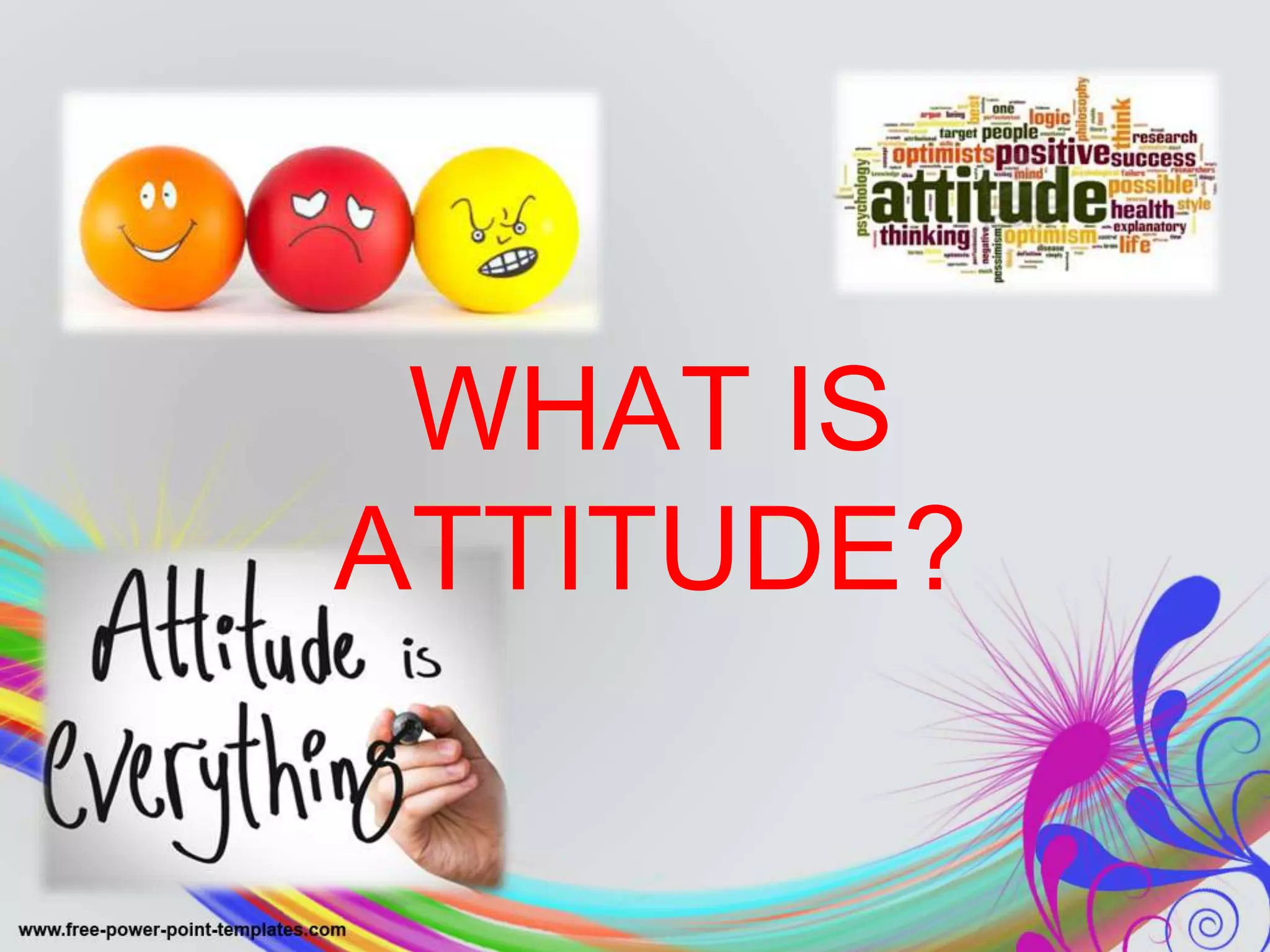
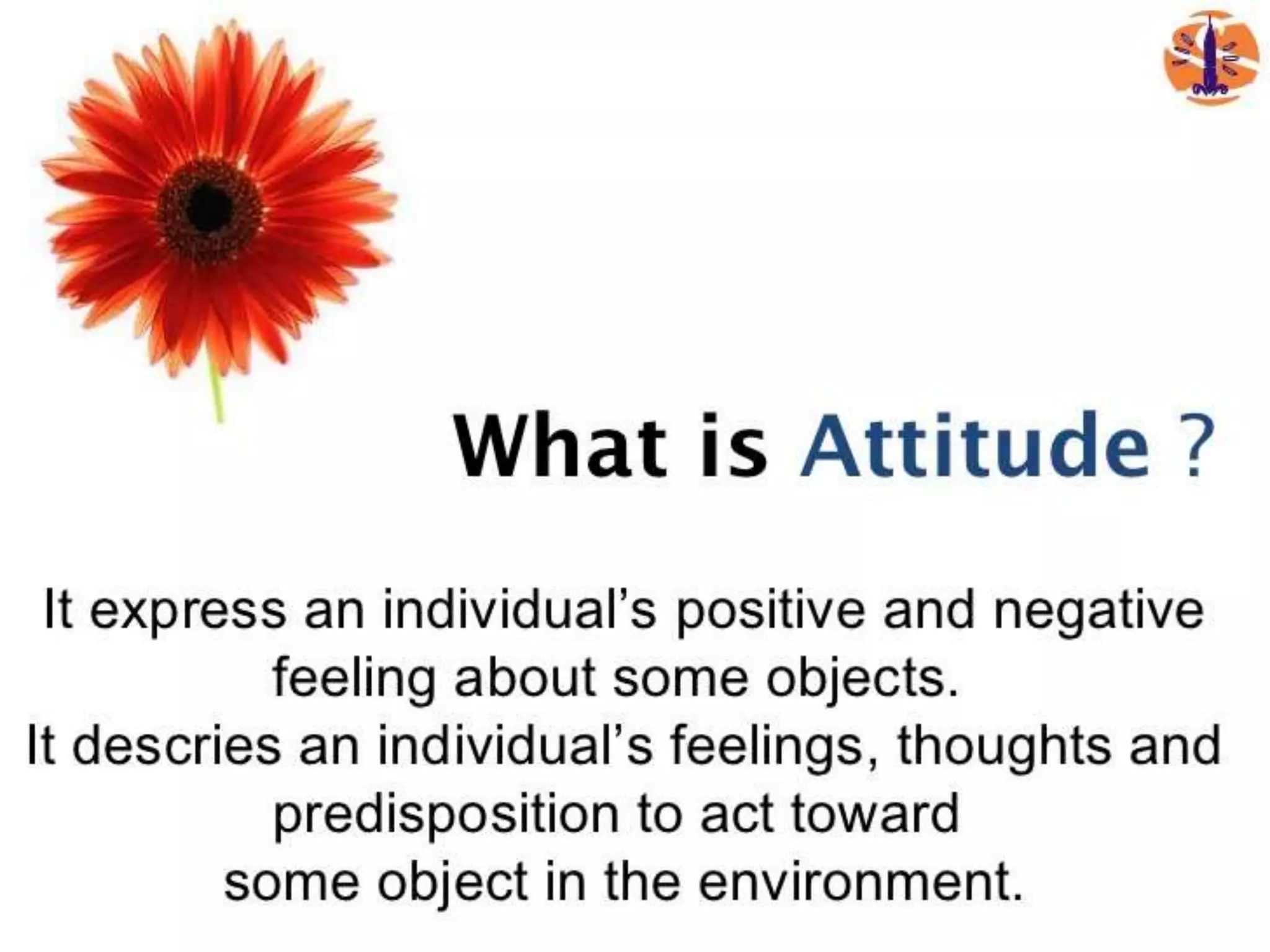
WHAT IS
ATTITUDE?
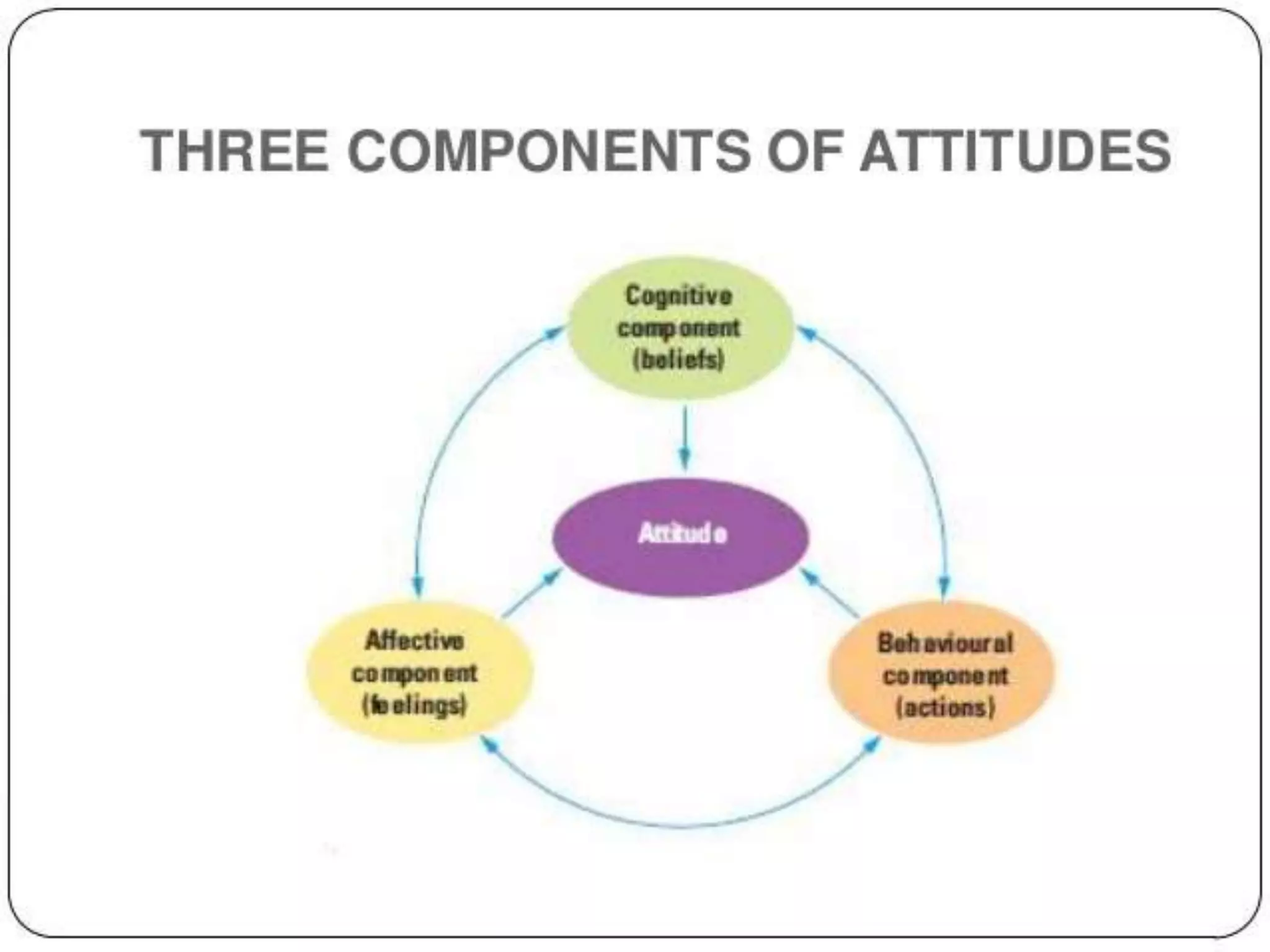
This involves a person’s feelings /
emotions about the attitude object.
For example: “I am scared of
spiders”.
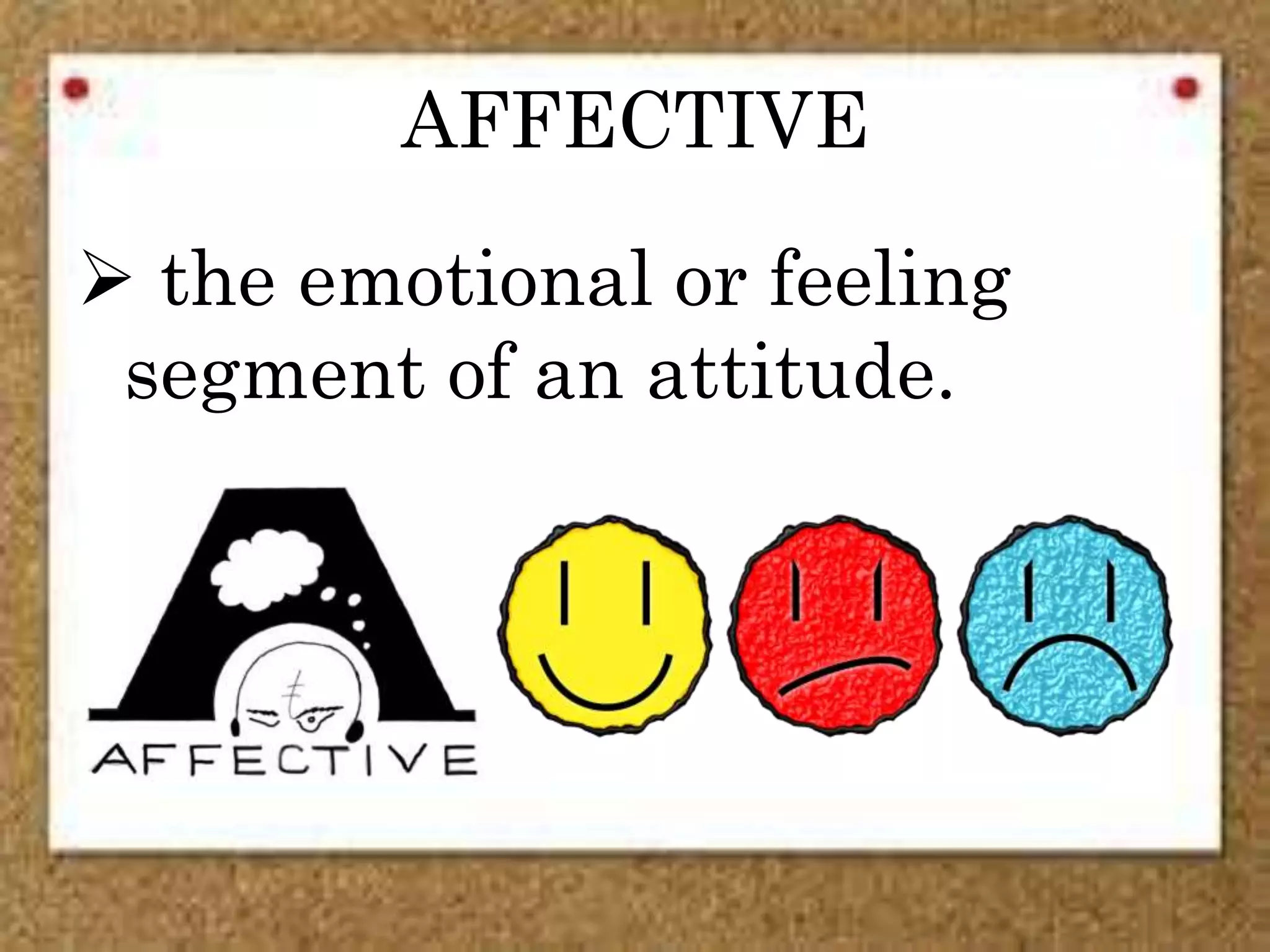
AFFECTIVE
 the emotional or feeling
segment of an attitude.
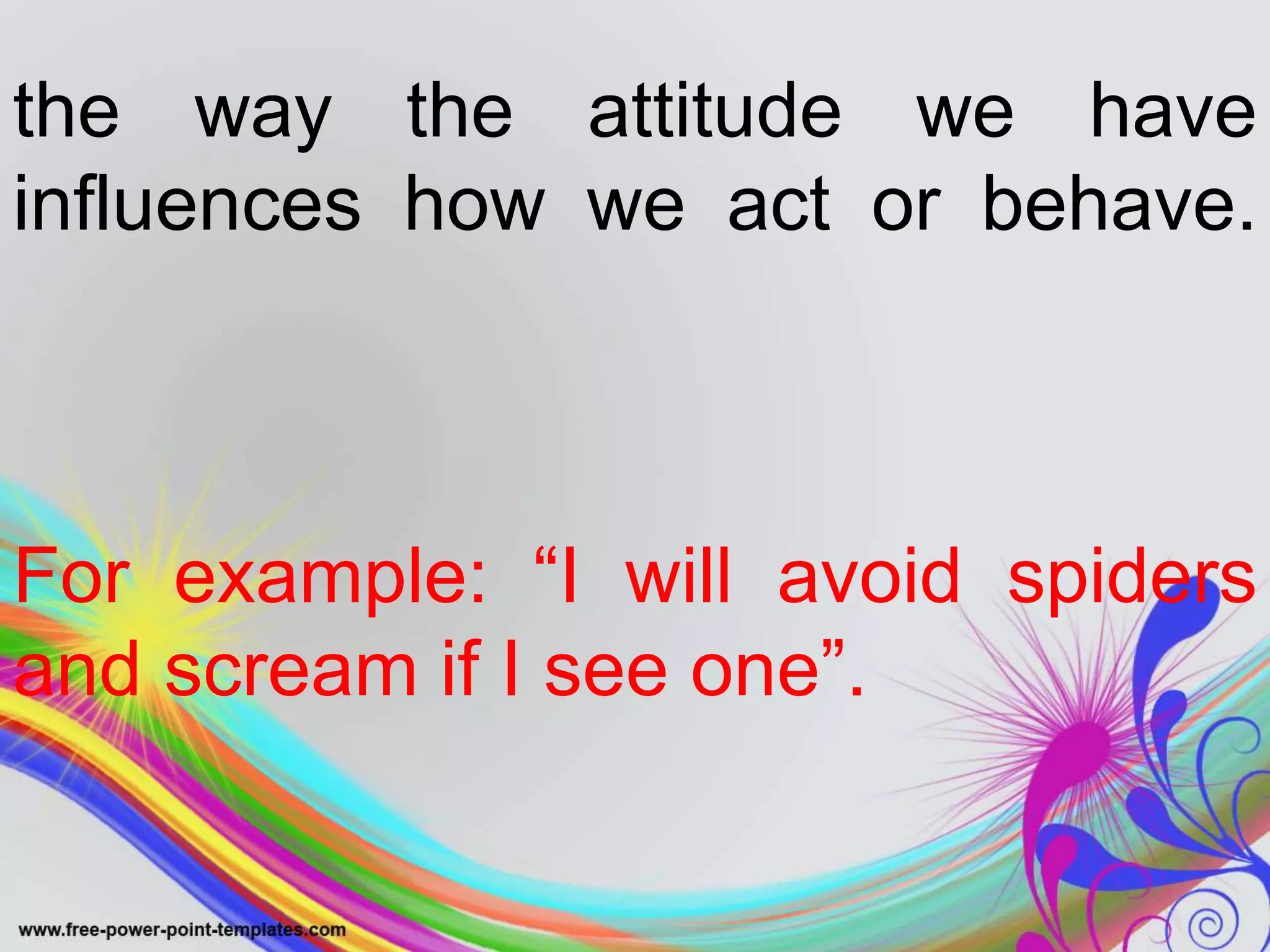
the way the attitude we have
influences how we act or behave.
For example: “I will avoid spiders
and scream if I see one”.
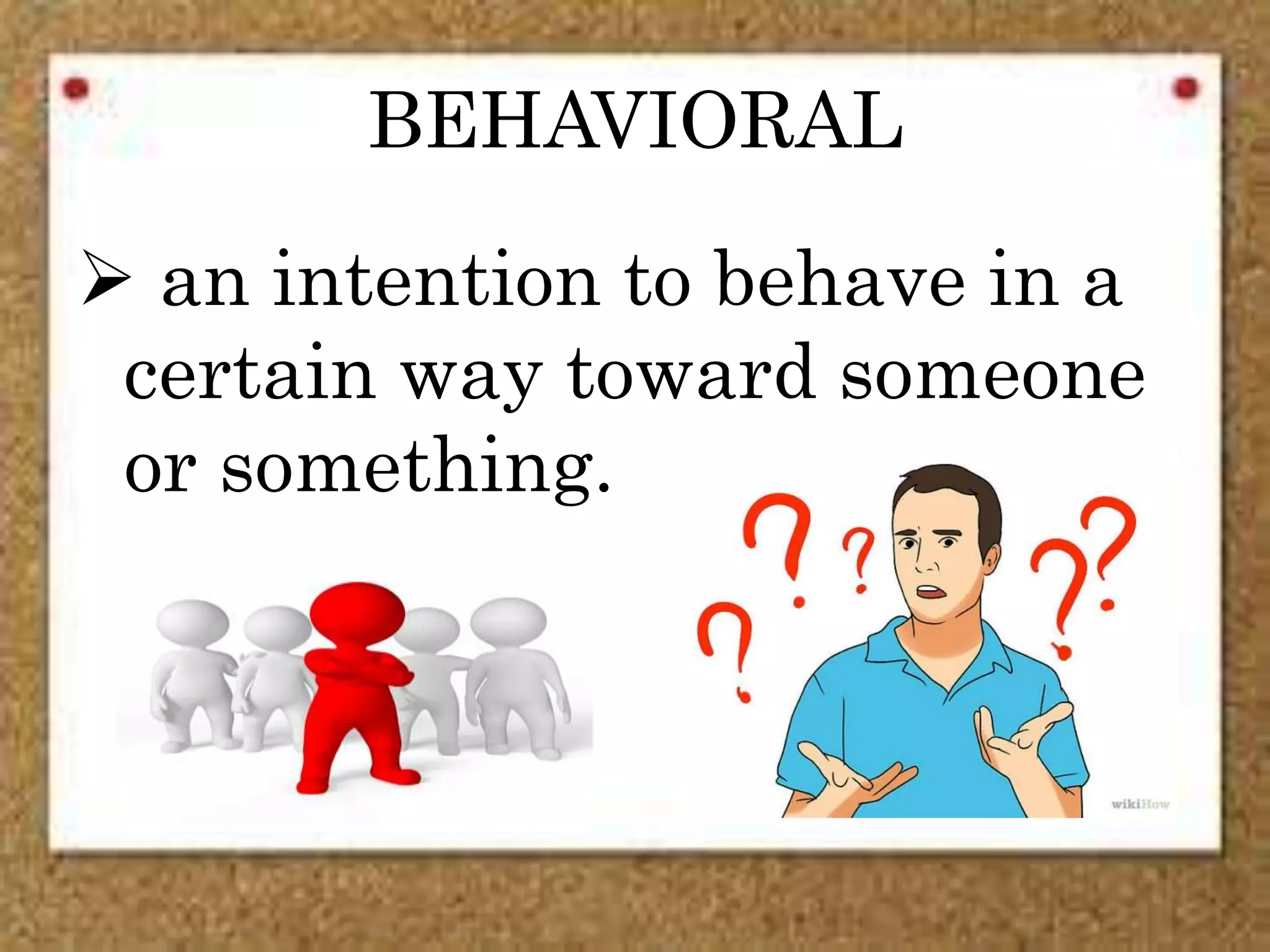
BEHAVIORAL
 an intention to behave in a
certain way toward someone
or something.
This involves a person’s belief /
knowledge about an attitude object.
For example: “I believe spiders are
dangerous”.
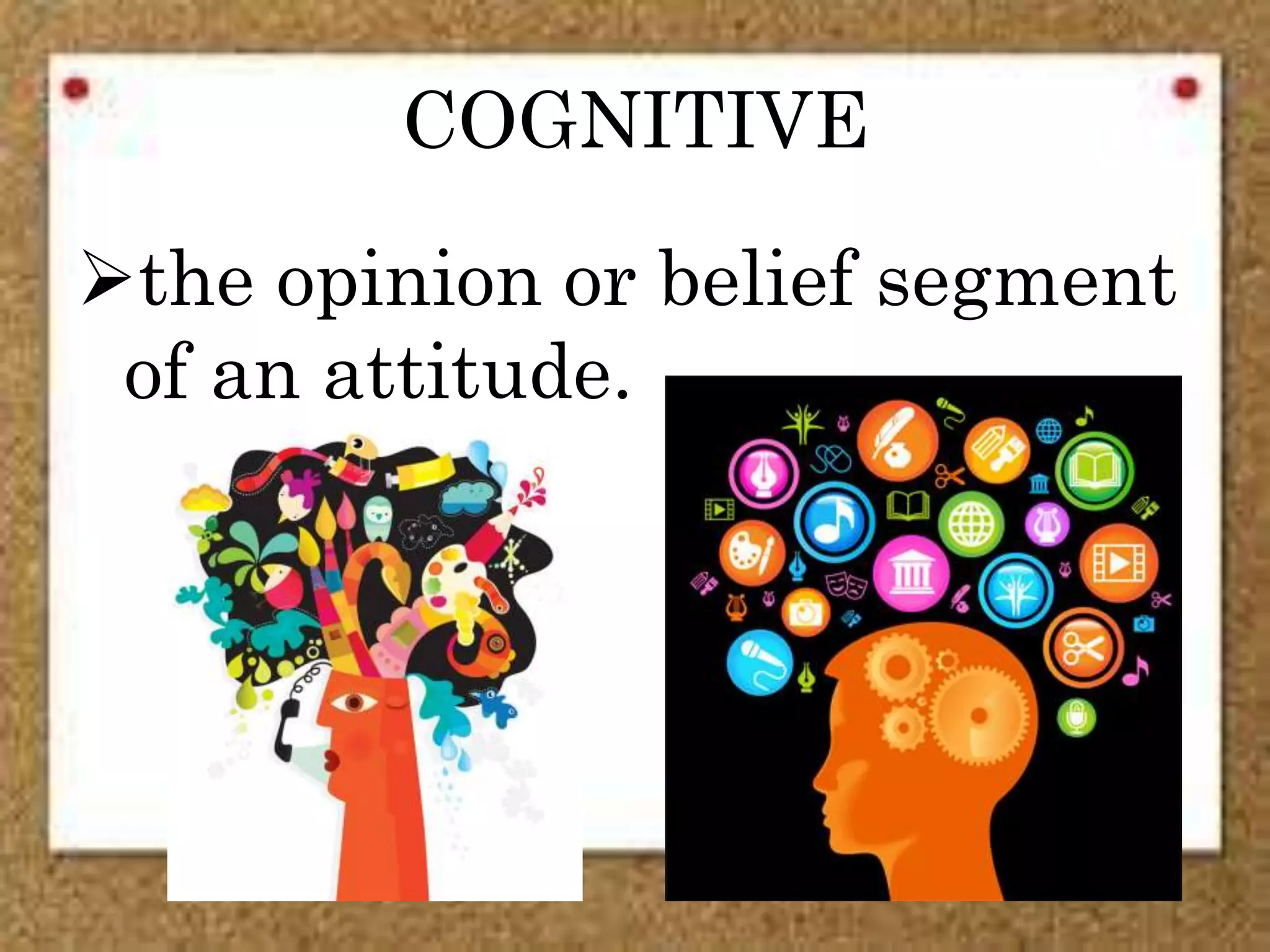
COGNITIVE
the opinion or belief segment
of an attitude.
WHY STUDY
ATTITUDES?
We study attitudes because…
Strongly influence our social thought
- Help organize and evaluate stimuli
(e.g., categorizing stimuli as positive or
negative).
Presumably have a strong affect on
behavior
- Help to predict people’s behavior in
wide range of contexts (e.g., voting,
interpersonal relations)
Meaning and Types of Motivation
What is MOTIVATION?
 It is the INNER DRIVE that energizes you to
do something.
 It is an inner drive that causes you to do
something and persevere at something.
 It elicits, controls, and sustains certain goal-
directed behaviors. For example, hunger is a
motivation that elicits a desire to eat.
 A person who is motivated enjoys the thing
that he/she does.
 He/ she is excited to do such task. Example, a
student who is excited about learning)
 He/she is convinced that accomplishing the
things she/he is asked to do helps her/him
realize the goals she/he has set for
him/herself.
Indicators of a High Level of
Motivation
2 TYPES OF MOTIVATION
 Intrinsic - the source of motivation is from
within the person him/herself
or the activity itself.
 Extrinsic- the source of motivation is from
outside of an individual. It can be in a
form of reward, punishments
and other incentives.

Attitude: Component and Why Study Attiudes

  • 1.
  • 2.
  • 7.
    This involves aperson’s feelings / emotions about the attitude object. For example: “I am scared of spiders”.
  • 8.
    AFFECTIVE  the emotionalor feeling segment of an attitude.
  • 11.
    the way theattitude we have influences how we act or behave. For example: “I will avoid spiders and scream if I see one”.
  • 12.
    BEHAVIORAL  an intentionto behave in a certain way toward someone or something.
  • 15.
    This involves aperson’s belief / knowledge about an attitude object. For example: “I believe spiders are dangerous”.
  • 16.
    COGNITIVE the opinion orbelief segment of an attitude.
  • 17.
  • 18.
    We study attitudesbecause… Strongly influence our social thought - Help organize and evaluate stimuli (e.g., categorizing stimuli as positive or negative). Presumably have a strong affect on behavior - Help to predict people’s behavior in wide range of contexts (e.g., voting, interpersonal relations)
  • 19.
    Meaning and Typesof Motivation
  • 20.
    What is MOTIVATION? It is the INNER DRIVE that energizes you to do something.  It is an inner drive that causes you to do something and persevere at something.  It elicits, controls, and sustains certain goal- directed behaviors. For example, hunger is a motivation that elicits a desire to eat.
  • 21.
     A personwho is motivated enjoys the thing that he/she does.  He/ she is excited to do such task. Example, a student who is excited about learning)  He/she is convinced that accomplishing the things she/he is asked to do helps her/him realize the goals she/he has set for him/herself. Indicators of a High Level of Motivation
  • 22.
    2 TYPES OFMOTIVATION  Intrinsic - the source of motivation is from within the person him/herself or the activity itself.  Extrinsic- the source of motivation is from outside of an individual. It can be in a form of reward, punishments and other incentives.