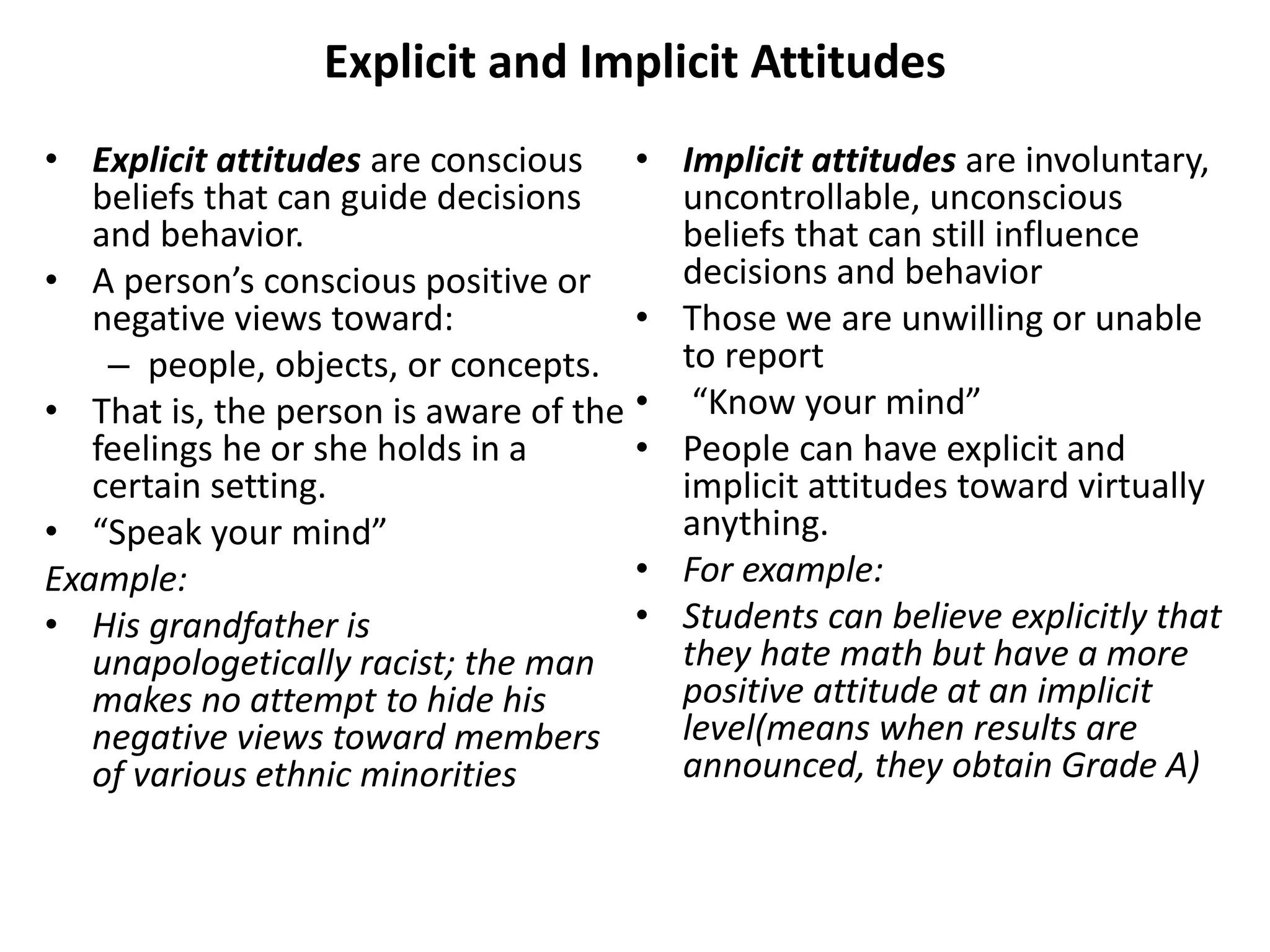
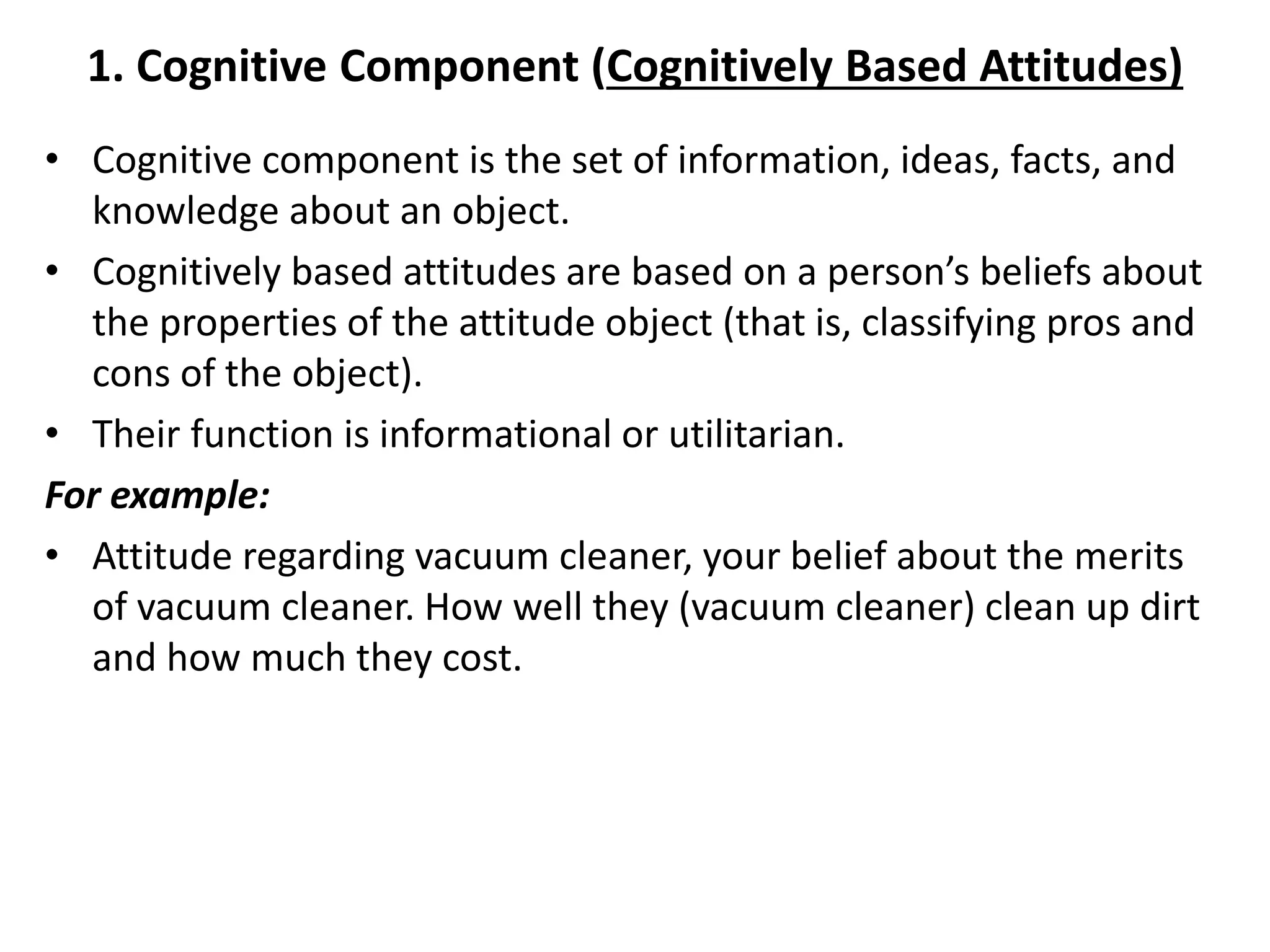
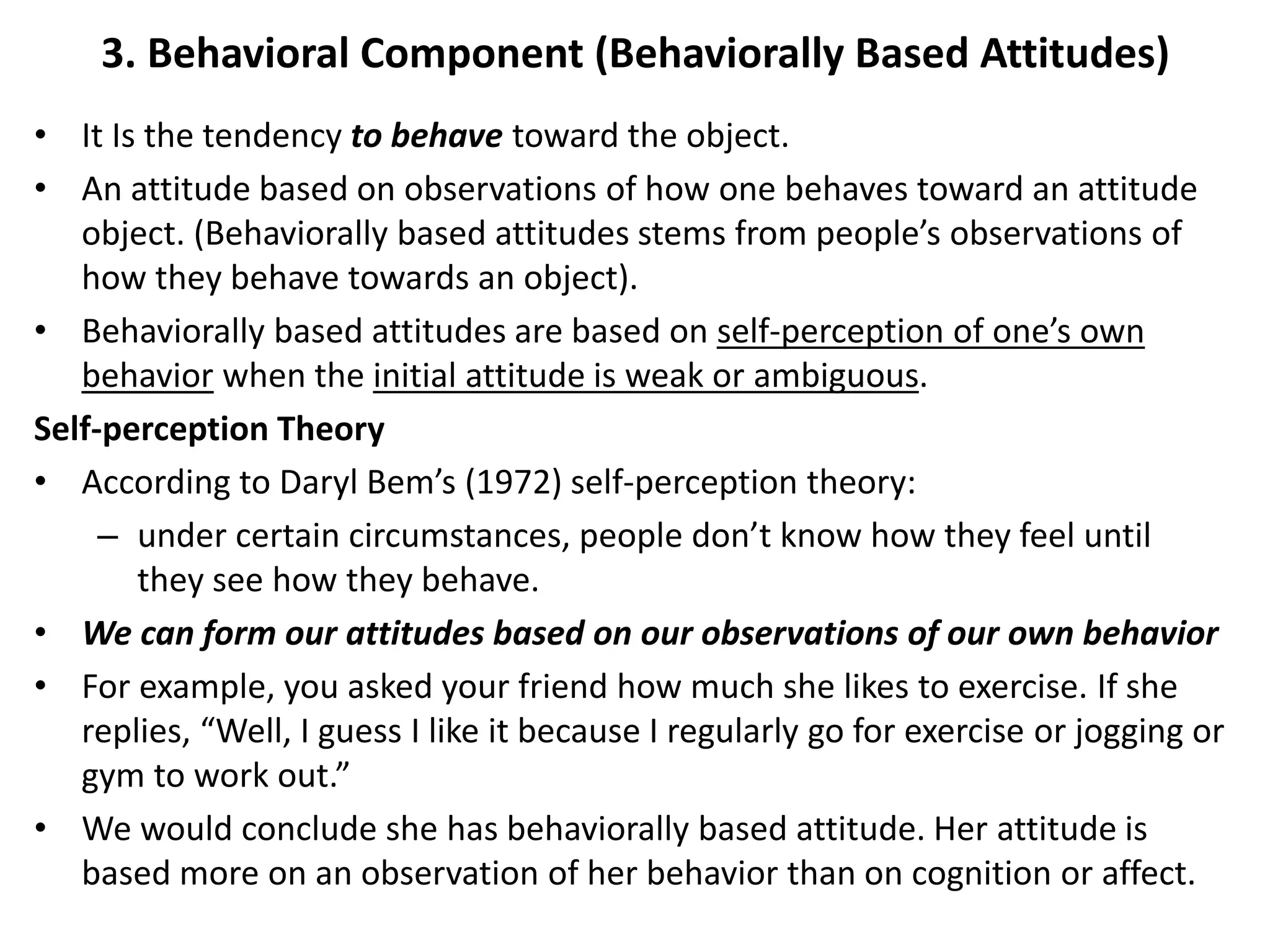
This document discusses attitudes and their formation. It defines attitudes as evaluations of objects that can be positive or negative. Attitudes have three components - cognitive, affective, and behavioral. The cognitive component involves beliefs and knowledge about an object, the affective component involves feelings toward the object, and the behavioral component involves tendencies to behave in certain ways toward the object. Attitudes are formed through various determinants like community influences, cultural factors, experiences, socialization, needs, media, and personality traits. The theoretical perspective of attitude formation is explained through social learning theory and concepts like classical and instrumental conditioning.






![Raymond cattell [autosaved]](https://cdn.slidesharecdn.com/ss_thumbnails/raymondcattellautosaved-190113045031-thumbnail.jpg?width=640&height=640&fit=bounds)


