Attittude


 Attitude are inward feeling expressed by
  outward behavior.
 Attitude can be defined as positive or
  negative evaluation of people
  object,event,activities, ideas or just about
  anything in your environment.
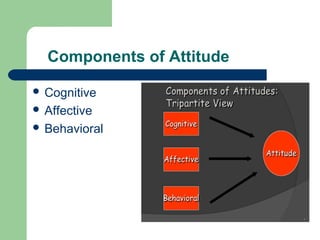
Components of Attitude

 Cognitive
 Affective
 Behavioral
Cognitive

 This is mental componment consisting of
  beliefs and perceptions.
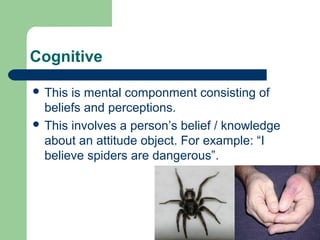
 This involves a person’s belief / knowledge
  about an attitude object. For example: “I
  believe spiders are dangerous”.
Affective

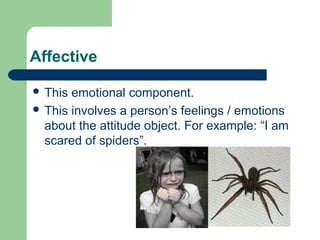
 This emotional component.
 This involves a person’s feelings / emotions
  about the attitude object. For example: “I am
  scared of spiders”.
Behavioral

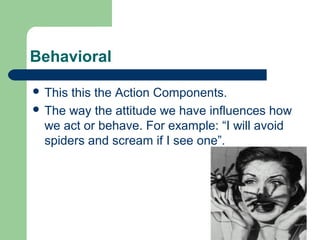
 This this the Action Components.
 The way the attitude we have influences how
  we act or behave. For example: “I will avoid
  spiders and scream if I see one”.
Behavioral

 This this the Action Components.
 The way the attitude we have influences how
  we act or behave. For example: “I will avoid
  spiders and scream if I see one”.

Attitude

  • 1.
    Attittude  Attitude areinward feeling expressed by outward behavior.  Attitude can be defined as positive or negative evaluation of people object,event,activities, ideas or just about anything in your environment.
  • 2.
    Components of Attitude Cognitive  Affective  Behavioral
  • 3.
    Cognitive  This ismental componment consisting of beliefs and perceptions.  This involves a person’s belief / knowledge about an attitude object. For example: “I believe spiders are dangerous”.
  • 4.
    Affective  This emotionalcomponent.  This involves a person’s feelings / emotions about the attitude object. For example: “I am scared of spiders”.
  • 5.
    Behavioral  This thisthe Action Components.  The way the attitude we have influences how we act or behave. For example: “I will avoid spiders and scream if I see one”.
  • 6.
    Behavioral  This thisthe Action Components.  The way the attitude we have influences how we act or behave. For example: “I will avoid spiders and scream if I see one”.