Atomic Spectroscopy: Basic Principles and Instruments
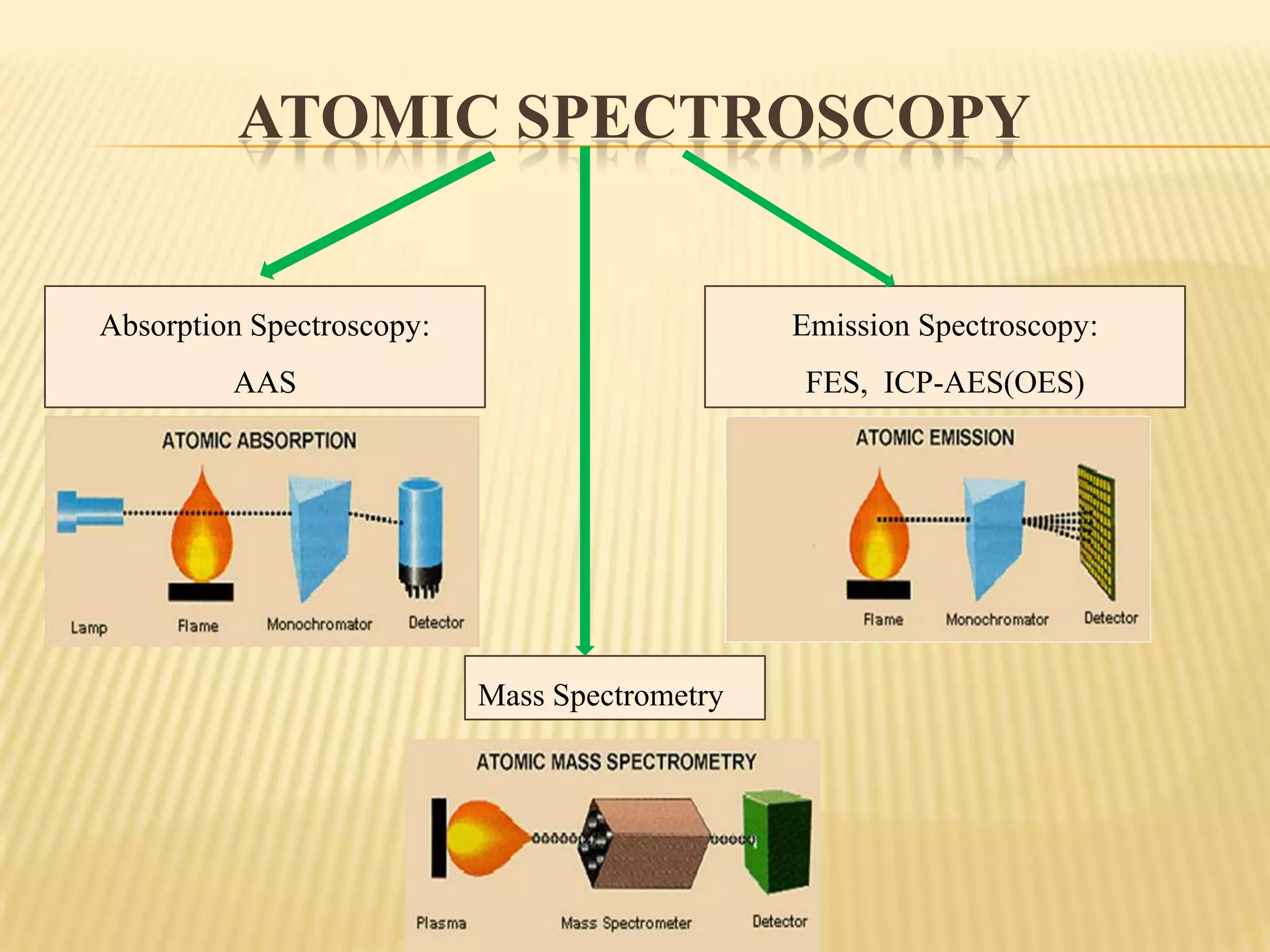
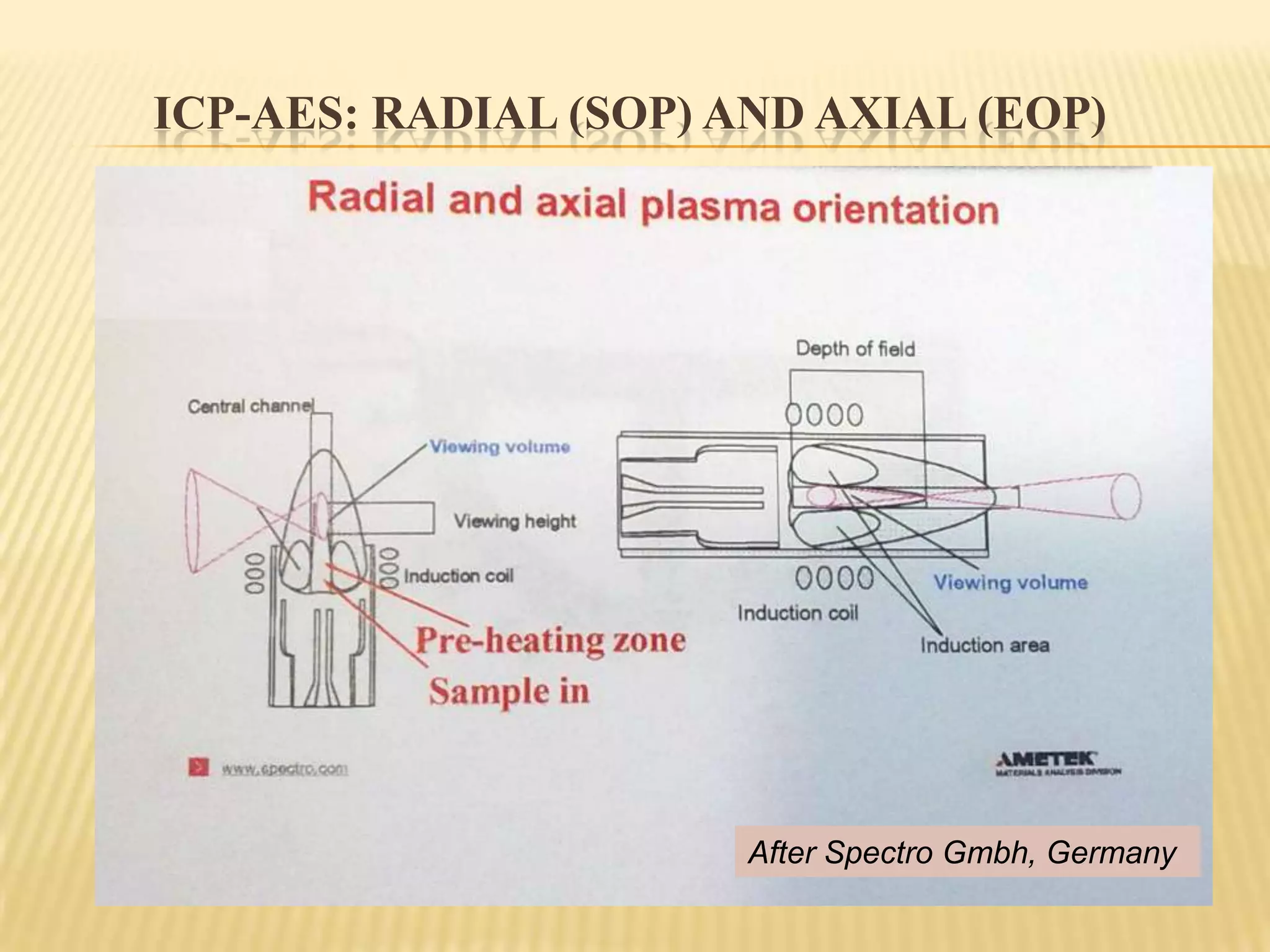
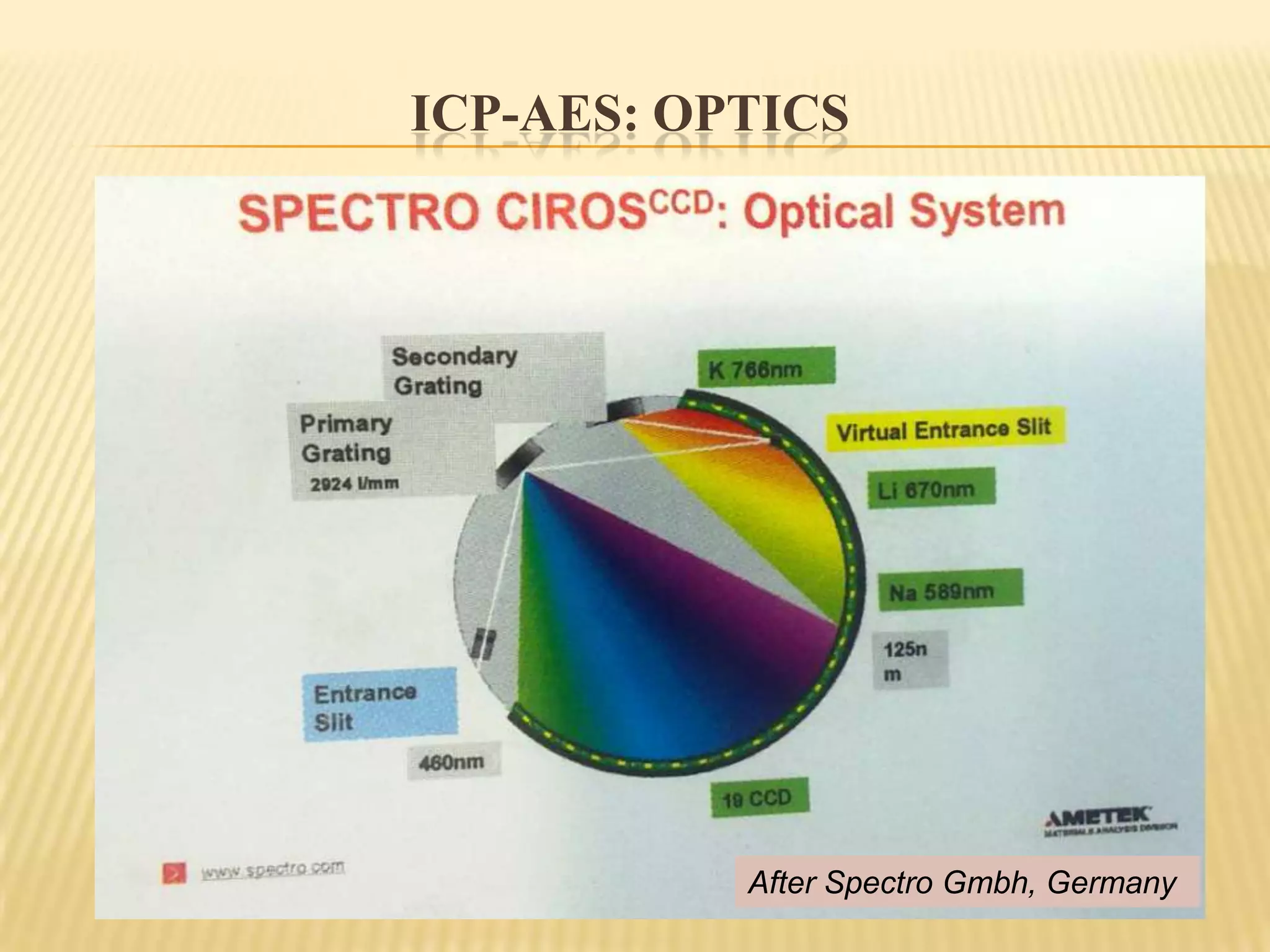
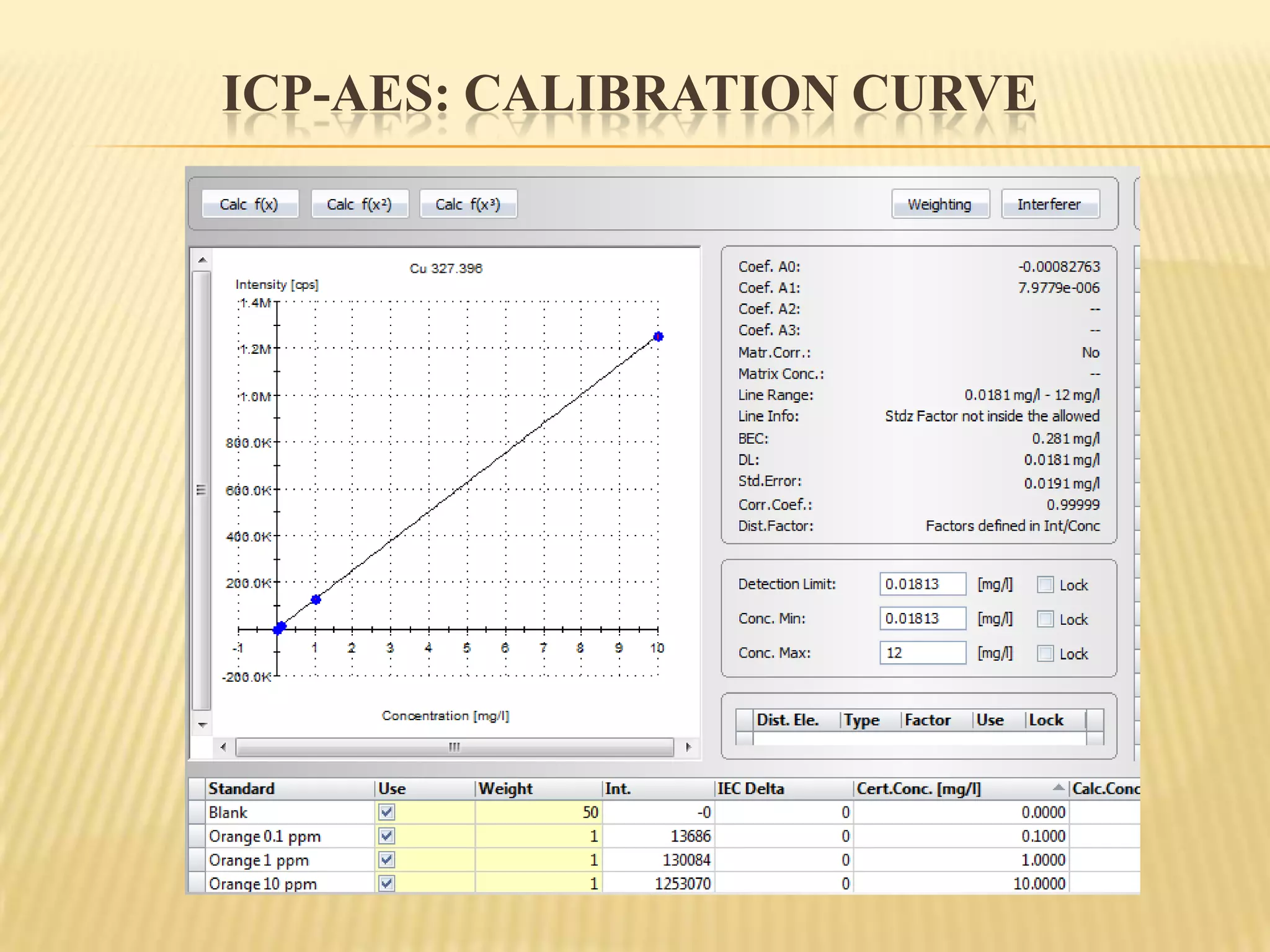
The document discusses atomic spectroscopy, covering fundamental principles, types of techniques such as atomic absorption spectroscopy (AAS), flame emission spectroscopy (FES), and inductively coupled plasma atomic emission spectrometry (ICP-AES). It details the processes involved in each method, including sample preparation, instrumentation, and applications across fields like clinical analysis, environmental testing, and industry. Various elements detectable by these techniques and calibration concerns related to spectral interferences are also addressed.
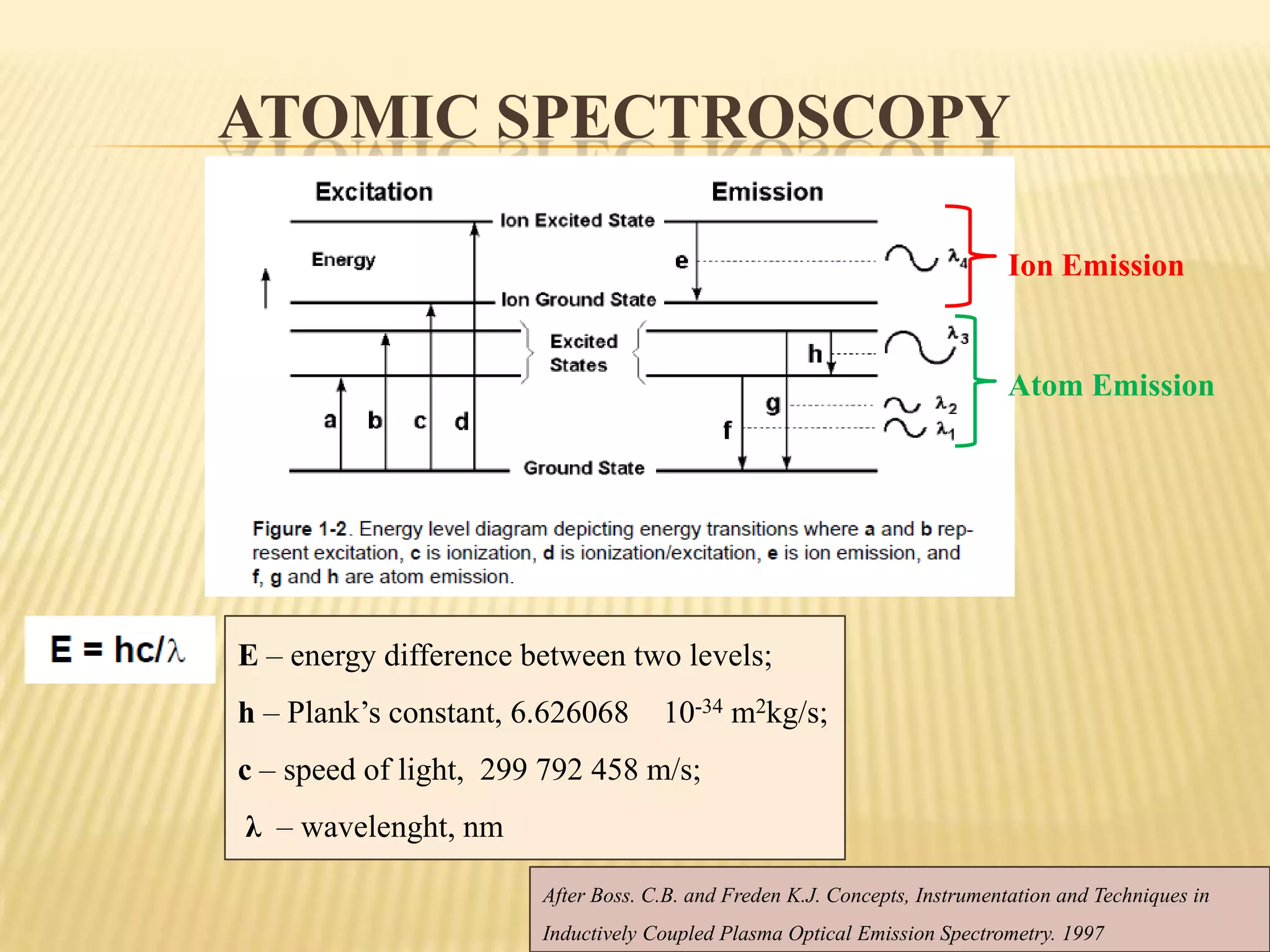
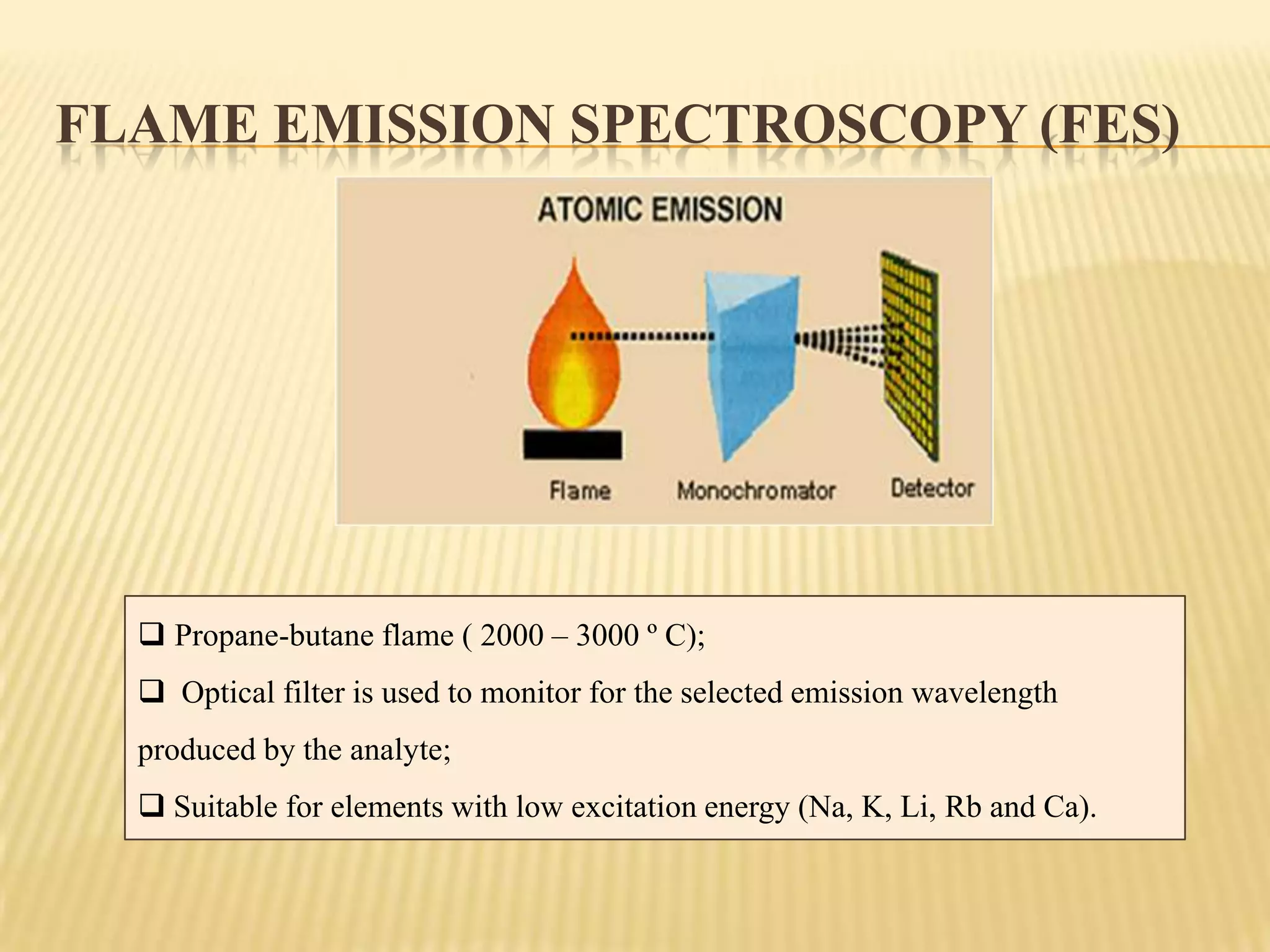
Atomic SpectroscopyIon EmissionAtomEmissionE – energy difference between two levels;h – Plank’s constant, 6.626068 × 10⁻³⁴ m2kg/s;c – speed of light, 299 792 458 m/s;λ – wavelenght, nmAfter Boss. C.B. and Freden K.J. Concepts, Instrumentation and Techniques in Inductively Coupled Plasma Optical Emission Spectrometry. 1997
4.
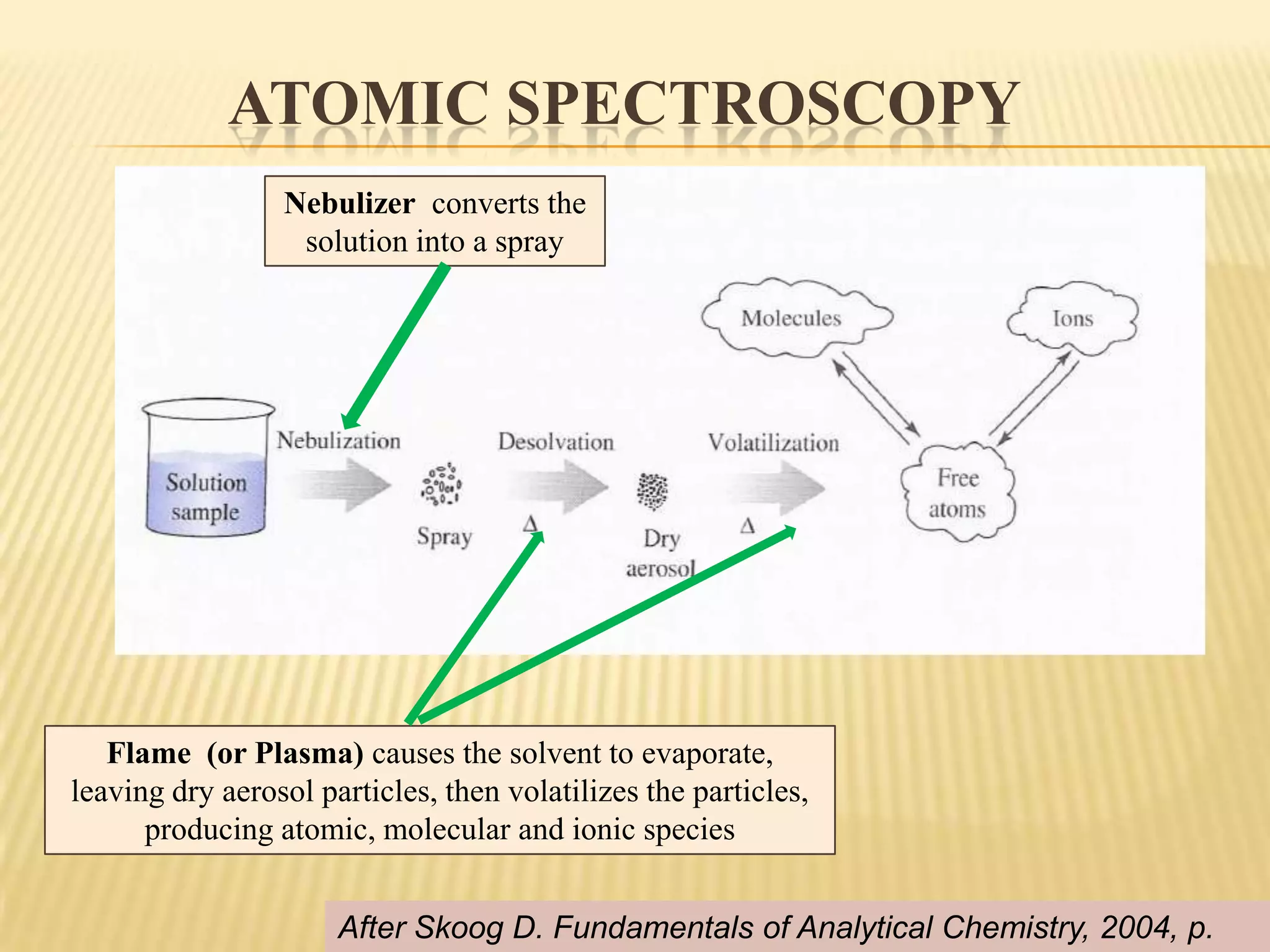
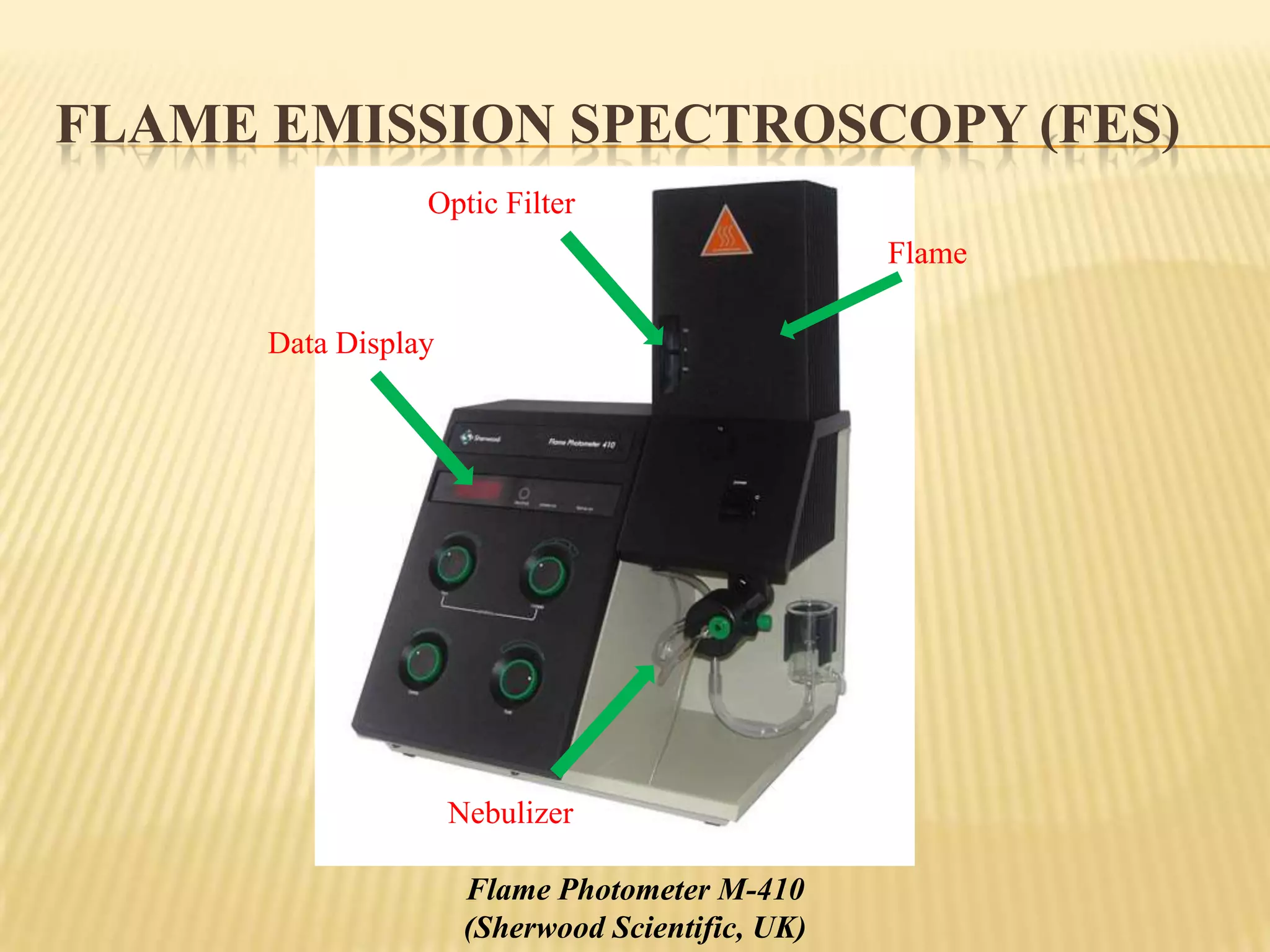
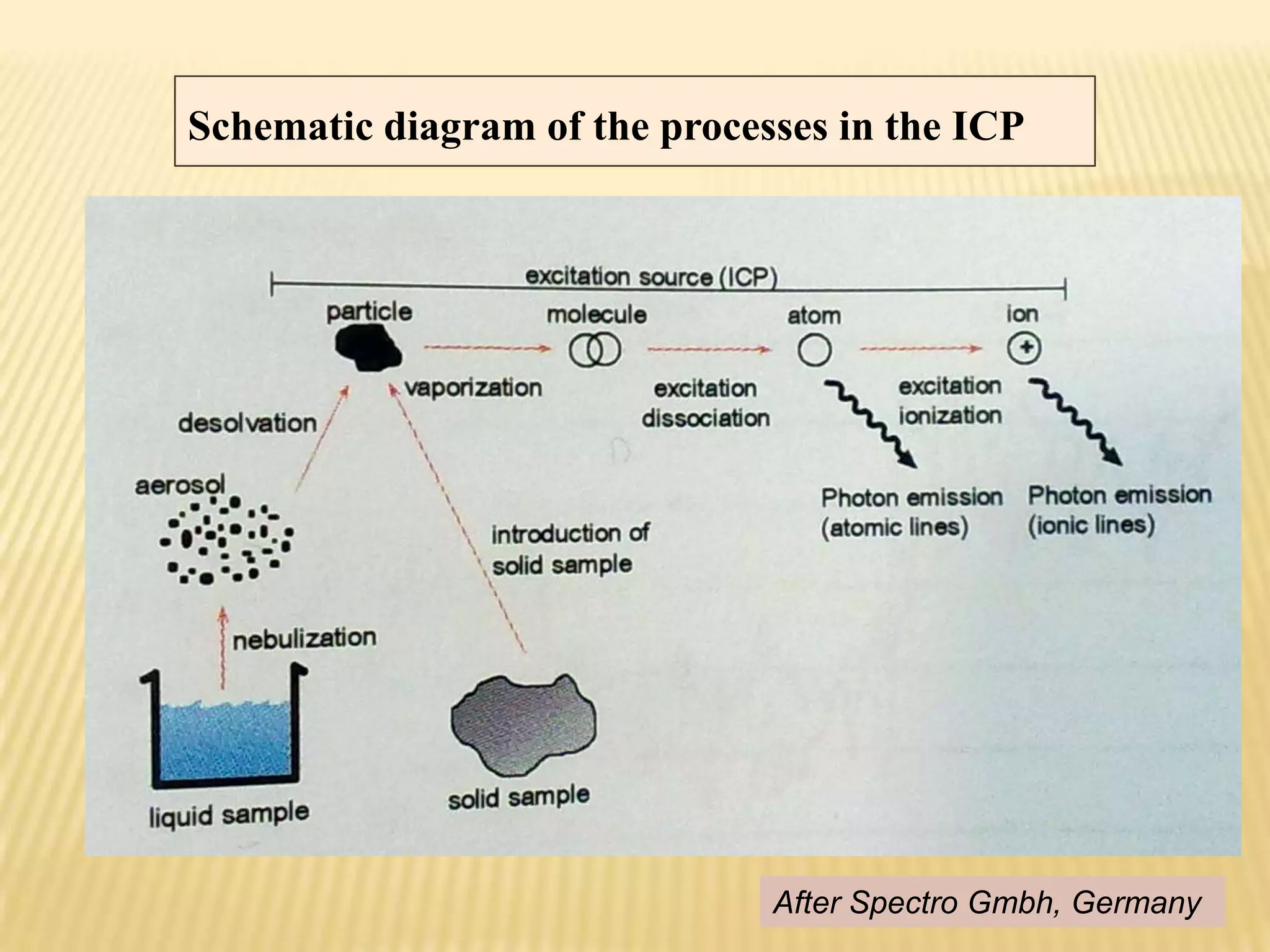
Atomic SpectroscopyNebulizer converts the solution into a sprayFlame (or Plasma) causes the solvent to evaporate, leaving dry aerosol particles, then volatilizes the particles, producing atomic, molecular and ionic speciesAfter Skoog D. Fundamentals of Analytical Chemistry, 2004, p. 844
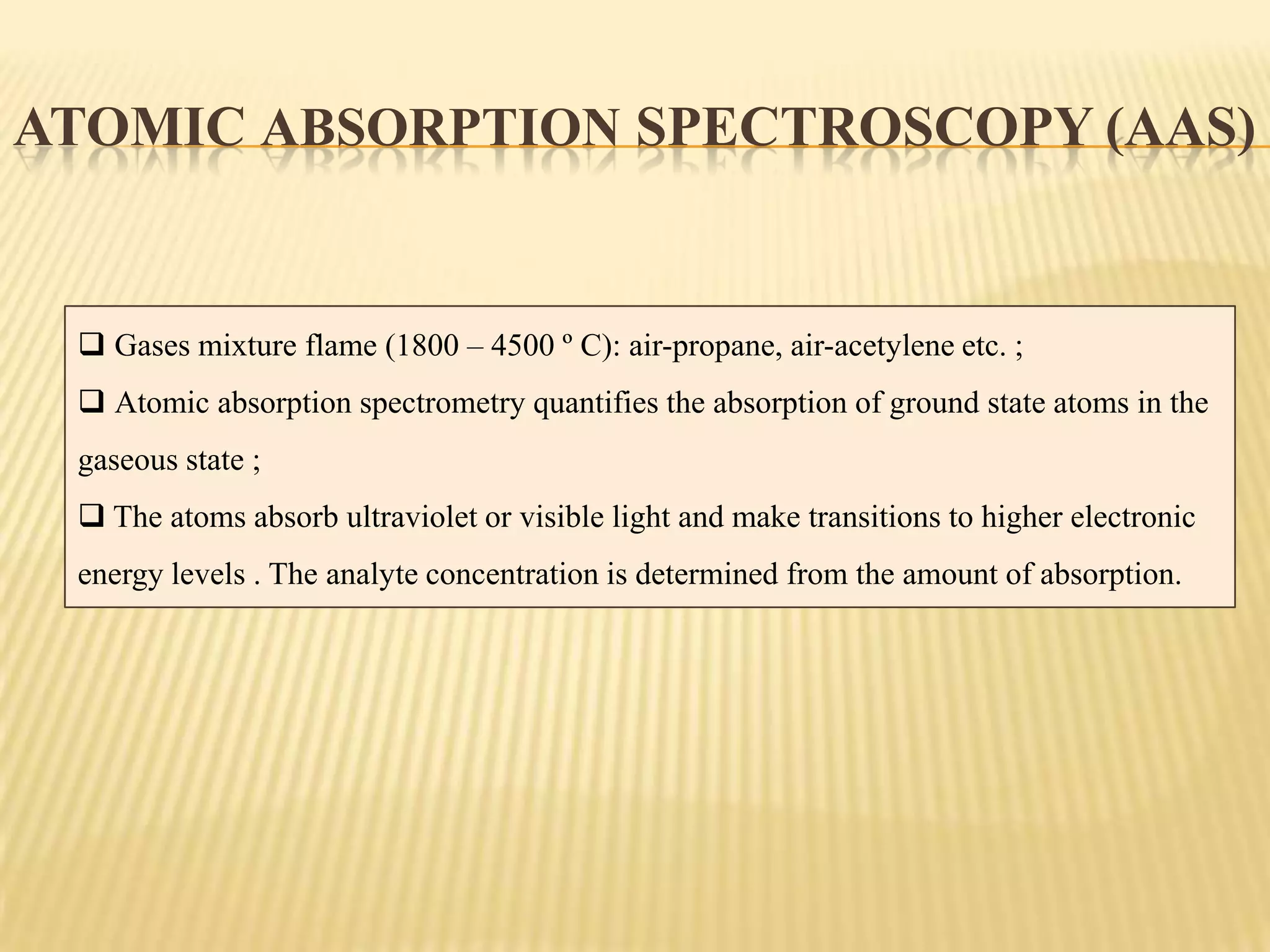
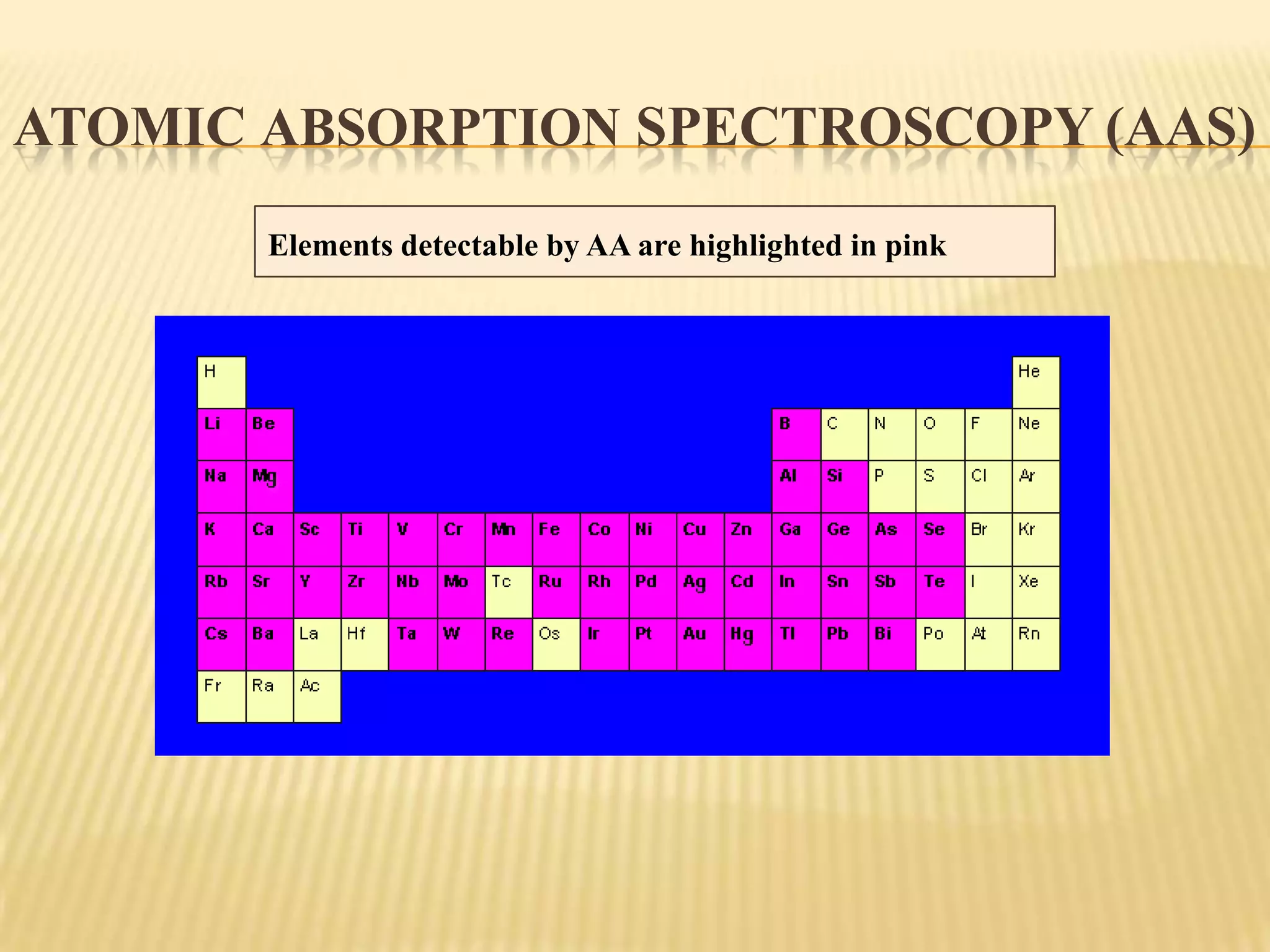
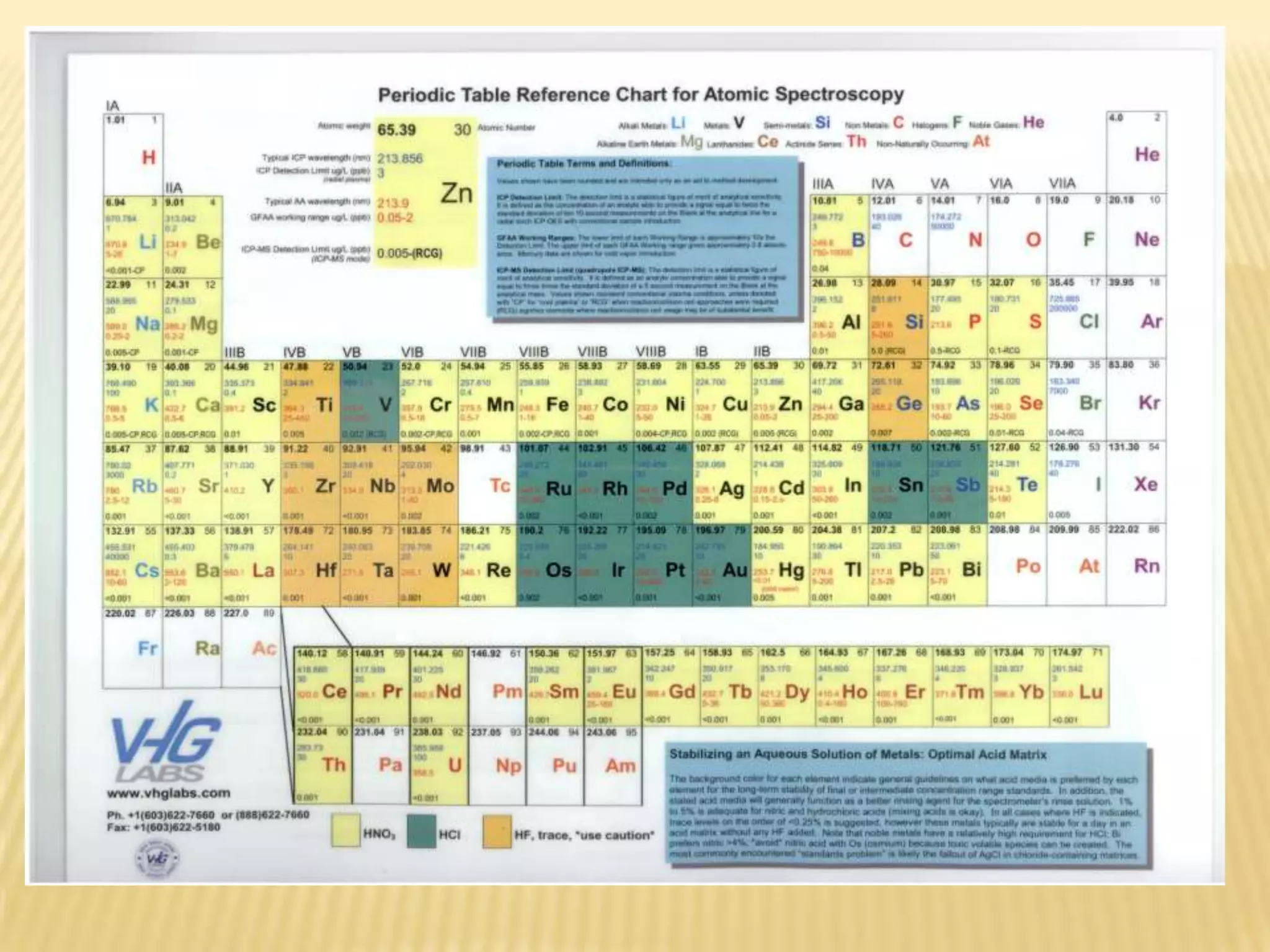
The atomsabsorb ultraviolet or visible light and make transitions to higher electronic energy levels . The analyte concentration is determined from the amount of absorption.Atomic absorption spectroscopy (AAS)Elements detectable by AA are highlighted in pink
11.
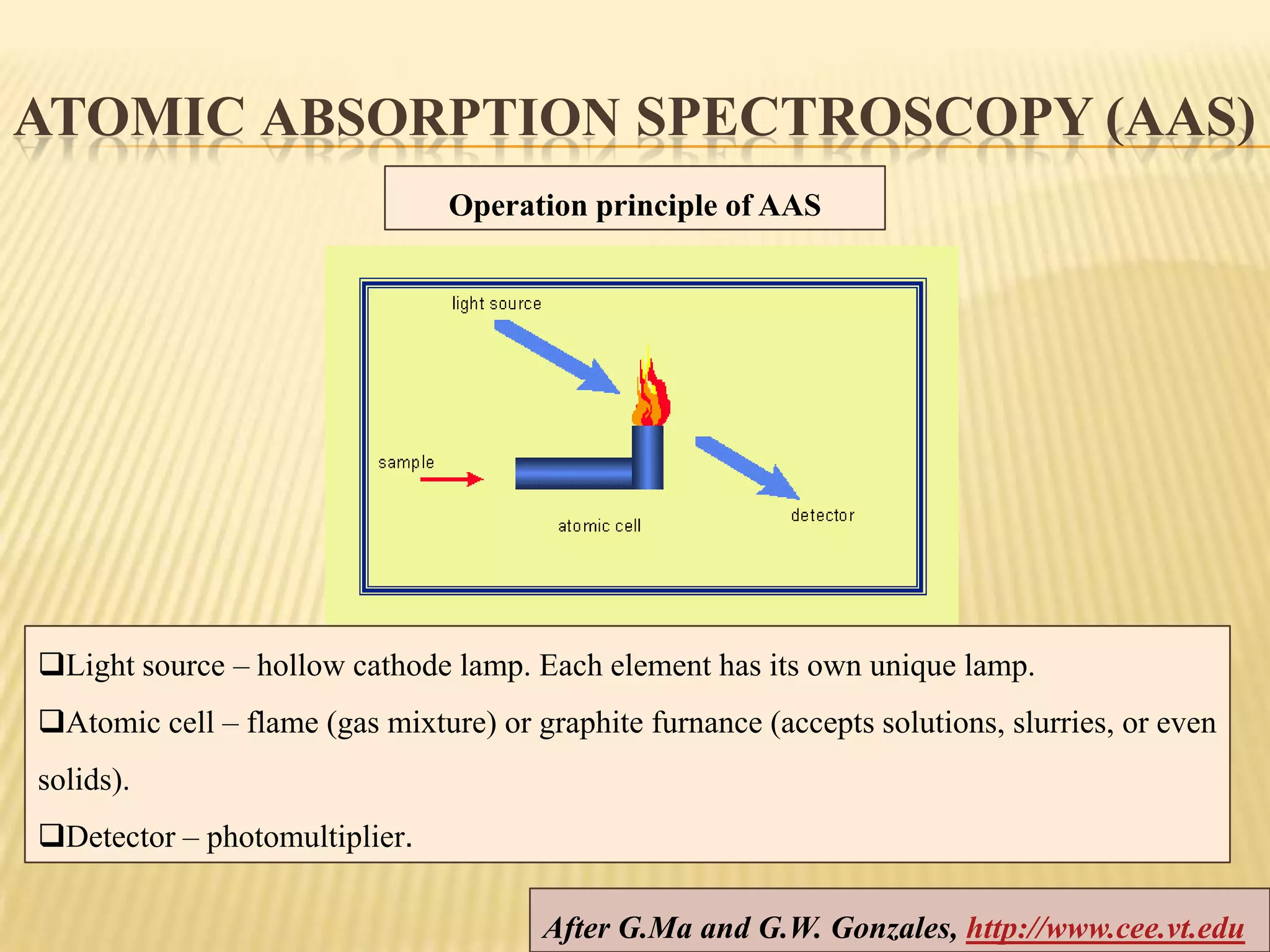
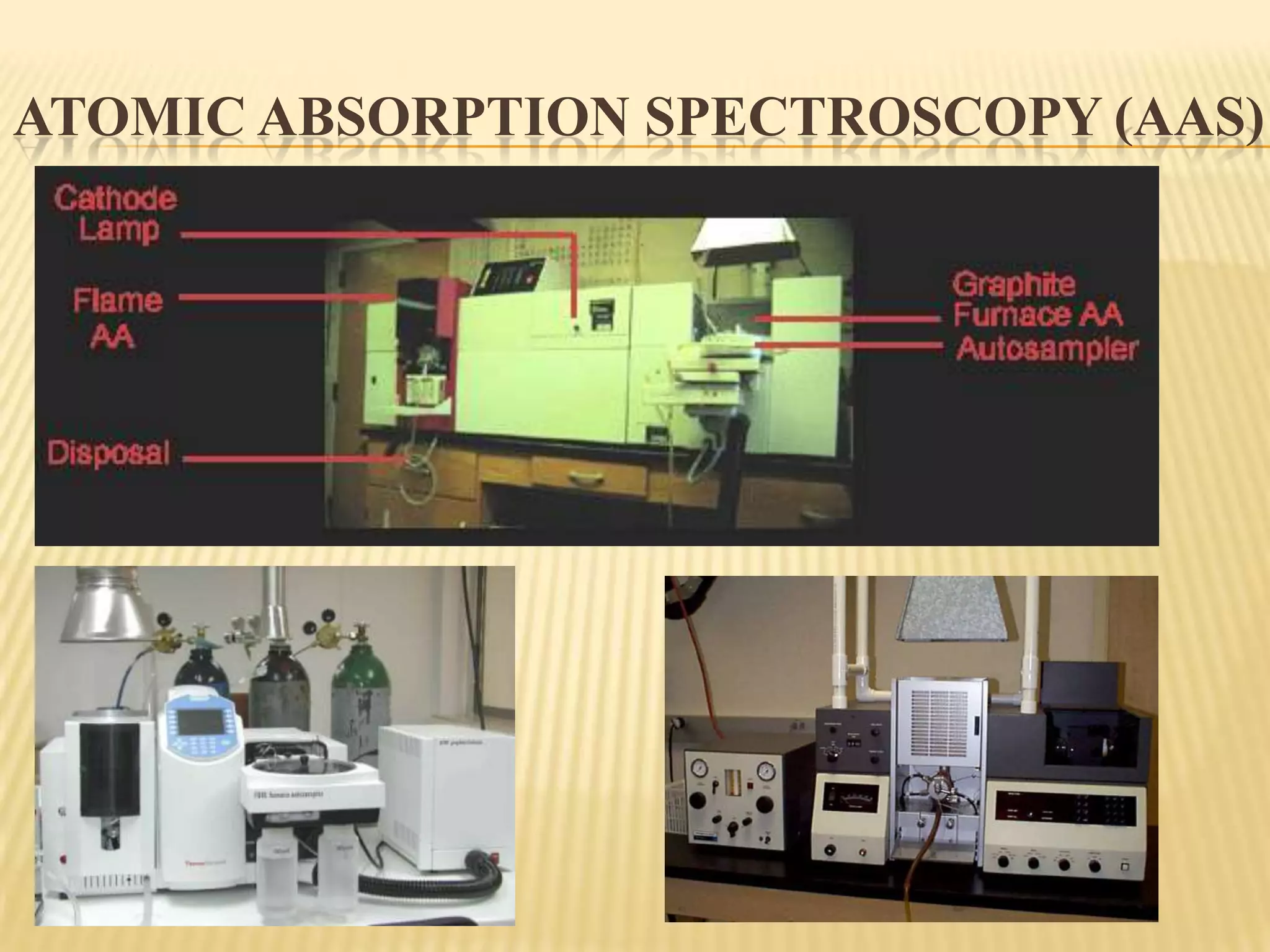
Atomic absorption spectroscopy(AAS)Operation principle of AASLight source – hollow cathode lamp. Each element has its own unique lamp.
12.
Atomic cell –flame (gas mixture) or graphite furnance (accepts solutions, slurries, or even solids).
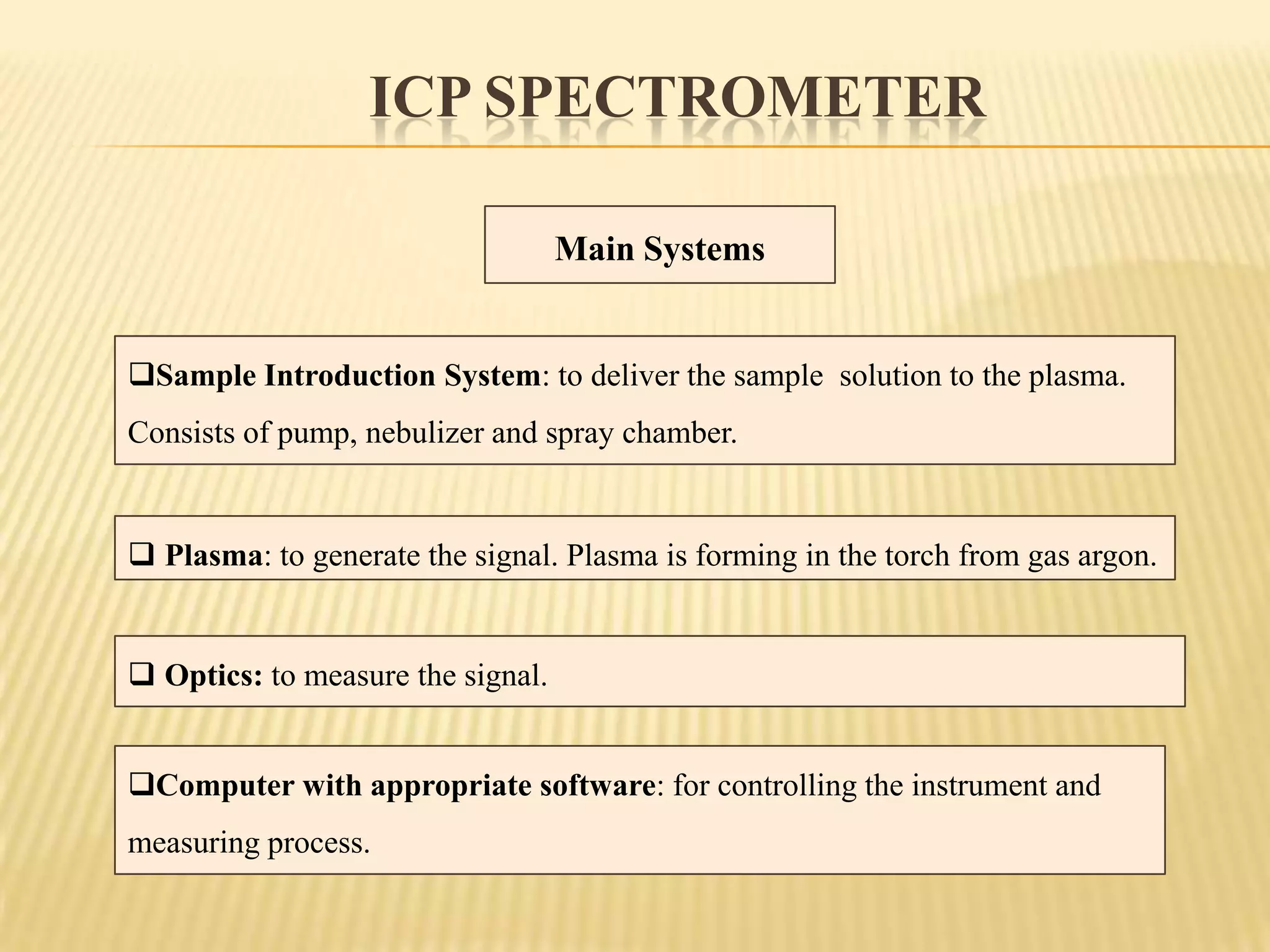
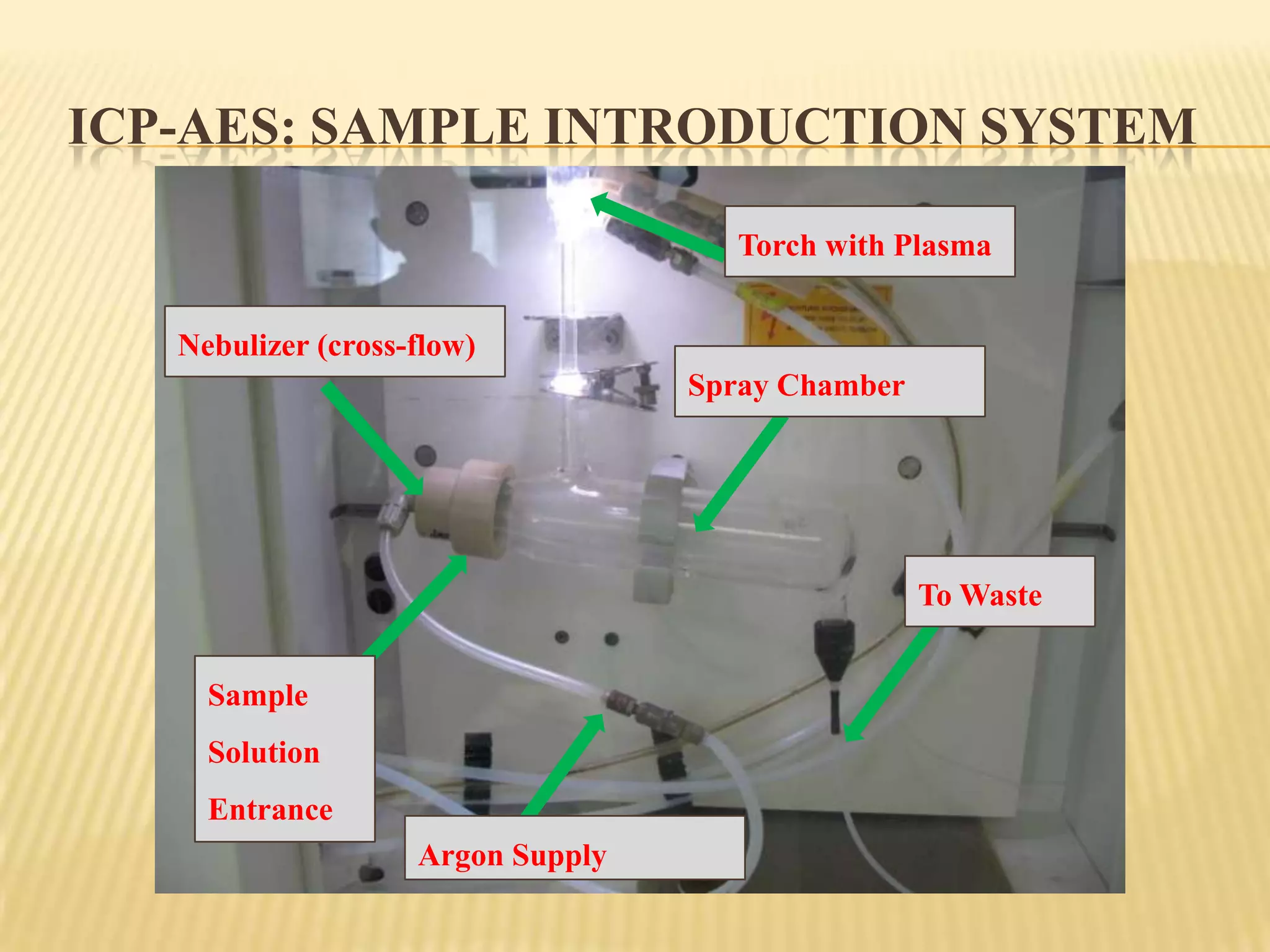
Computer with appropriatesoftware: for controlling the instrument and measuring process.ICP-AES: Sample introduction systemTorch with PlasmaNebulizer (cross-flow)Spray ChamberTo WasteSample Solution EntranceArgon Supply
26.
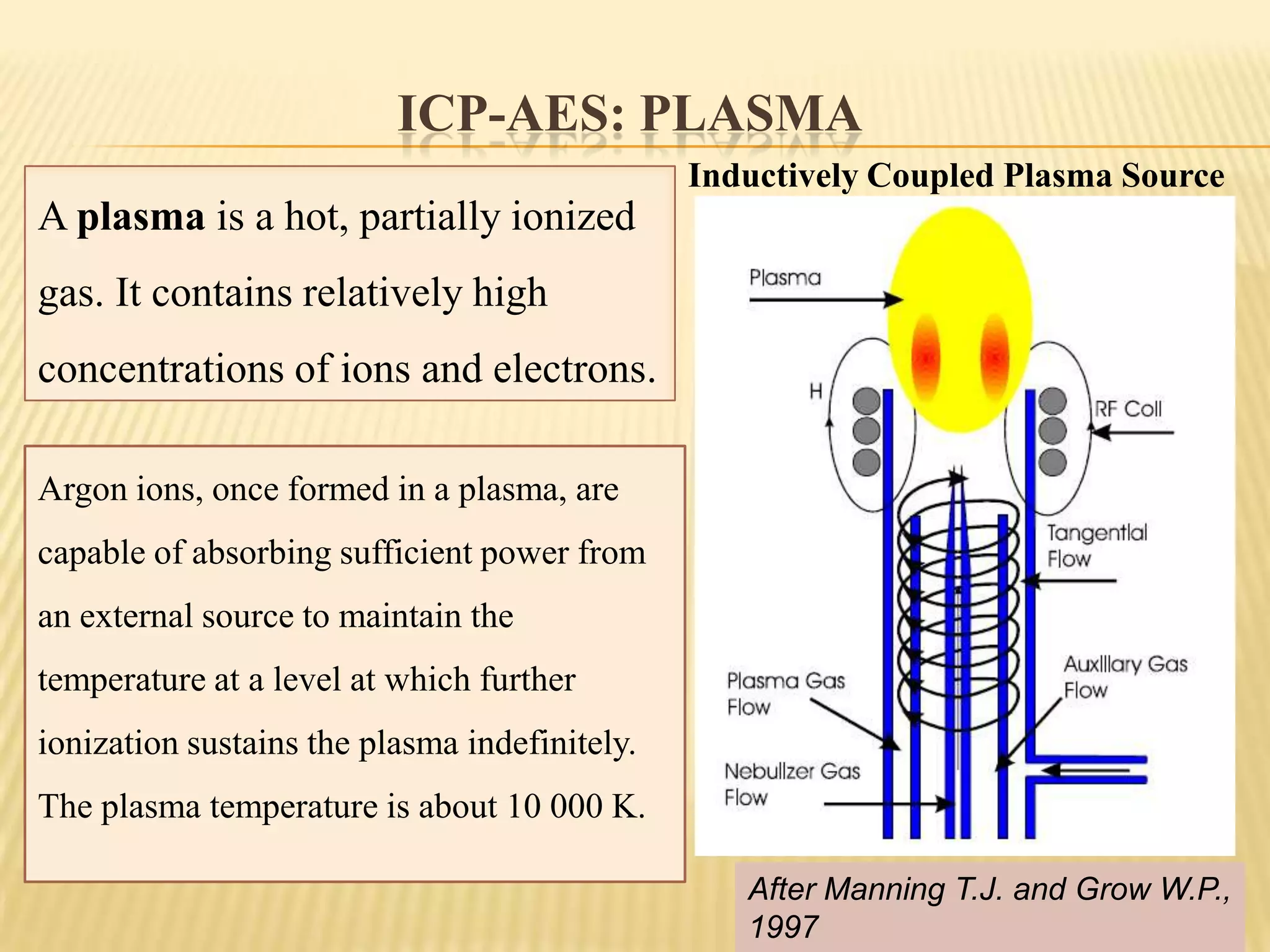
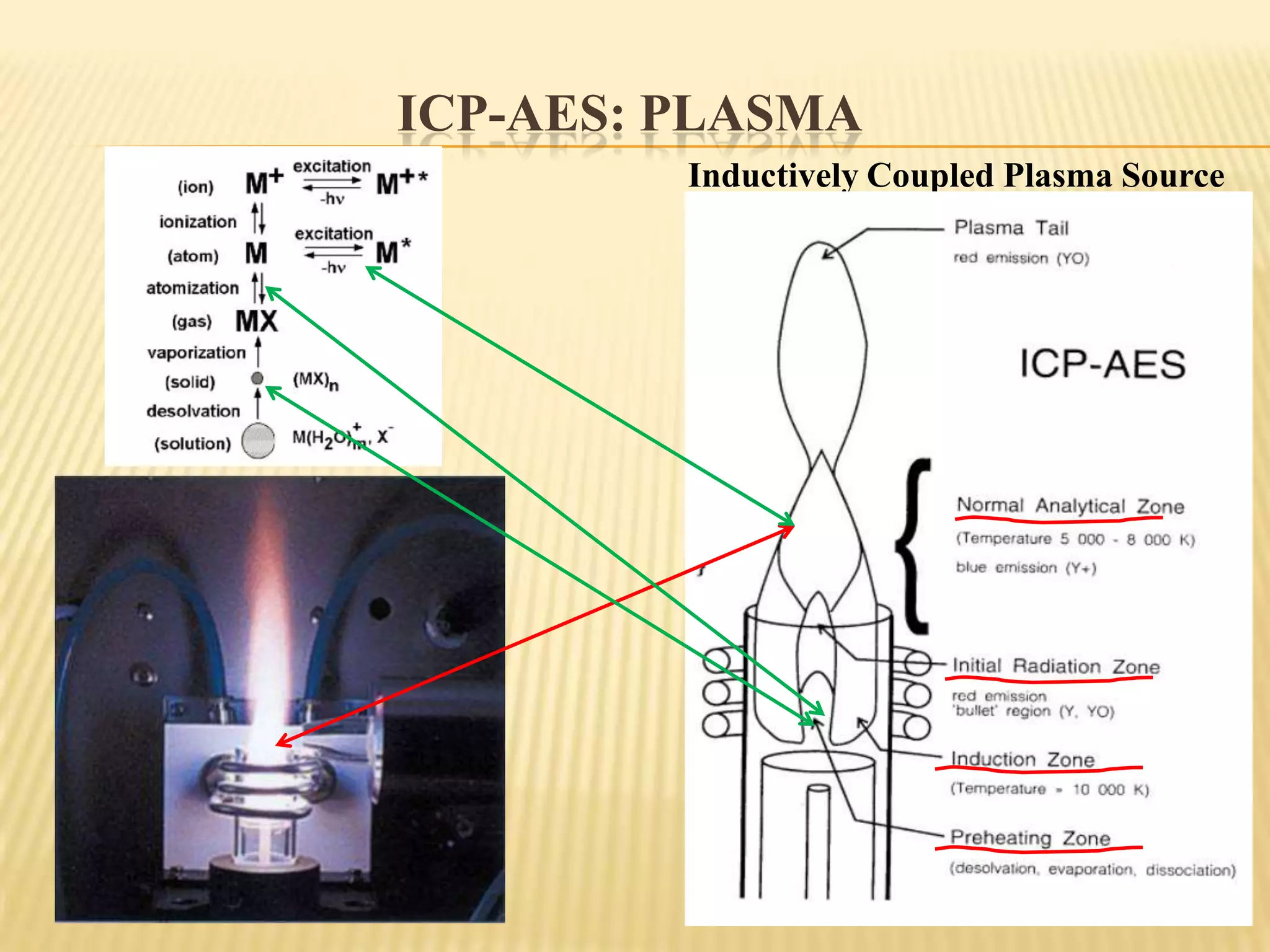
ICP-AES: PlasmaInductively CoupledPlasma SourceA plasma is a hot, partially ionizedgas. It contains relatively highconcentrations of ions and electrons. Argon ions, once formed in a plasma, are capable of absorbing sufficient power from an external source to maintain the temperature at a level at which further ionization sustains the plasma indefinitely. The plasma temperature is about 10 000 K.After Manning T.J. and Grow W.P., 1997
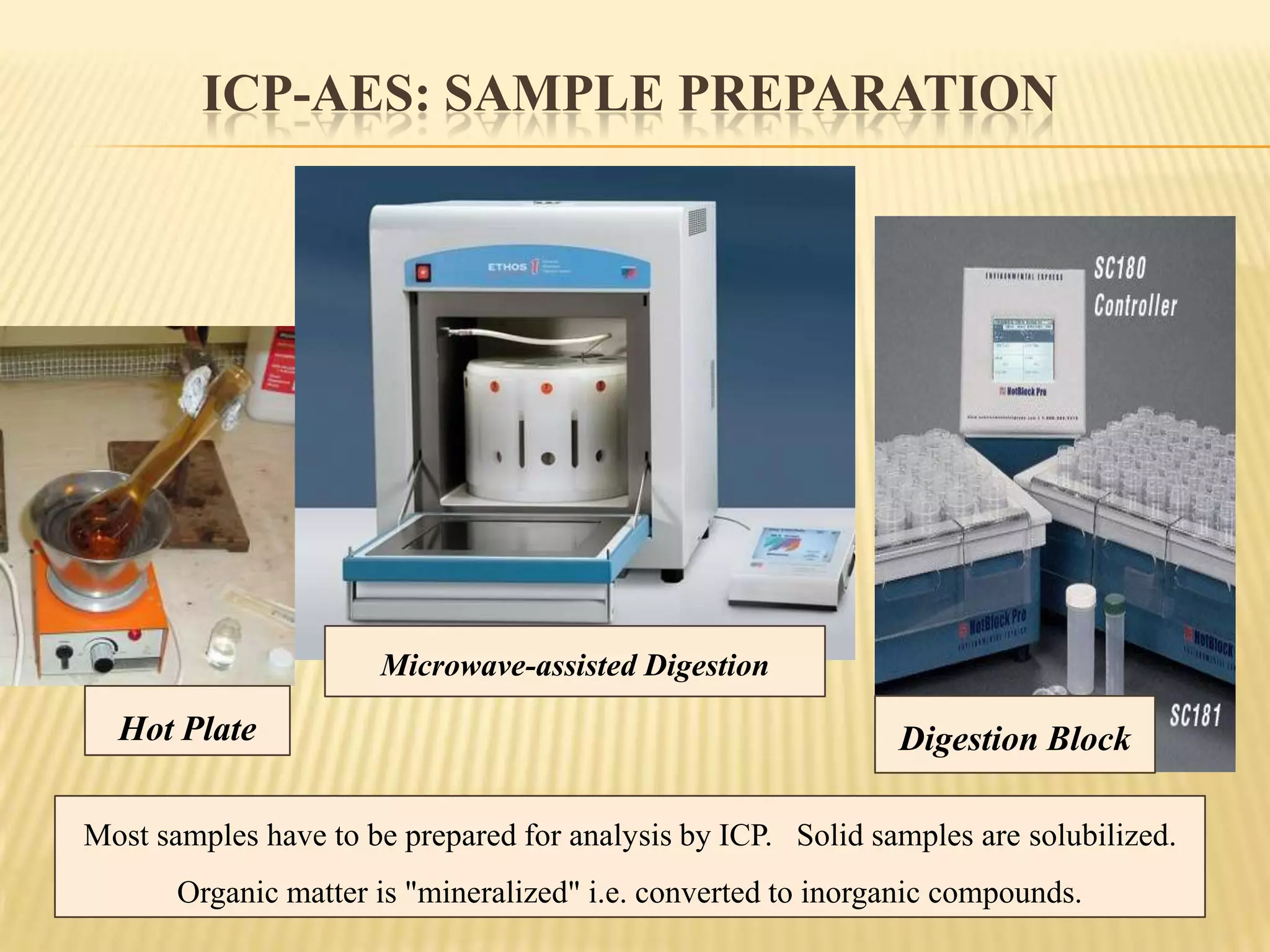
ICP-AES: Sample PreparationMicrowave-assistedDigestionHot PlateDigestion BlockMost samples have to be prepared for analysis by ICP. Solid samples are solubilized. Organic matter is "mineralized" i.e. converted to inorganic compounds.