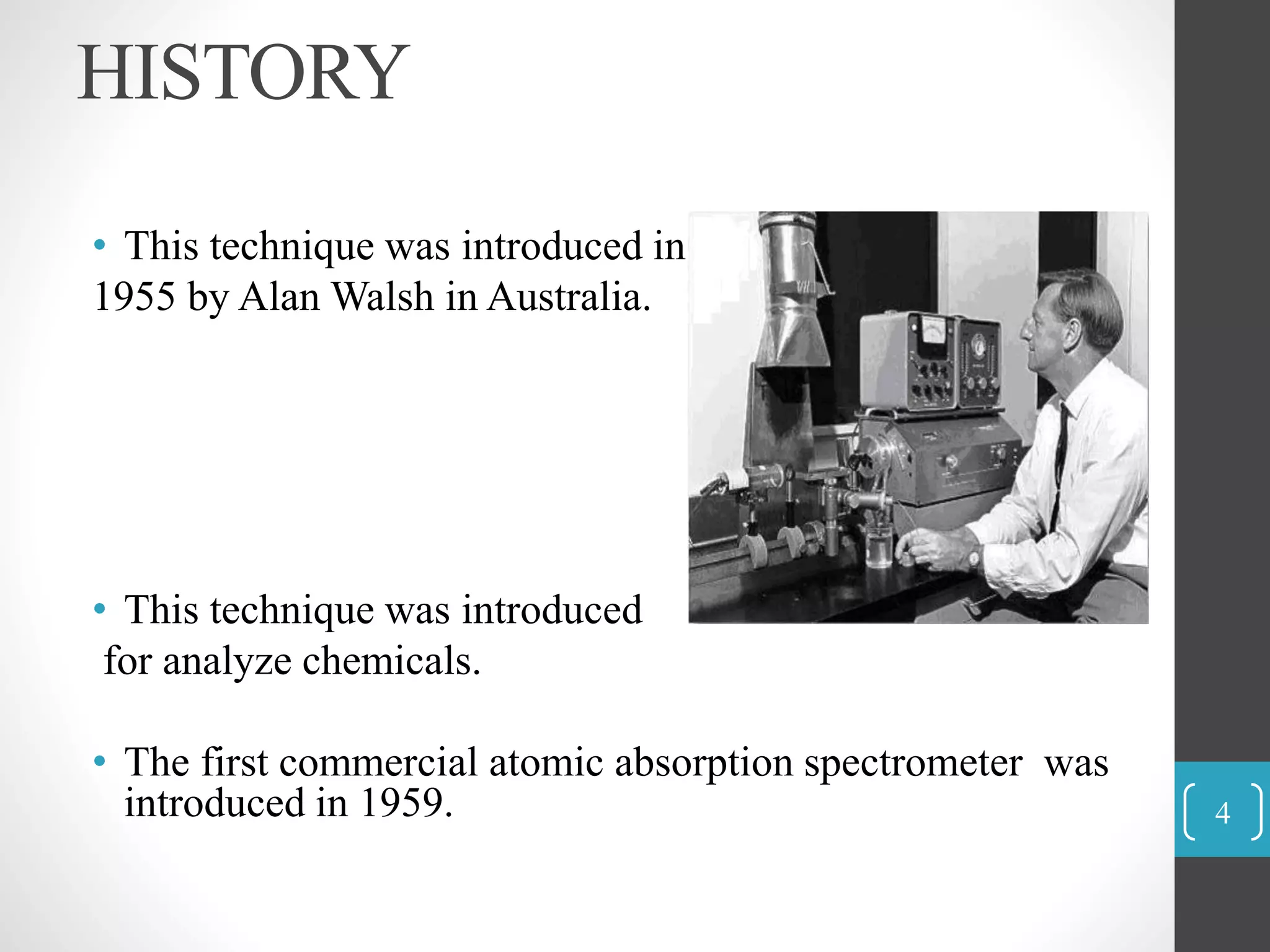
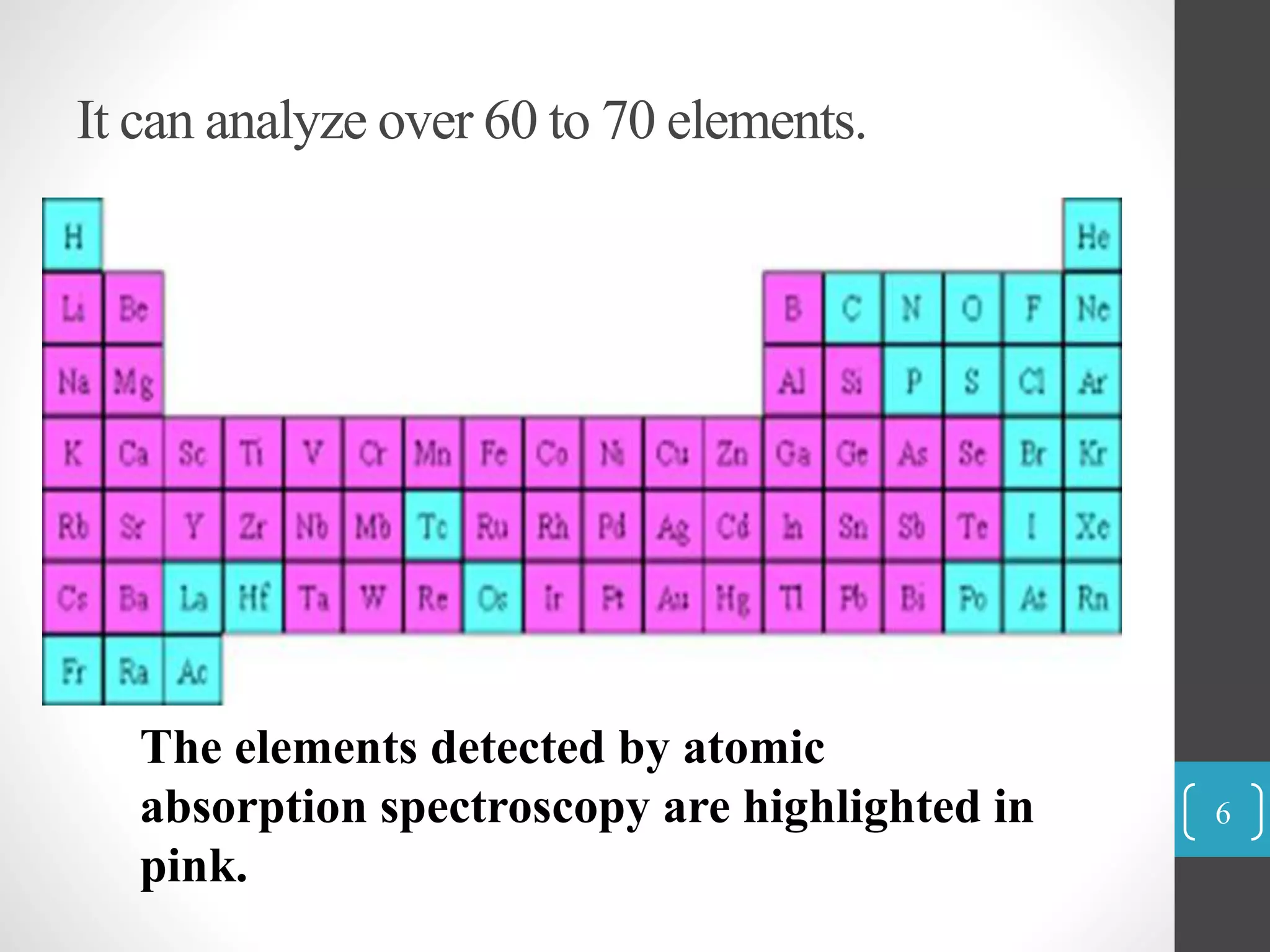
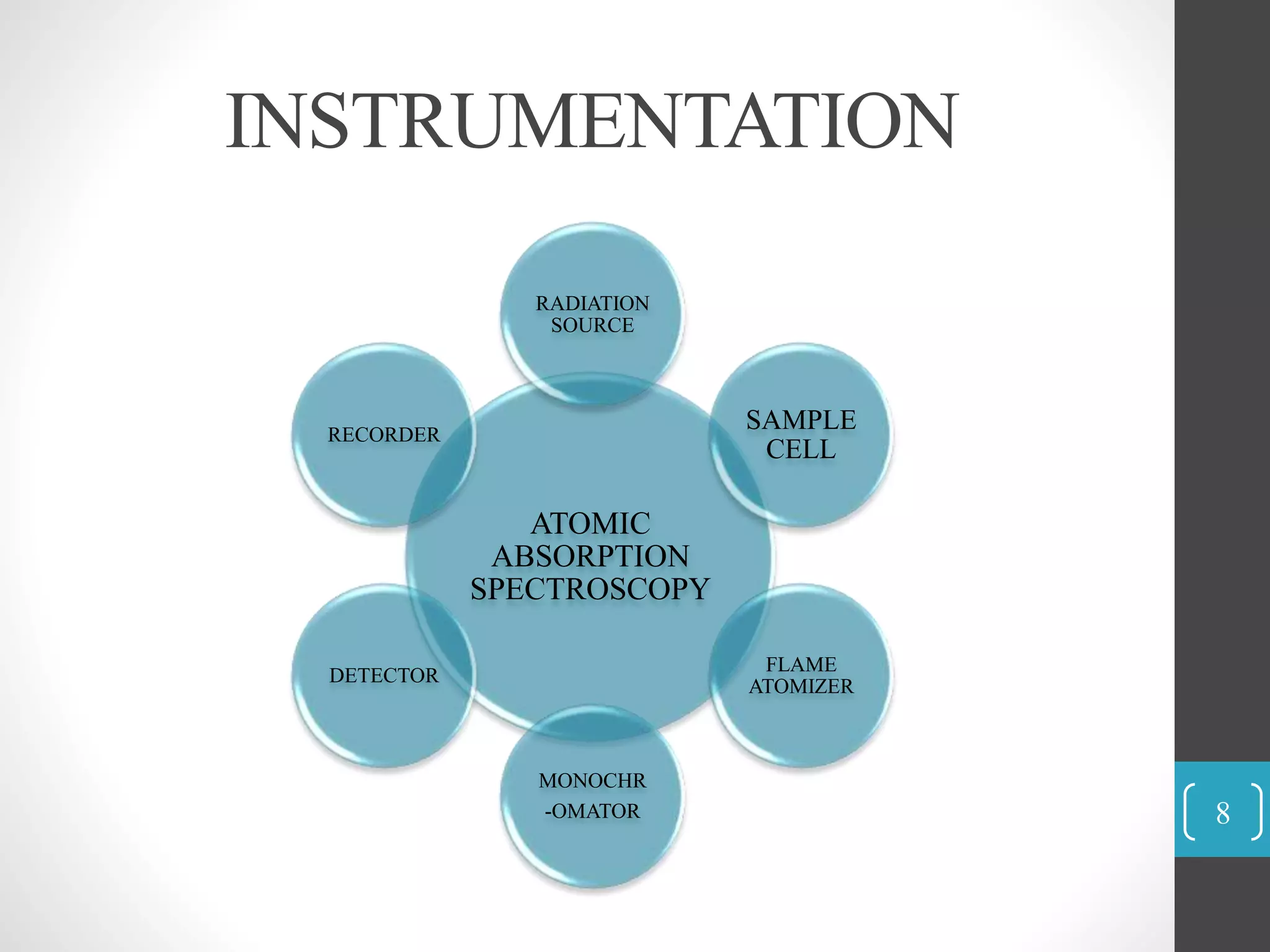
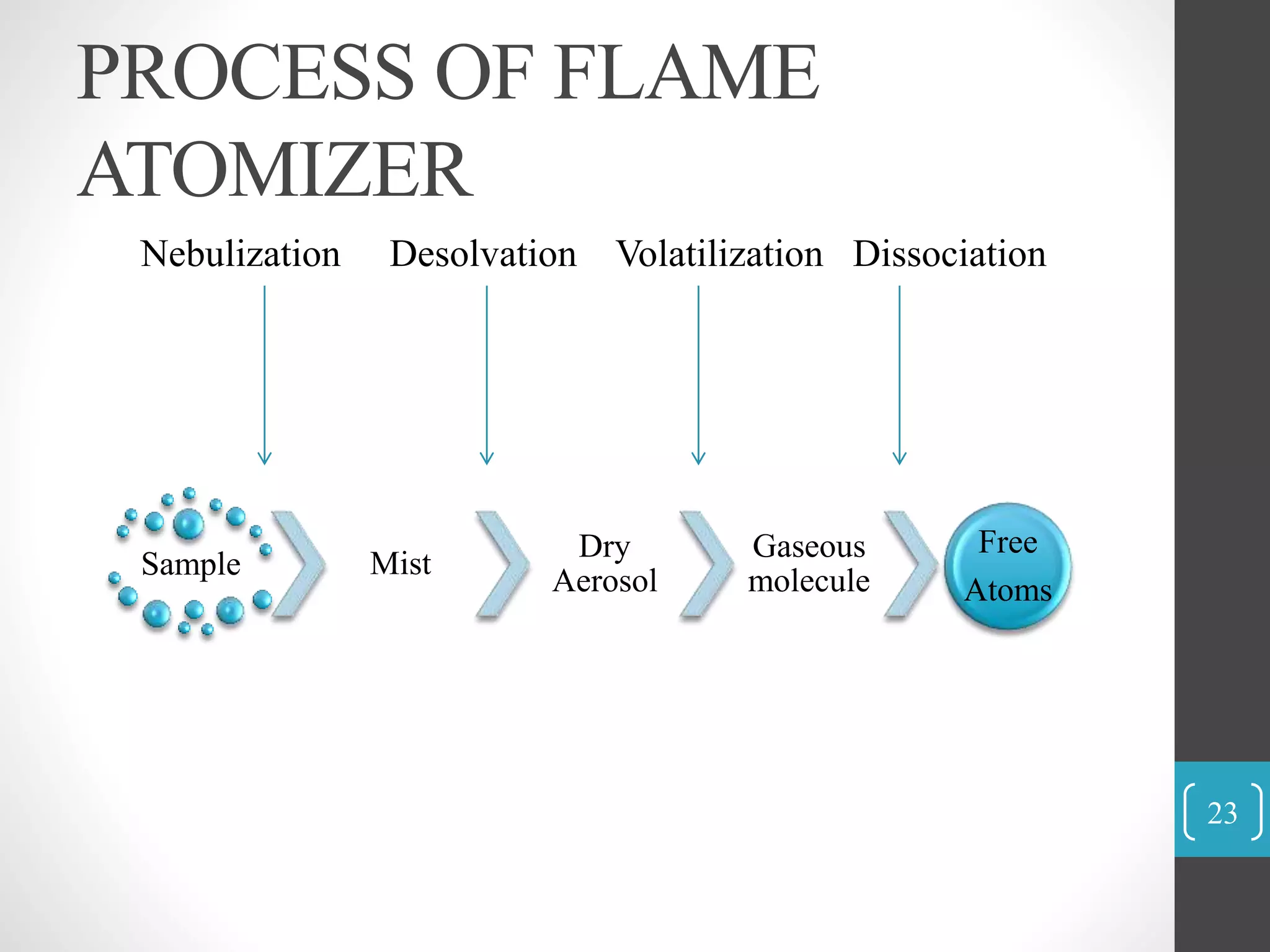
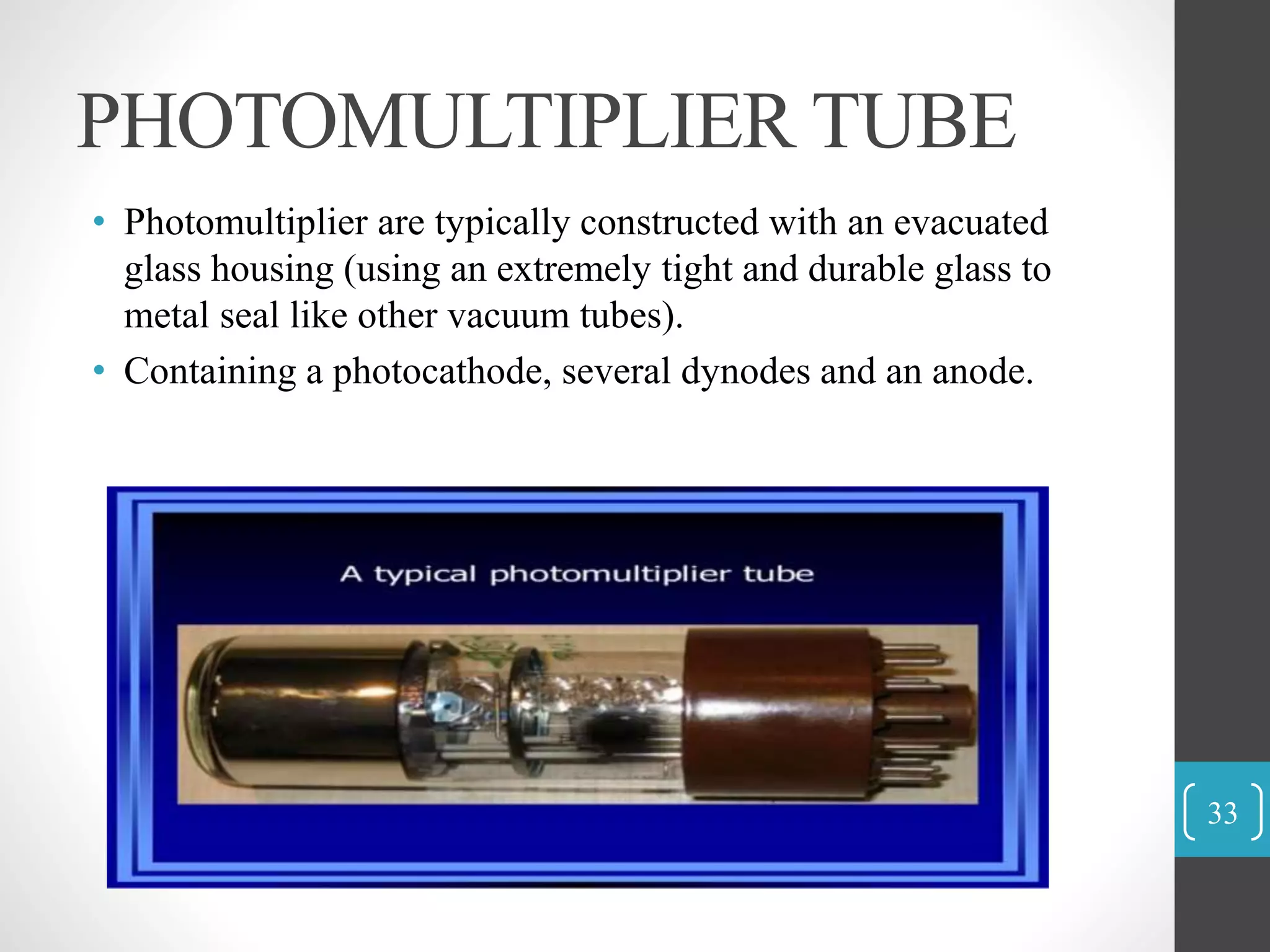
Atomic absorption spectroscopy measures the absorption of light by ground state atoms. It works by vaporizing a sample using a flame or graphite furnace atomizer and measuring the absorption of light from a hollow cathode lamp at a specific wavelength corresponding to the element of interest. Key components of an atomic absorption spectrometer include the radiation source, atomizer, monochromator, detector, and recorder. It can analyze over 60 elements and provides a sensitive technique for detecting metals in samples. Potential interferences include physical effects that alter nebulization or chemical effects that influence atomization.