Study of interaction of electromagnetic radiation
with matter.
These are the waves which is a form of
alternating current of high frequency having the same speed
as that of light.
This deals with the interaction of electromagnetic
radiation with atoms which are most commonly in their
lowest energy state called ground state
 Defn of spectroscopy.
 After interaction there is variation in intensity of
electromagnetic radiation.
Instrument which records this variation in intensity.

Sample itself emits radiation- Emmision spectroscopy
Sample itself absorbs radiation- Absorption spectroscopy
AAS is the most powerful instrumental method
for quantitative determination of trace metals in
liquids.
Gives total metal content of the sample & it is
independent on molecular form of the metal.
Determine concentration of-
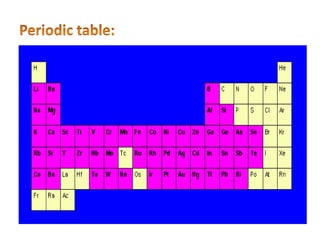
- 60-70 metals
- metals
- non-metals indirect method
• AAS based on the absorption of energy by
ground state atoms in the gaseous state.
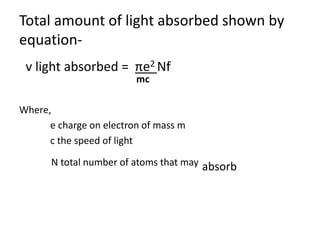
Total amount of light absorbed shown by
equation-
v light absorbed = πe2 Nf
mc
Where,
e charge on electron of mass m
c the speed of light
N total number of atoms that may absorb
 AAS is independent on flame temperature.
i.e. variation in flame temperatures represents
relatively less effects in AAS than in FES (flame
emission spectroscopy) in which the smaller
number of atoms are giving an emission signal.
 In terms of detection limits AAS & FES are quite
similar
 It is specific since atoms of a particular elements
can only absorbed radiation of their own
characteristic wavelength.
In FES the emission intensity is dependant upon the
number of exciting atoms & greatly influenced by
temperature variation whereas in AAS depends upon
number of unexcited atoms and absorption intensity
independent on temperature.
Analytical signal results from sum of all energies
emitted as excited atoms and in AAS signal is achieved
by difference in intensities in presence and absence of
liquid sample containing metals.
In AAS Beer’s law is obeyed i.e. absorption is directly
proportional to concentration. This is not true in case
of FES
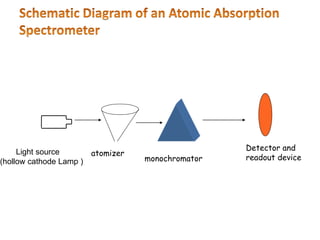
Light source
(hollow cathode Lamp )
atomizer
monochromator
Detector and
readout device
The instrument consists of:
1. Light source
2. atomizer
3. Monochromator
4. Detector
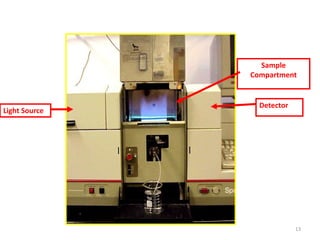
13
Light Source
Detector
Sample
Compartment
The light source is usually a hollow cathode lamp
of the element that is being measured.
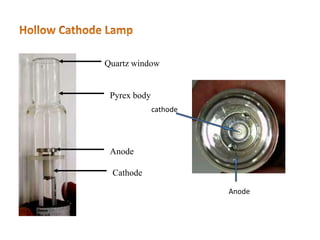
 It contains a tungsten anode and a hollow
cylindrical cathode made of the element to be
determined.
These are sealed in a glass tube filled with an
inert gas (neon or argon ) . Each element has its
own unique lamp which must be used for that
analysis .
cathode
Anode
Quartz window
Pyrex body
Anode
Cathode
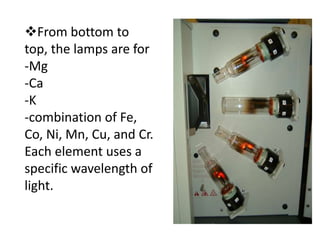
From bottom to
top, the lamps are for
-Mg
-Ca
-K
-combination of Fe,
Co, Ni, Mn, Cu, and Cr.
Each element uses a
specific wavelength of
light.
Elements to be analyzed needs to be in
atomic state
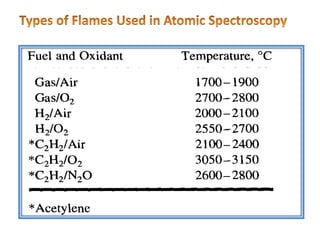
Atomization is separation of particles into
individual molecules and breaking molecules
into atoms .This is done by exposing the
analyte to high temperatures in a flame.
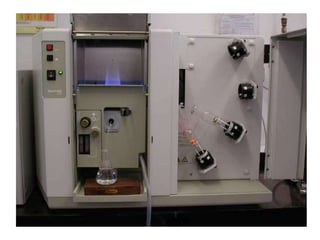
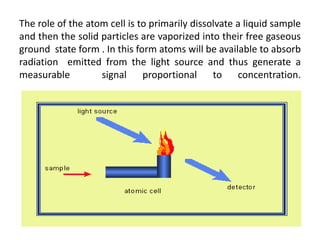
The role of the atom cell is to primarily dissolvate a liquid sample
and then the solid particles are vaporized into their free gaseous
ground state form . In this form atoms will be available to absorb
radiation emitted from the light source and thus generate a
measurable signal proportional to concentration.
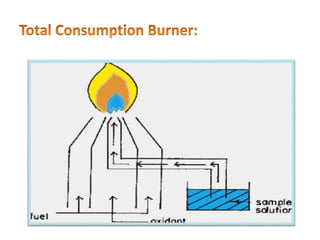
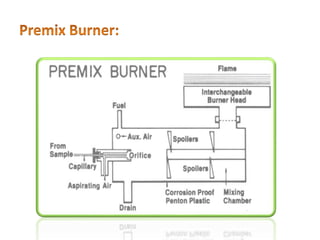
Flame AA can only analyze solutions , where
it uses a slot type burner to increase the path
length, and therefore to increase the total
absorbance .
Sample solutions are usually introduced into a
nebuliser by being sucked up a capillary tube
.In the nebuliser the sample is dispersed into
tiny droplets , which can be readily broken
down in the flame.
This is a very important part in an AA
spectrometer. It is used to separate out all of
the thousands of lines. Without a good
monochromator, detection limits are severely
compromised.
A monochromator is used to select the specific
wavelength of light which is absorbed by the
sample, and to exclude other wavelengths. The
selection of the specific light allows the
determination of the selected element in the
presence of others.
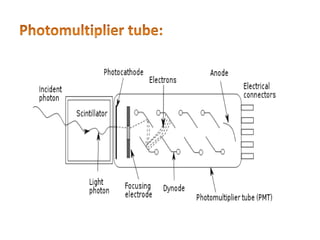
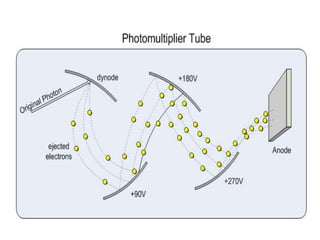
The light selected by the monochromator is
directed onto a detector that is typically a
photomultiplier tube , whose function is to
convert the light signal into an electrical signal
proportional to the light intensity.
The processing of electrical signal is fulfilled by a
signal amplifier . The signal could be displayed for
readout , or further fed into a data station for
printout by the requested format.
1) Quantitative & Qualitative analysis
2) Determination of metallic elements in biological
materials
3) Simultaneous multicomponent analysis
4) Determination of lead in petrol
5) Determination of metallic elements in food
industry
6) Determination of calcium, magnesium,sodium
and potassium in blood serum
Atomic absorption spectroscopy

Atomic absorption spectroscopy

  • 2.
    Study of interactionof electromagnetic radiation with matter. These are the waves which is a form of alternating current of high frequency having the same speed as that of light. This deals with the interaction of electromagnetic radiation with atoms which are most commonly in their lowest energy state called ground state
  • 4.
     Defn ofspectroscopy.  After interaction there is variation in intensity of electromagnetic radiation. Instrument which records this variation in intensity. Sample itself emits radiation- Emmision spectroscopy Sample itself absorbs radiation- Absorption spectroscopy
  • 5.
    AAS is themost powerful instrumental method for quantitative determination of trace metals in liquids. Gives total metal content of the sample & it is independent on molecular form of the metal. Determine concentration of- - 60-70 metals - metals - non-metals indirect method
  • 7.
    • AAS basedon the absorption of energy by ground state atoms in the gaseous state.
  • 8.
    Total amount oflight absorbed shown by equation- v light absorbed = πe2 Nf mc Where, e charge on electron of mass m c the speed of light N total number of atoms that may absorb
  • 9.
     AAS isindependent on flame temperature. i.e. variation in flame temperatures represents relatively less effects in AAS than in FES (flame emission spectroscopy) in which the smaller number of atoms are giving an emission signal.  In terms of detection limits AAS & FES are quite similar  It is specific since atoms of a particular elements can only absorbed radiation of their own characteristic wavelength.
  • 10.
    In FES theemission intensity is dependant upon the number of exciting atoms & greatly influenced by temperature variation whereas in AAS depends upon number of unexcited atoms and absorption intensity independent on temperature. Analytical signal results from sum of all energies emitted as excited atoms and in AAS signal is achieved by difference in intensities in presence and absence of liquid sample containing metals. In AAS Beer’s law is obeyed i.e. absorption is directly proportional to concentration. This is not true in case of FES
  • 11.
    Light source (hollow cathodeLamp ) atomizer monochromator Detector and readout device
  • 12.
    The instrument consistsof: 1. Light source 2. atomizer 3. Monochromator 4. Detector
  • 13.
  • 15.
    The light sourceis usually a hollow cathode lamp of the element that is being measured.  It contains a tungsten anode and a hollow cylindrical cathode made of the element to be determined. These are sealed in a glass tube filled with an inert gas (neon or argon ) . Each element has its own unique lamp which must be used for that analysis .
  • 16.
  • 17.
    From bottom to top,the lamps are for -Mg -Ca -K -combination of Fe, Co, Ni, Mn, Cu, and Cr. Each element uses a specific wavelength of light.
  • 18.
    Elements to beanalyzed needs to be in atomic state Atomization is separation of particles into individual molecules and breaking molecules into atoms .This is done by exposing the analyte to high temperatures in a flame.
  • 19.
    The role ofthe atom cell is to primarily dissolvate a liquid sample and then the solid particles are vaporized into their free gaseous ground state form . In this form atoms will be available to absorb radiation emitted from the light source and thus generate a measurable signal proportional to concentration.
  • 20.
    Flame AA canonly analyze solutions , where it uses a slot type burner to increase the path length, and therefore to increase the total absorbance . Sample solutions are usually introduced into a nebuliser by being sucked up a capillary tube .In the nebuliser the sample is dispersed into tiny droplets , which can be readily broken down in the flame.
  • 24.
    This is avery important part in an AA spectrometer. It is used to separate out all of the thousands of lines. Without a good monochromator, detection limits are severely compromised. A monochromator is used to select the specific wavelength of light which is absorbed by the sample, and to exclude other wavelengths. The selection of the specific light allows the determination of the selected element in the presence of others.
  • 25.
    The light selectedby the monochromator is directed onto a detector that is typically a photomultiplier tube , whose function is to convert the light signal into an electrical signal proportional to the light intensity. The processing of electrical signal is fulfilled by a signal amplifier . The signal could be displayed for readout , or further fed into a data station for printout by the requested format.
  • 28.
    1) Quantitative &Qualitative analysis 2) Determination of metallic elements in biological materials 3) Simultaneous multicomponent analysis 4) Determination of lead in petrol 5) Determination of metallic elements in food industry 6) Determination of calcium, magnesium,sodium and potassium in blood serum