INTRODUCTION TO
X-RAY FLUORESCENCE
TECHNIQUE
BY
TEJASVI
Contents
Fluorescence
Introduction to Method
Basic Principle
Instrumentation
Forensic Applications
Advantages
Disadvantages
References
Fluorescence
Fluorescence is a an optical phenomena
in which the molecular absorption of a
photons triggers the emission of another
photon with a longer wavelength.
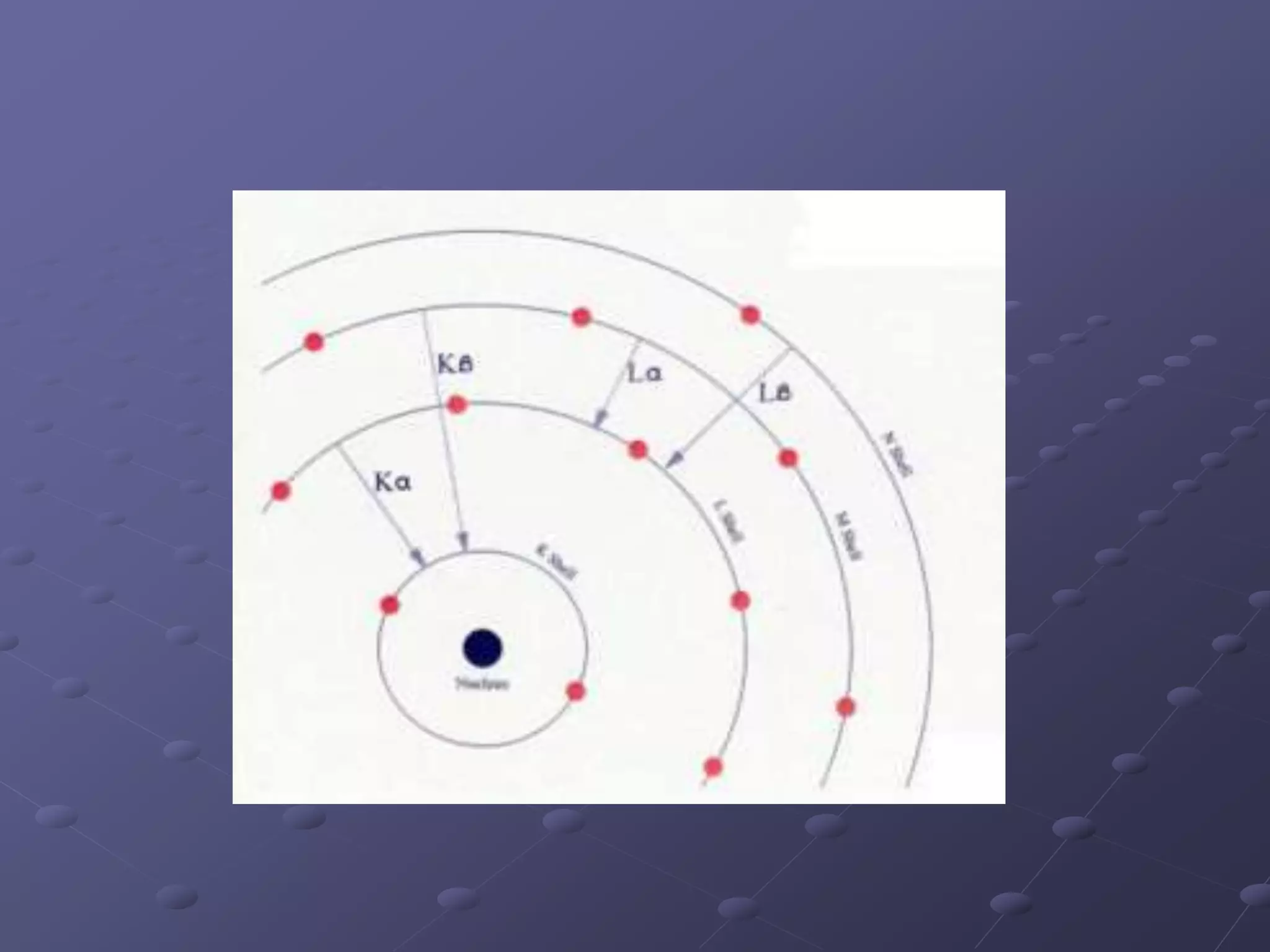
X ray Fluorescence is an atomic
spectrometric method based on detection of
emitted X ray radiation from excited atoms.
This technique is a two step process:
1. Removal of inner shell electron of atom.
2. Transition of electron from outer shell to
inner shell.
Basic Principle
Primary X rays, emitted by an X ray tube,
are directed at the sample to be analyzed.
The chemical composition present in the
sample are excited such as to emit their
own characteristics X rays. These are
analyzed in spectrometer.
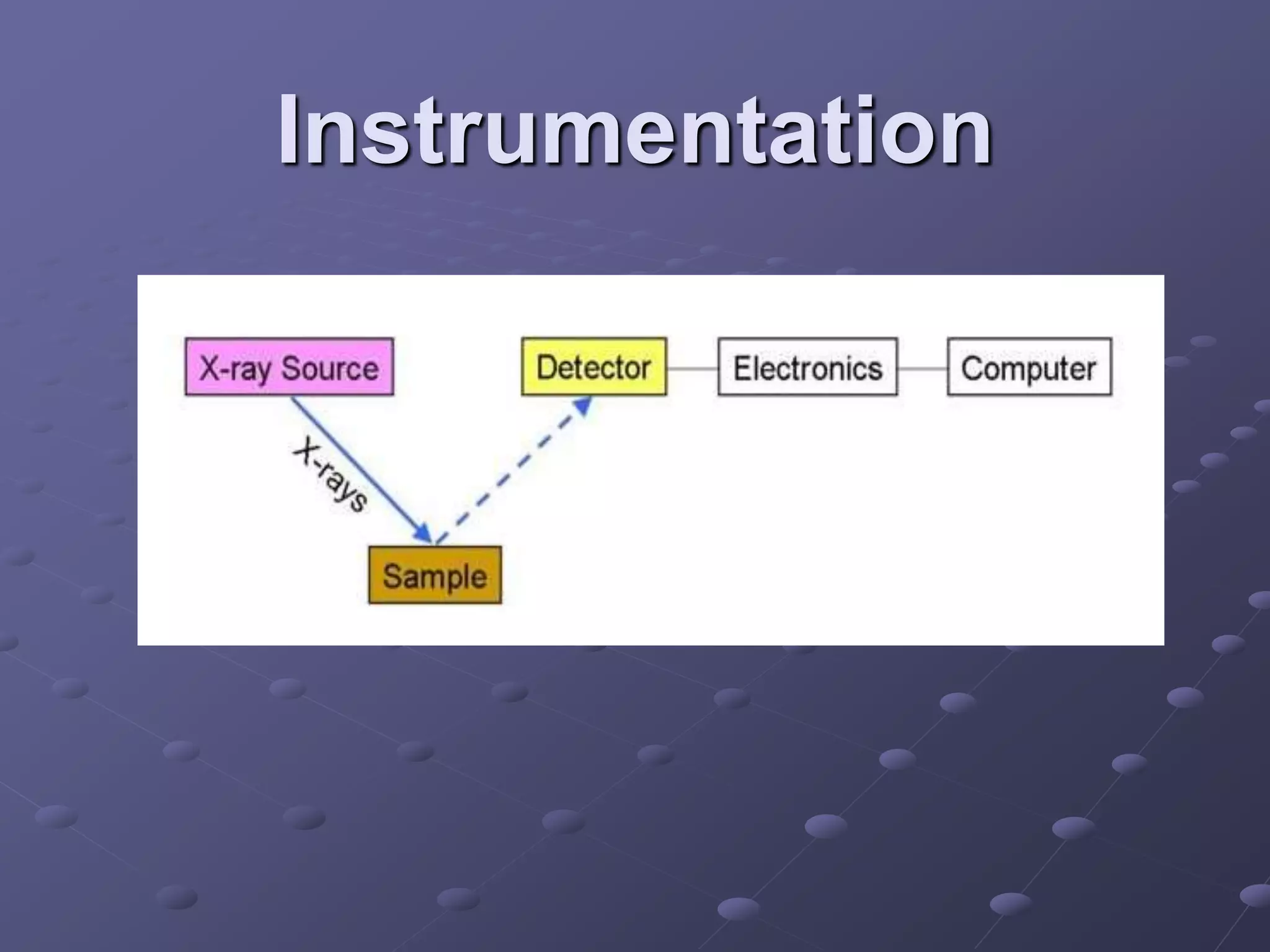
Instrumentation
Energy dispersive spectrometry
Instrumentation
Two different type of measurement system
are used in XRF.
1. Wavelength Dispersive X Ray
Fluorescence
2. Energy Dispersive X Ray
Fluorescence
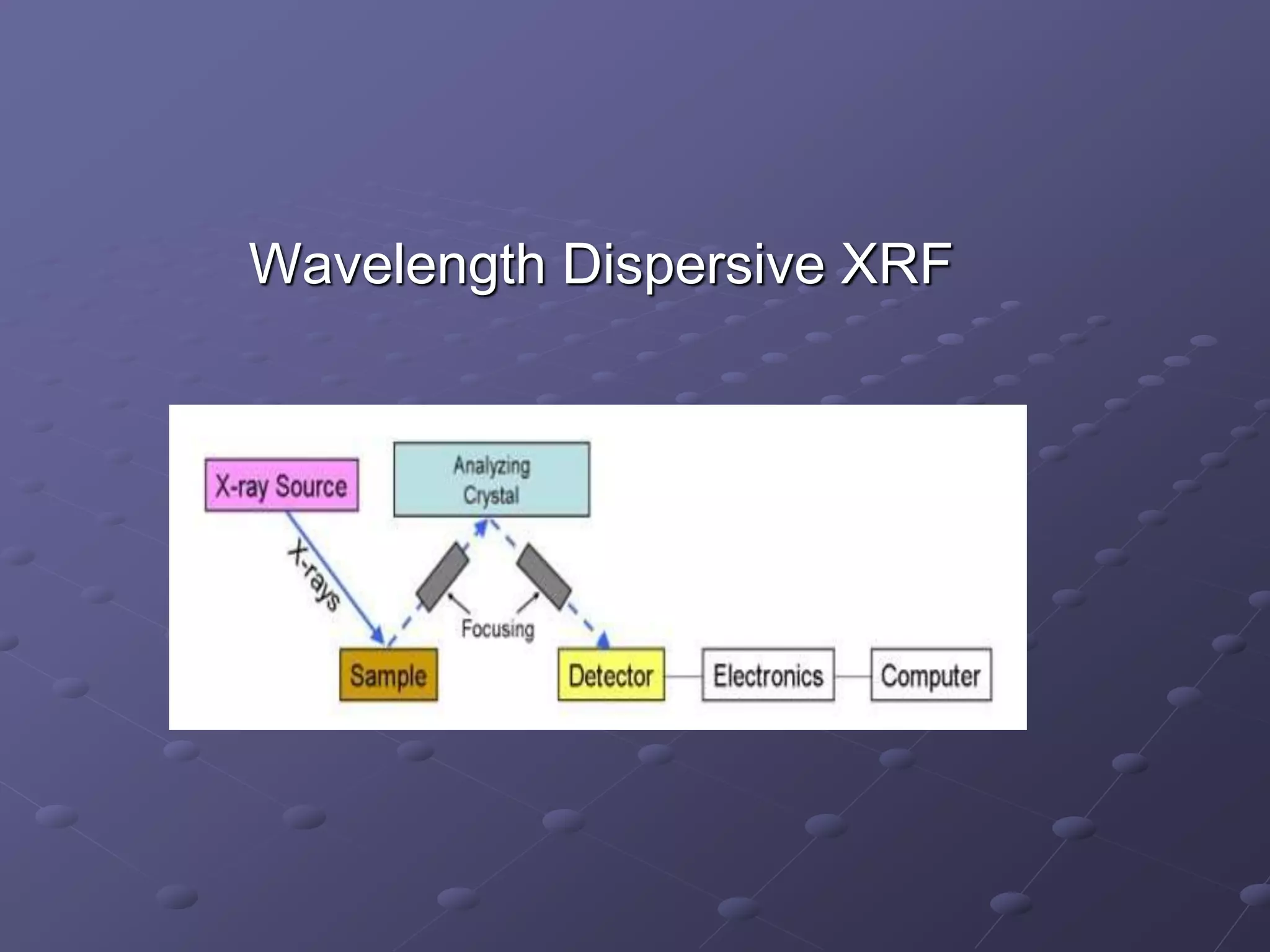
WDXRF
In WDXRF, the emitted X rays are
dispersed based on their wavelength.
Gas Ionization and Scintillation detectors
are found in this system.
High resolution is produced.
Wavelength Dispersive XRF
EDXRF
The energy dispersive system collects
all X ray photons simultaneously on to
the detector.
Each photon generates an electrical
pulse with an amplitude proportional to
energy of X ray photon.
Solid State Semiconductors detectors
are found in this system.
Source
The most common source of X rays are
X ray tube.
It is highly evacuated tube.
Cathode – Tungsten filament
Anode – Chromium, Silver, Iron etc.
Filament is heated and electrons are
accelerate to target.
Production of new X rays occurs.
Samples
State – Solid or Liquid
Amount – Microgram to Gram
Preparation –
1. For simple analysis, no preparation is
necessary.
2. For minimum pretreatment, grind,
homogenize and press into the pellets.
3. For maximum pretreatment, dry, fuse
and cast into glass disks.
Detectors
Three basic detectors are used in XRF
instrumentation :
1. Gas Ionization
2. Scintillation
3. Solid State Semiconductors
Gas Ionization
Gas Ionization detector consist of two
electrodes, a wire anode in the center of
metal cylinder cathode and an argon and
methane mixture. In this type of detector
the X ray photon enters through in window
in the cylinder and ionize the gas.
The resulting ions and electrons are
collected and the current is proportional to
intensity of the X ray photon.
Scintillation
It consist of Thallium – doped Sodium
Iodide crystal on the front of a photo-
multiplier tube. The X ray from the sample
strike Sodium Iodide crystal and generate
photons. These photon generate photo-
electrons that are amplified and detected.
The number of photons produced is
proportional to energy of X rays.
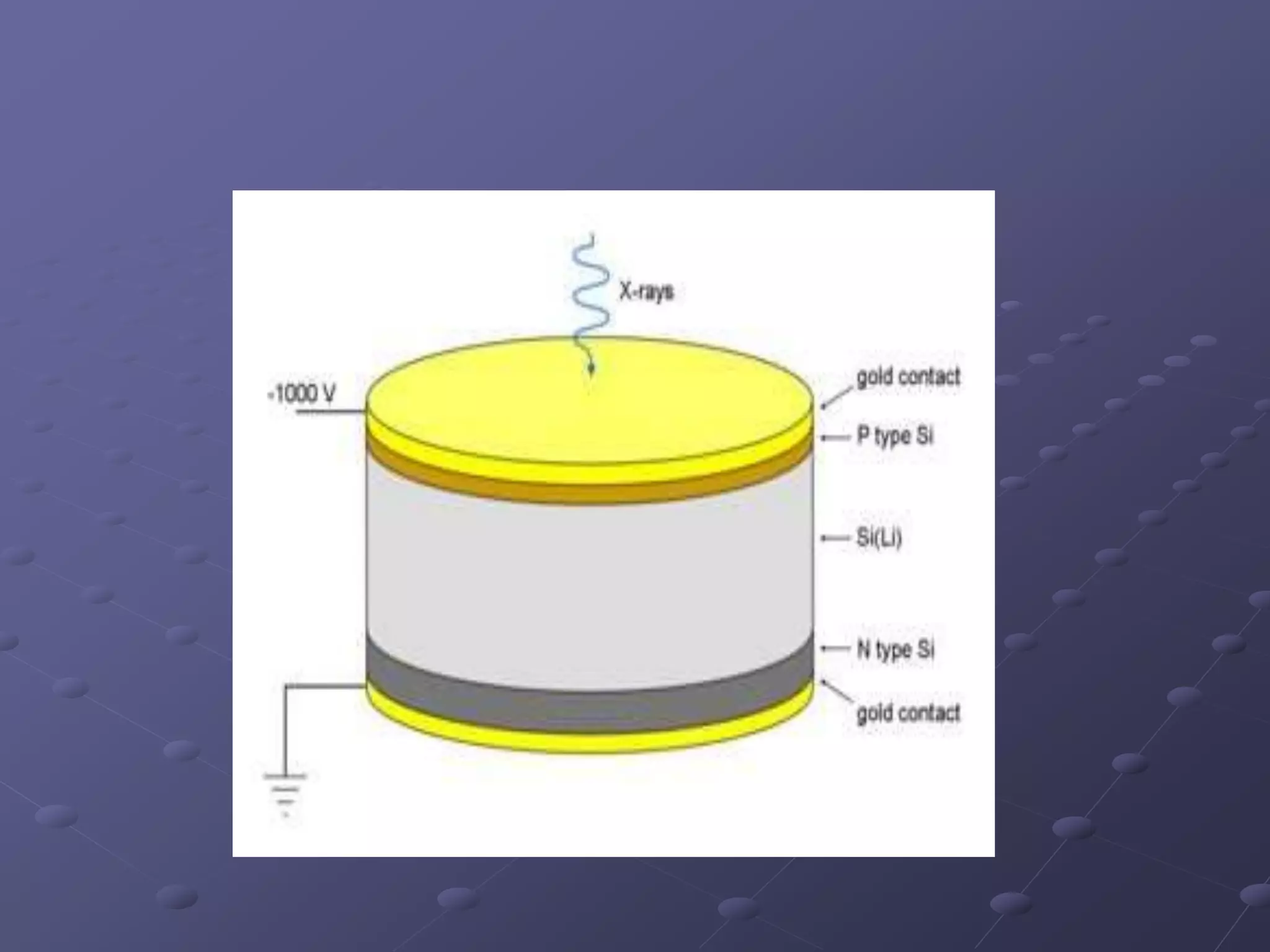
Solid State Semiconductors
It is a Lithium – drifted Silicon wafer. The
X ray strikes the detector and generates a
series of pulses that corresponds to X ray
energy. The pulse height is proportional to
X ray energy. The concentration of element
is determined by counting the pulses.
Signal Processors & Readout
A Microprocessor or Minicomputer can be
used for steering of the device. It can
calculate element concentration.
Forensic Applications
To determine the distance of shots fired at
close range.
In the examination of glass fragments.
To determine the alterations in the gold.
In the analysis of paintings, coins,
archeological specimens and other
valuable objects.
In the examination of hair, fiber, soil and
building materials.
In the examination of fingerprint.
In the examination of documents.
Advantages
Non destructive method
Simple spectra
Speed
Accuracy
Minimal sample preparation
Solids samples can be directly analyzed.
Disadvantages
High cost
Matrix interference can prevent detection
of some elements.
Standards for quantitative analysis do not
always match unknown matrix.
Elemental range is limited to Boron and
up.
References
Advances In Forensic Science,
Instrumental Analysis by Lee &
Gaensselen
The Use Of X-Ray Technique In Forensic
Investigation by Grahm D.
Handbook Of Instrumental Technique For
Analytical Chemistry by Settle, F.A.
Fundamentals Of Analytical Chemistry by
Skoog & Holler
Xrf

Xrf

  • 1.
  • 2.
    Contents Fluorescence Introduction to Method BasicPrinciple Instrumentation Forensic Applications Advantages Disadvantages References
  • 3.
    Fluorescence Fluorescence is aan optical phenomena in which the molecular absorption of a photons triggers the emission of another photon with a longer wavelength.
  • 4.
    X ray Fluorescenceis an atomic spectrometric method based on detection of emitted X ray radiation from excited atoms. This technique is a two step process: 1. Removal of inner shell electron of atom. 2. Transition of electron from outer shell to inner shell.
  • 6.
    Basic Principle Primary Xrays, emitted by an X ray tube, are directed at the sample to be analyzed. The chemical composition present in the sample are excited such as to emit their own characteristics X rays. These are analyzed in spectrometer.
  • 7.
  • 8.
    Instrumentation Two different typeof measurement system are used in XRF. 1. Wavelength Dispersive X Ray Fluorescence 2. Energy Dispersive X Ray Fluorescence
  • 9.
    WDXRF In WDXRF, theemitted X rays are dispersed based on their wavelength. Gas Ionization and Scintillation detectors are found in this system. High resolution is produced.
  • 10.
  • 11.
    EDXRF The energy dispersivesystem collects all X ray photons simultaneously on to the detector. Each photon generates an electrical pulse with an amplitude proportional to energy of X ray photon. Solid State Semiconductors detectors are found in this system.
  • 12.
    Source The most commonsource of X rays are X ray tube. It is highly evacuated tube. Cathode – Tungsten filament Anode – Chromium, Silver, Iron etc. Filament is heated and electrons are accelerate to target. Production of new X rays occurs.
  • 13.
    Samples State – Solidor Liquid Amount – Microgram to Gram Preparation – 1. For simple analysis, no preparation is necessary. 2. For minimum pretreatment, grind, homogenize and press into the pellets. 3. For maximum pretreatment, dry, fuse and cast into glass disks.
  • 14.
    Detectors Three basic detectorsare used in XRF instrumentation : 1. Gas Ionization 2. Scintillation 3. Solid State Semiconductors
  • 15.
    Gas Ionization Gas Ionizationdetector consist of two electrodes, a wire anode in the center of metal cylinder cathode and an argon and methane mixture. In this type of detector the X ray photon enters through in window in the cylinder and ionize the gas.
  • 16.
    The resulting ionsand electrons are collected and the current is proportional to intensity of the X ray photon.
  • 17.
    Scintillation It consist ofThallium – doped Sodium Iodide crystal on the front of a photo- multiplier tube. The X ray from the sample strike Sodium Iodide crystal and generate photons. These photon generate photo- electrons that are amplified and detected. The number of photons produced is proportional to energy of X rays.
  • 18.
    Solid State Semiconductors Itis a Lithium – drifted Silicon wafer. The X ray strikes the detector and generates a series of pulses that corresponds to X ray energy. The pulse height is proportional to X ray energy. The concentration of element is determined by counting the pulses.
  • 20.
    Signal Processors &Readout A Microprocessor or Minicomputer can be used for steering of the device. It can calculate element concentration.
  • 21.
    Forensic Applications To determinethe distance of shots fired at close range. In the examination of glass fragments. To determine the alterations in the gold. In the analysis of paintings, coins, archeological specimens and other valuable objects.
  • 22.
    In the examinationof hair, fiber, soil and building materials. In the examination of fingerprint. In the examination of documents.
  • 23.
    Advantages Non destructive method Simplespectra Speed Accuracy Minimal sample preparation Solids samples can be directly analyzed.
  • 24.
    Disadvantages High cost Matrix interferencecan prevent detection of some elements. Standards for quantitative analysis do not always match unknown matrix. Elemental range is limited to Boron and up.
  • 25.
    References Advances In ForensicScience, Instrumental Analysis by Lee & Gaensselen The Use Of X-Ray Technique In Forensic Investigation by Grahm D. Handbook Of Instrumental Technique For Analytical Chemistry by Settle, F.A. Fundamentals Of Analytical Chemistry by Skoog & Holler