 NAME > > > > > > > > > NOMAN KHAN
 CLASS NO > > > > > > > CS-14
 SEMESTER > > > > > > > > > > > 4TH
 DEPT > > > > > > > > >COMPUTER SCIENCE
 COLLEGE > > > > > > > > > GSSCP
 PRESENTATION TOPIC: ASK, FSK, PSK.
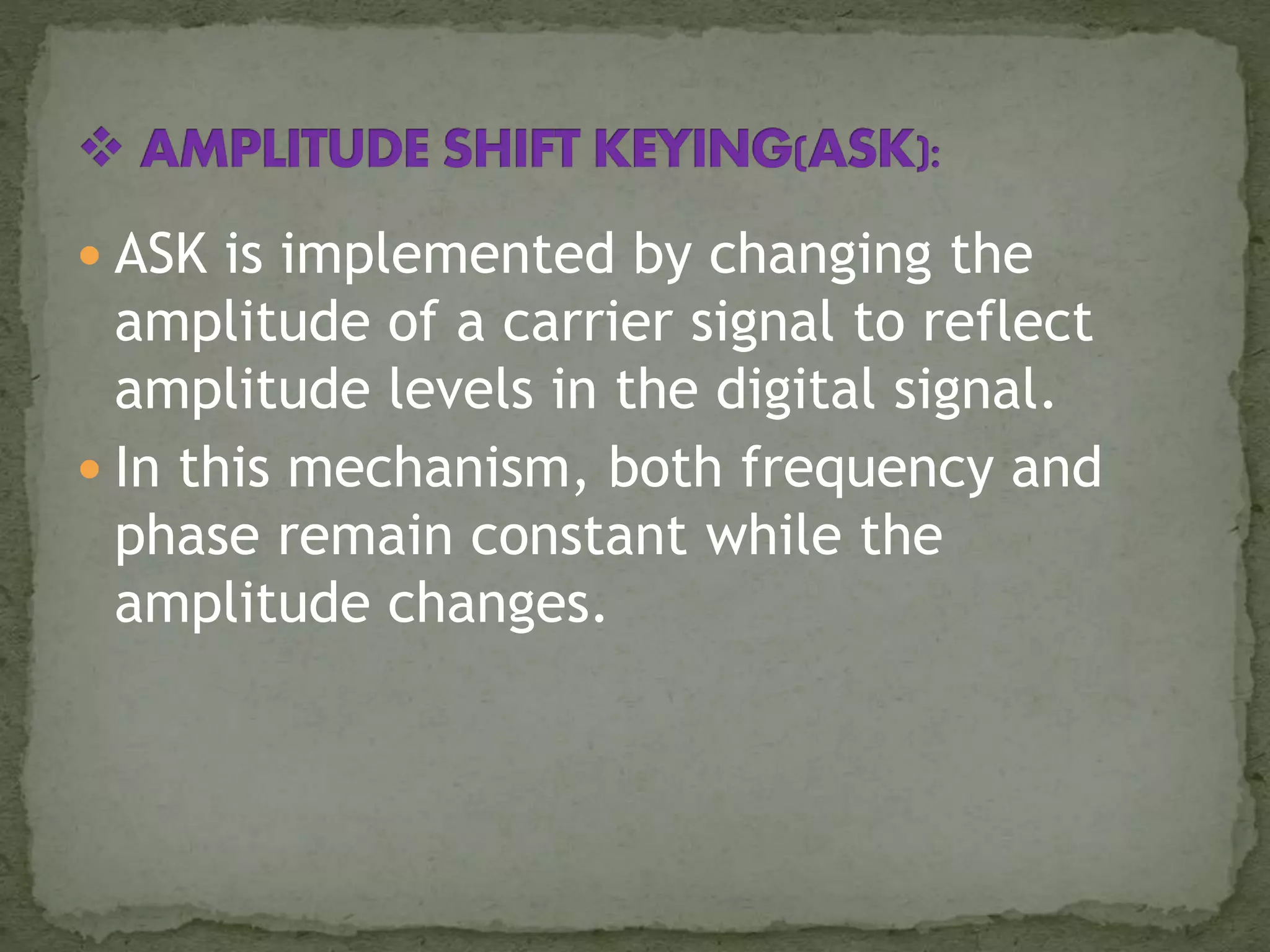
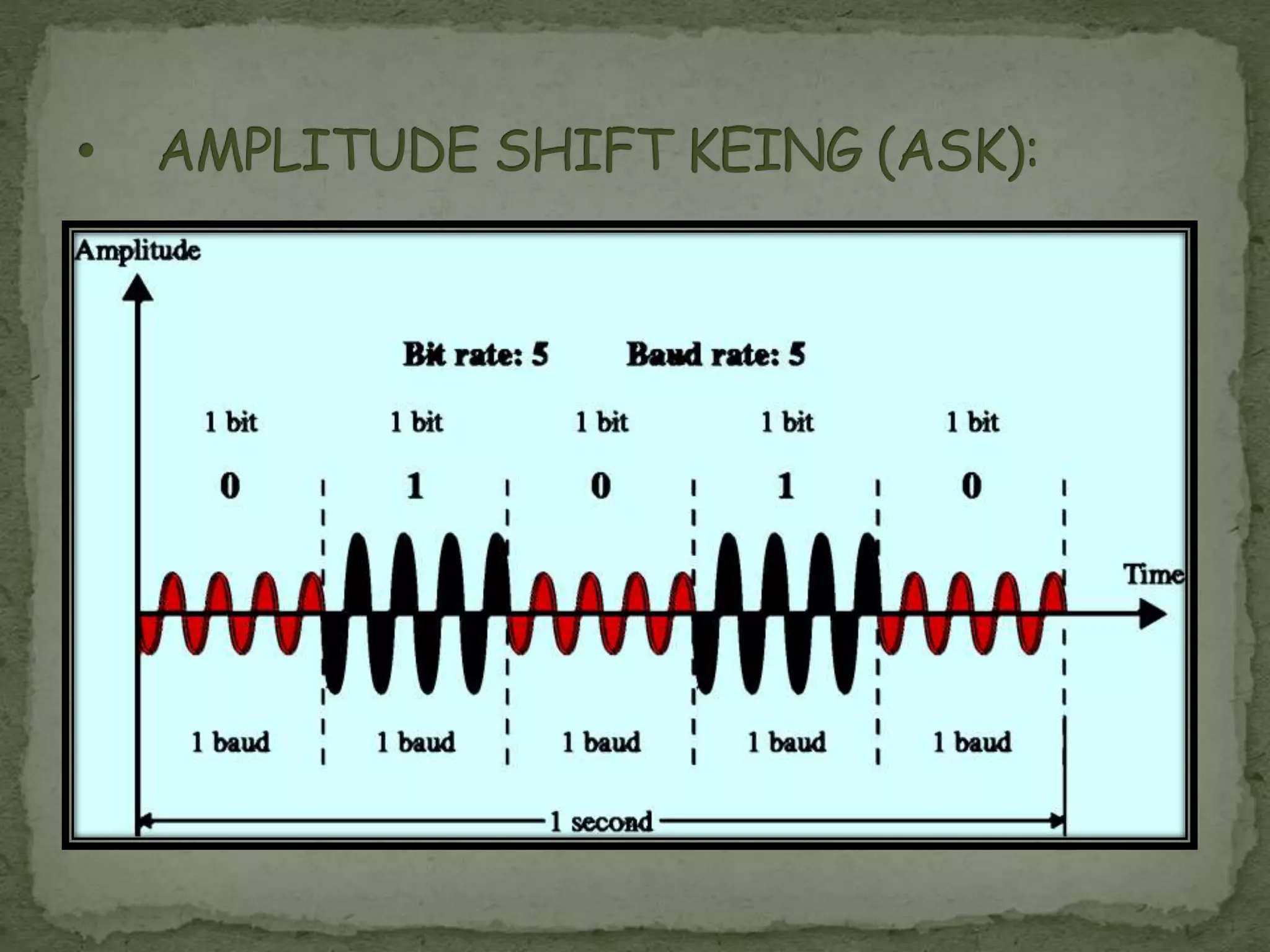
 ASK is implemented by changing the
amplitude of a carrier signal to reflect
amplitude levels in the digital signal.
 In this mechanism, both frequency and
phase remain constant while the
amplitude changes.
 ASK is highly susceptible to noise interference
 NOISE: Unintentional voltages introduced onto a line by
various sources such as Heat or Electromagnetic
Radiation from other sources
 These unintentional voltages combine with signal to
change the amplitude
 1 can be changed to 0 and 0 to 1
 Noise usually affects the amplitude, therefore ASK is
the modulating method, that is most affected by Noise
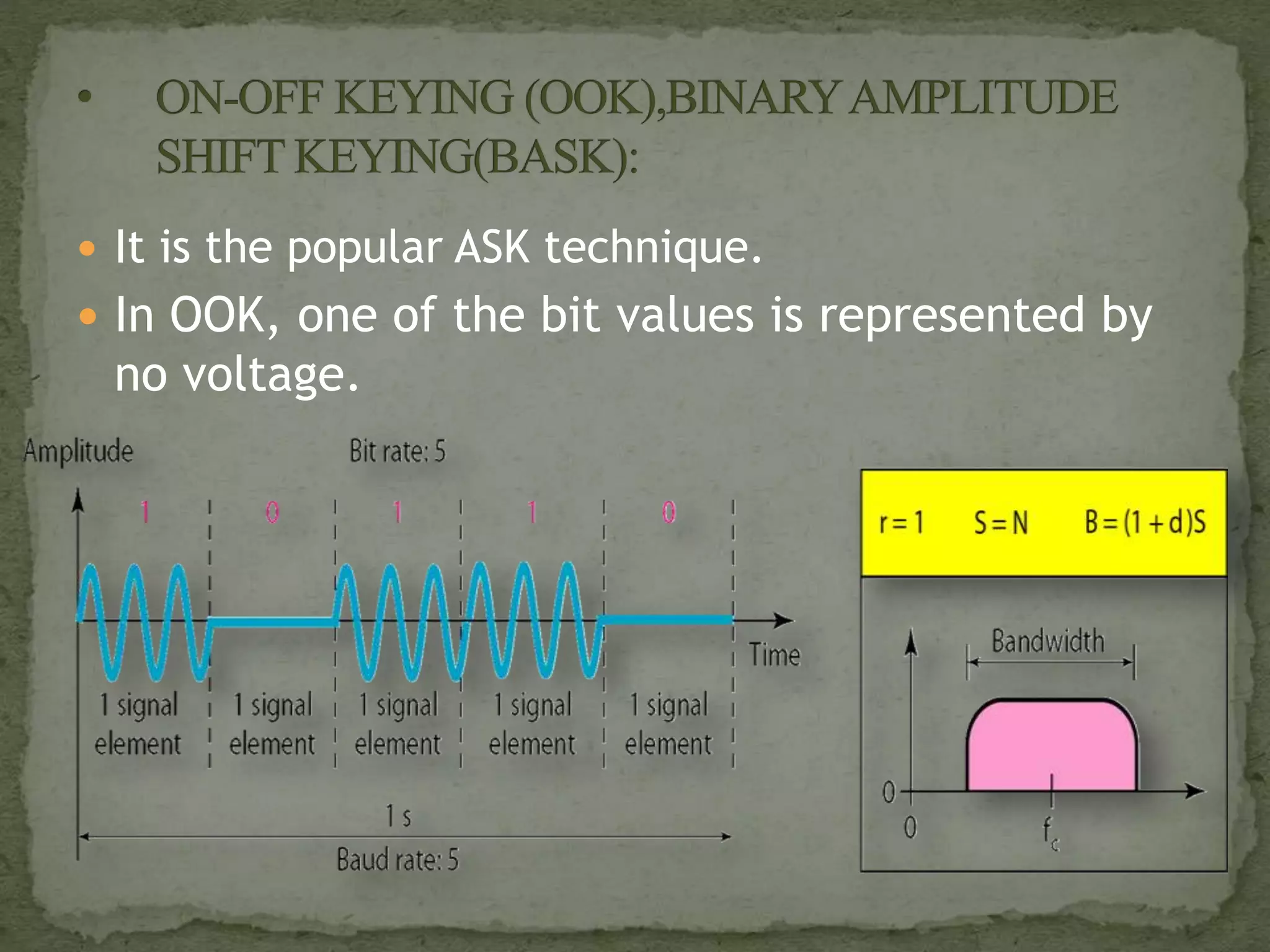
 It is the popular ASK technique.
 In OOK, one of the bit values is represented by
no voltage.
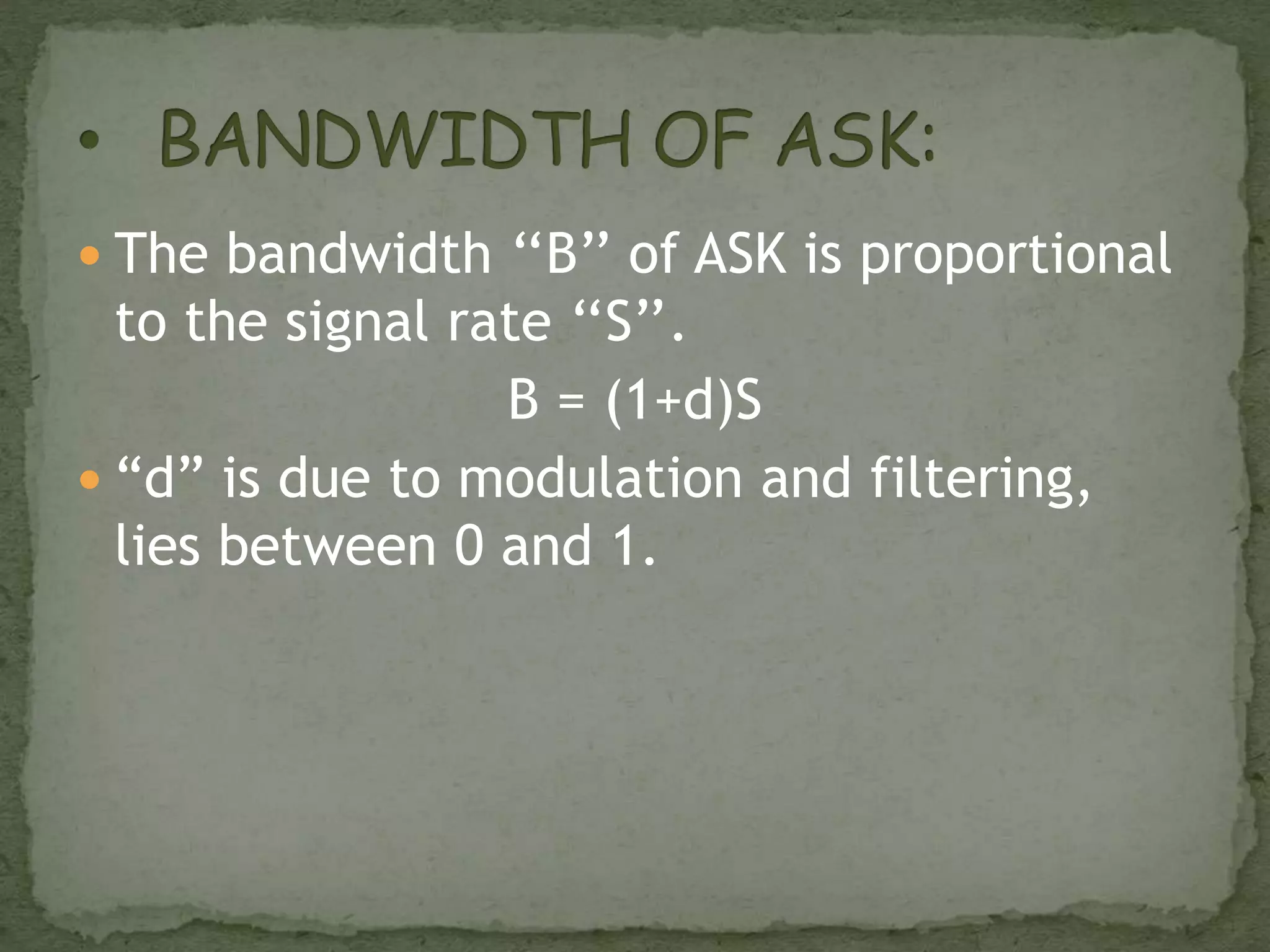
 The bandwidth ‘‘B’’ of ASK is proportional
to the signal rate ‘‘S’’.
B = (1+d)S
 “d” is due to modulation and filtering,
lies between 0 and 1.
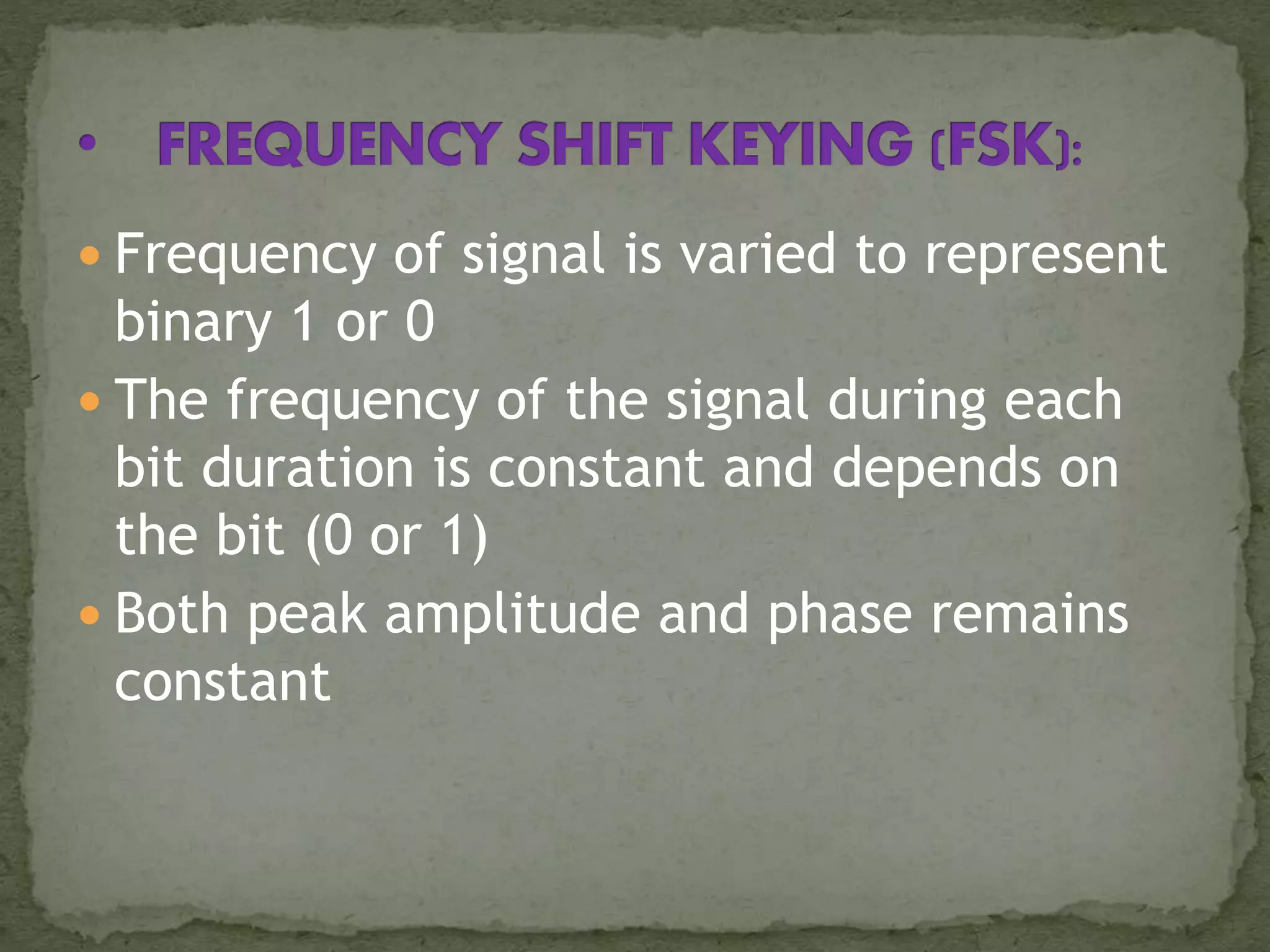
 Frequency of signal is varied to represent
binary 1 or 0
 The frequency of the signal during each
bit duration is constant and depends on
the bit (0 or 1)
 Both peak amplitude and phase remains
constant
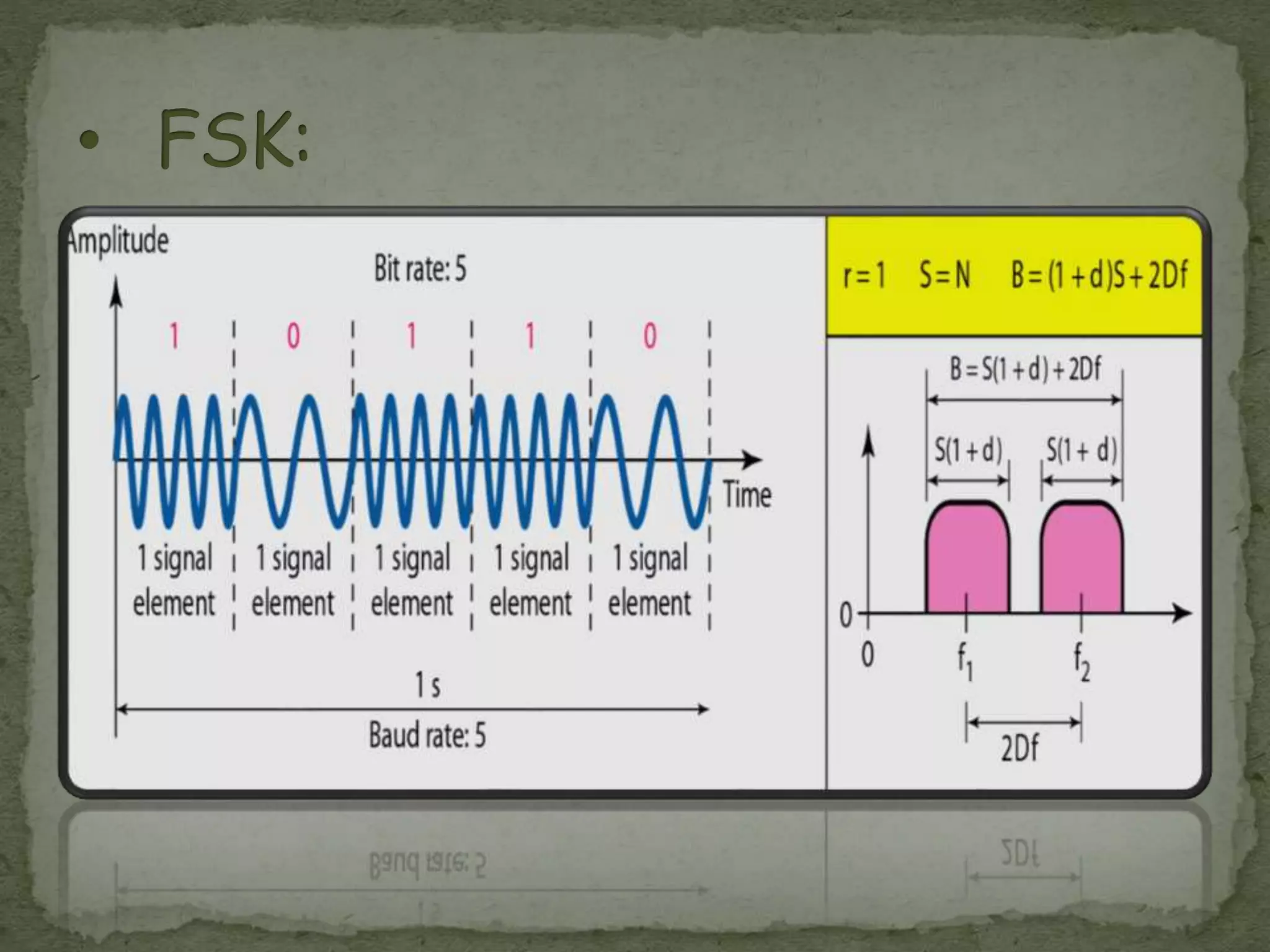
If the difference between the
two frequencies (f1 and f2) is 2f,
then the required BW B will be:
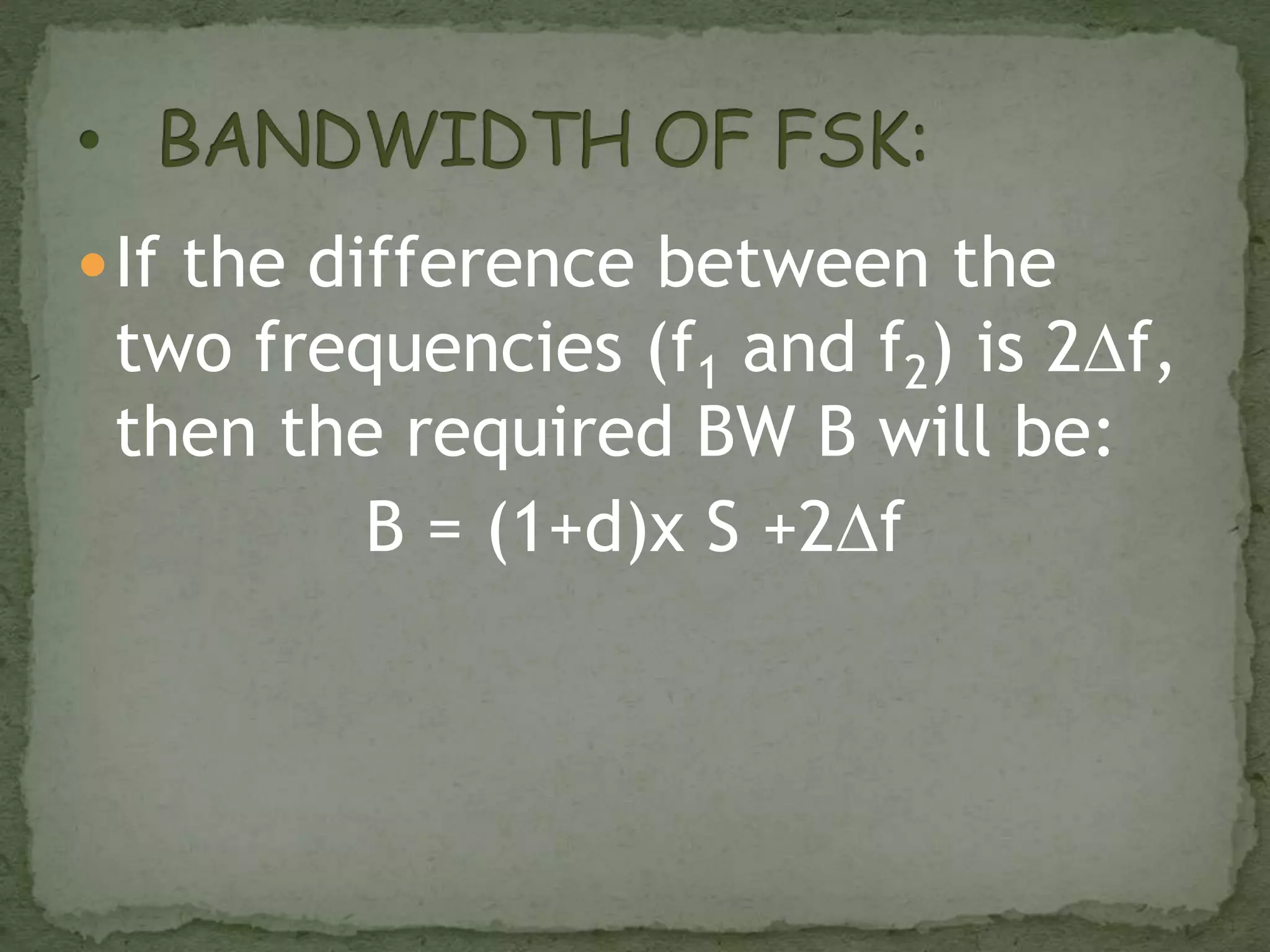
B = (1+d)x S +2f
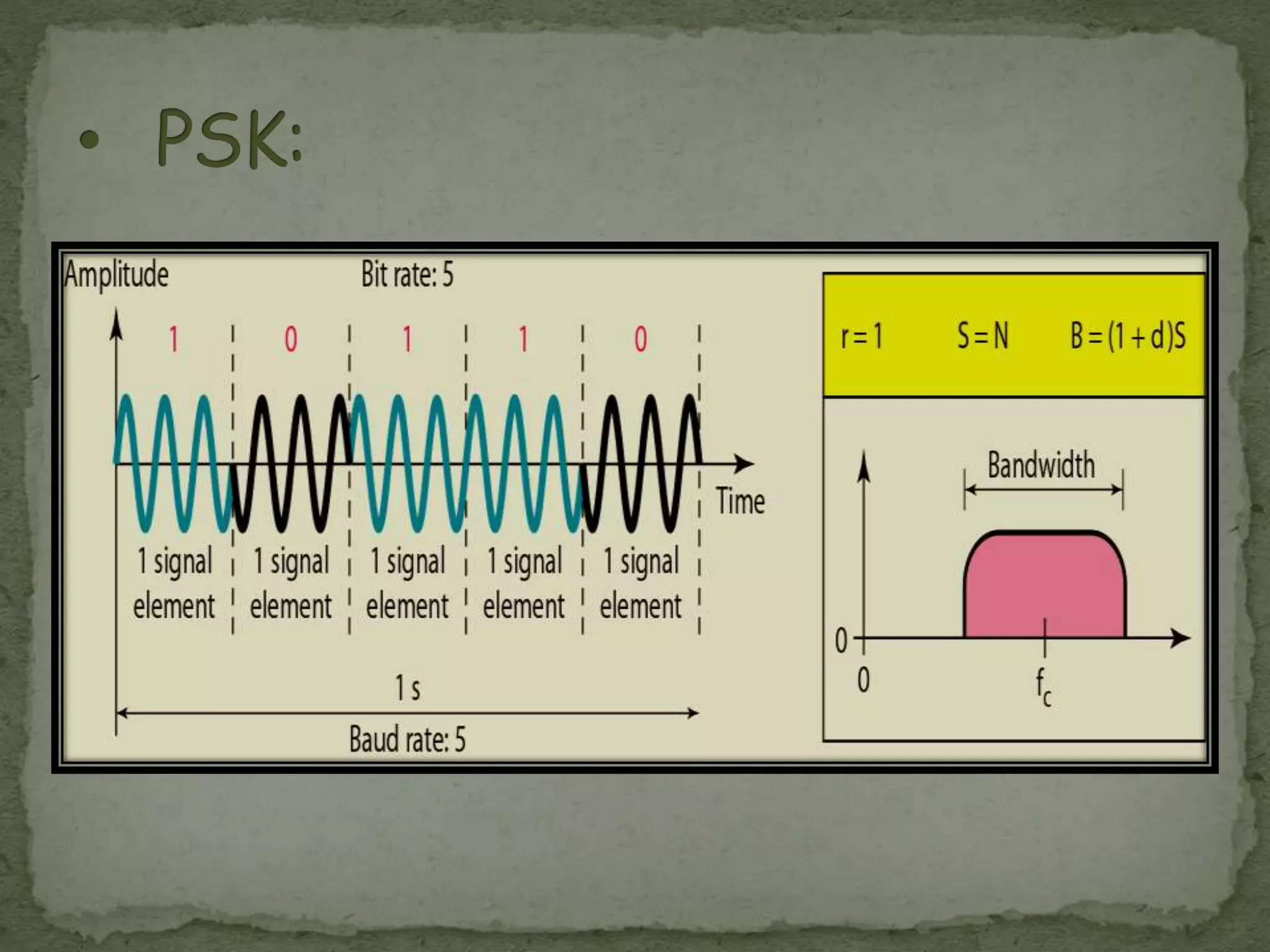
 In phase shift keying, the phase of the carrier is
varied to represent two or more different signal
elements
 Both peak amplitude and frequency remain
constant as the phase changes
 Today, PSK is more common than ASK or FSK
 However, we will se the QAM, which combines
ASK and PSK
 The bandwidth requirement, B is:
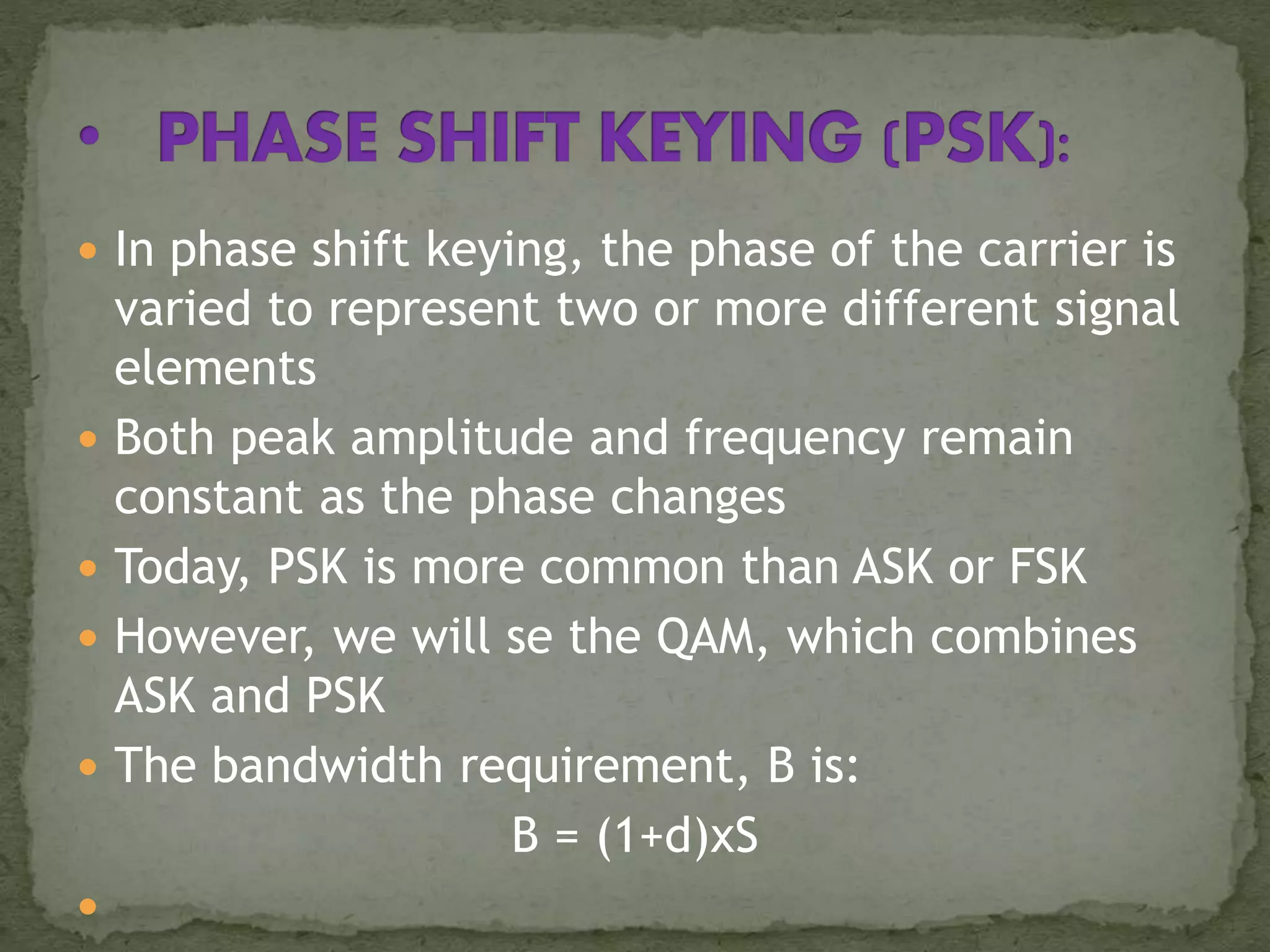
B = (1+d)xS

ASK, FSK, PSK Modulation Techniques in Detail

ASK, FSK, PSK Modulation Techniques in Detail

  • 1.
     NAME >> > > > > > > > NOMAN KHAN  CLASS NO > > > > > > > CS-14  SEMESTER > > > > > > > > > > > 4TH  DEPT > > > > > > > > >COMPUTER SCIENCE  COLLEGE > > > > > > > > > GSSCP  PRESENTATION TOPIC: ASK, FSK, PSK.
  • 2.
     ASK isimplemented by changing the amplitude of a carrier signal to reflect amplitude levels in the digital signal.  In this mechanism, both frequency and phase remain constant while the amplitude changes.
  • 4.
     ASK ishighly susceptible to noise interference  NOISE: Unintentional voltages introduced onto a line by various sources such as Heat or Electromagnetic Radiation from other sources  These unintentional voltages combine with signal to change the amplitude  1 can be changed to 0 and 0 to 1  Noise usually affects the amplitude, therefore ASK is the modulating method, that is most affected by Noise
  • 5.
     It isthe popular ASK technique.  In OOK, one of the bit values is represented by no voltage.
  • 6.
     The bandwidth‘‘B’’ of ASK is proportional to the signal rate ‘‘S’’. B = (1+d)S  “d” is due to modulation and filtering, lies between 0 and 1.
  • 7.
     Frequency ofsignal is varied to represent binary 1 or 0  The frequency of the signal during each bit duration is constant and depends on the bit (0 or 1)  Both peak amplitude and phase remains constant
  • 9.
    If the differencebetween the two frequencies (f1 and f2) is 2f, then the required BW B will be: B = (1+d)x S +2f
  • 10.
     In phaseshift keying, the phase of the carrier is varied to represent two or more different signal elements  Both peak amplitude and frequency remain constant as the phase changes  Today, PSK is more common than ASK or FSK  However, we will se the QAM, which combines ASK and PSK  The bandwidth requirement, B is: B = (1+d)xS 