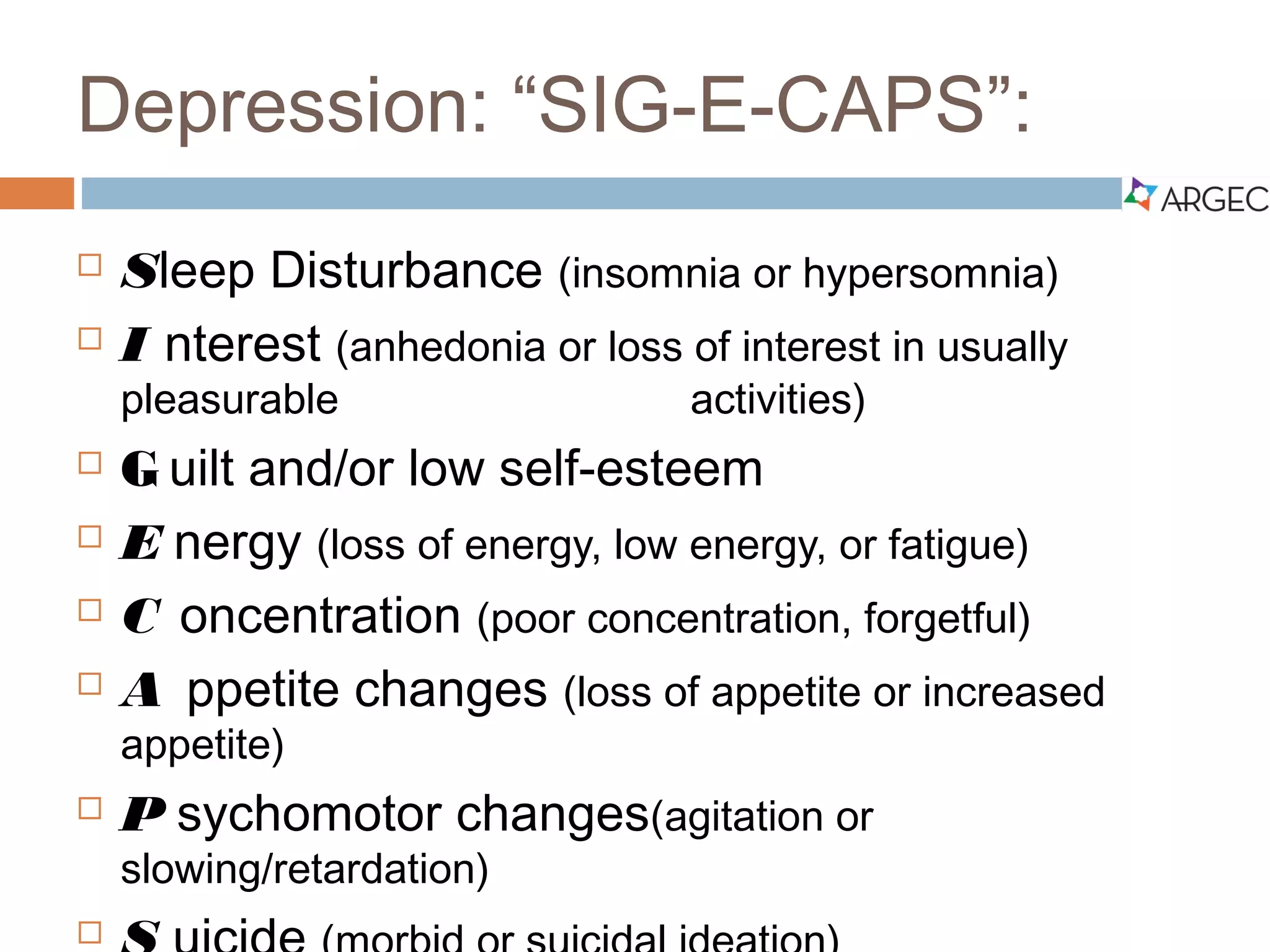
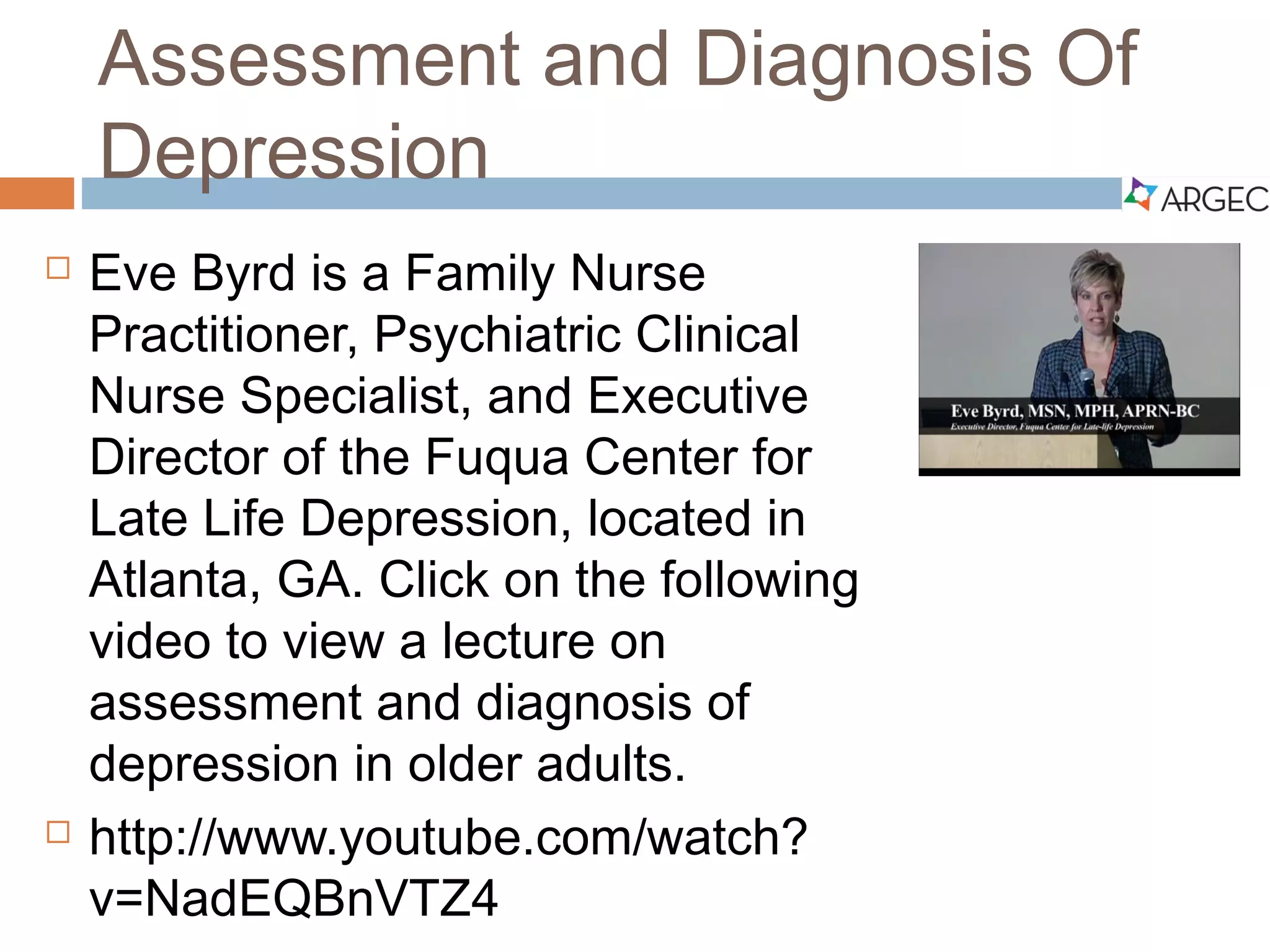
This document provides an overview of geriatric depression, including prevalence rates, risk factors, cultural considerations, symptoms, differential diagnosis, and assessment tools. Some key points:
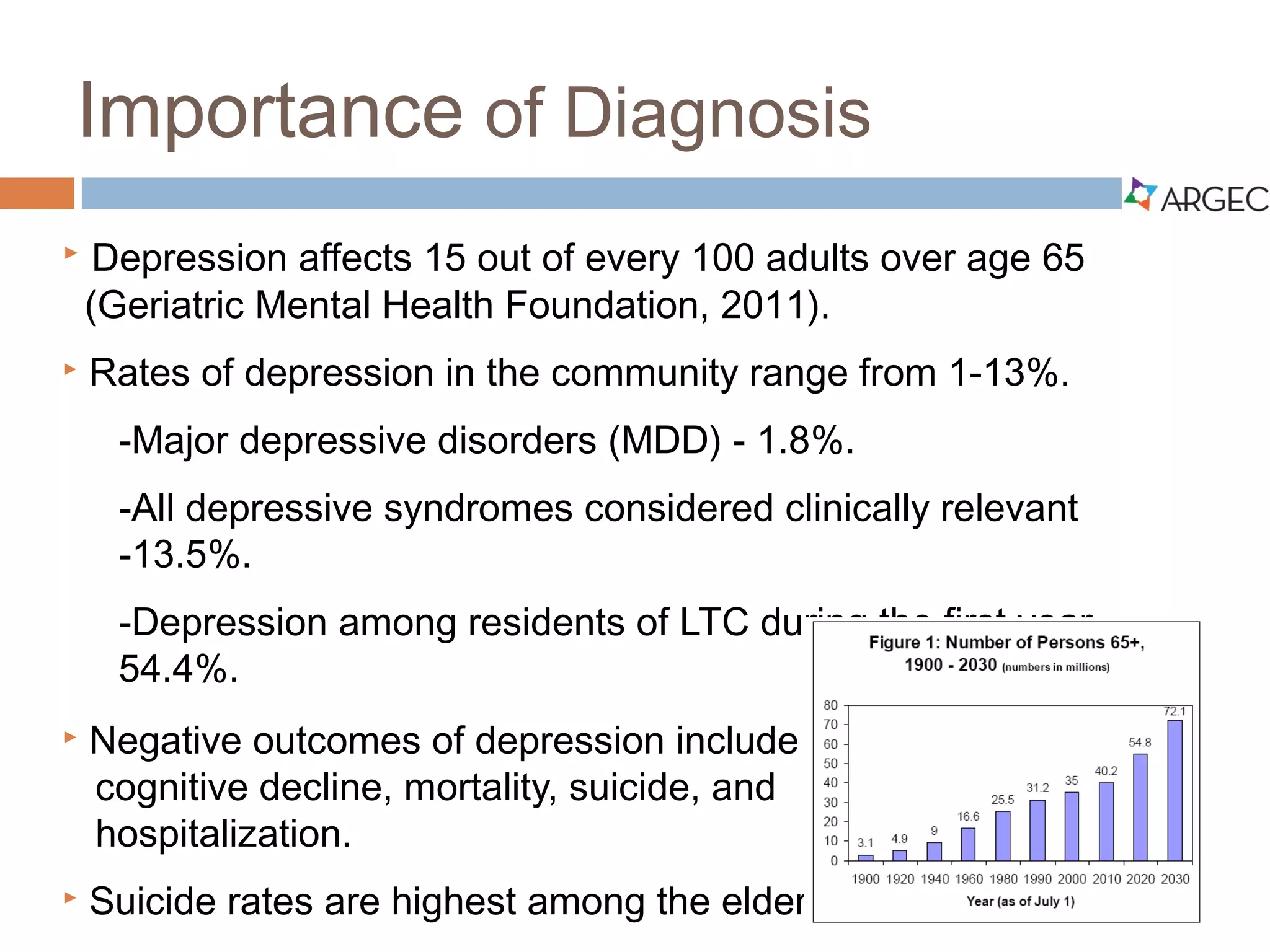
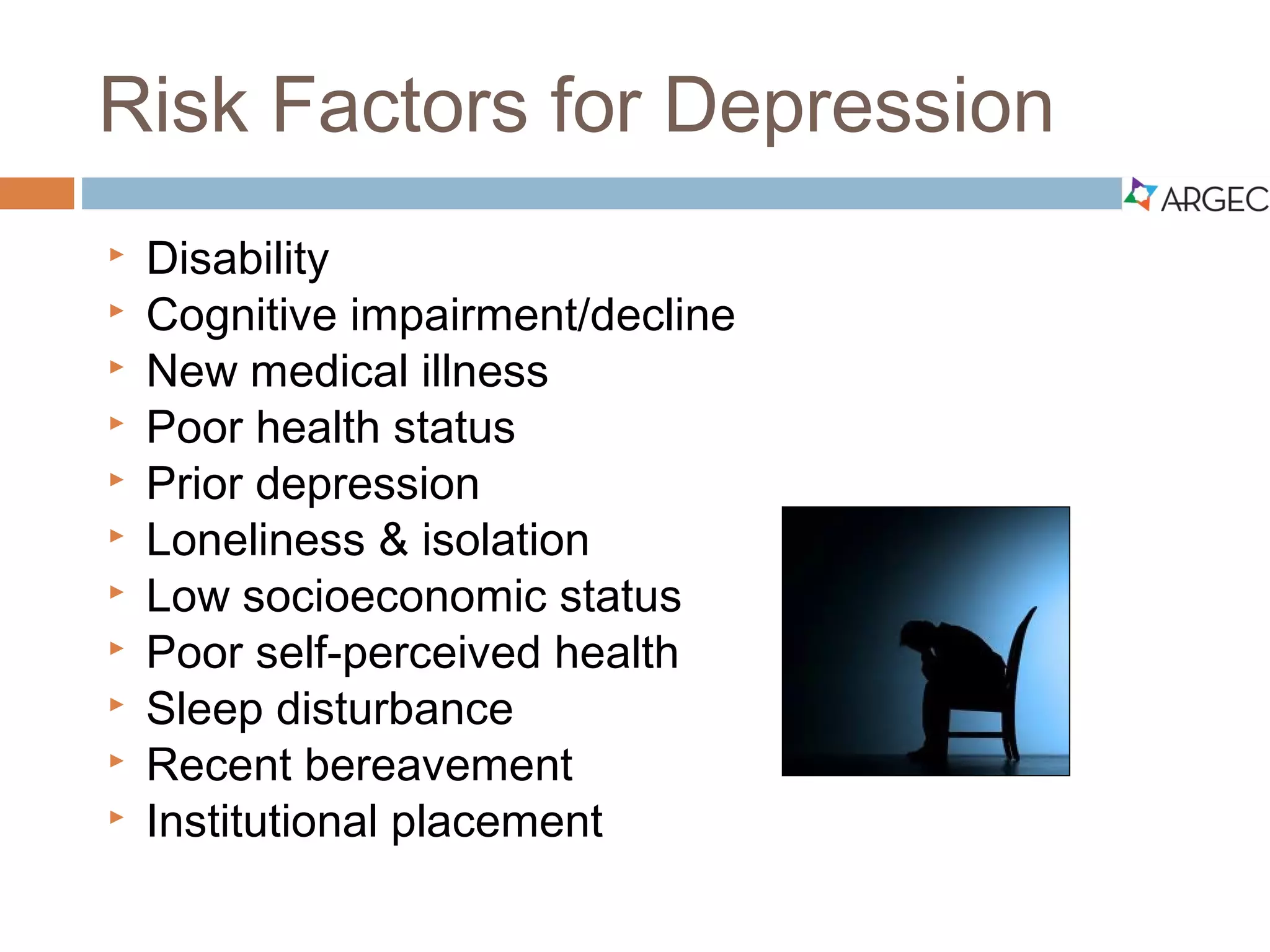
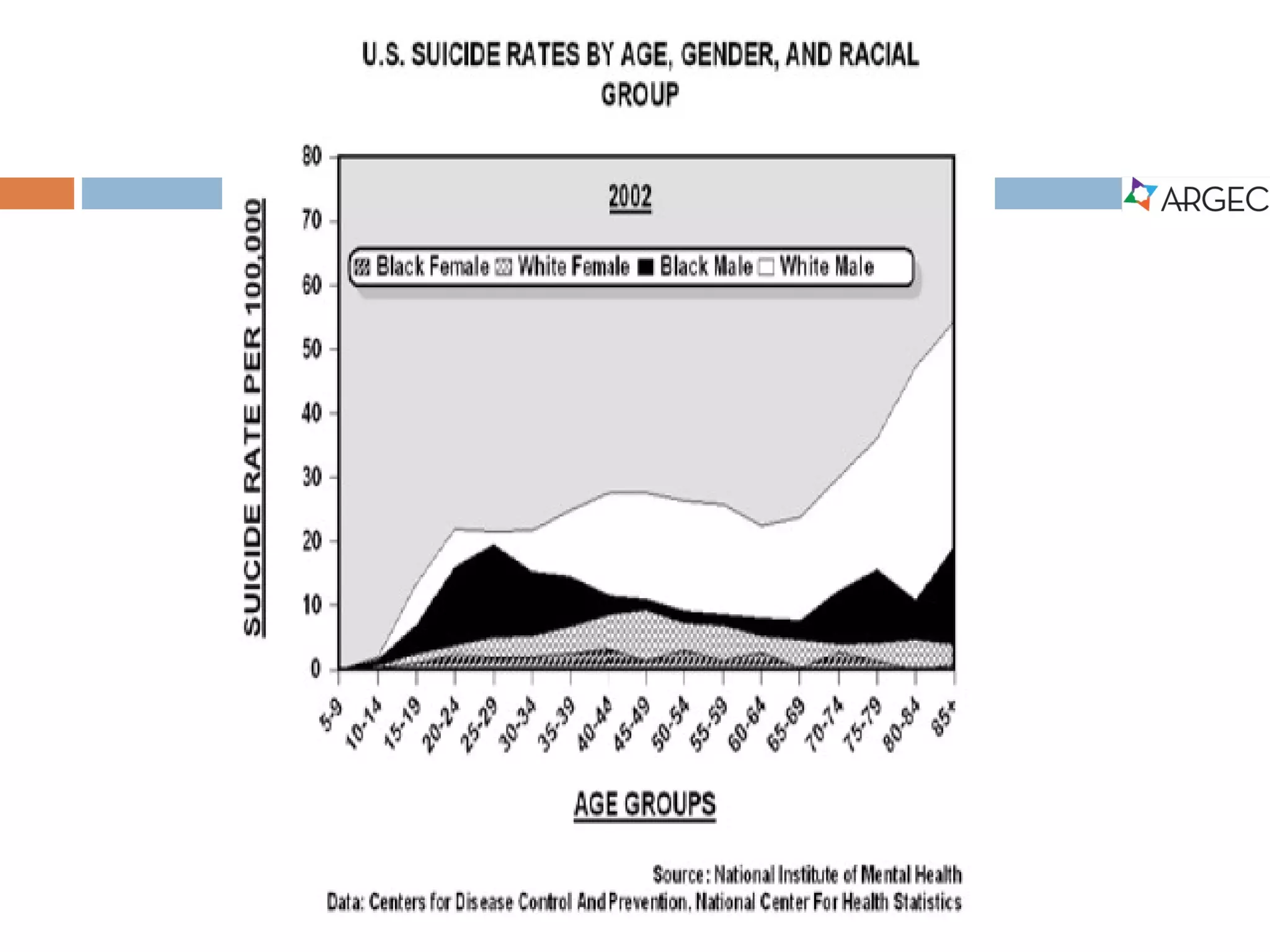
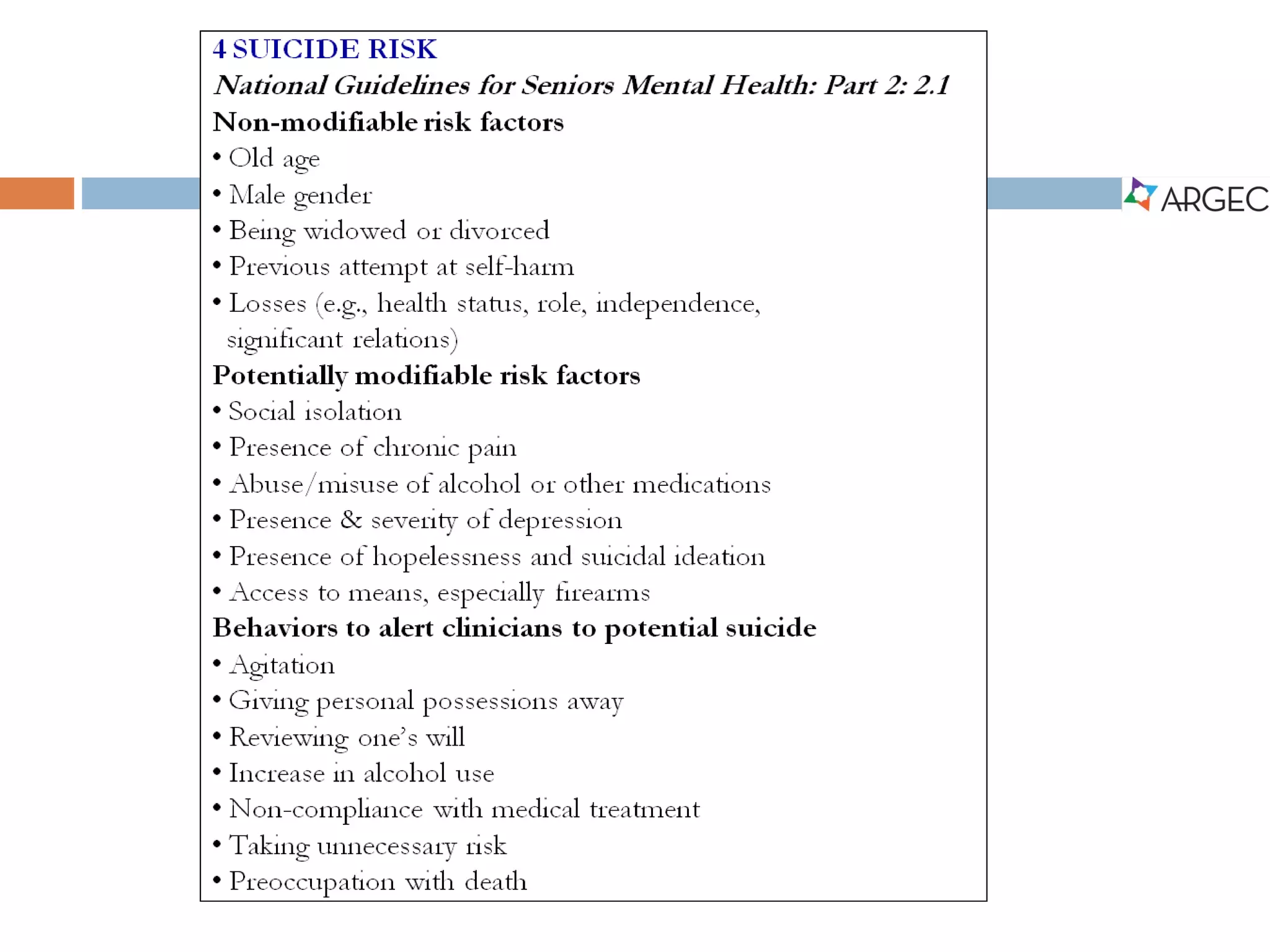
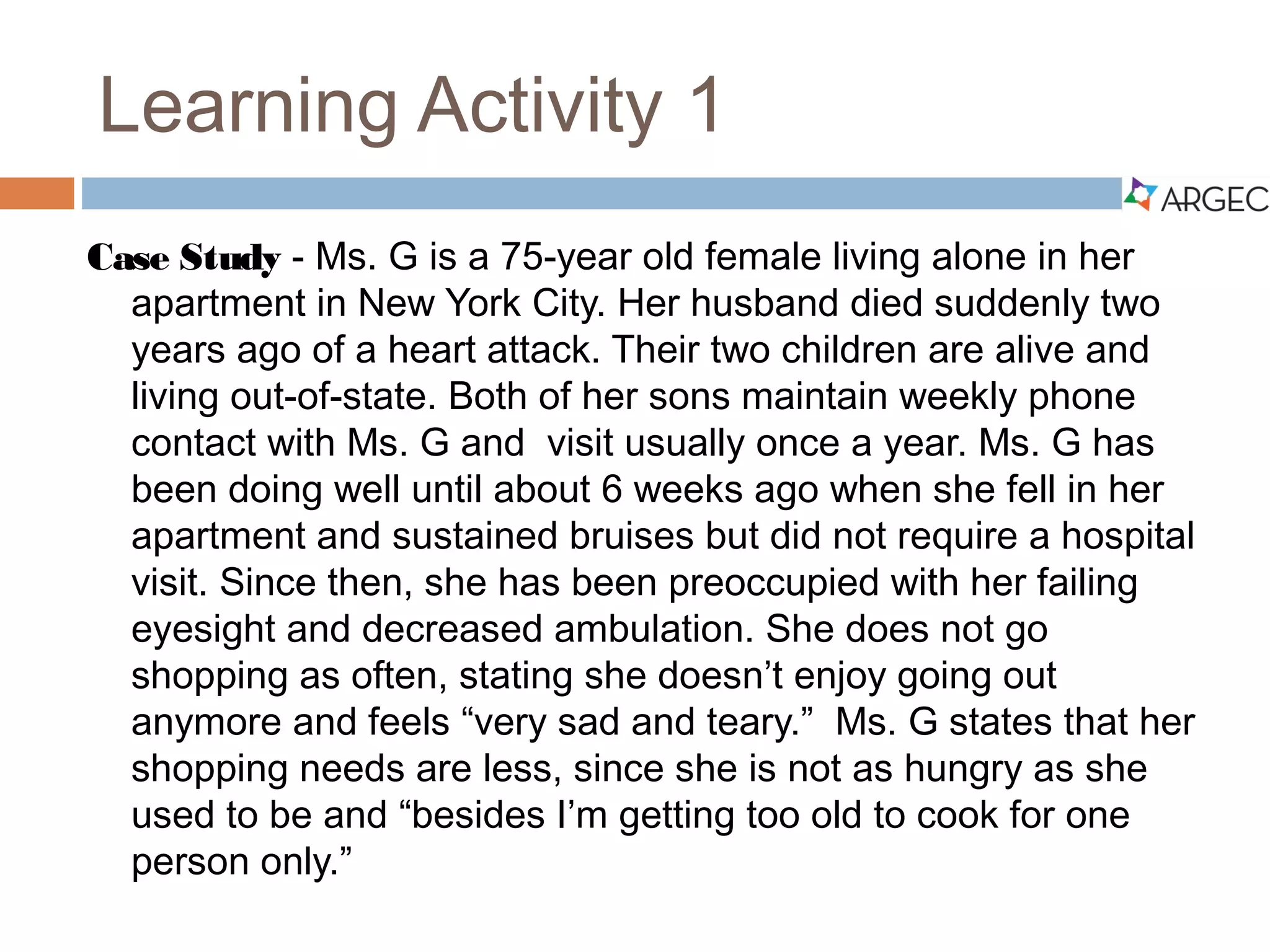
- Depression affects 15-13% of older adults, with higher rates among nursing home residents (54.4%). Risk factors include disability, cognitive impairment, poor health, bereavement and loneliness.
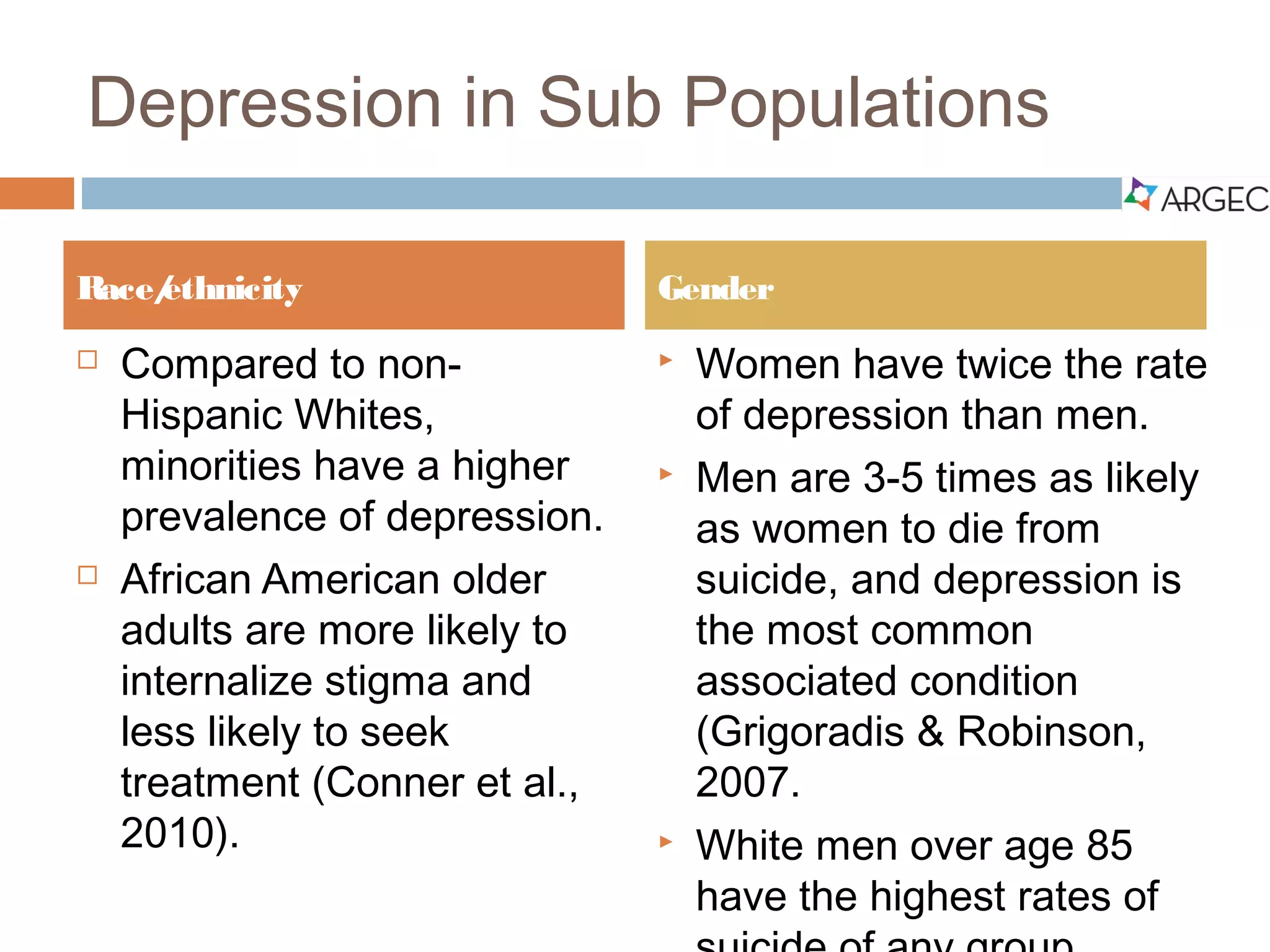
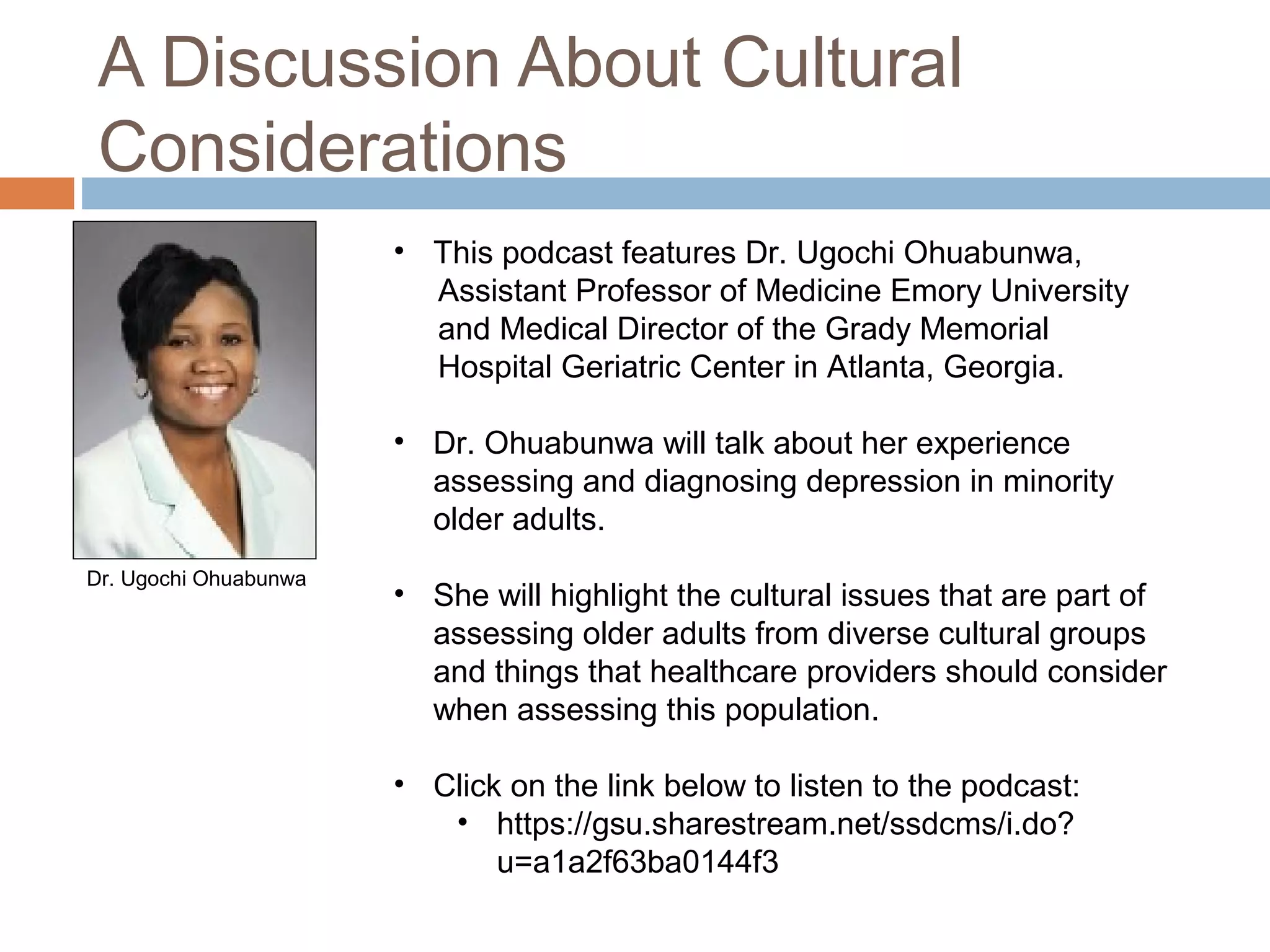
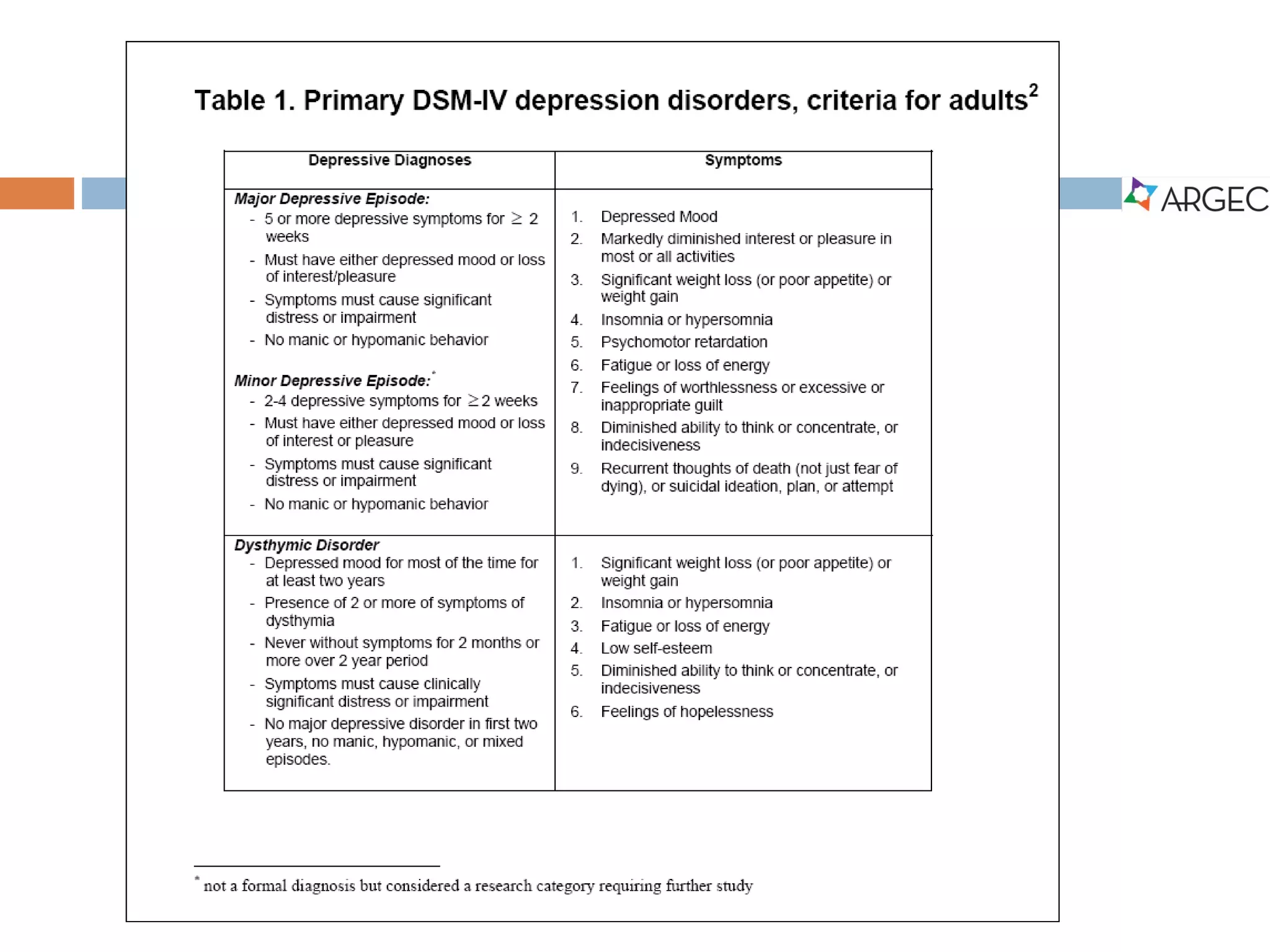
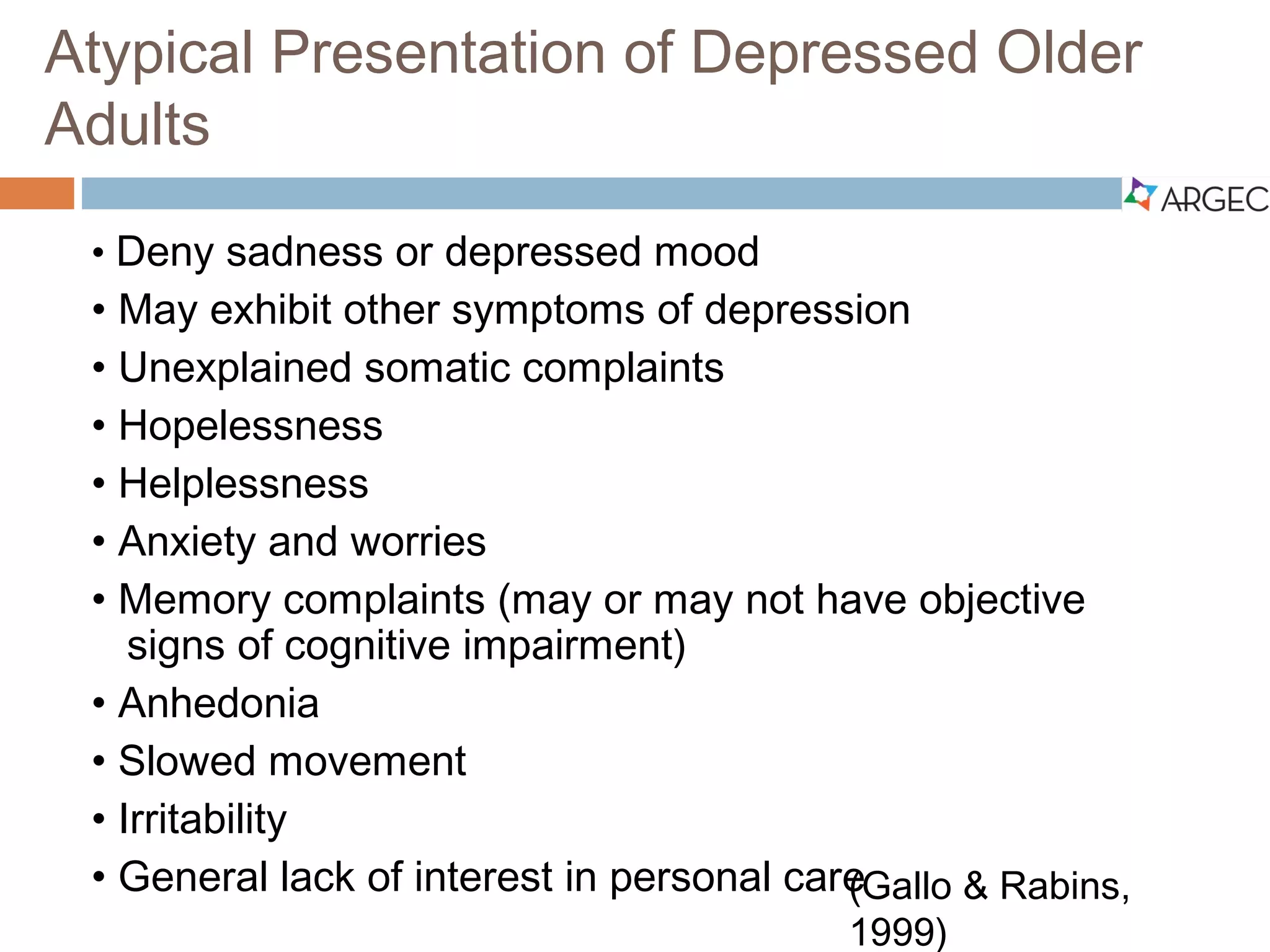
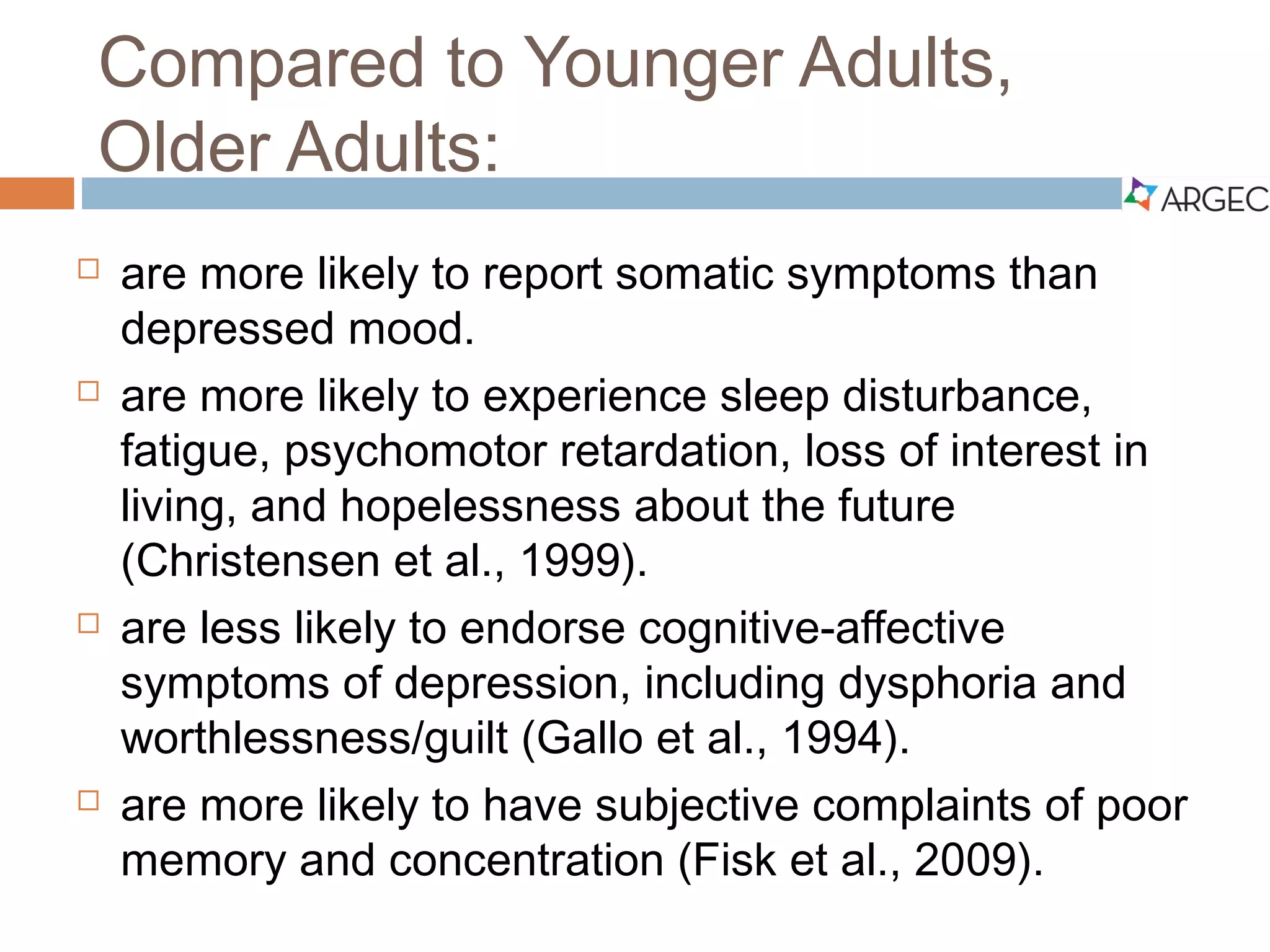
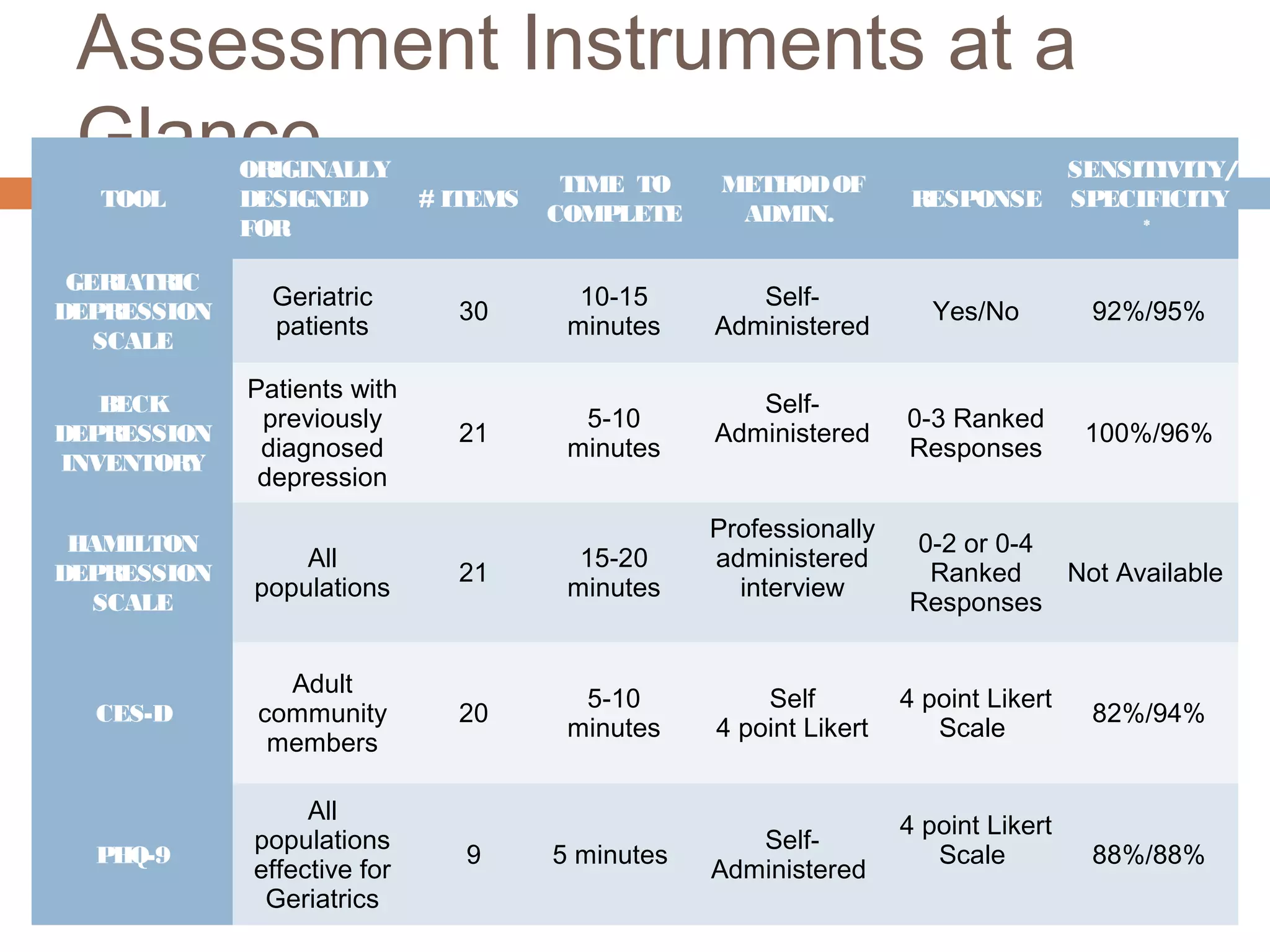
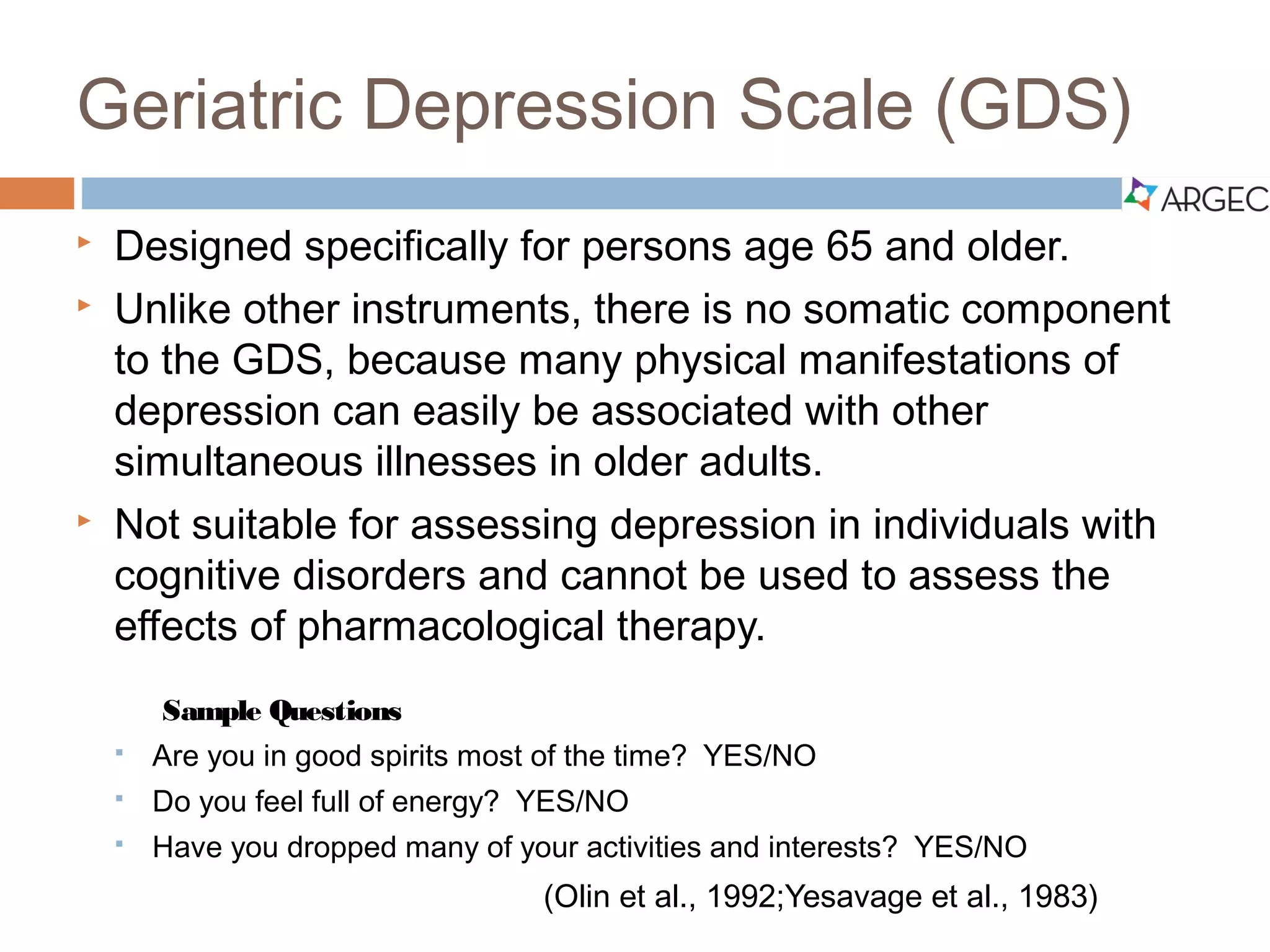
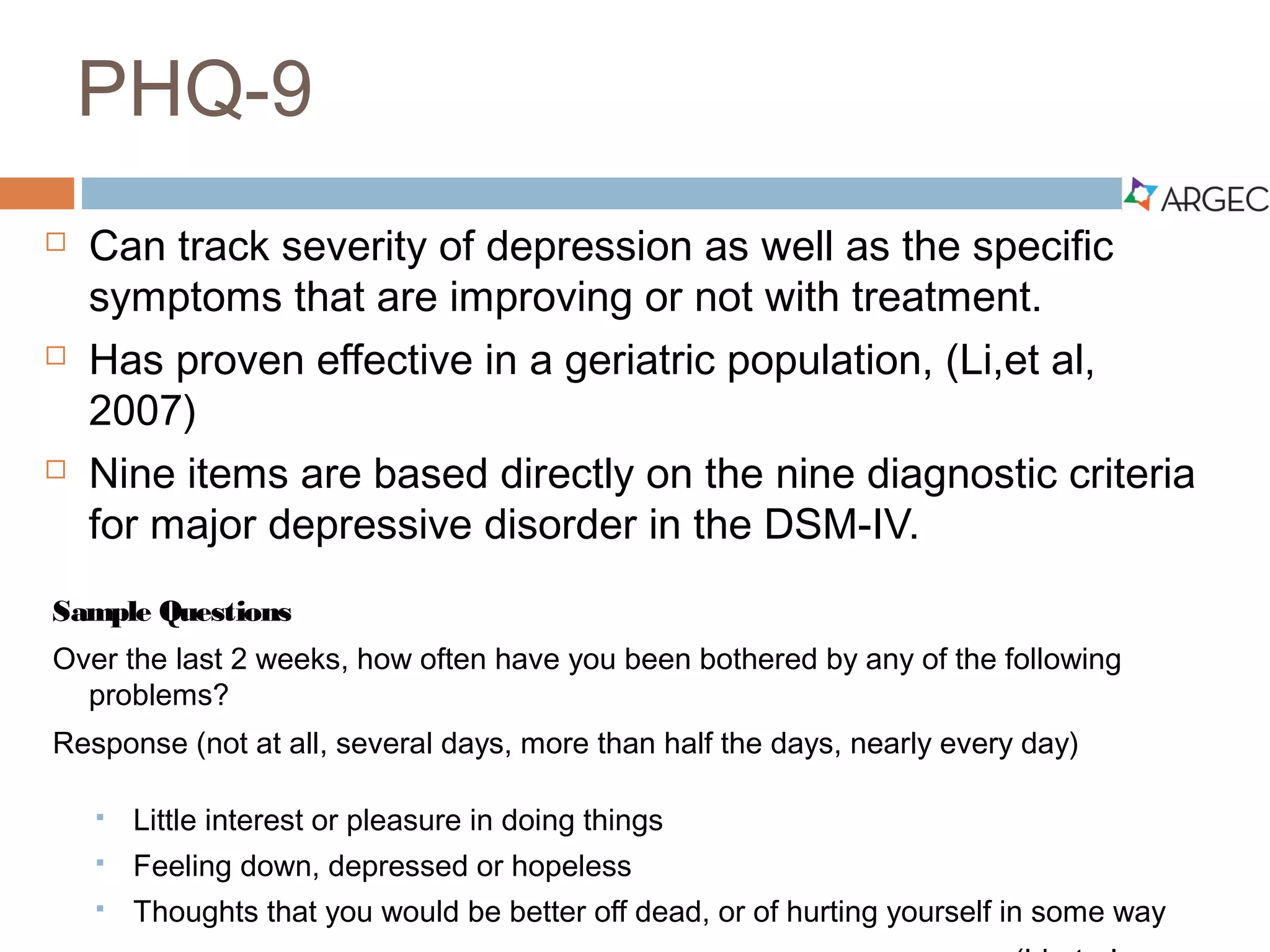
- Cultural factors like race, ethnicity and gender impact presentation and treatment. Assessment considers atypical symptoms like somatic complaints and involves screening tools like the PHQ-9 or GDS.
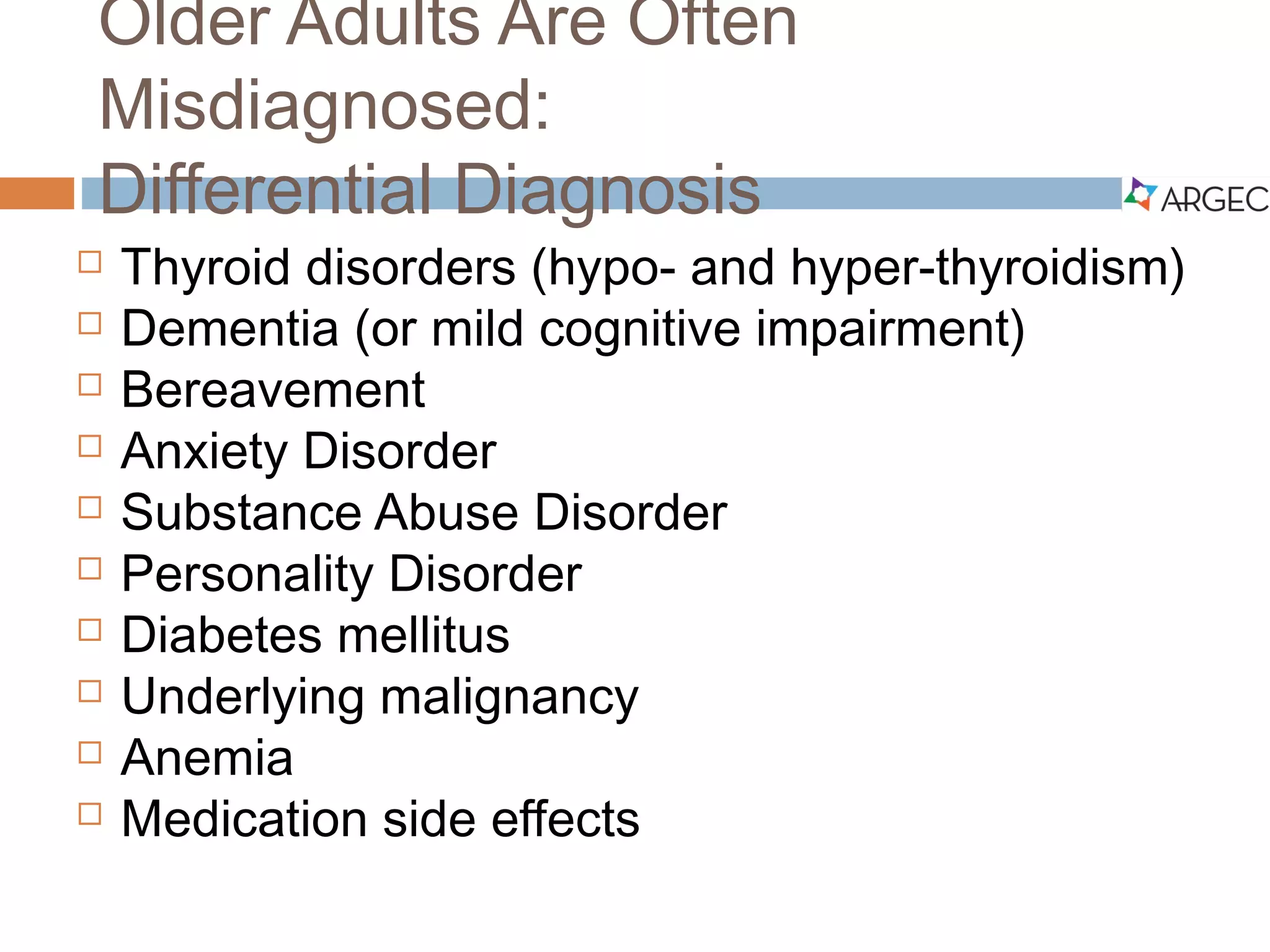
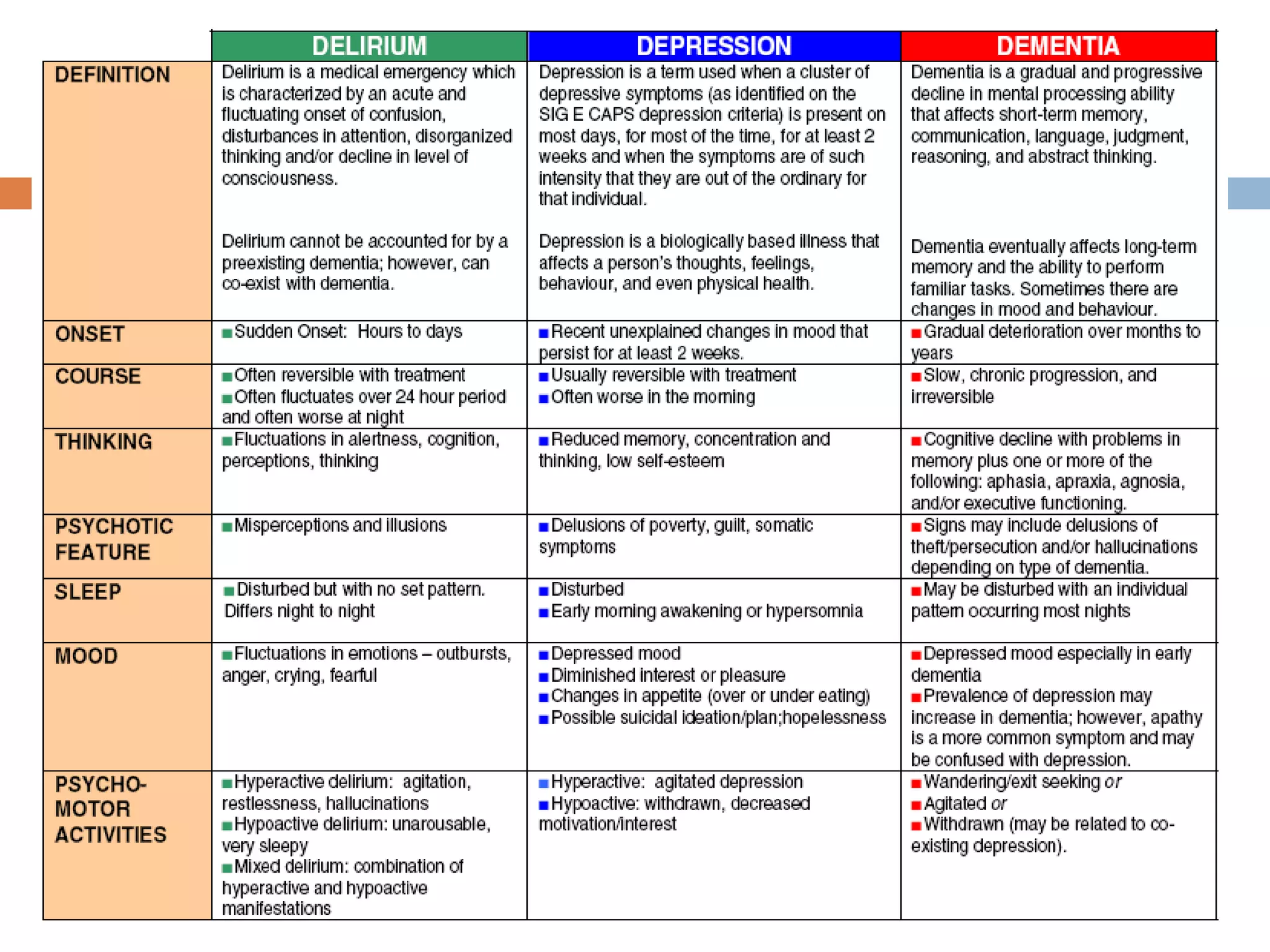
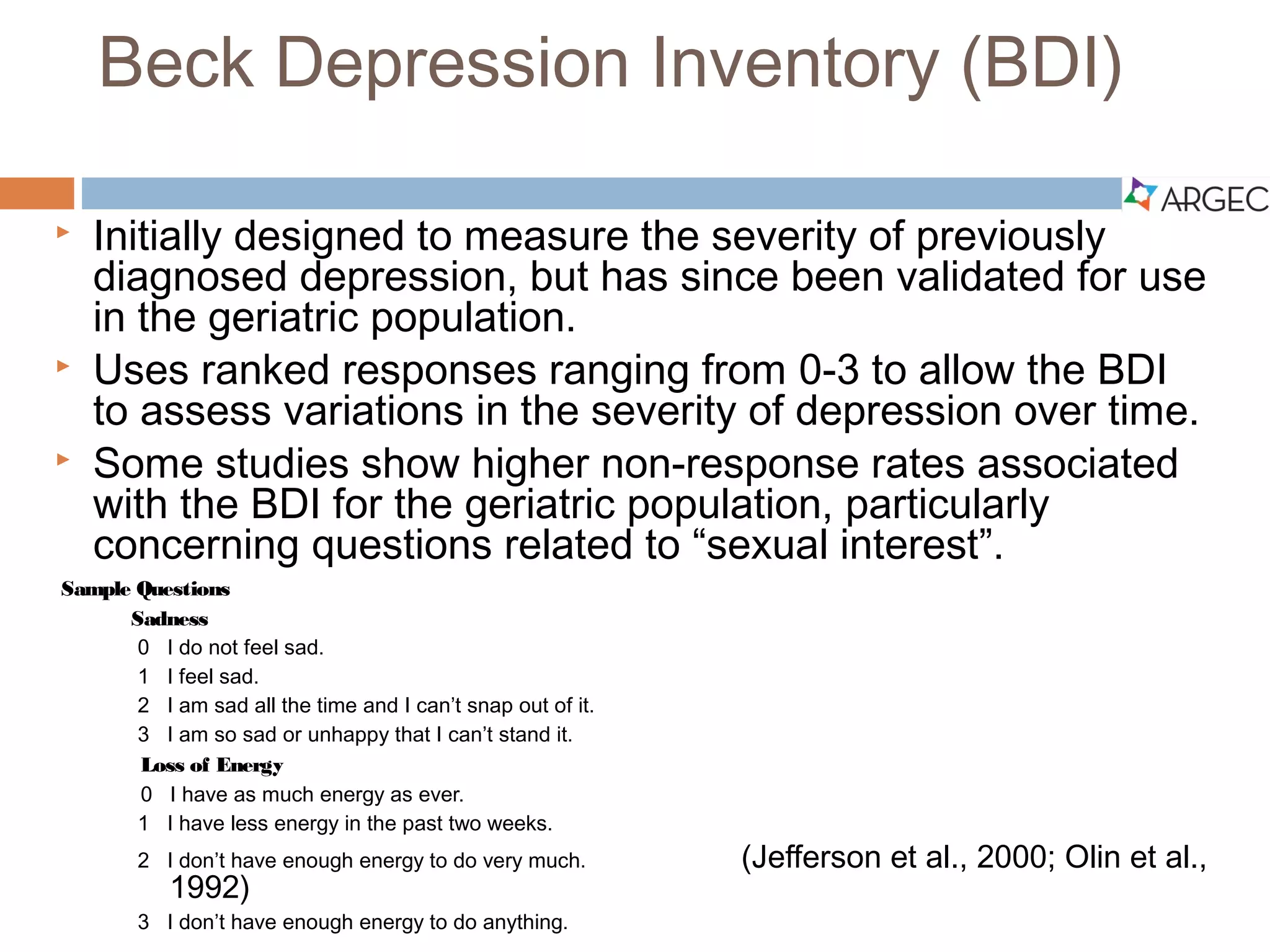
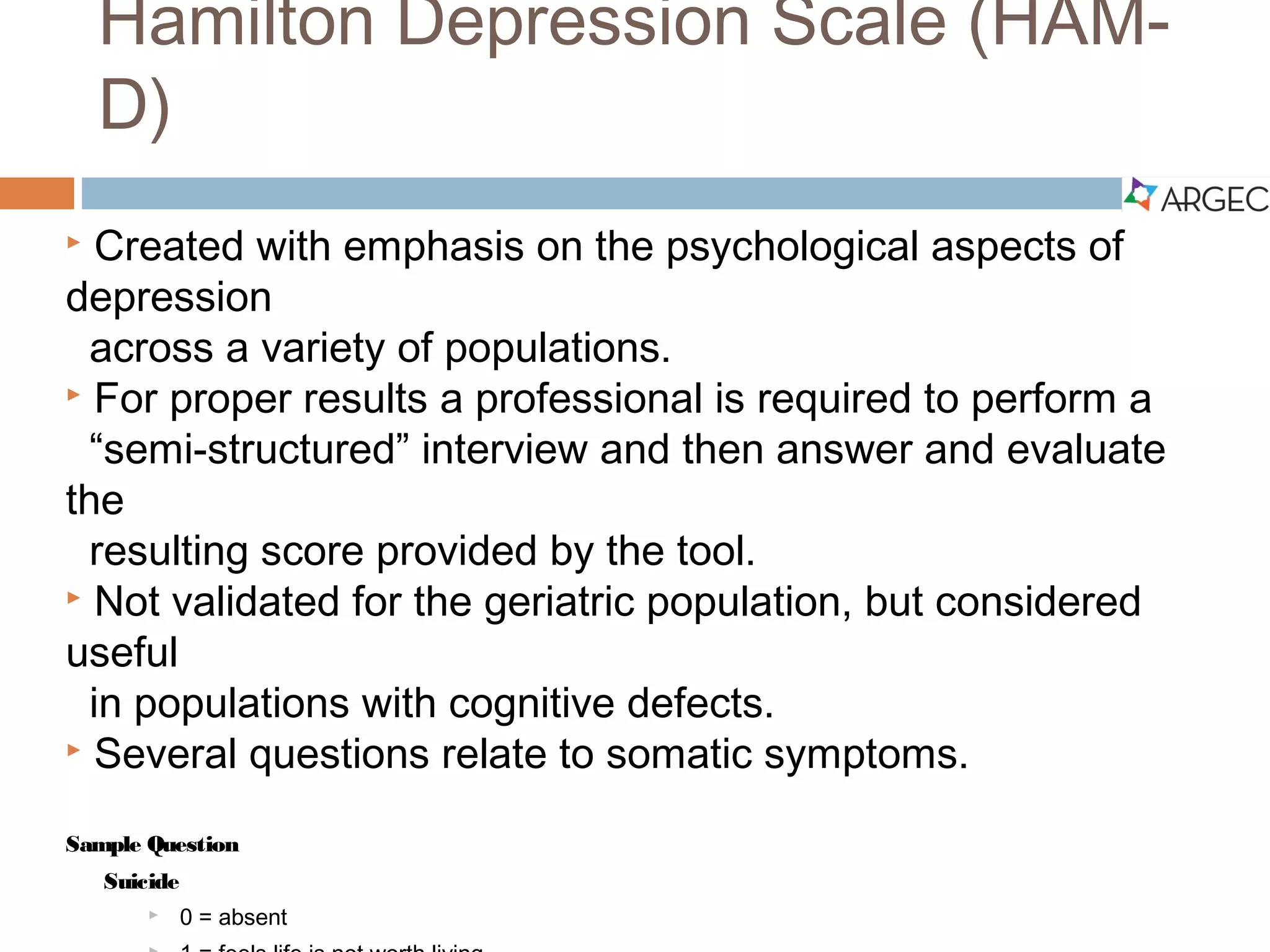
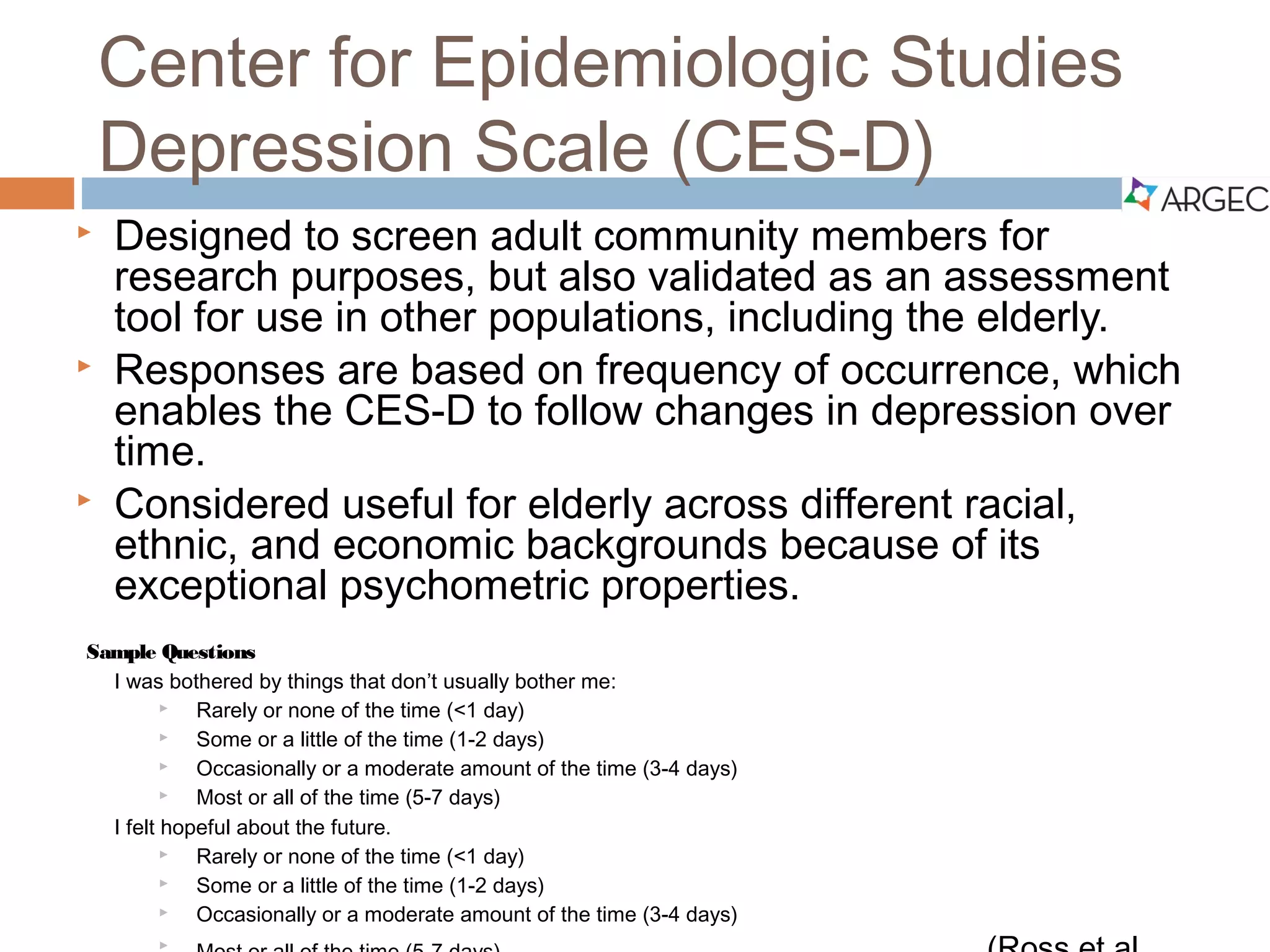
- Differential diagnosis distinguishes depression from conditions like dementia, delirium, medical illness and medication side effects. Multiple assessment instruments are highlighted for their validity