drahmadtemimi@gmail.com
in
Elderly People
A Guide for Geriatric Doctors
Learning Objectives
1. Describe the prevalence of depression
among the elderly population.
2. Identify the risk factors associated
with depression in older adults.
3. Recognize the clinical features of
depression in older adults.
4. Explain the diagnostic criteria for
depression.
5. Discuss the importance of screening
for depression in elderly patients.
6. Evaluate different management
strategies for depression in elderly
patients.
Prevalence and Impact
1. Depression is the largest psychiatric disorder in the
elderly.
2. Its prevalence is estimated at 1-2% for elders in the
community.
3. The depression rates are much higher in the
institutional settings (10-20%).
4. Women are twice as likely to experience
depression as men.
5. The prevalence is higher among those with chronic
medical conditions.
6. Depressed older patients are more likely to report a
lower quality of life, increased disability, and have
increased total health care costs.
7. Only a small percentage of older patients with
depression receive proper treatment for their
symptoms.
Definition of
DEPRESSION
Depression in elderly people, also known as late-
life depression, is a clinical syndrome characterized
by persistent feelings of sadness, loss of interest or
pleasure in activities, and a range of emotional,
cognitive, and physical symptoms that significantly
impact the individual's functioning and quality of life.
The Pathophysiology
 The pathophysiology of depression in older
adults is not completely understood.
 It is a complex and multifactorial disorder.
 Research has identified several biological,
social, and psychological factors that may
contribute to its development.
 One prominent theory “The Monoamine
Hypothesis” tried to explain the etiology of
late-life depression.
 The theory suggests that the lower levels of
Monoamine Neurotransmitters (Serotonin,
Norepinephrine, and Dopamine) in
cerebrospinal fluid and plasma is the key factor
in the development of depression.
 The newer “Serotonin Hypothesis” suggests
that depression is linked to reduced
serotoninergic function.
Risk Factors
 Age-related physical health issues:
Medical conditions (CVA, DM, or
neurological disorders) that may
cause loss of independence and
chronic pain.
 Social isolation and loneliness: Old
people may experience loss of
friends, family members, or spouses.
 Cognitive decline: Struggling with
memory loss, difficulty with
decision-making, due to cognitive
impairments or dementia.
 History of depression: A patient who
had depression earlier in life.
 Loss and grief: Bereavement and
grief related to the death of a loved
person, such as a spouse or close
friend.
 Lack of physical activity: A sedentary
lifestyle and lack of regular physical
activity.
 Substance abuse: Abuse of alcohol
or other substances which might
negatively impact mental health.
 Financial stress: Including poverty
and debt that might cause significant
emotional distress.
Understanding these risk factors can help
geriatric doctors to identify at risk patients
and provide appropriate interventions.
Clinical Features
 Depression can manifest differently in
older adults than it does in younger
individuals.
 Elderly patients are more likely to have
somatic complaints or hypochondriasis.
 Recognizing the clinical features of
depression in older adults is crucial for
accurate diagnosis and effective
treatment.
 Proper diagnosis and treatment can
improve quality of life and reduced risk
of negative outcomes (suicide).
 The main clinical features of depression
in older adults can be grouped in 4
categories:
1. Physical symptoms: including fatigue,
sleep disturbances, changes in appetite,
and unexplained physical symptoms such
as abdominal pain.
2. Cognitive changes: including difficulties
with memory, attention, and decision-
making, trouble concentrating or
completing tasks.
3. Mood changes: including prolonged
feelings of sadness, hopelessness, or
helplessness, and a loss of interest in
previously enjoyed activities. Irritability or
anger may also be present.
4. Social and Self-esteem changes:
including decreased social engagement or
difficulty forming and maintaining
relationships, as well as changes in self-
esteem, including feelings of guilt or
shame.
Diagnosis
 Patient history and assessment: including patient’s
symptoms, assessment of cognitive status, any
potential risk factors for depression, and suicide risk
assessment.
 Complete review of medications (prescription and
nonprescription), such as propranolol, methyldopa,
benzodiazepines, may cause depressive symptoms.
 Screening for alcohol and other substance use or
addiction.
 Reviewing screening and diagnostic criteria: tools
such as GDS and DSM-5 criteria, can help identify
depressive symptoms and guide further evaluation.
 Physical examination: to identify medical conditions
that mimic depression symptoms, such as thyroid
function, anemia, vitamin deficiencies, Alzheimer's and
Parkinson's diseases.
 Laboratory investigations: to explore conditions that
could be related to depressive symptoms.
Differential Diagnosis
 Many patients with mild cognitive impairment
may have predominantly depressive symptoms.
 Bereavement often manifests with depressed
mood.
 Older patients who experience delirium caused
by an underlying medical illness may have mood
changes.
 Patients with bipolar or psychotic disorders may
have depressed mood.
 Some medical conditions, such as DM,
hypothyroidism, malignancy, or anemia may be
experienced with fatigue and weight loss.
 Patients who have Parkinson disease may first
present with depressed mood or flat affect.
 Sleep disturbances as a result of pain, nocturia,
or sleep apnea may also lead to daytime fatigue
and depressed mood.
The DSM-5 Criteria
 The Diagnostic and Statistical Manual of
Mental Disorders (DSM-5), published by the
American Psychiatric Association, is a
widely used manual for diagnosing mental
disorders.
 According to the DSM‐5, 5 or more of the
symptoms listed below must be present
during the same 2‐week time period.
 At least one of these symptom is either a
depressed mood or loss of interest.
 Exclude symptoms clearly attributable to
another medical condition.
 The majority of depressed elderly patients
do not fit the DSM criteria. Older people
may develop masked depression in which
there are fewer mood and more somatic
complaints.
1. Depressed mood: such as feels sad,
empty, hopeless.
2. Loss of interest or pleasure: In almost
all activities.
3. Weight loss or gain: or decrease or
increase in appetite.
4. Insomnia or hypersomnia.
5. Psychomotor agitation or retardation.
6. Fatigue or loss of energy.
7. Feeling worthless or excessive and
inappropriate guilt.
8. Decreased concentration.
9. Thoughts of death or suicide.
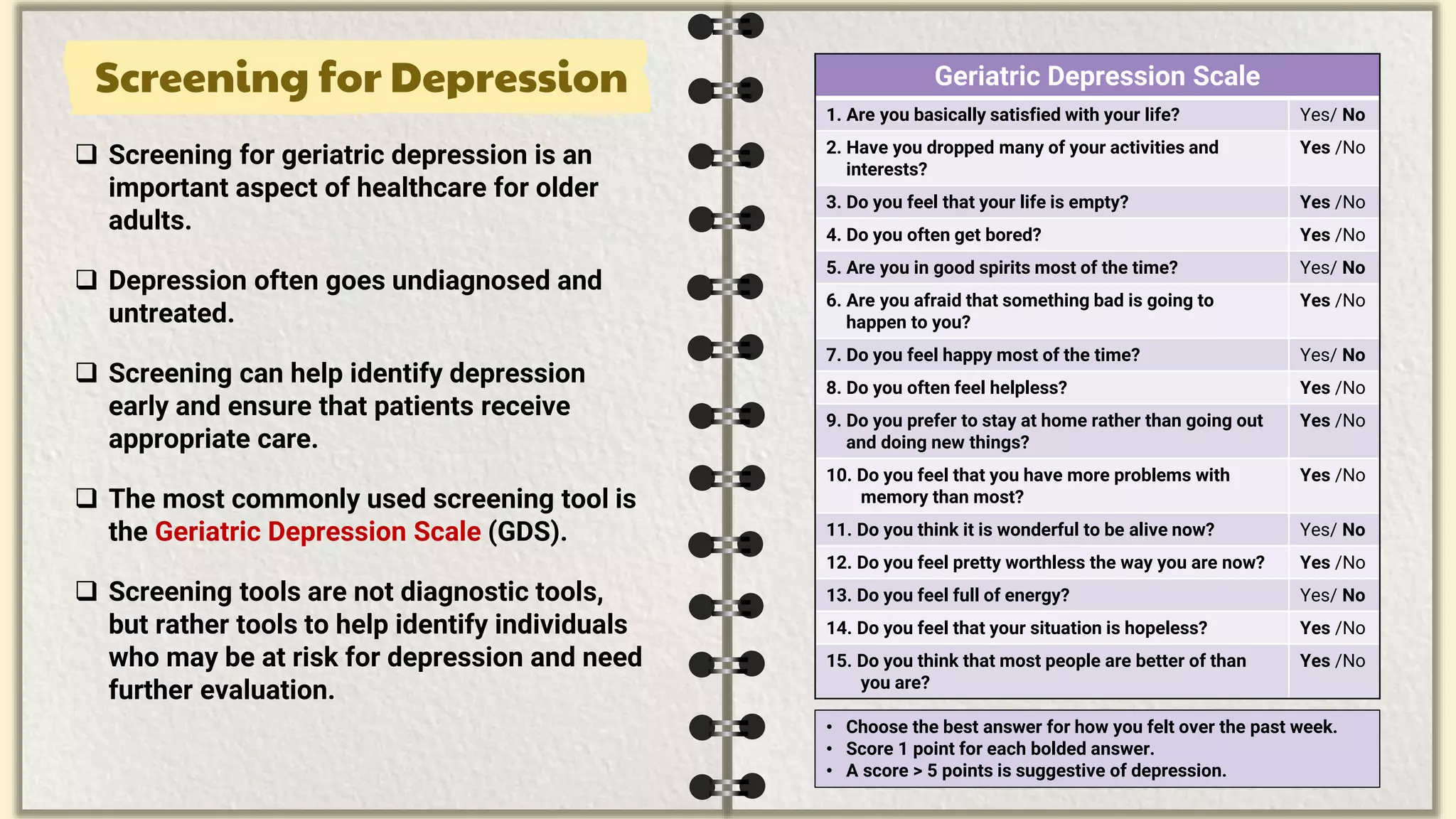
Screening for Depression
 Screening for geriatric depression is an
important aspect of healthcare for older
adults.
 Depression often goes undiagnosed and
untreated.
 Screening can help identify depression
early and ensure that patients receive
appropriate care.
 The most commonly used screening tool is
the Geriatric Depression Scale (GDS).
 Screening tools are not diagnostic tools,
but rather tools to help identify individuals
who may be at risk for depression and need
further evaluation.
Geriatric Depression Scale
1. Are you basically satisfied with your life? Yes/ No
2. Have you dropped many of your activities and
interests?
Yes /No
3. Do you feel that your life is empty? Yes /No
4. Do you often get bored? Yes /No
5. Are you in good spirits most of the time? Yes/ No
6. Are you afraid that something bad is going to
happen to you?
Yes /No
7. Do you feel happy most of the time? Yes/ No
8. Do you often feel helpless? Yes /No
9. Do you prefer to stay at home rather than going out
and doing new things?
Yes /No
10. Do you feel that you have more problems with
memory than most?
Yes /No
11. Do you think it is wonderful to be alive now? Yes/ No
12. Do you feel pretty worthless the way you are now? Yes /No
13. Do you feel full of energy? Yes/ No
14. Do you feel that your situation is hopeless? Yes /No
15. Do you think that most people are better of than
you are?
Yes /No
• Choose the best answer for how you felt over the past week.
• Score 1 point for each bolded answer.
• A score > 5 points is suggestive of depression.
Challenges in Diagnosing
 Normalizing symptoms: the misconception
that depressive symptoms are a normal part of
aging.
 Atypical presentation: Depression in older
adults may manifest differently than in younger
individuals.
 Comorbidities: This can make it challenging to
distinguish depressive symptoms from those
caused by underlying medical conditions.
 Communication barriers: Older adults may
face communication barriers, such as hearing
loss or cognitive decline, which can affect their
ability to express their emotions and articulate
their symptoms.
 Stigma and reluctance to seek help: This can
delay diagnosis and appropriate treatment.
Overcoming the Challenges
 Having a good understanding of depression in
the elderly and considering atypical
symptoms experiencing by this age group.
 Regular screening for depression in elderly
individuals is crucial for early detection and
intervention.
 Conducting a comprehensive physical
examination and appropriate laboratory
investigations can help identify any medical
issues that could contribute to or mimic
depressive symptoms.
 Using effective communication strategies to
ensure accurate assessment and diagnosis.
 Creating a supportive and non-judgmental
environment and educating older adults and
their families about depression can help
reduce these barriers.
Management
 The management of depression in elderly
people typically involves a combination of
pharmacological and non-pharmacological
approaches.
 Most depressive illnesses can be managed
in primary care, although many are
undetected.
 Depressed patients often present with other
conditions.
 Psychiatric referral is indicated for certain
conditions.
 Doctors should work with patients to
develop a personalized plan of care that
addresses their specific needs and
preferences.
Pharmacological Therapy
 Most antidepressants are equally effective
in the treatment of geriatric depression.
 The common mechanism of action of
antidepressants involves increasing neural
transmission of monoamines (serotonin,
noradrenaline and dopamine).
 Drug selection therefore is better based on
other factors, such as those noted in the
Box.
 Choice of therapy is also determined by the
patient’s comorbid symptoms such as
anxiety, insomnia, pain, and weight loss.
 Renal and hepatic functions are also
important considerations and should be
assessed before initiation of therapy.
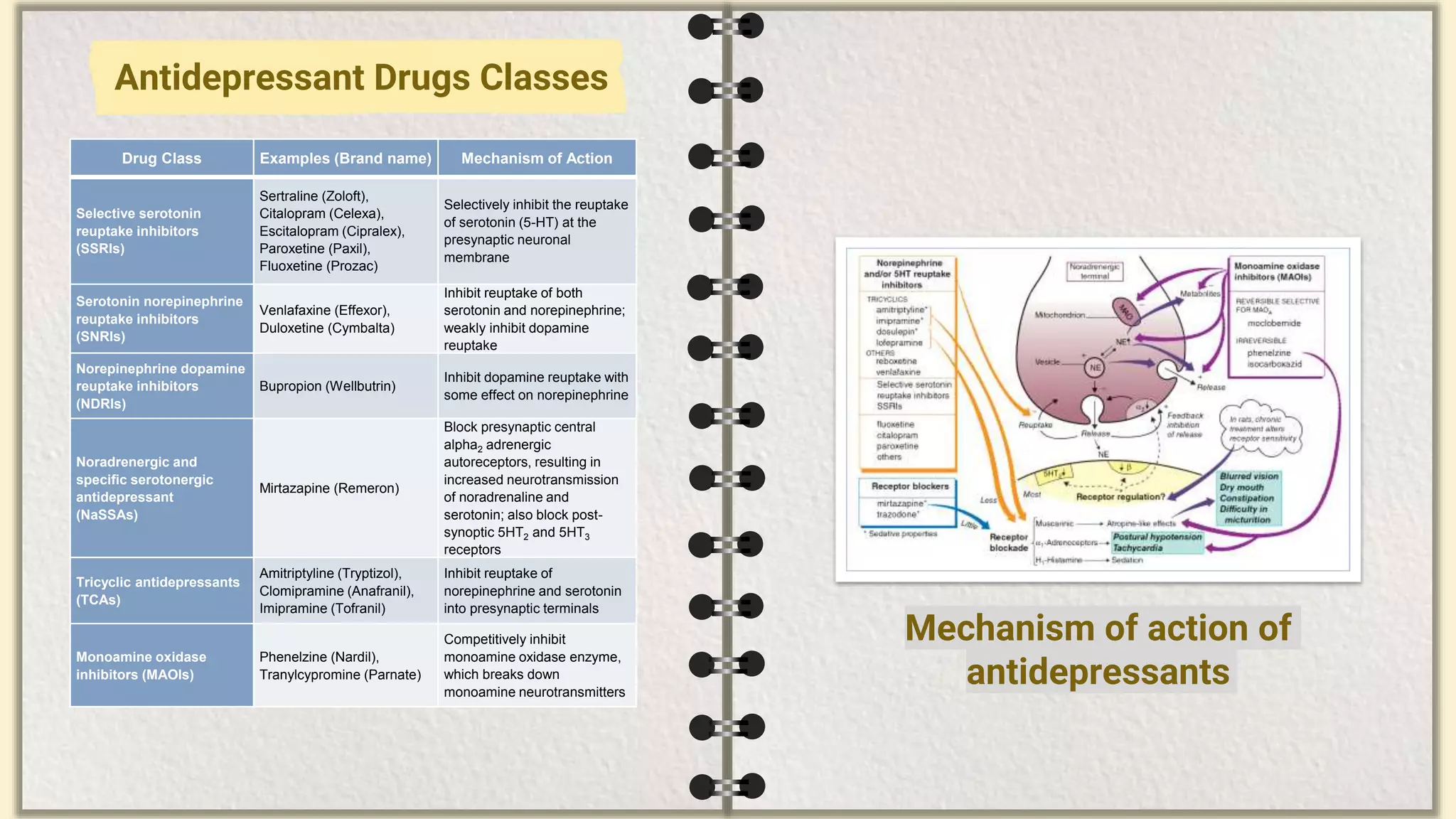
Drug Class Examples (Brand name) Mechanism of Action
Selective serotonin
reuptake inhibitors
(SSRIs)
Sertraline (Zoloft),
Citalopram (Celexa),
Escitalopram (Cipralex),
Paroxetine (Paxil),
Fluoxetine (Prozac)
Selectively inhibit the reuptake
of serotonin (5-HT) at the
presynaptic neuronal
membrane
Serotonin norepinephrine
reuptake inhibitors
(SNRIs)
Venlafaxine (Effexor),
Duloxetine (Cymbalta)
Inhibit reuptake of both
serotonin and norepinephrine;
weakly inhibit dopamine
reuptake
Norepinephrine dopamine
reuptake inhibitors
(NDRIs)
Bupropion (Wellbutrin)
Inhibit dopamine reuptake with
some effect on norepinephrine
Noradrenergic and
specific serotonergic
antidepressant
(NaSSAs)
Mirtazapine (Remeron)
Block presynaptic central
alpha2 adrenergic
autoreceptors, resulting in
increased neurotransmission
of noradrenaline and
serotonin; also block post-
synoptic 5HT2 and 5HT3
receptors
Tricyclic antidepressants
(TCAs)
Amitriptyline (Tryptizol),
Clomipramine (Anafranil),
Imipramine (Tofranil)
Inhibit reuptake of
norepinephrine and serotonin
into presynaptic terminals
Monoamine oxidase
inhibitors (MAOIs)
Phenelzine (Nardil),
Tranylcypromine (Parnate)
Competitively inhibit
monoamine oxidase enzyme,
which breaks down
monoamine neurotransmitters
Antidepressant Drugs Classes
Mechanism of action of
antidepressants
Selective Serotonin
Reuptake Inhibitors
 SSRIs are considered the first choice for
the treatment of depression in the elderly.
 The SSRI class includes Escitalopram,
Citalopram, Sertraline, Fluoxetine, and
Paroxetine.
 Escitalopram, Citalopram, and Sertraline
have little impact on the CYP450 system.
 Fluoxetine is generally avoided in older
adults because of its inhibition of the
CYP450 hepatic enzymes.
 Paroxetine should be used with caution in
elderly, because inhibition of the CYP450
hepatic enzymes, and its sedating and
anticholinergic side effects.
Serotonin Norepinephrine
Reuptake Inhibitors
 SNRIs have serotonergic and noradrenergic
activity.
 They are other effective alternatives for
treatment of depression in the elderly.
 They also may be useful in treating anxiety
and neuropathic pain.
 Examples of SNRIs are venlafaxine, and
duloxetine.
Bupropion
 Bupropion is another option for treatment
of depression in the elderly.
 It works by increasing the levels of
dopamine and norepinephrine in the brain.
 It is the only agent with an additional
indication for smoking cessation.
 Bupropion has the additional benefits of
having no sexual side effects, minimal
weight gain potential, and negligible GI
bleeding risk.
 It has a moderate inhibitory effect on
CYP2D6 enzyme.
Mirtazapine
 Mirtazapine is an alpha-2 antagonist and
indirectly increases serotonin and
norepinephrine transmission.
 It is also a potent inhibitor of histamine
(H1) receptors, with subsequent effects on
sleep and appetite.
 Sedation is greatest at lower doses (15 mg
daily) and is offset at higher doses by
increased noradrenergic activity.
 Unlike the antidepressant effect, the impact
on sleep is immediate, and can improve
patient adherence.
 It is also devoid of sexual side effects.
Tricyclic Antidepressants
 It is better to be avoided in older adults.
 TCAs have a higher incidence of side effects,
such as anticholinergic and cardiac effects.
 Anticholinergic side effects including dry
mouth, constipation, urinary retention, blurred
vision, cognitive impairment, exacerbation of
narrow angle closure glaucoma.
 The cardiac side effects including increased
heart rate, slowing of cardiac conduction, and
orthostatic hypotension.
 Other side effects including dizziness, fatigue,
sexual dysfunction, and weight gain.
 TCAs can interact with other medications,
which can lead to potentially dangerous side
effects.
Monoamine Oxidase
Inhibitors
 MAOIs are an older class of
antidepressants.
 They work by inhibiting the activity of the
enzyme Monoamine Oxidase, which
breaks down neurotransmitters such as
serotonin, norepinephrine, and dopamine.
 MAOIs are less commonly used in
geriatric depression due to their side
effect profile and potential for drug
interactions.
 Examples of MAOIs include phenelzine
(Nardil) and tranylcypromine (Parnate).
Dosing Regimen
Drug Starting
dose
Maximum
dose
Direction
of use
Sertraline 25 mg/day 200 mg/day Once a day,
morning or
evening, with
or without
food
Escitalopram 5 mg/day 20 mg/day Same
Citalopram 10 mg/day 20 mg/day Same
Mirtazapine 7.5 mg/day 45 mg/day Once a day at
bedtime, with
or without
food
Bupropion 100 mg twice
a day
100 mg
thrice a day
Twice a day,
with or without
food
Venlafaxine 37.5 mg/day 225 mg/day Once a day,
morning or
evening, with
food
Duloxetine 30 mg/day 60 mg/day Once a day,
with or without
food
 Drugs of first choice are SSRIs; Sertraline
(Zoloft) in particular is recommended in
the elderly.
 Drugs of second choice are Venlafaxine,
Duloxetine, Bupropion, and Mirtazapine.
 Drugs of third choice include
augmentation of first- and second-line
drugs with Aripiprazole or an SSRI with
Buspirone.
 If a patient fails to respond to a
medication or experiences intolerable
side effects, switch either to another
medication within the same class or to a
different class of medications.
Pharmacologic Stepwise
Approach
Stopping Antidepressants
 All antidepressants have the potential to cause
withdrawal phenomena.
 They should not be stopped abruptly unless a
serious adverse event has occurred.
 Gradual tapering over 4-8 weeks is
recommended to avoid withdrawal symptoms.
 Discontinuation symptoms include:
 Electric shock sensations.
 Dizziness.
 Increased mood change.
 Restlessness.
 Difficulty sleeping.
 Unsteadiness.
 Sweating.
 Abdominal symptoms.
Treatment Notes
 In general, older patients should begin an
antidepressant by taking half of the
recommended starting dose (to minimize side
effects).
 The medication should be titrated to the
recommended target dose in weekly increments.
 Older patients are frequently undertreated
because the provider fails to adequately titrate
the dose to a therapeutic level.
 If minimal or no benefit occurs by 4-6 weeks and
side effects are tolerable, the dose could be
increased.
 The full effect may be seen for 8-12 weeks in
older patients.
 If a patient has not adequately responded to a
specific medication, switch to a different agent
or augmenting with an additional agent.
Serotonin Syndrome
 It is a potentially life-threatening condition
associated with increased serotonergic activity in
the central nervous system.
 The syndrome caused by:
 Starting a new serotonergic medications.
 Increasing the dose of serotonergic medications.
 Combining serotonergic medications.
 It classically has 3 main features:
1. Mental status changes (headache, confusion,
agitation).
2. Autonomic hyperactivity (diaphoresis, hyperthermia,
tachycardia, nausea, diarrhea).
3. Neuromuscular abnormalities (tremor, myoclonus,
hyperreflexia).
 The syndrome has rapid onset, with its clinical
course developing over 24 hours.
 The management of the syndrome includes:
 Discontinuation of all serotonergic agents.
 Use of serotonin antagonists (cyproheptadine).
 Supportive care to normalize vital signs.
Patient & Family Education
 Understanding the condition: What depression
is, what causes it, and how it can be treated.
 Symptoms of depression: This can help them
to recognize when the patient is experiencing
depression and seek help.
 Treatment options: The patient and family
should be informed about the different
options and encouraged to participate in
decision-making.
 Importance of social support: Social support
is crucial in managing depression, especially
in elderly patients who may be isolated.
 Follow-up care: The patient and family should
be informed about the importance of follow-
up with their doctor and ongoing monitoring of
symptoms.
Educating patients and their families
about depression is the cornerstone of
successful treatment.
Key Points in Education
There are 3 Psychological Interventions that
have evidence of efficacy with older patients:
1. Cognitive-behavioral Therapy (CBT)
focuses on identifying negative thoughts
and behaviors that contribute to
depression and replacing them with
positive thoughts and rewarding activities.
2. Problem-solving Therapy teaches patients
strategies to solve everyday problems and
deal with crisis.
3. Interpersonal Psychotherapy focuses on
how to resolve personal stressors and
relationship conflicts that lead to
depressive symptoms.
Psychotherapy
 Psychological interventions are effective
treatments for major depression, either
alone or in combination with
pharmacotherapy.
 Typically, these therapies require several
sessions to be successful.
 Attempts at increased socialization,
including music therapy, pet therapy, and
other therapies that serve to redirect the
attention of the elderly patient, found to be
effective.
 In patients with severe depression,
combination therapy with psychotherapy
and pharmacotherapy is superior to either
treatment alone.
Psychiatric Consultation
 Psychiatric consultation is recommended for:
 Those who fail to respond to 2 different
medication trials (treatment resistant).
 Those who require combination therapy or
ECT.
 Those patients with a history of mania or
psychosis.
 Those who, after probing, admit to having
active plans to harm themselves.
 Resistant depression may respond to
combining an antidepressant (augmenting) with
lithium, and atypical antipsychotic (aripiprazole,
olanzapine, risperidone).
 Small doses of liothyronine, a synthetic
triiodothyronine (T3), can be used safely in
euthyroid patients.
Electroconvulsive Therapy
 ECT is an effective, well tolerated treatment
for geriatric depression.
 ECT is indicated for:
1. Severe depression when a rapid response
is necessary.
2. When depression is resistant to drug
therapy.
3. Those at high risk for suicide.
 ECT may be first-line therapy for:
1. Severely psychotic patients.
2. Depression with Parkinson disease.
3. Those at high risk for suicide.
4. Frail elderly patients who have multiple
comorbid conditions and who are unable to
tolerate antidepressant treatment.
 Typical side effects of ECT include confusion and
short-term memory loss, which may persist for 6
months.
 Contraindications to ECT include an intracranial
mass, recent myocardial infarction, or recent
cardiovascular accident.
 Even after symptom improvement, there is a high
chance of relapse in if the patient is not provided
with adjunctive maintenance pharmacotherapy.
Before After
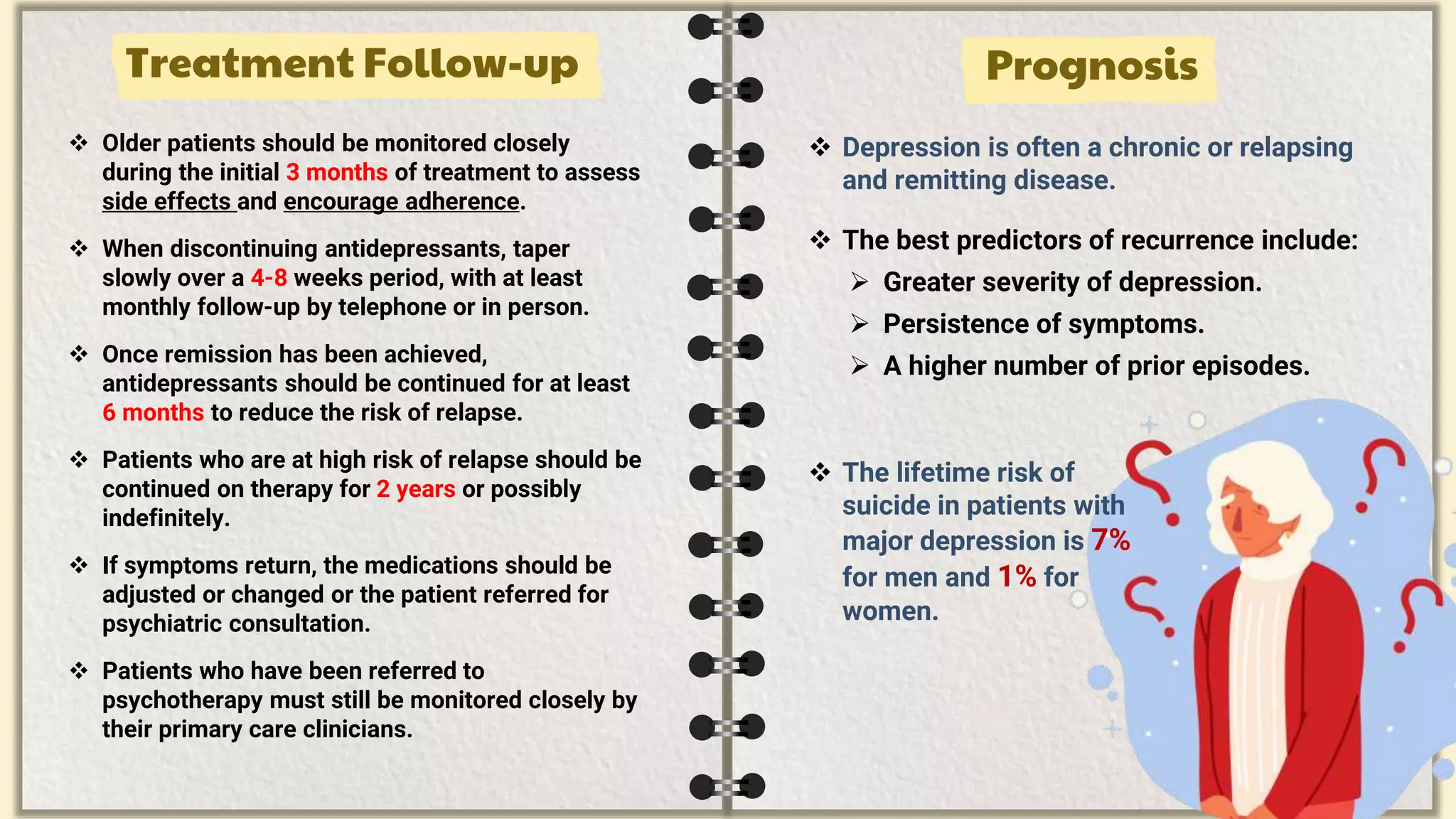
 Older patients should be monitored closely
during the initial 3 months of treatment to assess
side effects and encourage adherence.
 When discontinuing antidepressants, taper
slowly over a 4-8 weeks period, with at least
monthly follow-up by telephone or in person.
 Once remission has been achieved,
antidepressants should be continued for at least
6 months to reduce the risk of relapse.
 Patients who are at high risk of relapse should be
continued on therapy for 2 years or possibly
indefinitely.
 If symptoms return, the medications should be
adjusted or changed or the patient referred for
psychiatric consultation.
 Patients who have been referred to
psychotherapy must still be monitored closely by
their primary care clinicians.
Treatment Follow-up
 Depression is often a chronic or relapsing
and remitting disease.
 The best predictors of recurrence include:
 Greater severity of depression.
 Persistence of symptoms.
 A higher number of prior episodes.
Prognosis
 The lifetime risk of
suicide in patients with
major depression is 7%
for men and 1% for
women.
 Many depressed elders contemplate suicide.
 Physicians must recognize the risk factors for
suicide in depressed patients.
 Physicians should ask patients whether they
ever think of hurting themselves or taking
their life.
 If the patient responds positively, physicians
should ask whether they have a plan and, if so,
what it is.
 Asking patients about any medications or
weapons the patient has access to is also
critical in assessing the suicide risk.
 Actively suicidal patients with intent and plan
require emergent psychiatric evaluation either
through emergency departments or local
psychiatric crisis units.
SUICIDE
 Older age.
 Male gender.
 Marital status of single, divorced, or separated
and without children.
 Personal or family history of a suicide attempt.
 Drug or alcohol abuse.
 Severe anxiety or stress.
 Physical illness.
 A specific suicide plan with access to firearms or
other lethal means.
Risk Factors for Suicide
 The management involves a combination of
pharmacological and non-pharmacological
approaches.
 The common mechanism of action of
antidepressants involves increasing
monoamines levels.
 SSRIs are considered the first choice for
the treatment of depression in the elderly.
 If a patient has not adequately responded to
a specific medication, switch to a different
agent or augmenting with an additional
agent.
 Educating patients and their families about
depression is the cornerstone of successful
treatment.
 Psychiatric consultation is recommended
for certain conditions.
 Geriatric depression is a clinical syndrome
characterized by a range of emotional,
cognitive, and physical symptoms that
significantly impact the individual's
functioning and quality of life.
 It is a common and serious mental health
condition among older adults.
 It might be linked to reduced levels of
monoamine neurotransmitters .
 There are several risk factors attributed to
the development of depression.
 Screening and diagnostic tools such as
GDS and DSM-5 criteria, can help identify
depressed patients.
 Low mood and loss of interest must be
present to diagnose depression.
SUMMARY
 Andreescu C, Reynolds CF 3rd. Late-life depression:
Evidencebased treatment and promising new directions for
research and clinical practice. Psychiatr Clin North Am
2011;34(2):335-55, vii-iii. Review.
 Conwell Y, Van Orden K, Caine ED. Suicide in older adults.
Psychiatr Clin North Am 2011;34(2):451-68, ix.
 Harper GM, Lyons WL, Potter JF. Depression and other mood
disorders. In: Geriatric Review Syllabus: A Core Curriculum in
Geriatric Medicine. 10th ed. American Geriatrics Society;
2019:403-412.
 Kiosses DN, Leon AC, Areán PA. Psychosocial interventions for
late-life major depression: Evidence-based treatments, predictors
of treatment outcomes, and moderators of treatment effects.
Psychiatr Clin North Am 2011;34(2):377-401, viii.
 Kovich H, Dejong A. Common questions about the pharmacologic
management of depression in adults. Am Fam Physician.
2015;92(2):94-100.
 Maurer DM. Screening for depression. Am Fam Physician.
2012;85(2): 139-144.
 Nelson JC, Delucchi K, Schneider LS. Efficacy of second
generation antidepressants in late-life depression: A meta-
analysis of the evidence. Am J Geriatr Psychiatry 2008;16(7):558-
67.
 Reuben DB, Herr KA, PacalaJT, et al. Depression. In: Geriatrics at
Your Fingertips. 21st ed. American Geriatrics Society; 2019:86-
91.
 Robinson RG, Spalletta G. Poststroke depression: A review. Can J
Psychiat 2010;55(6):341-9.
REFERENCES
Depression in Elderly People.pptx

Depression in Elderly People.pptx

  • 1.
  • 2.
    Learning Objectives 1. Describethe prevalence of depression among the elderly population. 2. Identify the risk factors associated with depression in older adults. 3. Recognize the clinical features of depression in older adults. 4. Explain the diagnostic criteria for depression. 5. Discuss the importance of screening for depression in elderly patients. 6. Evaluate different management strategies for depression in elderly patients.
  • 3.
    Prevalence and Impact 1.Depression is the largest psychiatric disorder in the elderly. 2. Its prevalence is estimated at 1-2% for elders in the community. 3. The depression rates are much higher in the institutional settings (10-20%). 4. Women are twice as likely to experience depression as men. 5. The prevalence is higher among those with chronic medical conditions. 6. Depressed older patients are more likely to report a lower quality of life, increased disability, and have increased total health care costs. 7. Only a small percentage of older patients with depression receive proper treatment for their symptoms. Definition of DEPRESSION Depression in elderly people, also known as late- life depression, is a clinical syndrome characterized by persistent feelings of sadness, loss of interest or pleasure in activities, and a range of emotional, cognitive, and physical symptoms that significantly impact the individual's functioning and quality of life.
  • 4.
    The Pathophysiology  Thepathophysiology of depression in older adults is not completely understood.  It is a complex and multifactorial disorder.  Research has identified several biological, social, and psychological factors that may contribute to its development.  One prominent theory “The Monoamine Hypothesis” tried to explain the etiology of late-life depression.  The theory suggests that the lower levels of Monoamine Neurotransmitters (Serotonin, Norepinephrine, and Dopamine) in cerebrospinal fluid and plasma is the key factor in the development of depression.  The newer “Serotonin Hypothesis” suggests that depression is linked to reduced serotoninergic function.
  • 5.
    Risk Factors  Age-relatedphysical health issues: Medical conditions (CVA, DM, or neurological disorders) that may cause loss of independence and chronic pain.  Social isolation and loneliness: Old people may experience loss of friends, family members, or spouses.  Cognitive decline: Struggling with memory loss, difficulty with decision-making, due to cognitive impairments or dementia.  History of depression: A patient who had depression earlier in life.  Loss and grief: Bereavement and grief related to the death of a loved person, such as a spouse or close friend.  Lack of physical activity: A sedentary lifestyle and lack of regular physical activity.  Substance abuse: Abuse of alcohol or other substances which might negatively impact mental health.  Financial stress: Including poverty and debt that might cause significant emotional distress. Understanding these risk factors can help geriatric doctors to identify at risk patients and provide appropriate interventions.
  • 6.
    Clinical Features  Depressioncan manifest differently in older adults than it does in younger individuals.  Elderly patients are more likely to have somatic complaints or hypochondriasis.  Recognizing the clinical features of depression in older adults is crucial for accurate diagnosis and effective treatment.  Proper diagnosis and treatment can improve quality of life and reduced risk of negative outcomes (suicide).  The main clinical features of depression in older adults can be grouped in 4 categories: 1. Physical symptoms: including fatigue, sleep disturbances, changes in appetite, and unexplained physical symptoms such as abdominal pain. 2. Cognitive changes: including difficulties with memory, attention, and decision- making, trouble concentrating or completing tasks. 3. Mood changes: including prolonged feelings of sadness, hopelessness, or helplessness, and a loss of interest in previously enjoyed activities. Irritability or anger may also be present. 4. Social and Self-esteem changes: including decreased social engagement or difficulty forming and maintaining relationships, as well as changes in self- esteem, including feelings of guilt or shame.
  • 7.
    Diagnosis  Patient historyand assessment: including patient’s symptoms, assessment of cognitive status, any potential risk factors for depression, and suicide risk assessment.  Complete review of medications (prescription and nonprescription), such as propranolol, methyldopa, benzodiazepines, may cause depressive symptoms.  Screening for alcohol and other substance use or addiction.  Reviewing screening and diagnostic criteria: tools such as GDS and DSM-5 criteria, can help identify depressive symptoms and guide further evaluation.  Physical examination: to identify medical conditions that mimic depression symptoms, such as thyroid function, anemia, vitamin deficiencies, Alzheimer's and Parkinson's diseases.  Laboratory investigations: to explore conditions that could be related to depressive symptoms. Differential Diagnosis  Many patients with mild cognitive impairment may have predominantly depressive symptoms.  Bereavement often manifests with depressed mood.  Older patients who experience delirium caused by an underlying medical illness may have mood changes.  Patients with bipolar or psychotic disorders may have depressed mood.  Some medical conditions, such as DM, hypothyroidism, malignancy, or anemia may be experienced with fatigue and weight loss.  Patients who have Parkinson disease may first present with depressed mood or flat affect.  Sleep disturbances as a result of pain, nocturia, or sleep apnea may also lead to daytime fatigue and depressed mood.
  • 8.
    The DSM-5 Criteria The Diagnostic and Statistical Manual of Mental Disorders (DSM-5), published by the American Psychiatric Association, is a widely used manual for diagnosing mental disorders.  According to the DSM‐5, 5 or more of the symptoms listed below must be present during the same 2‐week time period.  At least one of these symptom is either a depressed mood or loss of interest.  Exclude symptoms clearly attributable to another medical condition.  The majority of depressed elderly patients do not fit the DSM criteria. Older people may develop masked depression in which there are fewer mood and more somatic complaints. 1. Depressed mood: such as feels sad, empty, hopeless. 2. Loss of interest or pleasure: In almost all activities. 3. Weight loss or gain: or decrease or increase in appetite. 4. Insomnia or hypersomnia. 5. Psychomotor agitation or retardation. 6. Fatigue or loss of energy. 7. Feeling worthless or excessive and inappropriate guilt. 8. Decreased concentration. 9. Thoughts of death or suicide.
  • 9.
    Screening for Depression Screening for geriatric depression is an important aspect of healthcare for older adults.  Depression often goes undiagnosed and untreated.  Screening can help identify depression early and ensure that patients receive appropriate care.  The most commonly used screening tool is the Geriatric Depression Scale (GDS).  Screening tools are not diagnostic tools, but rather tools to help identify individuals who may be at risk for depression and need further evaluation. Geriatric Depression Scale 1. Are you basically satisfied with your life? Yes/ No 2. Have you dropped many of your activities and interests? Yes /No 3. Do you feel that your life is empty? Yes /No 4. Do you often get bored? Yes /No 5. Are you in good spirits most of the time? Yes/ No 6. Are you afraid that something bad is going to happen to you? Yes /No 7. Do you feel happy most of the time? Yes/ No 8. Do you often feel helpless? Yes /No 9. Do you prefer to stay at home rather than going out and doing new things? Yes /No 10. Do you feel that you have more problems with memory than most? Yes /No 11. Do you think it is wonderful to be alive now? Yes/ No 12. Do you feel pretty worthless the way you are now? Yes /No 13. Do you feel full of energy? Yes/ No 14. Do you feel that your situation is hopeless? Yes /No 15. Do you think that most people are better of than you are? Yes /No • Choose the best answer for how you felt over the past week. • Score 1 point for each bolded answer. • A score > 5 points is suggestive of depression.
  • 10.
    Challenges in Diagnosing Normalizing symptoms: the misconception that depressive symptoms are a normal part of aging.  Atypical presentation: Depression in older adults may manifest differently than in younger individuals.  Comorbidities: This can make it challenging to distinguish depressive symptoms from those caused by underlying medical conditions.  Communication barriers: Older adults may face communication barriers, such as hearing loss or cognitive decline, which can affect their ability to express their emotions and articulate their symptoms.  Stigma and reluctance to seek help: This can delay diagnosis and appropriate treatment. Overcoming the Challenges  Having a good understanding of depression in the elderly and considering atypical symptoms experiencing by this age group.  Regular screening for depression in elderly individuals is crucial for early detection and intervention.  Conducting a comprehensive physical examination and appropriate laboratory investigations can help identify any medical issues that could contribute to or mimic depressive symptoms.  Using effective communication strategies to ensure accurate assessment and diagnosis.  Creating a supportive and non-judgmental environment and educating older adults and their families about depression can help reduce these barriers.
  • 11.
    Management  The managementof depression in elderly people typically involves a combination of pharmacological and non-pharmacological approaches.  Most depressive illnesses can be managed in primary care, although many are undetected.  Depressed patients often present with other conditions.  Psychiatric referral is indicated for certain conditions.  Doctors should work with patients to develop a personalized plan of care that addresses their specific needs and preferences.
  • 12.
    Pharmacological Therapy  Mostantidepressants are equally effective in the treatment of geriatric depression.  The common mechanism of action of antidepressants involves increasing neural transmission of monoamines (serotonin, noradrenaline and dopamine).  Drug selection therefore is better based on other factors, such as those noted in the Box.  Choice of therapy is also determined by the patient’s comorbid symptoms such as anxiety, insomnia, pain, and weight loss.  Renal and hepatic functions are also important considerations and should be assessed before initiation of therapy.
  • 13.
    Drug Class Examples(Brand name) Mechanism of Action Selective serotonin reuptake inhibitors (SSRIs) Sertraline (Zoloft), Citalopram (Celexa), Escitalopram (Cipralex), Paroxetine (Paxil), Fluoxetine (Prozac) Selectively inhibit the reuptake of serotonin (5-HT) at the presynaptic neuronal membrane Serotonin norepinephrine reuptake inhibitors (SNRIs) Venlafaxine (Effexor), Duloxetine (Cymbalta) Inhibit reuptake of both serotonin and norepinephrine; weakly inhibit dopamine reuptake Norepinephrine dopamine reuptake inhibitors (NDRIs) Bupropion (Wellbutrin) Inhibit dopamine reuptake with some effect on norepinephrine Noradrenergic and specific serotonergic antidepressant (NaSSAs) Mirtazapine (Remeron) Block presynaptic central alpha2 adrenergic autoreceptors, resulting in increased neurotransmission of noradrenaline and serotonin; also block post- synoptic 5HT2 and 5HT3 receptors Tricyclic antidepressants (TCAs) Amitriptyline (Tryptizol), Clomipramine (Anafranil), Imipramine (Tofranil) Inhibit reuptake of norepinephrine and serotonin into presynaptic terminals Monoamine oxidase inhibitors (MAOIs) Phenelzine (Nardil), Tranylcypromine (Parnate) Competitively inhibit monoamine oxidase enzyme, which breaks down monoamine neurotransmitters Antidepressant Drugs Classes Mechanism of action of antidepressants
  • 14.
    Selective Serotonin Reuptake Inhibitors SSRIs are considered the first choice for the treatment of depression in the elderly.  The SSRI class includes Escitalopram, Citalopram, Sertraline, Fluoxetine, and Paroxetine.  Escitalopram, Citalopram, and Sertraline have little impact on the CYP450 system.  Fluoxetine is generally avoided in older adults because of its inhibition of the CYP450 hepatic enzymes.  Paroxetine should be used with caution in elderly, because inhibition of the CYP450 hepatic enzymes, and its sedating and anticholinergic side effects.
  • 15.
    Serotonin Norepinephrine Reuptake Inhibitors SNRIs have serotonergic and noradrenergic activity.  They are other effective alternatives for treatment of depression in the elderly.  They also may be useful in treating anxiety and neuropathic pain.  Examples of SNRIs are venlafaxine, and duloxetine. Bupropion  Bupropion is another option for treatment of depression in the elderly.  It works by increasing the levels of dopamine and norepinephrine in the brain.  It is the only agent with an additional indication for smoking cessation.  Bupropion has the additional benefits of having no sexual side effects, minimal weight gain potential, and negligible GI bleeding risk.  It has a moderate inhibitory effect on CYP2D6 enzyme.
  • 16.
    Mirtazapine  Mirtazapine isan alpha-2 antagonist and indirectly increases serotonin and norepinephrine transmission.  It is also a potent inhibitor of histamine (H1) receptors, with subsequent effects on sleep and appetite.  Sedation is greatest at lower doses (15 mg daily) and is offset at higher doses by increased noradrenergic activity.  Unlike the antidepressant effect, the impact on sleep is immediate, and can improve patient adherence.  It is also devoid of sexual side effects. Tricyclic Antidepressants  It is better to be avoided in older adults.  TCAs have a higher incidence of side effects, such as anticholinergic and cardiac effects.  Anticholinergic side effects including dry mouth, constipation, urinary retention, blurred vision, cognitive impairment, exacerbation of narrow angle closure glaucoma.  The cardiac side effects including increased heart rate, slowing of cardiac conduction, and orthostatic hypotension.  Other side effects including dizziness, fatigue, sexual dysfunction, and weight gain.  TCAs can interact with other medications, which can lead to potentially dangerous side effects.
  • 17.
    Monoamine Oxidase Inhibitors  MAOIsare an older class of antidepressants.  They work by inhibiting the activity of the enzyme Monoamine Oxidase, which breaks down neurotransmitters such as serotonin, norepinephrine, and dopamine.  MAOIs are less commonly used in geriatric depression due to their side effect profile and potential for drug interactions.  Examples of MAOIs include phenelzine (Nardil) and tranylcypromine (Parnate).
  • 18.
    Dosing Regimen Drug Starting dose Maximum dose Direction ofuse Sertraline 25 mg/day 200 mg/day Once a day, morning or evening, with or without food Escitalopram 5 mg/day 20 mg/day Same Citalopram 10 mg/day 20 mg/day Same Mirtazapine 7.5 mg/day 45 mg/day Once a day at bedtime, with or without food Bupropion 100 mg twice a day 100 mg thrice a day Twice a day, with or without food Venlafaxine 37.5 mg/day 225 mg/day Once a day, morning or evening, with food Duloxetine 30 mg/day 60 mg/day Once a day, with or without food  Drugs of first choice are SSRIs; Sertraline (Zoloft) in particular is recommended in the elderly.  Drugs of second choice are Venlafaxine, Duloxetine, Bupropion, and Mirtazapine.  Drugs of third choice include augmentation of first- and second-line drugs with Aripiprazole or an SSRI with Buspirone.  If a patient fails to respond to a medication or experiences intolerable side effects, switch either to another medication within the same class or to a different class of medications. Pharmacologic Stepwise Approach
  • 19.
    Stopping Antidepressants  Allantidepressants have the potential to cause withdrawal phenomena.  They should not be stopped abruptly unless a serious adverse event has occurred.  Gradual tapering over 4-8 weeks is recommended to avoid withdrawal symptoms.  Discontinuation symptoms include:  Electric shock sensations.  Dizziness.  Increased mood change.  Restlessness.  Difficulty sleeping.  Unsteadiness.  Sweating.  Abdominal symptoms. Treatment Notes  In general, older patients should begin an antidepressant by taking half of the recommended starting dose (to minimize side effects).  The medication should be titrated to the recommended target dose in weekly increments.  Older patients are frequently undertreated because the provider fails to adequately titrate the dose to a therapeutic level.  If minimal or no benefit occurs by 4-6 weeks and side effects are tolerable, the dose could be increased.  The full effect may be seen for 8-12 weeks in older patients.  If a patient has not adequately responded to a specific medication, switch to a different agent or augmenting with an additional agent.
  • 20.
    Serotonin Syndrome  Itis a potentially life-threatening condition associated with increased serotonergic activity in the central nervous system.  The syndrome caused by:  Starting a new serotonergic medications.  Increasing the dose of serotonergic medications.  Combining serotonergic medications.  It classically has 3 main features: 1. Mental status changes (headache, confusion, agitation). 2. Autonomic hyperactivity (diaphoresis, hyperthermia, tachycardia, nausea, diarrhea). 3. Neuromuscular abnormalities (tremor, myoclonus, hyperreflexia).  The syndrome has rapid onset, with its clinical course developing over 24 hours.  The management of the syndrome includes:  Discontinuation of all serotonergic agents.  Use of serotonin antagonists (cyproheptadine).  Supportive care to normalize vital signs.
  • 21.
    Patient & FamilyEducation  Understanding the condition: What depression is, what causes it, and how it can be treated.  Symptoms of depression: This can help them to recognize when the patient is experiencing depression and seek help.  Treatment options: The patient and family should be informed about the different options and encouraged to participate in decision-making.  Importance of social support: Social support is crucial in managing depression, especially in elderly patients who may be isolated.  Follow-up care: The patient and family should be informed about the importance of follow- up with their doctor and ongoing monitoring of symptoms. Educating patients and their families about depression is the cornerstone of successful treatment. Key Points in Education
  • 22.
    There are 3Psychological Interventions that have evidence of efficacy with older patients: 1. Cognitive-behavioral Therapy (CBT) focuses on identifying negative thoughts and behaviors that contribute to depression and replacing them with positive thoughts and rewarding activities. 2. Problem-solving Therapy teaches patients strategies to solve everyday problems and deal with crisis. 3. Interpersonal Psychotherapy focuses on how to resolve personal stressors and relationship conflicts that lead to depressive symptoms. Psychotherapy  Psychological interventions are effective treatments for major depression, either alone or in combination with pharmacotherapy.  Typically, these therapies require several sessions to be successful.  Attempts at increased socialization, including music therapy, pet therapy, and other therapies that serve to redirect the attention of the elderly patient, found to be effective.  In patients with severe depression, combination therapy with psychotherapy and pharmacotherapy is superior to either treatment alone.
  • 23.
    Psychiatric Consultation  Psychiatricconsultation is recommended for:  Those who fail to respond to 2 different medication trials (treatment resistant).  Those who require combination therapy or ECT.  Those patients with a history of mania or psychosis.  Those who, after probing, admit to having active plans to harm themselves.  Resistant depression may respond to combining an antidepressant (augmenting) with lithium, and atypical antipsychotic (aripiprazole, olanzapine, risperidone).  Small doses of liothyronine, a synthetic triiodothyronine (T3), can be used safely in euthyroid patients.
  • 24.
    Electroconvulsive Therapy  ECTis an effective, well tolerated treatment for geriatric depression.  ECT is indicated for: 1. Severe depression when a rapid response is necessary. 2. When depression is resistant to drug therapy. 3. Those at high risk for suicide.  ECT may be first-line therapy for: 1. Severely psychotic patients. 2. Depression with Parkinson disease. 3. Those at high risk for suicide. 4. Frail elderly patients who have multiple comorbid conditions and who are unable to tolerate antidepressant treatment.  Typical side effects of ECT include confusion and short-term memory loss, which may persist for 6 months.  Contraindications to ECT include an intracranial mass, recent myocardial infarction, or recent cardiovascular accident.  Even after symptom improvement, there is a high chance of relapse in if the patient is not provided with adjunctive maintenance pharmacotherapy. Before After
  • 25.
     Older patientsshould be monitored closely during the initial 3 months of treatment to assess side effects and encourage adherence.  When discontinuing antidepressants, taper slowly over a 4-8 weeks period, with at least monthly follow-up by telephone or in person.  Once remission has been achieved, antidepressants should be continued for at least 6 months to reduce the risk of relapse.  Patients who are at high risk of relapse should be continued on therapy for 2 years or possibly indefinitely.  If symptoms return, the medications should be adjusted or changed or the patient referred for psychiatric consultation.  Patients who have been referred to psychotherapy must still be monitored closely by their primary care clinicians. Treatment Follow-up  Depression is often a chronic or relapsing and remitting disease.  The best predictors of recurrence include:  Greater severity of depression.  Persistence of symptoms.  A higher number of prior episodes. Prognosis  The lifetime risk of suicide in patients with major depression is 7% for men and 1% for women.
  • 26.
     Many depressedelders contemplate suicide.  Physicians must recognize the risk factors for suicide in depressed patients.  Physicians should ask patients whether they ever think of hurting themselves or taking their life.  If the patient responds positively, physicians should ask whether they have a plan and, if so, what it is.  Asking patients about any medications or weapons the patient has access to is also critical in assessing the suicide risk.  Actively suicidal patients with intent and plan require emergent psychiatric evaluation either through emergency departments or local psychiatric crisis units. SUICIDE  Older age.  Male gender.  Marital status of single, divorced, or separated and without children.  Personal or family history of a suicide attempt.  Drug or alcohol abuse.  Severe anxiety or stress.  Physical illness.  A specific suicide plan with access to firearms or other lethal means. Risk Factors for Suicide
  • 27.
     The managementinvolves a combination of pharmacological and non-pharmacological approaches.  The common mechanism of action of antidepressants involves increasing monoamines levels.  SSRIs are considered the first choice for the treatment of depression in the elderly.  If a patient has not adequately responded to a specific medication, switch to a different agent or augmenting with an additional agent.  Educating patients and their families about depression is the cornerstone of successful treatment.  Psychiatric consultation is recommended for certain conditions.  Geriatric depression is a clinical syndrome characterized by a range of emotional, cognitive, and physical symptoms that significantly impact the individual's functioning and quality of life.  It is a common and serious mental health condition among older adults.  It might be linked to reduced levels of monoamine neurotransmitters .  There are several risk factors attributed to the development of depression.  Screening and diagnostic tools such as GDS and DSM-5 criteria, can help identify depressed patients.  Low mood and loss of interest must be present to diagnose depression. SUMMARY
  • 28.
     Andreescu C,Reynolds CF 3rd. Late-life depression: Evidencebased treatment and promising new directions for research and clinical practice. Psychiatr Clin North Am 2011;34(2):335-55, vii-iii. Review.  Conwell Y, Van Orden K, Caine ED. Suicide in older adults. Psychiatr Clin North Am 2011;34(2):451-68, ix.  Harper GM, Lyons WL, Potter JF. Depression and other mood disorders. In: Geriatric Review Syllabus: A Core Curriculum in Geriatric Medicine. 10th ed. American Geriatrics Society; 2019:403-412.  Kiosses DN, Leon AC, Areán PA. Psychosocial interventions for late-life major depression: Evidence-based treatments, predictors of treatment outcomes, and moderators of treatment effects. Psychiatr Clin North Am 2011;34(2):377-401, viii.  Kovich H, Dejong A. Common questions about the pharmacologic management of depression in adults. Am Fam Physician. 2015;92(2):94-100.  Maurer DM. Screening for depression. Am Fam Physician. 2012;85(2): 139-144.  Nelson JC, Delucchi K, Schneider LS. Efficacy of second generation antidepressants in late-life depression: A meta- analysis of the evidence. Am J Geriatr Psychiatry 2008;16(7):558- 67.  Reuben DB, Herr KA, PacalaJT, et al. Depression. In: Geriatrics at Your Fingertips. 21st ed. American Geriatrics Society; 2019:86- 91.  Robinson RG, Spalletta G. Poststroke depression: A review. Can J Psychiat 2010;55(6):341-9. REFERENCES