Interventions for Geriatrics in
Mental Health
By: Amber Knight, Sibyl Kirkland,
and Heather Zimmerman
Geriatrics
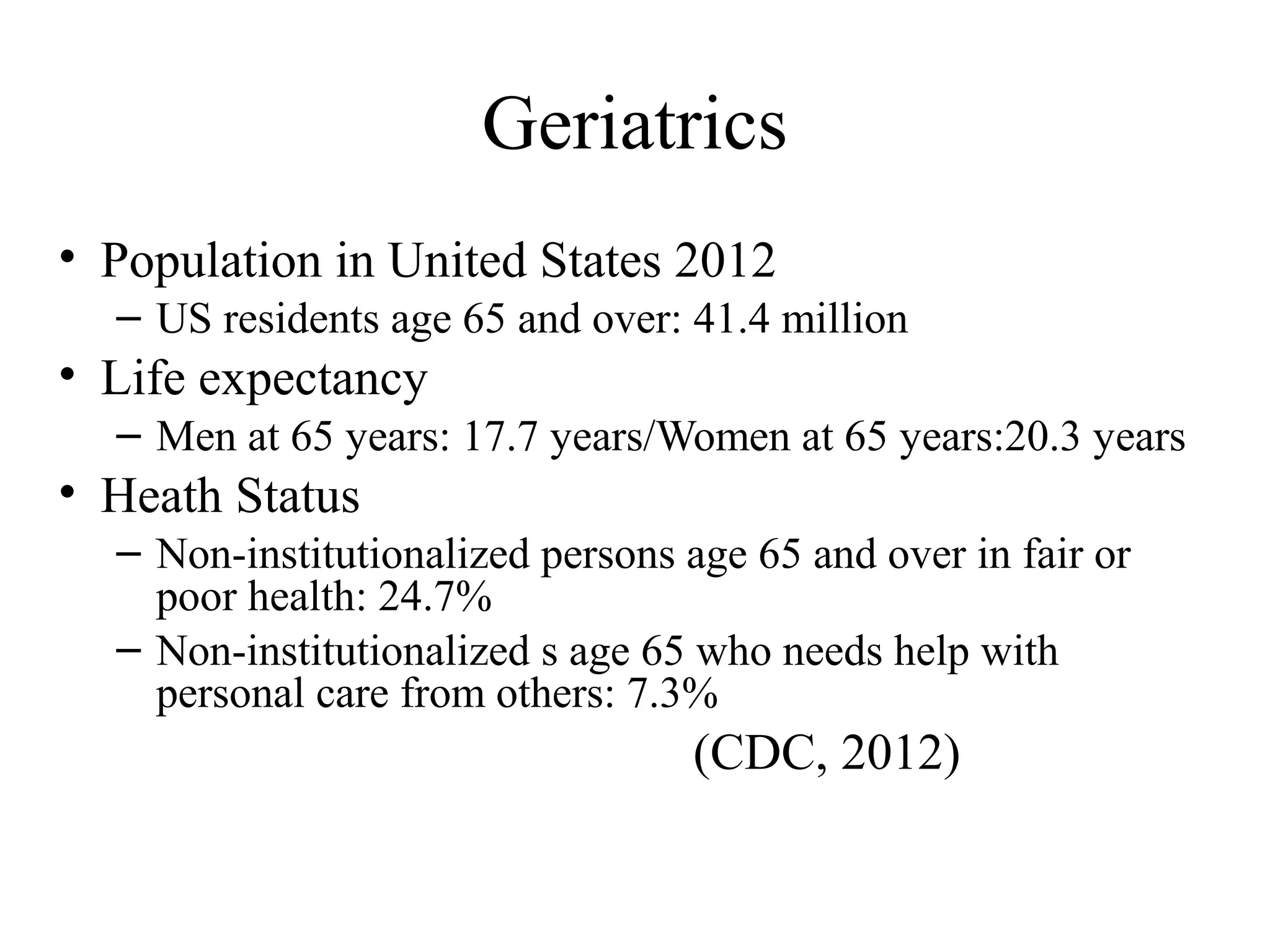
• Population in United States 2012
– US residents age 65 and over: 41.4 million

• Life expectancy
– Men at 65 years: 17.7 years/Women at 65 years:20.3 years

• Heath Status
– Non-institutionalized persons age 65 and over in fair or
poor health: 24.7%
– Non-institutionalized s age 65 who needs help with
personal care from others: 7.3%

(CDC, 2012)
Geriatrics
• Aging is not associated with significant
cognitive decline, but minor memory problems
can occur a normal part of aging.
(Sadock & Sadock, 2008).
Neurocognitive Disorders
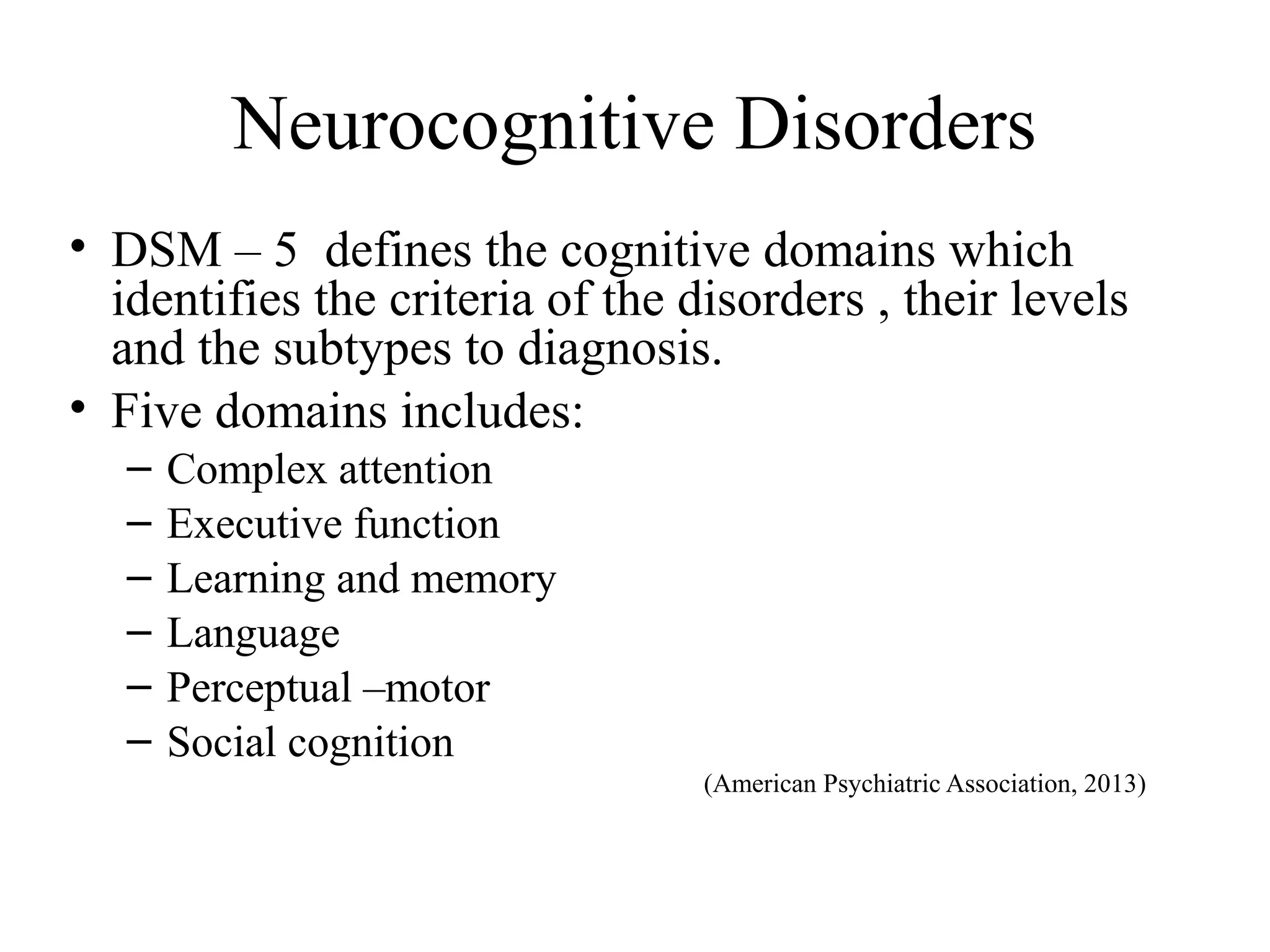
• DSM – 5 defines the cognitive domains which
identifies the criteria of the disorders , their levels
and the subtypes to diagnosis.
• Five domains includes:
–
–
–
–
–
–

Complex attention
Executive function
Learning and memory
Language
Perceptual –motor
Social cognition
(American Psychiatric Association, 2013)
Neurocognitive Disorders
• Delirium
• Major & Mild Neurocognitive disorders
–
–
–
–
–
–
–
–
–
–

Alzheimer’s disease
Frontotemporal lobar degeneration
Lewy body disease
Vascular disease
Traumatic brain injury
Substance/medication use
HIV Infection
Prion disease
Parkinson’s disease
Huntington’s disease
(American Psychiatric Association, 2013)
Dementia
• Not a specific disorder but an universal term to describe the vast
range of symptoms
• Defined as an acquired, persistent , and progressive impairment in
multiple cognition leading to significant functional decline.
• 1 of 3 US residents 55 years of age and older & 1 of 5 at least 65
years of age by the year 2030.
• Dementia prevalence increases with age
– 5 % in 71 to 79 years of age
– 37.4 % in 90 years of age and greater

• “Elderly patients with dementia and other psychiatric disorders are
most often cared for by their primary care.”
(McCarron, Xiong, & Bourgeois, 2009)
Treatment
• Early diagnosis and treatment of dementia is
important to slow cognitive and functional
decline.
(McCarron, Xiong, & Bourgeois, 2009)
Delirium
• Defined as an acute decline in attention and
cognition , is a common, life-threatening and
potentially preventable clinical syndrome in
older adults.
(Ramaswamy et al, 2010)
Characteristics
• Rapid onset
• Most common psychiatric syndrome in general
medical setting and associated with significant
mortality and morbidity both during and post
hospitalization Results from urinary and upper
respiratory infections, dehydration, and medicationrelated mishaps
• Preventable and treatable
• Not always transient and reversible
(Tusaie & Fitzpatrick, 2013)

(Ramaswamy, et al., 2010)
Additional Characteristics
• Up to 2/3 of all cases of delirium in the elderly
increases the risk for dementia.
• More than 20% of hospitalized patients aged
65 years and older each year increases
hospital costs by $2,500 per hospital stays.
• Admission ranges 14% to 24% whereas
incidence during hospitalization can be as high
56%.
(Ramaswany et al, 2010)
Assessment Tool
• Delirium Observation Screening Scale
• CAM- Confusion Assessment Tool
• CAM - ICU
• Other tools: MDAS, ICDSC, Cognitive
Test for delirium; DSI
(Tusaie & Fitzpatrick, 2013)
Treatment
• Non pharmacological strategies first
line of treatment
• Reorientation and behavioral
intervention
• Clear instructions with frequent eye
contact with patients
• Minimized sensory impairments in
vision and hearing loss by providing
the assist tools.
• Avoid physical restraint ( decreases
mobility, increased agitation,
prolongs delirium
• Limited room and staff changes
provide a quiet setting with low level
lightning at night. (Ramaswamy, et al.,
2010)

• Pharmacological
• Haloperidol, Risperidone,
Olanzapine, Quetiapine
– widely used drugs for the treatment of
delirium-related agitation

• Lorazepam
– Reserved for treatment of drug withdrawal,
diffuse Lewy body disease

• Use of drugs for hypoactive delirium
must be warranted
– Increase sedative effects

(Ramaswamy, et al., 2010)
Alzheimer’s Disease
• Defined as an degenerative progressive
neuropsychiatric disorder resulting in global
impairment of cognition, emotions, and
behavior leading to physical and functional
decline and death.
(Tusaie & Fitzpatrick, 2012)
Characteristic
• Insidious and progressive onset
• Current estimates suggest that 1 in 8 persons
over 65 have Alzheimer’s disease and a total of
5.3 million Americans have Alzheimer’s
disease. (Alzheimer's, 2009)
• 6th leading cause of death in the United States
overall and 5th leading cause of death for those
age 65 and older. (Alzheimer's Association,
2013)
Impact on Caregivers.
• An estimated 11 million caregivers provide 12.5
billion hours of care each year to an estimated 5
million persons with dementia
• 15.4 million caregivers provided more than 17.5
billion hours of unpaid care valued at $216 billion.
• 40% to 70% of caregivers exhibit significant
symptoms of depression, with 25% to 50% meet the
criteria of major depressive disorder.
(Alzheimer’s Association, 2011; Hoch, 2009; Nichols, Martindale-Adams, Burns, Graney, & Zuber, 2011 as cited in
Easom, Alston, & Coleman, 2013) (Alzheimer's Association, 2013)
Screening Tools
•
•
•
•
•
•

Folstein’s Mini Mental State Examination
Short, Portable Mental Status Questionnaire
Clock Draw Test
Minicog
MoCA
Functional Assessment Screening Tool
Tusaie&Fitzpatrick, 2013
Interventions
• Safety Assessments
• Care for Caregivers
• Psychosocial
– Cognitive rehabilitation, memory training, and
engagement in pleasurable activities
– Sensory stimulation
– Recreational activities and social interaction
– ABC behavioral model
(McCarron, Xiong, & Bourgeois, 2009)
Treatment
Cholinesterase Inhibitor (ChEIs)

N-methyl-D-aspartate (NMDA)

Donzepril(Aricept)
Rivastigimine ( Exelon)
Galantamine ( Razadyne)

• Memantine ( Namenda)

(McCarron, Xiong, & Bourgeois, 2009)

(McCarron, Xiong, & Bourgeois, 2009)
Depression
• 25% of patients with AD may experience major
depression.
• May contribute to cognitive impairments.
• Dementia, delirium and depression are not mutually
exclusive conditions all three conditions can be
present in the same individual and any given time.
• Increased risk for suicide if depression is not
detected in older adults with chronic illness and
those with new dx of dementia.
(Sadock & Sadock, 2008) (McCarron, Xiong, & Bourgeois, 2009)& (Tusaie & Fitzpatrick, 2013)
Depression and the Older Adult
• 15% of older adults have depressive symptoms
• Age itself is not a risk factor
• Being widowed or having a chronic illness increase
risk for depressive disorder
• Presenting symptoms in older adults may differ
from those of younger adults
• Increased emphasis on somatic complaints in older
adults
Co morbidity of Depression
• Co morbidity of depression with physical
disorders is common
• Negatively influences the course of the
depression
• Increases functional impairment, health
costs, and use of health services
• Common conditions associated with
depression
Depression and Suicide
• 20% is the suicide rate among older adults
• White males over 85 have the highest suicide
completion rates
• Males over 80 take their lives at twice the
rate of women
• Over 70% of older suicide victims had had
contact with PCP in the 3 months prior to
the suicide
Risk Factors for Suicide Among Older
Adults
• Medication
• Demographics
• Clinical
Suicide Management in Older Adults
• Promote connection with personal, family,
and community to prevent suicide
• Treatment doesn't differ from treatment in
younger adults
Geriatric Depression Scale
• Scales specific for adults 60+
• Available in long and short form
• Can be downloaded at:
www.stanford.edu~yesavage/Testing.htlm
Treatment
• Same medications are used just in lower
dosages, emphasis upon self-efficacy, activities
and social involvement in psychotherapy in the
geriatric population.
(Tusaie & Fitzpatrick, 2013)
Pharmacological Treatments
• Treatment basically the same as in younger
adults
• Antidepressants
• SSRIs and TCAs most common in older
adults
• Older adults are at increased risk for drug
interaction
• Lower doses of medication are needed
Non-Pharmacological
•
•
•
•
•

Cognitive Behavioral Therapy
Cognitive Bibliotherapy
Problem-Solving Therapy
Brief Psychodynamic Therapy
Reminiscence Therapy
Loss
• Loss is an "absence of an object, position,
ability, or attribute.
–Loss of someone or something that is significant to
that individual.
–Independence (precious commodity, feel value less
or useless)
–Deprivation (fewer opportunities, physical frailty,
shrinking of individual's feeling of competence and
self-esteem
(Ferrell & Coyle, 2006)(Harris, 2011)
Grief
• Grief is a "person's emotional response to the
event of loss"; " state of mental and physical
pain that is experienced when the loss of
significant object, person, or part of the self is
realized".
(Ferrell & Coyle, 2006)
Grief
• Major categories of grief
– anticipatory grief
– uncomplicated grief
– complicated grief
– disenfranchised grief
– Unresolved grief
(Ferrell & Coyle, 2006)
Characteristics
• Symptoms of grief
•
•
•
•

Physical
Cognitive
Emotional
Behavioral
Assessment
• The bereaved are often exhausted and fatigue
from caring for the love one who died and
forgo their own needs. NP’s should
– Inquire of routine physical exams, social networks,
family roles, and major changes within self.
– Be aware of clinical depression, prolonged deep
grief, self destructive behavior, increased use of
alcohol and/or drugs, preoccupation with the
deceased to the exclusion of others.
(Ferrell & Coyle, 2006)
Interventions
• No medications exist to treat symptoms of grief
because grief is not consider an illness.
• Use of antidepressant and sleep medications
may help with severe and complicated grief
• Support Groups
• Counseling
(Rainer, 2013, p.56)
Anxiety and the Older Adult
• Anxiety is a common and a major problem in
older adults
• Receives less attention then depressive
disorders
• 15.3% of adults over the age of 60 are
diagnosed with anxiety disorders
• In older adults anxiety is a risk factor for
greater disability
DSM Anxiety Disorders in Older Adult
• Most common
– GAD
– Phobias

• Less common
– OCD
– Panic Disorders
Medical Co morbidities
• Studies have shown an association between anxiety
and medical illnesses including but not limited to:
•
•
•
•
•
•
•

Diabetes
Dementia
Coronary heart disease
Cancer
COPD
gastrointestinal disorders
Parkinson's disease
Anxiety and Depression
• Anxiety in older adults often co-occurs with
depression
• 50% of older adults with depression had co morbid
anxiety
• An increased risk for poor outcomes in cases of co
morbid anxiety and depression
• Older adults with anxious depression report
increased suicidality
• Anxiety more commonly precedes depression
Diagnostic Difficulties

• Medical Conditions
• Dementia
• Depression
Geriatric Anxiety Inventory
• Specific scale for older Adults
• Sound psychometric properties specific for
older adults
• 20 item self report
• Greater then 10 “agrees” may indicate an
anxiety disorder
Pharmacological Treatment
• Use with caution in older adults
• Benzodiazepines
– Most common

• Antidepressants
– SSRIs
– MAOIs
– TCAs
Non-Pharmacological
• Evidenced-based psychological
treatments in older adults
• Relaxation Training
• Cognitive Behavioral Therapy (CBT)
• Supportive Therapy
Behavioral Health and the Older
Adult

• Insomnia

• Insomnia is one of the most dominant behavioral health issue that older
adults face.
• 30-60% of all older persons have one or more sleep complaint
(McCurry, 2007)
• Sleep complaints for most older adults include:
– Difficulty falling and staying asleep
– Early morning awakenings
– Excessive day time sleepiness

•

– Day time fatigue
(APA, 2005)
Behavioral Health cont…..
DSM-5 Insomnia Disorders

o Is defined as, “A predominant complaint of dissatisfaction
with sleep quantity or quality” and is associated with one or
more of the following features:
 Difficulty initiating sleep
 Difficulty maintaining sleep
 Early morning awakenings
Diagnostic Considerations for the
FNP
– The sleep dysfunction causes distress and interruptions in ADLs
– Sleep difficulty occurs for at least 3 times per week
– Sleep difficulty occurs for at least 3 months
– The insomnia can/cannot be attributed to substance abuse
– The insomnia can/cannot be attributed to another illness or sleep
disorder
Things to Remember……..
• Older adults tend to go to bed earlier and wake up earlier.
• Life style changes can impact sleep
• Sleep disturbances in older person in most cases is related to
medical or psychiatric disorder (Tusaie & Fitzpatrick, 2013)
• Comprehensive health history should be obtained, including
but not limited to: physical health history and medication
history
Non-Pharmalogical Treatments for
Insomnia
• Cognitive behavior therapy
• Sleep hygiene instruction
• Avoidance of stimulating substances (alcohol and caffeine)
• Reduction of environmental and stimuli (Janicak, 2011)
• These treatments may work better than pharmacological
options due decreased metabolic processes of the older adult
(APA, 2005)
Pharmacological Treatments for
Insomnia
• Benzodiazepines: doses should be low and length of
treatment should be short. This is due to decreased drug
clearance in older patients, Example: Triazolam
• Zolpidem, zaleplon, eszopiclone, ramelteon (prescribe in
low doses)
• Older patients should be weaned from medication slowly
Substance Abuse in Older Adults
• -Alcohol abuse is a significant problem for older Americans
• -17% of older adults misuse an abuse drugs and alcohol
• Alcohol abuse can cause:
–
–
–
–

Cirrhosis
Malnutrition
Osteomalacia
Cognitive decline

• -4.4 million older adults are foreseen to need substance abuse
treatment in 2020 (Gfroerer et al., 2003)
• -“Polypharmacy” drug use
• -Older adults may dependent on “pill taking” (Tusaie &
Fitzpatrick, 2013)
DSM-5 Substance Related Disorders

• Alcohol/Substance Abuse
– Excessive use of alcohol leading to clinically significant
impairment or distress for 12 months
– Excessive use of substances such as opioids, hallucinogens,
cannabis, tobacco, stimulants, etc., leading to clinically significant
impairment or distress for 12 months
Symptoms and Diagnosing
-Symptoms:
Slurred speech

-Diagnosing:
•

Severity:
• Mild, Moderate, Severe
• Remission:
Incoordination
• Early or sustained
• Environment:
Unsteady Gait
• Controlled
• Frequency of ingestion
Nystagmus
-Alcohol/Substance Withdrawal:
• Signs and symptoms:
Impairment in memory/attention
• Nausea, vomiting
insomnia, tachycardia,
Stupor/Coma
etc.
Diagnostic Considerations for the
FNP

– Comprehensive physical exam with medication history
– Evaluate for underlying medical and psychological
conditions
– Situational sensitivity (Tusaie & Fitzpatrick, 2013)
Non-Pharmcalogical Treatments for Alcohol and
Substance Abuse

Cognitive Behavior Therapy
• Health care professionals can help older adults boost
their motivation to stop drinking, identify circumstances
that trigger substance abuse, and learn new methods to
cope with high risk drinking situations (APA, 2005)
Pharmacological Treatments for Alcohol and
Substance Abuse
– Precise history of drugs taken and pharmacies used by the older
patient. This will help with identifying potential adverse drug
reactions, and frequency of self-administration.
– If any medications are prescribed the provider should be
cognizant of decreased drug metabolism in older adults.
– Antidepressants and anxiolytics are occasionally used in treatment
• Dosing should be low
• Treatment should be short (Tusaie & Fitzpatrick, 2013)
Chronic Illness, Mental Health, and the
Older Adult
• 85% of older adults have chronic illness
• Chronic illness can be caused by alcohol and substance abuse,
poor nutrition and inactivity (Speer, 2003)
• Healthcare providers can help their patients cope effectively
with:
• Motivational interviewing
• Cognitive behavior therapy
Pharmacological Treatments for Alcohol and
Substance Abuse
– Precise history of drugs taken and pharmacies used by the older
patient. This will help with identifying potential adverse drug
reactions, and frequency of self-administration.
– If any medications are prescribed the provider should be
cognizant of decreased drug metabolism in older adults.
– Antidepressants and anxiolytics are occasionally used in treatment
• Dosing should be low
• Treatment should be short (Tusaie & Fitzpatrick, 2013)
Case Study
• 73 year old woman who presents with 2 month
history of tearfulness, loss of energy, apathy,
inability to get out of bed in the morning, and
insomnia with early morning awakenings.
• She describes increasing anxiety, an inability to
cope, forgetfulness, problems reading or even
watching TV, a 30 lb weight loss and feels very
constipated.
• She expresses a concern that something is wrong
with her stomach. Her lower back has also been
bothering her more.
Case Study
• She lost her husband 8 months ago and one of her
children a little over 1 year ago.
• She has a remote history of resected breast cancer
and a more recent history of thyroid cancer which
was resected 3 years ago. She also has a history of
atrial fibrillation.
• She has no past psychiatric history and has always
been able to cope with difficulties until recently.
• She is on Coumadin and a beta blocker.
Reference
•
•
•
•
•
•
•
•

Alzheimer's Association. (2013, November 14). What is Dementia? Retrieved from
Alzheimer's Association: http://www.alz.org/what-is-dementia.asp
American Psychiatric Association. (2013). American psychiatric association: desk reference
to
the diagnostic criteria from dsm-5. Arlington: American Psychiatric Association.
Ayers, C. R., Sorrell, J. T., Thorp, S. R., &Wetherell, J L.. (2007). Evidence-based
psychological
treatments for late-life anxiety. Psychology And Aging, 22(1), 8-17.
doi:10.1037/08827974.22.1.8
Cully, J. A., & Stanley, M. A. (2008). Assessment and treatment of anxiety in later life. In K.
Laidlaw, B. Knight (Eds.) , Handbook of emotional disorders in later life: Assessment
and treatment (pp. 233-256). New York, NY US: Oxford University Press.
Ferrell, B. R., & Coyle, N. (2006). Textbook of Palliative Nursing. In I. B. Corless,
Bereavement
(pp. 531-544). New York: Oxford Univerity Press.
Fong, T. G., Tulebaev, S. R., & Inouye, S. K. (2009). Delirium in elderly adults; diagnosis,
prevention and treatment. Nature Reviews Neurology, 210-220.
Gellis, Z.D. & McCracken, S.G. (2008). Anxiety disorders in older adults. In S. Diwan (Ed.),
Mental Health and Older Adults Resource Review. CSWE Gero-Ed Center, Master's
Advanced Curriculum Project.
Gellis, Z.D. & McCracken, S.G. (2008). Depressive Disorders in Older Adults.. In S. Diwan
(Ed.), Mental Health and Older Adults Resource Review. CSWE Gero-Ed Center, Master's
Advanced Curriculum Project.
•
•
•
•

•
•
•
•

•
•
•
•
•

Gfroerer, J., Penne, M., Pemberton, M., Folsom, R. (2003). Substance abuse treatment need among older adults in
2020: the
impact of the aging baby-boom cohort, Drug and Alcohol Dependence, 69 (2), 127-135.
Harris, D. L. (2011). Counting our losses. New York: Taylor & Francis Group.
Janicak, P. G., Marder, S. R., & Pavuluri, M. N. (2011). Principles and practice of psychopharmacotherapy (5th ed.).
Philadelphia: Wolters Kluwer Health/Lippincott Williams & Wilkins.
Kessler RC, Chiu WT, Demler O, Walters EE. Prevalence, severity, and comorbidity of twelve-month DSM-IV
disorders in the
National Comorbidity Survey Replication (NCS-R). Archives of General Psychiatry, 2005
Jun;62(6):617-27
McCarron, R. M., Xiong, G. L., & Bourgeois, J. A. (2009). Lippincott's Primary Care:Psychiatry. Philadelphia:
Lippincott
Williams & Wilkins.
McCurry, S. M., Logsdon, R. G., Teri, L., & Vitiello, M. V. (2007). Evidence-based Psychological Treatments for
Insomnia in
Older Adults. Psychology and Aging, 22(1), 18-27.
Rainer, J. (2013). Life after loss. Eau Claire: PESI Publishing and Media.
Ramaswamy, R., Dix, E. F., Drew, J. E., Diamond, J. J., Inouye, S. K., & Roehl, B. J. (2010). Beyond grand rounds:
a
comprehensive and sequential intervention to improve identification of delirium. The Gerontologist, 122131.
Sadock, B. J., & Sadock, V. A. (2008). Concise Textbook of Clinical Psychiatry. Philadelphia: Lippincott Williams &
Wilkins.
Tusaie, K. R., & Fitzpatrick, J. J. (2013). Advance Practice Psychiatric Nursing. New York: Springer Publishing
Company.
Sadock, B. J. & Sadock, V. A. (2008). Kaplan & Sadock's concise textbook of clinical psychiatry (3rd ed.).
Philadelphia, PA: Wolters Kluwer/Lippincott Williams & Wilkins.
Scogin, F., Welsh, D., Hanson, A., Stump, J., & Coates, A. (2005). Evidence-Based Psychotherapies for Depression
in Older Adults. Clinical Psychology: Science And Practice, 12(3), 222-237. doi:10.1093/clipsy/bpi033
Wolitzky-Taylor, K. B., Castriotta, N., Lenze, E. J., Stanley, M. A., & Craske, M. G. (2010). Anxiety disorders in older
adults: A
comprehensive review.

Family presentation

  • 1.
    Interventions for Geriatricsin Mental Health By: Amber Knight, Sibyl Kirkland, and Heather Zimmerman
  • 2.
    Geriatrics • Population inUnited States 2012 – US residents age 65 and over: 41.4 million • Life expectancy – Men at 65 years: 17.7 years/Women at 65 years:20.3 years • Heath Status – Non-institutionalized persons age 65 and over in fair or poor health: 24.7% – Non-institutionalized s age 65 who needs help with personal care from others: 7.3% (CDC, 2012)
  • 3.
    Geriatrics • Aging isnot associated with significant cognitive decline, but minor memory problems can occur a normal part of aging. (Sadock & Sadock, 2008).
  • 4.
    Neurocognitive Disorders • DSM– 5 defines the cognitive domains which identifies the criteria of the disorders , their levels and the subtypes to diagnosis. • Five domains includes: – – – – – – Complex attention Executive function Learning and memory Language Perceptual –motor Social cognition (American Psychiatric Association, 2013)
  • 5.
    Neurocognitive Disorders • Delirium •Major & Mild Neurocognitive disorders – – – – – – – – – – Alzheimer’s disease Frontotemporal lobar degeneration Lewy body disease Vascular disease Traumatic brain injury Substance/medication use HIV Infection Prion disease Parkinson’s disease Huntington’s disease (American Psychiatric Association, 2013)
  • 6.
    Dementia • Not aspecific disorder but an universal term to describe the vast range of symptoms • Defined as an acquired, persistent , and progressive impairment in multiple cognition leading to significant functional decline. • 1 of 3 US residents 55 years of age and older & 1 of 5 at least 65 years of age by the year 2030. • Dementia prevalence increases with age – 5 % in 71 to 79 years of age – 37.4 % in 90 years of age and greater • “Elderly patients with dementia and other psychiatric disorders are most often cared for by their primary care.” (McCarron, Xiong, & Bourgeois, 2009)
  • 7.
    Treatment • Early diagnosisand treatment of dementia is important to slow cognitive and functional decline. (McCarron, Xiong, & Bourgeois, 2009)
  • 8.
    Delirium • Defined asan acute decline in attention and cognition , is a common, life-threatening and potentially preventable clinical syndrome in older adults. (Ramaswamy et al, 2010)
  • 9.
    Characteristics • Rapid onset •Most common psychiatric syndrome in general medical setting and associated with significant mortality and morbidity both during and post hospitalization Results from urinary and upper respiratory infections, dehydration, and medicationrelated mishaps • Preventable and treatable • Not always transient and reversible (Tusaie & Fitzpatrick, 2013) (Ramaswamy, et al., 2010)
  • 10.
    Additional Characteristics • Upto 2/3 of all cases of delirium in the elderly increases the risk for dementia. • More than 20% of hospitalized patients aged 65 years and older each year increases hospital costs by $2,500 per hospital stays. • Admission ranges 14% to 24% whereas incidence during hospitalization can be as high 56%. (Ramaswany et al, 2010)
  • 11.
    Assessment Tool • DeliriumObservation Screening Scale • CAM- Confusion Assessment Tool • CAM - ICU • Other tools: MDAS, ICDSC, Cognitive Test for delirium; DSI (Tusaie & Fitzpatrick, 2013)
  • 12.
    Treatment • Non pharmacologicalstrategies first line of treatment • Reorientation and behavioral intervention • Clear instructions with frequent eye contact with patients • Minimized sensory impairments in vision and hearing loss by providing the assist tools. • Avoid physical restraint ( decreases mobility, increased agitation, prolongs delirium • Limited room and staff changes provide a quiet setting with low level lightning at night. (Ramaswamy, et al., 2010) • Pharmacological • Haloperidol, Risperidone, Olanzapine, Quetiapine – widely used drugs for the treatment of delirium-related agitation • Lorazepam – Reserved for treatment of drug withdrawal, diffuse Lewy body disease • Use of drugs for hypoactive delirium must be warranted – Increase sedative effects (Ramaswamy, et al., 2010)
  • 13.
    Alzheimer’s Disease • Definedas an degenerative progressive neuropsychiatric disorder resulting in global impairment of cognition, emotions, and behavior leading to physical and functional decline and death. (Tusaie & Fitzpatrick, 2012)
  • 14.
    Characteristic • Insidious andprogressive onset • Current estimates suggest that 1 in 8 persons over 65 have Alzheimer’s disease and a total of 5.3 million Americans have Alzheimer’s disease. (Alzheimer's, 2009) • 6th leading cause of death in the United States overall and 5th leading cause of death for those age 65 and older. (Alzheimer's Association, 2013)
  • 15.
    Impact on Caregivers. •An estimated 11 million caregivers provide 12.5 billion hours of care each year to an estimated 5 million persons with dementia • 15.4 million caregivers provided more than 17.5 billion hours of unpaid care valued at $216 billion. • 40% to 70% of caregivers exhibit significant symptoms of depression, with 25% to 50% meet the criteria of major depressive disorder. (Alzheimer’s Association, 2011; Hoch, 2009; Nichols, Martindale-Adams, Burns, Graney, & Zuber, 2011 as cited in Easom, Alston, & Coleman, 2013) (Alzheimer's Association, 2013)
  • 16.
    Screening Tools • • • • • • Folstein’s MiniMental State Examination Short, Portable Mental Status Questionnaire Clock Draw Test Minicog MoCA Functional Assessment Screening Tool Tusaie&Fitzpatrick, 2013
  • 17.
    Interventions • Safety Assessments •Care for Caregivers • Psychosocial – Cognitive rehabilitation, memory training, and engagement in pleasurable activities – Sensory stimulation – Recreational activities and social interaction – ABC behavioral model (McCarron, Xiong, & Bourgeois, 2009)
  • 18.
    Treatment Cholinesterase Inhibitor (ChEIs) N-methyl-D-aspartate(NMDA) Donzepril(Aricept) Rivastigimine ( Exelon) Galantamine ( Razadyne) • Memantine ( Namenda) (McCarron, Xiong, & Bourgeois, 2009) (McCarron, Xiong, & Bourgeois, 2009)
  • 19.
    Depression • 25% ofpatients with AD may experience major depression. • May contribute to cognitive impairments. • Dementia, delirium and depression are not mutually exclusive conditions all three conditions can be present in the same individual and any given time. • Increased risk for suicide if depression is not detected in older adults with chronic illness and those with new dx of dementia. (Sadock & Sadock, 2008) (McCarron, Xiong, & Bourgeois, 2009)& (Tusaie & Fitzpatrick, 2013)
  • 20.
    Depression and theOlder Adult • 15% of older adults have depressive symptoms • Age itself is not a risk factor • Being widowed or having a chronic illness increase risk for depressive disorder • Presenting symptoms in older adults may differ from those of younger adults • Increased emphasis on somatic complaints in older adults
  • 21.
    Co morbidity ofDepression • Co morbidity of depression with physical disorders is common • Negatively influences the course of the depression • Increases functional impairment, health costs, and use of health services • Common conditions associated with depression
  • 22.
    Depression and Suicide •20% is the suicide rate among older adults • White males over 85 have the highest suicide completion rates • Males over 80 take their lives at twice the rate of women • Over 70% of older suicide victims had had contact with PCP in the 3 months prior to the suicide
  • 23.
    Risk Factors forSuicide Among Older Adults • Medication • Demographics • Clinical
  • 24.
    Suicide Management inOlder Adults • Promote connection with personal, family, and community to prevent suicide • Treatment doesn't differ from treatment in younger adults
  • 25.
    Geriatric Depression Scale •Scales specific for adults 60+ • Available in long and short form • Can be downloaded at: www.stanford.edu~yesavage/Testing.htlm
  • 26.
    Treatment • Same medicationsare used just in lower dosages, emphasis upon self-efficacy, activities and social involvement in psychotherapy in the geriatric population. (Tusaie & Fitzpatrick, 2013)
  • 27.
    Pharmacological Treatments • Treatmentbasically the same as in younger adults • Antidepressants • SSRIs and TCAs most common in older adults • Older adults are at increased risk for drug interaction • Lower doses of medication are needed
  • 28.
    Non-Pharmacological • • • • • Cognitive Behavioral Therapy CognitiveBibliotherapy Problem-Solving Therapy Brief Psychodynamic Therapy Reminiscence Therapy
  • 29.
    Loss • Loss isan "absence of an object, position, ability, or attribute. –Loss of someone or something that is significant to that individual. –Independence (precious commodity, feel value less or useless) –Deprivation (fewer opportunities, physical frailty, shrinking of individual's feeling of competence and self-esteem (Ferrell & Coyle, 2006)(Harris, 2011)
  • 30.
    Grief • Grief isa "person's emotional response to the event of loss"; " state of mental and physical pain that is experienced when the loss of significant object, person, or part of the self is realized". (Ferrell & Coyle, 2006)
  • 31.
    Grief • Major categoriesof grief – anticipatory grief – uncomplicated grief – complicated grief – disenfranchised grief – Unresolved grief (Ferrell & Coyle, 2006)
  • 32.
    Characteristics • Symptoms ofgrief • • • • Physical Cognitive Emotional Behavioral
  • 33.
    Assessment • The bereavedare often exhausted and fatigue from caring for the love one who died and forgo their own needs. NP’s should – Inquire of routine physical exams, social networks, family roles, and major changes within self. – Be aware of clinical depression, prolonged deep grief, self destructive behavior, increased use of alcohol and/or drugs, preoccupation with the deceased to the exclusion of others. (Ferrell & Coyle, 2006)
  • 34.
    Interventions • No medicationsexist to treat symptoms of grief because grief is not consider an illness. • Use of antidepressant and sleep medications may help with severe and complicated grief • Support Groups • Counseling (Rainer, 2013, p.56)
  • 35.
    Anxiety and theOlder Adult • Anxiety is a common and a major problem in older adults • Receives less attention then depressive disorders • 15.3% of adults over the age of 60 are diagnosed with anxiety disorders • In older adults anxiety is a risk factor for greater disability
  • 36.
    DSM Anxiety Disordersin Older Adult • Most common – GAD – Phobias • Less common – OCD – Panic Disorders
  • 37.
    Medical Co morbidities •Studies have shown an association between anxiety and medical illnesses including but not limited to: • • • • • • • Diabetes Dementia Coronary heart disease Cancer COPD gastrointestinal disorders Parkinson's disease
  • 38.
    Anxiety and Depression •Anxiety in older adults often co-occurs with depression • 50% of older adults with depression had co morbid anxiety • An increased risk for poor outcomes in cases of co morbid anxiety and depression • Older adults with anxious depression report increased suicidality • Anxiety more commonly precedes depression
  • 39.
    Diagnostic Difficulties • MedicalConditions • Dementia • Depression
  • 40.
    Geriatric Anxiety Inventory •Specific scale for older Adults • Sound psychometric properties specific for older adults • 20 item self report • Greater then 10 “agrees” may indicate an anxiety disorder
  • 41.
    Pharmacological Treatment • Usewith caution in older adults • Benzodiazepines – Most common • Antidepressants – SSRIs – MAOIs – TCAs
  • 42.
    Non-Pharmacological • Evidenced-based psychological treatmentsin older adults • Relaxation Training • Cognitive Behavioral Therapy (CBT) • Supportive Therapy
  • 43.
    Behavioral Health andthe Older Adult • Insomnia • Insomnia is one of the most dominant behavioral health issue that older adults face. • 30-60% of all older persons have one or more sleep complaint (McCurry, 2007) • Sleep complaints for most older adults include: – Difficulty falling and staying asleep – Early morning awakenings – Excessive day time sleepiness • – Day time fatigue (APA, 2005)
  • 44.
    Behavioral Health cont….. DSM-5Insomnia Disorders o Is defined as, “A predominant complaint of dissatisfaction with sleep quantity or quality” and is associated with one or more of the following features:  Difficulty initiating sleep  Difficulty maintaining sleep  Early morning awakenings
  • 45.
    Diagnostic Considerations forthe FNP – The sleep dysfunction causes distress and interruptions in ADLs – Sleep difficulty occurs for at least 3 times per week – Sleep difficulty occurs for at least 3 months – The insomnia can/cannot be attributed to substance abuse – The insomnia can/cannot be attributed to another illness or sleep disorder
  • 46.
    Things to Remember…….. •Older adults tend to go to bed earlier and wake up earlier. • Life style changes can impact sleep • Sleep disturbances in older person in most cases is related to medical or psychiatric disorder (Tusaie & Fitzpatrick, 2013) • Comprehensive health history should be obtained, including but not limited to: physical health history and medication history
  • 47.
    Non-Pharmalogical Treatments for Insomnia •Cognitive behavior therapy • Sleep hygiene instruction • Avoidance of stimulating substances (alcohol and caffeine) • Reduction of environmental and stimuli (Janicak, 2011) • These treatments may work better than pharmacological options due decreased metabolic processes of the older adult (APA, 2005)
  • 48.
    Pharmacological Treatments for Insomnia •Benzodiazepines: doses should be low and length of treatment should be short. This is due to decreased drug clearance in older patients, Example: Triazolam • Zolpidem, zaleplon, eszopiclone, ramelteon (prescribe in low doses) • Older patients should be weaned from medication slowly
  • 49.
    Substance Abuse inOlder Adults • -Alcohol abuse is a significant problem for older Americans • -17% of older adults misuse an abuse drugs and alcohol • Alcohol abuse can cause: – – – – Cirrhosis Malnutrition Osteomalacia Cognitive decline • -4.4 million older adults are foreseen to need substance abuse treatment in 2020 (Gfroerer et al., 2003) • -“Polypharmacy” drug use • -Older adults may dependent on “pill taking” (Tusaie & Fitzpatrick, 2013)
  • 50.
    DSM-5 Substance RelatedDisorders • Alcohol/Substance Abuse – Excessive use of alcohol leading to clinically significant impairment or distress for 12 months – Excessive use of substances such as opioids, hallucinogens, cannabis, tobacco, stimulants, etc., leading to clinically significant impairment or distress for 12 months
  • 51.
    Symptoms and Diagnosing -Symptoms: Slurredspeech -Diagnosing: • Severity: • Mild, Moderate, Severe • Remission: Incoordination • Early or sustained • Environment: Unsteady Gait • Controlled • Frequency of ingestion Nystagmus -Alcohol/Substance Withdrawal: • Signs and symptoms: Impairment in memory/attention • Nausea, vomiting insomnia, tachycardia, Stupor/Coma etc.
  • 52.
    Diagnostic Considerations forthe FNP – Comprehensive physical exam with medication history – Evaluate for underlying medical and psychological conditions – Situational sensitivity (Tusaie & Fitzpatrick, 2013)
  • 53.
    Non-Pharmcalogical Treatments forAlcohol and Substance Abuse Cognitive Behavior Therapy • Health care professionals can help older adults boost their motivation to stop drinking, identify circumstances that trigger substance abuse, and learn new methods to cope with high risk drinking situations (APA, 2005)
  • 54.
    Pharmacological Treatments forAlcohol and Substance Abuse – Precise history of drugs taken and pharmacies used by the older patient. This will help with identifying potential adverse drug reactions, and frequency of self-administration. – If any medications are prescribed the provider should be cognizant of decreased drug metabolism in older adults. – Antidepressants and anxiolytics are occasionally used in treatment • Dosing should be low • Treatment should be short (Tusaie & Fitzpatrick, 2013)
  • 55.
    Chronic Illness, MentalHealth, and the Older Adult • 85% of older adults have chronic illness • Chronic illness can be caused by alcohol and substance abuse, poor nutrition and inactivity (Speer, 2003) • Healthcare providers can help their patients cope effectively with: • Motivational interviewing • Cognitive behavior therapy
  • 56.
    Pharmacological Treatments forAlcohol and Substance Abuse – Precise history of drugs taken and pharmacies used by the older patient. This will help with identifying potential adverse drug reactions, and frequency of self-administration. – If any medications are prescribed the provider should be cognizant of decreased drug metabolism in older adults. – Antidepressants and anxiolytics are occasionally used in treatment • Dosing should be low • Treatment should be short (Tusaie & Fitzpatrick, 2013)
  • 57.
    Case Study • 73year old woman who presents with 2 month history of tearfulness, loss of energy, apathy, inability to get out of bed in the morning, and insomnia with early morning awakenings. • She describes increasing anxiety, an inability to cope, forgetfulness, problems reading or even watching TV, a 30 lb weight loss and feels very constipated. • She expresses a concern that something is wrong with her stomach. Her lower back has also been bothering her more.
  • 58.
    Case Study • Shelost her husband 8 months ago and one of her children a little over 1 year ago. • She has a remote history of resected breast cancer and a more recent history of thyroid cancer which was resected 3 years ago. She also has a history of atrial fibrillation. • She has no past psychiatric history and has always been able to cope with difficulties until recently. • She is on Coumadin and a beta blocker.
  • 59.
    Reference • • • • • • • • Alzheimer's Association. (2013,November 14). What is Dementia? Retrieved from Alzheimer's Association: http://www.alz.org/what-is-dementia.asp American Psychiatric Association. (2013). American psychiatric association: desk reference to the diagnostic criteria from dsm-5. Arlington: American Psychiatric Association. Ayers, C. R., Sorrell, J. T., Thorp, S. R., &Wetherell, J L.. (2007). Evidence-based psychological treatments for late-life anxiety. Psychology And Aging, 22(1), 8-17. doi:10.1037/08827974.22.1.8 Cully, J. A., & Stanley, M. A. (2008). Assessment and treatment of anxiety in later life. In K. Laidlaw, B. Knight (Eds.) , Handbook of emotional disorders in later life: Assessment and treatment (pp. 233-256). New York, NY US: Oxford University Press. Ferrell, B. R., & Coyle, N. (2006). Textbook of Palliative Nursing. In I. B. Corless, Bereavement (pp. 531-544). New York: Oxford Univerity Press. Fong, T. G., Tulebaev, S. R., & Inouye, S. K. (2009). Delirium in elderly adults; diagnosis, prevention and treatment. Nature Reviews Neurology, 210-220. Gellis, Z.D. & McCracken, S.G. (2008). Anxiety disorders in older adults. In S. Diwan (Ed.), Mental Health and Older Adults Resource Review. CSWE Gero-Ed Center, Master's Advanced Curriculum Project. Gellis, Z.D. & McCracken, S.G. (2008). Depressive Disorders in Older Adults.. In S. Diwan (Ed.), Mental Health and Older Adults Resource Review. CSWE Gero-Ed Center, Master's Advanced Curriculum Project.
  • 60.
    • • • • • • • • • • • • • Gfroerer, J., Penne, M., Pemberton,M., Folsom, R. (2003). Substance abuse treatment need among older adults in 2020: the impact of the aging baby-boom cohort, Drug and Alcohol Dependence, 69 (2), 127-135. Harris, D. L. (2011). Counting our losses. New York: Taylor & Francis Group. Janicak, P. G., Marder, S. R., & Pavuluri, M. N. (2011). Principles and practice of psychopharmacotherapy (5th ed.). Philadelphia: Wolters Kluwer Health/Lippincott Williams & Wilkins. Kessler RC, Chiu WT, Demler O, Walters EE. Prevalence, severity, and comorbidity of twelve-month DSM-IV disorders in the National Comorbidity Survey Replication (NCS-R). Archives of General Psychiatry, 2005 Jun;62(6):617-27 McCarron, R. M., Xiong, G. L., & Bourgeois, J. A. (2009). Lippincott's Primary Care:Psychiatry. Philadelphia: Lippincott Williams & Wilkins. McCurry, S. M., Logsdon, R. G., Teri, L., & Vitiello, M. V. (2007). Evidence-based Psychological Treatments for Insomnia in Older Adults. Psychology and Aging, 22(1), 18-27. Rainer, J. (2013). Life after loss. Eau Claire: PESI Publishing and Media. Ramaswamy, R., Dix, E. F., Drew, J. E., Diamond, J. J., Inouye, S. K., & Roehl, B. J. (2010). Beyond grand rounds: a comprehensive and sequential intervention to improve identification of delirium. The Gerontologist, 122131. Sadock, B. J., & Sadock, V. A. (2008). Concise Textbook of Clinical Psychiatry. Philadelphia: Lippincott Williams & Wilkins. Tusaie, K. R., & Fitzpatrick, J. J. (2013). Advance Practice Psychiatric Nursing. New York: Springer Publishing Company. Sadock, B. J. & Sadock, V. A. (2008). Kaplan & Sadock's concise textbook of clinical psychiatry (3rd ed.). Philadelphia, PA: Wolters Kluwer/Lippincott Williams & Wilkins. Scogin, F., Welsh, D., Hanson, A., Stump, J., & Coates, A. (2005). Evidence-Based Psychotherapies for Depression in Older Adults. Clinical Psychology: Science And Practice, 12(3), 222-237. doi:10.1093/clipsy/bpi033 Wolitzky-Taylor, K. B., Castriotta, N., Lenze, E. J., Stanley, M. A., & Craske, M. G. (2010). Anxiety disorders in older adults: A comprehensive review.

Editor's Notes

  • #8 Will further discuss in later slides.
  • #10 Preventable and treatable however (under recognition of the syndrome & poor understanding of the underlying pathophysiology, have hampered the development of successful therapies) (Ramaswamy, et al., 2010) Not always transient and reversible,( can result in long term cognitive changes (Ramaswamy, et al., 2010)
  • #12 Must identify through assessment of clients that are at risk of developing delirium, recognize early signs of delirium, determine etiology, and rapidly institute measures to correct underlying causes Observation with a brief history can determine however use of tool assessment can bring clarification of the condition. CAM-nine-item standardized instrument to assist clinicians with no psychiatric training in the recognition and detection of delirium; used primarily in inpatient settings; most commonly used. ( Tusaie Used when patient exhibits acute change in mental status or fluctuating changes in mental status; can only be used if patient is arousal in response to a voice without need for physical stimulation. & Fitzpatrick,p303) Most widely used is the CAM; nine item standarized instrument to assist clinicians with no psychiatric training in the recognition and detection of delirium, included is a four item diagnositc algorithm. This can be found in page 304 & 305 in Tusaie & Fitzpatrick.
  • #17 MMSE- most common and familiar measurement worldwide; excellent reliability and validity; widely used in primary care practice for detecting and tracking cognitive impairment
  • #18 Safety assessments-Environmental hazards ( gas appliance, firearms, staircases) May be unable to live on their own ( related to assistance with activities daily living, wandering, incontinence, & severe behavioral disturbances occur Driving should be considered to decreased/discontinued even with mild dementia Caregiviers-Zarit Burden Interview(ZBI) 22 item self -rate scale use to measure the caregivers burden Respite Care, educational programs and family counseling (McCarron, Xiong, & Bourgeois, 2009) Cognitive rehabiliation-( crossword or jigsaw puzzles, playing chess or a muscial instrument. painting, writing) Sensory stimulation(sunlight) ABC behavioral model(use for maladaptive behavior)
  • #19 Side effects: Cholinesterase Inhibitors gastrointestinal ( nausea, vomiting, & diarrhea); anorexia & weight loss; bradycardia, confusion, agtiation; increase monitoring of heart rate, should be 60 beats and over while taking and special care is needed if patient taking beta blockers, calcium channel inhibitors, or digoxin. Also increase awareness for patient with severe asthma or COPD ChEIs provoke bronchospasm.
  • #22 Common conditions associated with depression: Heart Disease Stroke Hypertension Diabetes Cancer Osteoarthritis
  • #23 Screen and prevention are key
  • #24 Risk Factors for Suicide Among Older Adults Medication Antidepressants have an increased risk of suicidal idealization Demographic Older age, male gender, white race, unmarried Clinical Depression, comorbid anxiety, substance abuce, isolation, loneliness, lack of social supports, and declining physical health
  • #29 Cognitive bibliotherapy involves a book and or reading material for patient Problem solving therapy Brief Psychodynamic therapy focuses on unconscious processes as they are manifested in the clients behavior Reminiscence therapy uses life experiences of the individual to improve mental well-being
  • #32 Major categories of grief anticipatory grief ( unconscious process, and not conscious, deliberative process) (ex) uncomplicated grief( normal emotional state experiences a loss that causes a reaction an emotional low) complicated grief ( deny, repress, or avoid aspects of the loss, its pain, and its implication > 1 year of loss disenfranchised grief ( grief that persons experience when they incur a loss tha is not or cannot be open acknowledged, publicly mourned, or socially supported Unresolved grief
  • #33 Physical_ Headaches, dizziness, exhausation, insomnia, loss of appetite, muscular aches, Cognitive_ sense of depersonalization, inability to concentrate, sense of debelief and confusion; fleeting visual, tactile, olfactory, auditory hallucinatory experiences Emotional_ anger, guilty, anxiety, sense of helplessness, numbness Behavioral_crying,withdrawal, imparied work performance
  • #35 Mediations cannot cure grief but help the client feel well enough to participate in other forms of therapy. Support groups reported by Carol Steiner suggests that it provides emotional support, validation, education about grief and themselves, and coping techniques((Rainer, 2013, p.56) Counseling _ to help the client expressive themselves through journal writing, venting anger(banging a pillow on the bed, screaming at home, crying); actively listening to the bereaved share their story.
  • #36 Older adults whom experience anxiety are associated with reduced quality of life and lower life satisfaction
  • #38 Over 80% of older adults have at least one chronic medical condition
  • #40 Medical Conditions Symptoms can be difficult to separate Older adults often express anxiety symptoms as somatic Medication side effects make diagnosing difficult Older adults attribute symptoms to medical problems Dementia Also difficult to separate Impaired memory may relate to anxiety or dementia Depression Older adult are more likely to include depressive symptoms in anxiety
  • #41 The assessment tool is attached
  • #42 Pharmacological Treatment Use with caution in older adults: metabolism changes risk of interactions with other medications effects of medication on co morbid medical problems Monitor for non-compliance Benzodiazepines-most common “Start low and go slow” Short-term use is recommended Can increase risks for falls May lead to memory problems Older adults more likely to develop disabilities effecting ADLs Antidepressants SSRIs May require 7 to 30 days to reach desired effect Can cause unpleasant symptoms Nausea, diarrhea, nervousness and insomnia frequently reported Headache, tremor, anxiety, somnolence, and sexual dysfunction also reported —with lower doses side effects can be more mild MAOIs and TCAs used less frequent than SSRIs
  • #43 Relaxation training includes deep breathing, progressive muscle relaxation and imagery CBT involves cognitive restructuring and problem solving techniques Supportive therapy reinforces healthy and adaptive thought behaviors
  • #44 Insomnia is a prevalent condition the effects the lives of many in older adulthood. 30-60 percent of all older adults have some form of sleep disturbance. These sleep issues can range from difficulty falling asleep to extreme day time fatigue.